室町期の長船は二層の商いを営んだ。兵卒のための数打ち物と、注文主の俗名を銘に負う注文打ちである。末備前であっても、祐定の最上作は一派のいかなる時代の作にも劣らない。
 NihontoWatchNihontoWatch
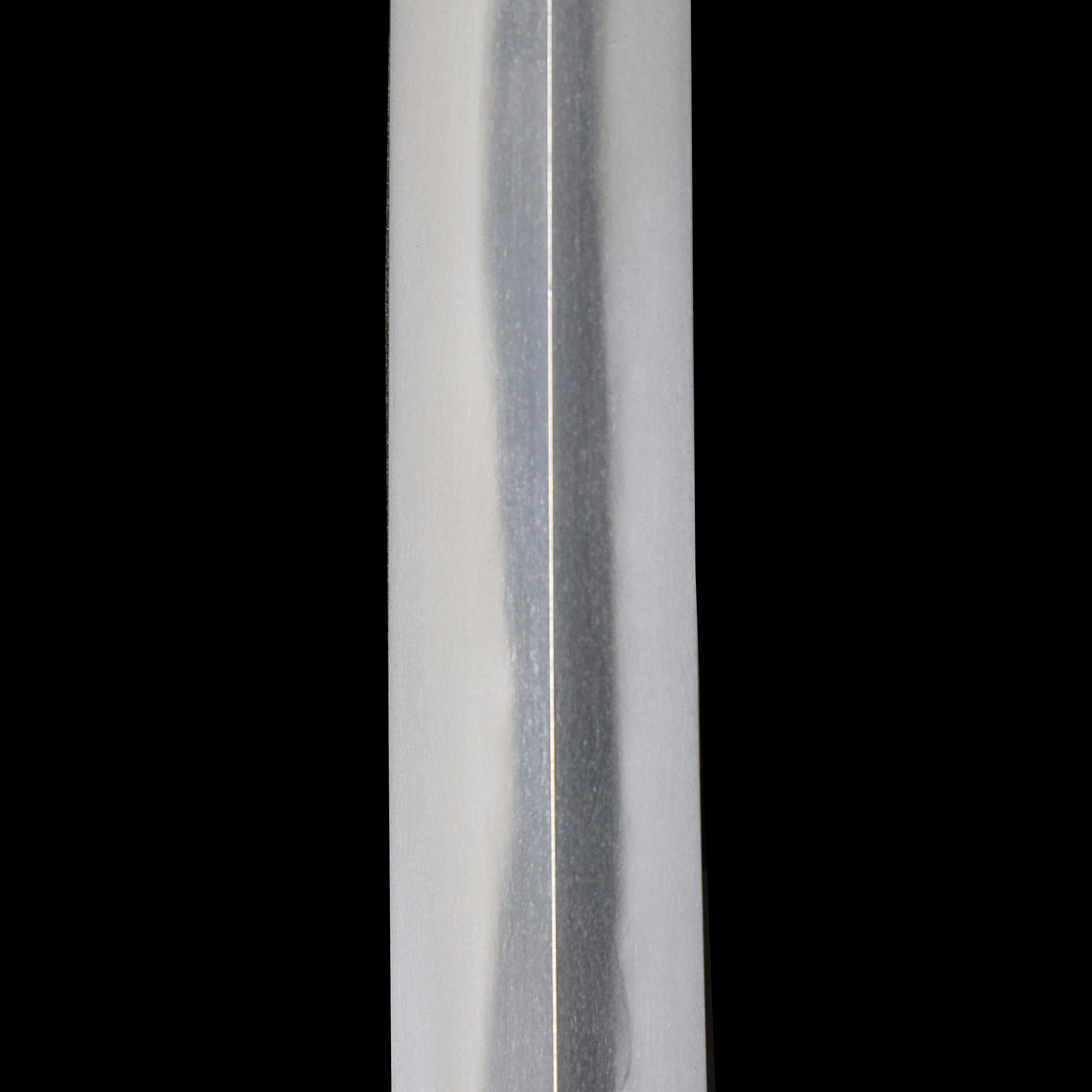
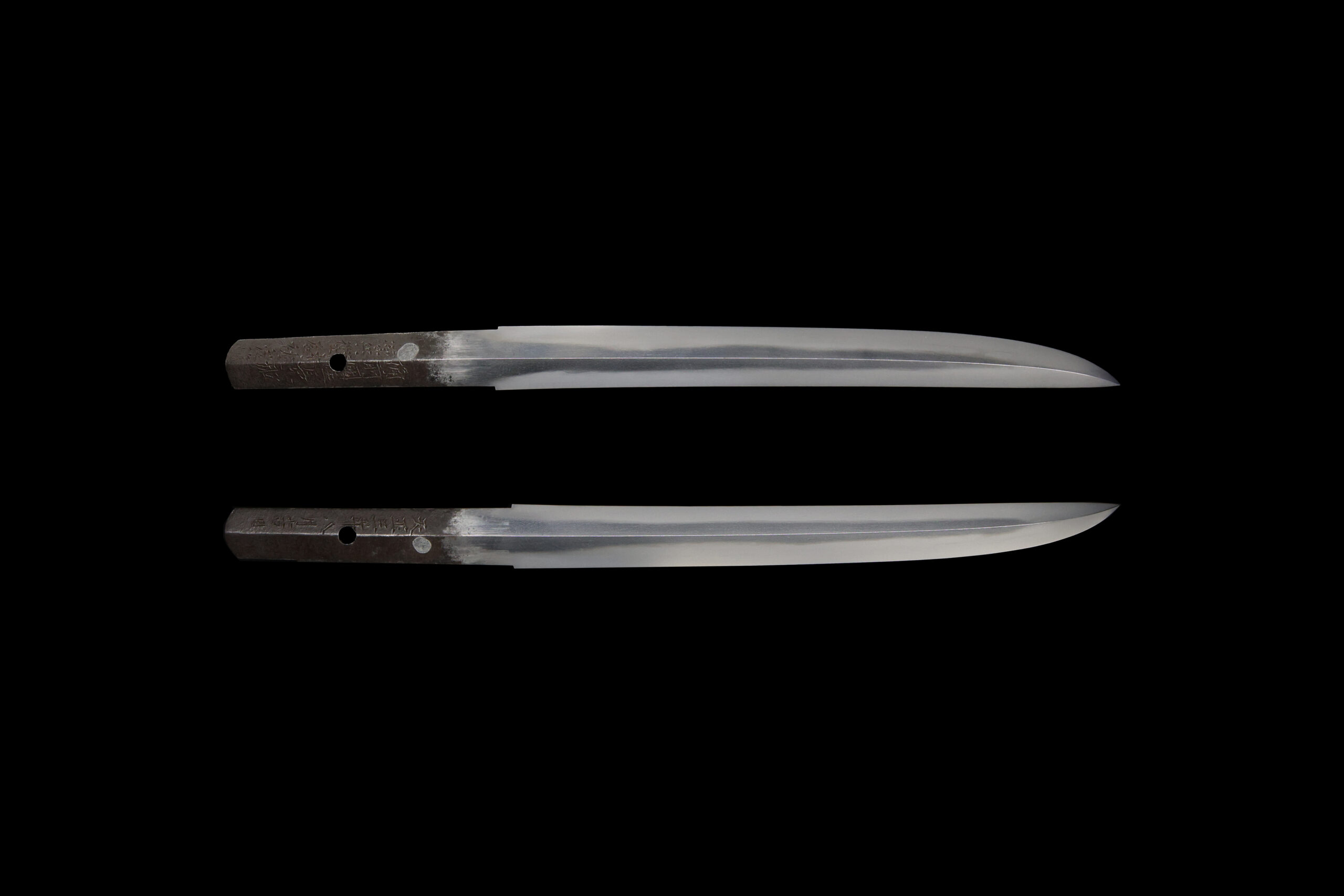
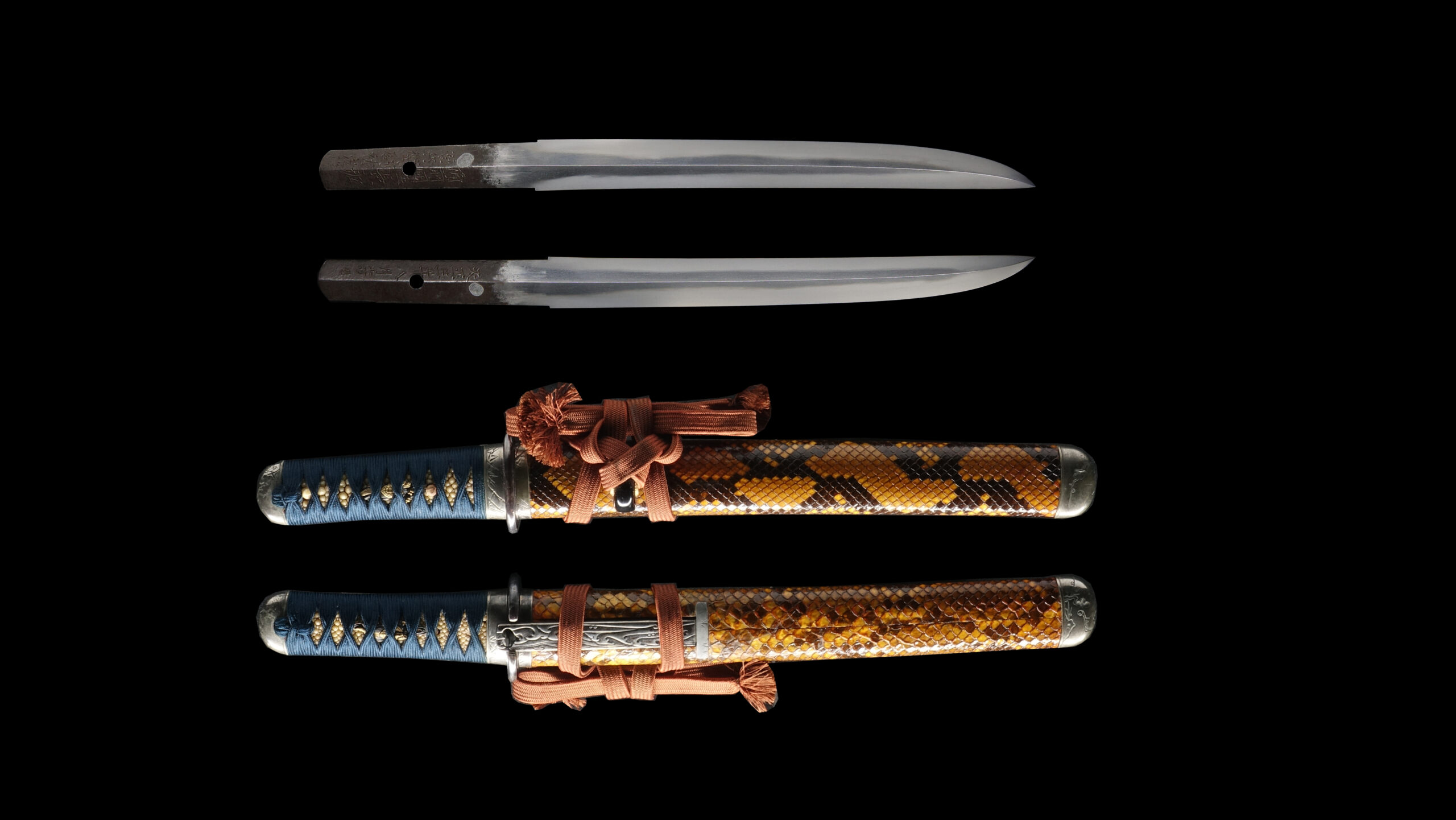
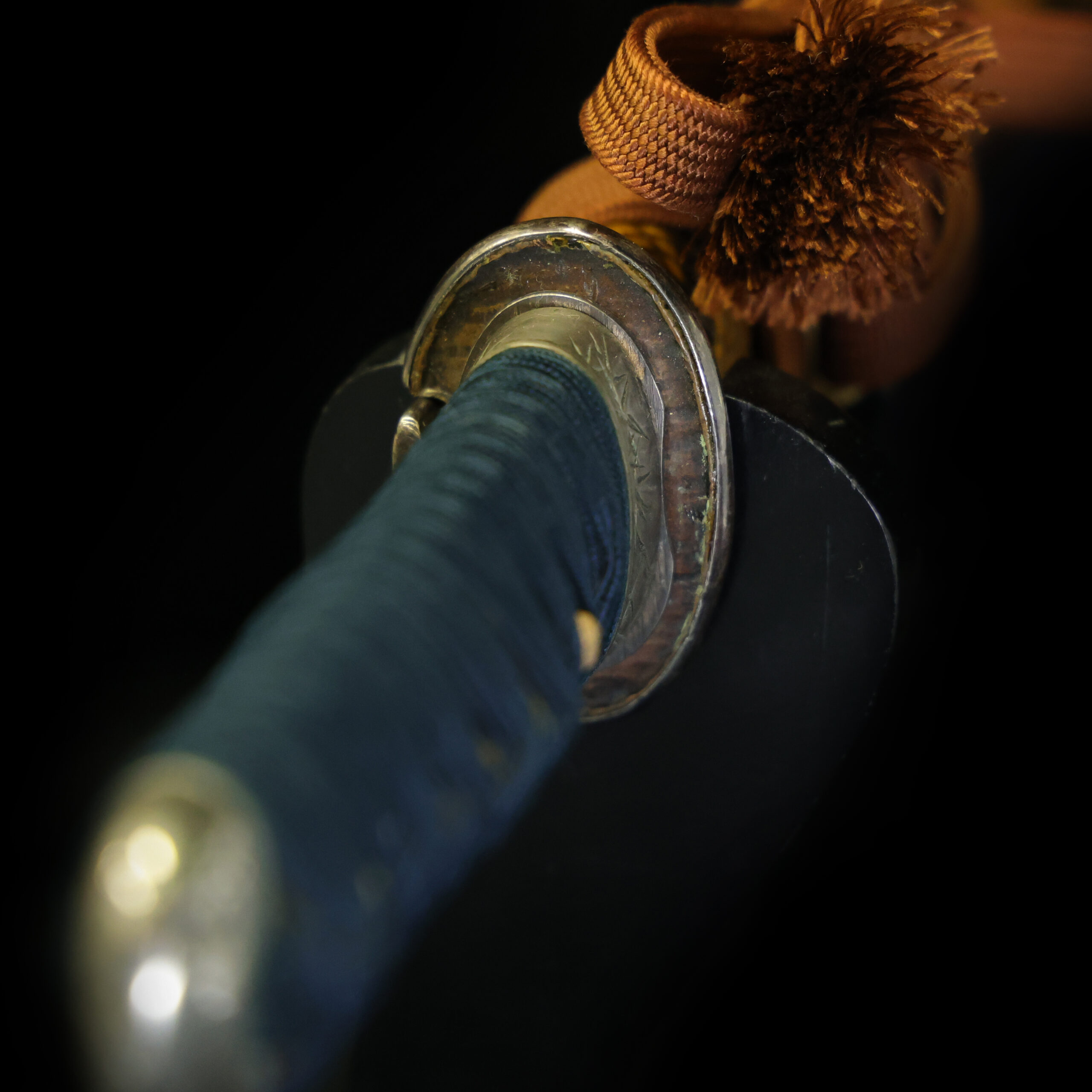
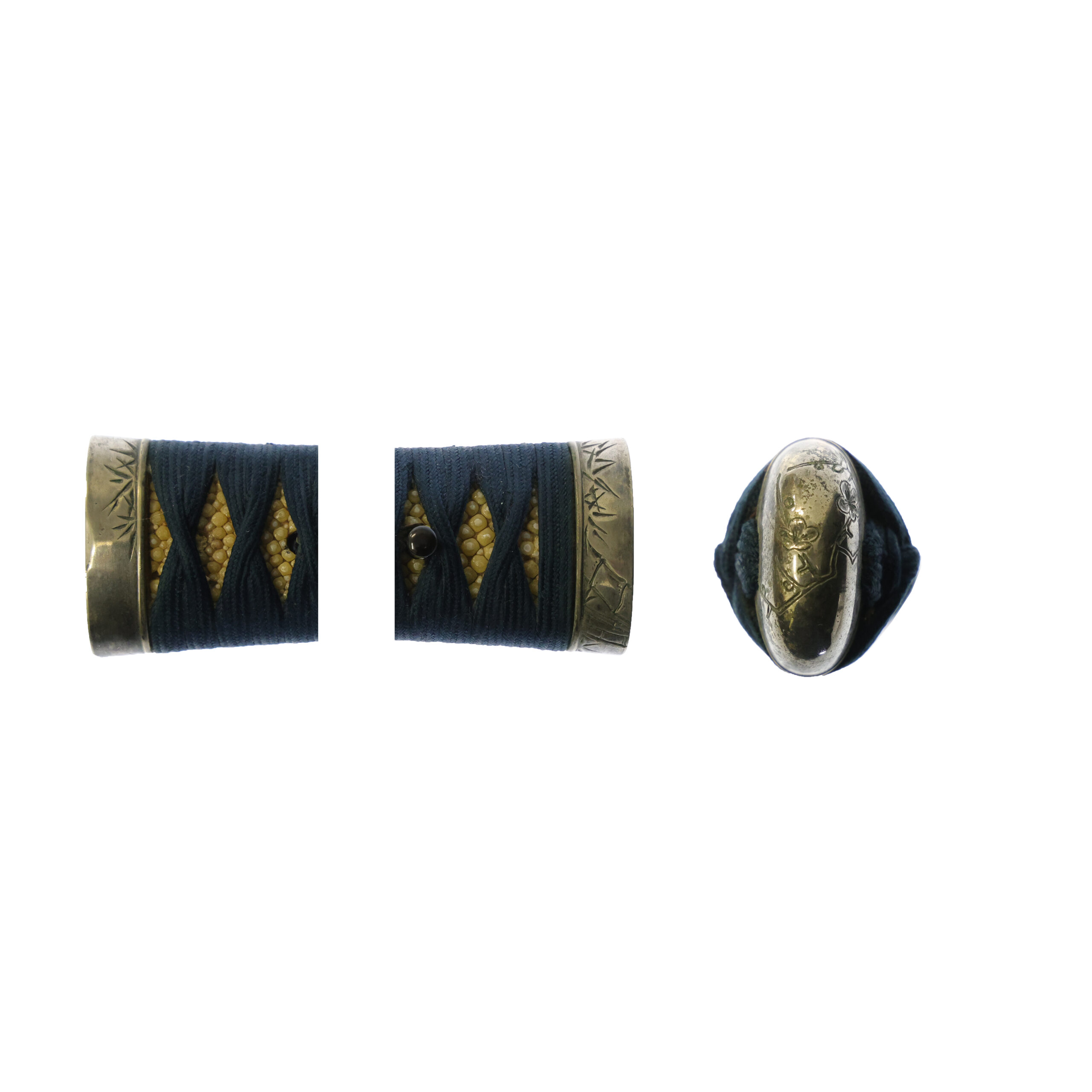
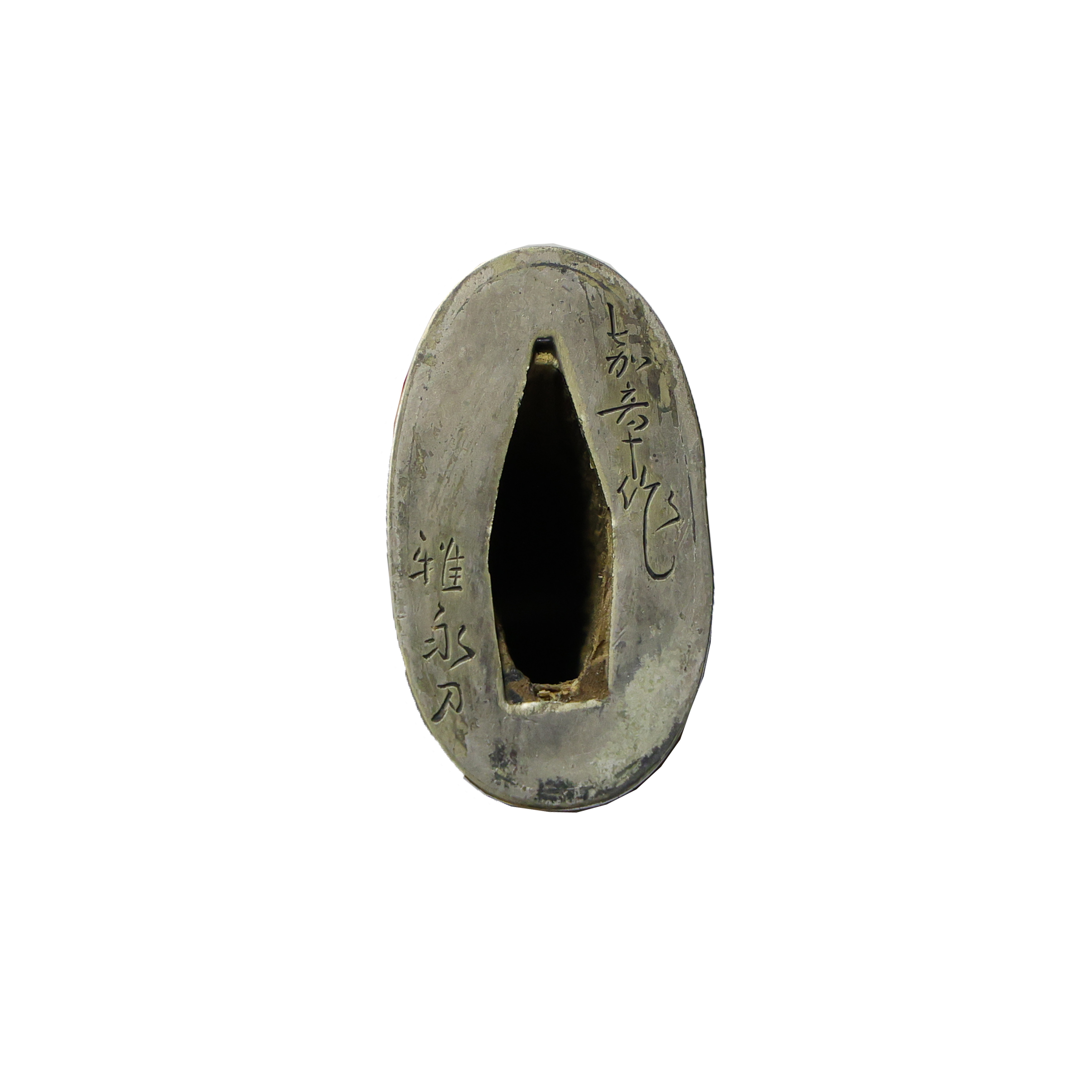
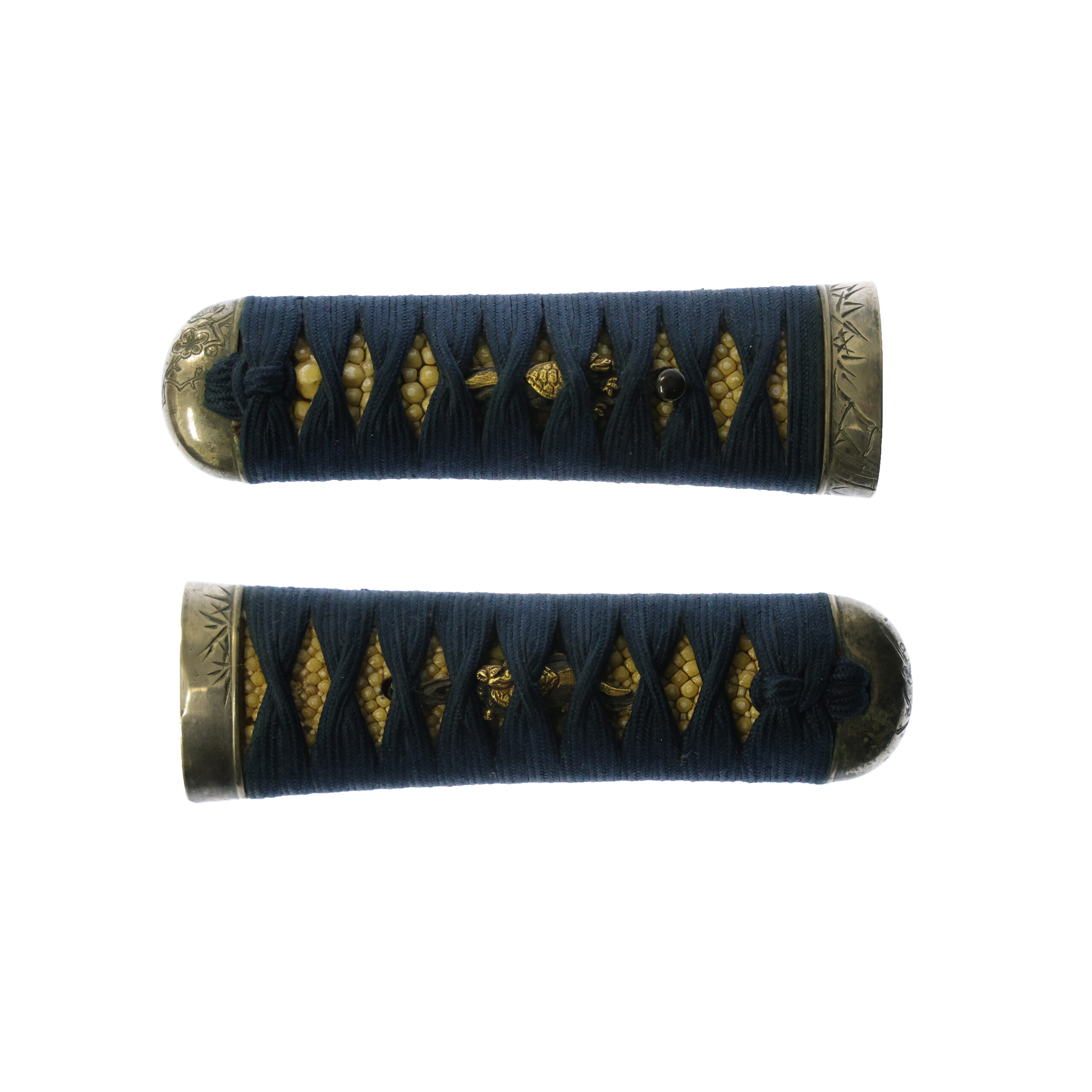
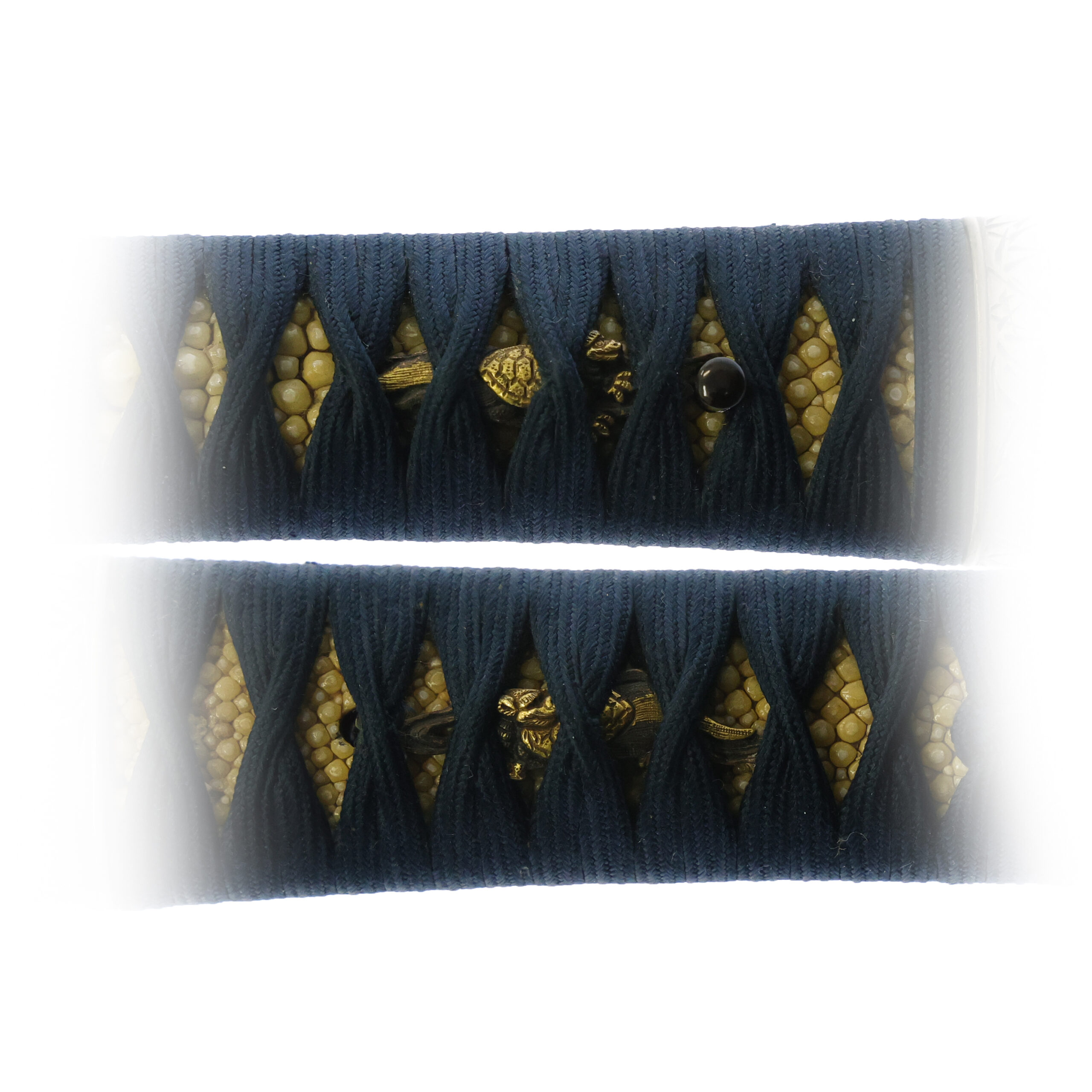
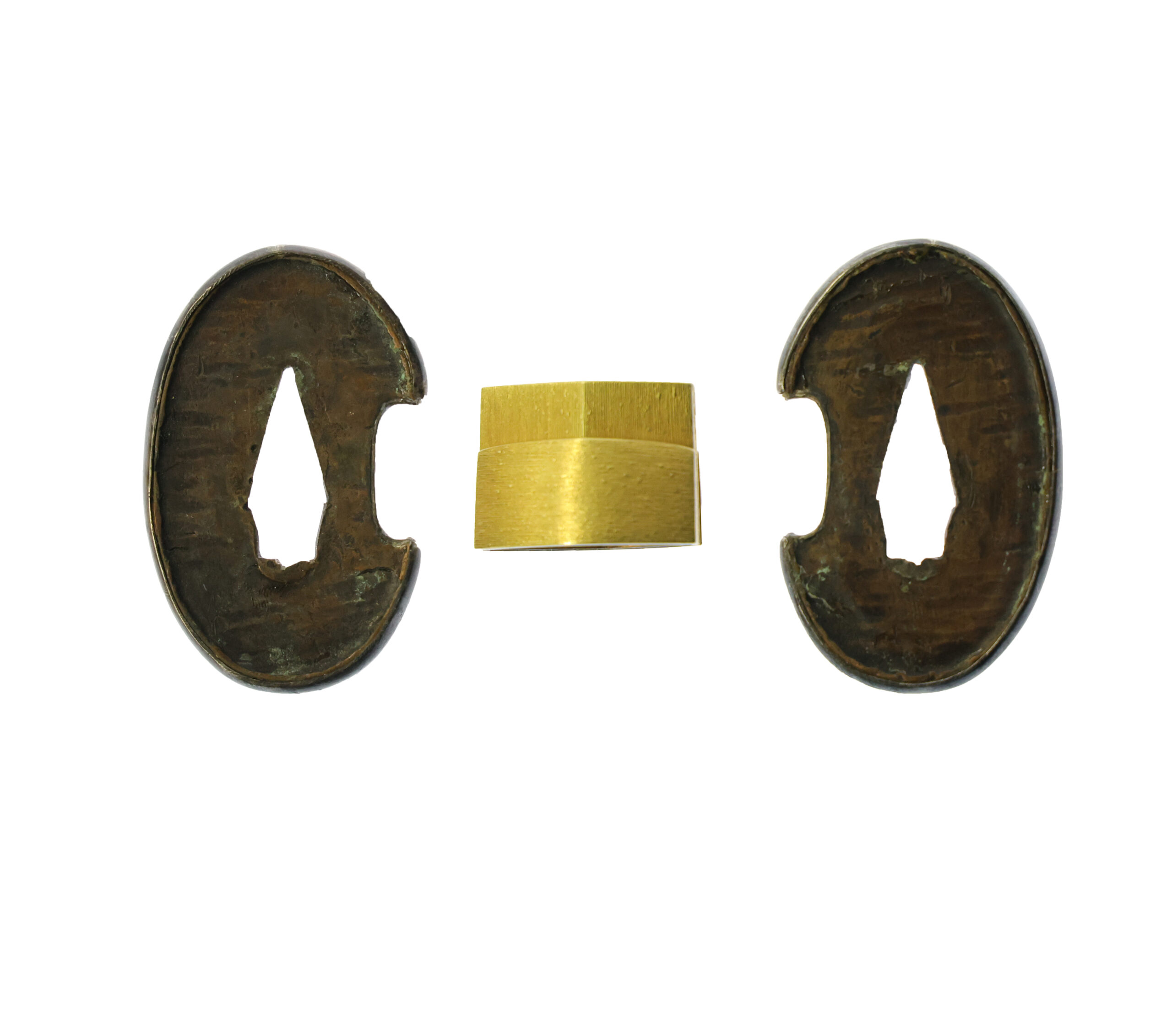
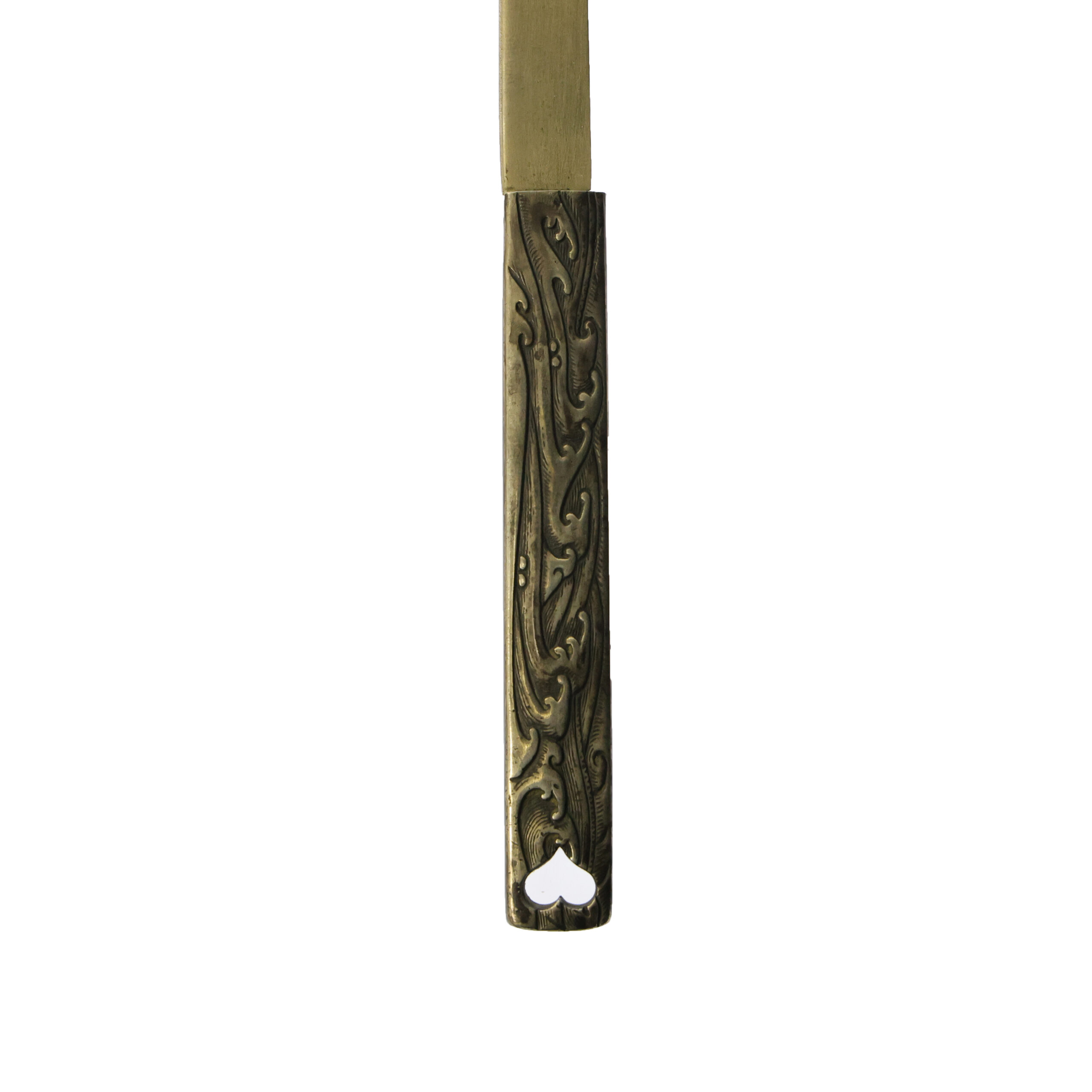
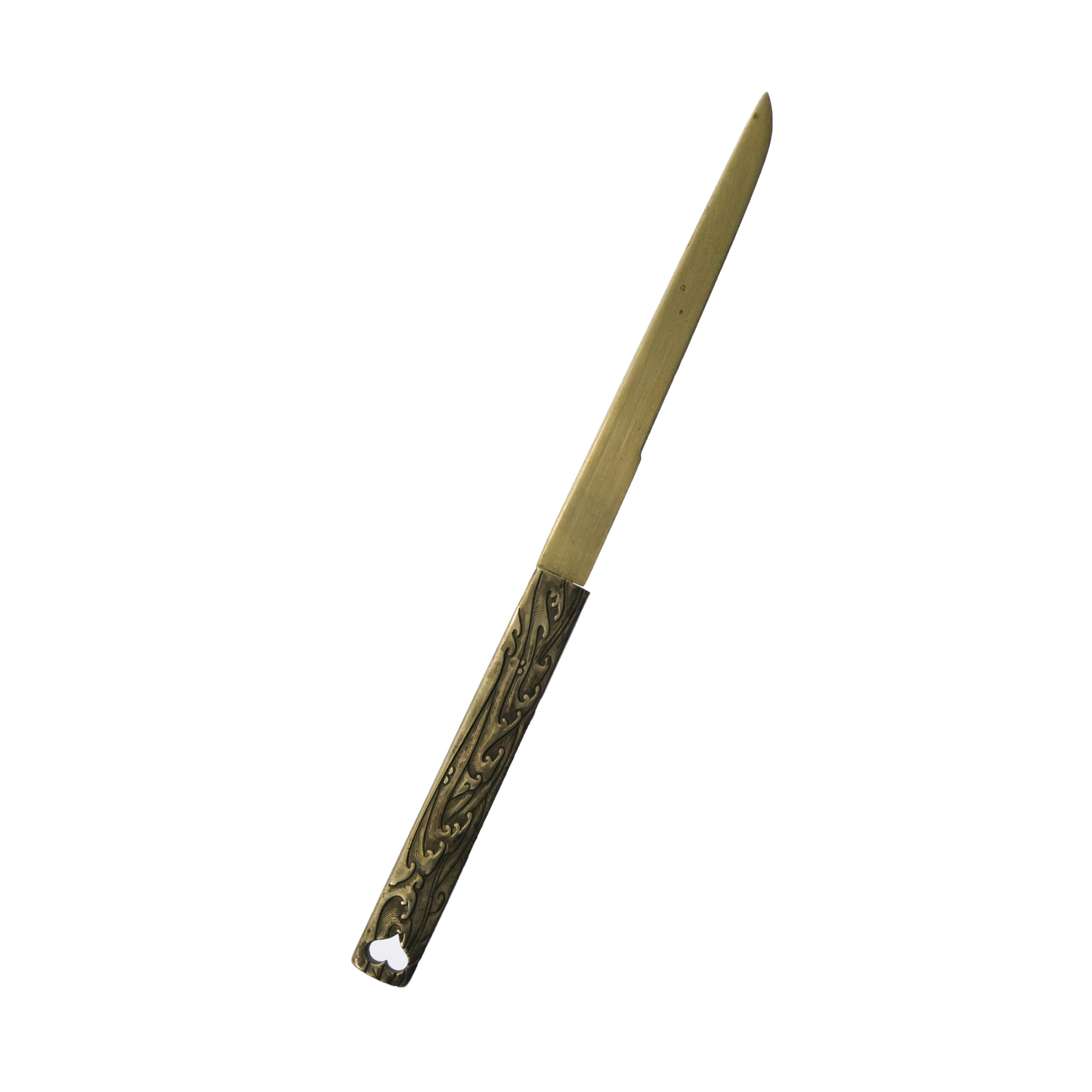
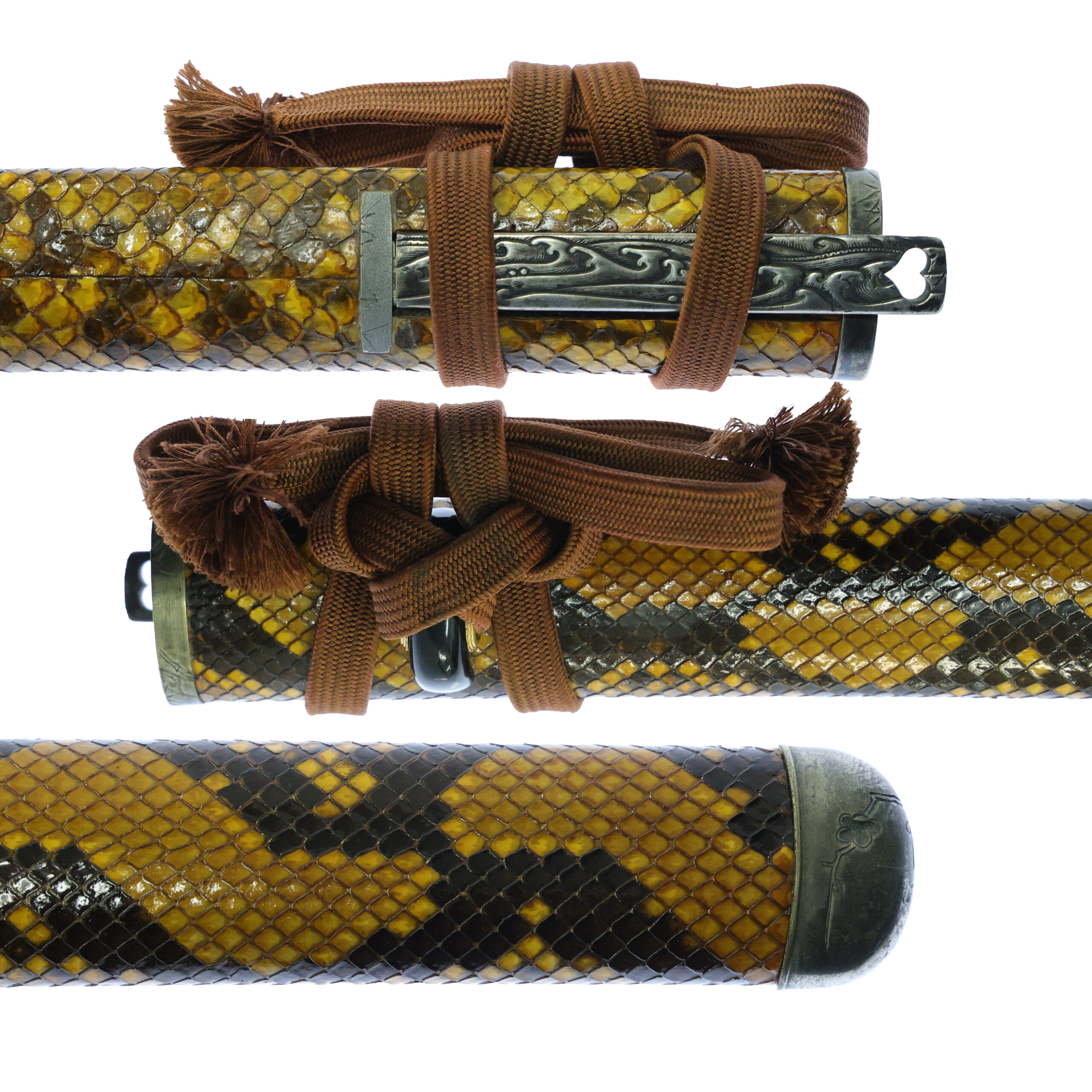
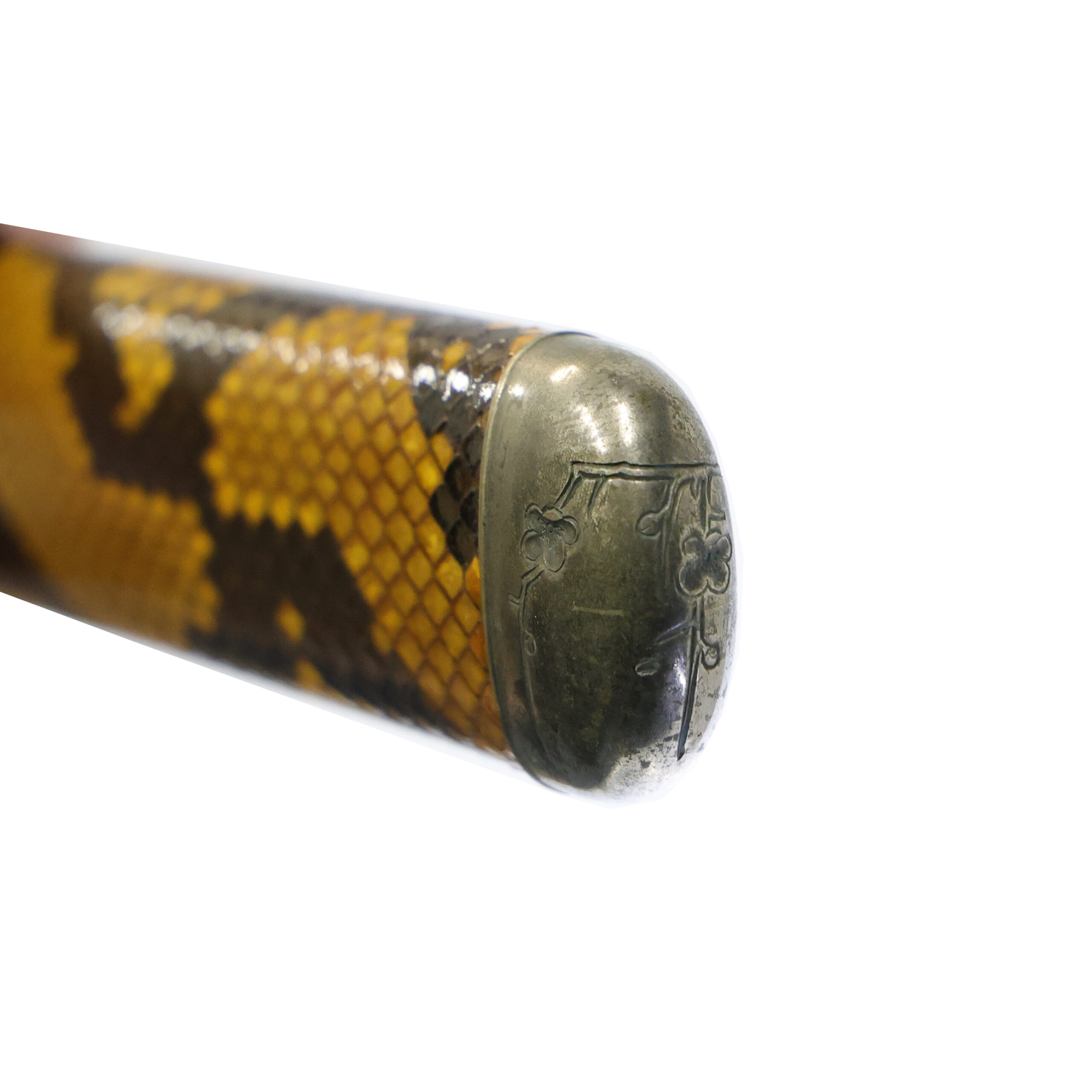
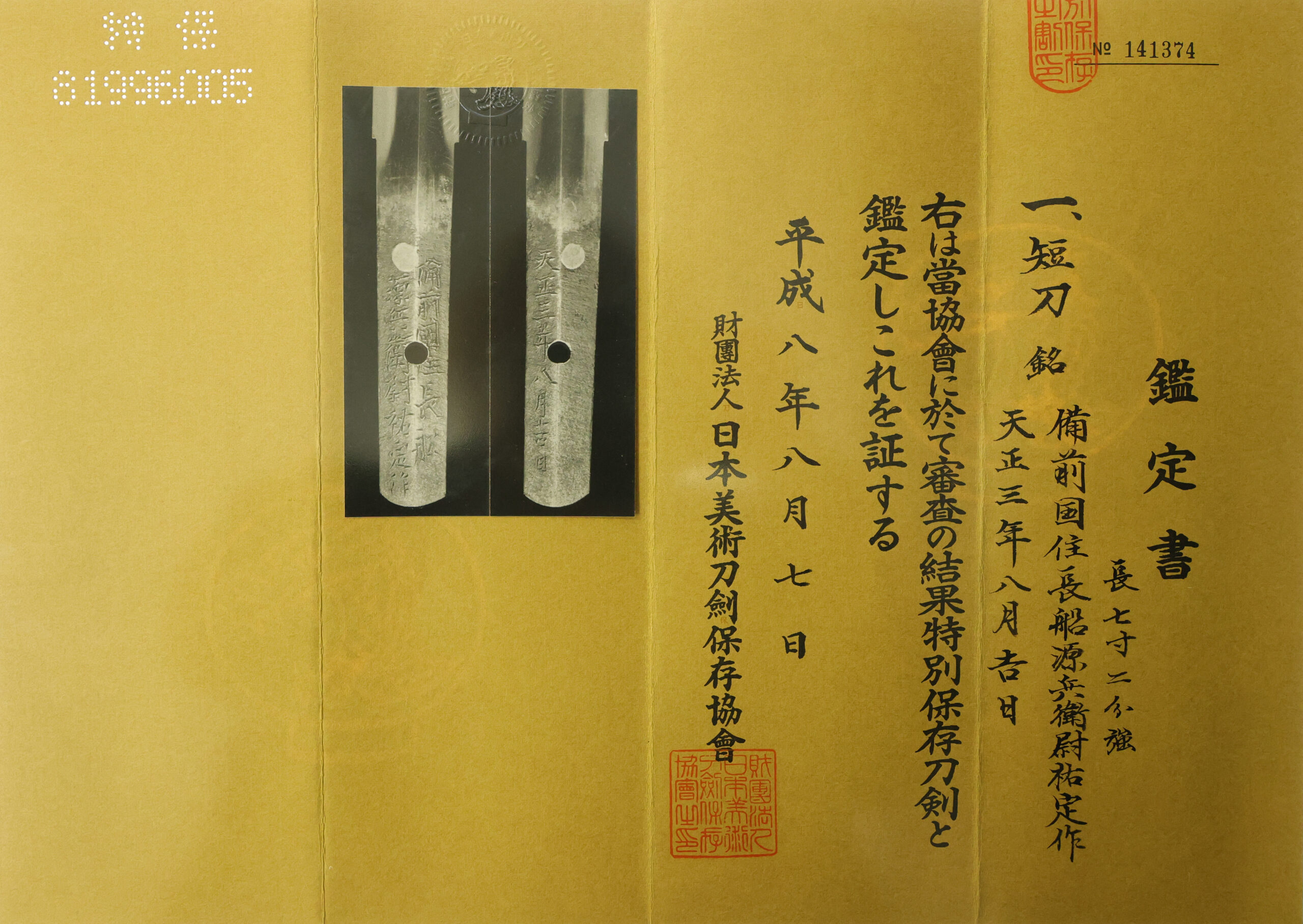
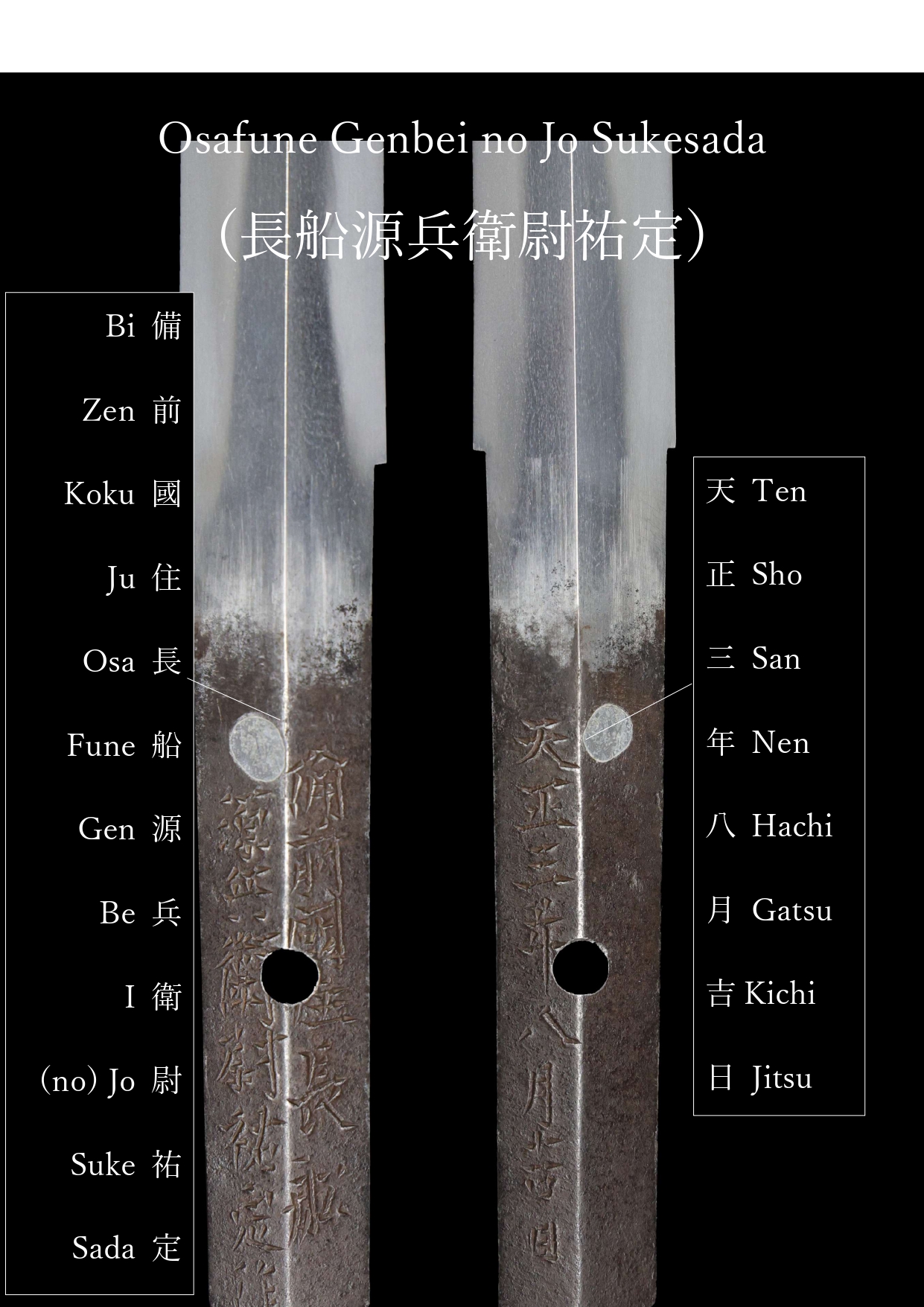
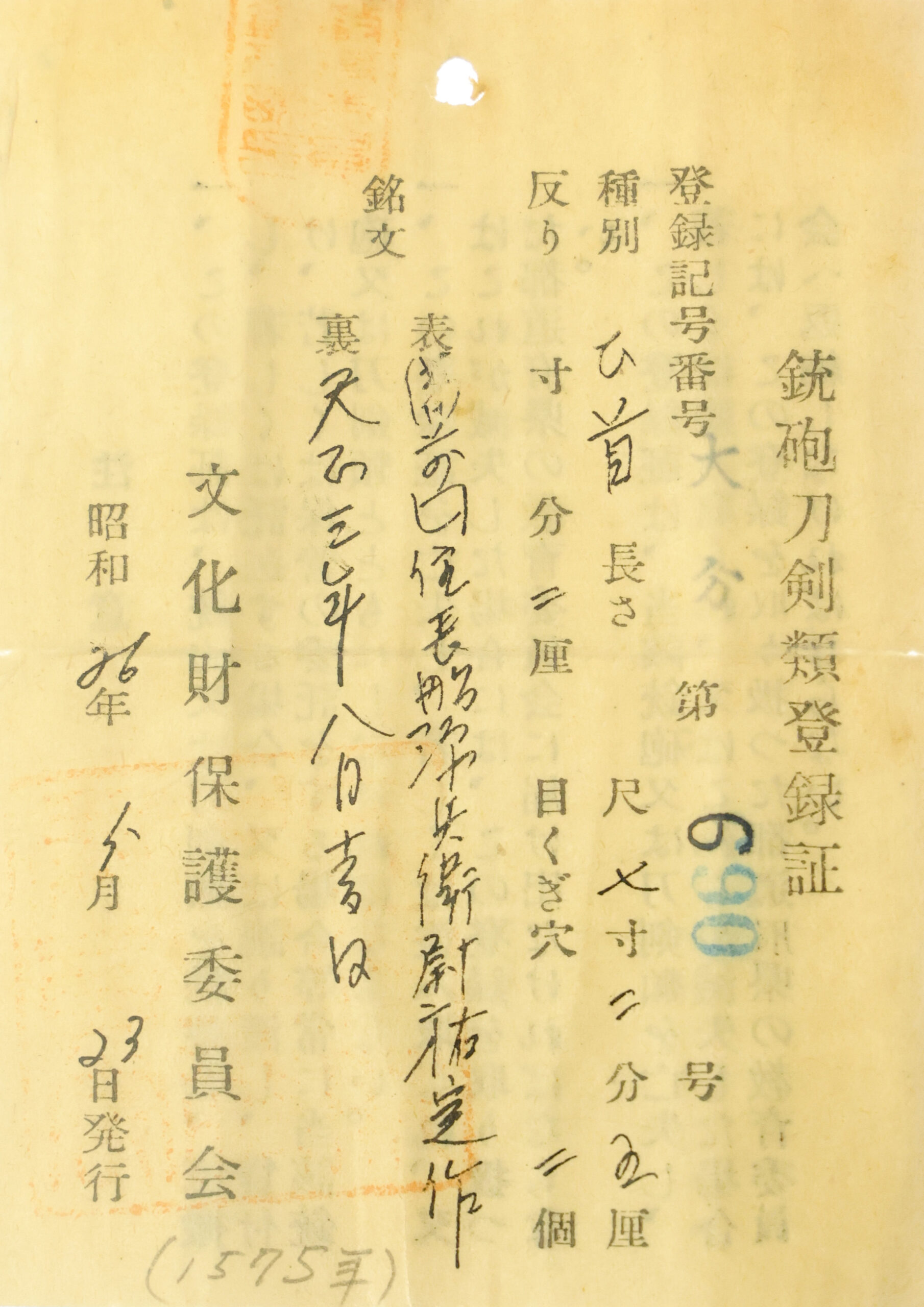
This blade was signed by Bizen Koku Jyu Osafune Genbei no Jo Sukesada (備前国住長船源兵衛尉祐定) in the third year of the Tensho era (1575: Late Muromachi period). Bizen Koku is the name of the province located in Today’s Okayama prefecture. Osafune is one of the most prosperous schools in this province during the Muromachi period. Genbei no Jo Sukesada is his maker’s name. Bizen Koku Jyu means that Sukesada resided in this province when he forged this blade. The back of the signature says which year it was signed. Those who forged swords in the Bizen province (Okayama prefecture) at the end of the Muromachi period (1492-1569 A.D) are called Matsu Bizen (Matsu means the end). Sukesada school was one of the most famous schools, and it flourished for generations among Osafune schools (The head branch). There were various styles forged by the generations of Sukesada during this period. Approximately 60 swordsmiths used Sukesada as his maker’s name in the Samurai history. In that sense, the swordsmith’s name “Sukesada” worked as a kind of brand that attracted many Samurai. Genbei no Jo Sukesada is said to have been the son of Yosazaemon no Jo Sukesda, one of the most famous Sukesda among others. And, He served Uragami clan who was the head of Tenjinzan castle in Bizen province. His grandfather was Hikobei no Jo Sukesda. And these three Sukesada (Genbei no Jo, Yosazaemon no Jo and Hikobei no Jo) are most well-known and skilled Sukesada during the late Muromachi period. The swordsmiths in Bizen produced many swords during the Muromachi period, as it was in the middle of the Sengoku period (Warring States period). The demand for weapons increased among strong feudal lords. It would be nice to have a piece forged in the Warring States period when there was so much rivalry between warlords. It was possible that this blade was ordered by a Samurai and he might have carried it on a battlefield. This History of Bizen Osafune School It is said that Osafune school was founded by Mitsutada (光忠), who was active during the mid-Kamakura period. Bizen Osafune school was the biggest one of all other schools in Bizen province, and they received many orders from feudal lords or renowned Samurai. They were called Osafunemono and were beloved by Samurai warriors. Among the swordsmiths who belonged to this school, Nagamitsu, Sanenaga, and Kagemitsu are known as Osafune Sansaku, the three renowned Osafune swordsmiths. There are also four other prominent swordsmiths who were from Bizen Osafune school. They are called Osafune Shiten-no, the four masters of Osafune school. Their names are Nagamitsu, Kanemitsu, Nagayoshi, and Motoshige. BIZEN is located near the Chugoku Mountains, where iron sands, one of the essential materials for making Japanese swords, were abundant. Furthermore, BIZEN swordsmiths had close access to the Yoshi River, where they could find water and charcoal. This geological location contributed to the swordsmiths forging high-quality refined blades. We presume BIZEN was quite active in sword-forging from ancient times. It is said that BIZEN DEN was created by groups of swordsmiths there during the late Heian era (Late 12th century). These ancient swordsmiths in Bizen province are called Ko-Bizen (Old Bizen) swordsmiths. By inheriting the sword forging techniques from Ko-Bizen swordsmiths, the Bizen Osafune school flourished from the mid-Kamakura period. Historical Background The late Muromachi period overlaps with the Sengoku period (戦国時代, “Warring States Period”), a time marked by ongoing military conflict and political fragmentation across Japan. In this turbulent era, the samurai class played a central role as both warriors and political actors. Swords were vital to the samurai not just as weapons but also as symbols of personal honor and status. A well-forged sword was regarded as an extension of the samurai’s soul, used in both battle and ceremonial practices. As warfare intensified, demand for high-quality blades grew rapidly. Feudal lords (大名, daimyō) sought to equip their armies with superior weapons, turning to renowned swordsmiths like Moritaka for craftsmanship that combined functionality with aesthetic value. This blade is appraised as a Tokubetsu Hozon Token (特別保存刀剣) issued by NBTHK (Nihon Bijutsu Touken Hozon Kyokai:日本美術刀剣保存協会). Fuchi-Kashira The motif of this Fuchi-Kashira is some kind of flower, which looks like Japanese apricot blossoms (梅, Ume). Japanese apricot blossoms begin to bloom in winter that snow still covers its tree so that people thought this flower tells the arrival of spring. Same as cherry blossom, it has been appreciated for a long time in Japan. People enjoy its adorable petal shape and scent, gracefully branched tree, and compose many poems. As it comes out in the cold season, it symbolizes the power of perseverance and vitality. Tsuka and Menuki The motief of this menuki is Genbu (玄武), one of the Four Divine Beasts in ancient Chinese mythology. Together with the Azure Dragon of the East (青龍), the White Tiger of the West (白虎), and the Vermilion Bird of the South (朱雀), Genbu serves as a guardian of the four cardinal directions. Genbu represents the North and appears as a tortoise entwined with a serpent. In East Asian culture, Genbu symbolizes endurance, stability, longevity, and health, and is sometimes regarded as the highest-ranking among the Four Divine Beasts. According to ancient Chinese beliefs, tortoises were thought to have no male counterpart, and therefore produced offspring by pairing with a serpent. Because of this myth, the combined form of the tortoise and serpent came to represent the union of Yin and Yang, embodying harmony and cosmic balance. Kozuka This kozuka features a design of turbulent waves (波濤図, hatō-zu), a classical Japanese motif symbolizing the power and constant flow of nature. Wave patterns were favored by Samurai, as the dynamic movement of water represents both strength and an unyielding spirit. The handle end of the kozuka is shaped like a heart, but this form is actually called “inome” (猪目, boar’s eye) in Japanese decorative arts. The motif has been used since ancient times as a protective symbol believed to ward off evil and bring good fortune. Inome patterns are commonly found in traditional architecture, armor, and metal fittings. Saya The scabbard is wrapped in snakeskin(蛇革), giving it a distinctive and elegant appearance. Snakes have long been associated with renewal, protection, and spiritual power due to their ability to shed their skin and “be reborn.” Snakeskin, in particular, symbolizes transformation, longevity, and resilience, making it a meaningful material for sword mountings. Authentication Paper They authenticated the blade on August 7th in the 8th year of Heisei (1996). They appraised it as Tokubetsu Hozon Touken, the blade especially worth preserving for Japanese society.
取扱店 サムライミュージアム
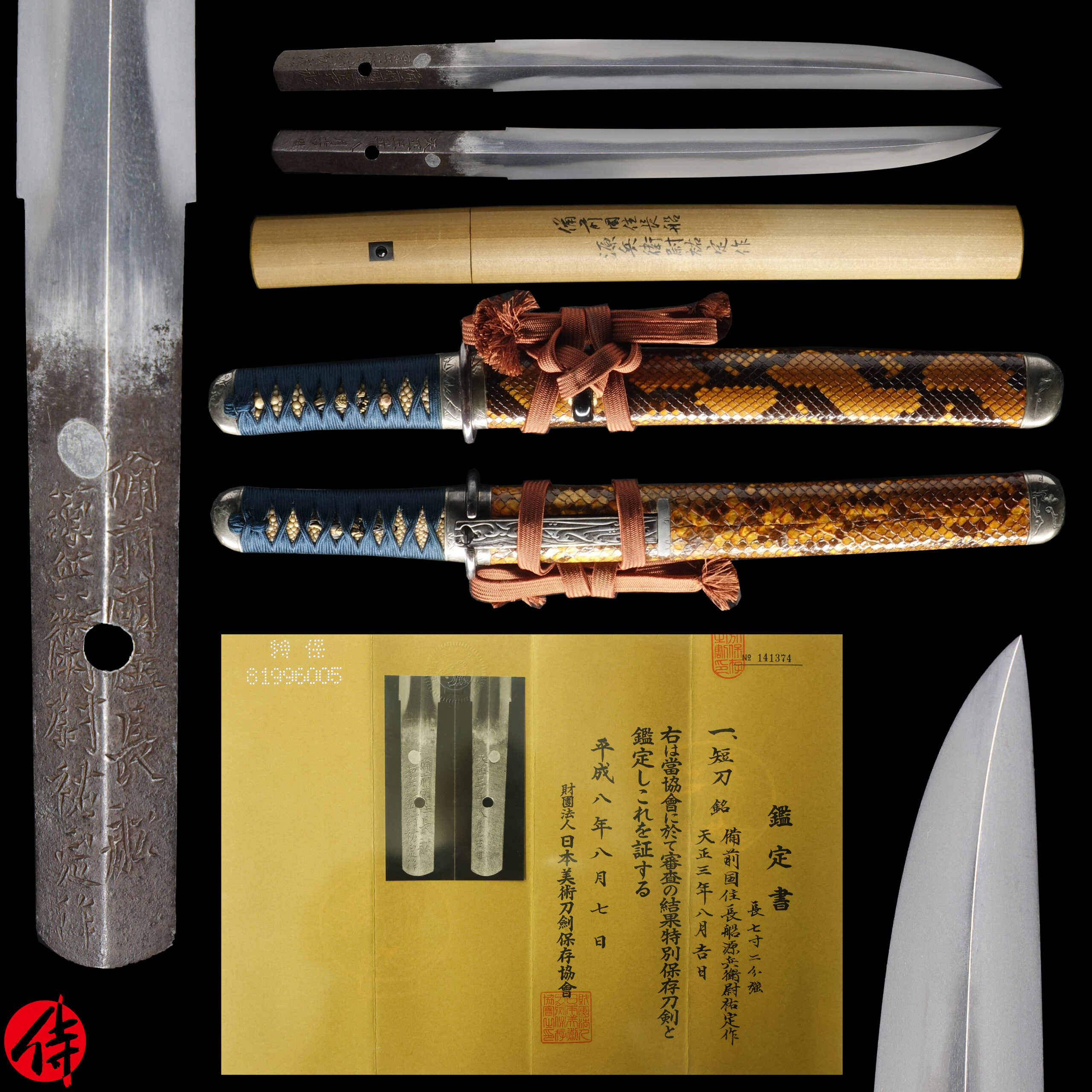
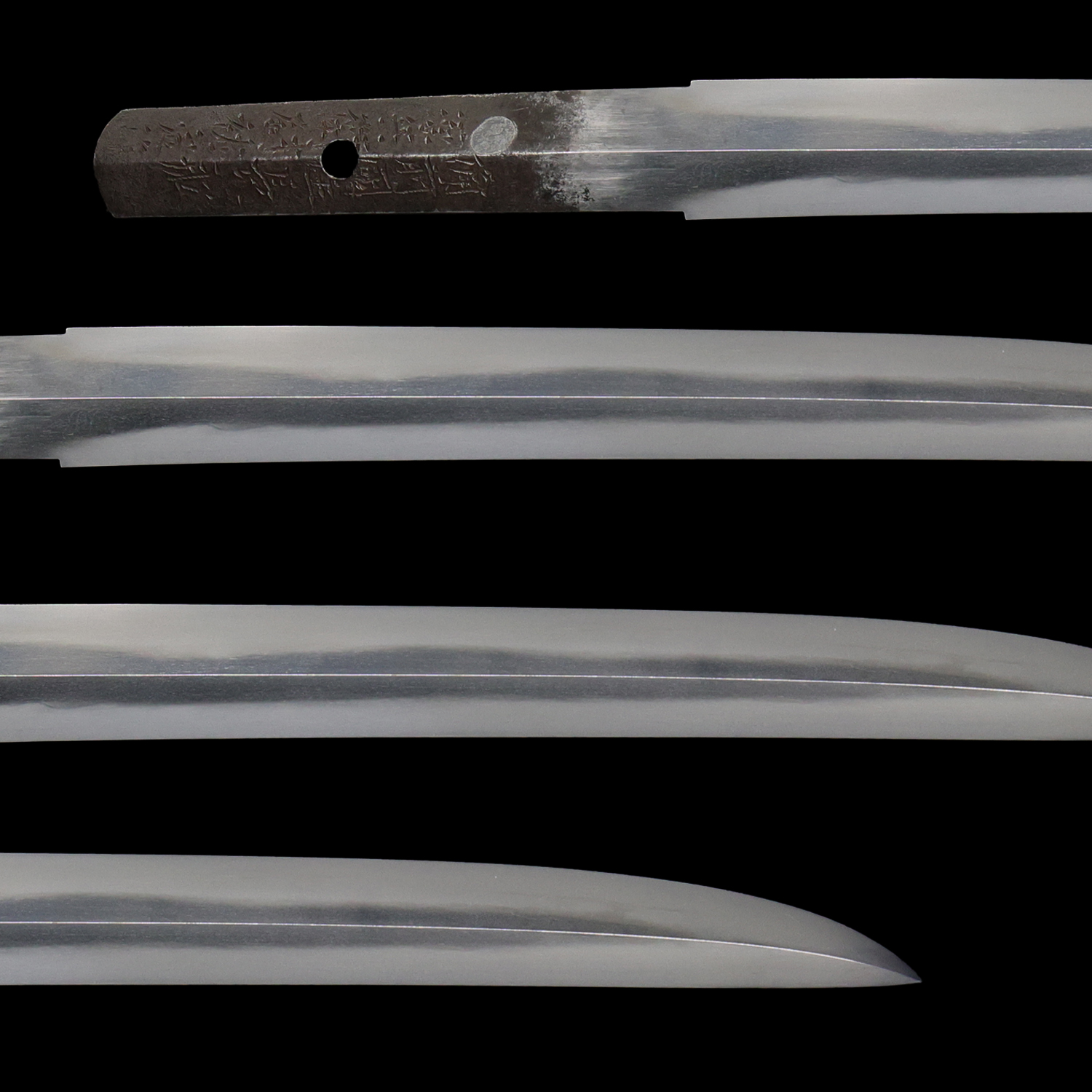
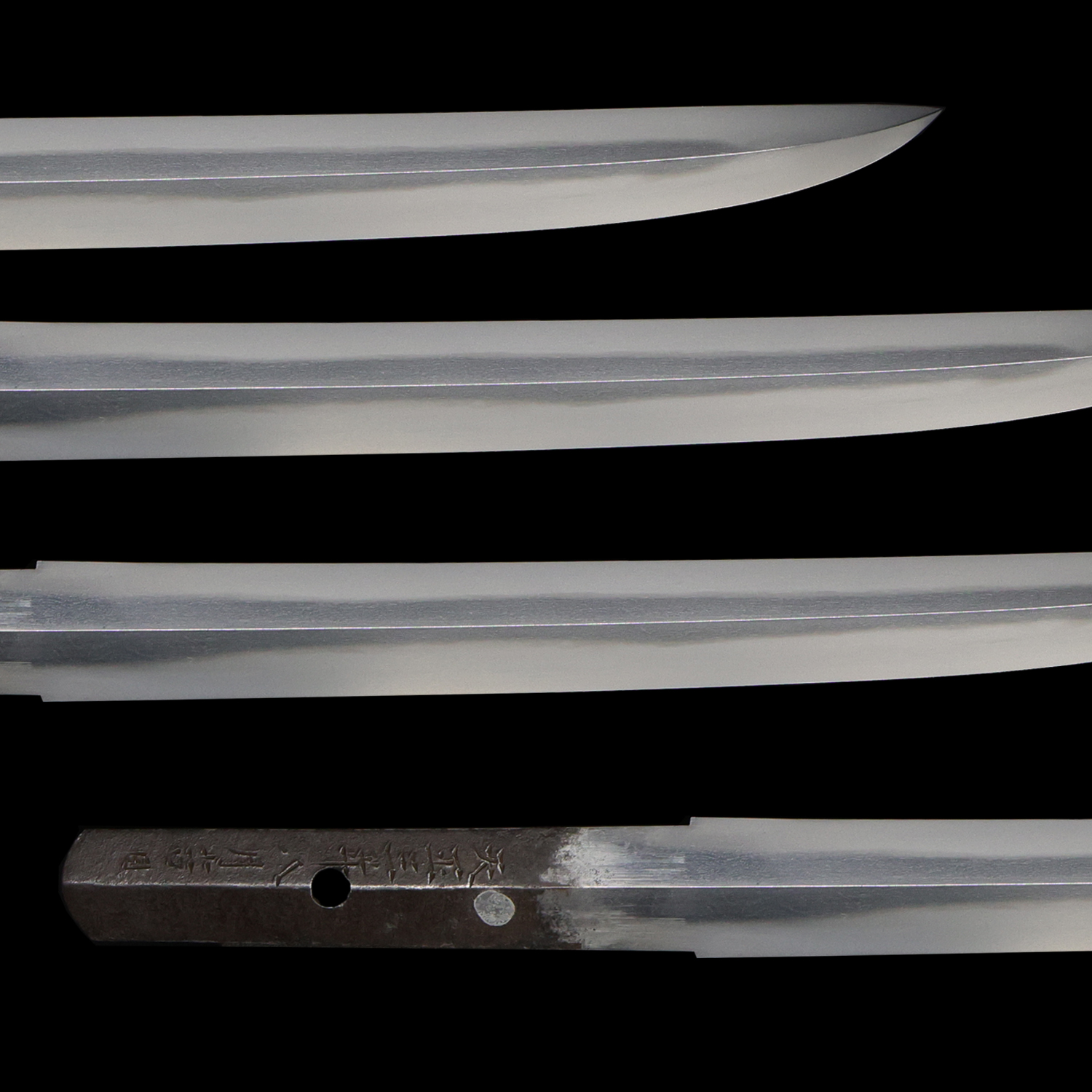


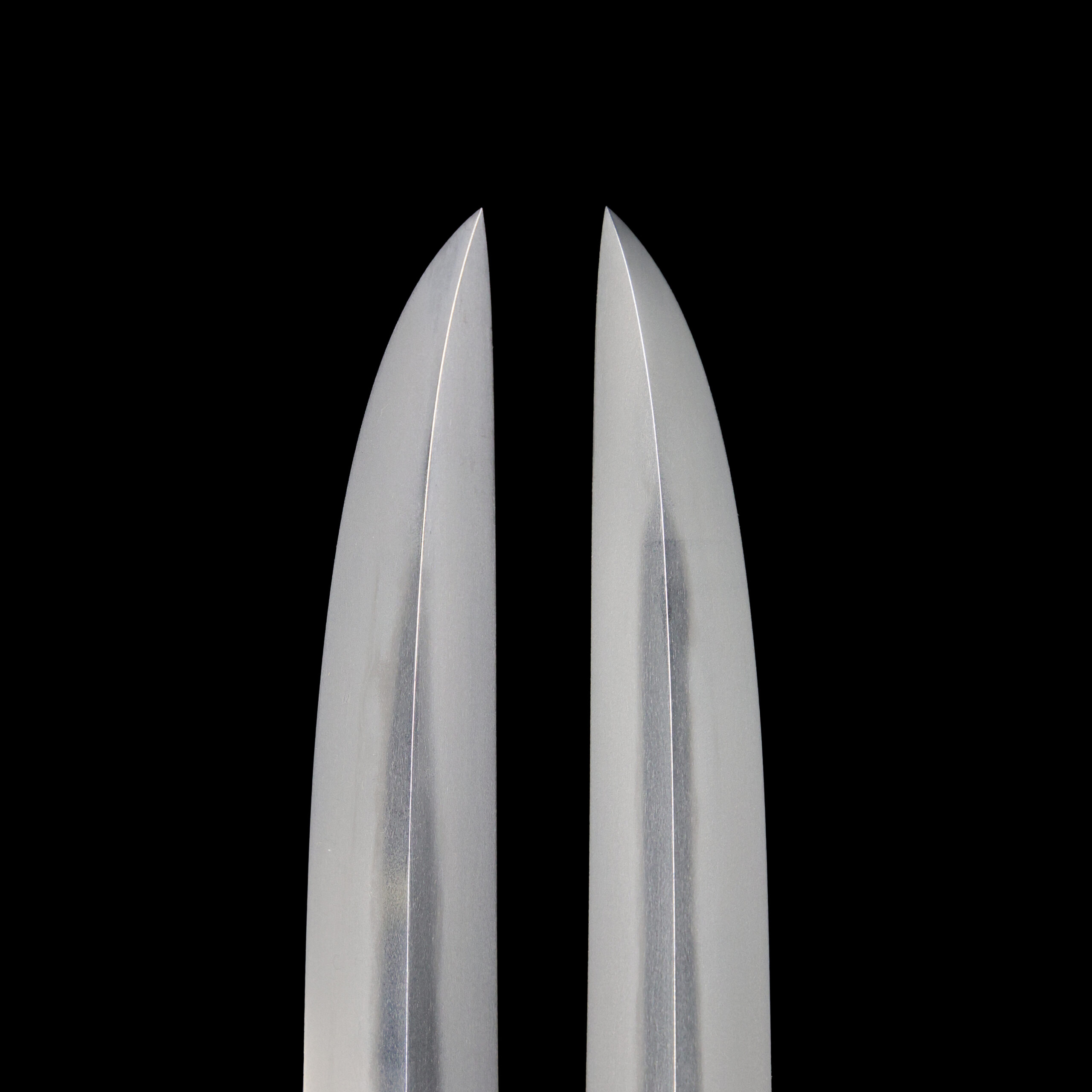
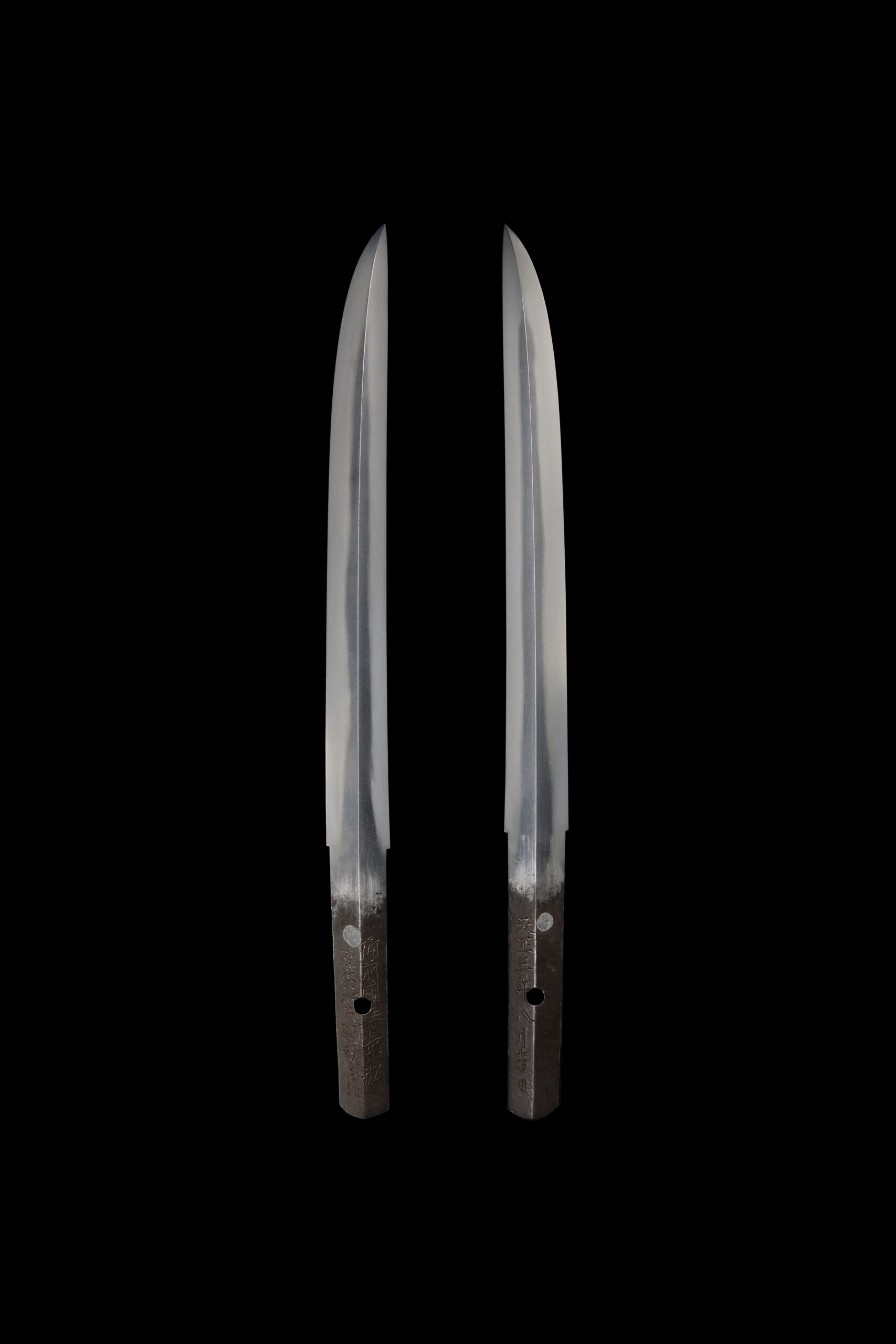
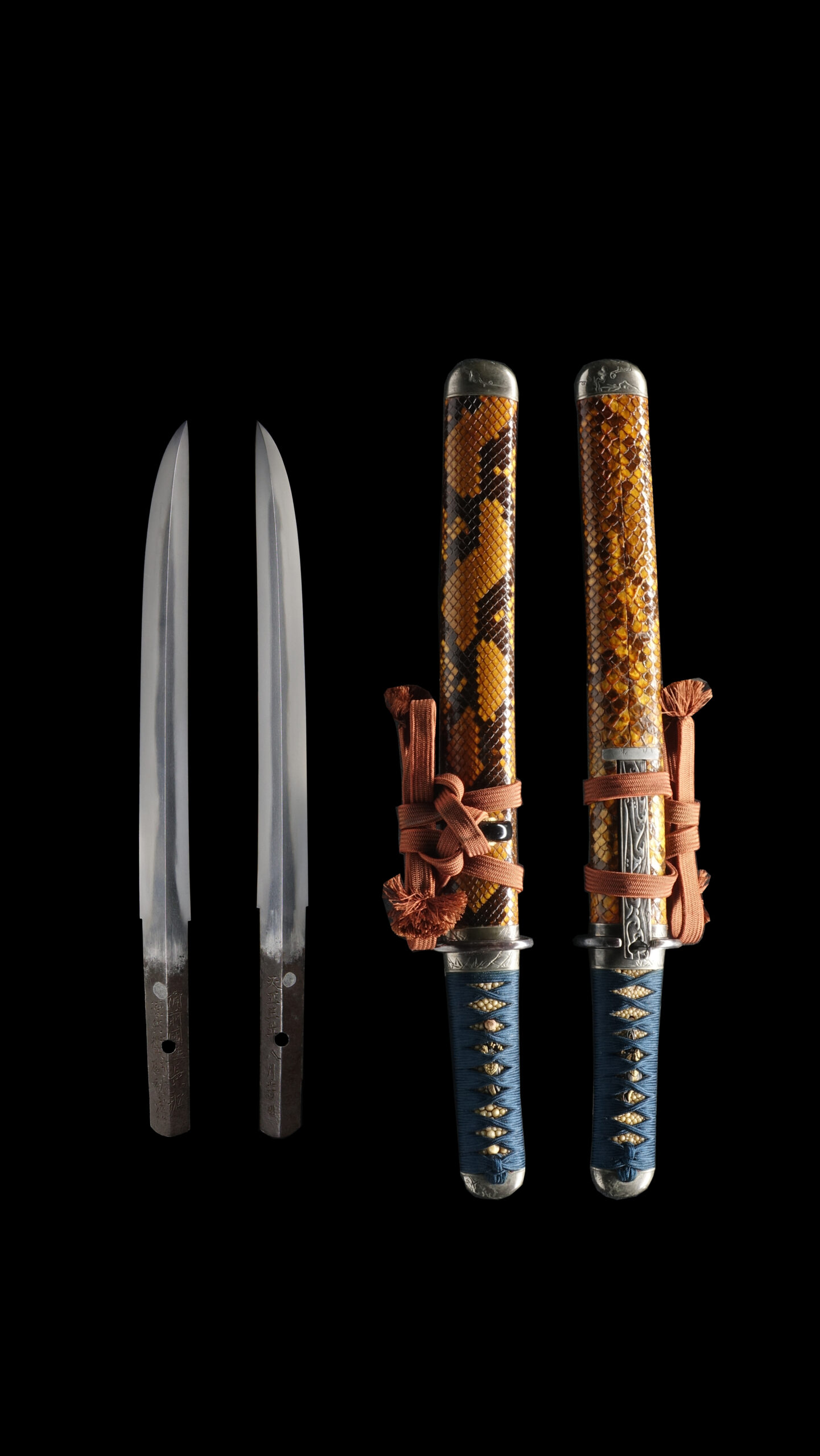
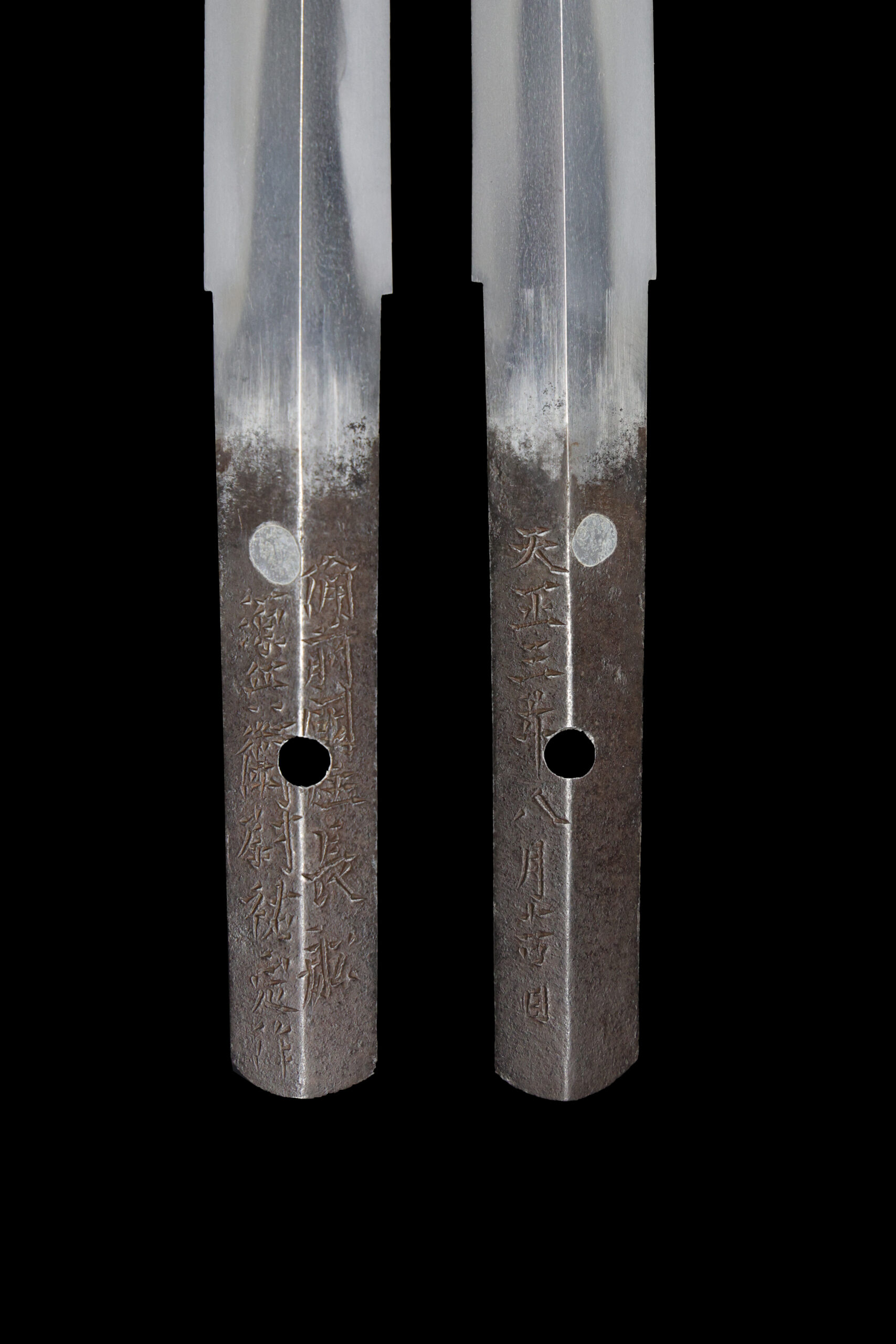
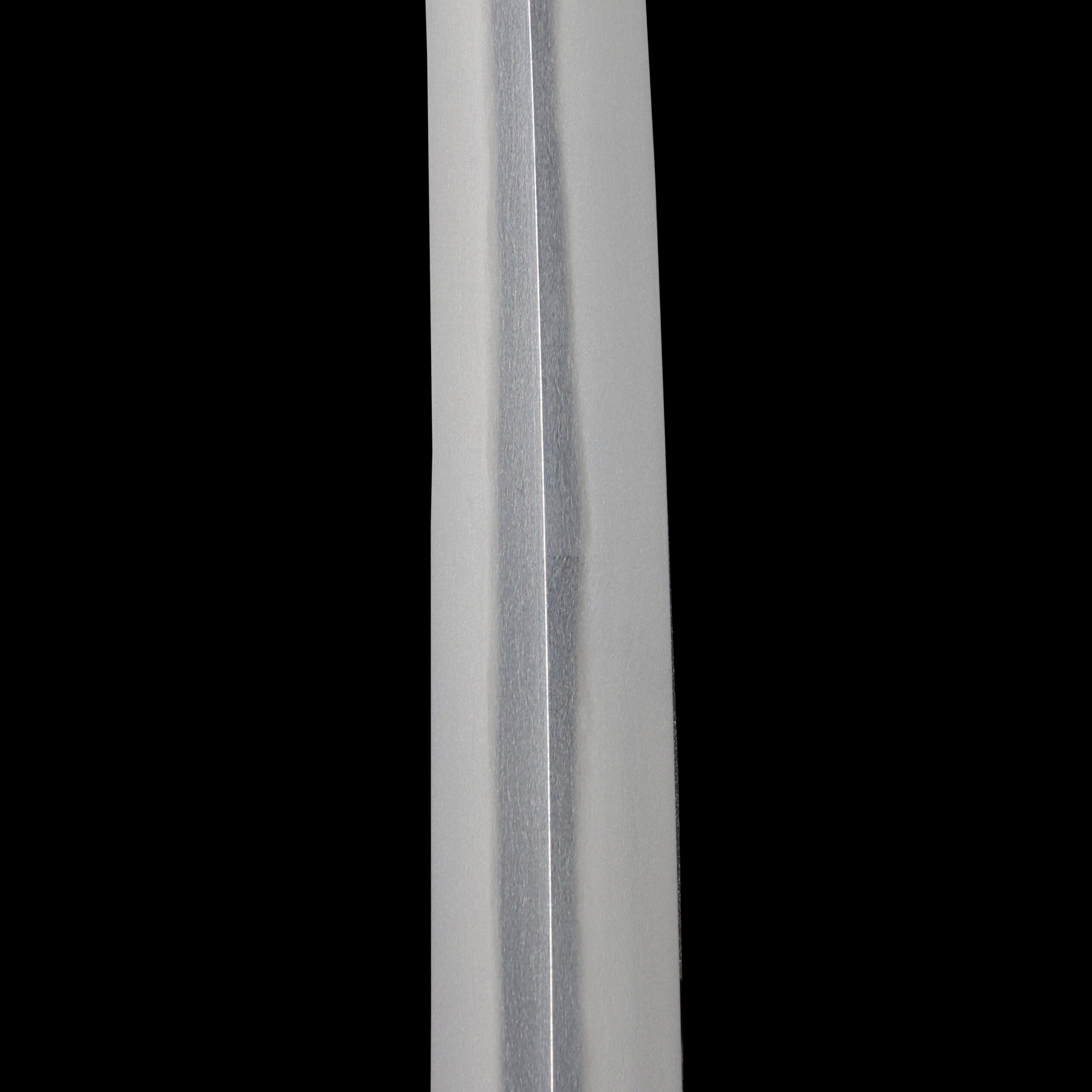
販売店の記載のまま
長船(末備前)・備前 — 源兵衛尉系 · 備前 · 1532-1583頃
藤代 上々作
現在1点販売中
源兵衛尉祐定は、総称して末備前と呼ばれる室町末期の長船一家のうち、俗名を冠する筆頭格の一工であり、大いなる祐定の一家のなかでも、名のみによってではなく、説明書が幾度も挙げる一対の資質によって見分けられる系である。祐定は末長船最も繁栄した一家で、数十工がこの名を切ったが、説明書はその群れのうちから繰り返し同じ短い名簿を引く。すなわち、名を負った数多の中で、与三左衛門尉・彦兵衛尉及びこの源兵衛尉を冠する者が最も上手である、と。その三工のうち源兵衛尉は、穏やかにして精緻な手である。年紀のある作は天文年間に始まり、天正末年まで続き、剣書はこの名を世代を異にする二代に分け、初代を永正に置き、二代を永禄・元亀・天正に通して見る。彼は、本来大量生産に委ねられた時代にあって、誂えられた一口を入念に鍛える名手である。
説明書は彼を二つの徴によって定める。いずれも本人の作についての言葉のままに受け取るのがよい。第一はその鍛えである。彼について説明書は「鍛錬の優れている事で定評があり」[[c:1]]と記し、また「一般に豪壮で地がねがよく、直刃調の出来を得意としている」[[c:2]]とする。第二の徴がその刃文である。典型は焼幅広く明るい広直刃で、直刃調に浅くのたれ、これに小互の目を交え、足・葉さかんに入り、小沸つき、匂口締まりごころあるいは明るく冴え、砂流し・金筋がかかり、時に湯走りを交える。これは末備前の静かな面であり、先輩与三左衛門の腰開きの互の目の華やかさに対する対であって、説明書は彼の「直刃調の刃文を得意とする」[[c:3]]ところをその特色とする。
地鉄はその刃の下にあって終始変わらぬところであり、定評の後半を目に見えるかたちにしたものである。彼はよくつんだ小板目、しばしば板目の内につんだ地を鍛え、地沸が微塵につき、地景織りなし、鎬寄りにしばしば淡く乱れ映りが立ち、ある作では区下に水影あらわれ、かね冴える。これこそ説明書が定評通りの美麗とする鍛えであり、誂えの源兵衛尉作を末長船の粗い数打の群れから分かつ精良さである。作は永禄・天正期の豪壮な室町末期の打刀で、室町中期に比して寸が大きく延び、身幅広く元先の幅差さまで目立たず、重ね厚く、反り深く先反りつき、中鋒延びて、両手打に適した長めの茎となる。帽子は直ぐあるいは乱れ込みに小丸となり、焼深く、しばしば掃きかけて長く返る。
この穏やかな典型に対して、説明書が殊に例外として取り上げる華やかな手がある。数口の作、わけても末備前に多いとされる両刃造の短刀において、彼は腰開き・複式の互の目を基に総じて焼の高い変化に富む刃を立て、尖り刃・角張る刃を交え、足・葉入り、盛んに飛焼を交え部分的に棟を焼いて上半を皆焼風に破り、匂口明るくする。説明書は直刃を本来の手としつつ、本作のような皆焼風の乱刃を焼いても上手であり、地刃がよく冴えるとする。永禄元年紀の特別重要刀剣の刀は二つの面を同時に見せ、広直刃を基調としながら下半に逆がかりの乱れ・逆足・二重刃風を示し、説明書がこれを青江や雲類の古作を参酌したかという古色とし、同工の作中にあっても深みを与えるとする。この刀について説明書は「源兵衛尉祐定の見どころが総体によく表出している」[[c:4]]と評する。
一家のうちで彼を分かつのは、まさにこの役割の分担である。与三左衛門尉が知名度と作域の広さで名を率い、末備前を定義する腰開きの複式互の目によって読まれるのに対し、源兵衛尉はその直下に立ち、彦兵衛尉と並んで、明るい広直刃と、説明書が同名の最上に劣らぬとする地の精良さによって読まれる。彼はまた、記録された誂え物の刀工でもある。相当数の作が年紀の傍らに所持銘を負い、これは説明書が一般の数打物と峻別する「為打」「注文打」である。かかる作は、説明書によれば数打とは比較にならぬ入念の作で、地刃の出来が優れ、説明書は「かかる作刀があるからこそ、世上末備前の名声が高い」[[c:5]]と明言する。
収集の観点では、源兵衛尉は実際に学び、根気をもって入手しうる名である。藤代の極めは上々作。国宝はなく、重要文化財もなく、その記録はむしろ重要刀剣の級に厚く連なり、特別重要刀剣の刀一口と戦前の重要美術品一口がその頂にあって、本録では特別重要刀剣・重要刀剣の級におよそ十七口を数える。その作は名家の伝来によってではなく、銘文のうちに自らの来歴を担う。天文二十三年紀の刀は惟宗忠頼の所持銘を負い、ほかに原与兵衛尉・三木与一兵衛らの注文者銘を伴い、重要美術品の刀は昭和二十四年に岡山の岡野多郎松へ認定された。年紀在銘の打刀が相応に残るため、私蔵の一口は世代に一度というよりは時に世に出るものであり、説明書はその最上を自らの言葉で標し、ある一口を「数ある源兵衛尉祐定中の屈指の優品」[[c:6]]と称える。彼は、記録の確かな名手による在銘年紀の一口を手にしうる、真の望みをもって追える稀な末備前の名である。
祐定の位置づけを、日本刀全体および伝法・時代・時期ごとに示します。各区分(随一・屈指・有数・著名)は、日刀保および文化庁による指定に加え、三作や名物帳などの歴史的栄誉を加味したものです。
各項目を選ぶと評価方法が表示されます。
在銘年紀作が示す、確実に活動していた年代
備前伝 · 備前
時期区分: 末備前· 1441–1596
現在56点販売中
嘉吉から文禄に及ぶ室町時代後期、長船派の最末期を画するのが末備前である。応永備前が古作への復古を志して優美な太刀姿と丁子刃を甦らせたのに続き、この期の長船鍛冶は戦国の世の旺盛な武器需要に応じて作刀の規模を一段と広げ、長船の名のもとに膨大な数の刀剣を世に送り出した。説示にあらわれる主要工は、勝光、宗光、貞光、治光、忠光、清光、春光、祐定の一群である。勝光は宗光・忠光と並ぶ巧者で、右京亮・次郎左衛門尉・修理亮など様々な俗名を冠する同名工を擁し、貞光や子の治光との合作銘も伝わる。祐定にあっては与三左衛門尉・源兵衛尉・彦兵衛尉を冠する者がとりわけ技術が高く、与三左衛門尉祐定は名品の数多くその筆頭に挙げられ、彦兵衛尉はその父と伝えて慶長まで数代を数える。清光は五郎左衛門尉と孫右衛門尉が筆頭格、春光は文明から文禄に及ぶ長期に同名数工があって十郎左衛門が最も知られる。この期には播磨・備前・美作の守護赤松政則が宗光・勝光の一党を陣中に招いて鍛刀の技を学び為打を遺したことも説示に見え、注文打と数打物とが併存した末期の様相をよく伝えている。 体配はまず時代を映す。身幅広く寸のつまり、重ね一段と厚く、踏張りがあって先反りつき、中鋒、茎は片手打に適した短いものとなる、室町後期特有の打刀姿である。鍛えは小板目肌がよくつみ、地沸が微塵につき、地景が細かに入って、淡くあるいは鮮明に乱れ映りが立つ。刃文の中心をなすのは末備前固有の腰の開いた互の目で、焼頭が割れて複式に乱れる複式互の目を基調に、尖り刃・尖りごころの互の目・小互の目を交え、足・葉頻りに入り、匂勝ちに小沸がつき、金筋・砂流しがかかり、処々に小さな飛焼を交える。さらに飛焼・棟焼が頻りにかかって皆焼風となる作もあり、帽子は乱れ込んで先小丸に長く返る。これは光忠の蛙子丁子、長光の丸い頭の丁子、景光の片落ち互の目といった古長船・相伝備前の整然たる丁子主調とは趣を異にし、応永備前の腰開き互の目をさらに崩して量感と変化に向かわせた戦国期の姿である。同時に勝光のように乱れの中へ丁子を多く交えて一段と華やかに焼き、忠光や清光のように直刃の上手として定評を得る工もあり、作域は広い。 鑑定にあっては、まず乱れ映りで備前と読み、つまった寸と厚い重ね、先反り強き打刀姿で時代を末備前に定める。次に俗名と作風で工を分かつ。乱れの中に丁子を多く交えた華やかな出来は勝光、複式風の互の目に飛焼を交えてやや皆焼がかるは与三左衛門尉祐定、板目に杢を交えてやや肌立つ直刃は孫右衛門尉清光、直刃に佳作多きは彦兵衛尉祐定、というように看どころが工を指し示す。表裏に施された梵字・蓮台や棒樋連樋の刀身彫もまた末備前の特色をよく示し、長光景光以来の彫の伝統がこの期まで継承されたことを物語る。代表作には、勝光・貞光合作の明応八年紀の薙刀、勝光・治光父子合作の大永七年紀の短刀、与三左衛門尉二代の元亀元年紀の刀があり、合作銘や所持銘・添銘を伴う注文打は、末備前とそれを支えた三宅氏のごとき在地の氏族を知る上でも資料性が高い。 詳しく見る →
室町時代の備前
室町期の長船は二層の商いを営んだ。兵卒のための数打ち物と、注文主の俗名を銘に負う注文打ちである。末備前であっても、祐定の最上作は一派のいかなる時代の作にも劣らない。
保存刀剣のうち、出来が一層優れ、保存状態も良好と認められたものです。再刃や、室町・江戸期の多くの無銘作は対象外となり、保存刀剣より高い基準が課されます。
日本美術刀剣保存協会(日刀保)は、1948年に設立され、文化庁の監督を受ける公益財団法人で、東京・刀剣博物館に本部を置きます。専門の審査員が出品作を直接審査し、美術的・歴史的価値に応じた鑑定書を発行します。日刀保の鑑定書は、日本刀および刀装具の真正性を示す最も広く認知された基準です。
日刀保公式サイトReturns/exchanges limited to defects caused by shipping (except willful misconduct or gross negligence by the company); customers must contact within 72 hours of receiving the product.