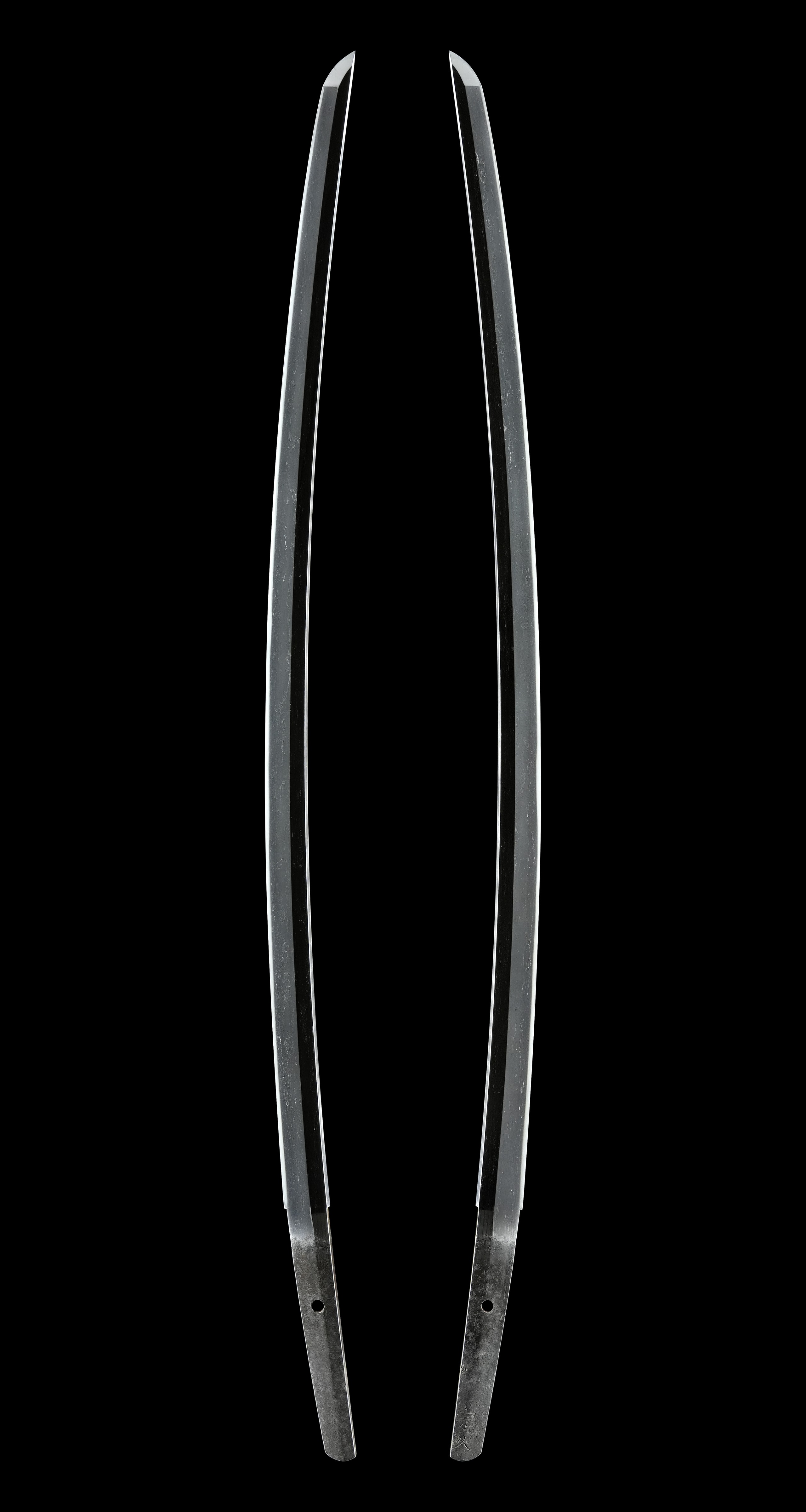
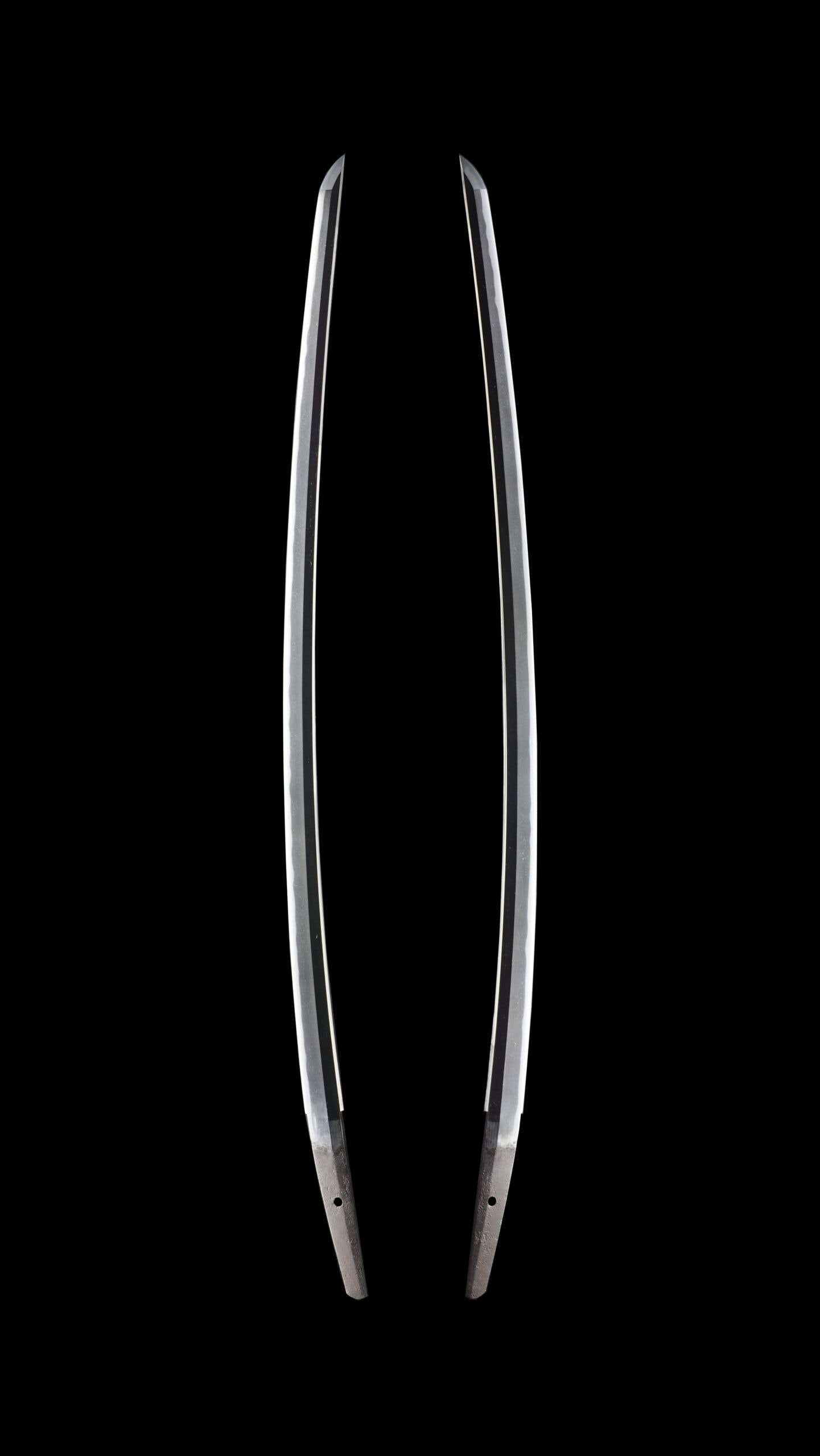
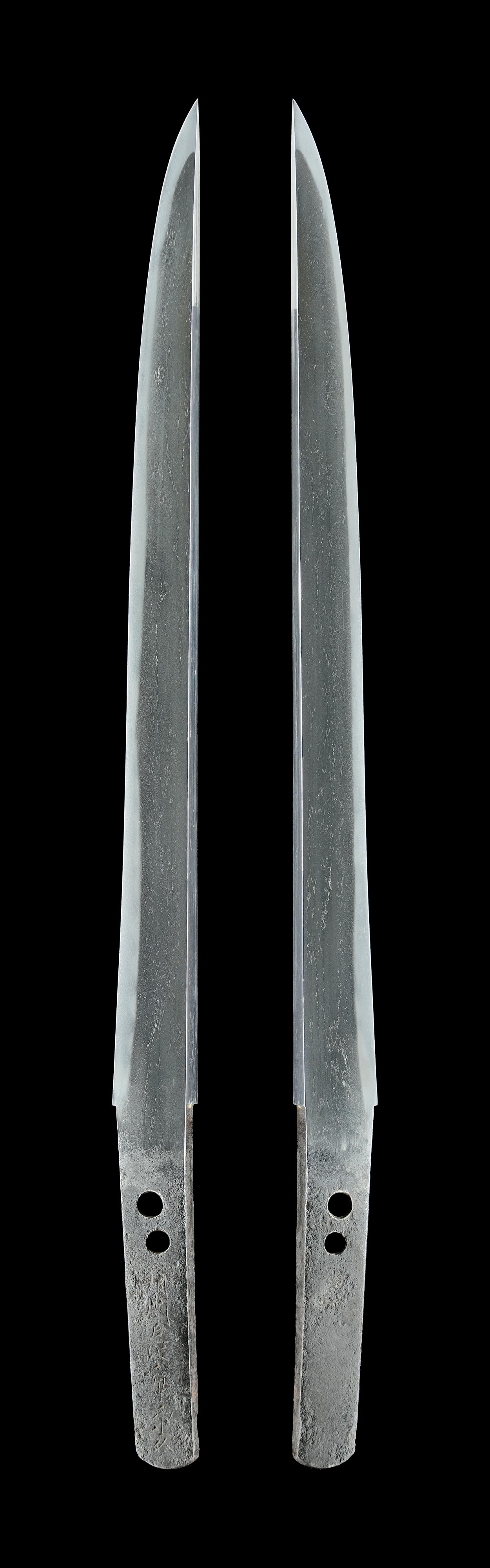
Tsunehiro (恒弘) was a smith of the Osafune school in Bizen Province, active during the late Nanbokucho period. Although sword reference works place a first generation around the Gentoku era at the end of the Kamakura period, "almost no extant works by that figure are seen." The Tsunehiro whose works survive in appreciable number is the later smith, counted among the group of makers associated with the so-called ko-sori-mono — "small-curvature" or "slight-sori" pieces that constitute a distinctive stylistic current of the late Nanbokucho era. While the Kokon Kaji Biko advances the theory that Tsunehiro belonged to Chogi's line, the NBTHK observes that "neither the workmanship nor the manner of signing resembles Chogi," and places him instead among smiths whose jigane and hamon are "characteristic of the small-sori works of the later Nanbokucho period."
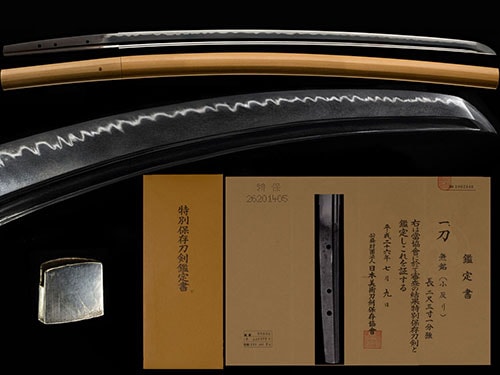
The forging in Tsunehiro's blades shows itame-hada mixed with mokume, overall tending toward nagare-gokoro, with fine ji-nie, thick chikei, and jifu intermixed; utsuri stands out, sometimes with a "whitish tendency." The hamon is principally a gunome with kataochi-like elements — mixed with togariba, ko-gunome, and pointed forms — tightened down with sunagashi and kinsuji, producing an overall small-patterned effect. The nioiguchi tends toward shimari-gokoro, occasionally with a slight shizumi tendency, while at the yakigashira one observes yubashiri-like effects. The boshi enters in midare-komi, tending toward a pointed feeling with vigorous hakikake. Signature characters are "notably small and placed close to the ridge."
The NBTHK characterizes Tsunehiro's finest works as masterpieces in which "the jigane is well consolidated, the nioiguchi is clear and bright, and both ji and ha are kenzen." His blades share traits broadly with other ko-sori-mono smiths such as Moriyuki and Mitsuhiro, yet Tsunehiro's individual manner — the kataochi-like gunome with its small-patterned, tightened character — is recognized as a distinctive stylistic contribution within the late Nanbokucho Osafune tradition.
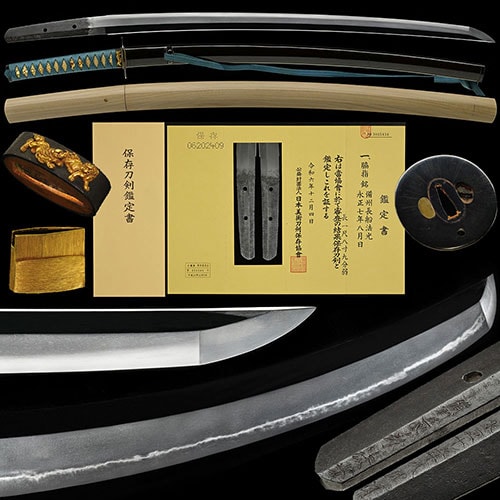
![Katana - Jūyō - 作 師光 - 刀[備州長船師光]重要刀剣/特別保存刀装具](/_next/image?url=https%3A%2F%2Fitbhfhyptogxcjbjfzwx.supabase.co%2Fstorage%2Fv1%2Fobject%2Fpublic%2Flisting-images%2Fworld-seiyudo%2FL759395%2F01.jpg&w=2560&q=90)