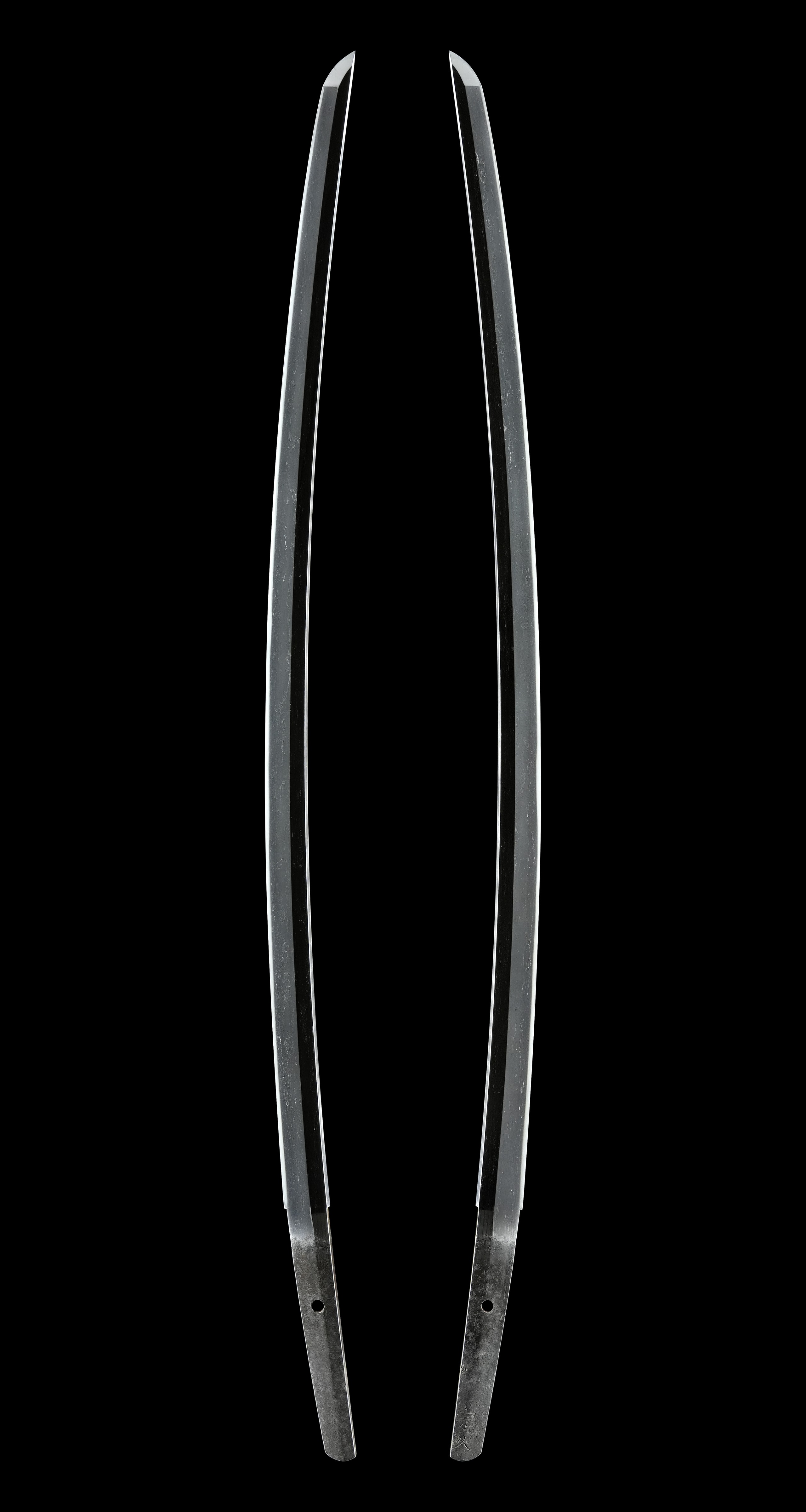
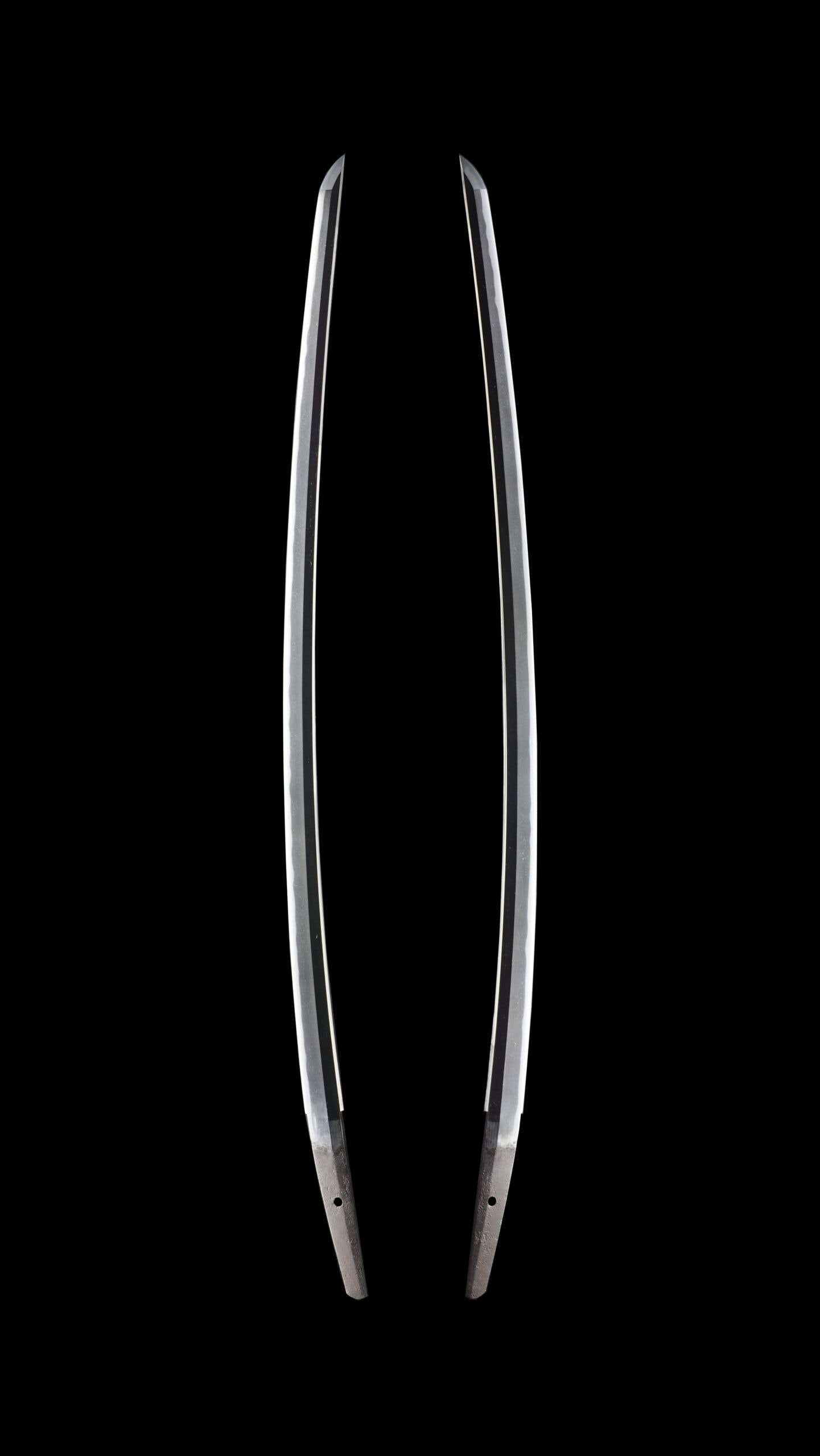
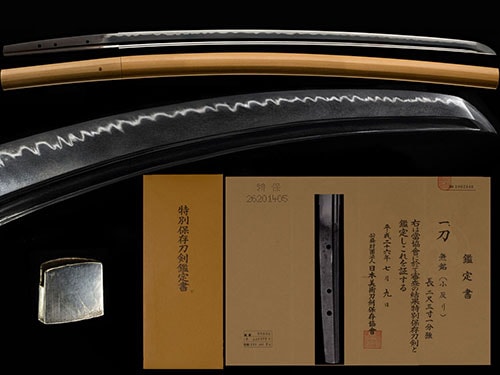
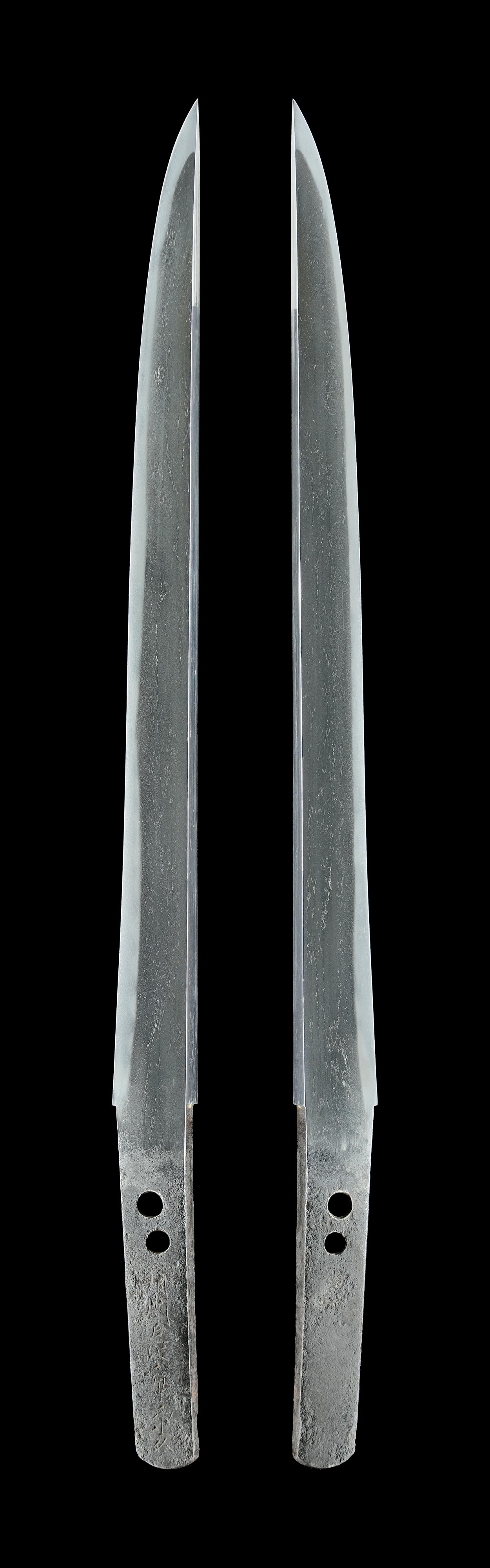
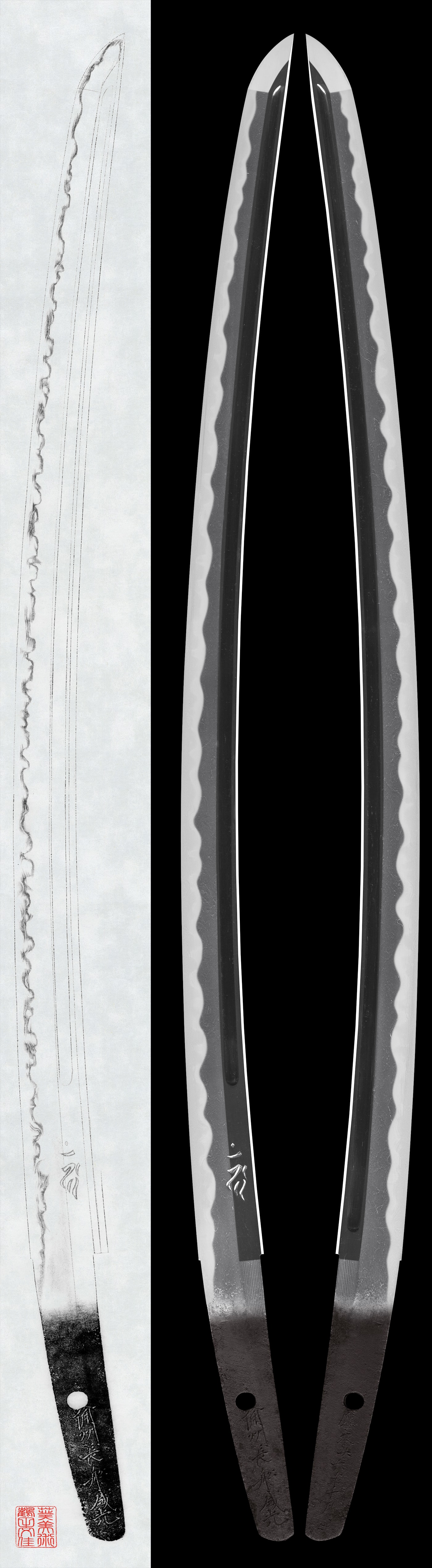
Osafune Shigeyoshi (重吉), third generation, worked in Bizen Province during the Meitoku era (1390-1394) and belongs to the group of late Nanbokucho-period Osafune smiths commonly referred to as ko-sorimono ("small-curvature works"). According to sword catalogs, the first generation was the son of Kagesuke and worked during the Kagen era, the second generation during Genko, and the third generation during the Joji and Meitoku periods. The ko-sorimono smiths constitute a distinct group within Osafune that does not belong to the lineages of Kanemitsu, Chogi, Motoshige, Morikage, and the like. Besides dated examples from Meitoku, blades dated Oei 1 are also known, placing Shigeyoshi at the transitional phase from the ko-sorimono group toward what is termed Oei-Bizen.
The kitae characteristically displays itame-hada mixed with mokume and flowing grain, with the texture standing slightly and fine ji-nie attaching. A vivid midare-utsuri frequently appears. The hamon is predominantly ko-notare-based, into which gunome, choji, and pointed (togari-gokoro) elements are interwoven; in certain works the midare becomes a fine, small-patterned complexity thoroughly characteristic of the ko-sorimono manner. The temper is nioi-gachi with ko-nie, and slight tobiyaki may appear, yielding a bright nioiguchi. Among the ko-sorimono smiths, conspicuous individuality is generally not seen; the forging tends to display a mixture of various hada textures, and the hamon is at times somewhat uneven, tending to become slightly subdued (kozumu).
Shigeyoshi is a smith whose surviving works are extremely rare, making each confirmed piece of considerable documentary importance. Works that are both signed and dated are especially valuable as reference material for understanding the ko-sorimono school. The signature is characteristically small in scale, and in at least one instance is presented as a decorative, embellished tachi-mei -- a rare treatment for the period that warrants particular attention. Despite the general uniformity ascribed to the ko-sorimono group, Shigeyoshi's finest works display notably accomplished workmanship, and the inclusion of a blade in the Imperial Collection further attests to the esteem in which his production is held.
![Katana - Jūyō - 作 師光 - 刀[備州長船師光]重要刀剣/特別保存刀装具](/_next/image?url=https%3A%2F%2Fitbhfhyptogxcjbjfzwx.supabase.co%2Fstorage%2Fv1%2Fobject%2Fpublic%2Flisting-images%2Fworld-seiyudo%2FL759395%2F01.jpg&w=2560&q=90)