
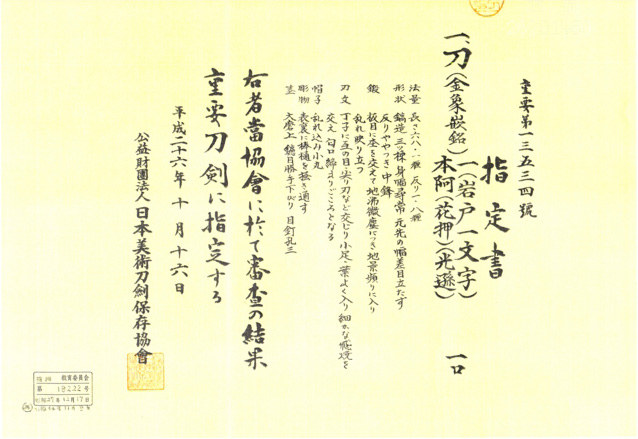
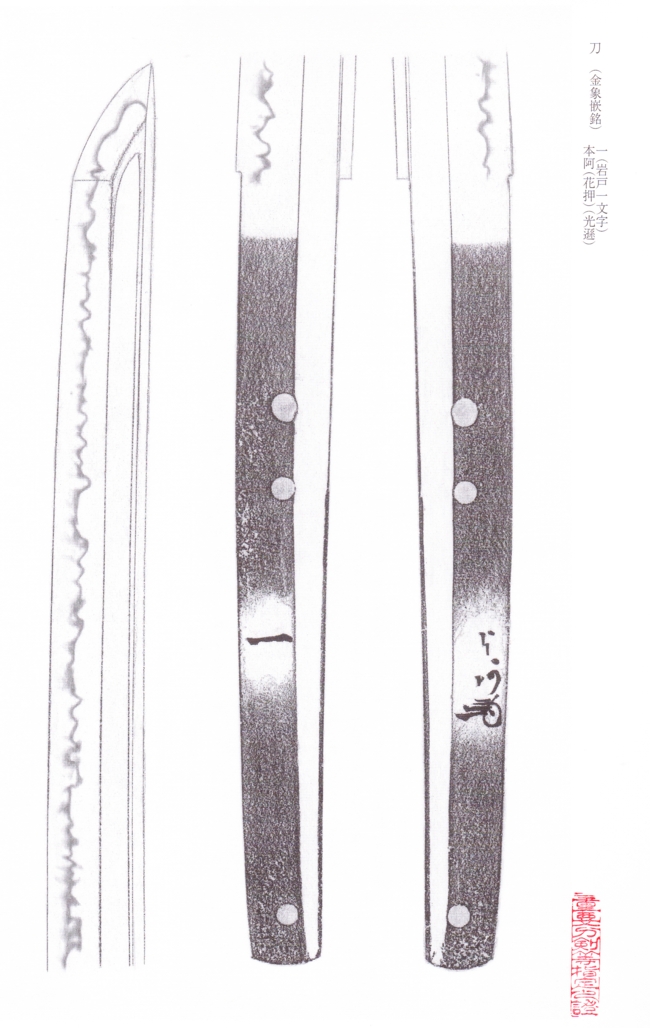

-, 60th Session — Designated October 16, 2014
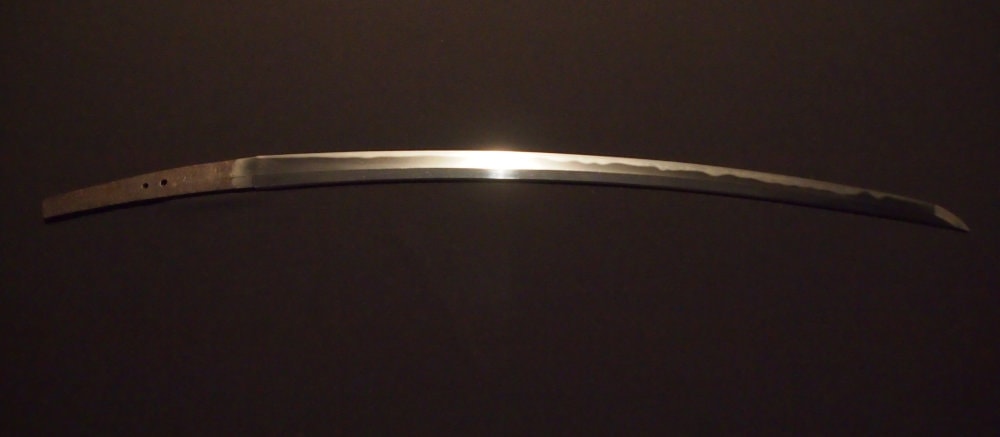
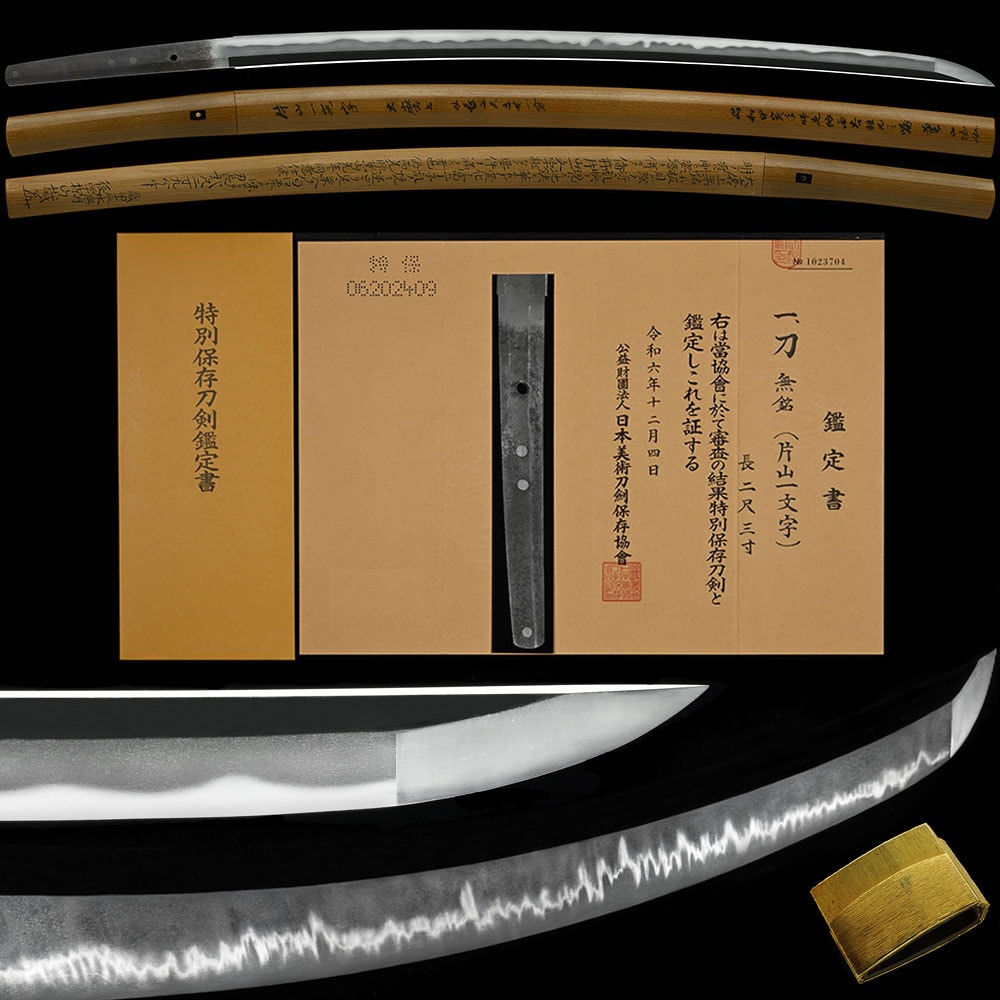
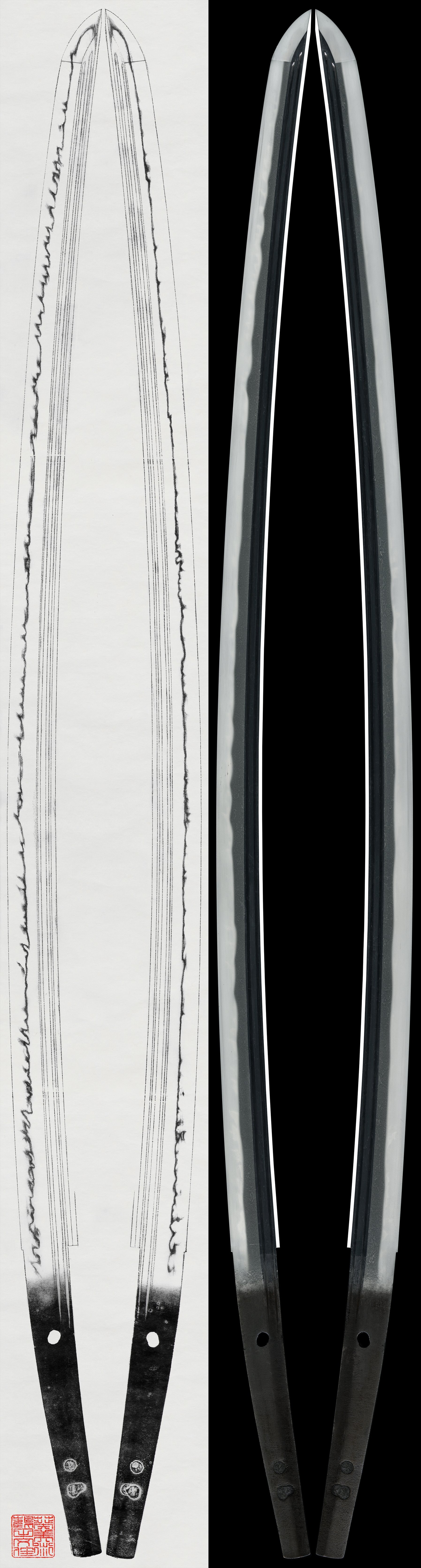
, : Iwato (岩戸一文字)
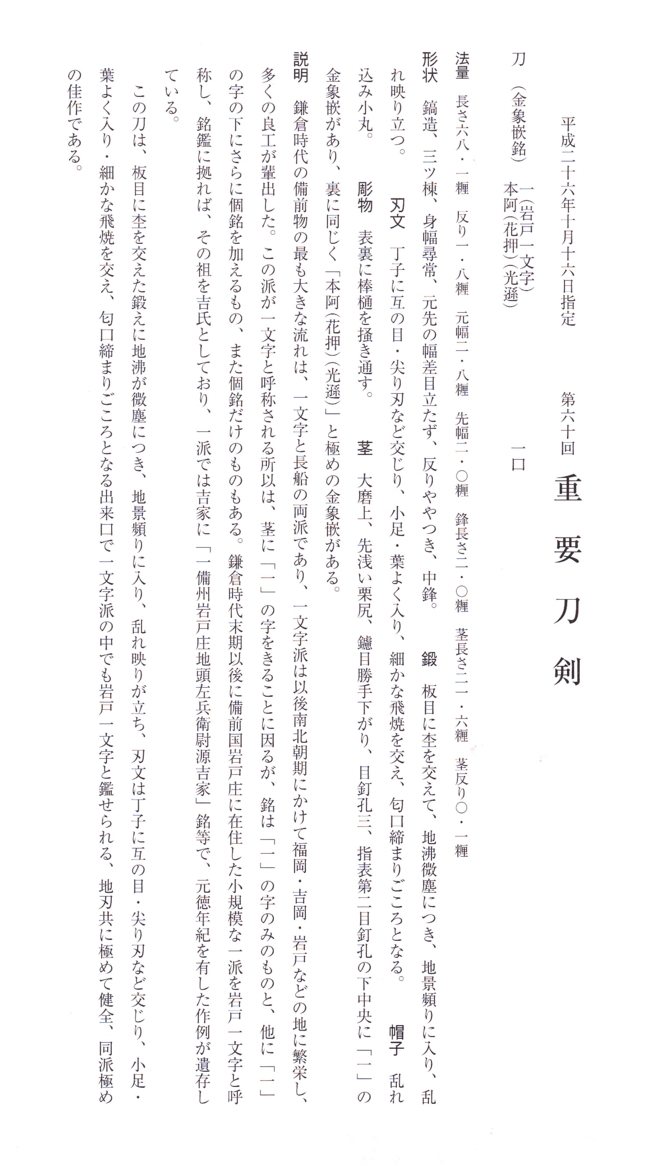
Measurements 68.1 cm, 1.8 cm, 2.8 cm, 2.0 cm, 2.0 cm, 21.6 cm, 0.1 cm
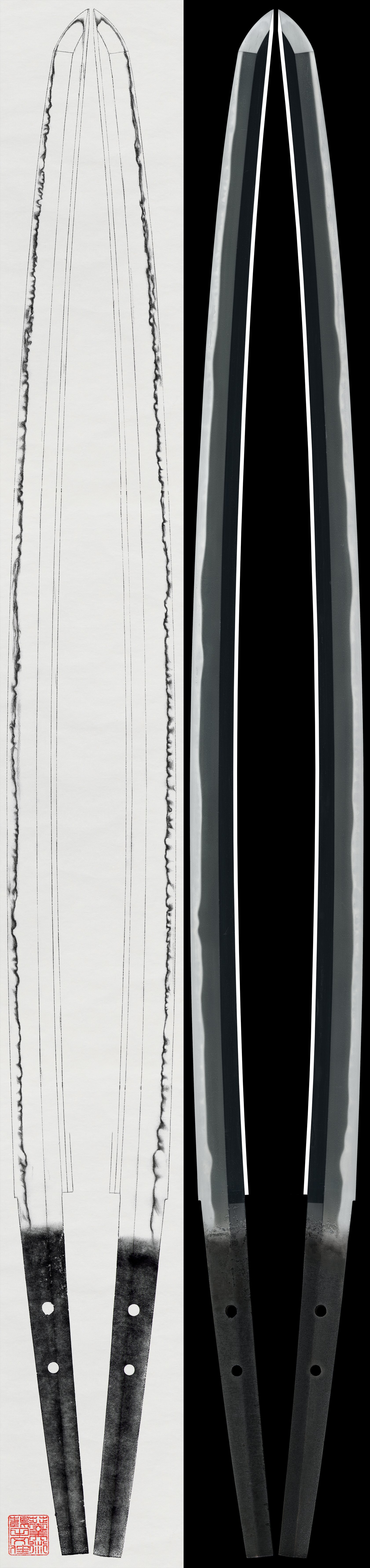
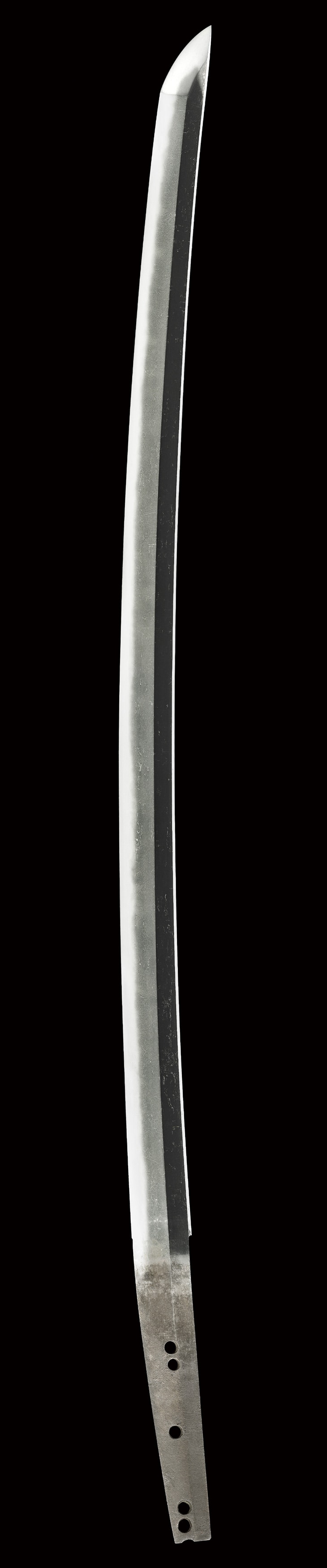
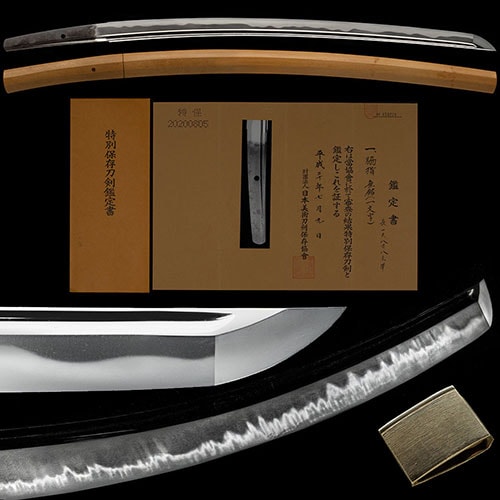
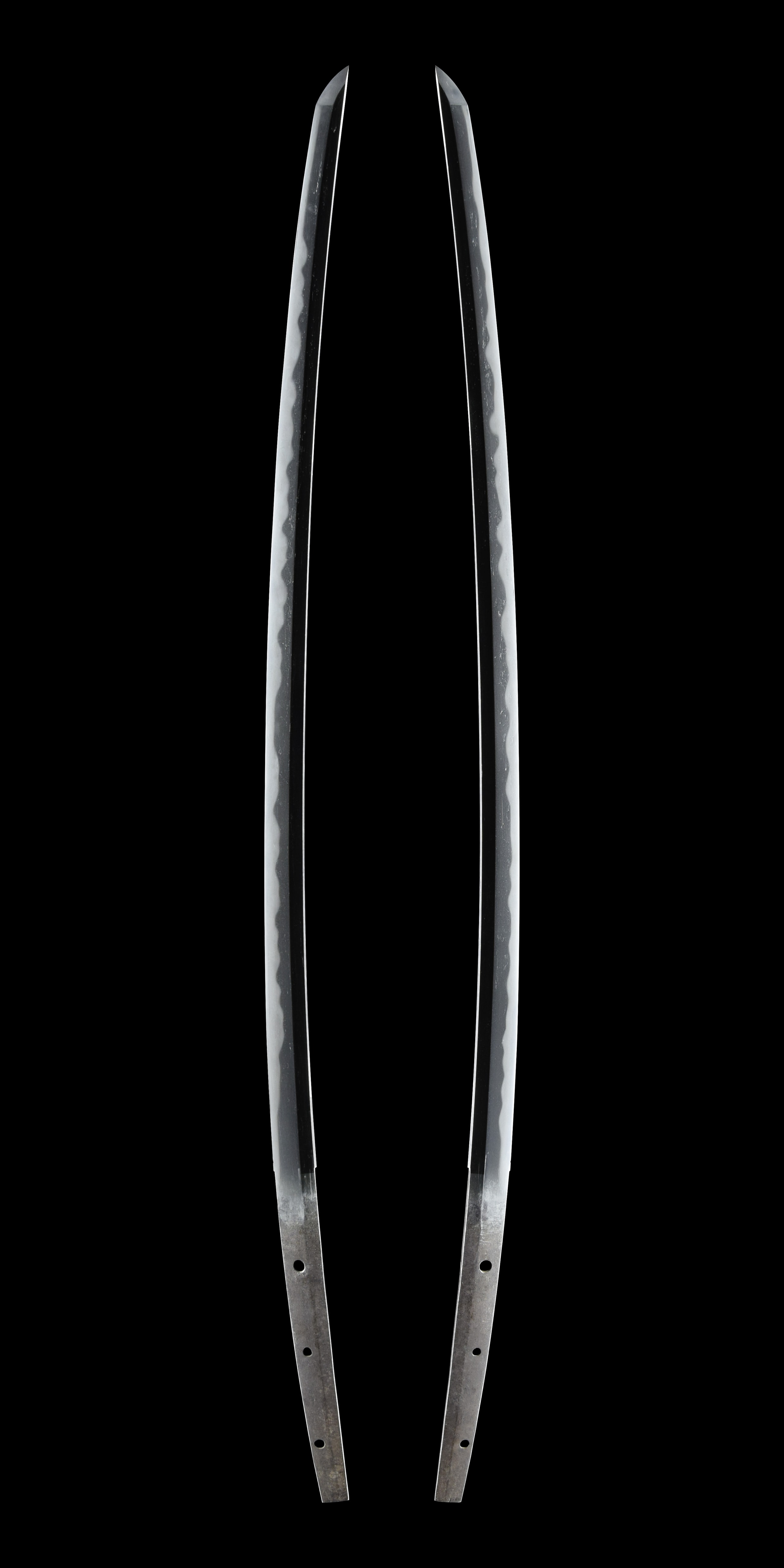
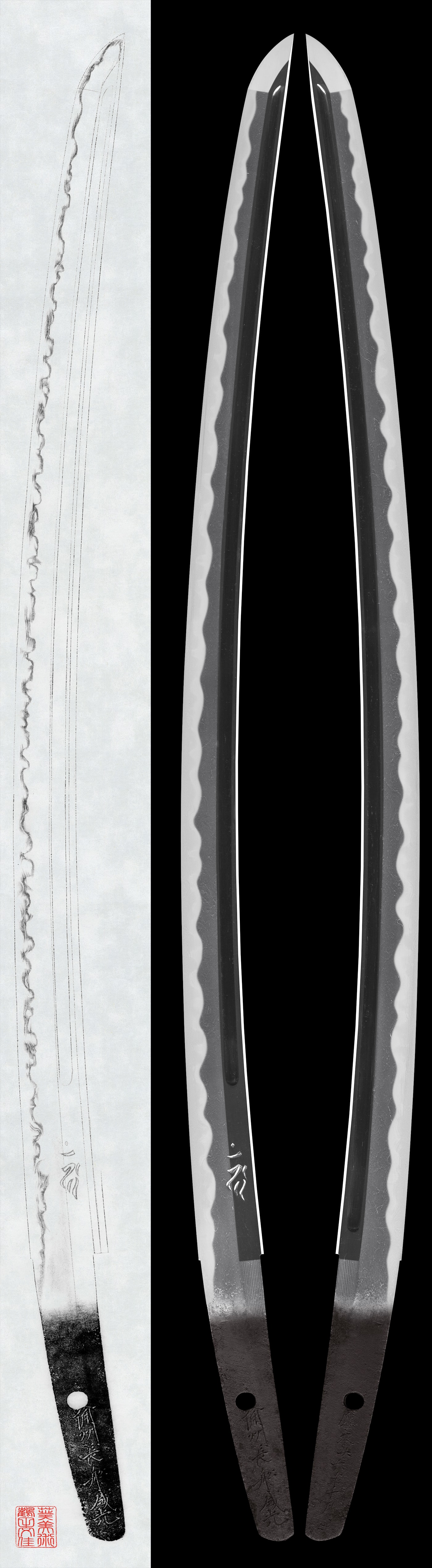
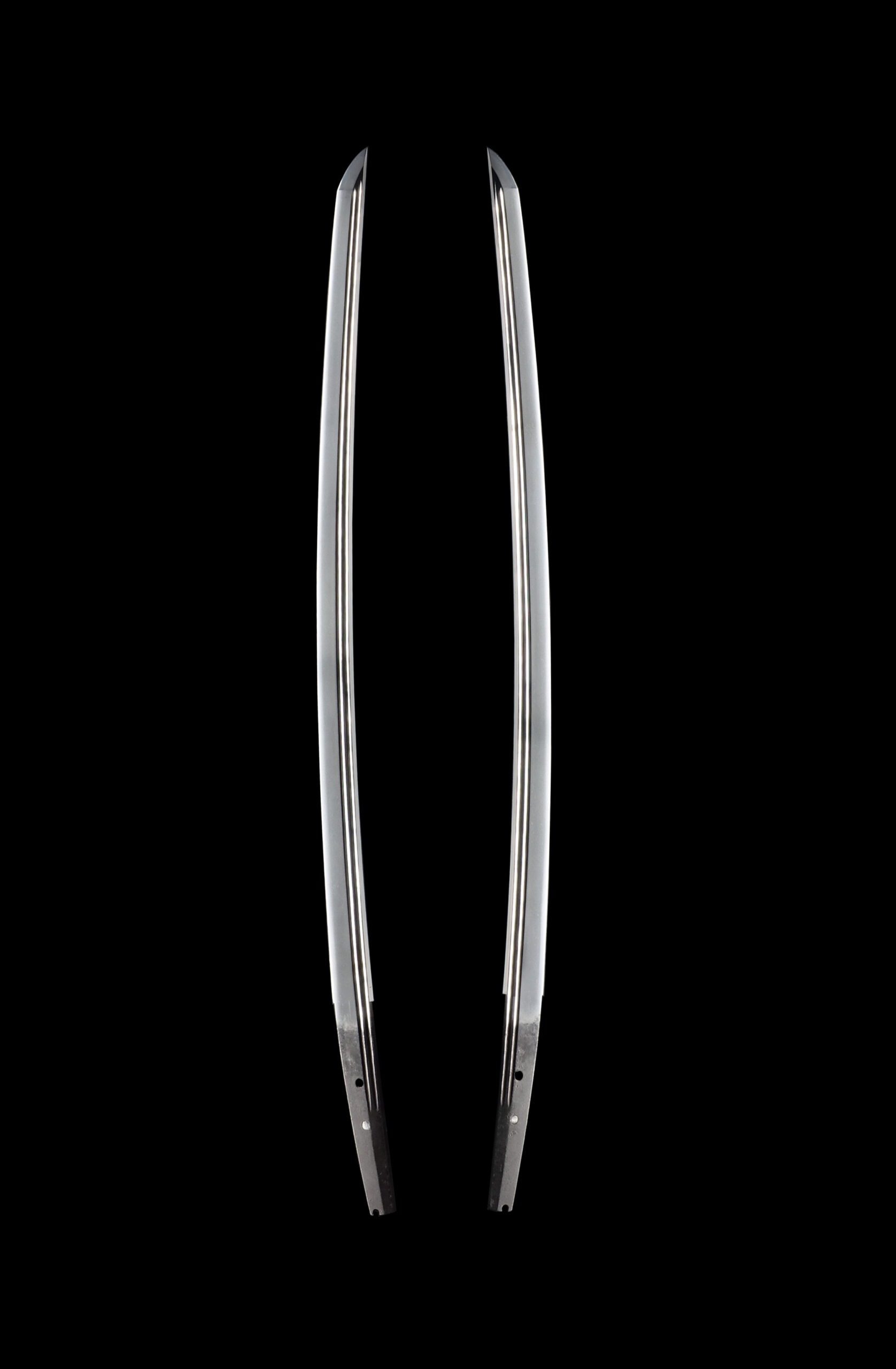
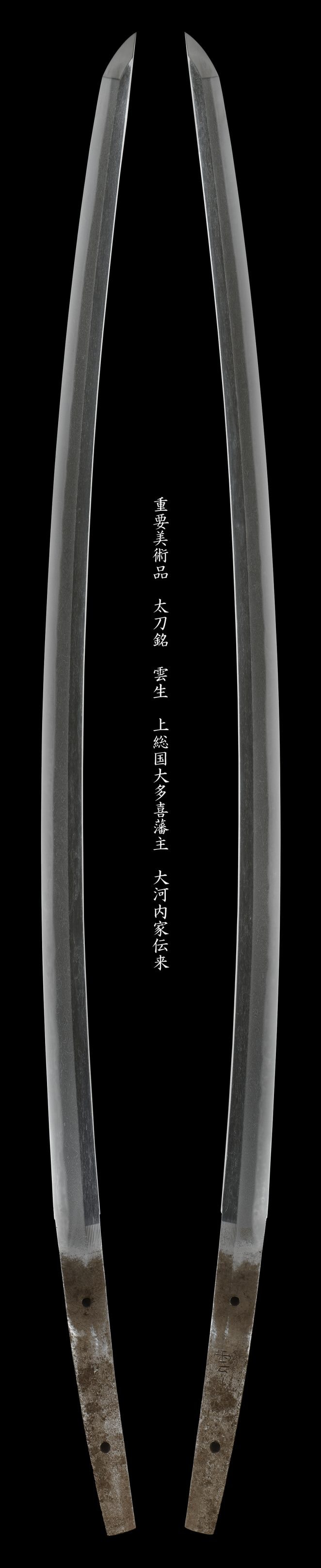
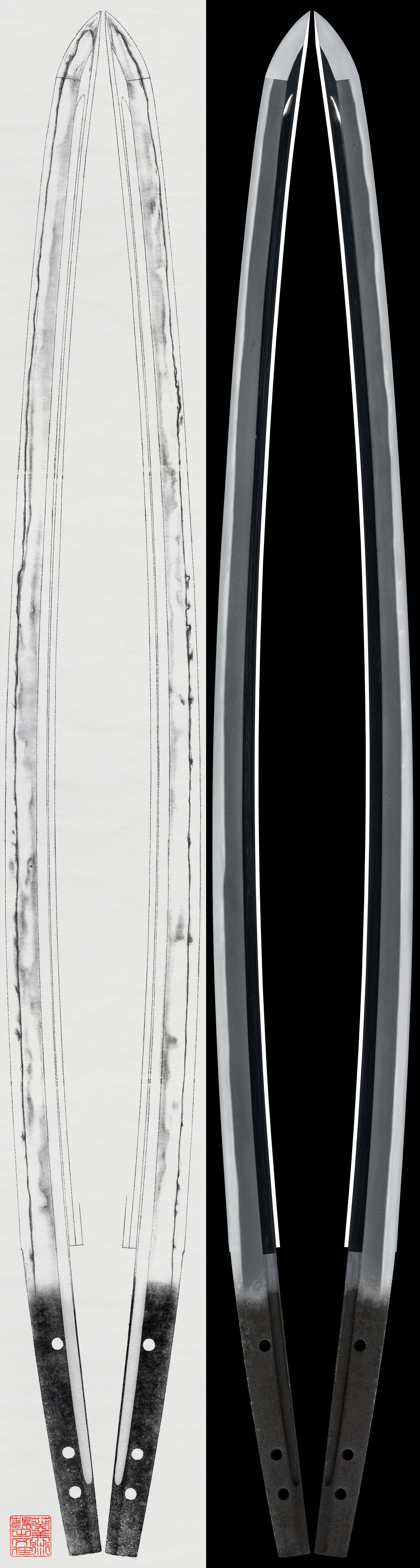
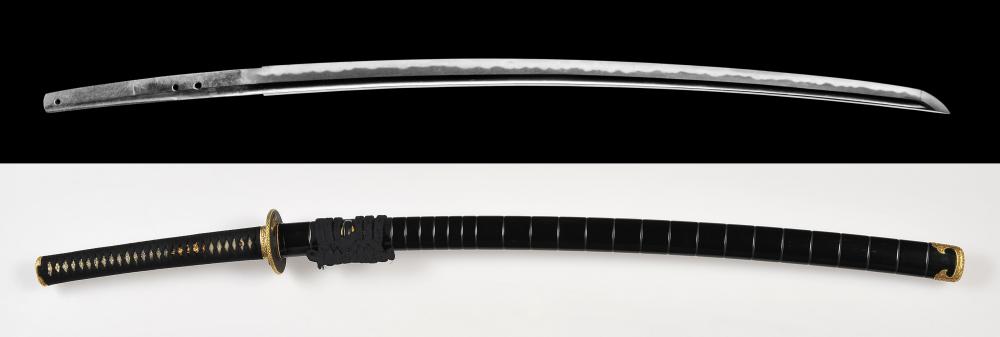
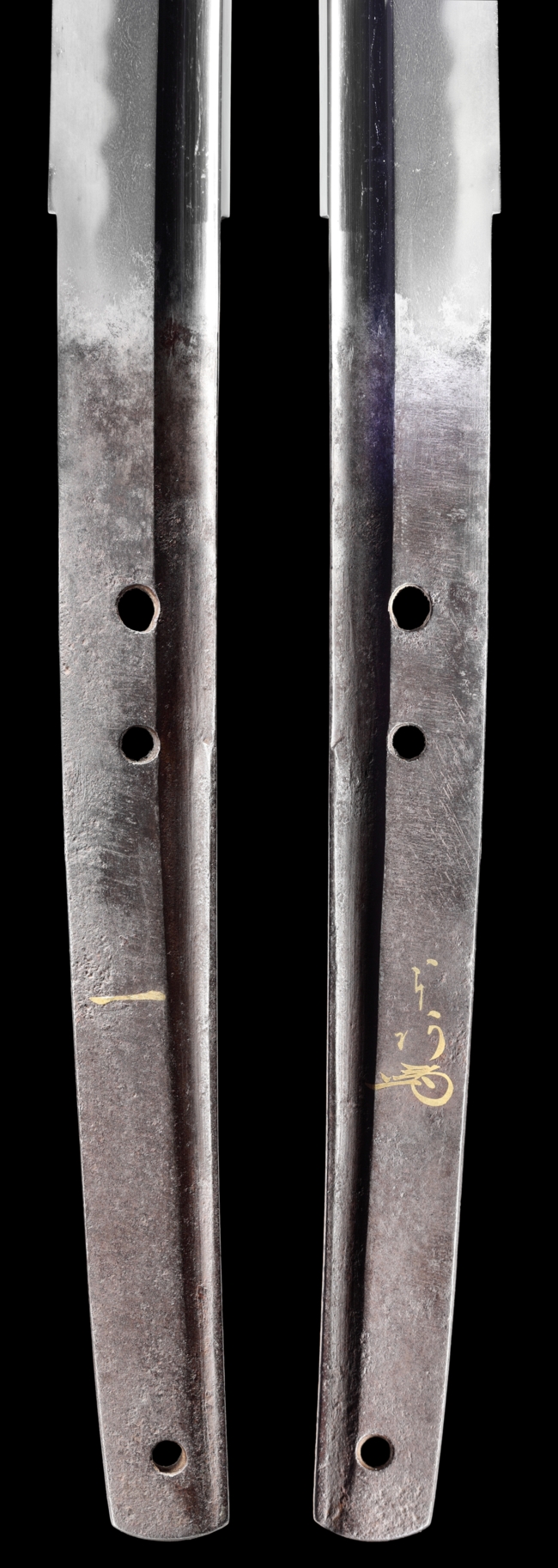
Description Keijō: , ; standard with little difference between base and tip widths; slightly curved with . : mixed with ; fine ; enters frequently; stands out. : mixed with and ; and enter well; mixed with fine ; the shows a (tight tendency). : with . : on both sides, carved through (). : ; tip (shallow); ; three ; on the , below the second and centered, there is a gold-inlaid “一”; on the there is likewise a gold-inlaid appraisal: “Hon’ami () (Kōson)” (本阿〈花押〉光遜).
Artisan Iwato (岩戸一文字)
Era Late period
Explanation The two greatest currents within workmanship of the period are the and lineages. The lineage flourished from that time into the period in such localities as Fukuoka, Yoshioka, and Iwato, producing many fine smiths. The reason this group is called “” lies in the practice of cutting the character “一” () on the tang. Among their inscriptions are examples that bear only the single character “一,” others that add an individual name below “一,” and still others that bear only an individual name.
From the end of the period onward, a small group that resided in Iwato-shō, Province, is referred to as the Iwato . According to sword- reference works, the founder is considered to have been Yoshiuji. Within this group, extant works by Yoshiie survive, including examples inscribed “一 備州岩戸庄地頭左兵衛尉源吉家” and bearing dates from the Gentoku era.
This shows an forging mixed with , with fine and frequent , together with prominent . The is a pattern mixed with and , with plentiful and , further enlivened by fine ; the tends toward (a tight, drawn appearance). From this workmanship, the blade is appraised as Iwato within the broader tradition. Both and are extremely (sound and well-preserved), and it is a fine work worthy of an attribution to this group.
[ IV (44)]