


NihontoWatch MonNihontoWatch
Market
Encyclopedia
Kantei
NihontoWatch MonNihontoWatch
Market
Encyclopedia
Kantei

Description

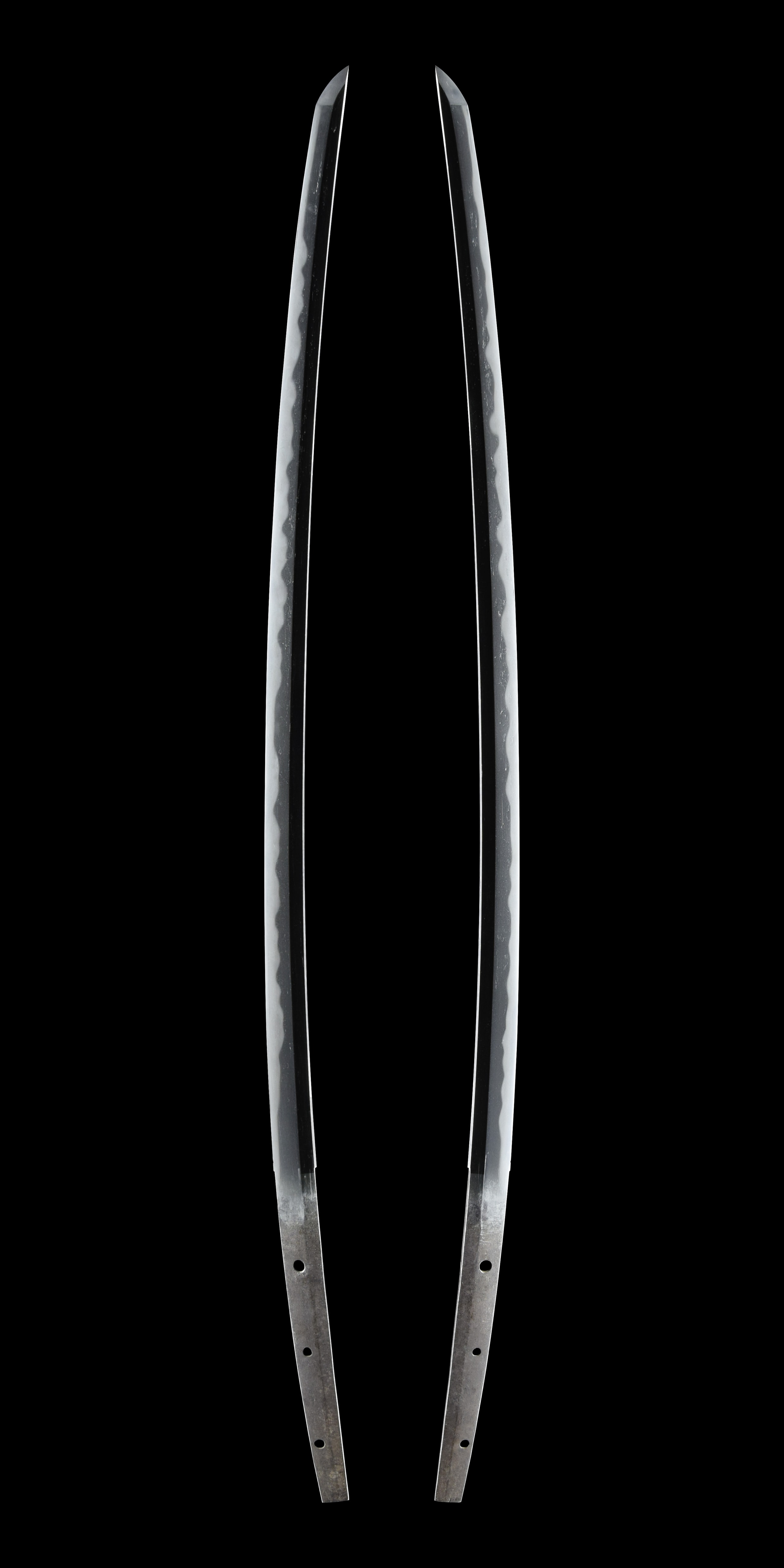
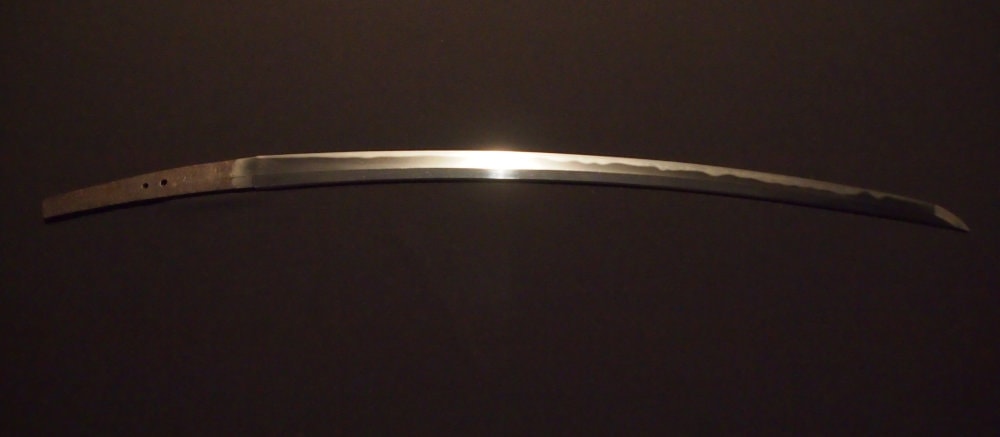
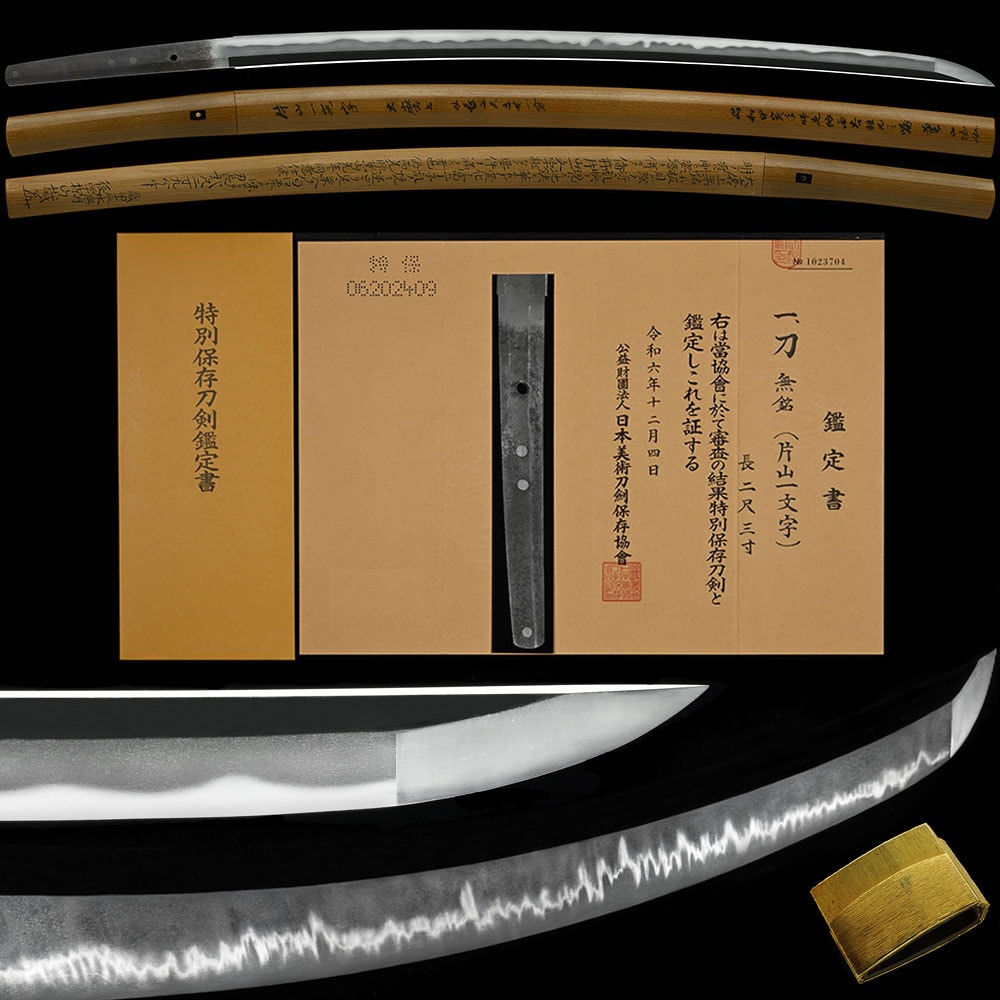
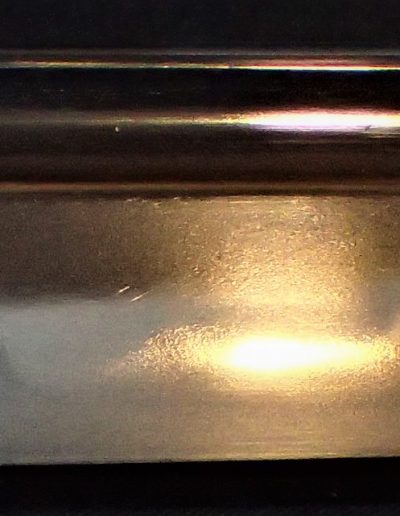
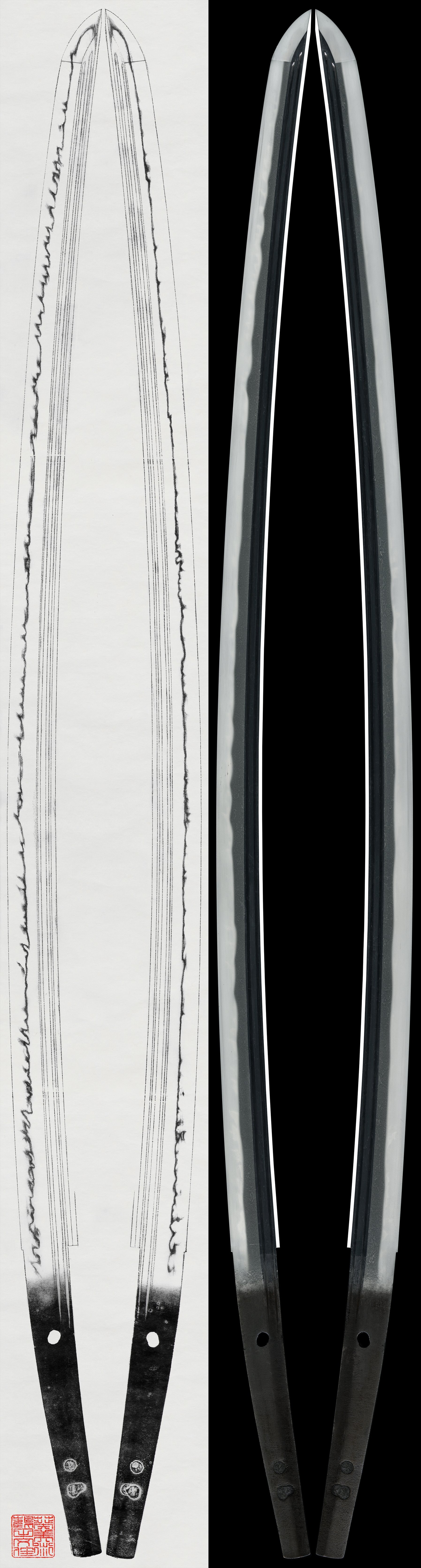
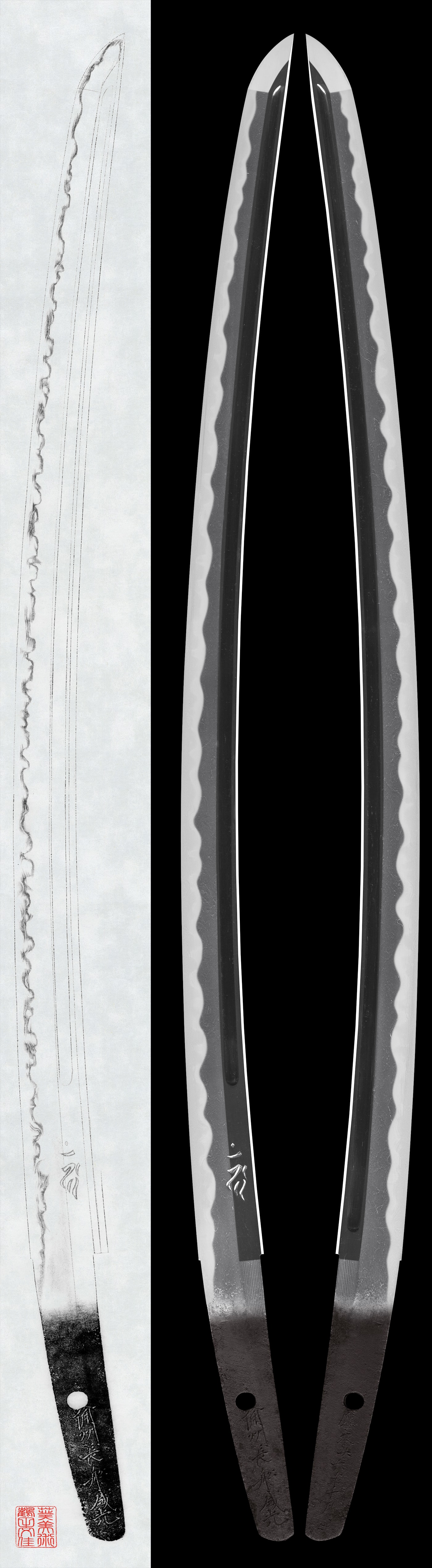
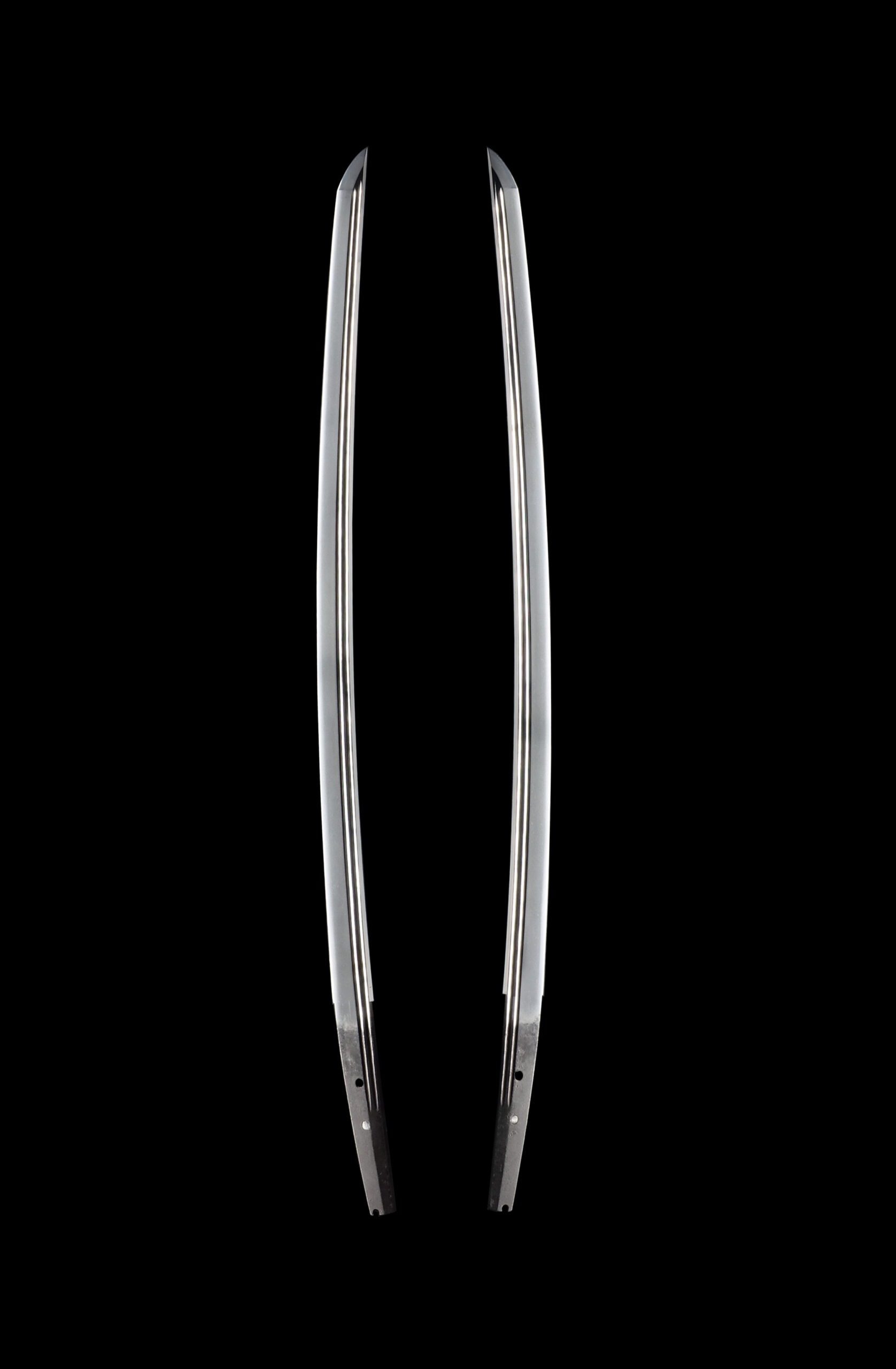
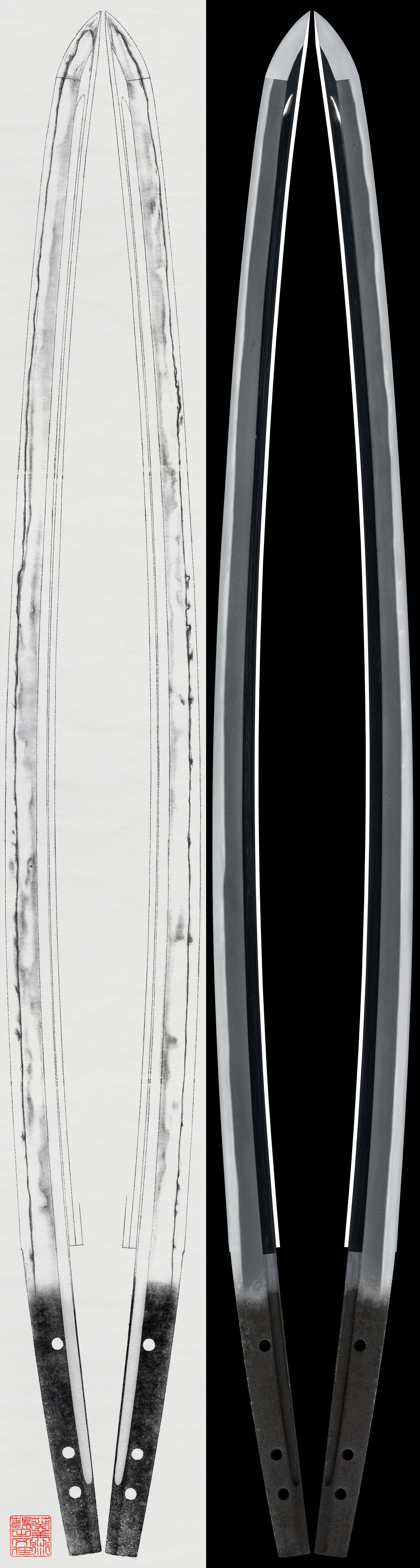
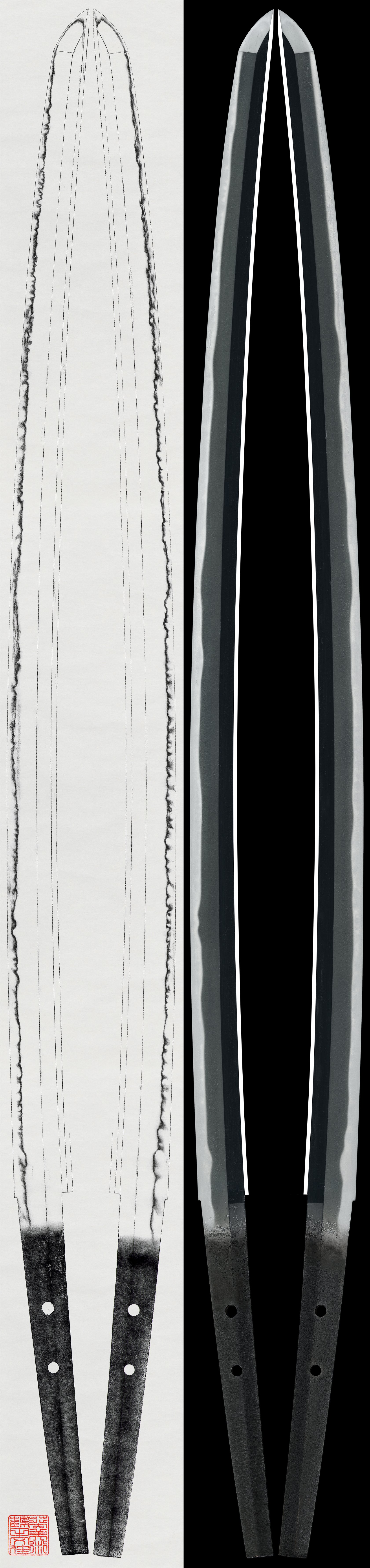
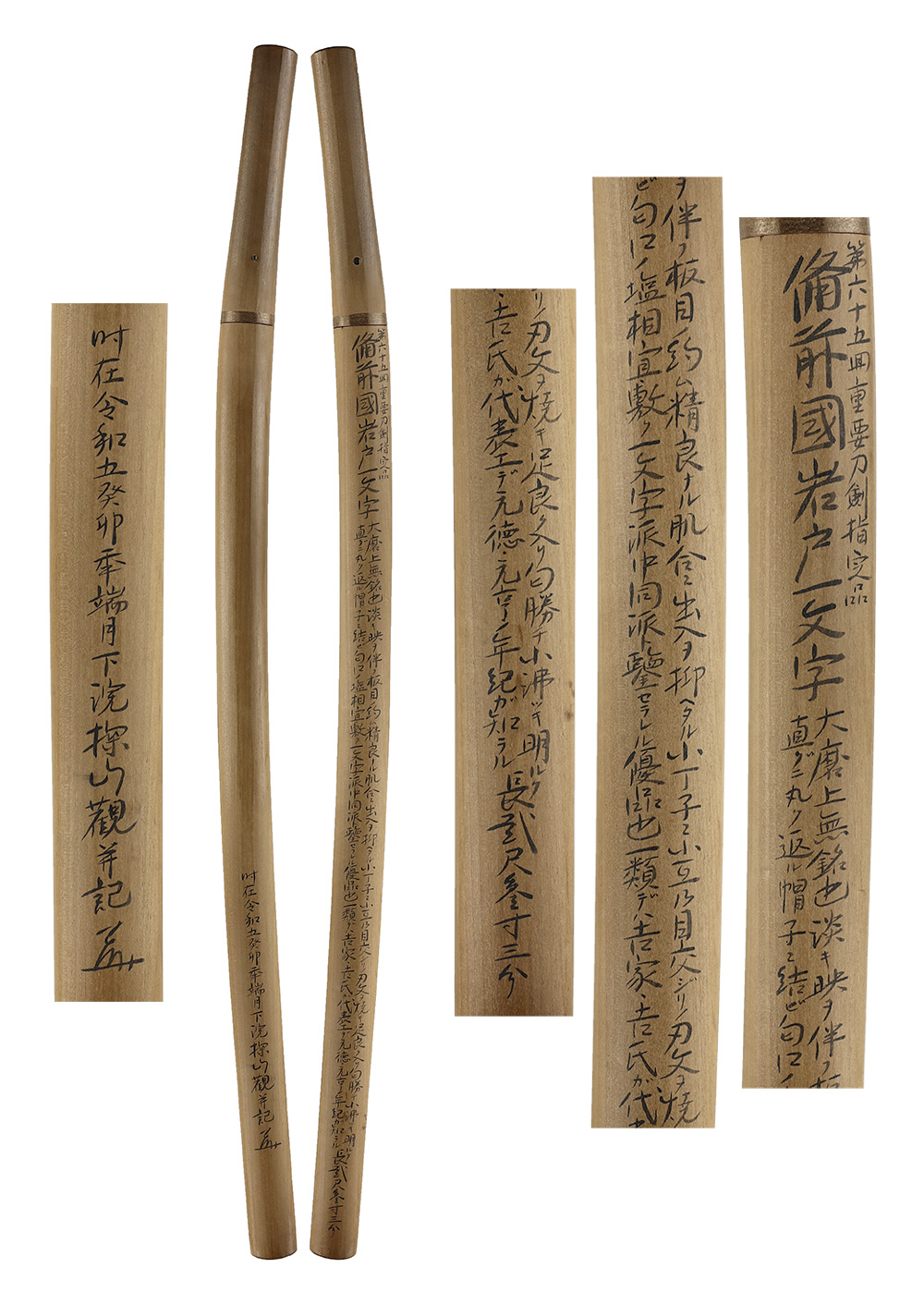
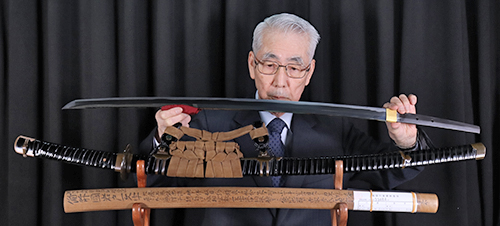
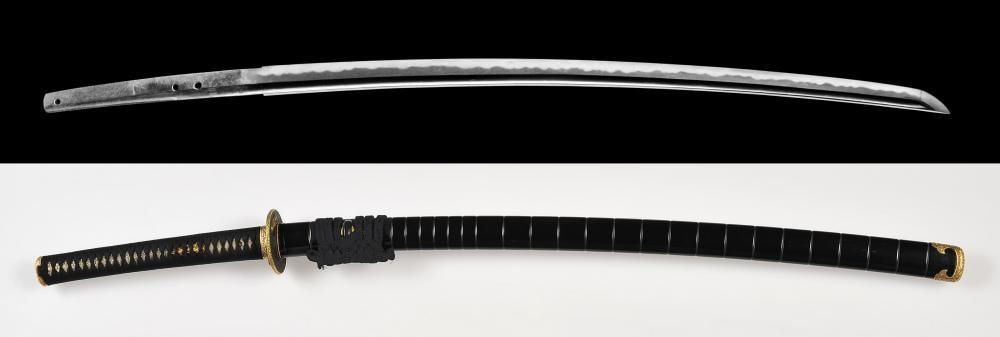
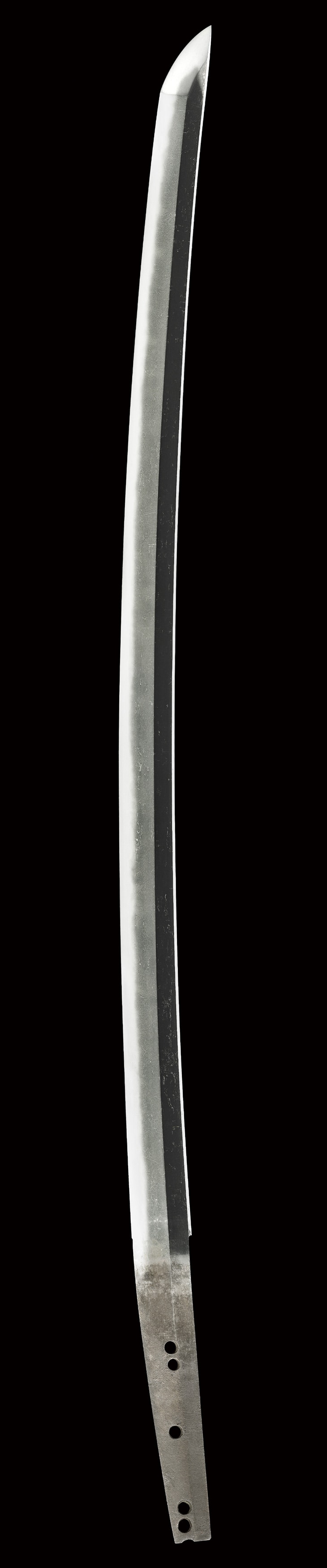
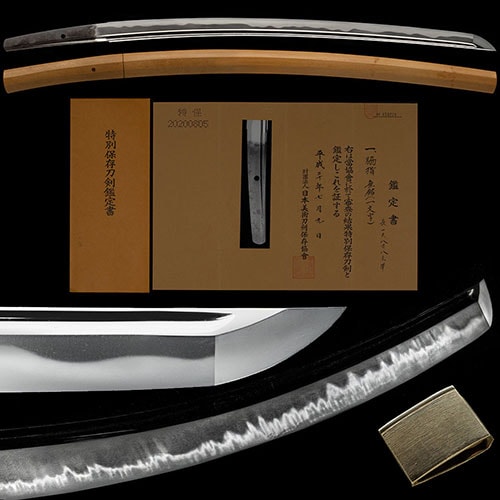
This is an unsigned katana attributed to Iwato Ichimonji school, designated as Juyo Token at the 65th NBTHK Juyo Token session. The blade features fine ko-itame hada with visible utsuri and nioi-deki gunome-midare hamon with active hataraki. It is accompanied by a tachi koshirae.

NBTHK Setsumei

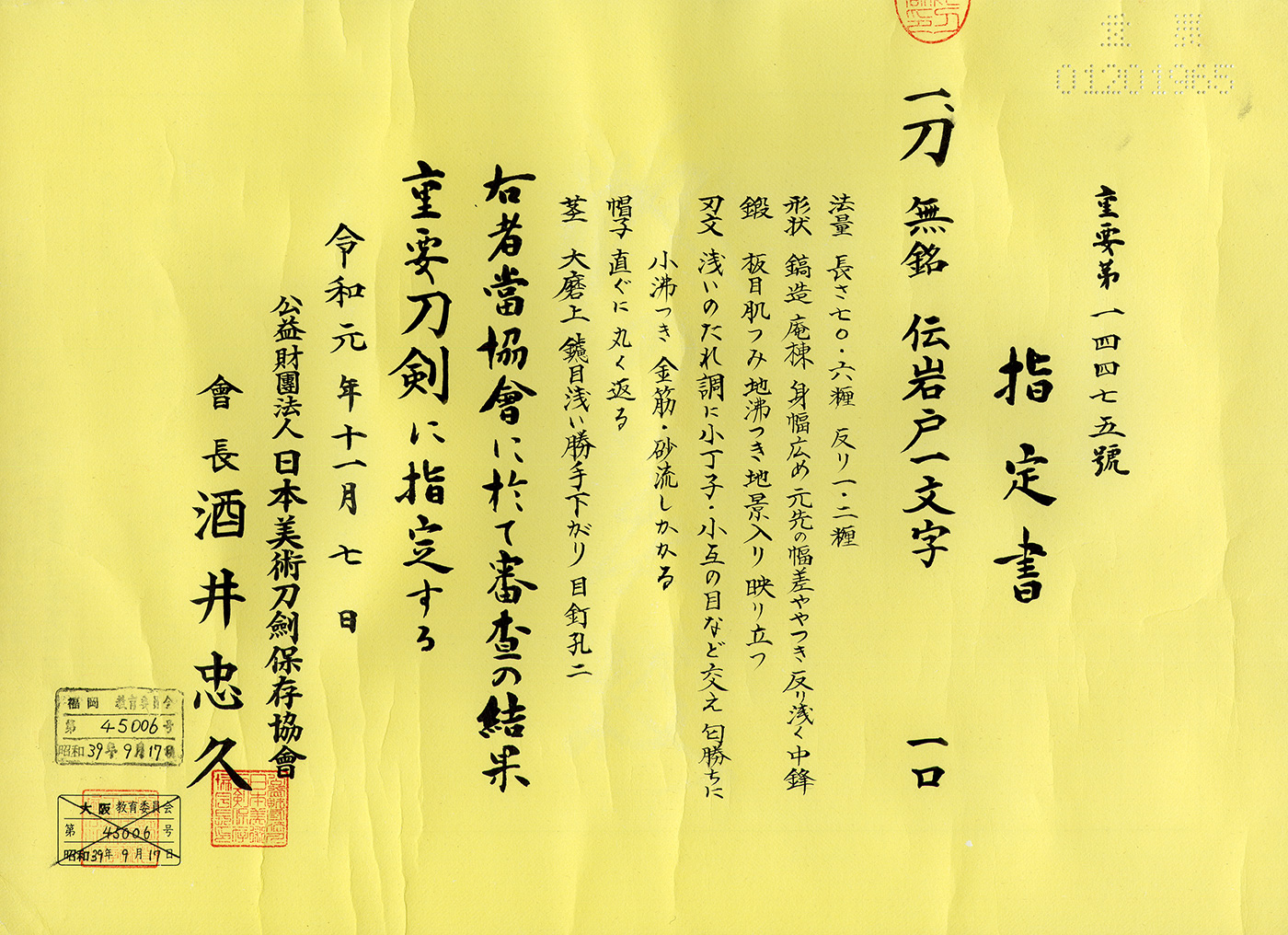
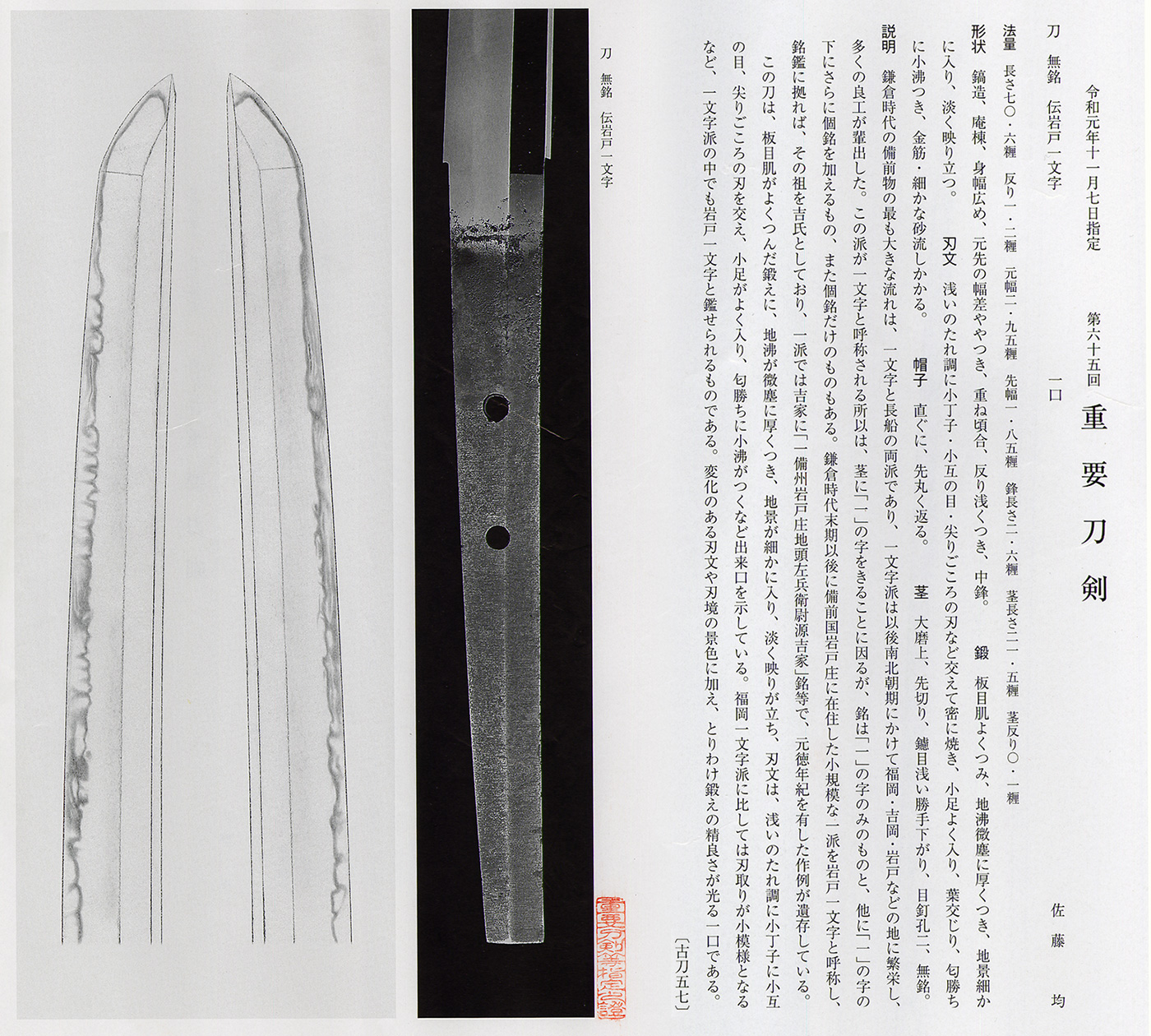
Jūyō-Tōken, 65th Session — Designated November 7, 2019 Katana, mumei: den Iwato Ichimonji (岩戸一文字) Measurements Nagasa 70.6 cm, sori 1.2 cm, motohaba 2.95 cm, sakihaba 1.85 cm, kissaki-nagasa 2.6 cm, nakago-nagasa 21.5 cm, nakago-sori 0.1 cm Description Keijō: shinogi-zukuri, iori-mune; somewhat wide mihaba with a slight difference between base and tip widths; moderate kasane; shallow sori; chū-kissaki. Kitae: closely forged itame-hada; extremely fine ji-nie adheres thickly; fine chikei enters; faint utsuri appears. Hamon: a shallow notare-based temper mixed densely with ko-chōji, ko-gunome, and pointed elements; ko-ashi enters well; mixed with yō; nioi-dominant with ko-nie; kinsuji and fine sunagashi appear. Bōshi: sugu; turns back in a rounded manner. Horimono: None. Nakago: ō-suriage; kiri-jiri; shallow katte-sagari yasurime; two mekugi-ana; unsigned. Artisan Den Iwato Ichimonji (岩戸一文字) Era Late Kamakura period Explanation Among Bizen works of the Kamakura period, the two greatest streams are the Ichimonji and Osafune lineages. The Ichimonji school thereafter flourished into the Nanbokuchō period in such locales as Fukuoka, Yoshioka, and Iwato, producing many capable smiths. The reason this group is called “Ichimonji” lies in the practice of cutting the character “一” (ichi, “one”) into the tang. With respect to signatures, there are examples bearing only the single character “一,” others that add an individual name below the “一,” and still others that bear only an individual name. The name “Iwato Ichimonji” is applied to a small branch that resided in Iwato-shō in Bizen Province from the late Kamakura period onward. According to sword registers, its founder is recorded as Yoshiuji (吉氏). Within this group, a work by Yoshiie (吉家) survives that bears, among other things, the inscription “Ichi Bishū Iwato-shō jitō sa hyōe no jō Minamoto Yoshiie,” and carries a date of the Gentoku era (1329–1331). This katana displays a tightly forged itame-hada in which extremely fine ji-nie adheres thickly, fine chikei enters, and a faint utsuri appears. The hamon is a shallow notare tone mixed with ko-chōji, ko-gunome, and pointed elements; ko-ashi enters well; ko-nie adheres along an essentially nioi-dominant edge; and kinsuji with fine sunagashi is seen—altogether indicating its manner of workmanship. In comparison with the Fukuoka Ichimonji branch, the patterning of the tempered edge here is on a smaller scale, and for this reason the blade is appraised as Iwato Ichimonji within the broader Ichimonji tradition. Alongside a varied hamon and attractive boundary activities, it is particularly the excellence of the forging that shines in this piece.
NihontoWatch MonNihontoWatch
MarketEncyclopediaKantei
Swords›Bizen-den›Ichimonji›Iwato Ichimonji›Katana: Mumei (Unsigned) (Den Iwato Ichimonji) - 65th Juyo Token
katanaJūyō
Iwato Ichimonji School

Katana: Mumei (Unsigned) (Den Iwato Ichimonji) - 65th Juyo Token

mumei · Ichimonji · Late Kamakura (c. 1324) · nagasa 70.8cm · sori 1.2cm

SOLD
KatanaJūyō
Could you name the smith from the blade alone? Today’s kantei →
Iwato Ichimonji School — 1 of 8
Iwato Ichimonji School — 2 of 8
Iwato Ichimonji School — 3 of 8
Iwato Ichimonji School — 4 of 8
Iwato Ichimonji School — 5 of 8
Iwato Ichimonji School — 6 of 8
Iwato Ichimonji School — 7 of 8
Iwato Ichimonji School — 8 of 8
1 / 8
1 / 8
Iwato Ichimonji School — 1 of 8Iwato Ichimonji School — 2 of 8Iwato Ichimonji School — 3 of 8Iwato Ichimonji School — 4 of 8Iwato Ichimonji School — 5 of 8Iwato Ichimonji School — 6 of 8Iwato Ichimonji School — 7 of 8Iwato Ichimonji School — 8 of 8
KatanaJūyō
Could you name the smith from the blade alone? Today’s kantei →
Measurements & details
Smith
Iwato Ichimonji School
Type
Katana
School
Iwato Ichimonji
Period
Late Kamakura (c. 1324)(Late Kamakura)
Province
Bizen
Signature
Unsigned(9% of this smith's designated works are signed)
Measurements
Nagasa 70.8cmSori 1.2cmMotohaba 2.97cmSakihaba 1.86cmKasane 0.62cmWeight 730g
Description

This is an unsigned katana attributed to Iwato Ichimonji school, designated as Juyo Token at the 65th NBTHK Juyo Token session. The blade features fine ko-itame hada with visible utsuri and nioi-deki gunome-midare hamon with active hataraki. It is accompanied by a tachi koshirae.

NBTHK Zufu Commentary

Juyo #65

AI translation — may contain errors

-, 65th Session — Designated November 7, 2019

, : Iwato (岩戸一文字)

Measurements 70.6 cm, 1.2 cm, 2.95 cm, 1.85 cm, 2.6 cm, 21.5 cm, 0.1 cm

Description Keijō: , ; somewhat wide with a slight difference between base and tip widths; moderate ; shallow ; . : closely forged ; extremely fine adheres thickly; fine enters; faint appears. : a shallow -based temper mixed densely with , , and pointed elements; enters well; mixed with ; -dominant with ; and fine appear. : ; turns back in a rounded manner. : None. : ; ; shallow ; two ; unsigned.

Artisan Iwato (岩戸一文字)

Era Late period

Explanation Among works of the period, the two greatest streams are the and lineages. The school thereafter flourished into the period in such locales as Fukuoka, Yoshioka, and Iwato, producing many capable smiths.

The reason this group is called “” lies in the practice of cutting the character “一” (, “one”) into the tang. With respect to signatures, there are examples bearing only the single character “一,” others that add an individual name below the “一,” and still others that bear only an individual name.

The name “Iwato ” is applied to a small branch that resided in Iwato-shō in Province from the late period onward. According to sword registers, its founder is recorded as Yoshiuji (吉氏). Within this group, a work by Yoshiie (吉家) survives that bears, among other things, the inscription “ Bishū Iwato-shō jitō hyōe no jō Minamoto Yoshiie,” and carries a date of the Gentoku era (1329–1331).

This displays a tightly forged in which extremely fine adheres thickly, fine enters, and a faint appears. The is a shallow tone mixed with , , and pointed elements; enters well; adheres along an essentially -dominant edge; and with fine is seen—altogether indicating its manner of workmanship.

In comparison with the Fukuoka branch, the patterning of the tempered edge here is on a smaller scale, and for this reason the blade is appraised as Iwato within the broader tradition. Alongside a varied and attractive boundary activities, it is particularly the excellence of the forging that shines in this piece.

About the school

Iwato Ichimonji

岩戸一文字

Bizen-den · Bizen

1 piece on the market now

›

The Iwato Ichimonji school represents a small but distinctive branch of the broader Ichimonji lineage that flourished in Iwato-shō, Bizen Province, from the late Kamakura period into the Nanbokuchō era. According to sword reference works, the school's founder is traditionally identified as Yoshimitsu or Yoshiuji, though extant signed works are primarily represented by Yoshiie, whose blades bear elaborate inscriptions such as "Ichi Bishū Iwato-shō jitō Sahyōe-no-jō Minamoto Yoshiie"[[c:1]] with dates from the Gentoku era. Like other Ichimonji branches in Fukuoka and Yoshioka, these smiths employed the signature convention of cutting the character ichi (一, "one") into the nakago, either alone, combined with individual names, or omitted entirely in favor of personal signatures. The technical characteristics of Iwato Ichimonji workmanship reveal a refined aesthetic distinct from the more prominent Fukuoka Ichimonji style. The forging typically exhibits tightly wrought itame-hada mixed with mokume, with standing grain (hada-dachi) and extremely fine ji-nie adhering thickly throughout the jigane. Fine chikei enter frequently, and midare-utsuri appears prominently.

The hamon is characteristically based on chōji mixed with ko-gunome and angular elements, but the overall patterning tends toward smaller scale and more restrained undulation compared to Fukuoka works—the chōji heads are less pronounced, and the midare composition is more subdued. Ko-ashi and yō enter well, and the nioiguchi displays a tight, bright quality (shimarigokoro) with ko-nie, kinsuji, and fine sunagashi appearing along the temper boundary. Iwato Ichimonji blades demonstrate a high level of forging skill consistent with mainline Bizen production, particularly in the excellence of their jihada and the clarity of boundary activities. While the school's output is regarded as somewhat less exuberant than Fukuoka Ichimonji, the restrained elegance of their small-patterned midare and the soundness of their construction have earned recognition within the broader Ichimonji tradition. The survival of multiple unsigned examples attributed to this school, alongside Yoshiie's signed works, attests to a coherent technical identity that remained recognizable across generations of smiths working in this Bizen locale during one of the most accomplished periods of Japanese sword production. Learn more →

4 recorded smiths17 designated works
Leading smiths
SmithEraDesignated
Yoshimori吉守1368-13750
Yoshiuji吉氏1362-13680
Yoshimori吉守1394-14280
Yoshichika吉近1375-13790
Sukeie助家1321-13240
Explore the Iwato Ichimonji school →

Historical context

Bizen in the Kamakura period

›

Kamakura was Bizen’s summit. Tradition places Ichimonji smiths among Go-Toba’s goban kaji, Mitsutada founded the Osafune line at mid-century, and orders flowed from the court and the warrior government alike. No province holds more National Treasure blades.

Bizen in the Kamakura period →

NBTHK Certificate
Jūyō Tōken重要刀剣
Important Sword
›

A blade of top-grade workmanship and condition, formally judged to rank with a nationally recognized Important Art Object (Jūyō Bijutsuhin). Awarded only at the NBTHK’s competitive annual examination.

Of Japan’s roughly 2.5 million registered swords, only 12,307 (about 1 in 203) have ever attained Jūyō.

About the NBTHK›

The NBTHK (Nihon Bijutsu Tōken Hozon Kyōkai, the Society for the Preservation of Japanese Art Swords) is a public-interest incorporated foundation founded in 1948 and supervised by Japan’s Agency for Cultural Affairs (Bunkachō); it is based at the Japanese Sword Museum in Tokyo. Its expert panels physically examine each submitted work (shinsa) and issue a certificate (kanteishō) ranking it by artistic and historical merit. NBTHK papers are the most widely recognized standard of authentication for Japanese swords and fittings.

NBTHK official site→
Seller
A
Aoi Art
🇯🇵Ships from Japan
›
✓Verified dealeraoijapan.com
✓Ships worldwide✓English supportWire transferPayPalCredit card
Return policy

If you wish to return an item, please notify us within 3 days of receipt. After this period we cannot accept cancellations. Please ship the return to us within 5 business days. Cancellation is conditional on the item being kept in the same condition as at the time of sale, so please handle it with care.

View all of Aoi Art’s listings→View this item on the dealer’s site→

Previously sold — Iwato Ichimonji School

View all →
Shoubudou
Jūyō
Katana - Jūyō - by Iwato Ichimonji School - Katana (Kinzoganmei) Ichi (Iwato Ichimonji) Hon'ami (Kao) (Koson)Katana - Jūyō - by Iwato Ichimonji School - Katana (Kinzoganmei) Ichi (Iwato Ichimonji) Hon'ami (Kao) (Koson)
Sold

Katana

ByIwato Ichimonji School
SOLD

More from the Iwato Ichimonji school

View all →
Samurai Nippon
Tokuho
Wakizashi - Tokuho - by Iwato Ichimonji School - Iwato Ichimonji (Unsigned)Wakizashi - Tokuho - by Iwato Ichimonji School - Iwato Ichimonji (Unsigned)

Wakizashi

ByIwato Ichimonji School
¥1,200,000

More from the Ichimonji school

View all →
Hyozaemon
Tokuho
Tokuho - by Fukuoka Ichimonji Yoshifusa - Naginata Naoshi Wakizashi by Fukuoka Ichimonji Yoshifusa, a Master of IchimonjiTokuho - by Fukuoka Ichimonji Yoshifusa - Naginata Naoshi Wakizashi by Fukuoka Ichimonji Yoshifusa, a Master of Ichimonji

Naginata Naoshi Wakizashi by Fukuoka Ichimonji Yoshifusa, a Master of Ichimonji

ByFukuoka Ichimonji Yoshifusa
Ask
Eirakudo
Tokuho
Katana - Tokuho - by Katayama Ichimonji School - Katayama Ichimonji - Tokubetsu Hozon TokenKatana - Tokuho - by Katayama Ichimonji School - Katayama Ichimonji - Tokubetsu Hozon Token

Katana

ByKatayama Ichimonji School
¥4,500,000
Eirakudo
Tokuho
Wakizashi - Tokuho - by Ichimonji School - Fukuoka Ichimonji Wakizashi Tokubetsu Hozon TokenWakizashi - Tokuho - by Ichimonji School - Fukuoka Ichimonji Wakizashi Tokubetsu Hozon Token

Wakizashi

ByIchimonji School
¥3,500,000
Tsuruginoya
Jūyō
Katana - Jūyō - by Fukuoka Ichimonji School - Mumei Fukuoka IchimonjiKatana - Jūyō - by Fukuoka Ichimonji School - Mumei Fukuoka Ichimonji

Katana

ByFukuoka Ichimonji School
Ask
Toushin
Katana - by Ichimonji School - Mumei (Hatakeda Mitsumori) (Bizen no kuni Yoshioka Ichimonji Sukemitsu)Katana - by Ichimonji School - Mumei (Hatakeda Mitsumori) (Bizen no kuni Yoshioka Ichimonji Sukemitsu)

Katana

ByIchimonji School
¥1,210,000
Kanda Toukodo
Jūyō
Katana - Jūyō - by Ichimonji School - Juyo Token (25th Session)Katana - Jūyō - by Ichimonji School - Juyo Token (25th Session)

Katana

ByIchimonji School
Ask
Eirakudo
Tokuho
Katana - Tokuho - by Katayama Ichimonji School - Katayama Ichimonji - Tokubetsu Hozon TokenKatana - Tokuho - by Katayama Ichimonji School - Katayama Ichimonji - Tokubetsu Hozon Token

Katana

ByKatayama Ichimonji School
¥4,000,000
Nihonto Australia
Tokuho
Katana - Tokuho - by Ichimonji School - Iwato-Ichimonji with NBTHK Tokubetsu Hozon CertificateKatana - Tokuho - by Ichimonji School - Iwato-Ichimonji with NBTHK Tokubetsu Hozon Certificate

Katana

ByIchimonji School
Ask

More from the Bizen tradition

View all →
Aoi Art
Jūyō
Katana - Jūyō - by Osafune Shigezane - Mumei (Attributed to Shigezane) - 27th NBTHK Juyo TokenKatana - Jūyō - by Osafune Shigezane - Mumei (Attributed to Shigezane) - 27th NBTHK Juyo Token

Katana

ByOsafune Shigezane
Starting Bid¥4,600,000
Aoi Art
Tokuho
Wakizashi - Tokuho - by Oei-Bizen Morimitsu - Bishū Osafune Morimitsu, dated Ōei 26 (1419) - NBTHK Tokubetsu Hozon TokenWakizashi - Tokuho - by Oei-Bizen Morimitsu - Bishū Osafune Morimitsu, dated Ōei 26 (1419) - NBTHK Tokubetsu Hozon Token

Wakizashi

ByOei-Bizen Morimitsu
Starting Bid¥1,500,000
Aoi Art
Jūyō Bijutsuhin
Daisho - Jubi - by Osafune Nagamitsu - Dai Sho: Katana (Important Art Object): Mumei (Attributed to Nagamitsu) / Wakizashi: Mumei (Attributed to Sekishu Naotsuna)Daisho - Jubi - by Osafune Nagamitsu - Dai Sho: Katana (Important Art Object): Mumei (Attributed to Nagamitsu) / Wakizashi: Mumei (Attributed to Sekishu Naotsuna)

Daishō

ByOsafune Nagamitsu
Ask
Eirakudo
Jūyō
Katana - Jūyō - by Motoshige - Motoshige - Juyo TokenKatana - Jūyō - by Motoshige - Motoshige - Juyo Token

Katana

ByMotoshige
¥6,000,000
Samurai Museum
Tokuho
Wakizashi - Tokuho - by Osafune Kagemitsu - Antique Japanese Sword Wakizashi Attributed to Den Osafune Kagemitsu NBTHK Tokubetsu Hozon CertificateWakizashi - Tokuho - by Osafune Kagemitsu - Antique Japanese Sword Wakizashi Attributed to Den Osafune Kagemitsu NBTHK Tokubetsu Hozon Certificate

Wakizashi

ByOsafune Kagemitsu
¥3,200,000
Nihonto.com
Jūyō
Tanto - Jūyō - by Osafune Kagemitsu - Juyo Tanto by Bizen KagemitsuTanto - Jūyō - by Osafune Kagemitsu - Juyo Tanto by Bizen Kagemitsu

Tantō

ByOsafune Kagemitsu
¥89,500
Goushuya
Jūyō Bijutsuhin
Tachi - Jubi - by Ukai Unsho - Kumoio - From the collection of the Okouchi family, lord of Otaki Domain, Kazusa ProvinceTachi - Jubi - by Ukai Unsho - Kumoio - From the collection of the Okouchi family, lord of Otaki Domain, Kazusa Province

Tachi

ByUkai Unsho
Ask
Aoi Art
Jūyō
Katana - Jūyō - by Aoe School - Mumei (Aoe school)Katana - Jūyō - by Aoe School - Mumei (Aoe school)

Katana

ByAoe School
¥3,200,000

Swords

  • Katana
  • Wakizashi
  • Tantō
  • Tachi
  • Naginata
  • Yari
  • Japanese Swords
  • Samurai Swords

Fittings

  • Tsuba
  • Fuchi-Kashira
  • Kozuka
  • Menuki
  • Sword Guards (Tsuba)

Armor

  • Kabuto
  • Samurai Armor
  • All Samurai Armor

By Certification

  • Tokujū
  • Jūyō
  • Tokuho
  • Hozon

Resources

  • Dealer Directory
  • Artist Directory
  • The Daily Kantei
  • Glossary
  • Browse All
Nihontowatch© 2026
TermsPrivacyCookiesAbout
Sold

Description

This is an unsigned katana attributed to Iwato Ichimonji school, designated as Juyo Token at the 65th NBTHK Juyo Token session. The blade features fine ko-itame hada with visible utsuri and nioi-deki gunome-midare hamon with active hataraki. It is accompanied by a tachi koshirae.

NBTHK Setsumei

Jūyō-Tōken, 65th Session — Designated November 7, 2019 Katana, mumei: den Iwato Ichimonji (岩戸一文字) Measurements Nagasa 70.6 cm, sori 1.2 cm, motohaba 2.95 cm, sakihaba 1.85 cm, kissaki-nagasa 2.6 cm, nakago-nagasa 21.5 cm, nakago-sori 0.1 cm Description Keijō: shinogi-zukuri, iori-mune; somewhat wide mihaba with a slight difference between base and tip widths; moderate kasane; shallow sori; chū-kissaki. Kitae: closely forged itame-hada; extremely fine ji-nie adheres thickly; fine chikei enters; faint utsuri appears. Hamon: a shallow notare-based temper mixed densely with ko-chōji, ko-gunome, and pointed elements; ko-ashi enters well; mixed with yō; nioi-dominant with ko-nie; kinsuji and fine sunagashi appear. Bōshi: sugu; turns back in a rounded manner. Horimono: None. Nakago: ō-suriage; kiri-jiri; shallow katte-sagari yasurime; two mekugi-ana; unsigned. Artisan Den Iwato Ichimonji (岩戸一文字) Era Late Kamakura period Explanation Among Bizen works of the Kamakura period, the two greatest streams are the Ichimonji and Osafune lineages. The Ichimonji school thereafter flourished into the Nanbokuchō period in such locales as Fukuoka, Yoshioka, and Iwato, producing many capable smiths. The reason this group is called “Ichimonji” lies in the practice of cutting the character “一” (ichi, “one”) into the tang. With respect to signatures, there are examples bearing only the single character “一,” others that add an individual name below the “一,” and still others that bear only an individual name. The name “Iwato Ichimonji” is applied to a small branch that resided in Iwato-shō in Bizen Province from the late Kamakura period onward. According to sword registers, its founder is recorded as Yoshiuji (吉氏). Within this group, a work by Yoshiie (吉家) survives that bears, among other things, the inscription “Ichi Bishū Iwato-shō jitō sa hyōe no jō Minamoto Yoshiie,” and carries a date of the Gentoku era (1329–1331). This katana displays a tightly forged itame-hada in which extremely fine ji-nie adheres thickly, fine chikei enters, and a faint utsuri appears. The hamon is a shallow notare tone mixed with ko-chōji, ko-gunome, and pointed elements; ko-ashi enters well; ko-nie adheres along an essentially nioi-dominant edge; and kinsuji with fine sunagashi is seen—altogether indicating its manner of workmanship. In comparison with the Fukuoka Ichimonji branch, the patterning of the tempered edge here is on a smaller scale, and for this reason the blade is appraised as Iwato Ichimonji within the broader Ichimonji tradition. Alongside a varied hamon and attractive boundary activities, it is particularly the excellence of the forging that shines in this piece.

NihontoWatch MonNihontoWatch
MarketEncyclopediaKantei
Swords›Bizen-den›Ichimonji›Iwato Ichimonji›Katana: Mumei (Unsigned) (Den Iwato Ichimonji) - 65th Juyo Token
katanaJūyō
Iwato Ichimonji School

Katana: Mumei (Unsigned) (Den Iwato Ichimonji) - 65th Juyo Token

mumei · Ichimonji · Late Kamakura (c. 1324) · nagasa 70.8cm · sori 1.2cm

SOLD
KatanaJūyō
Could you name the smith from the blade alone? Today’s kantei →
Iwato Ichimonji School — 1 of 8
Iwato Ichimonji School — 2 of 8
Iwato Ichimonji School — 3 of 8
Iwato Ichimonji School — 4 of 8
Iwato Ichimonji School — 5 of 8
Iwato Ichimonji School — 6 of 8
Iwato Ichimonji School — 7 of 8
Iwato Ichimonji School — 8 of 8
1 / 8
1 / 8
Iwato Ichimonji School — 1 of 8Iwato Ichimonji School — 2 of 8Iwato Ichimonji School — 3 of 8Iwato Ichimonji School — 4 of 8Iwato Ichimonji School — 5 of 8Iwato Ichimonji School — 6 of 8Iwato Ichimonji School — 7 of 8Iwato Ichimonji School — 8 of 8
KatanaJūyō
Could you name the smith from the blade alone? Today’s kantei →
Measurements & details
Smith
Iwato Ichimonji School
Type
Katana
School
Iwato Ichimonji
Period
Late Kamakura (c. 1324)(Late Kamakura)
Province
Bizen
Signature
Unsigned(9% of this smith's designated works are signed)
Measurements
Nagasa 70.8cmSori 1.2cmMotohaba 2.97cmSakihaba 1.86cmKasane 0.62cmWeight 730g
Description

This is an unsigned katana attributed to Iwato Ichimonji school, designated as Juyo Token at the 65th NBTHK Juyo Token session. The blade features fine ko-itame hada with visible utsuri and nioi-deki gunome-midare hamon with active hataraki. It is accompanied by a tachi koshirae.

NBTHK Zufu Commentary

Juyo #65

AI translation — may contain errors

-, 65th Session — Designated November 7, 2019

, : Iwato (岩戸一文字)

Measurements 70.6 cm, 1.2 cm, 2.95 cm, 1.85 cm, 2.6 cm, 21.5 cm, 0.1 cm

Description Keijō: , ; somewhat wide with a slight difference between base and tip widths; moderate ; shallow ; . : closely forged ; extremely fine adheres thickly; fine enters; faint appears. : a shallow -based temper mixed densely with , , and pointed elements; enters well; mixed with ; -dominant with ; and fine appear. : ; turns back in a rounded manner. : None. : ; ; shallow ; two ; unsigned.

Artisan Iwato (岩戸一文字)

Era Late period

Explanation Among works of the period, the two greatest streams are the and lineages. The school thereafter flourished into the period in such locales as Fukuoka, Yoshioka, and Iwato, producing many capable smiths.

The reason this group is called “” lies in the practice of cutting the character “一” (, “one”) into the tang. With respect to signatures, there are examples bearing only the single character “一,” others that add an individual name below the “一,” and still others that bear only an individual name.

The name “Iwato ” is applied to a small branch that resided in Iwato-shō in Province from the late period onward. According to sword registers, its founder is recorded as Yoshiuji (吉氏). Within this group, a work by Yoshiie (吉家) survives that bears, among other things, the inscription “ Bishū Iwato-shō jitō hyōe no jō Minamoto Yoshiie,” and carries a date of the Gentoku era (1329–1331).

This displays a tightly forged in which extremely fine adheres thickly, fine enters, and a faint appears. The is a shallow tone mixed with , , and pointed elements; enters well; adheres along an essentially -dominant edge; and with fine is seen—altogether indicating its manner of workmanship.

In comparison with the Fukuoka branch, the patterning of the tempered edge here is on a smaller scale, and for this reason the blade is appraised as Iwato within the broader tradition. Alongside a varied and attractive boundary activities, it is particularly the excellence of the forging that shines in this piece.
About the school

Iwato Ichimonji

岩戸一文字

Bizen-den · Bizen

1 piece on the market now

›

The Iwato Ichimonji school represents a small but distinctive branch of the broader Ichimonji lineage that flourished in Iwato-shō, Bizen Province, from the late Kamakura period into the Nanbokuchō era. According to sword reference works, the school's founder is traditionally identified as Yoshimitsu or Yoshiuji, though extant signed works are primarily represented by Yoshiie, whose blades bear elaborate inscriptions such as "Ichi Bishū Iwato-shō jitō Sahyōe-no-jō Minamoto Yoshiie"[[c:1]] with dates from the Gentoku era. Like other Ichimonji branches in Fukuoka and Yoshioka, these smiths employed the signature convention of cutting the character ichi (一, "one") into the nakago, either alone, combined with individual names, or omitted entirely in favor of personal signatures. The technical characteristics of Iwato Ichimonji workmanship reveal a refined aesthetic distinct from the more prominent Fukuoka Ichimonji style. The forging typically exhibits tightly wrought itame-hada mixed with mokume, with standing grain (hada-dachi) and extremely fine ji-nie adhering thickly throughout the jigane. Fine chikei enter frequently, and midare-utsuri appears prominently.

The hamon is characteristically based on chōji mixed with ko-gunome and angular elements, but the overall patterning tends toward smaller scale and more restrained undulation compared to Fukuoka works—the chōji heads are less pronounced, and the midare composition is more subdued. Ko-ashi and yō enter well, and the nioiguchi displays a tight, bright quality (shimarigokoro) with ko-nie, kinsuji, and fine sunagashi appearing along the temper boundary. Iwato Ichimonji blades demonstrate a high level of forging skill consistent with mainline Bizen production, particularly in the excellence of their jihada and the clarity of boundary activities. While the school's output is regarded as somewhat less exuberant than Fukuoka Ichimonji, the restrained elegance of their small-patterned midare and the soundness of their construction have earned recognition within the broader Ichimonji tradition. The survival of multiple unsigned examples attributed to this school, alongside Yoshiie's signed works, attests to a coherent technical identity that remained recognizable across generations of smiths working in this Bizen locale during one of the most accomplished periods of Japanese sword production. Learn more →

4 recorded smiths17 designated works
Leading smiths
SmithEraDesignated
Yoshimori吉守1368-13750
Yoshiuji吉氏1362-13680
Yoshimori吉守1394-14280
Yoshichika吉近1375-13790
Sukeie助家1321-13240
Explore the Iwato Ichimonji school →

Historical context

Bizen in the Kamakura period

›

Kamakura was Bizen’s summit. Tradition places Ichimonji smiths among Go-Toba’s goban kaji, Mitsutada founded the Osafune line at mid-century, and orders flowed from the court and the warrior government alike. No province holds more National Treasure blades.

Bizen in the Kamakura period →

NBTHK Certificate
Jūyō Tōken重要刀剣
Important Sword
›

A blade of top-grade workmanship and condition, formally judged to rank with a nationally recognized Important Art Object (Jūyō Bijutsuhin). Awarded only at the NBTHK’s competitive annual examination.

Of Japan’s roughly 2.5 million registered swords, only 12,307 (about 1 in 203) have ever attained Jūyō.

About the NBTHK›

The NBTHK (Nihon Bijutsu Tōken Hozon Kyōkai, the Society for the Preservation of Japanese Art Swords) is a public-interest incorporated foundation founded in 1948 and supervised by Japan’s Agency for Cultural Affairs (Bunkachō); it is based at the Japanese Sword Museum in Tokyo. Its expert panels physically examine each submitted work (shinsa) and issue a certificate (kanteishō) ranking it by artistic and historical merit. NBTHK papers are the most widely recognized standard of authentication for Japanese swords and fittings.

NBTHK official site→
Seller
A
Aoi Art
🇯🇵Ships from Japan
›
✓Verified dealeraoijapan.com
✓Ships worldwide✓English supportWire transferPayPalCredit card
Return policy

If you wish to return an item, please notify us within 3 days of receipt. After this period we cannot accept cancellations. Please ship the return to us within 5 business days. Cancellation is conditional on the item being kept in the same condition as at the time of sale, so please handle it with care.

View all of Aoi Art’s listings→View this item on the dealer’s site→

Previously sold — Iwato Ichimonji School

View all →
Shoubudou
Jūyō
Katana - Jūyō - by Iwato Ichimonji School - Katana (Kinzoganmei) Ichi (Iwato Ichimonji) Hon'ami (Kao) (Koson)Katana - Jūyō - by Iwato Ichimonji School - Katana (Kinzoganmei) Ichi (Iwato Ichimonji) Hon'ami (Kao) (Koson)
Sold

Katana

ByIwato Ichimonji School
SOLD

More from the Iwato Ichimonji school

View all →
Samurai Nippon
Tokuho
Wakizashi - Tokuho - by Iwato Ichimonji School - Iwato Ichimonji (Unsigned)Wakizashi - Tokuho - by Iwato Ichimonji School - Iwato Ichimonji (Unsigned)

Wakizashi

ByIwato Ichimonji School
¥1,200,000

More from the Ichimonji school

View all →
Hyozaemon
Tokuho
Tokuho - by Fukuoka Ichimonji Yoshifusa - Naginata Naoshi Wakizashi by Fukuoka Ichimonji Yoshifusa, a Master of IchimonjiTokuho - by Fukuoka Ichimonji Yoshifusa - Naginata Naoshi Wakizashi by Fukuoka Ichimonji Yoshifusa, a Master of Ichimonji

Naginata Naoshi Wakizashi by Fukuoka Ichimonji Yoshifusa, a Master of Ichimonji

ByFukuoka Ichimonji Yoshifusa
Ask
Eirakudo
Tokuho
Katana - Tokuho - by Katayama Ichimonji School - Katayama Ichimonji - Tokubetsu Hozon TokenKatana - Tokuho - by Katayama Ichimonji School - Katayama Ichimonji - Tokubetsu Hozon Token

Katana

ByKatayama Ichimonji School
¥4,500,000
Eirakudo
Tokuho
Wakizashi - Tokuho - by Ichimonji School - Fukuoka Ichimonji Wakizashi Tokubetsu Hozon TokenWakizashi - Tokuho - by Ichimonji School - Fukuoka Ichimonji Wakizashi Tokubetsu Hozon Token

Wakizashi

ByIchimonji School
¥3,500,000
Tsuruginoya
Jūyō
Katana - Jūyō - by Fukuoka Ichimonji School - Mumei Fukuoka IchimonjiKatana - Jūyō - by Fukuoka Ichimonji School - Mumei Fukuoka Ichimonji

Katana

ByFukuoka Ichimonji School
Ask
Toushin
Katana - by Ichimonji School - Mumei (Hatakeda Mitsumori) (Bizen no kuni Yoshioka Ichimonji Sukemitsu)Katana - by Ichimonji School - Mumei (Hatakeda Mitsumori) (Bizen no kuni Yoshioka Ichimonji Sukemitsu)

Katana

ByIchimonji School
¥1,210,000
Kanda Toukodo
Jūyō
Katana - Jūyō - by Ichimonji School - Juyo Token (25th Session)Katana - Jūyō - by Ichimonji School - Juyo Token (25th Session)

Katana

ByIchimonji School
Ask
Eirakudo
Tokuho
Katana - Tokuho - by Katayama Ichimonji School - Katayama Ichimonji - Tokubetsu Hozon TokenKatana - Tokuho - by Katayama Ichimonji School - Katayama Ichimonji - Tokubetsu Hozon Token

Katana

ByKatayama Ichimonji School
¥4,000,000
Nihonto Australia
Tokuho
Katana - Tokuho - by Ichimonji School - Iwato-Ichimonji with NBTHK Tokubetsu Hozon CertificateKatana - Tokuho - by Ichimonji School - Iwato-Ichimonji with NBTHK Tokubetsu Hozon Certificate

Katana

ByIchimonji School
Ask

More from the Bizen tradition

View all →
Aoi Art
Jūyō
Katana - Jūyō - by Osafune Shigezane - Mumei (Attributed to Shigezane) - 27th NBTHK Juyo TokenKatana - Jūyō - by Osafune Shigezane - Mumei (Attributed to Shigezane) - 27th NBTHK Juyo Token

Katana

ByOsafune Shigezane
Starting Bid¥4,600,000
Aoi Art
Tokuho
Wakizashi - Tokuho - by Oei-Bizen Morimitsu - Bishū Osafune Morimitsu, dated Ōei 26 (1419) - NBTHK Tokubetsu Hozon TokenWakizashi - Tokuho - by Oei-Bizen Morimitsu - Bishū Osafune Morimitsu, dated Ōei 26 (1419) - NBTHK Tokubetsu Hozon Token

Wakizashi

ByOei-Bizen Morimitsu
Starting Bid¥1,500,000
Aoi Art
Jūyō Bijutsuhin
Daisho - Jubi - by Osafune Nagamitsu - Dai Sho: Katana (Important Art Object): Mumei (Attributed to Nagamitsu) / Wakizashi: Mumei (Attributed to Sekishu Naotsuna)Daisho - Jubi - by Osafune Nagamitsu - Dai Sho: Katana (Important Art Object): Mumei (Attributed to Nagamitsu) / Wakizashi: Mumei (Attributed to Sekishu Naotsuna)

Daishō

ByOsafune Nagamitsu
Ask
Eirakudo
Jūyō
Katana - Jūyō - by Motoshige - Motoshige - Juyo TokenKatana - Jūyō - by Motoshige - Motoshige - Juyo Token

Katana

ByMotoshige
¥6,000,000
Samurai Museum
Tokuho
Wakizashi - Tokuho - by Osafune Kagemitsu - Antique Japanese Sword Wakizashi Attributed to Den Osafune Kagemitsu NBTHK Tokubetsu Hozon CertificateWakizashi - Tokuho - by Osafune Kagemitsu - Antique Japanese Sword Wakizashi Attributed to Den Osafune Kagemitsu NBTHK Tokubetsu Hozon Certificate

Wakizashi

ByOsafune Kagemitsu
¥3,200,000
Nihonto.com
Jūyō
Tanto - Jūyō - by Osafune Kagemitsu - Juyo Tanto by Bizen KagemitsuTanto - Jūyō - by Osafune Kagemitsu - Juyo Tanto by Bizen Kagemitsu

Tantō

ByOsafune Kagemitsu
¥89,500
Goushuya
Jūyō Bijutsuhin
Tachi - Jubi - by Ukai Unsho - Kumoio - From the collection of the Okouchi family, lord of Otaki Domain, Kazusa ProvinceTachi - Jubi - by Ukai Unsho - Kumoio - From the collection of the Okouchi family, lord of Otaki Domain, Kazusa Province

Tachi

ByUkai Unsho
Ask
Aoi Art
Jūyō
Katana - Jūyō - by Aoe School - Mumei (Aoe school)Katana - Jūyō - by Aoe School - Mumei (Aoe school)

Katana

ByAoe School
¥3,200,000

Swords

  • Katana
  • Wakizashi
  • Tantō
  • Tachi
  • Naginata
  • Yari
  • Japanese Swords
  • Samurai Swords

Fittings

  • Tsuba
  • Fuchi-Kashira
  • Kozuka
  • Menuki
  • Sword Guards (Tsuba)

Armor

  • Kabuto
  • Samurai Armor
  • All Samurai Armor

By Certification

  • Tokujū
  • Jūyō
  • Tokuho
  • Hozon

Resources

  • Dealer Directory
  • Artist Directory
  • The Daily Kantei
  • Glossary
  • Browse All
Nihontowatch© 2026
TermsPrivacyCookiesAbout
Sold
NihontoWatch MonNihontoWatch
Market
Encyclopedia
Kantei
NihontoWatch MonNihontoWatch
Market
Encyclopedia
Kantei