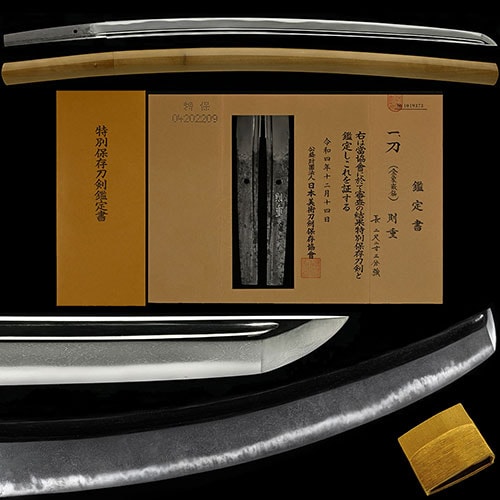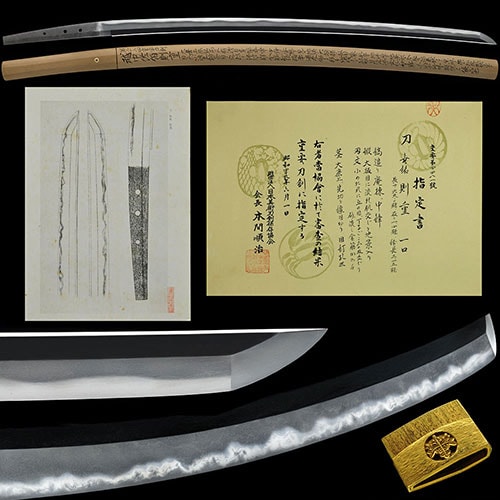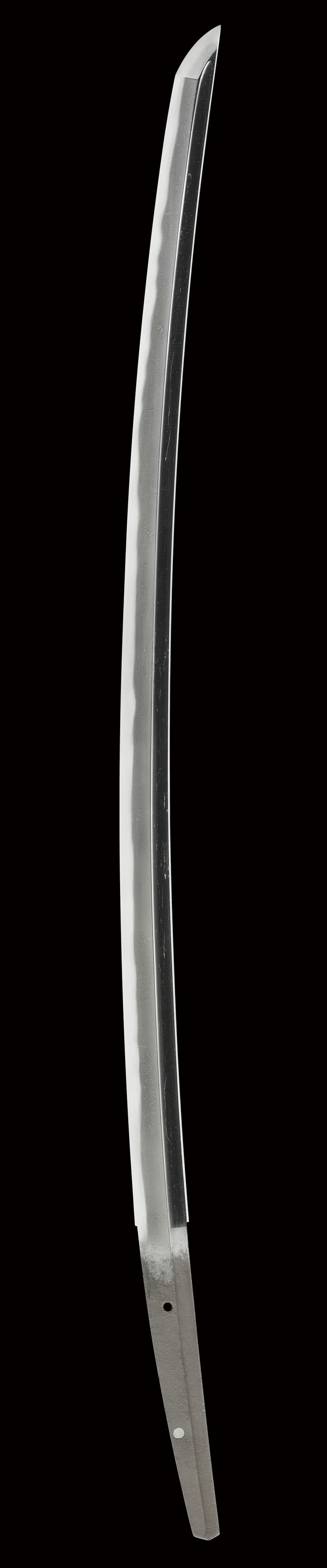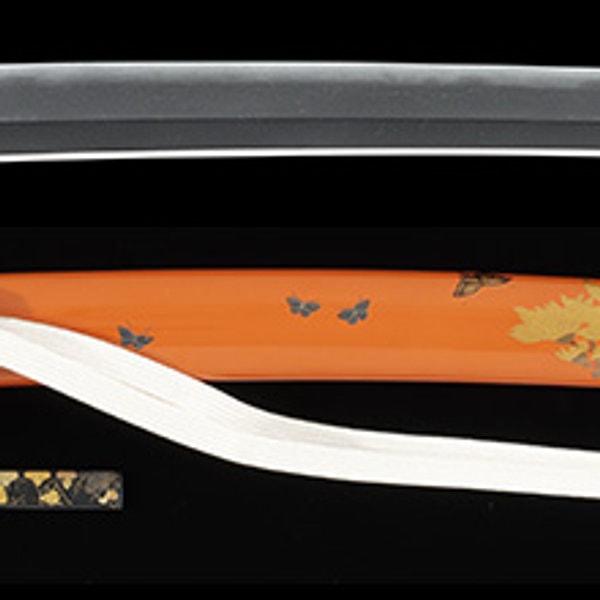



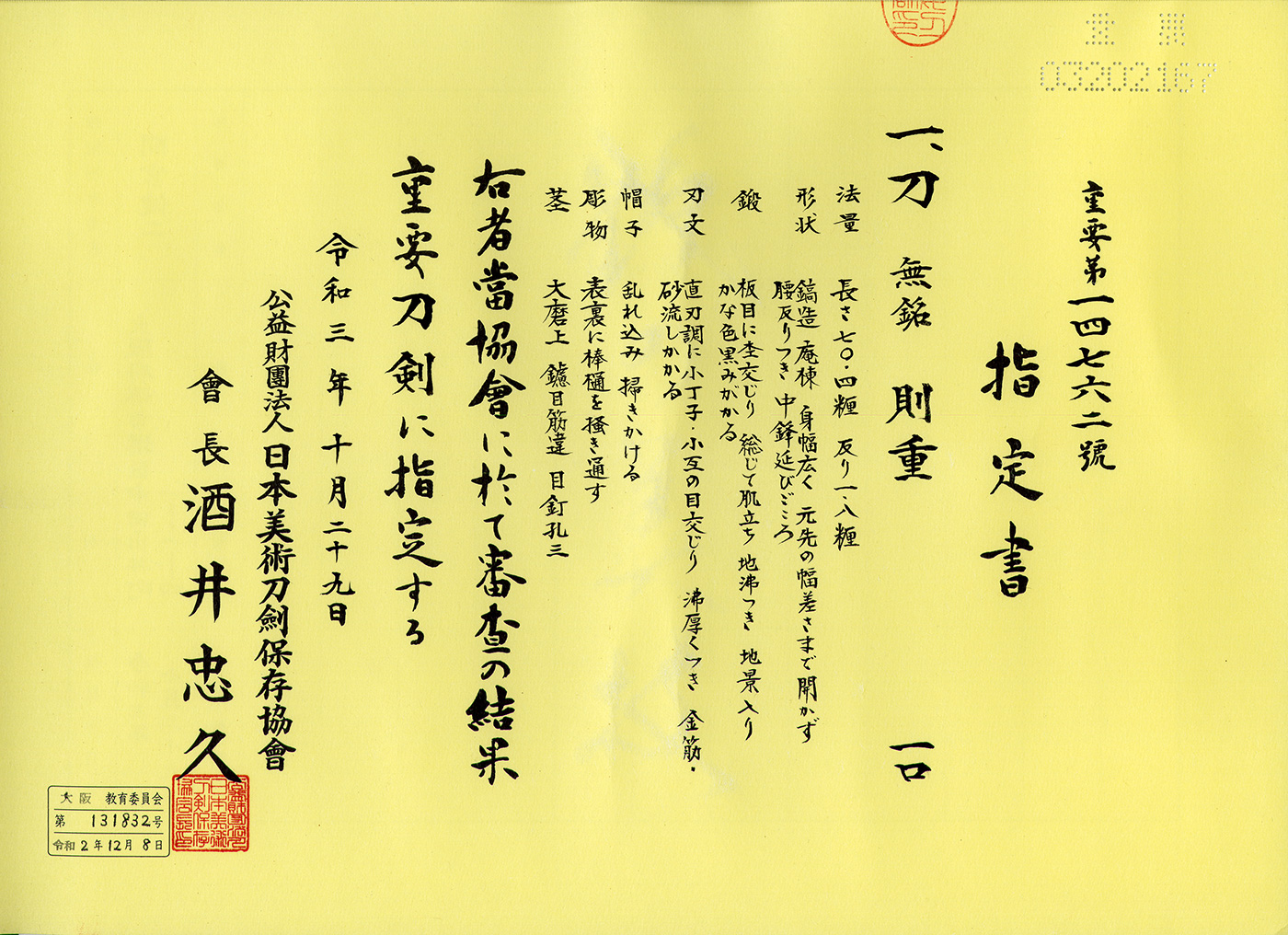
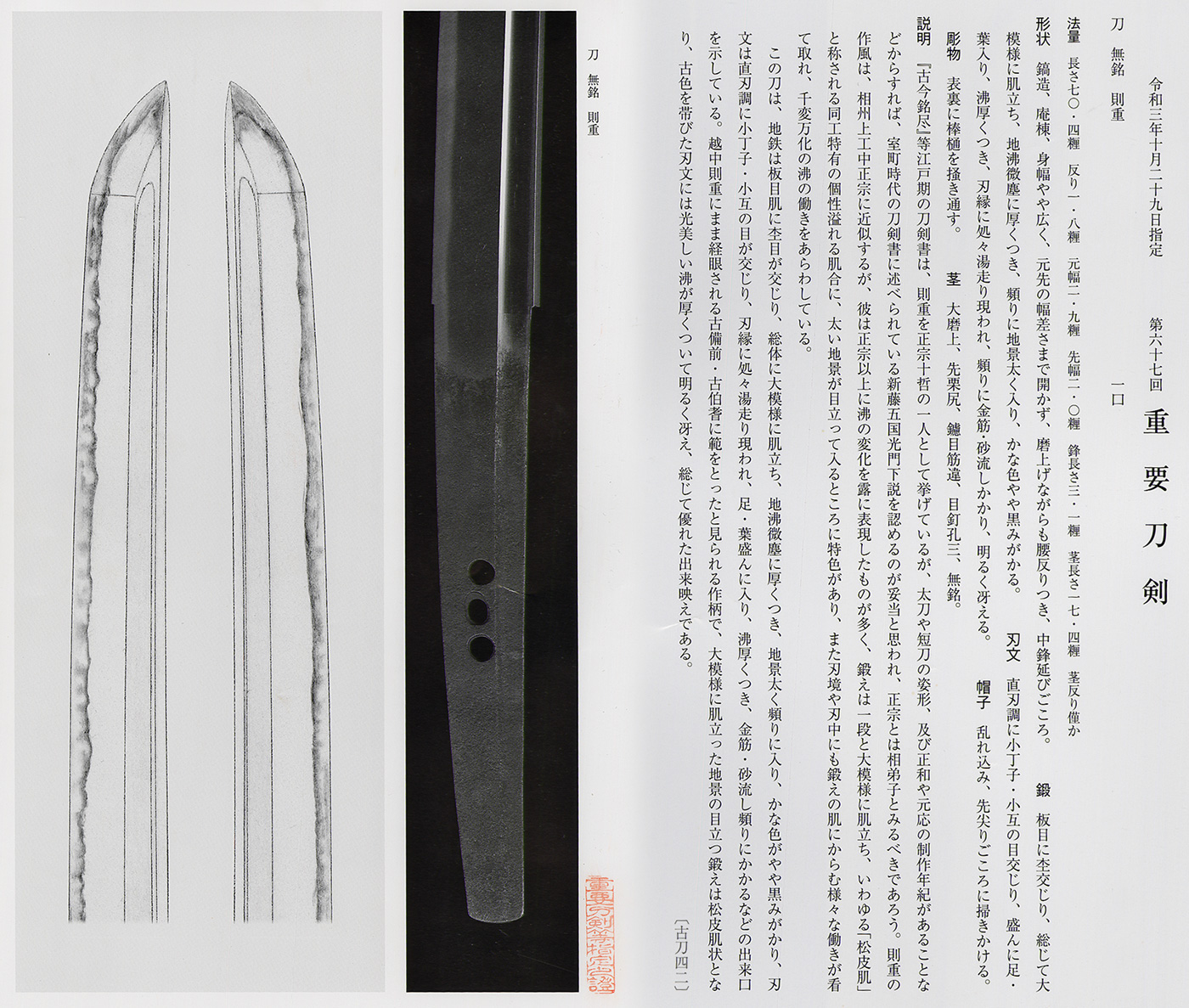
-, 67th Session — Designated October 29, 2021
, : Norishige (則重)
Measurements 70.4 cm, 1.8 cm, 2.9 cm, 2.0 cm, 3.1 cm, 17.4 cm, slight
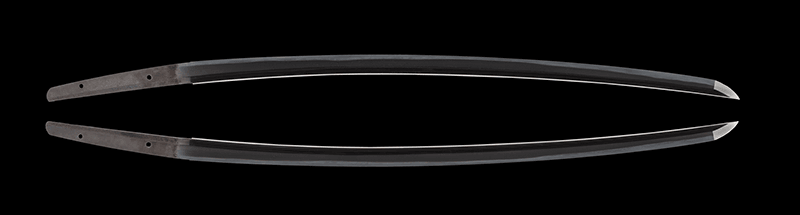
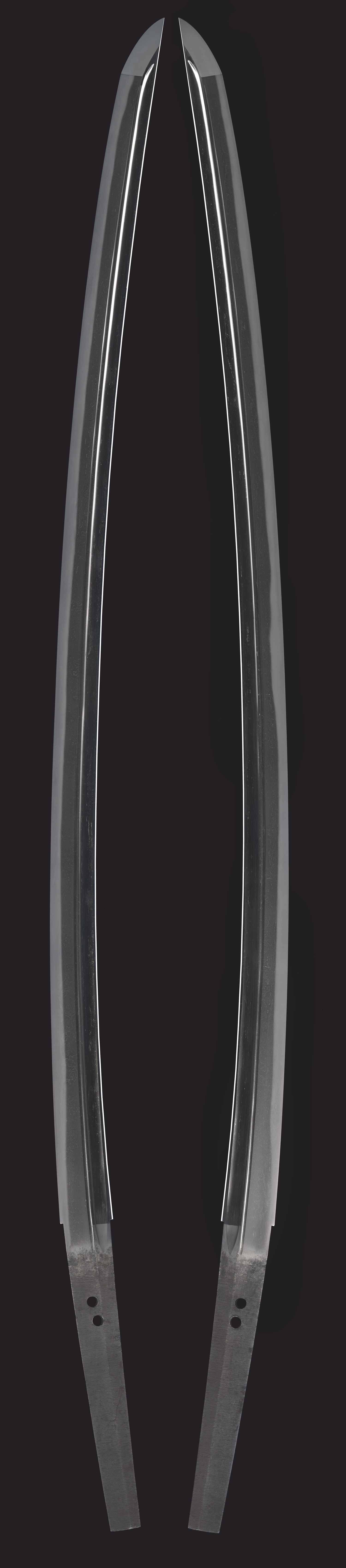
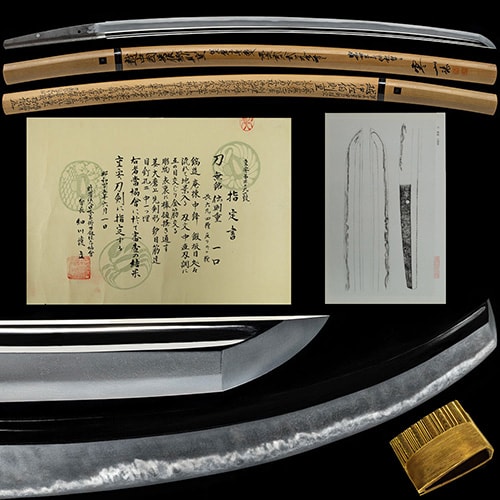
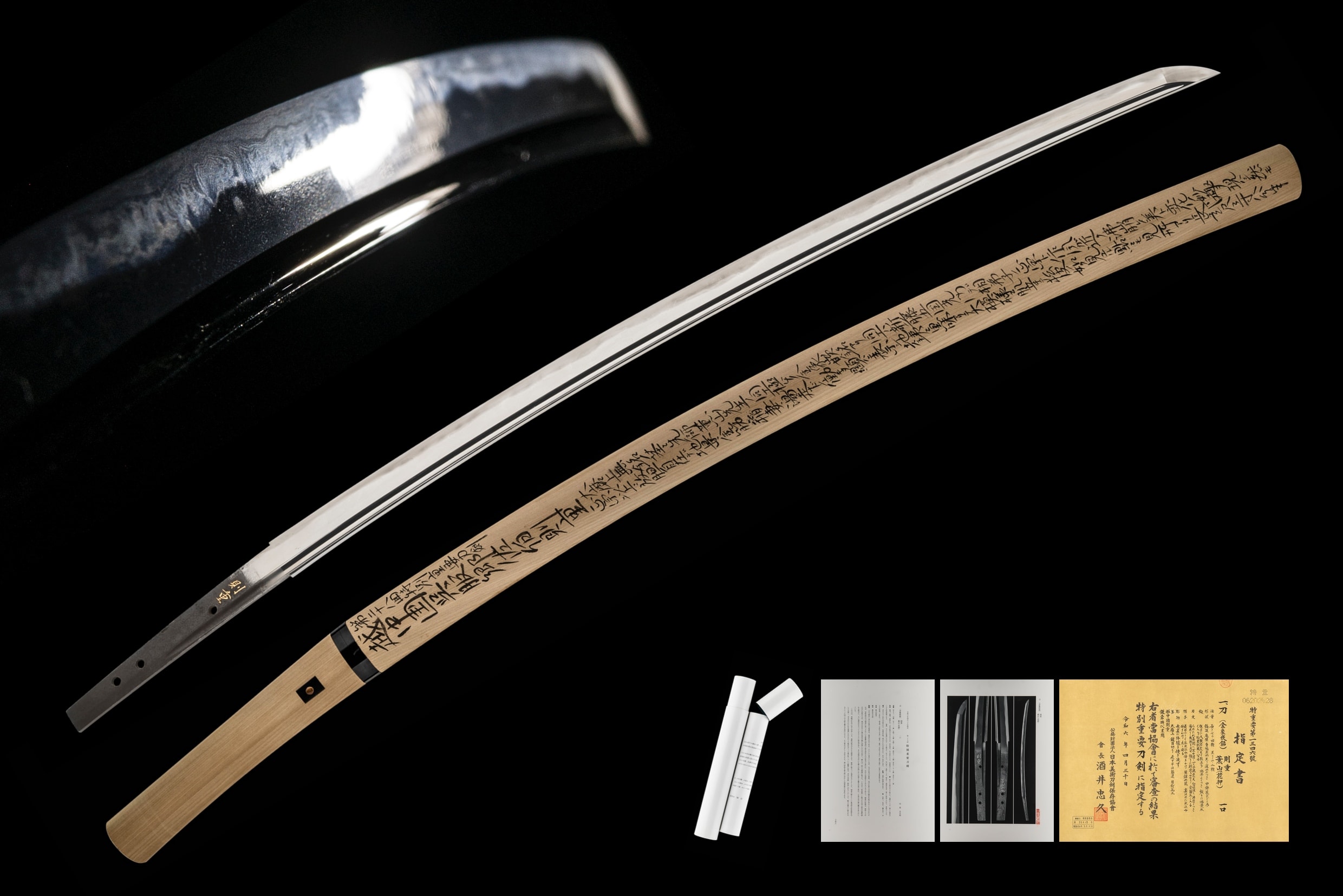
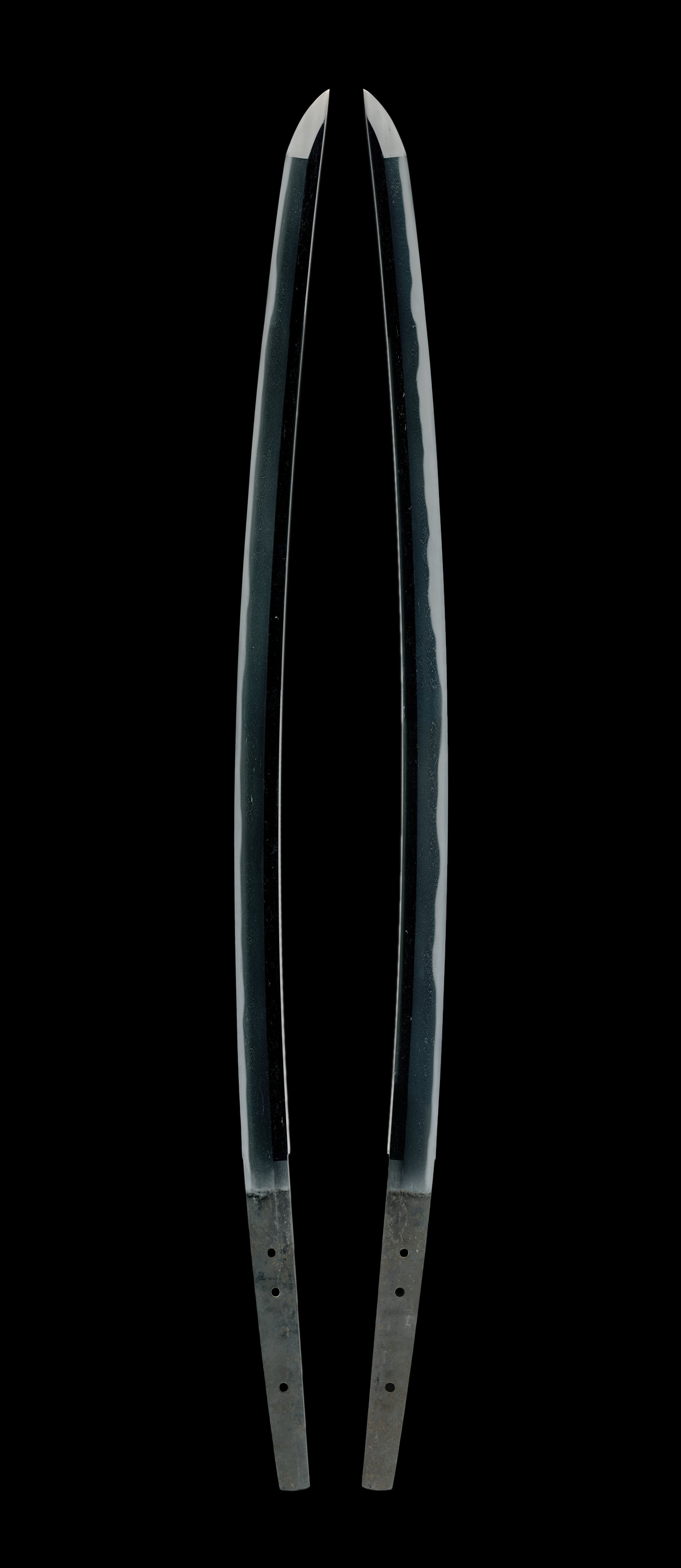
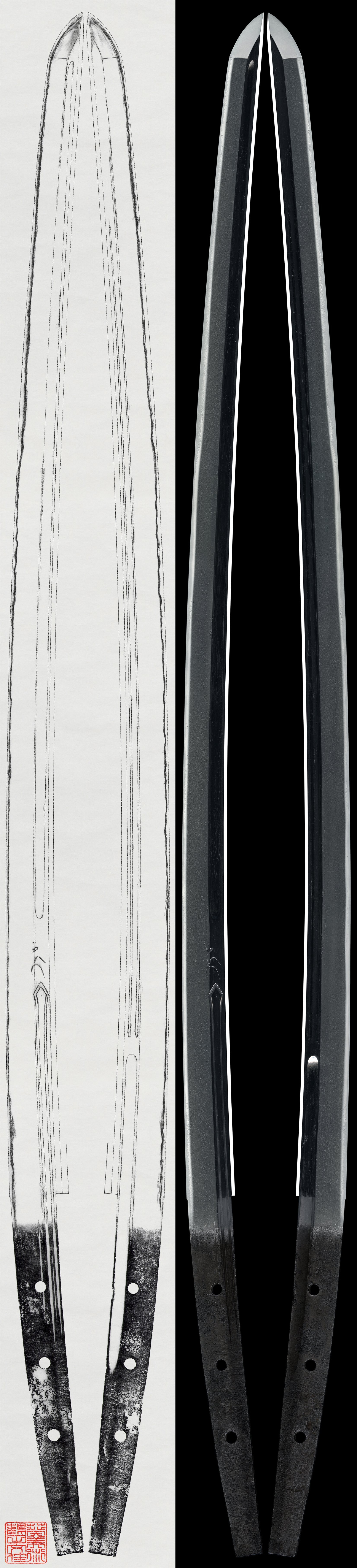
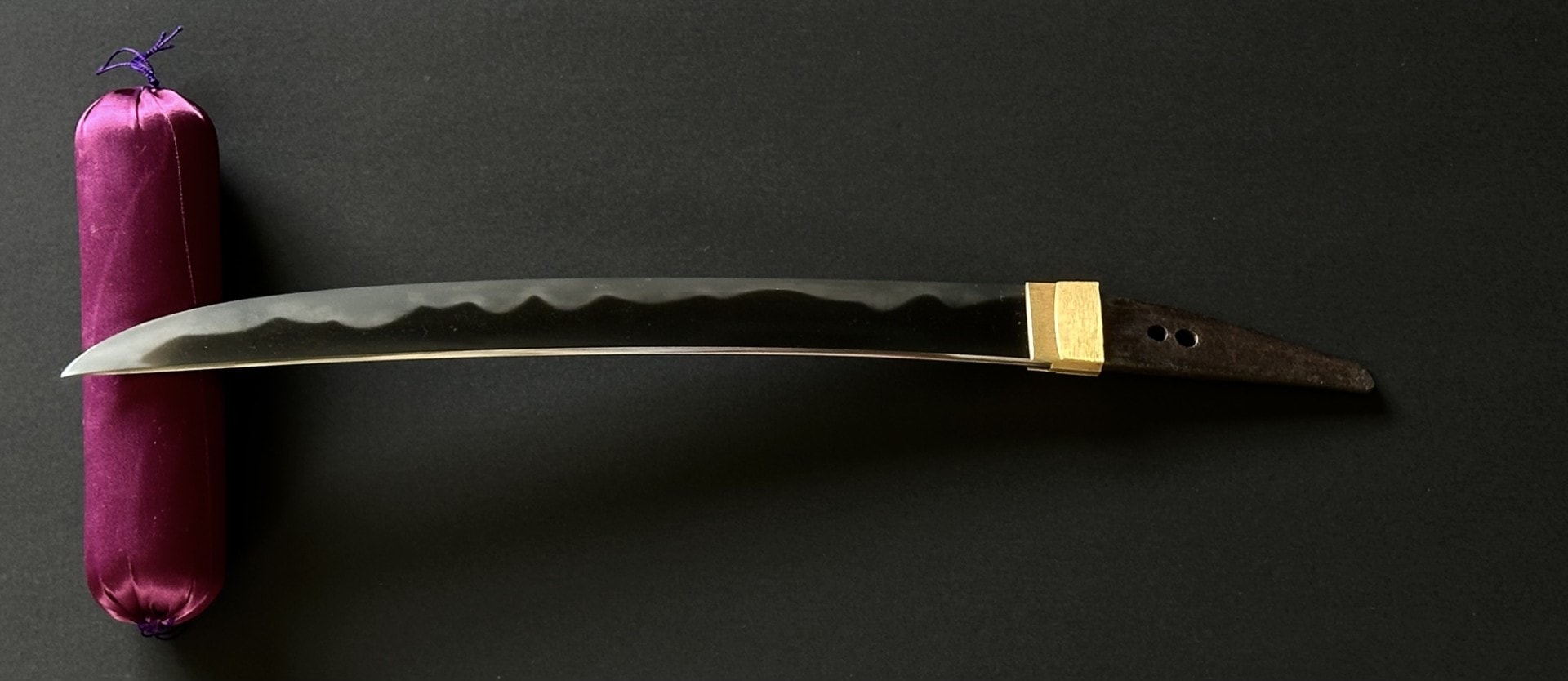
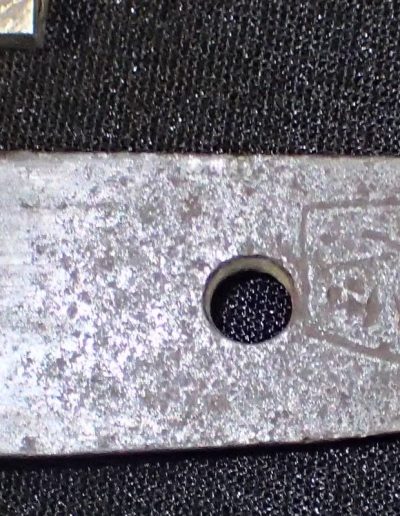
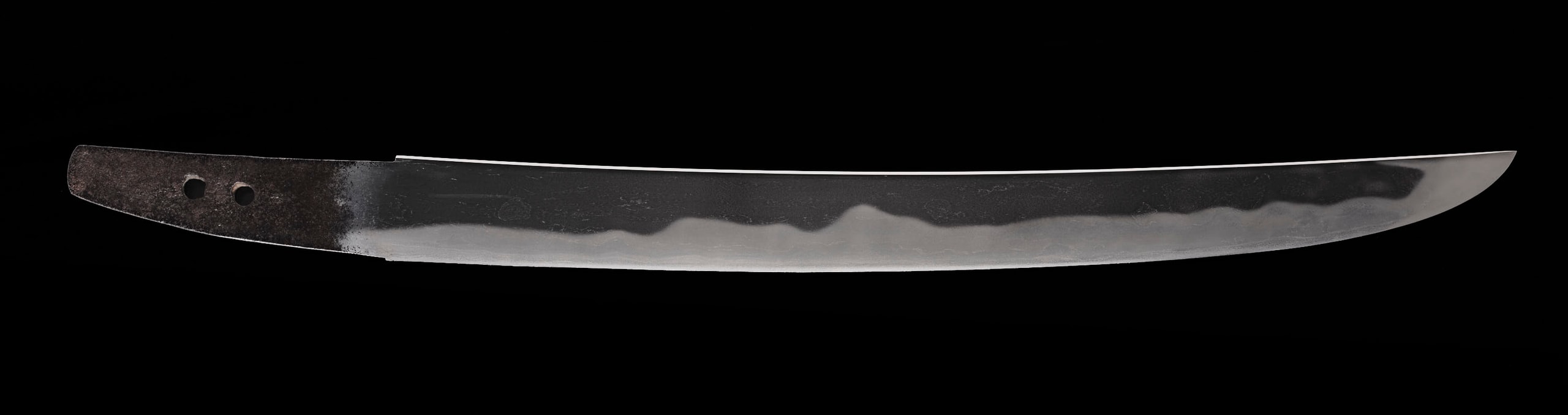
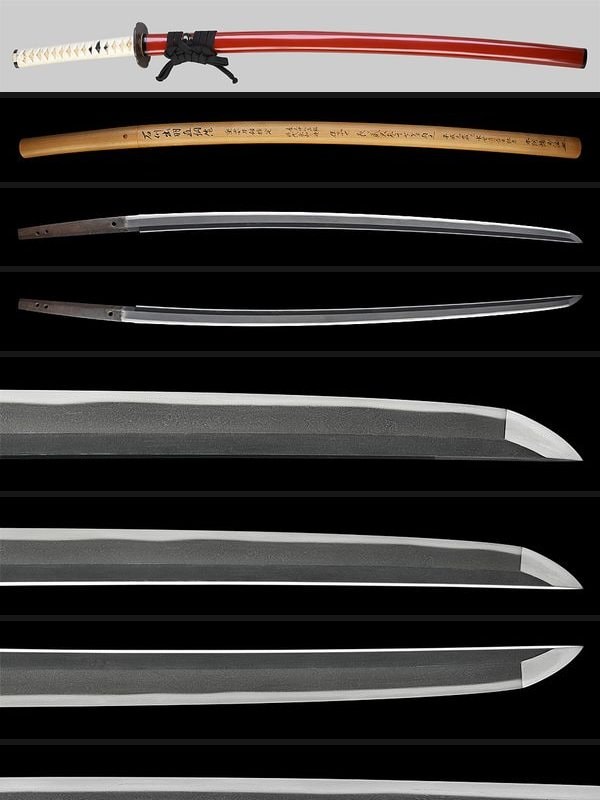
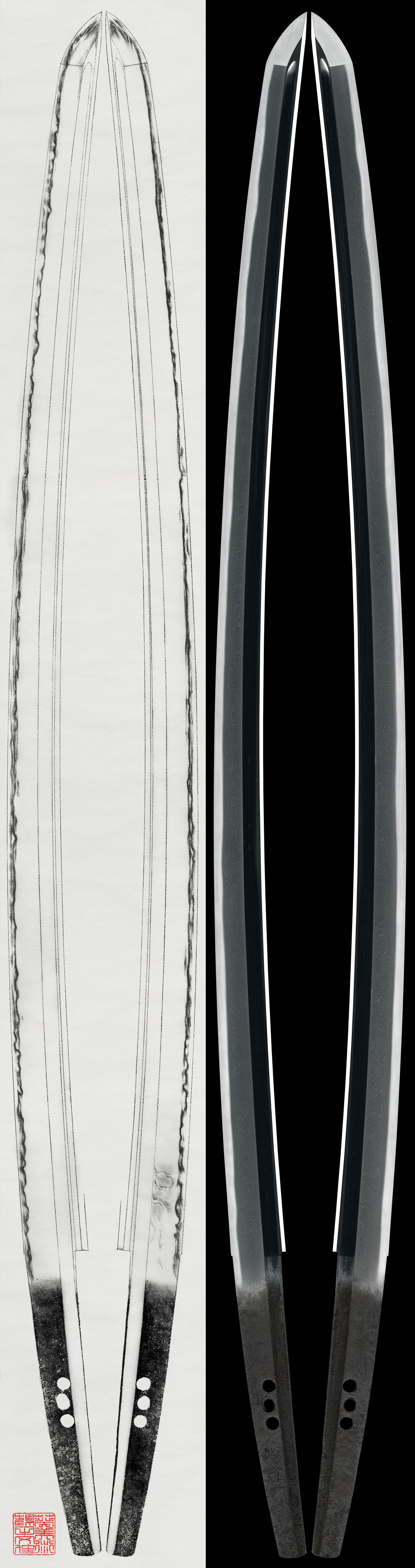
Description Keijō: , . The is somewhat wide, and the difference in width between and is not greatly pronounced. Though , it retains , and the shows a slightly extended tendency. : mixed with , overall a large-pattern grain with pronounced . Fine adheres thickly, prominent thick enter frequently, and the steel color shows a slightly dark (blackish) tone. : A temper mixed with and . and are abundant; attaches thickly. appears in places along the , and and occur frequently; the is bright and clear. : , with a pointed tendency, and . : are cut through on both sides. : ; tip ; file marks ; three ; .
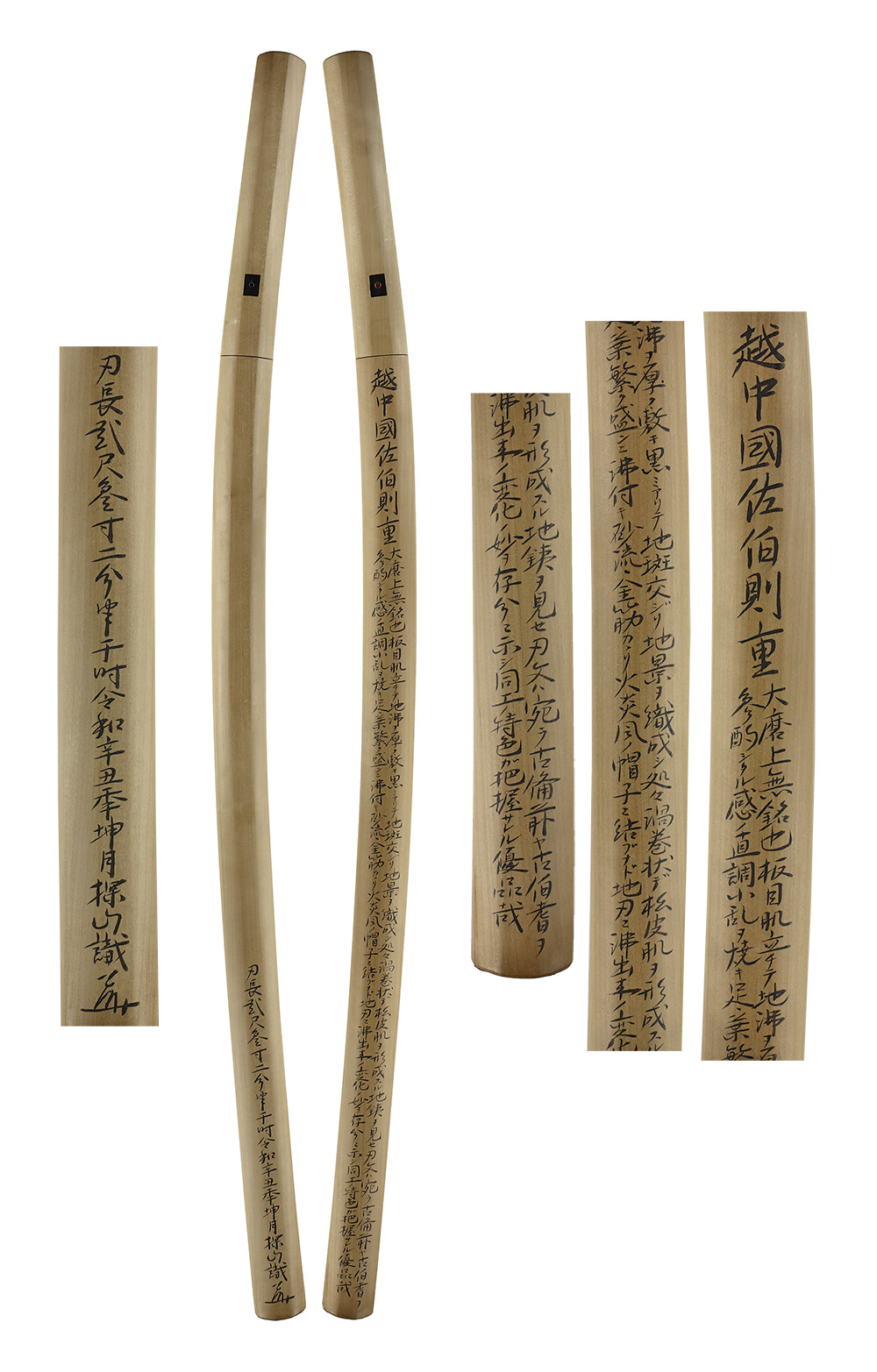
Artisan Norishige (越中則重)
Era Late period (early 14th century; Shōwa–Gen’ō era)
Explanation -period sword books such as the Kokon Meizukushi list Norishige as one of the “Ten Great Disciples of Masamune” (Masamune jittetsu). However, when one considers the of his and , as well as the existence of works bearing production dates from the Shōwa and Gen’ō eras, it appears more appropriate to accept the theory—recorded already in -period sword texts—that he was a member of the lineage of Shindōgo Kunimitsu (新藤五国光). In that case, he should be regarded as a fellow disciple of Masamune rather than Masamune’s pupil.
Norishige’s style is closely akin to that of the outstanding master Masamune; yet, compared with Masamune, Norishige more often gives overt expression to the transformations of . His forging displays an even larger-pattern grain with conspicuous —the highly individual texture termed “” (松皮肌)—in which thick stand out prominently. Moreover, within the boundary of the temper () and inside the tempered area () one can discern diverse activities that intertwine with the forged grain, revealing endlessly varied workings of .
In this , the is mixed with , and overall exhibits a large-pattern grain with pronounced . Fine adheres thickly, thick enter frequently, and the steel tone is slightly dark. The is mixed with and ; appears in places along the edge, with abundant and , thickly applied , and frequent and . This is a manner of workmanship that appears to take models from and Ko-Hōki, a tendency sometimes observed in Norishige. The large-pattern forging with conspicuous takes on a -like appearance; the temper, bearing an antique flavor, is thickly covered with beautifully luminous and is bright and clear. Overall, it is an exceptionally fine work.