The monasteries that had sustained Yamato lost ground through the Muromachi period, and the schools thinned with them; Sue-Tegai kept the old masame manner alive in quantity. The burning of Tōdaiji’s Great Buddha hall in 1567 closed the temple age.
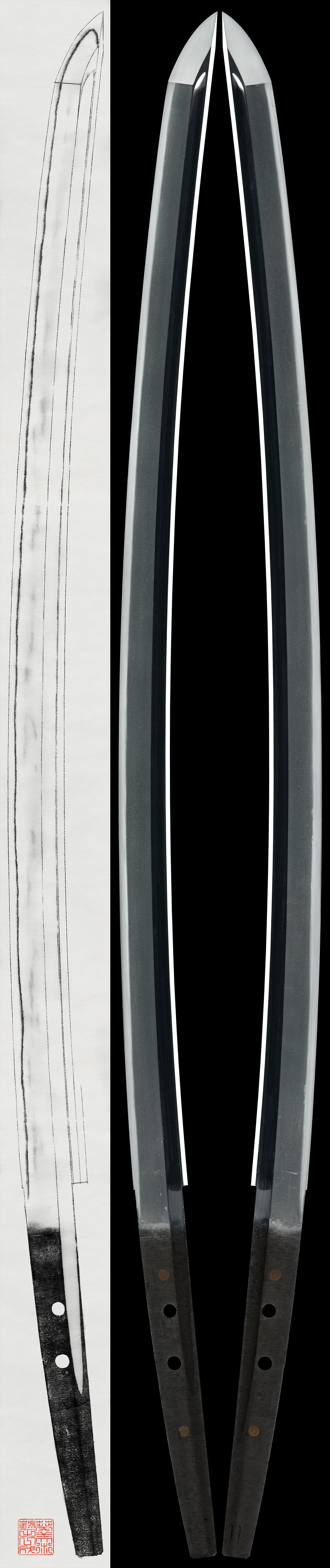
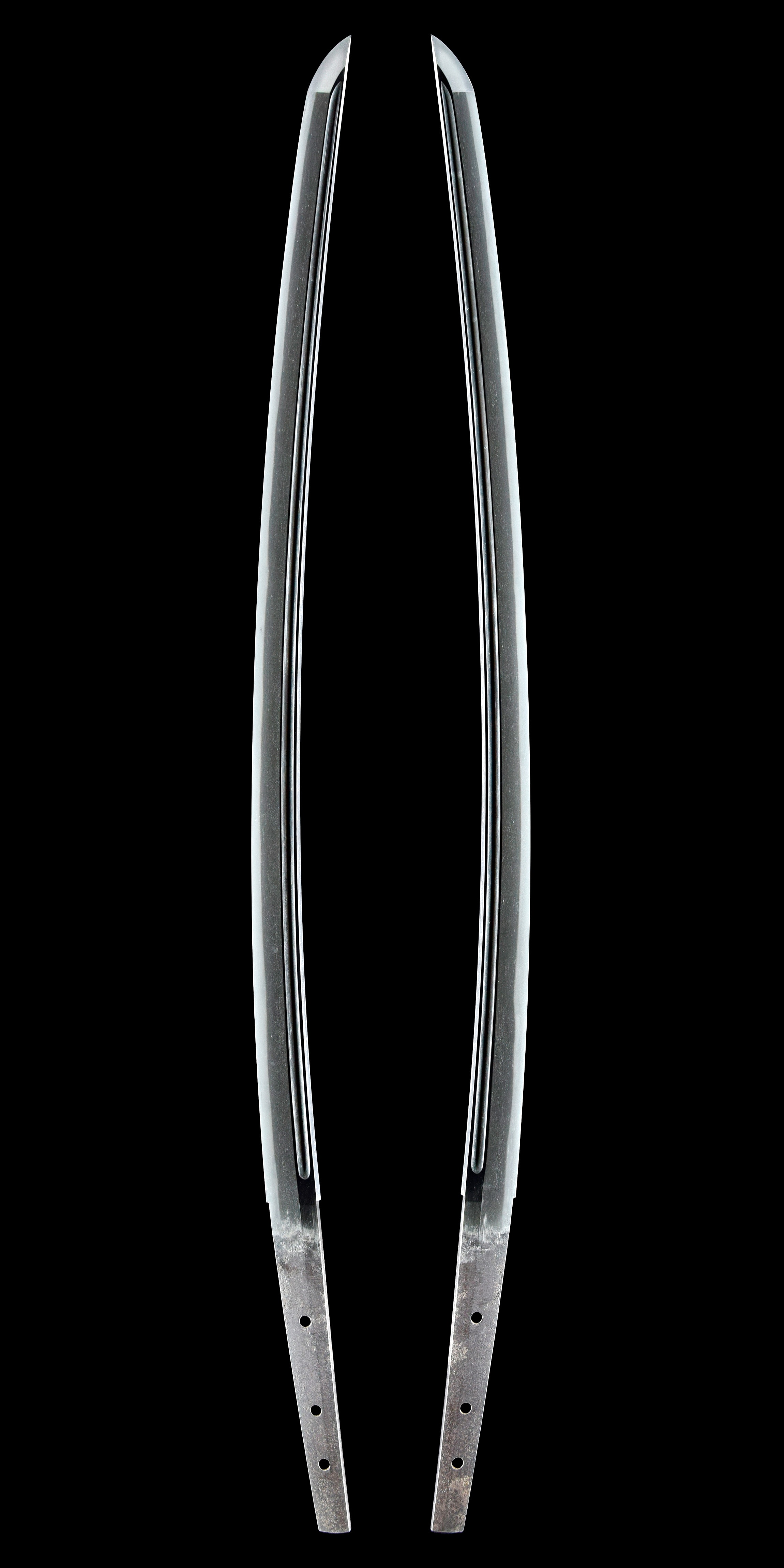
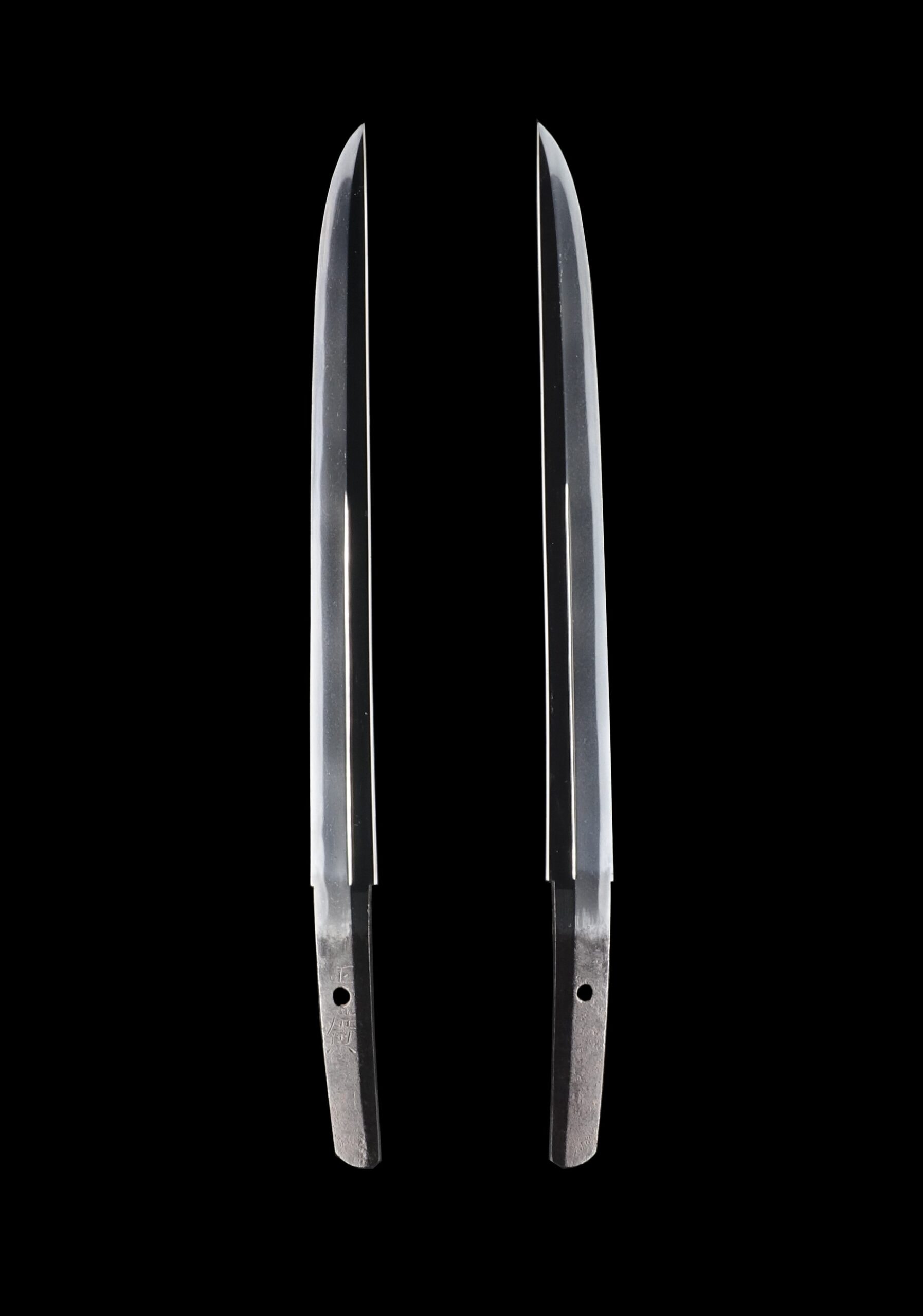
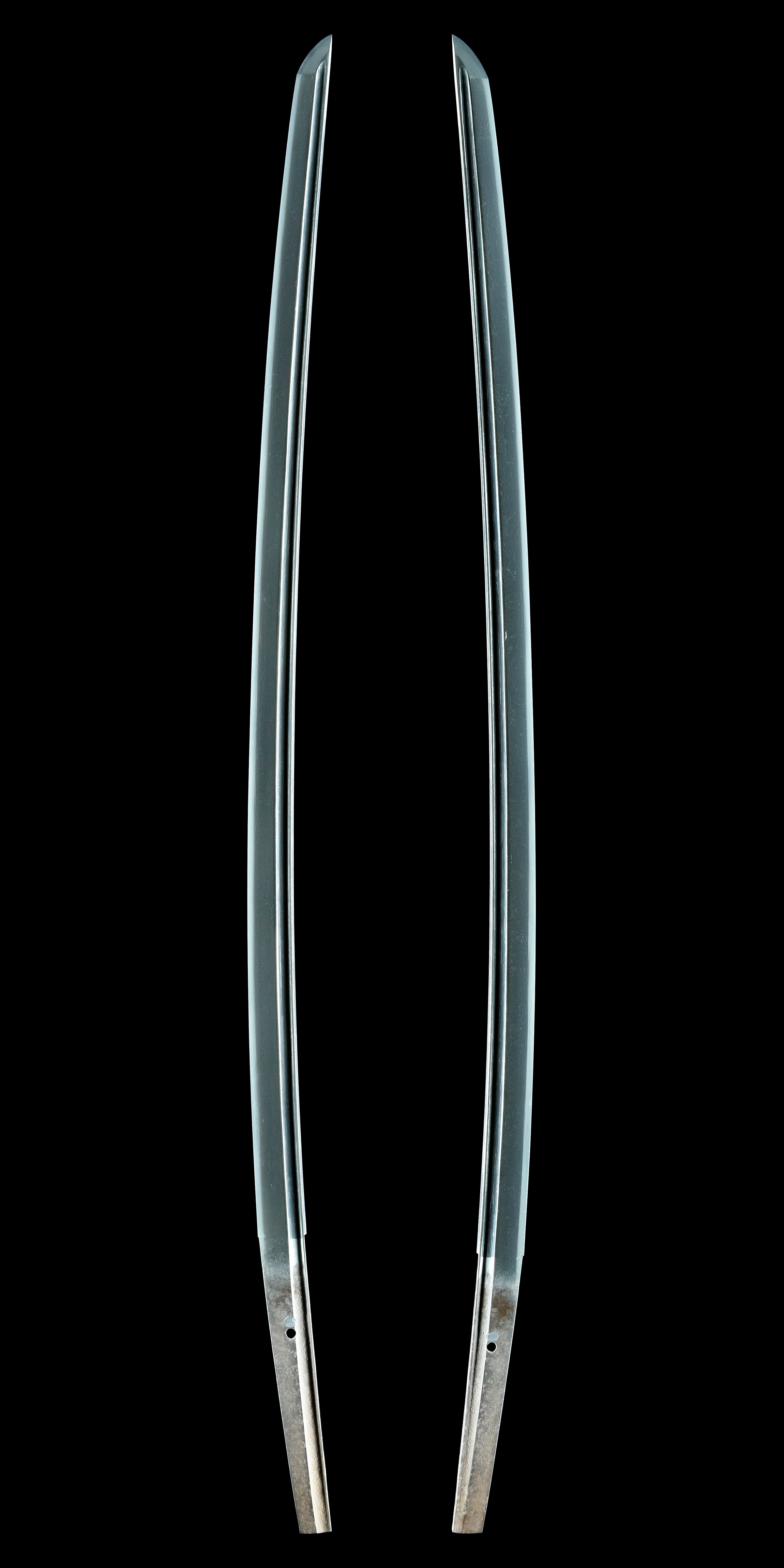
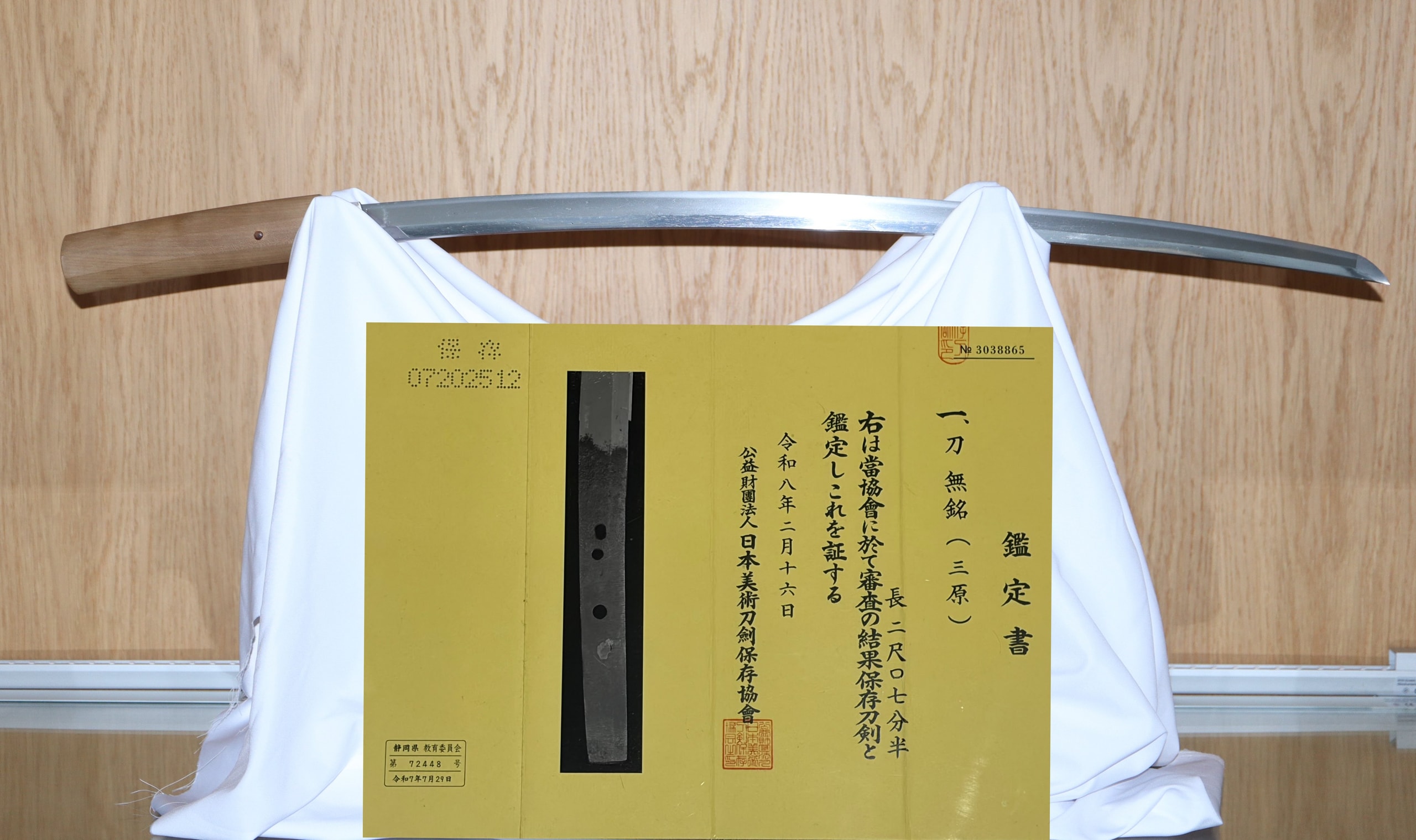
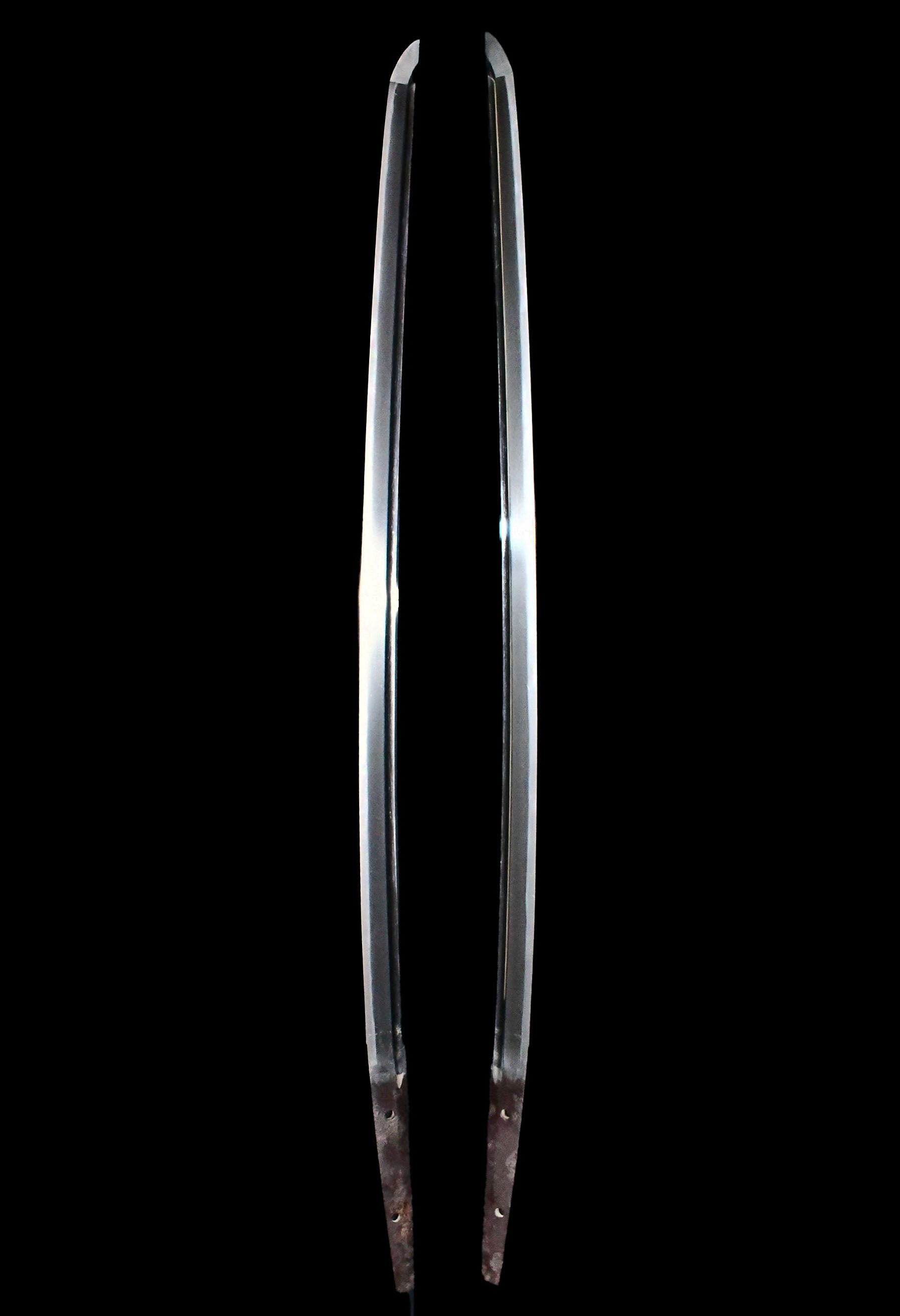
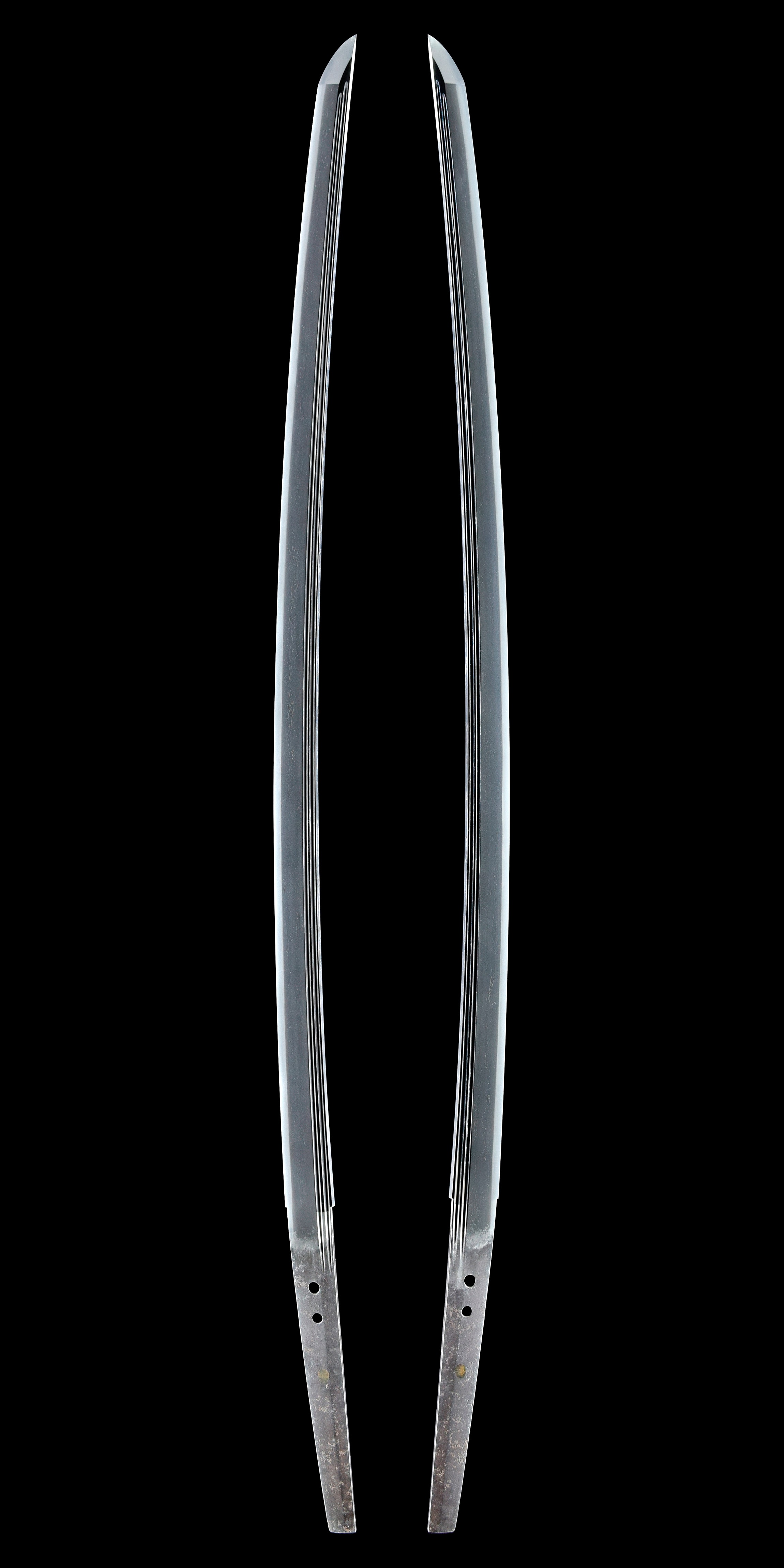
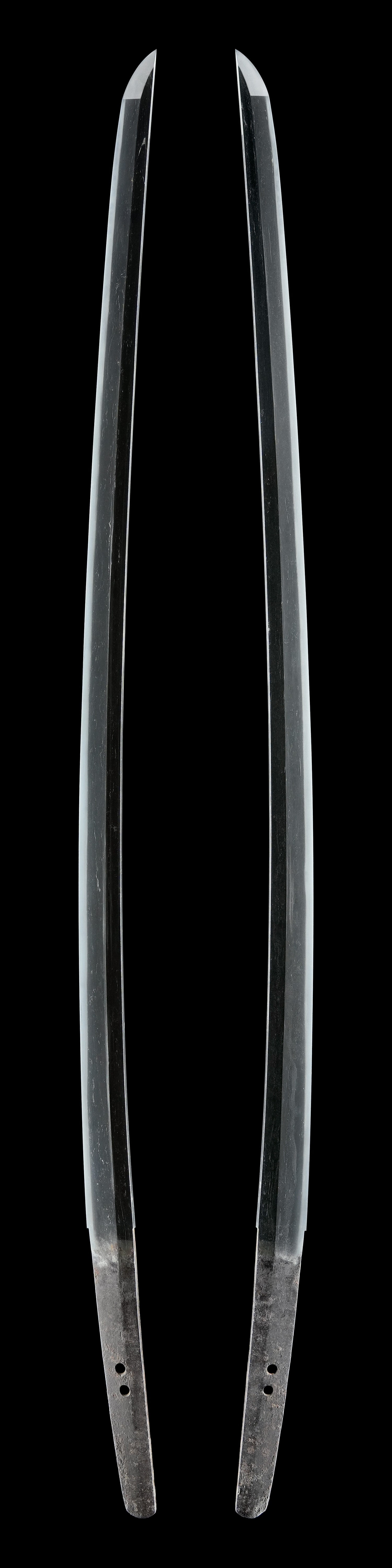
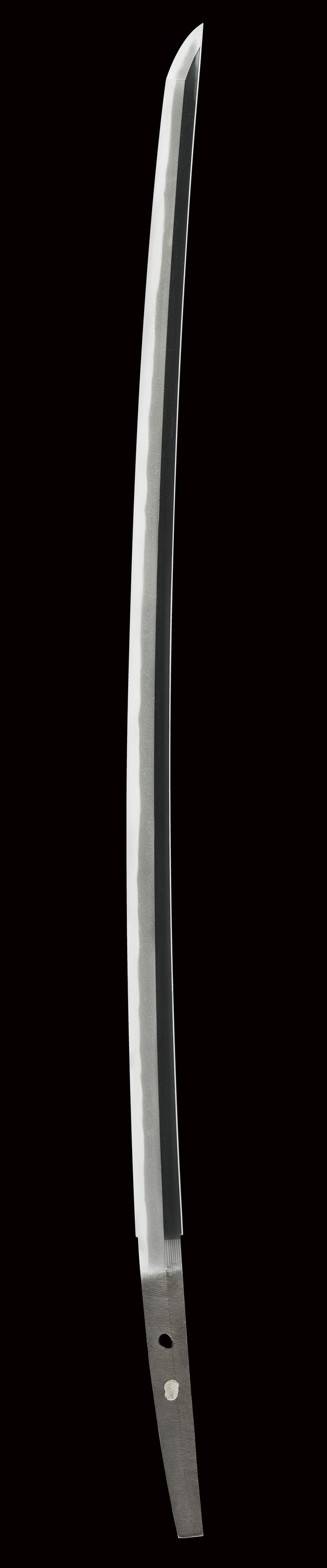
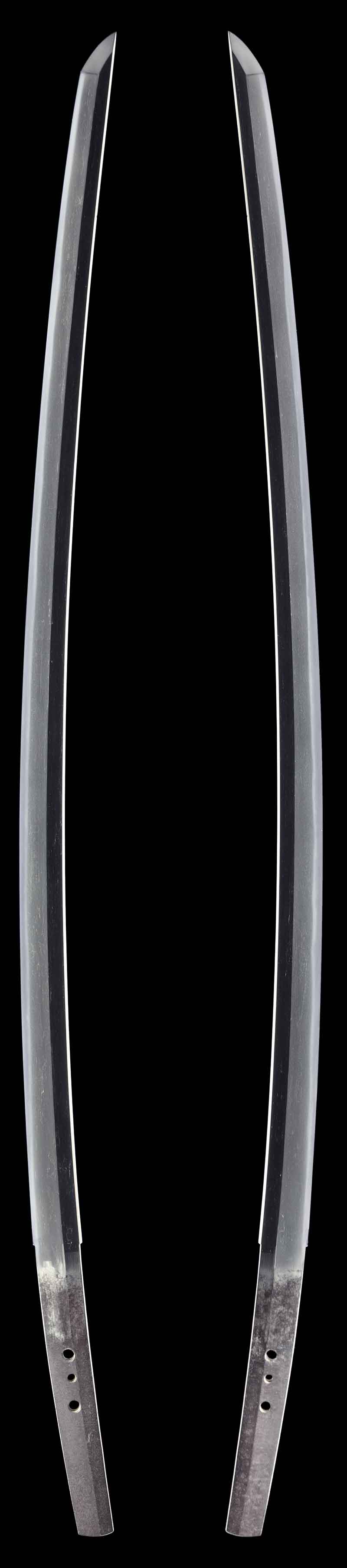
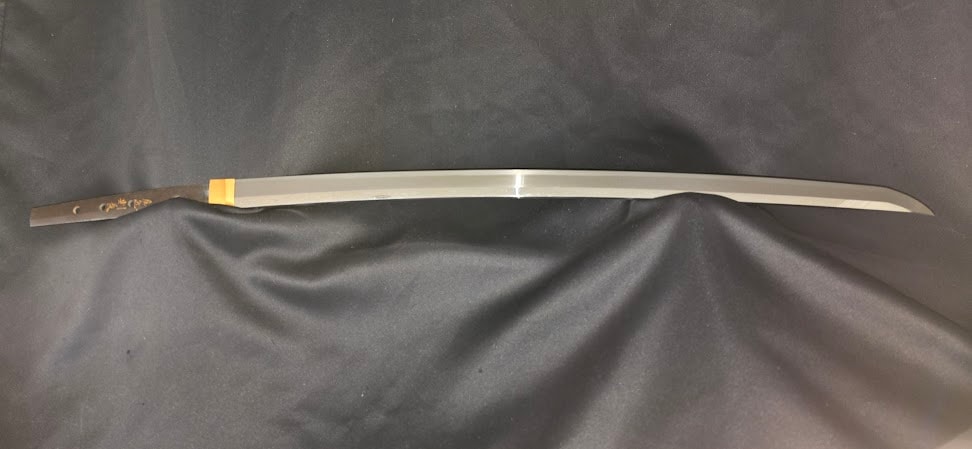
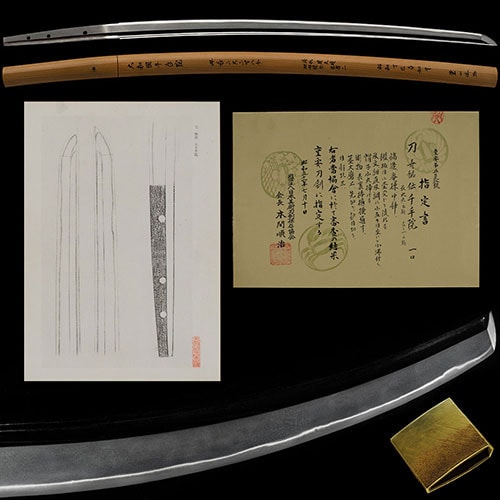
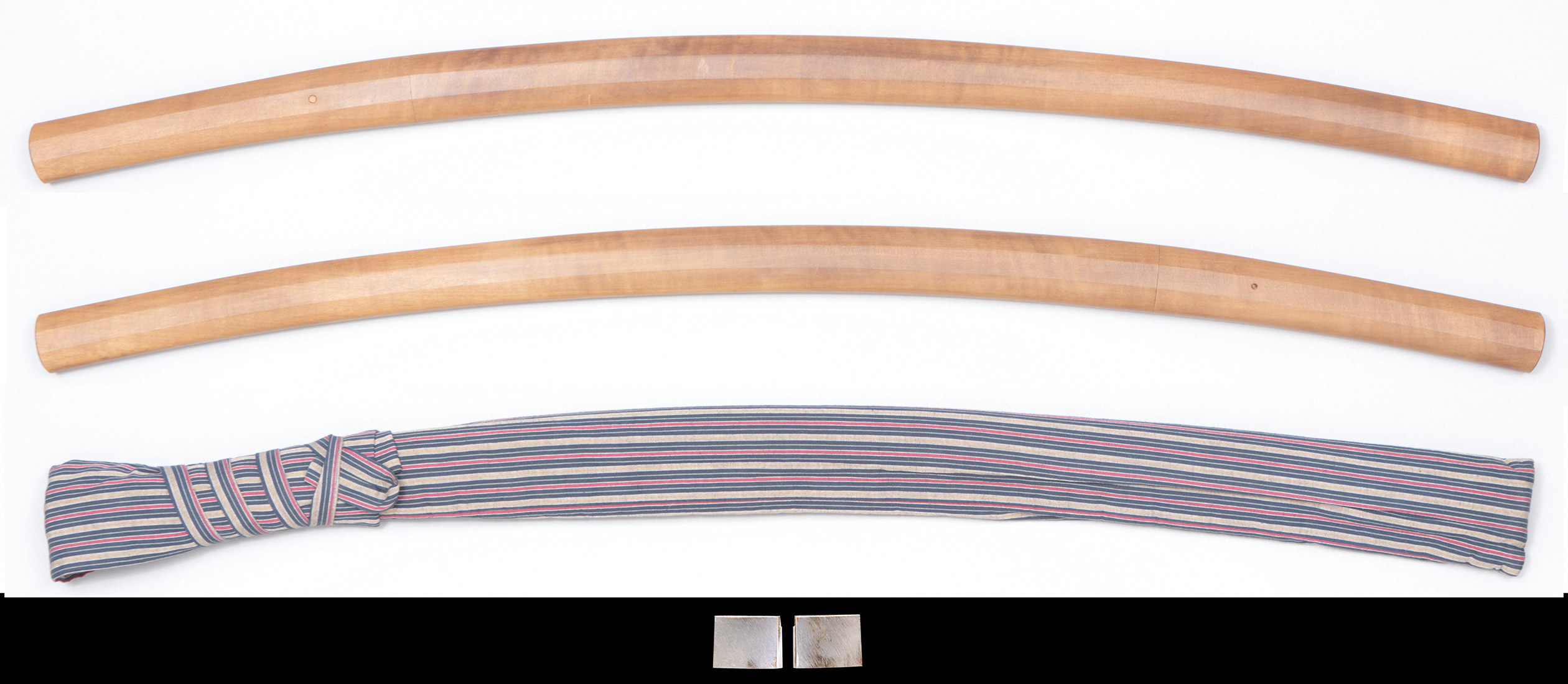
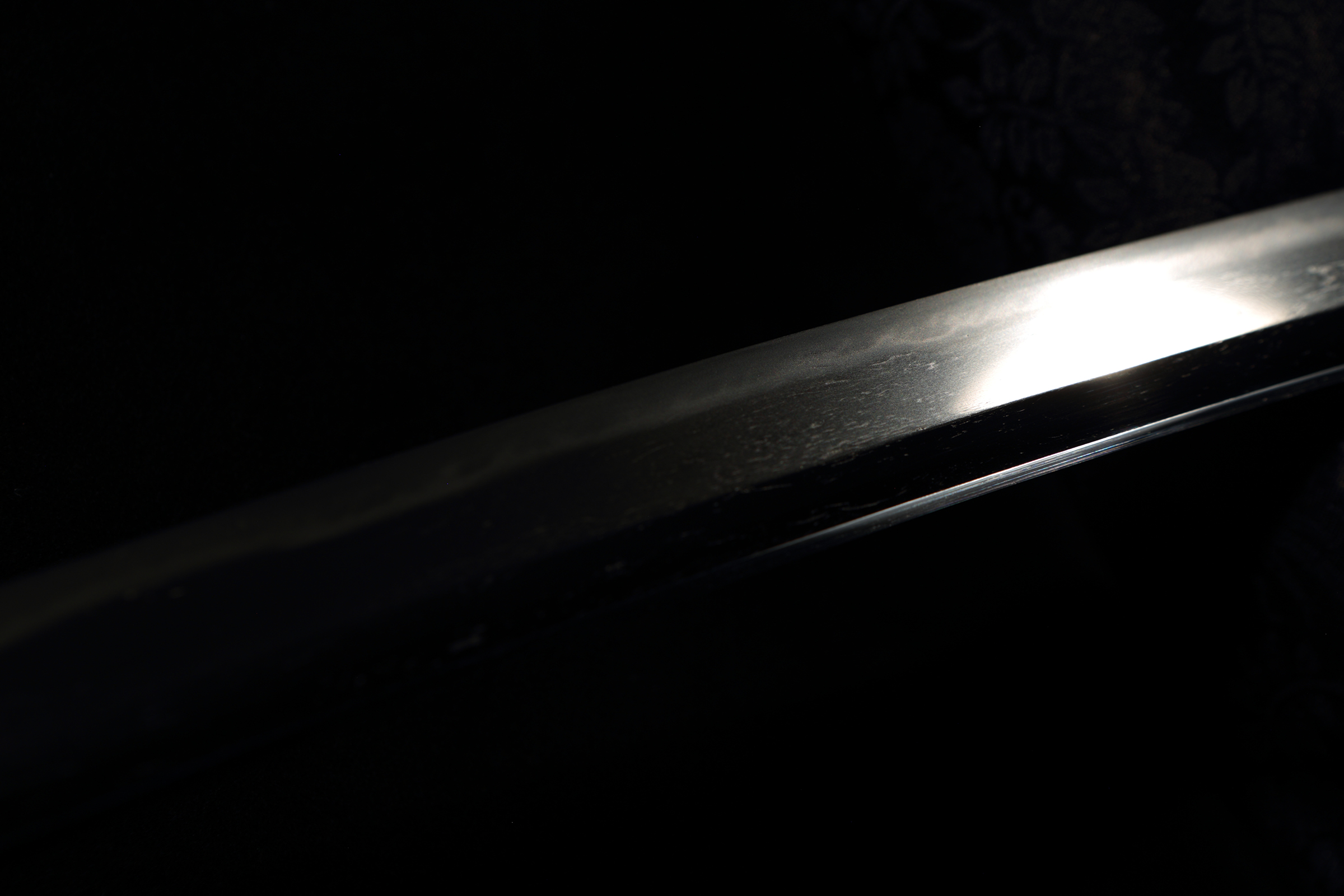
This is a katana by Kageshige of the Bishu (Bizen) province, from the early Muromachi period. It is attributed to the Mihara school. The blade features an itame hada with masame, and a chu-suguha hamon with some small variations.
 NihontoWatch
Yamato-den · Bingo · around 1375-1381
1 piece on the market now
Yamato-den · Bingo
Phase: Ko-Mihara古三原· 1288–1393
8 pieces on the market now
Ko-Mihara (古三原) opens the Mihara story at its Bingo base, where a body of smiths gathered from the close of the Kamakura period and through the Nanbokuchō era. The setsumei treat the term as a chronological bracket rather than a separate workshop: works of this span are "collectively termed Ko-Mihara," with Masaie and Masahiro repeatedly named as the leading figures, and Masahiro held by tradition to be Masaie's son. The province's web of shōen estates tied to Kinai temples such as Tōji and Rengeō-in (Sanjūsangendō) drew the early smiths into regular contact with the central provinces, and the Yamato-den temperament that the records read in these blades is referred to that exchange. A second current runs alongside it: because some pieces show an Aoe manner, the appraisals also weigh influence from neighbouring Bitchū, as the Chikatsugu tachi of Shōhei 7 (1352) makes plain, sitting on the seam between Yamato bearing and Aoe surface. In the ji, the early hand keeps an itame-tending ground that takes on mokume, nagare, and a masame-like flow, with the grain inclined to stand (hada-dachi) and fine ji-nie set densely across it; a pale shirake-utsuri recurs as the most cited diagnostic, though the Masaie ōdachi of around Jōji instead shows a darkish steel with a midare-utsuri-like cast. The temper holds to a refined chū-suguha with ko-ashi and yō, the nioiguchi drawn tight or shizumi, the habuchi breaking into hotsure, kuichigai-ba, uchi-noke, and a nijūba suggestion, with fine kinsuji and sunagashi threading through.
The bōshi runs sugu, closing in yakizume, ko-maru, or maru with hakikake at the tip. The records keep these early works the cleaner pole of the school: a quiet, controlled Yamato manner whose forging shows "not the slightest looseness," set against the coarser, looser later Sue-Mihara of the closing Muromachi, where the disciplined suguha and tight ground give way. For kantei, the early phase reads as Yamato bearing without Yamato vigour: the nie of ji and ha runs weaker than in the Nara schools proper, the steel turns whitish, and the nioiguchi tightens, so a bright clean suguha with pointed bōshi can be mistaken at a glance for Aoe until the broad shinogi-ji, high shinogi, standing mokume, and hotsure with kuichigai-ba declare Mihara. Masaie and Masahiro divide on sugata: Masaie is the man of the bold ō-kissaki and the ōdachi, while Masahiro keeps ordinary chū-kissaki proportions and a freer, midare-gokoro edge with deeper kaeri, as in the Meibutsu Ō-Mihara cited by name. Because Yamato habit left few signed Mihara works, the early phase rests heavily on mumei and kinzogan attributions, several of them given to Masaie by Hon'ami Kōtoku, while dated and signed survivors stay scarce and so carry weight as reference material. Provenance threads through the great houses, the signed Masaie tachi presented to Emperor Meiji by the Shimazu family and another Masaie transmitted in the Date. Learn more →
| Smith | Era | Designated |
|---|---|---|
| Masahiro正廣 | 1362-1389 | 35 |
| Masaie正家 | 1353-1375 | 29 |
| Kaneyasu兼安 | 1352-1369 | 12 |
| Masanobu正信 | 1376-1394 | 4 |
| Noritada則忠 | 1352-1356 | 0 |
Yamato in the Muromachi period
The monasteries that had sustained Yamato lost ground through the Muromachi period, and the schools thinned with them; Sue-Tegai kept the old masame manner alive in quantity. The burning of Tōdaiji’s Great Buddha hall in 1567 closed the temple age.
We could not find an authenticity certificate on the seller’s listing. Japanese swords and fittings are normally papered by the NBTHK (or the NTHK). Without one, the attribution is the seller’s own assessment and has not been independently verified — treat it with caution and ask the dealer about certification before buying.
If you judge that the condition of the delivered item differs significantly from the photos or description on our site, a return is possible. However, the return shipping cost is the customer's responsibility. To use cooling-off, please apply in writing by postal mail within one week of the item's arrival. The return shipping cost is the customer's responsibility.