When the Southern Court made its capital at Yoshino, in Yamato itself, the province’s schools were at their height: the late Tegai line, Shikkake Norinaga, and the pure masame of Hōshō. Their technique was already spreading across the provinces.
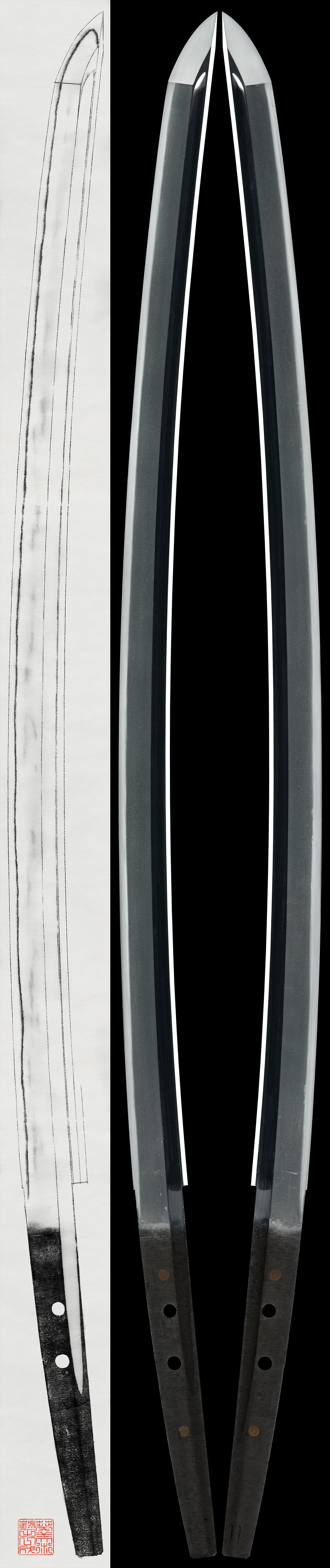
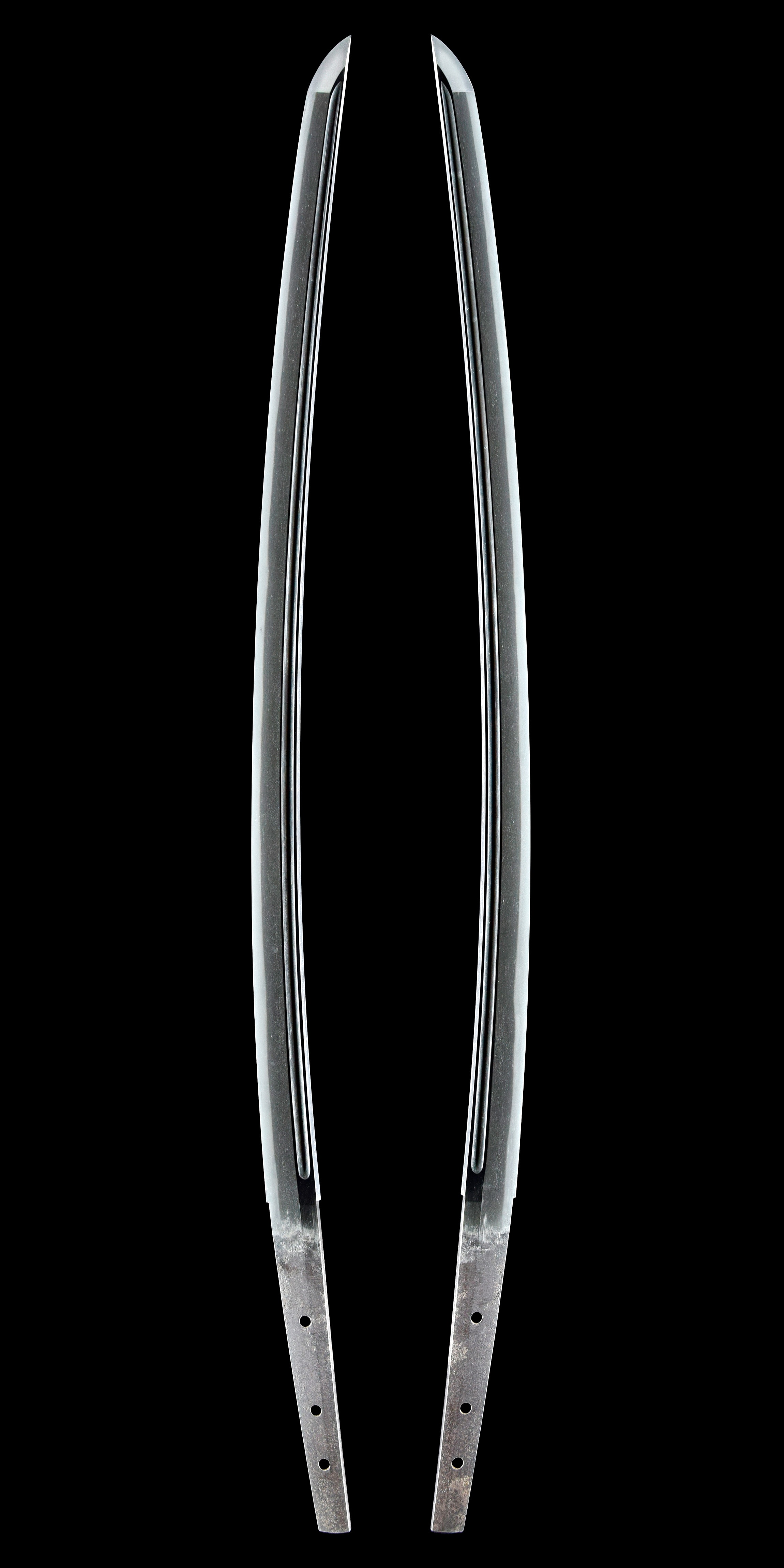
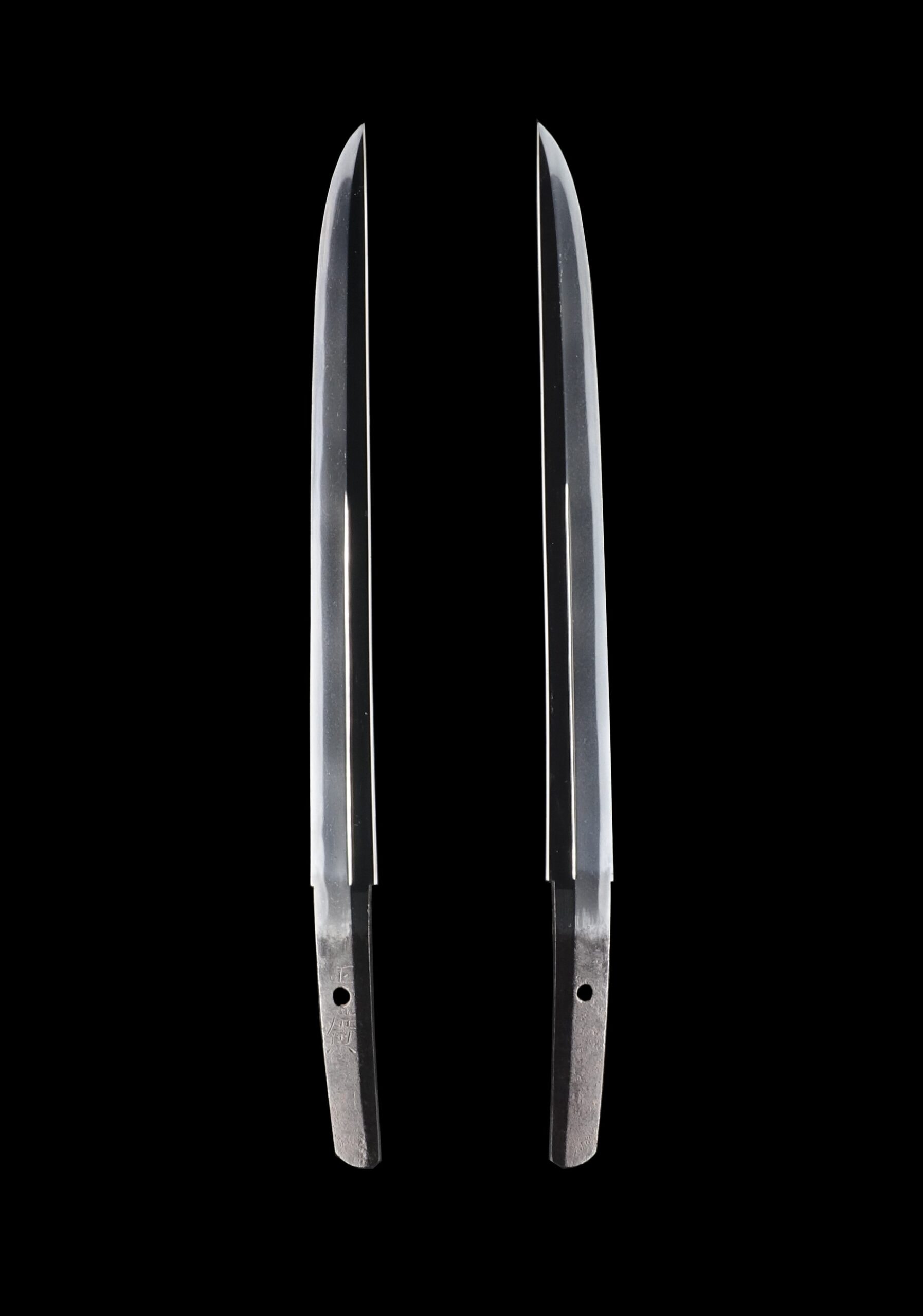
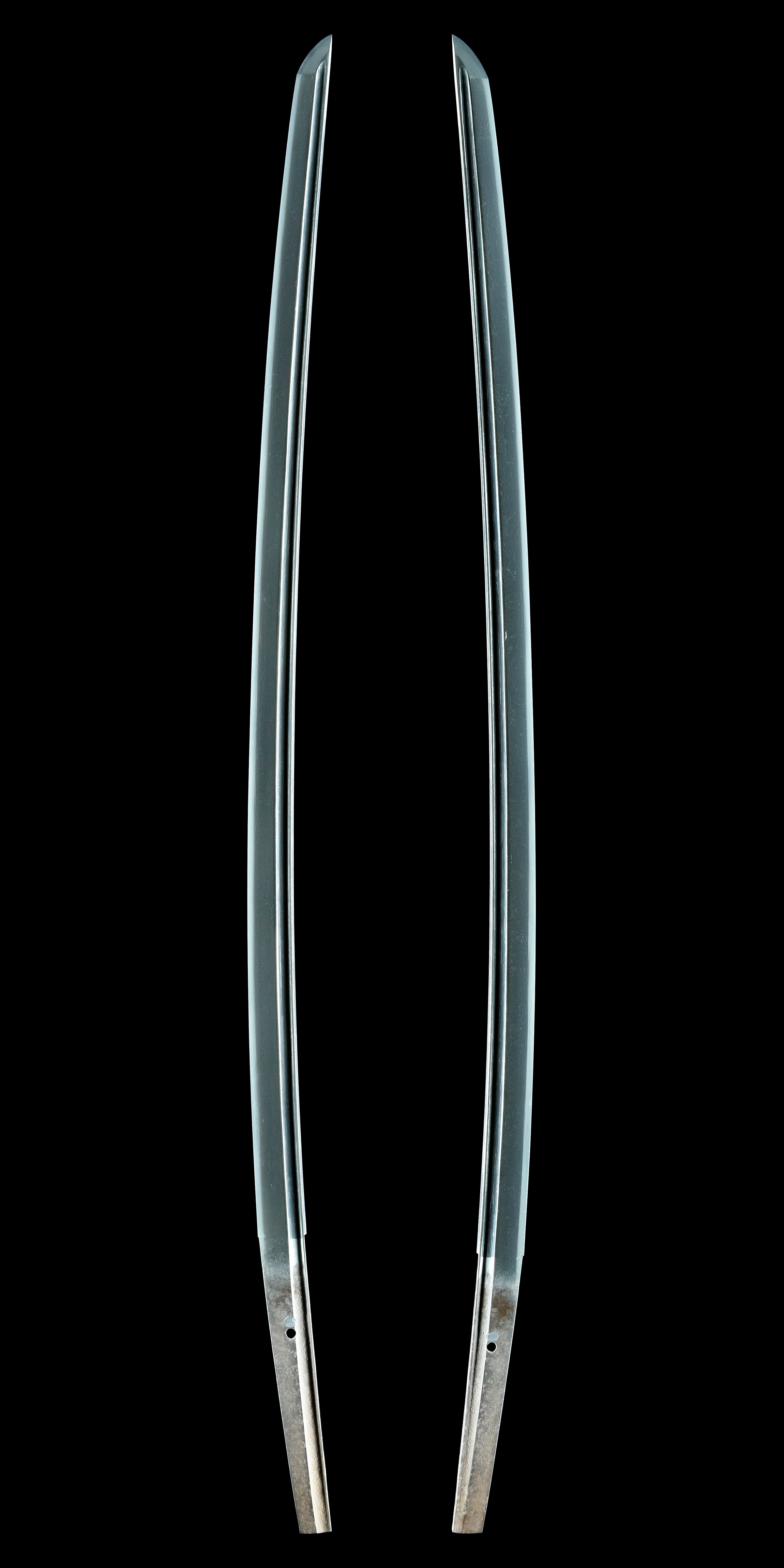
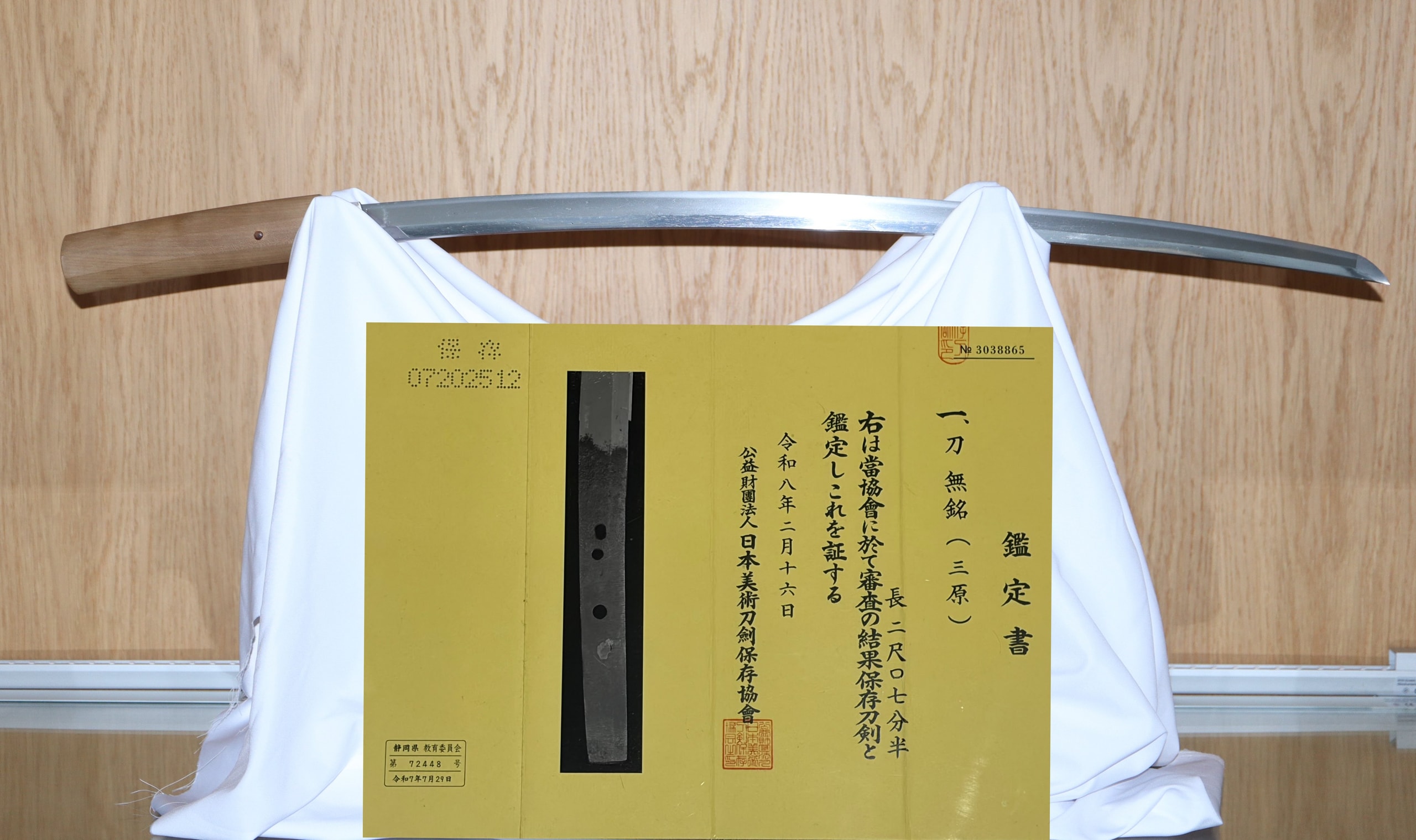
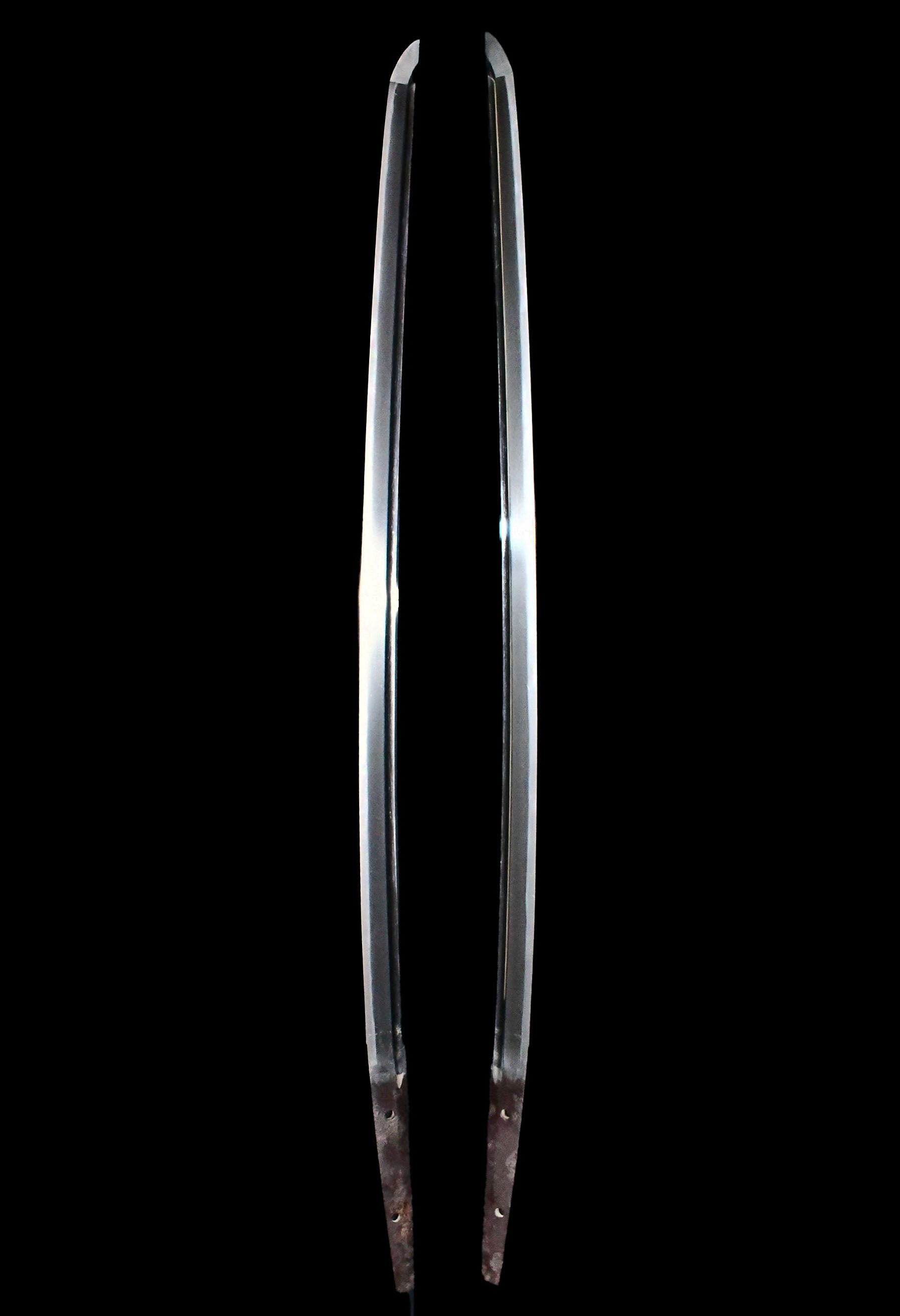
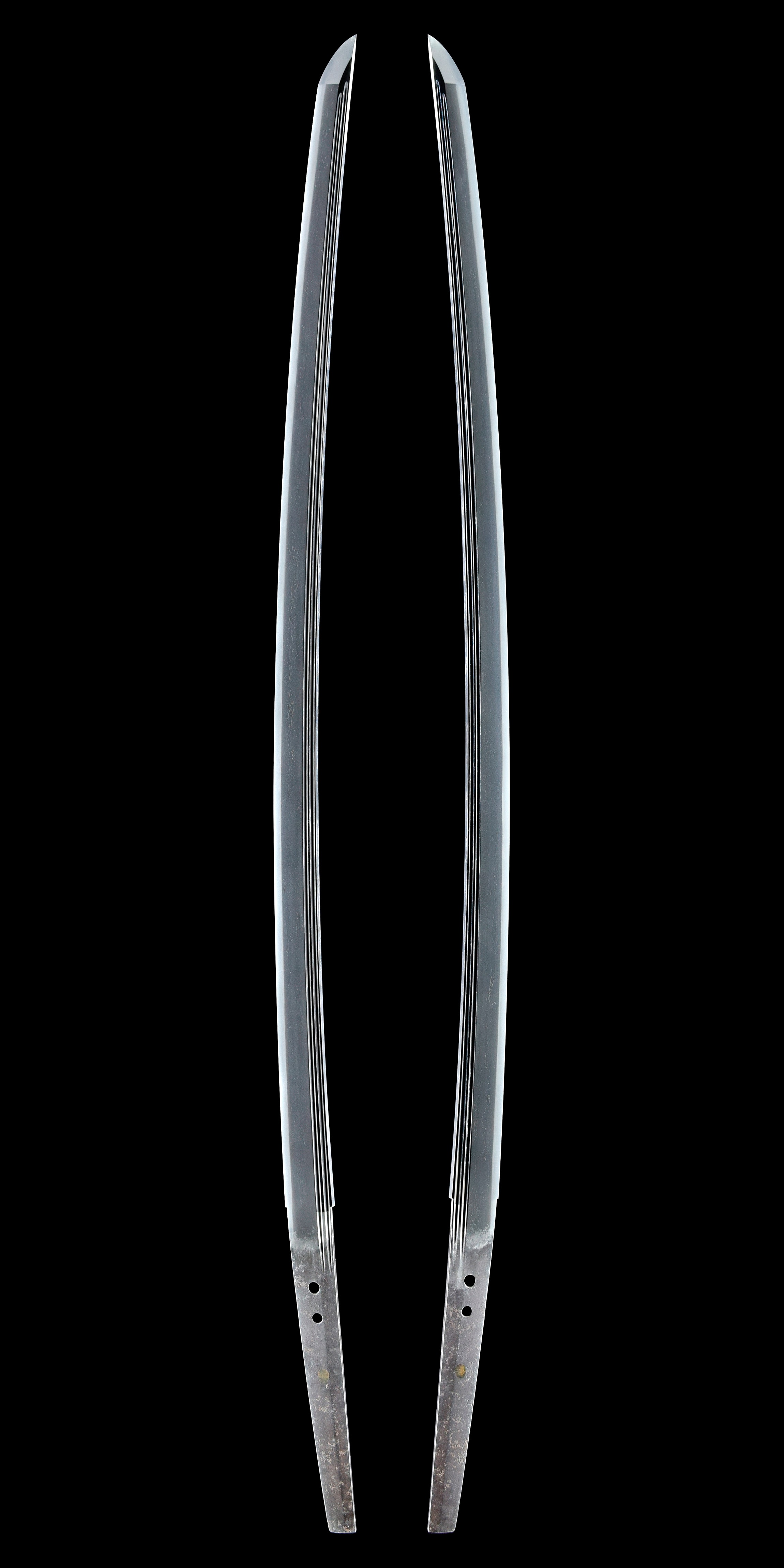
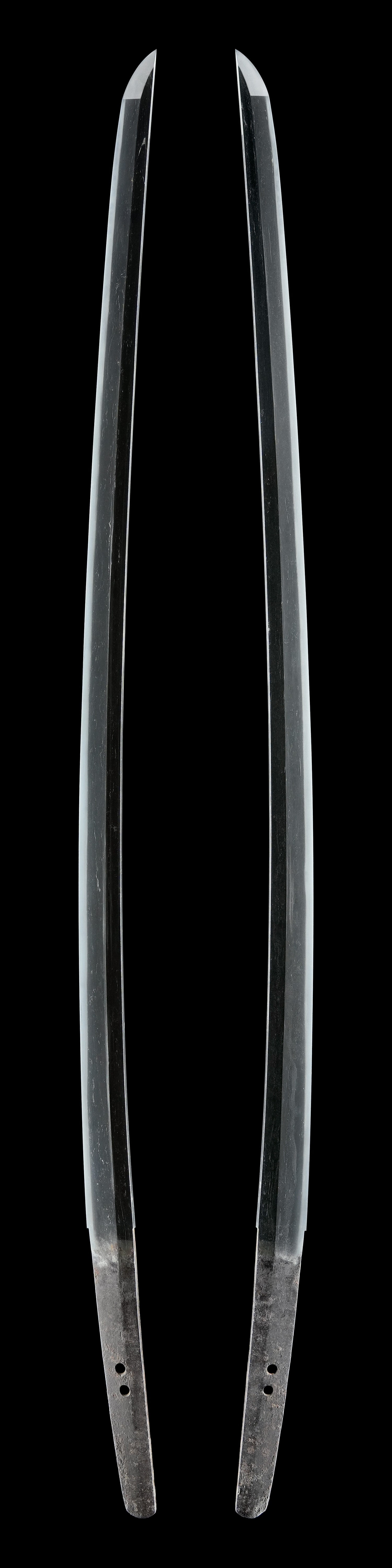
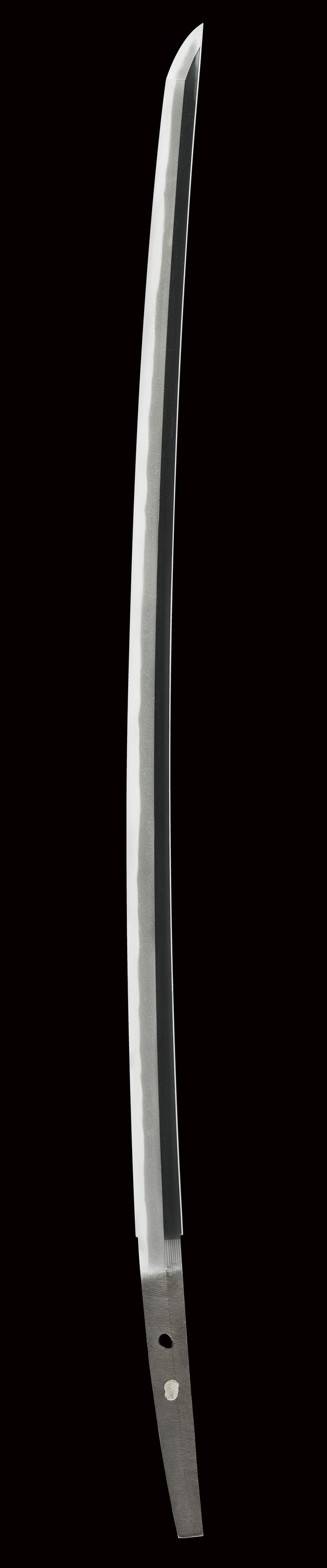
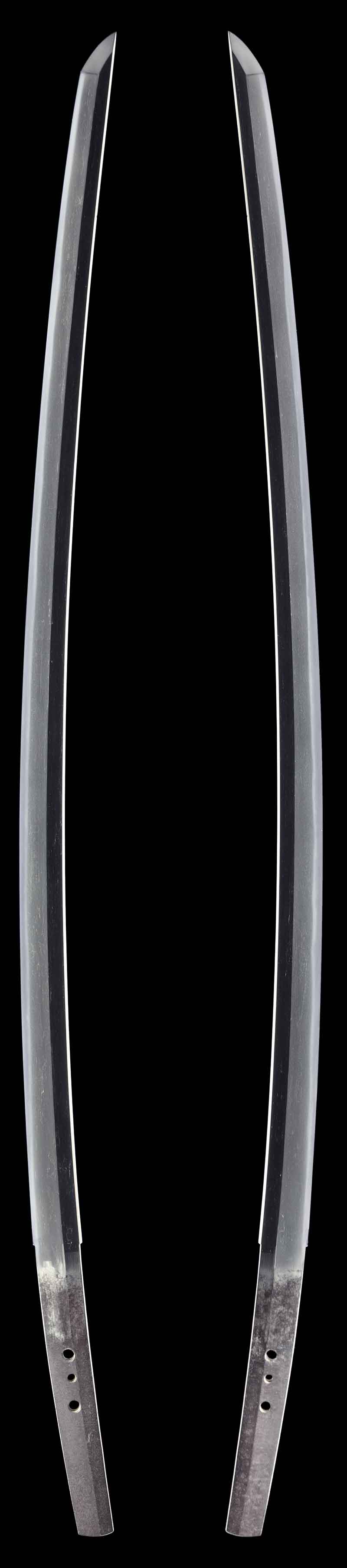
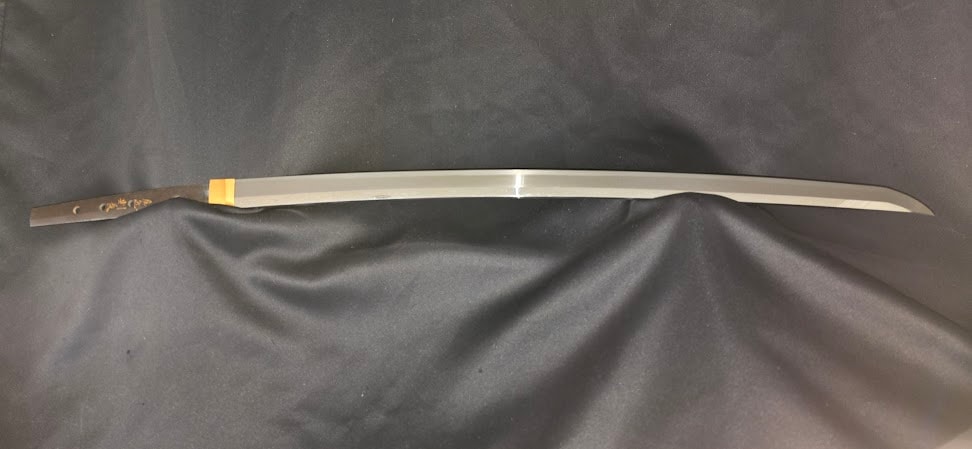
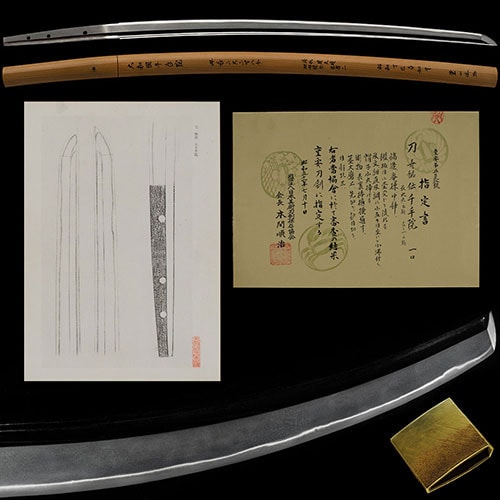
It has arrived, it has arrived! Mihara, located in the central-eastern part of present-day Hiroshima Prefecture, has been home to famous smiths since ancient times who migrated from Yamato. While there are works from Ko-Mihara, represented by the precious Bingo smith Mihara Masaie, and Sue-Mihara, represented by Masachika, it stands to reason that if Ko-Mihara and Sue-Mihara exist, Chu-Mihara works must also exist. However, strangely, works from the Chu-Mihara period are almost never seen. This Bishu Kageshige was a tosho active from the Ko-Mihara Nanbokucho period around the Eiwa era (1375) (651 years ago) through what is called Chu-Mihara in the early Muromachi period around the Oei era (1394) (632 years ago). The fact that this sword exists with a zaimei is in itself wonderful, making it a precious meito. The sugata of this sword features a slightly high shinogi, a difference between the moto-mihaba and saki-mihaba, and a high sori, presenting a dignified appearance. The jigane shows mokume-hada mixed with masame-hada and some o-hada, with a faint midare-utsuri appearing on the ji. The hamon is in a kofu style with a yaki-otoshi at the moto, based on a nioi-deki gunome-ba with areas of kogo-nie, beautifully expressing the antiquity of the period. It was likely originally made as a tachi for a mounted warrior. On this occasion, an elderly collector told me, "Chu-Mihara works are virtually non-existent today; this sword by Bishu Kageshige is wonderful and precious even as reference material. As I have grown old, please pass it on at a low price to someone who will cherish it." Having received it under these circumstances, I am offering this precious meito by Bishu Kageshige from 650 years ago at a special bargain price. Please enjoy it.
Certificate reading — 銘 備州景重
 NihontoWatch
Nanbokucho · nagasa 61.7cm · sori 2.5cm












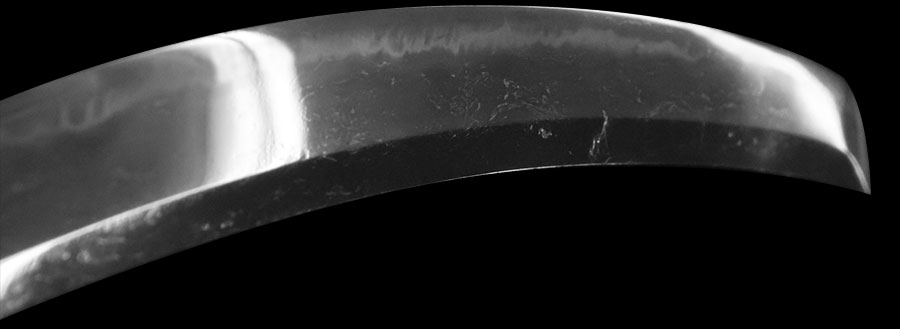
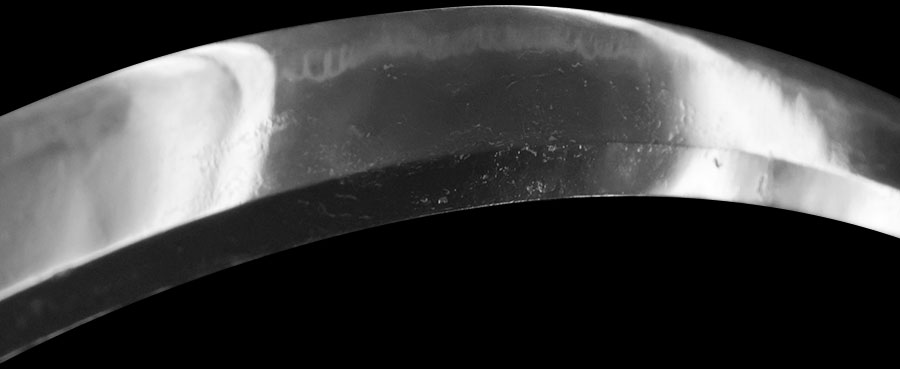
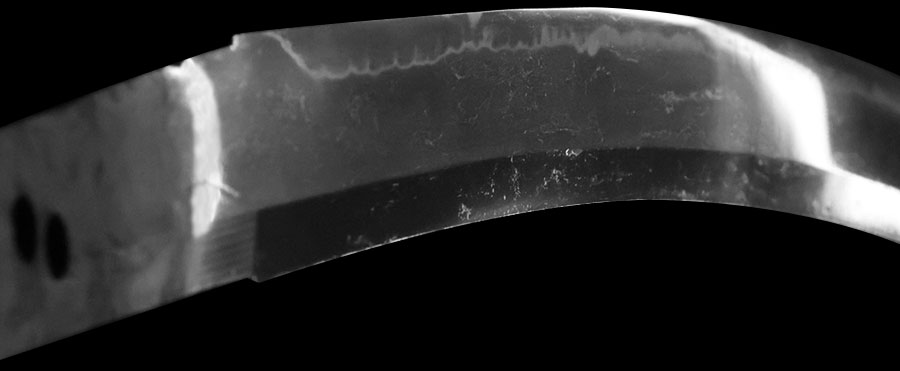
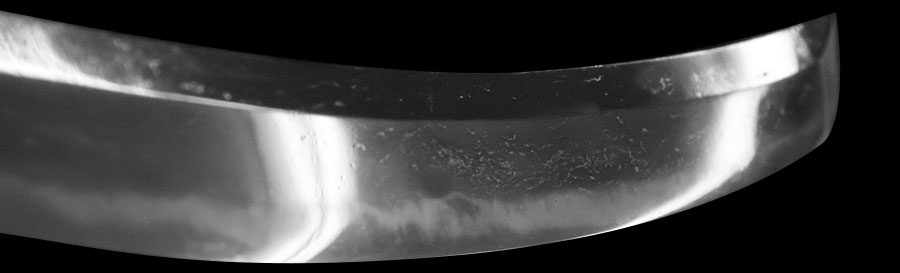
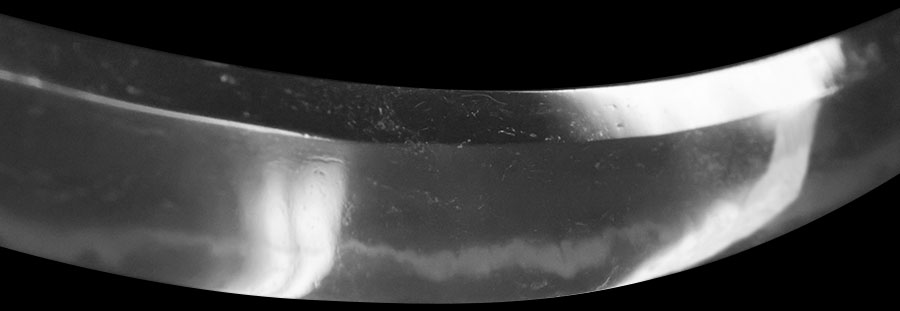
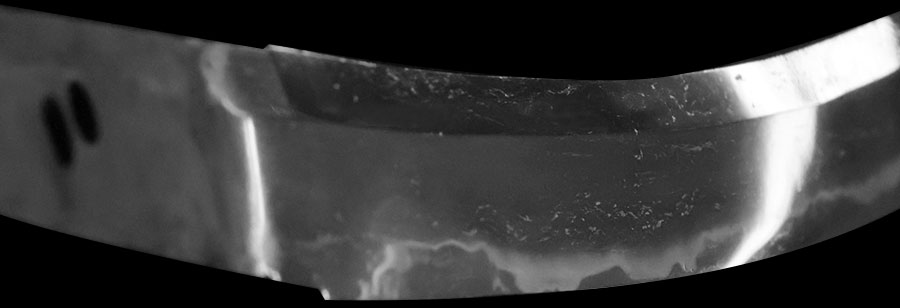
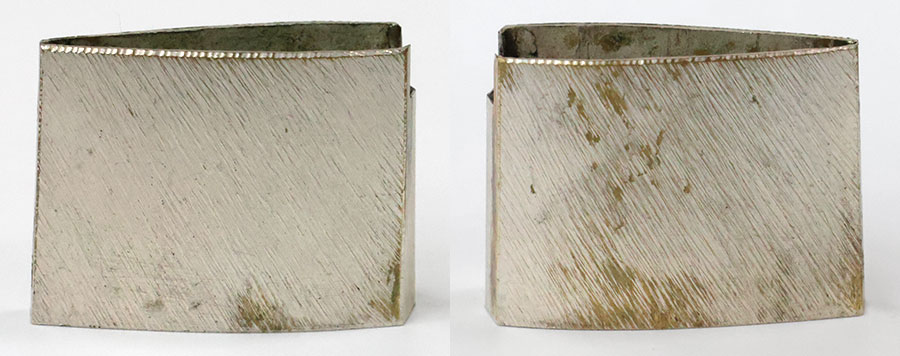
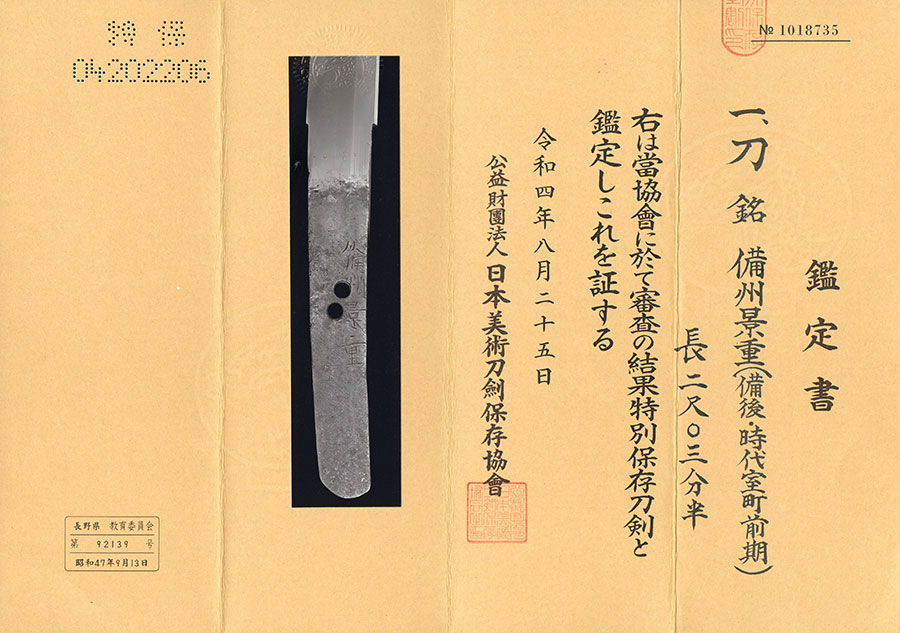
Yamato-den · Bingo · around 1375-1381
1 piece on the market now
Yamato-den · Bingo
Phase: Ko-Mihara古三原· 1288–1393
8 pieces on the market now
Ko-Mihara (古三原) opens the Mihara story at its Bingo base, where a body of smiths gathered from the close of the Kamakura period and through the Nanbokuchō era. The setsumei treat the term as a chronological bracket rather than a separate workshop: works of this span are "collectively termed Ko-Mihara," with Masaie and Masahiro repeatedly named as the leading figures, and Masahiro held by tradition to be Masaie's son. The province's web of shōen estates tied to Kinai temples such as Tōji and Rengeō-in (Sanjūsangendō) drew the early smiths into regular contact with the central provinces, and the Yamato-den temperament that the records read in these blades is referred to that exchange. A second current runs alongside it: because some pieces show an Aoe manner, the appraisals also weigh influence from neighbouring Bitchū, as the Chikatsugu tachi of Shōhei 7 (1352) makes plain, sitting on the seam between Yamato bearing and Aoe surface. In the ji, the early hand keeps an itame-tending ground that takes on mokume, nagare, and a masame-like flow, with the grain inclined to stand (hada-dachi) and fine ji-nie set densely across it; a pale shirake-utsuri recurs as the most cited diagnostic, though the Masaie ōdachi of around Jōji instead shows a darkish steel with a midare-utsuri-like cast. The temper holds to a refined chū-suguha with ko-ashi and yō, the nioiguchi drawn tight or shizumi, the habuchi breaking into hotsure, kuichigai-ba, uchi-noke, and a nijūba suggestion, with fine kinsuji and sunagashi threading through.
The bōshi runs sugu, closing in yakizume, ko-maru, or maru with hakikake at the tip. The records keep these early works the cleaner pole of the school: a quiet, controlled Yamato manner whose forging shows "not the slightest looseness," set against the coarser, looser later Sue-Mihara of the closing Muromachi, where the disciplined suguha and tight ground give way. For kantei, the early phase reads as Yamato bearing without Yamato vigour: the nie of ji and ha runs weaker than in the Nara schools proper, the steel turns whitish, and the nioiguchi tightens, so a bright clean suguha with pointed bōshi can be mistaken at a glance for Aoe until the broad shinogi-ji, high shinogi, standing mokume, and hotsure with kuichigai-ba declare Mihara. Masaie and Masahiro divide on sugata: Masaie is the man of the bold ō-kissaki and the ōdachi, while Masahiro keeps ordinary chū-kissaki proportions and a freer, midare-gokoro edge with deeper kaeri, as in the Meibutsu Ō-Mihara cited by name. Because Yamato habit left few signed Mihara works, the early phase rests heavily on mumei and kinzogan attributions, several of them given to Masaie by Hon'ami Kōtoku, while dated and signed survivors stay scarce and so carry weight as reference material. Provenance threads through the great houses, the signed Masaie tachi presented to Emperor Meiji by the Shimazu family and another Masaie transmitted in the Date. Learn more →
| Smith | Era | Designated |
|---|---|---|
| Masahiro正廣 | 1362-1389 | 35 |
| Masaie正家 | 1353-1375 | 29 |
| Kaneyasu兼安 | 1352-1369 | 12 |
| Masanobu正信 | 1376-1394 | 4 |
| Noritada則忠 | 1352-1356 | 0 |
Yamato in the Nanbokuchō period
When the Southern Court made its capital at Yoshino, in Yamato itself, the province’s schools were at their height: the late Tegai line, Shikkake Norinaga, and the pure masame of Hōshō. Their technique was already spreading across the provinces.
A Hozon-certified blade judged to show notably superior workmanship and a better state of preservation. The bar is higher: re-tempered blades and most unsigned Muromachi/Edo works are excluded.
The NBTHK (Nihon Bijutsu Tōken Hozon Kyōkai, the Society for the Preservation of Japanese Art Swords) is a public-interest incorporated foundation founded in 1948 and supervised by Japan’s Agency for Cultural Affairs (Bunkachō); it is based at the Japanese Sword Museum in Tokyo. Its expert panels physically examine each submitted work (shinsa) and issue a certificate (kanteishō) ranking it by artistic and historical merit. NBTHK papers are the most widely recognized standard of authentication for Japanese swords and fittings.
NBTHK official siteFor returns due to customer circumstances, the cost is the customer's responsibility. For returns due to our mis-shipment or a defective item, we bear the cost.
¥750,000