The monasteries that had sustained Yamato lost ground through the Muromachi period, and the schools thinned with them; Sue-Tegai kept the old masame manner alive in quantity. The burning of Tōdaiji’s Great Buddha hall in 1567 closed the temple age.
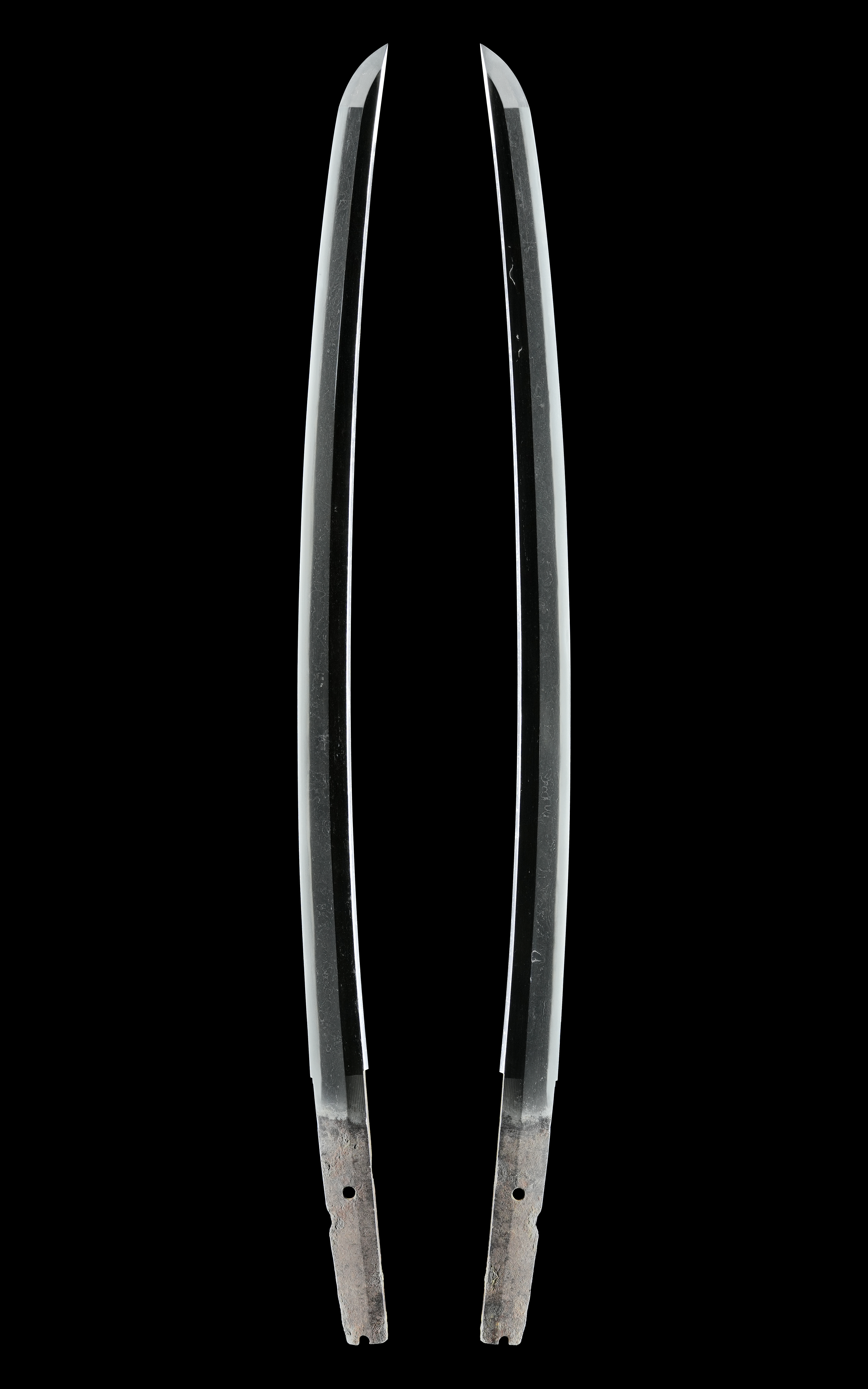
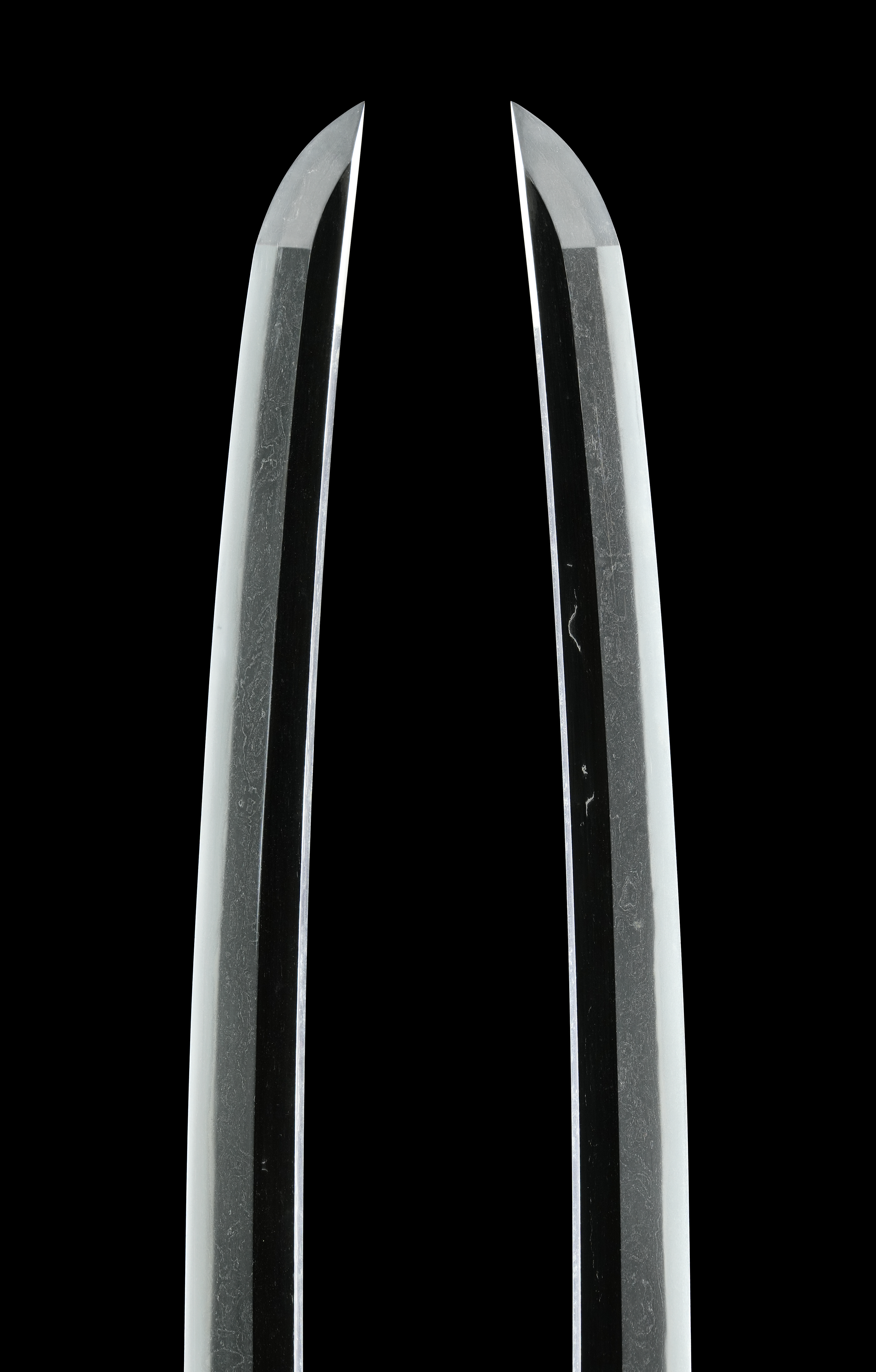
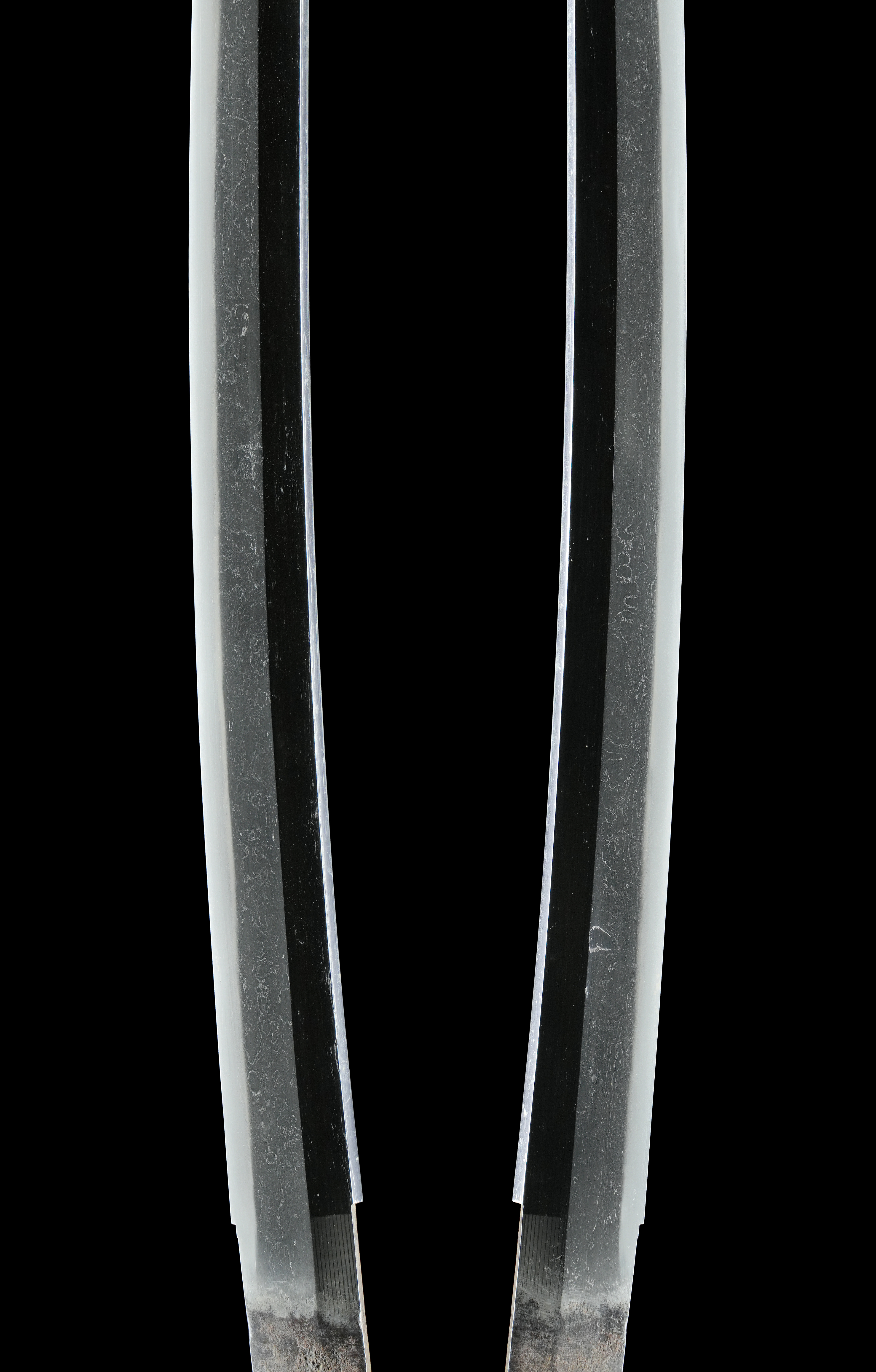
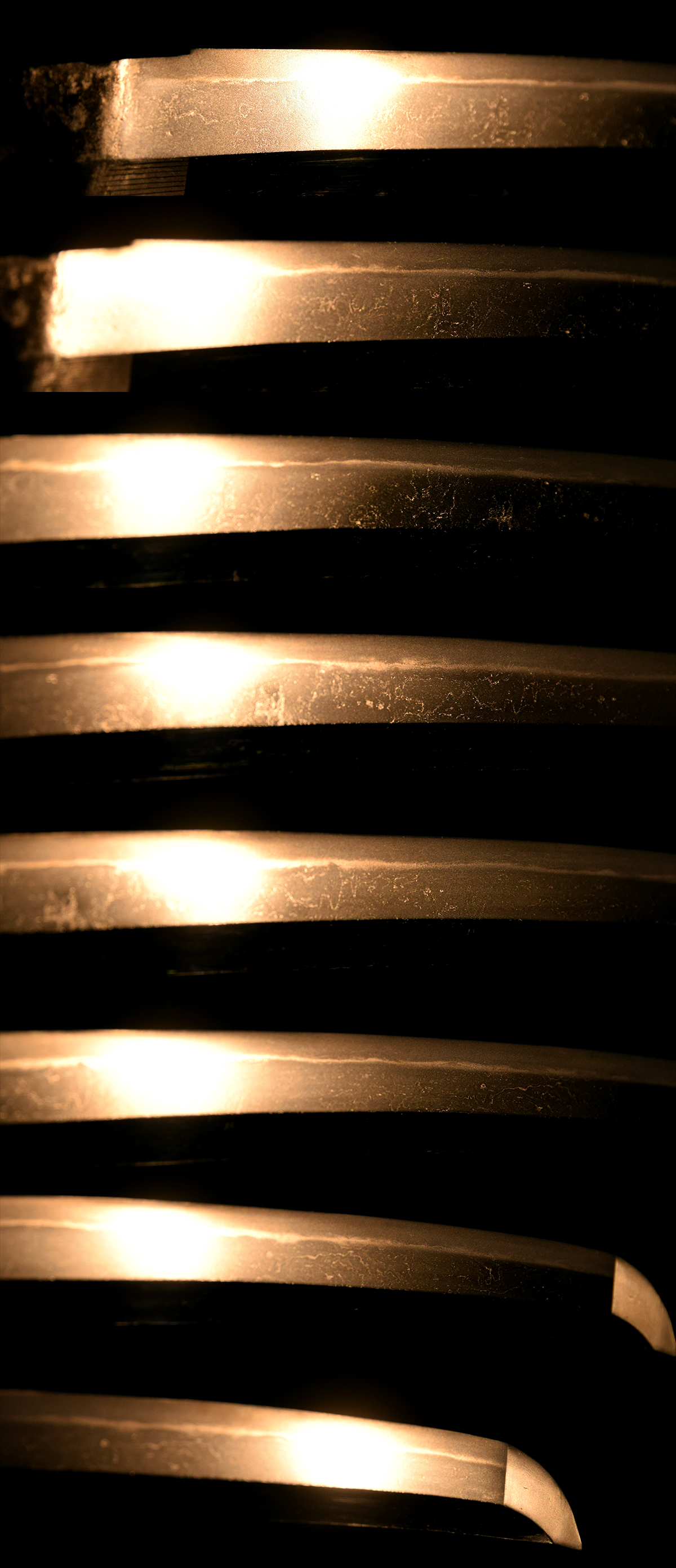
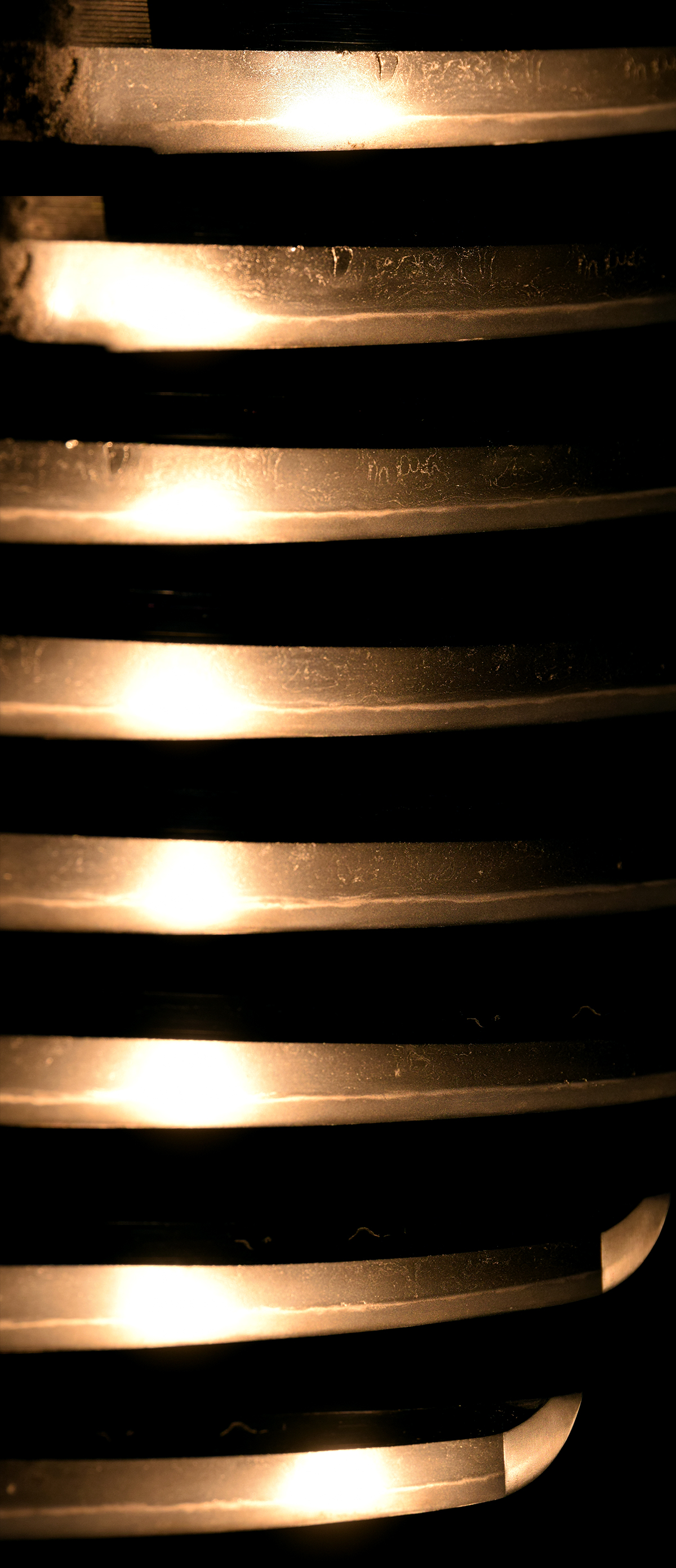
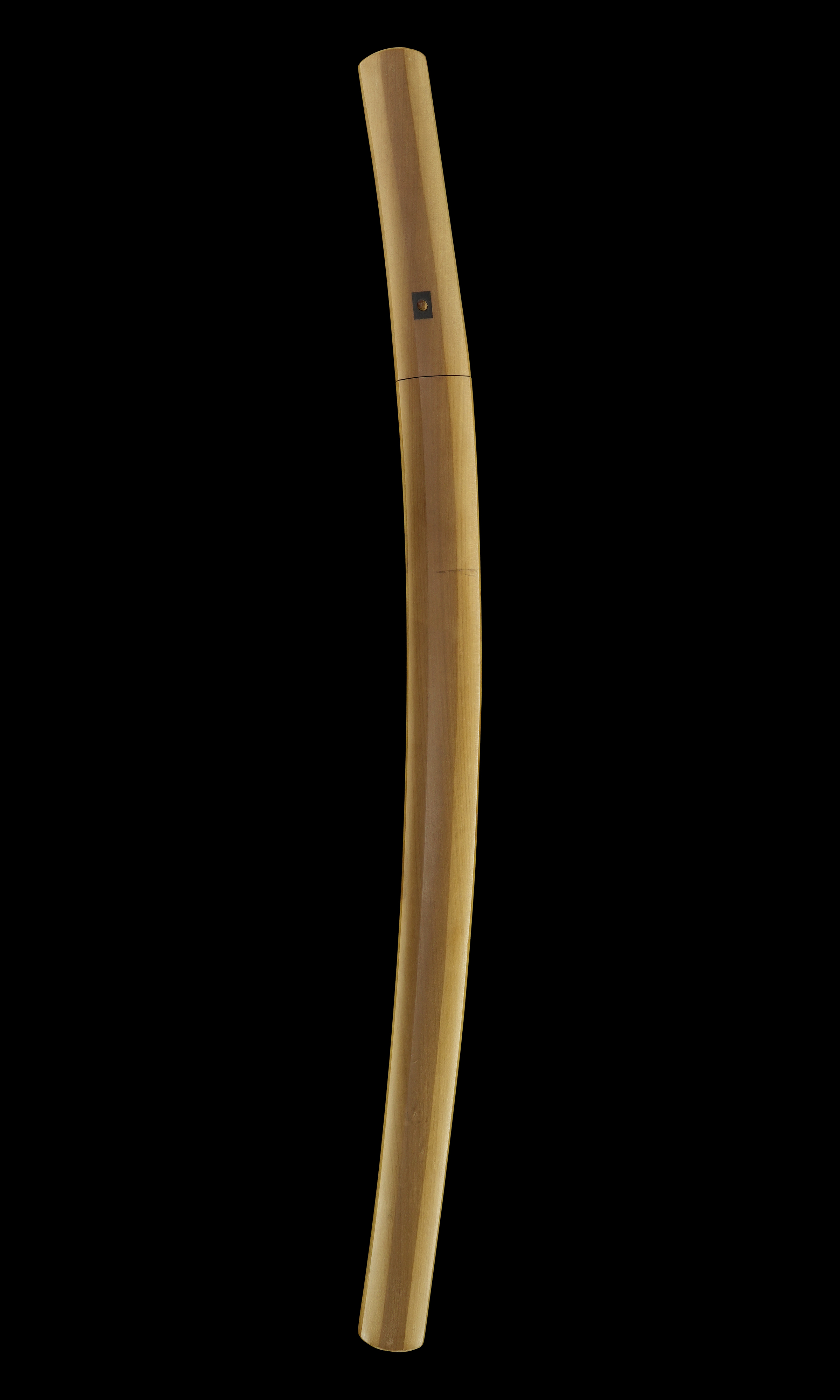
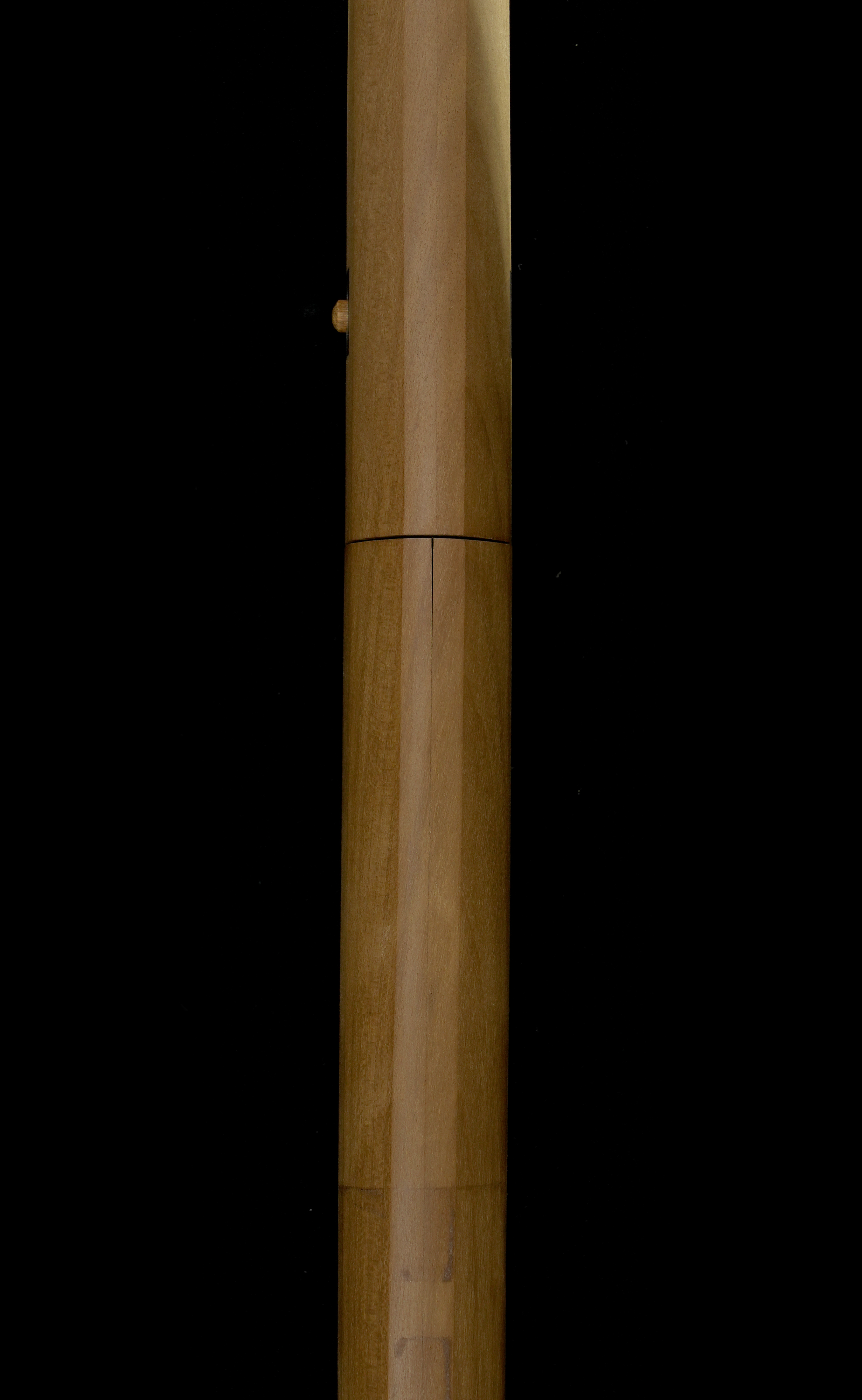
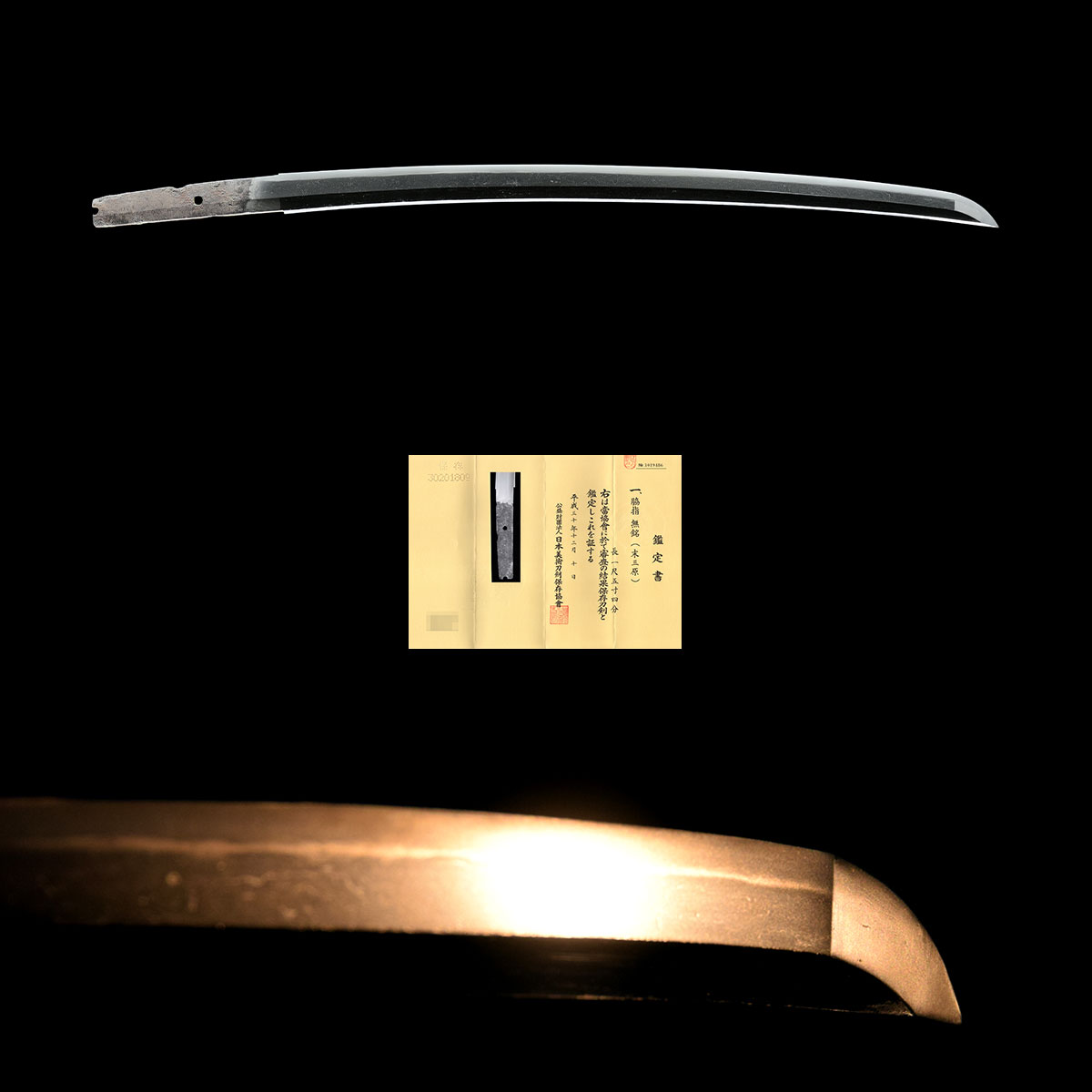
The Bingo no Kuni Mihara school was located near the provinces of Bizen and Bitchu, yet they were influenced by neither the Bizen-den nor Yamashiro-den, consistently adhering to the Yamato-den from the late Kamakura period through the end of the Muromachi period. Conventionally, Masaie has been considered the founder, but as the dated works by this smith are all from the Nanbokucho period, the theory that Kokubunji Sukekuni of the late Kamakura period is the founder has recently become prominent. They are broadly divided into three categories by era: those from before the Nanbokucho are called Ko-Mihara, those from the early to mid-Muromachi are called Mihara, and those from the late Muromachi are called Sue-Mihara; they have been highly regarded since ancient times, and even today they are highly evaluated in this field, with many swords designated as national Juyo Bunkazai and Juyo Bijutsuhin. This wakizashi, despite being o-suriage, has a wide difference between the moto and saki width with a slightly extended chu-kissaki; the jigane is ko-itame mixed with mokume and is hadatachi, and the hamon is a suguha with a bright and clear nioiguchi. Fine variations and sunagashi are seen along the habuchi, and the boshi is sugu with a maru kaeri. Mihara swords are famous as sharp ritou that cut well, and were cherished by many Sengoku busho. Although there are small kizu, it is a blade that makes one feel the romance of the Sengoku period.
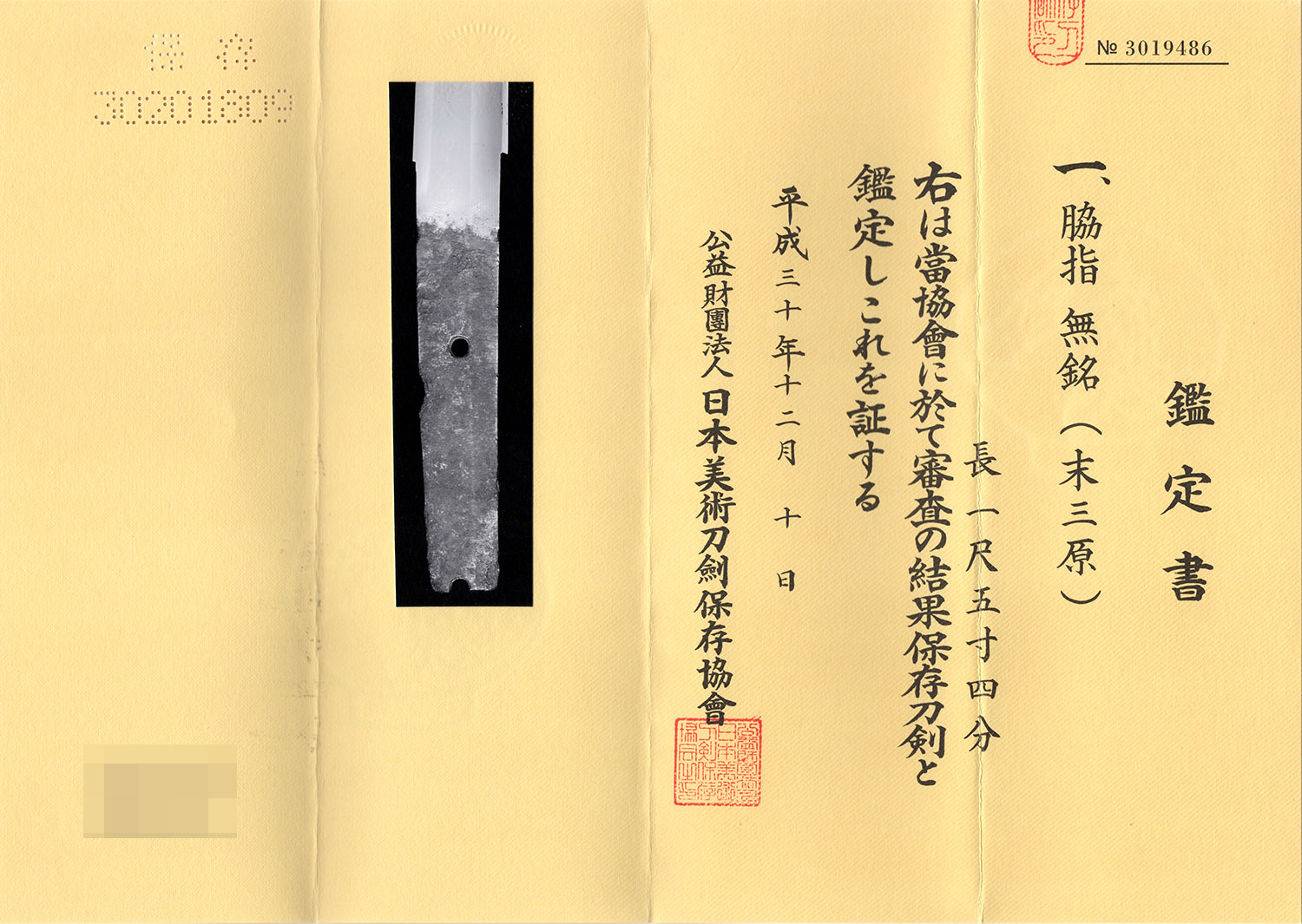
Certificate reading — 無銘(末三原)
Offered by Toushin
4 on the market


As written by the shop
Machine translation from the shop's Japanese · may contain errors ·
Yamato-den · Bingo
4 pieces on the market now
| Smith | Era | Designated |
|---|---|---|
| Masamune正宗 | 1469-1487 | 0 |
| Masaoki正興 | 1521-1528 | 0 |
| Nagashige長重 | 1487-1489 | 0 |
| Kaneyasu兼安 | 1469-1487 | 0 |
| Takakane高兼 | 1504-1521 | 0 |
Yamato in the Muromachi period
The monasteries that had sustained Yamato lost ground through the Muromachi period, and the schools thinned with them; Sue-Tegai kept the old masame manner alive in quantity. The burning of Tōdaiji’s Great Buddha hall in 1567 closed the temple age.
Certifies a genuine blade worth preserving: a signature confirmed correct, or, if unsigned, an era, province, and school that the NBTHK can reliably identify.
The NBTHK (Nihon Bijutsu Tōken Hozon Kyōkai, the Society for the Preservation of Japanese Art Swords) is a public-interest incorporated foundation founded in 1948 and supervised by Japan’s Agency for Cultural Affairs (Bunkachō); it is based at the Japanese Sword Museum in Tokyo. Its expert panels physically examine each submitted work (shinsa) and issue a certificate (kanteishō) ranking it by artistic and historical merit. NBTHK papers are the most widely recognized standard of authentication for Japanese swords and fittings.
NBTHK official siteAs a rule we do not accept returns, except when we have sent a different item from the one ordered or when there is a significant discrepancy between the description and the item. If you wish to return an item, please contact us within 3 days of its arrival and then send it back.
¥176,000