The Yamato schools grew up in the shadow of Nara’s great monasteries: Tegai took its name from a gate of Tōdaiji. Their austere masame and quiet suguha are a temple aesthetic, prized ever since for exactly that restraint.
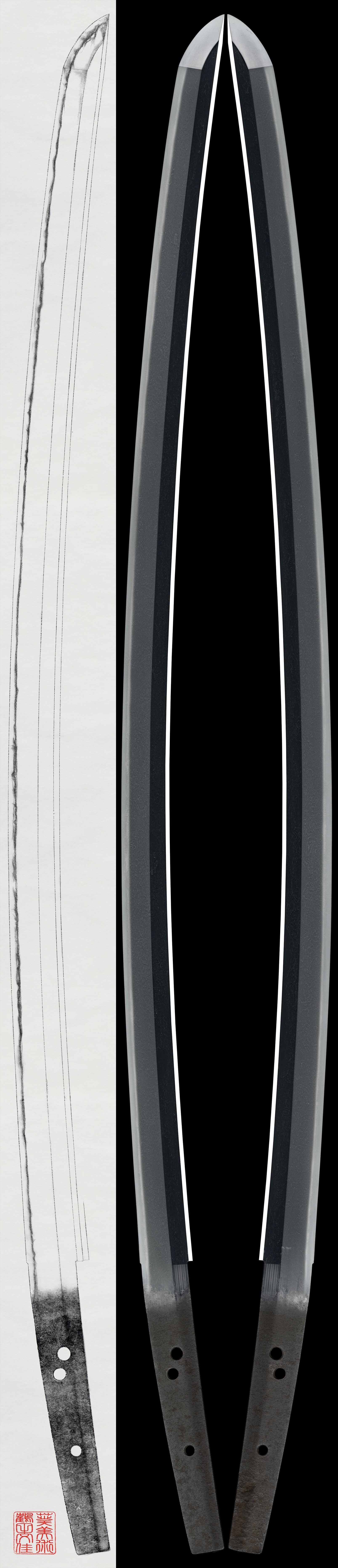
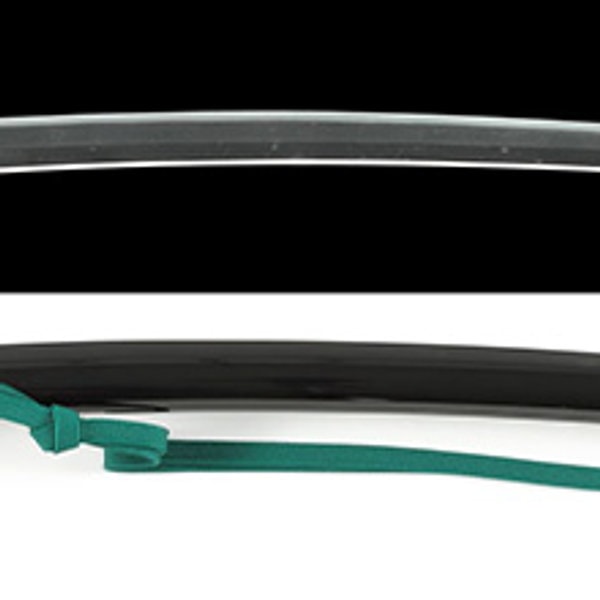
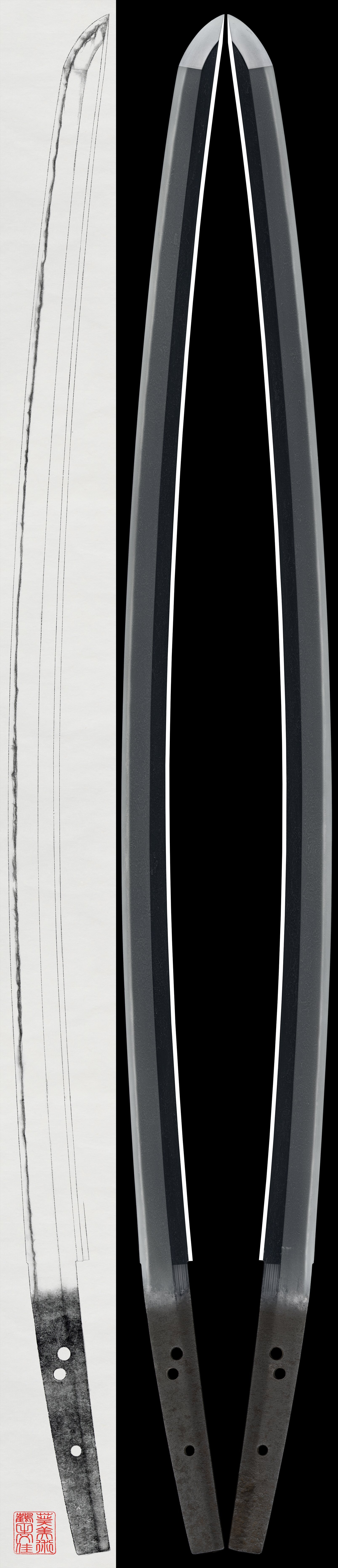
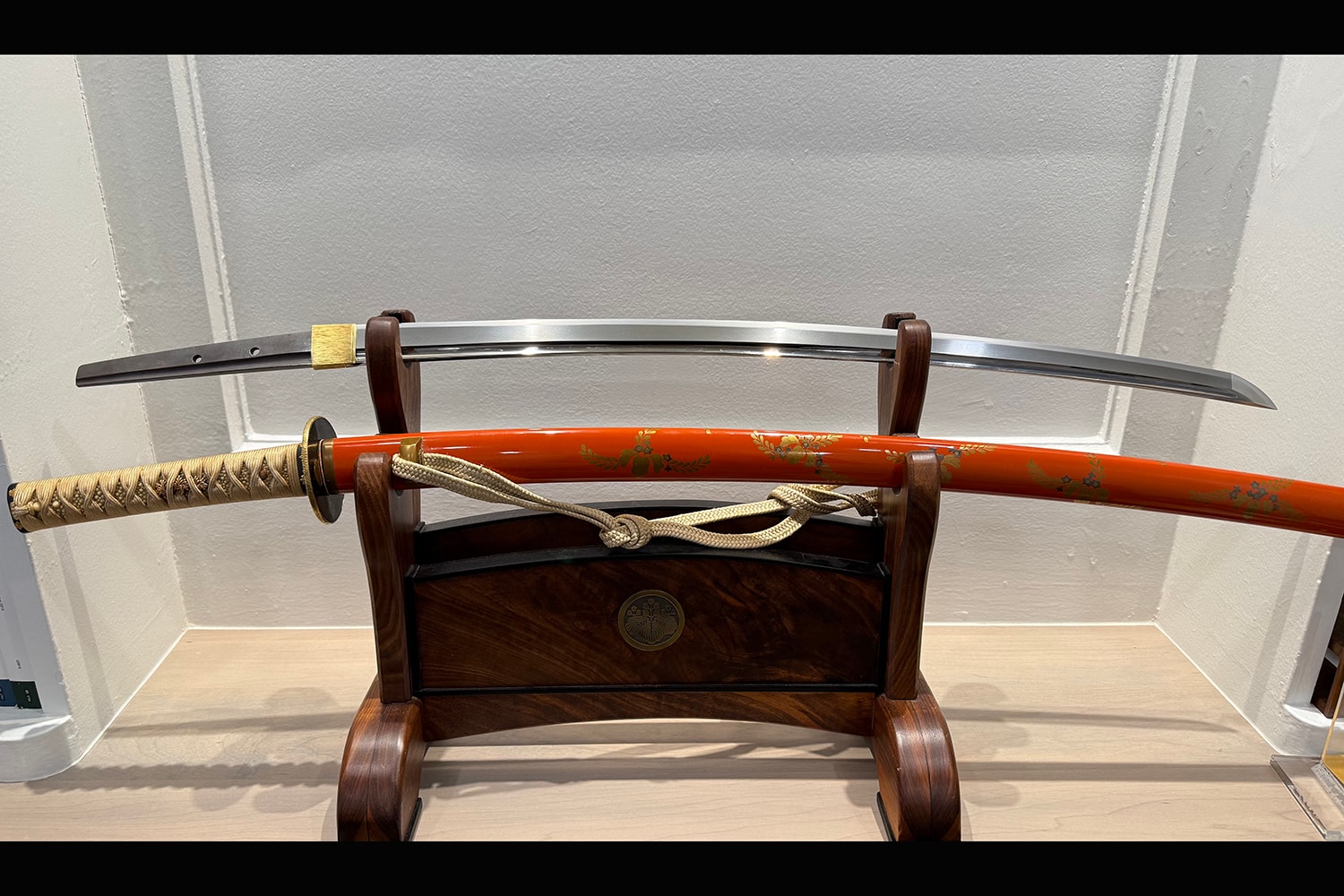
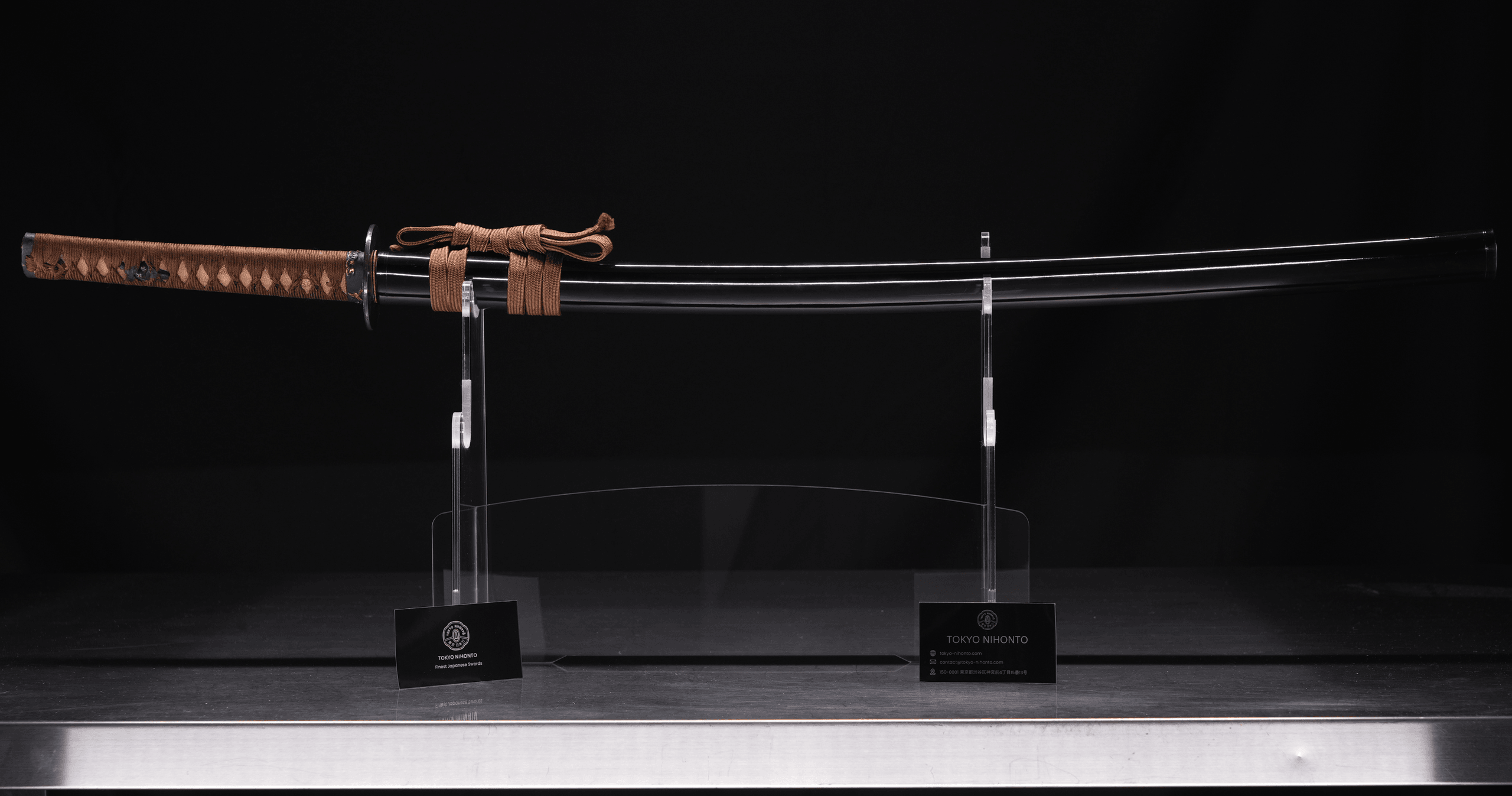
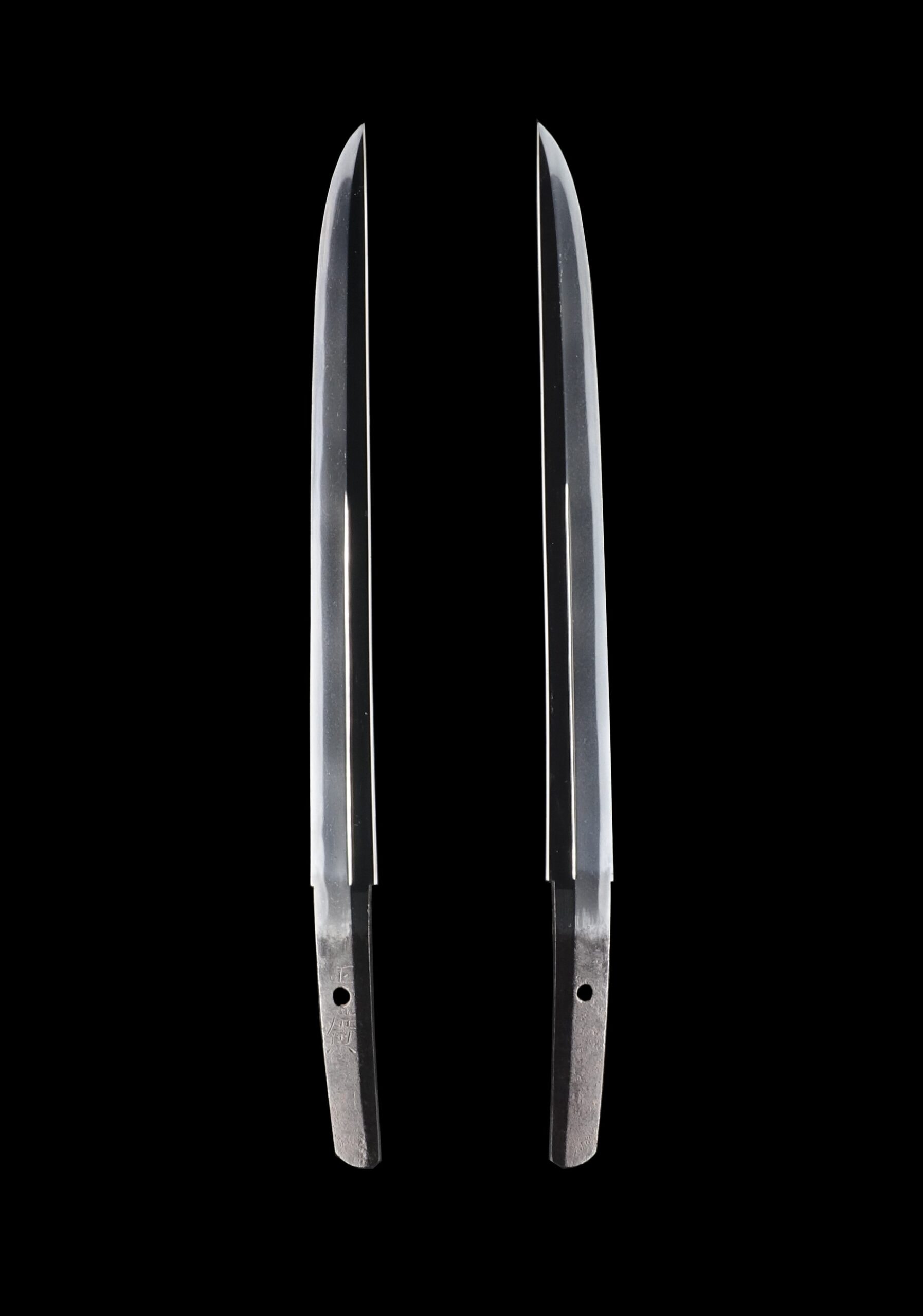
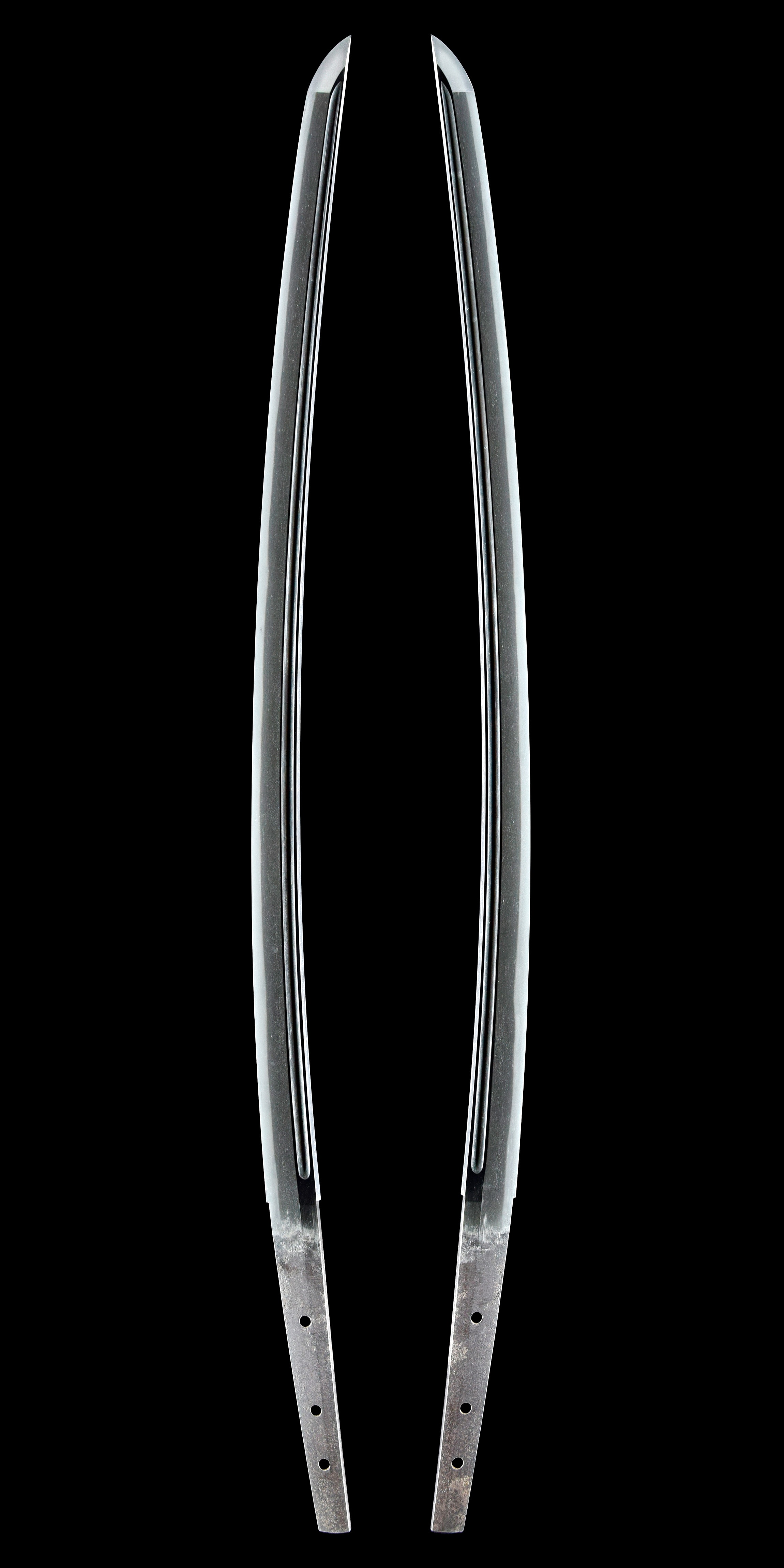
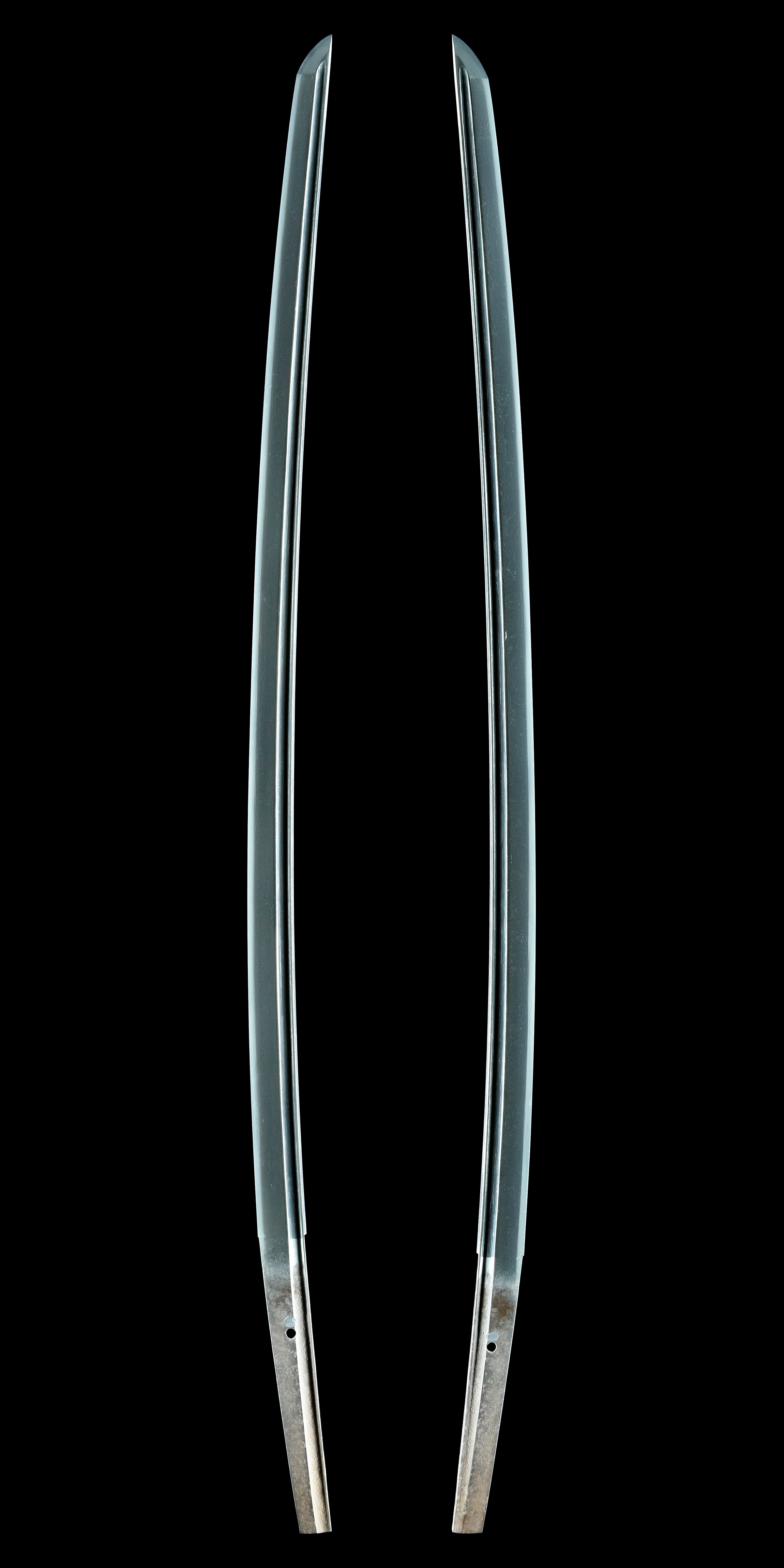
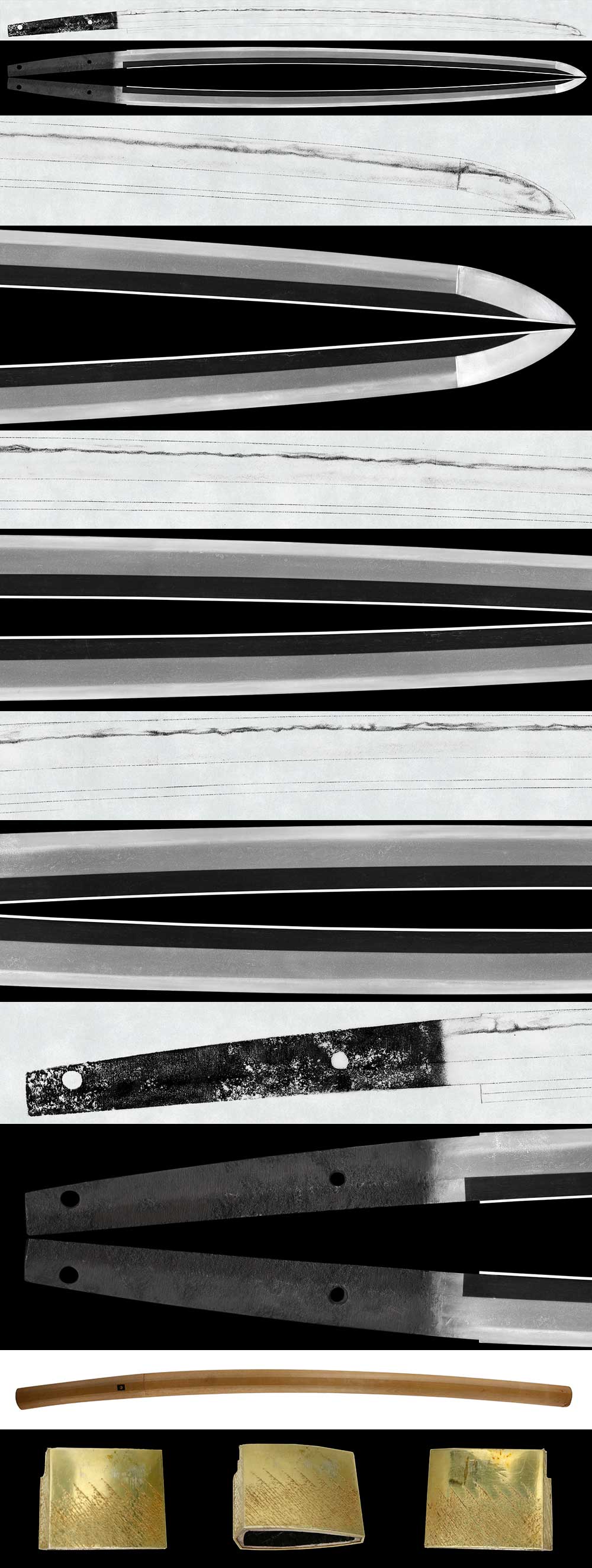
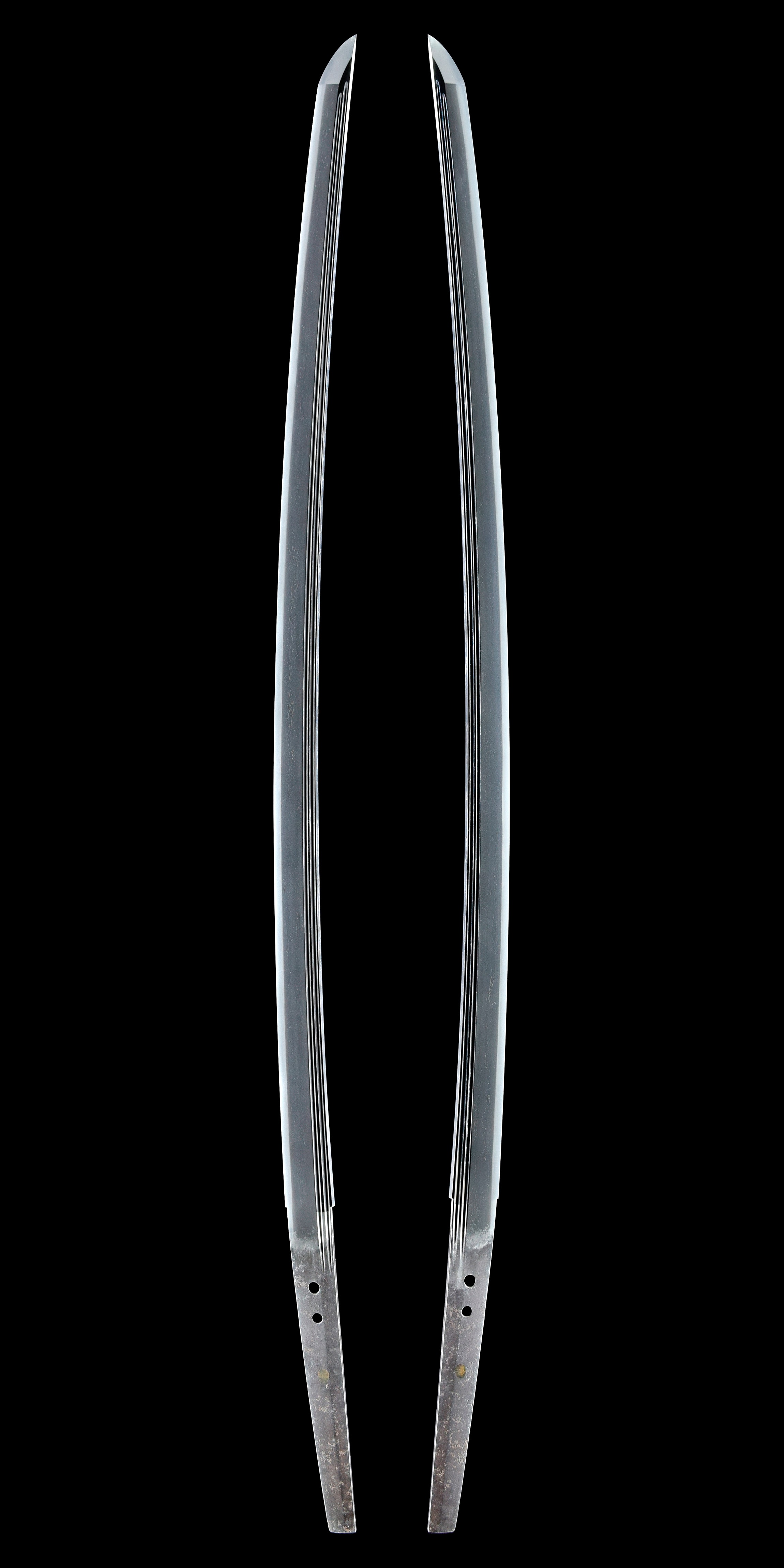
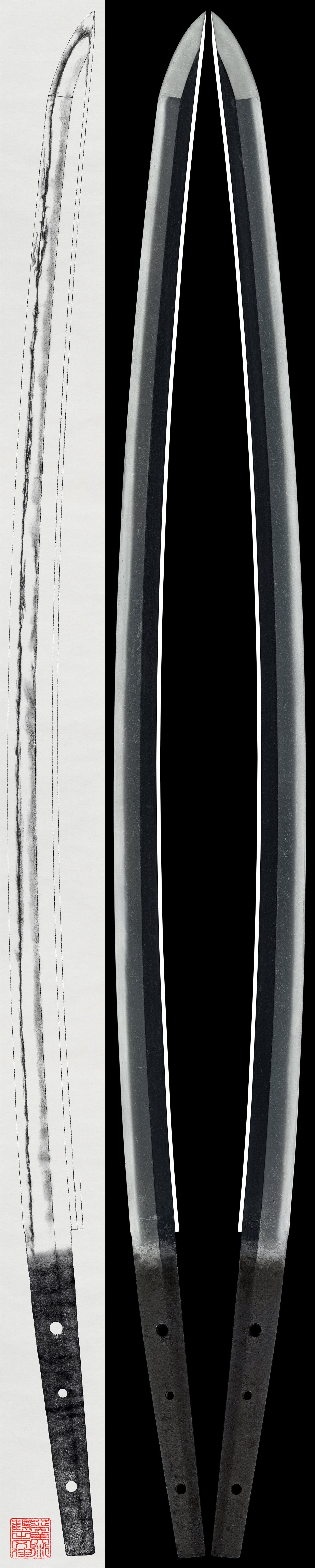
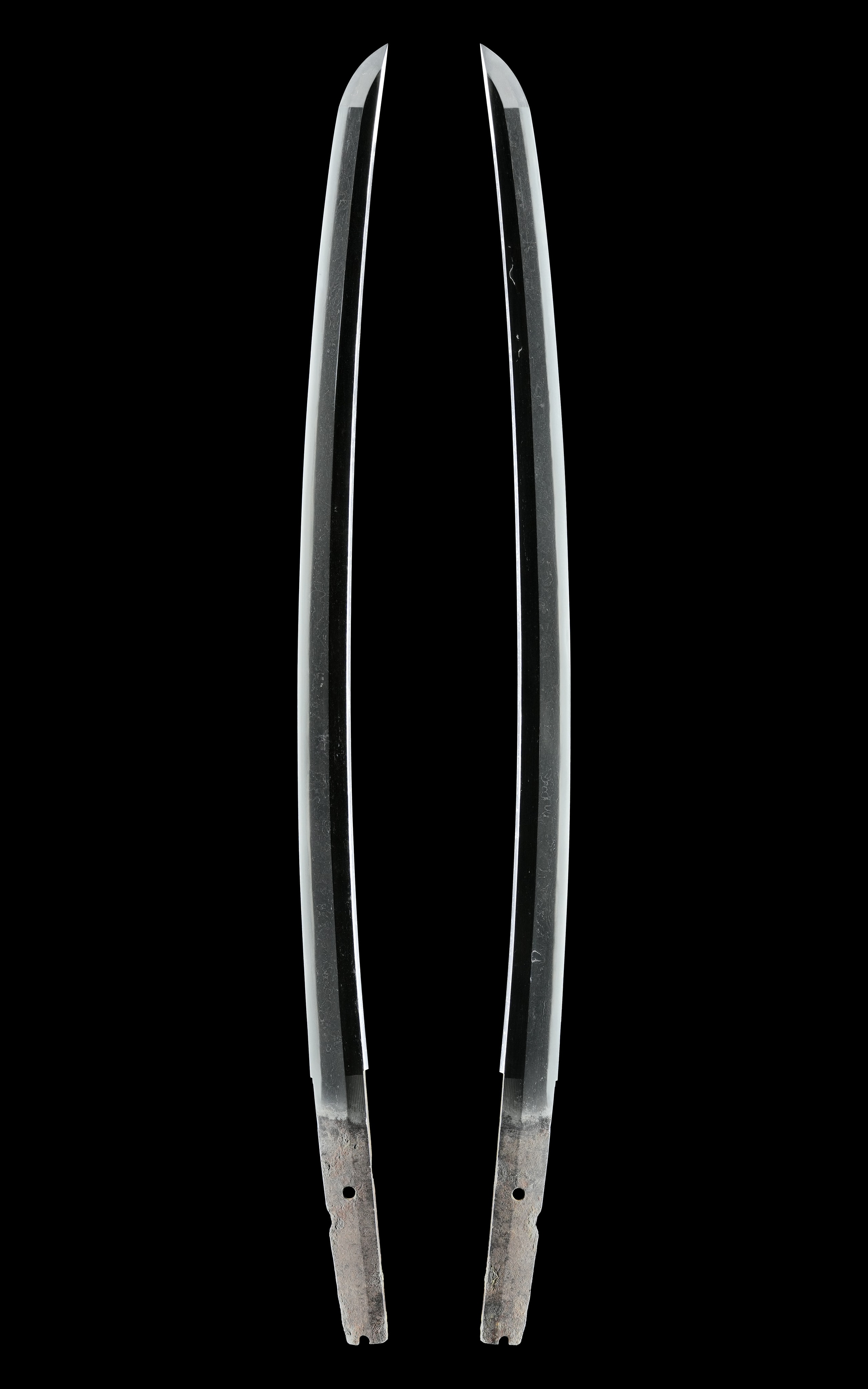
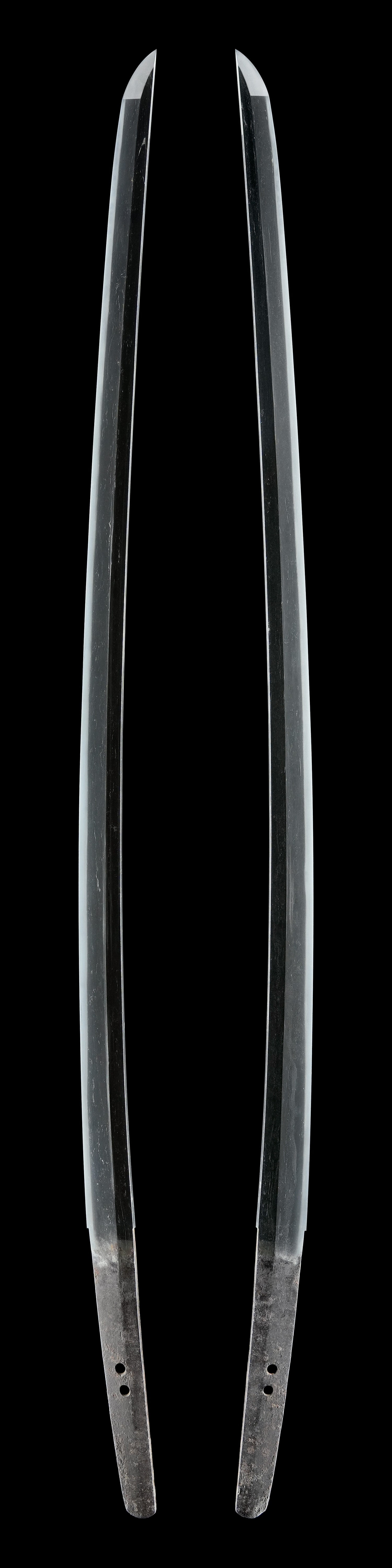
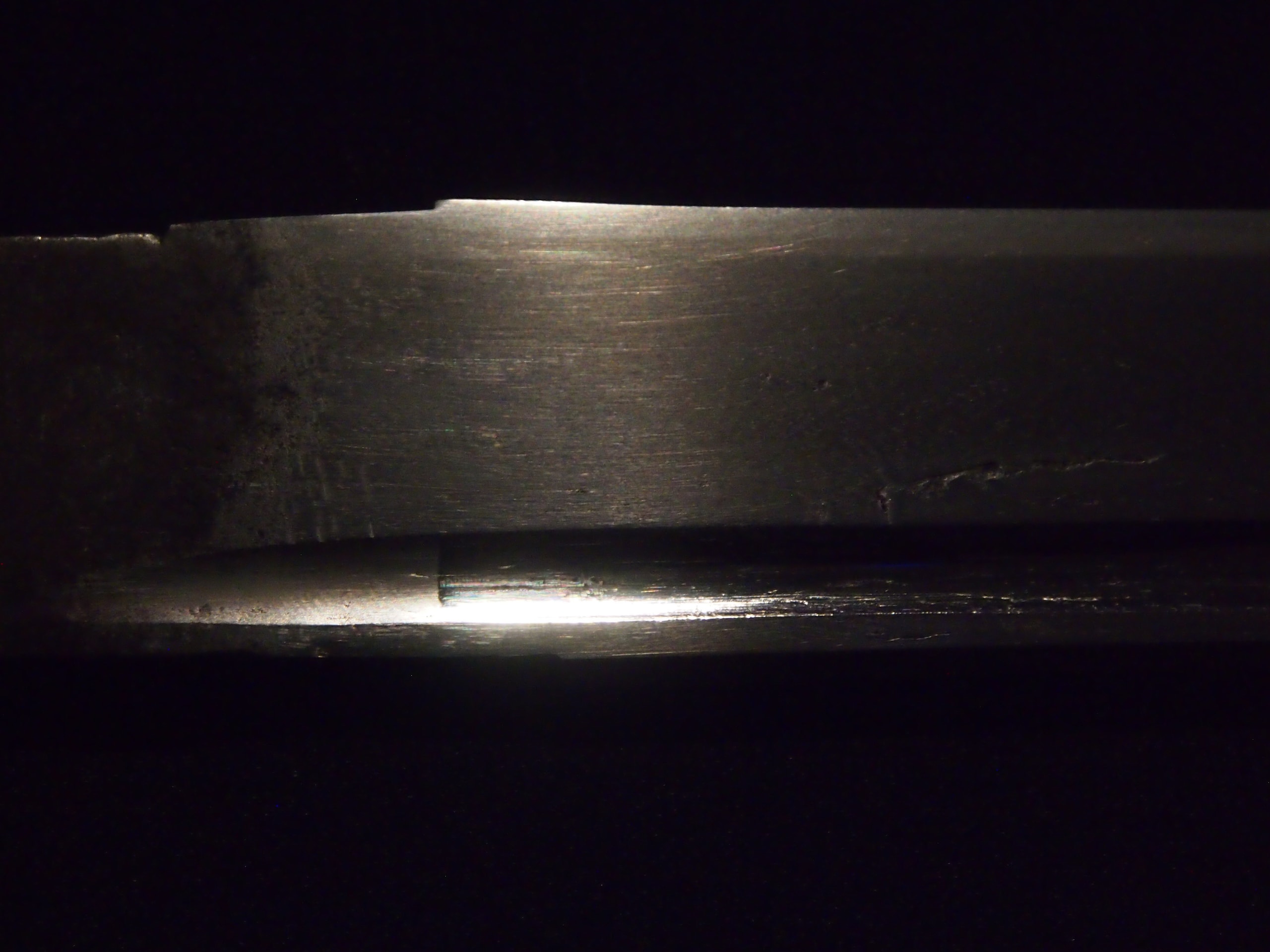
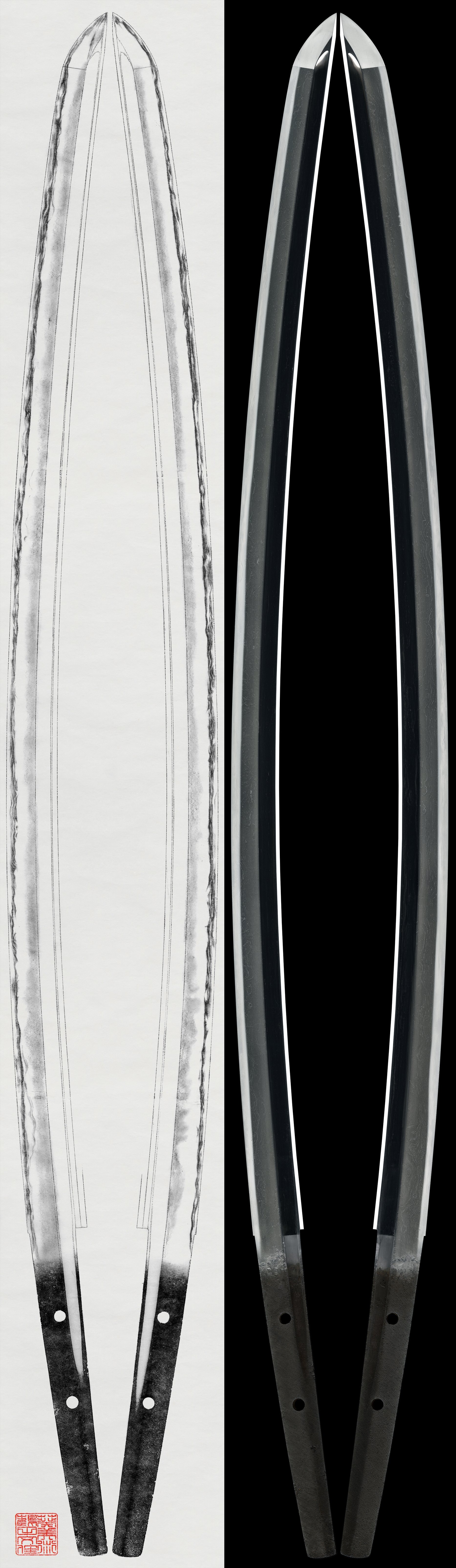
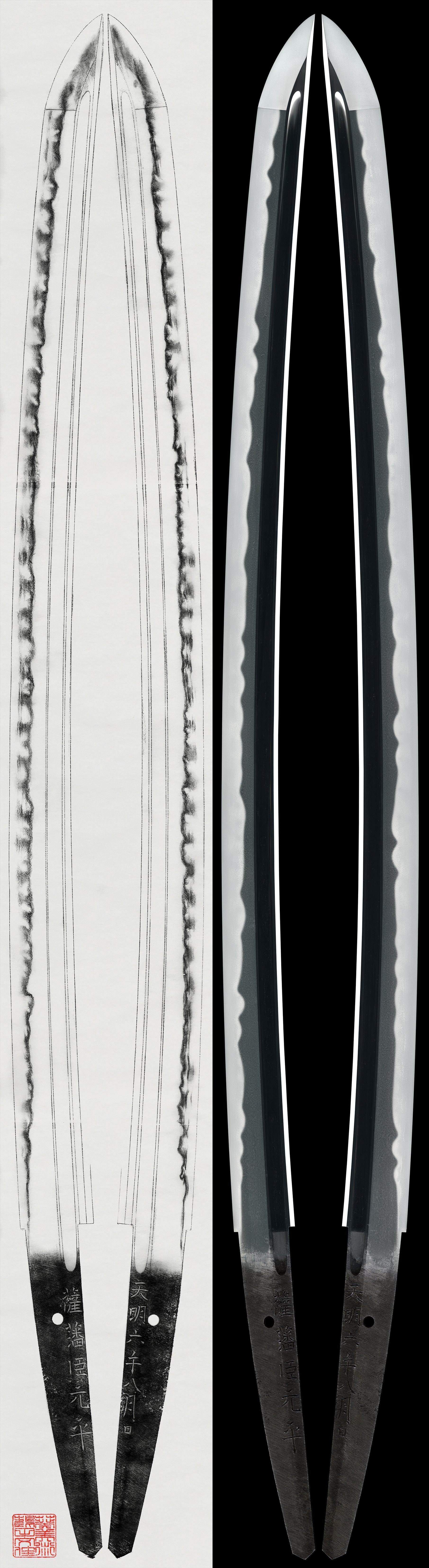
This is an unsigned wakizashi attributed to the Ko-Mihara school, active in Bingo province during the Kamakura period. It features a rich curvature, an itame-hada mixed with mokume, and a suguha hamon characteristic of Mihara works. The blade displays dan-utsuri throughout, confirming its attribution as Ko-Mihara.
 NihontoWatch
mumei · Mihara · Kamakura · nagasa 70.5cm · sori 1.6cm


Yamato-den · Bingo
7 pieces on the market now
Bingo province, and the town of Mihara on the Numata river within it, gives this school its name. The Mihara group arose at the close of the Kamakura period and worked on through the Nanbokucho years, and the published sources gather the work of that early phase under the collective name Ko-Mihara, reserving Sue-Mihara for the late-Muromachi continuation of the line. What shaped the early smiths was geography turned to craft: Bingo held many estates (shoen) of the great Kinai temples and shrines, Toji and the Rengeo-in among them, and the exchange that came with those holdings carried the manner of Yamato into Bingo steel. The two names that stand at the head of the group are Masaie, traditionally made the founder and head of the school, and Masahiro, transmitted as his son or pupil; the record qualifies that tradition from the blades themselves, for signed Masahiro reads the more archaic of the two and neither name belongs to a single hand, the NBTHK gathering several generations under each attribution. Around them work Masanobu and Masamune, named as the smiths who adorned the finale of the line, while the neighboring Kokubunji and Hokke (Ashida) groups, the Sukekuni and Kaneyasu lineages, stand within the same Yamato-influenced Bingo orbit and are forever compared against Mihara in the very texts that designate their blades. The school speaks in one quiet vocabulary across its members. Over an itame mixed with mokume and flowing nagare-hada that stands rather than lies flat and tends to masame along the edge, the smiths lay fine ji-nie, with chikei entering and patches of jifu; a pale shirake-utsuri rises in the ground of more than half the surviving blades, the steel often reading dark beneath it. The temper is a refined suguha or chu-suguha, narrow and restrained, mixing ko-gunome and a slight ko-midare tendency, with ko-ashi and yo entering well; the habuchi frays into hotsure and kuichigai-ba, kinsuji and sunagashi thread the ha, and the nioiguchi stays tight with ko-nie rather than glowing with heavy nie. The boshi runs straight to a gentle ko-maru, often brushed with hakikake, and burns yakizume only on the rarest piece, a calmer return than the Yamato schools proper. The published formula separates the group from those schools in a recurring phrase: compared with Yamato proper the nie of ji and ha runs weaker, the moku stands out, the shirake-utsuri is conspicuous, and the boshi turns back in a rounded manner.
Within this one discipline the hands divide. Masaie carries bold o-kissaki and the superior ground that lets a kiwame settle on him; Masahiro shows a moderate kissaki and more midare feeling and activity within the ha. The same divergence runs forward to the Sue-Mihara of late Muromachi, whose work loosens from the refined early manner. For kantei, the Ko-Mihara hand is read by the ji and the ha, not by drama of temper: the standing whitish itame tending masame, the quiet suguha with its hotsure and kuichigai-ba, the rounded hakikake boshi. Against the Yamato Nara schools the tell is the weaker nie, the tighter nioiguchi and the rounded rather than yakizume return; against the later Sue-Mihara it is the refinement and discipline the early smiths keep. A persistent confusion is Bitchu Aoe, the Shinkan Hidensho writing of old that Mihara's face resembles a Bitchu tachi; the midare-utsuri and deep-burning Mihara-boshi of certain pieces invite the comparison, which the high shinogi, the shirake-utsuri and the futae-ha hold back toward Mihara. Sukekuni adds a jifu-like utsuri recalling Bizen Unrui that marks him within the group; Kaneyasu keeps the Hokke line apart by its elevated shinogi. The best members stand high in the Yamato-den register, Masaie and Masahiro at its head, the meibutsu O-Mihara, a kinzogan-mei katana, invoked for the strikingly deep turnback of the school. Because Yamato discipline kept the early smiths sparing of signature, much of the corpus is o-suriage mumei katana settled onto these names by later connoisseurs, several by gold-inlay attribution; the surviving signed and dated tachi, scarce and prized as historical material, carry the chronology of the line. Recorded provenance runs to the first holders, the Tokugawa, the Date, the Shimazu and the Maeda houses and the Imperial collection among them, the finest pieces held in museum and patrimony rather than traded. Learn more →
| Smith | Era | Designated |
|---|---|---|
| Masahiro正廣 | 1362-1389 | 33 |
| Masaie正家 | 1353-1375 | 29 |
| Kaneyasu兼安 | 1352-1369 | 12 |
| Masanobu正信 | 1376-1394 | 4 |
| Masamune政宗 | 1381-1384 | 0 |
Yamato in the Kamakura period
The Yamato schools grew up in the shadow of Nara’s great monasteries: Tegai took its name from a gate of Tōdaiji. Their austere masame and quiet suguha are a temple aesthetic, prized ever since for exactly that restraint.
A Hozon-certified blade judged to show notably superior workmanship and a better state of preservation. The bar is higher: re-tempered blades and most unsigned Muromachi/Edo works are excluded.
The NBTHK (Nihon Bijutsu Tōken Hozon Kyōkai, the Society for the Preservation of Japanese Art Swords) is a public-interest incorporated foundation founded in 1948 and supervised by Japan’s Agency for Cultural Affairs (Bunkachō); it is based at the Japanese Sword Museum in Tokyo. Its expert panels physically examine each submitted work (shinsa) and issue a certificate (kanteishō) ranking it by artistic and historical merit. NBTHK papers are the most widely recognized standard of authentication for Japanese swords and fittings.
NBTHK official siteNo cooling-off / return system for customers outside Japan. Order canceled if payment not confirmed within 7 days.
¥850,000
This is an unsigned wakizashi attributed to the Ko-Mihara school, active in Bingo province during the Kamakura period. It features a rich curvature, an itame-hada mixed with mokume, and a suguha hamon characteristic of Mihara works. The blade displays dan-utsuri throughout, confirming its attribution as Ko-Mihara.
NihontoWatchmumei · Mihara · Kamakura · nagasa 70.5cm · sori 1.6cm
Yamato-den · Bingo
7 pieces on the market now
Bingo province, and the town of Mihara on the Numata river within it, gives this school its name. The Mihara group arose at the close of the Kamakura period and worked on through the Nanbokucho years, and the published sources gather the work of that early phase under the collective name Ko-Mihara, reserving Sue-Mihara for the late-Muromachi continuation of the line. What shaped the early smiths was geography turned to craft: Bingo held many estates (shoen) of the great Kinai temples and shrines, Toji and the Rengeo-in among them, and the exchange that came with those holdings carried the manner of Yamato into Bingo steel. The two names that stand at the head of the group are Masaie, traditionally made the founder and head of the school, and Masahiro, transmitted as his son or pupil; the record qualifies that tradition from the blades themselves, for signed Masahiro reads the more archaic of the two and neither name belongs to a single hand, the NBTHK gathering several generations under each attribution. Around them work Masanobu and Masamune, named as the smiths who adorned the finale of the line, while the neighboring Kokubunji and Hokke (Ashida) groups, the Sukekuni and Kaneyasu lineages, stand within the same Yamato-influenced Bingo orbit and are forever compared against Mihara in the very texts that designate their blades. The school speaks in one quiet vocabulary across its members. Over an itame mixed with mokume and flowing nagare-hada that stands rather than lies flat and tends to masame along the edge, the smiths lay fine ji-nie, with chikei entering and patches of jifu; a pale shirake-utsuri rises in the ground of more than half the surviving blades, the steel often reading dark beneath it. The temper is a refined suguha or chu-suguha, narrow and restrained, mixing ko-gunome and a slight ko-midare tendency, with ko-ashi and yo entering well; the habuchi frays into hotsure and kuichigai-ba, kinsuji and sunagashi thread the ha, and the nioiguchi stays tight with ko-nie rather than glowing with heavy nie. The boshi runs straight to a gentle ko-maru, often brushed with hakikake, and burns yakizume only on the rarest piece, a calmer return than the Yamato schools proper. The published formula separates the group from those schools in a recurring phrase: compared with Yamato proper the nie of ji and ha runs weaker, the moku stands out, the shirake-utsuri is conspicuous, and the boshi turns back in a rounded manner.
Within this one discipline the hands divide. Masaie carries bold o-kissaki and the superior ground that lets a kiwame settle on him; Masahiro shows a moderate kissaki and more midare feeling and activity within the ha. The same divergence runs forward to the Sue-Mihara of late Muromachi, whose work loosens from the refined early manner. For kantei, the Ko-Mihara hand is read by the ji and the ha, not by drama of temper: the standing whitish itame tending masame, the quiet suguha with its hotsure and kuichigai-ba, the rounded hakikake boshi. Against the Yamato Nara schools the tell is the weaker nie, the tighter nioiguchi and the rounded rather than yakizume return; against the later Sue-Mihara it is the refinement and discipline the early smiths keep. A persistent confusion is Bitchu Aoe, the Shinkan Hidensho writing of old that Mihara's face resembles a Bitchu tachi; the midare-utsuri and deep-burning Mihara-boshi of certain pieces invite the comparison, which the high shinogi, the shirake-utsuri and the futae-ha hold back toward Mihara. Sukekuni adds a jifu-like utsuri recalling Bizen Unrui that marks him within the group; Kaneyasu keeps the Hokke line apart by its elevated shinogi. The best members stand high in the Yamato-den register, Masaie and Masahiro at its head, the meibutsu O-Mihara, a kinzogan-mei katana, invoked for the strikingly deep turnback of the school. Because Yamato discipline kept the early smiths sparing of signature, much of the corpus is o-suriage mumei katana settled onto these names by later connoisseurs, several by gold-inlay attribution; the surviving signed and dated tachi, scarce and prized as historical material, carry the chronology of the line. Recorded provenance runs to the first holders, the Tokugawa, the Date, the Shimazu and the Maeda houses and the Imperial collection among them, the finest pieces held in museum and patrimony rather than traded. Learn more →
| Smith | Era | Designated |
|---|---|---|
| Masahiro正廣 | 1362-1389 | 33 |
| Masaie正家 | 1353-1375 | 29 |
| Kaneyasu兼安 | 1352-1369 | 12 |
| Masanobu正信 | 1376-1394 | 4 |
| Masamune政宗 | 1381-1384 | 0 |
Yamato in the Kamakura period
The Yamato schools grew up in the shadow of Nara’s great monasteries: Tegai took its name from a gate of Tōdaiji. Their austere masame and quiet suguha are a temple aesthetic, prized ever since for exactly that restraint.
A Hozon-certified blade judged to show notably superior workmanship and a better state of preservation. The bar is higher: re-tempered blades and most unsigned Muromachi/Edo works are excluded.
The NBTHK (Nihon Bijutsu Tōken Hozon Kyōkai, the Society for the Preservation of Japanese Art Swords) is a public-interest incorporated foundation founded in 1948 and supervised by Japan’s Agency for Cultural Affairs (Bunkachō); it is based at the Japanese Sword Museum in Tokyo. Its expert panels physically examine each submitted work (shinsa) and issue a certificate (kanteishō) ranking it by artistic and historical merit. NBTHK papers are the most widely recognized standard of authentication for Japanese swords and fittings.
NBTHK official siteNo cooling-off / return system for customers outside Japan. Order canceled if payment not confirmed within 7 days.
¥850,000