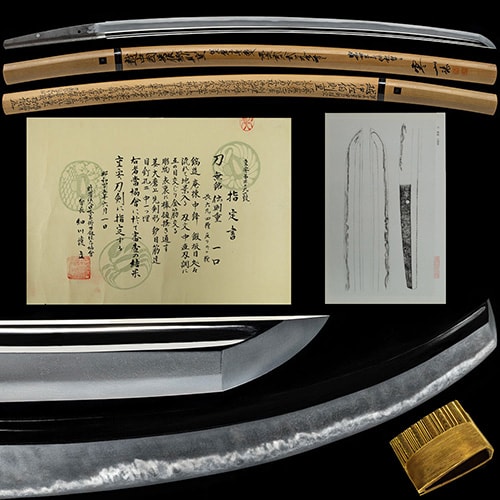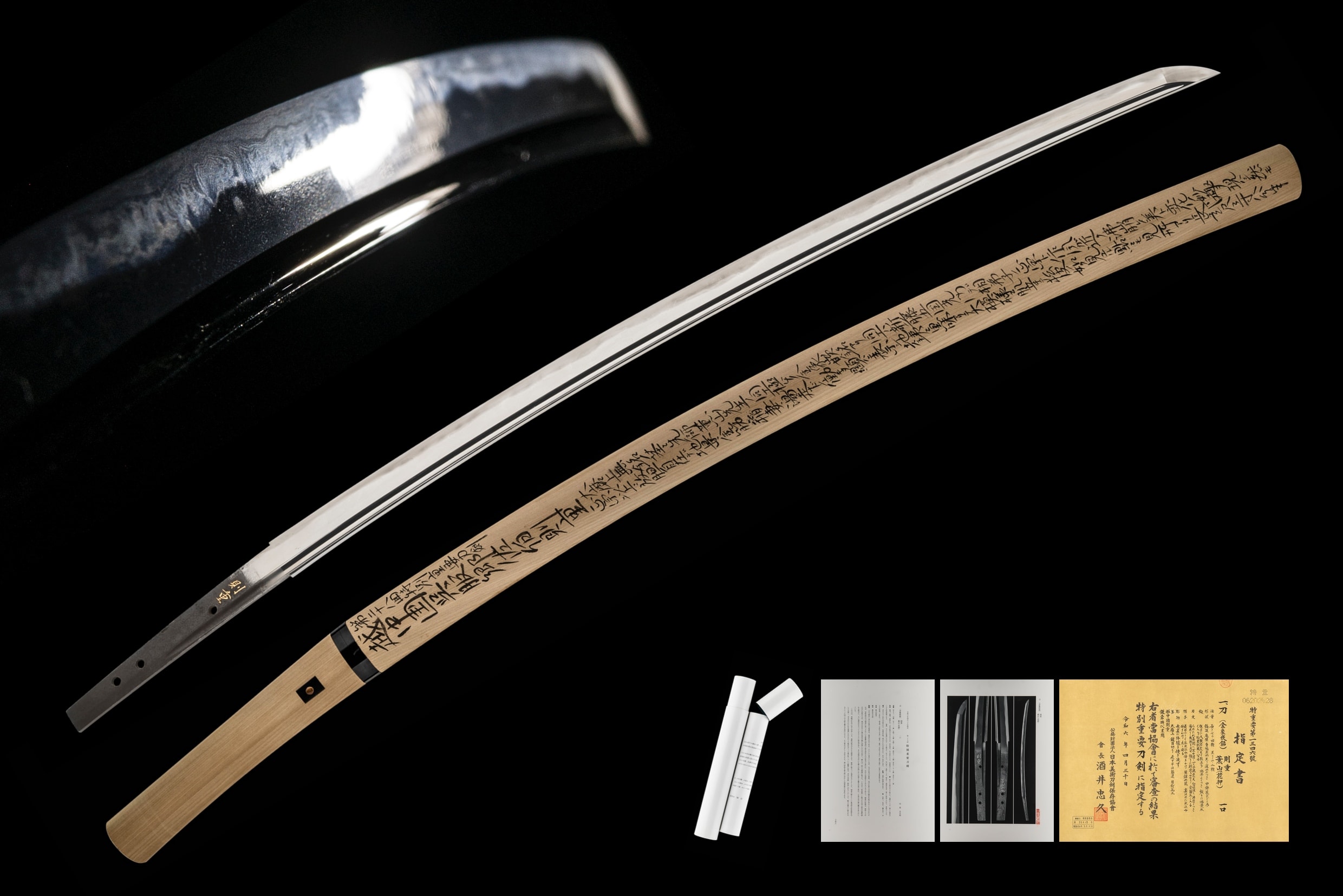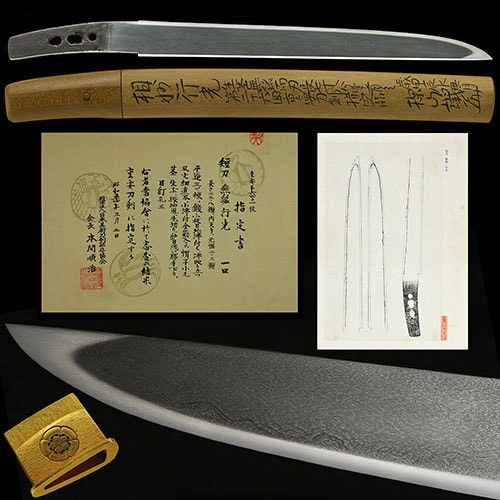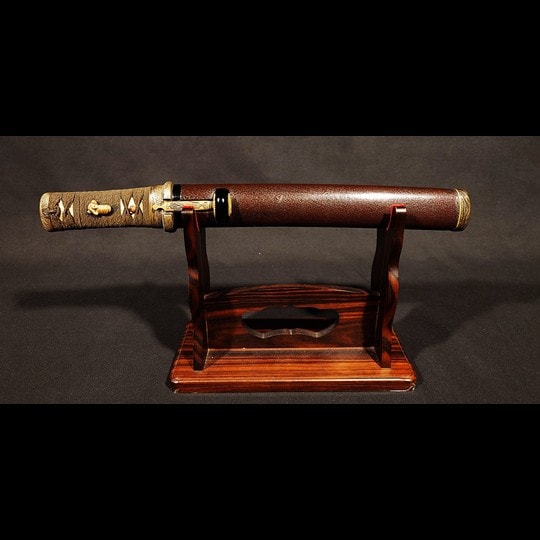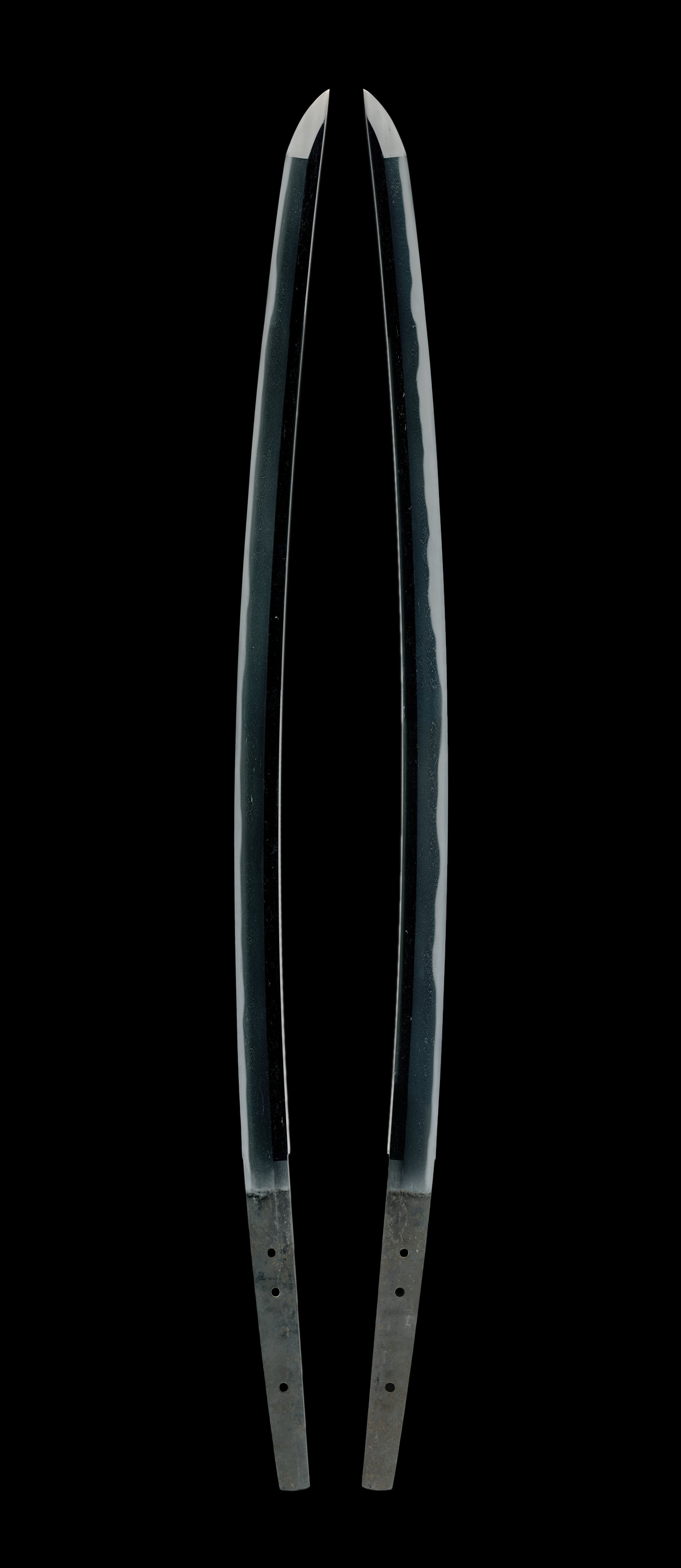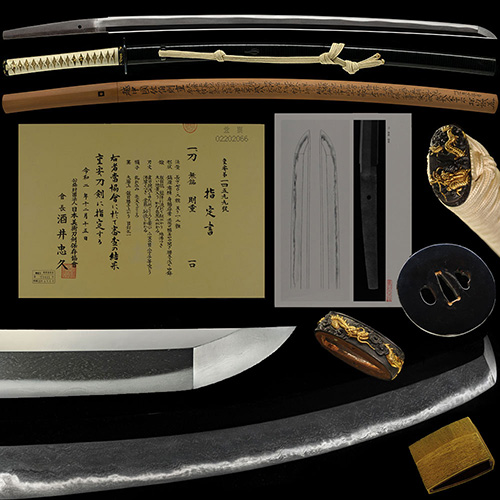
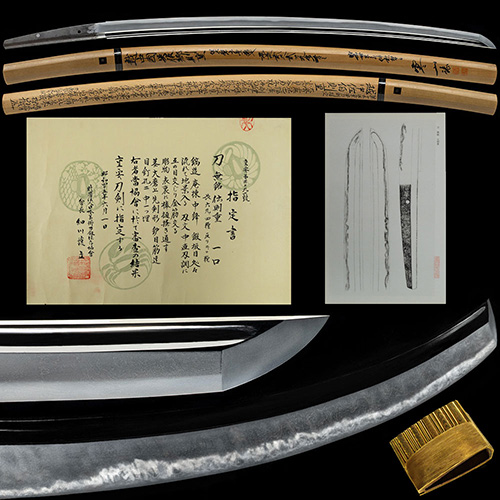


-, 66th Session — Designated December 15, 2020
, : Norishige (則重)
Measurements 70.3 cm, 1.2 cm, 2.85 cm, 1.95 cm, 3.5 cm, 19.2 cm, slight
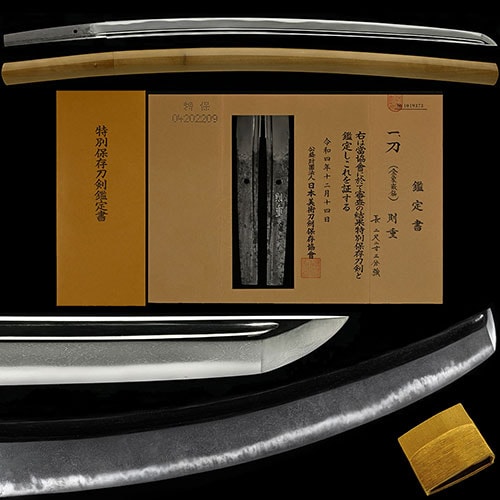
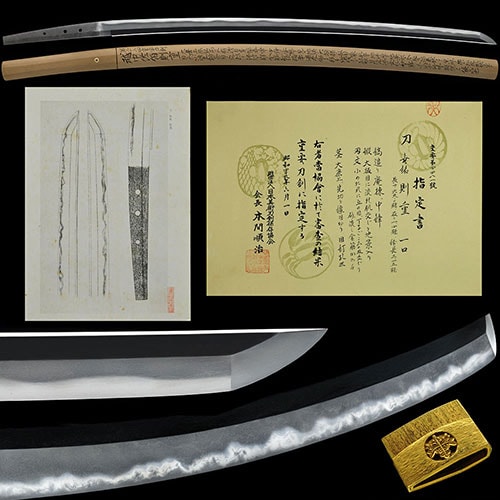
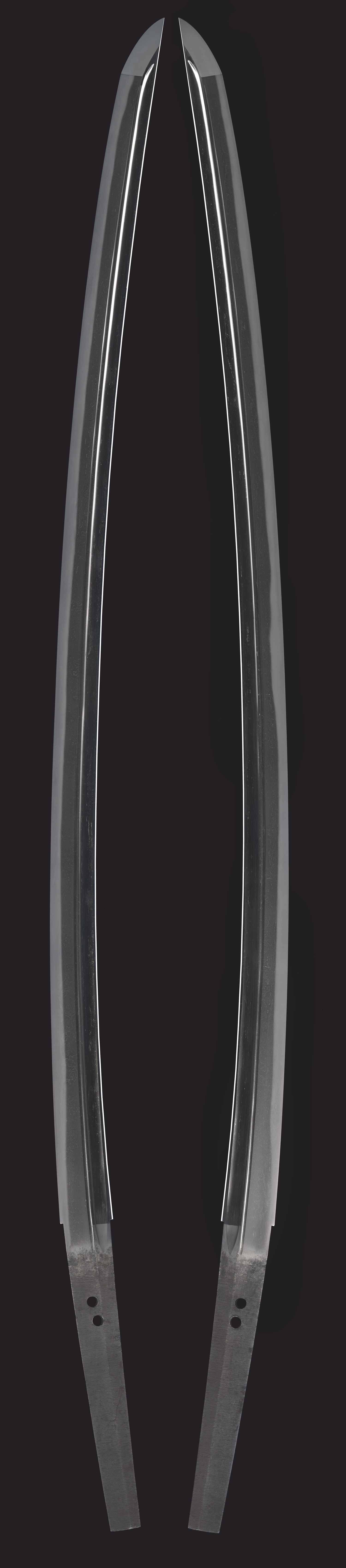
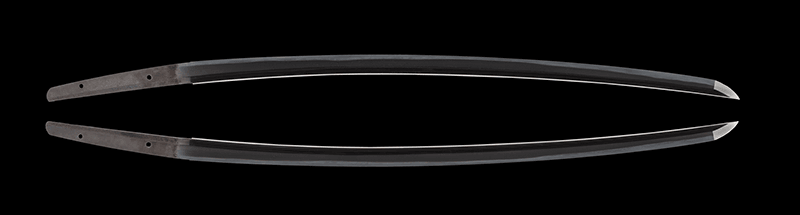
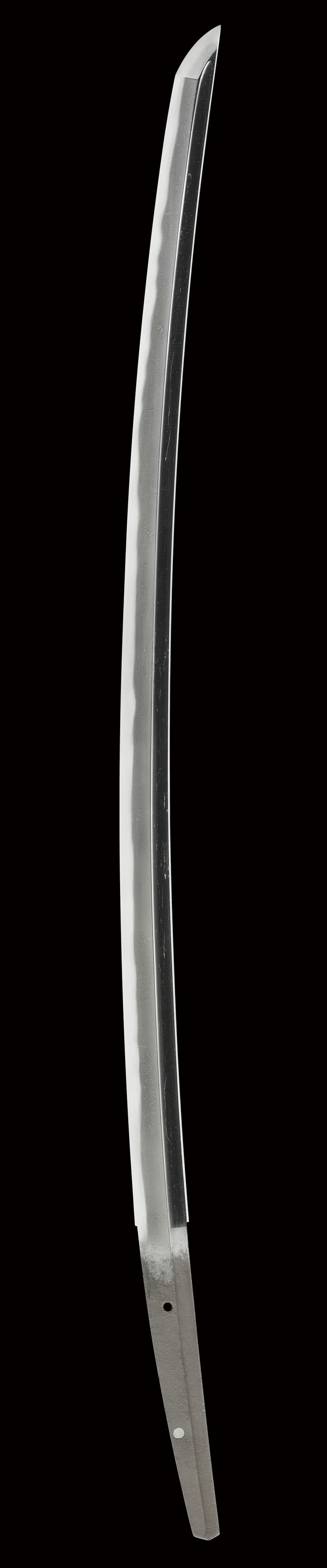
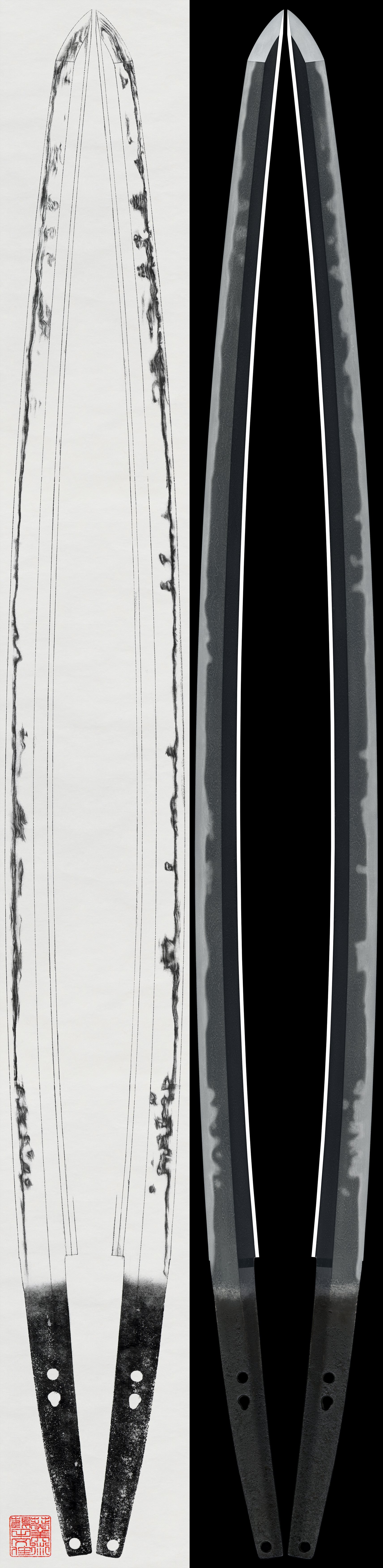
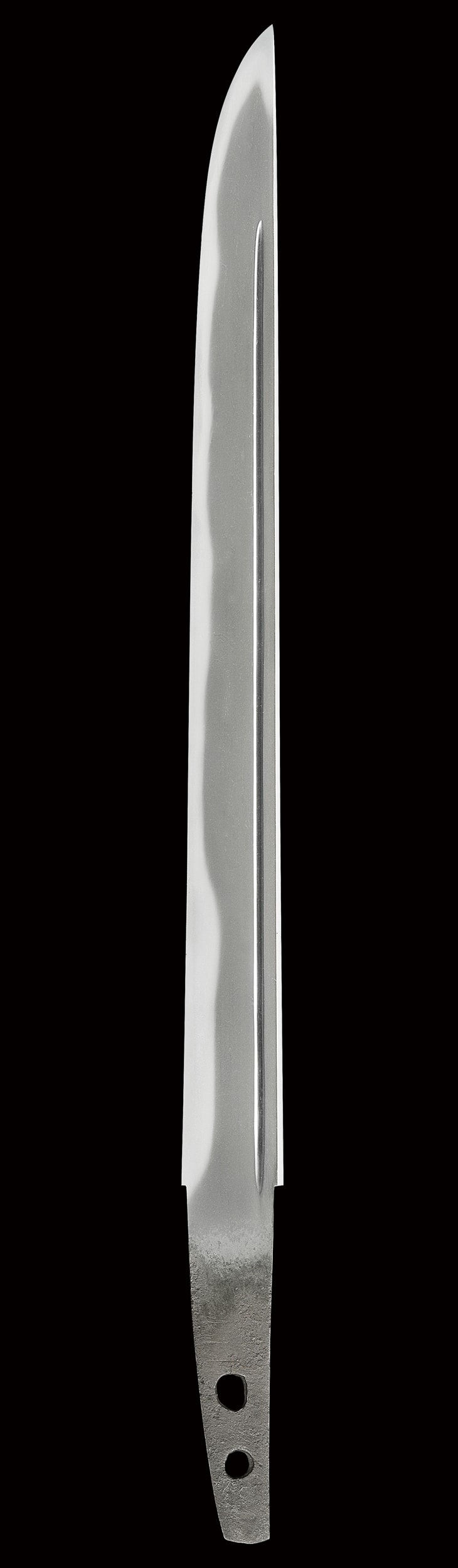
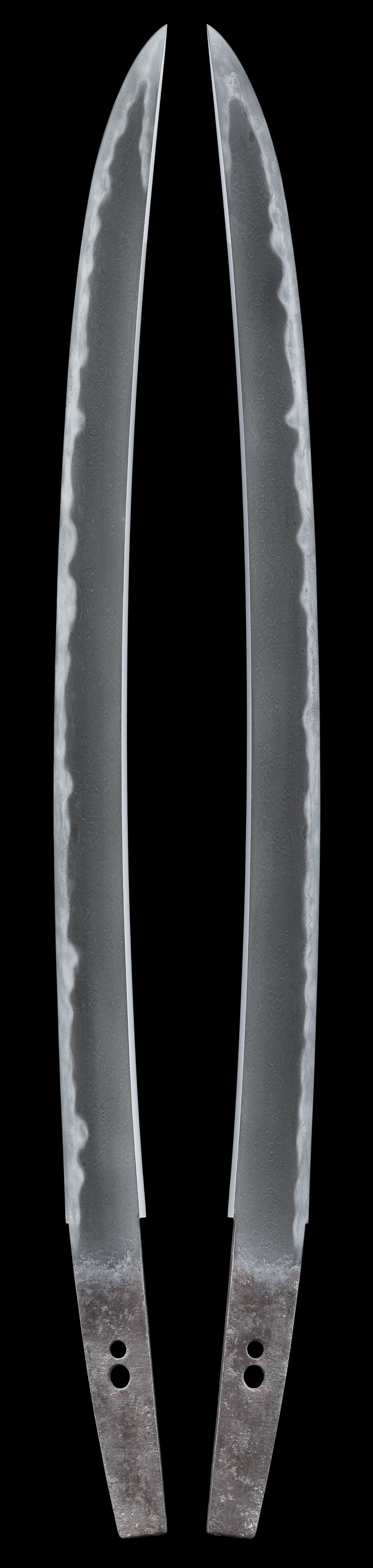
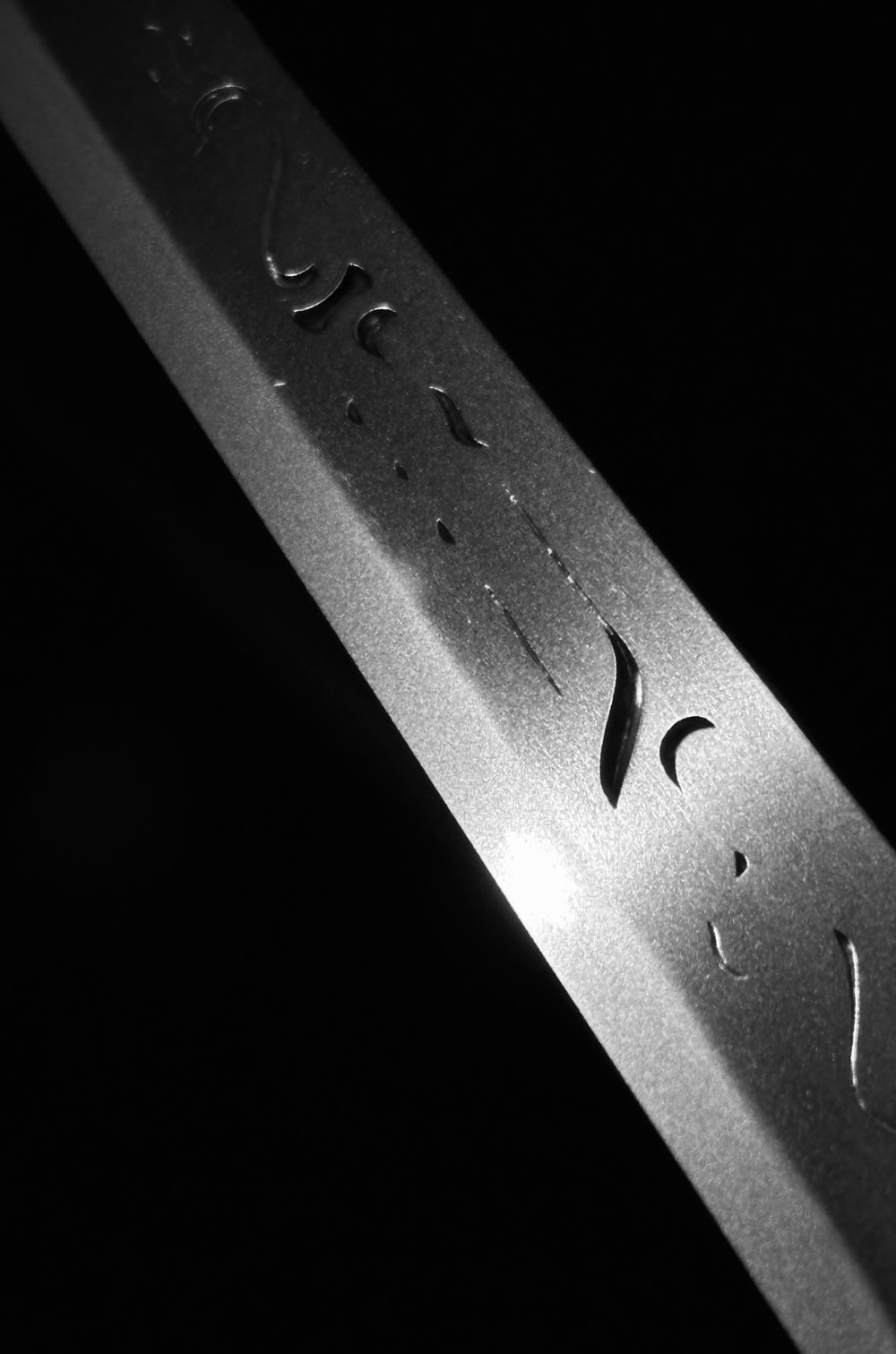
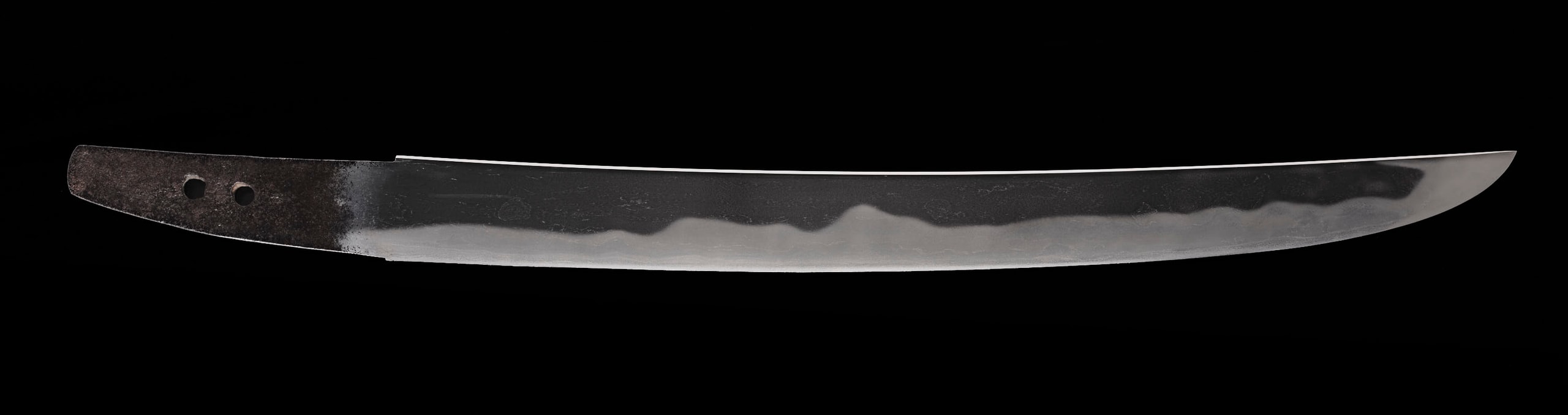
Description Keijo: , ; standard width; the difference between and width is somewhat open; shallow ; . : with the overall grain strongly running and tending toward ; fine thickly applied; prominent thick enter here and there; the steel color tends toward blackish. : -based with a shallow -tendency, mixed with , , , etc.; abundant and ; thick ; and, at points, and ; the is bright. : , with a pointed () tendency, and . : None. : ; o- with shallow ; ; one ; unsigned.
Artisan Norishige (則重)
Era Late period ()
Explanation The sword books of the period—such as the Kokon Meizukushi—list Norishige as one of the “Ten Great Disciples of Masamune” (Masamune Juttetsu). However, considering such factors as the extant examples of his and , and the existence of works bearing production dates from the Shōwa (正和, 1312–1317) and Gen’ō (元応, 1319–1321) eras, it is most reasonable to accept the view recorded in -period sword treatises that he was a disciple of Kunimitsu. Accordingly, he should be regarded as a fellow disciple of Masamune rather than Masamune’s student.
Among the superior masters, Norishige’s style is the closest to that of Masamune. Yet many of his works express variations of even more openly than Masamune’s. His forging tends toward a larger, more standing pattern, producing the highly individual texture known as “pine-bark grain” (), in which thick enter conspicuously. Moreover, diverse forms of activity entangled with the forged grain can be observed both along the and within the , revealing ever-changing (senpen banka) internal .
In this , the is that strongly flows overall and tends toward , with fine thickly applied; thick enter here and there; and the steel color inclines to blackish. The is -based with a shallow tendency, mixed with , , and ; the is bright and the is thick; and are vigorous; and, at points, and are seen. This is a typical example of Norishige’s archaic (koshoku) style, said to take models from and Ko-Hōki. The construction is robust, with ample , and is (sound and well-preserved); also appear within the here and there, and the overall workmanship is excellent.
[ IV-3]