Sōshū was born in a boomtown: Kamakura, seat of the warrior government, dense with elite patrons. Tradition holds that master smiths were summoned east to serve it, and from their students came Shintōgo Kunimitsu and then Masamune.
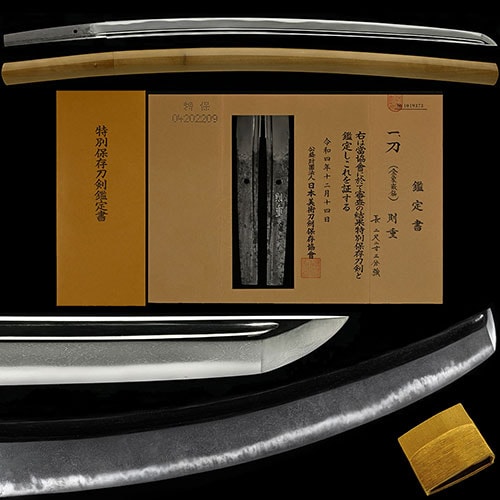
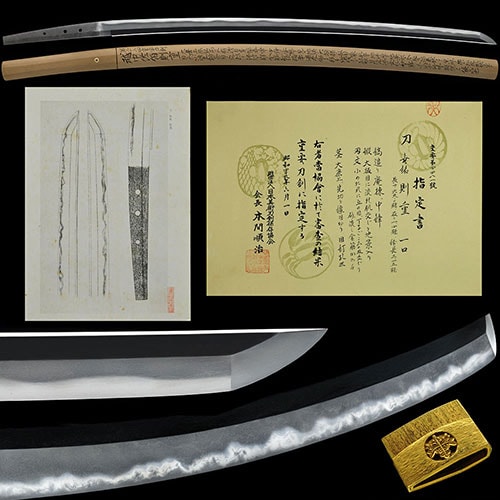
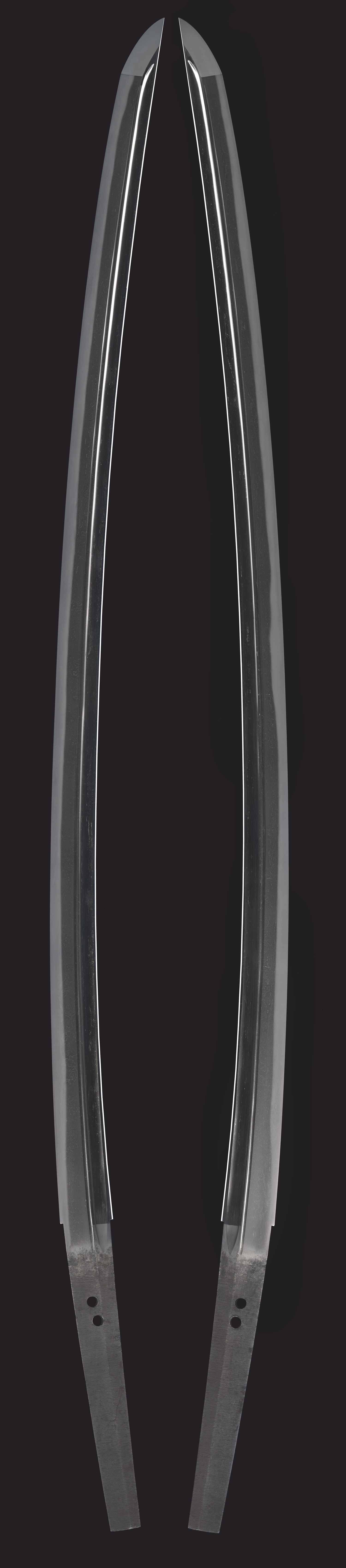
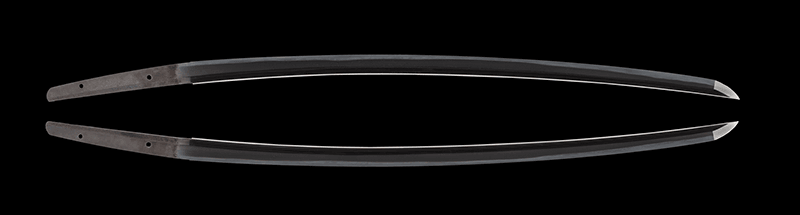
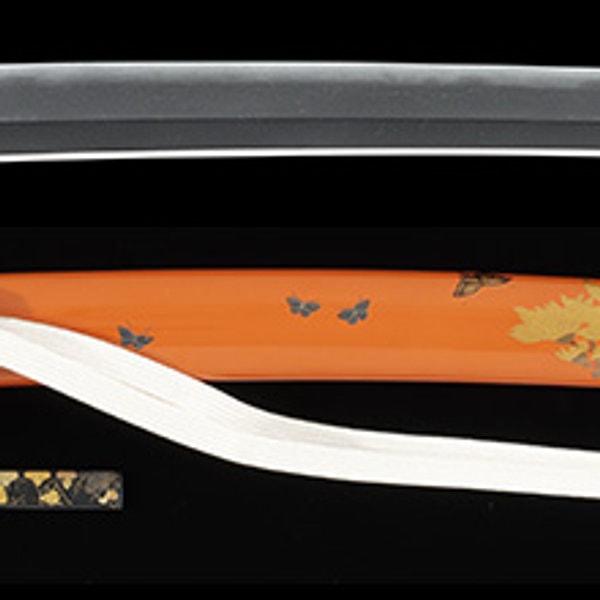
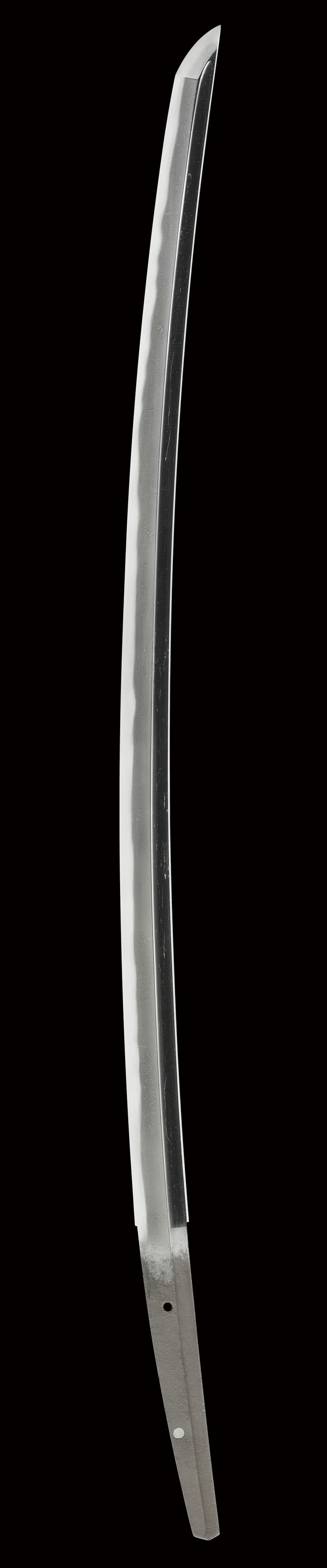
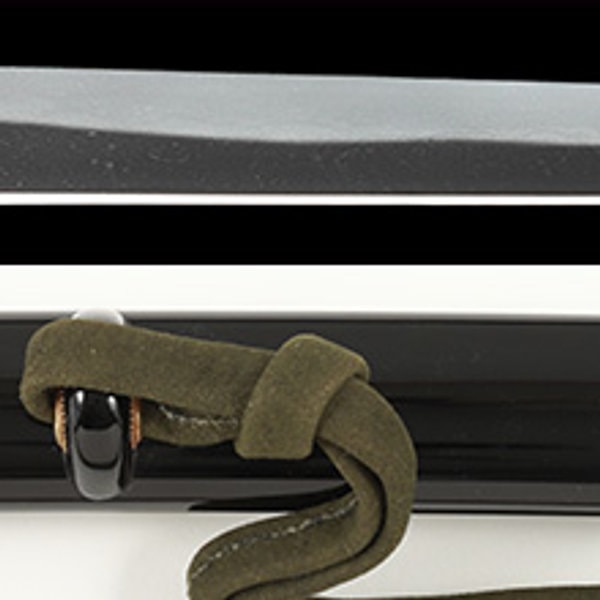
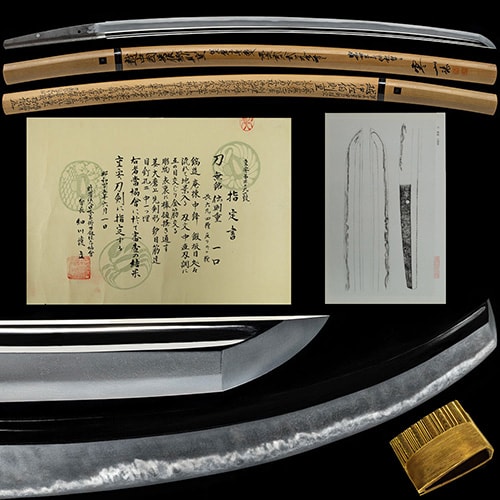
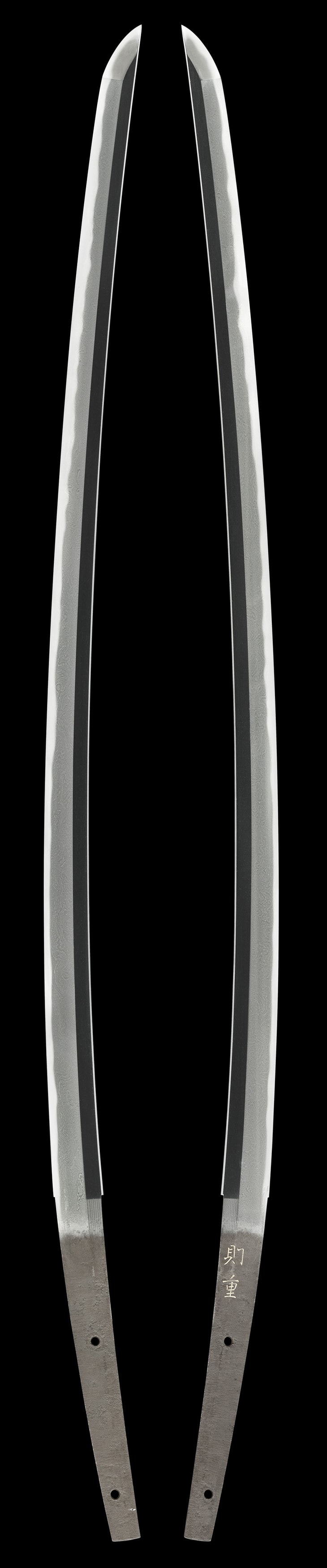
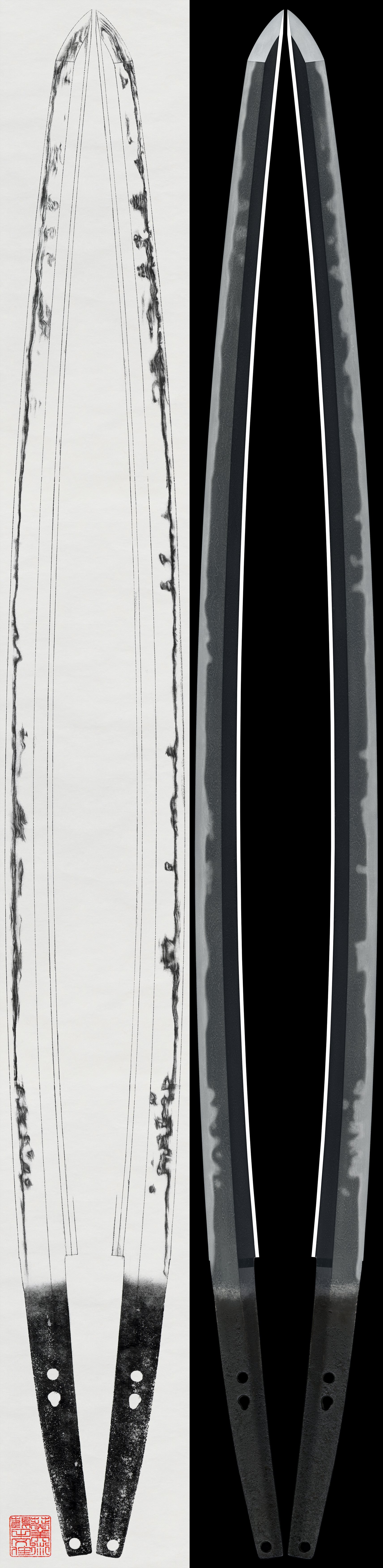
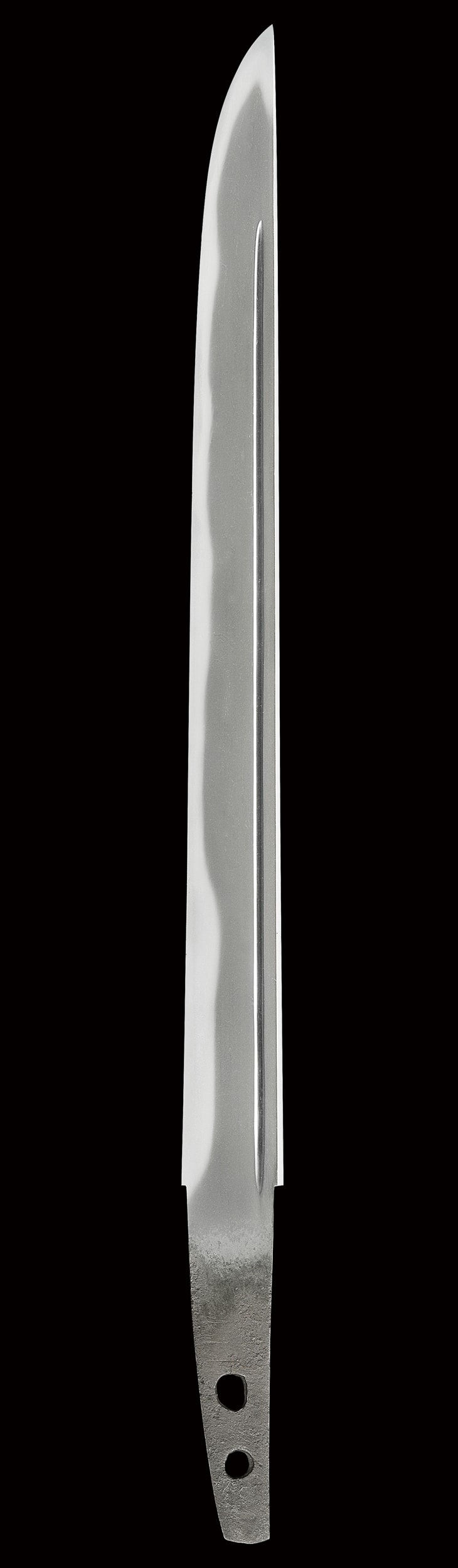
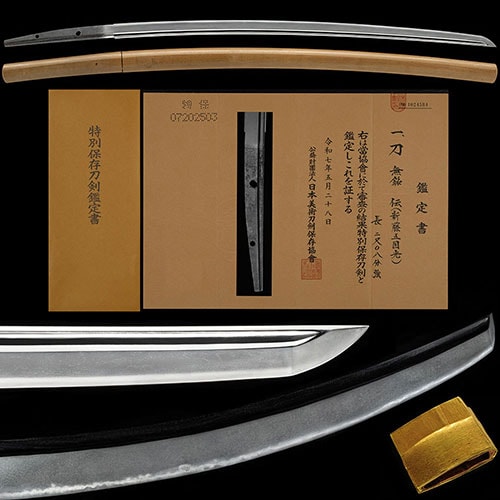
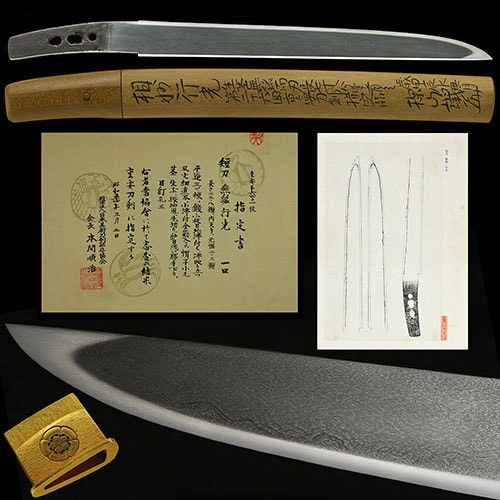
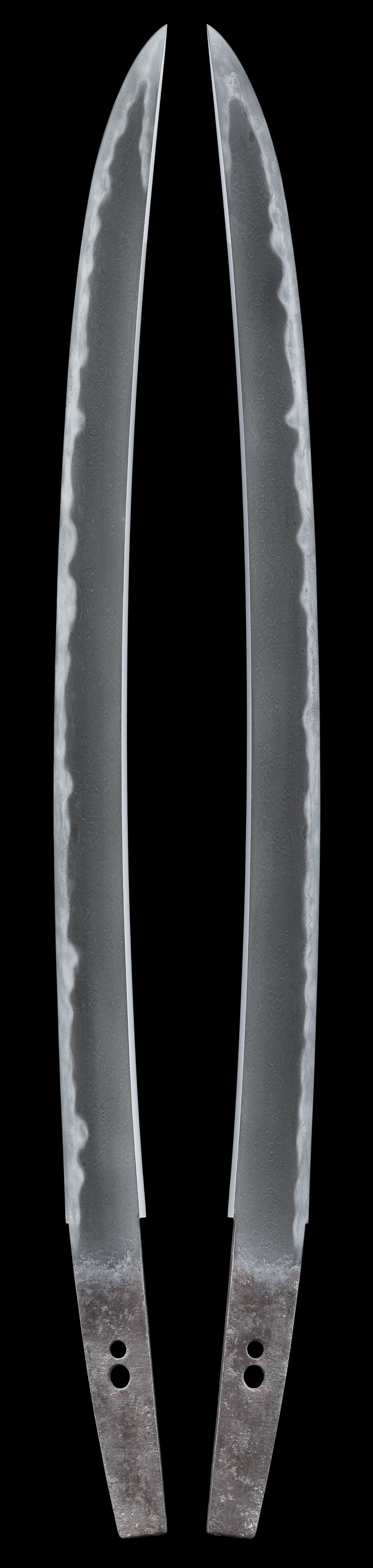
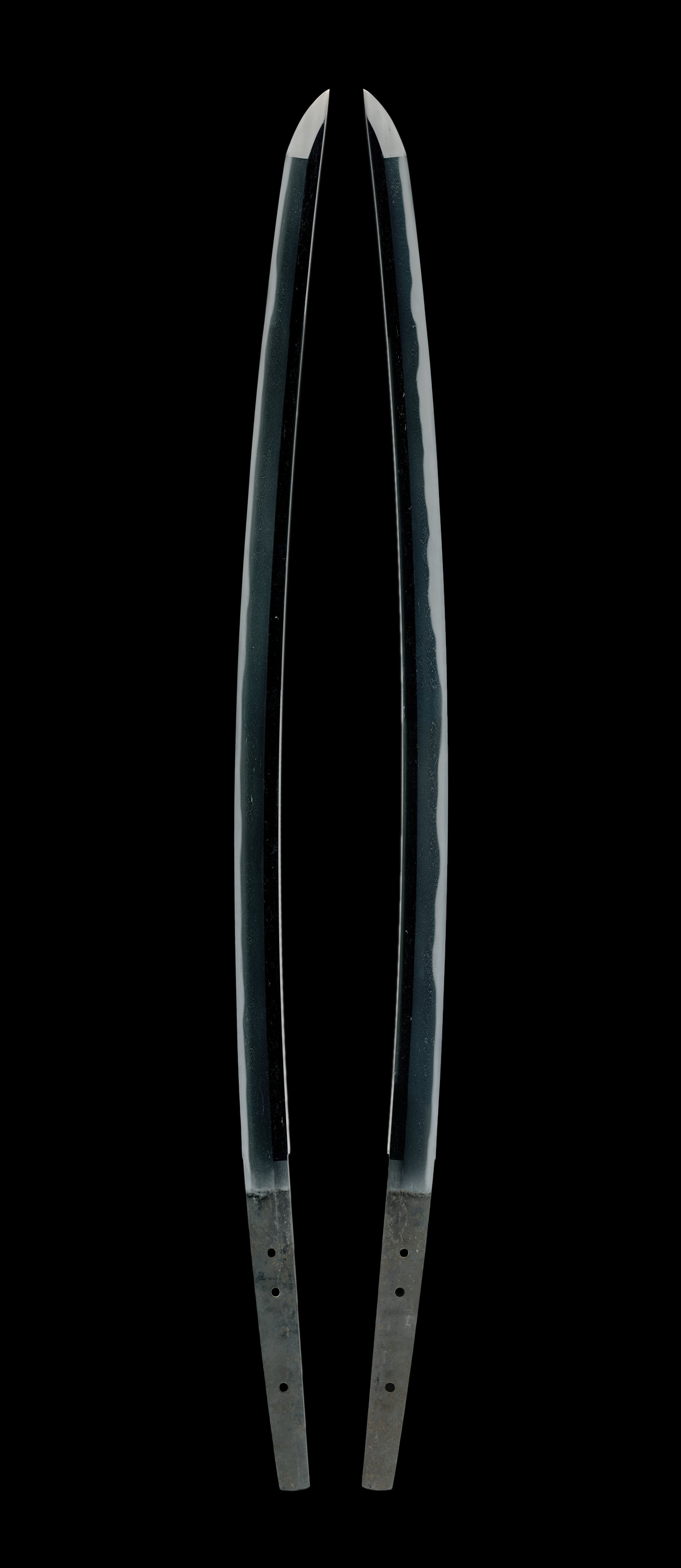
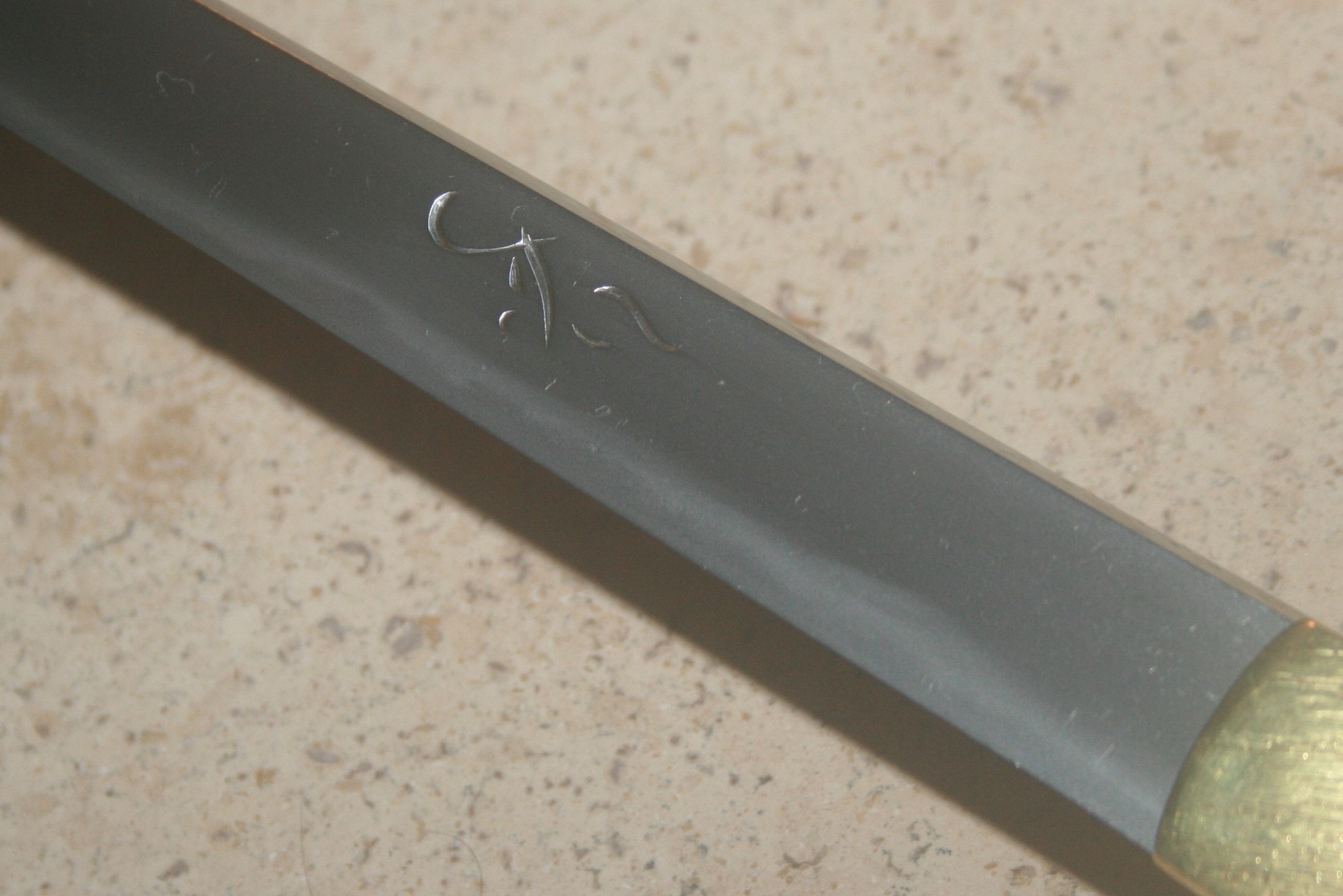
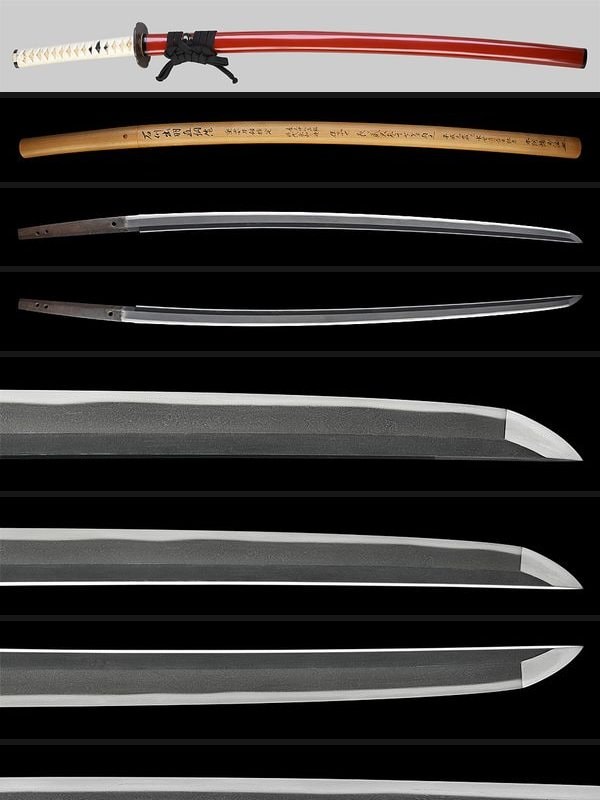
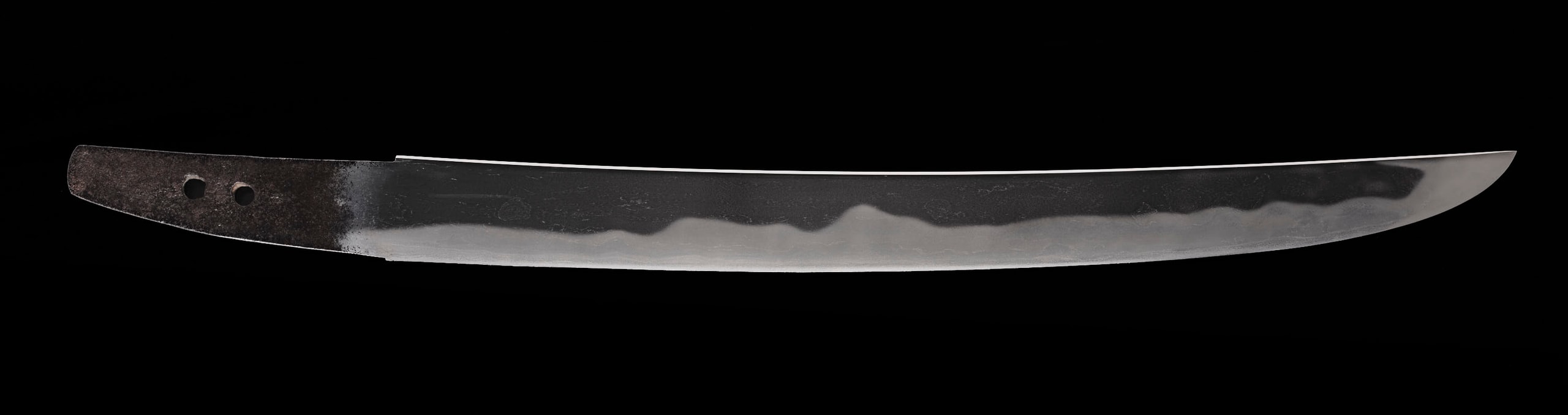
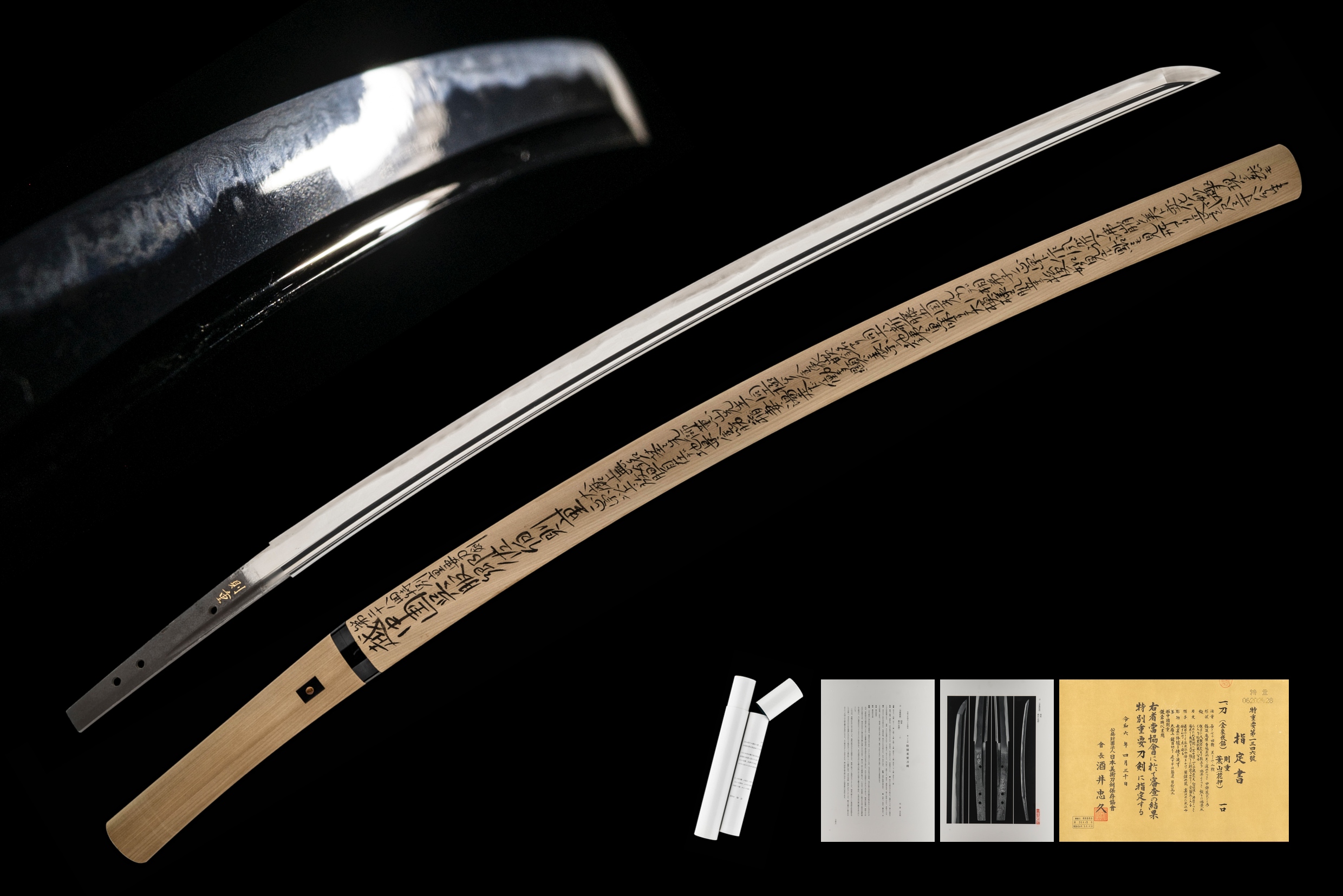
This katana is a mature example of Norishige's artistry from the late Kamakura period, featuring a deep sori, strong matsukawa-hada, and prominent chikei. It is ô-suriage and has been certified by the NBTHK as a Tokubetsu-Jûyô-Tôken. The nakago bears a kinzôgan inscription by Honma Kunzan, applied by 2nd generation Gassan Sadakazu, and the shirasaya carries sayagaki by both Kunzan and Tanobe Michihiro.
 NihontoWatch
kinzogan-mei · Saeki School, Etchû Province (sôshû-Den Tradition) · Enkei (1308-1311) · nagasa 72.4cm · sori 2.2cm
Soshu / Etchu · Etchu · around 1308-1314
Fujishiro Sai-jo saku · Tōken Taikan top 2%
6 pieces on the market now
Norishige worked in Etchū at the end of Kamakura, a pupil of Shintōgo Kunimitsu and a brother-student of Yukimitsu and Masamune, with whom he carried the Sōshū tradition to its maturity. Older texts such as the Kokon Mei Zukushi list him among Masamune's ten disciples, but the dated blades that survive, in the Shōwa, Engen and Ōan years, and the form of his tachi and tantō, lead the published sources to read him by the Muromachi-era account as a pupil of Shintōgo Kunimitsu and a brother-student of Masamune, perhaps a little the earlier of the two.
The common manner, and the one that bears his name, is matsukawa-hada (松皮肌). His itame stands boldly, often in a large pattern mixed with mokume, and through it thick chikei enter abundantly until the surface reads like the bark of a pine; the steel is dark, the ji-nie thick. The published sources place him closest of the great Sōshū hands to Masamune, yet note that he expresses the changes of nie even more openly than Masamune[[c:1]], so that the ha and the hada together show what they call the ten-thousand changes of nie[[c:2]]. The bold standing grain laced with thick chikei is the mechanism behind the pine-bark, and it runs through the great majority of his work.
Over that hada runs a notare mixed with gunome in deep nie, the nioiguchi subdued and sunken, the opposite of bright Bizen, alive with abundant kinsuji and sunagashi, with nijuba and drifting yubashiri. The bōshi is a point the older profiles got wrong: it does not merely turn back in a small round, it sweeps out strongly in hakikake into a midare-komi, at times pointed or burned through in yakizume, the brushed nie of the tip continuous with the restless ji below. The sunken nioiguchi and that swept, nie-broken bōshi are as much his signature as the bark itself.
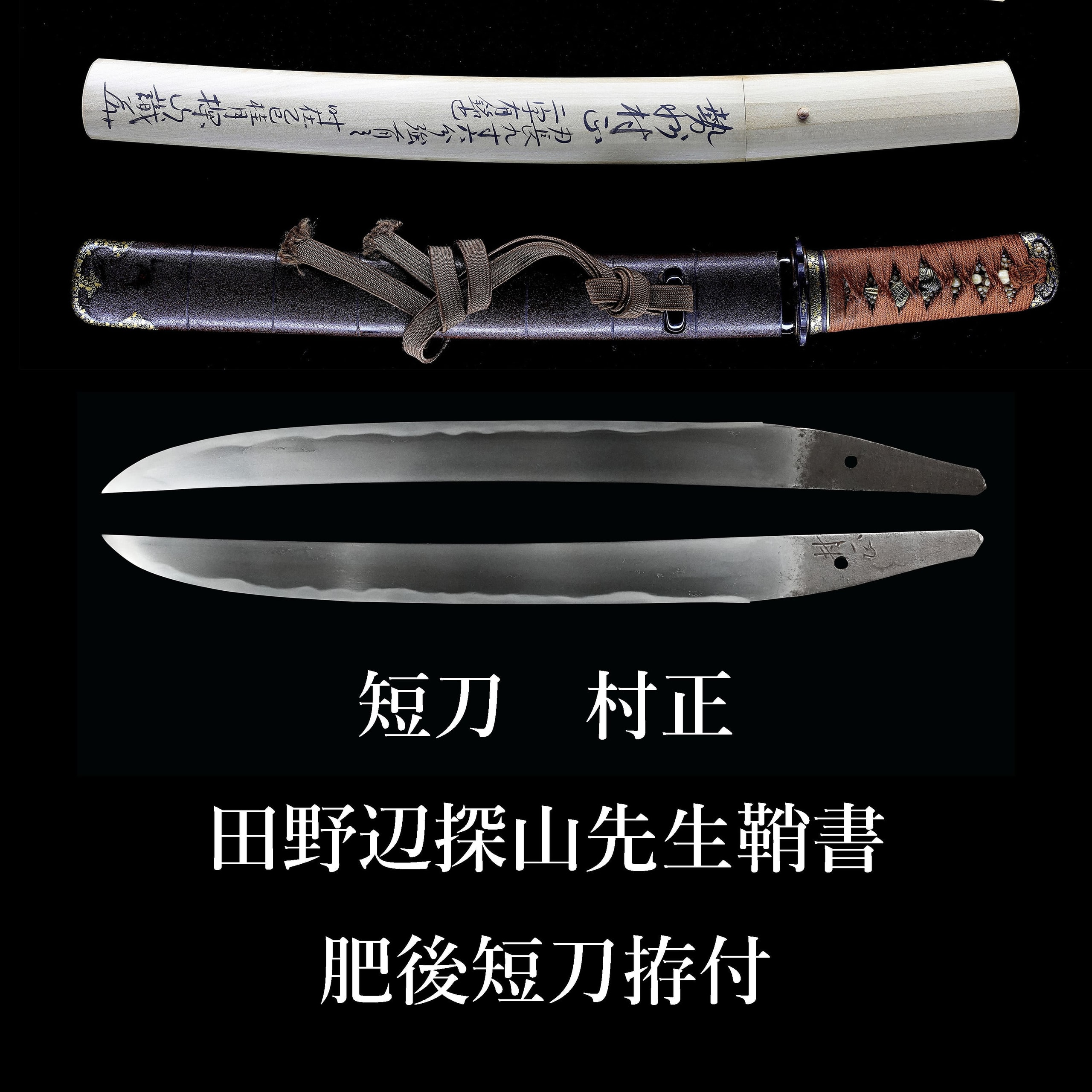
There is a second manner, and it is the refined one the connoisseur prizes. On his rare signed tachi and his early dated signed tantō the hada does not stand as much as usual; the forging tightens to a calmer fine ko-itame, the ji and ha both quieter, the steel brighter and more clearly lit, the chikei and kinsuji more restrained. A representative signed tachi is marked as calmer in ji and ha than his usual work[[c:3]], its small-notare temper sunk over the swirling Norishige grain still legible beneath; an early signed tantō of Shōwa 3 is read as standing less, brighter, and connecting to Shintōgo Kunimitsu and Yukimitsu[[c:4]], his earlier hand. This fine, bright forging is not a lapse from the matsukawa but a distinct and highly regarded facet of him.
For recognition the two manners share the same core: thick dark chikei, a subdued sunken nioiguchi, kinsuji and sunagashi running busily, and the swept hakikake bōshi. The subdued nioiguchi parts him from the bright nioiguchi of Bizen; the openly varied nie and the heavier standing grain part him from Masamune, whose chikei runs through a tighter, quieter jigane. Where the bark is absent, on the fine signed pieces, the chikei and the sunken nioiguchi carry the attribution. Fujishiro grades him Sai-jō saku, and among all swordsmiths his Tokubetsu-Jūyō count stands near the very top.
His signed work is itself a rarity: it is mostly tantō, and signed tachi are so few that an earlier appraisal could count only two[[c:5]]; the designated corpus today holds four — two Important Cultural Properties and two Tokubetsu-Jūyō — the rest of his work ō-suriage and mumei. The named blades carry the histories of the great houses: a signed tachi passed from Toyotomi Hideyoshi's circle and through Tokugawa Tsunayoshi, who bestowed it at the Yanagisawa residence, into the Yanagisawa family, while others descended through the Shimazu, the Maeda, the Hosokawa and the Ii. A few of his own works look back to Ko-Bizen and Ko-Hōki for an archaic flavor. His pine-bark forging did not die with him; his pupil Tametsugu carried it west, where it became the mark of the later Etchū smiths.
Where Norishige stands among comparable artisans: across all of nihontō, and within tradition, era, and period. The tiers (Foremost · Leading · Major · Notable) weigh official designations from the NBTHK and Japan's Agency for Cultural Affairs, together with historical honors of lasting repute such as the Sansaku and Meibutsu-chō.
Select a lens to see how it's measured.
Years he was demonstrably active, proven by signed-and-dated blades
Soshu-den · Sagami
Phase: Sōshū相州· 1288–1385
45 pieces on the market now
Steel "bright and clear," with thick ji-nie and chikei entering frequently, is the constant the NBTHK returns to in nearly every blade of this phase, and it marks the moment the Soshu tradition reached its summit in Sagami. " The sampled blades cluster around the masters who carried this manner forward: Go Yoshihiro of Matsukura-go in Etchu, counted among the Masamune Juttetsu and represented here by numerous ō-suriage katana, and the Sagami smiths Hiromitsu and Akihiro, who stand "next after Sadamune" and extend the phase with dated works running from Enbun 2 (1357) to Shitoku 4 (1387). The window spans late Kamakura proportions through the broad Enbun-Joji forms of the fourteenth century. The phase reads as itame-hada mixed with mokume, often tending toward standing or flowing grain, carrying very fine ji-nie laid thickly with chikei threaded densely throughout; over this the hamon is founded on notare mixed with gunome, ko-gunome, and a chōji flavor, with deep nioi, thick nie, and kinsuji and sunagashi running well, the nioiguchi bright and clear. This is precisely the distance the school traveled from its Awataguchi roots: where that foundation held a tight, restrained suguha, the Go katana break into wide yakihaba, nie-kuzure, and yubashiri (one setsumei records nie that "gathers, thickens, and congeals"), with a bōshi tempered so deeply it becomes ichimai and sweeps in hakikake. Go himself sits one step calmer than Masamune and Norishige, his chikei and kinsuji more reserved but his ji and ha a step brighter, the hada often masame-inclined; one wide-suguha example with ko-midare shows how close the quiet end of his range stays to the Kunimitsu manner.
" Here the classic phase divides from the later Sue-Soshu continuation, whose Muromachi smiths inherited the vocabulary without the depth of nie and clarity of steel recorded in these blades. A collector separates this phase because it holds the recognized masters at full strength. Go achieved the highest designation through the unmistakable brightness of his ji-ha alone, despite no surviving signed works, and the sample carries the weight of that reputation: the meibutsu Nakagawa-Go owned by a retainer of Oda Nobunaga and later the Tokugawa house, the "Kabuto-giri" Go inlaid by Hon'ami appraisal, the Okubo-Go transmitted in the Odawara Okubo family, and blades held by the Uwajima Date and Chikuzen Kuroda houses, with names recorded in the Kyoho Meibutsu-cho. The kantei points are concrete and repeated: Go's active nie-ashi, masame tendency, and ichimai bōshi; Akihiro's dated five-character "Soshu Akihiro" signatures, whose shift from full to abbreviated dating after Eiwa lets a viewer place a blade in time; and the near-indistinguishability of Hiromitsu and Akihiro, parsed only by scale and the prominence of dango-chōji. These are the works that define the Soshu apex, against which both the Awataguchi foundation and the Sue-Soshu aftermath are measured. Learn more →
| Smith | Era | Designated |
|---|---|---|
| Masamune正宗 | 1288-1293 | 84 |
| Sadamune貞宗 | 1329-1331 | 86 |
| Go Yoshihiro義弘 | 1299-1302 | 54 |
| Akihiro秋廣 | 1346-1370 | 27 |
| Kunimitsu國光 | 1293-1322 | 69 |
Sōshū in the Kamakura period
Sōshū was born in a boomtown: Kamakura, seat of the warrior government, dense with elite patrons. Tradition holds that master smiths were summoned east to serve it, and from their students came Shintōgo Kunimitsu and then Masamune.
The NBTHK’s highest grade, reserved for the rare Jūyō blades of exceptional artistry, condition, and historical value, judged on par with a nationally designated Important Cultural Property (Jūyō Bunkazai).
Only 1,211 swords have ever reached Tokubetsu Jūyō, about 1 in 2,064 registered blades.
The NBTHK (Nihon Bijutsu Tōken Hozon Kyōkai, the Society for the Preservation of Japanese Art Swords) is a public-interest incorporated foundation founded in 1948 and supervised by Japan’s Agency for Cultural Affairs (Bunkachō); it is based at the Japanese Sword Museum in Tokyo. Its expert panels physically examine each submitted work (shinsa) and issue a certificate (kanteishō) ranking it by artistic and historical merit. NBTHK papers are the most widely recognized standard of authentication for Japanese swords and fittings.
NBTHK official siteAll swords come with a three-day inspection period beginning from the date of delivery. If not satisfied, the sword may be returned within this period for a full refund of the purchase price. Outside of this period, all sales are final. Swords purchased on a layaway payment plan are not eligible for the three-day inspection period.
This katana is a mature example of Norishige's artistry from the late Kamakura period, featuring a deep sori, strong matsukawa-hada, and prominent chikei. It is ô-suriage and has been certified by the NBTHK as a Tokubetsu-Jûyô-Tôken. The nakago bears a kinzôgan inscription by Honma Kunzan, applied by 2nd generation Gassan Sadakazu, and the shirasaya carries sayagaki by both Kunzan and Tanobe Michihiro.
NihontoWatchkinzogan-mei · Saeki School, Etchû Province (sôshû-Den Tradition) · Enkei (1308-1311) · nagasa 72.4cm · sori 2.2cm
Soshu / Etchu · Etchu · around 1308-1314
Fujishiro Sai-jo saku · Tōken Taikan top 2%
6 pieces on the market now
Norishige worked in Etchū at the end of Kamakura, a pupil of Shintōgo Kunimitsu and a brother-student of Yukimitsu and Masamune, with whom he carried the Sōshū tradition to its maturity. Older texts such as the Kokon Mei Zukushi list him among Masamune's ten disciples, but the dated blades that survive, in the Shōwa, Engen and Ōan years, and the form of his tachi and tantō, lead the published sources to read him by the Muromachi-era account as a pupil of Shintōgo Kunimitsu and a brother-student of Masamune, perhaps a little the earlier of the two.
The common manner, and the one that bears his name, is matsukawa-hada (松皮肌). His itame stands boldly, often in a large pattern mixed with mokume, and through it thick chikei enter abundantly until the surface reads like the bark of a pine; the steel is dark, the ji-nie thick. The published sources place him closest of the great Sōshū hands to Masamune, yet note that he expresses the changes of nie even more openly than Masamune[[c:1]], so that the ha and the hada together show what they call the ten-thousand changes of nie[[c:2]]. The bold standing grain laced with thick chikei is the mechanism behind the pine-bark, and it runs through the great majority of his work.
Over that hada runs a notare mixed with gunome in deep nie, the nioiguchi subdued and sunken, the opposite of bright Bizen, alive with abundant kinsuji and sunagashi, with nijuba and drifting yubashiri. The bōshi is a point the older profiles got wrong: it does not merely turn back in a small round, it sweeps out strongly in hakikake into a midare-komi, at times pointed or burned through in yakizume, the brushed nie of the tip continuous with the restless ji below. The sunken nioiguchi and that swept, nie-broken bōshi are as much his signature as the bark itself.
There is a second manner, and it is the refined one the connoisseur prizes. On his rare signed tachi and his early dated signed tantō the hada does not stand as much as usual; the forging tightens to a calmer fine ko-itame, the ji and ha both quieter, the steel brighter and more clearly lit, the chikei and kinsuji more restrained. A representative signed tachi is marked as calmer in ji and ha than his usual work[[c:3]], its small-notare temper sunk over the swirling Norishige grain still legible beneath; an early signed tantō of Shōwa 3 is read as standing less, brighter, and connecting to Shintōgo Kunimitsu and Yukimitsu[[c:4]], his earlier hand. This fine, bright forging is not a lapse from the matsukawa but a distinct and highly regarded facet of him.
For recognition the two manners share the same core: thick dark chikei, a subdued sunken nioiguchi, kinsuji and sunagashi running busily, and the swept hakikake bōshi. The subdued nioiguchi parts him from the bright nioiguchi of Bizen; the openly varied nie and the heavier standing grain part him from Masamune, whose chikei runs through a tighter, quieter jigane. Where the bark is absent, on the fine signed pieces, the chikei and the sunken nioiguchi carry the attribution. Fujishiro grades him Sai-jō saku, and among all swordsmiths his Tokubetsu-Jūyō count stands near the very top.
His signed work is itself a rarity: it is mostly tantō, and signed tachi are so few that an earlier appraisal could count only two[[c:5]]; the designated corpus today holds four — two Important Cultural Properties and two Tokubetsu-Jūyō — the rest of his work ō-suriage and mumei. The named blades carry the histories of the great houses: a signed tachi passed from Toyotomi Hideyoshi's circle and through Tokugawa Tsunayoshi, who bestowed it at the Yanagisawa residence, into the Yanagisawa family, while others descended through the Shimazu, the Maeda, the Hosokawa and the Ii. A few of his own works look back to Ko-Bizen and Ko-Hōki for an archaic flavor. His pine-bark forging did not die with him; his pupil Tametsugu carried it west, where it became the mark of the later Etchū smiths.
Where Norishige stands among comparable artisans: across all of nihontō, and within tradition, era, and period. The tiers (Foremost · Leading · Major · Notable) weigh official designations from the NBTHK and Japan's Agency for Cultural Affairs, together with historical honors of lasting repute such as the Sansaku and Meibutsu-chō.
Select a lens to see how it's measured.
Years he was demonstrably active, proven by signed-and-dated blades
Soshu-den · Sagami
Phase: Sōshū相州· 1288–1385
45 pieces on the market now
Steel "bright and clear," with thick ji-nie and chikei entering frequently, is the constant the NBTHK returns to in nearly every blade of this phase, and it marks the moment the Soshu tradition reached its summit in Sagami. " The sampled blades cluster around the masters who carried this manner forward: Go Yoshihiro of Matsukura-go in Etchu, counted among the Masamune Juttetsu and represented here by numerous ō-suriage katana, and the Sagami smiths Hiromitsu and Akihiro, who stand "next after Sadamune" and extend the phase with dated works running from Enbun 2 (1357) to Shitoku 4 (1387). The window spans late Kamakura proportions through the broad Enbun-Joji forms of the fourteenth century. The phase reads as itame-hada mixed with mokume, often tending toward standing or flowing grain, carrying very fine ji-nie laid thickly with chikei threaded densely throughout; over this the hamon is founded on notare mixed with gunome, ko-gunome, and a chōji flavor, with deep nioi, thick nie, and kinsuji and sunagashi running well, the nioiguchi bright and clear. This is precisely the distance the school traveled from its Awataguchi roots: where that foundation held a tight, restrained suguha, the Go katana break into wide yakihaba, nie-kuzure, and yubashiri (one setsumei records nie that "gathers, thickens, and congeals"), with a bōshi tempered so deeply it becomes ichimai and sweeps in hakikake. Go himself sits one step calmer than Masamune and Norishige, his chikei and kinsuji more reserved but his ji and ha a step brighter, the hada often masame-inclined; one wide-suguha example with ko-midare shows how close the quiet end of his range stays to the Kunimitsu manner.
" Here the classic phase divides from the later Sue-Soshu continuation, whose Muromachi smiths inherited the vocabulary without the depth of nie and clarity of steel recorded in these blades. A collector separates this phase because it holds the recognized masters at full strength. Go achieved the highest designation through the unmistakable brightness of his ji-ha alone, despite no surviving signed works, and the sample carries the weight of that reputation: the meibutsu Nakagawa-Go owned by a retainer of Oda Nobunaga and later the Tokugawa house, the "Kabuto-giri" Go inlaid by Hon'ami appraisal, the Okubo-Go transmitted in the Odawara Okubo family, and blades held by the Uwajima Date and Chikuzen Kuroda houses, with names recorded in the Kyoho Meibutsu-cho. The kantei points are concrete and repeated: Go's active nie-ashi, masame tendency, and ichimai bōshi; Akihiro's dated five-character "Soshu Akihiro" signatures, whose shift from full to abbreviated dating after Eiwa lets a viewer place a blade in time; and the near-indistinguishability of Hiromitsu and Akihiro, parsed only by scale and the prominence of dango-chōji. These are the works that define the Soshu apex, against which both the Awataguchi foundation and the Sue-Soshu aftermath are measured. Learn more →
| Smith | Era | Designated |
|---|---|---|
| Masamune正宗 | 1288-1293 | 84 |
| Sadamune貞宗 | 1329-1331 | 86 |
| Go Yoshihiro義弘 | 1299-1302 | 54 |
| Akihiro秋廣 | 1346-1370 | 27 |
| Kunimitsu國光 | 1293-1322 | 69 |
Sōshū in the Kamakura period
Sōshū was born in a boomtown: Kamakura, seat of the warrior government, dense with elite patrons. Tradition holds that master smiths were summoned east to serve it, and from their students came Shintōgo Kunimitsu and then Masamune.
The NBTHK’s highest grade, reserved for the rare Jūyō blades of exceptional artistry, condition, and historical value, judged on par with a nationally designated Important Cultural Property (Jūyō Bunkazai).
Only 1,211 swords have ever reached Tokubetsu Jūyō, about 1 in 2,064 registered blades.
The NBTHK (Nihon Bijutsu Tōken Hozon Kyōkai, the Society for the Preservation of Japanese Art Swords) is a public-interest incorporated foundation founded in 1948 and supervised by Japan’s Agency for Cultural Affairs (Bunkachō); it is based at the Japanese Sword Museum in Tokyo. Its expert panels physically examine each submitted work (shinsa) and issue a certificate (kanteishō) ranking it by artistic and historical merit. NBTHK papers are the most widely recognized standard of authentication for Japanese swords and fittings.
NBTHK official siteAll swords come with a three-day inspection period beginning from the date of delivery. If not satisfied, the sword may be returned within this period for a full refund of the purchase price. Outside of this period, all sales are final. Swords purchased on a layaway payment plan are not eligible for the three-day inspection period.