NihontoWatch MonNihontoWatch
Market
Encyclopedia
Kantei
NihontoWatch MonNihontoWatch
Market
Encyclopedia
Kantei

Description

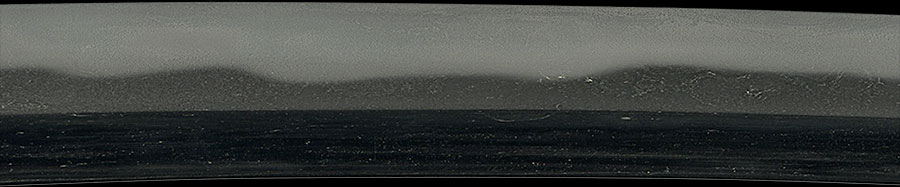
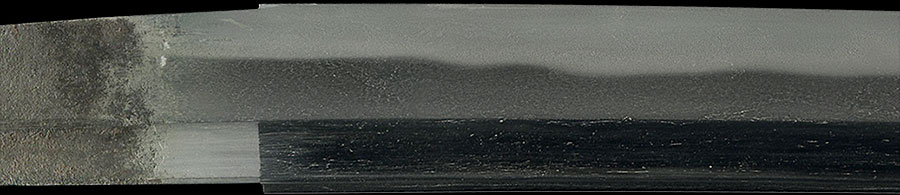
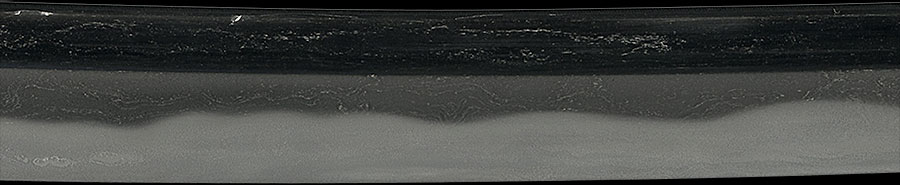
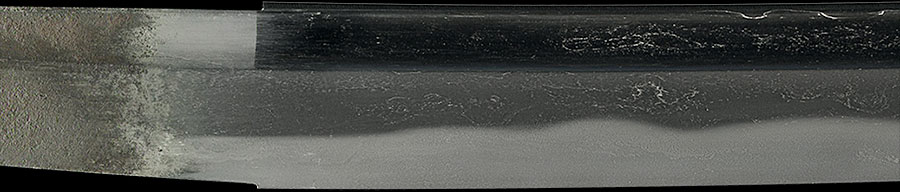
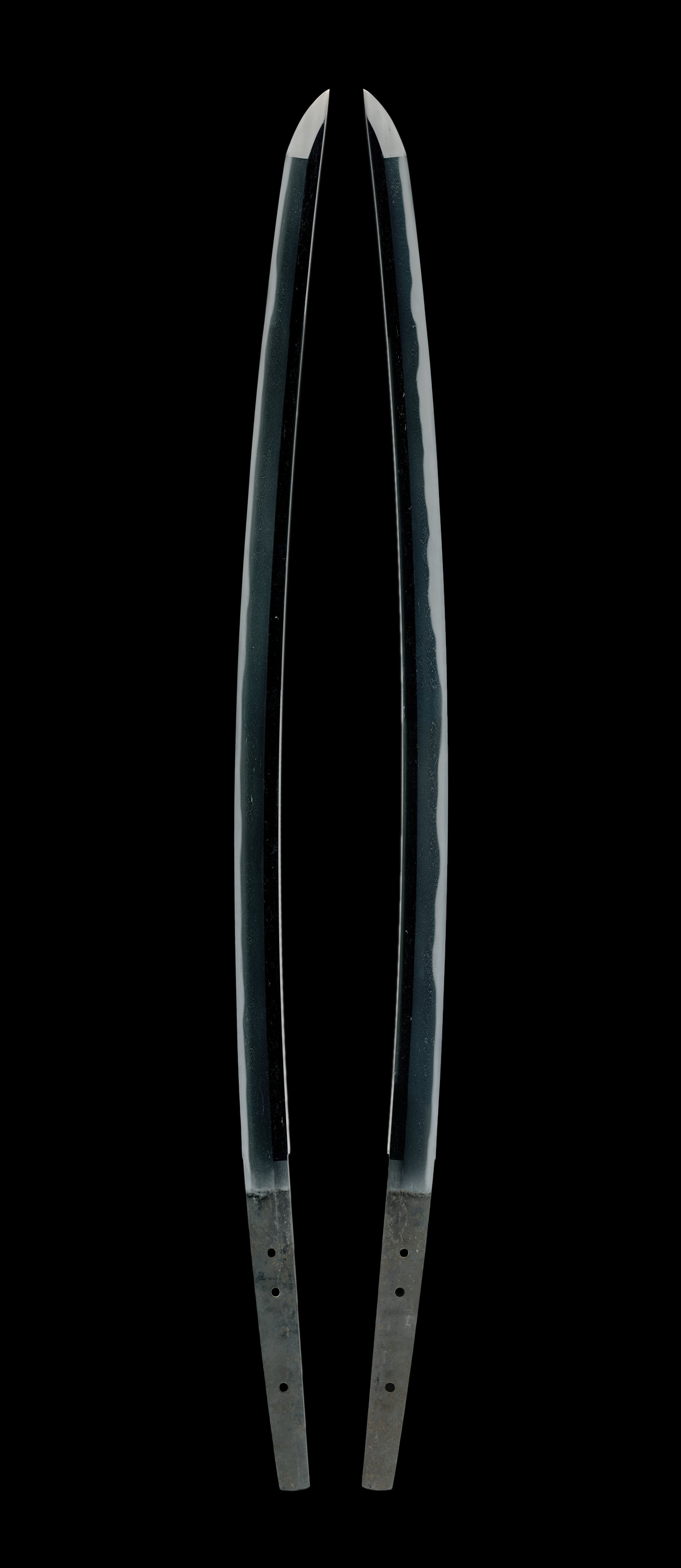
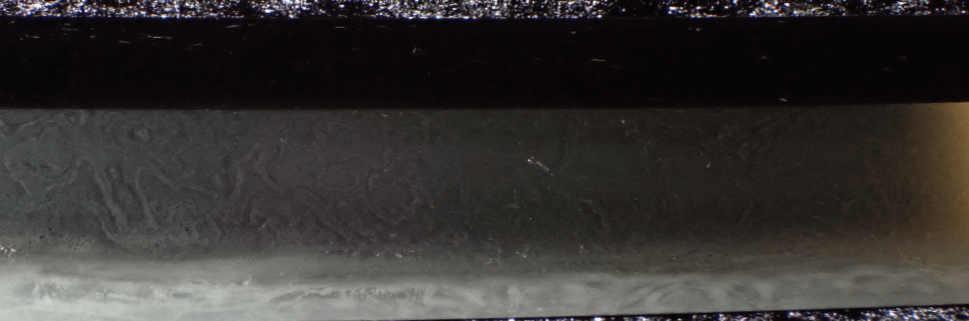
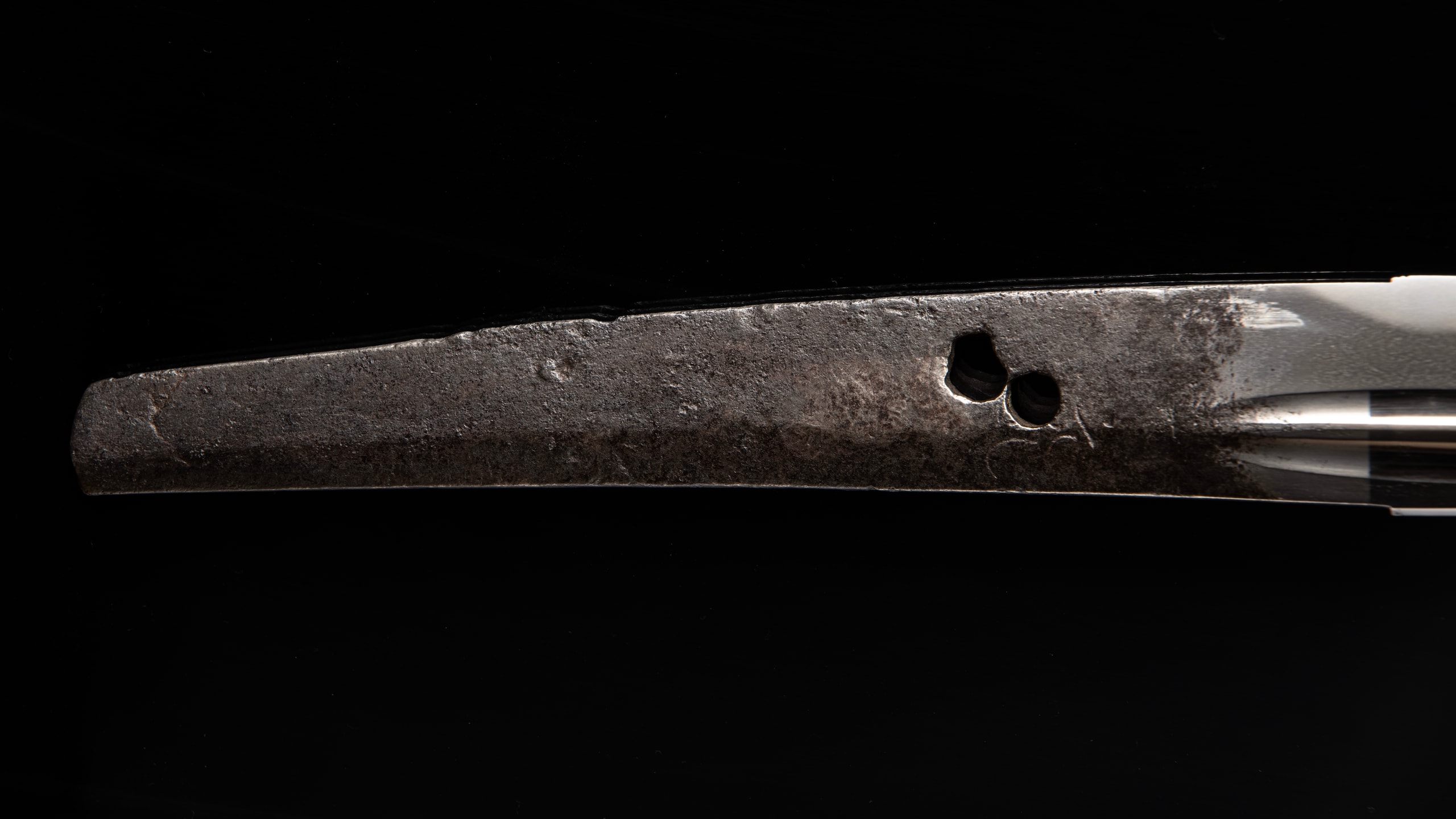
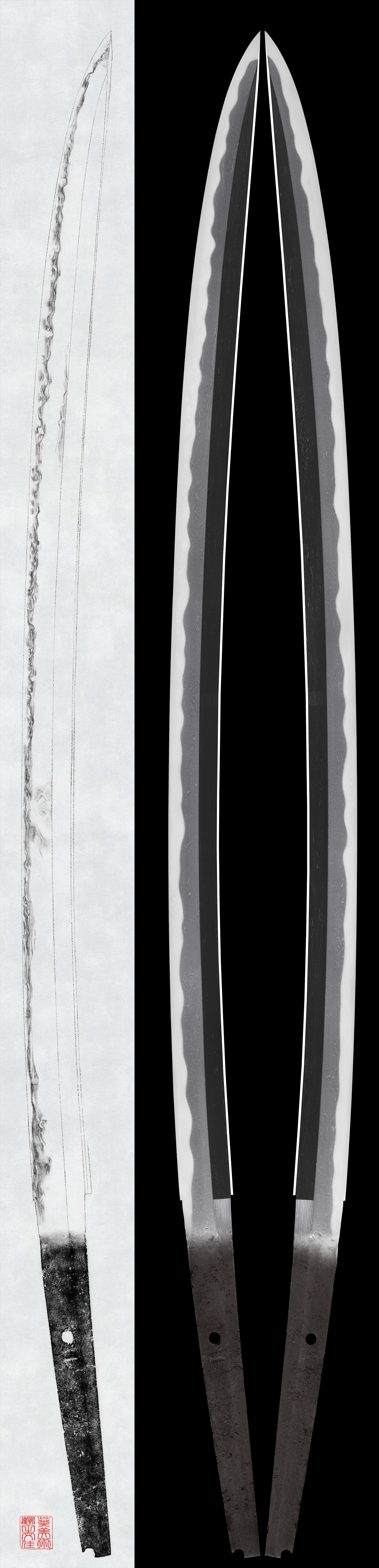
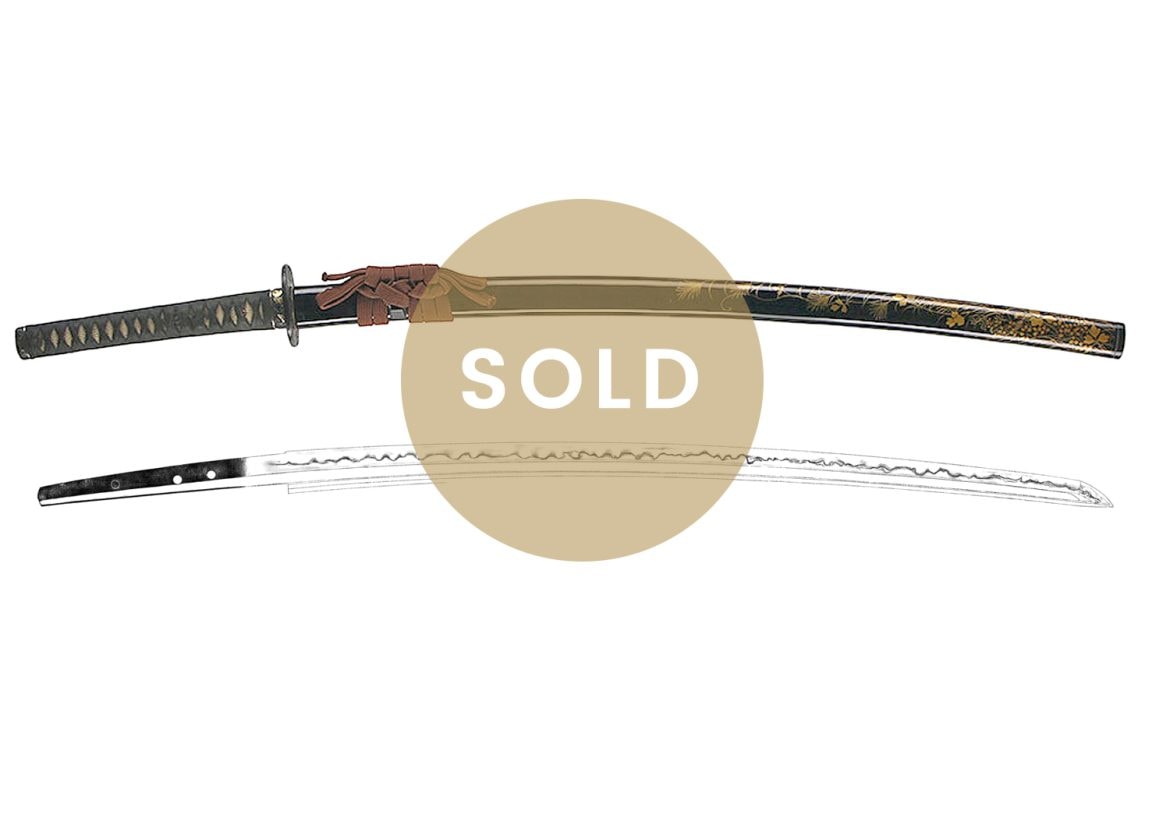
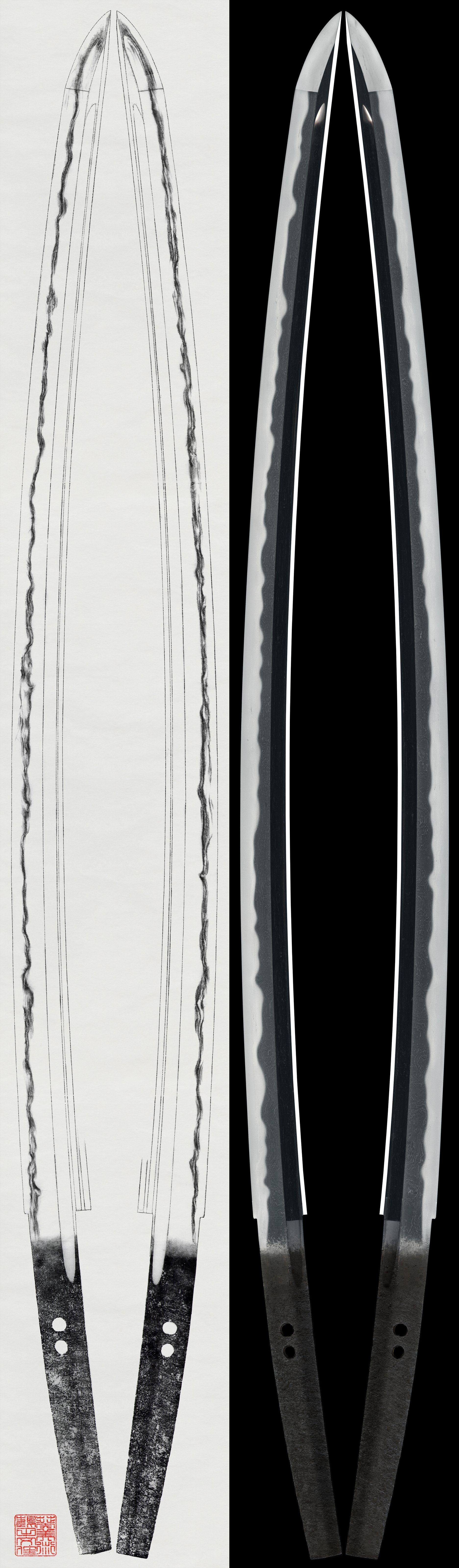
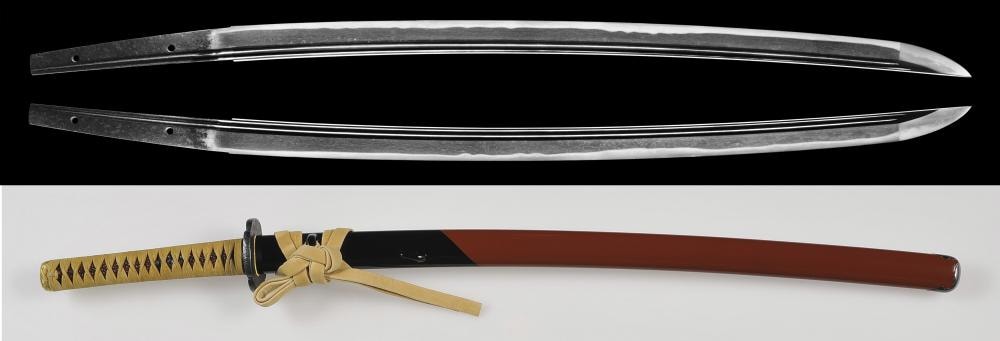
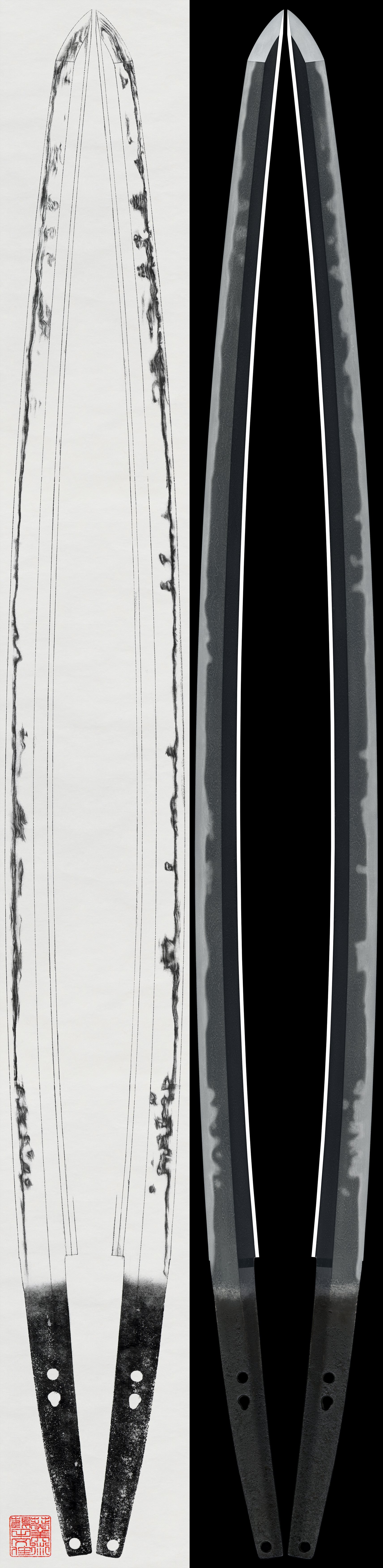
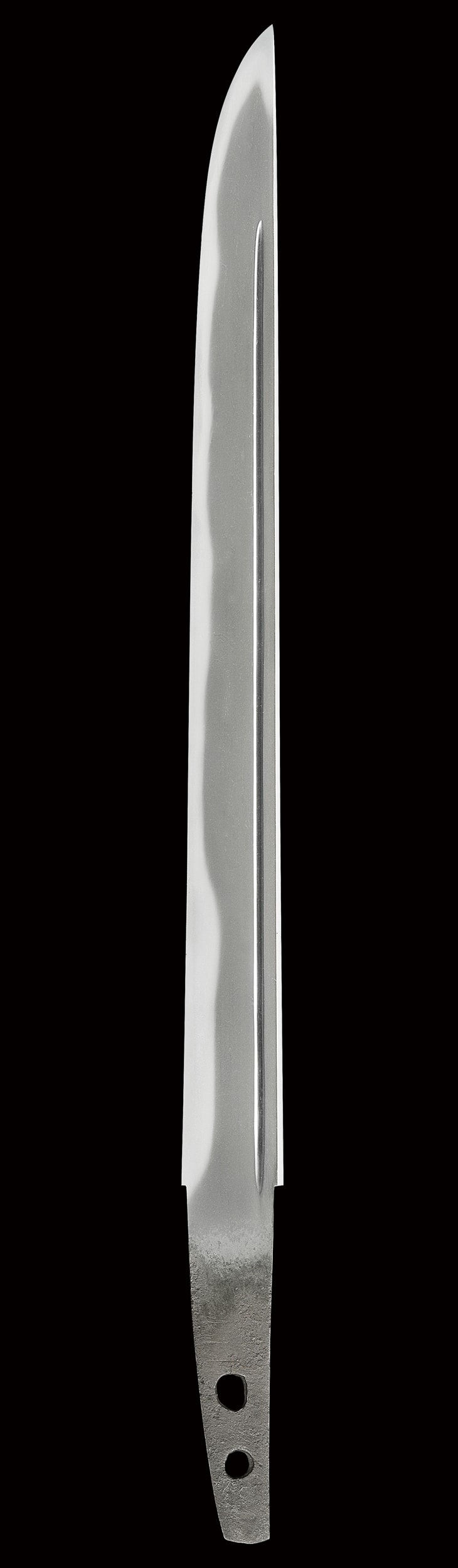
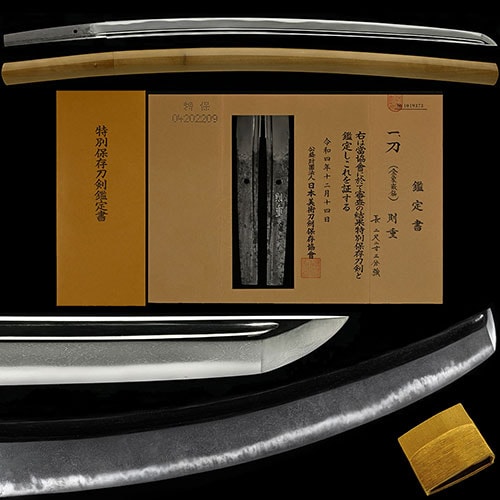
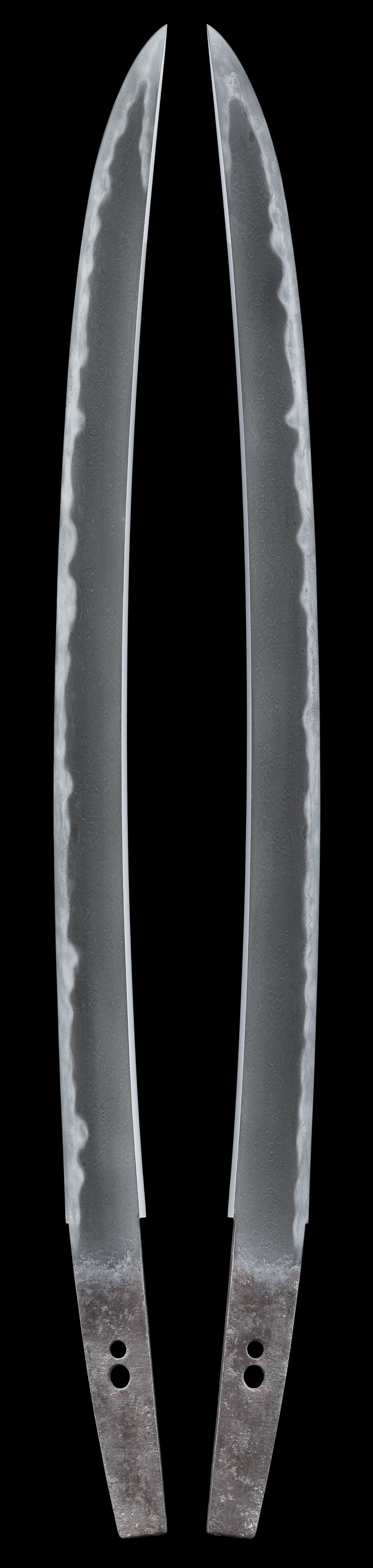
From ancient times, Tamehiro has been praised as one of the three great swordsmiths of the land, alongside Yoshimitsu, Masamune, and Go. He is said to be the son of Go Yoshihiro and studied under Etchu Norishige, making him a famous craftsman. This sword has a wide *mihaba* and a large *kissaki*. The *itame* (*hada*) is mixed with *mokume*, and the *jitetsu* has *jikei* with *jini*. The *hamon* is a large *notare* mixed with *gunome*, with *kinsuji* and *sunagashi*. It is a magnificent sword with vigor, forged in a way that resembles the Soshu school's superior craftsmanship. It has been said since ancient times that Go and ghosts have never been seen. Please enjoy this Tamehiro, reminiscent of Go Yoshihiro and Etchu Norishige.

NihontoWatch MonNihontoWatch
MarketEncyclopediaKantei
Swords›Sōshū-den›Soshu›Tametsugu›Attributed to Tamehisa (son of Go Yoshihiro), (Norishige's student)
katanaNTHK
Soshu Tametsugu

Attributed to Tamehisa (son of Go Yoshihiro), (Norishige's student)

den · Nanbokucho · nagasa 69.9cm · sori 1.8cm

SOLD
Soshu Tametsugu (爲繼) · Nanbokucho2 works for sale →
Katana
Could you name the smith from the blade alone? Today’s kantei →
Soshu Tametsugu — 1 of 16
Soshu Tametsugu — 2 of 16
Soshu Tametsugu — 3 of 16
Soshu Tametsugu — 4 of 16
Soshu Tametsugu — 5 of 16
Soshu Tametsugu — 6 of 16
Soshu Tametsugu — 7 of 16
Soshu Tametsugu — 8 of 16
Soshu Tametsugu — 9 of 16
Soshu Tametsugu — 10 of 16
Soshu Tametsugu — 11 of 16
Soshu Tametsugu — 12 of 16
Soshu Tametsugu — 13 of 16
Soshu Tametsugu — 14 of 16
Soshu Tametsugu — 15 of 16
Soshu Tametsugu — 16 of 16
1 / 16
1 / 16
Soshu Tametsugu — 1 of 16Soshu Tametsugu — 2 of 16Soshu Tametsugu — 3 of 16Soshu Tametsugu — 4 of 16Soshu Tametsugu — 5 of 16Soshu Tametsugu — 6 of 16Soshu Tametsugu — 7 of 16Soshu Tametsugu — 8 of 16Soshu Tametsugu — 9 of 16Soshu Tametsugu — 10 of 16Soshu Tametsugu — 11 of 16Soshu Tametsugu — 12 of 16Soshu Tametsugu — 13 of 16Soshu Tametsugu — 14 of 16Soshu Tametsugu — 15 of 16Soshu Tametsugu — 16 of 16
Soshu Tametsugu (爲繼) · Nanbokucho2 works for sale →
Katana
Could you name the smith from the blade alone? Today’s kantei →
Measurements & details
Smith
Soshu Tametsugu
Type
Katana
School
Soshu
Period
Around 1345–1350(Enbun ND)
Signature
den(5% of this smith's designated works are signed)
Measurements
Nagasa 69.9cmSori 1.8cm
Description

From ancient times, Tamehiro has been praised as one of the three great swordsmiths of the land, alongside Yoshimitsu, Masamune, and Go. He is said to be the son of Go Yoshihiro and studied under Etchu Norishige, making him a famous craftsman. This sword has a wide mihaba and a large kissaki. The itame (hada) is mixed with mokume, and the jitetsu has jikei with jini. The hamon is a large notare mixed with gunome, with kinsuji and sunagashi. It is a magnificent sword with vigor, forged in a way that resembles the Soshu school's superior craftsmanship. It has been said since ancient times that Go and ghosts have never been seen. Please enjoy this Tamehiro, reminiscent of Go Yoshihiro and Etchu Norishige.

About the maker

Tametsugu

爲繼

Mino (Hokurikudo Soshu-den, the Norishige line) · Mino · around 1345-1350

2 pieces on the market now

›

Tametsugu signed his blades Noshu-ju Fujiwara Tametsugu, and that inscription is the key to him. He is transmitted as a pupil of Go Norishige of Gofuku-go in Etchu, in some accounts a son of Go Yoshihiro, who carried the Soshu tradition out of the Hokurikudo and settled in Mino. The published sources are careful with the link: among his extant works there are signatures naming both Echizen and Mino, the published commentary noting that "there are inscriptions for both Echizen and Mino"[[c:1]], while no example at all reads as resident in Etchu, the judges observing that "there is none signed Etchu-ju"[[c:2]]. Because his dated pieces fall in the Joji and Oan years of the later Nanbokucho, two generations below Norishige's late-Kamakura work, the swordbooks treat the Norishige discipleship as a manner received across a generation rather than a bond made at one forge, and find a direct link to Norishige, or to Yoshihiro, hard to sustain on chronology. He is best understood as the Soshu tradition carried north and inland, a Norishige hand resettled among the smiths of Mino.

His characteristic manner is the one the judges name outright: a Norishige-style forging crossed with a Mino temper. The published commentary states it plainly, that his work shows "a Norishige-style forging on which is tempered a Mino-style gunome and pointed togariba, displaying a manner of its own"[[c:3]]. Over a standing itame he sets a notare mixed with gunome into which the pointed togariba of Mino are folded, the nie strong and deep, and above all the sunagashi run with a frequency that is his signature, drawn out long with kinsuji within them. The nioiguchi does not blaze; it tends to subside, a quiet, restrained line, and the steel beneath it darkens. This combination, the wet Norishige notare given the sharp Mino tooth and laid over a dark, nie-laden ji, is what a Tametsugu reads as on sight.

The jigane is the constant. It is itame, frequently mixed with mokume and large grain and flowing toward masame in places, the grain standing and at times opening, with thick ji-nie and chikei entering, and a steel of distinctly northern cast that darkens in tone. The published sources give as the common thread of his authenticated work an itame "that stands and darkens"[[c:4]], a nie-based temper whose nioiguchi subsides, and, as a negative tell, the fact that "there is no suguha"[[c:5]] among the mainstream pieces. Over that jigane the hamon is most often a shallow notare carrying gunome and togariba, with ashi and yo, tobiyaki and yubashiri at the edge on the more active blades; the boshi runs midare-komi with frequent hakikake, turning in a ko-maru or, on the many shortened naginata-naoshi, finishing in a yakizume sweep.

His record divides cleanly into two registers. The great body of it is the o-suriage, unsigned katana attributed to him from style, broad Nanbokucho blades with extended or large kissaki, on which the Norishige character is clearest. Against these stand the rare signed and dated pieces, exceedingly few, headed by an Oan-dated tanto that is a prewar Juyo Bijutsuhin, with a shobu-zukuri naginata-naoshi tachi dated Oan 7 (1374) and an ubu tachi cut Fujiwara Tametsugu saku. The published sources draw the contrast within his own work, noting that the Mino flavor runs the stronger in the signed pieces while the Norishige manner shows more clearly in the mumei attributions, and adding the candid judgment that the signed work can run somewhat coarse while "among the unsigned attributions there are, on the contrary, examples of quite good workmanship"[[c:6]].

What sets him apart is read off his own blades, not borrowed from his master. His is the larger, more billowing notare-midare, and the published commentary distinguishes him from the other Mino Soshu hands by it directly, holding that his work "differs in manner from Shizu and Kaneshige"[[c:7]]. Beside Norishige himself the difference is one of degree and clarity: his hada does not stand as strongly and his chikei are the fewer, the judges remarking on one blade that "the chikei are less conspicuous than in his master Norishige"[[c:8]], and his steel darkens where the Sagami masters' is bright. The breadth of his manner reaches occasionally into other idioms, one shortened katana judged "workmanship in the Yamato Shikkake manner"[[c:9]], a reminder that the provincial Soshu-den he practiced absorbed more than a single line.

For the collector Tametsugu is a Nanbokucho name encountered almost entirely through attribution. He has no National Treasures and no Important Cultural Properties; his record runs instead through the prewar Juyo Bijutsuhin and a long roll of Juyo blades across many sessions, the signed and dated pieces, the documentary core of the name, being the rarest of all. The published sources hold those few signed works to be of exceptionally high value precisely because so little survives, and longer signed examples are scarcer still. Owner records are thin: a pair of his blades is preserved at Atsuta Jingu, the Oan tanto passed through the prewar collection of Akaboshi Tetsuma, and most current whereabouts go unrecorded. The mumei katana attributed to him do reach the market from time to time, a den-Tametsugu appearing among Juyo Soshu-den blades with some regularity, but a signed and dated Noshu-ju Fujiwara Tametsugu is a different order of thing, the document that fixes the name, and a privately held example is among the more uncommon encounters in the field. One such mumei katana the published commentary calls outright "a quintessential example of Tametsugu's work"[[c:10]], which is the best a collector can realistically hope to meet.


Historical importance

Where Tametsugu stands among comparable artisans: across all of nihontō, and within tradition, era, and period. The tiers (Foremost · Leading · Major · Notable) weigh official designations from the NBTHK and Japan's Agency for Cultural Affairs, together with historical honors of lasting repute such as the Sansaku and Meibutsu-chō.

随一
Foremost
屈指
Leading
有数
Major
著名
Notable

Select a lens to see how it's measured.

Designation record
76 designated works
Jūyō Bijutsuhin
1
Jūyō
75
2 works by Tametsugu on the market→
Tametsugu — full profileMino (Hokurikudo Soshu-den, the Norishige line) school

Study this maker →

About the school

Soshu

相州

Soshu-den · Sagami

Phase: Sōshū相州· 1288–1385

45 pieces on the market now

›

Steel "bright and clear," with thick ji-nie and chikei entering frequently, is the constant the NBTHK returns to in nearly every blade of this phase, and it marks the moment the Soshu tradition reached its summit in Sagami. " The sampled blades cluster around the masters who carried this manner forward: Go Yoshihiro of Matsukura-go in Etchu, counted among the Masamune Juttetsu and represented here by numerous ō-suriage katana, and the Sagami smiths Hiromitsu and Akihiro, who stand "next after Sadamune" and extend the phase with dated works running from Enbun 2 (1357) to Shitoku 4 (1387). The window spans late Kamakura proportions through the broad Enbun-Joji forms of the fourteenth century. The phase reads as itame-hada mixed with mokume, often tending toward standing or flowing grain, carrying very fine ji-nie laid thickly with chikei threaded densely throughout; over this the hamon is founded on notare mixed with gunome, ko-gunome, and a chōji flavor, with deep nioi, thick nie, and kinsuji and sunagashi running well, the nioiguchi bright and clear. This is precisely the distance the school traveled from its Awataguchi roots: where that foundation held a tight, restrained suguha, the Go katana break into wide yakihaba, nie-kuzure, and yubashiri (one setsumei records nie that "gathers, thickens, and congeals"), with a bōshi tempered so deeply it becomes ichimai and sweeps in hakikake. Go himself sits one step calmer than Masamune and Norishige, his chikei and kinsuji more reserved but his ji and ha a step brighter, the hada often masame-inclined; one wide-suguha example with ko-midare shows how close the quiet end of his range stays to the Kunimitsu manner.

" Here the classic phase divides from the later Sue-Soshu continuation, whose Muromachi smiths inherited the vocabulary without the depth of nie and clarity of steel recorded in these blades. A collector separates this phase because it holds the recognized masters at full strength. Go achieved the highest designation through the unmistakable brightness of his ji-ha alone, despite no surviving signed works, and the sample carries the weight of that reputation: the meibutsu Nakagawa-Go owned by a retainer of Oda Nobunaga and later the Tokugawa house, the "Kabuto-giri" Go inlaid by Hon'ami appraisal, the Okubo-Go transmitted in the Odawara Okubo family, and blades held by the Uwajima Date and Chikuzen Kuroda houses, with names recorded in the Kyoho Meibutsu-cho. The kantei points are concrete and repeated: Go's active nie-ashi, masame tendency, and ichimai bōshi; Akihiro's dated five-character "Soshu Akihiro" signatures, whose shift from full to abbreviated dating after Eiwa lets a viewer place a blade in time; and the near-indistinguishability of Hiromitsu and Akihiro, parsed only by scale and the prominence of dango-chōji. These are the works that define the Soshu apex, against which both the Awataguchi foundation and the Sue-Soshu aftermath are measured. Learn more →

34 recorded smiths841 designated works
Leading smiths
SmithEraDesignated
Masamune正宗1288-129384
Sadamune貞宗1329-133186
Go Yoshihiro義弘1299-130254
Akihiro秋廣1346-137027
Kunimitsu國光1293-132269
Explore the Soshu school →

Historical context

Sōshū in the Nanbokuchō period

›

Kamakura fell in 1333, but the school’s greatest era followed: Sadamune working at his teacher’s standard, Hiromitsu and Akihiro spilling hitatsura over the whole blade, and the Sōshū manner spreading with the armies until it became, for a time, a national style.

Sōshū in the Nanbokuchō period →

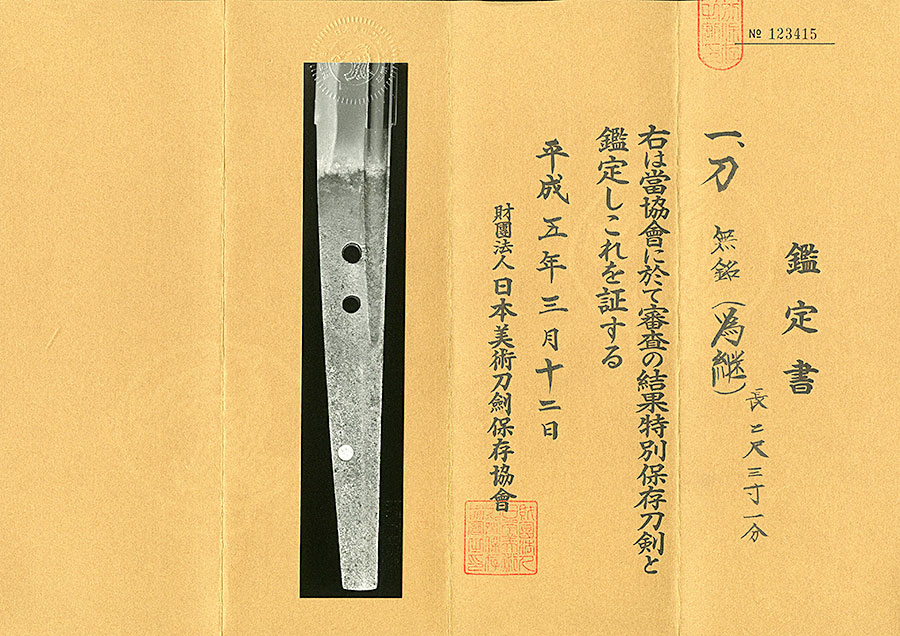
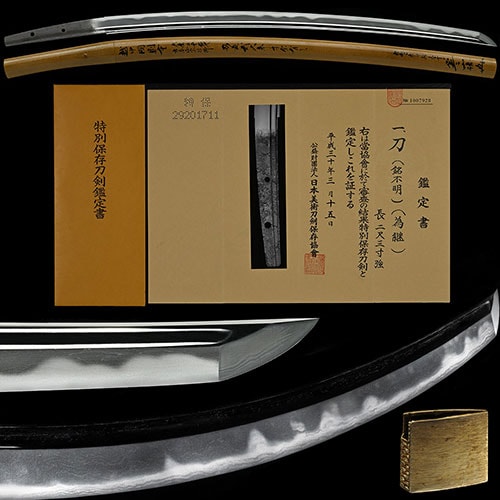
NTHK Appraisal
Kanteishō鑑定書
NTHK Appraisal Certificate
›

The NTHK’s principal certificate, issued for a blade of considerable quality. It confirms a genuine signature, or, for an unsigned (mumei) work, records the judges’ attribution to a smith or school. The paper carries a detailed worksheet with a numerical point score.

About the NTHK›

The NTHK (Nihon Tōken Hozon Kai, the Society for the Preservation of the Japanese Sword) is the oldest of Japan’s sword-appraisal bodies, founded in 1910, decades before the NBTHK. After the death of its long-serving head it divided into two successor societies, the NTHK and the NTHK-NPO, both of which continue to hold shinsa. NTHK certificates are known for a detailed worksheet that records a numerical point score alongside the judges’ written opinion, and the society is especially respected for its attribution of unsigned (mumei) work.

Seller
N
Nipponto
Established 1953 · 73 yrs on the market
🇯🇵Ships from Japan
›
✓Verified dealernipponto.co.jp
✓Ships worldwide✓English supportPayPalCredit card
Return policy

For returns due to customer circumstances, the cost is the customer's responsibility. For returns due to our mis-shipment or a defective item, we bear the cost.

View all of Nipponto’s listings→View this item on the dealer’s site→

More works by Soshu Tametsugu

View all →
Toukentakarado
Tokuho
Katana - Tokuho - by Soshu Tametsugu - Mumei Attributed to TametsuguKatana - Tokuho - by Soshu Tametsugu - Mumei Attributed to Tametsugu

Katana

BySoshu Tametsugu
¥1,200,000
Nihonto Australia
Jūyō
Jūyō - by Soshu Tametsugu - Tametsugu Juyo Token KatanaJūyō - by Soshu Tametsugu - Tametsugu Juyo Token Katana

Tametsugu Juyo Token Katana

BySoshu Tametsugu
Ask

Previously sold by Soshu Tametsugu

View all →
Mandarin Mansion
Tokuho
Katana - Tokuho - by Soshu Tametsugu - Den TametsuguKatana - Tokuho - by Soshu Tametsugu - Den Tametsugu
Sold

Katana

BySoshu Tametsugu
SOLD
Nipponto
Hozon
Wakizashi - Hozon - by Soshu Tametsugu - Mumei Wakizashi attributed to Tametsugu (traditionally attributed to Go)Wakizashi - Hozon - by Soshu Tametsugu - Mumei Wakizashi attributed to Tametsugu (traditionally attributed to Go)
Sold

Wakizashi

BySoshu Tametsugu
SOLD
Aoi Art
Katana - by Soshu Tametsugu - Mumei (Unsigned) (Attributed to Tametsugu) - NBTHK Tokubetsu Hozon TokenKatana - by Soshu Tametsugu - Mumei (Unsigned) (Attributed to Tametsugu) - NBTHK Tokubetsu Hozon Token
Sold

Katana

BySoshu Tametsugu
SOLD
Nihonto.com
Jūyō
Katana - Jūyō - by Soshu Tametsugu - Katana by Echizen TametsuguKatana - Jūyō - by Soshu Tametsugu - Katana by Echizen Tametsugu
Sold

Katana

BySoshu Tametsugu
SOLD
Aoi Art
Jūyō
Tachi - Jūyō - by Soshu Tametsugu - Mumei (Attributed to Tametsugu)Tachi - Jūyō - by Soshu Tametsugu - Mumei (Attributed to Tametsugu)
Sold

Tachi

BySoshu Tametsugu
SOLD
Shoubudou
Jūyō
Katana - Jūyō - by Soshu Tametsugu - Mumei (Attributed to Tametsugu)Katana - Jūyō - by Soshu Tametsugu - Mumei (Attributed to Tametsugu)
Sold

Katana

BySoshu Tametsugu
SOLD
Kusanagi
Tokuho
Katana - Tokuho - by Soshu Tametsugu - Nanbokucho period Soshu-den "Tametsugu" Kin-zogan, Tokubetsu Hozon Token, Tokubetsu Kicho Token, Gassan Sadakazu zogan, Kanzan sayagaki.Katana - Tokuho - by Soshu Tametsugu - Nanbokucho period Soshu-den "Tametsugu" Kin-zogan, Tokubetsu Hozon Token, Tokubetsu Kicho Token, Gassan Sadakazu zogan, Kanzan sayagaki.
Sold

Katana

BySoshu Tametsugu
SOLD
Eirakudo
Tokuho
Katana - Tokuho - by Soshu Tametsugu - Tametsugu - Tokubetsu Hozon TokenKatana - Tokuho - by Soshu Tametsugu - Tametsugu - Tokubetsu Hozon Token
Sold

Katana

BySoshu Tametsugu
SOLD

More from the Soshu school

View all →
Aoi Art
Tokuho
Katana - Tokuho - by Gō Yoshihiro - Mumei (Unsigned) Den Go YoshihiroKatana - Tokuho - by Gō Yoshihiro - Mumei (Unsigned) Den Go Yoshihiro

Katana

ByGō Yoshihiro
¥35,000,000
Tsuruginoya
Tokujū
Katana - Tokuju - by Soshu Yukimitsu - Soshu YukimitsuKatana - Tokuju - by Soshu Yukimitsu - Soshu Yukimitsu

Katana

BySoshu Yukimitsu
Ask
Samurai Nippon
Jūyō
Tanto - Jūyō - by Soshu Yukimitsu - Soshu Yukimitsu (Ubu Mumei)Tanto - Jūyō - by Soshu Yukimitsu - Soshu Yukimitsu (Ubu Mumei)

Tantō

BySoshu Yukimitsu
¥6,700,000
Mandarin Mansion
Jūyō
Tachi - Jūyō - by Soshu Yukimitsu - Juyo Soshu Yukimitsu TachiTachi - Jūyō - by Soshu Yukimitsu - Juyo Soshu Yukimitsu Tachi

Tachi

BySoshu Yukimitsu
Ask
Choshuya
Jūyō
Tanto - Jūyō - by Soshu Norishige - Unsigned (Ubu-nakago) NorishigeTanto - Jūyō - by Soshu Norishige - Unsigned (Ubu-nakago) Norishige

Tantō

BySoshu Norishige
¥6,500,000
Eirakudo
Tokuho
Katana - Tokuho - by Shintogo Kunimitsu - Shintogo Kunimitsu - Tokubetsu Hozon TokenKatana - Tokuho - by Shintogo Kunimitsu - Shintogo Kunimitsu - Tokubetsu Hozon Token

Katana

ByShintogo Kunimitsu
¥7,500,000
Eirakudo
Tokuho
Katana - Tokuho - by Soshu Norishige - Norishige - Tokubetsu Hozon TokenKatana - Tokuho - by Soshu Norishige - Norishige - Tokubetsu Hozon Token

Katana

BySoshu Norishige
¥6,500,000
Eirakudo
Jūyō
Tanto - Jūyō - by Soshu Yukimitsu - Sosyu Yukimitsu Tanto Juyo TokenTanto - Jūyō - by Soshu Yukimitsu - Sosyu Yukimitsu Tanto Juyo Token

Tantō

BySoshu Yukimitsu
Ask

More from the Sōshū tradition

View all →
Katanahanbai
Tokuho
Tanto - Tokuho - by Shimada Yoshisuke - Shimada GisukeTanto - Tokuho - by Shimada Yoshisuke - Shimada Gisuke

Tantō

ByShimada Yoshisuke
¥750,000
Hyozaemon
Hozon
Katana - Hozon - by Wakasa Fuyuhiro - Fuyuhiro KatanaKatana - Hozon - by Wakasa Fuyuhiro - Fuyuhiro Katana

Katana

ByWakasa Fuyuhiro
¥680,000
World Seiyudo
Tokuho
Wakizashi - Tokuho - by Sue-Soshu Masahiro - Mumei Soshu Masahiro with NBTHK Tokubetsu Hozon Token and Tosogu CertificatesWakizashi - Tokuho - by Sue-Soshu Masahiro - Mumei Soshu Masahiro with NBTHK Tokubetsu Hozon Token and Tosogu Certificates

Wakizashi

BySue-Soshu Masahiro
¥2,500,000
Token Hasegawa
Hozon
Tanto - Hozon - by Wakasa Fuyuhiro - Koto Tanto: Mumei Fuyuhiro - NBTHK Hozon Token, with Koshirae (20.2cm)Tanto - Hozon - by Wakasa Fuyuhiro - Koto Tanto: Mumei Fuyuhiro - NBTHK Hozon Token, with Koshirae (20.2cm)

Tantō

ByWakasa Fuyuhiro
¥253,000
Choshuya
Tokuho
Katana - Tokuho - by Sue-Soshu Tsunahiro - Soshu ju Tsunahiro (The founder)Katana - Tokuho - by Sue-Soshu Tsunahiro - Soshu ju Tsunahiro (The founder)

Katana

BySue-Soshu Tsunahiro
Ask
Choshuya
Tokuho
Katana - Tokuho - by Soshu Norishige - Unsigned (O-suriage) NorishigeKatana - Tokuho - by Soshu Norishige - Unsigned (O-suriage) Norishige

Katana

BySoshu Norishige
Ask
Onihonto
Tokuho
Tanto - Tokuho - by Sa Yasuyoshi - YasuyoshiTanto - Tokuho - by Sa Yasuyoshi - Yasuyoshi

Tantō

BySa Yasuyoshi
¥16,000
Ayakashi
Hozon
Tanto - Hozon - by Muramasa - Tanto by MuramasaTanto - Hozon - by Muramasa - Tanto by Muramasa

Tantō

ByMuramasa
¥7,500,000

Swords

  • Katana
  • Wakizashi
  • Tantō
  • Tachi
  • Naginata
  • Yari
  • Japanese Swords
  • Samurai Swords

Fittings

  • Tsuba
  • Fuchi-Kashira
  • Kozuka
  • Menuki
  • Sword Guards (Tsuba)

Armor

  • Kabuto
  • Samurai Armor
  • All Samurai Armor

By Certification

  • Tokujū
  • Jūyō
  • Tokuho
  • Hozon

Resources

  • Dealer Directory
  • Artist Directory
  • The Daily Kantei
  • Glossary
  • Browse All
Nihontowatch© 2026
TermsPrivacyCookiesAbout
Sold

Description

From ancient times, Tamehiro has been praised as one of the three great swordsmiths of the land, alongside Yoshimitsu, Masamune, and Go. He is said to be the son of Go Yoshihiro and studied under Etchu Norishige, making him a famous craftsman. This sword has a wide *mihaba* and a large *kissaki*. The *itame* (*hada*) is mixed with *mokume*, and the *jitetsu* has *jikei* with *jini*. The *hamon* is a large *notare* mixed with *gunome*, with *kinsuji* and *sunagashi*. It is a magnificent sword with vigor, forged in a way that resembles the Soshu school's superior craftsmanship. It has been said since ancient times that Go and ghosts have never been seen. Please enjoy this Tamehiro, reminiscent of Go Yoshihiro and Etchu Norishige.

NihontoWatch MonNihontoWatch
MarketEncyclopediaKantei
Swords›Sōshū-den›Soshu›Tametsugu›Attributed to Tamehisa (son of Go Yoshihiro), (Norishige's student)
katanaNTHK
Soshu Tametsugu

Attributed to Tamehisa (son of Go Yoshihiro), (Norishige's student)

den · Nanbokucho · nagasa 69.9cm · sori 1.8cm

SOLD
Soshu Tametsugu (爲繼) · Nanbokucho2 works for sale →
Katana
Could you name the smith from the blade alone? Today’s kantei →
Soshu Tametsugu — 1 of 16
Soshu Tametsugu — 2 of 16
Soshu Tametsugu — 3 of 16
Soshu Tametsugu — 4 of 16
Soshu Tametsugu — 5 of 16
Soshu Tametsugu — 6 of 16
Soshu Tametsugu — 7 of 16
Soshu Tametsugu — 8 of 16
Soshu Tametsugu — 9 of 16
Soshu Tametsugu — 10 of 16
Soshu Tametsugu — 11 of 16
Soshu Tametsugu — 12 of 16
Soshu Tametsugu — 13 of 16
Soshu Tametsugu — 14 of 16
Soshu Tametsugu — 15 of 16
Soshu Tametsugu — 16 of 16
1 / 16
1 / 16
Soshu Tametsugu — 1 of 16Soshu Tametsugu — 2 of 16Soshu Tametsugu — 3 of 16Soshu Tametsugu — 4 of 16Soshu Tametsugu — 5 of 16Soshu Tametsugu — 6 of 16Soshu Tametsugu — 7 of 16Soshu Tametsugu — 8 of 16Soshu Tametsugu — 9 of 16Soshu Tametsugu — 10 of 16Soshu Tametsugu — 11 of 16Soshu Tametsugu — 12 of 16Soshu Tametsugu — 13 of 16Soshu Tametsugu — 14 of 16Soshu Tametsugu — 15 of 16Soshu Tametsugu — 16 of 16
Soshu Tametsugu (爲繼) · Nanbokucho2 works for sale →
Katana
Could you name the smith from the blade alone? Today’s kantei →
Measurements & details
Smith
Soshu Tametsugu
Type
Katana
School
Soshu
Period
Around 1345–1350(Enbun ND)
Signature
den(5% of this smith's designated works are signed)
Measurements
Nagasa 69.9cmSori 1.8cm
Description

From ancient times, Tamehiro has been praised as one of the three great swordsmiths of the land, alongside Yoshimitsu, Masamune, and Go. He is said to be the son of Go Yoshihiro and studied under Etchu Norishige, making him a famous craftsman. This sword has a wide mihaba and a large kissaki. The itame (hada) is mixed with mokume, and the jitetsu has jikei with jini. The hamon is a large notare mixed with gunome, with kinsuji and sunagashi. It is a magnificent sword with vigor, forged in a way that resembles the Soshu school's superior craftsmanship. It has been said since ancient times that Go and ghosts have never been seen. Please enjoy this Tamehiro, reminiscent of Go Yoshihiro and Etchu Norishige.

About the maker

Tametsugu

爲繼

Mino (Hokurikudo Soshu-den, the Norishige line) · Mino · around 1345-1350

2 pieces on the market now

›

Tametsugu signed his blades Noshu-ju Fujiwara Tametsugu, and that inscription is the key to him. He is transmitted as a pupil of Go Norishige of Gofuku-go in Etchu, in some accounts a son of Go Yoshihiro, who carried the Soshu tradition out of the Hokurikudo and settled in Mino. The published sources are careful with the link: among his extant works there are signatures naming both Echizen and Mino, the published commentary noting that "there are inscriptions for both Echizen and Mino"[[c:1]], while no example at all reads as resident in Etchu, the judges observing that "there is none signed Etchu-ju"[[c:2]]. Because his dated pieces fall in the Joji and Oan years of the later Nanbokucho, two generations below Norishige's late-Kamakura work, the swordbooks treat the Norishige discipleship as a manner received across a generation rather than a bond made at one forge, and find a direct link to Norishige, or to Yoshihiro, hard to sustain on chronology. He is best understood as the Soshu tradition carried north and inland, a Norishige hand resettled among the smiths of Mino.

His characteristic manner is the one the judges name outright: a Norishige-style forging crossed with a Mino temper. The published commentary states it plainly, that his work shows "a Norishige-style forging on which is tempered a Mino-style gunome and pointed togariba, displaying a manner of its own"[[c:3]]. Over a standing itame he sets a notare mixed with gunome into which the pointed togariba of Mino are folded, the nie strong and deep, and above all the sunagashi run with a frequency that is his signature, drawn out long with kinsuji within them. The nioiguchi does not blaze; it tends to subside, a quiet, restrained line, and the steel beneath it darkens. This combination, the wet Norishige notare given the sharp Mino tooth and laid over a dark, nie-laden ji, is what a Tametsugu reads as on sight.

The jigane is the constant. It is itame, frequently mixed with mokume and large grain and flowing toward masame in places, the grain standing and at times opening, with thick ji-nie and chikei entering, and a steel of distinctly northern cast that darkens in tone. The published sources give as the common thread of his authenticated work an itame "that stands and darkens"[[c:4]], a nie-based temper whose nioiguchi subsides, and, as a negative tell, the fact that "there is no suguha"[[c:5]] among the mainstream pieces. Over that jigane the hamon is most often a shallow notare carrying gunome and togariba, with ashi and yo, tobiyaki and yubashiri at the edge on the more active blades; the boshi runs midare-komi with frequent hakikake, turning in a ko-maru or, on the many shortened naginata-naoshi, finishing in a yakizume sweep.

His record divides cleanly into two registers. The great body of it is the o-suriage, unsigned katana attributed to him from style, broad Nanbokucho blades with extended or large kissaki, on which the Norishige character is clearest. Against these stand the rare signed and dated pieces, exceedingly few, headed by an Oan-dated tanto that is a prewar Juyo Bijutsuhin, with a shobu-zukuri naginata-naoshi tachi dated Oan 7 (1374) and an ubu tachi cut Fujiwara Tametsugu saku. The published sources draw the contrast within his own work, noting that the Mino flavor runs the stronger in the signed pieces while the Norishige manner shows more clearly in the mumei attributions, and adding the candid judgment that the signed work can run somewhat coarse while "among the unsigned attributions there are, on the contrary, examples of quite good workmanship"[[c:6]].

What sets him apart is read off his own blades, not borrowed from his master. His is the larger, more billowing notare-midare, and the published commentary distinguishes him from the other Mino Soshu hands by it directly, holding that his work "differs in manner from Shizu and Kaneshige"[[c:7]]. Beside Norishige himself the difference is one of degree and clarity: his hada does not stand as strongly and his chikei are the fewer, the judges remarking on one blade that "the chikei are less conspicuous than in his master Norishige"[[c:8]], and his steel darkens where the Sagami masters' is bright. The breadth of his manner reaches occasionally into other idioms, one shortened katana judged "workmanship in the Yamato Shikkake manner"[[c:9]], a reminder that the provincial Soshu-den he practiced absorbed more than a single line.

For the collector Tametsugu is a Nanbokucho name encountered almost entirely through attribution. He has no National Treasures and no Important Cultural Properties; his record runs instead through the prewar Juyo Bijutsuhin and a long roll of Juyo blades across many sessions, the signed and dated pieces, the documentary core of the name, being the rarest of all. The published sources hold those few signed works to be of exceptionally high value precisely because so little survives, and longer signed examples are scarcer still. Owner records are thin: a pair of his blades is preserved at Atsuta Jingu, the Oan tanto passed through the prewar collection of Akaboshi Tetsuma, and most current whereabouts go unrecorded. The mumei katana attributed to him do reach the market from time to time, a den-Tametsugu appearing among Juyo Soshu-den blades with some regularity, but a signed and dated Noshu-ju Fujiwara Tametsugu is a different order of thing, the document that fixes the name, and a privately held example is among the more uncommon encounters in the field. One such mumei katana the published commentary calls outright "a quintessential example of Tametsugu's work"[[c:10]], which is the best a collector can realistically hope to meet.

Historical importance

Where Tametsugu stands among comparable artisans: across all of nihontō, and within tradition, era, and period. The tiers (Foremost · Leading · Major · Notable) weigh official designations from the NBTHK and Japan's Agency for Cultural Affairs, together with historical honors of lasting repute such as the Sansaku and Meibutsu-chō.

随一
Foremost
屈指
Leading
有数
Major
著名
Notable

Select a lens to see how it's measured.

Designation record
76 designated works
Jūyō Bijutsuhin
1
Jūyō
75
2 works by Tametsugu on the market→
Tametsugu — full profileMino (Hokurikudo Soshu-den, the Norishige line) school

Study this maker →

About the school

Soshu

相州

Soshu-den · Sagami

Phase: Sōshū相州· 1288–1385

45 pieces on the market now

›

Steel "bright and clear," with thick ji-nie and chikei entering frequently, is the constant the NBTHK returns to in nearly every blade of this phase, and it marks the moment the Soshu tradition reached its summit in Sagami. " The sampled blades cluster around the masters who carried this manner forward: Go Yoshihiro of Matsukura-go in Etchu, counted among the Masamune Juttetsu and represented here by numerous ō-suriage katana, and the Sagami smiths Hiromitsu and Akihiro, who stand "next after Sadamune" and extend the phase with dated works running from Enbun 2 (1357) to Shitoku 4 (1387). The window spans late Kamakura proportions through the broad Enbun-Joji forms of the fourteenth century. The phase reads as itame-hada mixed with mokume, often tending toward standing or flowing grain, carrying very fine ji-nie laid thickly with chikei threaded densely throughout; over this the hamon is founded on notare mixed with gunome, ko-gunome, and a chōji flavor, with deep nioi, thick nie, and kinsuji and sunagashi running well, the nioiguchi bright and clear. This is precisely the distance the school traveled from its Awataguchi roots: where that foundation held a tight, restrained suguha, the Go katana break into wide yakihaba, nie-kuzure, and yubashiri (one setsumei records nie that "gathers, thickens, and congeals"), with a bōshi tempered so deeply it becomes ichimai and sweeps in hakikake. Go himself sits one step calmer than Masamune and Norishige, his chikei and kinsuji more reserved but his ji and ha a step brighter, the hada often masame-inclined; one wide-suguha example with ko-midare shows how close the quiet end of his range stays to the Kunimitsu manner.

" Here the classic phase divides from the later Sue-Soshu continuation, whose Muromachi smiths inherited the vocabulary without the depth of nie and clarity of steel recorded in these blades. A collector separates this phase because it holds the recognized masters at full strength. Go achieved the highest designation through the unmistakable brightness of his ji-ha alone, despite no surviving signed works, and the sample carries the weight of that reputation: the meibutsu Nakagawa-Go owned by a retainer of Oda Nobunaga and later the Tokugawa house, the "Kabuto-giri" Go inlaid by Hon'ami appraisal, the Okubo-Go transmitted in the Odawara Okubo family, and blades held by the Uwajima Date and Chikuzen Kuroda houses, with names recorded in the Kyoho Meibutsu-cho. The kantei points are concrete and repeated: Go's active nie-ashi, masame tendency, and ichimai bōshi; Akihiro's dated five-character "Soshu Akihiro" signatures, whose shift from full to abbreviated dating after Eiwa lets a viewer place a blade in time; and the near-indistinguishability of Hiromitsu and Akihiro, parsed only by scale and the prominence of dango-chōji. These are the works that define the Soshu apex, against which both the Awataguchi foundation and the Sue-Soshu aftermath are measured. Learn more →

34 recorded smiths841 designated works
Leading smiths
SmithEraDesignated
Masamune正宗1288-129384
Sadamune貞宗1329-133186
Go Yoshihiro義弘1299-130254
Akihiro秋廣1346-137027
Kunimitsu國光1293-132269
Explore the Soshu school →

Historical context

Sōshū in the Nanbokuchō period

›

Kamakura fell in 1333, but the school’s greatest era followed: Sadamune working at his teacher’s standard, Hiromitsu and Akihiro spilling hitatsura over the whole blade, and the Sōshū manner spreading with the armies until it became, for a time, a national style.

Sōshū in the Nanbokuchō period →

NTHK Appraisal
Kanteishō鑑定書
NTHK Appraisal Certificate
›

The NTHK’s principal certificate, issued for a blade of considerable quality. It confirms a genuine signature, or, for an unsigned (mumei) work, records the judges’ attribution to a smith or school. The paper carries a detailed worksheet with a numerical point score.

About the NTHK›

The NTHK (Nihon Tōken Hozon Kai, the Society for the Preservation of the Japanese Sword) is the oldest of Japan’s sword-appraisal bodies, founded in 1910, decades before the NBTHK. After the death of its long-serving head it divided into two successor societies, the NTHK and the NTHK-NPO, both of which continue to hold shinsa. NTHK certificates are known for a detailed worksheet that records a numerical point score alongside the judges’ written opinion, and the society is especially respected for its attribution of unsigned (mumei) work.

Seller
N
Nipponto
Established 1953 · 73 yrs on the market
🇯🇵Ships from Japan
›
✓Verified dealernipponto.co.jp
✓Ships worldwide✓English supportPayPalCredit card
Return policy

For returns due to customer circumstances, the cost is the customer's responsibility. For returns due to our mis-shipment or a defective item, we bear the cost.
View all of Nipponto’s listings→View this item on the dealer’s site→

More works by Soshu Tametsugu

View all →
Toukentakarado
Tokuho
Katana - Tokuho - by Soshu Tametsugu - Mumei Attributed to TametsuguKatana - Tokuho - by Soshu Tametsugu - Mumei Attributed to Tametsugu

Katana

BySoshu Tametsugu
¥1,200,000
Nihonto Australia
Jūyō
Jūyō - by Soshu Tametsugu - Tametsugu Juyo Token KatanaJūyō - by Soshu Tametsugu - Tametsugu Juyo Token Katana

Tametsugu Juyo Token Katana

BySoshu Tametsugu
Ask

Previously sold by Soshu Tametsugu

View all →
Mandarin Mansion
Tokuho
Katana - Tokuho - by Soshu Tametsugu - Den TametsuguKatana - Tokuho - by Soshu Tametsugu - Den Tametsugu
Sold

Katana

BySoshu Tametsugu
SOLD
Nipponto
Hozon
Wakizashi - Hozon - by Soshu Tametsugu - Mumei Wakizashi attributed to Tametsugu (traditionally attributed to Go)Wakizashi - Hozon - by Soshu Tametsugu - Mumei Wakizashi attributed to Tametsugu (traditionally attributed to Go)
Sold

Wakizashi

BySoshu Tametsugu
SOLD
Aoi Art
Katana - by Soshu Tametsugu - Mumei (Unsigned) (Attributed to Tametsugu) - NBTHK Tokubetsu Hozon TokenKatana - by Soshu Tametsugu - Mumei (Unsigned) (Attributed to Tametsugu) - NBTHK Tokubetsu Hozon Token
Sold

Katana

BySoshu Tametsugu
SOLD
Nihonto.com
Jūyō
Katana - Jūyō - by Soshu Tametsugu - Katana by Echizen TametsuguKatana - Jūyō - by Soshu Tametsugu - Katana by Echizen Tametsugu
Sold

Katana

BySoshu Tametsugu
SOLD
Aoi Art
Jūyō
Tachi - Jūyō - by Soshu Tametsugu - Mumei (Attributed to Tametsugu)Tachi - Jūyō - by Soshu Tametsugu - Mumei (Attributed to Tametsugu)
Sold

Tachi

BySoshu Tametsugu
SOLD
Shoubudou
Jūyō
Katana - Jūyō - by Soshu Tametsugu - Mumei (Attributed to Tametsugu)Katana - Jūyō - by Soshu Tametsugu - Mumei (Attributed to Tametsugu)
Sold

Katana

BySoshu Tametsugu
SOLD
Kusanagi
Tokuho
Katana - Tokuho - by Soshu Tametsugu - Nanbokucho period Soshu-den "Tametsugu" Kin-zogan, Tokubetsu Hozon Token, Tokubetsu Kicho Token, Gassan Sadakazu zogan, Kanzan sayagaki.Katana - Tokuho - by Soshu Tametsugu - Nanbokucho period Soshu-den "Tametsugu" Kin-zogan, Tokubetsu Hozon Token, Tokubetsu Kicho Token, Gassan Sadakazu zogan, Kanzan sayagaki.
Sold

Katana

BySoshu Tametsugu
SOLD
Eirakudo
Tokuho
Katana - Tokuho - by Soshu Tametsugu - Tametsugu - Tokubetsu Hozon TokenKatana - Tokuho - by Soshu Tametsugu - Tametsugu - Tokubetsu Hozon Token
Sold

Katana

BySoshu Tametsugu
SOLD

More from the Soshu school

View all →
Aoi Art
Tokuho
Katana - Tokuho - by Gō Yoshihiro - Mumei (Unsigned) Den Go YoshihiroKatana - Tokuho - by Gō Yoshihiro - Mumei (Unsigned) Den Go Yoshihiro

Katana

ByGō Yoshihiro
¥35,000,000
Tsuruginoya
Tokujū
Katana - Tokuju - by Soshu Yukimitsu - Soshu YukimitsuKatana - Tokuju - by Soshu Yukimitsu - Soshu Yukimitsu

Katana

BySoshu Yukimitsu
Ask
Samurai Nippon
Jūyō
Tanto - Jūyō - by Soshu Yukimitsu - Soshu Yukimitsu (Ubu Mumei)Tanto - Jūyō - by Soshu Yukimitsu - Soshu Yukimitsu (Ubu Mumei)

Tantō

BySoshu Yukimitsu
¥6,700,000
Mandarin Mansion
Jūyō
Tachi - Jūyō - by Soshu Yukimitsu - Juyo Soshu Yukimitsu TachiTachi - Jūyō - by Soshu Yukimitsu - Juyo Soshu Yukimitsu Tachi

Tachi

BySoshu Yukimitsu
Ask
Choshuya
Jūyō
Tanto - Jūyō - by Soshu Norishige - Unsigned (Ubu-nakago) NorishigeTanto - Jūyō - by Soshu Norishige - Unsigned (Ubu-nakago) Norishige

Tantō

BySoshu Norishige
¥6,500,000
Eirakudo
Tokuho
Katana - Tokuho - by Shintogo Kunimitsu - Shintogo Kunimitsu - Tokubetsu Hozon TokenKatana - Tokuho - by Shintogo Kunimitsu - Shintogo Kunimitsu - Tokubetsu Hozon Token

Katana

ByShintogo Kunimitsu
¥7,500,000
Eirakudo
Tokuho
Katana - Tokuho - by Soshu Norishige - Norishige - Tokubetsu Hozon TokenKatana - Tokuho - by Soshu Norishige - Norishige - Tokubetsu Hozon Token

Katana

BySoshu Norishige
¥6,500,000
Eirakudo
Jūyō
Tanto - Jūyō - by Soshu Yukimitsu - Sosyu Yukimitsu Tanto Juyo TokenTanto - Jūyō - by Soshu Yukimitsu - Sosyu Yukimitsu Tanto Juyo Token

Tantō

BySoshu Yukimitsu
Ask

More from the Sōshū tradition

View all →
Katanahanbai
Tokuho
Tanto - Tokuho - by Shimada Yoshisuke - Shimada GisukeTanto - Tokuho - by Shimada Yoshisuke - Shimada Gisuke

Tantō

ByShimada Yoshisuke
¥750,000
Hyozaemon
Hozon
Katana - Hozon - by Wakasa Fuyuhiro - Fuyuhiro KatanaKatana - Hozon - by Wakasa Fuyuhiro - Fuyuhiro Katana

Katana

ByWakasa Fuyuhiro
¥680,000
World Seiyudo
Tokuho
Wakizashi - Tokuho - by Sue-Soshu Masahiro - Mumei Soshu Masahiro with NBTHK Tokubetsu Hozon Token and Tosogu CertificatesWakizashi - Tokuho - by Sue-Soshu Masahiro - Mumei Soshu Masahiro with NBTHK Tokubetsu Hozon Token and Tosogu Certificates

Wakizashi

BySue-Soshu Masahiro
¥2,500,000
Token Hasegawa
Hozon
Tanto - Hozon - by Wakasa Fuyuhiro - Koto Tanto: Mumei Fuyuhiro - NBTHK Hozon Token, with Koshirae (20.2cm)Tanto - Hozon - by Wakasa Fuyuhiro - Koto Tanto: Mumei Fuyuhiro - NBTHK Hozon Token, with Koshirae (20.2cm)

Tantō

ByWakasa Fuyuhiro
¥253,000
Choshuya
Tokuho
Katana - Tokuho - by Sue-Soshu Tsunahiro - Soshu ju Tsunahiro (The founder)Katana - Tokuho - by Sue-Soshu Tsunahiro - Soshu ju Tsunahiro (The founder)

Katana

BySue-Soshu Tsunahiro
Ask
Choshuya
Tokuho
Katana - Tokuho - by Soshu Norishige - Unsigned (O-suriage) NorishigeKatana - Tokuho - by Soshu Norishige - Unsigned (O-suriage) Norishige

Katana

BySoshu Norishige
Ask
Onihonto
Tokuho
Tanto - Tokuho - by Sa Yasuyoshi - YasuyoshiTanto - Tokuho - by Sa Yasuyoshi - Yasuyoshi

Tantō

BySa Yasuyoshi
¥16,000
Ayakashi
Hozon
Tanto - Hozon - by Muramasa - Tanto by MuramasaTanto - Hozon - by Muramasa - Tanto by Muramasa

Tantō

ByMuramasa
¥7,500,000

Swords

  • Katana
  • Wakizashi
  • Tantō
  • Tachi
  • Naginata
  • Yari
  • Japanese Swords
  • Samurai Swords

Fittings

  • Tsuba
  • Fuchi-Kashira
  • Kozuka
  • Menuki
  • Sword Guards (Tsuba)

Armor

  • Kabuto
  • Samurai Armor
  • All Samurai Armor

By Certification

  • Tokujū
  • Jūyō
  • Tokuho
  • Hozon

Resources

  • Dealer Directory
  • Artist Directory
  • The Daily Kantei
  • Glossary
  • Browse All
Nihontowatch© 2026
TermsPrivacyCookiesAbout
Sold
NihontoWatch MonNihontoWatch
Market
Encyclopedia
Kantei
NihontoWatch MonNihontoWatch
Market
Encyclopedia
Kantei