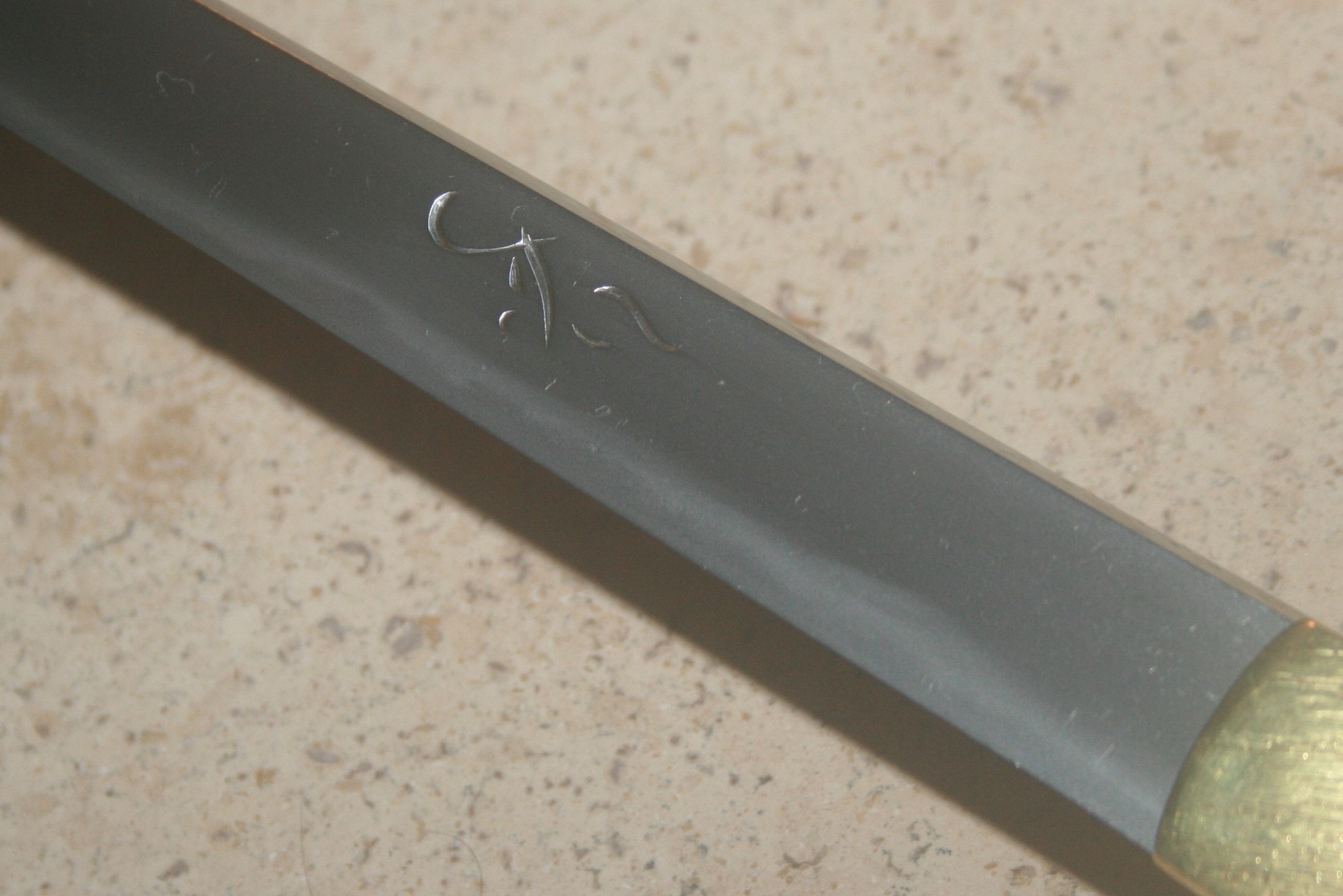
Tametsugu signed his blades Noshu-ju Fujiwara Tametsugu, and that inscription is the key to him. He is transmitted as a pupil of Go Norishige of Gofuku-go in Etchu, in some accounts a son of Go Yoshihiro, who carried the Soshu tradition out of the Hokurikudo and settled in Mino. The published sources are careful with the link: among his extant works there are signatures naming both Echizen and Mino, the published commentary noting that "there are inscriptions for both Echizen and Mino"[[c:1]], while no example at all reads as resident in Etchu, the judges observing that "there is none signed Etchu-ju"[[c:2]]. Because his dated pieces fall in the Joji and Oan years of the later Nanbokucho, two generations below Norishige's late-Kamakura work, the swordbooks treat the Norishige discipleship as a manner received across a generation rather than a bond made at one forge, and find a direct link to Norishige, or to Yoshihiro, hard to sustain on chronology. He is best understood as the Soshu tradition carried north and inland, a Norishige hand resettled among the smiths of Mino.
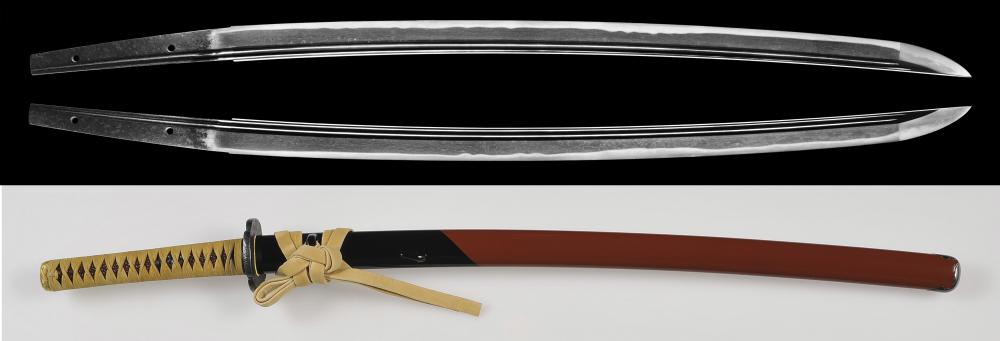
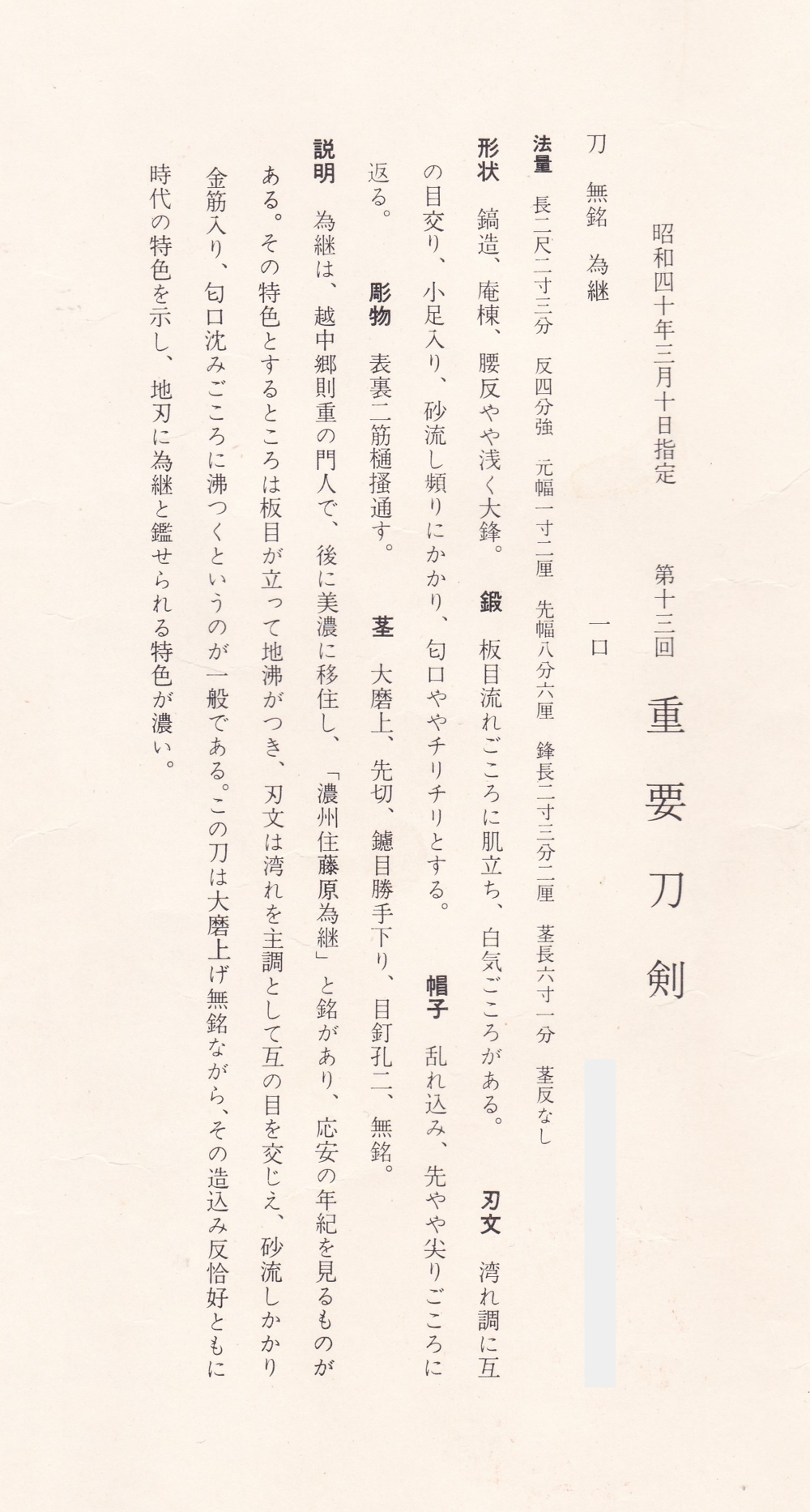
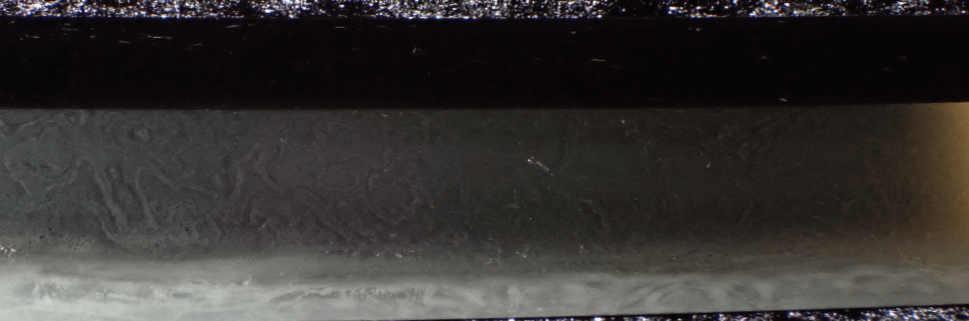
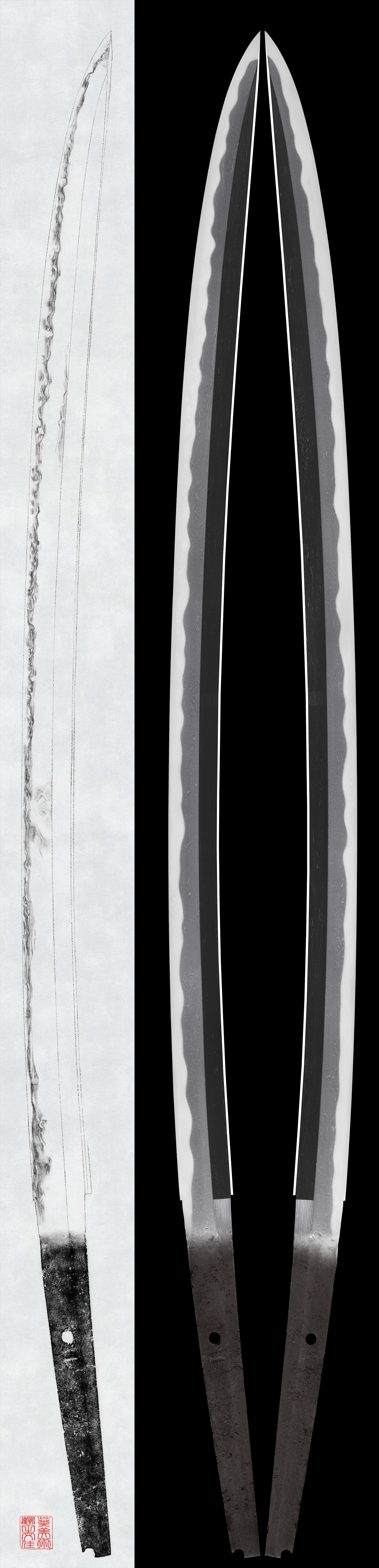
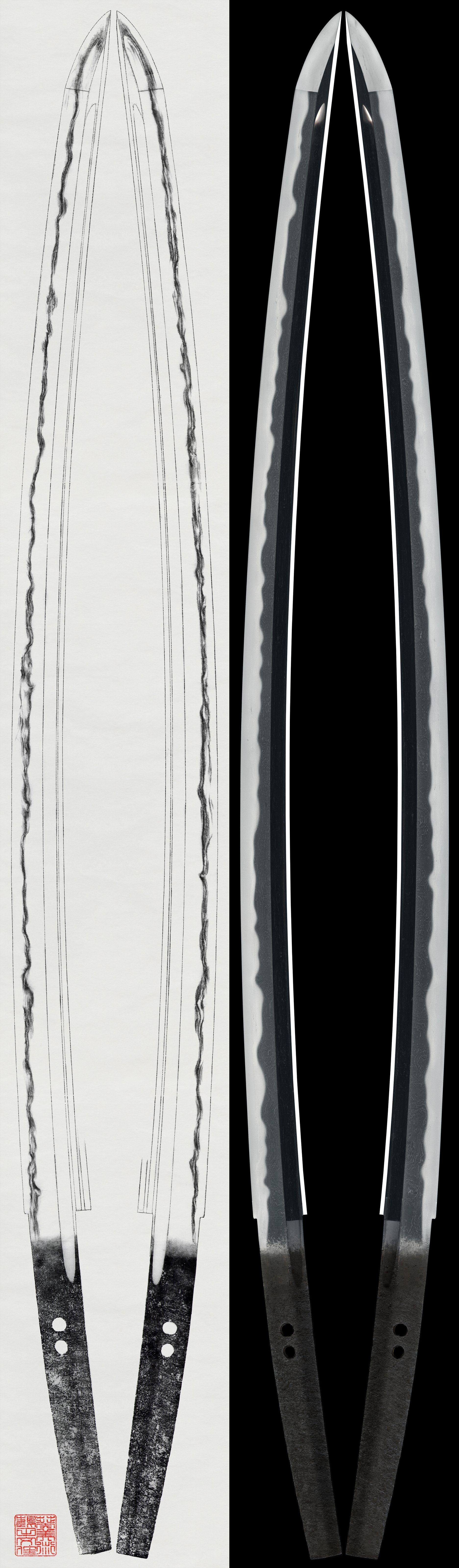
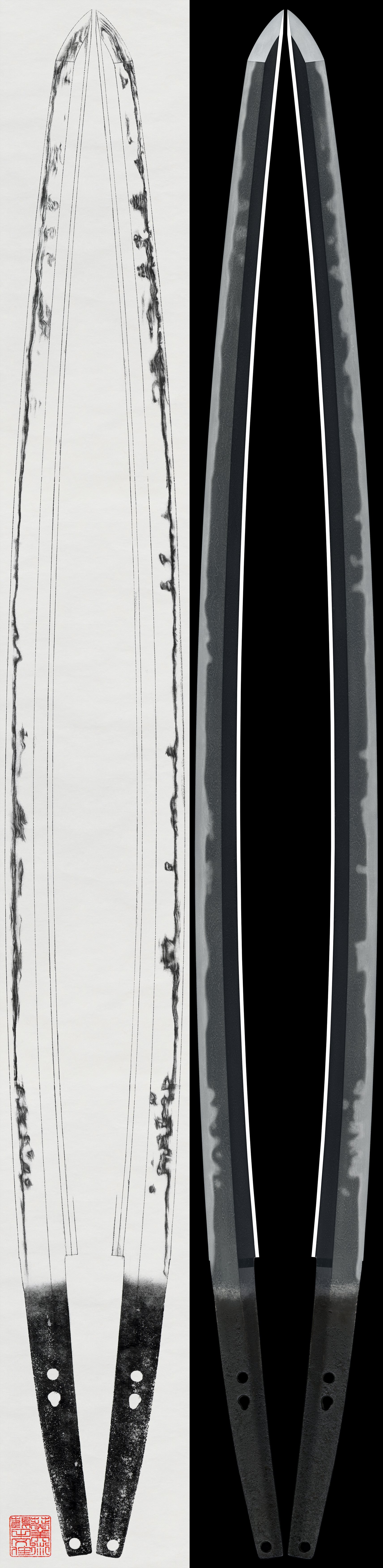
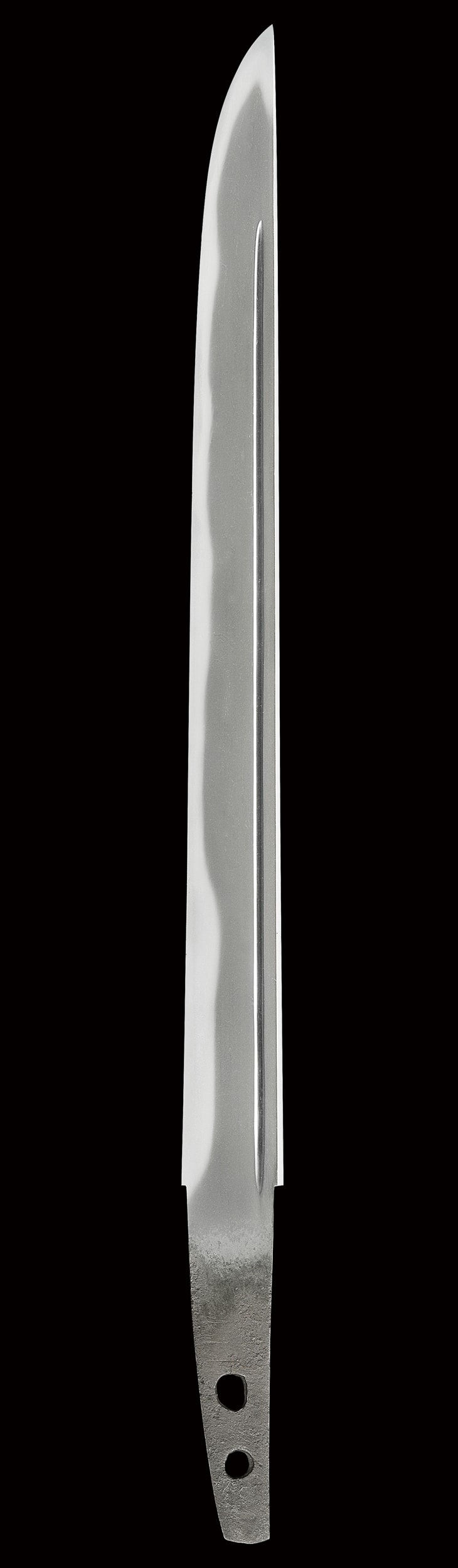
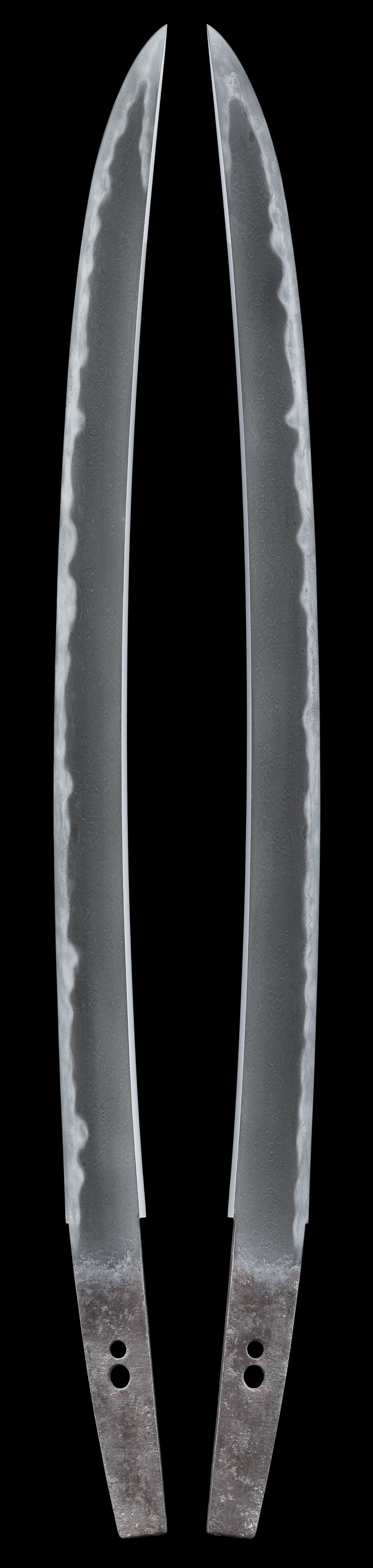
His characteristic manner is the one the judges name outright: a Norishige-style forging crossed with a Mino temper. The published commentary states it plainly, that his work shows "a Norishige-style forging on which is tempered a Mino-style gunome and pointed togariba, displaying a manner of its own"[[c:3]]. Over a standing itame he sets a notare mixed with gunome into which the pointed togariba of Mino are folded, the nie strong and deep, and above all the sunagashi run with a frequency that is his signature, drawn out long with kinsuji within them. The nioiguchi does not blaze; it tends to subside, a quiet, restrained line, and the steel beneath it darkens. This combination, the wet Norishige notare given the sharp Mino tooth and laid over a dark, nie-laden ji, is what a Tametsugu reads as on sight.
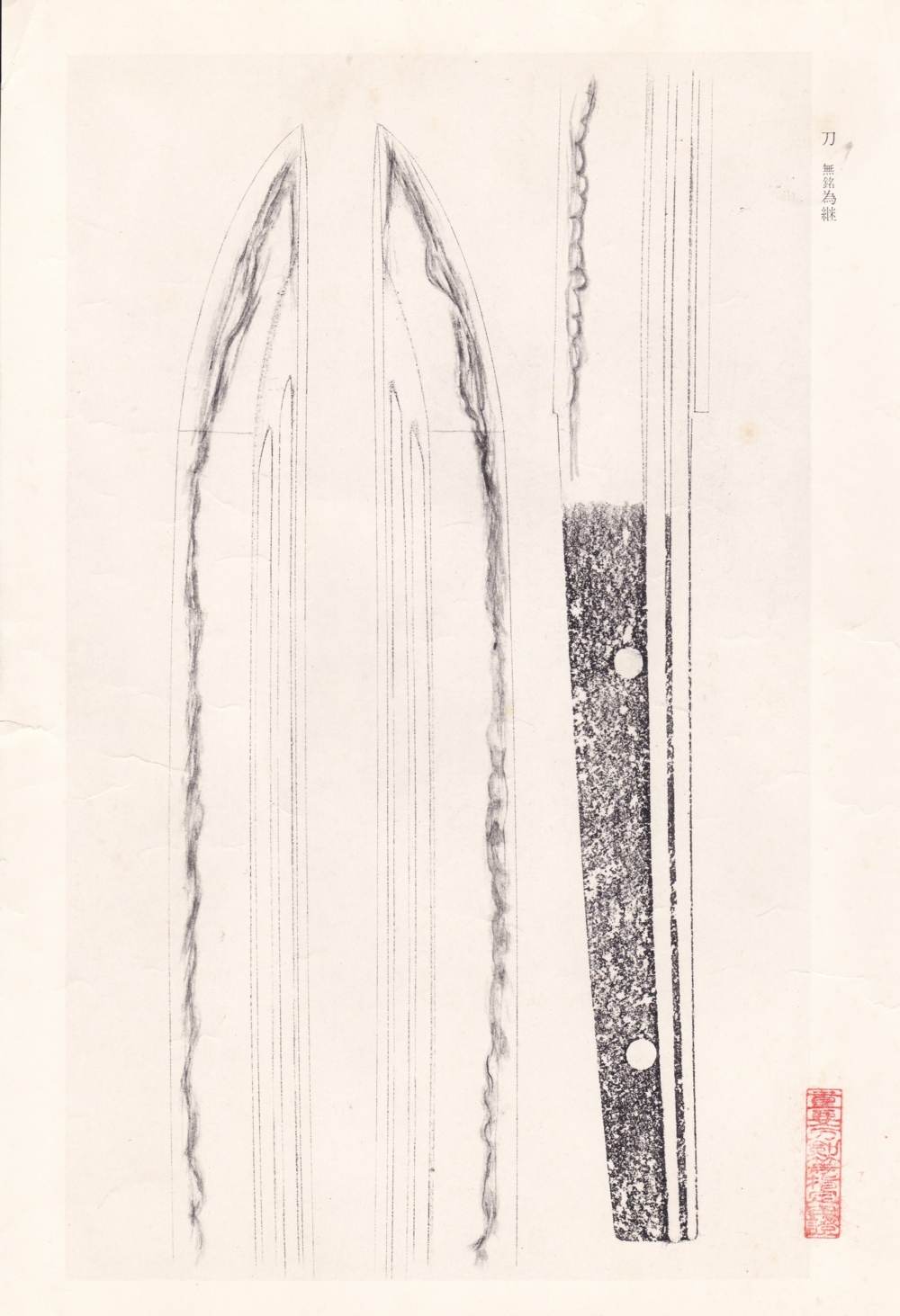
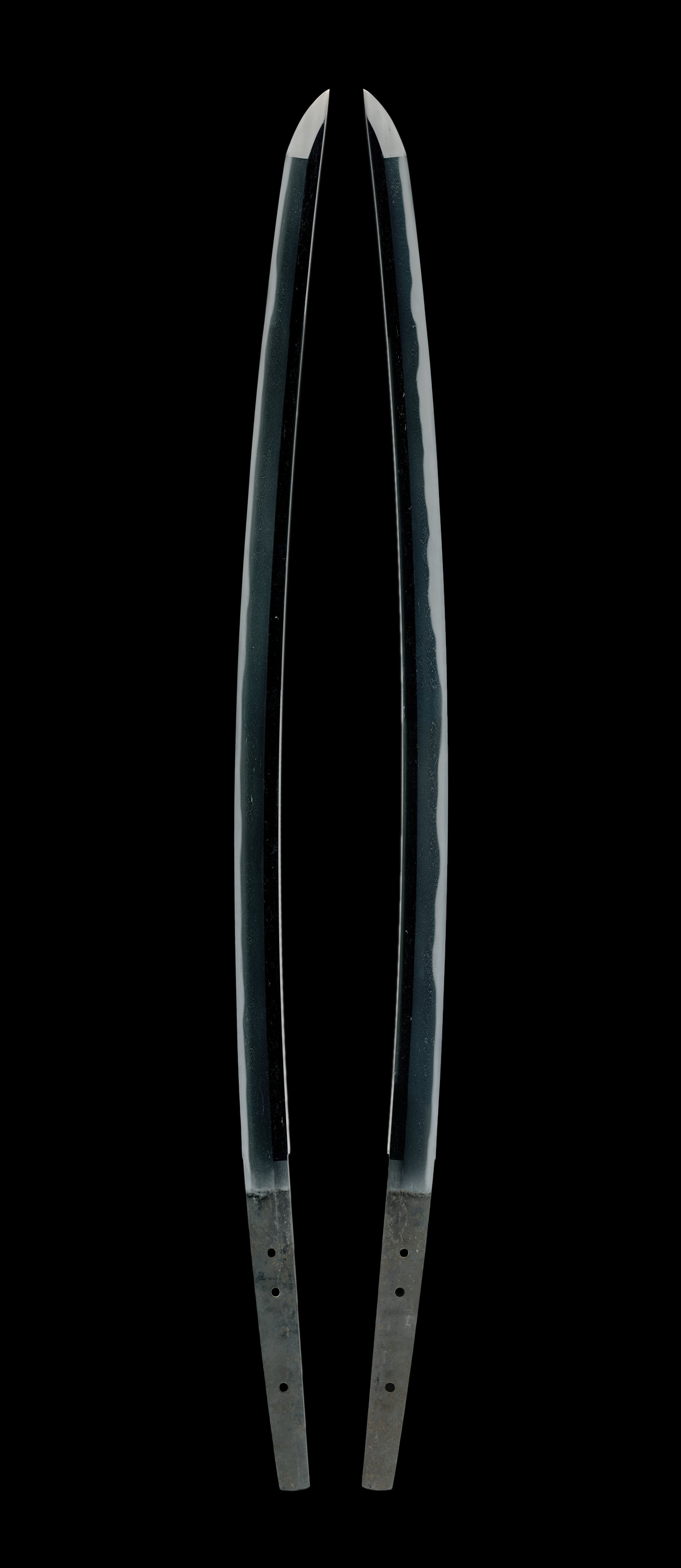
The jigane is the constant. It is itame, frequently mixed with mokume and large grain and flowing toward masame in places, the grain standing and at times opening, with thick ji-nie and chikei entering, and a steel of distinctly northern cast that darkens in tone. The published sources give as the common thread of his authenticated work an itame "that stands and darkens"[[c:4]], a nie-based temper whose nioiguchi subsides, and, as a negative tell, the fact that "there is no suguha"[[c:5]] among the mainstream pieces. Over that jigane the hamon is most often a shallow notare carrying gunome and togariba, with ashi and yo, tobiyaki and yubashiri at the edge on the more active blades; the boshi runs midare-komi with frequent hakikake, turning in a ko-maru or, on the many shortened naginata-naoshi, finishing in a yakizume sweep.
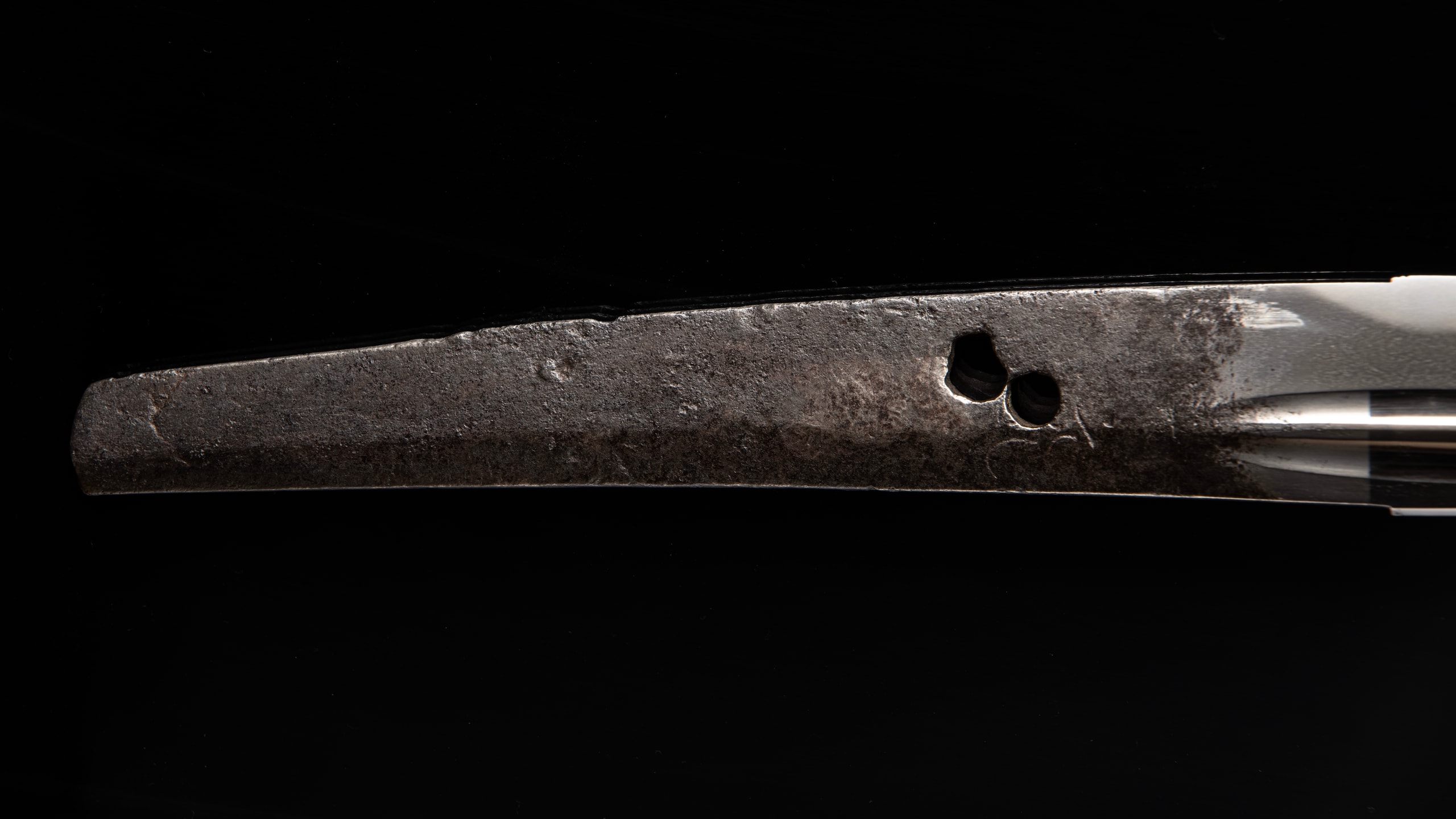
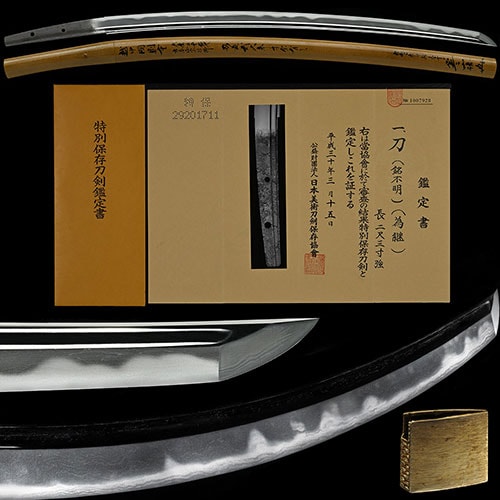
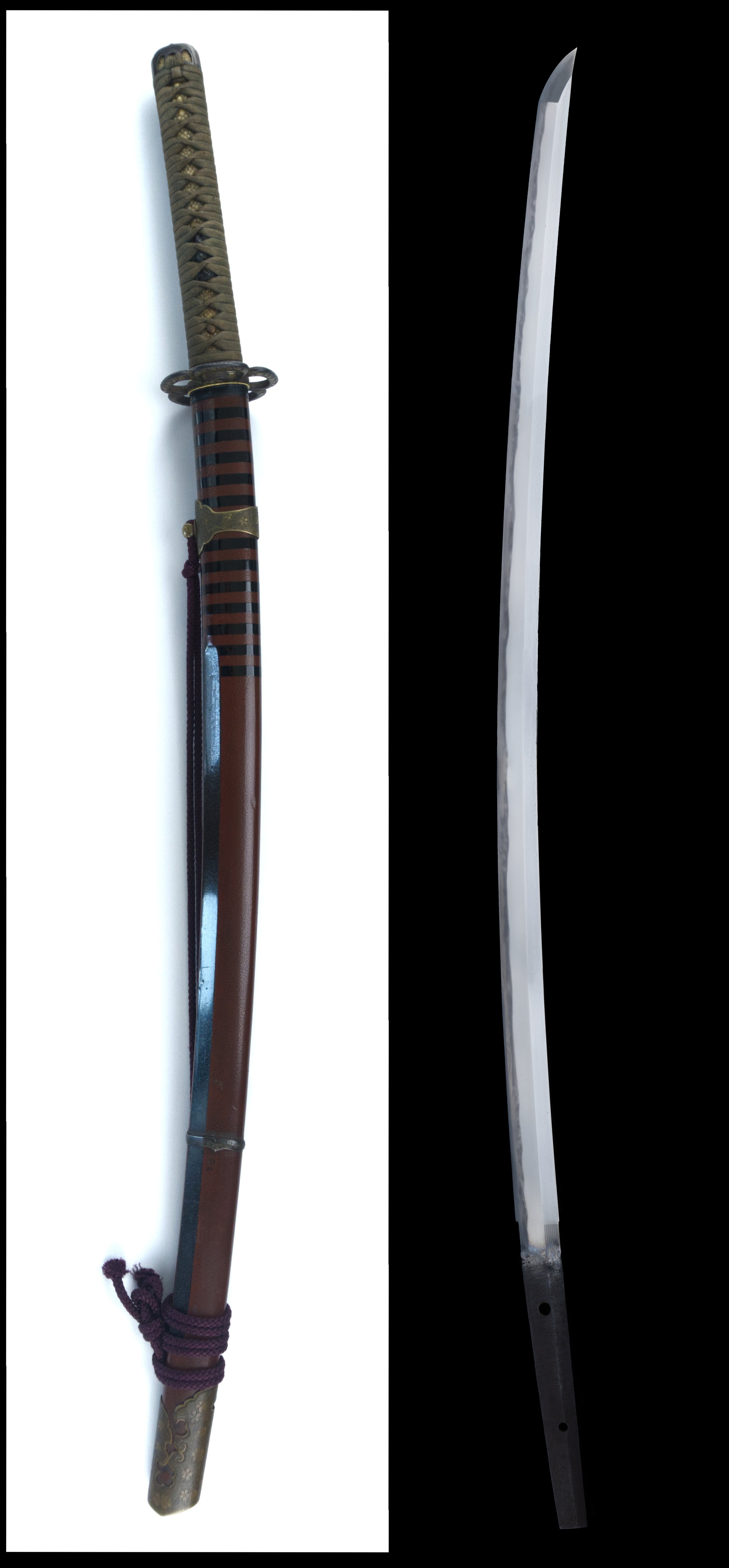
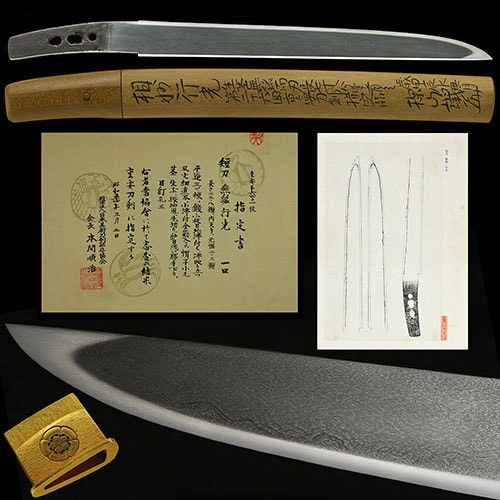
His record divides cleanly into two registers. The great body of it is the o-suriage, unsigned katana attributed to him from style, broad Nanbokucho blades with extended or large kissaki, on which the Norishige character is clearest. Against these stand the rare signed and dated pieces, exceedingly few, headed by an Oan-dated tanto that is a prewar Juyo Bijutsuhin, with a shobu-zukuri naginata-naoshi tachi dated Oan 7 (1374) and an ubu tachi cut Fujiwara Tametsugu saku. The published sources draw the contrast within his own work, noting that the Mino flavor runs the stronger in the signed pieces while the Norishige manner shows more clearly in the mumei attributions, and adding the candid judgment that the signed work can run somewhat coarse while "among the unsigned attributions there are, on the contrary, examples of quite good workmanship"[[c:6]].
What sets him apart is read off his own blades, not borrowed from his master. His is the larger, more billowing notare-midare, and the published commentary distinguishes him from the other Mino Soshu hands by it directly, holding that his work "differs in manner from Shizu and Kaneshige"[[c:7]]. Beside Norishige himself the difference is one of degree and clarity: his hada does not stand as strongly and his chikei are the fewer, the judges remarking on one blade that "the chikei are less conspicuous than in his master Norishige"[[c:8]], and his steel darkens where the Sagami masters' is bright. The breadth of his manner reaches occasionally into other idioms, one shortened katana judged "workmanship in the Yamato Shikkake manner"[[c:9]], a reminder that the provincial Soshu-den he practiced absorbed more than a single line.
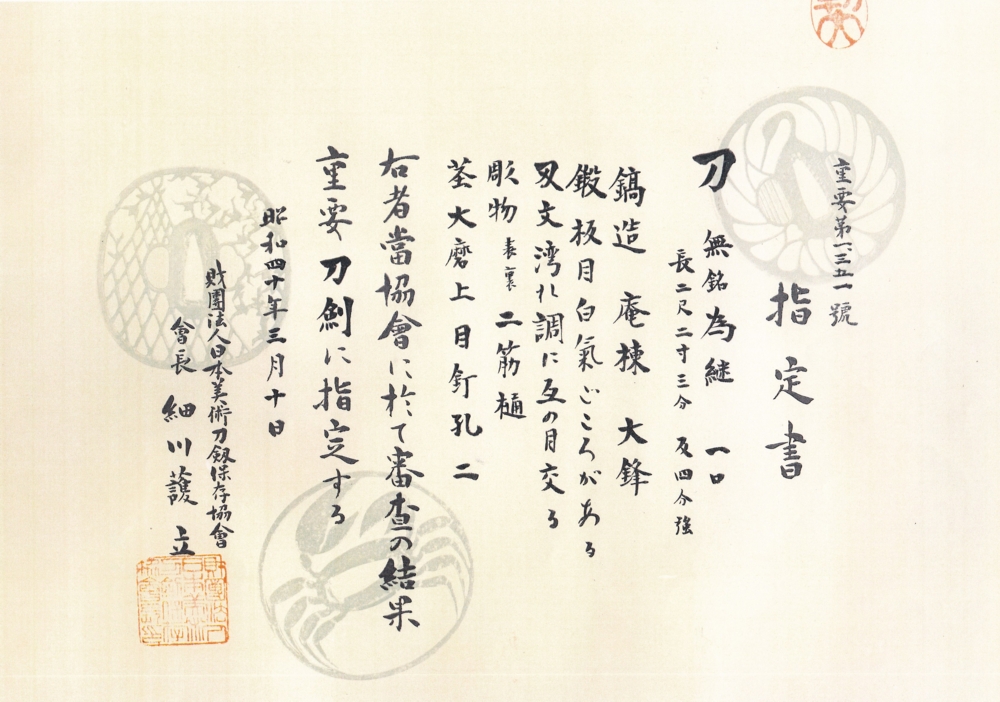
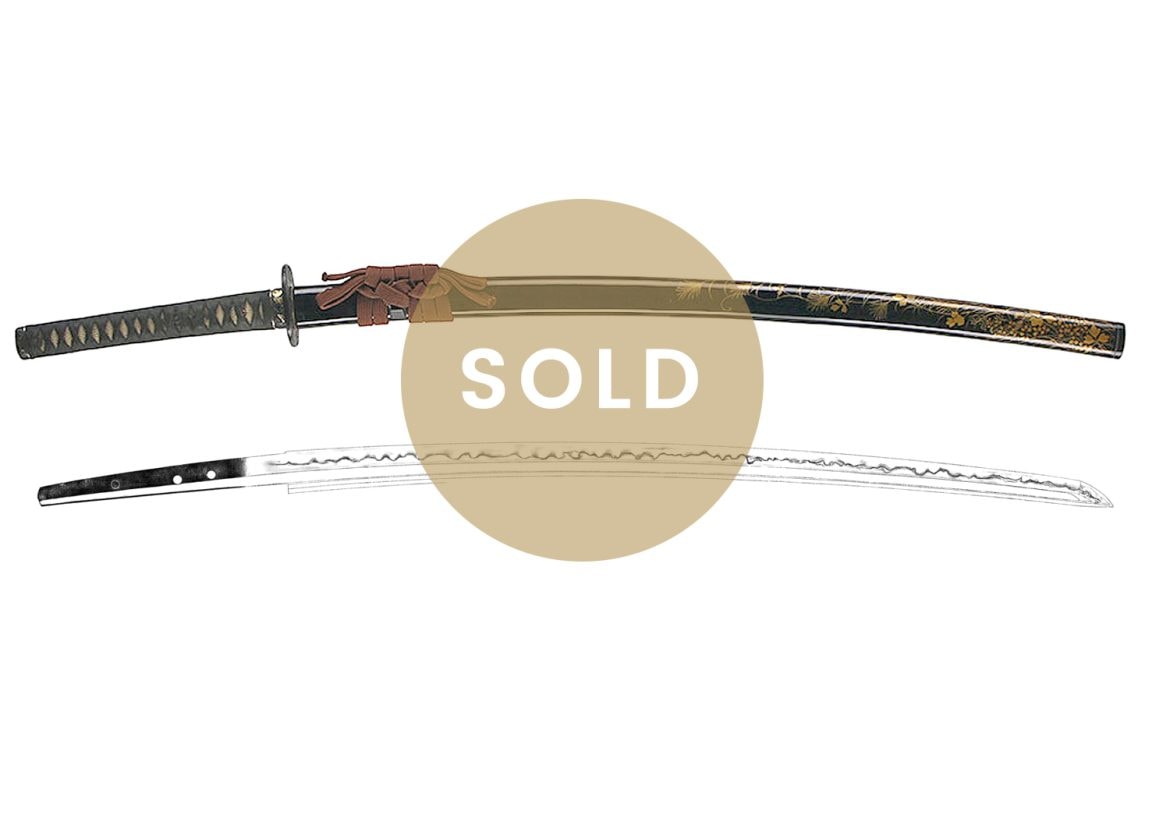
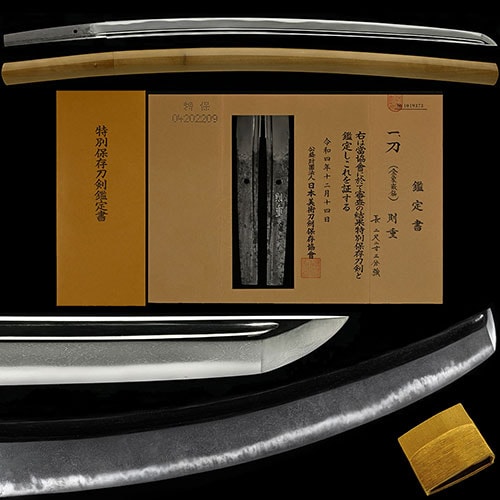
For the collector Tametsugu is a Nanbokucho name encountered almost entirely through attribution. He has no National Treasures and no Important Cultural Properties; his record runs instead through the prewar Juyo Bijutsuhin and a long roll of Juyo blades across many sessions, the signed and dated pieces, the documentary core of the name, being the rarest of all. The published sources hold those few signed works to be of exceptionally high value precisely because so little survives, and longer signed examples are scarcer still. Owner records are thin: a pair of his blades is preserved at Atsuta Jingu, the Oan tanto passed through the prewar collection of Akaboshi Tetsuma, and most current whereabouts go unrecorded. The mumei katana attributed to him do reach the market from time to time, a den-Tametsugu appearing among Juyo Soshu-den blades with some regularity, but a signed and dated Noshu-ju Fujiwara Tametsugu is a different order of thing, the document that fixes the name, and a privately held example is among the more uncommon encounters in the field. One such mumei katana the published commentary calls outright "a quintessential example of Tametsugu's work"[[c:10]], which is the best a collector can realistically hope to meet.