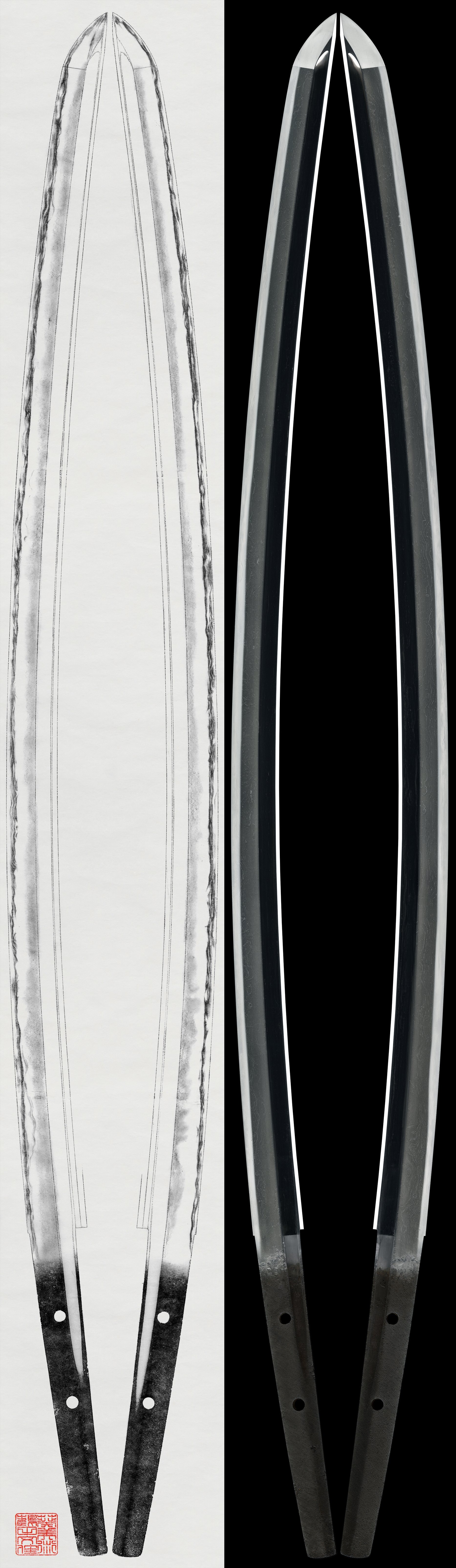
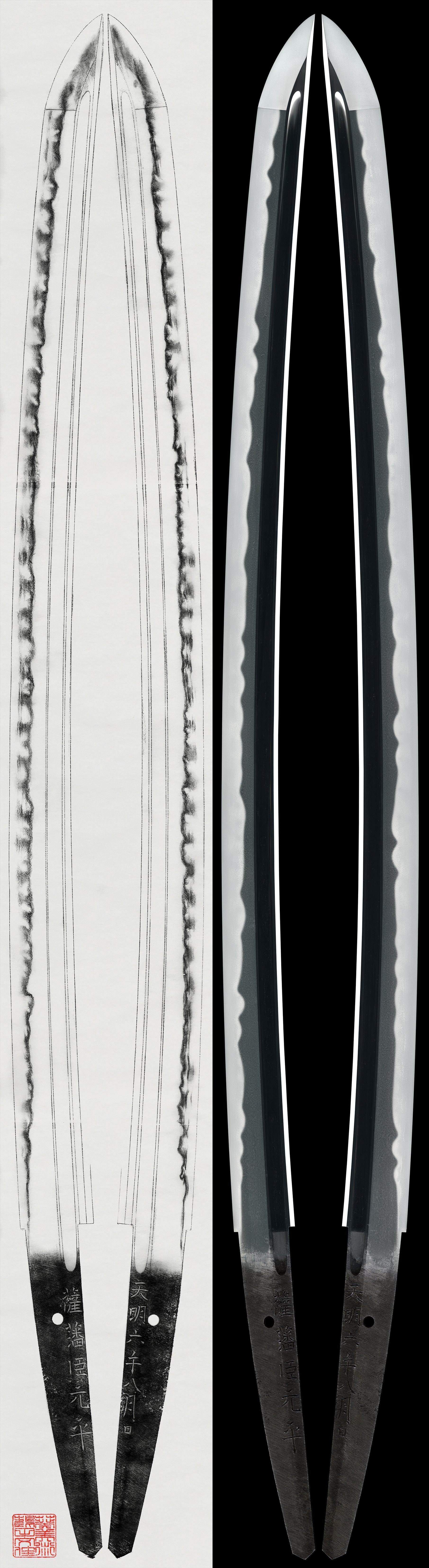
When the Southern Court made its capital at Yoshino, in Yamato itself, the province’s schools were at their height: the late Tegai line, Shikkake Norinaga, and the pure masame of Hōshō. Their technique was already spreading across the provinces.
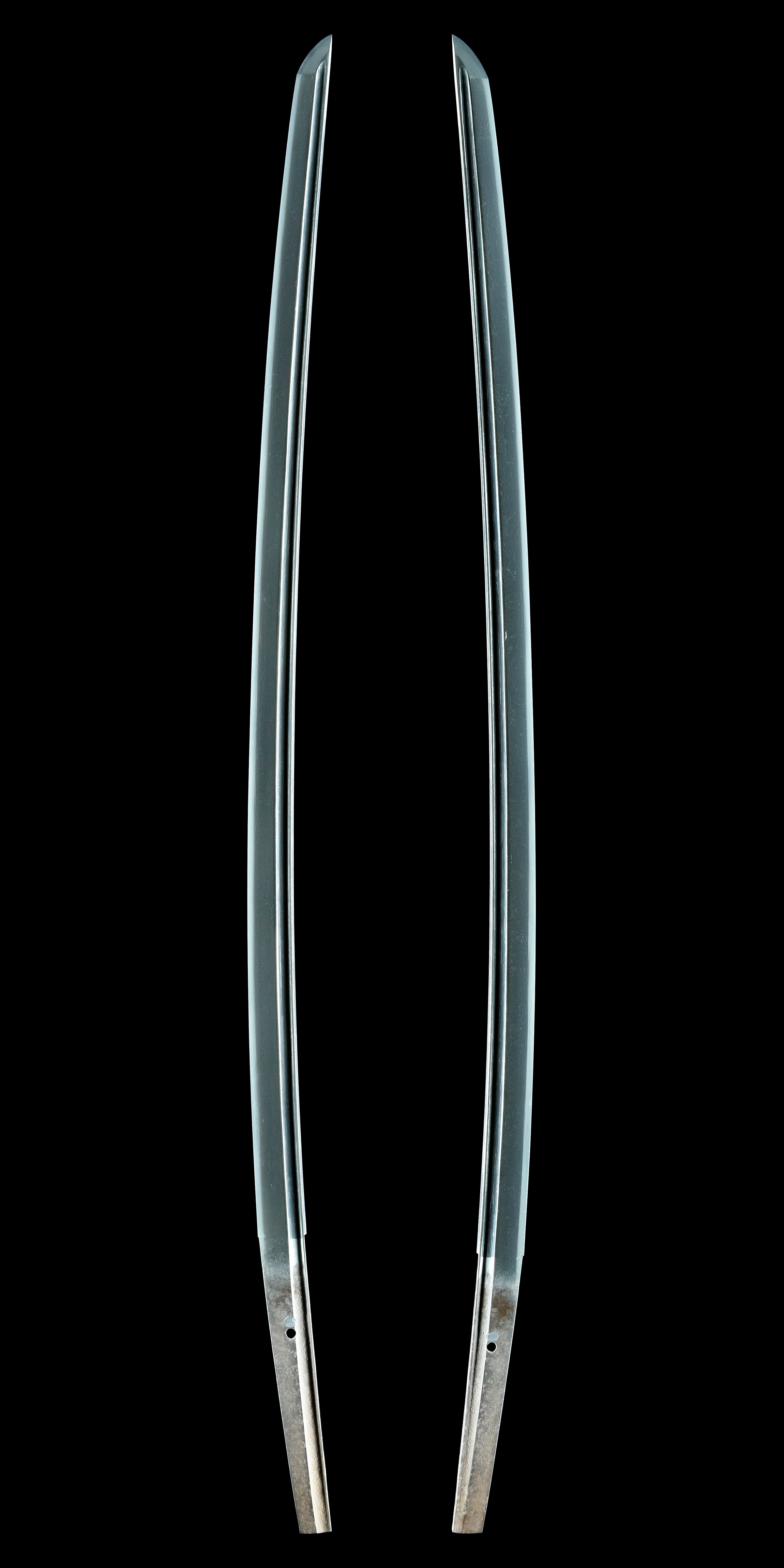
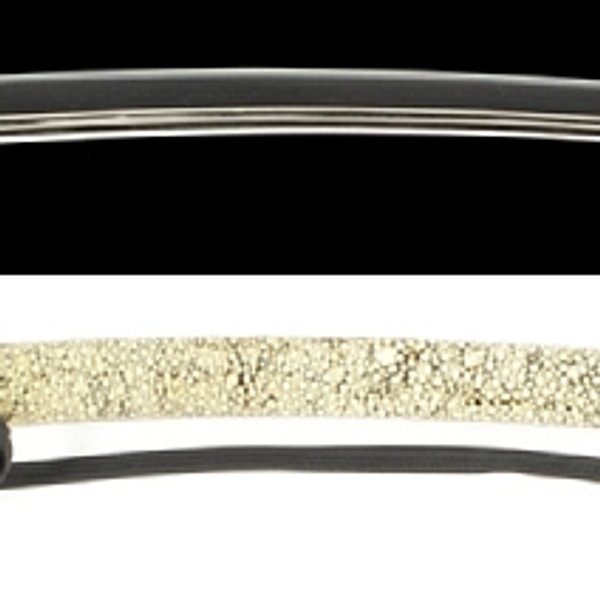
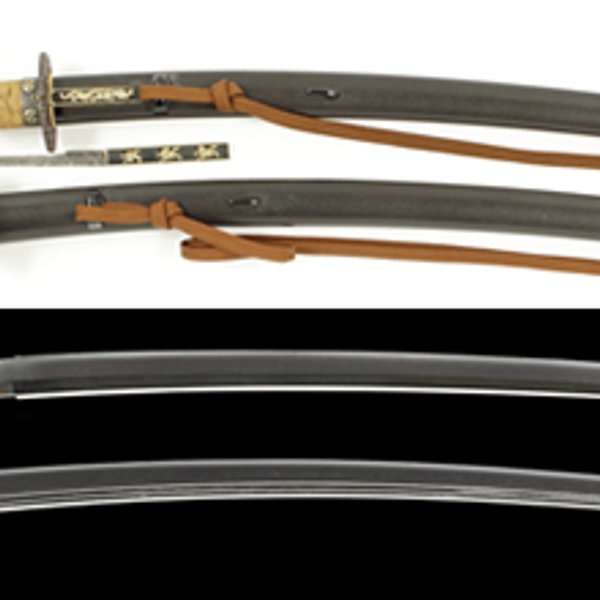
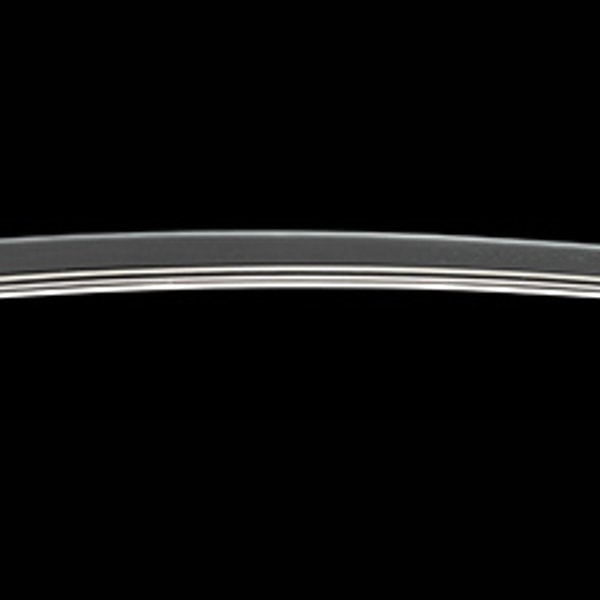
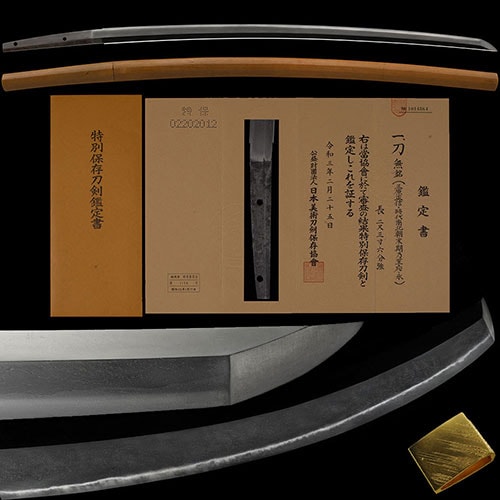
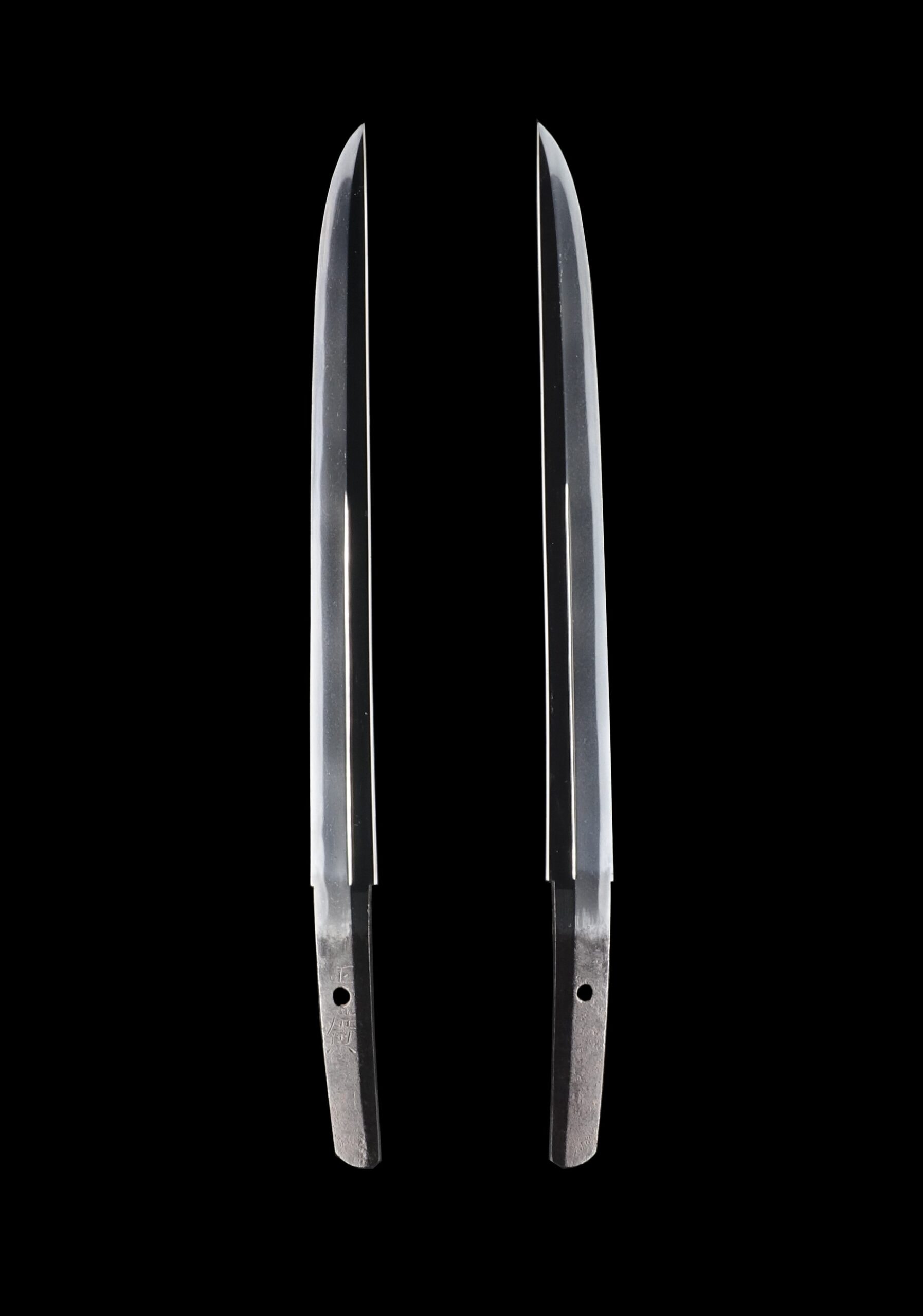
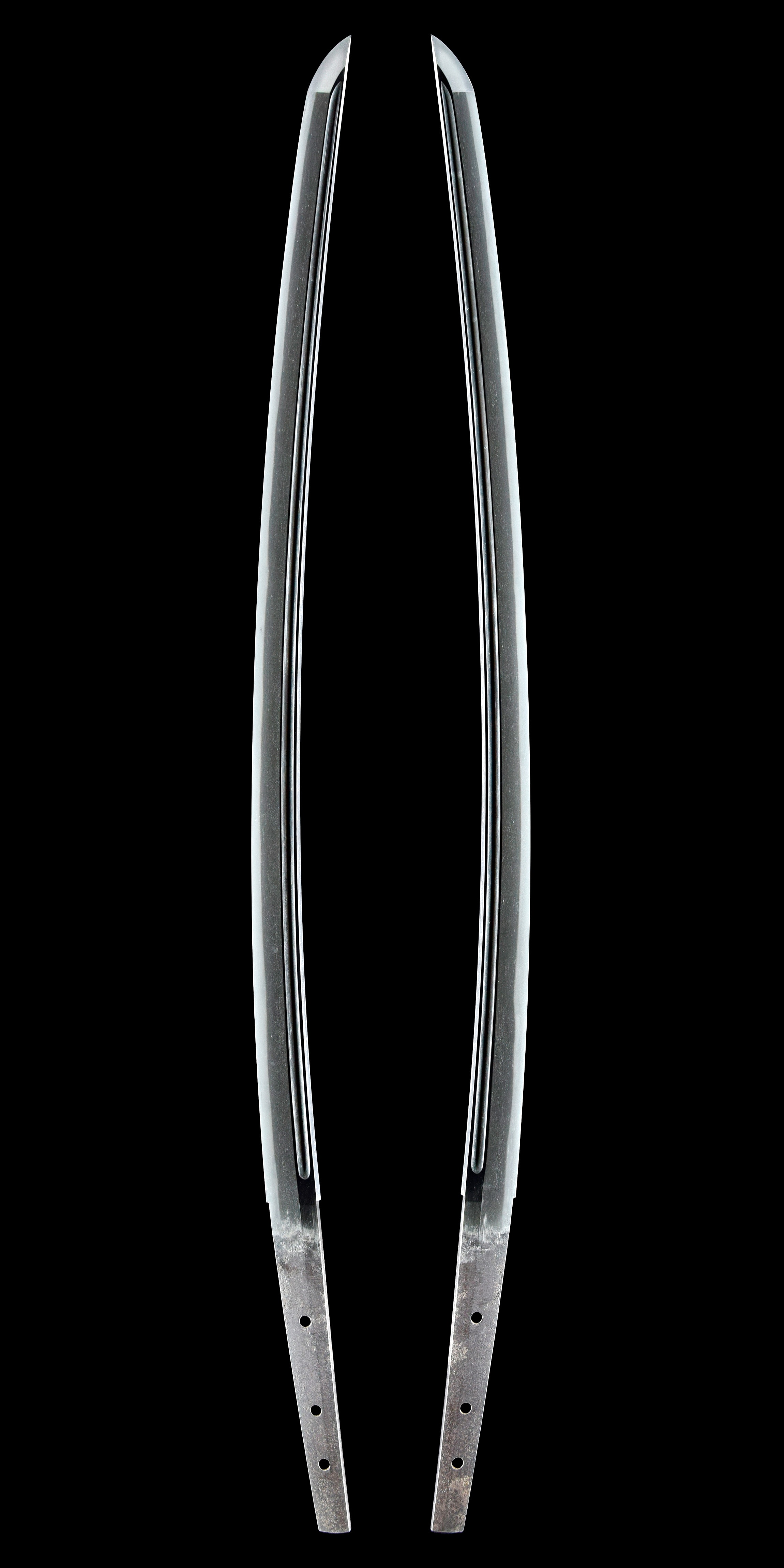
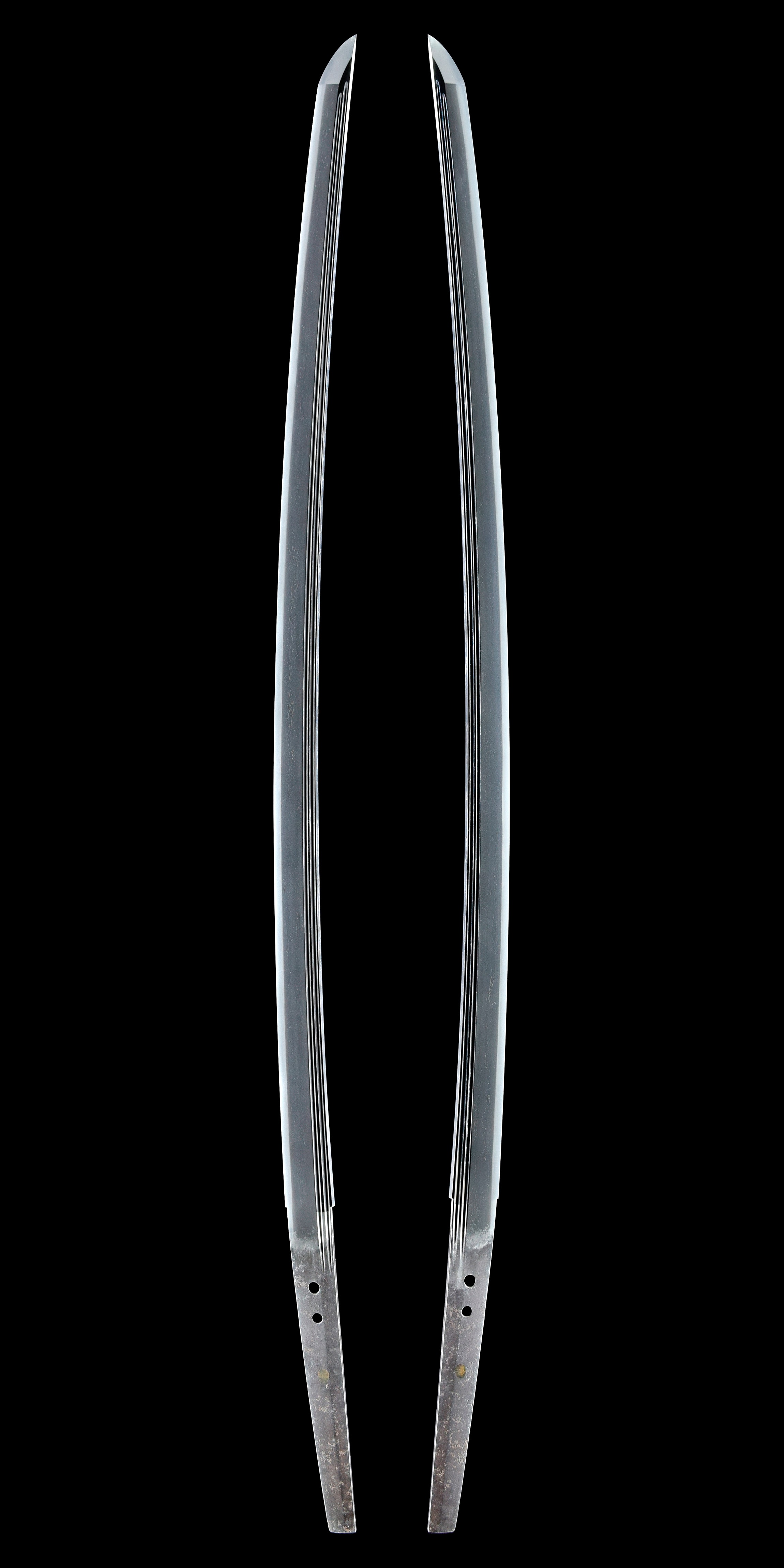
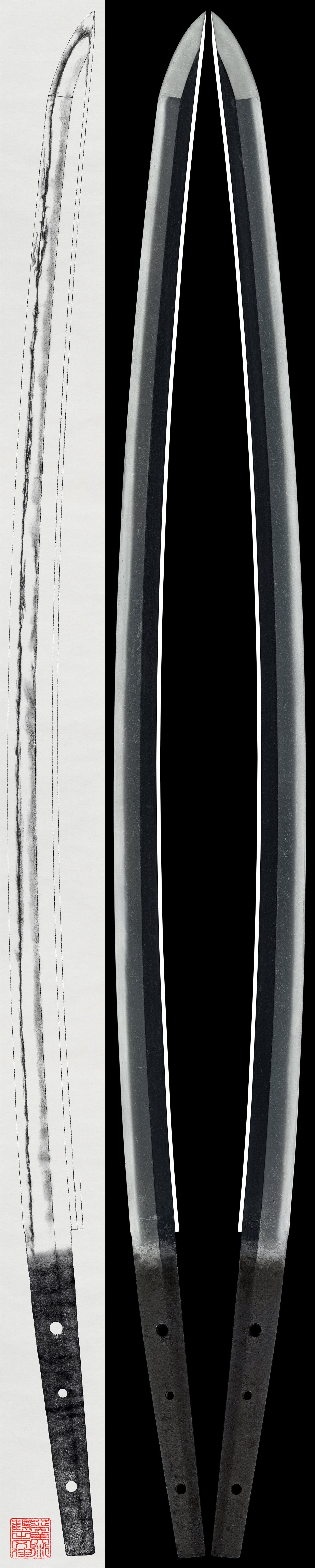
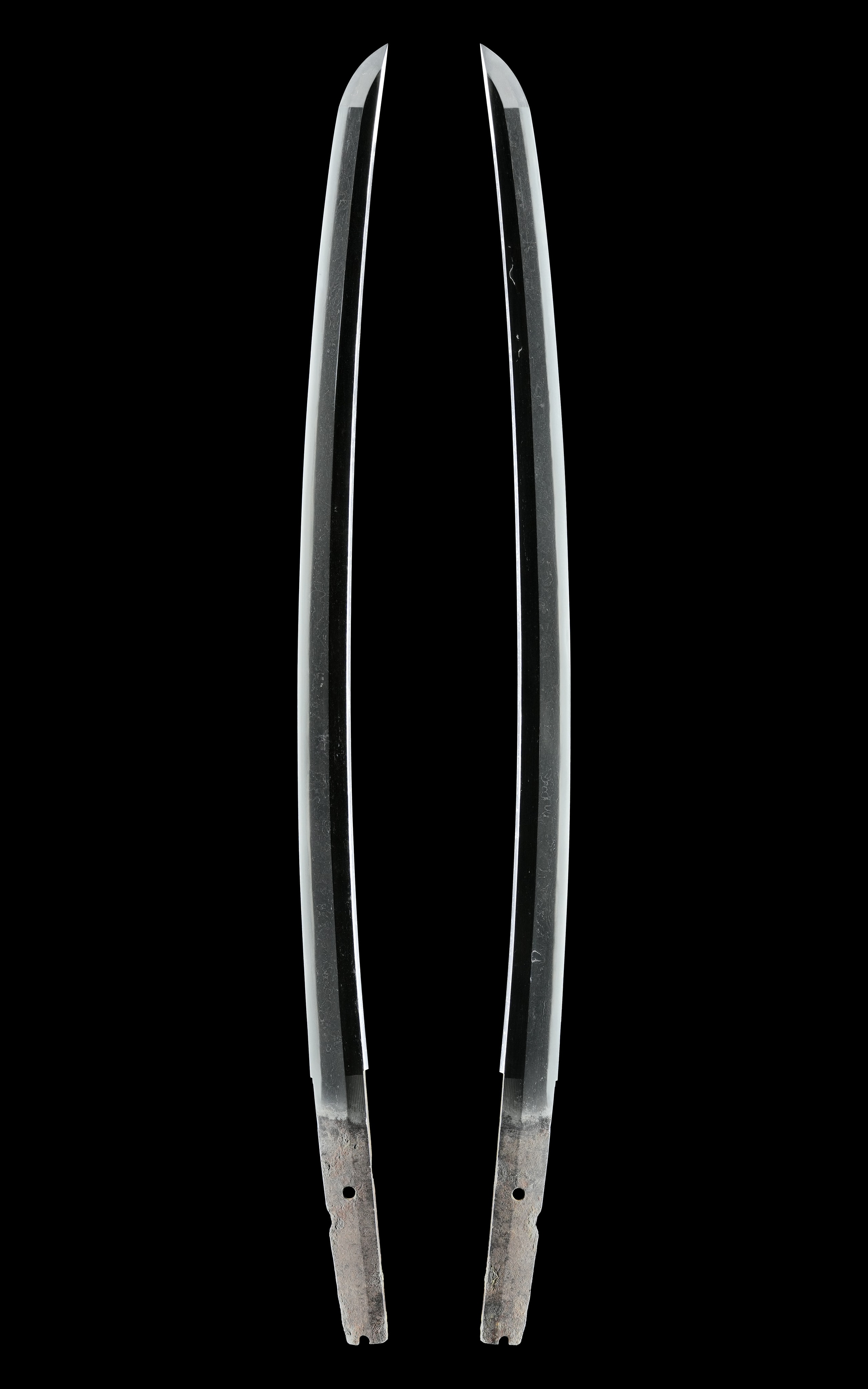
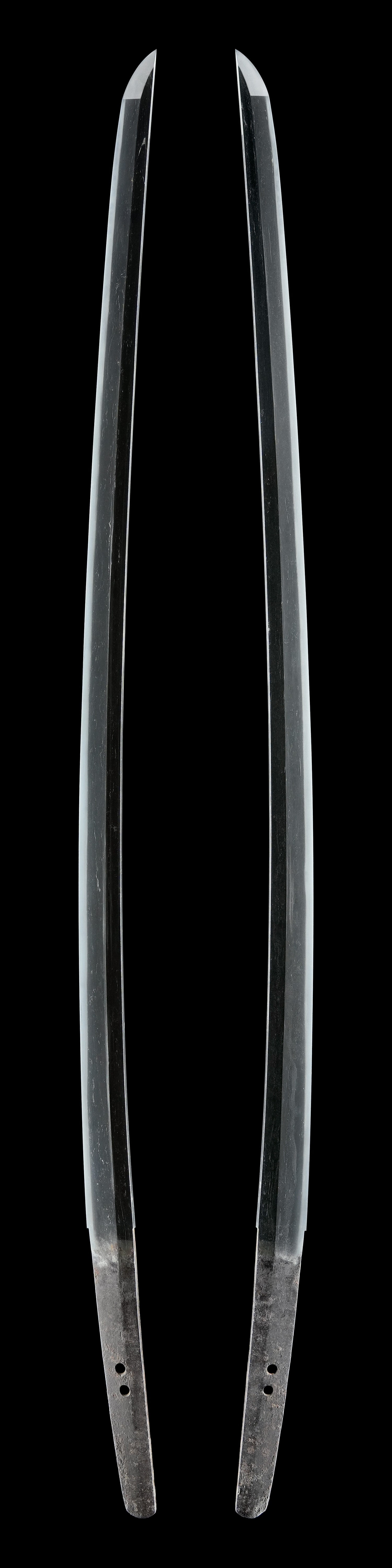
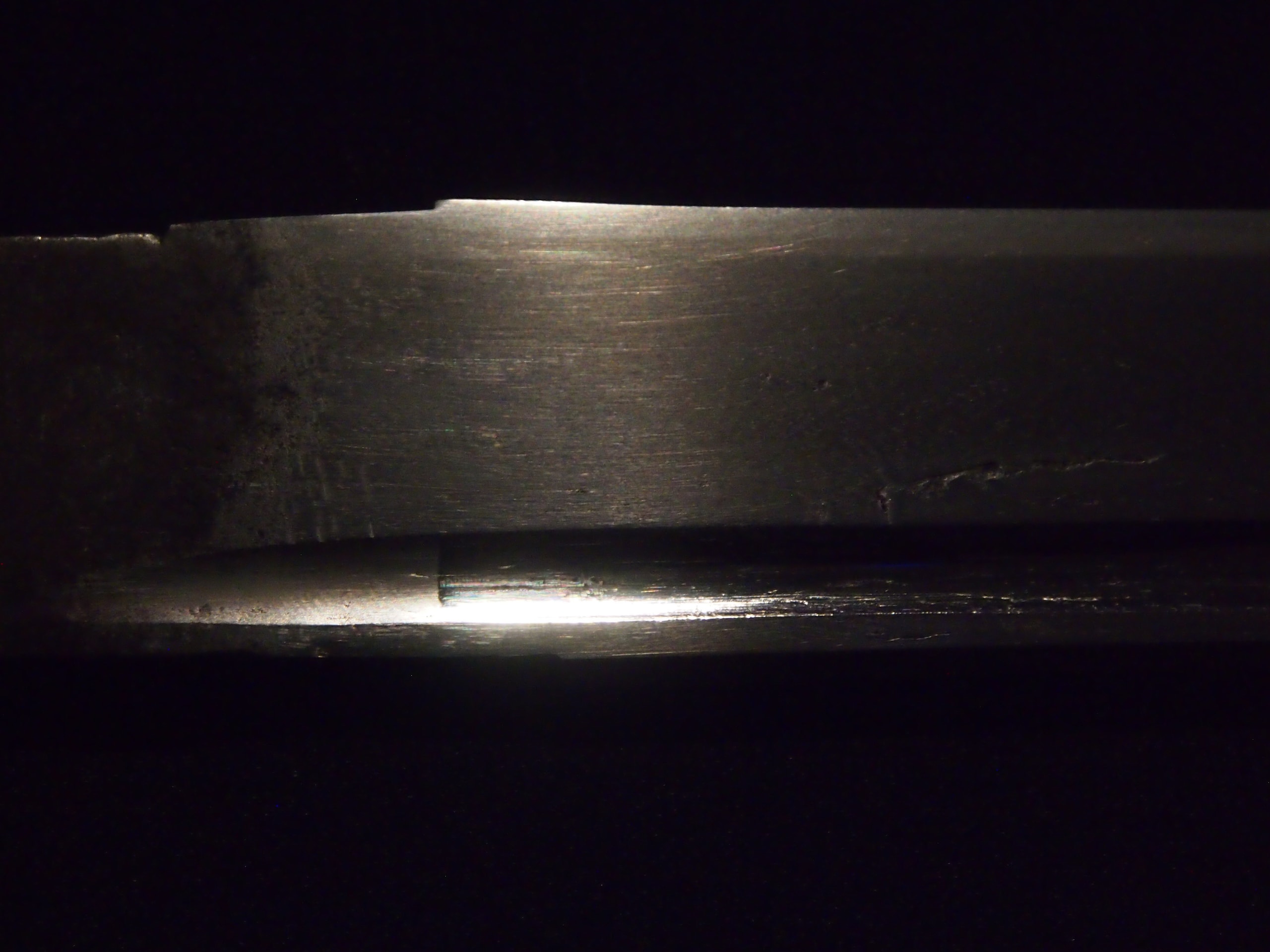
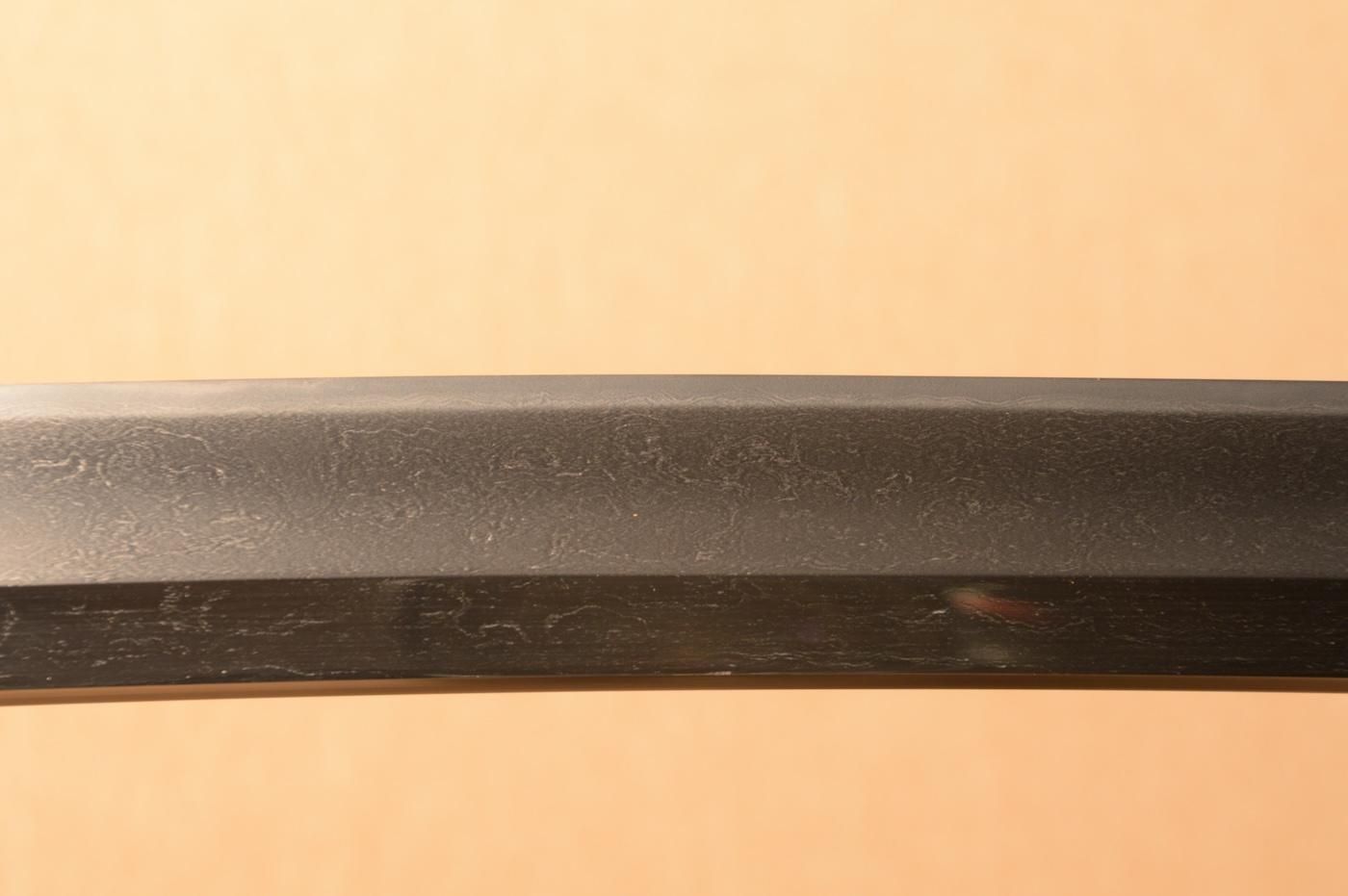
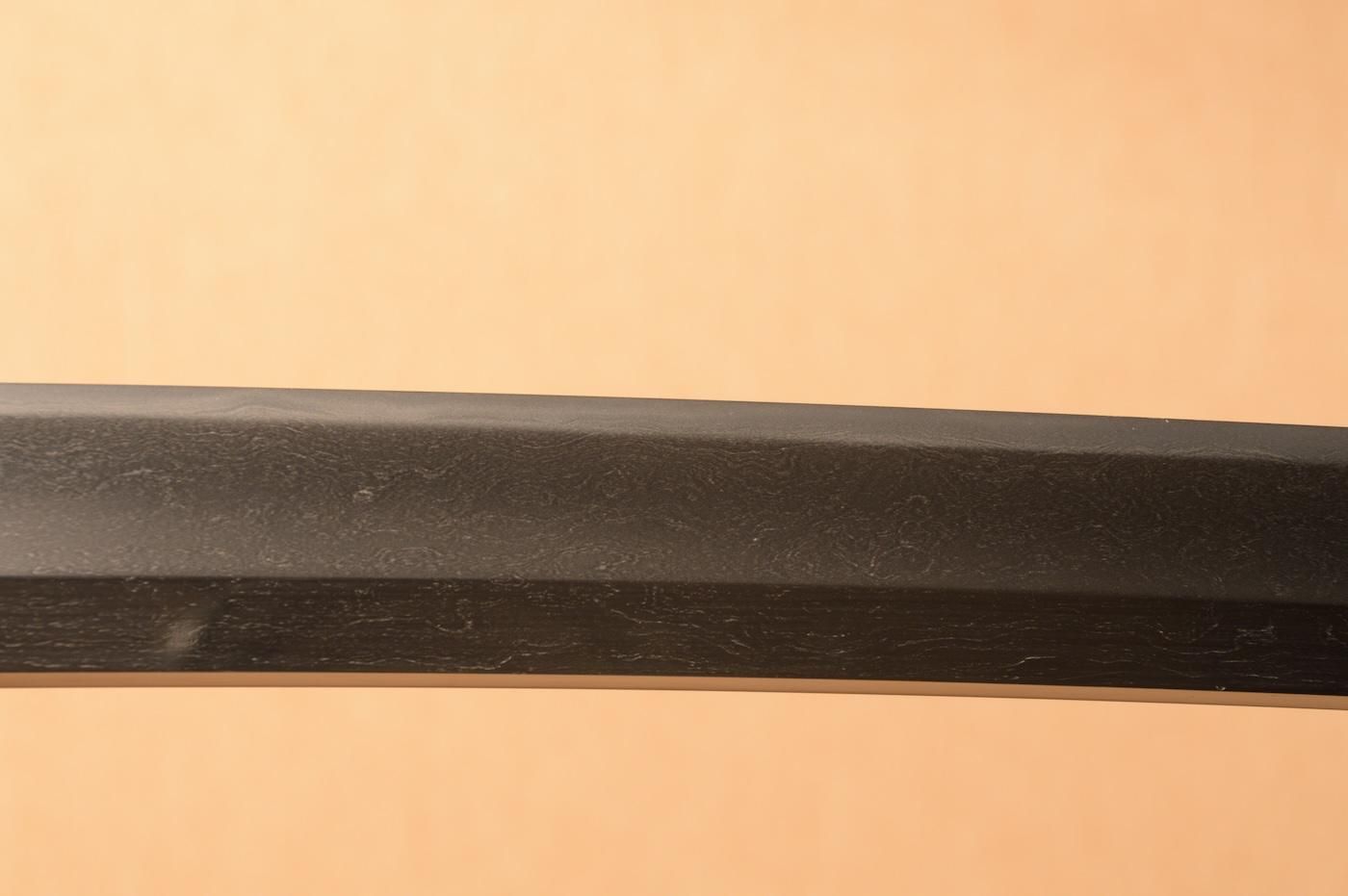
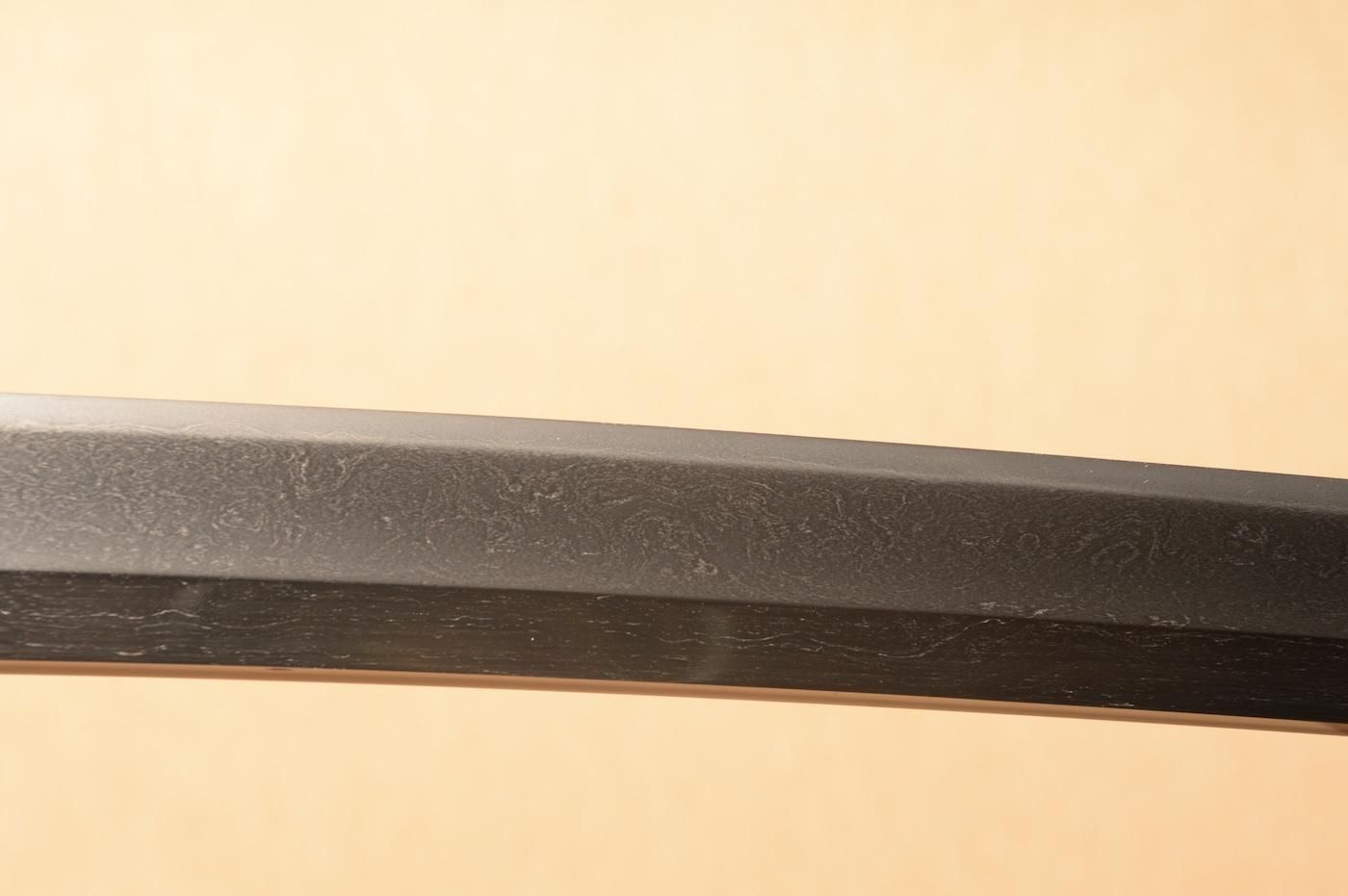
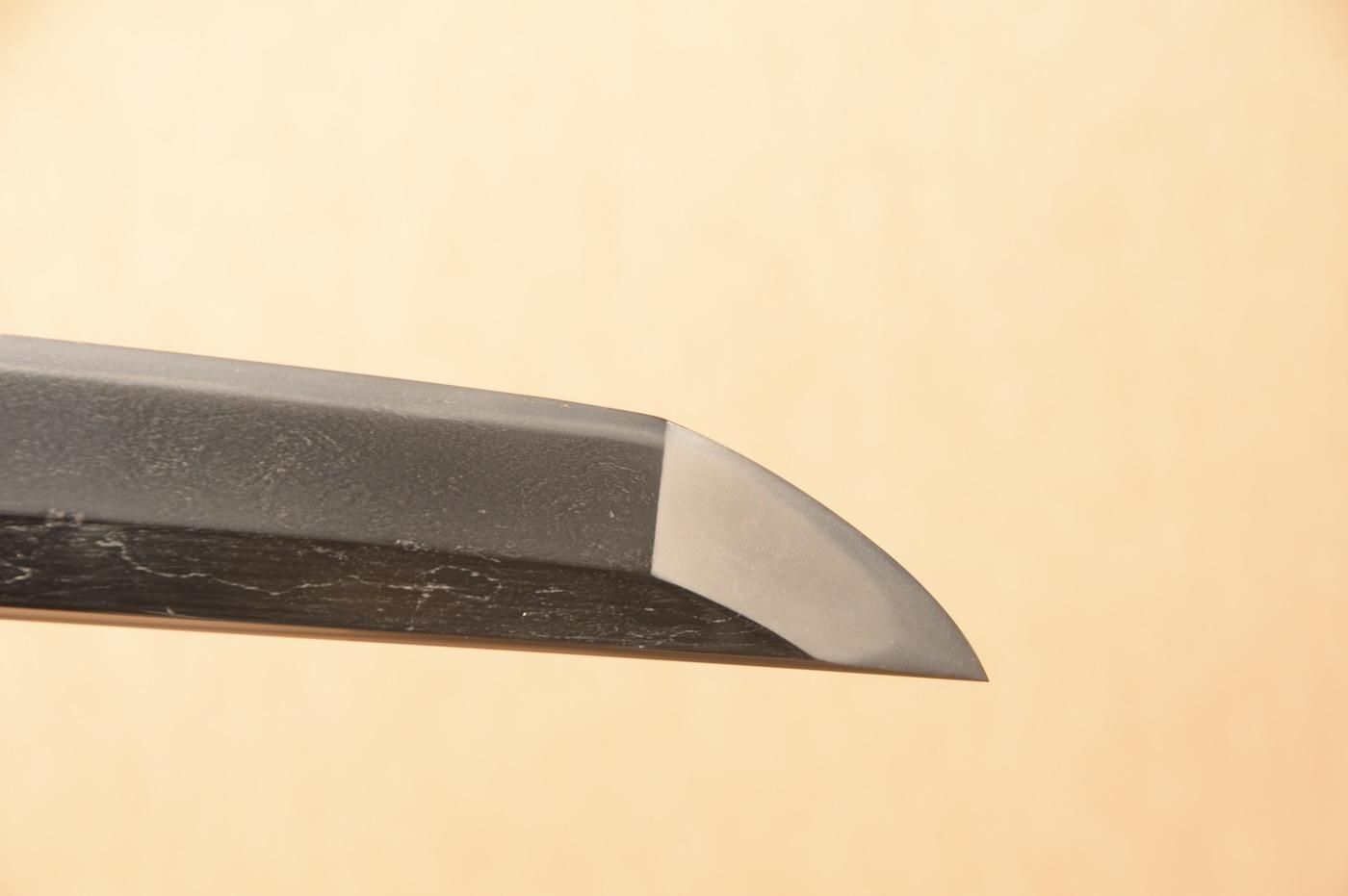
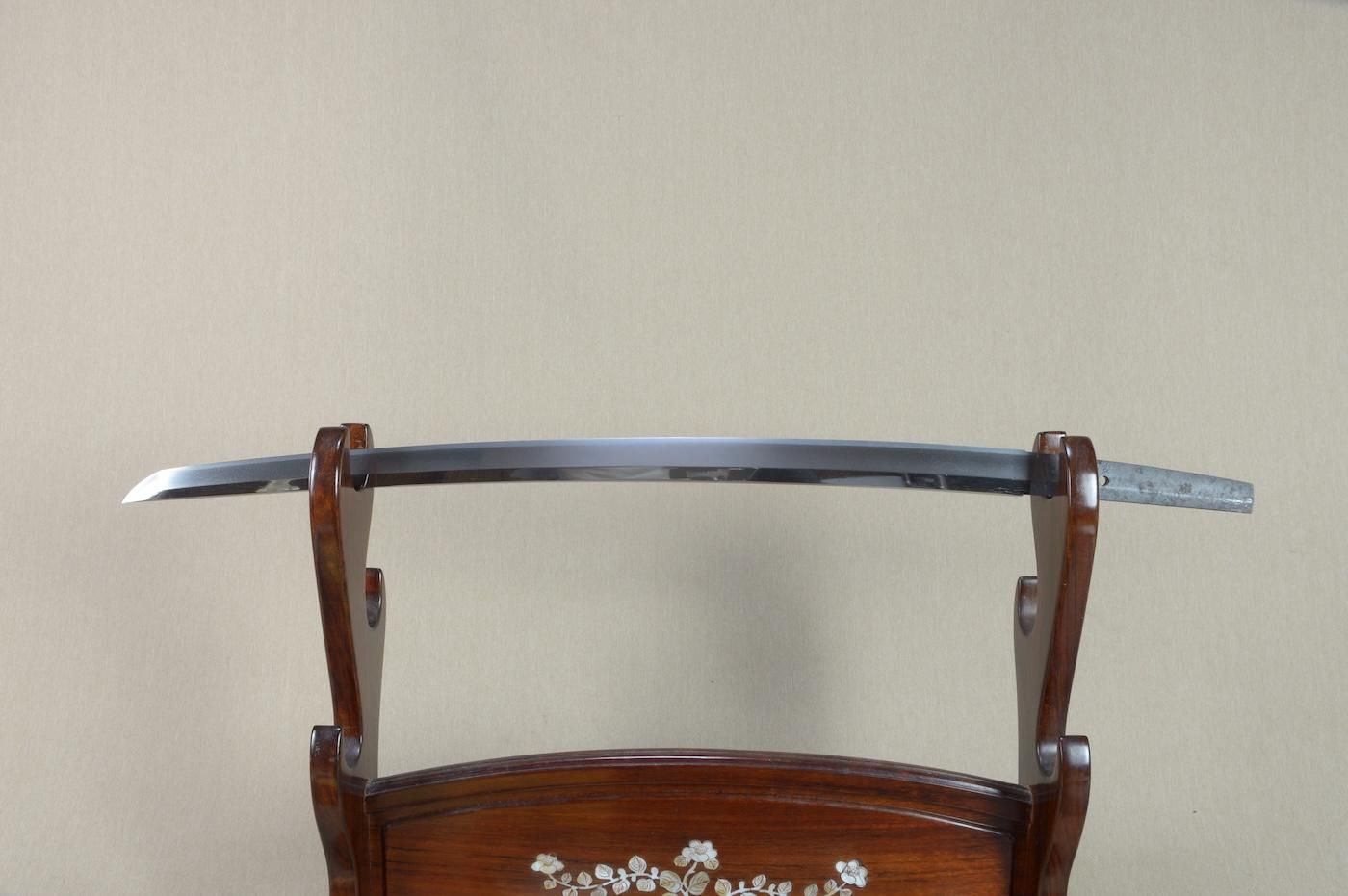
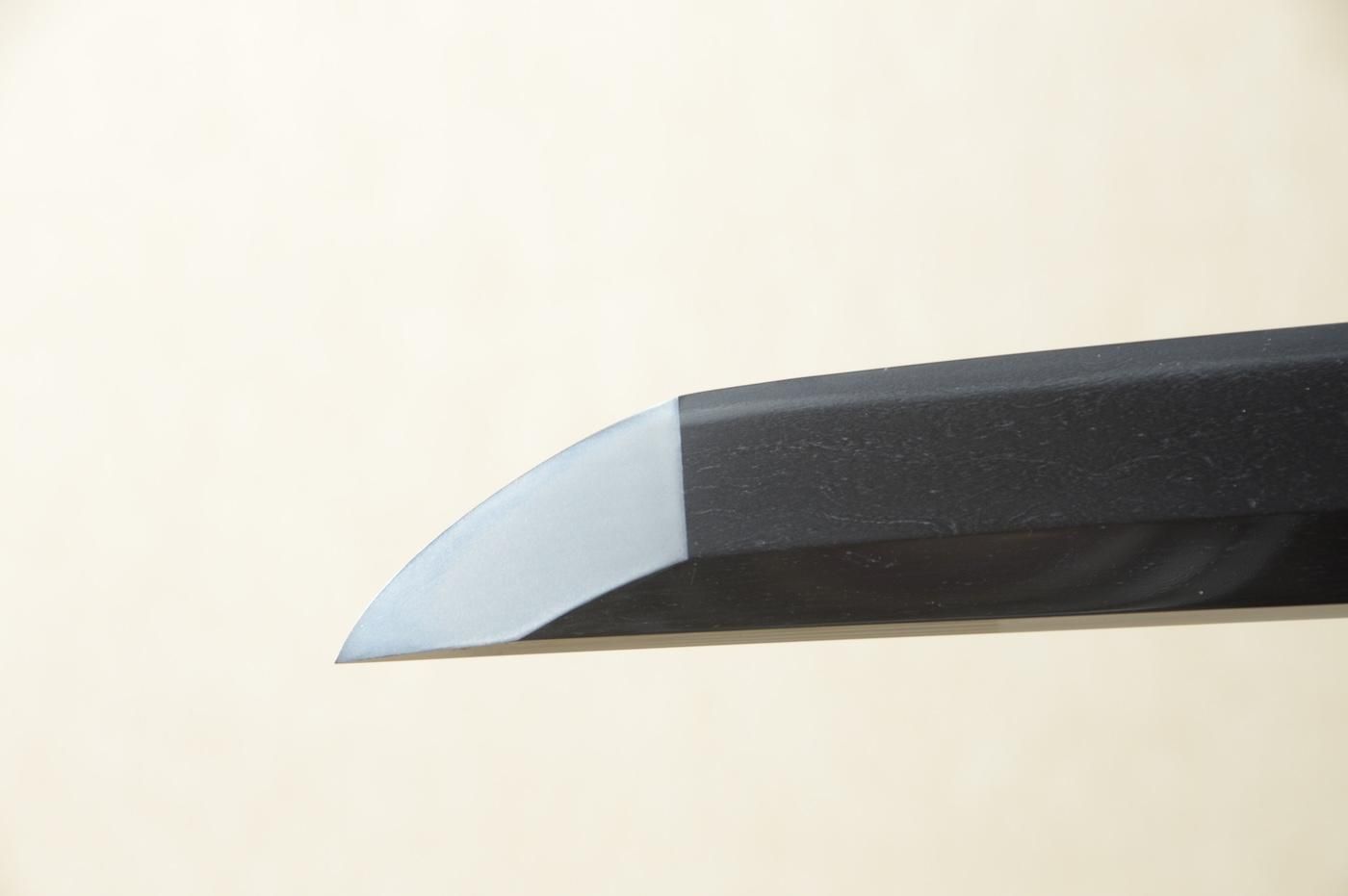
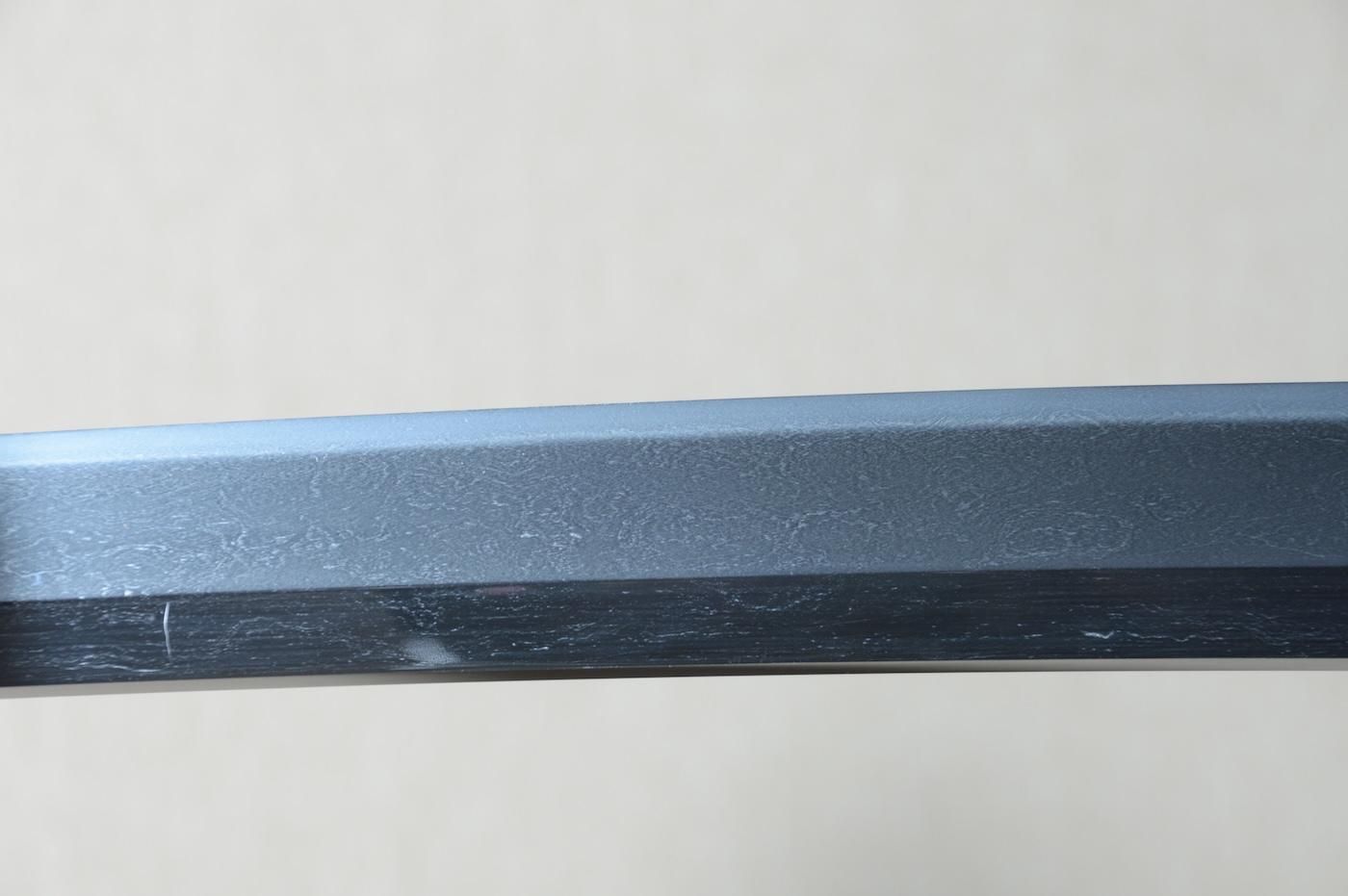
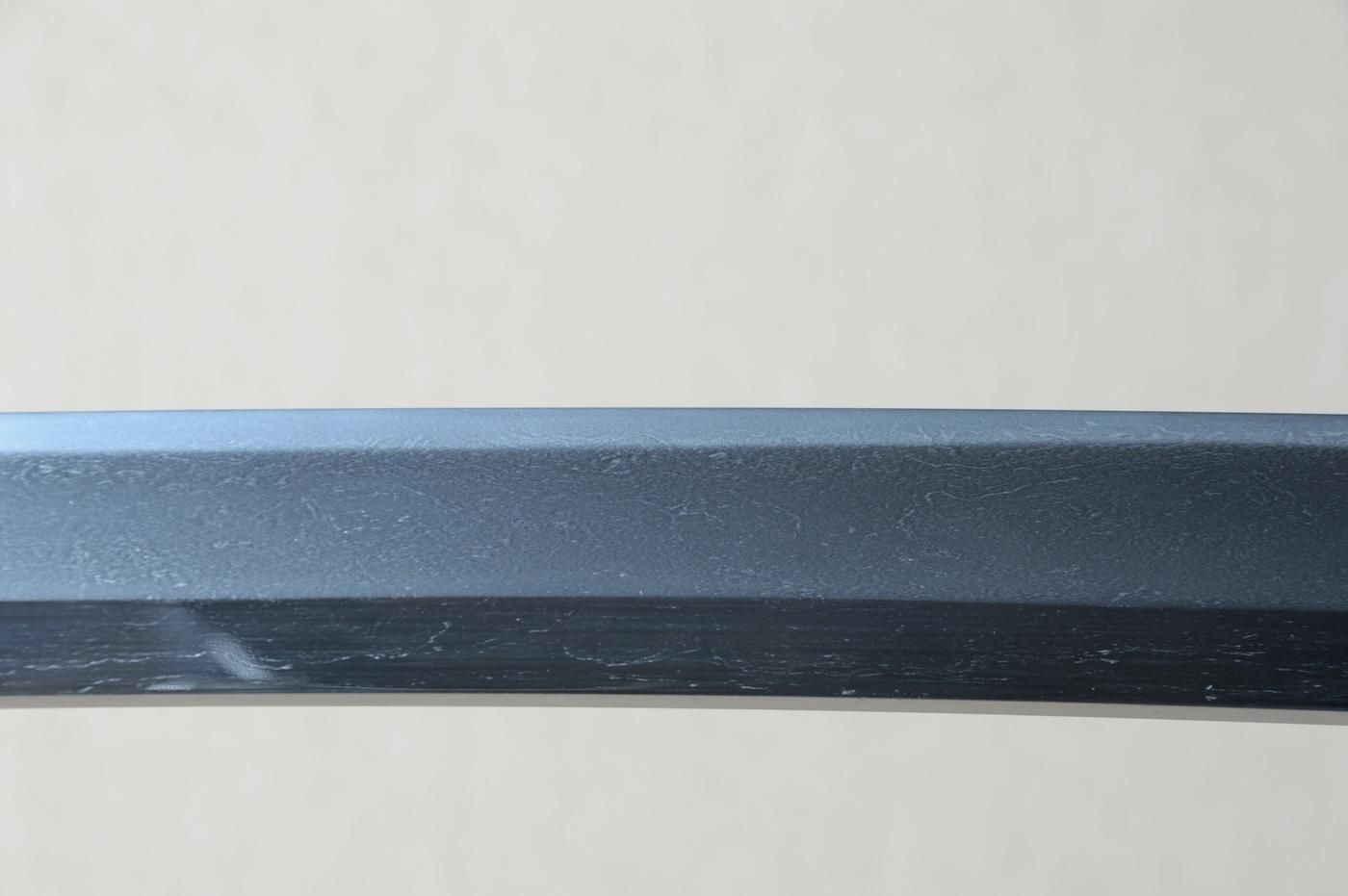
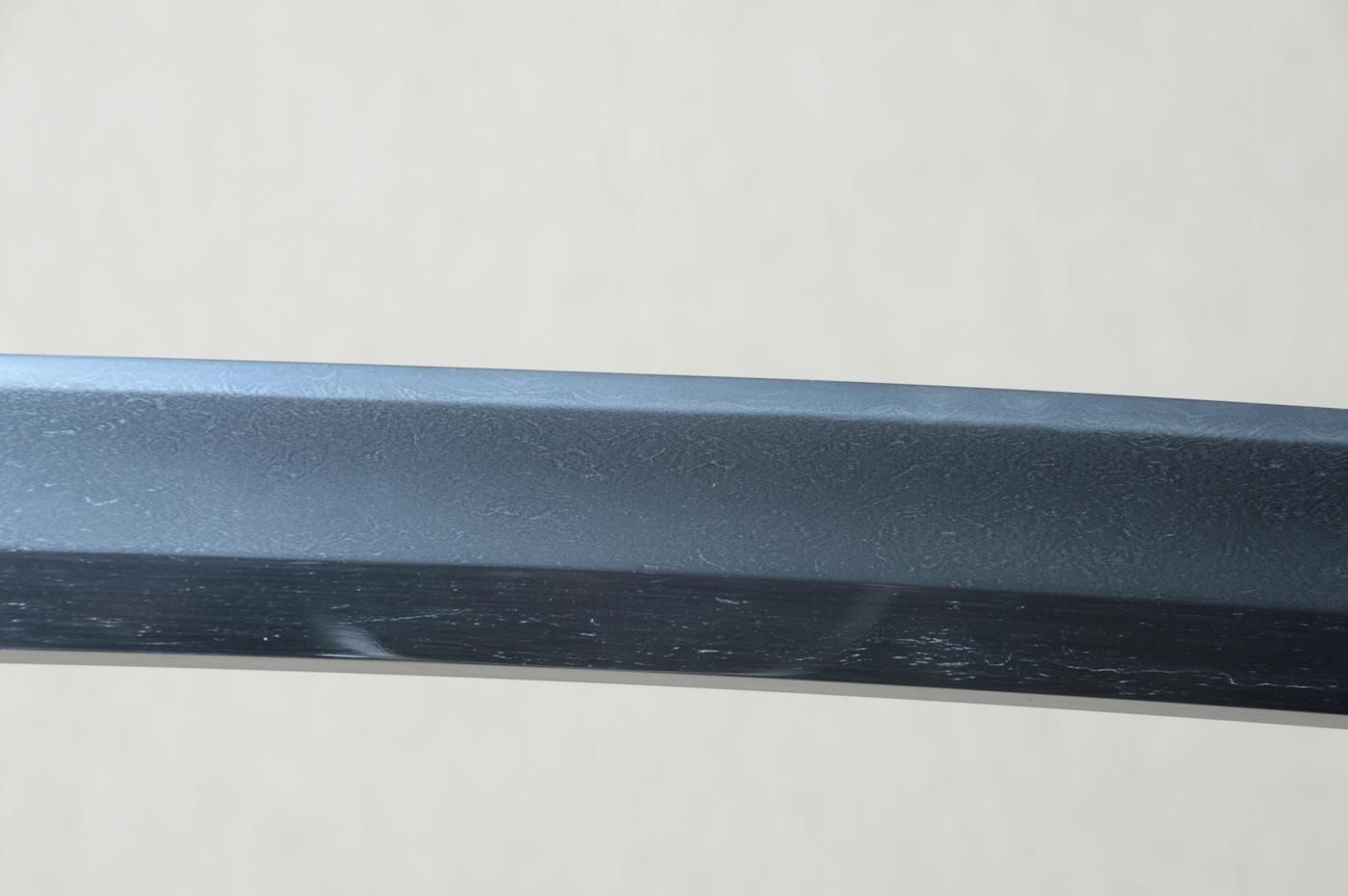
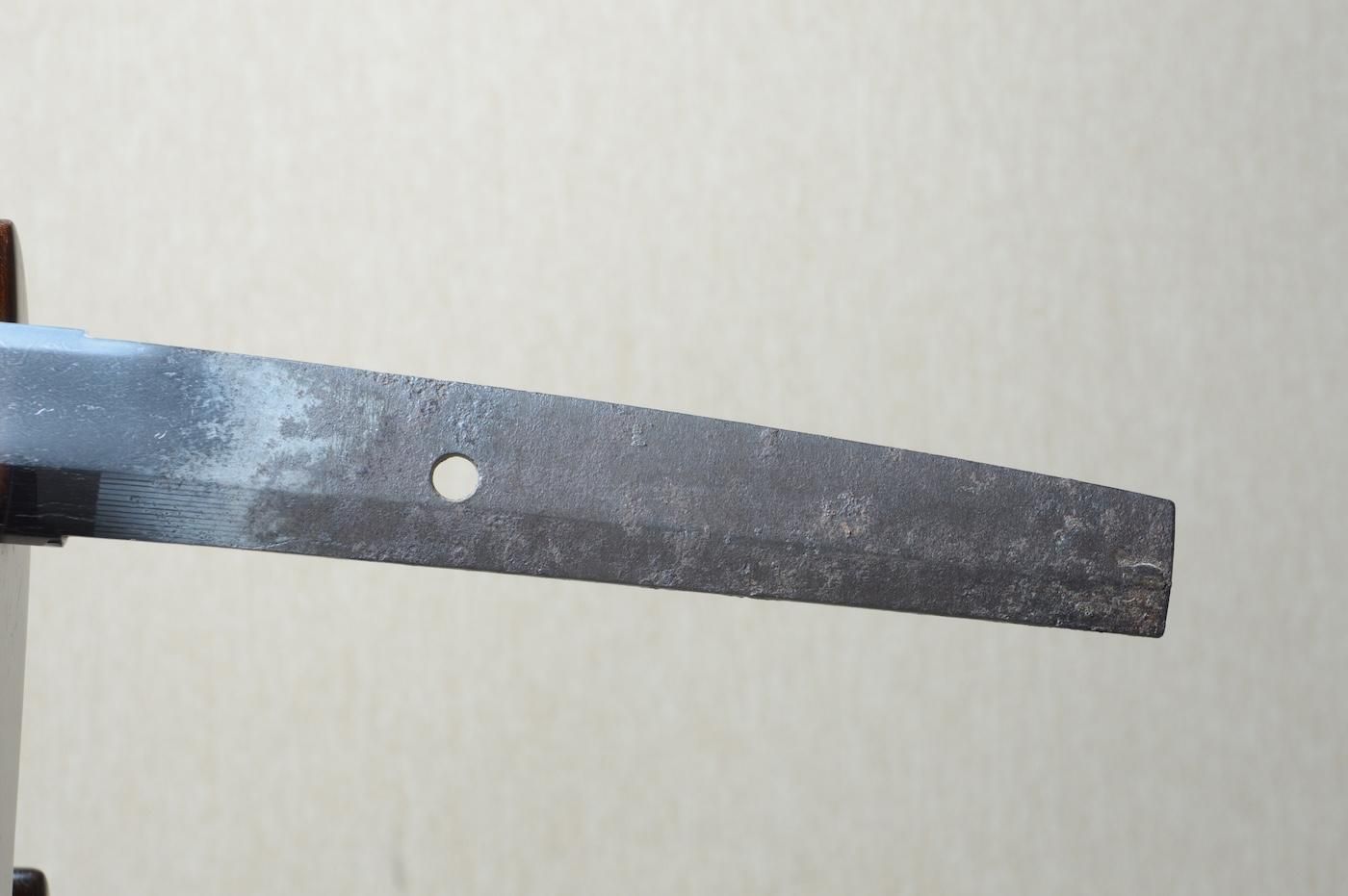
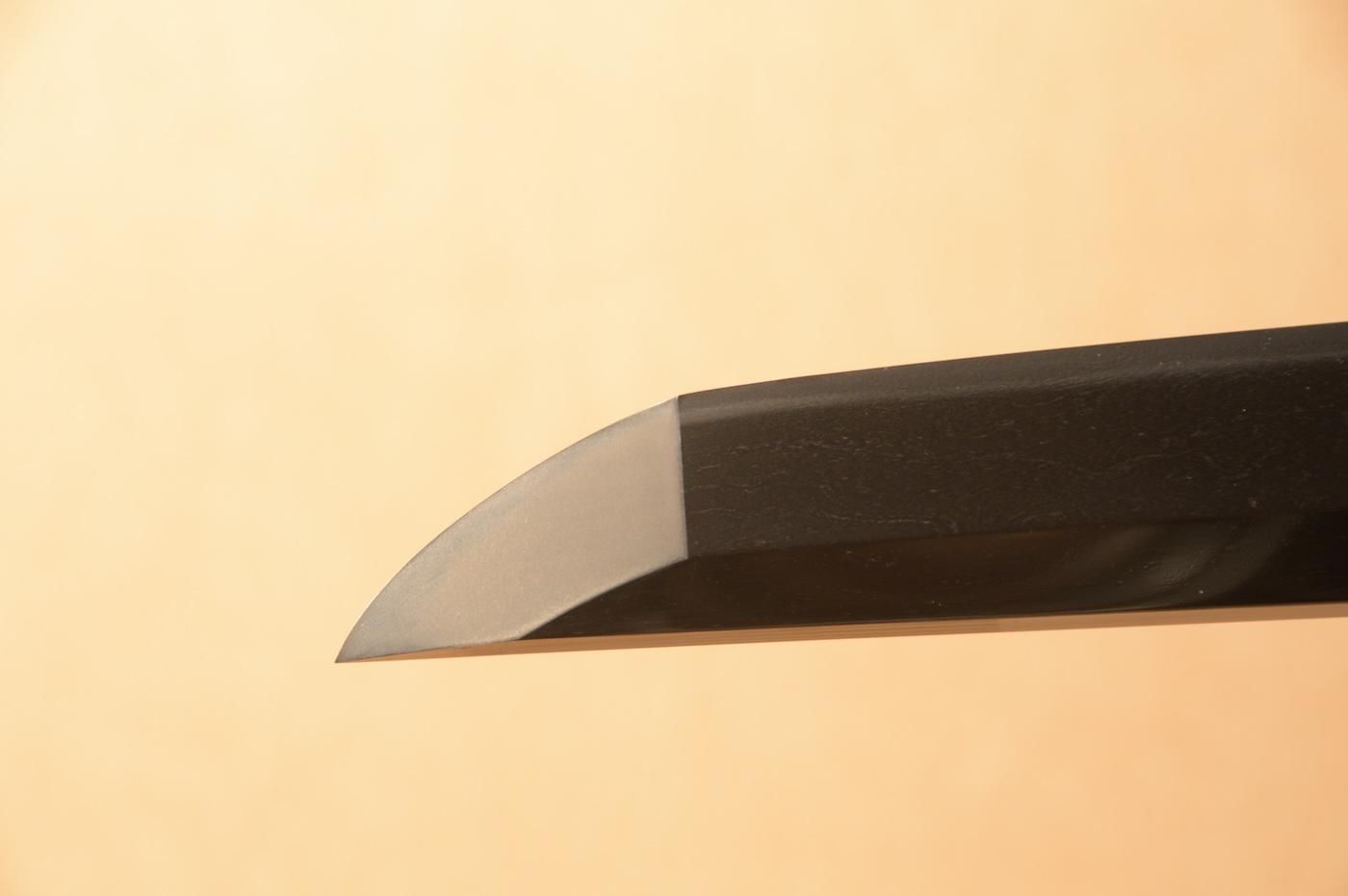
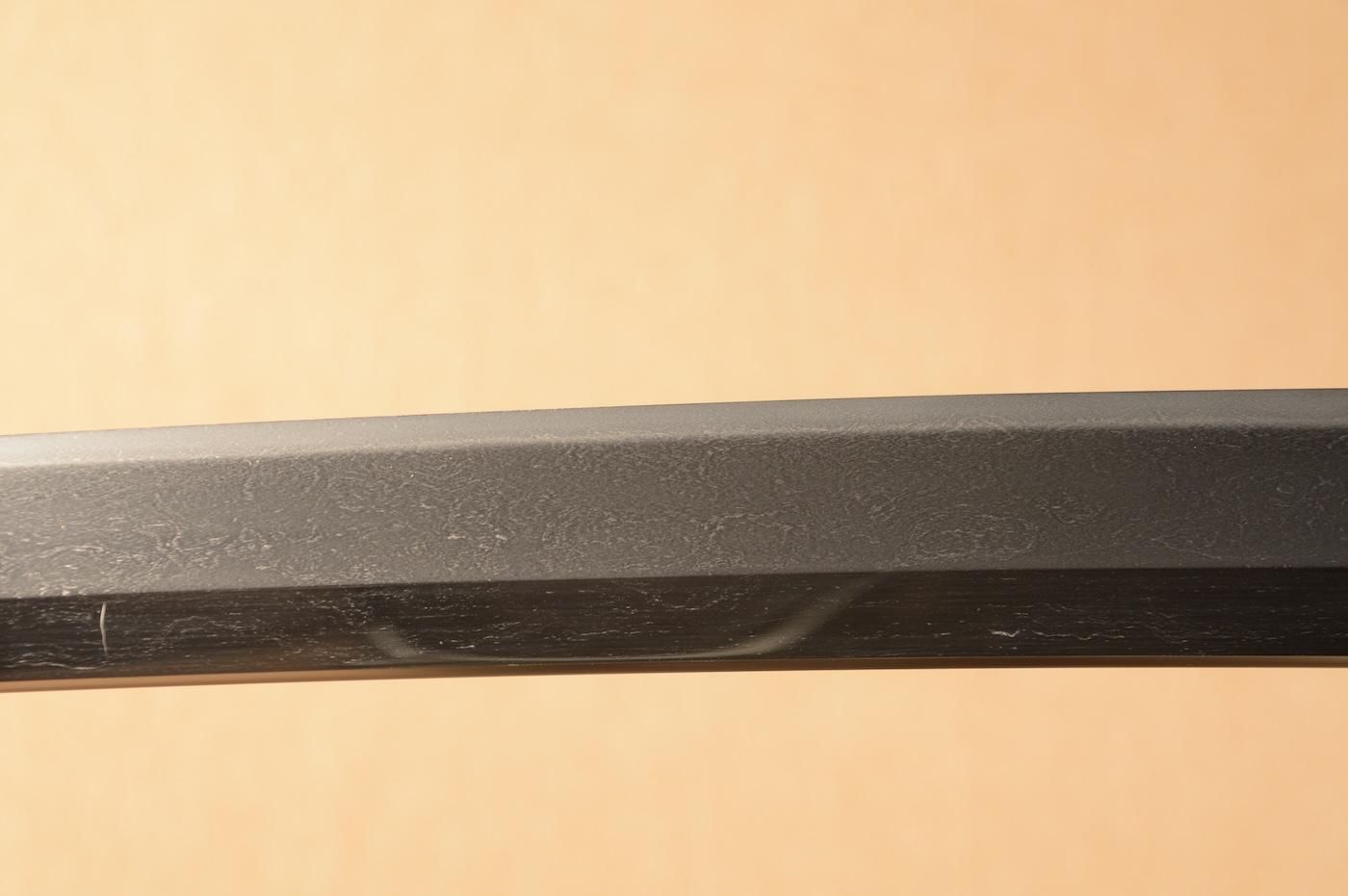
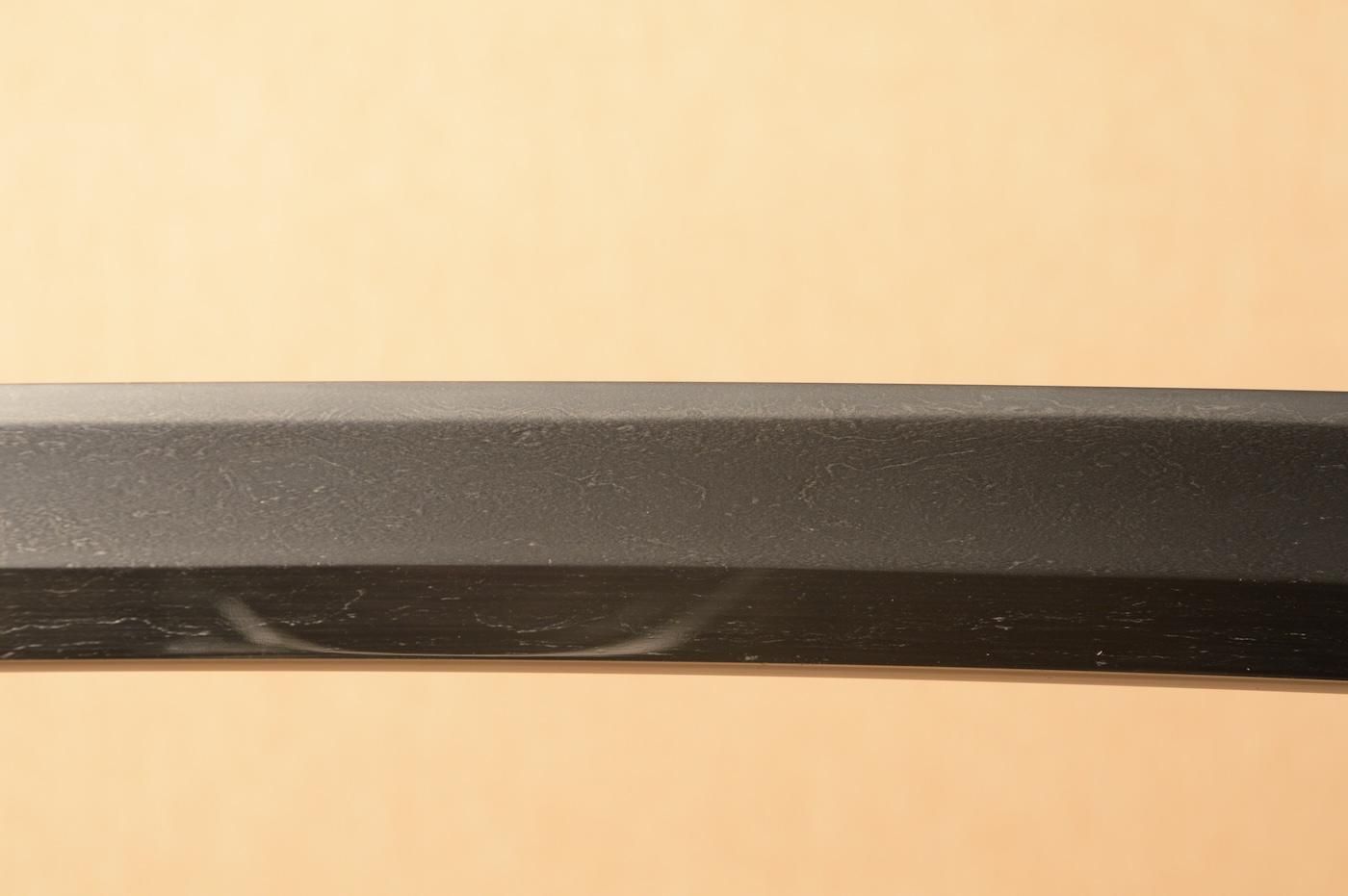
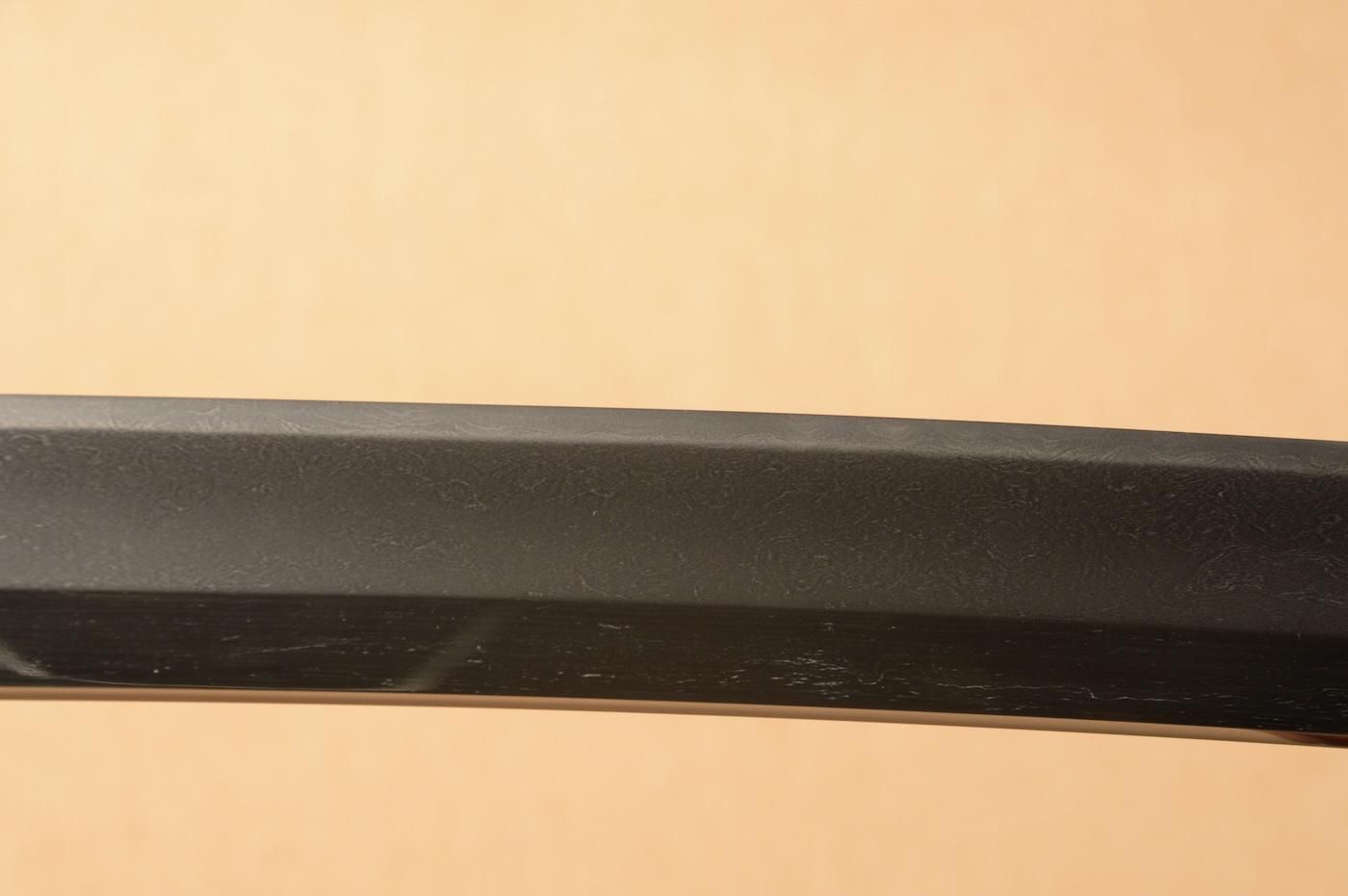
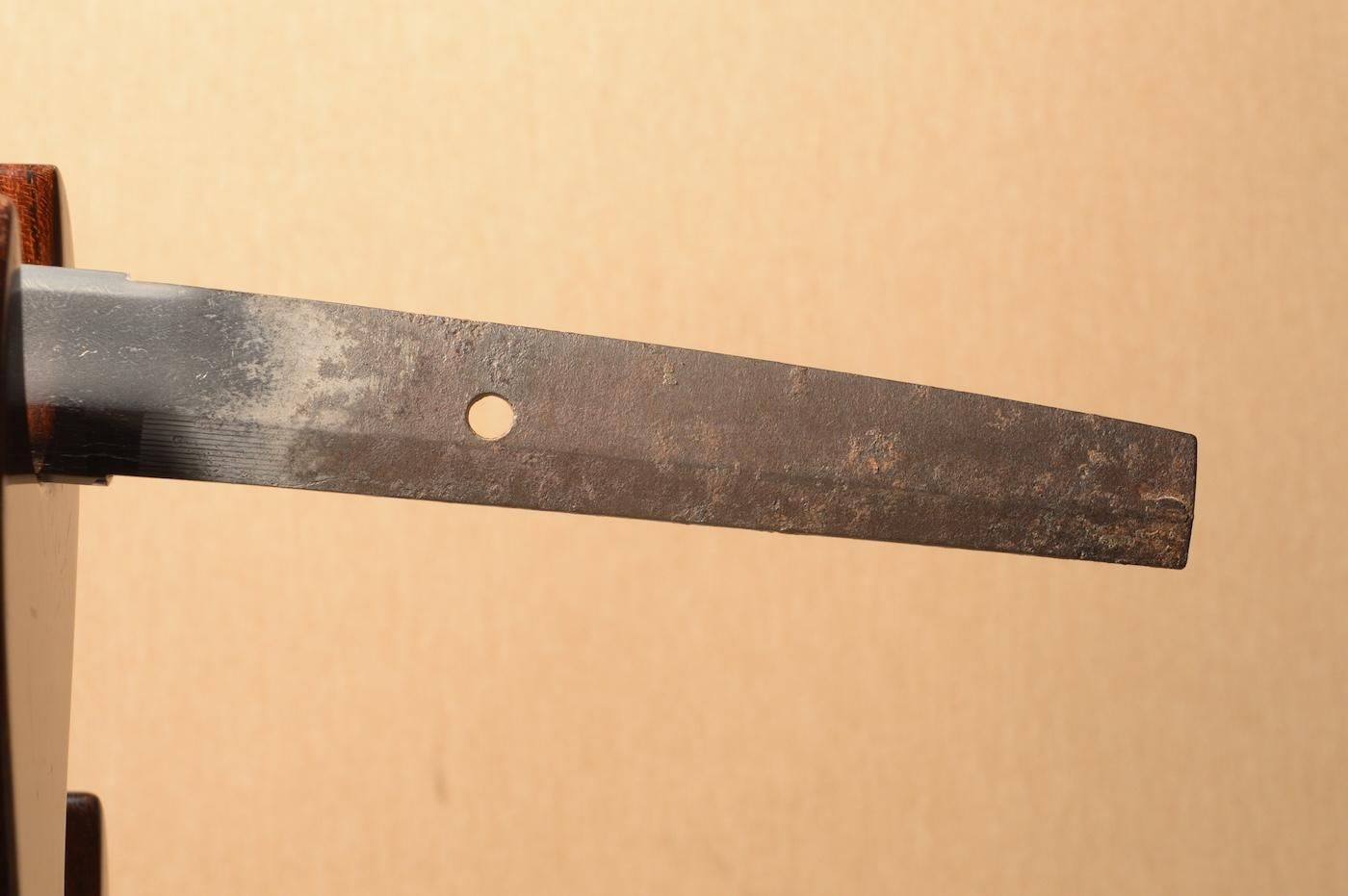
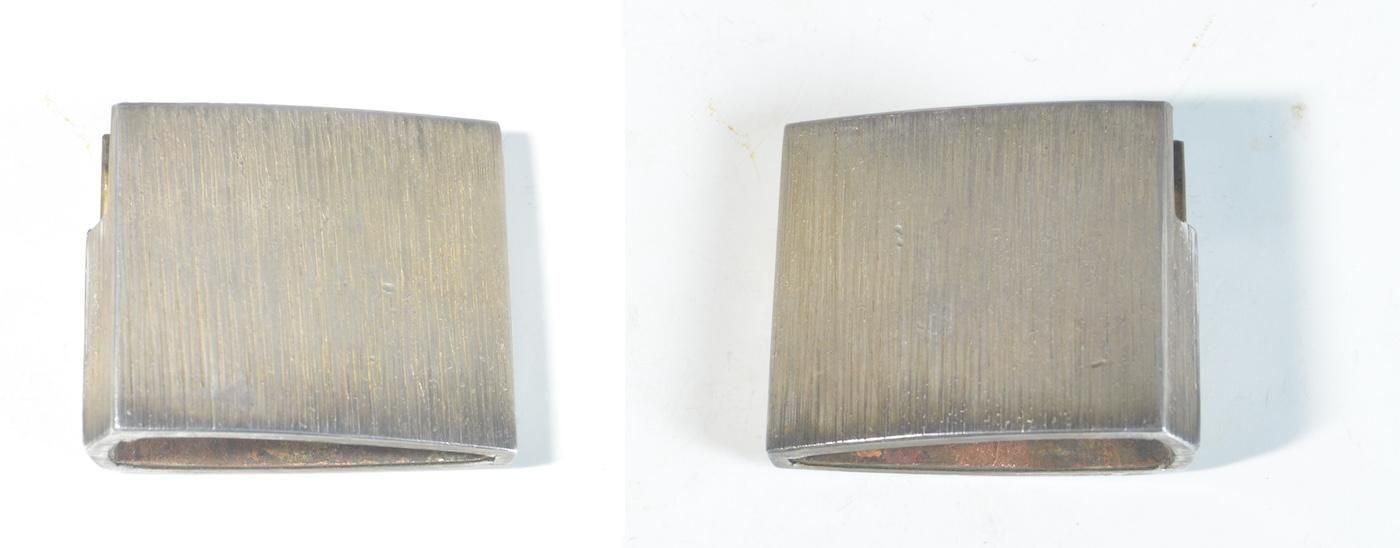
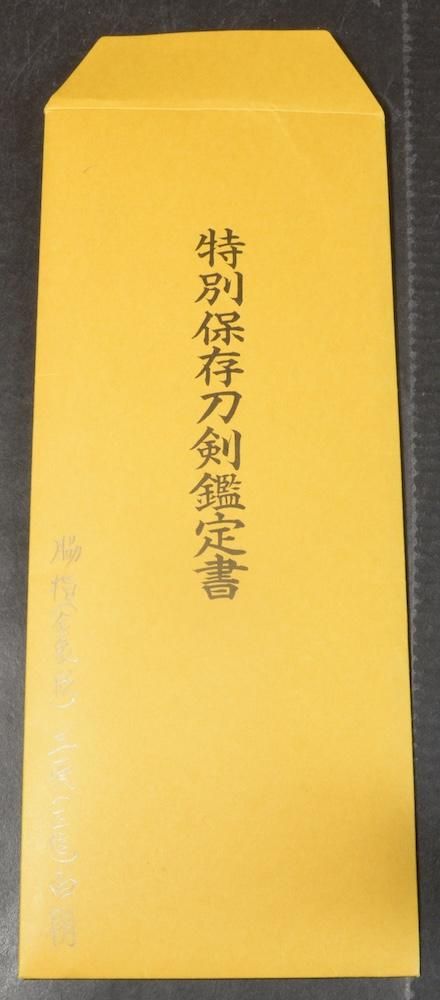
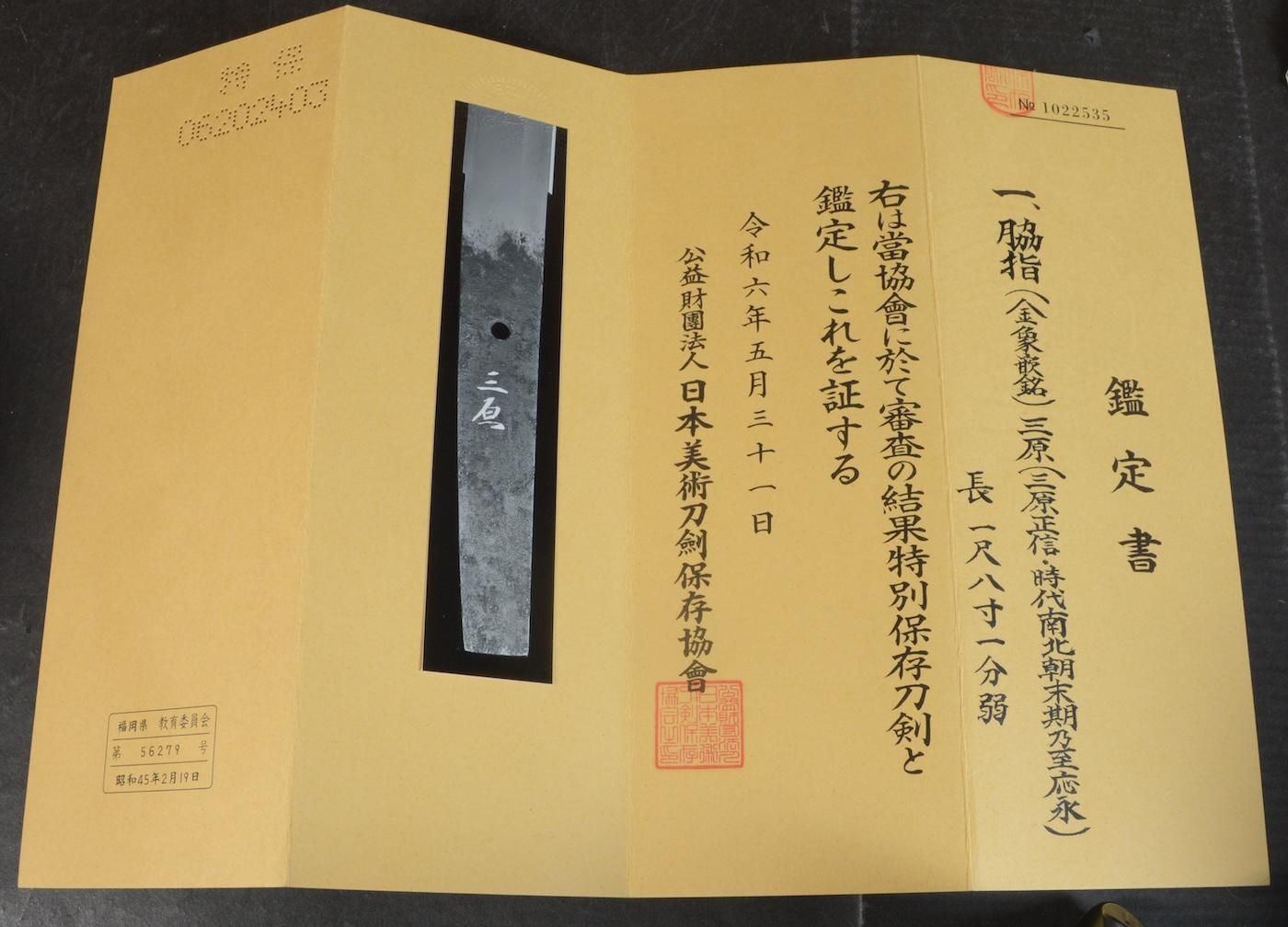
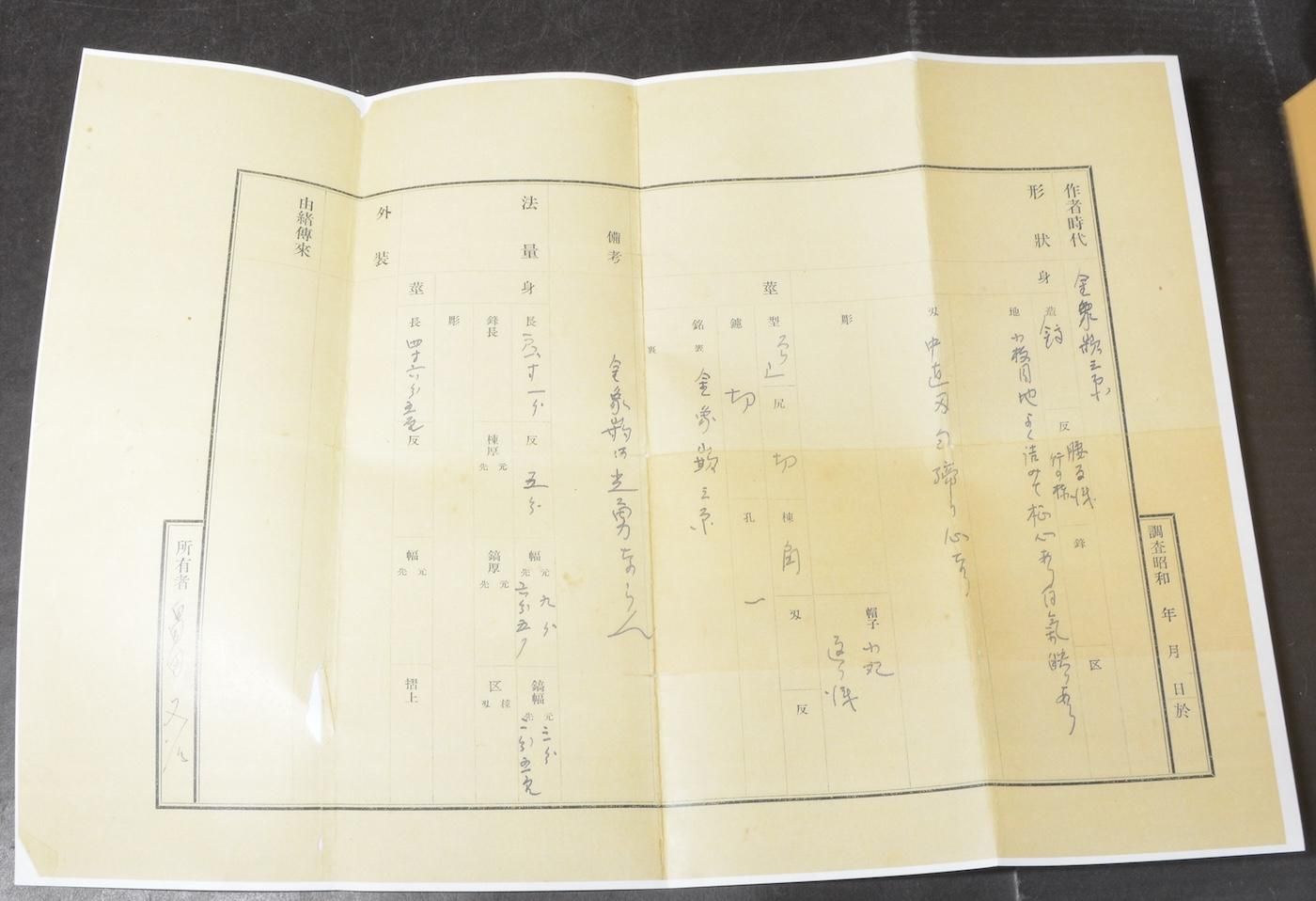
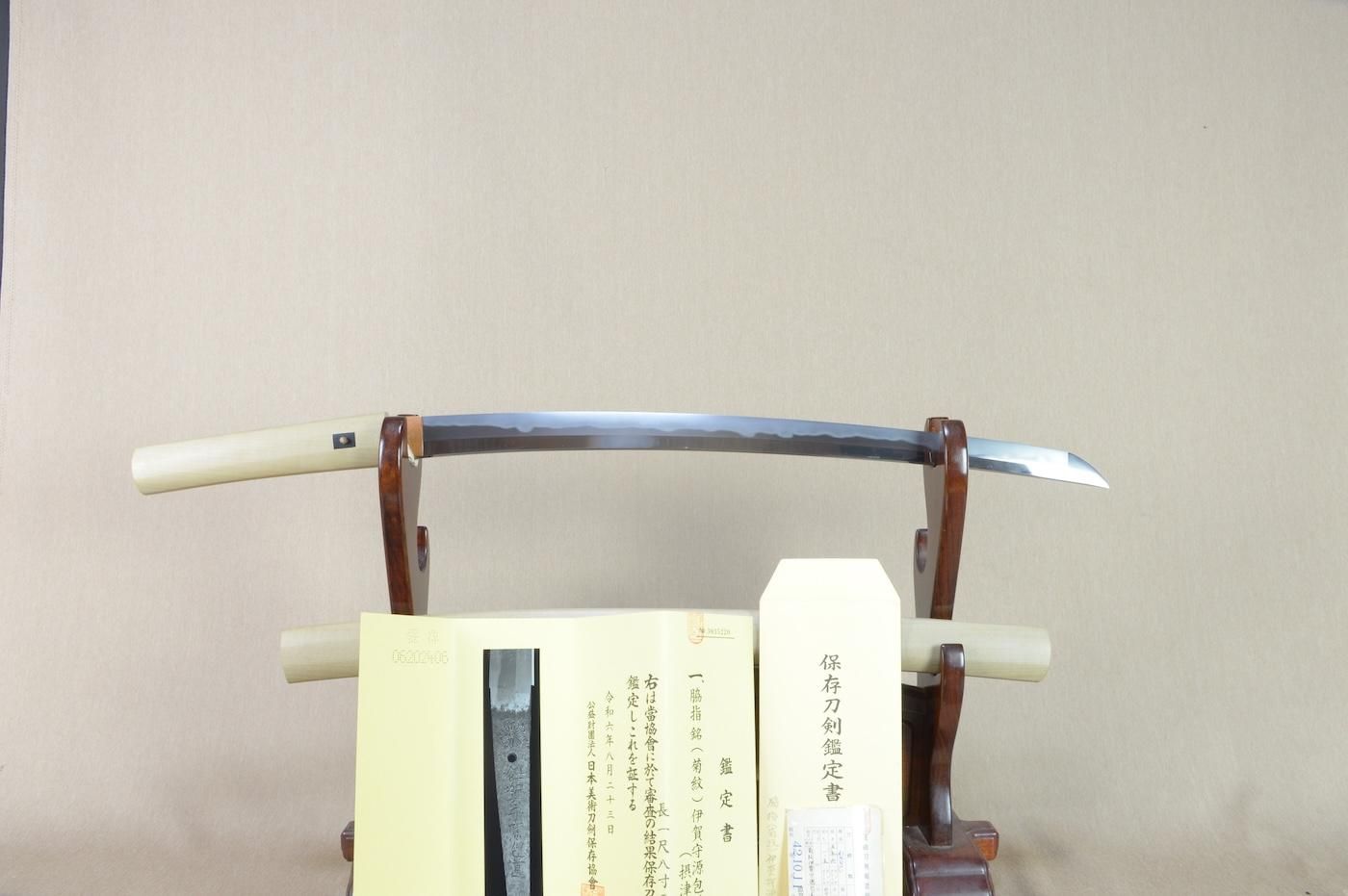
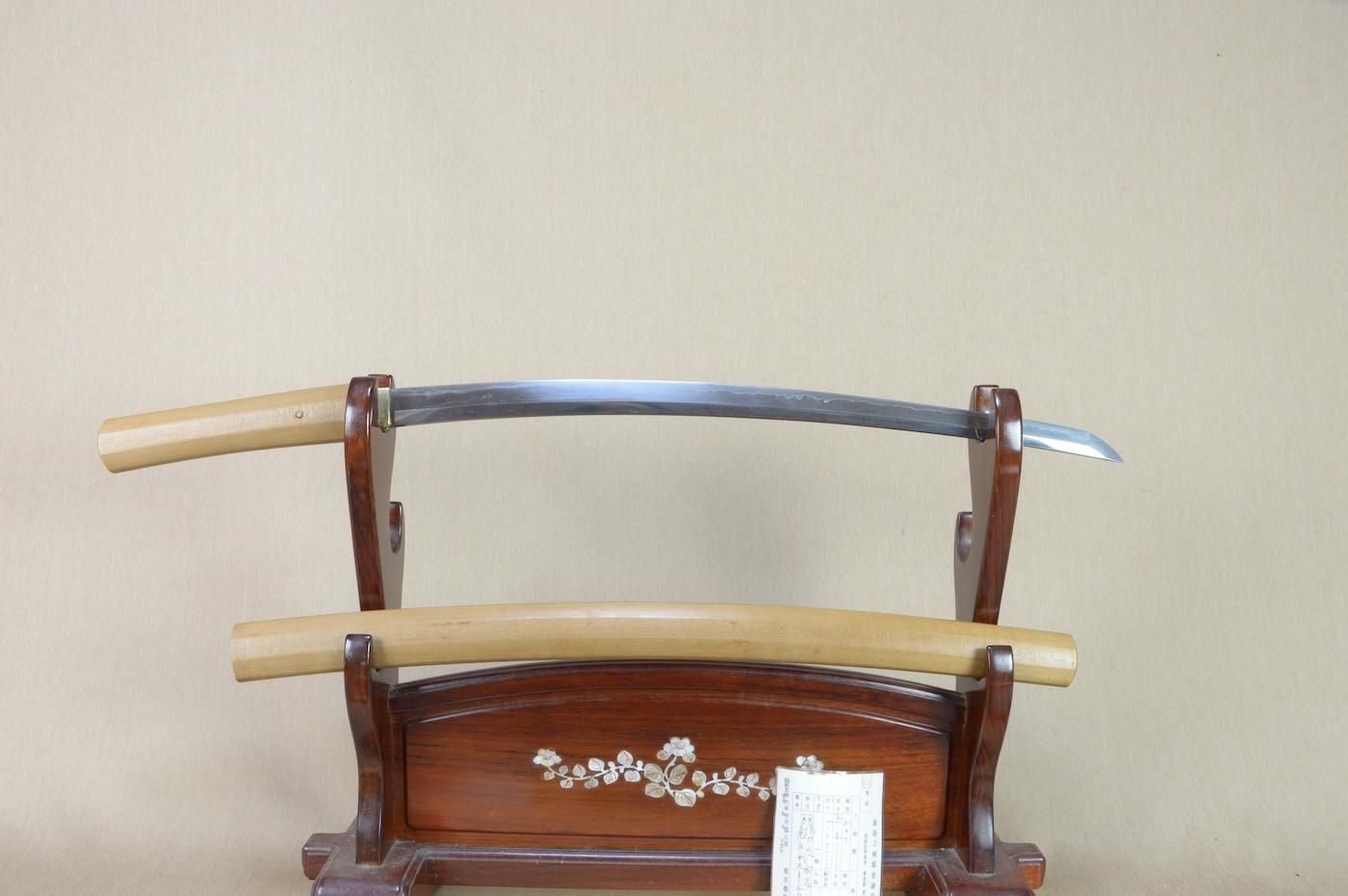
This is a wakizashi by Mihara Masanobu from the Nanbokucho period. The blade has a fine grain and a beautiful appearance. The hamon is a clear, thin straight line with a soft edge and a shallow return in the small round boshi. Comes with a shirasaya.
 NihontoWatch
kinzogan-mei · Mihara · Nanbokucho · nagasa 54.6cm · sori 1cm
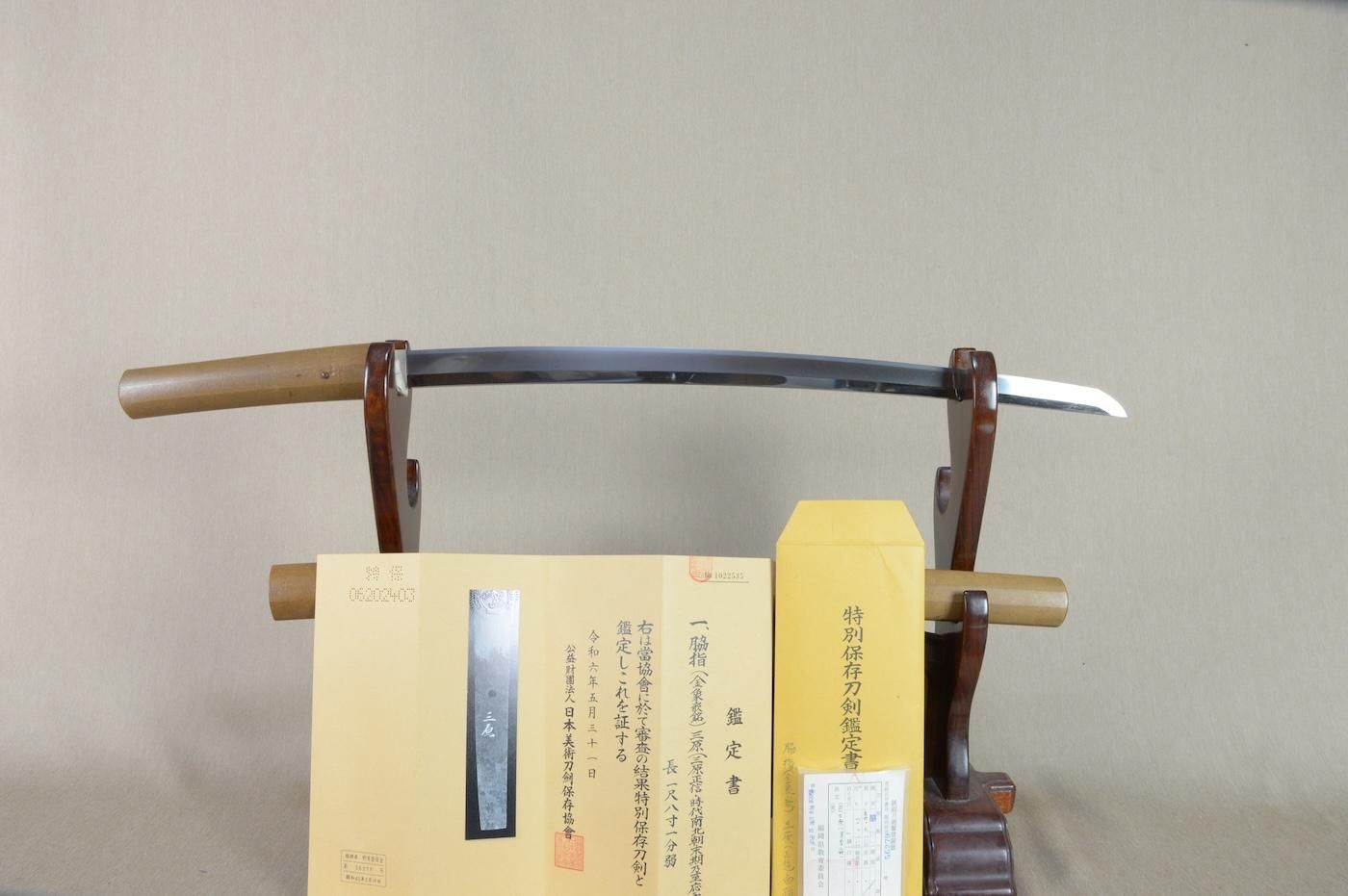
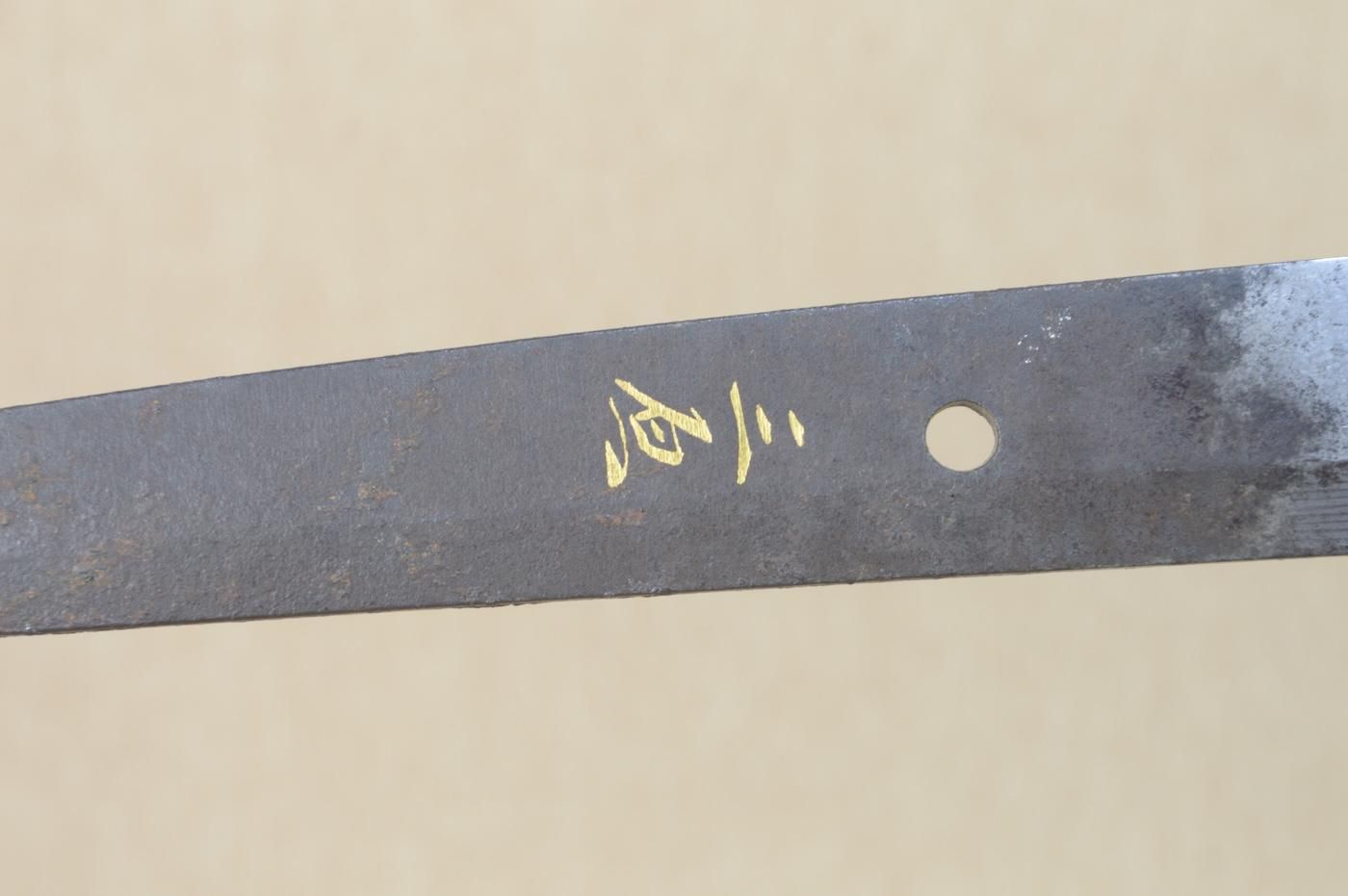
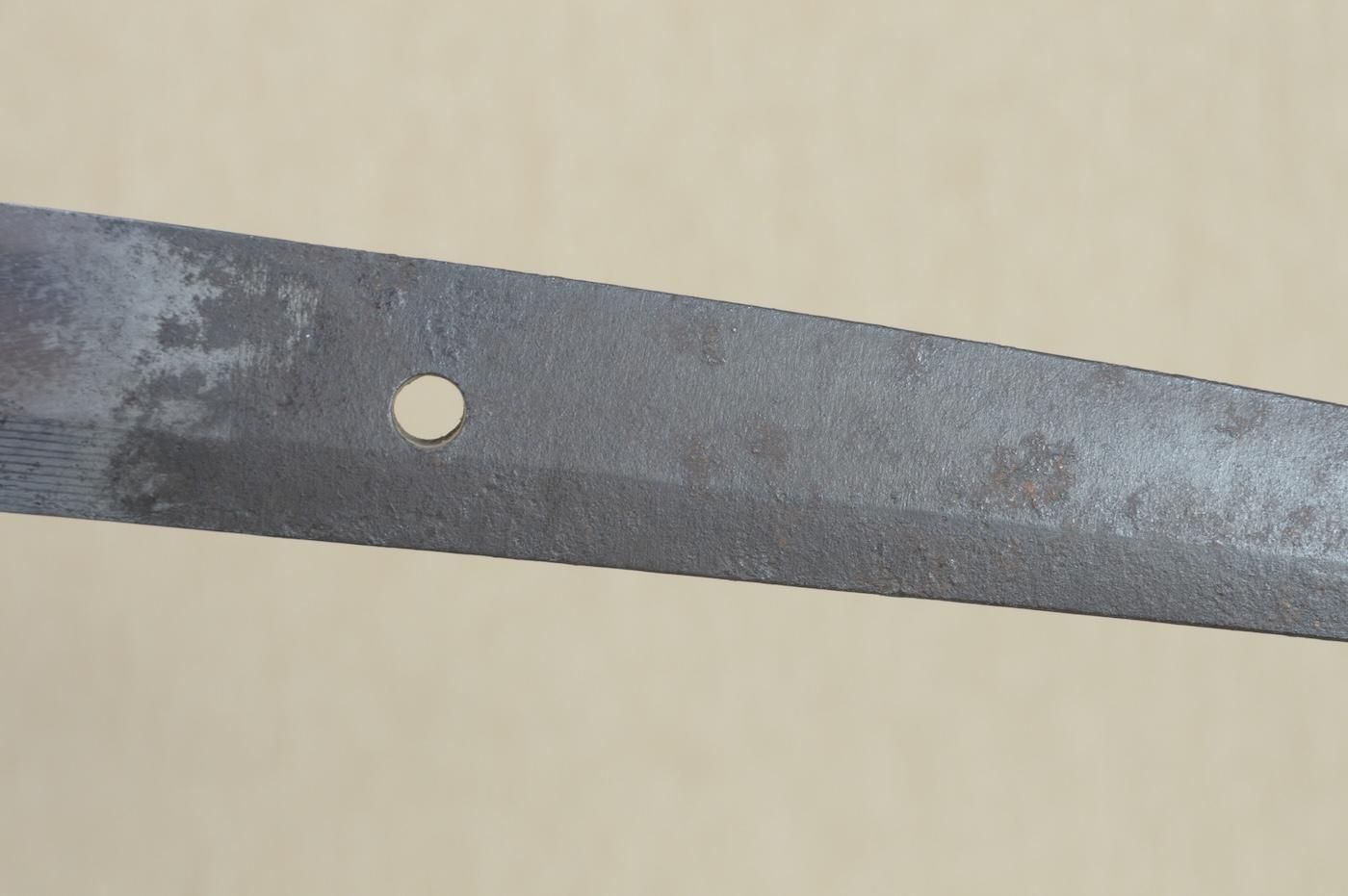
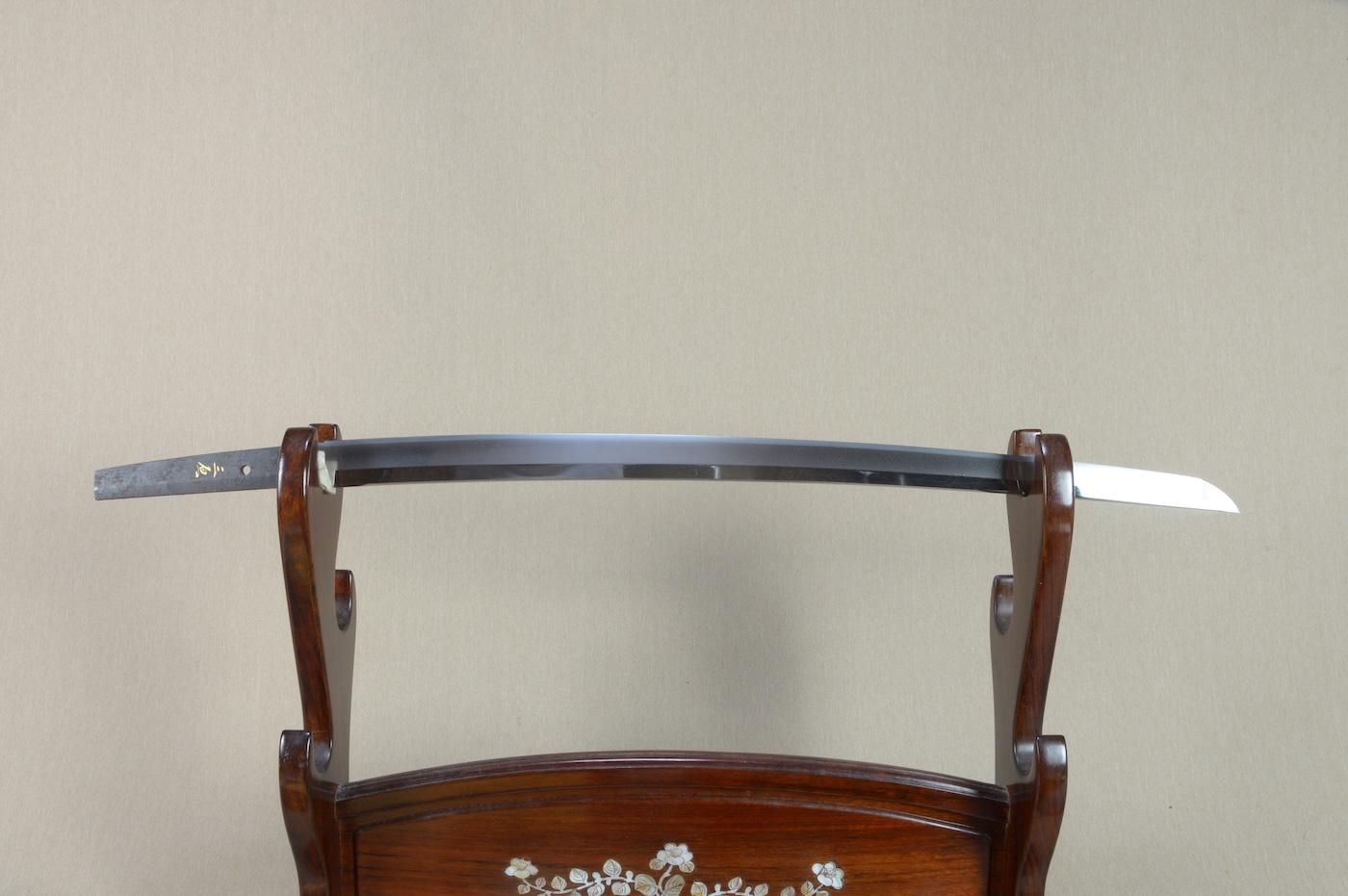
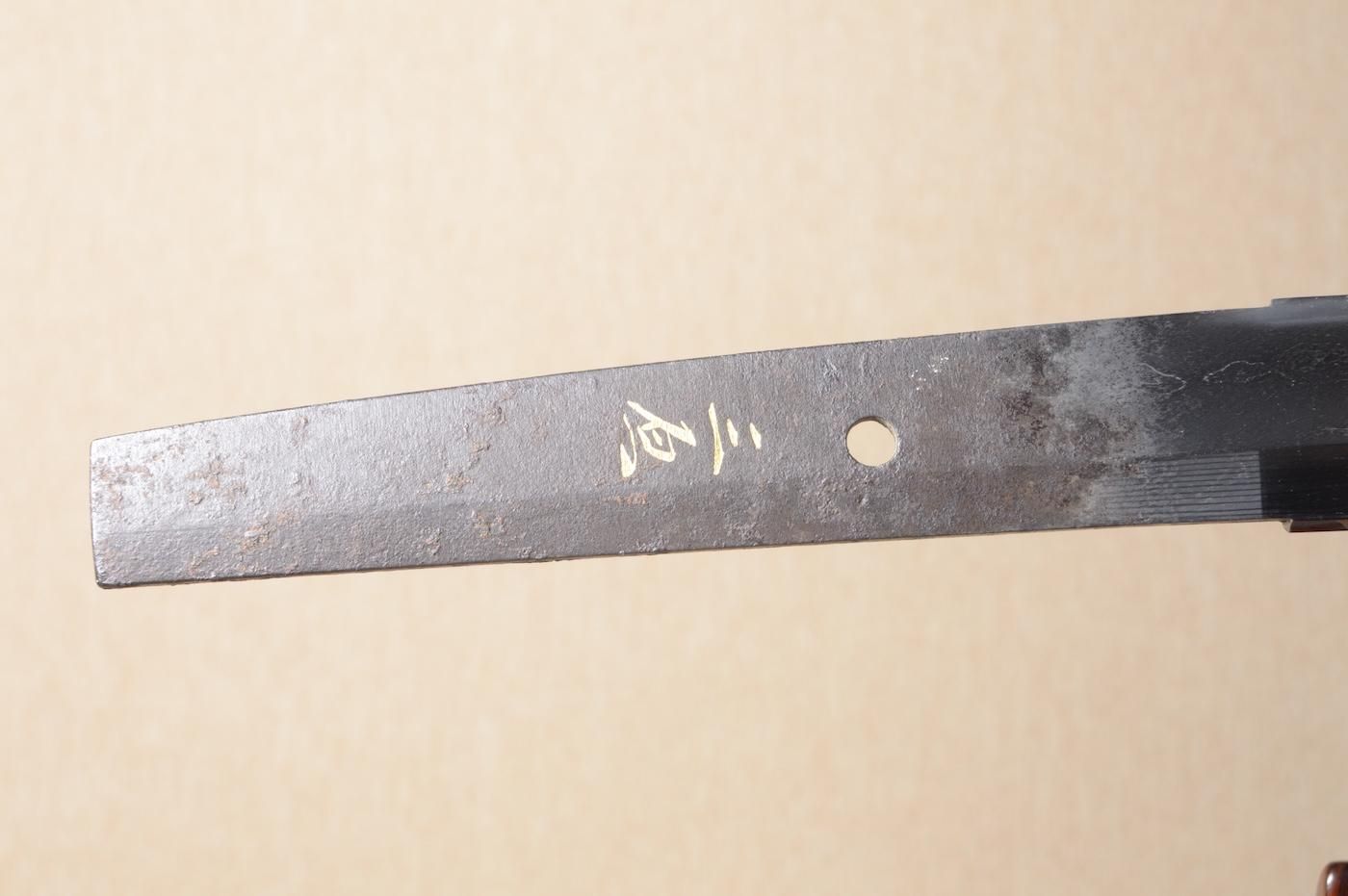
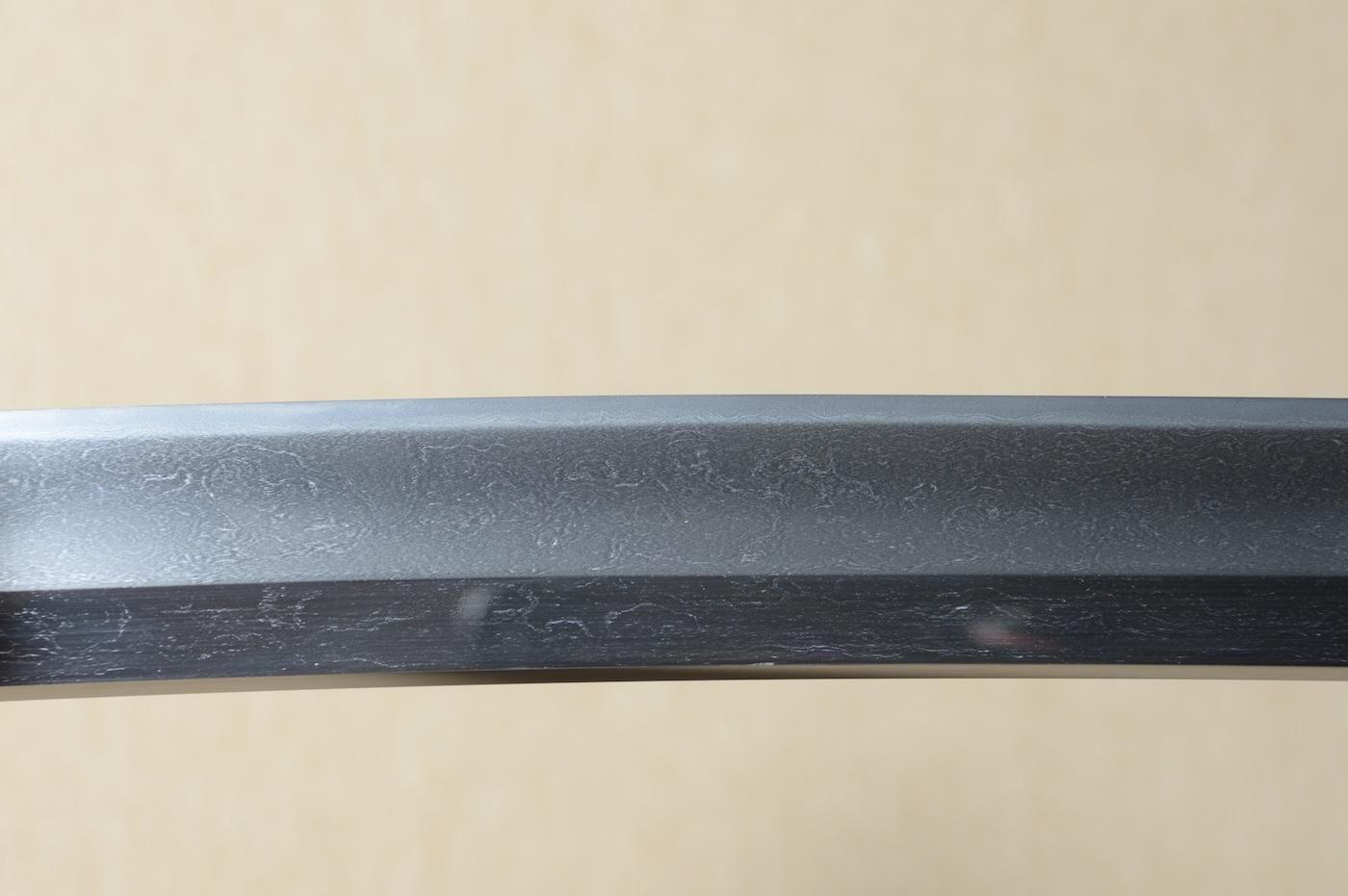
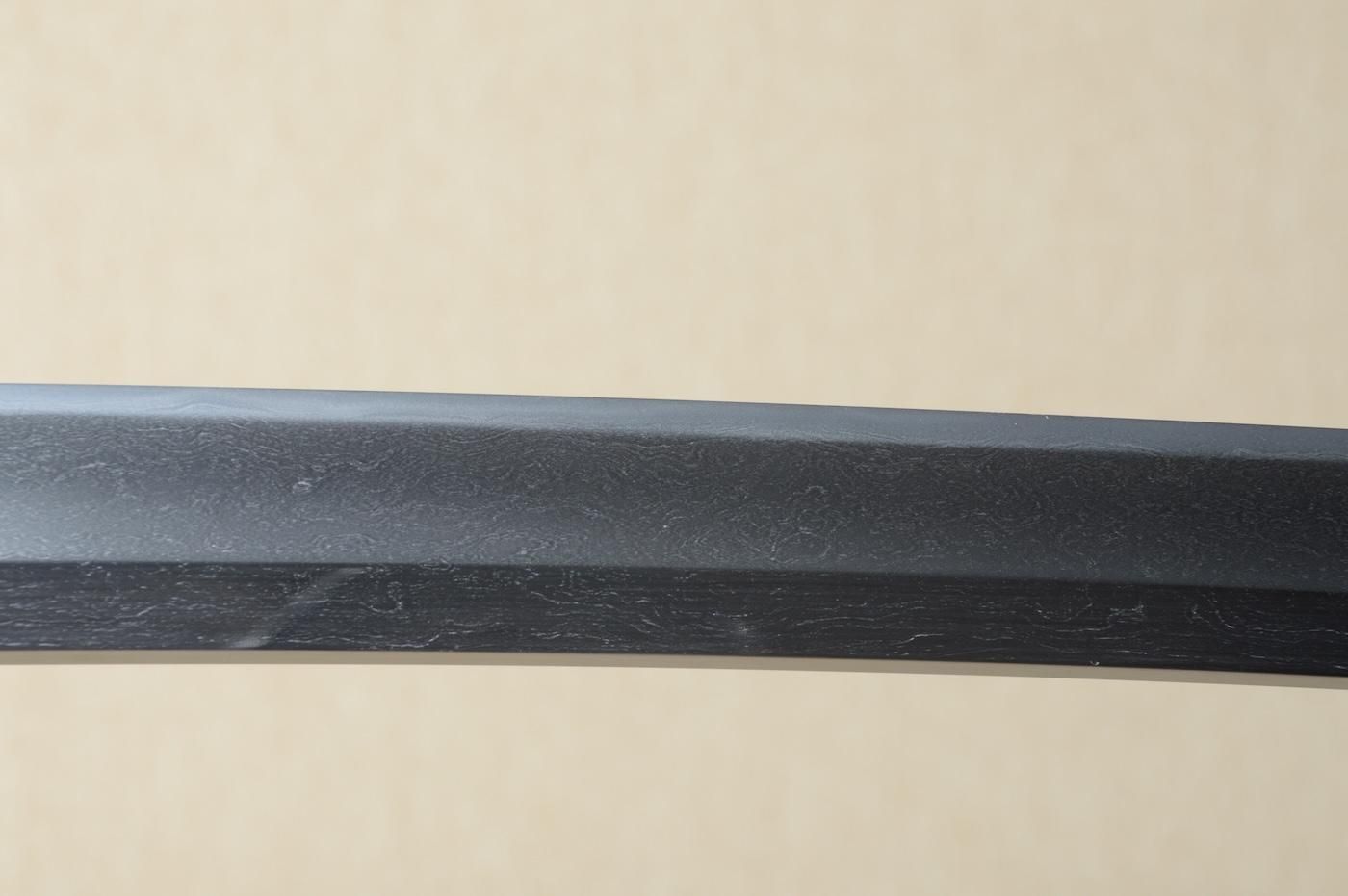
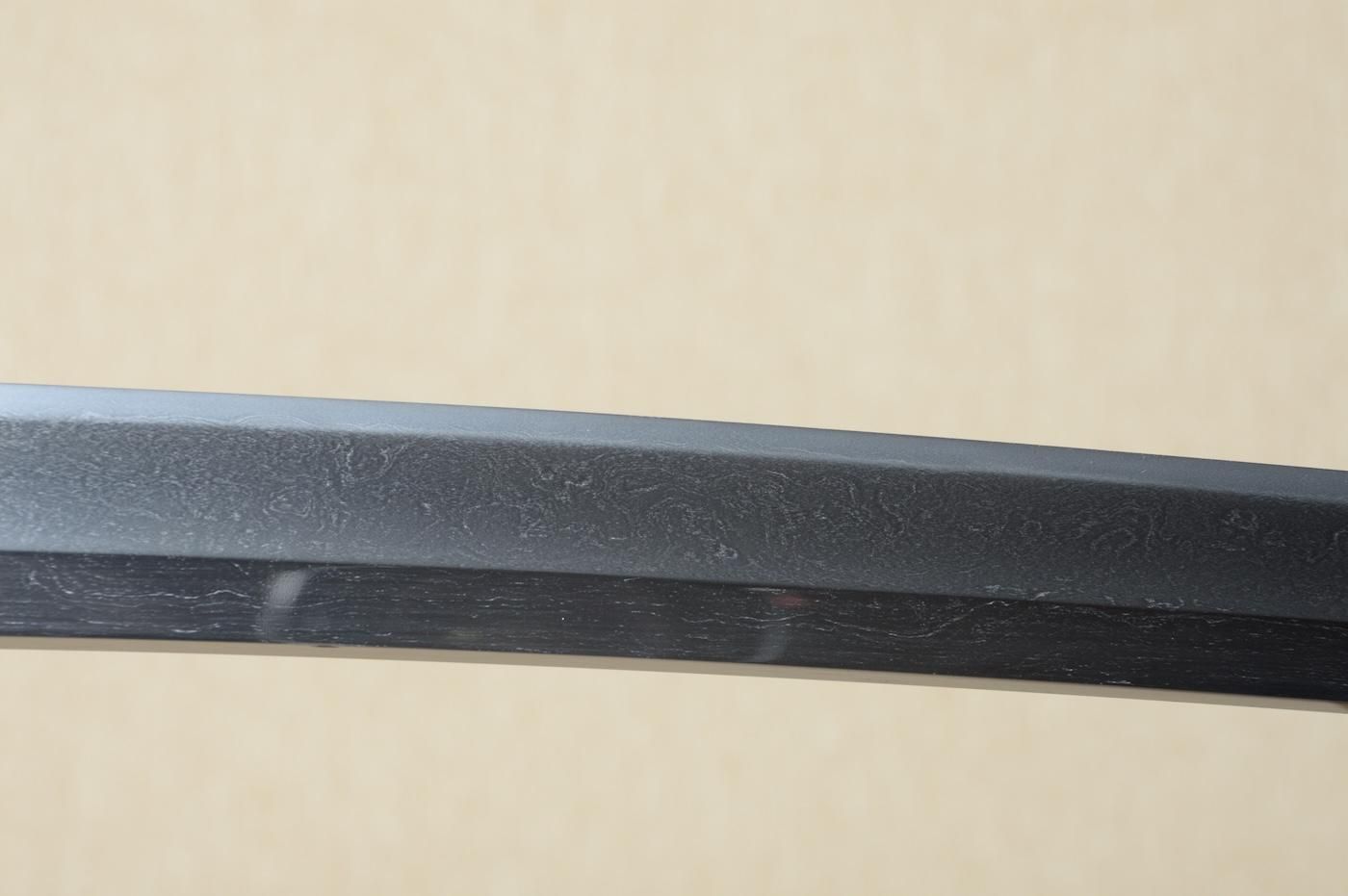
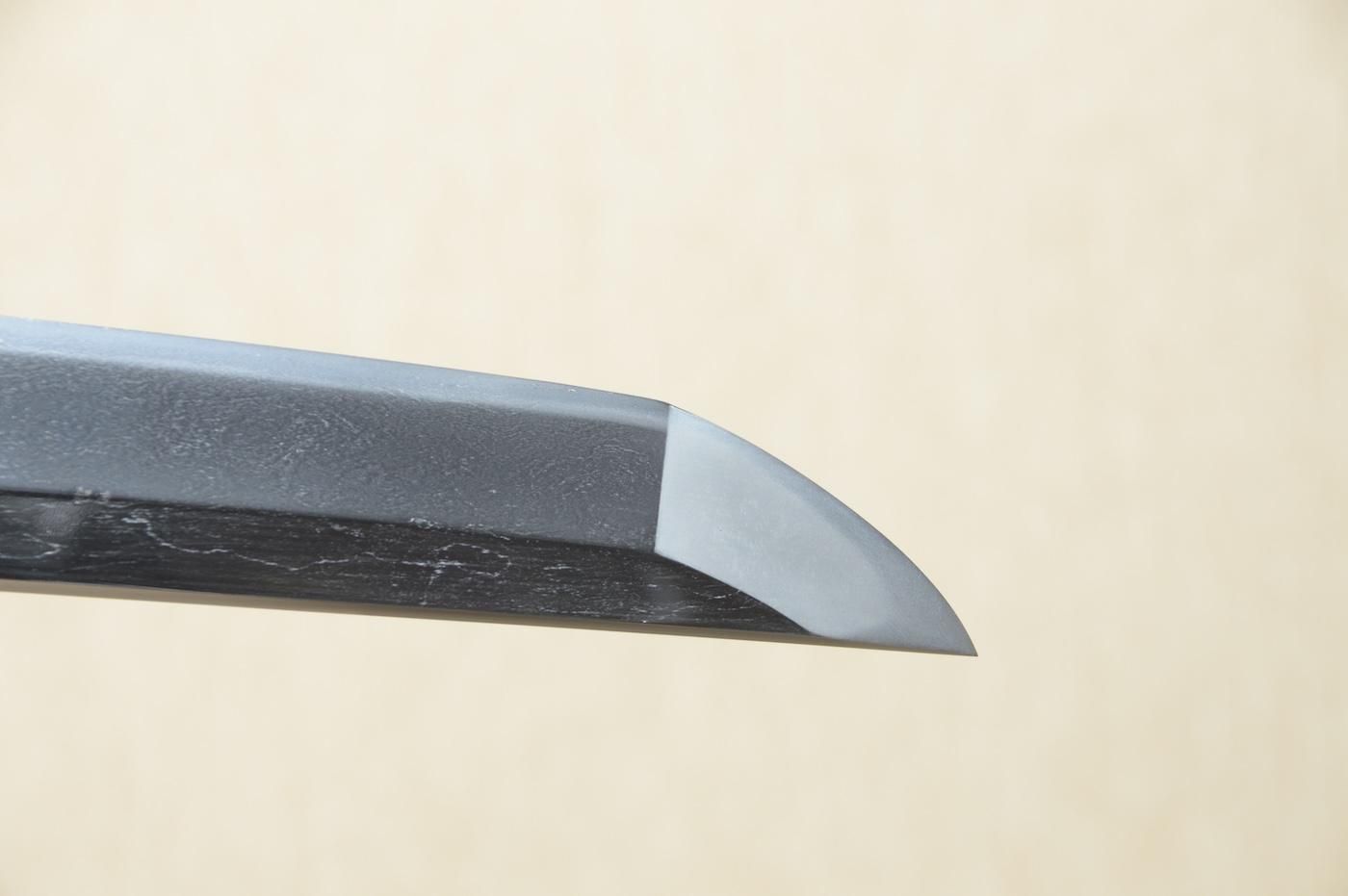
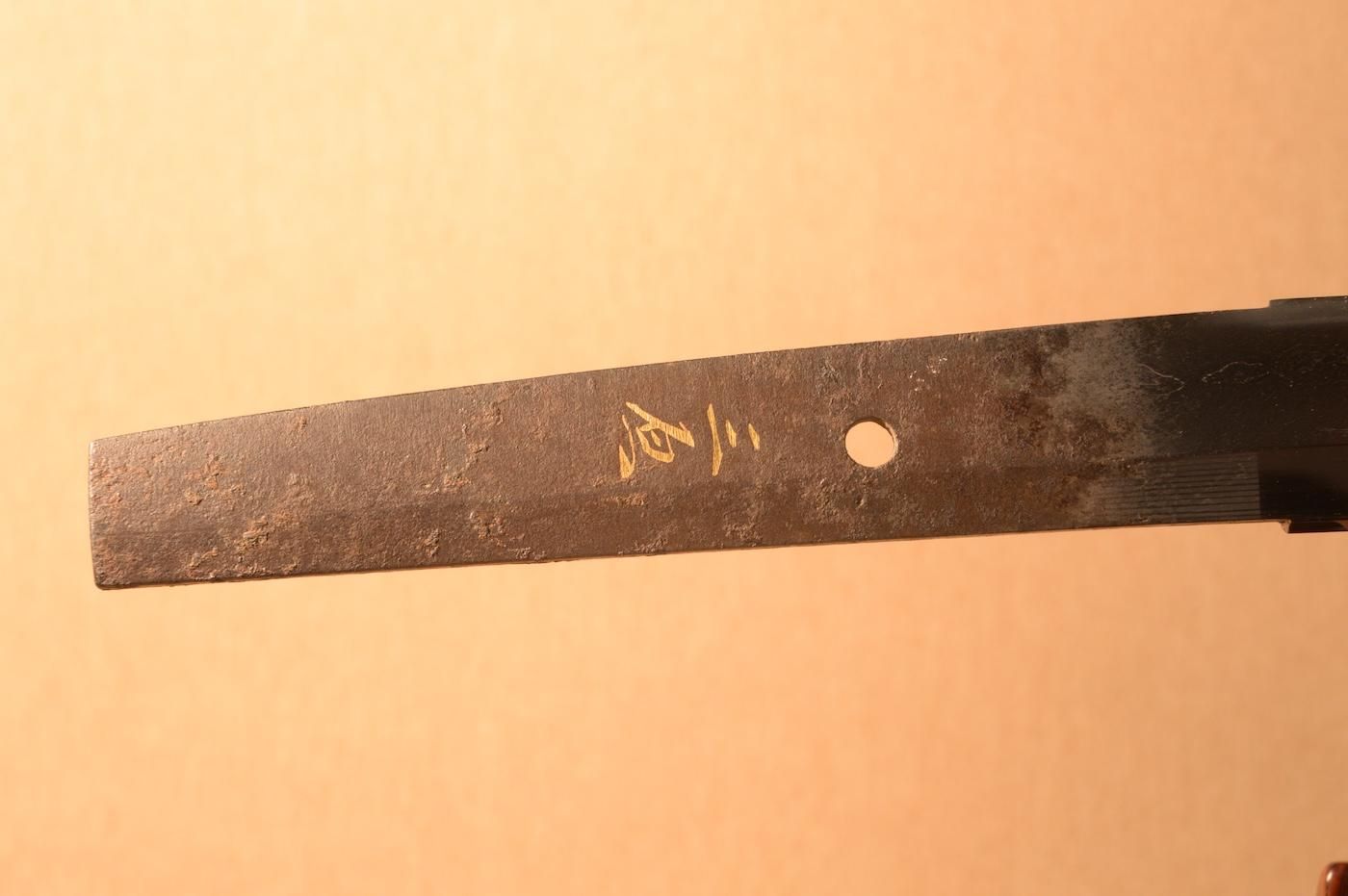
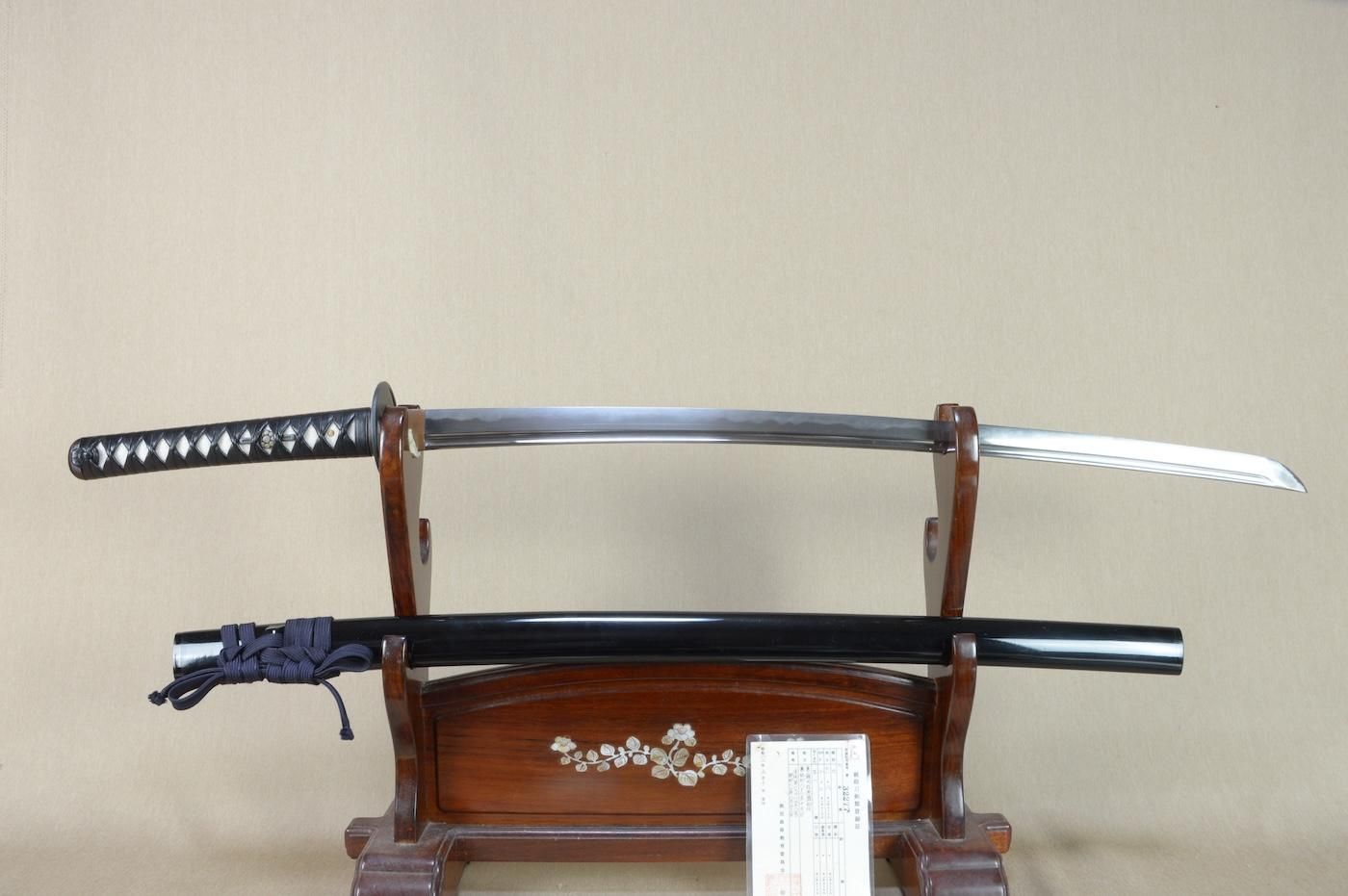
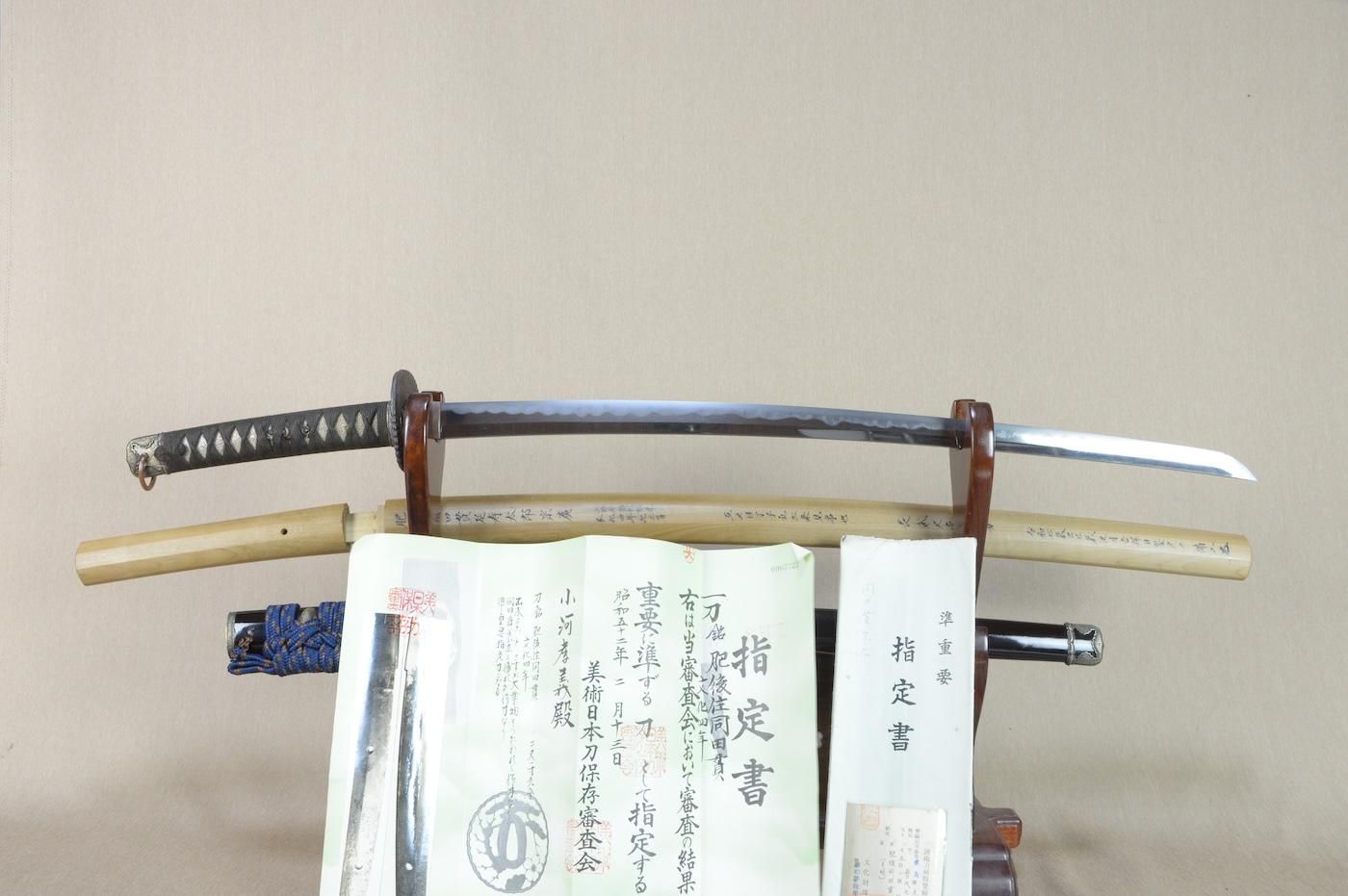
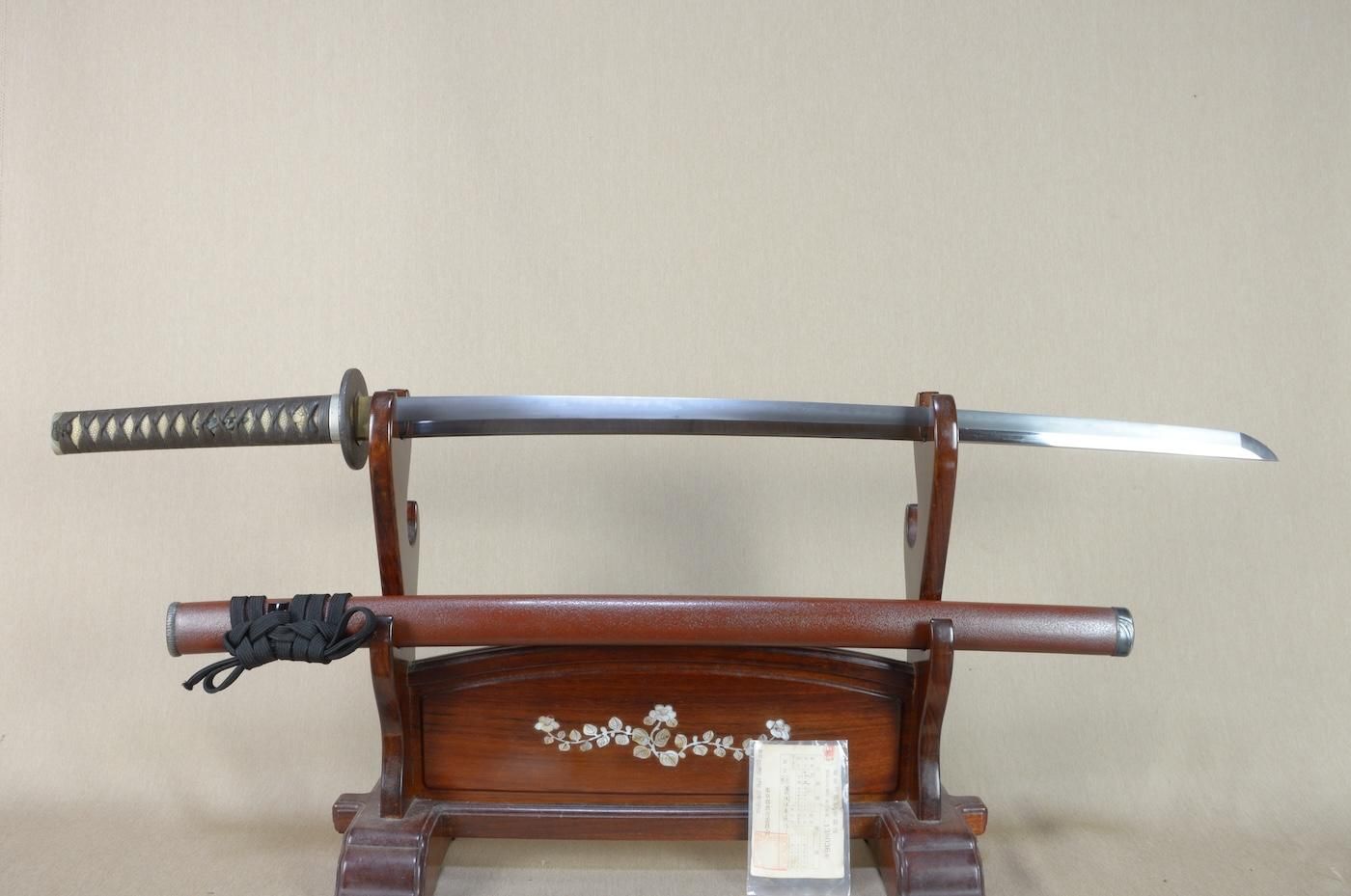
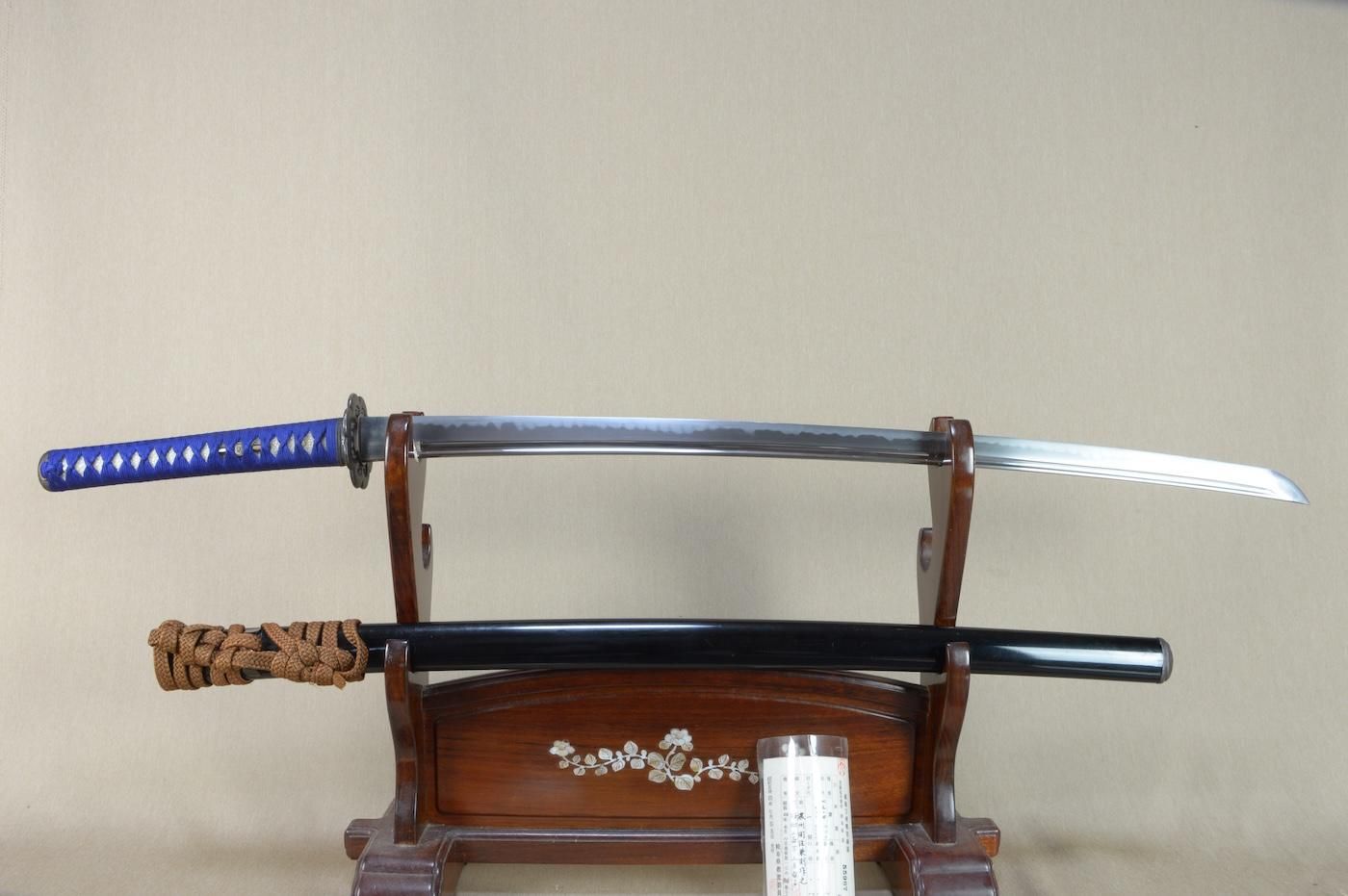
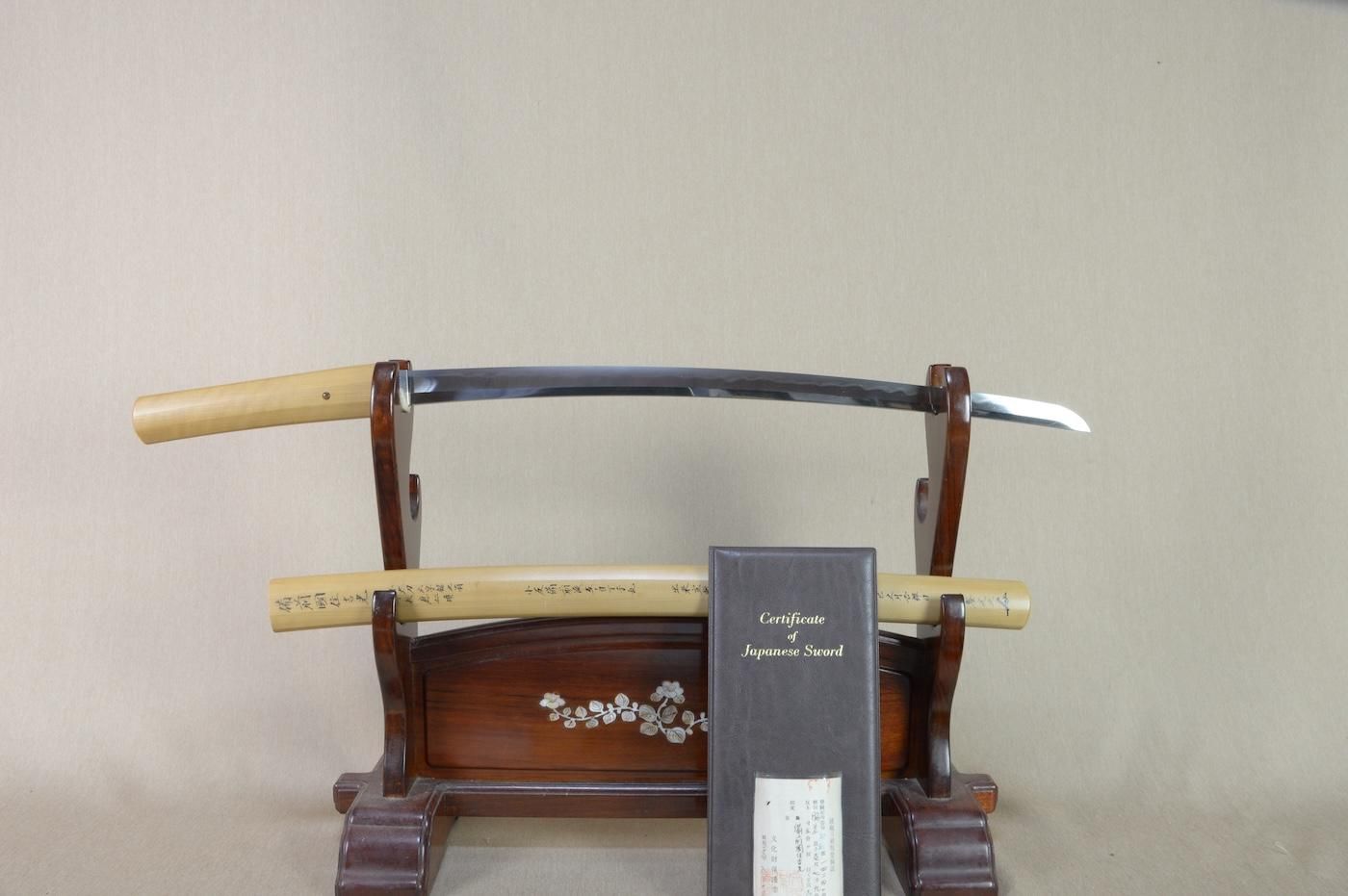
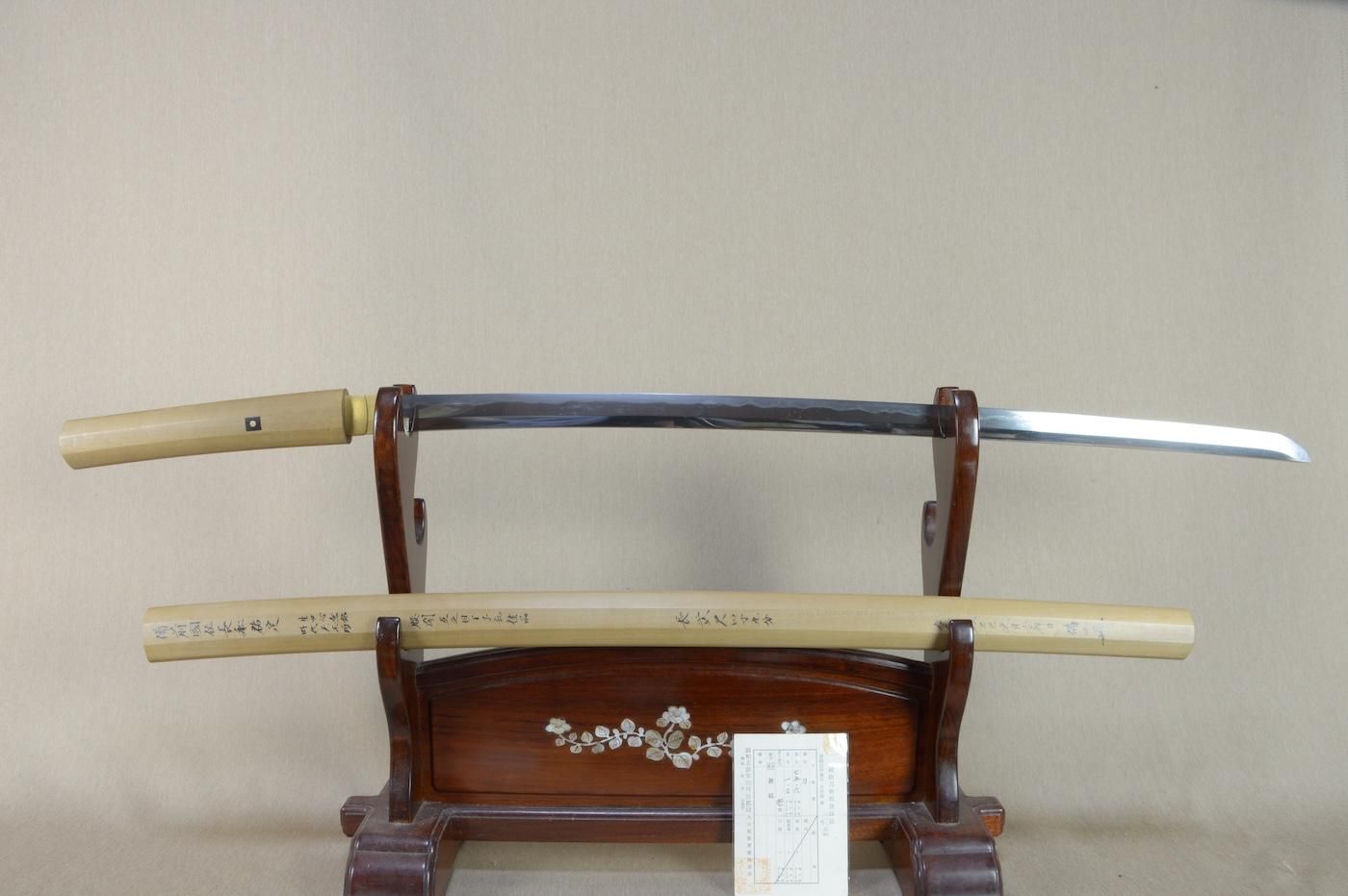
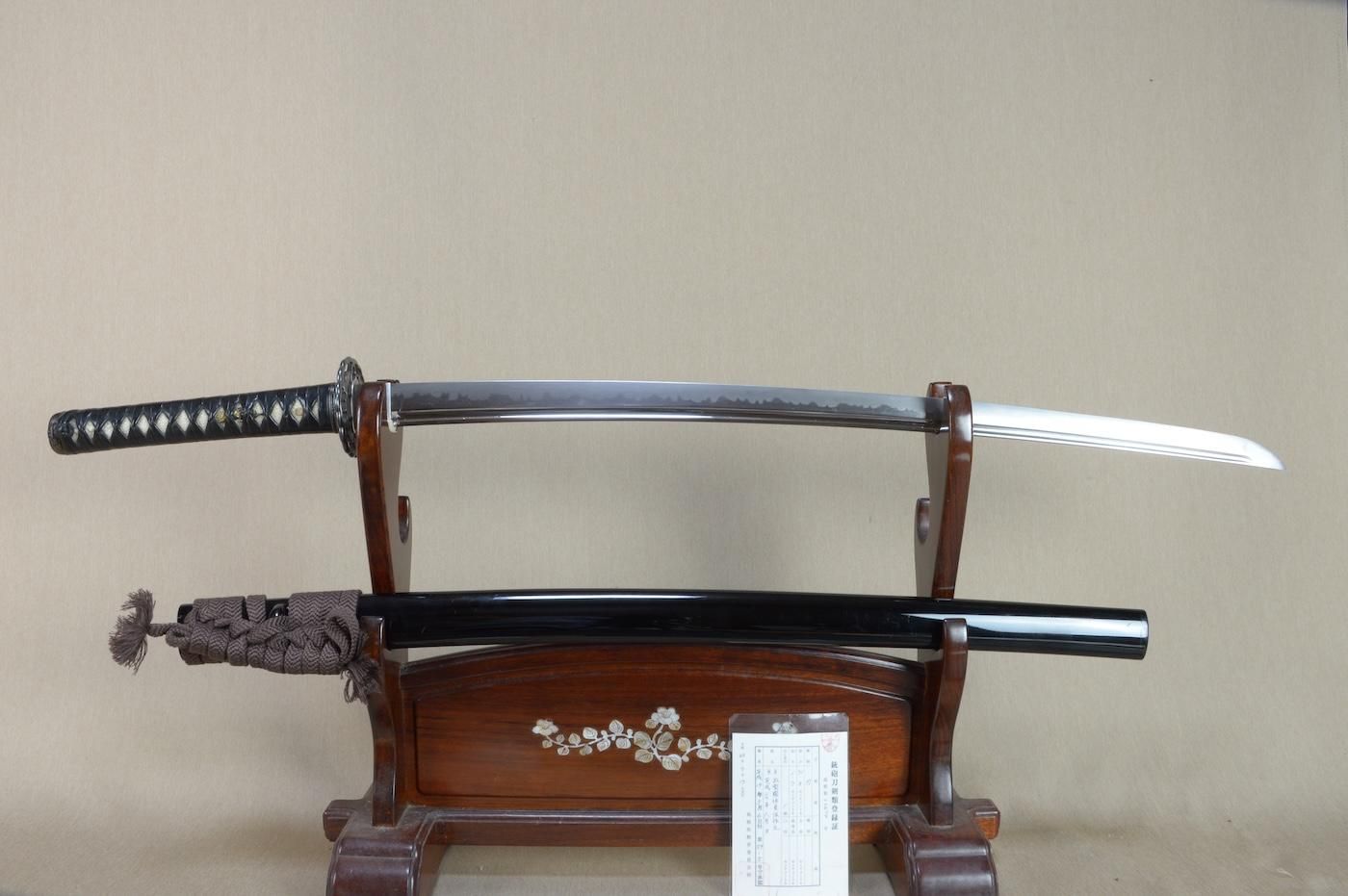
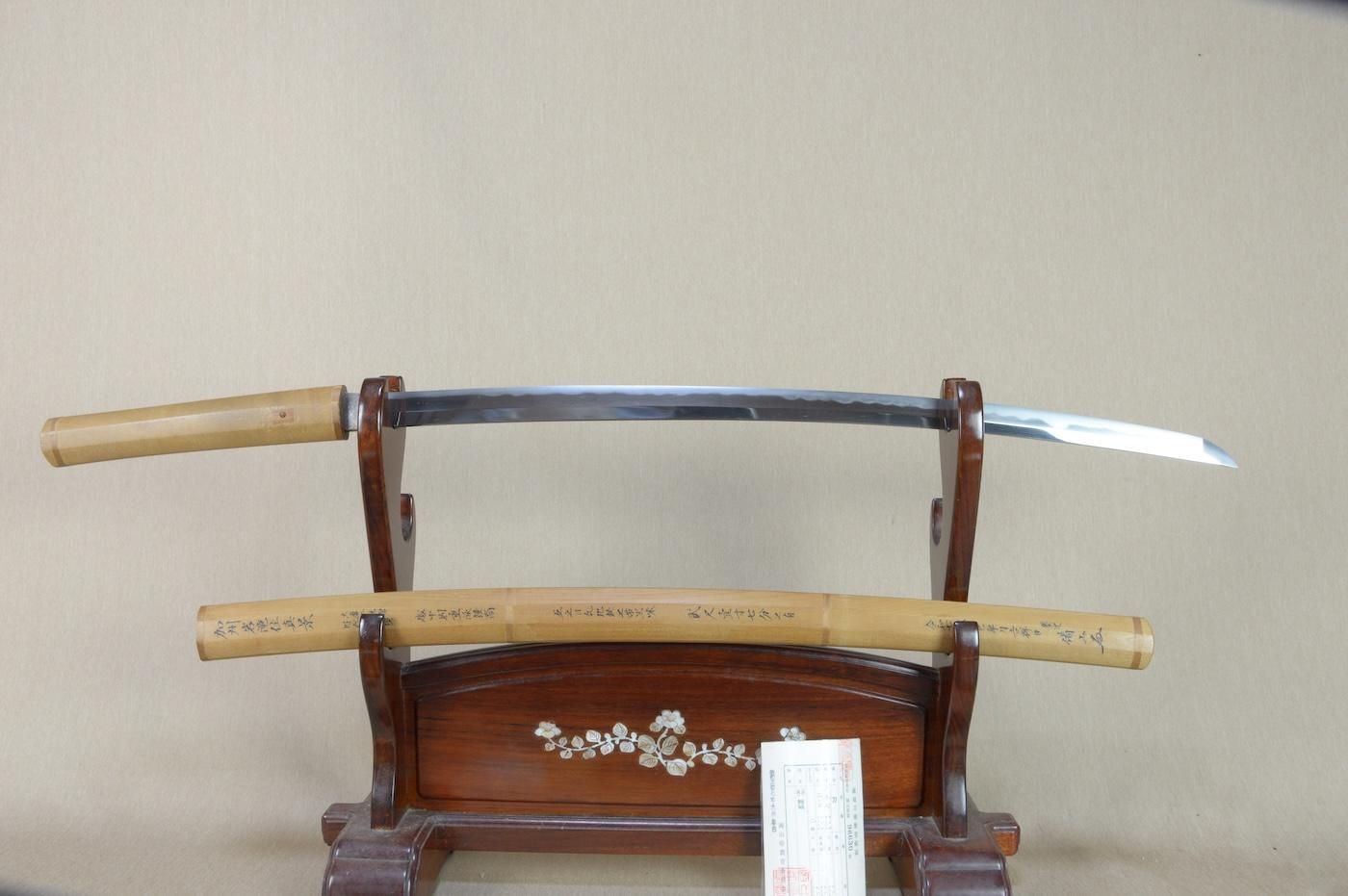
Ko-Mihara (Bingo) · Bingo · around 1376-1394
Tōken Taikan top 26%
2 pieces on the market now
The fixed point in Masanobu's record is a tachi signed Bishu Masanobu and dated Meitoku 5, that is 1394, the long signature cut in fine chisel strokes on the omote and the date carried on the reverse. He was a swordsmith of the Ko-Mihara school in Bingo Province, working at the close of the Nanbokucho period, and a second blade carries the still earlier date of Eiwa 2 (1376), the two dated pieces fixing his activity within the final decades of that age. The published commentary counts him, together with Masaie and Masahiro, among the representative hands of Ko-Mihara, and names him with Masamune of the same group as one of the smiths in whom 「正宗・正信等はその最後を飾る刀工であろう」[[c:1]], those who adorned the finale of the line. The Mihara group arose at the end of the Kamakura period and flourished down to the close of the Muromachi period, and the work of its late-Kamakura-through-Nanbokucho phase is collectively called Ko-Mihara; the strong Yamato temperament of that work is explained by exchange with the Yamato heartland through the many estates of its great temples and shrines, Toji and Rengeo-in among them, that lay within Bingo.
His hand is the school's hand, and it is a quiet one. Over an itame mixed with mokume and flowing nagare-hada that stands rather than lies flat and runs toward masame along the edge, he tempers a low, gentle straight temper, a suguha or naka-suguha that here and there carries a shallow notare and mixes in small ko-gunome and slight ko-midare rather than working itself up into a true midare. Along the habuchi run hotsure, kuichigai-ba and futae-ha, the doubled temper line, with small ashi entering and fine kinsuji and sunagashi threading through; ko-nie gathers on the line, and the nioiguchi is tight and inclined to sink rather than to glow, though on the best blades it brightens and clears. The published sources are candid that the temper is subdued in feeling, yet they hold that 「直刃の出来も地味ながら同派の持前をよく示して」[[c:2]], that the suguha, plain as it is, displays the inherent traits of the school well, and that the workmanship is sound throughout. He is a smith read by the restraint and evenness of a straight edge, the small gunome a recurring punctuation along an otherwise still line.
The ji is where the school marks itself most plainly. The itame stands, the grain visibly raised, and the steel takes on a bluish-black tone over which a whitish shirake-utsuri rises; fine ji-nie adheres, jifu and chikei-like dark lines enter the standing grain, and patchy texture gathers in places. This pale, standing jigane, with the flowing hada turning to masame and the gentle, rounded boshi that runs straight with hakikake to a ko-maru or an o-maru return, is what the judges have in mind when they read a Yamato temperament throughout Mihara work. They put the school manner plainly: compared with Yamato proper the nie of both ji and ha is generally weaker, the mokume stands out and the grain rises, the shirake-utsuri is conspicuous, the nioiguchi inclines to tighten and the boshi turns back in a calm, rounded form. Masanobu's blades hold to that base almost without exception, the bluish-black steel deeply tasteful and the tight-nioiguchi suguha bright and clear on his finest piece.
His surviving work falls into two registers, and the rarer of them is the one signed. The signed pieces are ubu or only lightly shortened tachi cut with a long Bishu Masanobu signature and an Eiwa or Meitoku date, and they are exceedingly few; signed Masanobu, and especially signed-and-dated examples, were thought from old times to have almost no precedent, so much so that among the Edo-period sword reference books one records 「この太刀のみを載せている」[[c:3]], this tachi alone. One such piece is the unusual shobu-zukuri construction, which the published sources grant is encountered from time to time in a Mihara so strongly touched by Yamato. The larger register is the suriage or orikaeshi-mei blade, shinogi-zukuri with the shinogi tending high, on which the folded-back three-character signature or the bare attribution carries his name; it is on these that his work is most often met, and the standing whitish itame, the shirake-utsuri and the futae-ha that he and his school share are what hold them for him. The sword-signature compendia, working from the dated pieces, place his activity in the Eiwa and Meitoku years, securing him within the Nanbokucho passage.
What sets him apart is best stated through his own traits rather than against another school. The published commentary, citing the Shinkan Hidensho that Mihara appearance 「面ぶり備中太刀に似たり」[[c:4]], resembles Bitchu tachi, grants that some of his blades read at first glance like the neighboring Aoe work; yet it keeps them for Mihara, finding that 「鎬高の造り込みや地に現われた白け映り, また刃中の二重刃・喰違刃等に一派の特色を見出し得る」[[c:5]], that in the high-shinogi construction, the shirake-utsuri risen in the ji, and the futae-ha and kuichigai-ba within the ha the characteristics of the line can be discerned. The futae-ha is itself a school habit rather than a personal flourish, for the records note that Masanobu has other extant examples showing it and that his fellow Mihara smiths Masaie and Masahiro work in the same manner. The same texts that praise his blades are honest about his individuality: in his work, they say, 「地刃に同工の特色と云うよりも同派の特色が濃く」[[c:6]], the characteristics of the school are stronger in both ji and ha than any distinctly personal style, so that he is recognized first as a Ko-Mihara hand and only then as Masanobu.
Masanobu is a connoisseur's name rather than a collector's quarry, and the record is honest about its scale. The Toko Taikan values him at a middling figure, and his blades on the official record number four, every one of them at the Important Sword tier; there are no National Treasures, no Important Cultural Properties and no Tokubetsu Juyo among them. What survives carries provenance of the first order: the Meitoku 5 tachi descended in the Maeda house of the Kaga million-koku domain, its mid-Edo black lacquered uchigatana mounting still attached, and the kodachi was transmitted in the Ii house, lords of the Hikone domain, the published sources calling it 「現存稀な古三原正信の在銘作として資料的にも貴重である」[[c:7]], a rare extant signed work by Ko-Mihara Masanobu, precious as documentary material. Most designated blades of this rank are held rather than traded, and a signed and dated Masanobu, of which only a handful survive, reaches the market very rarely indeed; the suriage and orikaeshi-mei pieces are the more findable face of his work, and one appears from time to time, offering the student of the koto schools a sound, characteristic example of a Bingo Yamato-influenced hand, the kind of grounded blade on which a careful kantei is built.
Where Masanobu stands among comparable artisans: across all of nihontō, and within tradition, era, and period. The tiers (Foremost · Leading · Major · Notable) weigh official designations from the NBTHK and Japan's Agency for Cultural Affairs, together with historical honors of lasting repute such as the Sansaku and Meibutsu-chō.
Select a lens to see how it's measured.
Years he was demonstrably active, proven by signed-and-dated blades
Yamato-den · Bingo
Phase: Ko-Mihara古三原· 1288–1393
7 pieces on the market now
Ko-Mihara (古三原) opens the Mihara story at its Bingo base, where a body of smiths gathered from the close of the Kamakura period and through the Nanbokuchō era. The setsumei treat the term as a chronological bracket rather than a separate workshop: works of this span are "collectively termed Ko-Mihara," with Masaie and Masahiro repeatedly named as the leading figures, and Masahiro held by tradition to be Masaie's son. The province's web of shōen estates tied to Kinai temples such as Tōji and Rengeō-in (Sanjūsangendō) drew the early smiths into regular contact with the central provinces, and the Yamato-den temperament that the records read in these blades is referred to that exchange. A second current runs alongside it: because some pieces show an Aoe manner, the appraisals also weigh influence from neighbouring Bitchū, as the Chikatsugu tachi of Shōhei 7 (1352) makes plain, sitting on the seam between Yamato bearing and Aoe surface. In the ji, the early hand keeps an itame-tending ground that takes on mokume, nagare, and a masame-like flow, with the grain inclined to stand (hada-dachi) and fine ji-nie set densely across it; a pale shirake-utsuri recurs as the most cited diagnostic, though the Masaie ōdachi of around Jōji instead shows a darkish steel with a midare-utsuri-like cast. The temper holds to a refined chū-suguha with ko-ashi and yō, the nioiguchi drawn tight or shizumi, the habuchi breaking into hotsure, kuichigai-ba, uchi-noke, and a nijūba suggestion, with fine kinsuji and sunagashi threading through.
The bōshi runs sugu, closing in yakizume, ko-maru, or maru with hakikake at the tip. The records keep these early works the cleaner pole of the school: a quiet, controlled Yamato manner whose forging shows "not the slightest looseness," set against the coarser, looser later Sue-Mihara of the closing Muromachi, where the disciplined suguha and tight ground give way. For kantei, the early phase reads as Yamato bearing without Yamato vigour: the nie of ji and ha runs weaker than in the Nara schools proper, the steel turns whitish, and the nioiguchi tightens, so a bright clean suguha with pointed bōshi can be mistaken at a glance for Aoe until the broad shinogi-ji, high shinogi, standing mokume, and hotsure with kuichigai-ba declare Mihara. Masaie and Masahiro divide on sugata: Masaie is the man of the bold ō-kissaki and the ōdachi, while Masahiro keeps ordinary chū-kissaki proportions and a freer, midare-gokoro edge with deeper kaeri, as in the Meibutsu Ō-Mihara cited by name. Because Yamato habit left few signed Mihara works, the early phase rests heavily on mumei and kinzogan attributions, several of them given to Masaie by Hon'ami Kōtoku, while dated and signed survivors stay scarce and so carry weight as reference material. Provenance threads through the great houses, the signed Masaie tachi presented to Emperor Meiji by the Shimazu family and another Masaie transmitted in the Date. Learn more →
| Smith | Era | Designated |
|---|---|---|
| Masahiro正廣 | 1362-1389 | 33 |
| Masaie正家 | 1353-1375 | 29 |
| Kaneyasu兼安 | 1352-1369 | 12 |
| Masanobu正信 | 1376-1394 | 4 |
| Masamune政宗 | 1381-1384 | 0 |
Yamato in the Nanbokuchō period
When the Southern Court made its capital at Yoshino, in Yamato itself, the province’s schools were at their height: the late Tegai line, Shikkake Norinaga, and the pure masame of Hōshō. Their technique was already spreading across the provinces.
A Hozon-certified blade judged to show notably superior workmanship and a better state of preservation. The bar is higher: re-tempered blades and most unsigned Muromachi/Edo works are excluded.
The NBTHK (Nihon Bijutsu Tōken Hozon Kyōkai, the Society for the Preservation of Japanese Art Swords) is a public-interest incorporated foundation founded in 1948 and supervised by Japan’s Agency for Cultural Affairs (Bunkachō); it is based at the Japanese Sword Museum in Tokyo. Its expert panels physically examine each submitted work (shinsa) and issue a certificate (kanteishō) ranking it by artistic and historical merit. NBTHK papers are the most widely recognized standard of authentication for Japanese swords and fittings.
NBTHK official sitePlease contact us promptly after the item's arrival. Except where the item is defective, we cannot accept returns. For returns due to customer circumstances, the cost is the customer's responsibility. In the case of a defective item, we bear the cost.
This is a wakizashi by Mihara Masanobu from the Nanbokucho period. The blade has a fine grain and a beautiful appearance. The hamon is a clear, thin straight line with a soft edge and a shallow return in the small round boshi. Comes with a shirasaya.
NihontoWatchkinzogan-mei · Mihara · Nanbokucho · nagasa 54.6cm · sori 1cm
Ko-Mihara (Bingo) · Bingo · around 1376-1394
Tōken Taikan top 26%
2 pieces on the market now
The fixed point in Masanobu's record is a tachi signed Bishu Masanobu and dated Meitoku 5, that is 1394, the long signature cut in fine chisel strokes on the omote and the date carried on the reverse. He was a swordsmith of the Ko-Mihara school in Bingo Province, working at the close of the Nanbokucho period, and a second blade carries the still earlier date of Eiwa 2 (1376), the two dated pieces fixing his activity within the final decades of that age. The published commentary counts him, together with Masaie and Masahiro, among the representative hands of Ko-Mihara, and names him with Masamune of the same group as one of the smiths in whom 「正宗・正信等はその最後を飾る刀工であろう」[[c:1]], those who adorned the finale of the line. The Mihara group arose at the end of the Kamakura period and flourished down to the close of the Muromachi period, and the work of its late-Kamakura-through-Nanbokucho phase is collectively called Ko-Mihara; the strong Yamato temperament of that work is explained by exchange with the Yamato heartland through the many estates of its great temples and shrines, Toji and Rengeo-in among them, that lay within Bingo.
His hand is the school's hand, and it is a quiet one. Over an itame mixed with mokume and flowing nagare-hada that stands rather than lies flat and runs toward masame along the edge, he tempers a low, gentle straight temper, a suguha or naka-suguha that here and there carries a shallow notare and mixes in small ko-gunome and slight ko-midare rather than working itself up into a true midare. Along the habuchi run hotsure, kuichigai-ba and futae-ha, the doubled temper line, with small ashi entering and fine kinsuji and sunagashi threading through; ko-nie gathers on the line, and the nioiguchi is tight and inclined to sink rather than to glow, though on the best blades it brightens and clears. The published sources are candid that the temper is subdued in feeling, yet they hold that 「直刃の出来も地味ながら同派の持前をよく示して」[[c:2]], that the suguha, plain as it is, displays the inherent traits of the school well, and that the workmanship is sound throughout. He is a smith read by the restraint and evenness of a straight edge, the small gunome a recurring punctuation along an otherwise still line.
The ji is where the school marks itself most plainly. The itame stands, the grain visibly raised, and the steel takes on a bluish-black tone over which a whitish shirake-utsuri rises; fine ji-nie adheres, jifu and chikei-like dark lines enter the standing grain, and patchy texture gathers in places. This pale, standing jigane, with the flowing hada turning to masame and the gentle, rounded boshi that runs straight with hakikake to a ko-maru or an o-maru return, is what the judges have in mind when they read a Yamato temperament throughout Mihara work. They put the school manner plainly: compared with Yamato proper the nie of both ji and ha is generally weaker, the mokume stands out and the grain rises, the shirake-utsuri is conspicuous, the nioiguchi inclines to tighten and the boshi turns back in a calm, rounded form. Masanobu's blades hold to that base almost without exception, the bluish-black steel deeply tasteful and the tight-nioiguchi suguha bright and clear on his finest piece.
His surviving work falls into two registers, and the rarer of them is the one signed. The signed pieces are ubu or only lightly shortened tachi cut with a long Bishu Masanobu signature and an Eiwa or Meitoku date, and they are exceedingly few; signed Masanobu, and especially signed-and-dated examples, were thought from old times to have almost no precedent, so much so that among the Edo-period sword reference books one records 「この太刀のみを載せている」[[c:3]], this tachi alone. One such piece is the unusual shobu-zukuri construction, which the published sources grant is encountered from time to time in a Mihara so strongly touched by Yamato. The larger register is the suriage or orikaeshi-mei blade, shinogi-zukuri with the shinogi tending high, on which the folded-back three-character signature or the bare attribution carries his name; it is on these that his work is most often met, and the standing whitish itame, the shirake-utsuri and the futae-ha that he and his school share are what hold them for him. The sword-signature compendia, working from the dated pieces, place his activity in the Eiwa and Meitoku years, securing him within the Nanbokucho passage.
What sets him apart is best stated through his own traits rather than against another school. The published commentary, citing the Shinkan Hidensho that Mihara appearance 「面ぶり備中太刀に似たり」[[c:4]], resembles Bitchu tachi, grants that some of his blades read at first glance like the neighboring Aoe work; yet it keeps them for Mihara, finding that 「鎬高の造り込みや地に現われた白け映り, また刃中の二重刃・喰違刃等に一派の特色を見出し得る」[[c:5]], that in the high-shinogi construction, the shirake-utsuri risen in the ji, and the futae-ha and kuichigai-ba within the ha the characteristics of the line can be discerned. The futae-ha is itself a school habit rather than a personal flourish, for the records note that Masanobu has other extant examples showing it and that his fellow Mihara smiths Masaie and Masahiro work in the same manner. The same texts that praise his blades are honest about his individuality: in his work, they say, 「地刃に同工の特色と云うよりも同派の特色が濃く」[[c:6]], the characteristics of the school are stronger in both ji and ha than any distinctly personal style, so that he is recognized first as a Ko-Mihara hand and only then as Masanobu.
Masanobu is a connoisseur's name rather than a collector's quarry, and the record is honest about its scale. The Toko Taikan values him at a middling figure, and his blades on the official record number four, every one of them at the Important Sword tier; there are no National Treasures, no Important Cultural Properties and no Tokubetsu Juyo among them. What survives carries provenance of the first order: the Meitoku 5 tachi descended in the Maeda house of the Kaga million-koku domain, its mid-Edo black lacquered uchigatana mounting still attached, and the kodachi was transmitted in the Ii house, lords of the Hikone domain, the published sources calling it 「現存稀な古三原正信の在銘作として資料的にも貴重である」[[c:7]], a rare extant signed work by Ko-Mihara Masanobu, precious as documentary material. Most designated blades of this rank are held rather than traded, and a signed and dated Masanobu, of which only a handful survive, reaches the market very rarely indeed; the suriage and orikaeshi-mei pieces are the more findable face of his work, and one appears from time to time, offering the student of the koto schools a sound, characteristic example of a Bingo Yamato-influenced hand, the kind of grounded blade on which a careful kantei is built.
Where Masanobu stands among comparable artisans: across all of nihontō, and within tradition, era, and period. The tiers (Foremost · Leading · Major · Notable) weigh official designations from the NBTHK and Japan's Agency for Cultural Affairs, together with historical honors of lasting repute such as the Sansaku and Meibutsu-chō.
Select a lens to see how it's measured.
Years he was demonstrably active, proven by signed-and-dated blades
Yamato-den · Bingo
Phase: Ko-Mihara古三原· 1288–1393
7 pieces on the market now
Ko-Mihara (古三原) opens the Mihara story at its Bingo base, where a body of smiths gathered from the close of the Kamakura period and through the Nanbokuchō era. The setsumei treat the term as a chronological bracket rather than a separate workshop: works of this span are "collectively termed Ko-Mihara," with Masaie and Masahiro repeatedly named as the leading figures, and Masahiro held by tradition to be Masaie's son. The province's web of shōen estates tied to Kinai temples such as Tōji and Rengeō-in (Sanjūsangendō) drew the early smiths into regular contact with the central provinces, and the Yamato-den temperament that the records read in these blades is referred to that exchange. A second current runs alongside it: because some pieces show an Aoe manner, the appraisals also weigh influence from neighbouring Bitchū, as the Chikatsugu tachi of Shōhei 7 (1352) makes plain, sitting on the seam between Yamato bearing and Aoe surface. In the ji, the early hand keeps an itame-tending ground that takes on mokume, nagare, and a masame-like flow, with the grain inclined to stand (hada-dachi) and fine ji-nie set densely across it; a pale shirake-utsuri recurs as the most cited diagnostic, though the Masaie ōdachi of around Jōji instead shows a darkish steel with a midare-utsuri-like cast. The temper holds to a refined chū-suguha with ko-ashi and yō, the nioiguchi drawn tight or shizumi, the habuchi breaking into hotsure, kuichigai-ba, uchi-noke, and a nijūba suggestion, with fine kinsuji and sunagashi threading through.
The bōshi runs sugu, closing in yakizume, ko-maru, or maru with hakikake at the tip. The records keep these early works the cleaner pole of the school: a quiet, controlled Yamato manner whose forging shows "not the slightest looseness," set against the coarser, looser later Sue-Mihara of the closing Muromachi, where the disciplined suguha and tight ground give way. For kantei, the early phase reads as Yamato bearing without Yamato vigour: the nie of ji and ha runs weaker than in the Nara schools proper, the steel turns whitish, and the nioiguchi tightens, so a bright clean suguha with pointed bōshi can be mistaken at a glance for Aoe until the broad shinogi-ji, high shinogi, standing mokume, and hotsure with kuichigai-ba declare Mihara. Masaie and Masahiro divide on sugata: Masaie is the man of the bold ō-kissaki and the ōdachi, while Masahiro keeps ordinary chū-kissaki proportions and a freer, midare-gokoro edge with deeper kaeri, as in the Meibutsu Ō-Mihara cited by name. Because Yamato habit left few signed Mihara works, the early phase rests heavily on mumei and kinzogan attributions, several of them given to Masaie by Hon'ami Kōtoku, while dated and signed survivors stay scarce and so carry weight as reference material. Provenance threads through the great houses, the signed Masaie tachi presented to Emperor Meiji by the Shimazu family and another Masaie transmitted in the Date. Learn more →
| Smith | Era | Designated |
|---|---|---|
| Masahiro正廣 | 1362-1389 | 33 |
| Masaie正家 | 1353-1375 | 29 |
| Kaneyasu兼安 | 1352-1369 | 12 |
| Masanobu正信 | 1376-1394 | 4 |
| Masamune政宗 | 1381-1384 | 0 |
Yamato in the Nanbokuchō period
When the Southern Court made its capital at Yoshino, in Yamato itself, the province’s schools were at their height: the late Tegai line, Shikkake Norinaga, and the pure masame of Hōshō. Their technique was already spreading across the provinces.
A Hozon-certified blade judged to show notably superior workmanship and a better state of preservation. The bar is higher: re-tempered blades and most unsigned Muromachi/Edo works are excluded.
The NBTHK (Nihon Bijutsu Tōken Hozon Kyōkai, the Society for the Preservation of Japanese Art Swords) is a public-interest incorporated foundation founded in 1948 and supervised by Japan’s Agency for Cultural Affairs (Bunkachō); it is based at the Japanese Sword Museum in Tokyo. Its expert panels physically examine each submitted work (shinsa) and issue a certificate (kanteishō) ranking it by artistic and historical merit. NBTHK papers are the most widely recognized standard of authentication for Japanese swords and fittings.
NBTHK official sitePlease contact us promptly after the item's arrival. Except where the item is defective, we cannot accept returns. For returns due to customer circumstances, the cost is the customer's responsibility. In the case of a defective item, we bear the cost.