NihontoWatch Mon

NihontoWatchBETA

MarketAuctions
Encyclopedia
NihontoWatch Mon

NihontoWatchBETA

MarketAuctions
Encyclopedia

Description

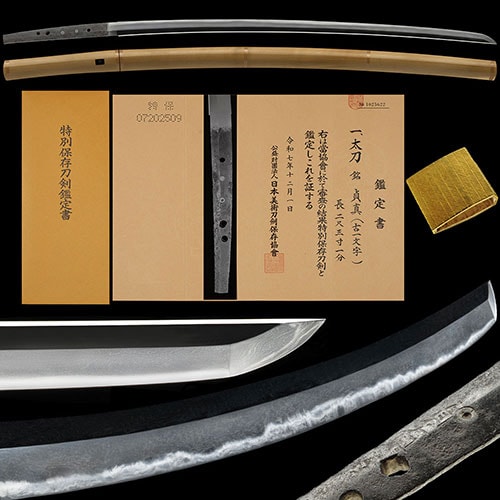
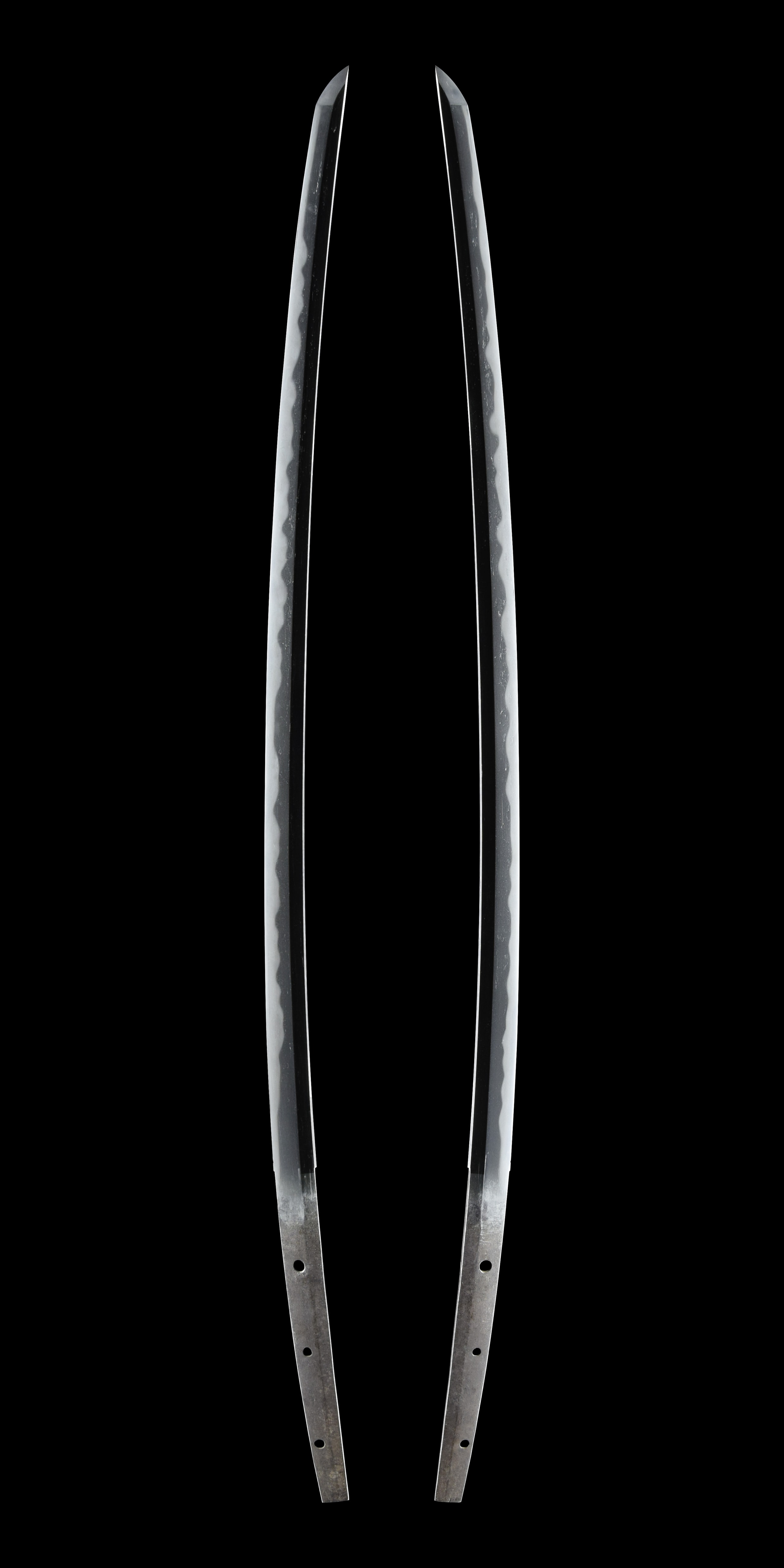
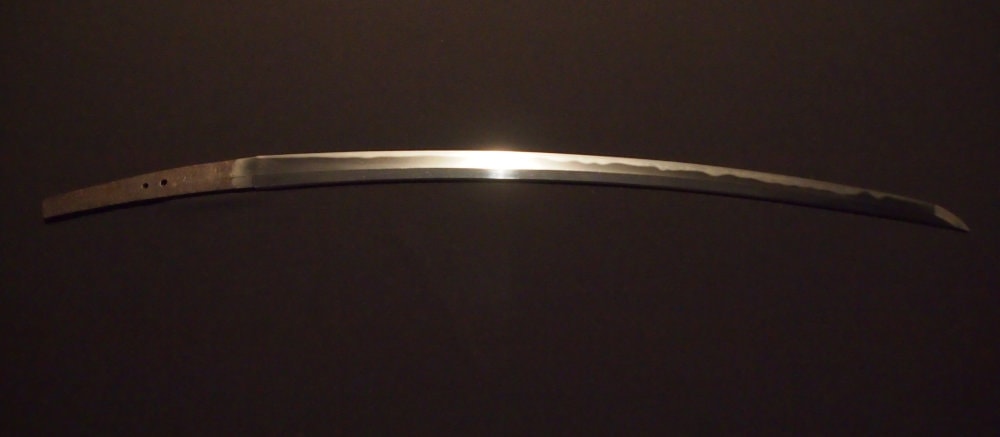
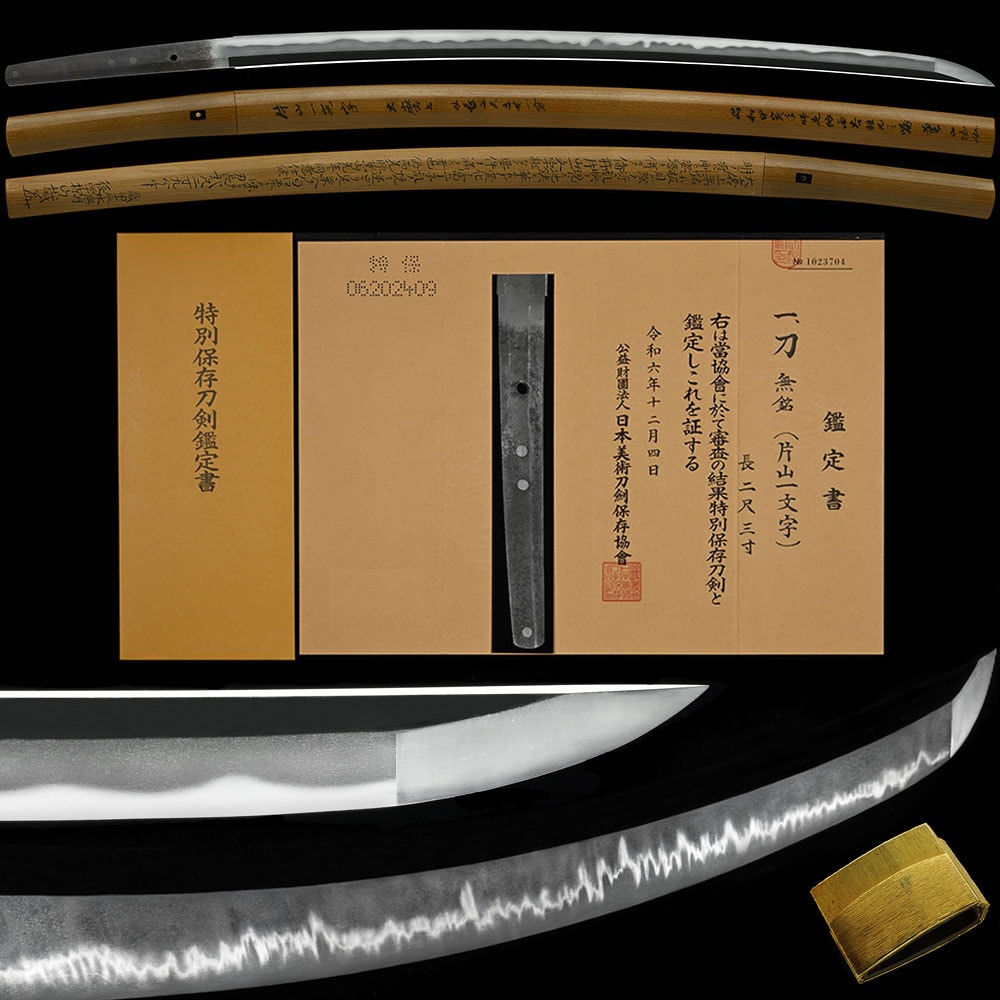
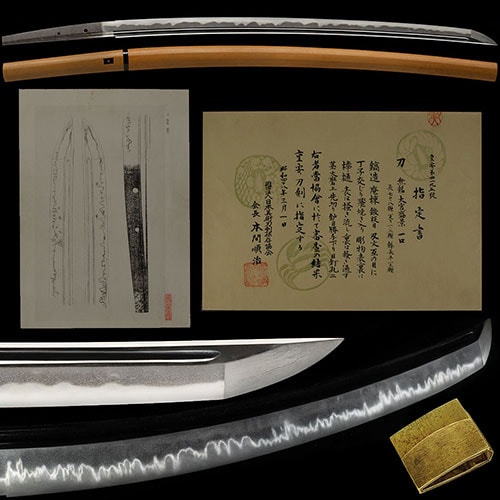
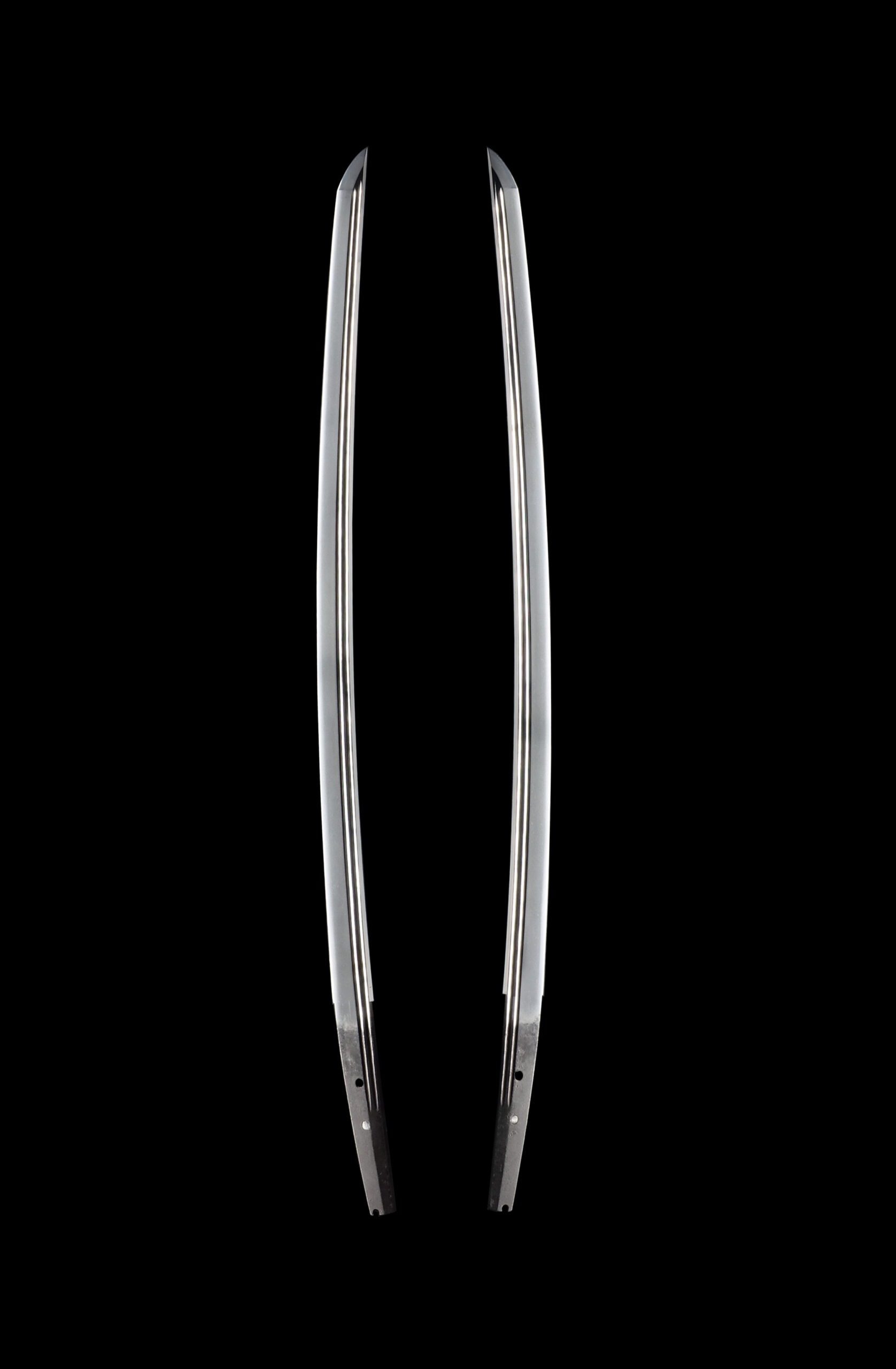
This is a tachi by Sadazane, a swordsmith from Bizen province in the early Kamakura period, residing in Fukuoka-sho. His existing works, characterized by a high koshi-sori, small fukura, and a jihada with prominent utsuri and strong nie-deki midareba, suggest he was a Ko-Ichimonji smith, preceding Fukuoka Ichimonji and following Ko-Bizen.

NihontoWatch MonNihontoWatchBETA
MarketAuctionsEncyclopedia
Swords›Bizen-den›Ichimonji›Ko-Ichimonji›Sadazane›Mei Sadazane (Ko-Ichimonji)
tachi
Ko-Ichimonji Sadazane

Mei Sadazane (Ko-Ichimonji)

mei · Ko-Ichimonji · Kamakura

SOLD
Ko-Ichimonji Sadazane — 1 of 2
Ko-Ichimonji Sadazane — 2 of 2
1 / 2
1 / 2
Ko-Ichimonji Sadazane — 1 of 2Ko-Ichimonji Sadazane — 2 of 2
Measurements & details
Smith
Ko-Ichimonji Sadazane
Type
Tachi
School
Ko-Ichimonji
Period
Around 1247–1249(Hoji)
Province
Bizen
Signature
Signed(92% of this smith's designated works are signed)
Description

This is a tachi by Sadazane, a swordsmith from Bizen province in the early Kamakura period, residing in Fukuoka-sho. His existing works, characterized by a high koshi-sori, small fukura, and a jihada with prominent utsuri and strong nie-deki midareba, suggest he was a Ko-Ichimonji smith, preceding Fukuoka Ichimonji and following Ko-Bizen.

About the maker

Sadazane

貞眞

Ko-Ichimonji (Bizen) · Bizen · around 1247-1249

Fujishiro Jo saku · Tōken Taikan top 5%

1 piece on the market now

›

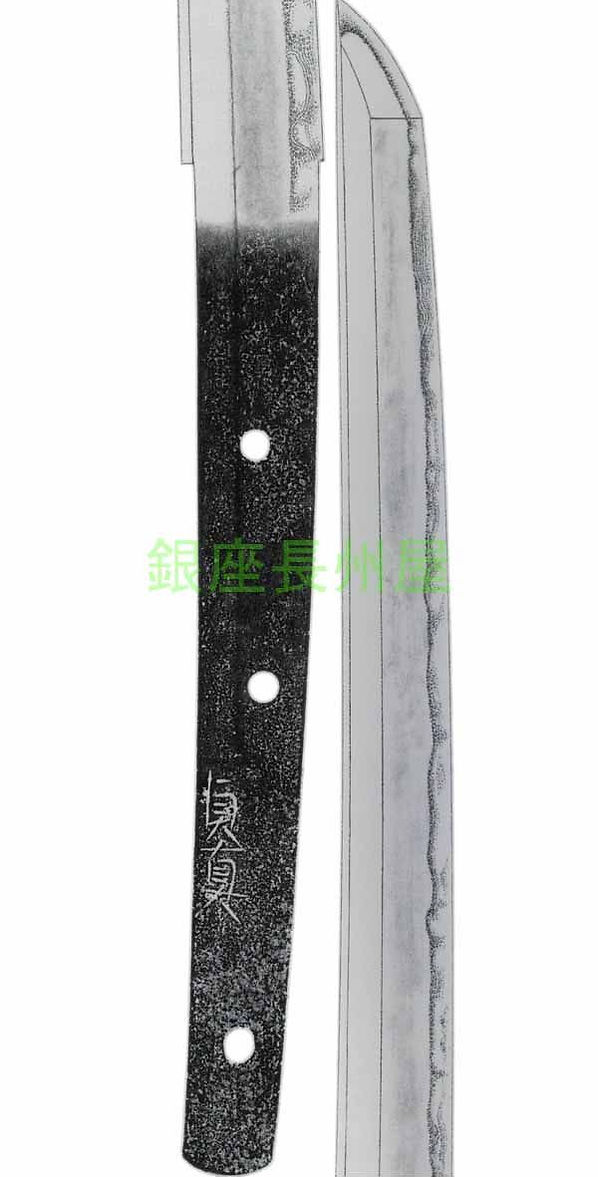
Sadazane is one of the earliest of the Ichimonji smiths of Bizen, working in the early Kamakura period about the Hoji era of 1247 to 1249. The Meikan records him as a son of the Fukuoka Ichimonji founder Munetada, a line of descent the published sources repeat in their commentary on his blades, while a second tradition makes him a son of the Ko-Bizen smith Takatsuna. The published record sets the parentage against the work and finds them at odds: his surviving tachi, the commentary says again and again, fire a well-nie-laden ko-midare with no prominent reflection in the ji, so that they look more archaic than Munetada, "older in feeling than Munetada"[[c:1]]. For that reason some judges classed him not with the Ichimonji at all but with the older Ko-Bizen group, and the question of which side a given blade belongs to runs through his whole record. The point was settled by direct observation. The reference texts preserve Honma's note that he had examined examples carrying the character ichi above the two-character signature, "and so it is beyond doubt Ko-Ichimonji"[[c:2]], placing Sadazane at the very head of the school.

His characteristic hand is the quiet, archaic register the published sources treat as typical. Over a fine ko-itame the temper is a suguha-based ko-midare with ko-choji, ashi and yo entering freely, the nioiguchi bright, ko-nie gathering with kinsuji and sunagashi coming and going, and the boshi running quietly to a small ko-maru turnback or burning out without one. What sets him apart is what is missing. Where the Ichimonji norm is a midare-utsuri standing vividly in the ji, the commentary records of Sadazane that the reflection is not prominent, and one Juyo note draws the contrast as his individuality: the Ko-Ichimonji blades mostly show a standing utsuri, "yet this smith has many works in which the reflection is not conspicuous"[[c:3]], and from this his own character can be read. The suguha base under the small midare, the restraint of the temper, and the absence of the showy reflection are the marks that the published sources return to as his typical work.

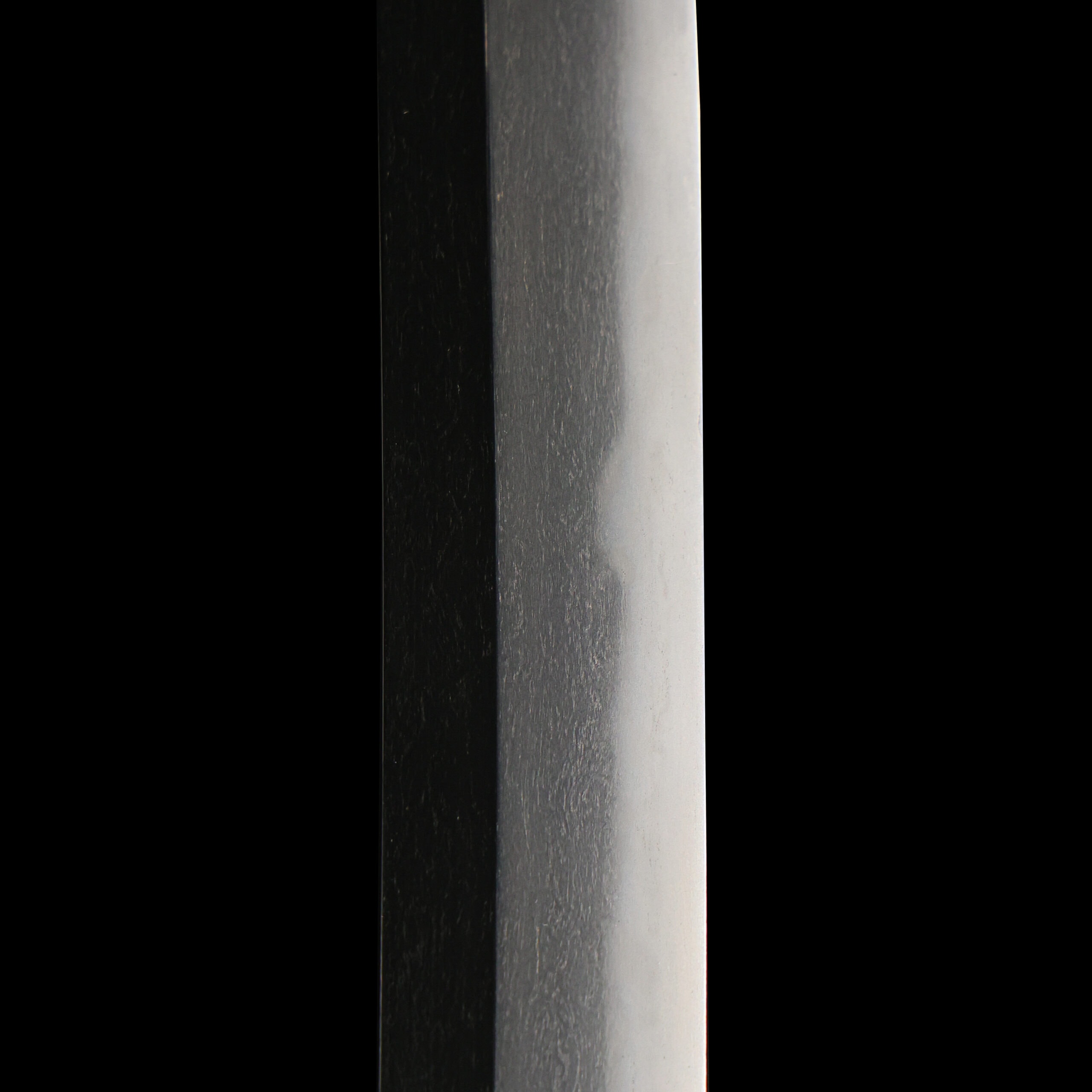
The jigane is the other half of the picture. The forging is a ko-itame, at times a itame with a standing tendency and flowing passages, very well knit, with ji-nie lying thick and fine and chikei entering through it. Through that jigane the published sources repeatedly note patches of jifu, the speckled steel of old Bizen and Aoe, and on one Tokubetsu Juyo tachi the commentary writes that the itame stands a little and carries ji-nie thickly with "jifu mixed in that at a glance recalls Aoe"[[c:4]]. That speckled steel, rare among the brilliant Fukuoka and Katayama hands, is the most particular thing in his ji. On the finer-grained blades the same feature reads as a faint jifu-toned utsuri, present but never the bright, billowing reflection of the later Ichimonji.

His work falls into two registers of one manner. The typical one is the subdued ko-midare described above. A minority of his tachi show a somewhat showier hand, and the published sources flag the difference explicitly: of one Juyo tachi with a midare-utsuri standing and a choji-midare crossed with gunome, the commentary says it is "somewhat flamboyant for Sadazane"[[c:5]]. Of a Tokubetsu Juyo tachi in the same fuller voice, the published record observes that it "carries on the manner of Ko-Bizen and adds a further freshness to it"[[c:6]], and finds in that the very thing worth seeing in the Ko-Ichimonji school. The signature itself is part of his identity. The mei is a two-character Sadazane cut large near the mune in a thin chisel, "large in thin strokes"[[c:7]], and the published sources name this hosotagane large two-character signature as one of the smith's own tells, a help in attribution given how few signed works survive.

The difficulty that defines his place in the school is the homonym. The published sources record that there is a Sadazane in both the Ko-Bizen group and the early Ichimonji "whose work and signature so resemble each other that they cannot readily be told apart"[[c:8]], and individual blades are judged to one side or the other case by case. Several of his Juyo tachi are read as Ko-Bizen work, others firmly as Ko-Ichimonji; the ichi-marked examples Honma saw anchor the Ichimonji end. The commentary frames his restraint as the school's virtue rather than a want of fire, noting of one blade that the subdued character is not Sadazane's alone but belongs to the whole early group, "and that everything is understated is itself a point to see"[[c:9]]. He stands at the threshold where Ko-Bizen passes into Ichimonji, his archaic ko-midare preceding the brilliant Fukuoka choji of Yoshifusa and the Katayama hand of Norifusa, and his blades are valued as records of the school at its very beginning.

Sadazane is rated Jo saku by Fujishiro, with a Toko Taikan valuation of 1,200,000 yen. Almost his whole surviving record is signed, an unusual circumstance for so early a Bizen master: twelve of his designated works carry his two-character mei against a single unsigned attribution. The designations stand at four Tokubetsu Juyo and seven Juyo, eleven blades in the Tokubetsu Juyo and Juyo tiers, with one Important Cultural Property among them. The earliest, a tachi designated Juyo Bijutsuhin in 1939, is the blade the reference texts cite under Honma's ichi-mark note; it was held by Kazama Yokichi of Niigata. Among his Juyo the published sources single out one as "the foremost of the Ko-Ichimonji within the Important Sword rank"[[c:10]], and of his finest Juyo tachi the commentary calls it, "a valuable blade by which to know this smith's real ability, signed works by him being few"[[c:11]]. Recorded whereabouts of his blades include the Tokugawa Art Museum, the Tokyo National Museum and the Seikado Bunko Art Museum, the rest held in long-private hands. With one Important Cultural Property preserved as patrimony and never traded, his market is the small body of Tokubetsu Juyo and Juyo tachi; a signed Sadazane comes to light only rarely, and when one does it is a record of the earliest Ichimonji generation that few collectors will encounter.

Historical importance

Where Sadazane stands among comparable artisans: across all of nihontō, and within tradition, era, and period. The tiers (Foremost · Leading · Major · Notable) weigh official designations from the NBTHK and Japan's Agency for Cultural Affairs, together with historical honors of lasting repute such as the Sansaku and Meibutsu-chō.

随一
Foremost
屈指
Leading
有数
Major
著名
Notable

Select a lens to see how it's measured.

Designation record
13 designated works
Jūyō Bunkazai
1
Jūyō Bijutsuhin
1
Tokubetsu Jūyō
4
Jūyō
7
1 work by Sadazane on the market→
Sadazane — full profileKo-Ichimonji (Bizen) school
About the school

Ko-Ichimonji

古一文字

Bizen-den · Bizen

Phase: Ko-Ichimonji古一文字· 1175–1249

2 pieces on the market now

›

The Ko-Ichimonji -- the "old Ichimonji" -- designates the earliest phase of the Fukuoka Ichimonji school of Bizen Province, encompassing the generation of smiths active from the late Heian through the early Kamakura period before the school's celebrated mid-Kamakura flowering into flamboyant choji-midare. The founder of the lineage is Norimune, who stands at the precise transitional moment between the older Ko-Bizen tradition and the emerging Ichimonji idiom. Learn more →

Leading smiths
SmithEraDesignated
Muneyoshi宗吉1207-121111
Sadazane貞眞1247-124913
Narimune成宗1207-121110
Munetada宗忠1211-12135
Shigehisa重久1234-12355
Explore the Ko-Ichimonji school →
Warning — certificate not found

We could not find an authenticity certificate on the seller’s listing. Japanese swords and fittings are normally papered by the NBTHK (or the NTHK). Without one, the attribution is the seller’s own assessment and has not been independently verified — treat it with caution and ask the dealer about certification before buying.

Seller
C
Choshuya
🇯🇵Ships from Japan
›
✓Verified dealerwww.choshuya.co.jp
✓Ships worldwide✓English support
Return policy

If, due to our fault, the item differs significantly from its proper condition, the item may be returned. Cooling-off is within one week of the item's arrival.

View all of Choshuya’s listings→View this item on the dealer’s site→

More works by Ko-Ichimonji Sadazane

View all →
Eirakudo
Tokuho
Tachi - Tokuho - by Ko-Ichimonji Sadazane - Sadazane Koichimonji - Tokubetsu Hozon TokenTachi - Tokuho - by Ko-Ichimonji Sadazane - Sadazane Koichimonji - Tokubetsu Hozon Token

Tachi

ByKo-Ichimonji Sadazane
¥6,000,000

More from the Ko-Ichimonji school

View all →
World Seiyudo
Jūyō
Tachi - Jūyō - by Ko-Ichimonji Yukikuni - YukikuniTachi - Jūyō - by Ko-Ichimonji Yukikuni - Yukikuni

Tachi

ByKo-Ichimonji Yukikuni
¥14,000,000

More from the Ichimonji school

View all →
Eirakudo
Jūyō
Tachi - Jūyō - by Fukuoka Ichimonji School - Fukuoka Ichimonji - Juyo TokenTachi - Jūyō - by Fukuoka Ichimonji School - Fukuoka Ichimonji - Juyo Token

Tachi

ByFukuoka Ichimonji School
Ask
Tsuruginoya
Jūyō
Katana - Jūyō - by Fukuoka Ichimonji School - Mumei Fukuoka IchimonjiKatana - Jūyō - by Fukuoka Ichimonji School - Mumei Fukuoka Ichimonji

Katana

ByFukuoka Ichimonji School
¥10,000,000
Aoi Art
Jūyō
Katana - Jūyō - by Yoshioka Ichimonji Sukemitsu - Ichi Bizen-koku Yoshioka Sakon Sho (Sukemitsu)Katana - Jūyō - by Yoshioka Ichimonji Sukemitsu - Ichi Bizen-koku Yoshioka Sakon Sho (Sukemitsu)

Katana

ByYoshioka Ichimonji Sukemitsu
¥9,500,000
Hyozaemon
Tokuho
Wakizashi - Tokuho - by Fukuoka Ichimonji Yoshifusa - Fukuoka Ichimonji YoshifusaWakizashi - Tokuho - by Fukuoka Ichimonji Yoshifusa - Fukuoka Ichimonji Yoshifusa

Wakizashi

ByFukuoka Ichimonji Yoshifusa
Ask
Eirakudo
Tokuho
Wakizashi - Tokuho - by Ichimonji School - Fukuoka Ichimonji Wakizashi - Tokubetsu Hozon TokenWakizashi - Tokuho - by Ichimonji School - Fukuoka Ichimonji Wakizashi - Tokubetsu Hozon Token

Wakizashi

ByIchimonji School
¥3,500,000
Eirakudo
Tokuho
Katana - Tokuho - by Katayama Ichimonji School - Katayama Ichimonji NorifusaKatana - Tokuho - by Katayama Ichimonji School - Katayama Ichimonji Norifusa

Katana

ByKatayama Ichimonji School
¥4,000,000
Kanda Toukodo
Jūyō
Katana - Jūyō - by Ichimonji School - Juyo Token (25th Session)Katana - Jūyō - by Ichimonji School - Juyo Token (25th Session)

Katana

ByIchimonji School
Ask
Wakeidou
Jūyō
Wakizashi - Jūyō - by Yoshioka Ichimonji School - Mumei Yoshioka IchimonjiWakizashi - Jūyō - by Yoshioka Ichimonji School - Mumei Yoshioka Ichimonji

Wakizashi

ByYoshioka Ichimonji School
¥4,500,000

More from the Bizen tradition

View all →
Aoi Art
Jūyō Bijutsuhin
Daisho - Jubi - by Osafune Nagamitsu - Daisho: Katana: Mumei (Den Nagamitsu) Juyo Bijutsuhin / Wakizashi: Mumei (Sekishu Naotsuna) Tokubetsu HozonDaisho - Jubi - by Osafune Nagamitsu - Daisho: Katana: Mumei (Den Nagamitsu) Juyo Bijutsuhin / Wakizashi: Mumei (Sekishu Naotsuna) Tokubetsu Hozon

Daishō

ByOsafune Nagamitsu
Starting Bid¥35,000,000
Katanahanbai
Tokuho
Wakizashi - Tokuho - by Osafune Tomomitsu - Bishu Osafune Tomomitsu, Teiji 5th Year, 8th MonthWakizashi - Tokuho - by Osafune Tomomitsu - Bishu Osafune Tomomitsu, Teiji 5th Year, 8th Month

Wakizashi

ByOsafune Tomomitsu
¥4,800,000
Aoi Art
Tokuho
Katana - Tokuho - by Osafune Motomitsu - Mumei (Attributed to Osafune Motomitsu)Katana - Tokuho - by Osafune Motomitsu - Mumei (Attributed to Osafune Motomitsu)

Katana

ByOsafune Motomitsu
Starting Bid¥1,200,000
Eirakudo
Tokuho
Tachi - Tokuho - by Osafune Sanenaga - Sanenaga - Tokubetsu Hozon TokenTachi - Tokuho - by Osafune Sanenaga - Sanenaga - Tokubetsu Hozon Token

Tachi

ByOsafune Sanenaga
¥7,500,000
Iida Koendo
Jūyō
Tachi - Jūyō - by Osafune Shigezane - Bishu Osafune ju Shigezane, Enbun 3rd year, 12th monthTachi - Jūyō - by Osafune Shigezane - Bishu Osafune ju Shigezane, Enbun 3rd year, 12th month

Tachi

ByOsafune Shigezane
¥33,000,000
Nihonto.com
Jūyō
Tanto - Jūyō - by Osafune Kagemitsu - Juyo Tanto by Bizen KagemitsuTanto - Jūyō - by Osafune Kagemitsu - Juyo Tanto by Bizen Kagemitsu

Tantō

ByOsafune Kagemitsu
¥89,500
Iida Koendo
Jūyō
Tachi - Jūyō - by Osafune Nagamitsu - NagamitsuTachi - Jūyō - by Osafune Nagamitsu - Nagamitsu

Tachi

ByOsafune Nagamitsu
¥33,000,000
Goushuya
Jūyō
Katana - Jūyō - by Osafune Kanemitsu - Kanemitsu with Gold Inlay InscriptionKatana - Jūyō - by Osafune Kanemitsu - Kanemitsu with Gold Inlay Inscription

Katana

ByOsafune Kanemitsu
Ask

Swords

  • Katana
  • Wakizashi
  • Tantō
  • Tachi
  • Naginata
  • Yari

Fittings

  • Tsuba
  • Fuchi-Kashira
  • Kozuka
  • Menuki

By Certification

  • Tokujū
  • Jūyō
  • Tokuho
  • Hozon

Resources

  • Dealer Directory
  • Artist Directory
  • Glossary
  • Browse All
Nihontowatch© 2026
TermsPrivacyCookiesAbout

Description

This is a tachi by Sadazane, a swordsmith from Bizen province in the early Kamakura period, residing in Fukuoka-sho. His existing works, characterized by a high koshi-sori, small fukura, and a jihada with prominent utsuri and strong nie-deki midareba, suggest he was a Ko-Ichimonji smith, preceding Fukuoka Ichimonji and following Ko-Bizen.

NihontoWatch MonNihontoWatchBETA
MarketAuctionsEncyclopedia
Swords›Bizen-den›Ichimonji›Ko-Ichimonji›Sadazane›Mei Sadazane (Ko-Ichimonji)
tachi
Ko-Ichimonji Sadazane

Mei Sadazane (Ko-Ichimonji)

mei · Ko-Ichimonji · Kamakura

SOLD
Ko-Ichimonji Sadazane — 1 of 2
Ko-Ichimonji Sadazane — 2 of 2
1 / 2
1 / 2
Ko-Ichimonji Sadazane — 1 of 2Ko-Ichimonji Sadazane — 2 of 2
Measurements & details
Smith
Ko-Ichimonji Sadazane
Type
Tachi
School
Ko-Ichimonji
Period
Around 1247–1249(Hoji)
Province
Bizen
Signature
Signed(92% of this smith's designated works are signed)
Description

This is a tachi by Sadazane, a swordsmith from Bizen province in the early Kamakura period, residing in Fukuoka-sho. His existing works, characterized by a high koshi-sori, small fukura, and a jihada with prominent utsuri and strong nie-deki midareba, suggest he was a Ko-Ichimonji smith, preceding Fukuoka Ichimonji and following Ko-Bizen.

About the maker

Sadazane

貞眞

Ko-Ichimonji (Bizen) · Bizen · around 1247-1249

Fujishiro Jo saku · Tōken Taikan top 5%

1 piece on the market now

›

Sadazane is one of the earliest of the Ichimonji smiths of Bizen, working in the early Kamakura period about the Hoji era of 1247 to 1249. The Meikan records him as a son of the Fukuoka Ichimonji founder Munetada, a line of descent the published sources repeat in their commentary on his blades, while a second tradition makes him a son of the Ko-Bizen smith Takatsuna. The published record sets the parentage against the work and finds them at odds: his surviving tachi, the commentary says again and again, fire a well-nie-laden ko-midare with no prominent reflection in the ji, so that they look more archaic than Munetada, "older in feeling than Munetada"[[c:1]]. For that reason some judges classed him not with the Ichimonji at all but with the older Ko-Bizen group, and the question of which side a given blade belongs to runs through his whole record. The point was settled by direct observation. The reference texts preserve Honma's note that he had examined examples carrying the character ichi above the two-character signature, "and so it is beyond doubt Ko-Ichimonji"[[c:2]], placing Sadazane at the very head of the school.

His characteristic hand is the quiet, archaic register the published sources treat as typical. Over a fine ko-itame the temper is a suguha-based ko-midare with ko-choji, ashi and yo entering freely, the nioiguchi bright, ko-nie gathering with kinsuji and sunagashi coming and going, and the boshi running quietly to a small ko-maru turnback or burning out without one. What sets him apart is what is missing. Where the Ichimonji norm is a midare-utsuri standing vividly in the ji, the commentary records of Sadazane that the reflection is not prominent, and one Juyo note draws the contrast as his individuality: the Ko-Ichimonji blades mostly show a standing utsuri, "yet this smith has many works in which the reflection is not conspicuous"[[c:3]], and from this his own character can be read. The suguha base under the small midare, the restraint of the temper, and the absence of the showy reflection are the marks that the published sources return to as his typical work.

The jigane is the other half of the picture. The forging is a ko-itame, at times a itame with a standing tendency and flowing passages, very well knit, with ji-nie lying thick and fine and chikei entering through it. Through that jigane the published sources repeatedly note patches of jifu, the speckled steel of old Bizen and Aoe, and on one Tokubetsu Juyo tachi the commentary writes that the itame stands a little and carries ji-nie thickly with "jifu mixed in that at a glance recalls Aoe"[[c:4]]. That speckled steel, rare among the brilliant Fukuoka and Katayama hands, is the most particular thing in his ji. On the finer-grained blades the same feature reads as a faint jifu-toned utsuri, present but never the bright, billowing reflection of the later Ichimonji.

His work falls into two registers of one manner. The typical one is the subdued ko-midare described above. A minority of his tachi show a somewhat showier hand, and the published sources flag the difference explicitly: of one Juyo tachi with a midare-utsuri standing and a choji-midare crossed with gunome, the commentary says it is "somewhat flamboyant for Sadazane"[[c:5]]. Of a Tokubetsu Juyo tachi in the same fuller voice, the published record observes that it "carries on the manner of Ko-Bizen and adds a further freshness to it"[[c:6]], and finds in that the very thing worth seeing in the Ko-Ichimonji school. The signature itself is part of his identity. The mei is a two-character Sadazane cut large near the mune in a thin chisel, "large in thin strokes"[[c:7]], and the published sources name this hosotagane large two-character signature as one of the smith's own tells, a help in attribution given how few signed works survive.

The difficulty that defines his place in the school is the homonym. The published sources record that there is a Sadazane in both the Ko-Bizen group and the early Ichimonji "whose work and signature so resemble each other that they cannot readily be told apart"[[c:8]], and individual blades are judged to one side or the other case by case. Several of his Juyo tachi are read as Ko-Bizen work, others firmly as Ko-Ichimonji; the ichi-marked examples Honma saw anchor the Ichimonji end. The commentary frames his restraint as the school's virtue rather than a want of fire, noting of one blade that the subdued character is not Sadazane's alone but belongs to the whole early group, "and that everything is understated is itself a point to see"[[c:9]]. He stands at the threshold where Ko-Bizen passes into Ichimonji, his archaic ko-midare preceding the brilliant Fukuoka choji of Yoshifusa and the Katayama hand of Norifusa, and his blades are valued as records of the school at its very beginning.

Sadazane is rated Jo saku by Fujishiro, with a Toko Taikan valuation of 1,200,000 yen. Almost his whole surviving record is signed, an unusual circumstance for so early a Bizen master: twelve of his designated works carry his two-character mei against a single unsigned attribution. The designations stand at four Tokubetsu Juyo and seven Juyo, eleven blades in the Tokubetsu Juyo and Juyo tiers, with one Important Cultural Property among them. The earliest, a tachi designated Juyo Bijutsuhin in 1939, is the blade the reference texts cite under Honma's ichi-mark note; it was held by Kazama Yokichi of Niigata. Among his Juyo the published sources single out one as "the foremost of the Ko-Ichimonji within the Important Sword rank"[[c:10]], and of his finest Juyo tachi the commentary calls it, "a valuable blade by which to know this smith's real ability, signed works by him being few"[[c:11]]. Recorded whereabouts of his blades include the Tokugawa Art Museum, the Tokyo National Museum and the Seikado Bunko Art Museum, the rest held in long-private hands. With one Important Cultural Property preserved as patrimony and never traded, his market is the small body of Tokubetsu Juyo and Juyo tachi; a signed Sadazane comes to light only rarely, and when one does it is a record of the earliest Ichimonji generation that few collectors will encounter.
Historical importance

Where Sadazane stands among comparable artisans: across all of nihontō, and within tradition, era, and period. The tiers (Foremost · Leading · Major · Notable) weigh official designations from the NBTHK and Japan's Agency for Cultural Affairs, together with historical honors of lasting repute such as the Sansaku and Meibutsu-chō.

随一
Foremost
屈指
Leading
有数
Major
著名
Notable

Select a lens to see how it's measured.

Designation record
13 designated works
Jūyō Bunkazai
1
Jūyō Bijutsuhin
1
Tokubetsu Jūyō
4
Jūyō
7
1 work by Sadazane on the market→
Sadazane — full profileKo-Ichimonji (Bizen) school
About the school

Ko-Ichimonji

古一文字

Bizen-den · Bizen

Phase: Ko-Ichimonji古一文字· 1175–1249

2 pieces on the market now

›

The Ko-Ichimonji -- the "old Ichimonji" -- designates the earliest phase of the Fukuoka Ichimonji school of Bizen Province, encompassing the generation of smiths active from the late Heian through the early Kamakura period before the school's celebrated mid-Kamakura flowering into flamboyant choji-midare. The founder of the lineage is Norimune, who stands at the precise transitional moment between the older Ko-Bizen tradition and the emerging Ichimonji idiom. Learn more →

Leading smiths
SmithEraDesignated
Muneyoshi宗吉1207-121111
Sadazane貞眞1247-124913
Narimune成宗1207-121110
Munetada宗忠1211-12135
Shigehisa重久1234-12355
Explore the Ko-Ichimonji school →
Warning — certificate not found

We could not find an authenticity certificate on the seller’s listing. Japanese swords and fittings are normally papered by the NBTHK (or the NTHK). Without one, the attribution is the seller’s own assessment and has not been independently verified — treat it with caution and ask the dealer about certification before buying.

Seller
C
Choshuya
🇯🇵Ships from Japan
›
✓Verified dealerwww.choshuya.co.jp
✓Ships worldwide✓English support
Return policy

If, due to our fault, the item differs significantly from its proper condition, the item may be returned. Cooling-off is within one week of the item's arrival.

View all of Choshuya’s listings→View this item on the dealer’s site→

More works by Ko-Ichimonji Sadazane

View all →
Eirakudo
Tokuho
Tachi - Tokuho - by Ko-Ichimonji Sadazane - Sadazane Koichimonji - Tokubetsu Hozon TokenTachi - Tokuho - by Ko-Ichimonji Sadazane - Sadazane Koichimonji - Tokubetsu Hozon Token

Tachi

ByKo-Ichimonji Sadazane
¥6,000,000

More from the Ko-Ichimonji school

View all →
World Seiyudo
Jūyō
Tachi - Jūyō - by Ko-Ichimonji Yukikuni - YukikuniTachi - Jūyō - by Ko-Ichimonji Yukikuni - Yukikuni

Tachi

ByKo-Ichimonji Yukikuni
¥14,000,000

More from the Ichimonji school

View all →
Eirakudo
Jūyō
Tachi - Jūyō - by Fukuoka Ichimonji School - Fukuoka Ichimonji - Juyo TokenTachi - Jūyō - by Fukuoka Ichimonji School - Fukuoka Ichimonji - Juyo Token

Tachi

ByFukuoka Ichimonji School
Ask
Tsuruginoya
Jūyō
Katana - Jūyō - by Fukuoka Ichimonji School - Mumei Fukuoka IchimonjiKatana - Jūyō - by Fukuoka Ichimonji School - Mumei Fukuoka Ichimonji

Katana

ByFukuoka Ichimonji School
¥10,000,000
Aoi Art
Jūyō
Katana - Jūyō - by Yoshioka Ichimonji Sukemitsu - Ichi Bizen-koku Yoshioka Sakon Sho (Sukemitsu)Katana - Jūyō - by Yoshioka Ichimonji Sukemitsu - Ichi Bizen-koku Yoshioka Sakon Sho (Sukemitsu)

Katana

ByYoshioka Ichimonji Sukemitsu
¥9,500,000
Hyozaemon
Tokuho
Wakizashi - Tokuho - by Fukuoka Ichimonji Yoshifusa - Fukuoka Ichimonji YoshifusaWakizashi - Tokuho - by Fukuoka Ichimonji Yoshifusa - Fukuoka Ichimonji Yoshifusa

Wakizashi

ByFukuoka Ichimonji Yoshifusa
Ask
Eirakudo
Tokuho
Wakizashi - Tokuho - by Ichimonji School - Fukuoka Ichimonji Wakizashi - Tokubetsu Hozon TokenWakizashi - Tokuho - by Ichimonji School - Fukuoka Ichimonji Wakizashi - Tokubetsu Hozon Token

Wakizashi

ByIchimonji School
¥3,500,000
Eirakudo
Tokuho
Katana - Tokuho - by Katayama Ichimonji School - Katayama Ichimonji NorifusaKatana - Tokuho - by Katayama Ichimonji School - Katayama Ichimonji Norifusa

Katana

ByKatayama Ichimonji School
¥4,000,000
Kanda Toukodo
Jūyō
Katana - Jūyō - by Ichimonji School - Juyo Token (25th Session)Katana - Jūyō - by Ichimonji School - Juyo Token (25th Session)

Katana

ByIchimonji School
Ask
Wakeidou
Jūyō
Wakizashi - Jūyō - by Yoshioka Ichimonji School - Mumei Yoshioka IchimonjiWakizashi - Jūyō - by Yoshioka Ichimonji School - Mumei Yoshioka Ichimonji

Wakizashi

ByYoshioka Ichimonji School
¥4,500,000

More from the Bizen tradition

View all →
Aoi Art
Jūyō Bijutsuhin
Daisho - Jubi - by Osafune Nagamitsu - Daisho: Katana: Mumei (Den Nagamitsu) Juyo Bijutsuhin / Wakizashi: Mumei (Sekishu Naotsuna) Tokubetsu HozonDaisho - Jubi - by Osafune Nagamitsu - Daisho: Katana: Mumei (Den Nagamitsu) Juyo Bijutsuhin / Wakizashi: Mumei (Sekishu Naotsuna) Tokubetsu Hozon

Daishō

ByOsafune Nagamitsu
Starting Bid¥35,000,000
Katanahanbai
Tokuho
Wakizashi - Tokuho - by Osafune Tomomitsu - Bishu Osafune Tomomitsu, Teiji 5th Year, 8th MonthWakizashi - Tokuho - by Osafune Tomomitsu - Bishu Osafune Tomomitsu, Teiji 5th Year, 8th Month

Wakizashi

ByOsafune Tomomitsu
¥4,800,000
Aoi Art
Tokuho
Katana - Tokuho - by Osafune Motomitsu - Mumei (Attributed to Osafune Motomitsu)Katana - Tokuho - by Osafune Motomitsu - Mumei (Attributed to Osafune Motomitsu)

Katana

ByOsafune Motomitsu
Starting Bid¥1,200,000
Eirakudo
Tokuho
Tachi - Tokuho - by Osafune Sanenaga - Sanenaga - Tokubetsu Hozon TokenTachi - Tokuho - by Osafune Sanenaga - Sanenaga - Tokubetsu Hozon Token

Tachi

ByOsafune Sanenaga
¥7,500,000
Iida Koendo
Jūyō
Tachi - Jūyō - by Osafune Shigezane - Bishu Osafune ju Shigezane, Enbun 3rd year, 12th monthTachi - Jūyō - by Osafune Shigezane - Bishu Osafune ju Shigezane, Enbun 3rd year, 12th month

Tachi

ByOsafune Shigezane
¥33,000,000
Nihonto.com
Jūyō
Tanto - Jūyō - by Osafune Kagemitsu - Juyo Tanto by Bizen KagemitsuTanto - Jūyō - by Osafune Kagemitsu - Juyo Tanto by Bizen Kagemitsu

Tantō

ByOsafune Kagemitsu
¥89,500
Iida Koendo
Jūyō
Tachi - Jūyō - by Osafune Nagamitsu - NagamitsuTachi - Jūyō - by Osafune Nagamitsu - Nagamitsu

Tachi

ByOsafune Nagamitsu
¥33,000,000
Goushuya
Jūyō
Katana - Jūyō - by Osafune Kanemitsu - Kanemitsu with Gold Inlay InscriptionKatana - Jūyō - by Osafune Kanemitsu - Kanemitsu with Gold Inlay Inscription

Katana

ByOsafune Kanemitsu
Ask

Swords

  • Katana
  • Wakizashi
  • Tantō
  • Tachi
  • Naginata
  • Yari

Fittings

  • Tsuba
  • Fuchi-Kashira
  • Kozuka
  • Menuki

By Certification

  • Tokujū
  • Jūyō
  • Tokuho
  • Hozon

Resources

  • Dealer Directory
  • Artist Directory
  • Glossary
  • Browse All
Nihontowatch© 2026
TermsPrivacyCookiesAbout
NihontoWatch Mon

NihontoWatchBETA

MarketAuctions
Encyclopedia
NihontoWatch Mon

NihontoWatchBETA

MarketAuctions
Encyclopedia