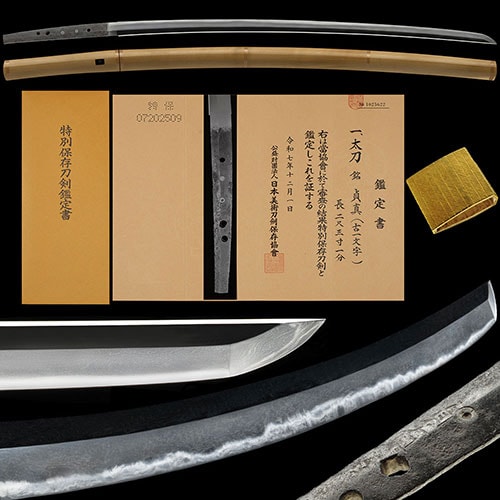
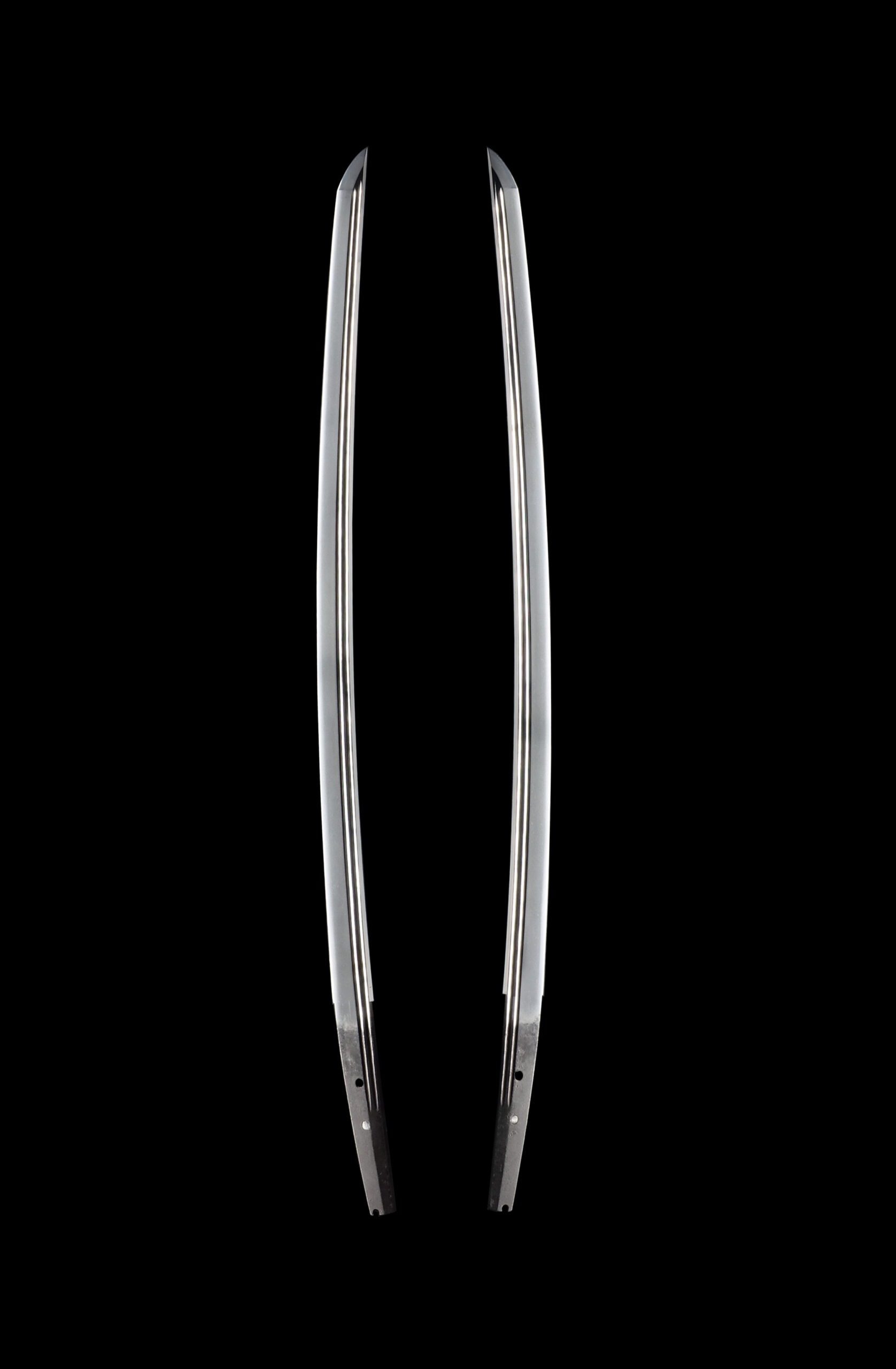
Shigehisa is one of the earliest smiths, an hand of the early period whose surviving work the published sources call few. His name sits across a line the swordbooks themselves are unwilling to draw. The carries Shigehisa in both the lineage and the early , and a names him plainly as "Ko- Shigehisa of Province"; yet a piece records that in the reference works he is treated as a Fukuoka smith "while the workmanship is rather that of , the period appraised as early ". The published sources go further and say that the matter cannot be settled by the signature, that "from the manner of signing alone it is difficult to decide at a glance whether a piece is or ". To know Shigehisa is to read a smith who stands at the very root of the school, before its school-name had hardened into a manner.
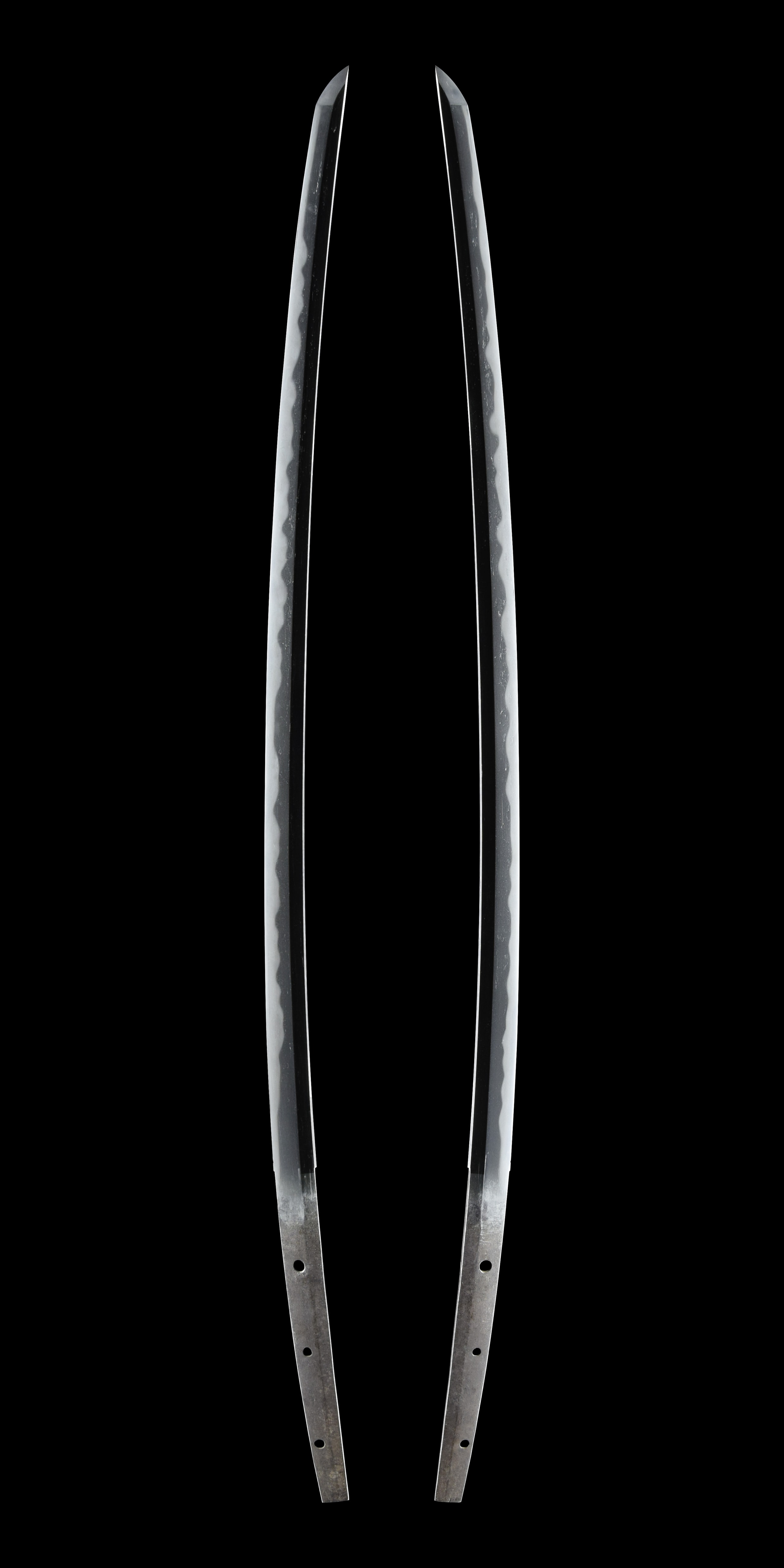
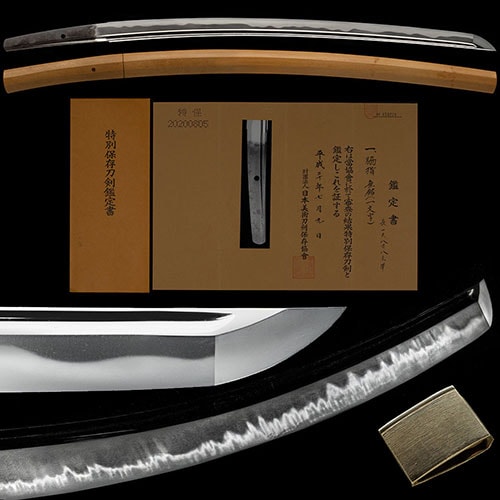
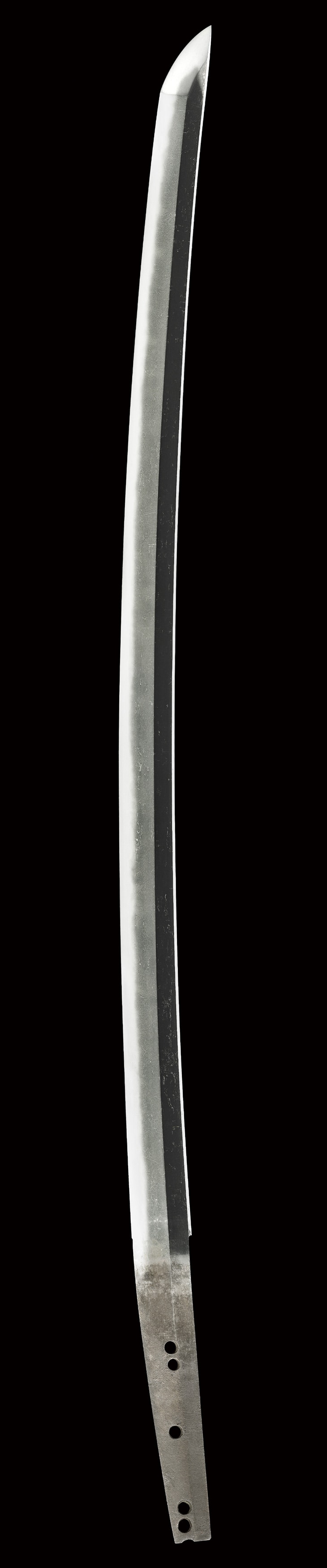
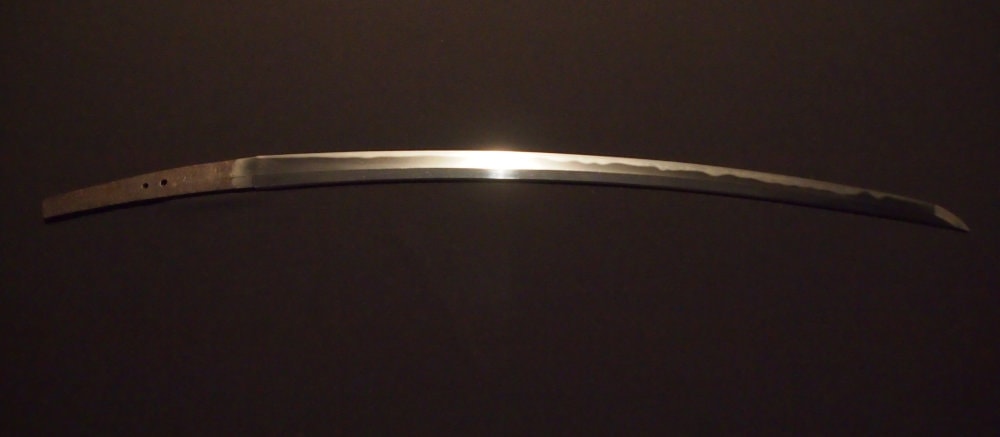
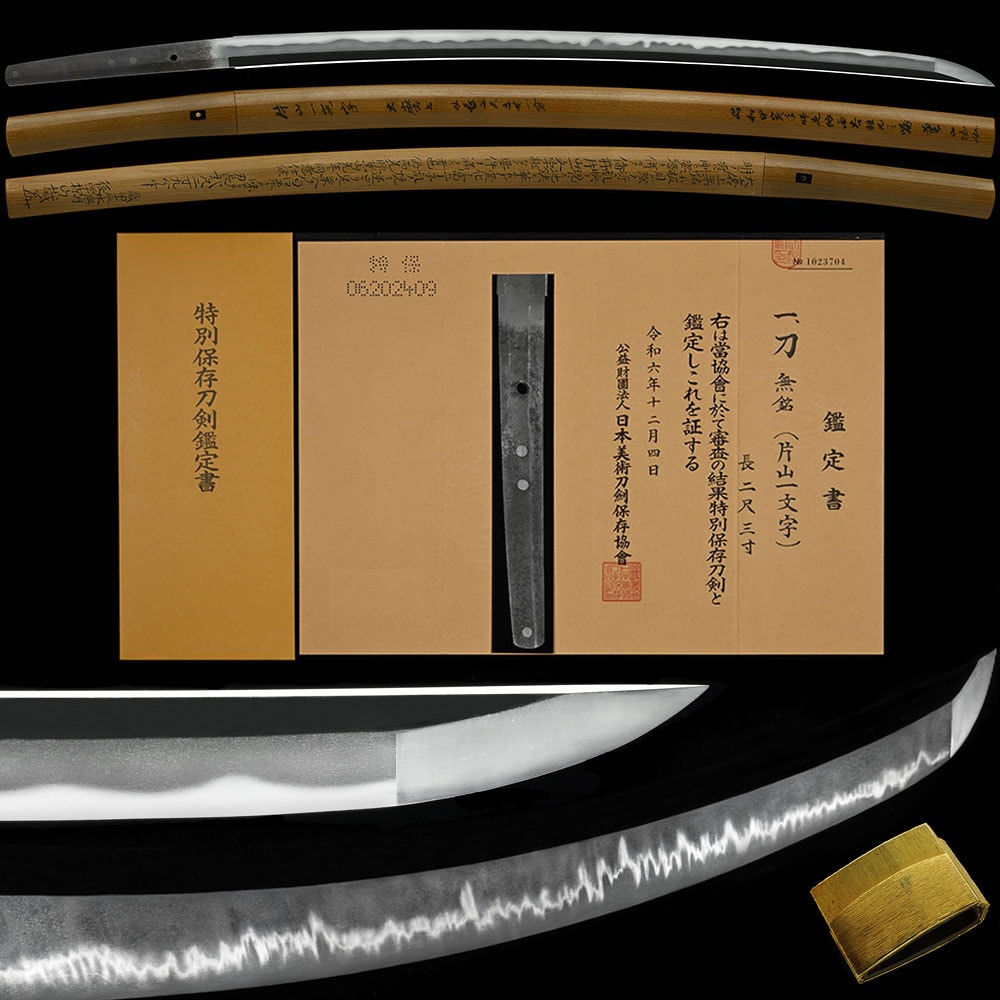
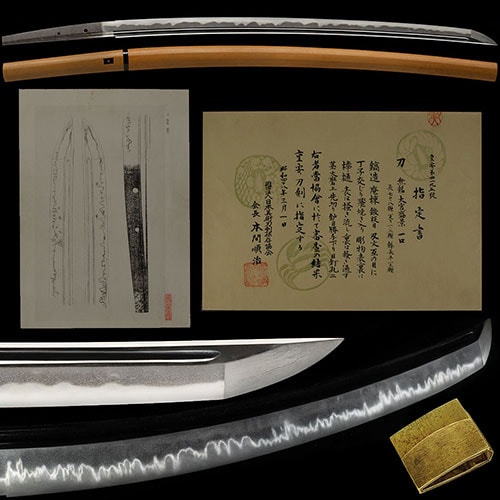
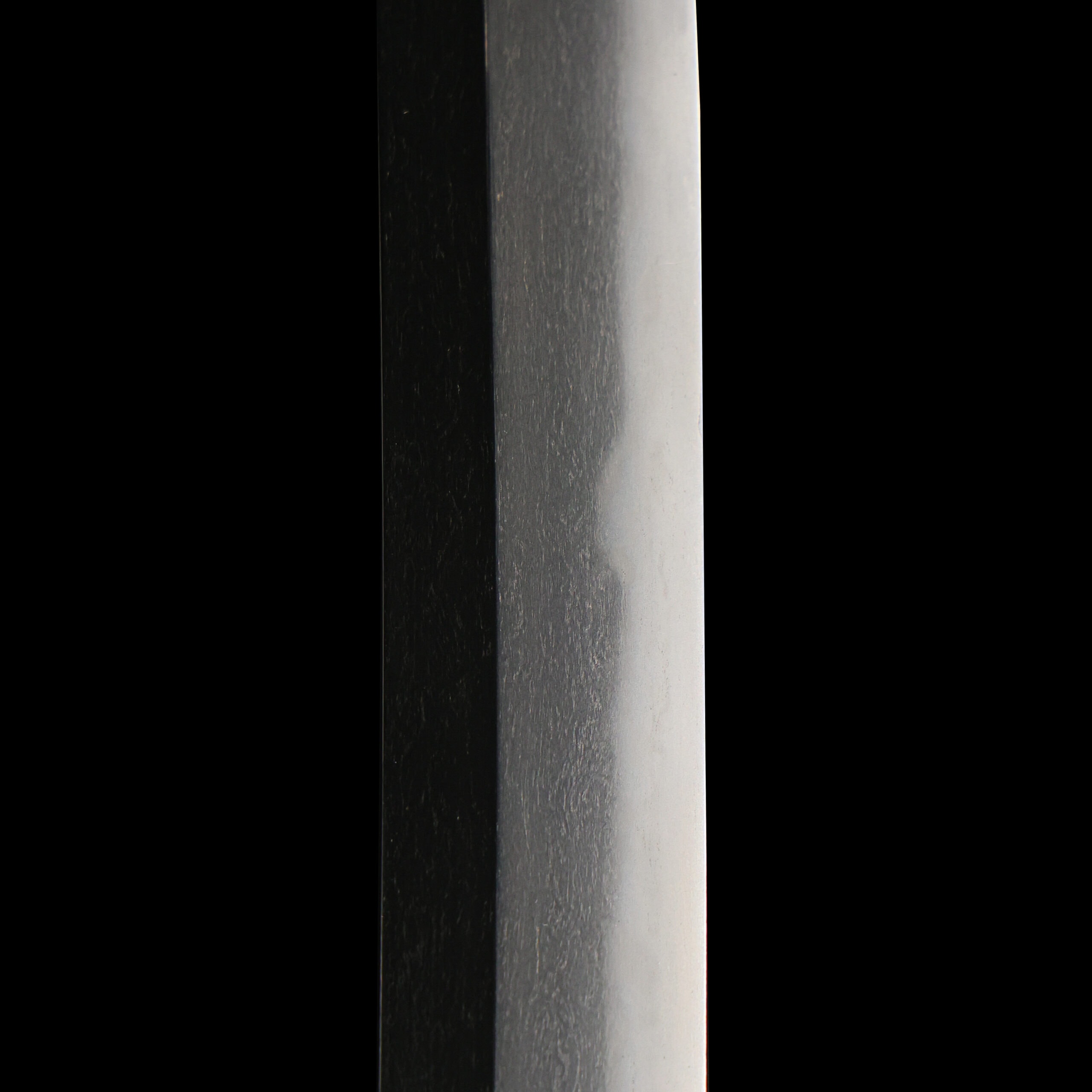
His recognized work is the slender, two-character signed . Most surviving examples have been shortened, yet they keep an old-fashioned early- shape: a narrow body with a , the running high and the curvature shallowed by the shortening, one blade showing a clear taper from base to point. Over a well packed, at times mixed with , lies the feature the judges return to. A stands distinctly above the , and the published commentary on his notes that on his steel the reflection "appears more clearly than on pieces". That clarity of , over so closely knit a forging, is what lifts him out of the plainer hands and toward the .
The temper is a quiet one, and it is the second half of his tell. It is not the towering clove-flower of the school's later prime but a -toned into which is mixed to a considerable degree, the published sources naming the with its abundant as the very mark of Ko-. and enter well, the is deep in with laid along it, and on one blade and run within the temper. The itself carries thick , and where the forging stands a little, mixing , the reflection only grows more visible. The runs straight to a small round. On one the is held back so far that, in the judges' words, "the does not stand out, and there is an antique flavour".
There is variety within the few blades, and the published sources read it carefully rather than smooth it over. The Jūyō Bijutsuhin pieces divide between a well-knit with thickly applied and a mixing and , and a broader-tempered with a wide and . The Tokyo , with its rather bold signature and -based archaic elegance, the commentary judges probably a work, while the Ibaraki piece, with its standing and restrained , it keeps under early from era and workmanship together. One wide Jūyō Bijutsuhin carries a carved at the , which the judge Honma calls exceptional: "the carving of a is rare not only among Shigehisa's works but among blades generally".
What sets the Ko- Shigehisa apart from his neighbours is exactly what the judges name. From the plainer smiths he is divided by the brightness of his and the gathering of on the edge; from the flamboyant mid- of Norimune, Sukezane and Yoshifusa he is divided by the quietness of his hand, his -toned small temper standing before the school's full flowering of full-size . He keeps the flavour of in his shape and in his and alike, one of the early hands the swordbooks call Ko- beside Sukemune, Naomune, Munetada and the rest. He is a document of how the began, the quiet root from which the most brilliant of the traditions grew.
For the collector he is a rare early name held almost entirely outside the market. Fujishiro grades him Jō . He has no National Treasures; his record runs instead through one Important Cultural Property, a preserved at Hie Shrine in Tokyo, together with a once held by Ikeda Nagamasa, two prewar Jūyō Bijutsuhin pieces that passed through the Tokyo collector Tarō and the Hyōgo collector Seto Yasutarō, and besides, one of his blades now in the Boston Museum of Fine Arts. The published sources call the extant works few, and signed Shigehisa number no more than a handful in all. Only a small number fall in the and tiers, and those, like most designated blades, are held rather than traded. A signed Ko- Shigehisa comes to light only seldom, and a privately held example is a notable thing for a collector to encounter, a witness to the first generation of the .