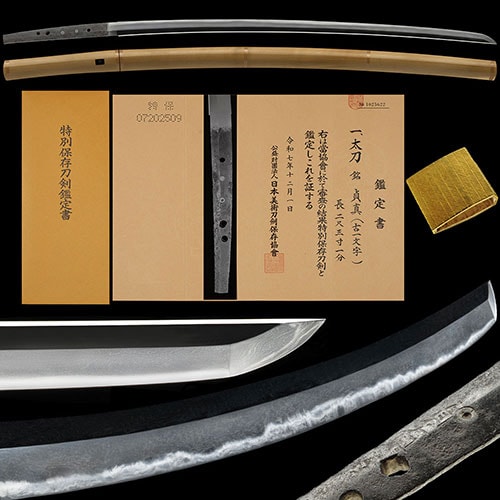
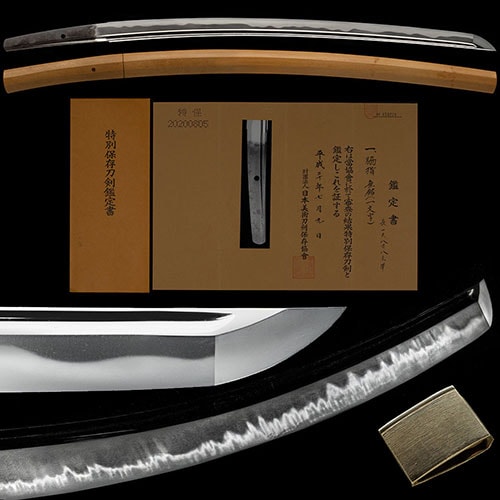
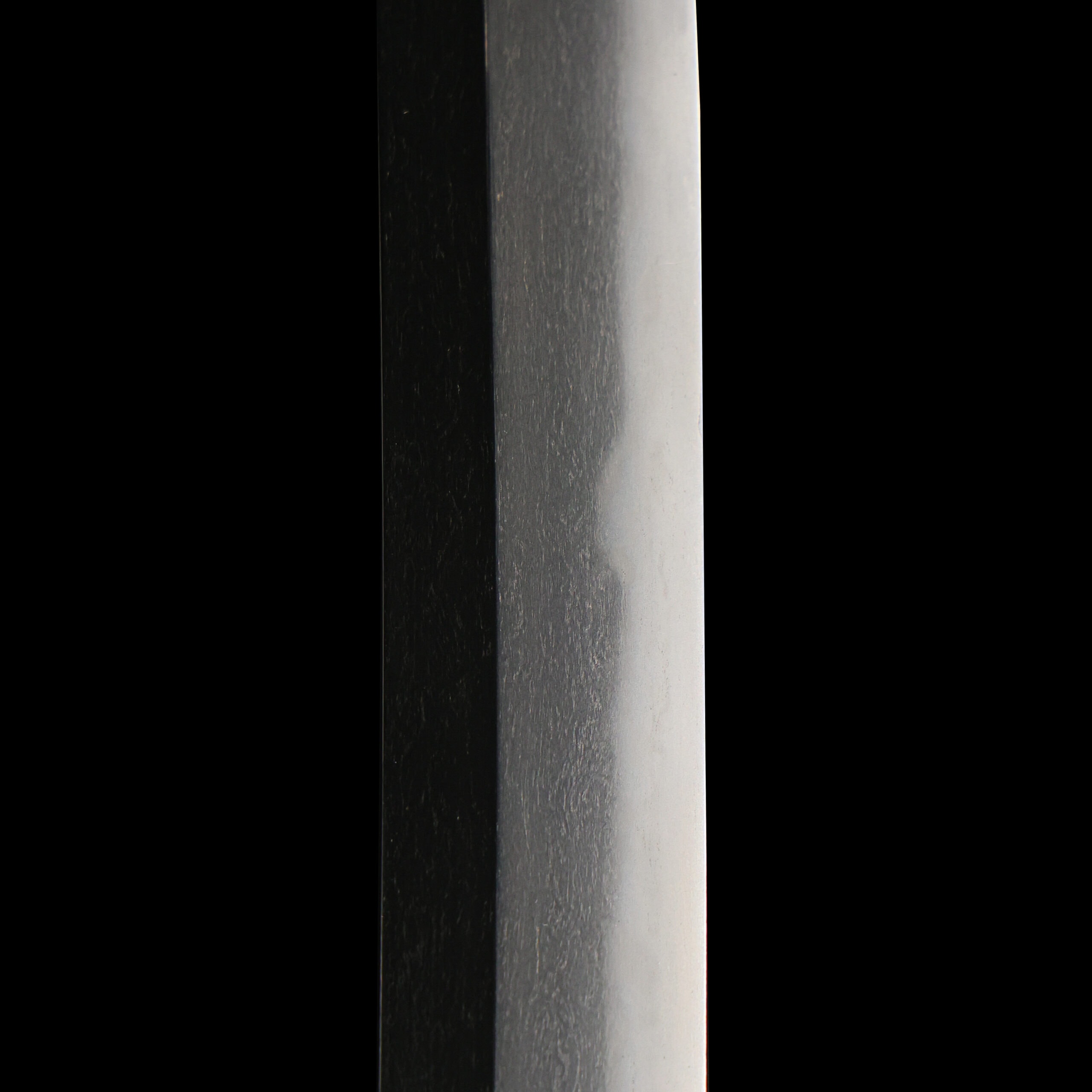
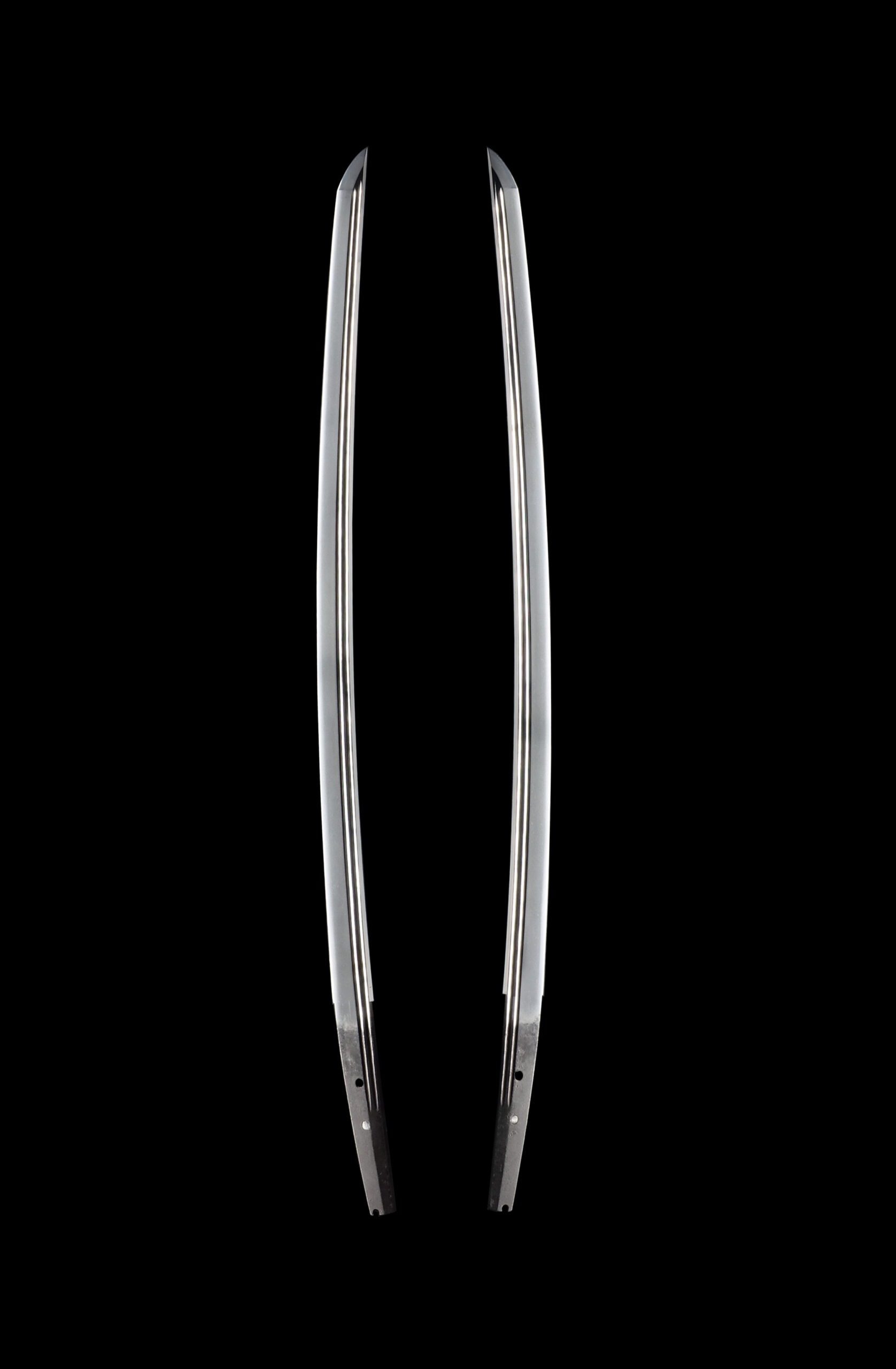
Narimune is one of the Ko- smiths, the earliest generation of the Fukuoka school that arose in at the opening of the period. The published sources record him close to the founder, naming him a son, a second son, or a younger brother of Norimune; the commentary states plainly that he 'is handed down as the second son of Norimune'. With Sukemune, Naomune, Munetada and the other early hands he belongs to the group the swordbooks set apart as Ko-, whose work the published sources describe as retaining, in shape and in and alike, the flavour of the older .
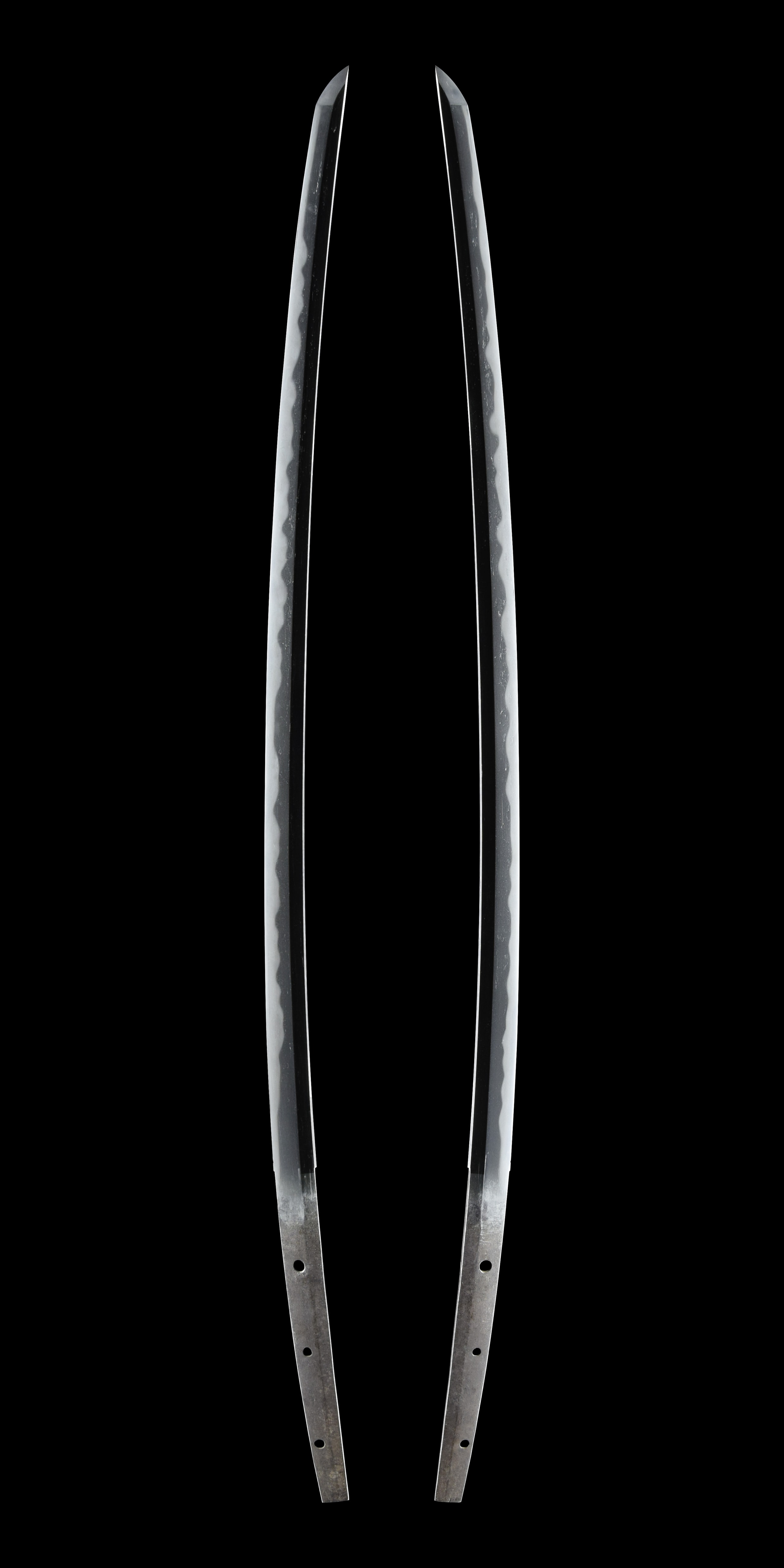
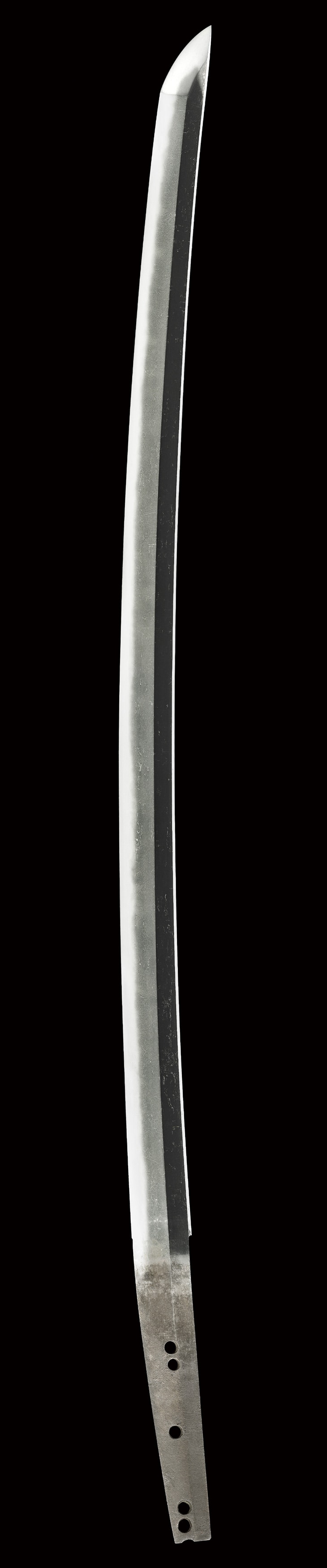
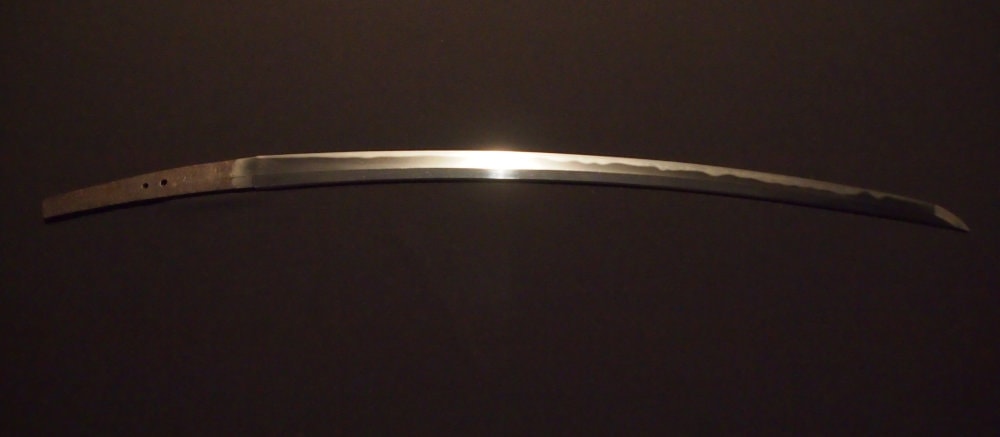
That early character is the heart of his recognition. His are slender, with a small , the running high and at the base, and the published sources call this 'the slender form with high waist-curve and , the typical shape of the early '. Over them the temper is composed quietly: a mixed with , the narrow, worked in over a -leaning base, several blades reading as a into which and are mixed. This is the calm idiom the published sources separate from the full-size flamboyant of the school's mid- prime, the manner of Sukezane and Yoshifusa that came a generation later.
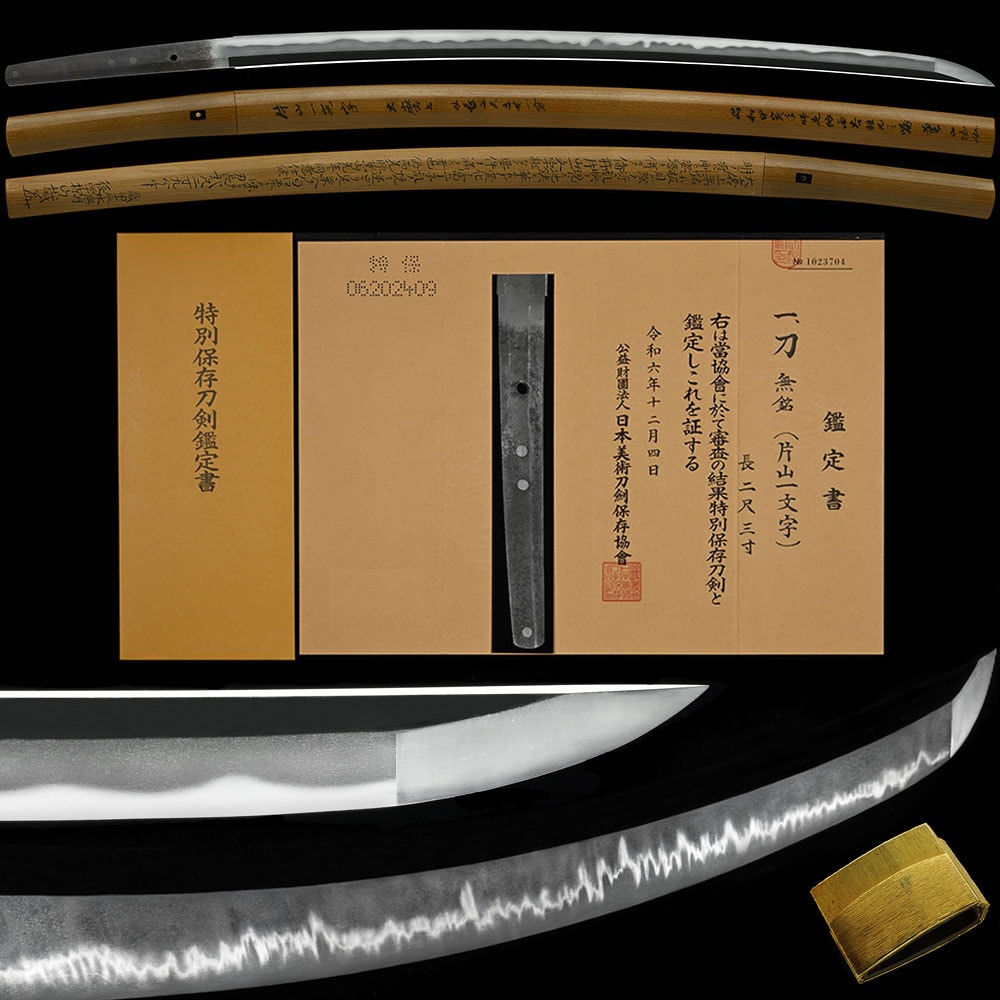
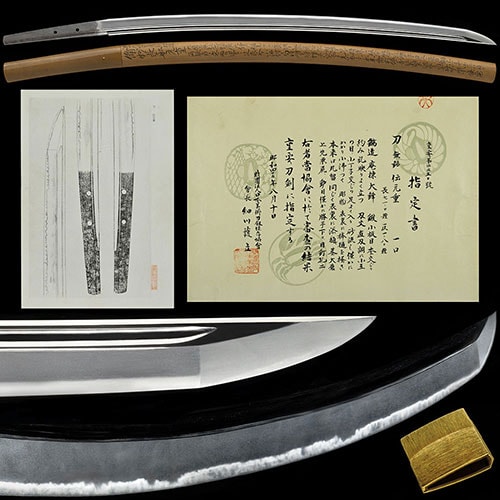
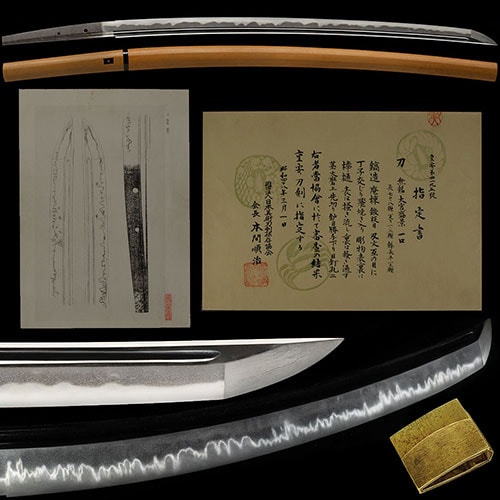
The is a , well packed, on one blade a little , with fine and a standing faintly above it, on the finest piece deepening to a with fine worked in. Across the run and , with and in places and, on one , ; the goes straight to a , or enters in a to a small round. The whole is small in scale and subdued rather than brilliant, the antiquity of the period showing as much in the quiet of the temper as in the slender bearing of the shape.
His record divides into two faces. The signed , surviving or only slightly shortened, carry the two-character and are the basis of his recognition. Beside them stand attributed to him, which the published sources affirm without hesitation as early Fukuoka work, dignified in shape and sound in and , while cautioning that the personal attribution cannot be pressed: there are, they write, 'few decisive points by which it must positively be Narimune', so the reading rests on period and school. On the blades they note that 'the shape and bearing, and the make of the and , strongly retain the flavour of ', which is the very quality that places him in the school's first generation.
He stands, then, at the threshold of Fukuoka , before its mid- brilliance and still half within the world of . The published sources read his late designated as a work in which 'the connoisseurship proper to Ko- can be savoured to the full', its well-packed , and quiet together giving the antique repose that is his signature. Where the school's prime is read by its flamboyance, Narimune is read by its restraint.
The Fujishiro appraisers rate him at the jō-jō level, and his survival is slight: the published sources observe that 'the extant of this name number no more than a few', with several pieces designated , among them a late example confirmed in the sixty-second session, and three signed designated Bijutsuhin before the war. The provenance is unusually distinguished for so early a smith: one of the attributed to him 'descended originally from the Tokugawa shogunal house', other blades carry the names of the Date house and of the Imperial collection, and his recorded whereabouts include public holding. These are designated works and long-held heritage rather than blades that trade; a signed Narimune is uncommon and comes to light only from time to time, while an attributed of the school may be met a little more readily, though never as a matter of course.