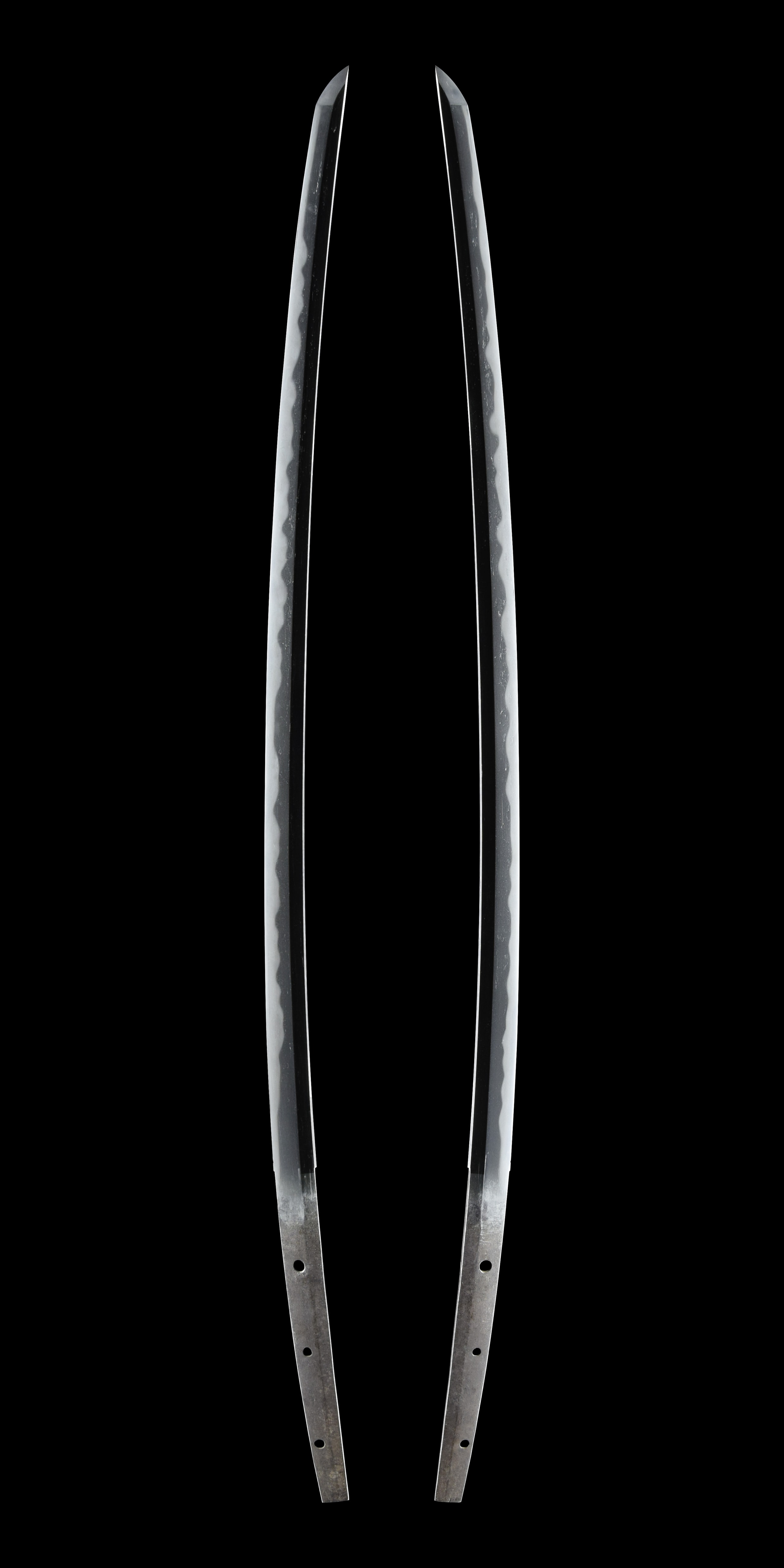
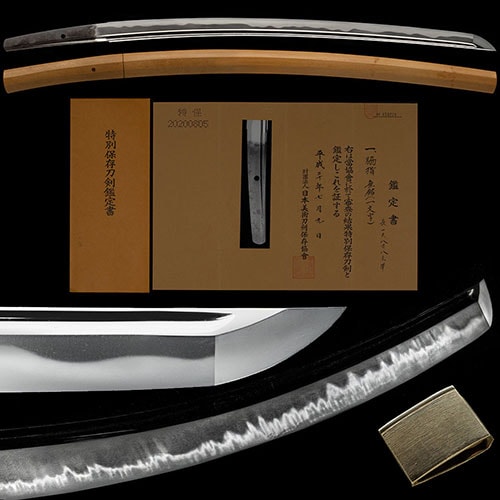
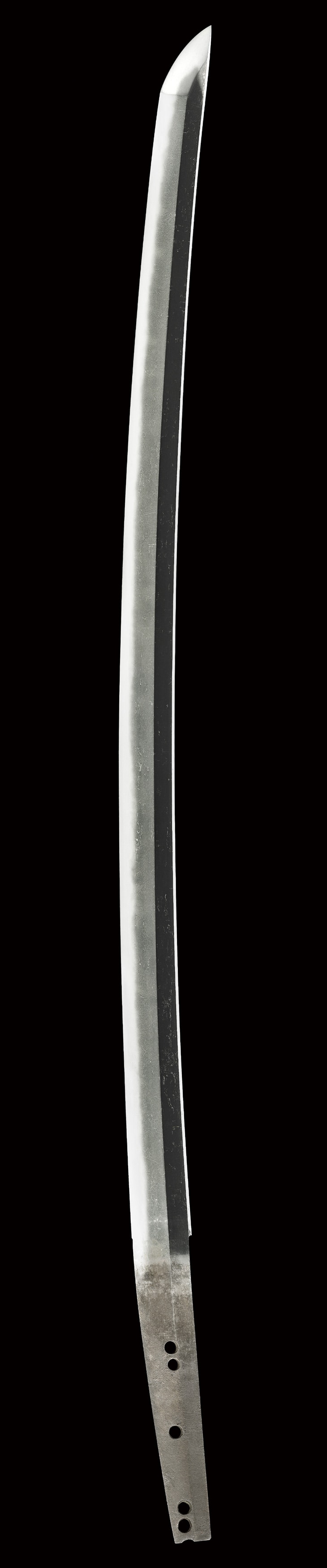
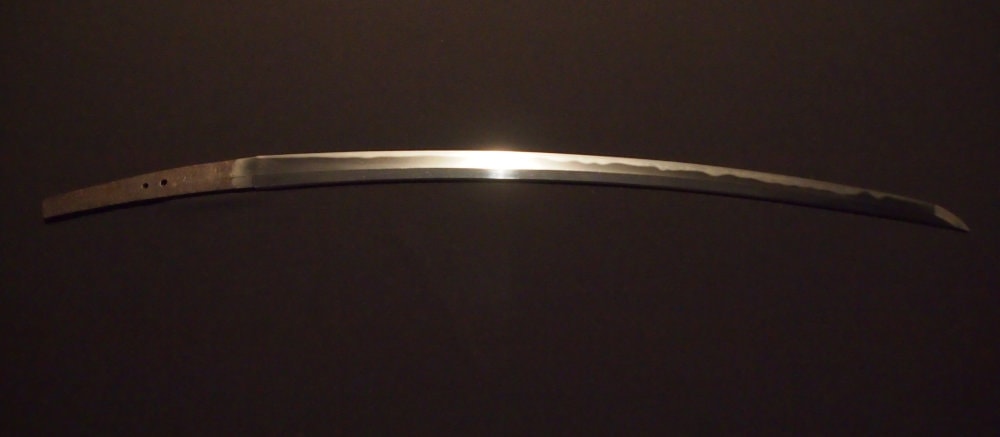
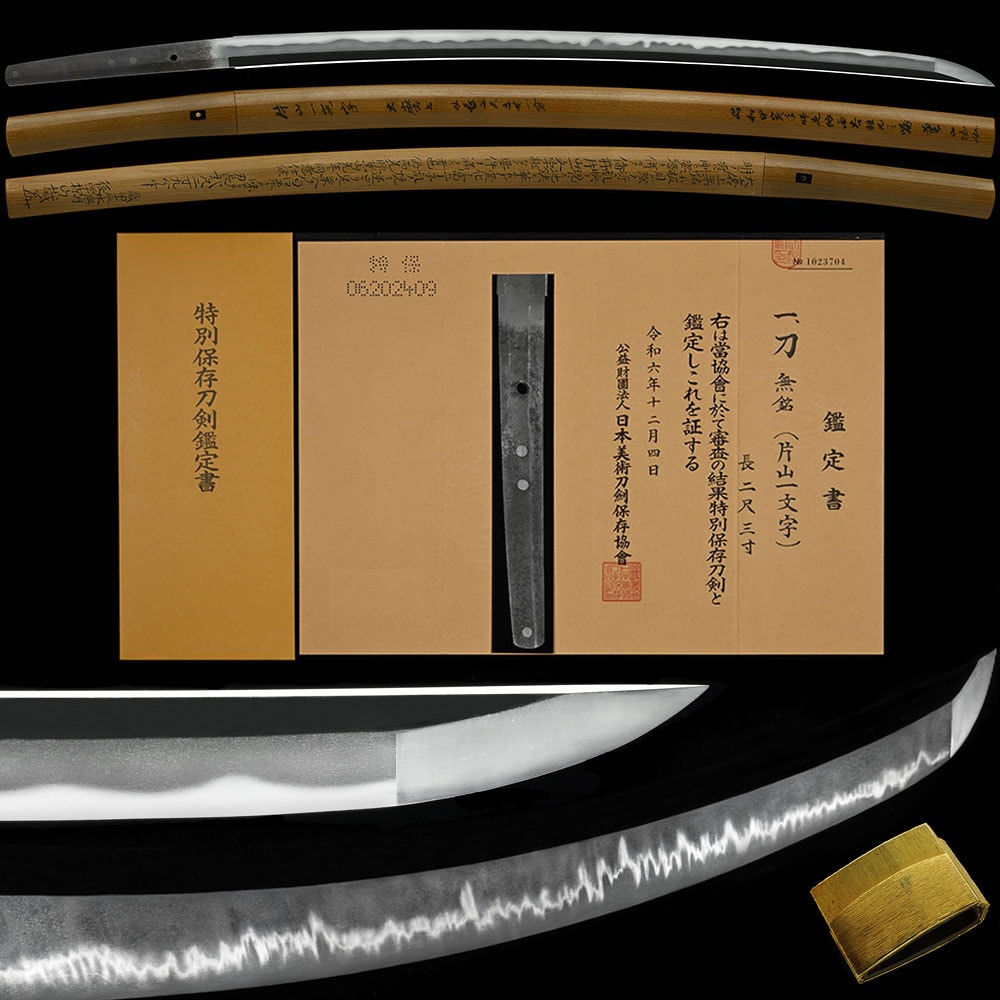
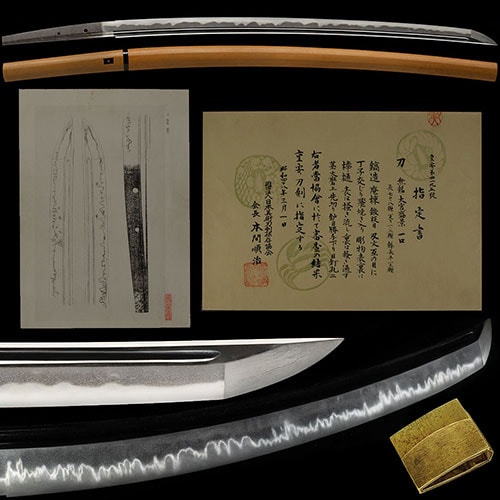
Sadazane is one of the earliest of the smiths of , working in the early period about the Hoji era of 1247 to 1249. The records him as a son of the Fukuoka founder Munetada, a line of descent the published sources repeat in their commentary on his blades, while a second tradition makes him a son of the smith Takatsuna. The published record sets the parentage against the work and finds them at odds: his surviving , the commentary says again and again, fire a well--laden with no prominent reflection in the , so that they look more archaic than Munetada, "older in feeling than Munetada". For that reason some judges classed him not with the at all but with the older group, and the question of which side a given blade belongs to runs through his whole record. The point was settled by direct observation. The reference texts preserve Honma's note that he had examined examples carrying the character above the two-character signature, "and so it is beyond doubt Ko-", placing Sadazane at the very head of the school.
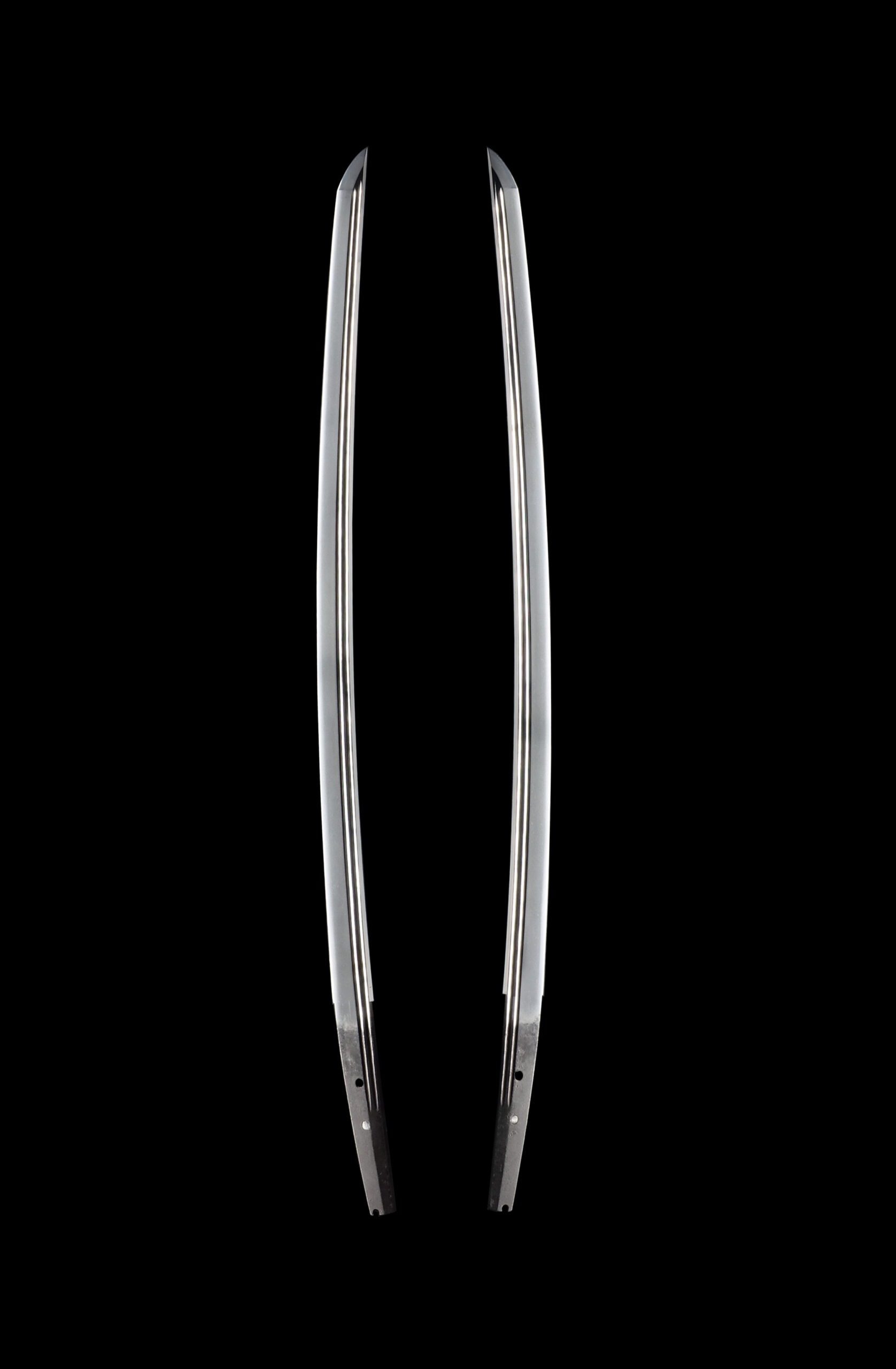
His characteristic hand is the quiet, archaic register the published sources treat as typical. Over a fine the temper is a -based with , and entering freely, the bright, gathering with and coming and going, and the running quietly to a small turnback or burning out without one. What sets him apart is what is missing. Where the norm is a standing vividly in the , the commentary records of Sadazane that the reflection is not prominent, and one note draws the contrast as his individuality: the Ko- blades mostly show a standing , "yet this smith has many works in which the reflection is not conspicuous", and from this his own character can be read. The base under the small , the restraint of the temper, and the absence of the showy reflection are the marks that the published sources return to as his typical work.
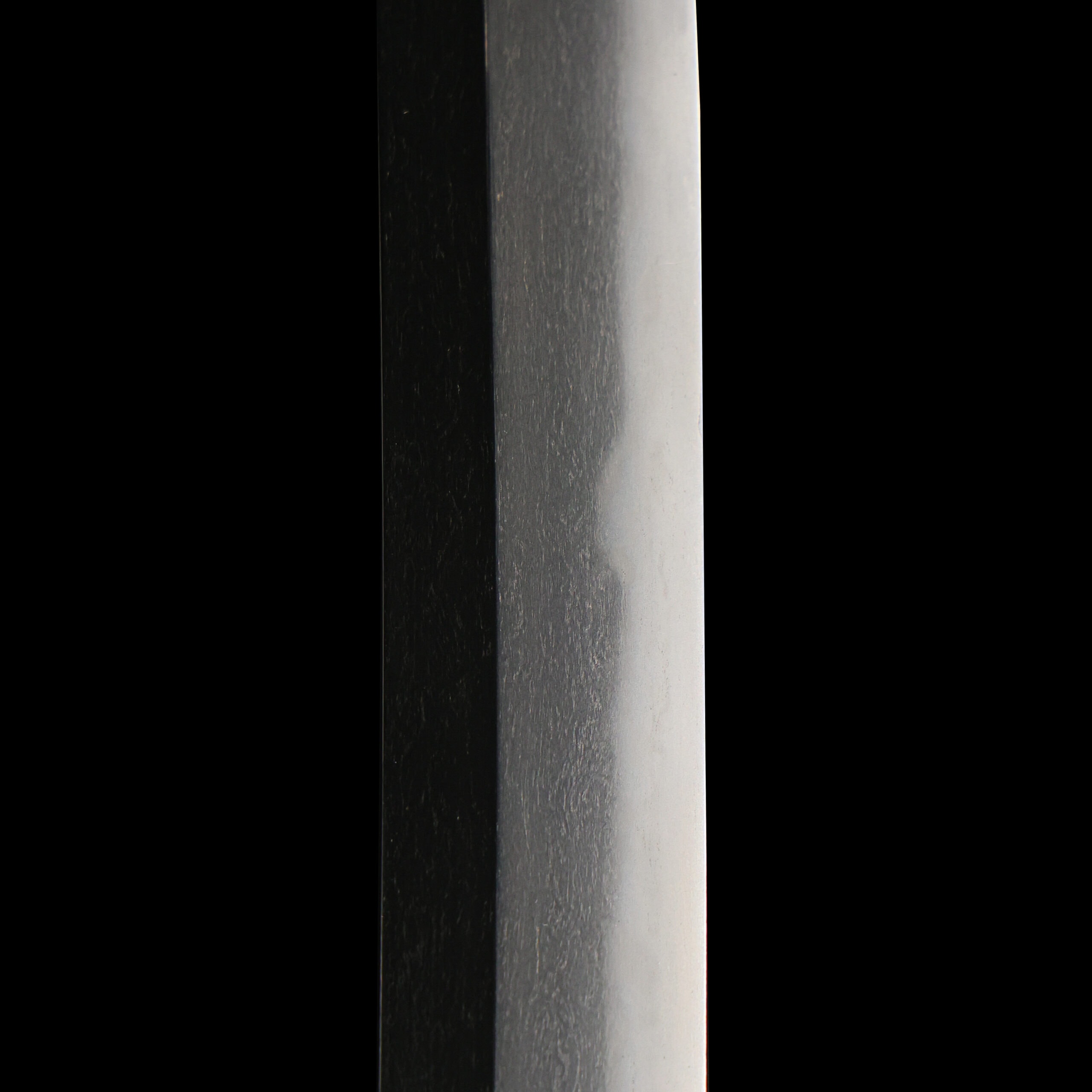
The is the other half of the picture. The forging is a , at times a with a standing tendency and flowing passages, very well knit, with lying thick and fine and entering through it. Through that the published sources repeatedly note patches of , the speckled steel of old and , and on one the commentary writes that the stands a little and carries thickly with " mixed in that at a glance recalls ". That speckled steel, rare among the brilliant Fukuoka and Katayama hands, is the most particular thing in his . On the finer-grained blades the feature reads as a faint -toned , present but never the bright, billowing reflection of the later .
His work falls into two registers of one manner. The typical one is the subdued described above. A minority of his show a somewhat showier hand, and the published sources flag the difference explicitly: of one with a standing and a crossed with , the commentary says it is "somewhat flamboyant for Sadazane". Of a in the fuller voice, the published record observes that it "carries on the manner of and adds a further freshness to it", and finds in that the very thing worth seeing in the Ko- school. The signature itself is part of his identity. The is a two-character Sadazane cut large near the in a thin chisel, "large in thin strokes", and the published sources name this hosotagane large two-character signature as one of the smith's own tells, a help in attribution given how few signed works survive.
The difficulty that defines his place in the school is the homonym. The published sources record that there is a Sadazane in both the group and the early "whose work and signature so resemble each other that they cannot readily be told apart", and individual blades are judged to one side or the other case by case. Several of his are read as work, others firmly as Ko-; the -marked examples Honma saw anchor the end. The commentary frames his restraint as the school's virtue rather than a want of fire, noting of one blade that the subdued character is not Sadazane's alone but belongs to the whole early group, "and that everything is understated is itself a point to see". He stands at the threshold where passes into , his archaic preceding the brilliant Fukuoka of Yoshifusa and the Katayama hand of Norifusa, and his blades are valued as records of the school at its very beginning.
Sadazane is rated Jo by Fujishiro, with a Toko Taikan valuation of 1,200,000 yen. Almost his whole surviving record is signed, an unusual circumstance for so early a master: twelve of his designated works carry his two-character against a single unsigned attribution. The designations stand at four and seven , eleven blades in the and tiers, with one Important Cultural Property among them. The earliest, a designated Bijutsuhin in 1939, is the blade the reference texts cite under Honma's -mark note; it was held by Kazama Yokichi of Niigata. Among his the published sources single out one as "the foremost of the Ko- within the Important Sword rank", and of his finest the commentary calls it, "a valuable blade by which to know this smith's real ability, signed works by him being few". Recorded whereabouts of his blades include the Tokugawa Art Museum, the Tokyo National Museum and the Seikado Bunko Art Museum, the rest held in long-private hands. With one Important Cultural Property preserved as patrimony and never traded, his market is the small body of and ; a signed Sadazane comes to light only rarely, and when one does it is a record of the earliest generation that few collectors will encounter.