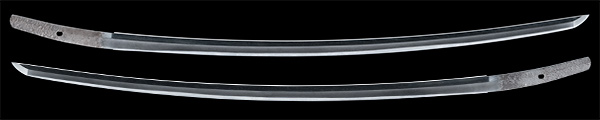
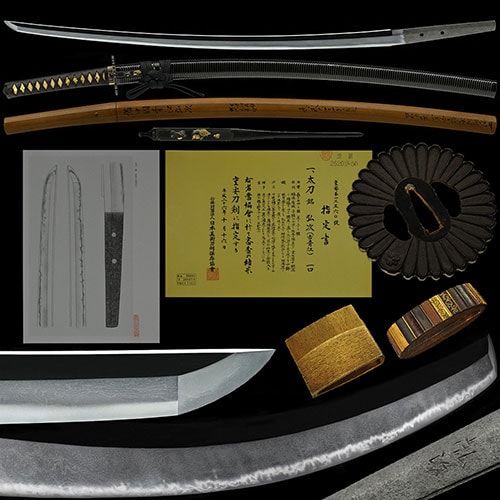
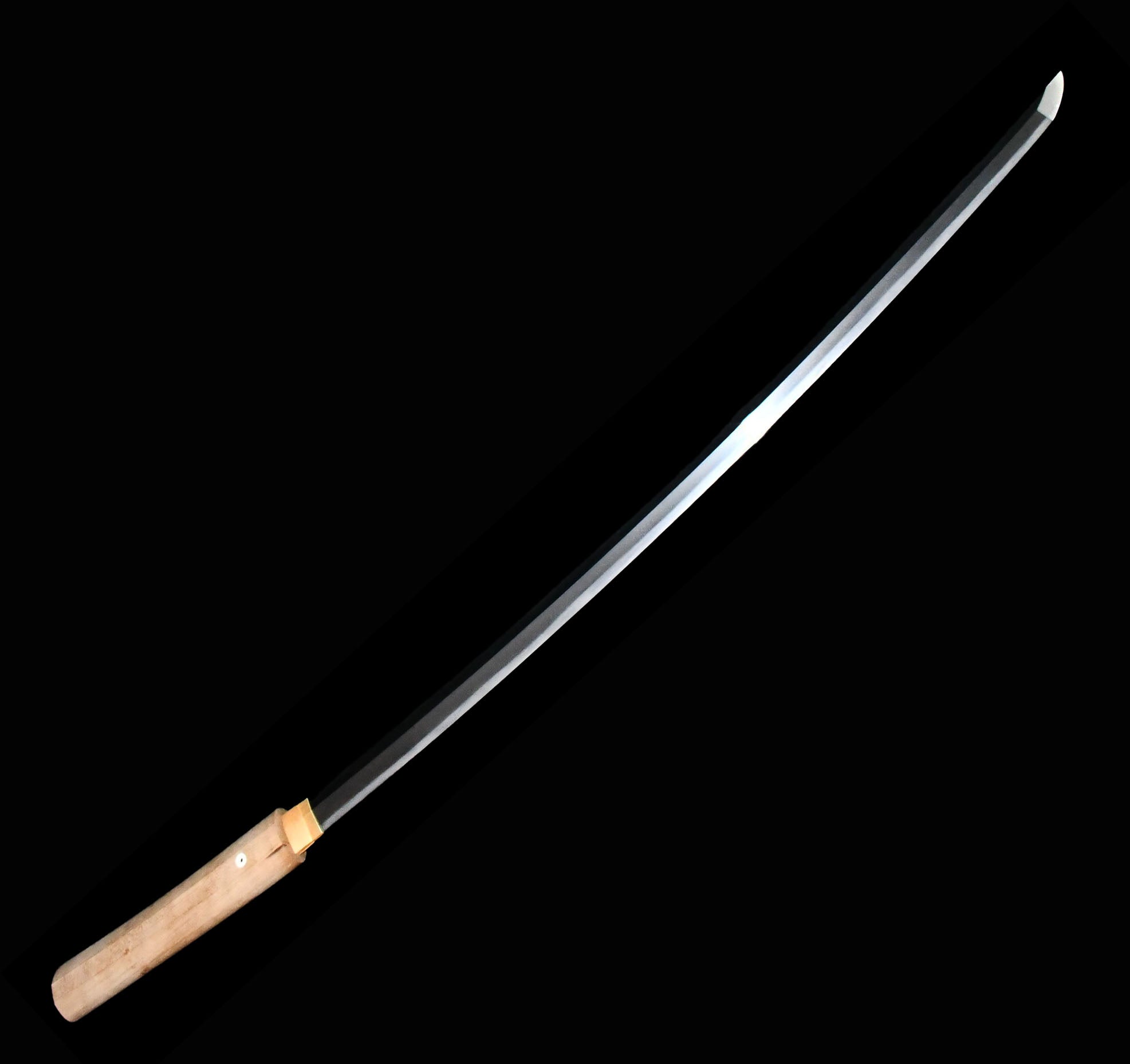
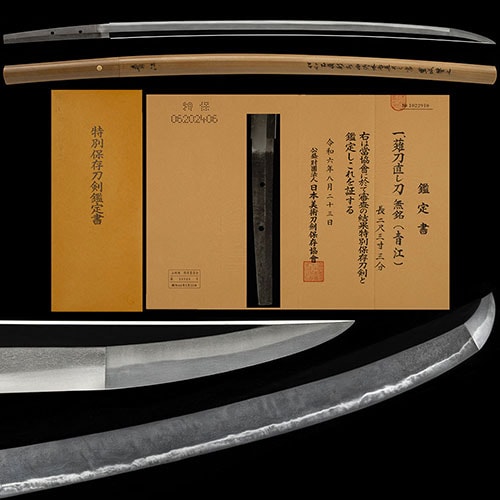
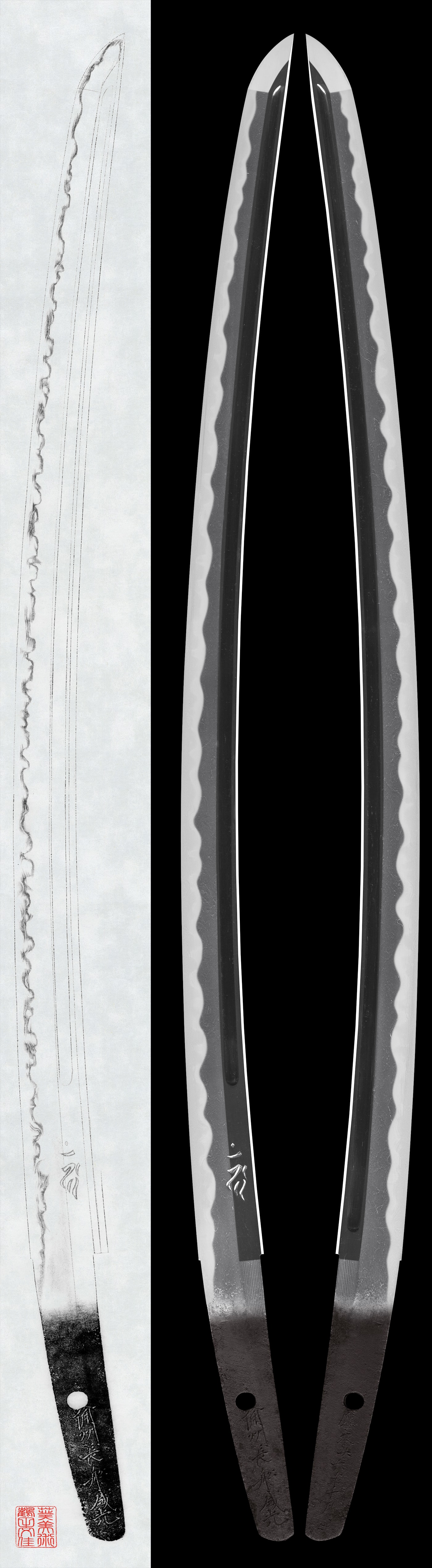
Tsunetsugu is one of the representative smiths of the Ko-Aoe school of Bitchu, the older Aoe that forged along the lower Takahashi river in a province the records praise for its swords from the close of the Heian period. The published sources name him plainly: "Tsunetsugu is a representative smith of Ko-Aoe"[[c:1]], held by one tradition to be the son of Moritsugu and the younger brother of Sadatsugu, and counted, the same commentary writes, "together with Sadatsugu and Tsugiie among the ban-kaji of the Retired Emperor Go-Toba"[[c:2]]. The name is not that of a single hand. Judging from the manner of signing, the NBTHK reckons there were "two or three of the same name within Ko-Aoe"[[c:3]], and elsewhere that "several smiths worked through the Kamakura period"[[c:4]] under it, so the published record treats Tsunetsugu as a representative name carried as a mainstay of the Aoe forge from the opening of Kamakura down into the Nanbokucho, rather than as one biography. Among the Tsunetsugu-name meibutsu stands the Juzumaru, one of the Tenka-Goken, famous as the protective tachi of the priest Nichiren, and the published commentary notes that this raises the name higher still.
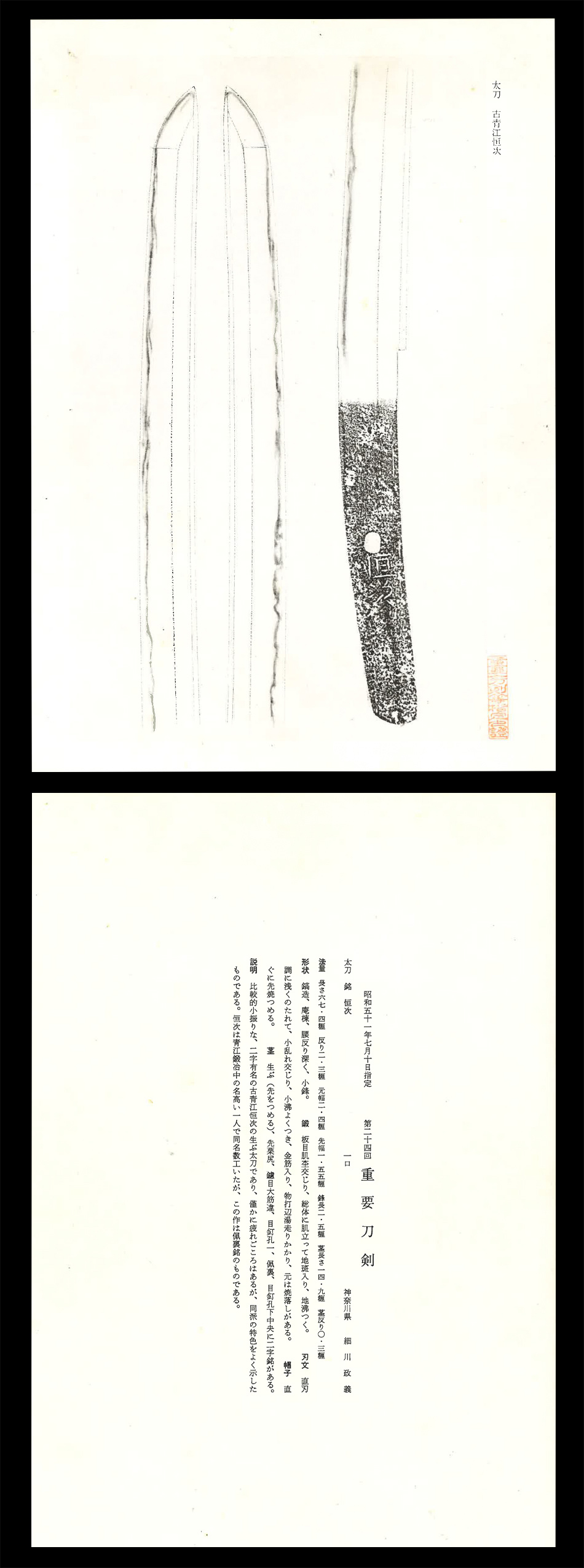
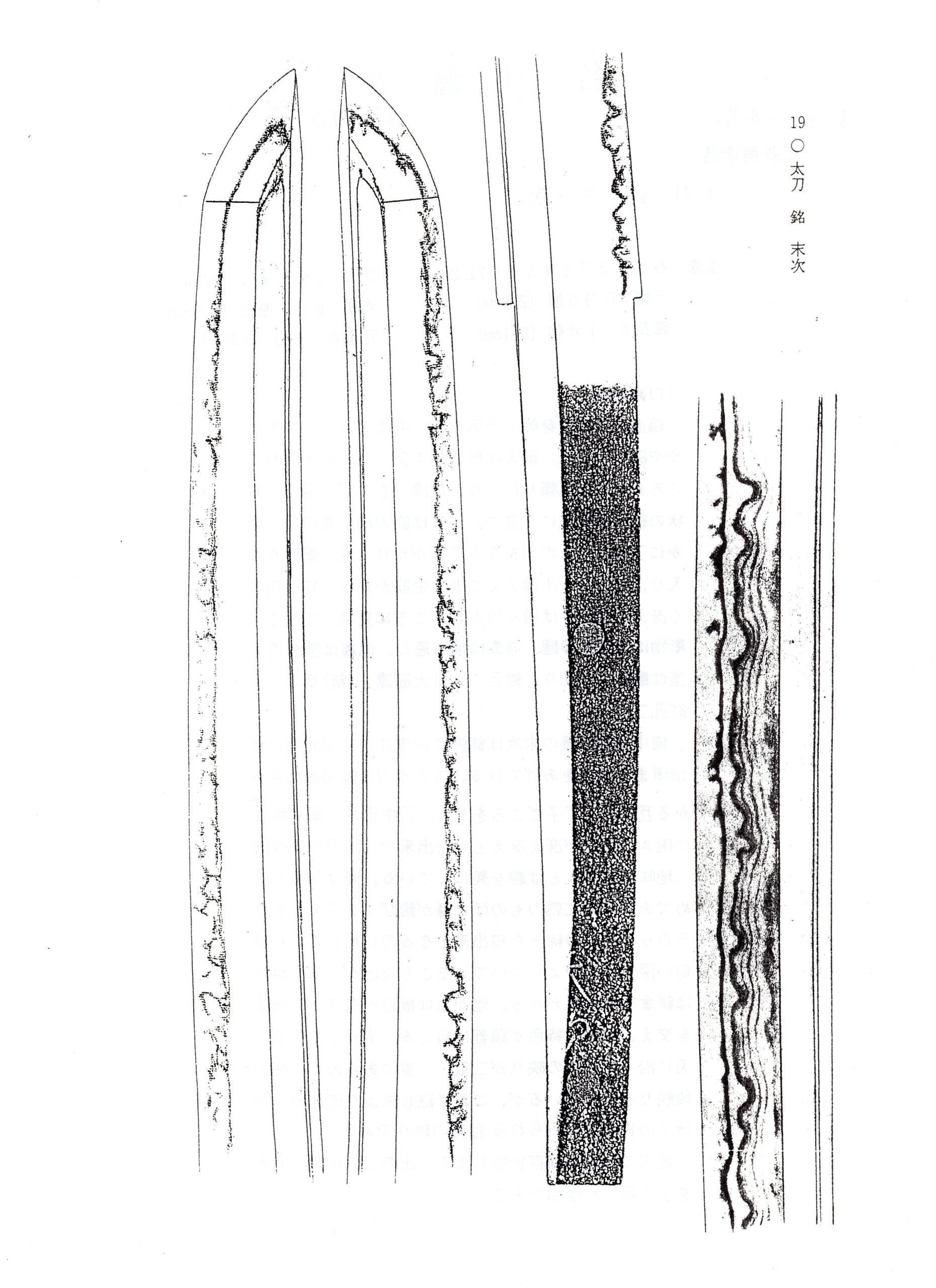
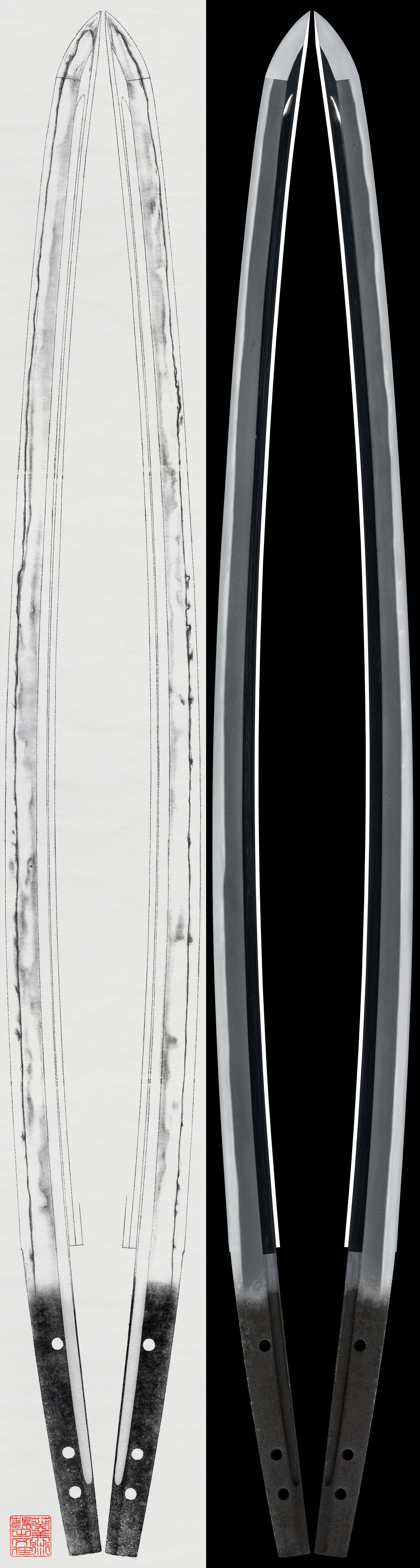
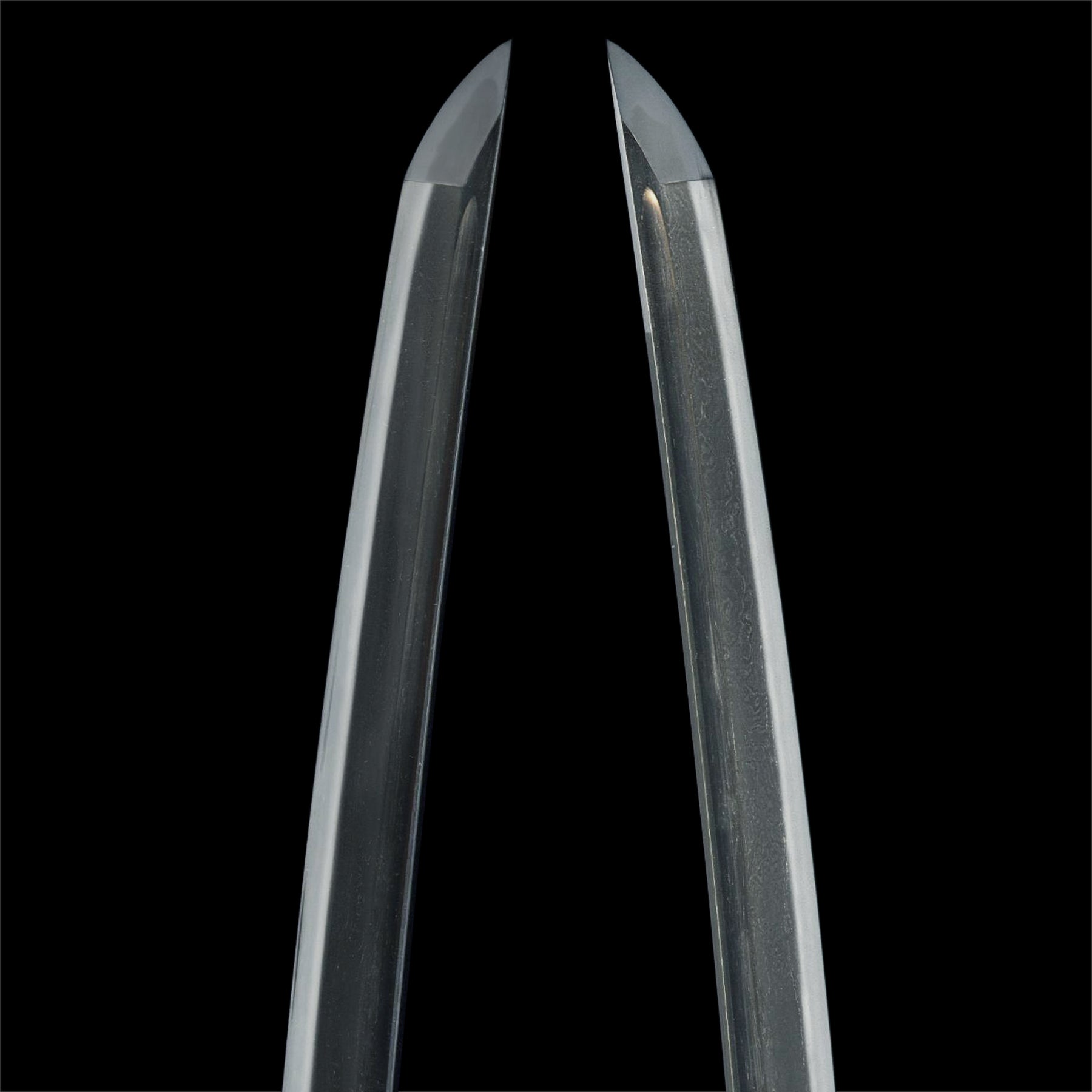
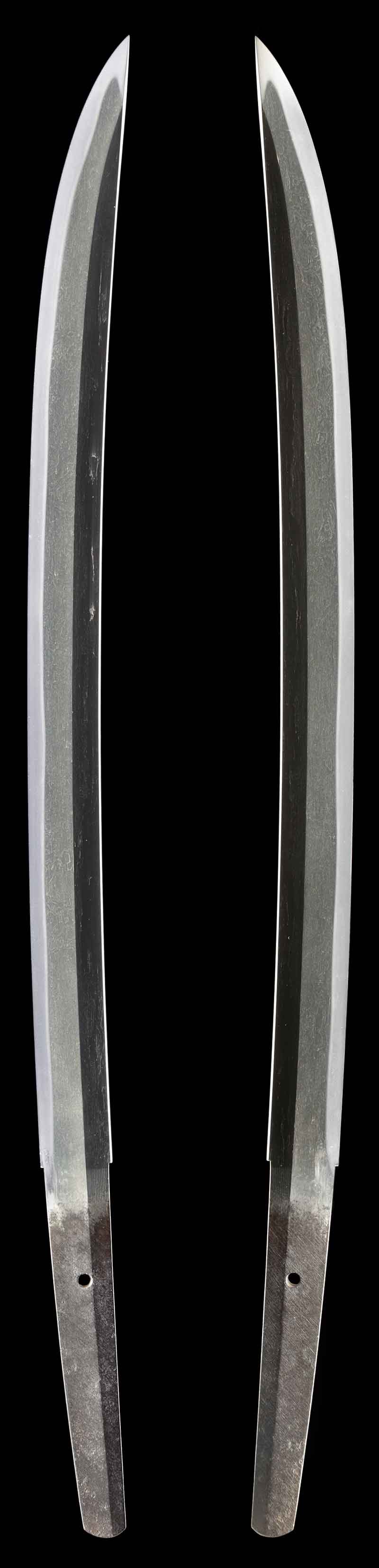
His is the calmest suguha of the early Aoe hands. The signed tachi read on one consistent manner: a suguha-based ha that the published sources describe as "a suguha tone running shallow with a moist tendency"[[c:5]], faintly undulating, with ko-midare and at times ko-choji mixed in. Ashi and yo run into it constantly, and the nie is strong and well laid, with sunagashi sweeping through and kinsuji appearing in places. The boshi answers the temper, going straight and turning back in a small ko-maru. It is a quiet, even temper, the least flamboyant of the Aoe quartet, and its discipline is the first thing that marks his hand: where the Aoe brethren let the midare run, his stays close to the line, the activity carried inside it as ashi, yo and the occasional ko-choji rather than along its crest.
The jigane is the Bitchu steel, and the published record dwells on it: of one signed tachi the NBTHK writes that, the activity within the ha aside, "the jigane in particular is splendid"[[c:6]]. It is a ko-itame that stands a little, mixed with mokume, working up to the crepe-like surface the sources call chirimen (the same tachi is recorded as "showing a chirimen tendency", 縮緬風を呈し). Fine ji-nie gathers across it and chikei enter. On many blades the iron is broken by jifu and the clear patches the school knew as sumihada, and a faint utsuri rises in it, on the o-suriage pieces a nie-utsuri and, on the broader late work, utsuri standing in streaks toward the shinogi. A reverse tendency surfaces on a minority of blades, saka-ashi and even saka-choji mixed on the ura, a within-school tell that runs quieter in him than in his Aoe brethren. The whole is the speckled, deeply flavored jigane the NBTHK calls Aoe character, "quiet in tone, yet possessed of deep interest and savor"[[c:7]].
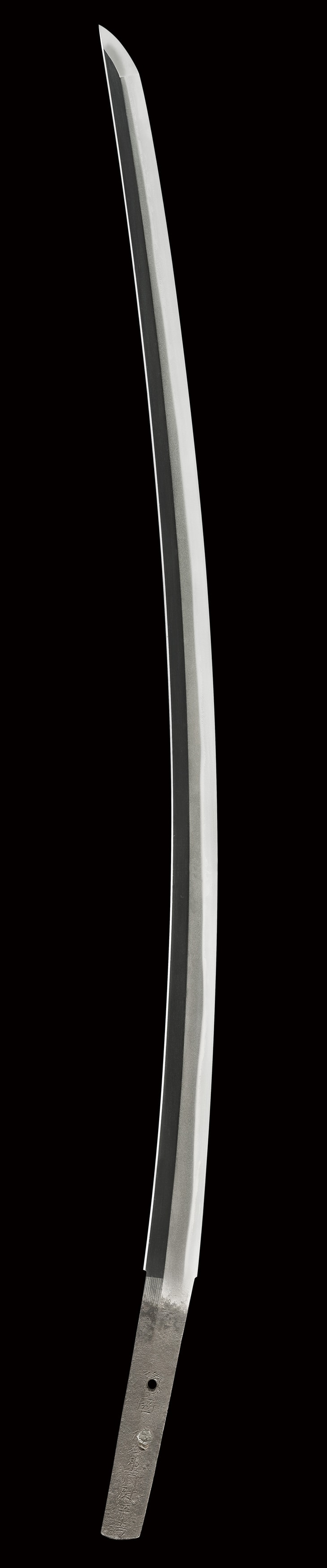
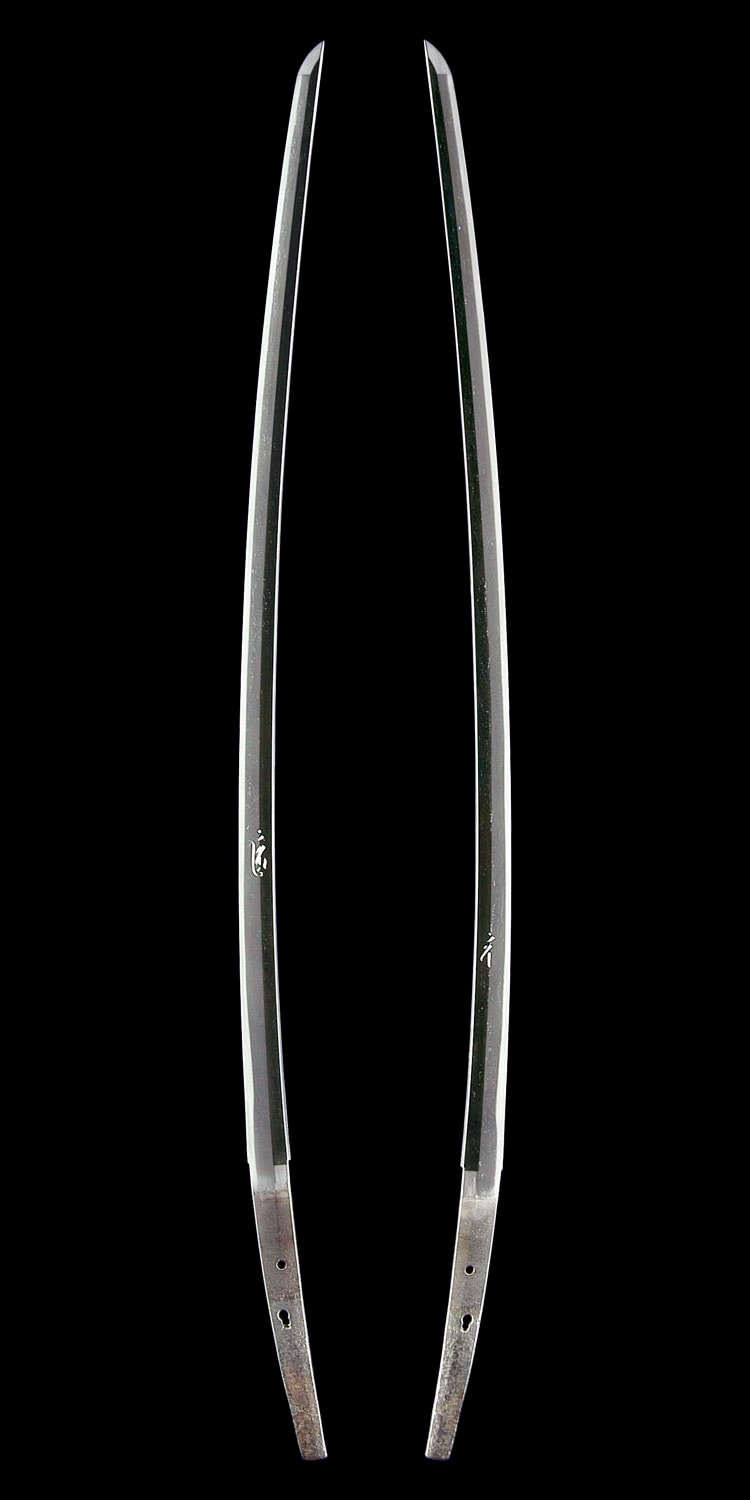
The work falls into two registers that the published descriptions keep distinct. The first is the signed core: comparatively small ubu or lightly shortened tachi in shinogi-zukuri with koshizori and a ko-kissaki, carrying a thick-chiseled two-character signature, the chisel-work so heavy the NBTHK calls strokes of this boldness rare. The placement is itself a kantei point, for the published commentary records that the signature falls now on the haki-omote, now on the haki-ura, and observes by way of reference that within Ko-Aoe the line descending from Masatsune signs tachi-mei on the front while the Sadatsugu group cuts to the back. The second register is the o-suriage mumei and shu-mei work attributed to the name, read as later Tsunetsugu: a katana bearing a red-lacquer "Aoe Tsunetsugu" attribution beside a Kanbun-era Hon'ami Kotsune origami, and the two unsigned Juyo Bijutsuhin blades, one judged late Kamakura, one Nanbokucho Aoe, which mark the later end of the line. Against this the NBTHK is candid that the multiplicity of hands leaves questions: of one signed tachi it allows that there is "some doubt regarding the inscription, leaving room for further study".
The published sources are equally careful to keep him apart from his homonyms. The same commentary that praises his jigane notes that "the name is found among the Ko-Bizen group as well"[[c:8]], both reckoned skilled, and the appraisal of the Ko-Aoe pieces is steadied by their own evidence rather than by the name alone: the o-sujikai file marks the NBTHK calls the prescribed Aoe convention, the bold thick-chiseled two characters, the speckled jifu and sumihada in the ji, and the disciplined suguha with its reverse-tending ashi. His tachi are placed against the wider Aoe field by these grounded marks, not by contrast with another school: the calm of his temper, the crepe-like Bitchu jigane and the bold signature set his Ko-Aoe work apart, and the records read the same hand across the early Kamakura to Nanbokucho span the name covers.
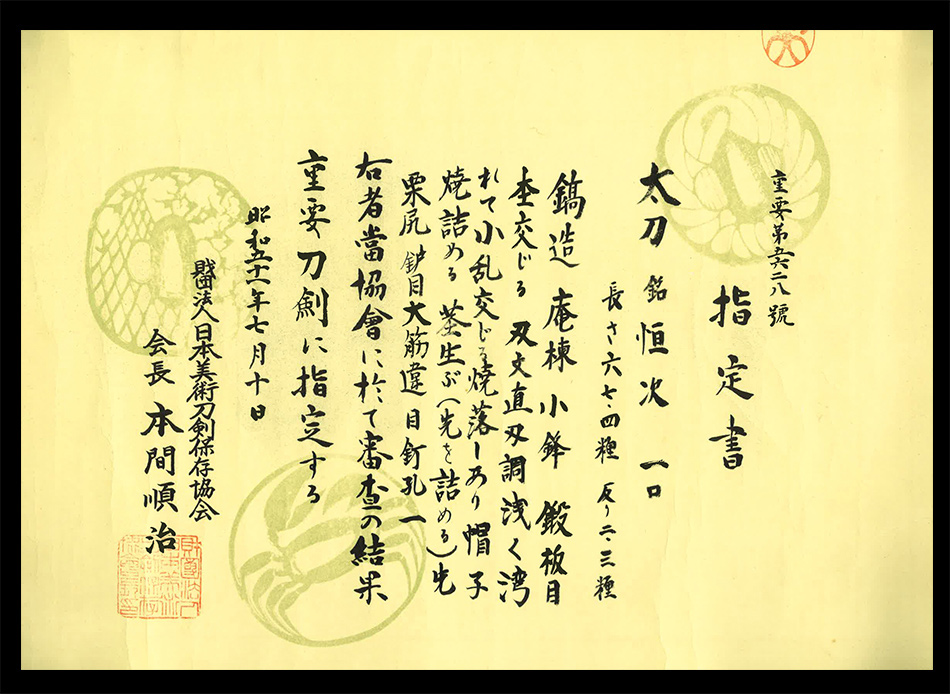
Fujishiro grades Tsunetsugu Jo-jo saku, and the Toko Taikan values his work among the upper rank of the early Aoe names. The designations behind the name sit high: one of his tachi is Tokubetsu Juyo, with seven at Juyo, three Important Cultural Properties, and two prewar Juyo Bijutsuhin among the unsigned work. No blade under the code is a National Treasure, so the patrimony preserved in trust is the three Important Cultural Properties, while the tradeable standing rests on that Tokubetsu Juyo and the Juyo tier. The provenance roll is notable for so old a name: blades carry histories through the Kishu Tokugawa family, the Uesugi family, the Tsuchiya family, the Arima family, and the Imperial Family down to the Emperor Meiji, and the Hon'ami Kotsune origami of Kanbun 8 fixes the shu-mei katana's appraisal in the seventeenth century. Of recorded whereabouts a handful are held in public institutions and a shrine, with others in long-private hands. A signed Ko-Aoe Tsunetsugu reaches the market only rarely; when one of the Tokubetsu Juyo or Juyo blades does appear it is a landmark for the collector of the older Bitchu schools, encountered with patience rather than sought, and the Juzumaru itself, a designated cultural property held in trust, is never among them.