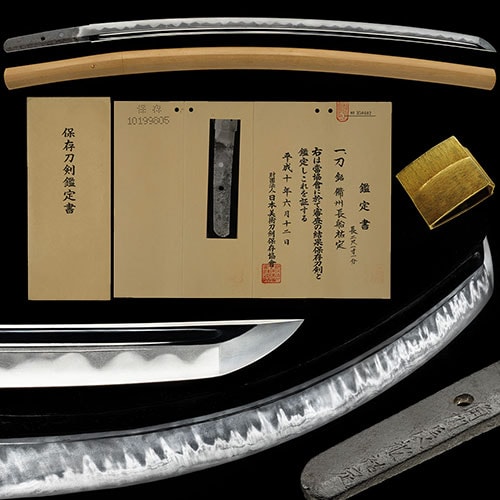
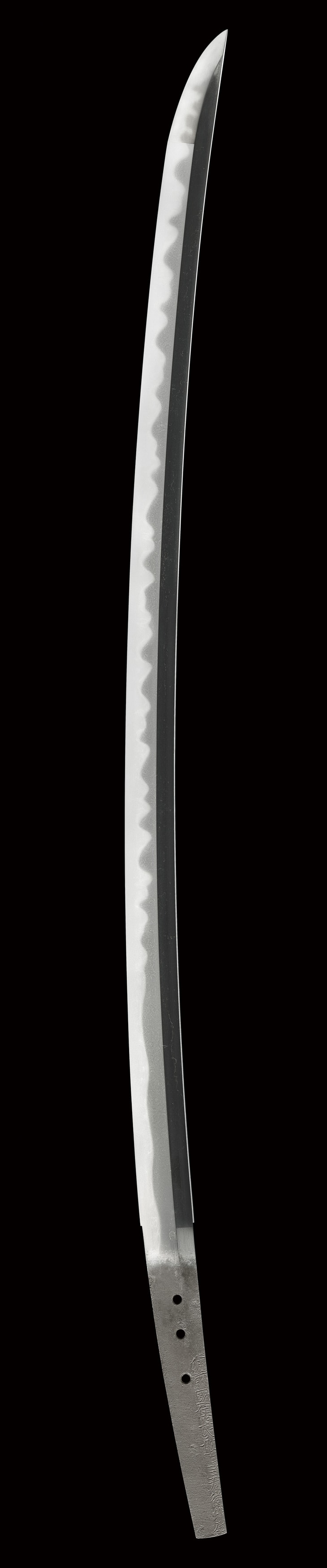
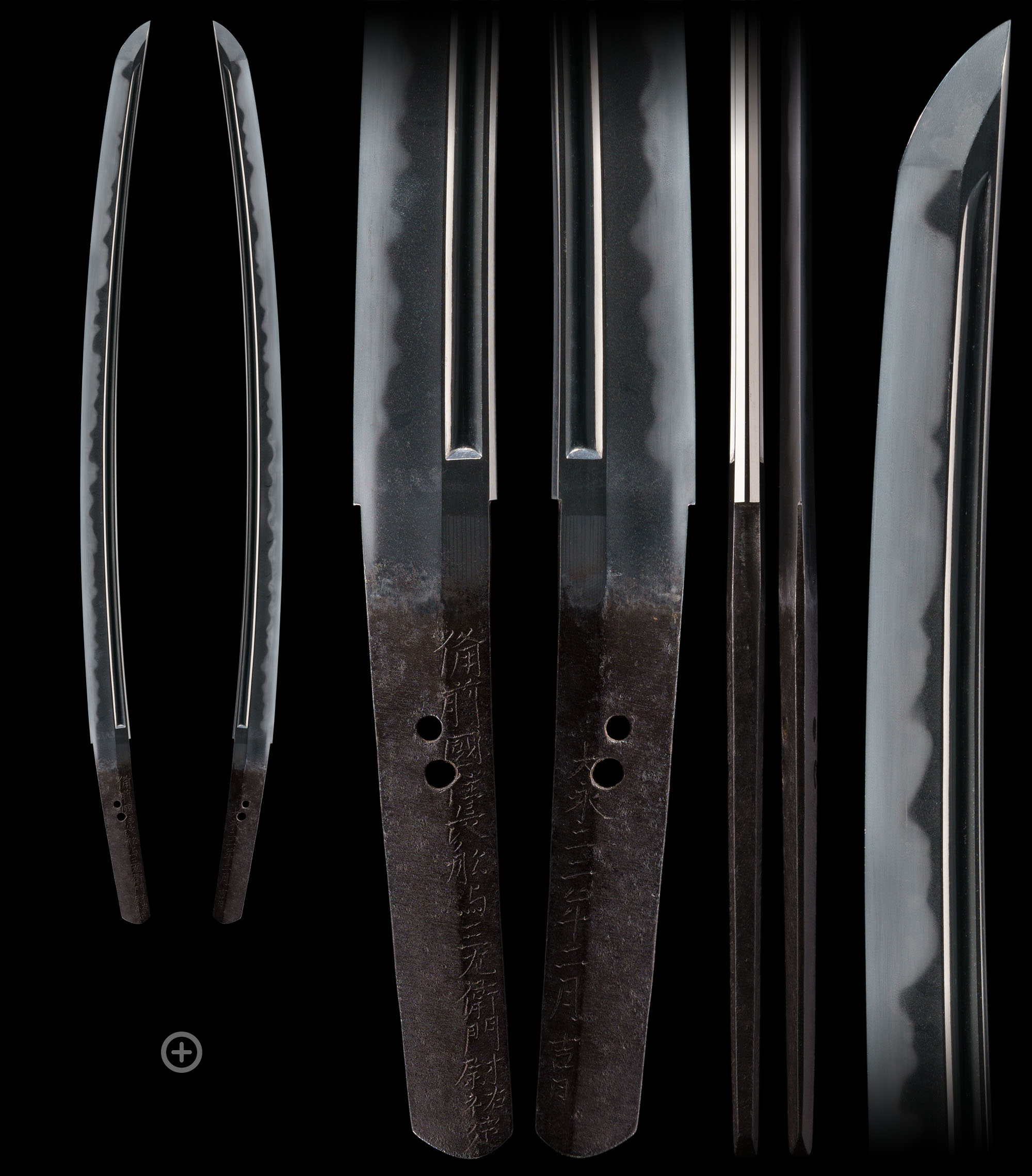
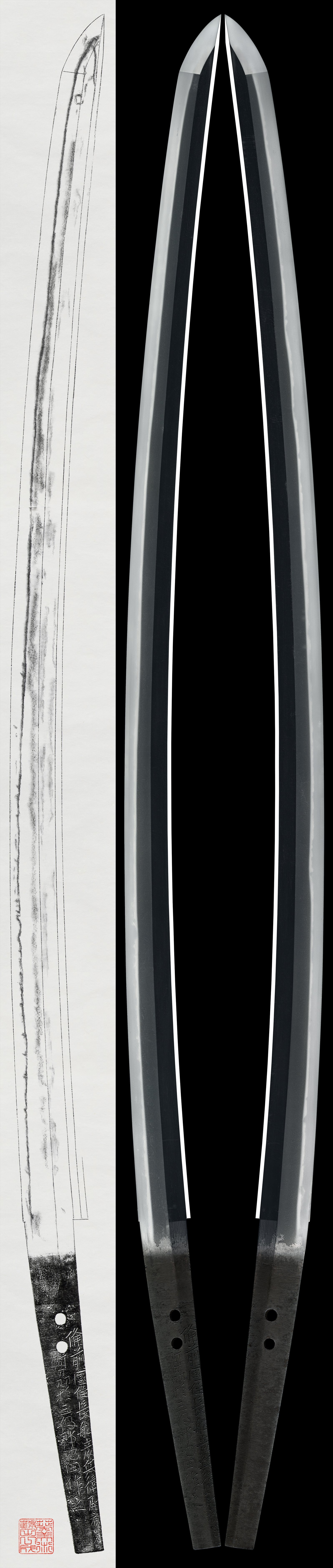
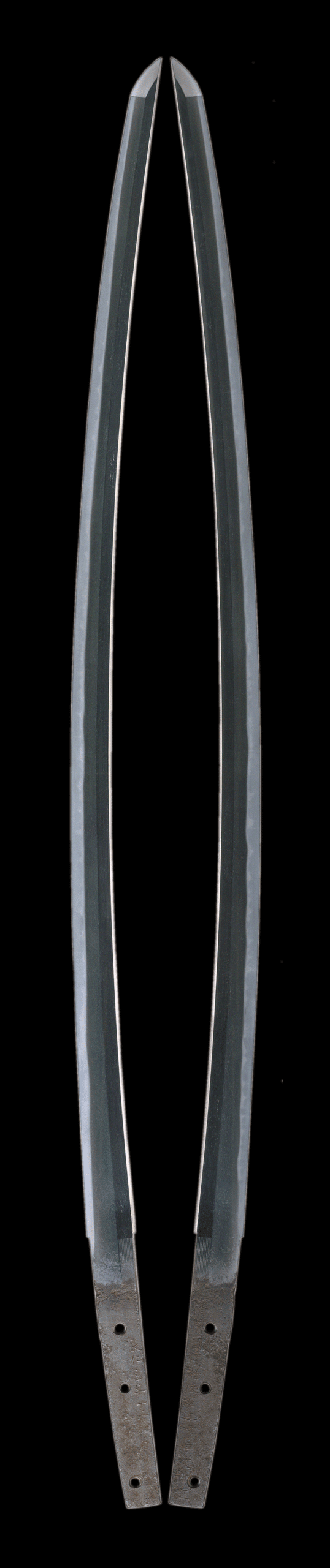
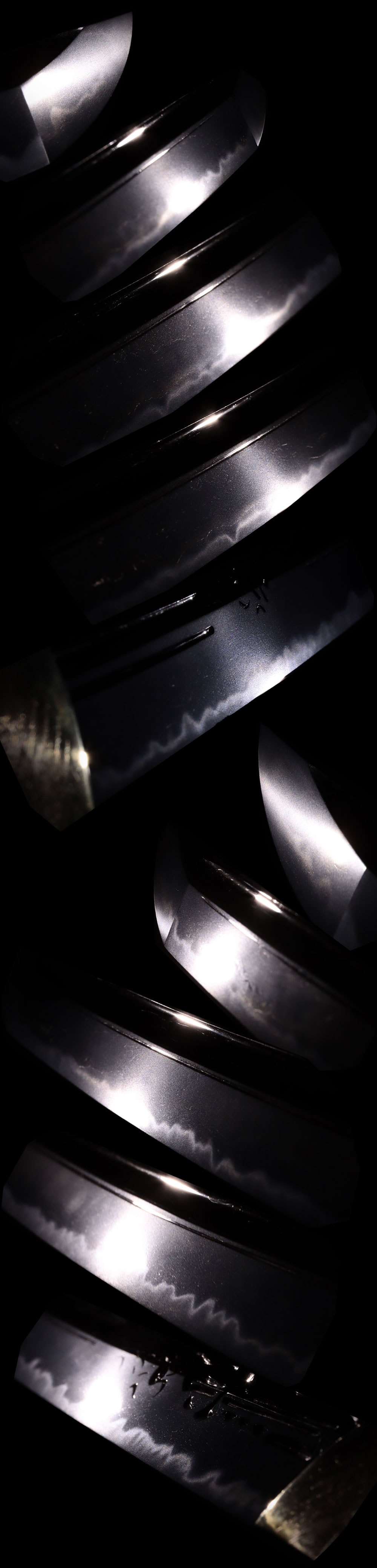
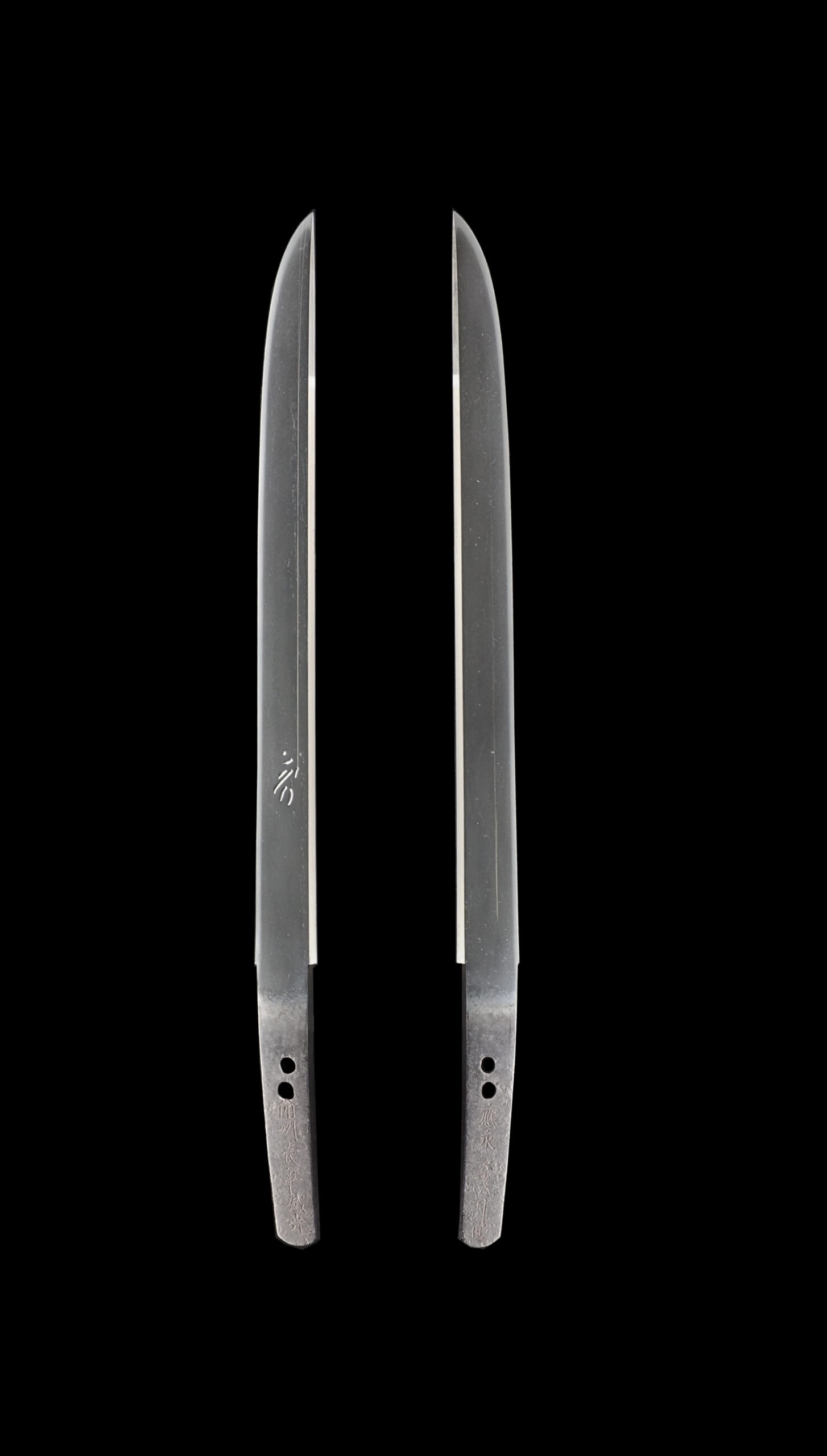
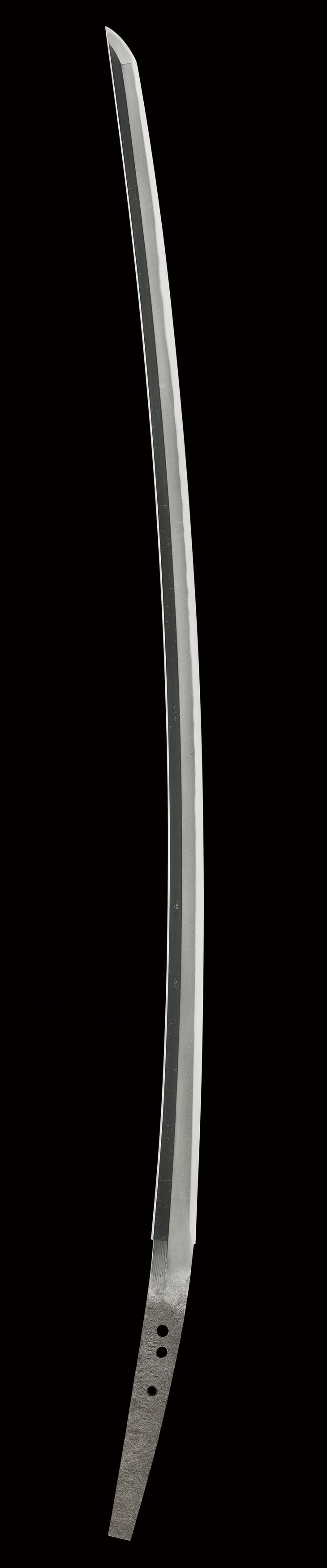
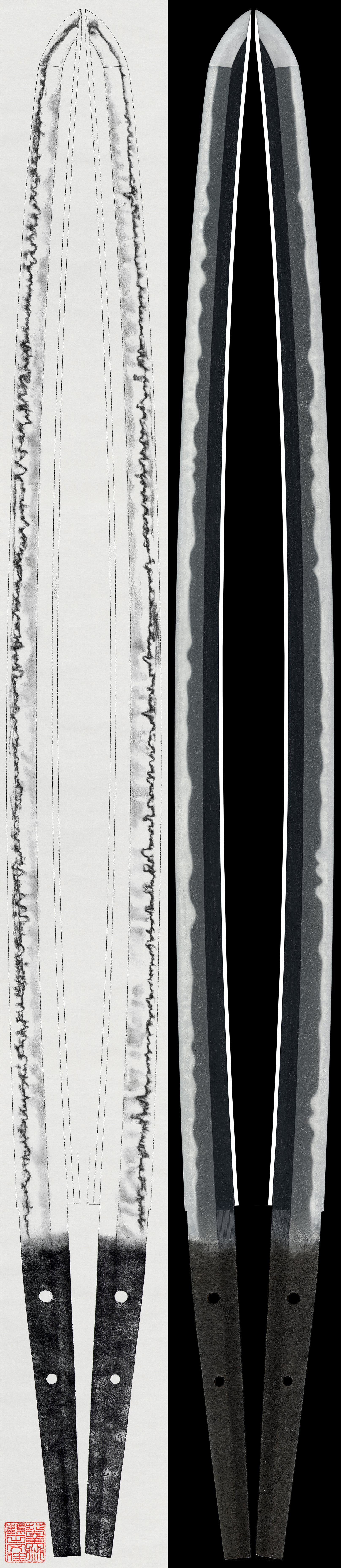
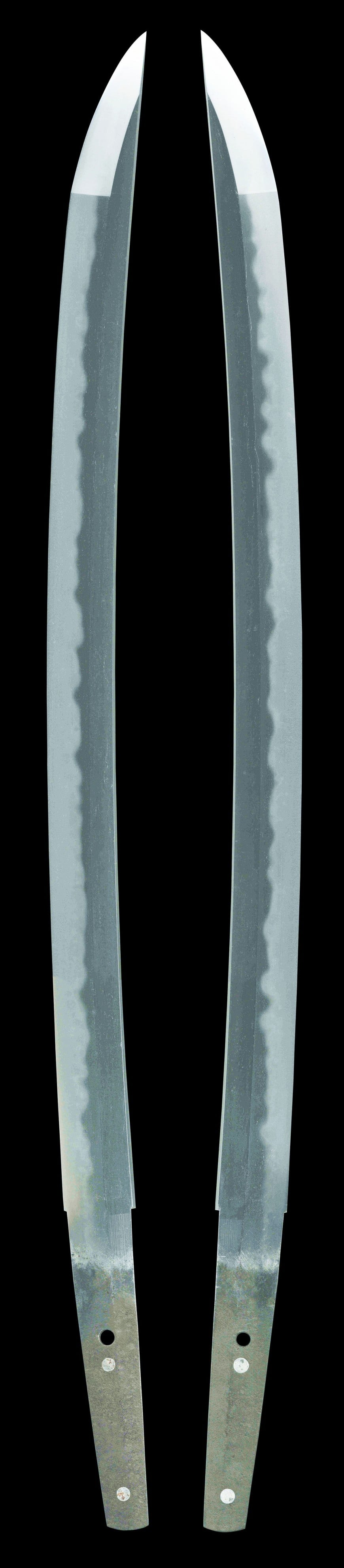
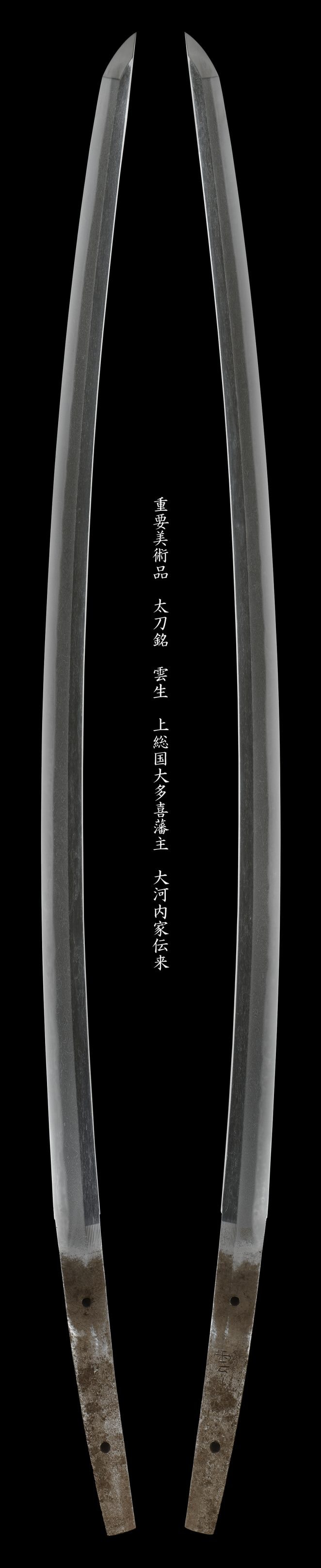
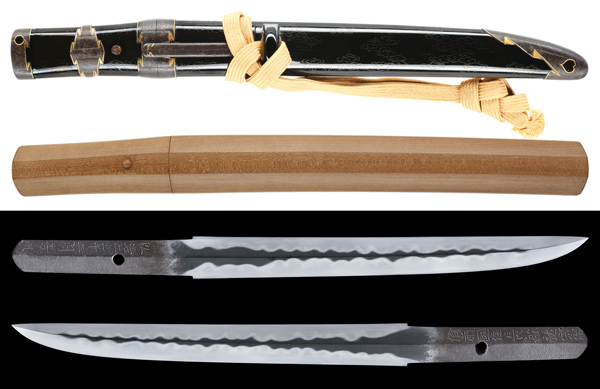
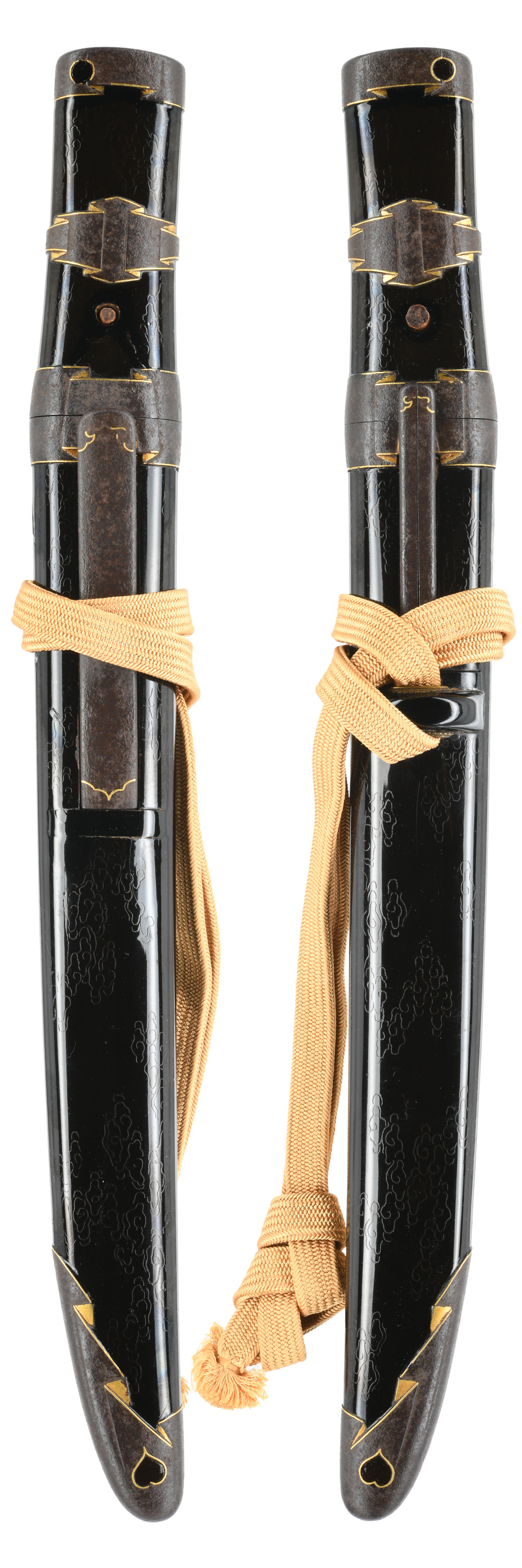
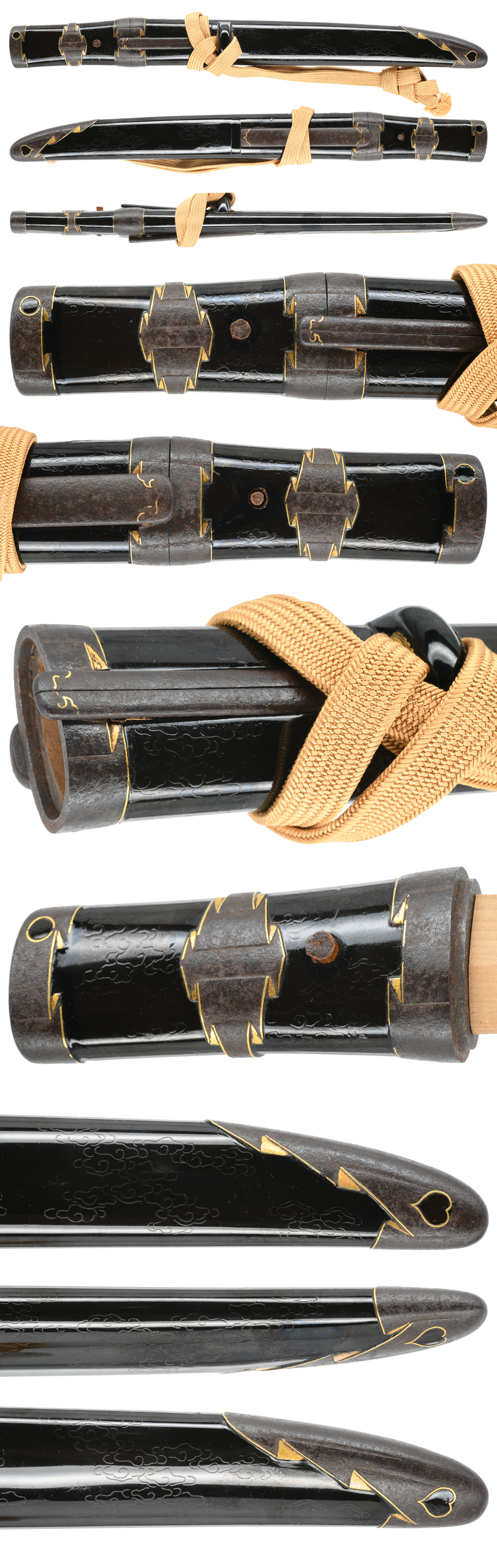
This is a tanto by Sukesada from the Osafune school in Bizen province. It dates to the late Muromachi period, around 1556. The blade has been certified as a Tokubetsu Hozon Token by the NBTHK.
 NihontoWatchBETA
mei · Osafune · Muromachi · nagasa 23cm
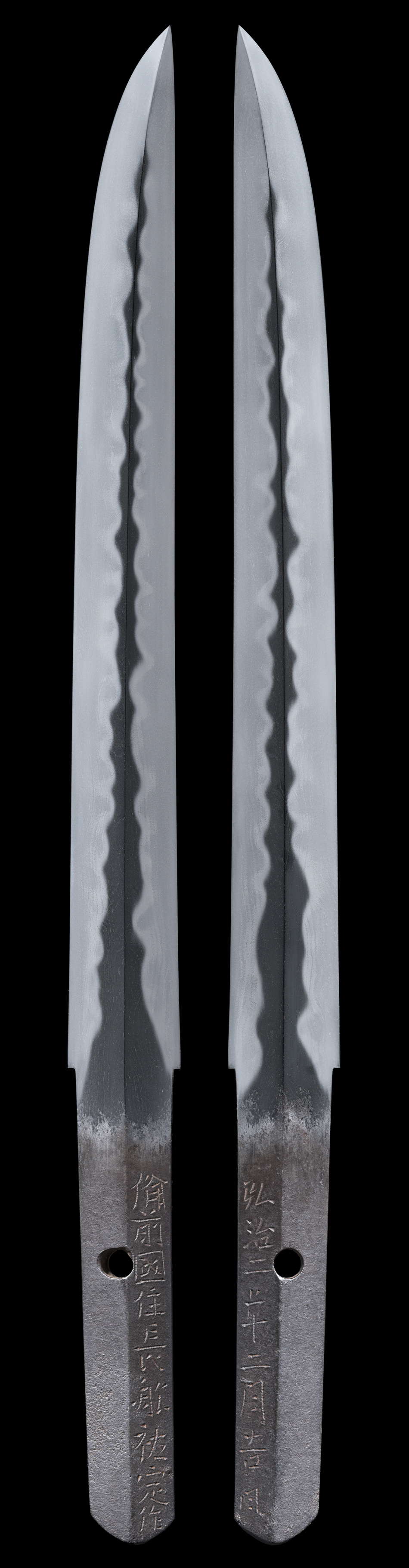
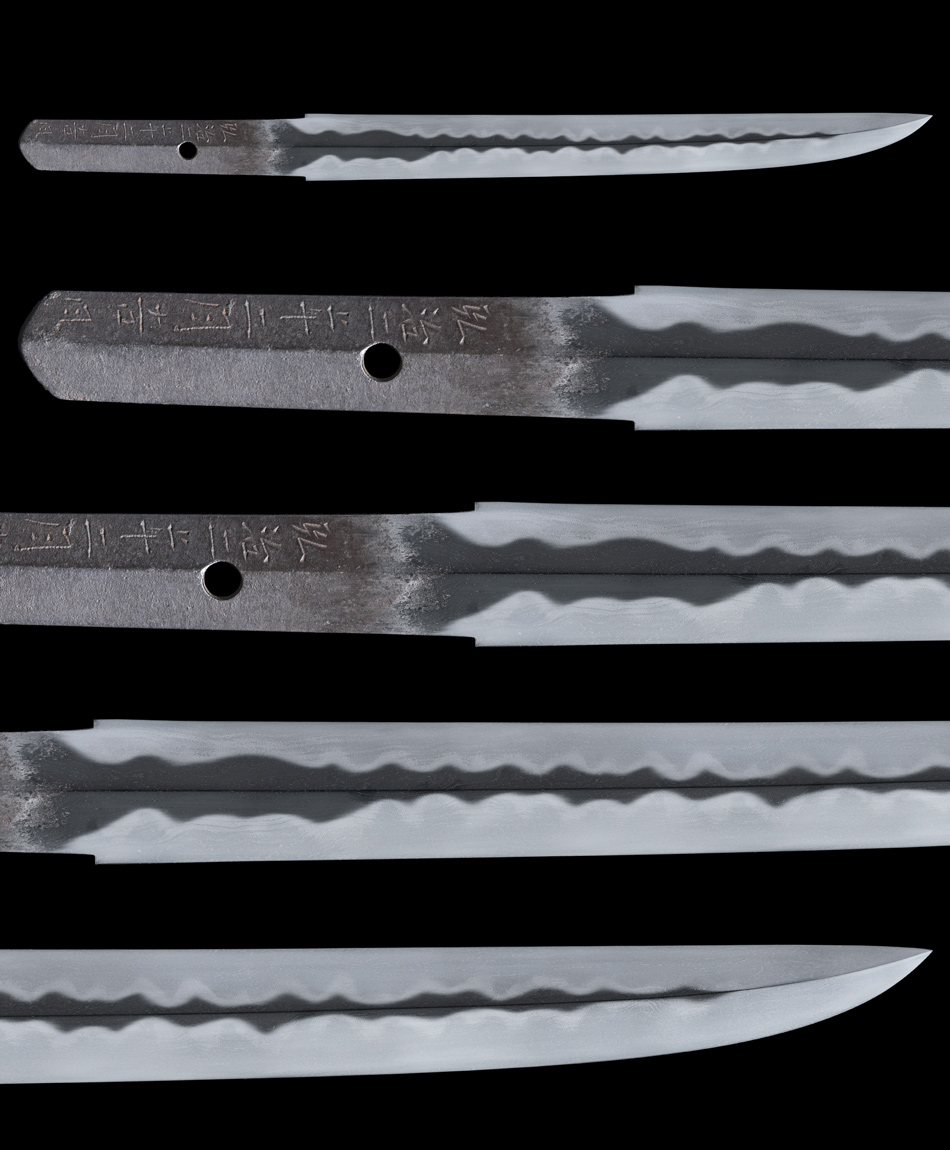
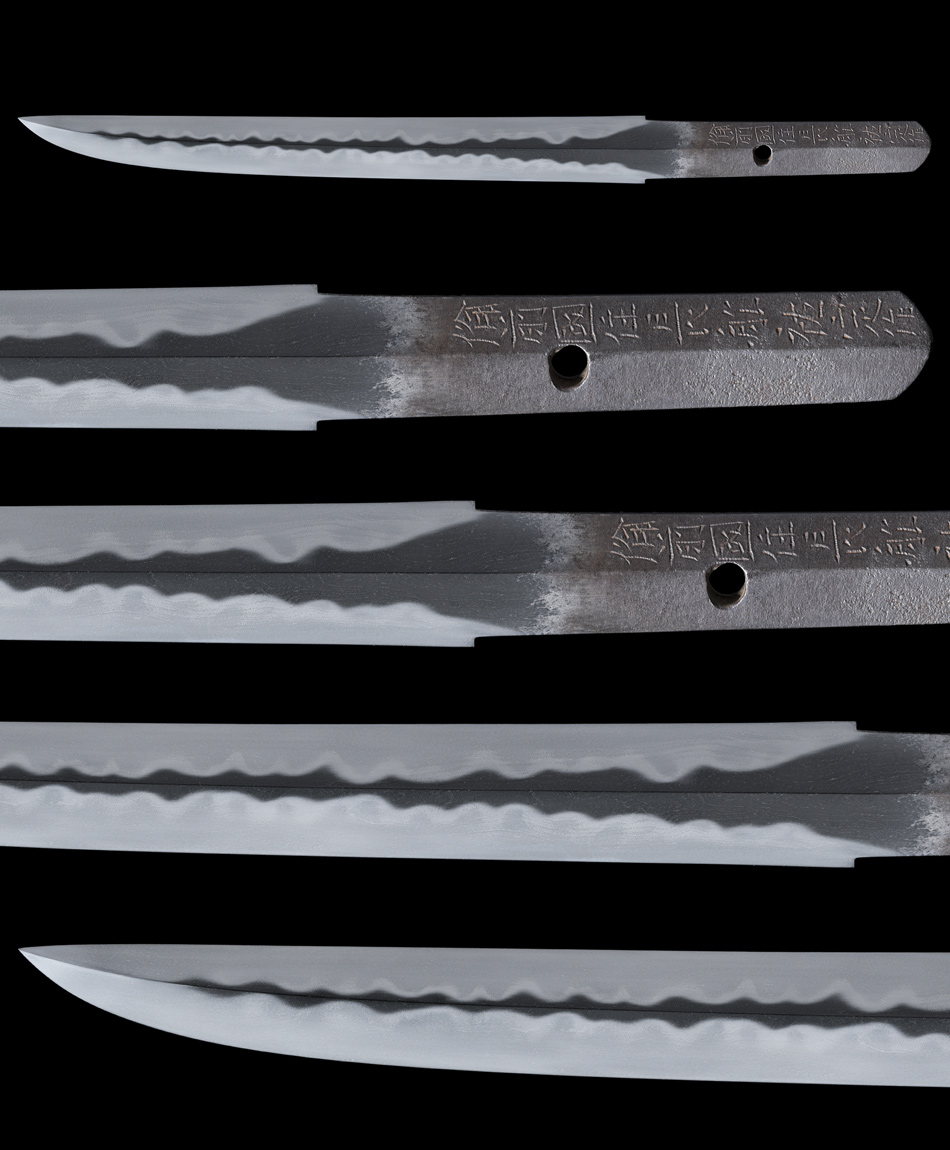
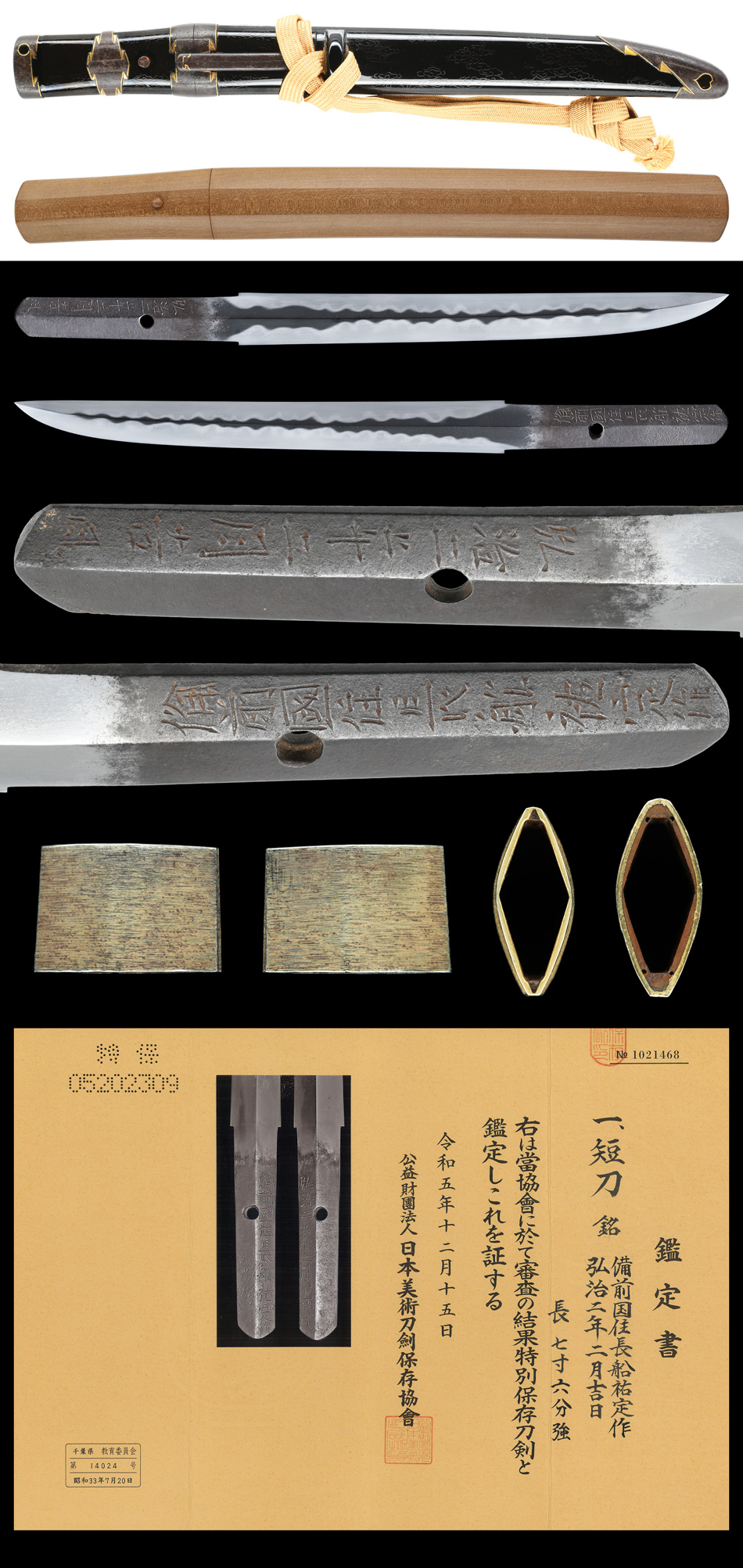
Bizen-den · Bizen
72 pieces on the market now
Sukesada (祐定) is the great name of late-Muromachi Osafune, the most prosperous of the Bizen forges that scholars group together as Sue-Bizen. The signature was carried by a body of smiths so large that the early-modern reference Hayami-dashi lists as many as twenty-one who appended a zokumyo (common name) to distinguish themselves, and the published commentary is blunt that of all the late-Osafune families the Sukesada line was the largest and most productive. Two registers of work issue from this single name. Learn more →
| Smith | Era | Designated |
|---|---|---|
| Sukesada祐定 | 1504-1551 | 72 |
| Sukesada祐定 | 1532-1583 | 18 |
| Sukesada祐定 | 1547-1592 | 8 |
| Sukesada祐定 | 1487-1521 | 5 |
| Sukesada祐定 | 1532-1573 | 3 |
A Hozon-certified blade judged to show notably superior workmanship and a better state of preservation. The bar is higher: re-tempered blades and most unsigned Muromachi/Edo works are excluded.
The NBTHK (Nihon Bijutsu Tōken Hozon Kyōkai, the Society for the Preservation of Japanese Art Swords) is a public-interest incorporated foundation founded in 1948 and supervised by Japan’s Agency for Cultural Affairs (Bunkachō); it is based at the Japanese Sword Museum in Tokyo. Its expert panels physically examine each submitted work (shinsa) and issue a certificate (kanteishō) ranking it by artistic and historical merit. NBTHK papers are the most widely recognized standard of authentication for Japanese swords and fittings.
NBTHK official siteNo cooling-off period or returns; refund only if the purchased sword is proven fake, capped at purchase price (excludes commission sales, accessories, auction items).
This is a tanto by Sukesada from the Osafune school in Bizen province. It dates to the late Muromachi period, around 1556. The blade has been certified as a Tokubetsu Hozon Token by the NBTHK.
NihontoWatchBETAmei · Osafune · Muromachi · nagasa 23cm
Bizen-den · Bizen
72 pieces on the market now
Sukesada (祐定) is the great name of late-Muromachi Osafune, the most prosperous of the Bizen forges that scholars group together as Sue-Bizen. The signature was carried by a body of smiths so large that the early-modern reference Hayami-dashi lists as many as twenty-one who appended a zokumyo (common name) to distinguish themselves, and the published commentary is blunt that of all the late-Osafune families the Sukesada line was the largest and most productive. Two registers of work issue from this single name. Learn more →
| Smith | Era | Designated |
|---|---|---|
| Sukesada祐定 | 1504-1551 | 72 |
| Sukesada祐定 | 1532-1583 | 18 |
| Sukesada祐定 | 1547-1592 | 8 |
| Sukesada祐定 | 1487-1521 | 5 |
| Sukesada祐定 | 1532-1573 | 3 |
A Hozon-certified blade judged to show notably superior workmanship and a better state of preservation. The bar is higher: re-tempered blades and most unsigned Muromachi/Edo works are excluded.
The NBTHK (Nihon Bijutsu Tōken Hozon Kyōkai, the Society for the Preservation of Japanese Art Swords) is a public-interest incorporated foundation founded in 1948 and supervised by Japan’s Agency for Cultural Affairs (Bunkachō); it is based at the Japanese Sword Museum in Tokyo. Its expert panels physically examine each submitted work (shinsa) and issue a certificate (kanteishō) ranking it by artistic and historical merit. NBTHK papers are the most widely recognized standard of authentication for Japanese swords and fittings.
NBTHK official siteNo cooling-off period or returns; refund only if the purchased sword is proven fake, capped at purchase price (excludes commission sales, accessories, auction items).
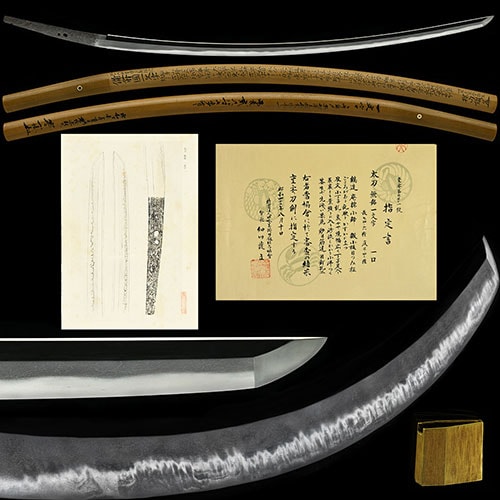
![Katana - Hozon - by Sukesada School - Mumei (Osafune Genbei no Jo Sukesada) (Wazamono) [NBTHK] Hozon Token](/_next/image?url=https%3A%2F%2Fitbhfhyptogxcjbjfzwx.supabase.co%2Fstorage%2Fv1%2Fobject%2Fpublic%2Flisting-images%2Fworld-seiyudo%2FL31404%2F00.jpg&w=2560&q=90)