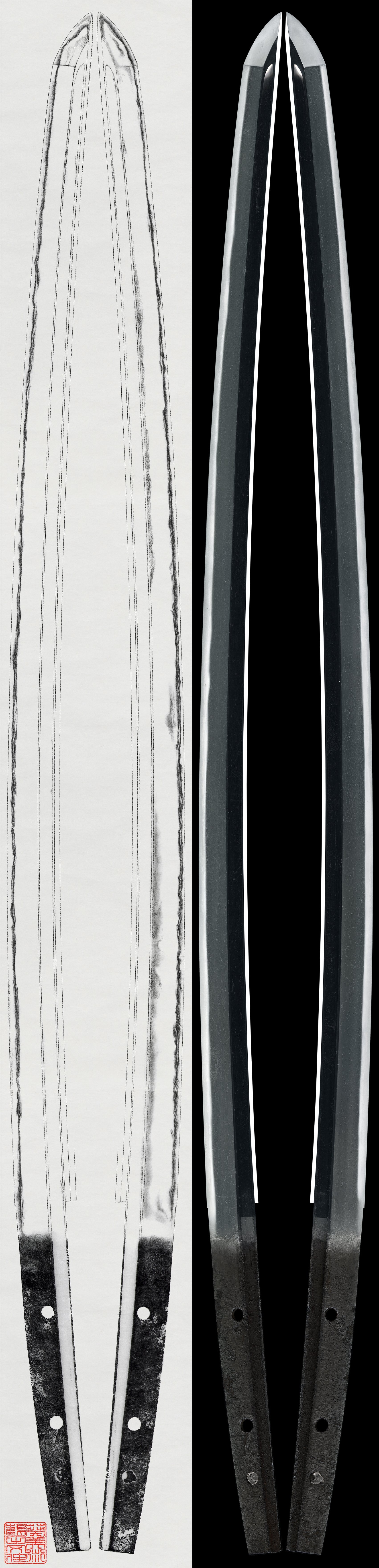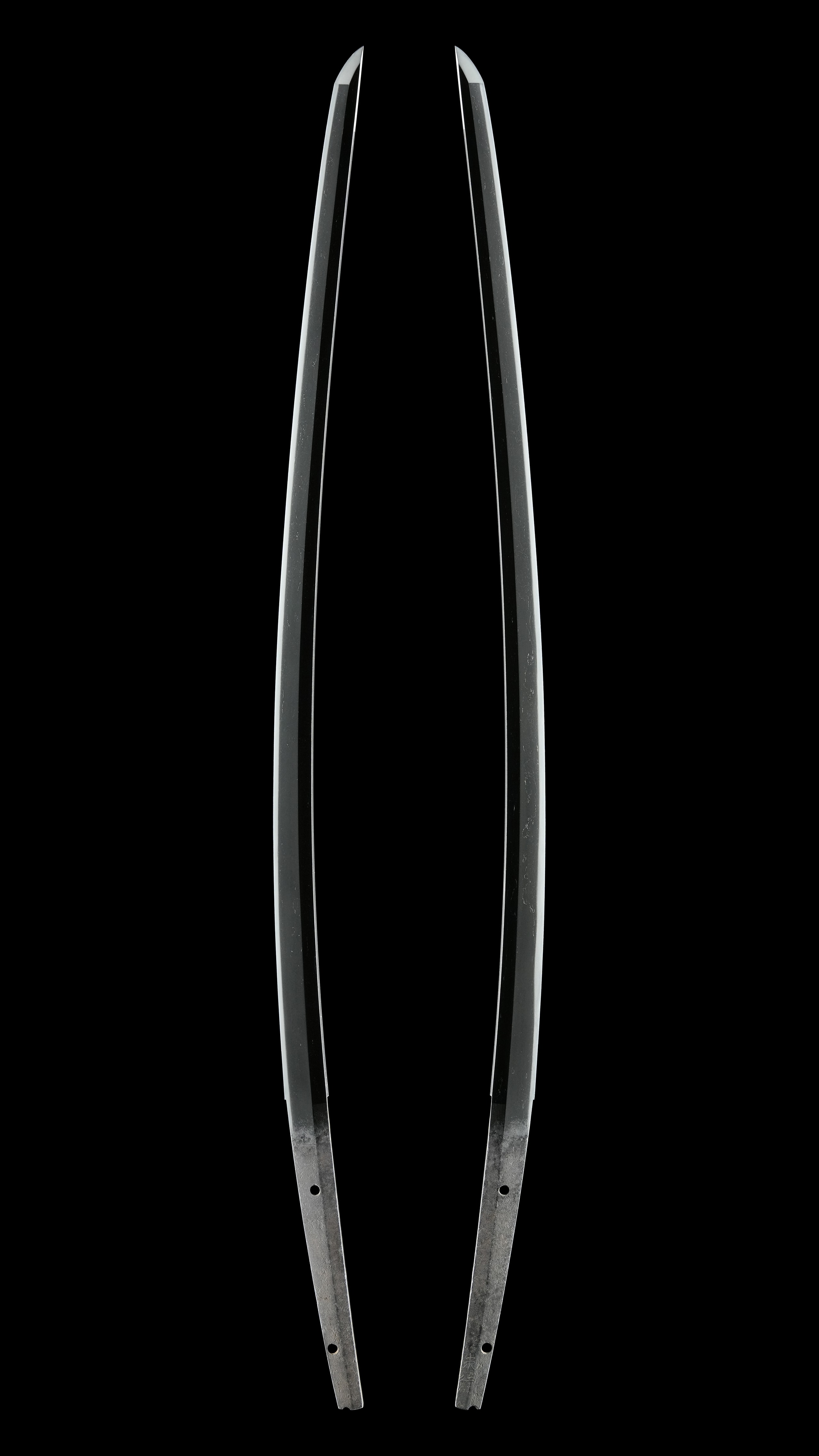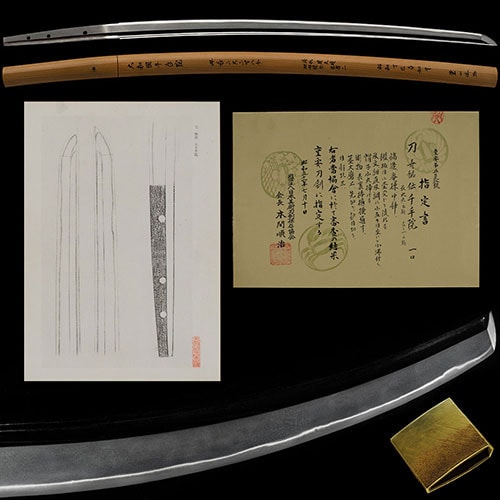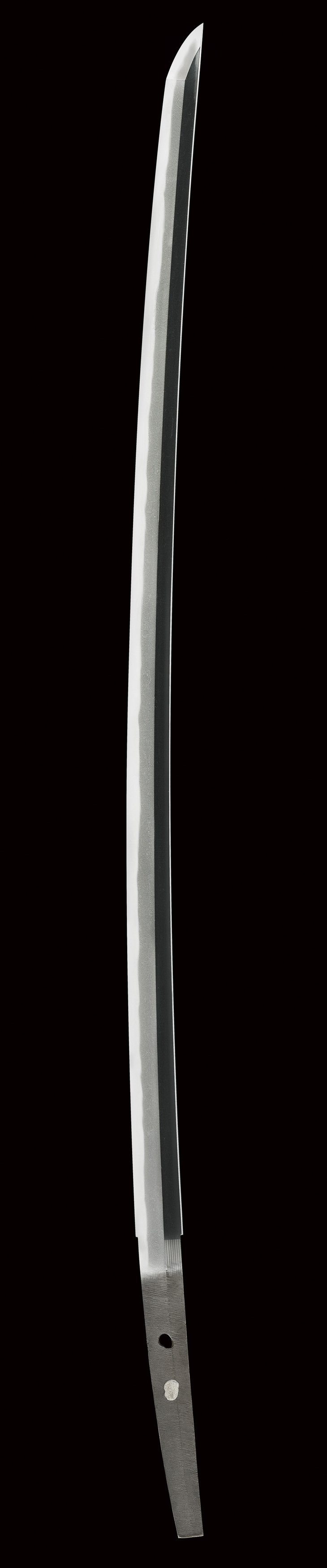
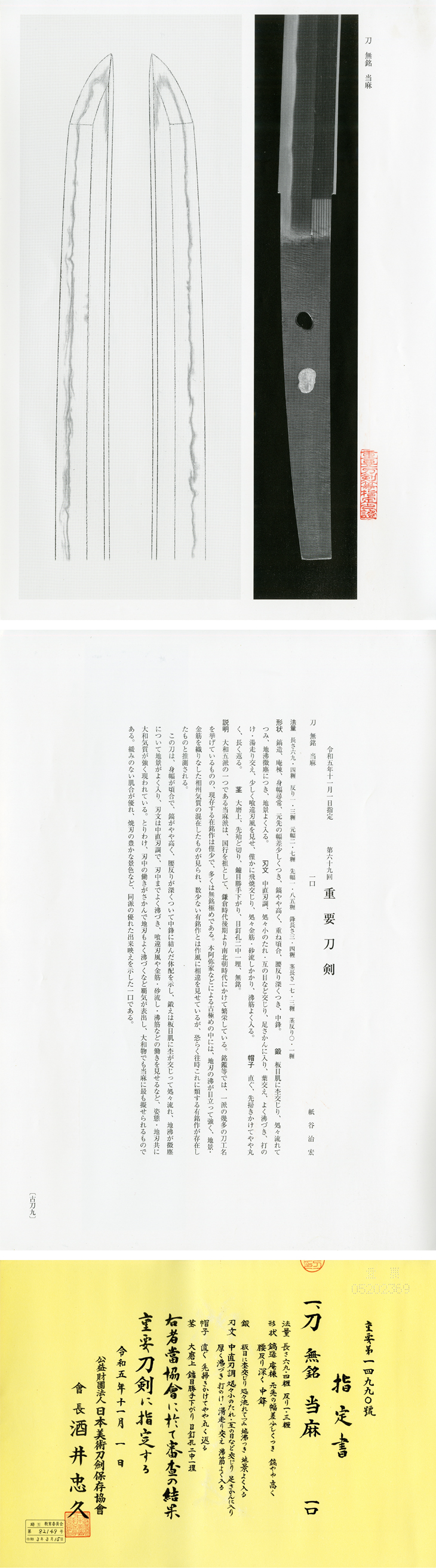
-, 69th Session — Designated November 1, 2023
, : (当麻)
Paper by: Kamiya Haruhiro (紙谷治宏) [ 9]
Measurements 69.4 cm, 1.3 cm, 2.7 cm, 1.85 cm, 3.4 cm, 17.3 cm, 0.1 cm
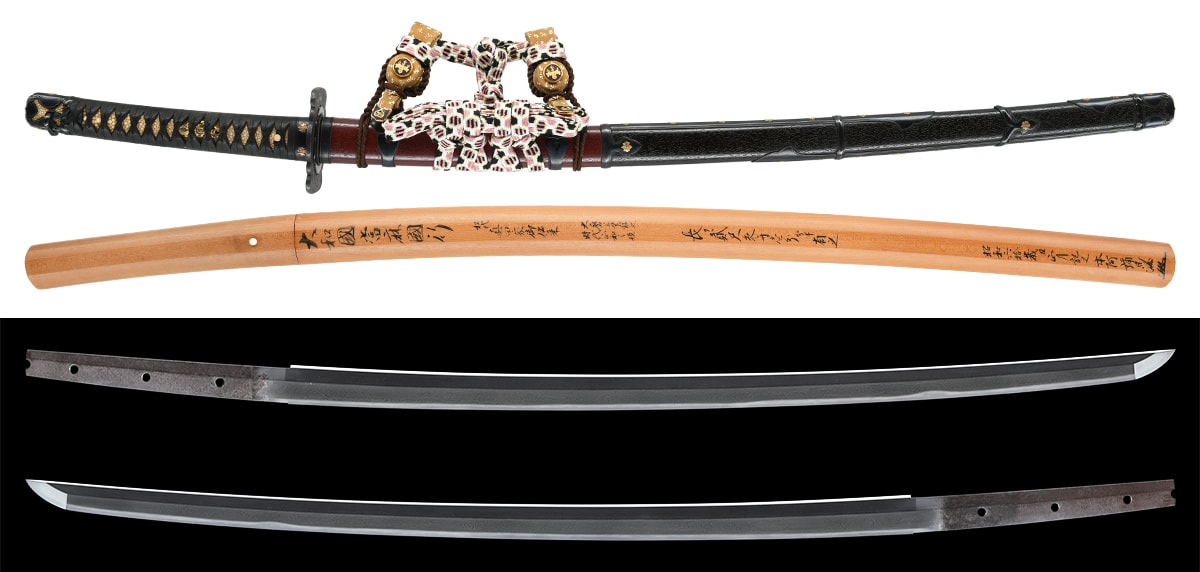
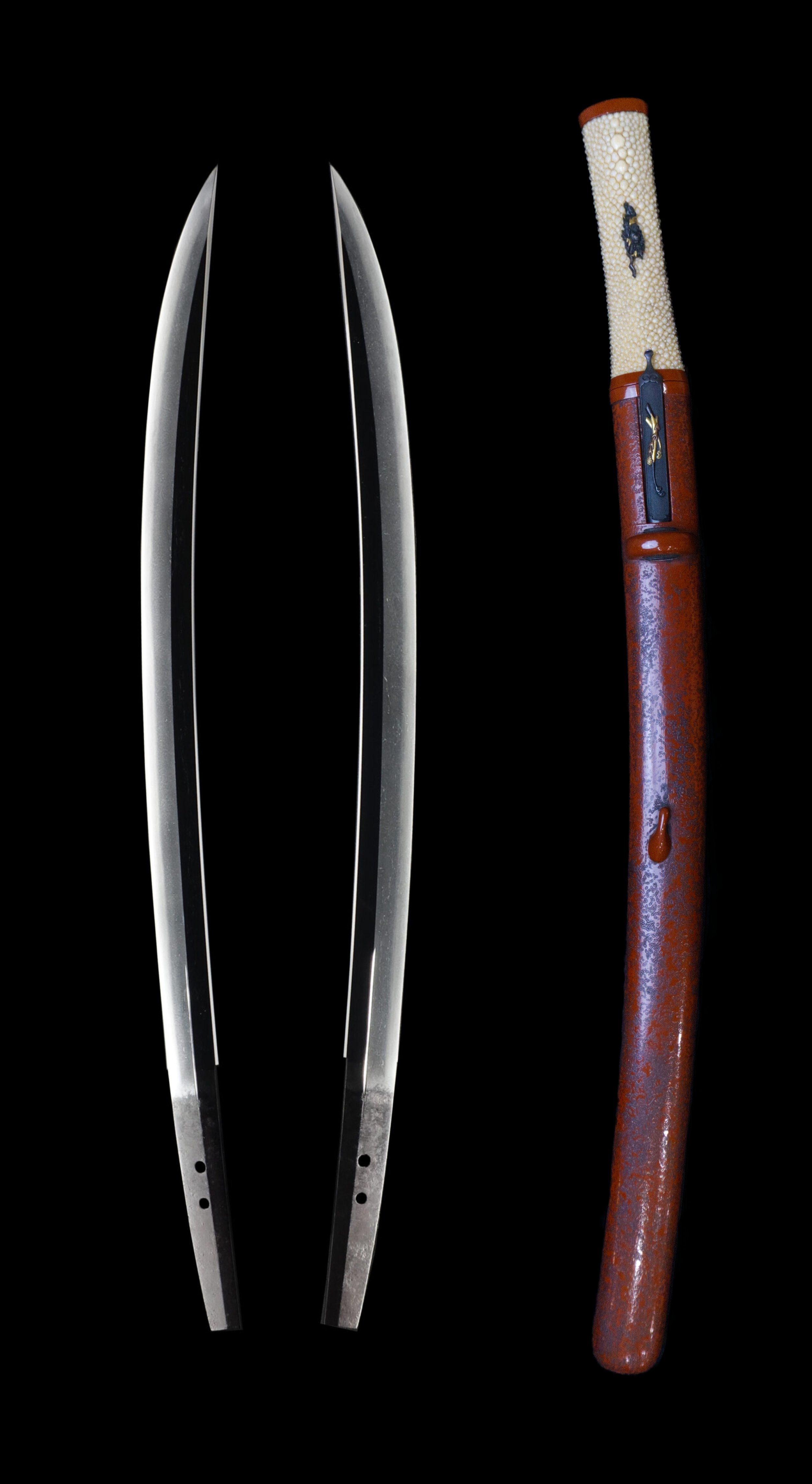
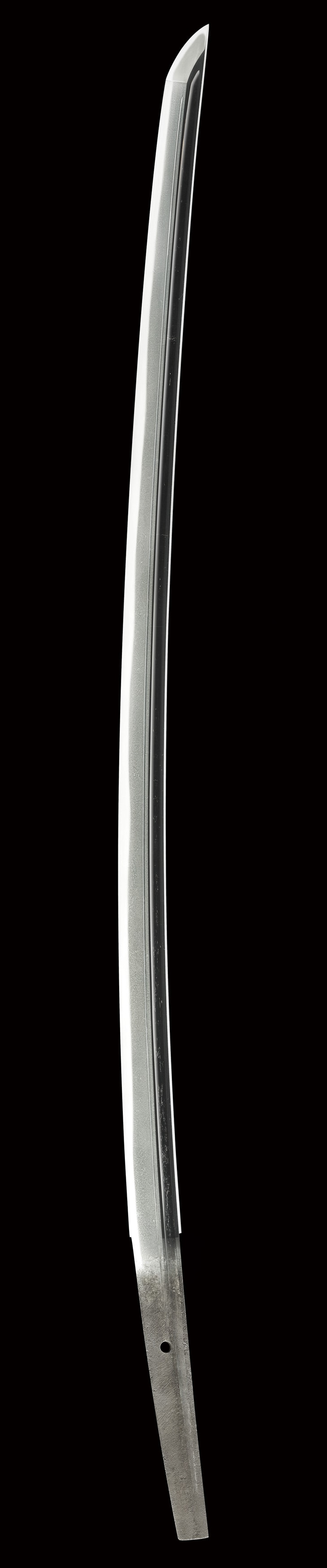
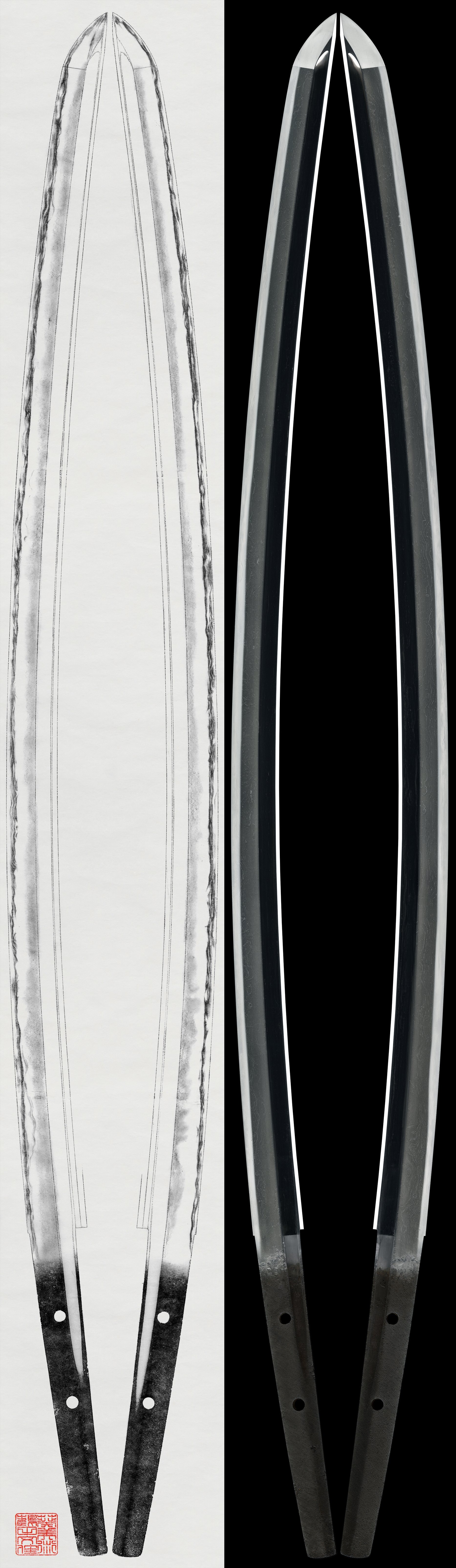
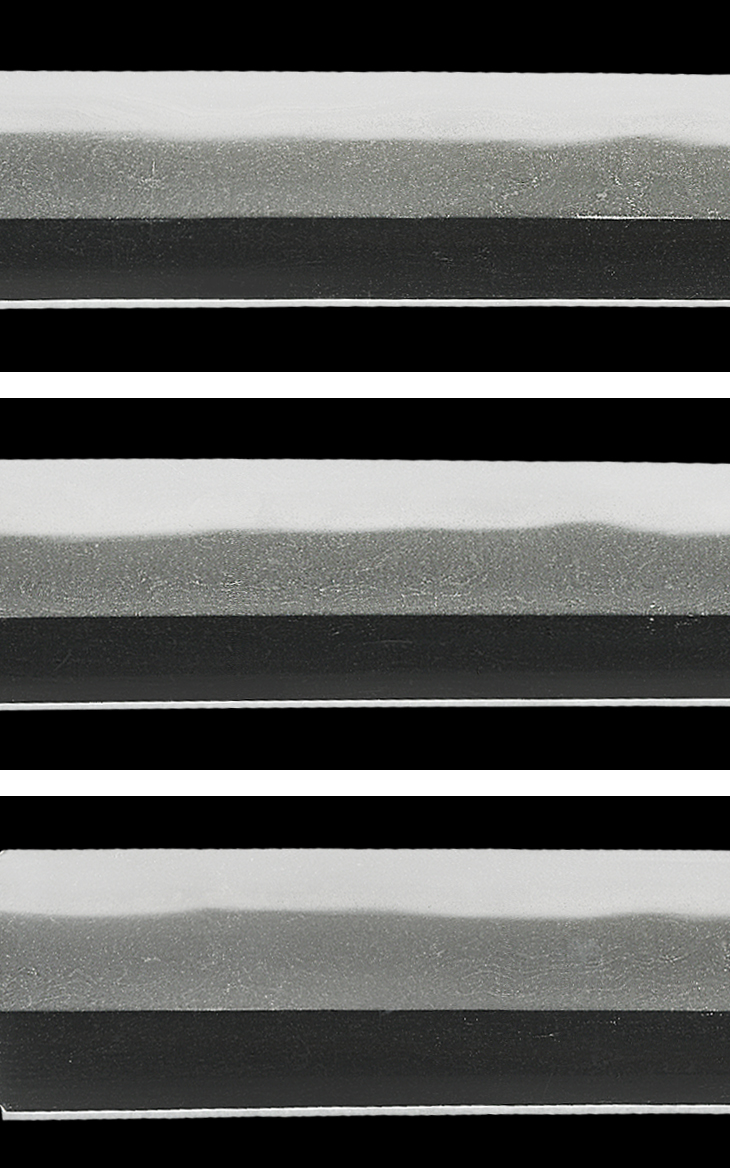
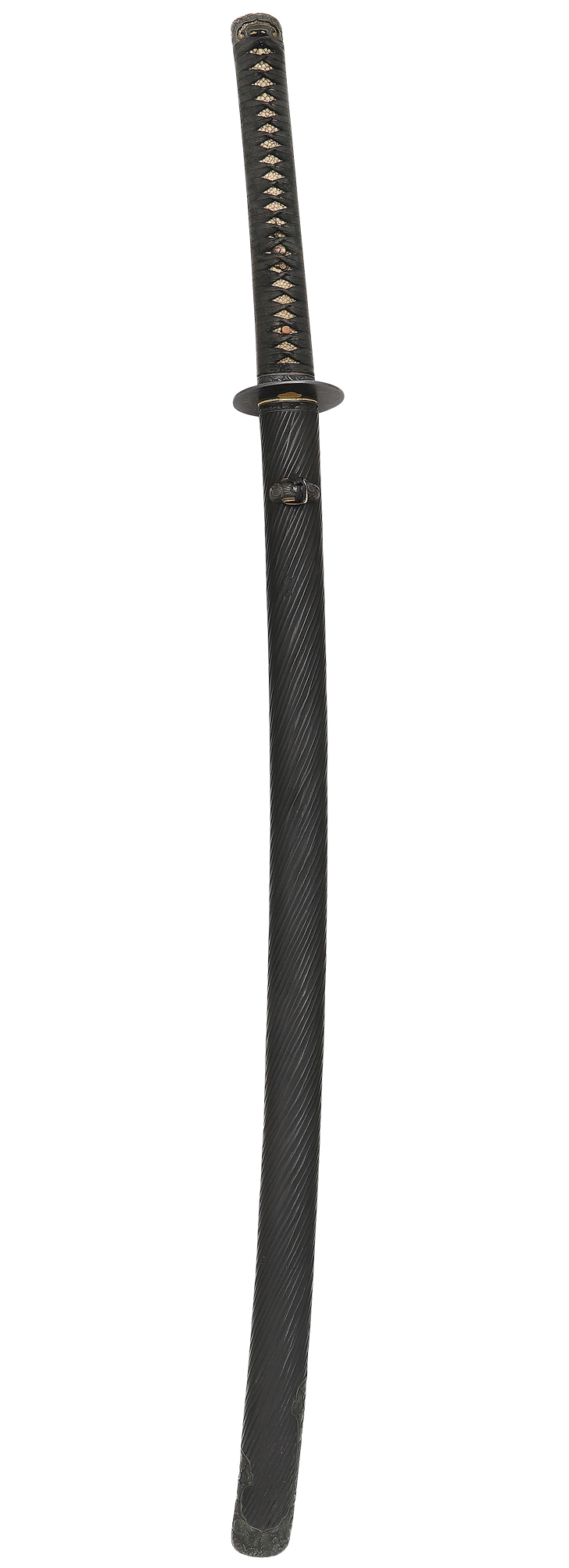
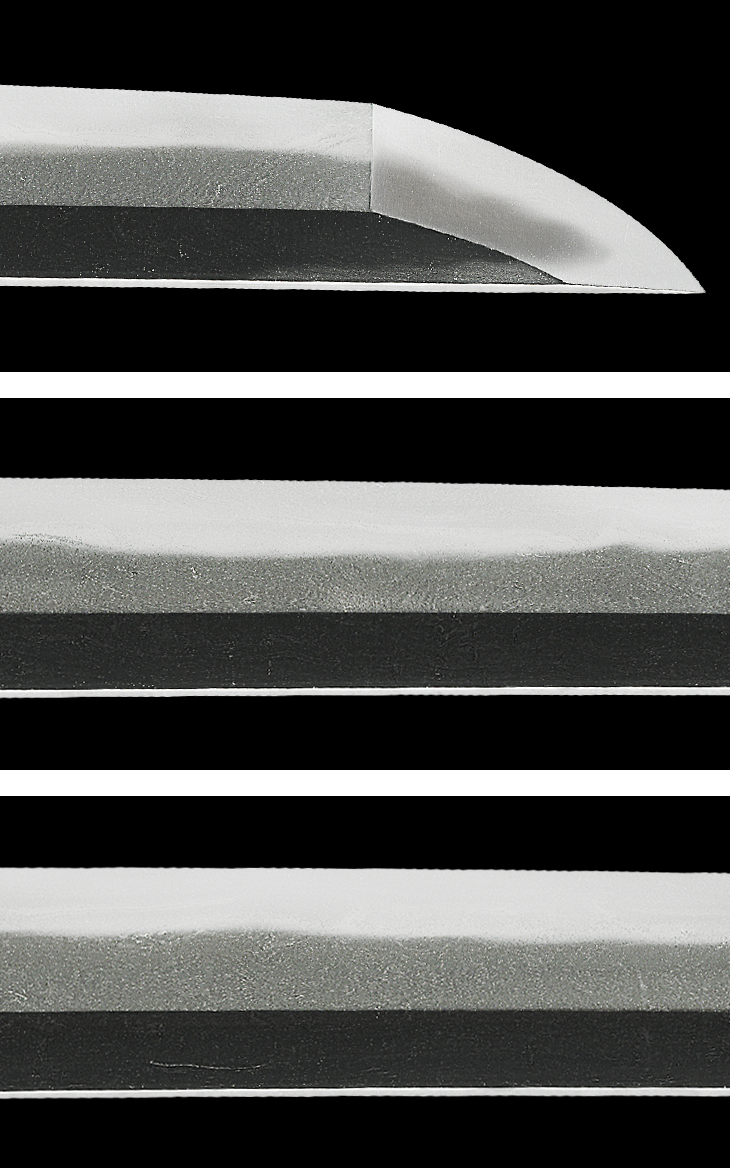
Description Keijō: , ; of standard width; the difference between and is slightly reduced; somewhat high; moderate; deep ; . : mixed with , with areas showing flowing grain and standing-grain tendencies; fine ; abundant . : A medium-width -based temper, with some and intermingled; enter vigorously; appear; well covered with extending into the interior of the ; mixed with uchi-noke and ; it shows slightly a -like manner; faint is also mixed in; and appear here and there, and enter well. : ; toward the point it becomes and slightly rounded, with a long . : None. : Greatly shortened (); the end is almost ; are ; two (one filled/partly plugged); .
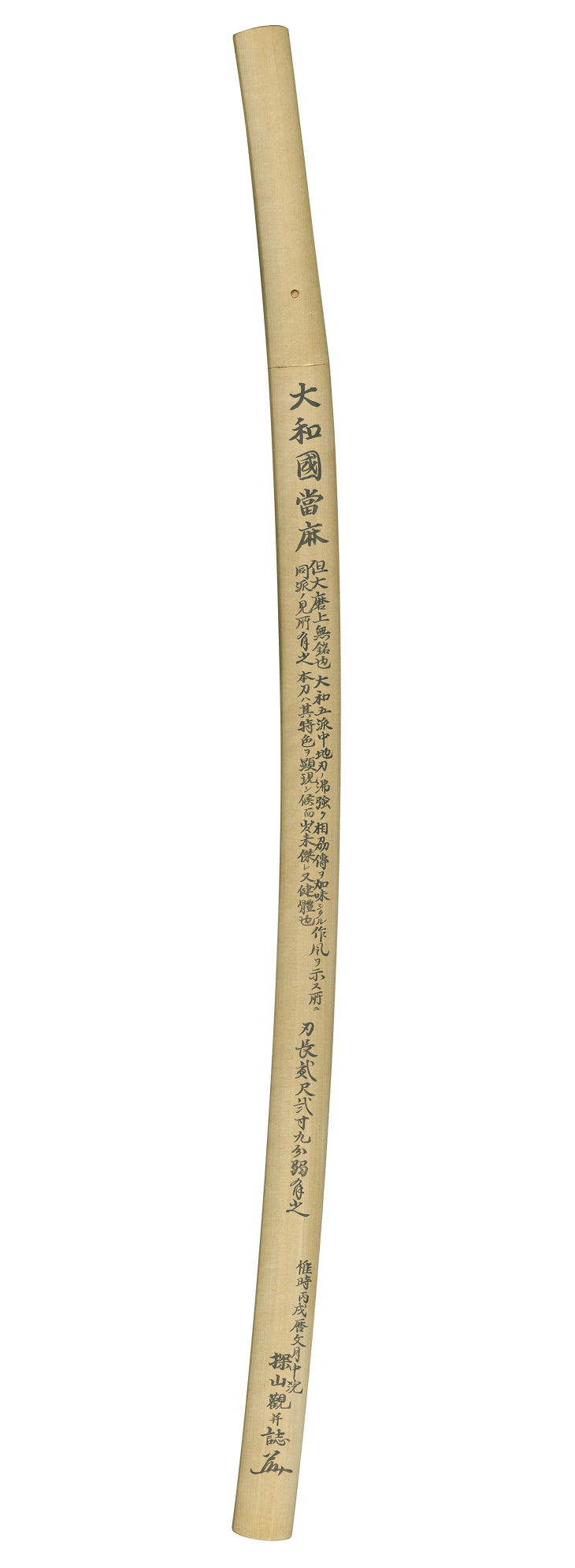
Artisan school (当麻派), Yamato tradition
Era Late to period
Explanation The school, one of the five major lines of Yamato, flourished from the late period through the period, taking Kuniyuki as its founder. Although sword manuals and reference works list numerous smiths of this group, extant signed works are exceedingly few, and the majority are pieces appraised as .
Among old attributions made by the Hon’ami family and others, there are examples in which the in the and is conspicuously strong and in which and interweave—features that show an admixture of temperament. These differ in style from the scarce signed works that survive; however, it is presumed that in former times there existed signed examples akin to these.
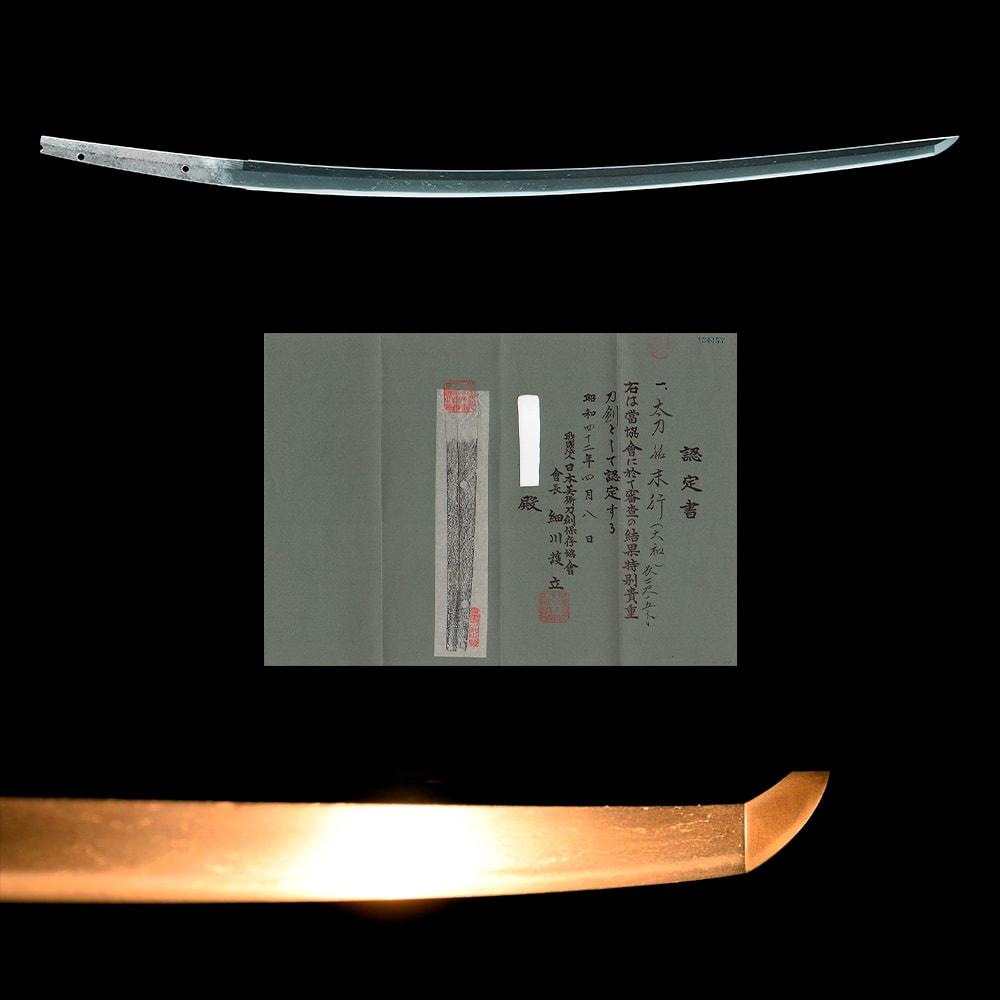
This has a well-proportioned , a somewhat high , and a deep that concludes in a , presenting a balanced overall figure. The forging shows mixed with and areas of flowing grain; fine adheres densely and enter abundantly. The is a medium tone, and the is strong even within the body of the temper, showing activities such as a -like flavor as well as , , and . In both shape and / the Yamato character emerges strongly. In particular, the vigorous internal activities and the well-developed in the and convey a forceful spirit, and among Yamato works this blade is one that can most fittingly be likened to . With its excellent, tightly controlled surface texture and the richly scenic temper, it is a work that demonstrates the superior quality of this school.