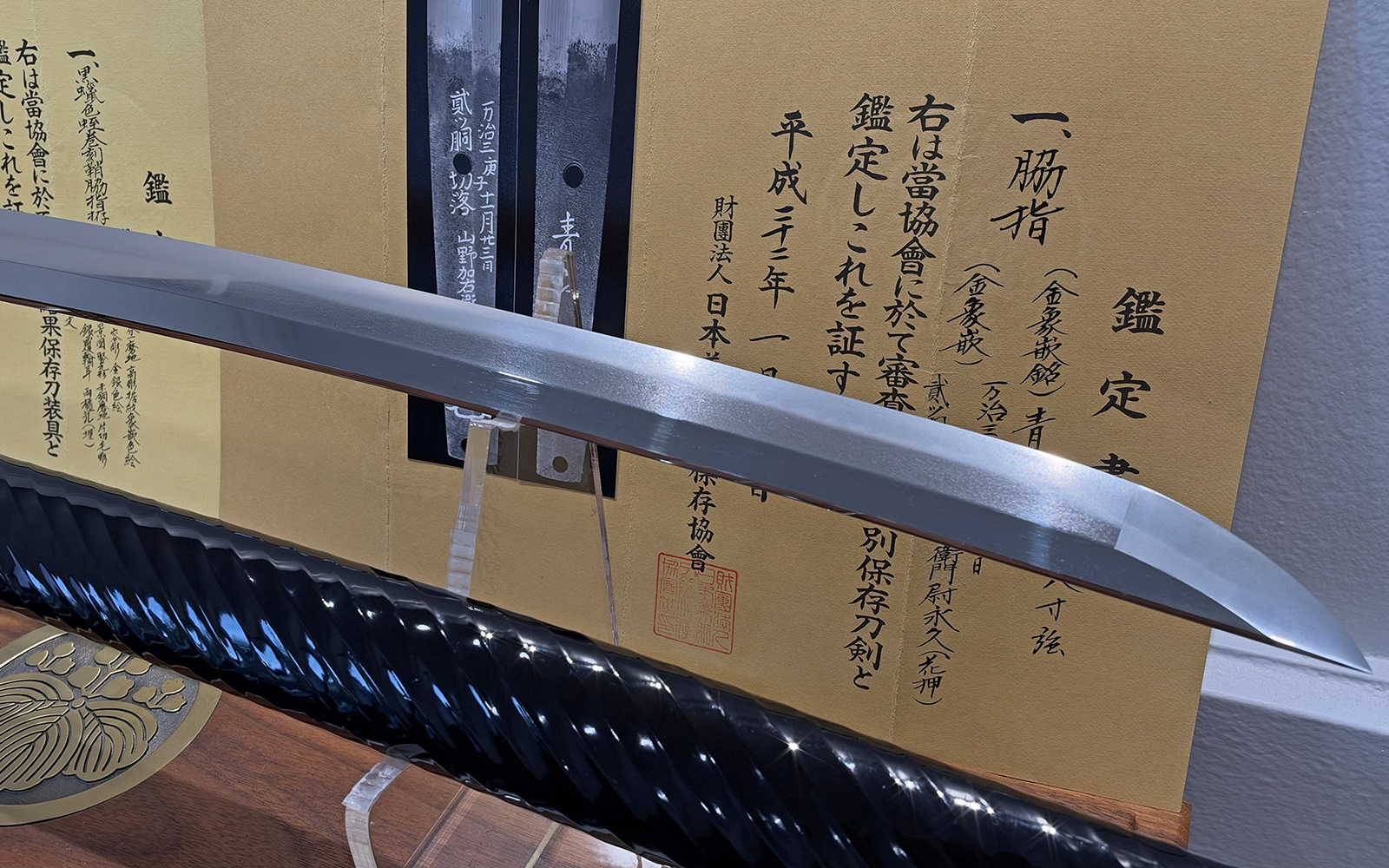
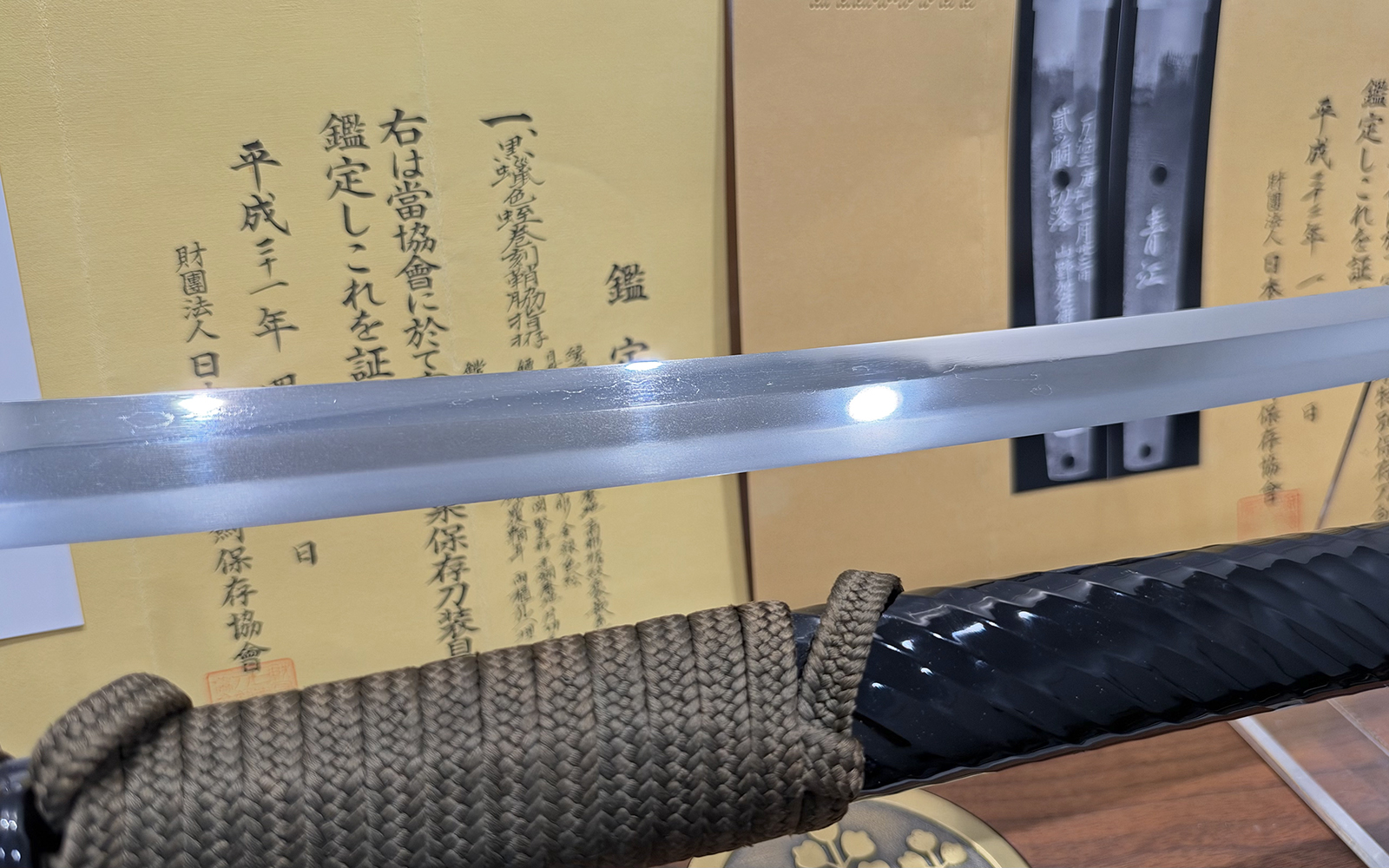
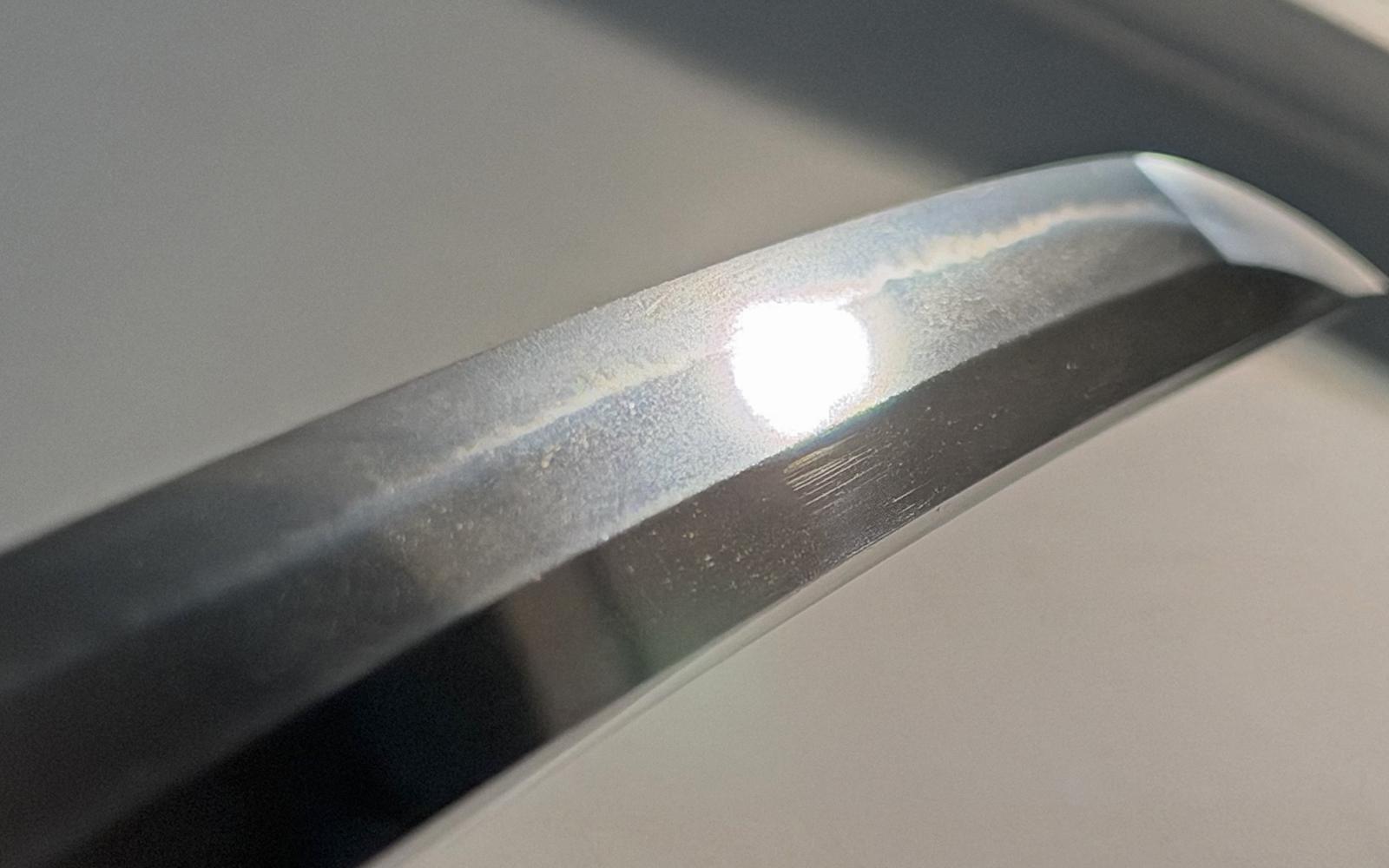
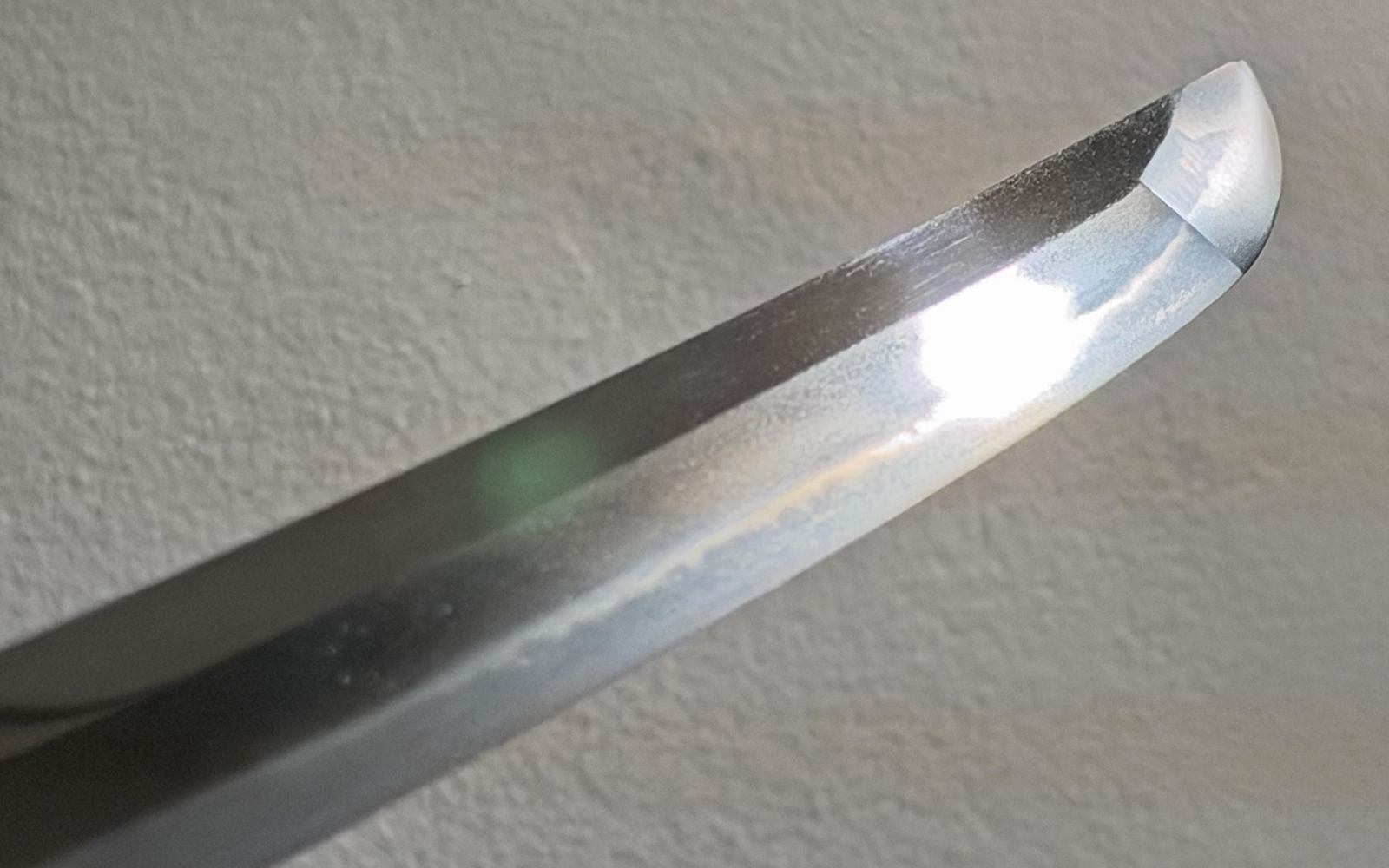
Sue-Aoe names the closing chapter of the Bitchū tradition, the work made after the Aoe smiths reached the height of their powers in the Nanbokuchō era and then carried the lineage forward into Muromachi decline. The window is anchored by the hands the NBTHK repeatedly groups together as the representative smiths of the period: Tsuguyoshi (次吉), Tsugunao or Tsuginao (次直), and Moritsugu (守次), with Naotsugu (直次), Yoshitsugu (吉次), and a Sadatsugu (貞次) name carried down from the late Kamakura masters into this later age. Dated blades fix the chronology firmly, from a Moritsugu tantō of Enbun 3 (1358) and a Naotsugu in the Ryakuō years through Tsuguyoshi pieces of Teiji 2 (1363) and Kōan 2 (1362). These men succeeded the late-Kamakura-into-early-Nanbokuchō generation that produced Sadatsugu and the earlier Moritsugu, and they worked at the moment the Southern Court's fortunes were turning, after which the school thinned out. The very tail of the line surfaces in obscure later Bitchū hands such as Munesada and Sōtei of Kasaoka, dated Bunmei 13 (1481), whose lineage the records leave unknown and whose work the setsumei describe as nearly indistinguishable from late Bizen. Sugata is the first tell. Setsumei after setsumei records a wide mihaba with little taper from base to tip, thin kasane, sun-nobi proportion in the tantō and an extended chū-kissaki or outright ō-kissaki in the larger blades, the broad Nanbokuchō build that the earlier Aoe never carried. The jihada keeps the school signature of ko-itame mixed with mokume, finely standing, with mottled jifu and patches of sumihada drifting through the steel. Above all the period is read in its utsuri: streak-like suji-utsuri rises near the edge and stacks into the layered dan-utsuri the catalogues prize, seen plainly on the Tsugiyoshi tachi of Tokuju 21 and the dated Tsuguyoshi tantō of Juyo 58.
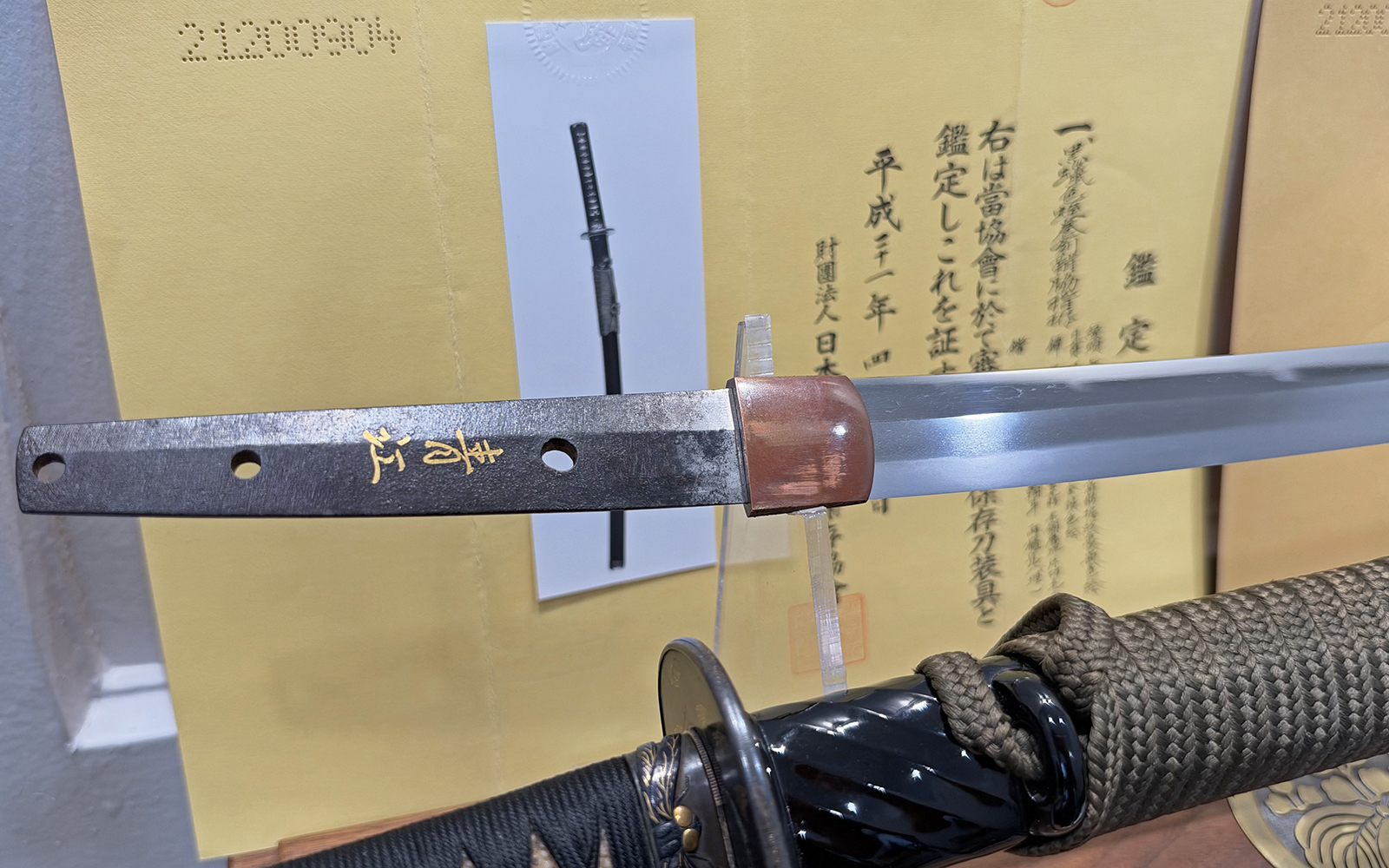
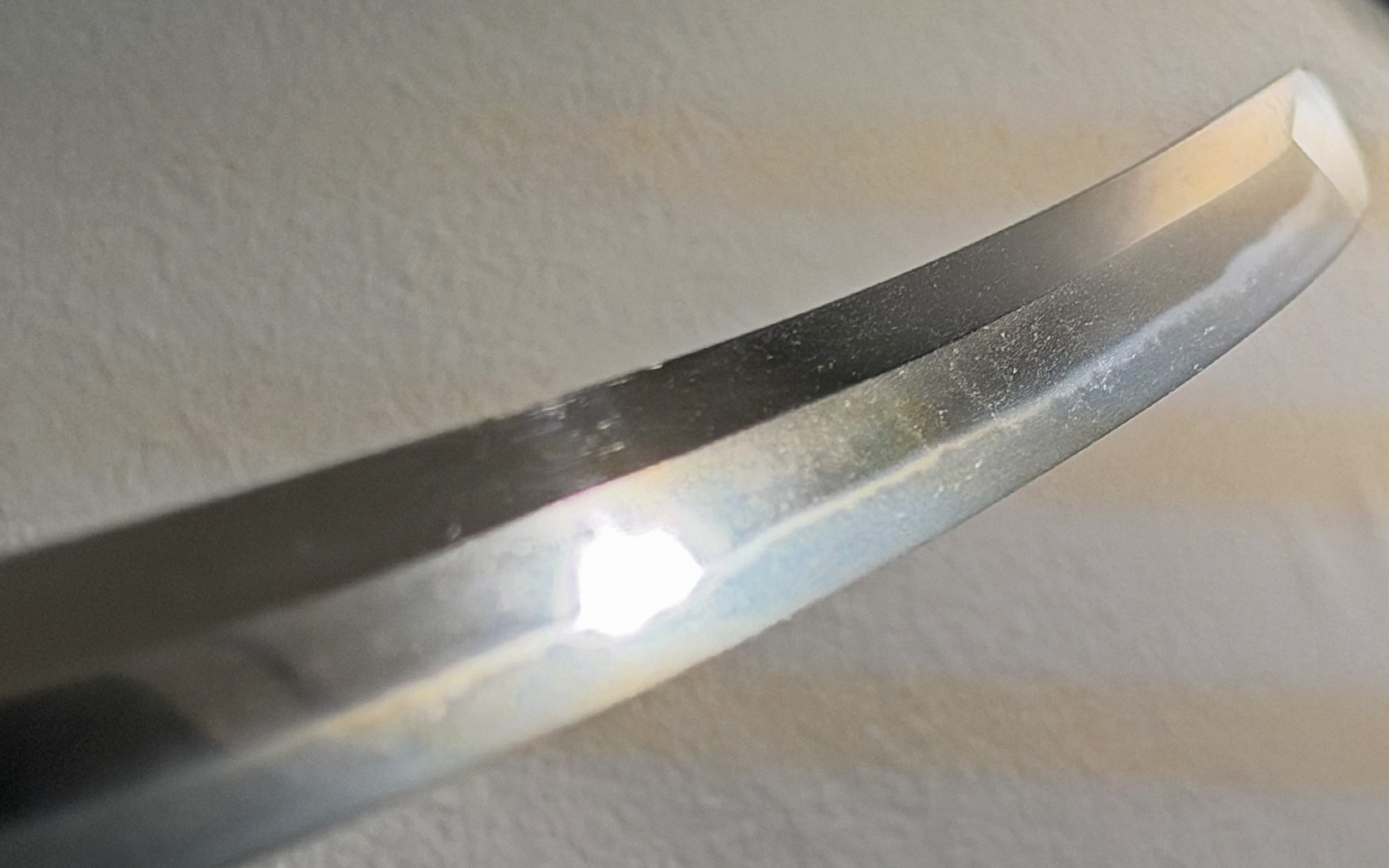
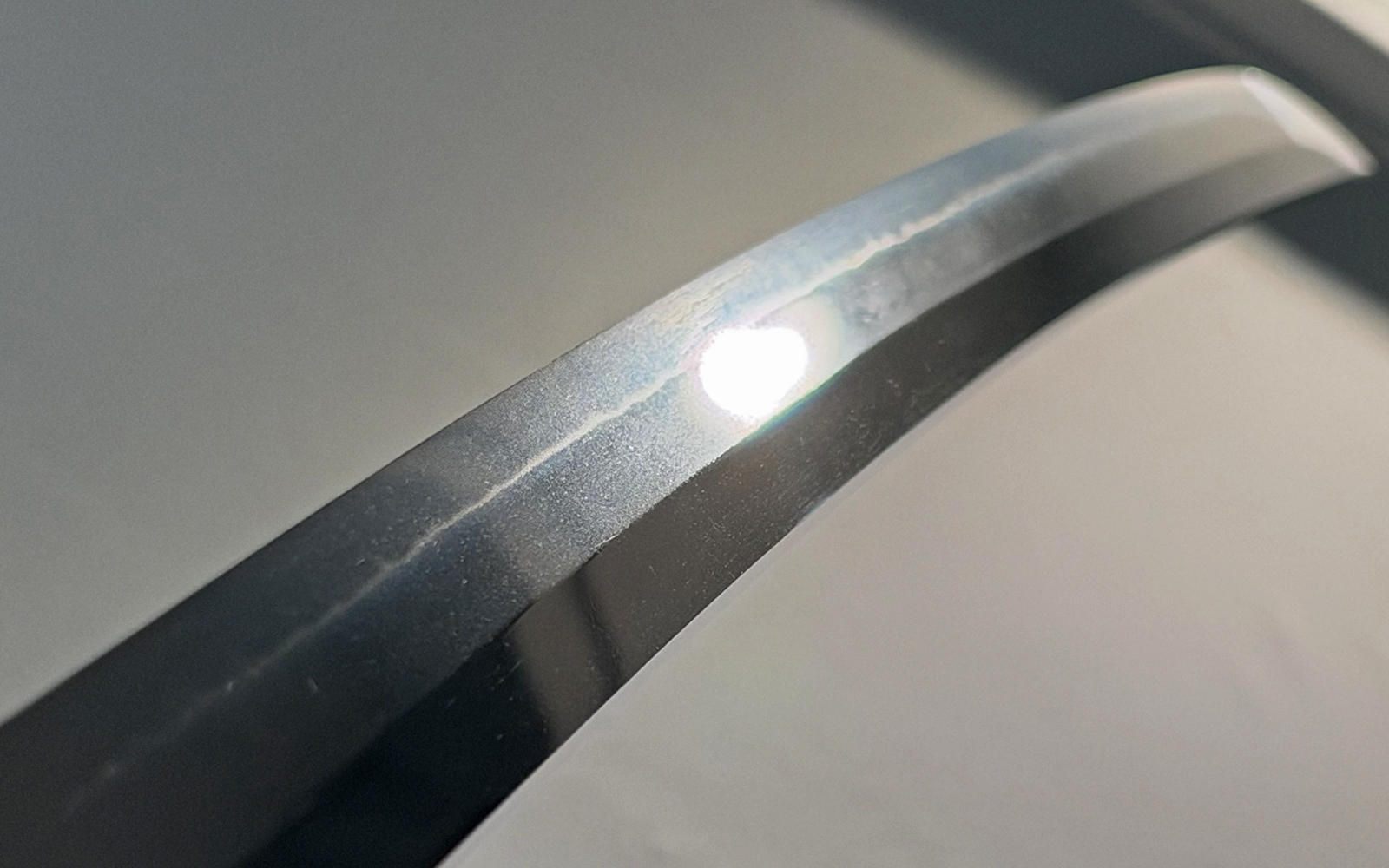
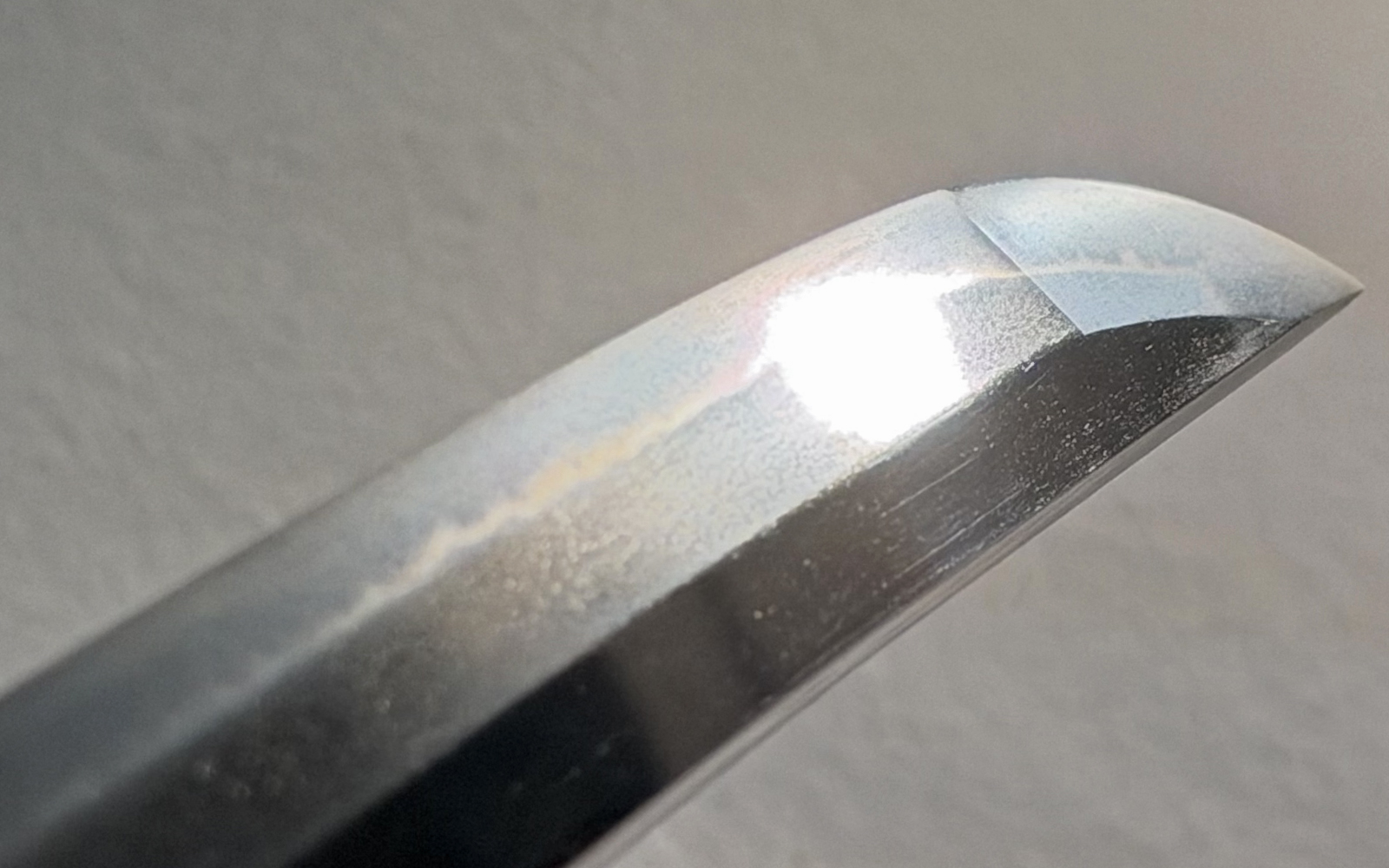
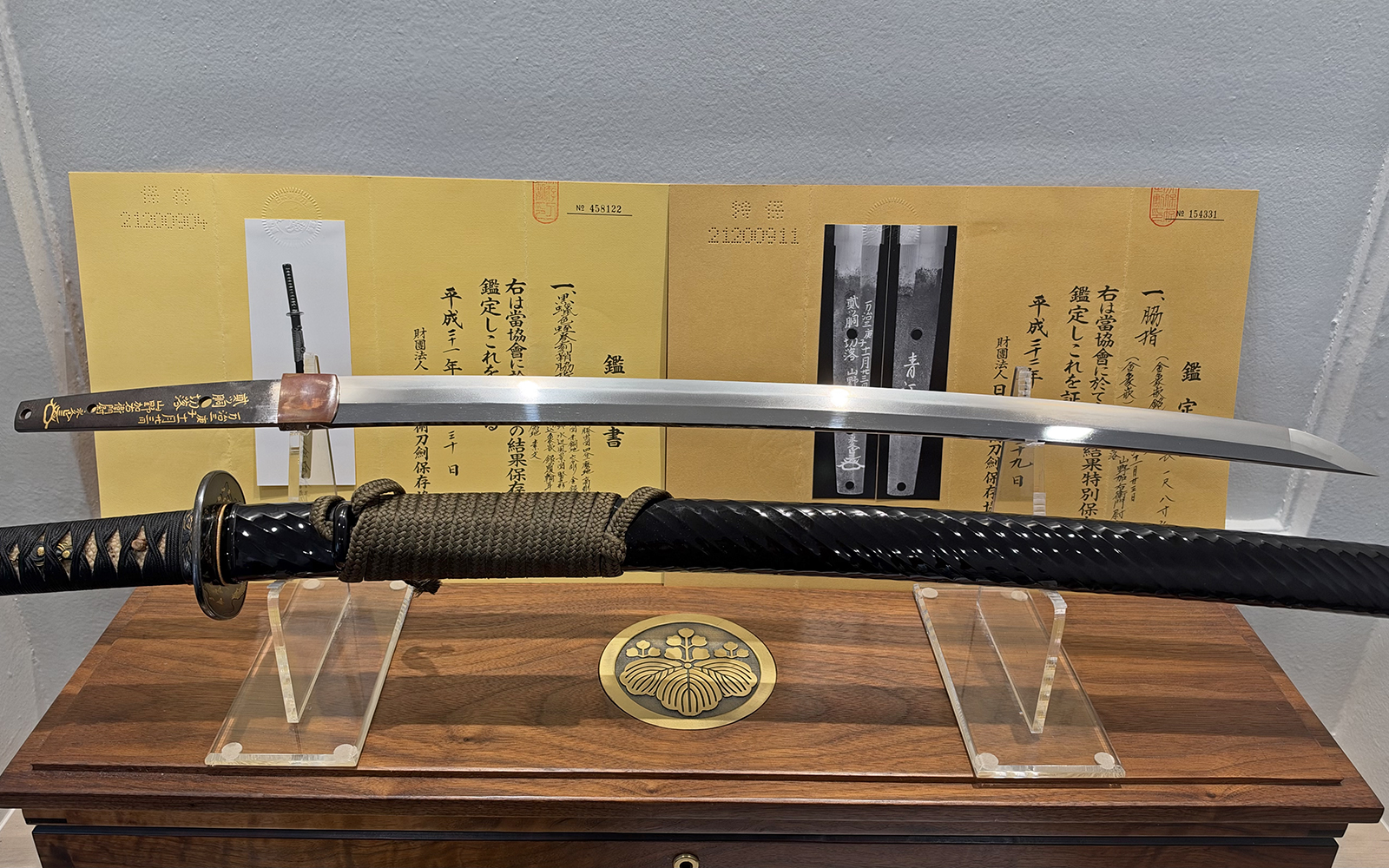
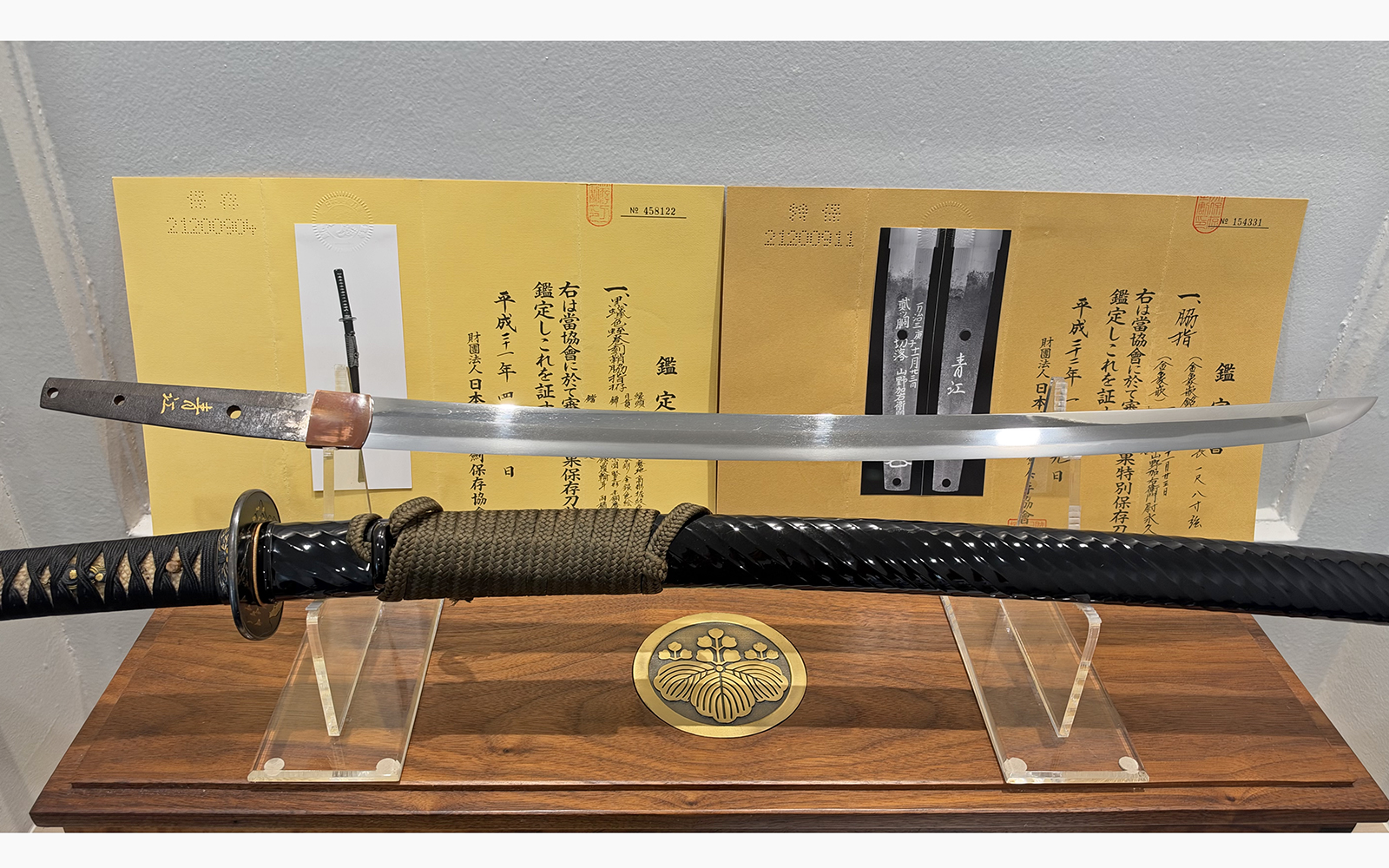
Two tempers divide the leading hands. Tsuguyoshi favors a tight, bright suguha with ko-ashi and saka-ashi; Tsugunao favors the flamboyant saka-chōji-midare with its reverse slant, ashi and yō pouring in, that matured around Enbun. Against this the Ko-Aoe of the mid-Kamakura ran ko-nie-deki with a subdued, shizumi nioiguchi over a refined chirimen-hada, while the late-Kamakura Chū-Aoe of Sadatsugu and Moritsugu stood between, the nie growing calmer and the reverse-slanting yakiba only beginning to foreshadow the later drama. Crucially the period remained nioi-deki where other provinces took up Sōshū nie, a holding distinction the setsumei mark out by name. For kantei the cluster reads together. A broad Nanbokuchō sugata, dan-utsuri over sumihada, ō-sujikai file marks on the tang, and a nioiguchi that is tight and clear point to this window rather than to Bizen of the same age; the choice between bright suguha and reverse saka-chōji then separates Tsuguyoshi from Tsugunao, while Naotsugu's forceful reverse-chisel mei and nezumi-ashi, and Moritsugu's kinsuji in a tight suguha, mark their own hands. The named masters carry strong provenance: a Tsugiyoshi wakizashi dated Enbun 2 descended in the Maeda family, a Yoshitsugu tantō passed to the Sakai of Himeji by gift of Tokugawa Ietsuna, and an ō-suriage den Tsuguyoshi katana ran through the Yanagisawa house with Hon'ami origami from Mitsuatsu. Honma's own remark singling out Tsugiyoshi and Tsuginao as the makers of the clearest chōji in tantō fixes their standing at the close of the Aoe story. Learn more →
 NihontoWatch