The monasteries that had sustained Yamato lost ground through the Muromachi period, and the schools thinned with them; Sue-Tegai kept the old masame manner alive in quantity. The burning of Tōdaiji’s Great Buddha hall in 1567 closed the temple age.
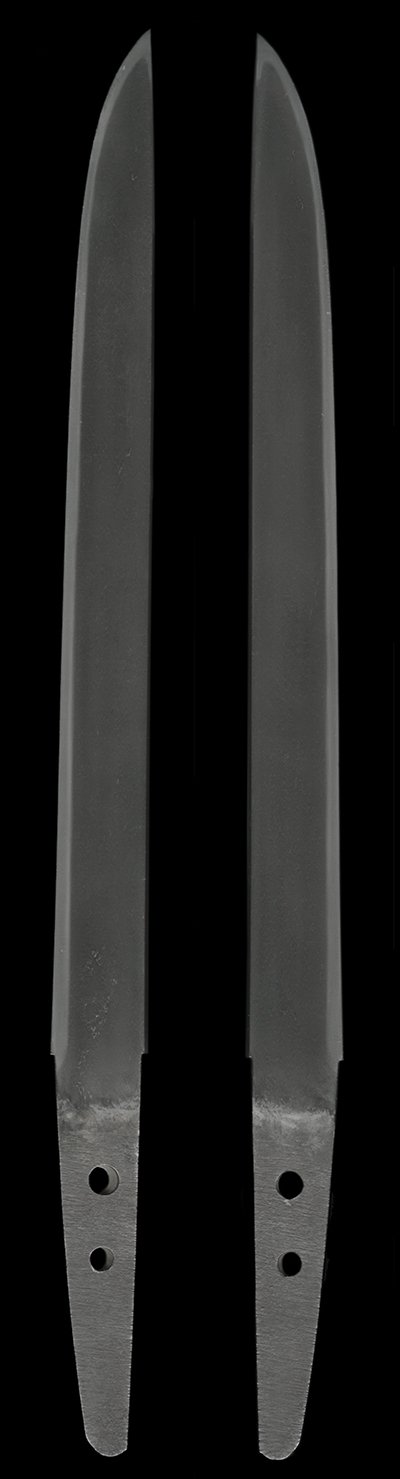
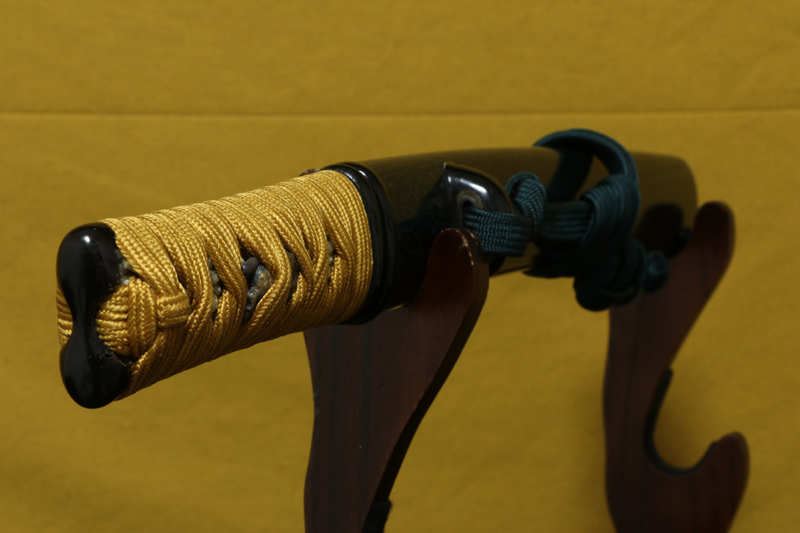
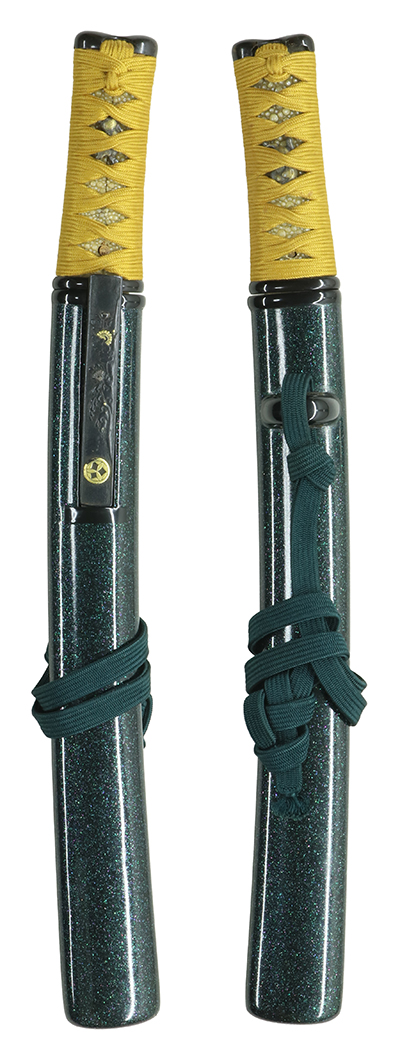
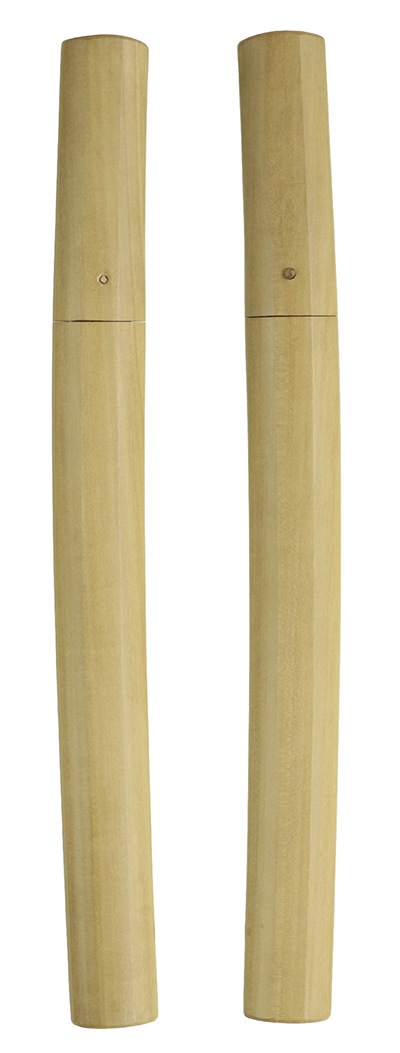
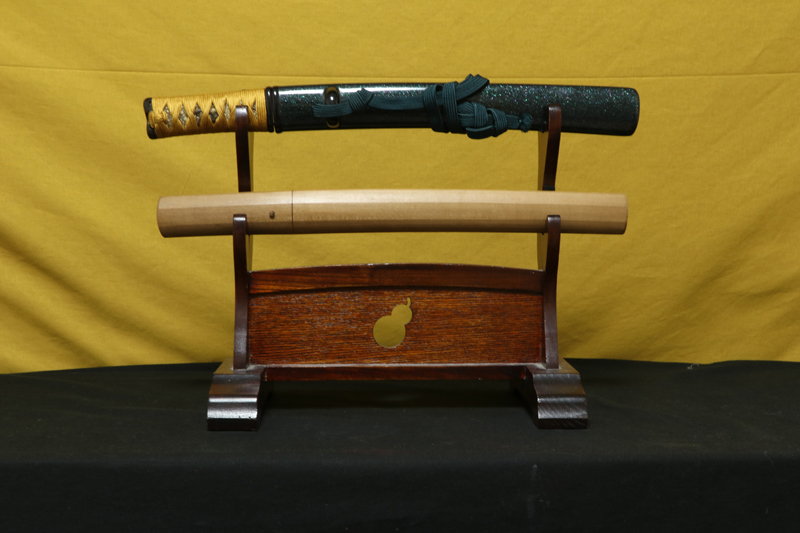
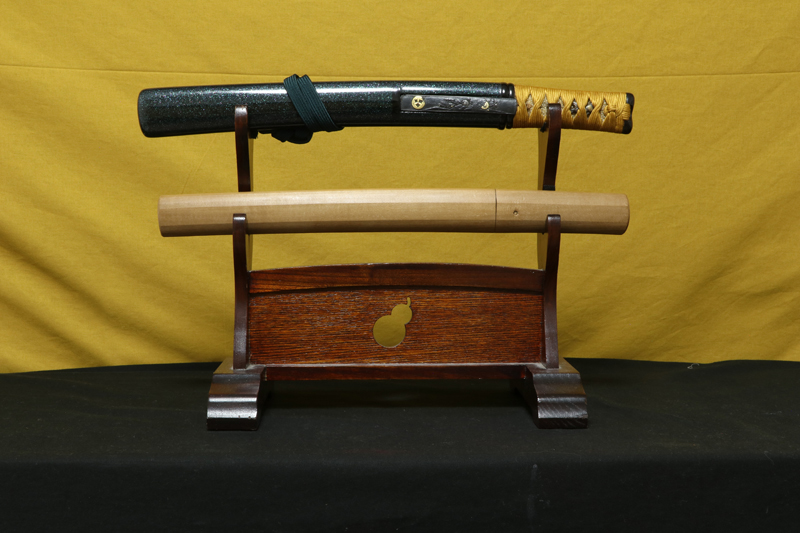
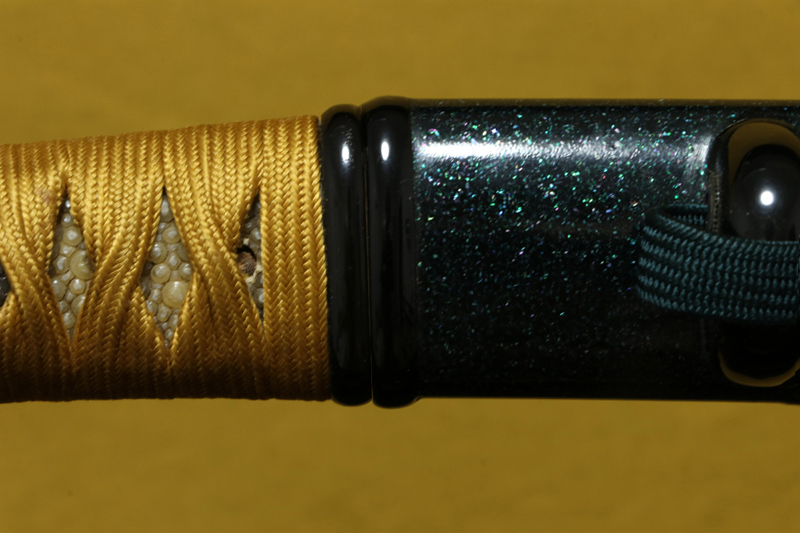
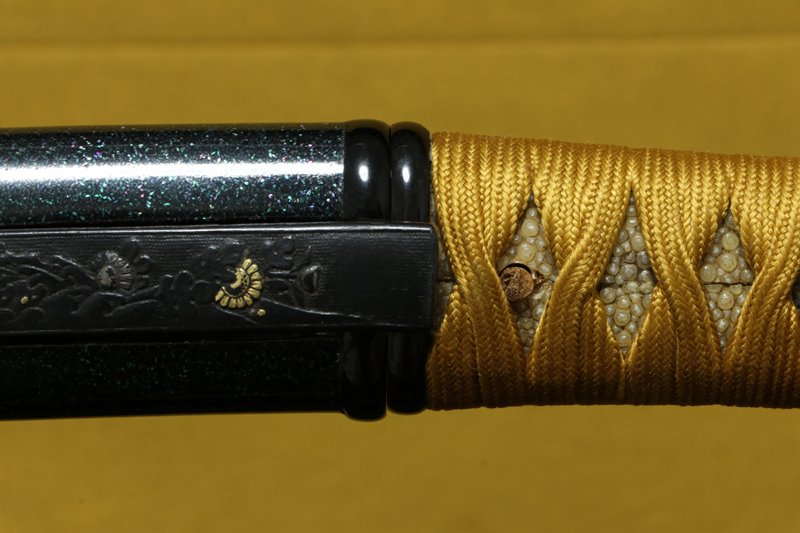
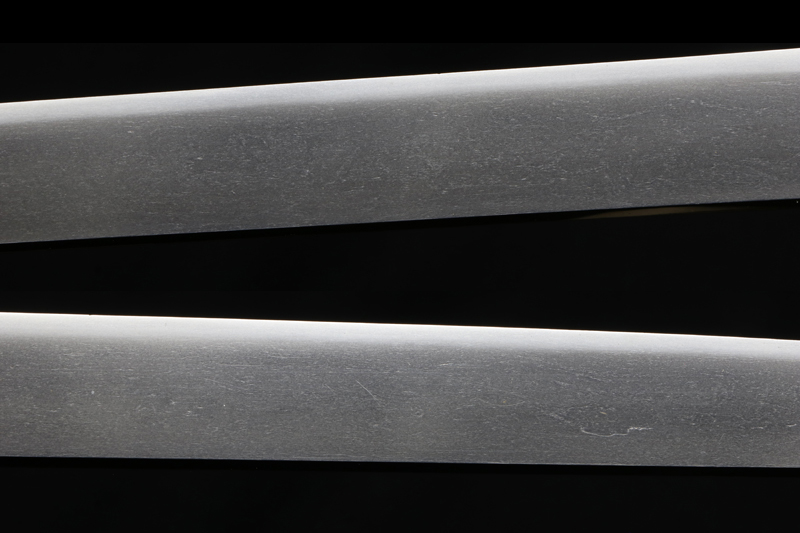
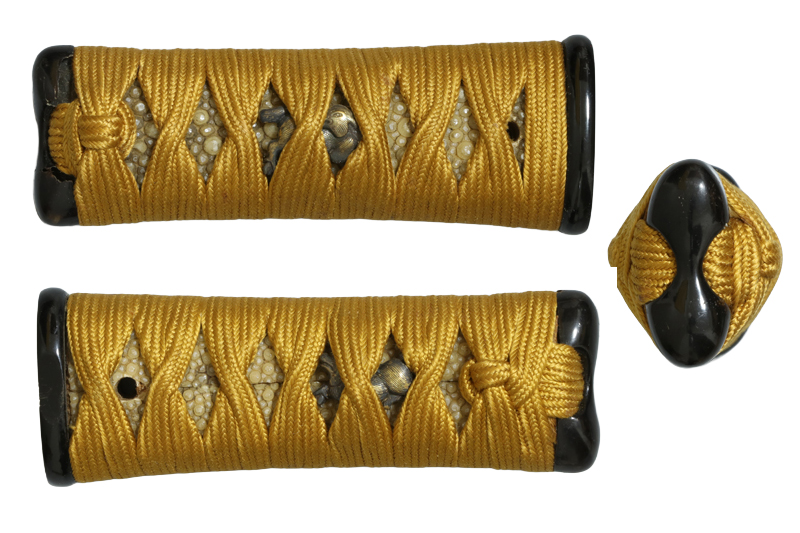
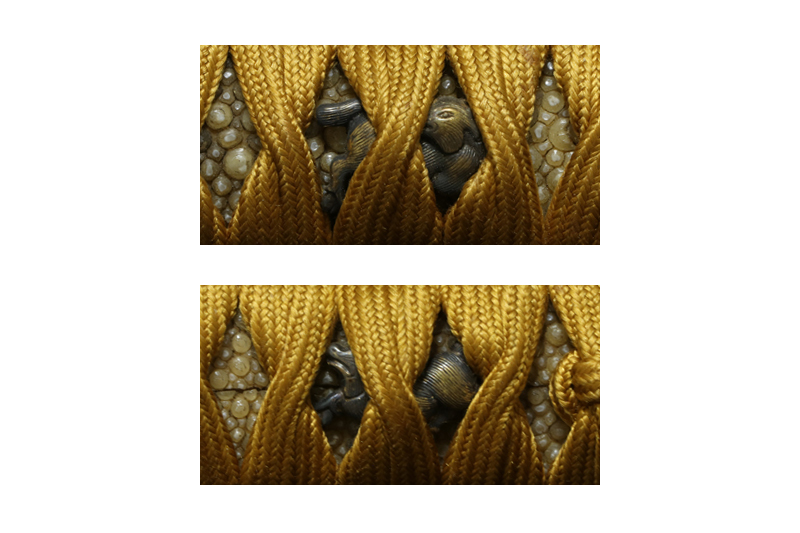
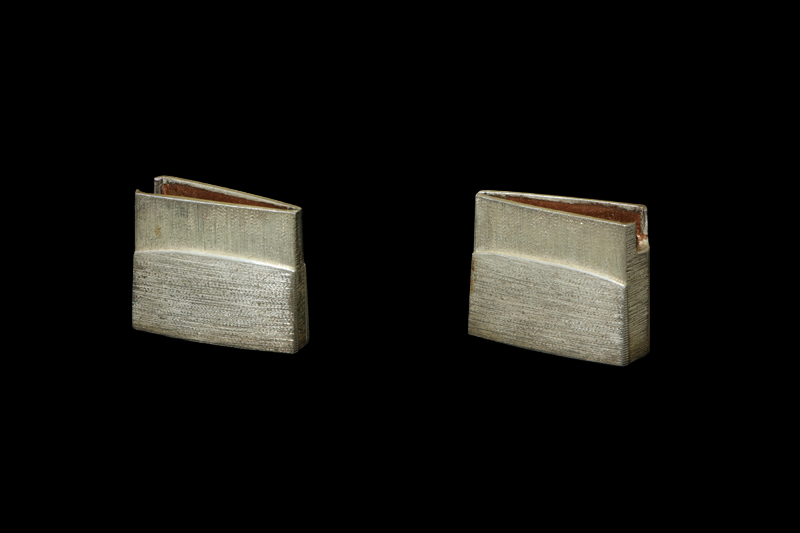
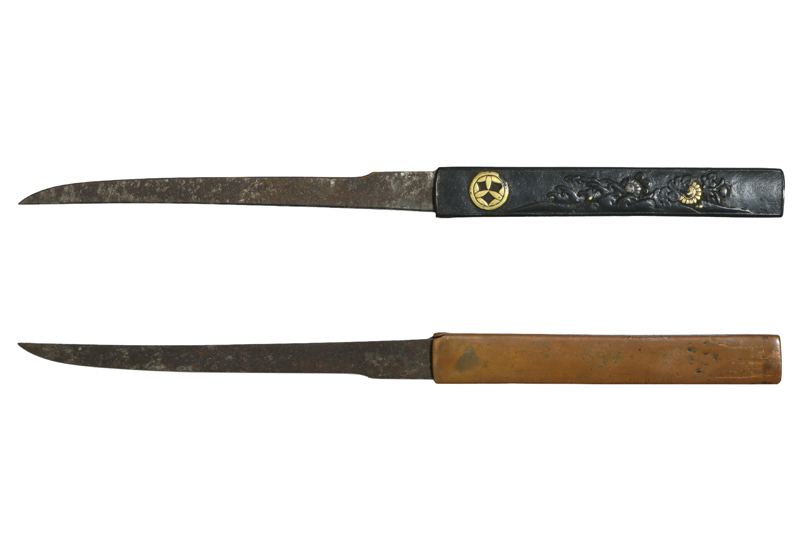
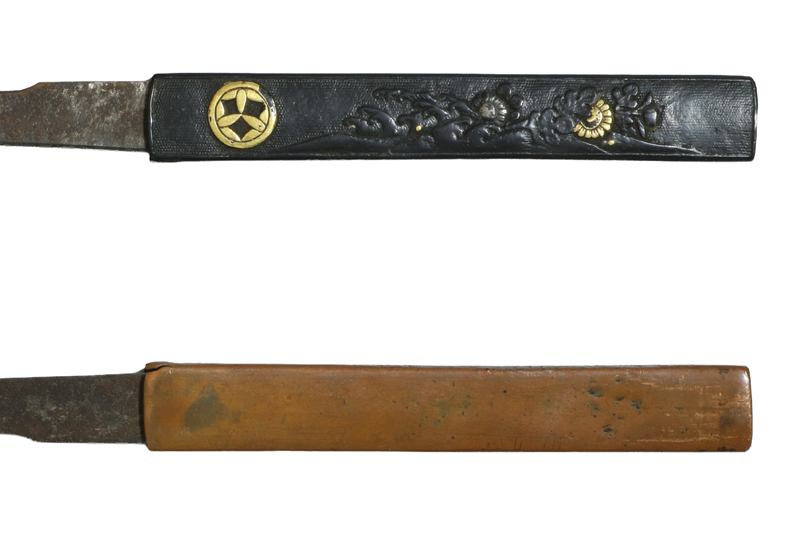
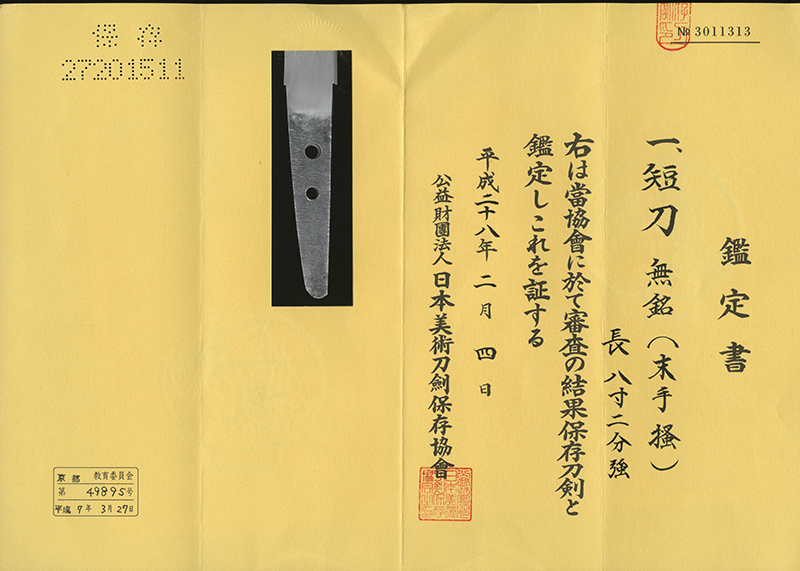
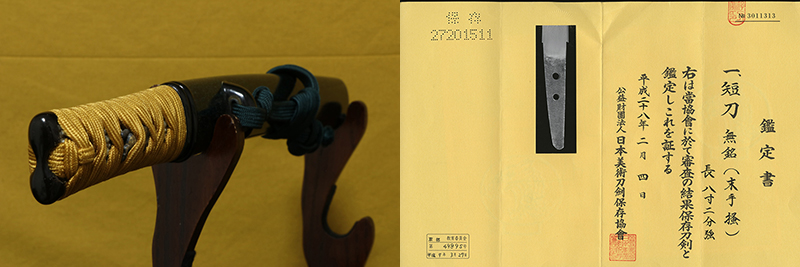
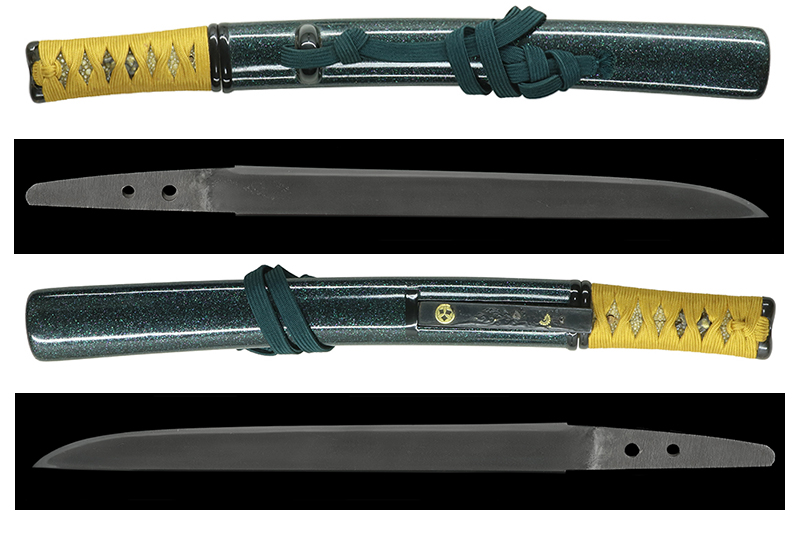
Hozon Token Koto Mumei Suetegai with Aikuchi-koshirae and Shirosaya. This is a tanto by Kanekiyo of the Sue-Tegai school from the mid-Muromachi period. It is a fine work with a chu-suguha in ko-nie deki on a well-tightened ko-itame hada, and the condition of the blade is also good. It comes with a high-quality koshirae featuring a luxurious kai-chirashi lacquered saya. This is an excellent piece that well demonstrates the characteristics of the Sue-Tegai school, recommended for appreciation and collection. This is a tanto by Kanekiyo of the Sue-Tegai school, dating from the mid-Muromachi period. A fine blade featuring tightly forged ko-itame hada and a chu-suguha hamon in ko-nie deki, in excellent condition. Accompanied by high-quality koshirae with a luxurious kai-chirashi lacquered saya. An outstanding example of the Sue-Tegai school, highly recommended for appreciation and collection. sword figure Hira-zukuri, mitsumune, mihaba and kasane are ordinary, mumei, chu-kissaki. The nakago is ubu with shallow sujikai yasurime, and the nakago-jiri is kurijiri. jigane The jigane is a well-tightened ko-itame hada with ji-nie. hamon The hamon is a chu-suguha in ko-nie deki, mixed with kuichigai-ba, with sunagashi along the habuchi and kinsuji active inside the ha. The boshi enters sugu and returns in ko-maru. detailed The Tegai school was a group of swordsmiths subordinate to Todai-ji, and came to be called Tegai because they resided in front of the Tegaimon gate of Todai-ji. It is attributed that Kanenaga, who was active around the Shoo era (1288-1293) in the mid-Kamakura period, was the founder, and it is said that Kaneuji, one of the Masamune Juttetsu, also belonged to the Tegai school. The first generation Kanekiyo is attributed as the son of Kanenaga and was active at the end of the Kamakura period. That lineage was succeeded through generations and continued until the Edo period. Also, Tegai school swordsmiths who were active in the Muromachi period after the Oei era (1394-1428) are collectively called Sue-Tegai. This work is a tanto from around the mid-Muromachi period, a well-made blade with a chu-suguha in ko-nie deki on a well-tightened ko-itame hada. The condition of the blade is also good, and the beauty of the ji-ba can be fully appreciated. The koshirae was produced in relatively recent years and features a luxurious kai-chirashi lacquered saya. The state of preservation is also good. An NBTHK Hozon Token certificate issued in Heisei 28 (2016) is included. At that time, there were relatively few people who applied for Tokubetsu Hozon Token examination, so this work remains at Hozon Token, but from its quality and state of preservation, it is a blade that can be fully expected to be promoted to Tokubetsu Hozon Token. It is a fine work that well demonstrates the characteristics of the Sue-Tegai school of the Muromachi period, an excellent piece recommended for appreciation and collection. The Tegai school was a group of swordsmiths affiliated with Todai-ji Temple in Yamato Province. The school took its name from its location near the Tegaimon Gate of Todai-ji. Its founder is traditionally believed to be Kanenaga, who was active around the Sho’o era (1288–1293) during the mid-Kamakura period. Kaneuji, one of the Masamune Juttetsu (Ten Great Disciples of Masamune), is also said to have belonged to the Tegai school. The first-generation Kanekiyo is believed to have been a son of Kanenaga and was active during the late Kamakura period. His name was passed down through successive generations until the Edo period. Swordsmiths of the Tegai school active from the Oei era (1394–1428) onward, during the Muromachi period, are collectively known as the Sue-Tegai school. This tanto dates from around the mid-Muromachi period and is a fine example featuring tightly forged ko-itame hada and a chu-suguha hamon in ko-nie deki. The blade is in excellent condition, allowing full appreciation of its beautiful jigane and hamon. The koshirae was made relatively recently and features a luxurious kai-chirashi lacquered saya. Its overall condition is also excellent. The tanto is accompanied by an NBTHK Hozon Token certificate issued in 2016. At that time, relatively few owners applied for the higher Tokubetsu Hozon certification. Although this tanto currently holds Hozon Token status, its excellent workmanship and condition make it a promising candidate for Tokubetsu Hozon certification. An outstanding example displaying the characteristic features of the Sue-Tegai school from the Muromachi period, highly recommended for appreciation and collection. koshirae habaki: Su-akagane base with silver-clad niju. fuchikashira-koikuchi: Buffalo horn. menuki: Design of a horse. kotsuka: Shakudo nanako-ji with design of chrysanthemums in gold iroe, and hosokashiwa-mon in gold iroe. tsuka: Samegawa has an oyatsubu and is makisame. Tsukamaki is pure silk golden-brown morotsumami-maki. saya: Kai-chirashi saya. With kotsuka-hitsu. condition of blade Togi: Good. Kizu: There are no flaws that would become a defect.
Offered by Giheiya


Machine translation of the shop's Japanese ·
Machine translation from the shop's Japanese · may contain errors ·
Yamato-den · Yamato · around 1469-1487
Tōken Taikan top 31%
1 piece on the market now
Yamato-den · Yamato
Phase: Sue-Tegai末手掻· 1390–1700
22 pieces on the market now
Sue-Tegai (末手掻) is the late phase of the Tegai school, from the Ōei era through the Muromachi period (with a thin tail of name-bearers into the early Edo period). The term 末手掻 is used directly in NBTHK setsumei to set this generation apart from the classical Ko-Tegai of the founder Kanenaga. Its representative smiths are Kanezane (包眞), Kanetoshi (包俊 / 包利), Kaneyoshi (包吉), and Kaneyuki (包行), names that recur across several generations as the workshop continued to supply blades through the fifteenth and sixteenth centuries. The Sue-Tegai idiom is a tightening and quieting of the classical Yamato manner.
The jigane becomes a closely-forged ko-itame mixed with prominent masame that frequently takes on a whitish (shirake) cast — a hallmark of the late phase — while the hamon narrows to a nioi-based suguha that frays into hotsure and ko-midare, with a komaru bōshi. The hiogi (檜垣) file-mark on the nakago is a recurring diagnostic. Production shifts toward tantō and wakizashi in standard Muromachi forms alongside some katana, and the NBTHK observes that the work shows comparatively little individual character, faithfully preserving the traditional house style rather than the bold personal expression of the Kamakura founders. The phase represents the orthodox Yamato tradition carried, with conservative consistency, to the close of the Muromachi age. Learn more →
| Smith | Era | Designated |
|---|---|---|
| Kanenaga包永 | 1288-1312 | 66 |
| Kanekiyo包清 | 1362-1370 | 8 |
| Kanetoshi包俊 | 1381-1384 | 4 |
| Kanetsugu包次 | 1317-1333 | 4 |
| Kanekiyo包清 | 1429-1441 | 3 |
Yamato in the Muromachi period
The monasteries that had sustained Yamato lost ground through the Muromachi period, and the schools thinned with them; Sue-Tegai kept the old masame manner alive in quantity. The burning of Tōdaiji’s Great Buddha hall in 1567 closed the temple age.
Certifies a genuine blade worth preserving: a signature confirmed correct, or, if unsigned, an era, province, and school that the NBTHK can reliably identify.
The NBTHK (Nihon Bijutsu Tōken Hozon Kyōkai, the Society for the Preservation of Japanese Art Swords) is a public-interest incorporated foundation founded in 1948 and supervised by Japan’s Agency for Cultural Affairs (Bunkachō); it is based at the Japanese Sword Museum in Tokyo. Its expert panels physically examine each submitted work (shinsa) and issue a certificate (kanteishō) ranking it by artistic and historical merit. NBTHK papers are the most widely recognized standard of authentication for Japanese swords and fittings.
NBTHK official siteWithin 3 days of the item's arrival, we offer a refund or an exchange. Return shipping and the bank transfer fee for the refund are at the customer's expense.
¥300,000