In the Sengoku era the school served a second warrior court: the Later Hōjō at Odawara, whose patronage kept the Tsunahiro line forging hitatsura for the uchigatana age until the castle fell to Hideyoshi in 1590.
 NihontoWatchNihontoWatch
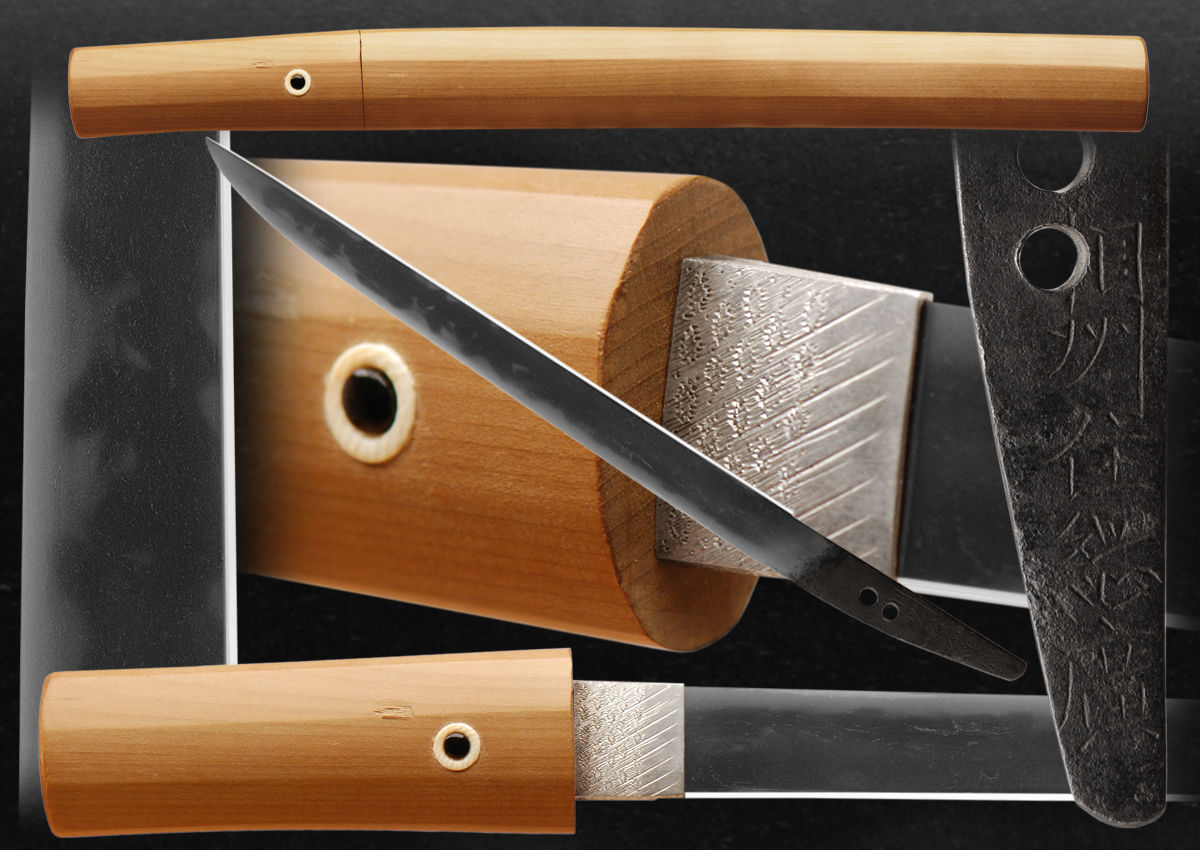
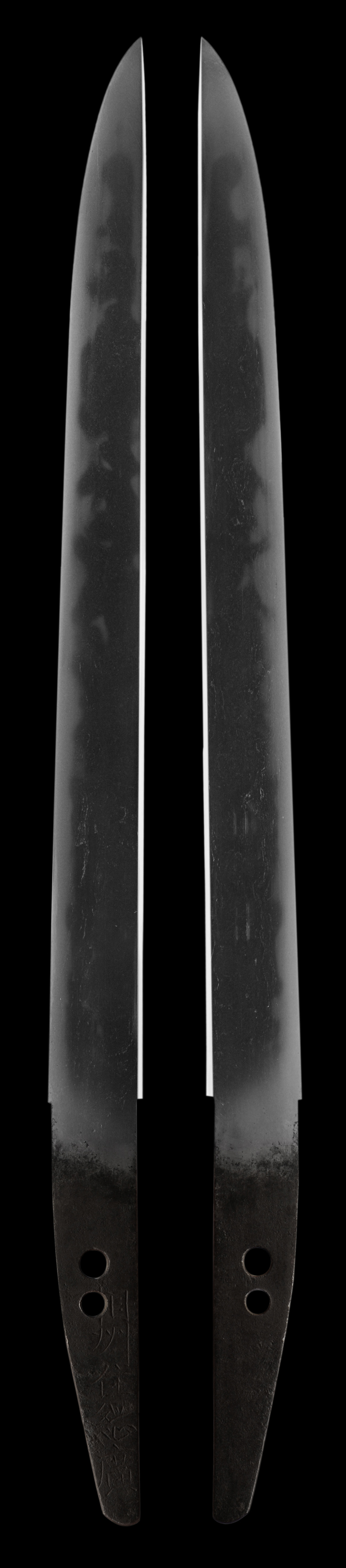
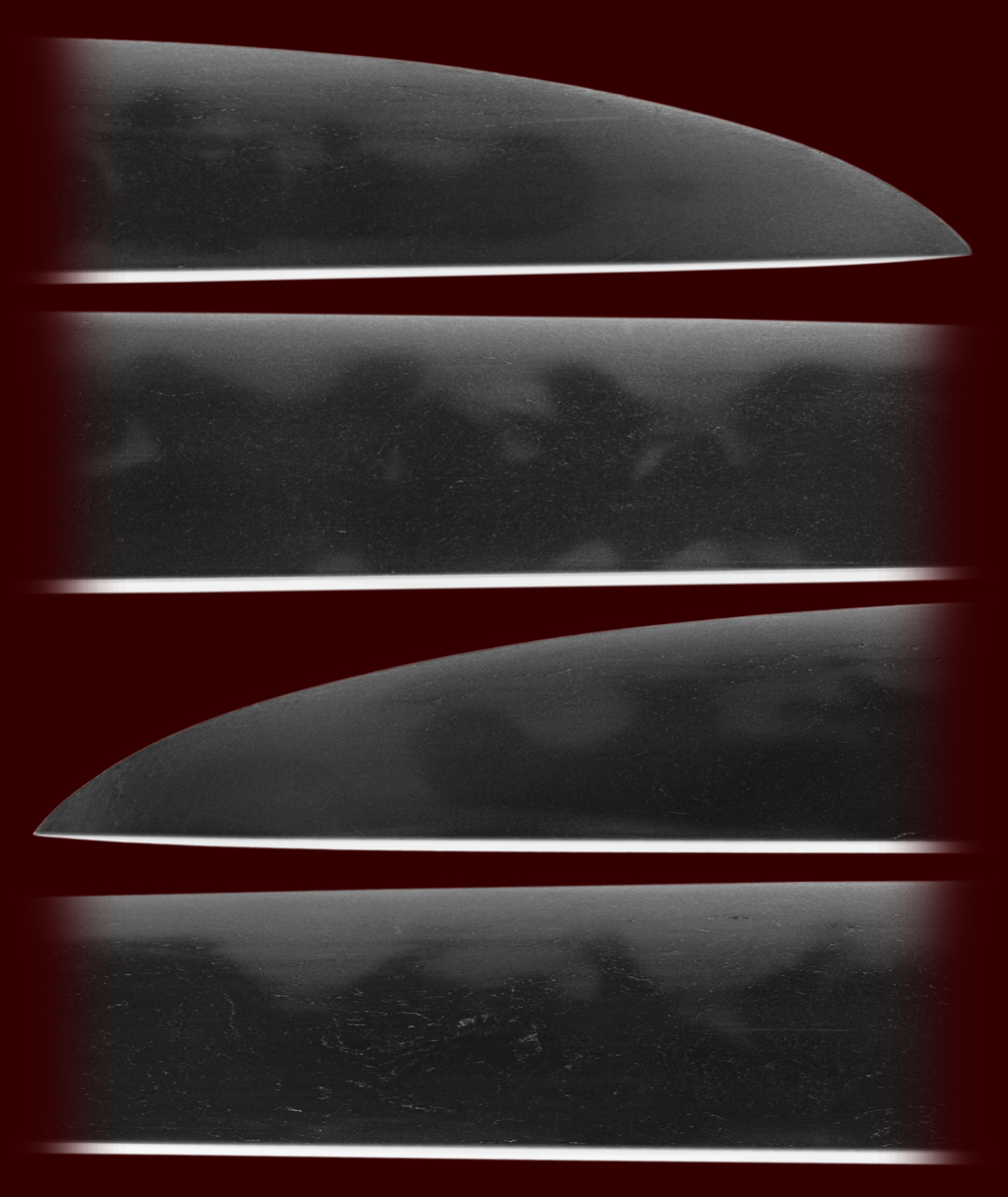
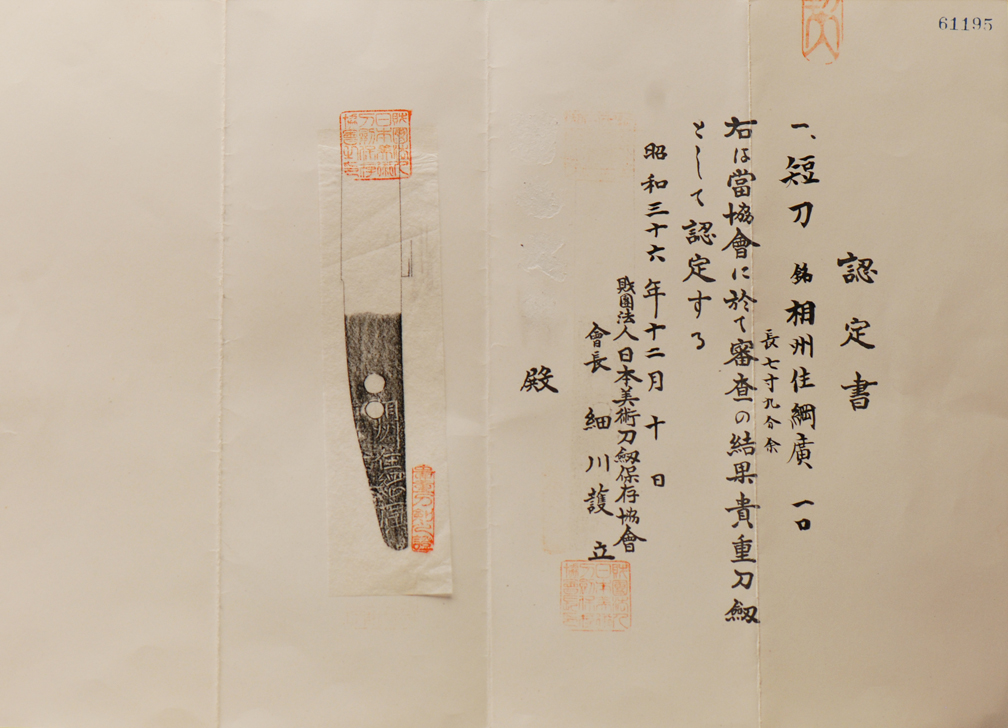
This fine quality tanto was made by Soshu Tunahiro. It has many classic details in the blade of the soshu school and more importantly of the smith. The Tunahiro line of smiths is very famous and it can be said that their swords and daggers are highly regarded by collects. This tanto has an abundance of activity in the hamon. It almost looks like flames on the blade itself. The hada is pronounced and rich looking. This size of tanto is very commonly see in as they were the style at the time and generally adorned with fine fittings. This is a koto era sword with interestingly older papers that show that this blade has been stored away for many years. Information on The Sue-Soshu School Entering the Muromachi Period, Soshu smiths who were descendants of Masamune, who is one of the greatest smiths in the history, came to lose their brilliance and their forging skill declined. They made tanto and wakizashi with wide mi-haba and saki-zori that had not been seen before. Sue-Soshu smiths temper hitatsura in nioi-deki like Shimada smiths. Hamon consisting of brilliant nie by the great Soshu smiths of the Kamakura and Nambokucho Periods are not seen anymore in this period. The smith names of Hiromitsu, Akihiro, Masahiro and Hiromasa are succeeded up to in this period. In addition, Hirotsugu, Fuyuhiro, Sukehiro and Takahiro are active in this period. There appear to be a few generations of these smiths except Takahiro. ‘Kokon Mei Zukushi’ says that Hirotsugu and Sukehiro are related to a smith named Yoshihiro who moved from Yamato Province in the late Nambokucho Period, but I think it is too early to confirm their lineage. Tsunahiro who is said to have been a student of Tsunaie, who was himself a student of the 1st Shimada Yoshisuke, was a skilful smith amongst them and demonstrates a Soshu-den that reminds one somewhat of the workmanship of old Soshu smiths. Sue-Soshu smiths liked to carve horimono on their tanto and wakizashi. Tsunahiro was the most skilful engraver and the smith name is succeeded up to the Edo Period. There are three smiths called Yasukuni, Yasuharu and Yasuharu who were active around the same time and are related to the Shimada school. Yasuharu favours to make small tanto with horimono. They were retained by the Go-Hojo family and lived in Odawara which was the castle town of the Go-Hojo family, and so were called ‘Odawara-Soshu’. Horimono is often seen on the blades of Sue-Soshu smiths Amongst them, Fusamune was good at elaborate horimono and it is said that he collaborated with Tsunaie. Sue-Soshu smiths normally tempered midare-ba but Kunitsugu who was active around the Eisho Era tempered sugu-ha and also hoso-sugu-ha on his tanto. The lineage of Kunitsugu is uncertain. By Dr. Honma Junji This sword is on consignment.
Offered by Nihonto Antiques
This piece has sold
20 on the market
Get an email when new Sue-Soshu School work hits the market.

Soshu-den · Sagami
20 pieces on the market now
Within the province of Sagami, where Masamune and his successors had set the Soshu-den on its course, a late body of smiths carried that workmanship forward through the Muromachi period after the classic Nanbokucho masters had passed. These are the Sue-Soshu (末相州), the late Sagami line that took up the manner of Hiromitsu and Akihiro and worked it into the sixteenth century under the patronage of the Later Hojo of Odawara. The published sources draw a division within the group: one body of smiths remained at Kamakura while a separate circle lived at Odawara under the Hojo, the latter collectively called the Odawara-Soshu. The Tsunahiro line anchors the whole, its shodai transmitted as a descendant of Hiromasa who first signed Masahiro, summoned by Hojo Ujitsuna to Odawara and granted the character tsuna; the name then passed as a workshop title through several generations into the Edo period. Around it stand Tsunaie, a retained smith of the Hojo regarded among the more skilled of the late line; Fusamune, the Odawara smith whose carving carries a long reputation; the mid-Muromachi Hiromasa, transmitted as the third generation of his name; Masahiro, a Sagami lineage of four or five generations said to descend from a younger son of Masamune; and Hirotsugu of Kamakura, who also bears Tenbun-era inscriptions tying him to Suruga. The shared vocabulary of the school is read off temper, steel, and carving together. The jigane is an itame mixed with mokume and nagare-hada that tends to stand and open rather than gather tightly, ji-nie adhering across it with chikei entering, the Odawara hands (Fusamune above all) tightening this toward a packed ko-itame. Over that ground the smiths temper a gunome-midare into which choji, togariba, the arrow-notch yahazu tooth, and ko-notare enter, the ha widening as it rises; nie attaches with sunagashi and kinsuji, and tobiyaki with muneyaki are then carried across the ji until the whole becomes hitatsura, the full-temper manner the sources name as the inheritance from Hiromitsu and Akihiro.
The Odawara face leans angular and compound, gunome heads breaking into doubled and koshi-biraki structures over a tight, nioi-dominant nioiguchi, while the Kamakura face of Tsunahiro keeps the broader, yahazu-laced midare. Devotional carving recurs throughout, true and grass kurikara, bonji on a lotus rendai, sanko-ken and gomabashi in raised relief, and incised invocations such as Hachiman Daibosatsu. Set against the classic Soshu-den apex, the divergence is one of register rather than kind: where the Kamakura and Nanbokucho masters reached great depth of nie and clarity of steel, the late line works a flatter, more demonstrative hitatsura over a standing grain, the steel less deep and the nie less profound, the flamboyance of full temper standing in for the restrained command of the founders. For kantei, the Sue-Soshu blade announces itself by the Muromachi sugata (compact hira-zukuri tanto with uchizori, or sun-nobi wakizashi of wide mihaba with sakizori) carrying full hitatsura over an open, standing itame, with the dense devotional horimono the sources treat as a defining mark of Sagami work of the era; the absence of the deep, lucid nie and the midare-utsuri-free clarity of the Kamakura masters separates it from classic Soshu. The Odawara hand is told from the Kamakura hand by its tighter steel, its angular and koshi-biraki gunome, and Fusamune's exceptionally refined relief carving. Among the members, Tsunahiro is the first name of the group, the smith who closes the tradition, the published sources naming him well known and highly skilled within the group, with Tsunaie and Fusamune as the next most accomplished; Hiromasa and Masahiro furnish the dated, ubu-signed documents on which the divided generations are anchored. Provenance, where it survives, is real and distinguished: a Tsunahiro wakizashi bears the ownership inscription of the Hojo retainer Sakurai Daigaku and later passed to Okubo Ichio, while one of his blades is recorded in Honma's inventory of the Imperial collection; most members, however, carry no recorded daimyo or temple history, their standing resting on the rarity of a signed late-Sagami blade and the carving and steel the sources praise on each. A signed Sue-Soshu work, seldom met yet not locked away as national patrimony, offers the student the Muromachi register of the Soshu-den read whole. Learn more →
| Smith | Era | Designated |
|---|---|---|
| Fusamune總宗 | 1504-1521 | 5 |
| Tsunahiro綱廣 | 1532-1555 | 14 |
| Hiromasa廣正 | 1444-1456 | 4 |
| Tsunaie綱家 | 1532-1555 | 3 |
| Hirotsugu廣次 | 1492-1501 | 4 |
Sōshū in the Muromachi period
In the Sengoku era the school served a second warrior court: the Later Hōjō at Odawara, whose patronage kept the Tsunahiro line forging hitatsura for the uchigatana age until the castle fell to Hideyoshi in 1590.
We offer a 48 hour inspection period for all Antique items shipped within the United States only. If the item is not to your satisfaction, we will gladly refund your money less any shipping and handling fees. All sales are final after the 48 hour inspection period. Please note that all discounted items are a final sale and not returnable.