This entry for Osafune Norimitsu of the Oei era rests on a tanto signed Bishu Osafune Norimitsu and dated Oei 33 (1426), second month, designated Juyo Token at the 37th session in 1991. The published sources observe that the Norimitsu blades usually encountered date from between Oei Bizen and Sue-Bizen[[c:1]]. Yet the name goes back to the end of the Kamakura period, to a pupil of Nagamitsu whose tanto dated Kagen 3 survives. They then give the meikan sequence: 「銘鑑ではこれを初代として, 二代を延文頃, 三代応永で家助の子とし, 四代が永享頃, 以降室町末期まで名跡の継承があったことを記している」 (the meikan count the Kagen smith as the first generation, place a second around Enbun and a third in Oei as the son of Iesuke, and a fourth around Eikyo, with the name inherited to the end of the Muromachi period).
The tanto matters chiefly as a date. Until it appeared, no work of Norimitsu was known between the Kagen tanto and the Oei era, so its documentary value is held to be very high[[c:2]]. It falls in the Oei era to which the meikan assign the third generation, although the paper itself does not number its maker.
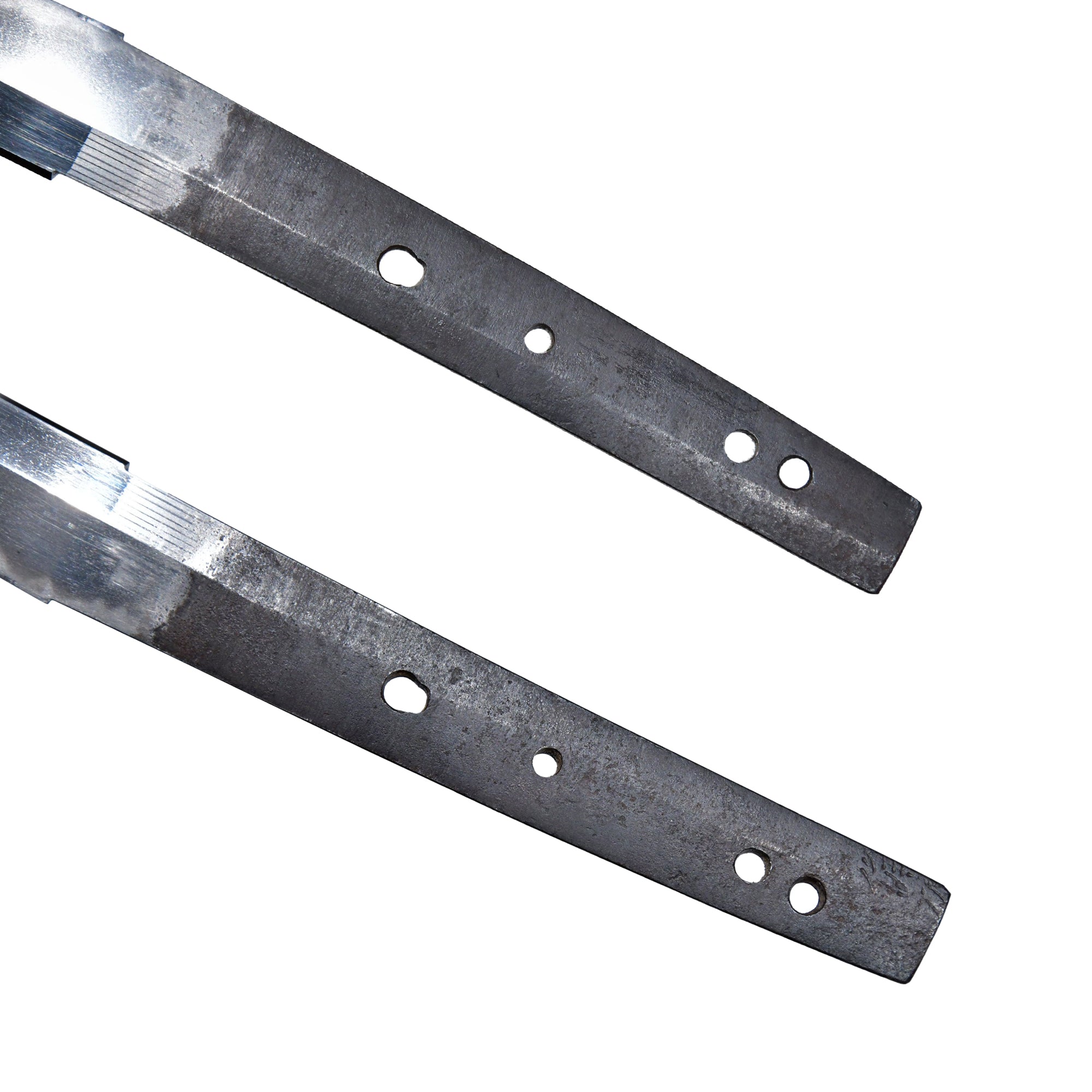
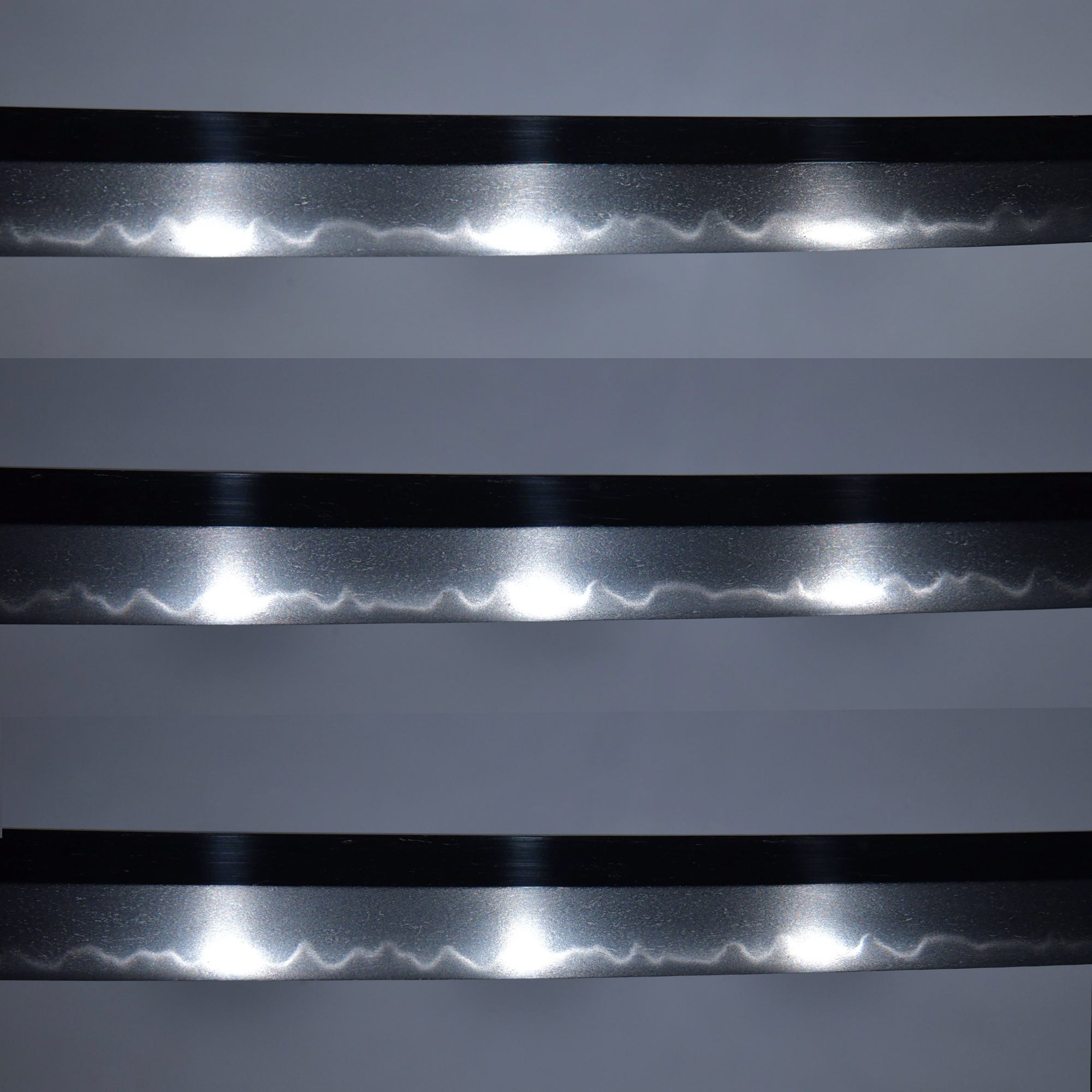
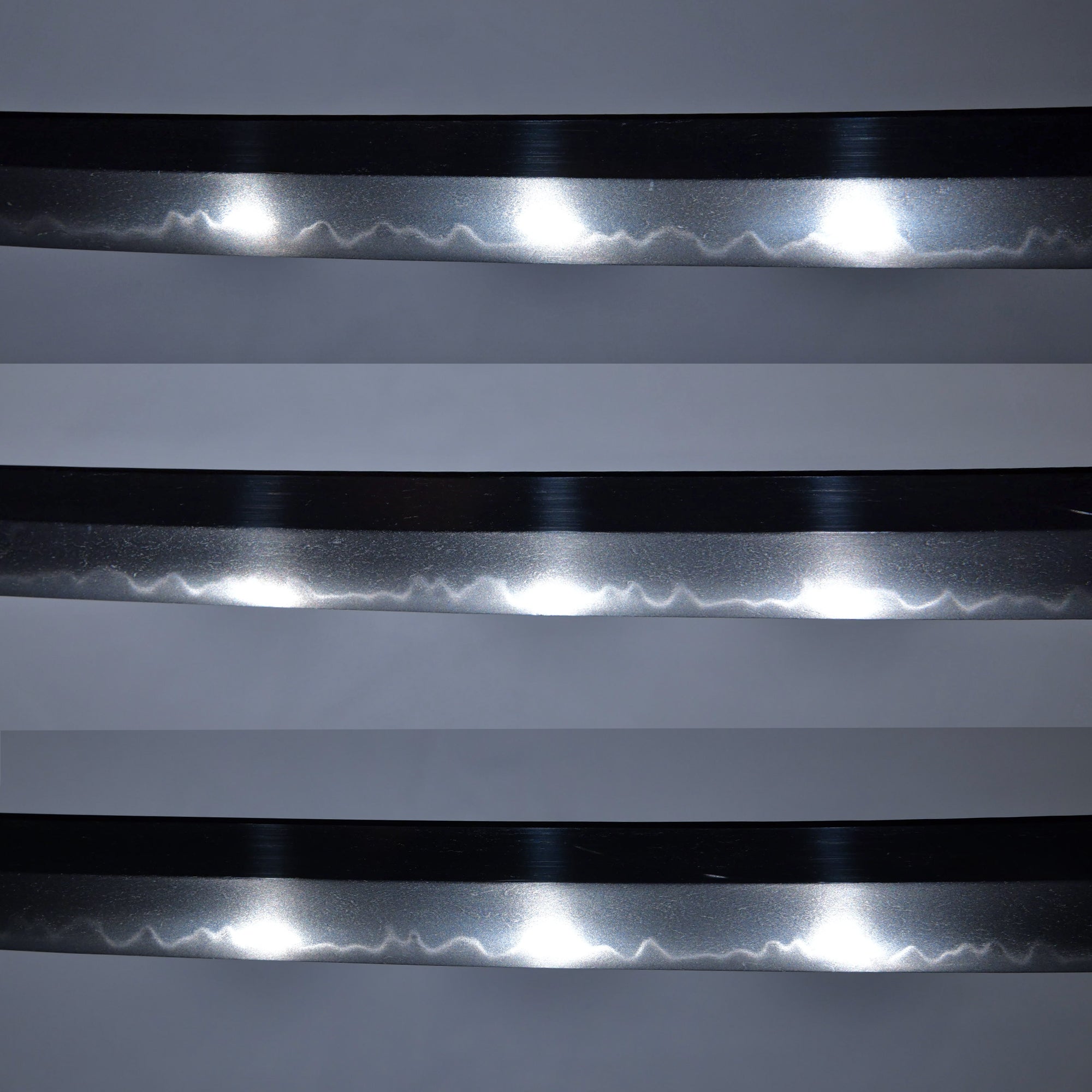
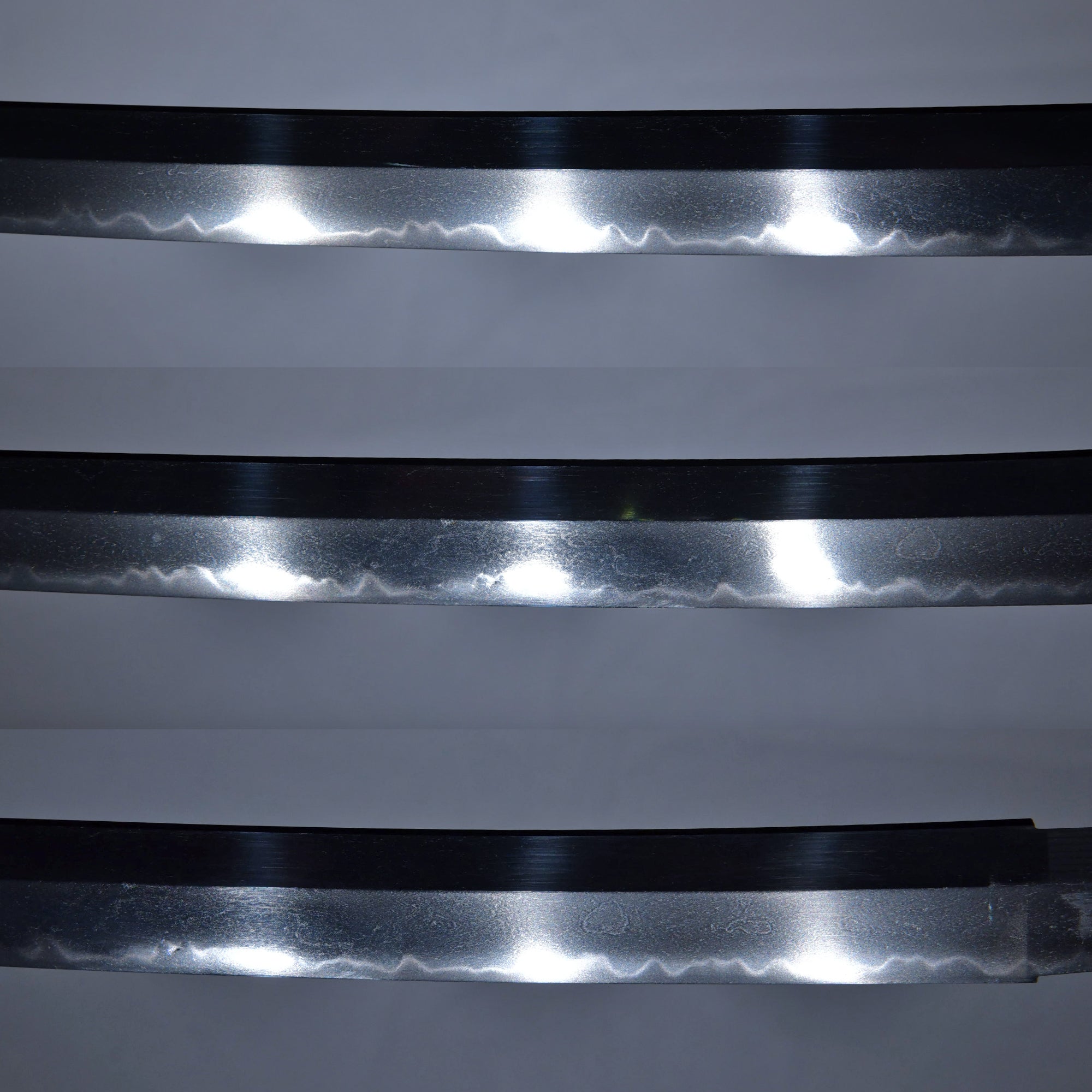
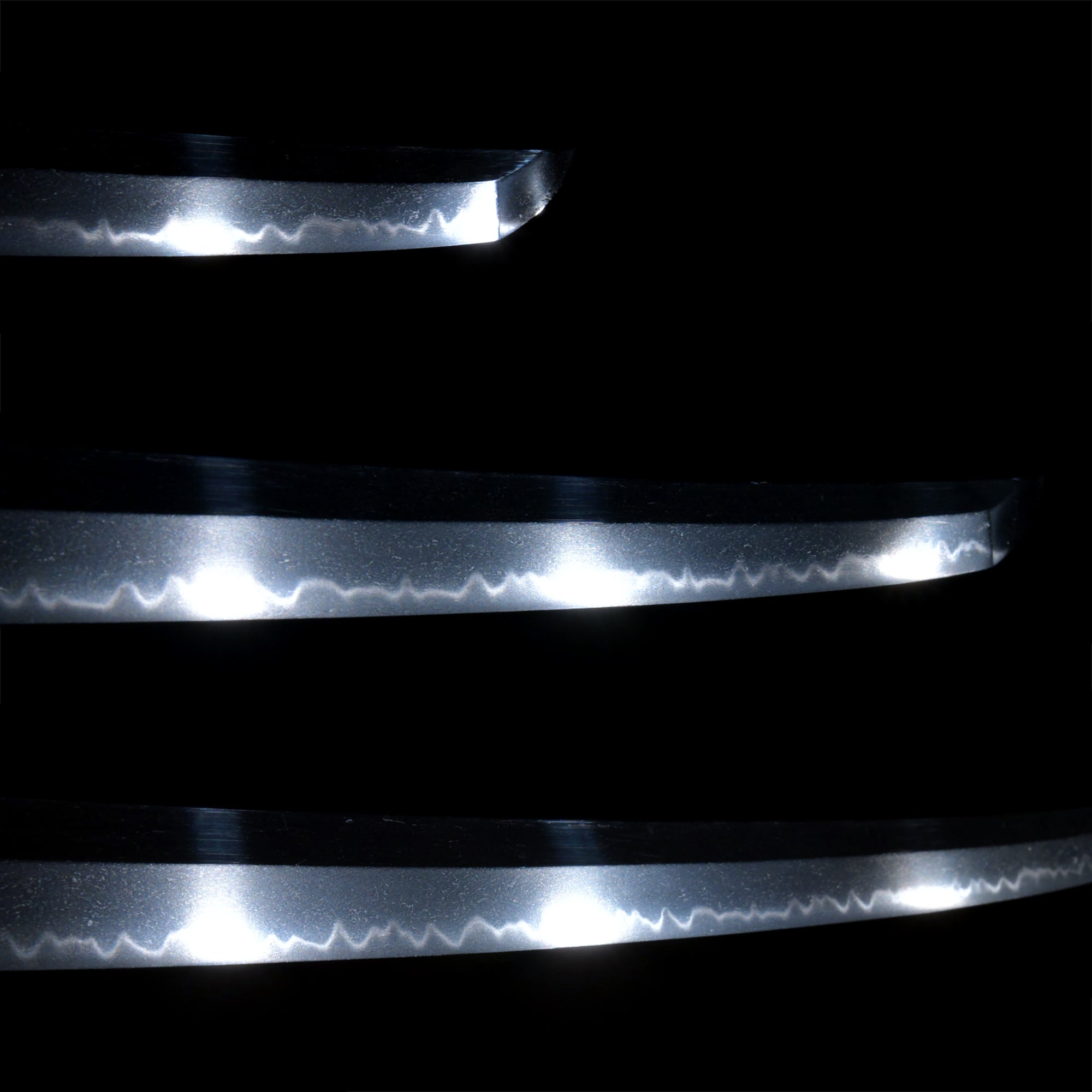
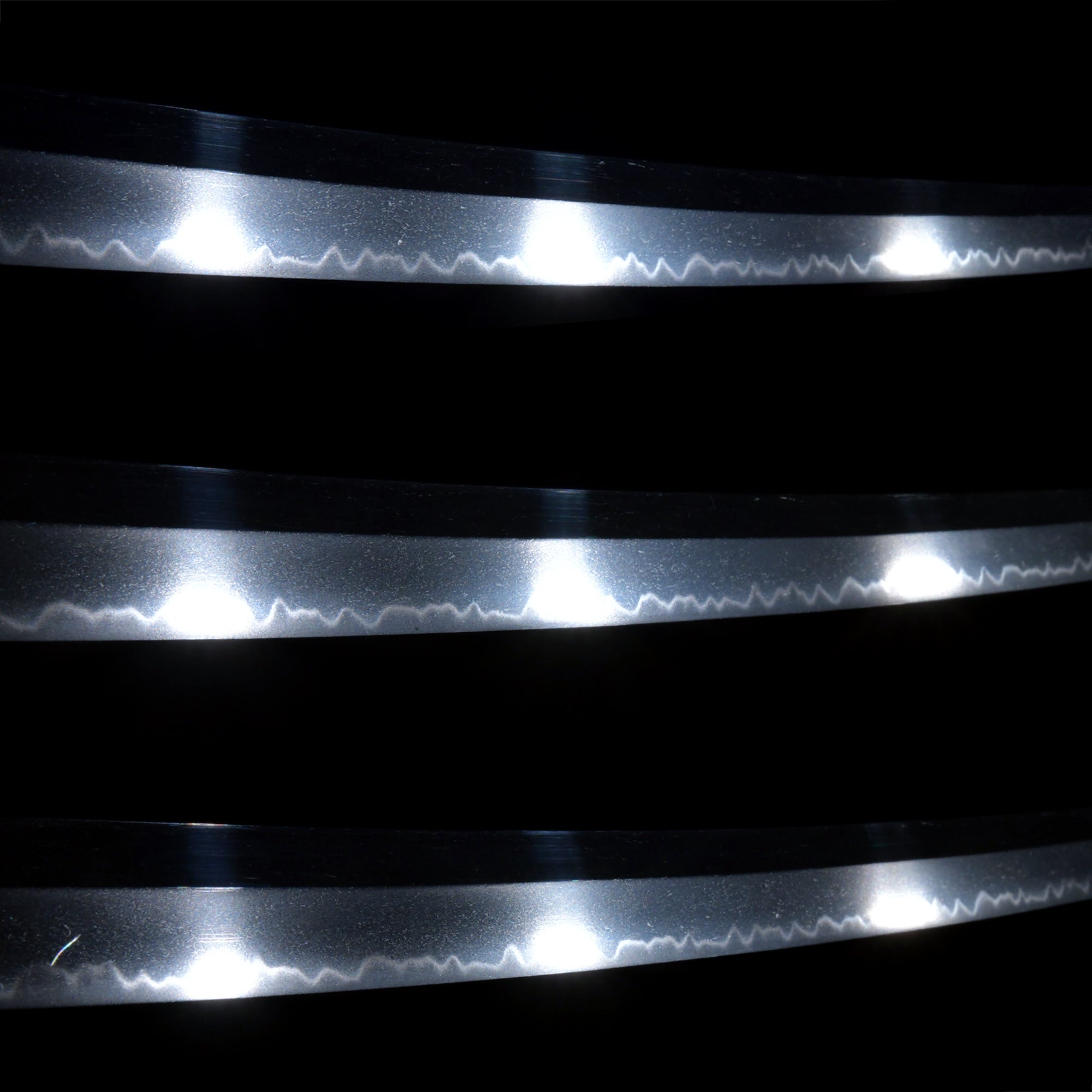
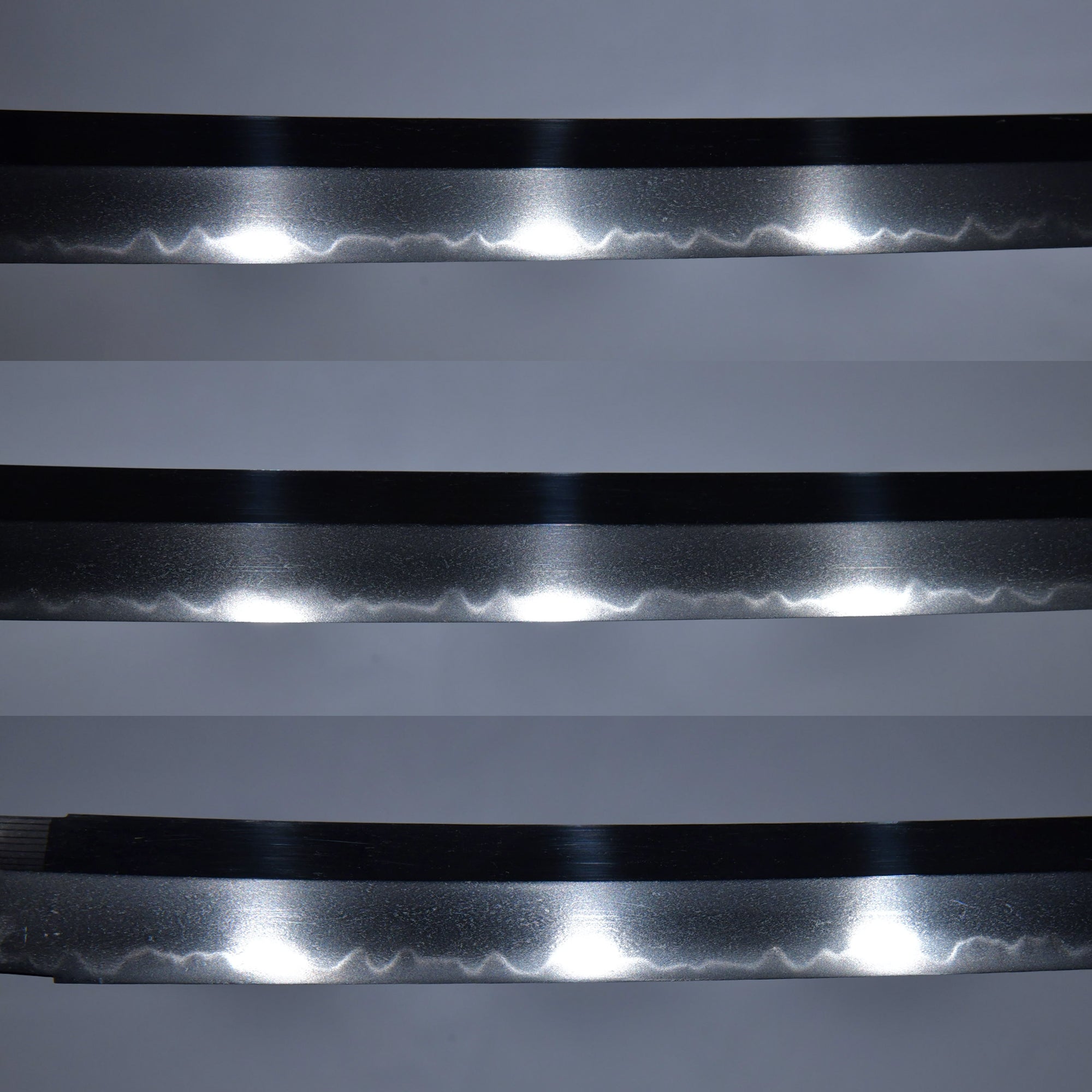
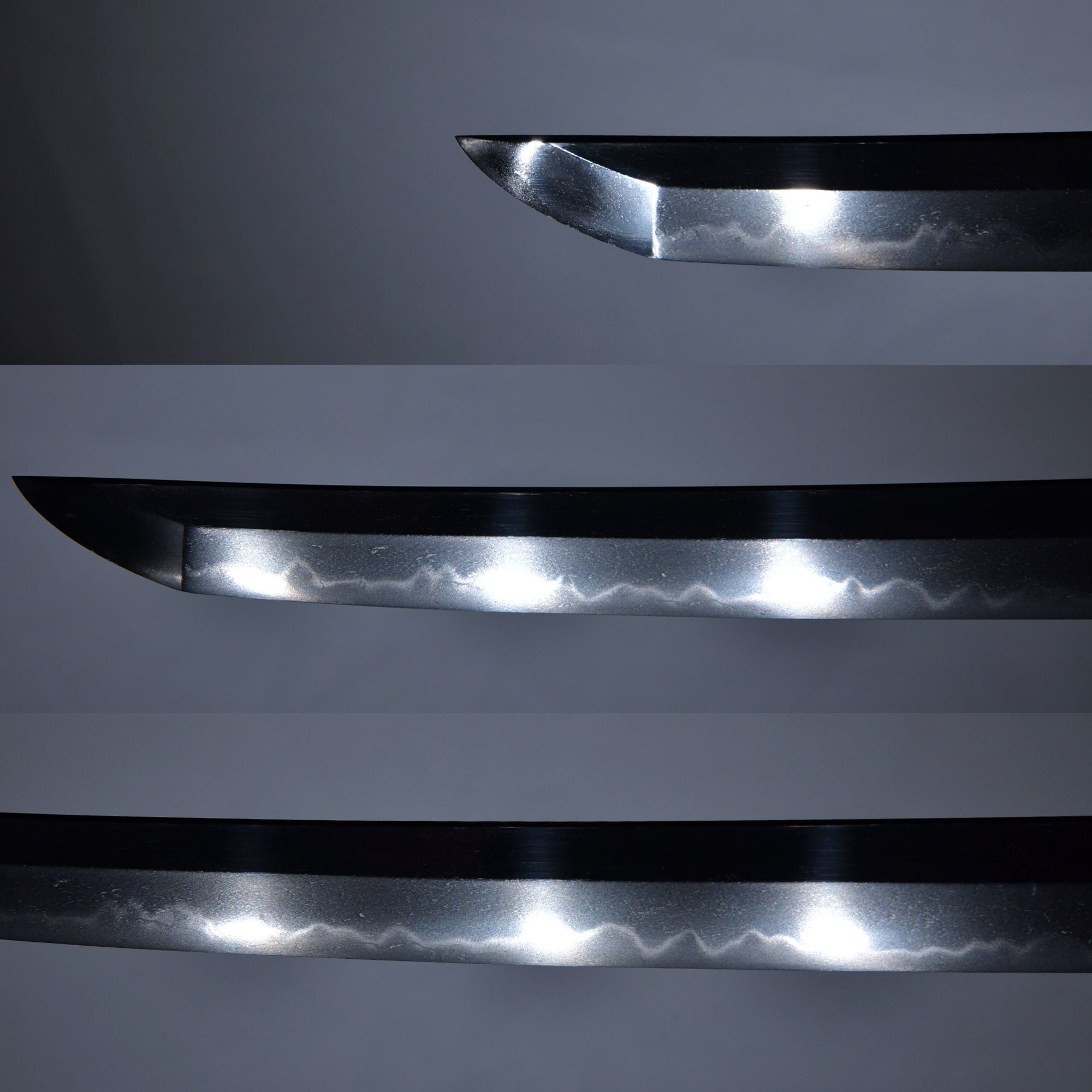
In form the tanto is hira-zukuri with an iori-mune, long for its width and thick, which the published sources call characteristic of Oei Bizen. The ko-itame is tight, with fine ji-nie thickly attached, chikei, and a straight utsuri along the edge. The hamon is a chu-suguha with a shallow notare feeling, ko-nie and a bright nioiguchi, and the boshi runs straight to a ko-maru. Gomabashi are carved on the omote and a koshi-bi on the ura. The paper sums it up as an elegantly tempered suguha of excellent workmanship overall[[c:3]].
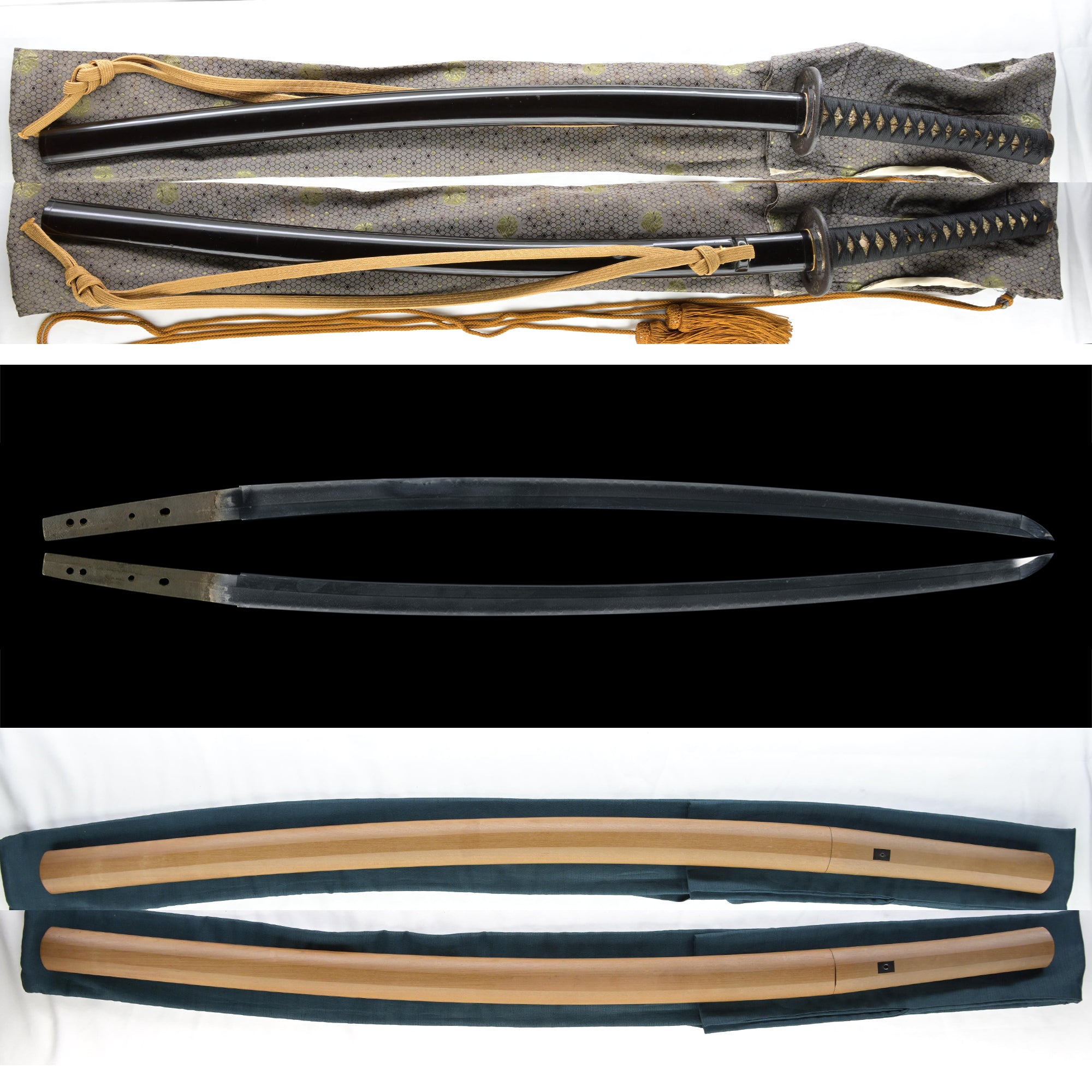
A second blade, a tachi signed with the two characters Norimitsu, was designated Juyo Token at the 26th session in 1979. It is undated, and its paper names no generation; it is placed with this entry by default. The paper repeats that the first Norimitsu is said to have been a pupil of Nagamitsu, and that the line lapsed partway and was revived in the Muromachi period[[c:4]].
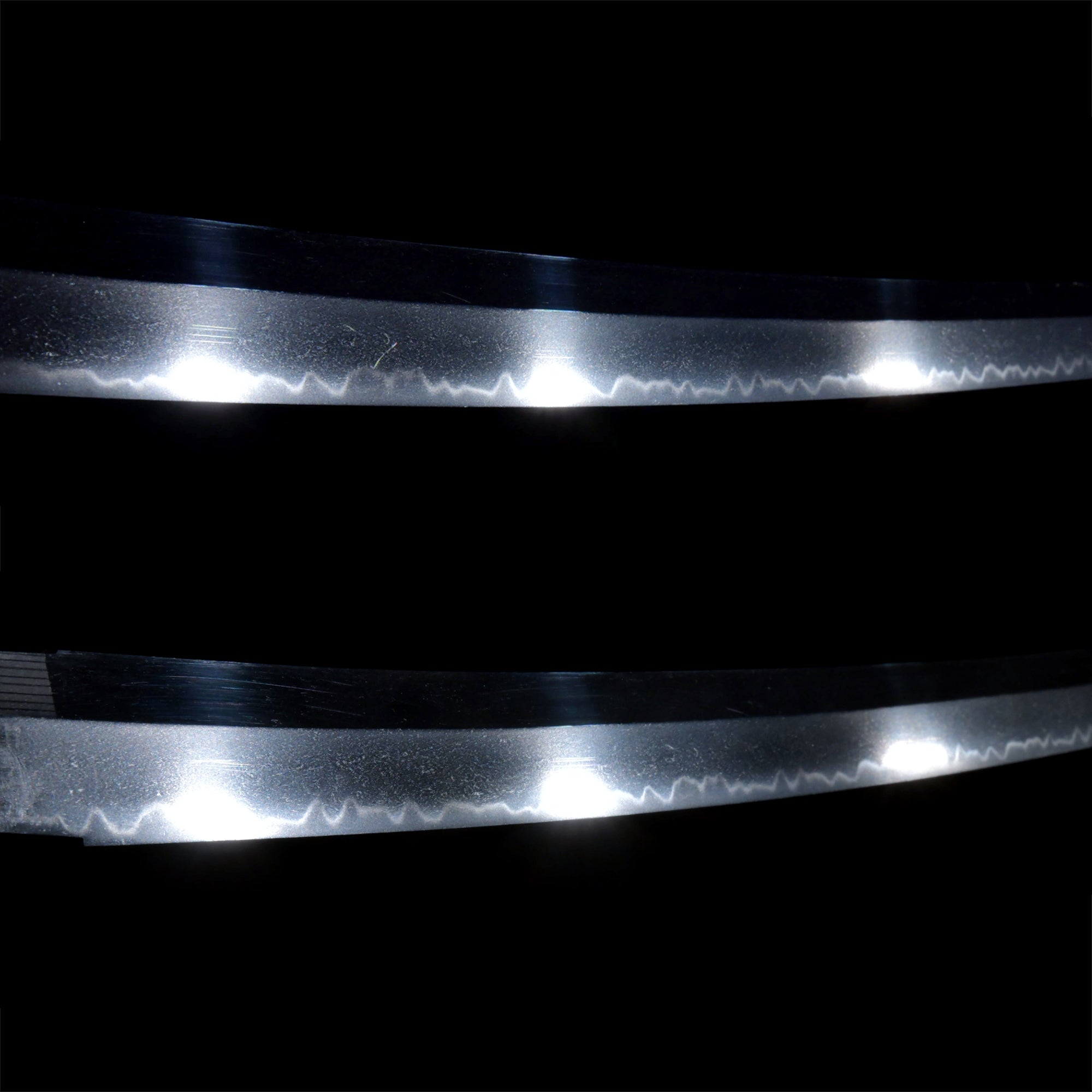
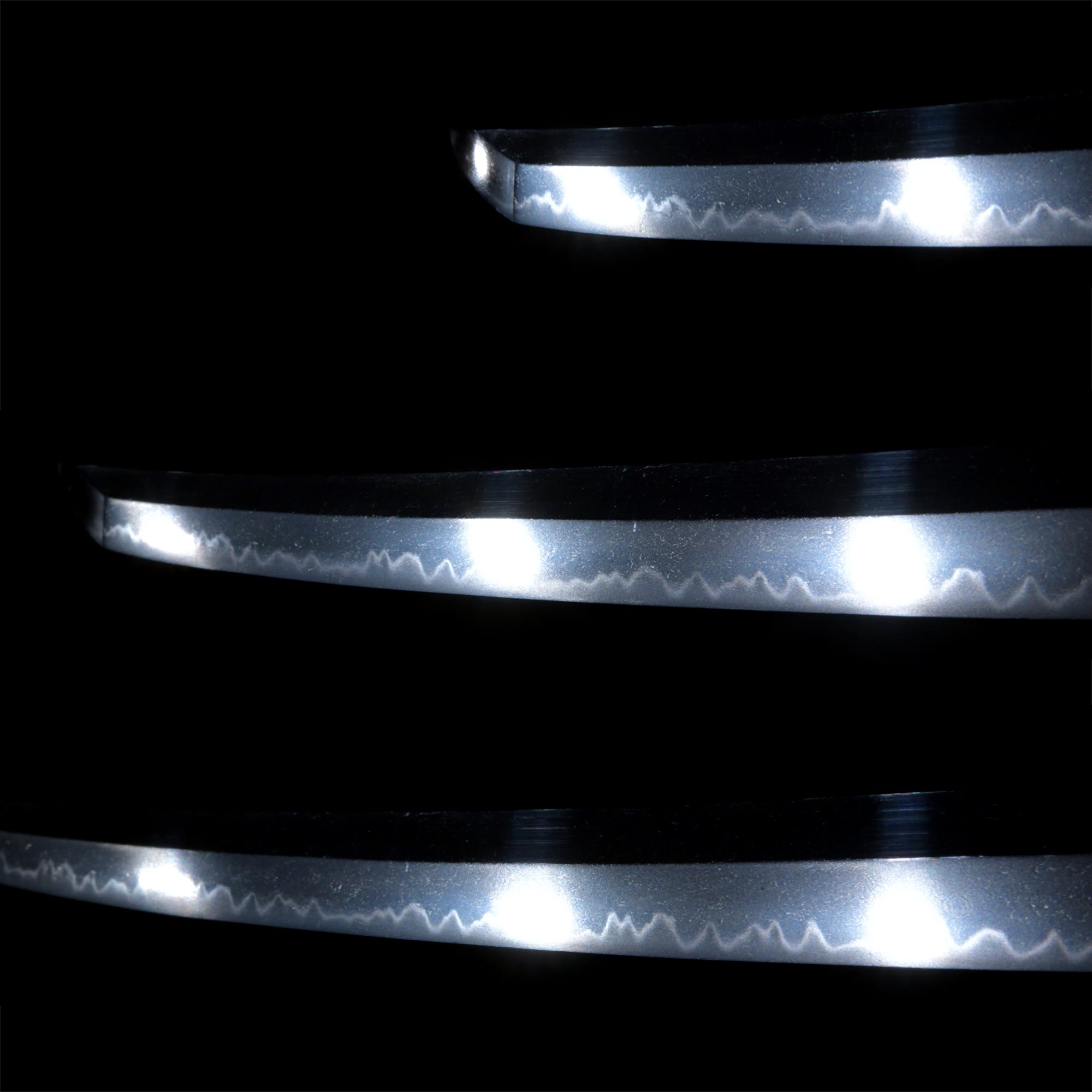
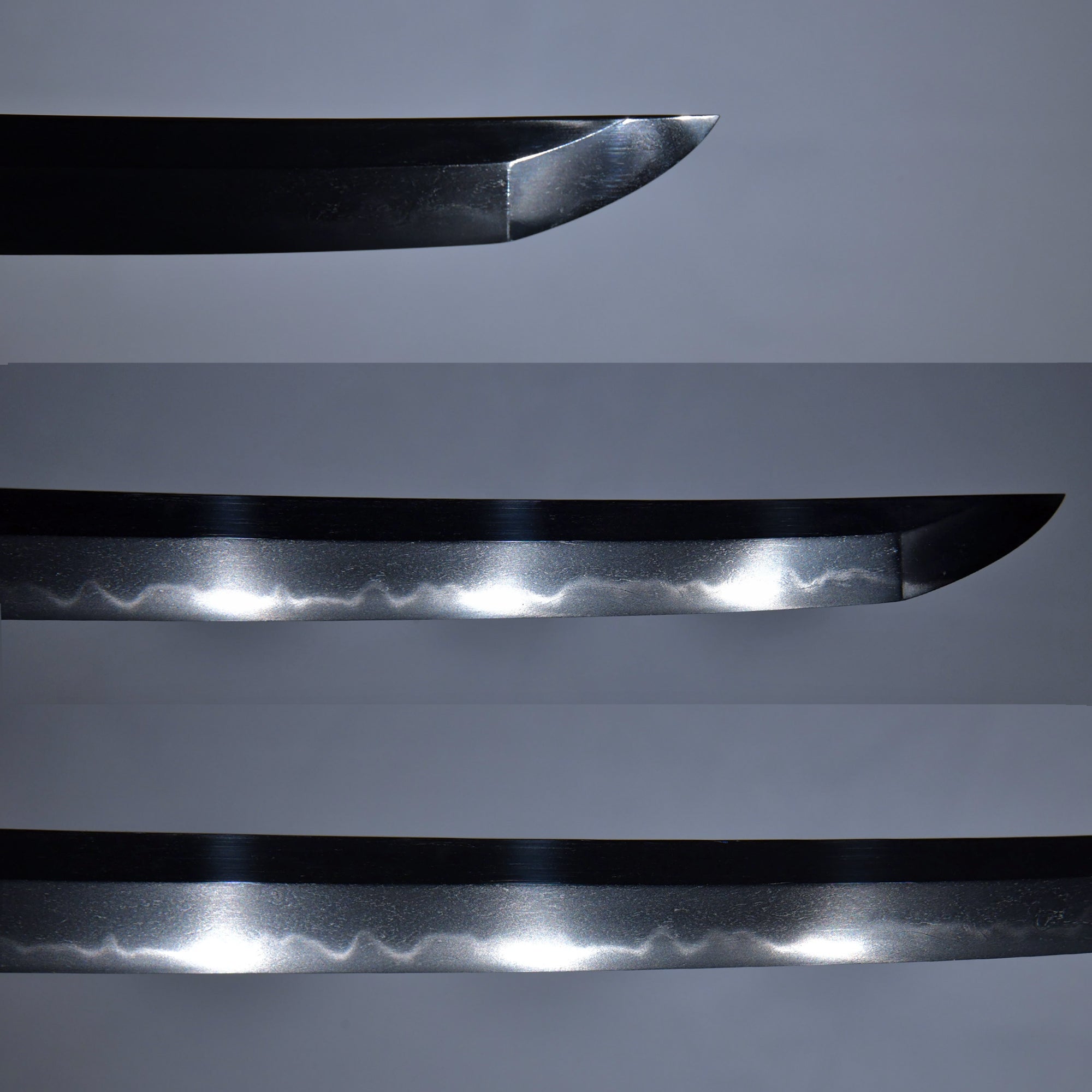
The tachi is shortened yet keeps a high sori, a fairly wide body and a thick kasane. Its itame is tight with utsuri. The hamon is a showy midare of choji mixed with gunome, nioi-dominant with ko-nie, and the boshi runs in and turns back with a ko-maru feeling. The published sources call it bright work in the Oei Bizen manner and one of the finest among Norimitsu blades[[c:5]].

 NihontoWatch