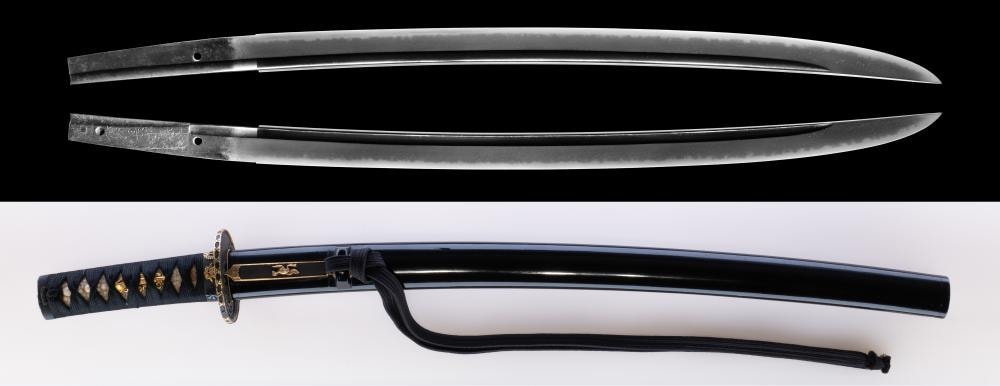
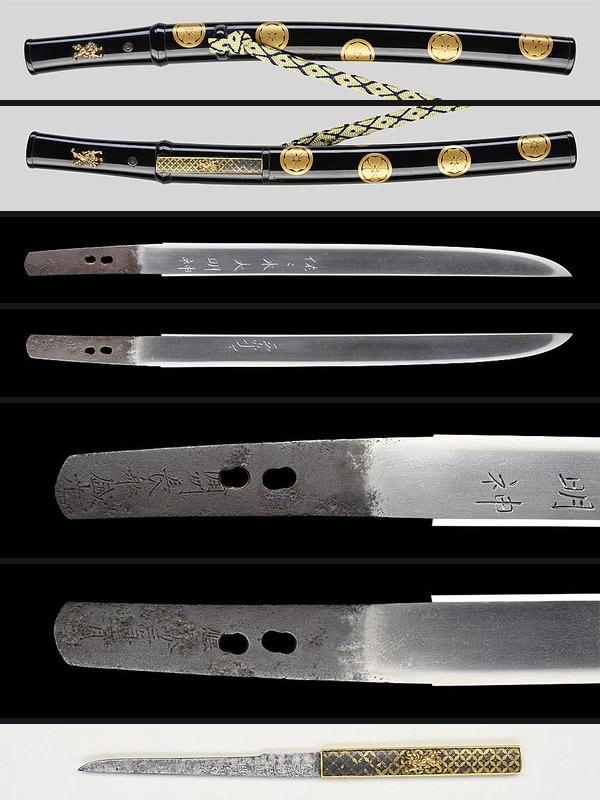
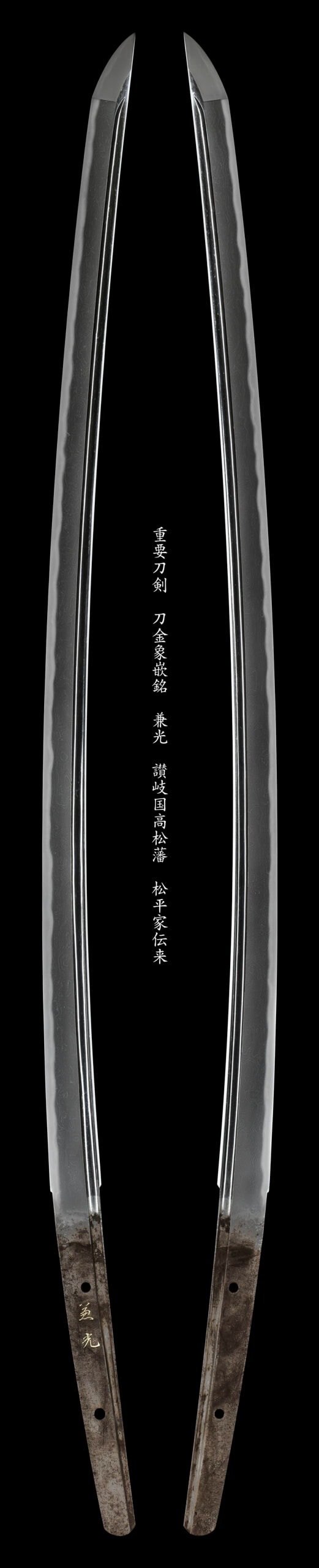
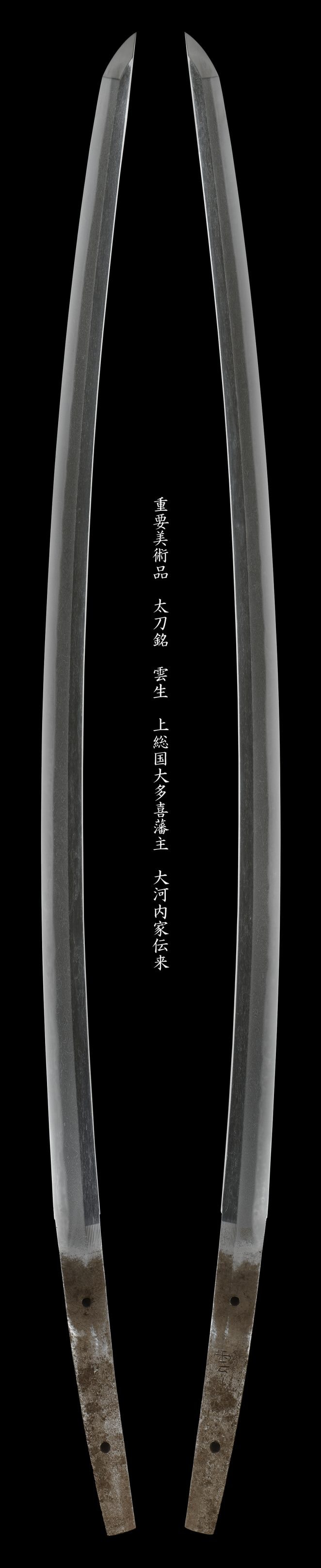
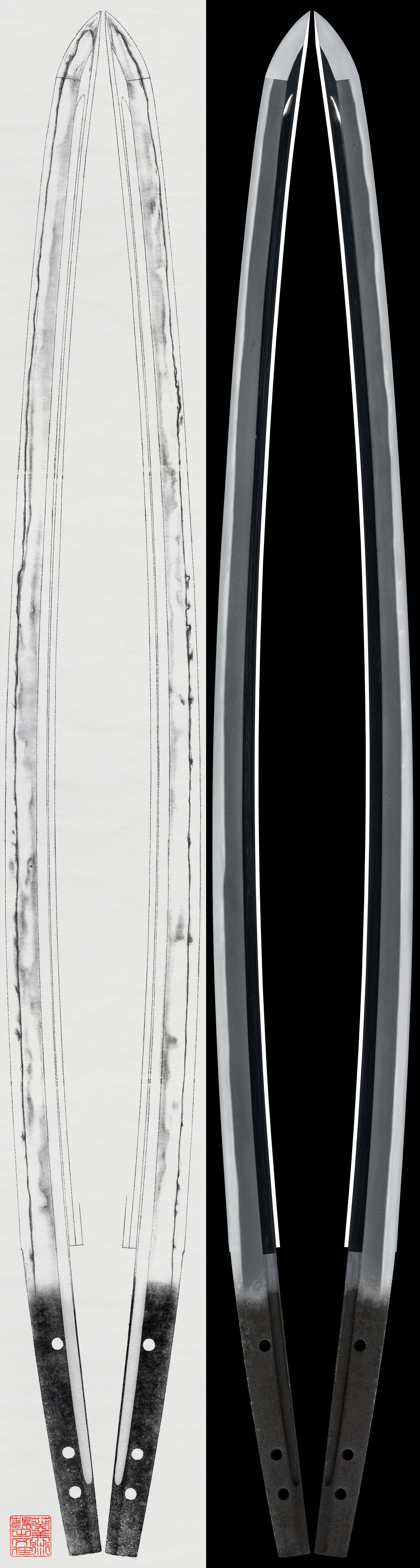
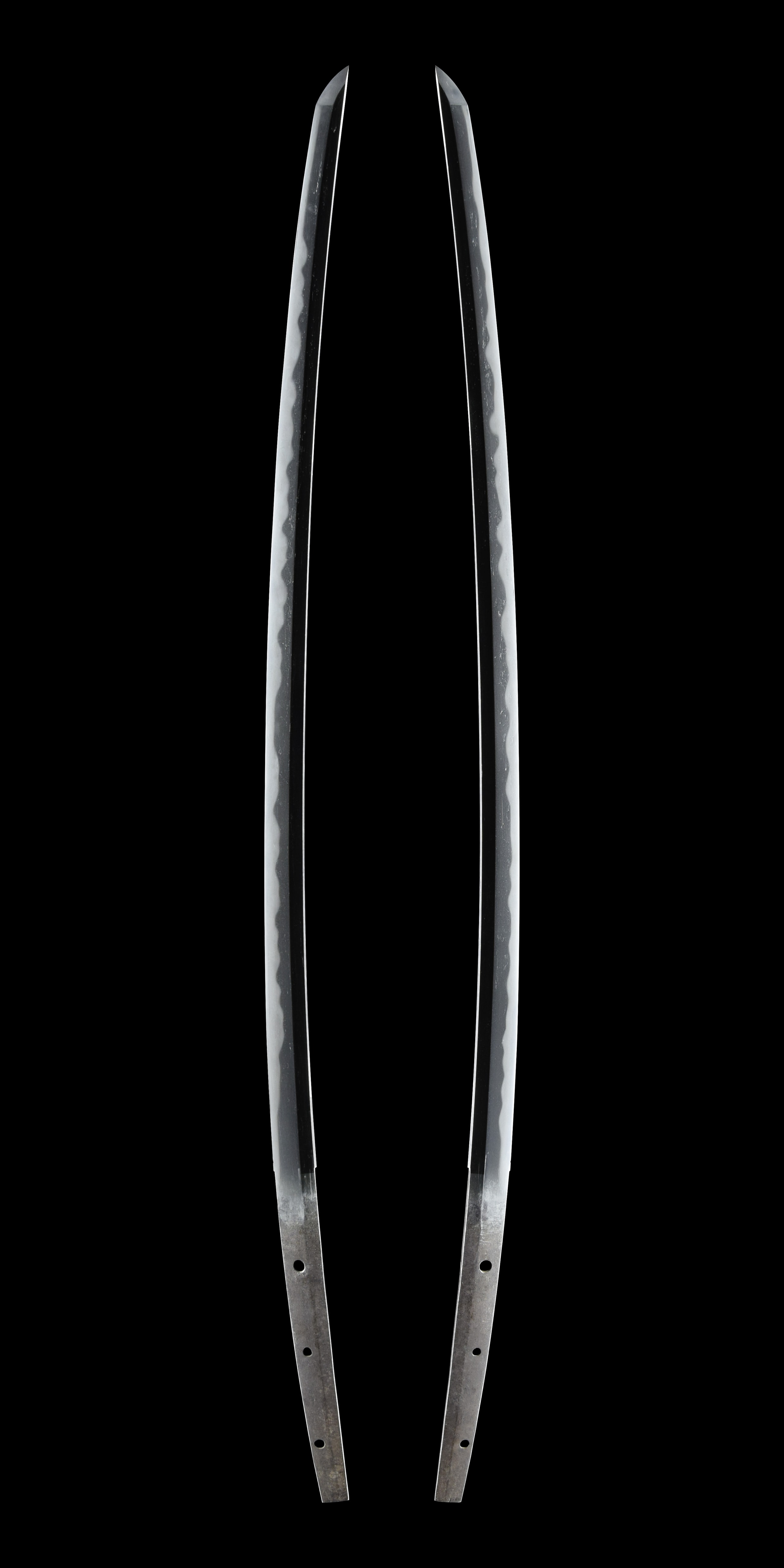
Yasumitsu of Osafune worked in Bizen Province in the early Muromachi period, around the Ōei era (1394–1428), the years in which a flourishing group of smiths revived Osafune after the slump of Nanbokuchō. The published sources call that group Ōei-Bizen, and they place Yasumitsu, with Morimitsu, at its head: "Yasumitsu, together with Morimitsu, stands as the twin pillars among the Bizen smiths of the early Muromachi period collectively termed Ōei-Bizen."[[c:1]] Beside the two leading hands they name Iesuke, Tsuneie and Sanemitsu as lesser masters of the same circle. The school's ideal, the sources say, was a return to the Kamakura period, an aim visible in its revival of the tachi shape and of the chōji hamon that had fallen out of use under Nanbokuchō. He carries on the Osafune line of Nagamitsu and Kagemitsu, and his dated work runs densely through the Ōei years, the long signature Bishū Osafune Yasumitsu cut toward the mune with the date on the reverse.
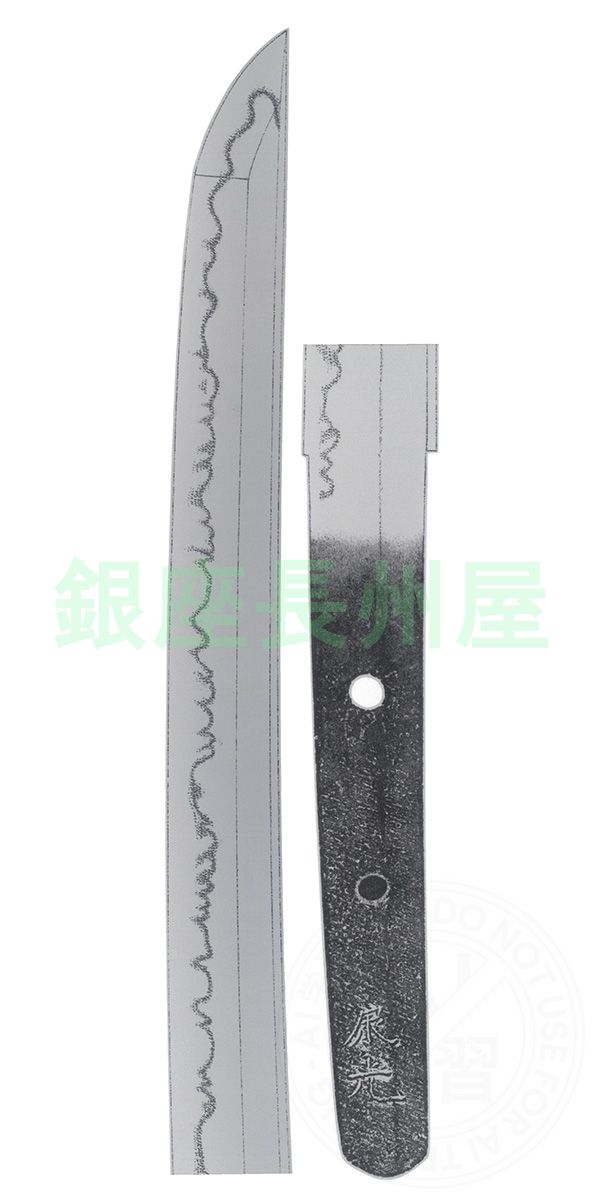
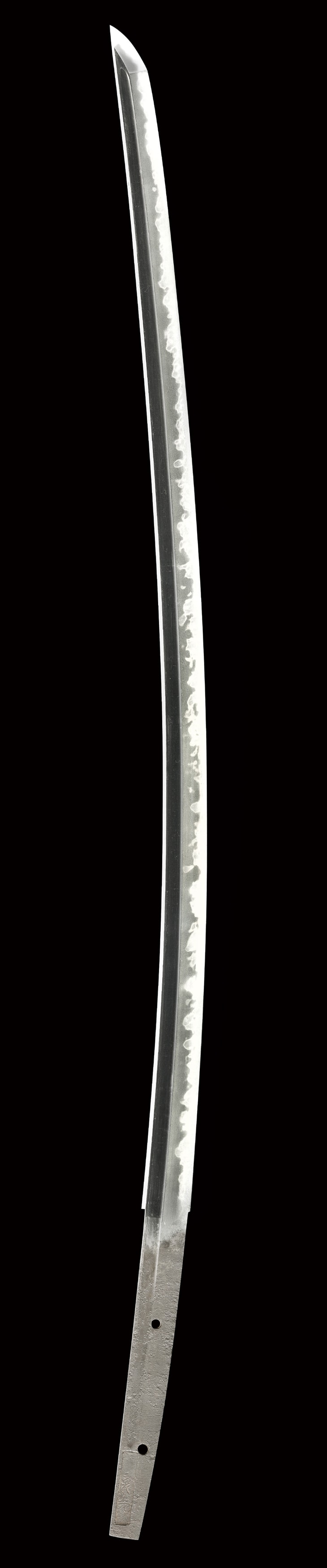
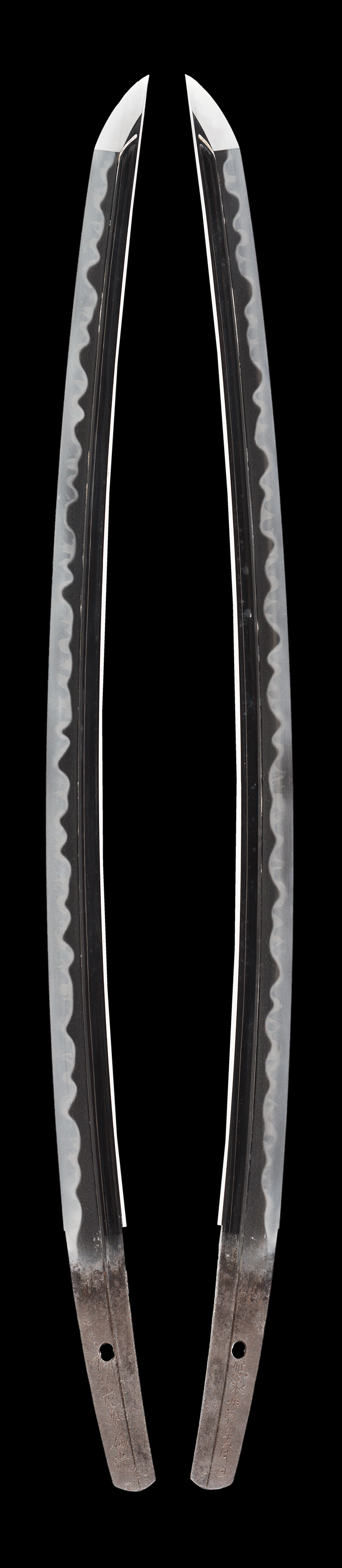
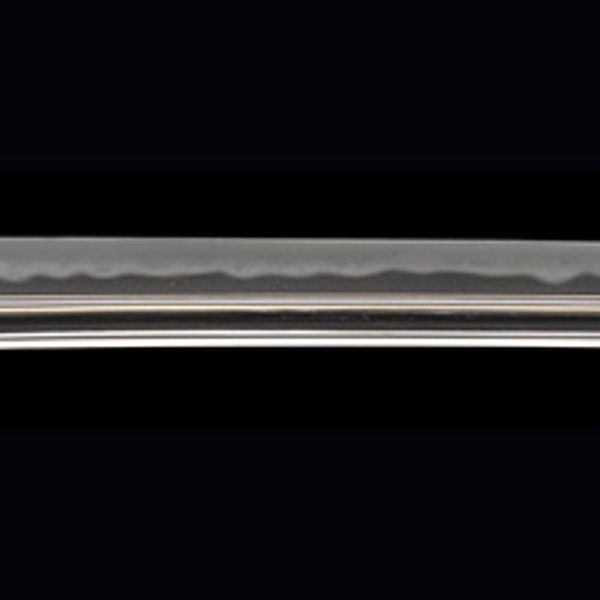
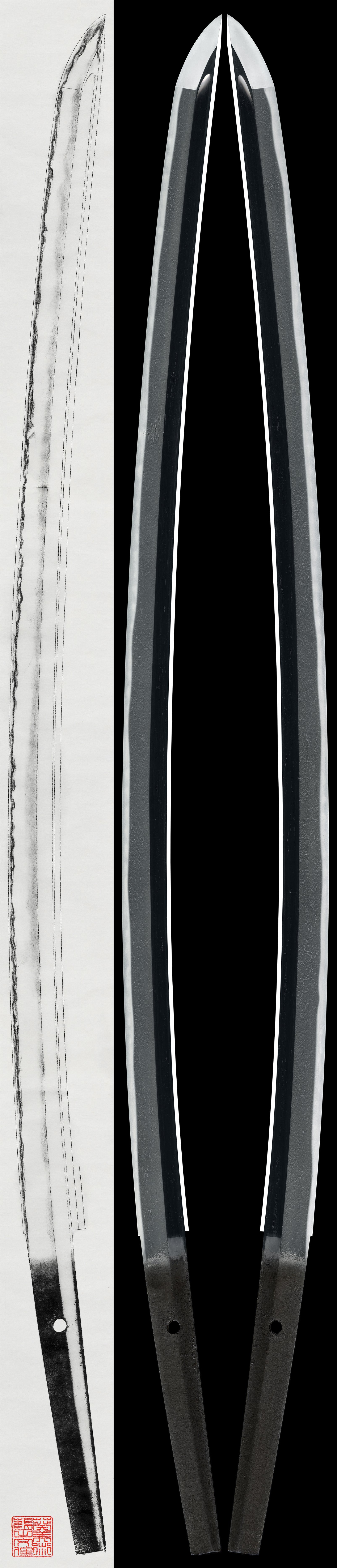
His prime and most characteristic hand is a flamboyant one. Over an itame mixed with mokume, the grain standing, the temper rises into a large-pattern chōji-midare built on gunome whose base opens wide at the waist, the koshibiraki form the published sources treat as the school's own. Ashi and yō enter abundantly; the line is nioi-based with ko-nie, slight sunagashi and fine kinsuji playing through, tobiyaki scattering at times, the nioiguchi bright and clear. The bōshi enters midare-komi and turns back to a pointed, tongue-like tip, with hakikake brushed through it. This turnback is his signature feature and the school's: the sources single out "a bōshi whose tip becomes pointed, the characteristic form generally called the rōsoku-no-shin (candle-wick)." It is the trait by which Ōei-Bizen separates itself from the Kamakura revival its sugata and chōji otherwise evoke.
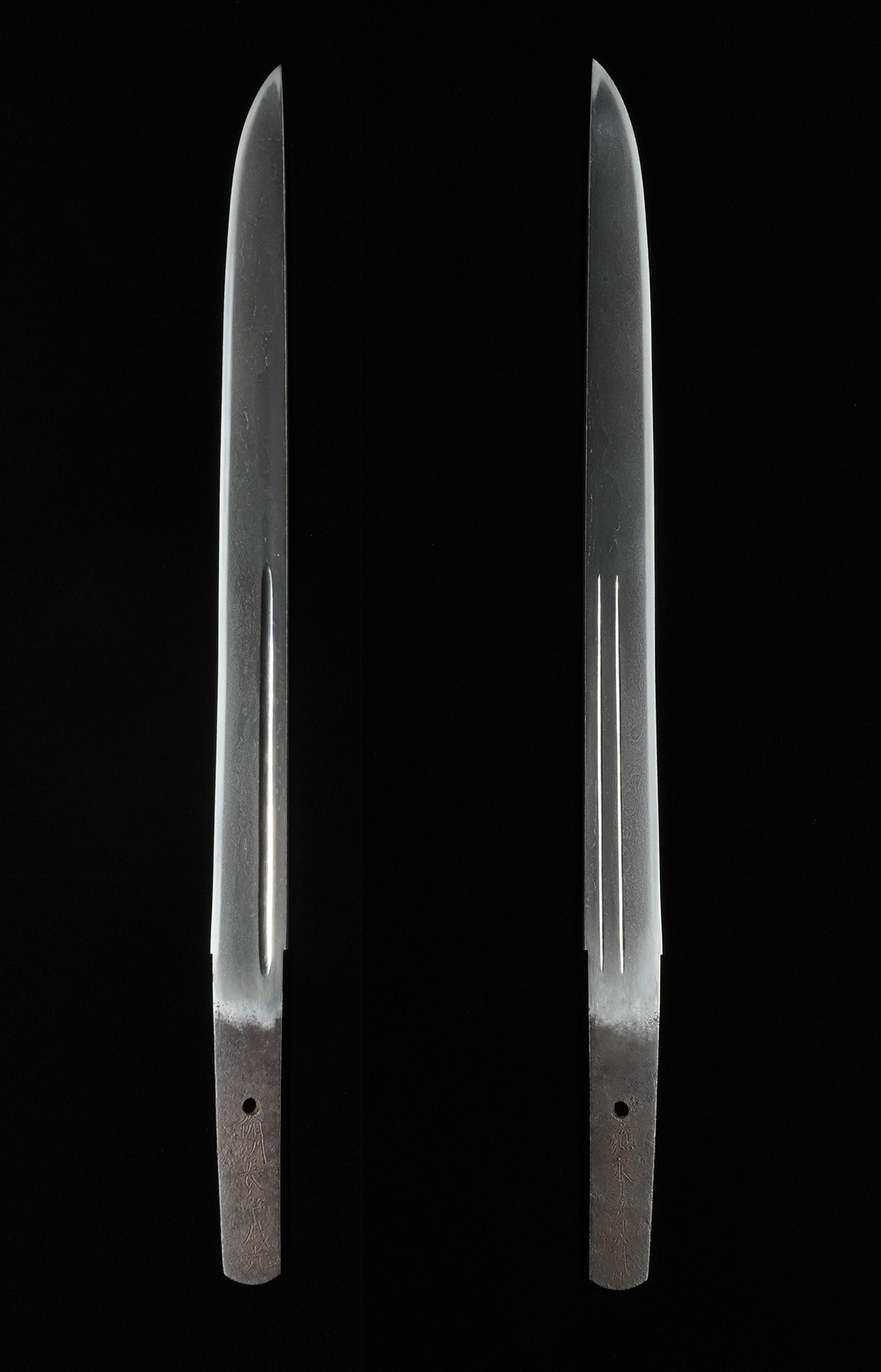
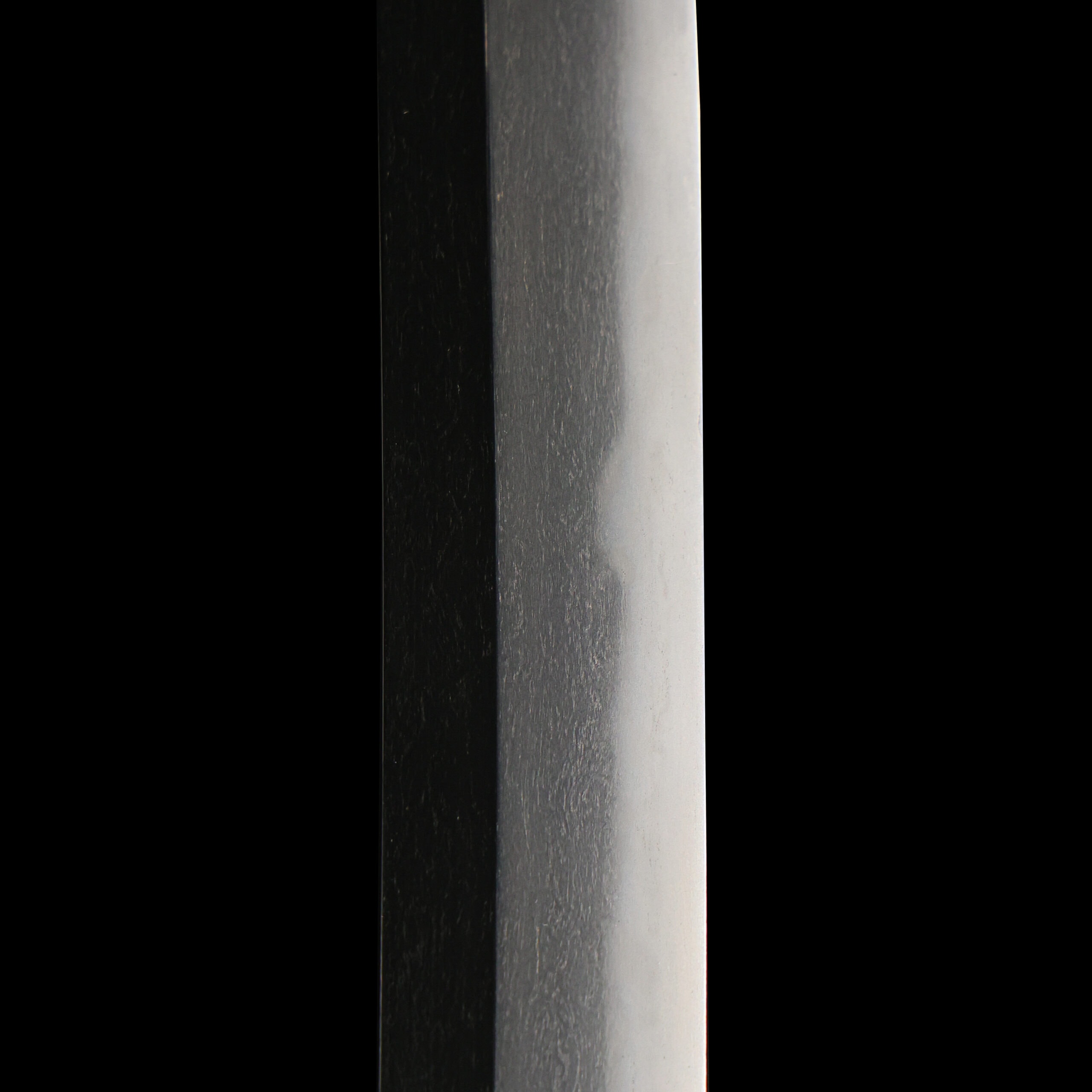
The jigane is the same throughout his work and is itself a kantei point: a standing itame thickly mixed with mokume, sometimes flowing, fine ji-nie adhering like dust and chikei-like dark lines entering, what the sources render as chikei-fū no kane. Across it stands a reflection, and the sources distinguish two kinds: a straight bō-utsuri or sugu-utsuri, and a midare-utsuri that they read as the more archaic, recalling late-Kamakura Osafune. Of one tachi the published commentary remarks that its utsuri is "not the bō-utsuri often seen in this period, but instead shows midare-utsuri."[[c:2]] It is the standing, mokume-bearing itame, not the smoother Kamakura jigane, that the judges use to fix the attribution. A bō-hi, often with a paired soe-hi, is finished round above the machi, a school tell, and the koshimoto may carry bonji, a sankozuka-ken, or carved deity names.
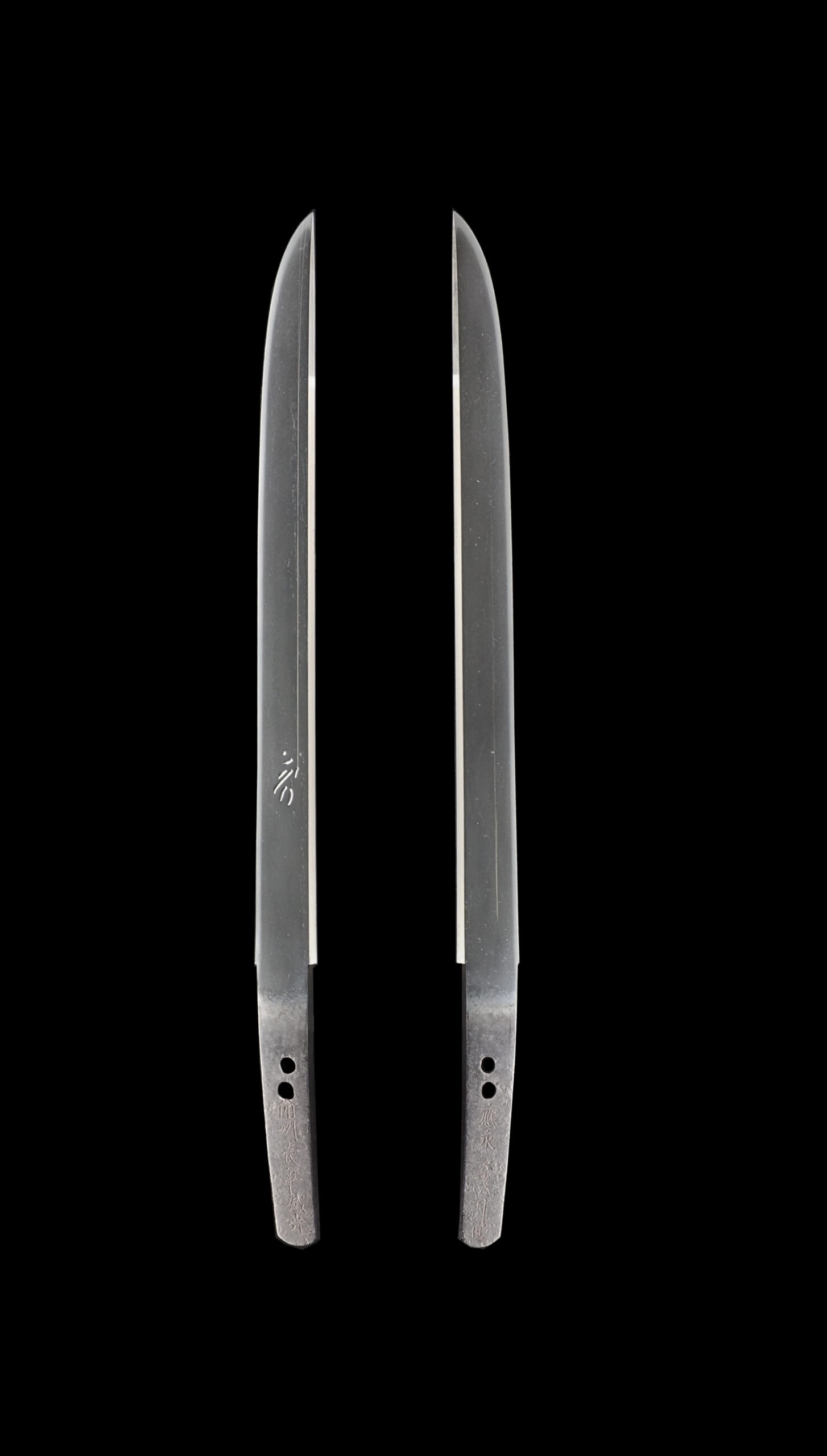
Alongside the flamboyant midare the sources mark a second, calm hand. It is a chū- or hoso-suguha, the nioiguchi tight, bright and clear, faintly broken with ko-gunome and saka-ashi and frayed along the edge with hotsure and kuichigai-ba, the bōshi running straight to a ko-maru. The judges note this suguha hand is comparatively common in him, and more his than his fellow master's: "the suguha, it would seem, is found rather more in Yasumitsu than in Morimitsu."[[c:3]] His signing follows the registers that scholarship uses to sort the generations. The corpus is overwhelmingly ubu and long-signed with an Ōei date; two-character mei are comparatively rare and tend to carry no date. Dated work survives from Ōei, Shōchō, Eikyō and Kakitsu, and the common reading takes the pieces dated after Shōchō as a second hand. The reference works place the Yasumitsu who styled himself Uemon-no-jō as the first generation, active in the Ōei years, count five generations of the name down to the end of Muromachi, and assign a Sakyō-no-suke working in the Eikyō and Bunan eras, the so-called Eikyō-Bizen, to the next, whose temper is smaller in pattern and judged a touch inferior; the strict division between the generations the sources leave open for further study.
Within the Ōei-Bizen pair the two masters share the school manner, and the working distinction a collector draws between them is a fine one the sources state in their own words. Of a midare whose teeth point at the head the commentary observes that this is "a hamon generally found rather more in Yasumitsu than in Morimitsu,"[[c:4]] and the same is said of the calm suguha. His suguha can deceive: at a glance it recalls late-Kamakura Osafune, and where the nioiguchi sinks and saka-ashi enter it can evoke Aoe, the sources writing of one such blade that "it has tempered a suguha of tight nioiguchi, so as to suggest Aoe, yet this kind of workmanship is seen from time to time in Yasumitsu."[[c:5]] The attribution settles back on him by the standing itame-mokume hada and the Ōei sugata. The religious carving he cuts at the koshimoto, bonji, the sankozuka-ken, names such as Hachiman Daibosatsu, is not his invention but an inheritance: "this is the carving tradition seen in Osafune work since Nagamitsu and Kagemitsu, and it is carried on down to Sue-Bizen."
Fujishiro grades him Jō-jō saku, and his work carries weight in the designation record: four of his blades are Important Cultural Properties and four are Tokubetsu Jūyō, with forty-three Jūyō beneath them, forty-seven in the Tokubetsu Jūyō and Jūyō tiers together. He is Jō-jō saku and almost entirely signed, fifty-five signed pieces against none unsigned in the official record, and he left accomplished work in every form: tachi, katana, wakizashi, tanto, and even a rare ubu-signed great spear, the published sources noting that signed Ōei-Bizen spears are extremely scarce. His blades carry a distinguished provenance, twelve recording a history through the Yamauchi lords of Tosa, the Nabeshima, Maeda, Tōdō, Naitō and Akimoto houses, the Imperial Family, and the rōnin Horibe Yasubei (Taketsune) of the Akō affair. The Important Cultural Properties are held as patrimony and do not trade. Of recorded whereabouts his blades sit largely in shrines and museums, among them Atsuta Jingū, Ise Jingū, Nikkō Tōshōgū, the Yūtoku, Hayashibara and Bizen Osafune sword museums, and the British Museum. A Yasumitsu in the Tokubetsu Jūyō or Jūyō tier is not wholly beyond reach, for the corpus is large for so prized a name, but the finest survive in held collections and one comes to open hands only from time to time, a landmark of early-Muromachi Bizen when it does.