When the Southern Court made its capital at Yoshino, in Yamato itself, the province’s schools were at their height: the late Tegai line, Shikkake Norinaga, and the pure masame of Hōshō. Their technique was already spreading across the provinces.
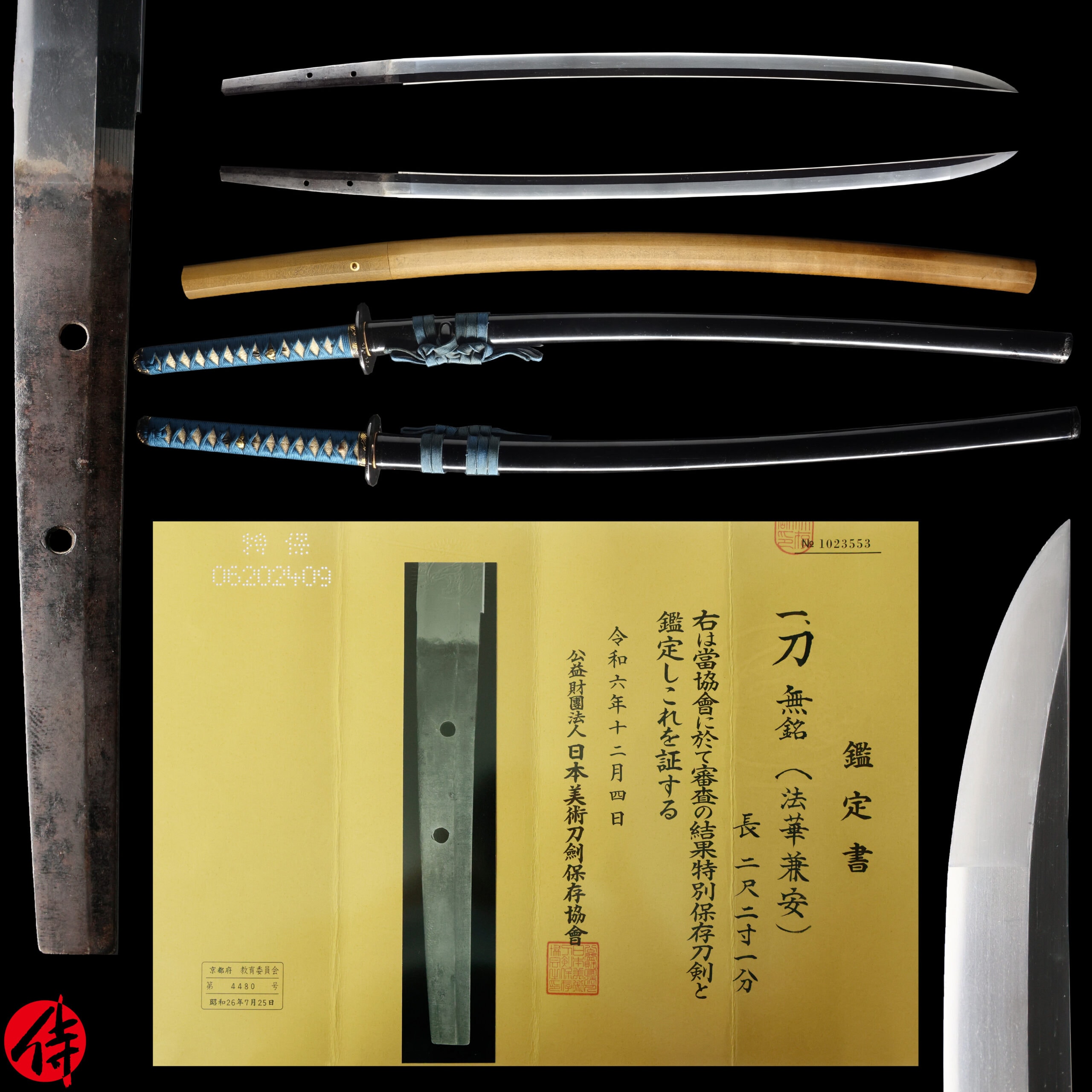
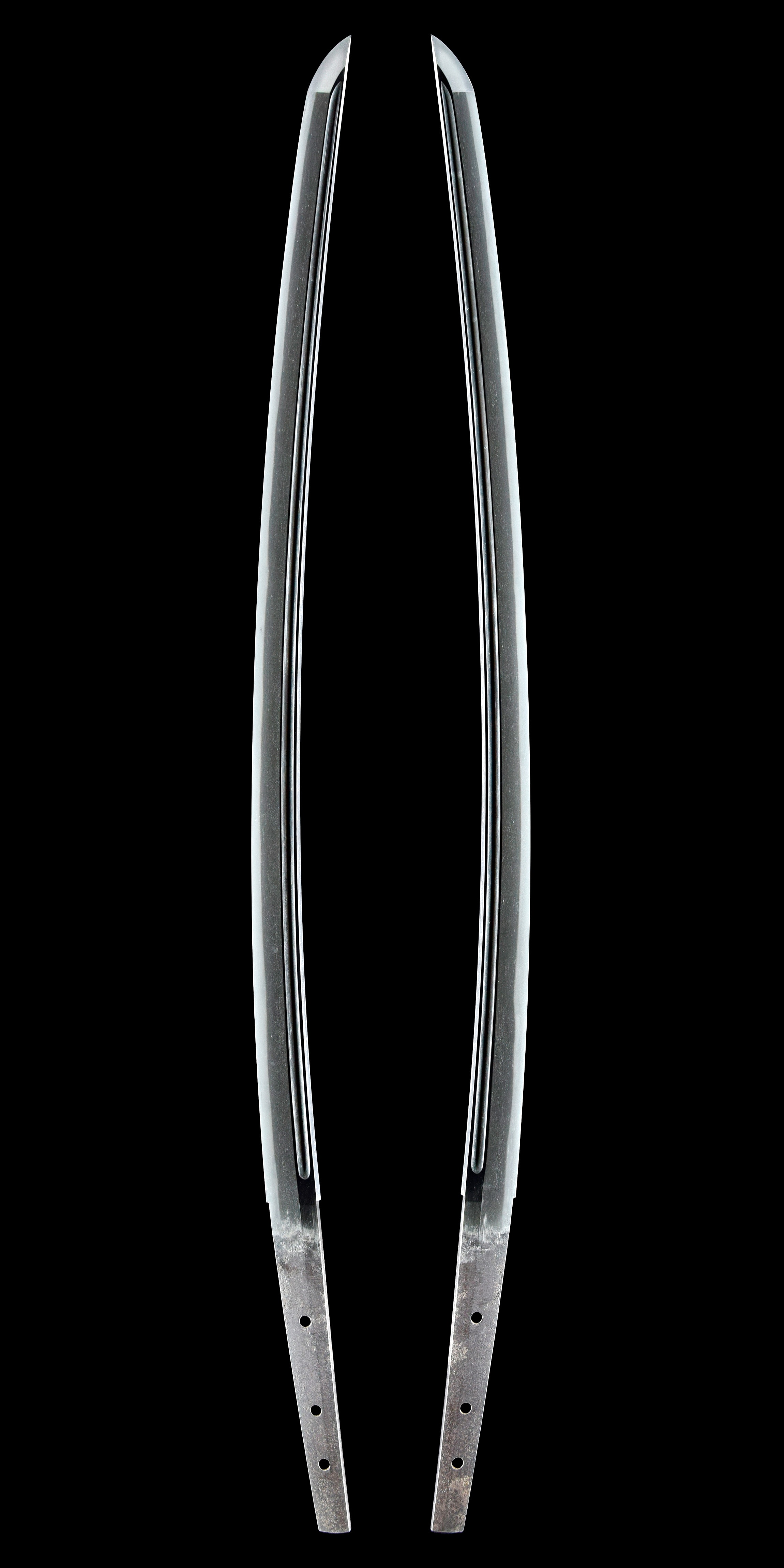
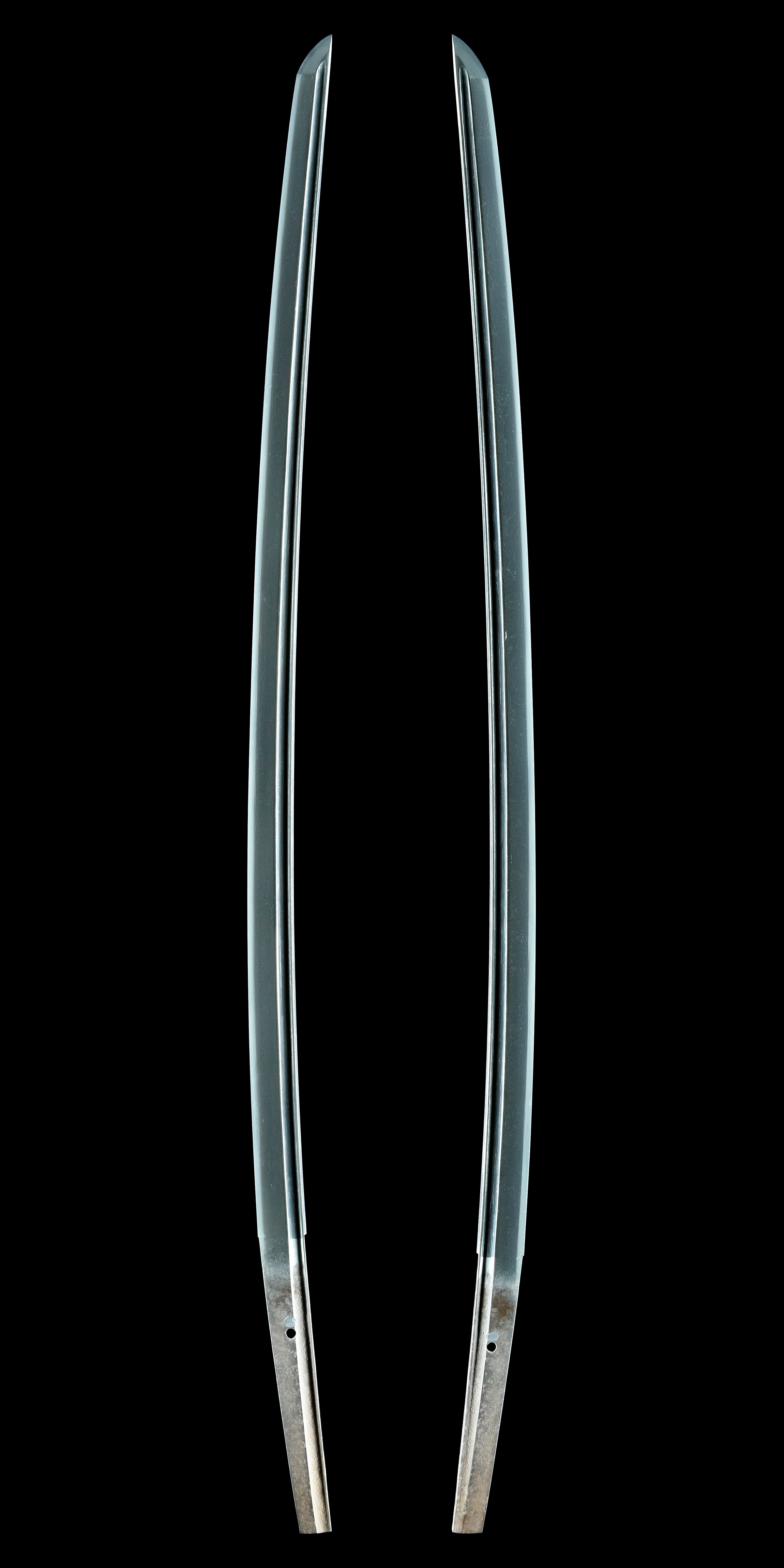
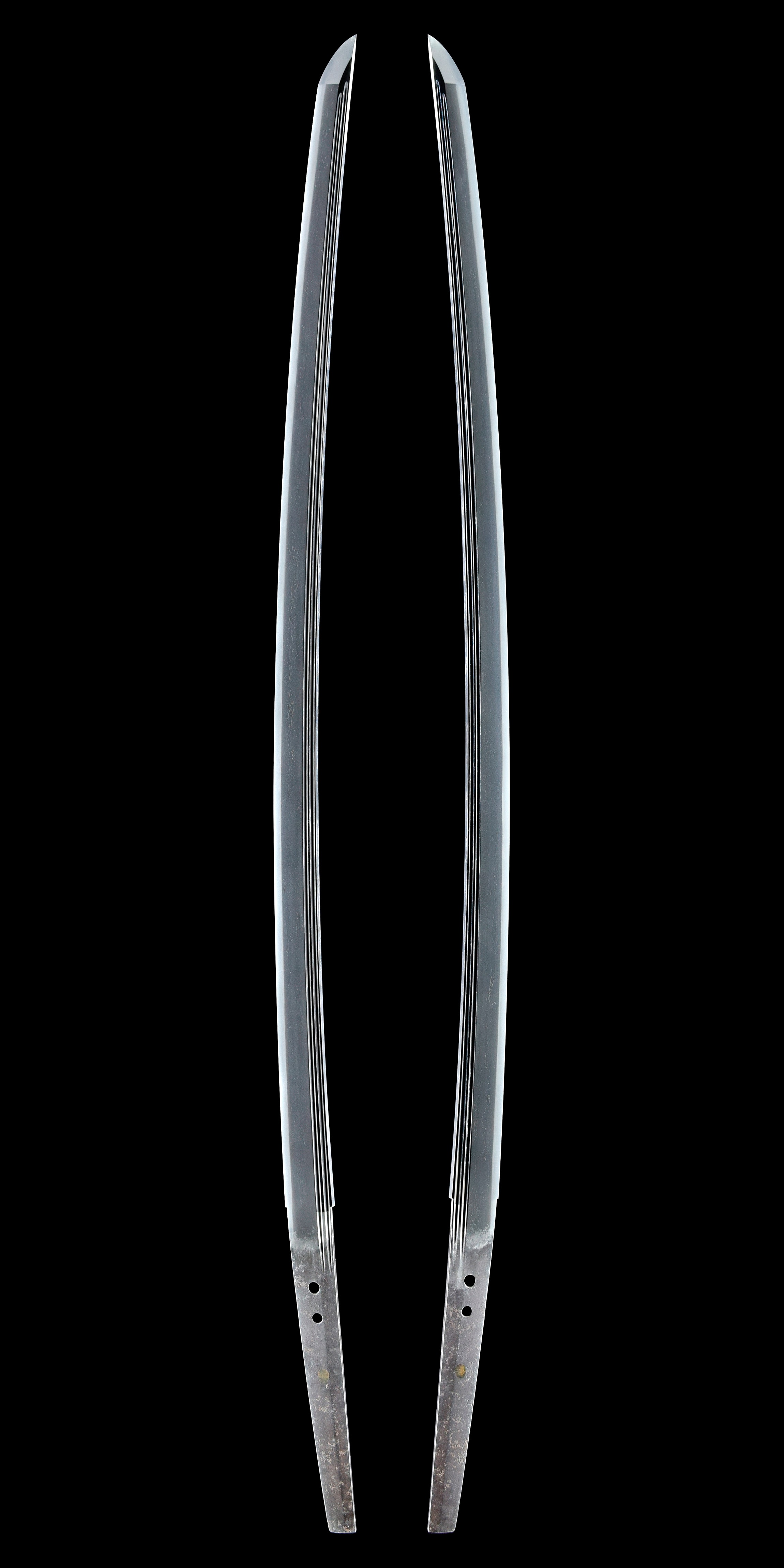
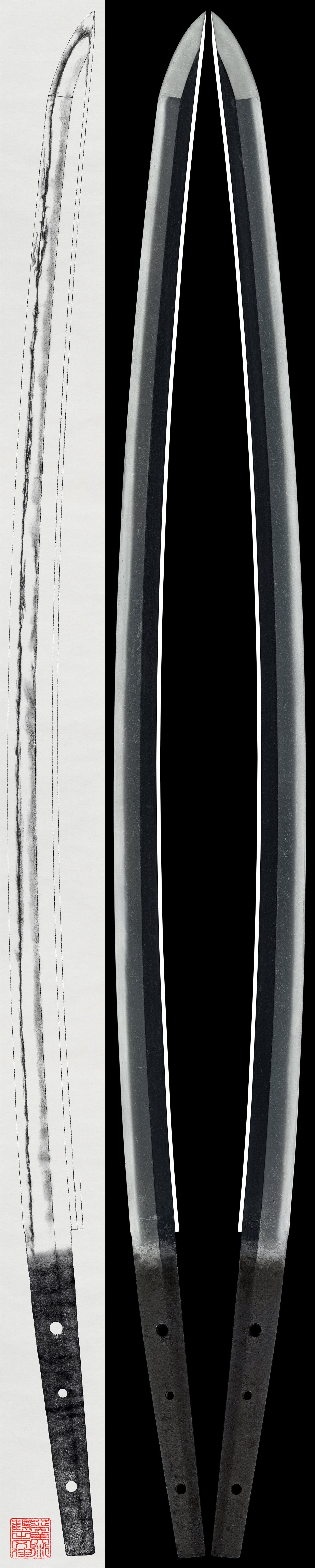
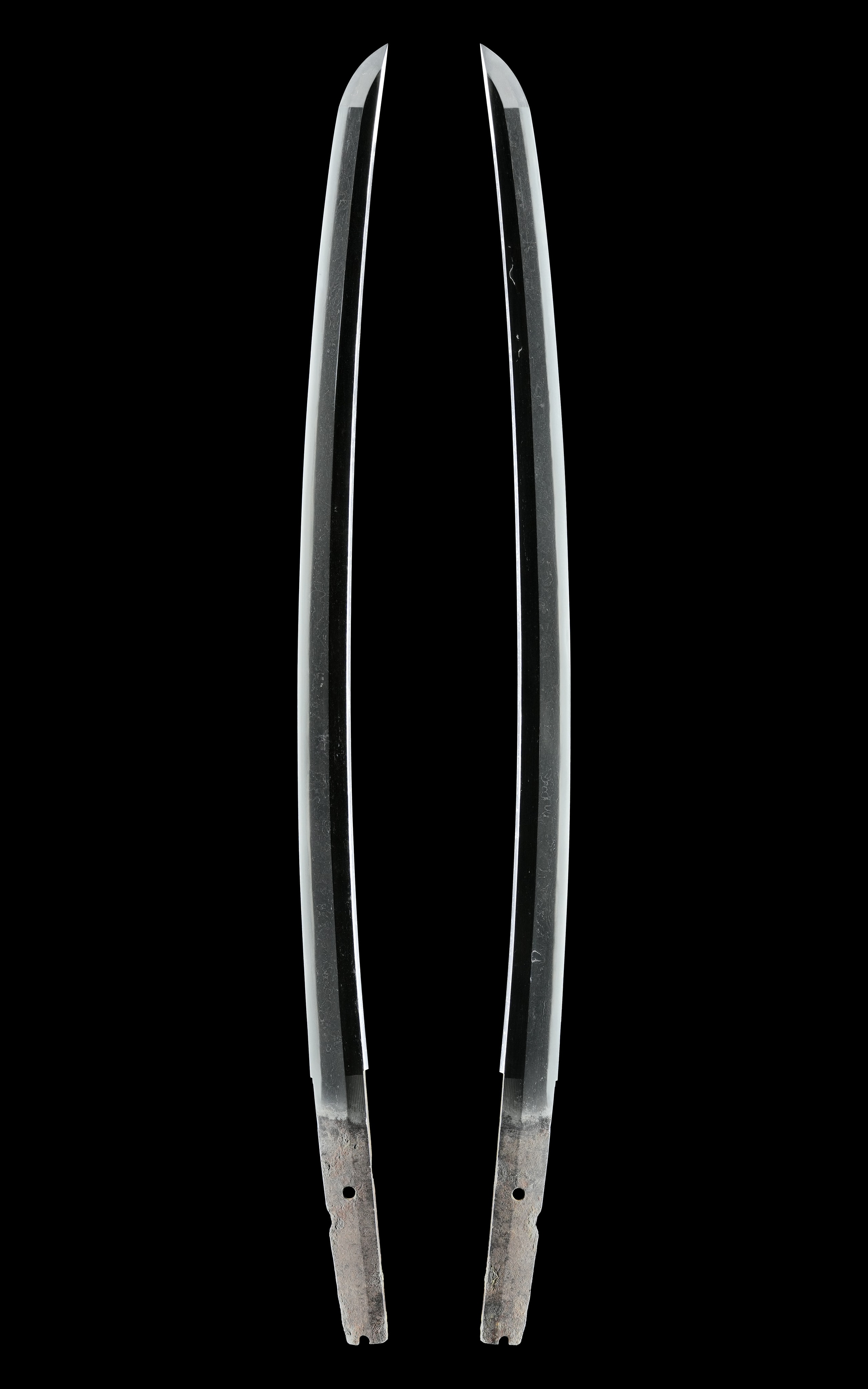
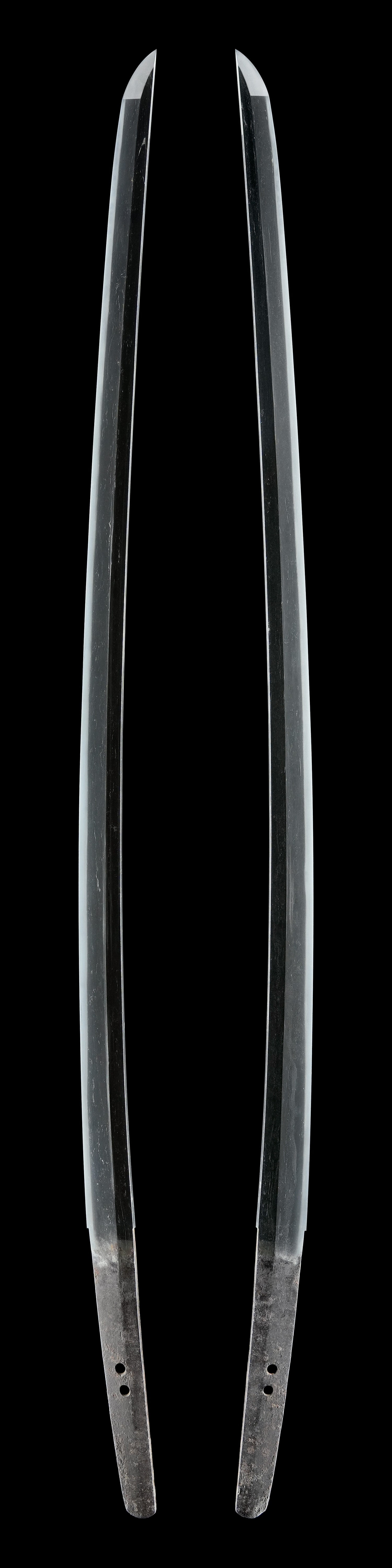
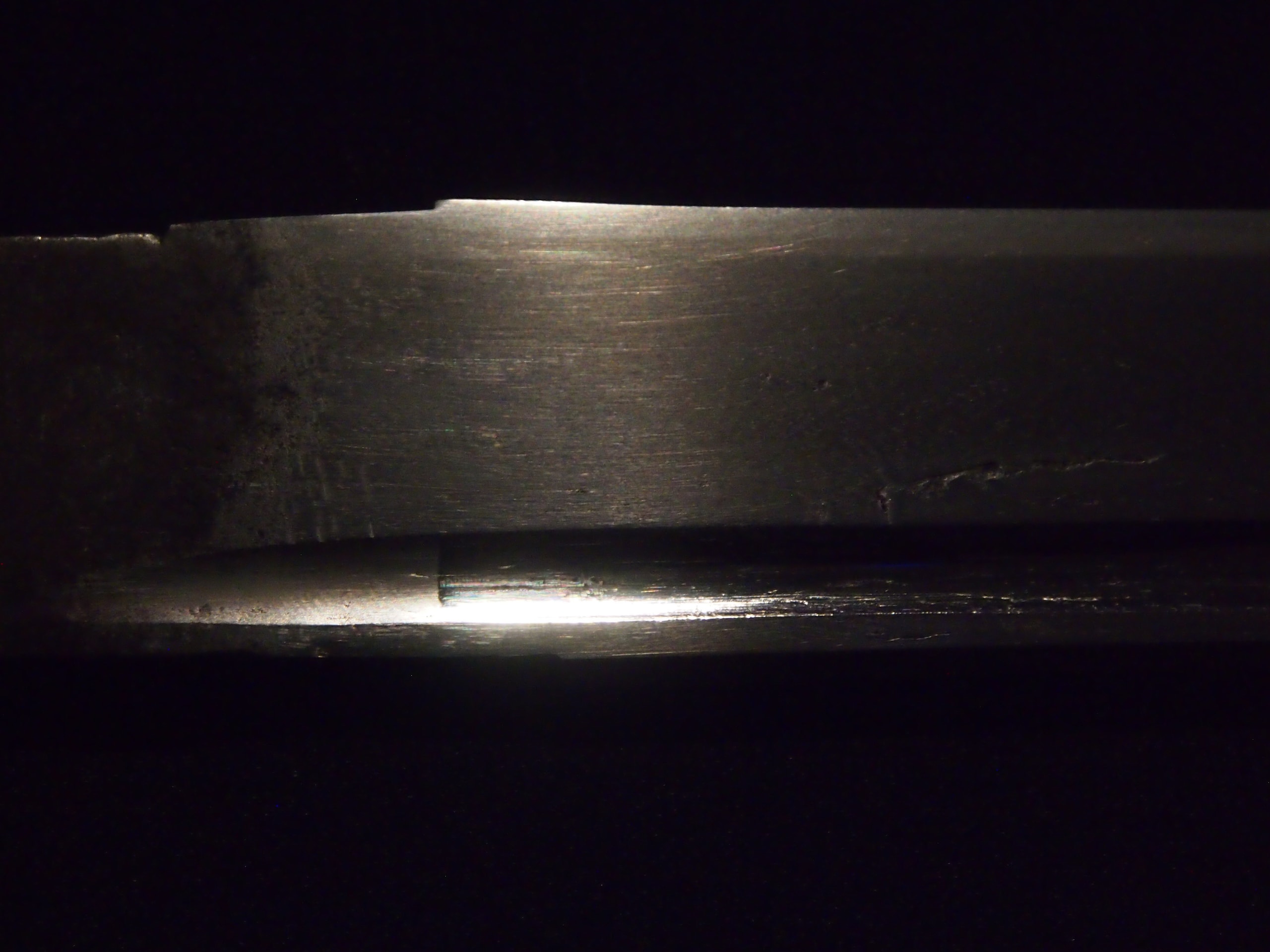
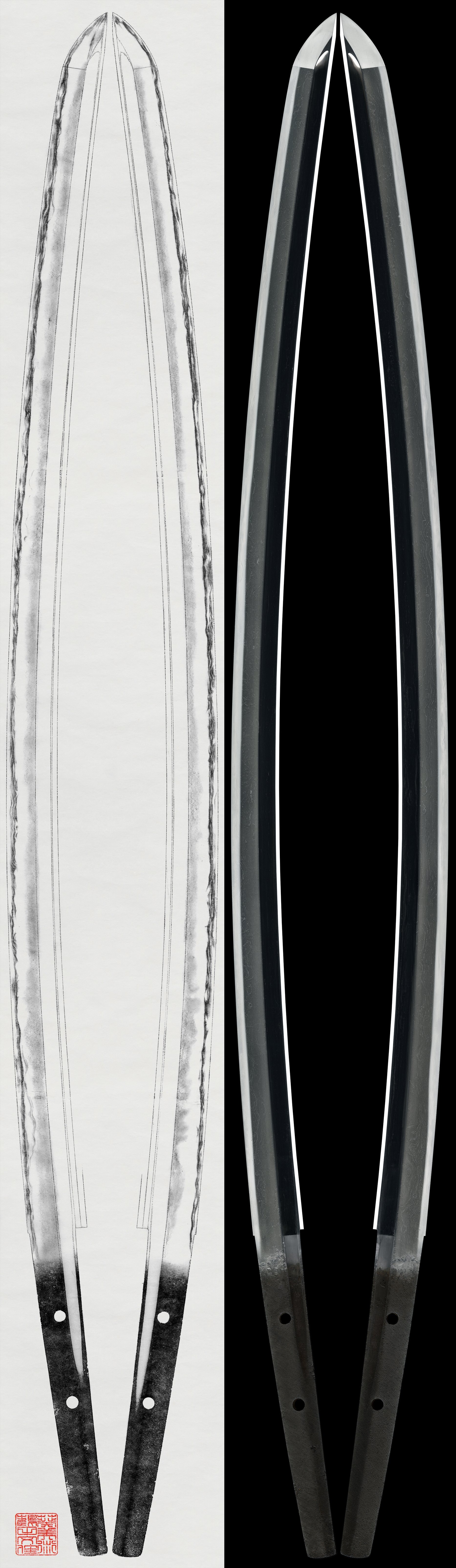
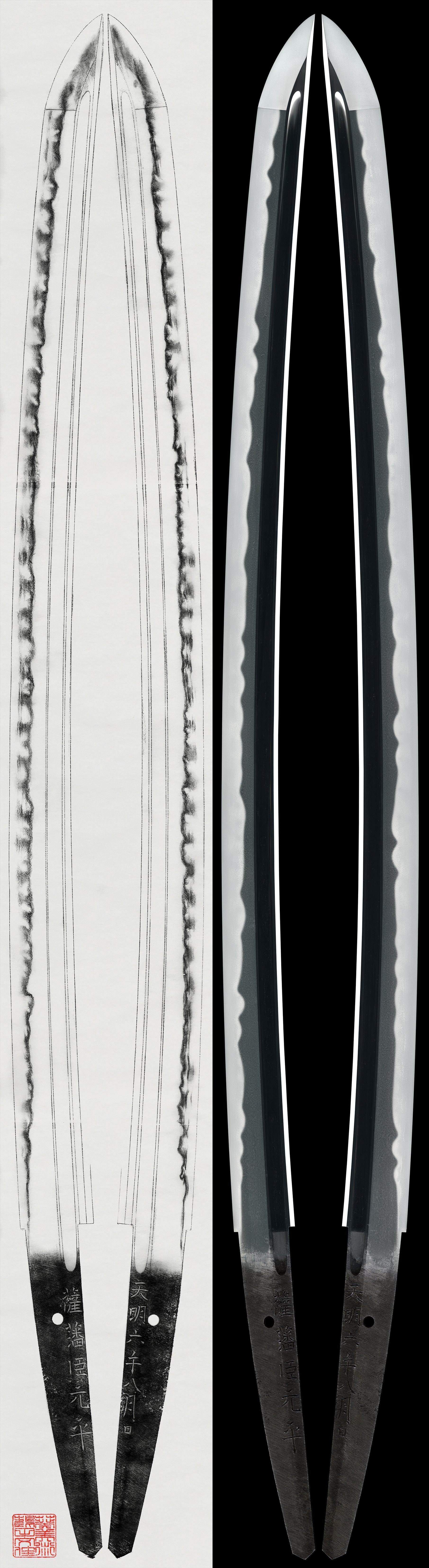
Meibun: "Mumei" Classification: Katana Accompanied by a certificate from the Nihon Bijutsu Token Hozon Kai (NBTHK). This work features a magnificent, moist-looking o-mokume jihada that is prominently standing out (hadadachi) with ji-nie. The nioiguchi is somewhat tight with ko-nie, and there are frequent, fine ko-ashi. With its beautiful sugata, this is a masterpiece that evokes an archaic, classical atmosphere. The Hokke school was a lineage in Bingo Province, distinct from the Mihara school, that forged swords at the ruins of Kokubunji in Ashida District. The founder is said to be Sukekuni. The production era of the Hokke school began in the Nanbokucho period, and extant signed works include those by Ichijo, Kaneyasu, Yukiyoshi, Shigeyasu, Shigeie, and Nobukane. 0 Yen (Tax included)
 NihontoWatch
mumei · Nanbokucho
Hokke Ichijo (Bingo) · Bingo · around 1352-1369
Fujishiro Chu-jo saku · Tōken Taikan top 31%
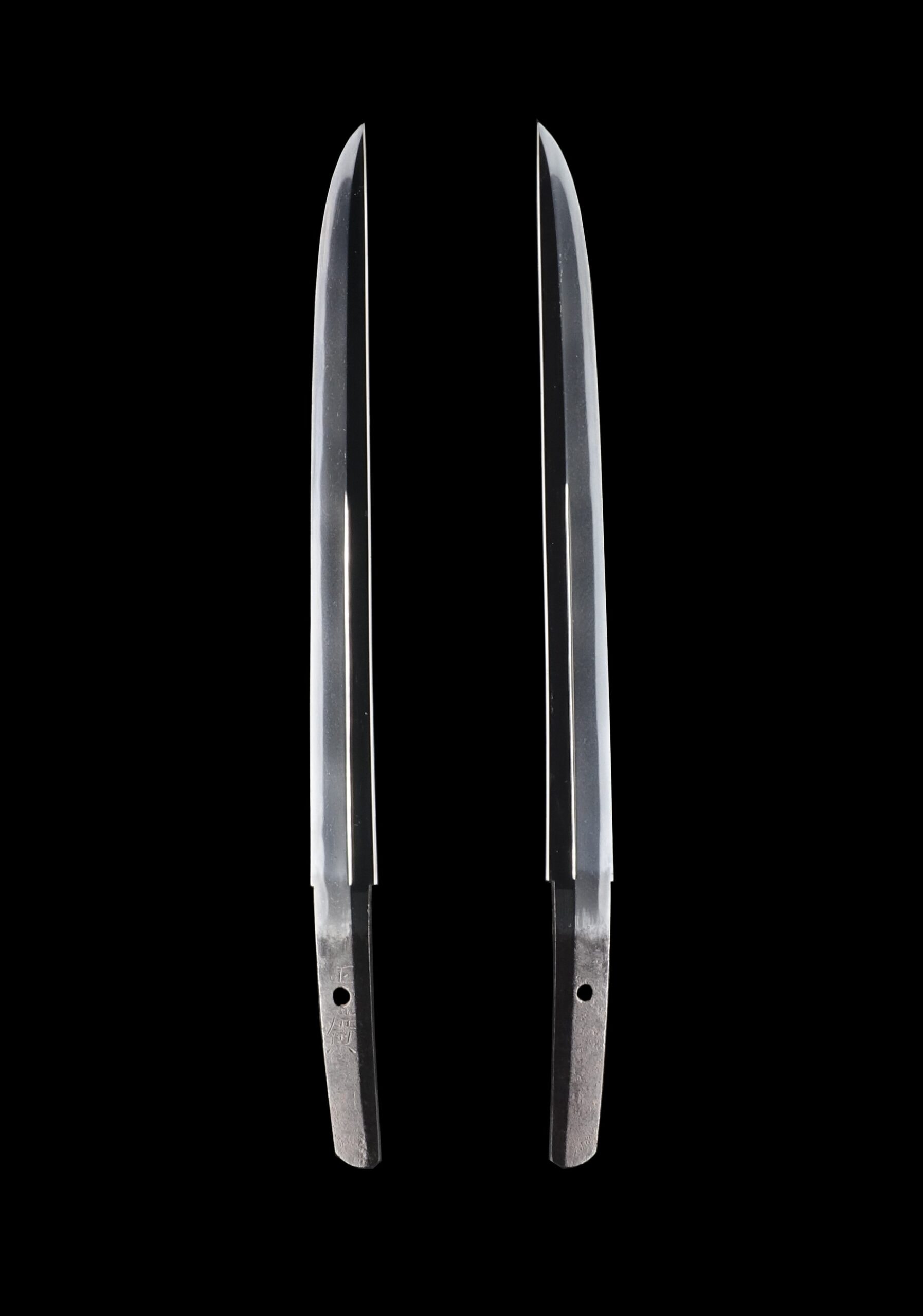
The oldest fixed point in Kaneyasu's record is a small hira-zukuri wakizashi signed Bishu-ju Kaneyasu[[c:1]] and dated the third month of Ōan 2, that is 1369, the signature cut in five characters down the center of the omote and the date on the reverse. He was a swordsmith of Bingo, of the Hokke Ichijo group that worked in Ashida district, and the published commentary derives the line from the Kokon Meizukushi Taizen[[c:2]], which holds that it belongs to a body of Ashida work standing apart from the better-known Mihara tradition and traces its founding to Sukekuni. That distinction is the first thing to understand about him. He is not, despite the directory label, a Mihara smith proper but a member of the neighboring Hokke line, repeatedly set against Mihara in the very texts that designate his blades; the group was active from the Nanbokucho era into the Muromachi period, and alongside Ichijo, Yukiyoshi, Shigeyasu, Shigeie and Nobukane, Kaneyasu stands among its leading hands, named directly after the founder-figure Ichijo in the roll of survivors.
His hand is the school's hand, and it is a quiet one. Over an itame that flows toward masame along the edge, with mokume worked in here and there, he tempers a low, gentle straight temper, a chu- or hoso-suguha that at times carries the faintest notare and runs alongside a linked string of small gunome. The temper is nioi-dominant with ko-nie gathered along it, the nioiguchi tight and inclined to sink rather than to glow, with fine ashi and yo entering and hotsure breaking the habuchi in places. The published sources put the school manner plainly as a low, calm suguha, or a suguha-toned pattern accompanied by a continuous run of ko-gunome, and Kaneyasu's blades hold to that base almost without exception. He is a smith read not by any flamboyant flourish but by the restraint and evenness of a straight edge that never works itself up into a midare, the small gunome a recurring punctuation along an otherwise still line.
The ji is where his school marks itself most clearly. The itame stands rather than lying flat, the grain visibly raised (肌立ち), and the steel takes on a whitish cast over which a faint shirake-utsuri rises (白け映り), the iron tone running somewhat dark; on the broader katana ji-nie forms and thick chikei enter the standing grain. This pale, slightly adhesive jigane, with flowing hada turning to masame and a frequent yakizume close to the boshi, is what the judges have in mind when they call the work of the line one in which a Yamato temperament can be discerned, summarizing the school as forging itame mixed with flowing grain whose boshi may be finished as yakizume, in which 「帽子は焼詰めることもあるなど, 大和気質の窺えるもの」. The boshi itself is read in two forms that the school keeps in parallel: one that runs straight to a yakizume finish, the Yamato tell, and one whose point grows pointed and turns back long, and a given blade is placed in part by which of the two it shows.
Kaneyasu's surviving work falls cleanly into two registers, and the rarer of them is the one signed. The ubu signed pieces are confined to hira-zukuri ko-wakizashi and tanto, wide in the body and thin in the kasane, bearing the Bishu-ju Kaneyasu signature and Ōan dates; they are exceedingly few, the commentary noting that 「兼安有銘の作は経眼したものは僅かに五指を掘するに過ぎず」, no more than can be counted on one hand. One such Ōan 2 wakizashi is praised for showing 「典型的な作風を示して, 銘振りも極めてよい」, a typical manner with an exceptionally fine cutting of the signature, and a single signed tachi is called 「すこぶる珍らしく貴重」, exceedingly rare and valuable, since a tachi-form signature from this hand is almost unheard of. The far larger register is the o-suriage mumei katana of grand Nanbokucho shape, shinogi-zukuri with the shinogi tending high, wide-bodied with an o-kissaki or chu-kissaki, attributed den Hokke Kaneyasu. It is on these unsigned, greatly shortened blades that his name now chiefly rests, the attribution resting on the standing whitish itame, the shirake-utsuri and the quiet suguha mixed with ko-gunome that he and his school share. The sword-signature compendia, working from the dated signed pieces, variously assign his activity to Enbun (延文), Shitoku and Oei, but the Ōan dates on his own blades fix him securely within the Nanbokucho passage.
What sets him apart is best stated through his own traits rather than against another school's. One o-suriage mumei katana is described as one that 「一見備中青江物に似た作風を示している」, resembling Bitchu Aoe work at first glance, yet it is kept for Kaneyasu by the elevated shinogi of its construction and a forging that mixes in large mokume, the judges naming these the features that mark it as his. The lesson is the school's whole identity in miniature: a pale, standing, Yamato-tempered straight-temper hand that can be mistaken for its Bitchu and Bingo neighbors and is separated from them by particulars of ji and construction, not by drama of temper. His suguha-cho over a whitish, masame-tending jigane, with the yakizume boshi, is the manner the Hokke line carries from Nanbokucho into Muromachi, and the Yamato character read in that boshi and that grain is precisely the trait that the texts use to hold the Ashida line apart from the Mihara work to which it is forever being compared.
Kaneyasu is a connoisseur's name rather than a collector's quarry, and the record is honest about its scale. The Fujishiro appraisal places him at Chu-jo saku, and his blades on the official record number a dozen, every one of them at the Important Sword tier; there are no National Treasures, no Important Cultural Properties and no Tokubetsu Juyo among them, and the designation record carries no recorded denrai or named former owners to roll out. What this offers a collector is a clear and attainable thing rather than a famous one. A signed Kaneyasu, an ubu hira-zukuri ko-wakizashi or tanto with the five-character mei and an Ōan date, is among the scarcer encounters, the survivors counted on one hand and a signed tachi rarer still. The o-suriage mumei katana attributed to him are the more findable face of his work, several of them designated and praised as 「同派極めの優品」, excellent representative pieces of the school in which the standing pale ji and the quiet, sinking suguha are well shown. These reach the market only from time to time, and when one does it offers the patient student of the koto schools a sound and characteristic example of a Bingo Yamato-influenced hand, the kind of grounded, undramatic blade on which a careful kantei is built rather than a famous signature acquired.
Where Kaneyasu stands among comparable artisans: across all of nihontō, and within tradition, era, and period. The tiers (Foremost · Leading · Major · Notable) weigh official designations from the NBTHK and Japan's Agency for Cultural Affairs, together with historical honors of lasting repute such as the Sansaku and Meibutsu-chō.
Select a lens to see how it's measured.
Years he was demonstrably active, proven by signed-and-dated blades
Yamato-den · Bingo
Phase: Ko-Mihara古三原· 1288–1393
7 pieces on the market now
Ko-Mihara (古三原) opens the Mihara story at its Bingo base, where a body of smiths gathered from the close of the Kamakura period and through the Nanbokuchō era. The setsumei treat the term as a chronological bracket rather than a separate workshop: works of this span are "collectively termed Ko-Mihara," with Masaie and Masahiro repeatedly named as the leading figures, and Masahiro held by tradition to be Masaie's son. The province's web of shōen estates tied to Kinai temples such as Tōji and Rengeō-in (Sanjūsangendō) drew the early smiths into regular contact with the central provinces, and the Yamato-den temperament that the records read in these blades is referred to that exchange. A second current runs alongside it: because some pieces show an Aoe manner, the appraisals also weigh influence from neighbouring Bitchū, as the Chikatsugu tachi of Shōhei 7 (1352) makes plain, sitting on the seam between Yamato bearing and Aoe surface. In the ji, the early hand keeps an itame-tending ground that takes on mokume, nagare, and a masame-like flow, with the grain inclined to stand (hada-dachi) and fine ji-nie set densely across it; a pale shirake-utsuri recurs as the most cited diagnostic, though the Masaie ōdachi of around Jōji instead shows a darkish steel with a midare-utsuri-like cast. The temper holds to a refined chū-suguha with ko-ashi and yō, the nioiguchi drawn tight or shizumi, the habuchi breaking into hotsure, kuichigai-ba, uchi-noke, and a nijūba suggestion, with fine kinsuji and sunagashi threading through.
The bōshi runs sugu, closing in yakizume, ko-maru, or maru with hakikake at the tip. The records keep these early works the cleaner pole of the school: a quiet, controlled Yamato manner whose forging shows "not the slightest looseness," set against the coarser, looser later Sue-Mihara of the closing Muromachi, where the disciplined suguha and tight ground give way. For kantei, the early phase reads as Yamato bearing without Yamato vigour: the nie of ji and ha runs weaker than in the Nara schools proper, the steel turns whitish, and the nioiguchi tightens, so a bright clean suguha with pointed bōshi can be mistaken at a glance for Aoe until the broad shinogi-ji, high shinogi, standing mokume, and hotsure with kuichigai-ba declare Mihara. Masaie and Masahiro divide on sugata: Masaie is the man of the bold ō-kissaki and the ōdachi, while Masahiro keeps ordinary chū-kissaki proportions and a freer, midare-gokoro edge with deeper kaeri, as in the Meibutsu Ō-Mihara cited by name. Because Yamato habit left few signed Mihara works, the early phase rests heavily on mumei and kinzogan attributions, several of them given to Masaie by Hon'ami Kōtoku, while dated and signed survivors stay scarce and so carry weight as reference material. Provenance threads through the great houses, the signed Masaie tachi presented to Emperor Meiji by the Shimazu family and another Masaie transmitted in the Date. Learn more →
| Smith | Era | Designated |
|---|---|---|
| Masahiro正廣 | 1362-1389 | 33 |
| Masaie正家 | 1353-1375 | 29 |
| Kaneyasu兼安 | 1352-1369 | 12 |
| Masanobu正信 | 1376-1394 | 4 |
| Masamune政宗 | 1381-1384 | 0 |
Yamato in the Nanbokuchō period
When the Southern Court made its capital at Yoshino, in Yamato itself, the province’s schools were at their height: the late Tegai line, Shikkake Norinaga, and the pure masame of Hōshō. Their technique was already spreading across the provinces.
A blade of top-grade workmanship and condition, formally judged to rank with a nationally recognized Important Art Object (Jūyō Bijutsuhin). Awarded only at the NBTHK’s competitive annual examination.
Of Japan’s roughly 2.5 million registered swords, only 12,307 (about 1 in 203) have ever attained Jūyō.
The NBTHK (Nihon Bijutsu Tōken Hozon Kyōkai, the Society for the Preservation of Japanese Art Swords) is a public-interest incorporated foundation founded in 1948 and supervised by Japan’s Agency for Cultural Affairs (Bunkachō); it is based at the Japanese Sword Museum in Tokyo. Its expert panels physically examine each submitted work (shinsa) and issue a certificate (kanteishō) ranking it by artistic and historical merit. NBTHK papers are the most widely recognized standard of authentication for Japanese swords and fittings.
NBTHK official sitePlease notify us of your intention to return, by email or fax, no later than the day after the item's arrival. Return shipping, insurance, and refund transfer fees are the customer's responsibility.
Meibun: "Mumei" Classification: Katana Accompanied by a certificate from the Nihon Bijutsu Token Hozon Kai (NBTHK). This work features a magnificent, moist-looking o-mokume jihada that is prominently standing out (hadadachi) with ji-nie. The nioiguchi is somewhat tight with ko-nie, and there are frequent, fine ko-ashi. With its beautiful sugata, this is a masterpiece that evokes an archaic, classical atmosphere. The Hokke school was a lineage in Bingo Province, distinct from the Mihara school, that forged swords at the ruins of Kokubunji in Ashida District. The founder is said to be Sukekuni. The production era of the Hokke school began in the Nanbokucho period, and extant signed works include those by Ichijo, Kaneyasu, Yukiyoshi, Shigeyasu, Shigeie, and Nobukane. 0 Yen (Tax included)
NihontoWatchmumei · Nanbokucho
Hokke Ichijo (Bingo) · Bingo · around 1352-1369
Fujishiro Chu-jo saku · Tōken Taikan top 31%
The oldest fixed point in Kaneyasu's record is a small hira-zukuri wakizashi signed Bishu-ju Kaneyasu[[c:1]] and dated the third month of Ōan 2, that is 1369, the signature cut in five characters down the center of the omote and the date on the reverse. He was a swordsmith of Bingo, of the Hokke Ichijo group that worked in Ashida district, and the published commentary derives the line from the Kokon Meizukushi Taizen[[c:2]], which holds that it belongs to a body of Ashida work standing apart from the better-known Mihara tradition and traces its founding to Sukekuni. That distinction is the first thing to understand about him. He is not, despite the directory label, a Mihara smith proper but a member of the neighboring Hokke line, repeatedly set against Mihara in the very texts that designate his blades; the group was active from the Nanbokucho era into the Muromachi period, and alongside Ichijo, Yukiyoshi, Shigeyasu, Shigeie and Nobukane, Kaneyasu stands among its leading hands, named directly after the founder-figure Ichijo in the roll of survivors.
His hand is the school's hand, and it is a quiet one. Over an itame that flows toward masame along the edge, with mokume worked in here and there, he tempers a low, gentle straight temper, a chu- or hoso-suguha that at times carries the faintest notare and runs alongside a linked string of small gunome. The temper is nioi-dominant with ko-nie gathered along it, the nioiguchi tight and inclined to sink rather than to glow, with fine ashi and yo entering and hotsure breaking the habuchi in places. The published sources put the school manner plainly as a low, calm suguha, or a suguha-toned pattern accompanied by a continuous run of ko-gunome, and Kaneyasu's blades hold to that base almost without exception. He is a smith read not by any flamboyant flourish but by the restraint and evenness of a straight edge that never works itself up into a midare, the small gunome a recurring punctuation along an otherwise still line.
The ji is where his school marks itself most clearly. The itame stands rather than lying flat, the grain visibly raised (肌立ち), and the steel takes on a whitish cast over which a faint shirake-utsuri rises (白け映り), the iron tone running somewhat dark; on the broader katana ji-nie forms and thick chikei enter the standing grain. This pale, slightly adhesive jigane, with flowing hada turning to masame and a frequent yakizume close to the boshi, is what the judges have in mind when they call the work of the line one in which a Yamato temperament can be discerned, summarizing the school as forging itame mixed with flowing grain whose boshi may be finished as yakizume, in which 「帽子は焼詰めることもあるなど, 大和気質の窺えるもの」. The boshi itself is read in two forms that the school keeps in parallel: one that runs straight to a yakizume finish, the Yamato tell, and one whose point grows pointed and turns back long, and a given blade is placed in part by which of the two it shows.
Kaneyasu's surviving work falls cleanly into two registers, and the rarer of them is the one signed. The ubu signed pieces are confined to hira-zukuri ko-wakizashi and tanto, wide in the body and thin in the kasane, bearing the Bishu-ju Kaneyasu signature and Ōan dates; they are exceedingly few, the commentary noting that 「兼安有銘の作は経眼したものは僅かに五指を掘するに過ぎず」, no more than can be counted on one hand. One such Ōan 2 wakizashi is praised for showing 「典型的な作風を示して, 銘振りも極めてよい」, a typical manner with an exceptionally fine cutting of the signature, and a single signed tachi is called 「すこぶる珍らしく貴重」, exceedingly rare and valuable, since a tachi-form signature from this hand is almost unheard of. The far larger register is the o-suriage mumei katana of grand Nanbokucho shape, shinogi-zukuri with the shinogi tending high, wide-bodied with an o-kissaki or chu-kissaki, attributed den Hokke Kaneyasu. It is on these unsigned, greatly shortened blades that his name now chiefly rests, the attribution resting on the standing whitish itame, the shirake-utsuri and the quiet suguha mixed with ko-gunome that he and his school share. The sword-signature compendia, working from the dated signed pieces, variously assign his activity to Enbun (延文), Shitoku and Oei, but the Ōan dates on his own blades fix him securely within the Nanbokucho passage.
What sets him apart is best stated through his own traits rather than against another school's. One o-suriage mumei katana is described as one that 「一見備中青江物に似た作風を示している」, resembling Bitchu Aoe work at first glance, yet it is kept for Kaneyasu by the elevated shinogi of its construction and a forging that mixes in large mokume, the judges naming these the features that mark it as his. The lesson is the school's whole identity in miniature: a pale, standing, Yamato-tempered straight-temper hand that can be mistaken for its Bitchu and Bingo neighbors and is separated from them by particulars of ji and construction, not by drama of temper. His suguha-cho over a whitish, masame-tending jigane, with the yakizume boshi, is the manner the Hokke line carries from Nanbokucho into Muromachi, and the Yamato character read in that boshi and that grain is precisely the trait that the texts use to hold the Ashida line apart from the Mihara work to which it is forever being compared.
Kaneyasu is a connoisseur's name rather than a collector's quarry, and the record is honest about its scale. The Fujishiro appraisal places him at Chu-jo saku, and his blades on the official record number a dozen, every one of them at the Important Sword tier; there are no National Treasures, no Important Cultural Properties and no Tokubetsu Juyo among them, and the designation record carries no recorded denrai or named former owners to roll out. What this offers a collector is a clear and attainable thing rather than a famous one. A signed Kaneyasu, an ubu hira-zukuri ko-wakizashi or tanto with the five-character mei and an Ōan date, is among the scarcer encounters, the survivors counted on one hand and a signed tachi rarer still. The o-suriage mumei katana attributed to him are the more findable face of his work, several of them designated and praised as 「同派極めの優品」, excellent representative pieces of the school in which the standing pale ji and the quiet, sinking suguha are well shown. These reach the market only from time to time, and when one does it offers the patient student of the koto schools a sound and characteristic example of a Bingo Yamato-influenced hand, the kind of grounded, undramatic blade on which a careful kantei is built rather than a famous signature acquired.
Where Kaneyasu stands among comparable artisans: across all of nihontō, and within tradition, era, and period. The tiers (Foremost · Leading · Major · Notable) weigh official designations from the NBTHK and Japan's Agency for Cultural Affairs, together with historical honors of lasting repute such as the Sansaku and Meibutsu-chō.
Select a lens to see how it's measured.
Years he was demonstrably active, proven by signed-and-dated blades
Yamato-den · Bingo
Phase: Ko-Mihara古三原· 1288–1393
7 pieces on the market now
Ko-Mihara (古三原) opens the Mihara story at its Bingo base, where a body of smiths gathered from the close of the Kamakura period and through the Nanbokuchō era. The setsumei treat the term as a chronological bracket rather than a separate workshop: works of this span are "collectively termed Ko-Mihara," with Masaie and Masahiro repeatedly named as the leading figures, and Masahiro held by tradition to be Masaie's son. The province's web of shōen estates tied to Kinai temples such as Tōji and Rengeō-in (Sanjūsangendō) drew the early smiths into regular contact with the central provinces, and the Yamato-den temperament that the records read in these blades is referred to that exchange. A second current runs alongside it: because some pieces show an Aoe manner, the appraisals also weigh influence from neighbouring Bitchū, as the Chikatsugu tachi of Shōhei 7 (1352) makes plain, sitting on the seam between Yamato bearing and Aoe surface. In the ji, the early hand keeps an itame-tending ground that takes on mokume, nagare, and a masame-like flow, with the grain inclined to stand (hada-dachi) and fine ji-nie set densely across it; a pale shirake-utsuri recurs as the most cited diagnostic, though the Masaie ōdachi of around Jōji instead shows a darkish steel with a midare-utsuri-like cast. The temper holds to a refined chū-suguha with ko-ashi and yō, the nioiguchi drawn tight or shizumi, the habuchi breaking into hotsure, kuichigai-ba, uchi-noke, and a nijūba suggestion, with fine kinsuji and sunagashi threading through.
The bōshi runs sugu, closing in yakizume, ko-maru, or maru with hakikake at the tip. The records keep these early works the cleaner pole of the school: a quiet, controlled Yamato manner whose forging shows "not the slightest looseness," set against the coarser, looser later Sue-Mihara of the closing Muromachi, where the disciplined suguha and tight ground give way. For kantei, the early phase reads as Yamato bearing without Yamato vigour: the nie of ji and ha runs weaker than in the Nara schools proper, the steel turns whitish, and the nioiguchi tightens, so a bright clean suguha with pointed bōshi can be mistaken at a glance for Aoe until the broad shinogi-ji, high shinogi, standing mokume, and hotsure with kuichigai-ba declare Mihara. Masaie and Masahiro divide on sugata: Masaie is the man of the bold ō-kissaki and the ōdachi, while Masahiro keeps ordinary chū-kissaki proportions and a freer, midare-gokoro edge with deeper kaeri, as in the Meibutsu Ō-Mihara cited by name. Because Yamato habit left few signed Mihara works, the early phase rests heavily on mumei and kinzogan attributions, several of them given to Masaie by Hon'ami Kōtoku, while dated and signed survivors stay scarce and so carry weight as reference material. Provenance threads through the great houses, the signed Masaie tachi presented to Emperor Meiji by the Shimazu family and another Masaie transmitted in the Date. Learn more →
| Smith | Era | Designated |
|---|---|---|
| Masahiro正廣 | 1362-1389 | 33 |
| Masaie正家 | 1353-1375 | 29 |
| Kaneyasu兼安 | 1352-1369 | 12 |
| Masanobu正信 | 1376-1394 | 4 |
| Masamune政宗 | 1381-1384 | 0 |
Yamato in the Nanbokuchō period
When the Southern Court made its capital at Yoshino, in Yamato itself, the province’s schools were at their height: the late Tegai line, Shikkake Norinaga, and the pure masame of Hōshō. Their technique was already spreading across the provinces.
A blade of top-grade workmanship and condition, formally judged to rank with a nationally recognized Important Art Object (Jūyō Bijutsuhin). Awarded only at the NBTHK’s competitive annual examination.
Of Japan’s roughly 2.5 million registered swords, only 12,307 (about 1 in 203) have ever attained Jūyō.
The NBTHK (Nihon Bijutsu Tōken Hozon Kyōkai, the Society for the Preservation of Japanese Art Swords) is a public-interest incorporated foundation founded in 1948 and supervised by Japan’s Agency for Cultural Affairs (Bunkachō); it is based at the Japanese Sword Museum in Tokyo. Its expert panels physically examine each submitted work (shinsa) and issue a certificate (kanteishō) ranking it by artistic and historical merit. NBTHK papers are the most widely recognized standard of authentication for Japanese swords and fittings.
NBTHK official sitePlease notify us of your intention to return, by email or fax, no later than the day after the item's arrival. Return shipping, insurance, and refund transfer fees are the customer's responsibility.