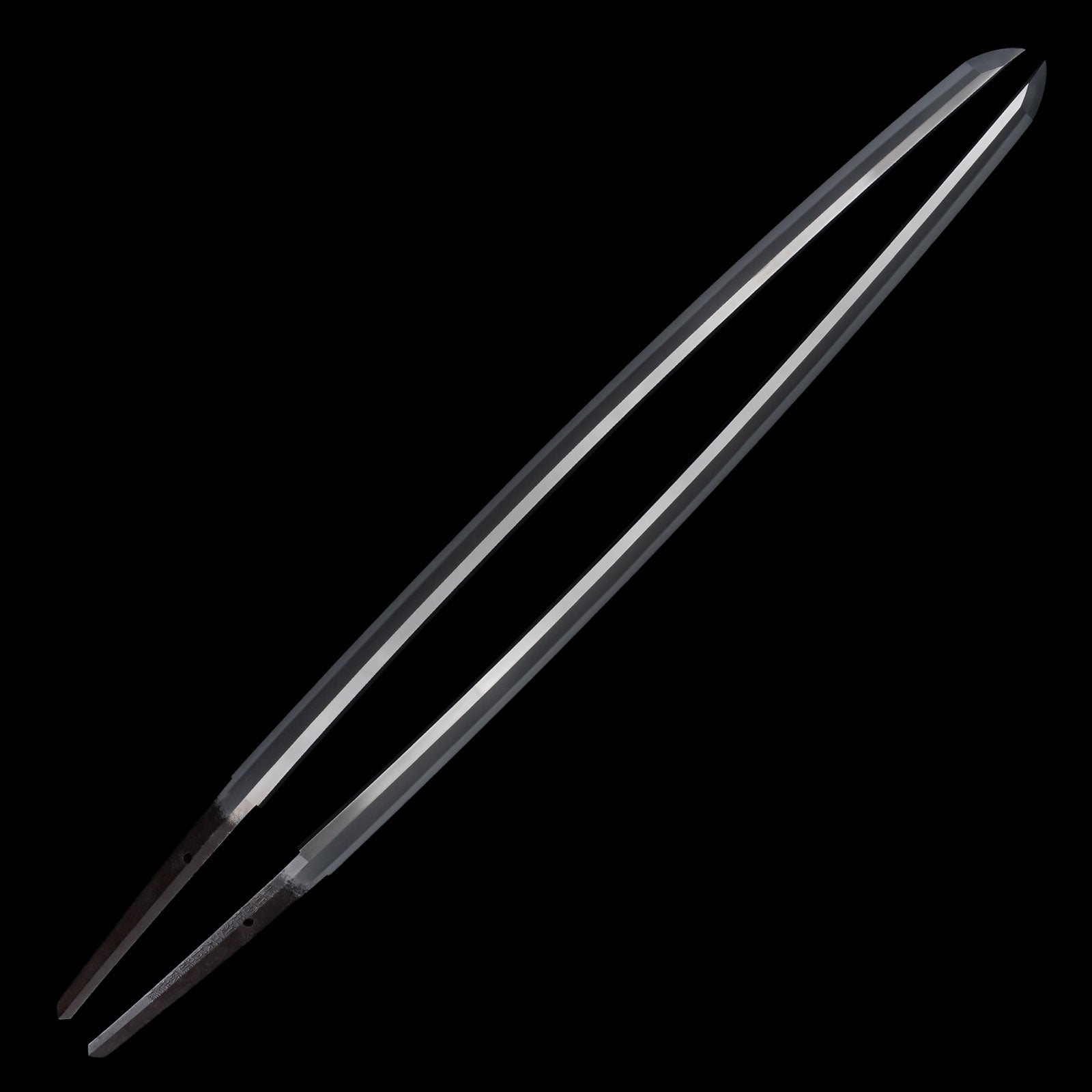
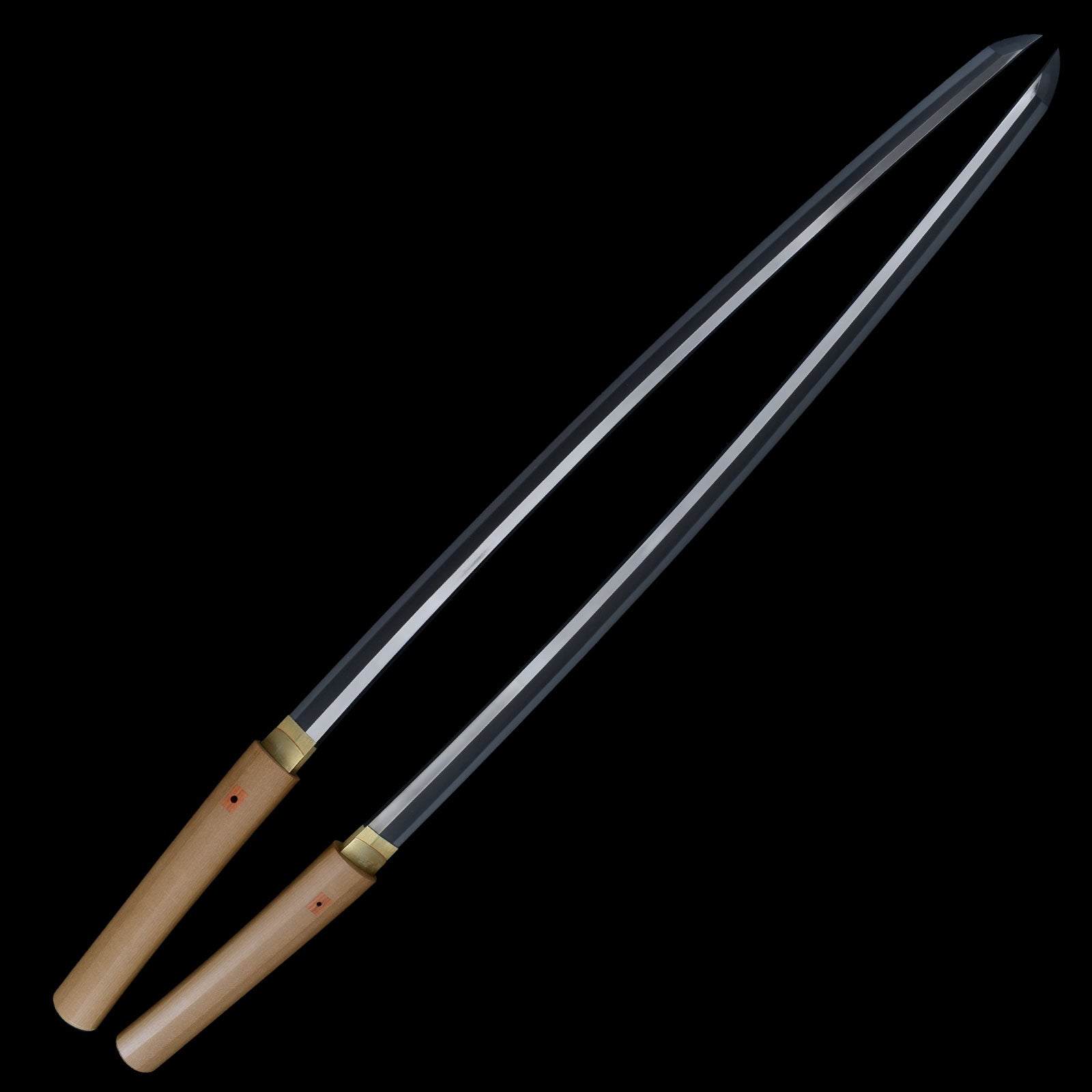
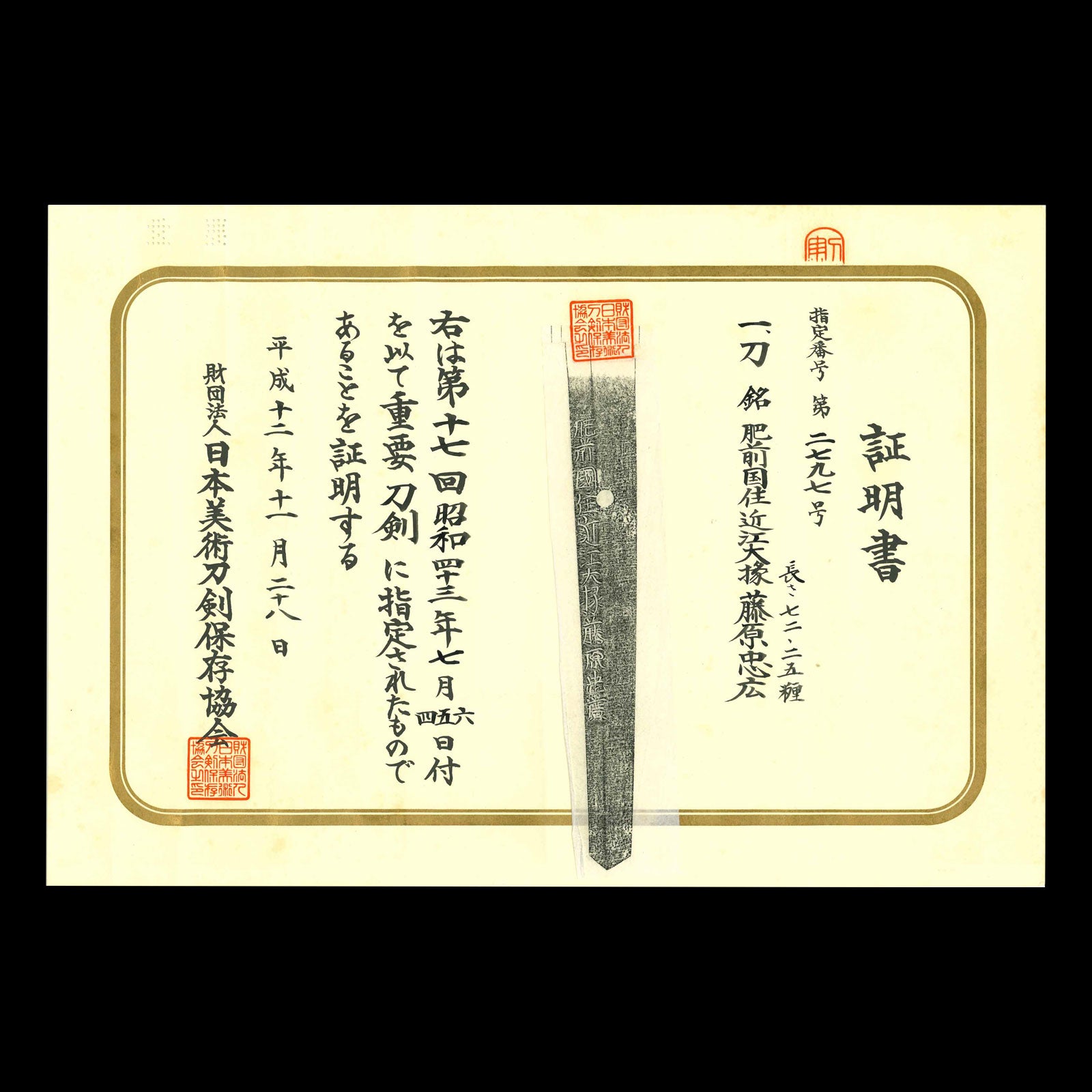
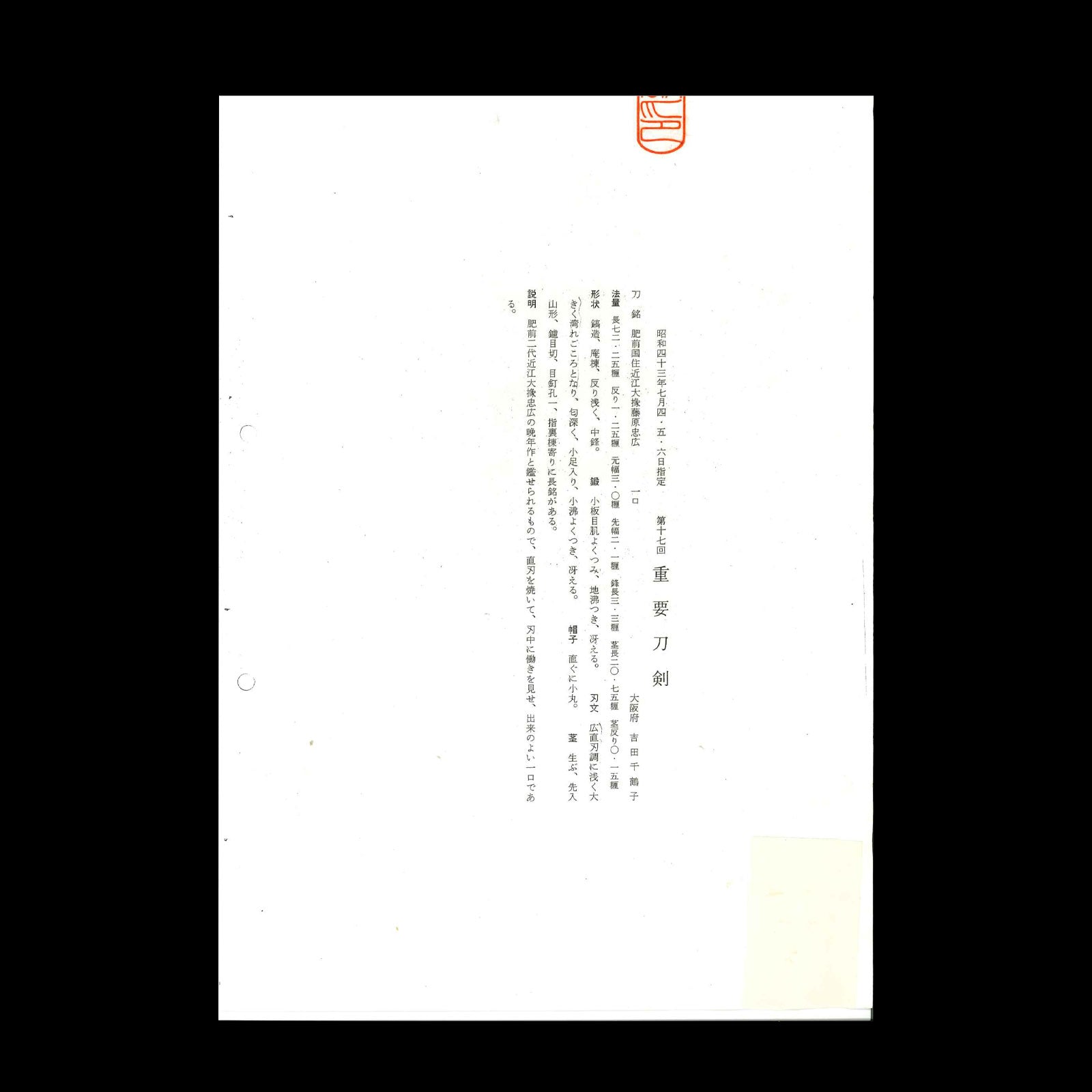
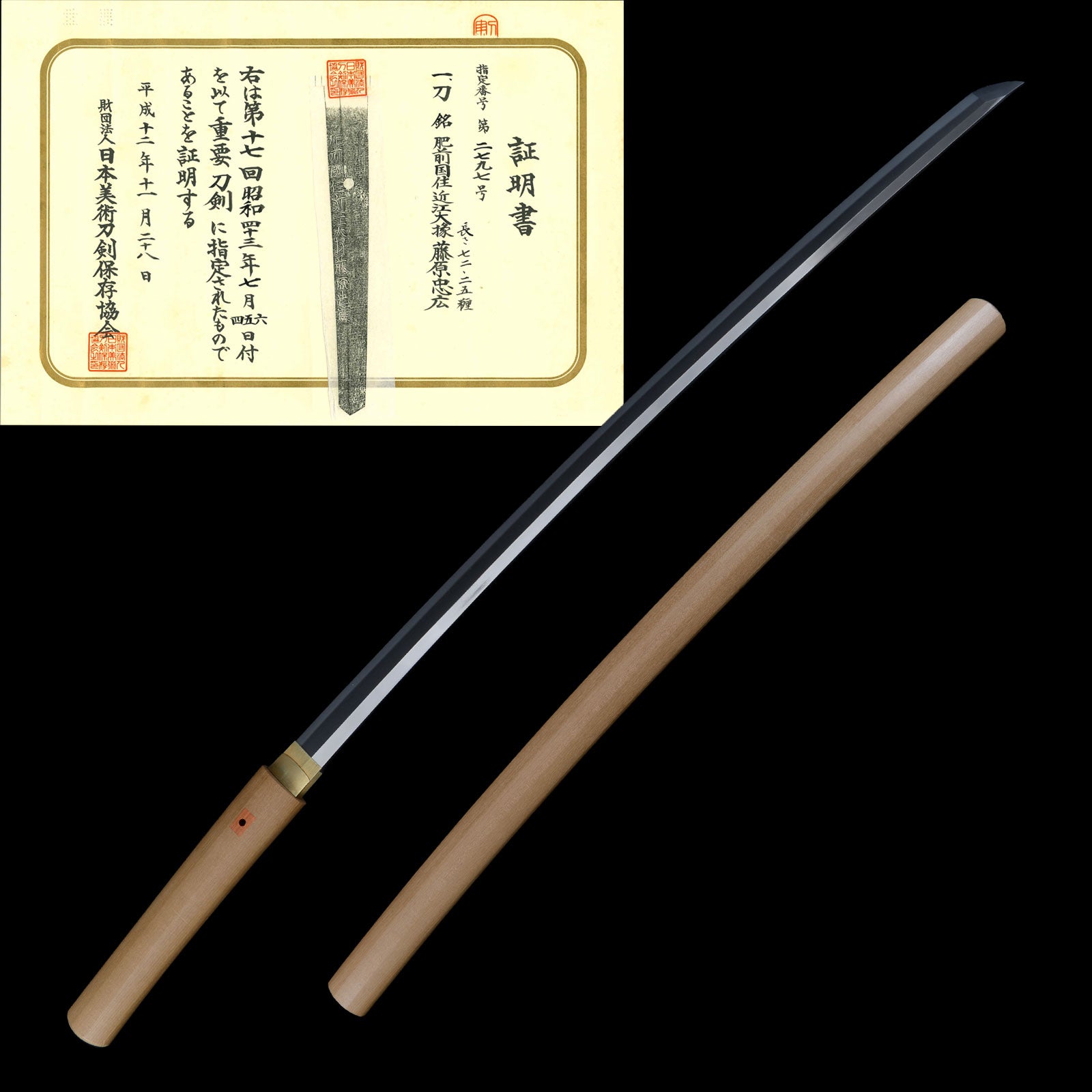
Jūyō-Tōken, 17th Session — Designated July 6, 1968
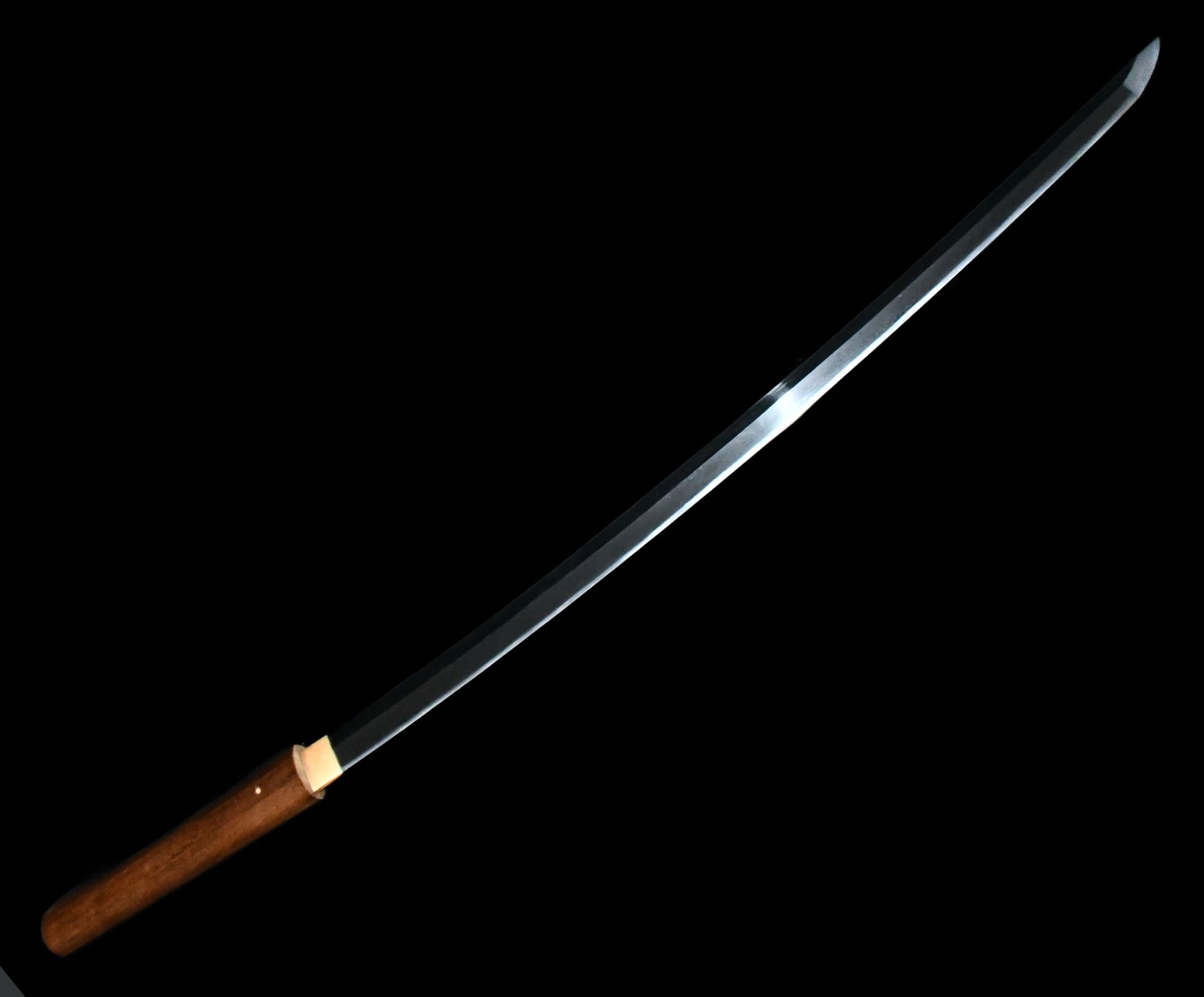
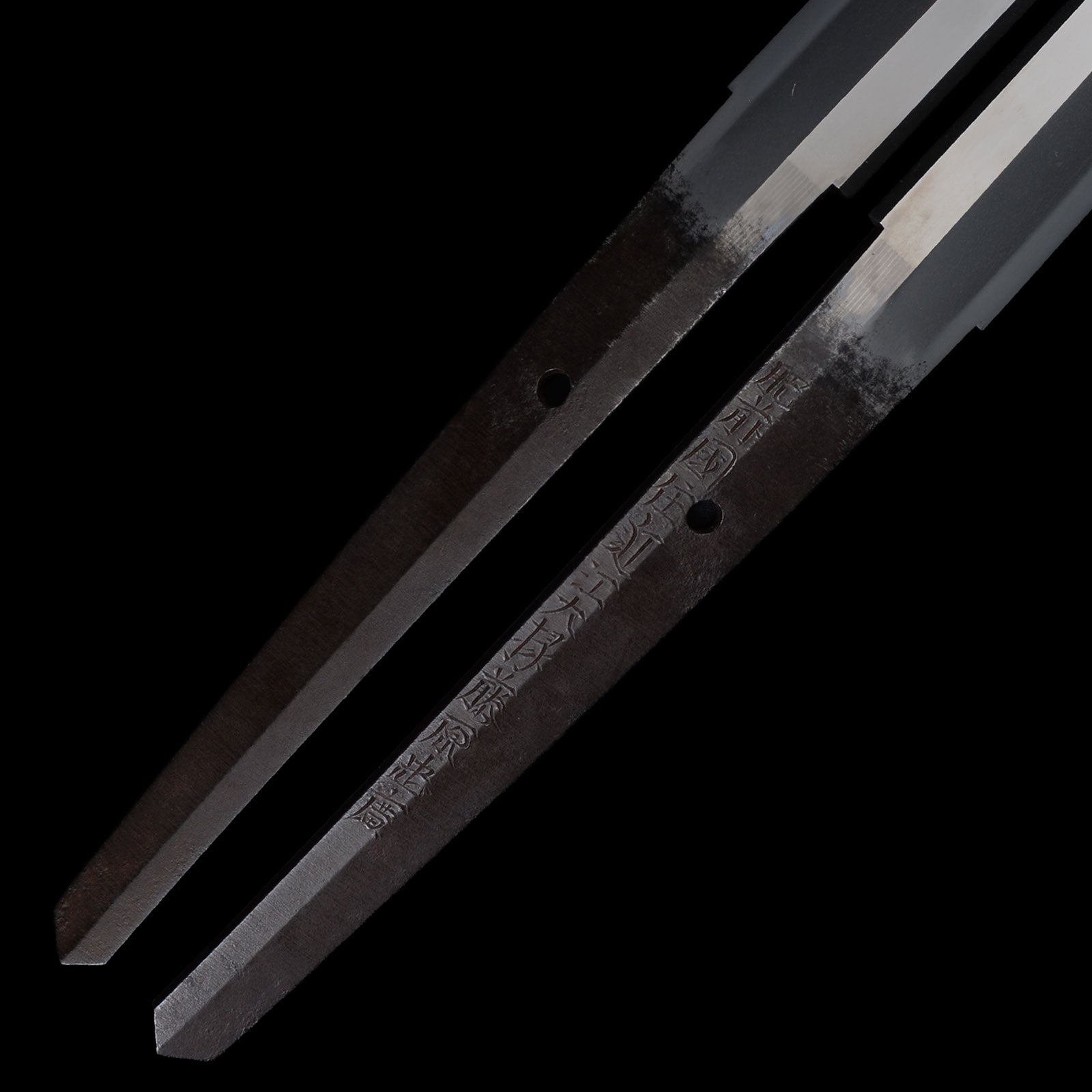
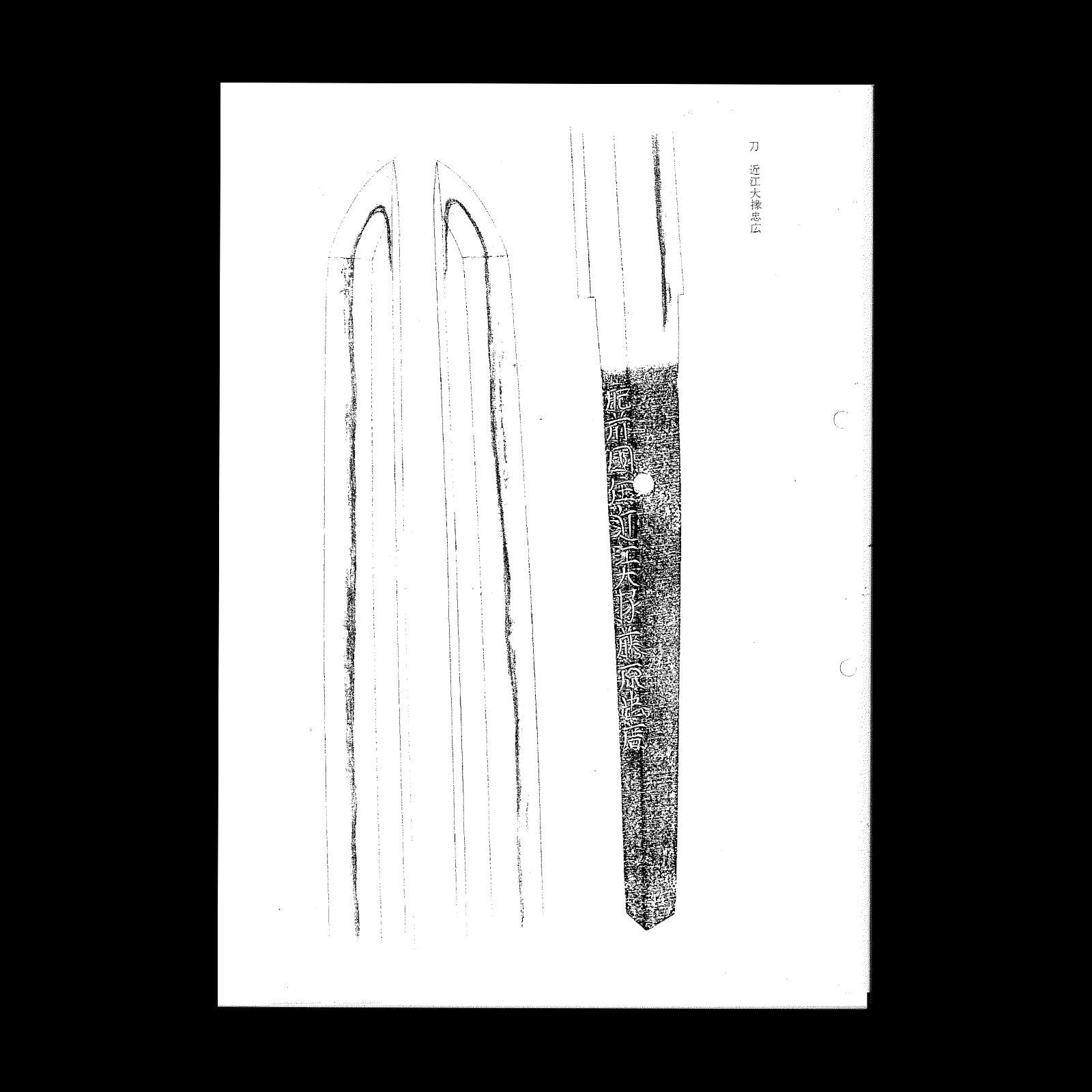
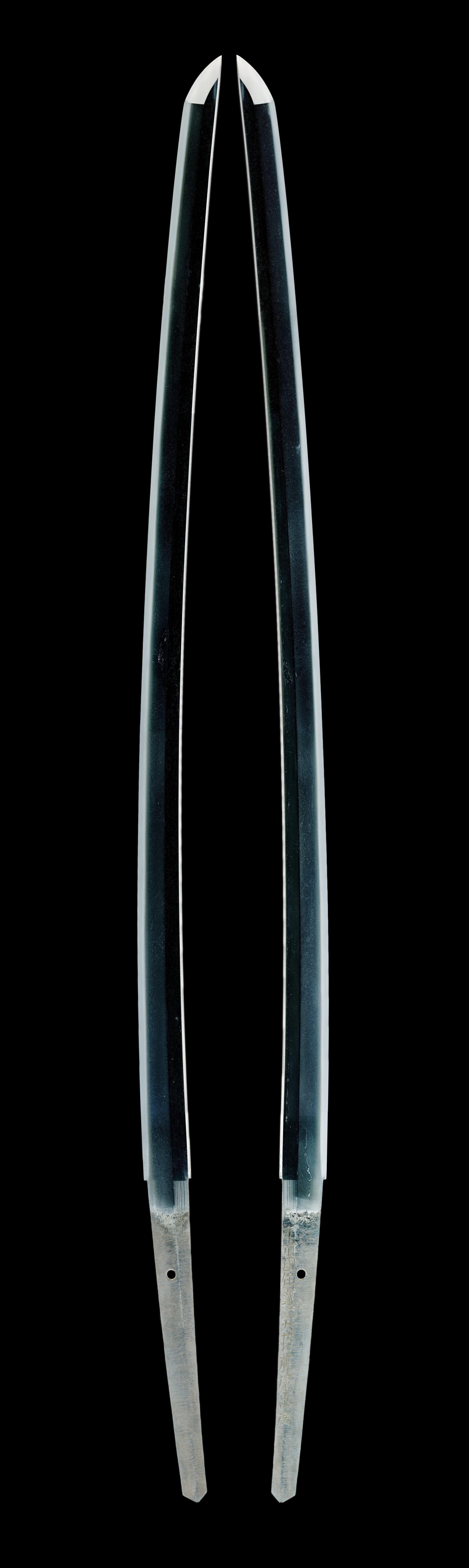
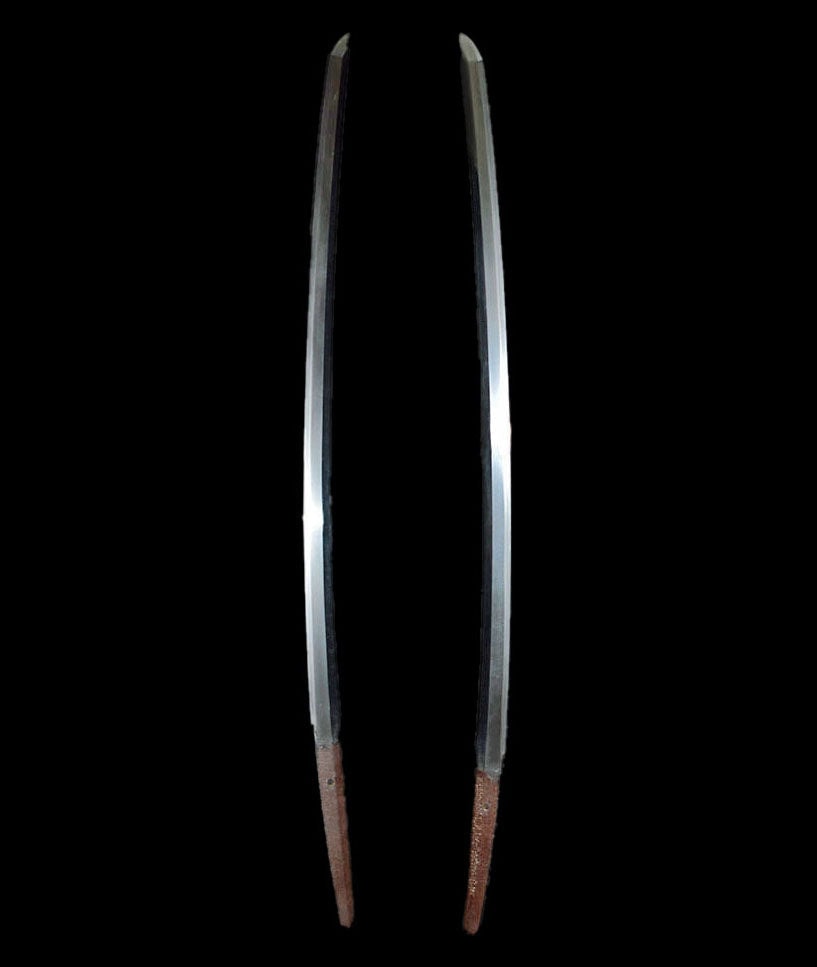
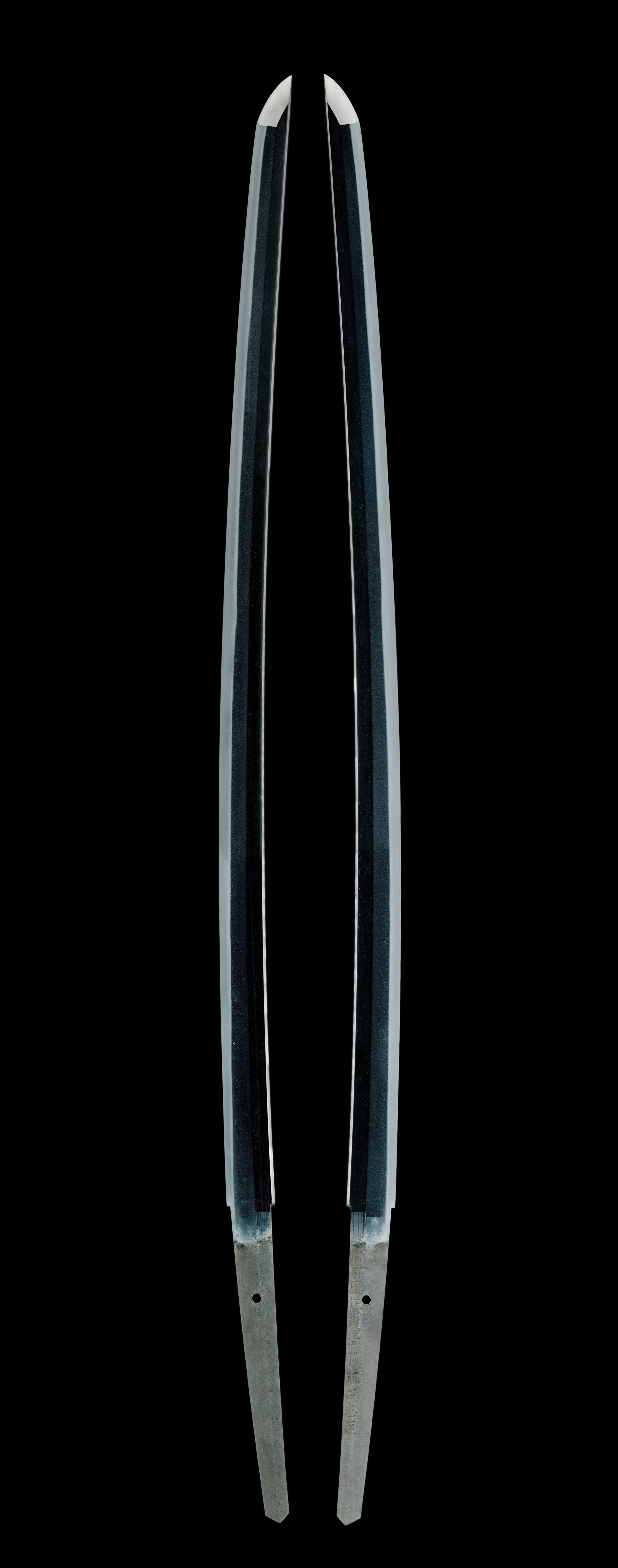
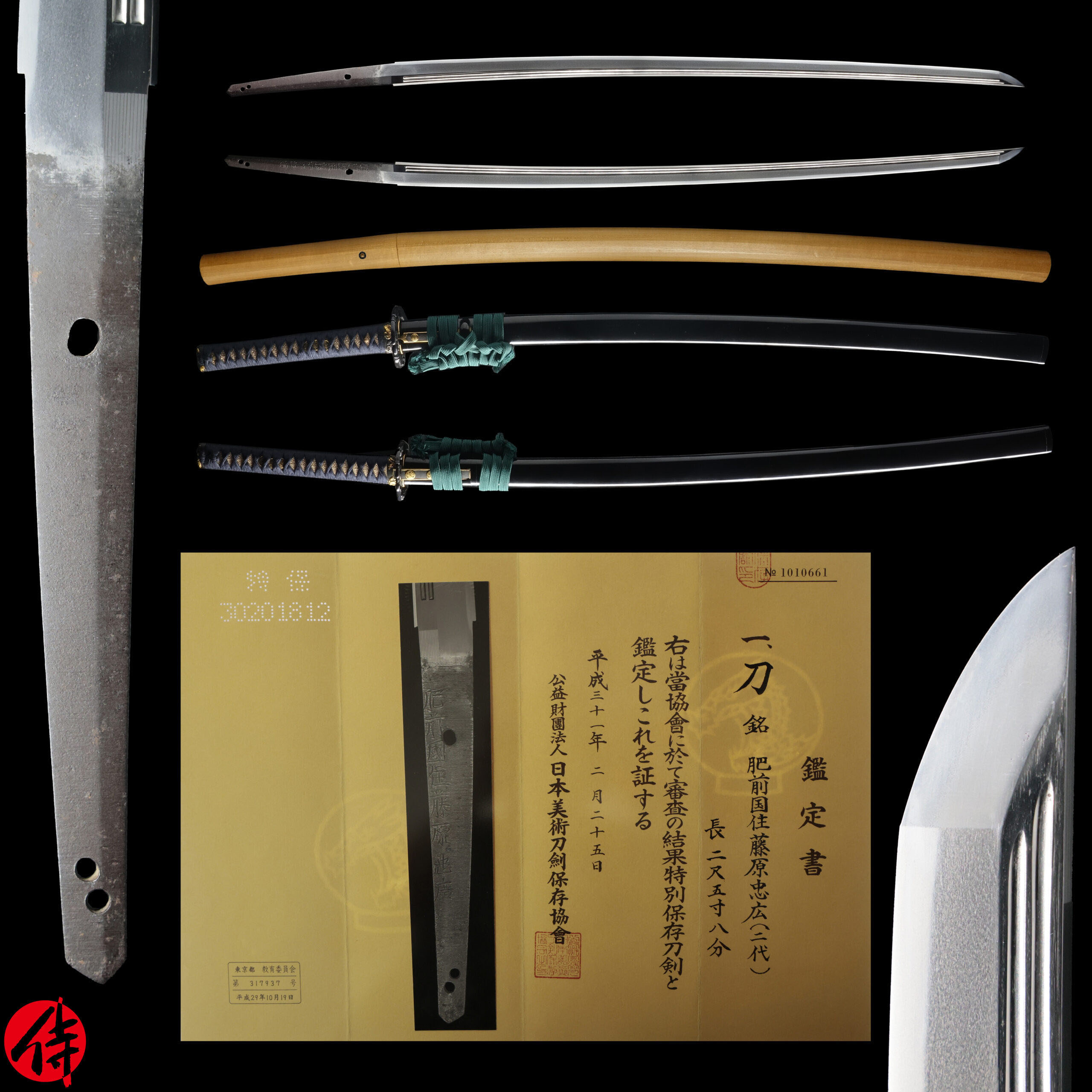
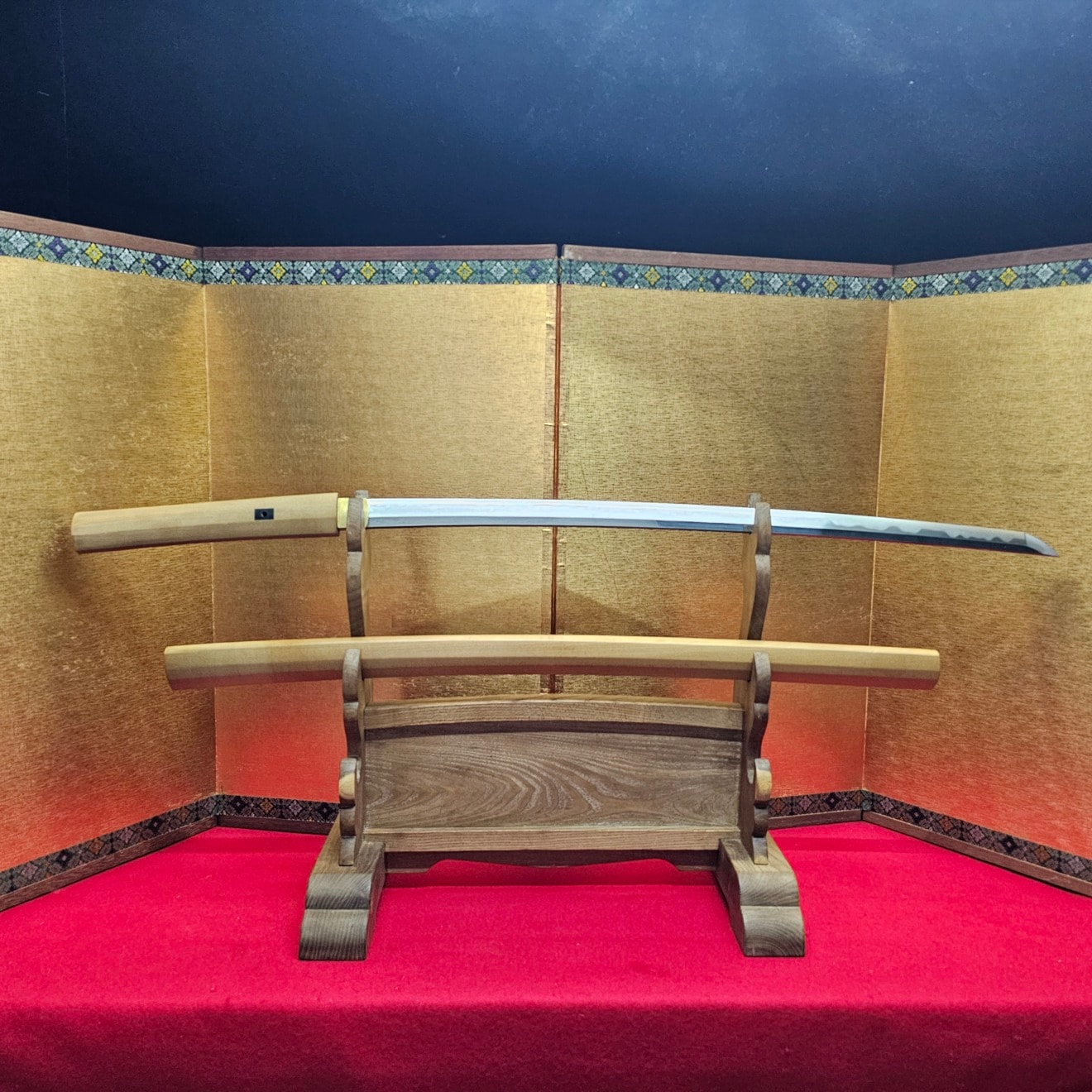
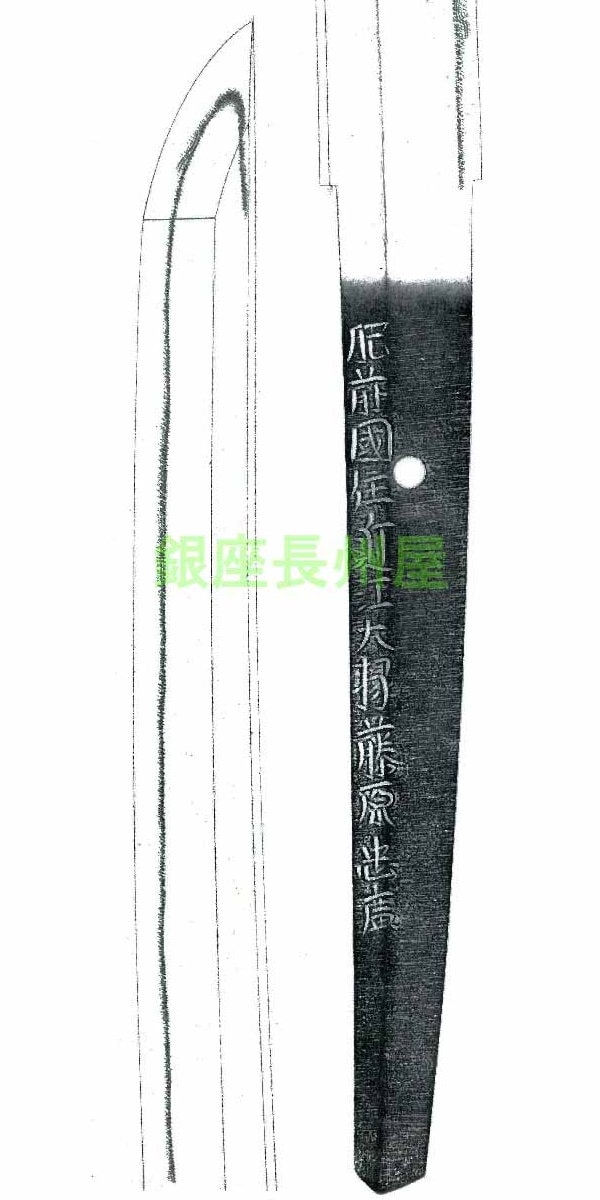
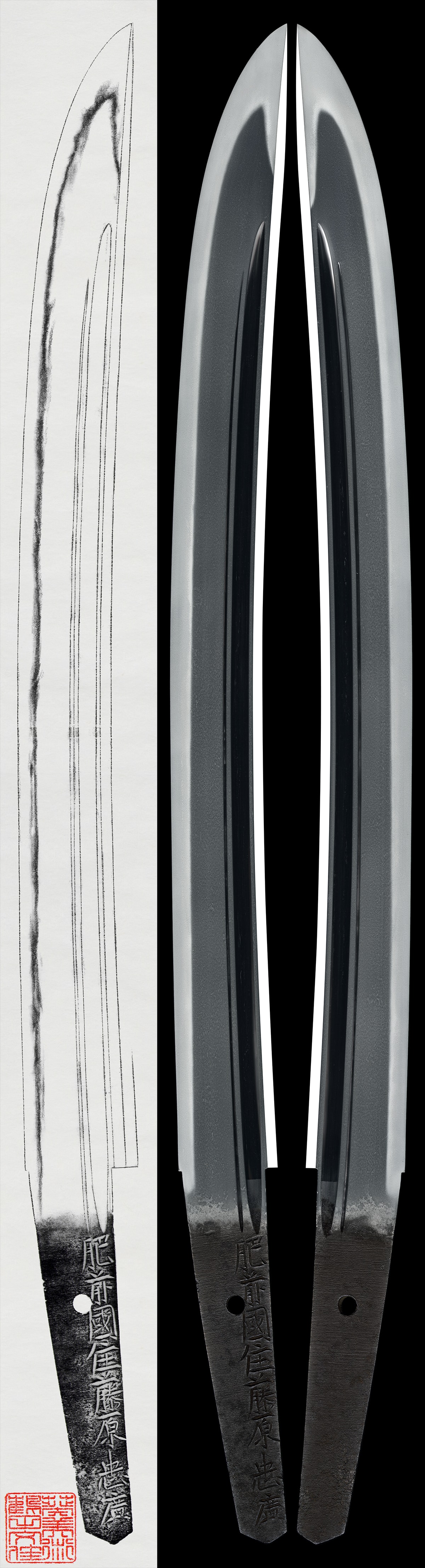
Katana, mei: Hizen no Kuni jū Ōmi Daijō Fujiwara Tadahiro (肥前国住近江大掾藤原忠広)
Measurements Nagasa 72.25 cm, sori 1.25 cm, motohaba 3.0 cm, sakihaba 2.1 cm, kissaki-nagasa 3.3 cm, nakago-nagasa 20.75 cm, nakago-sori 0.15 cm
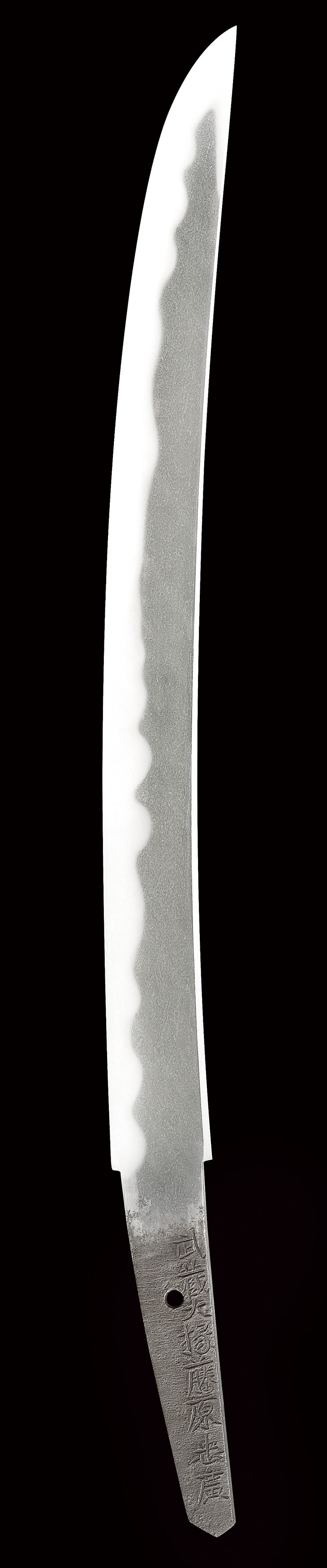
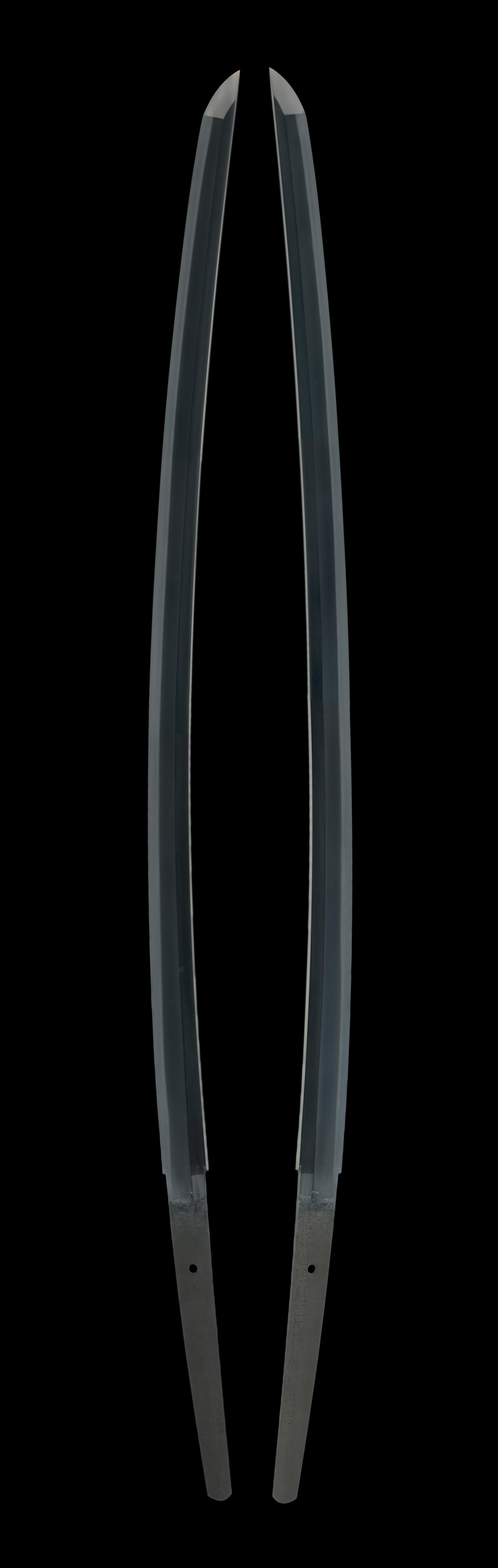
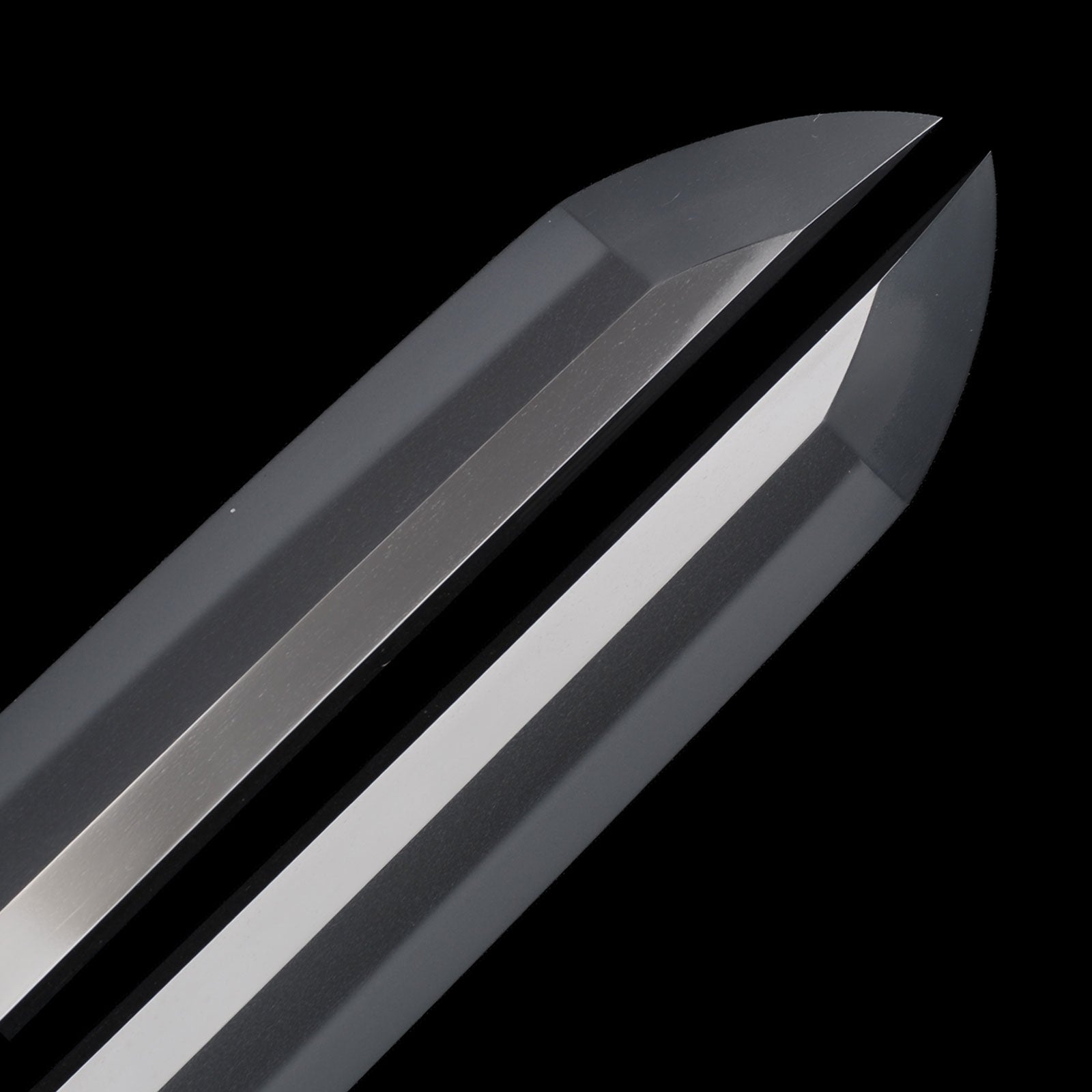
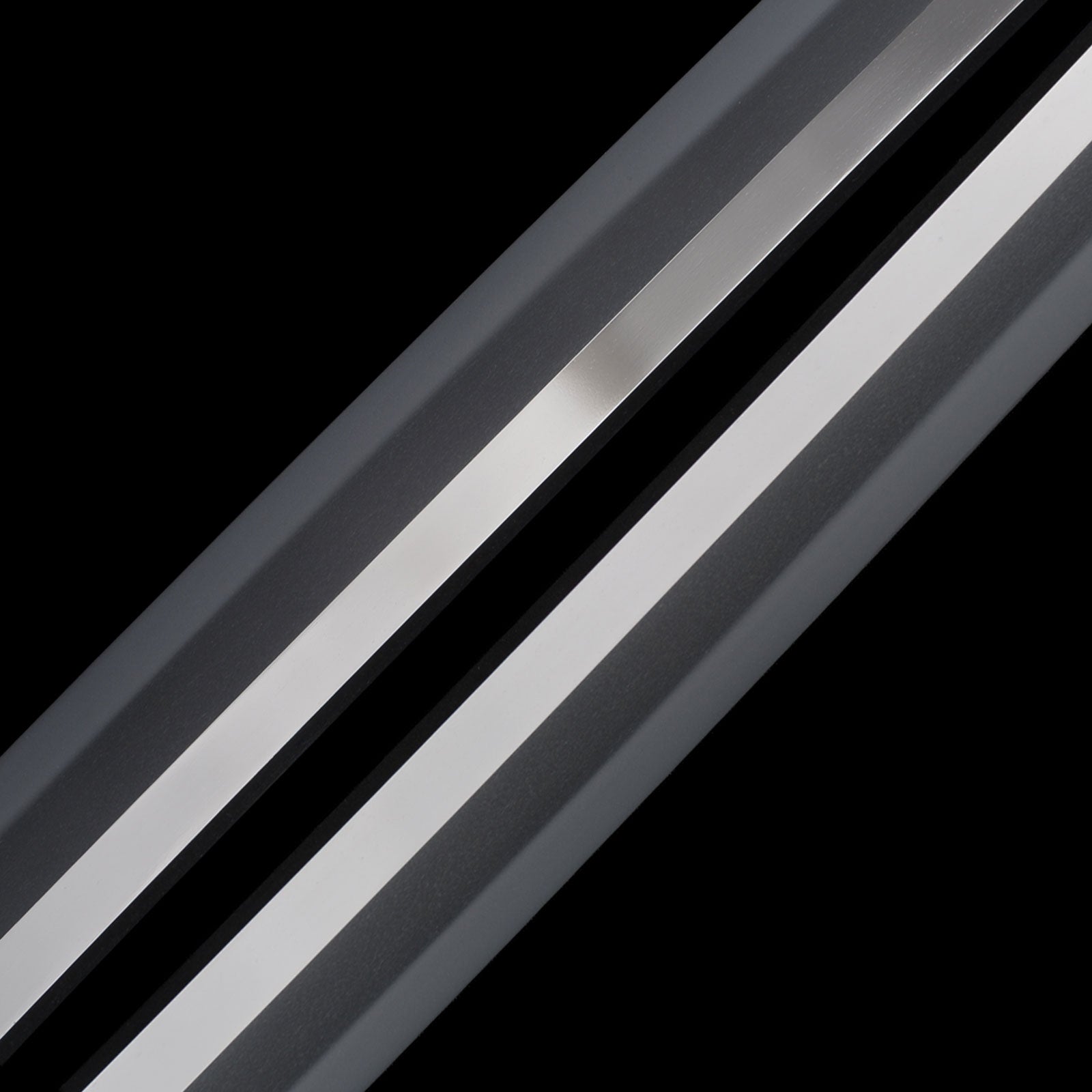
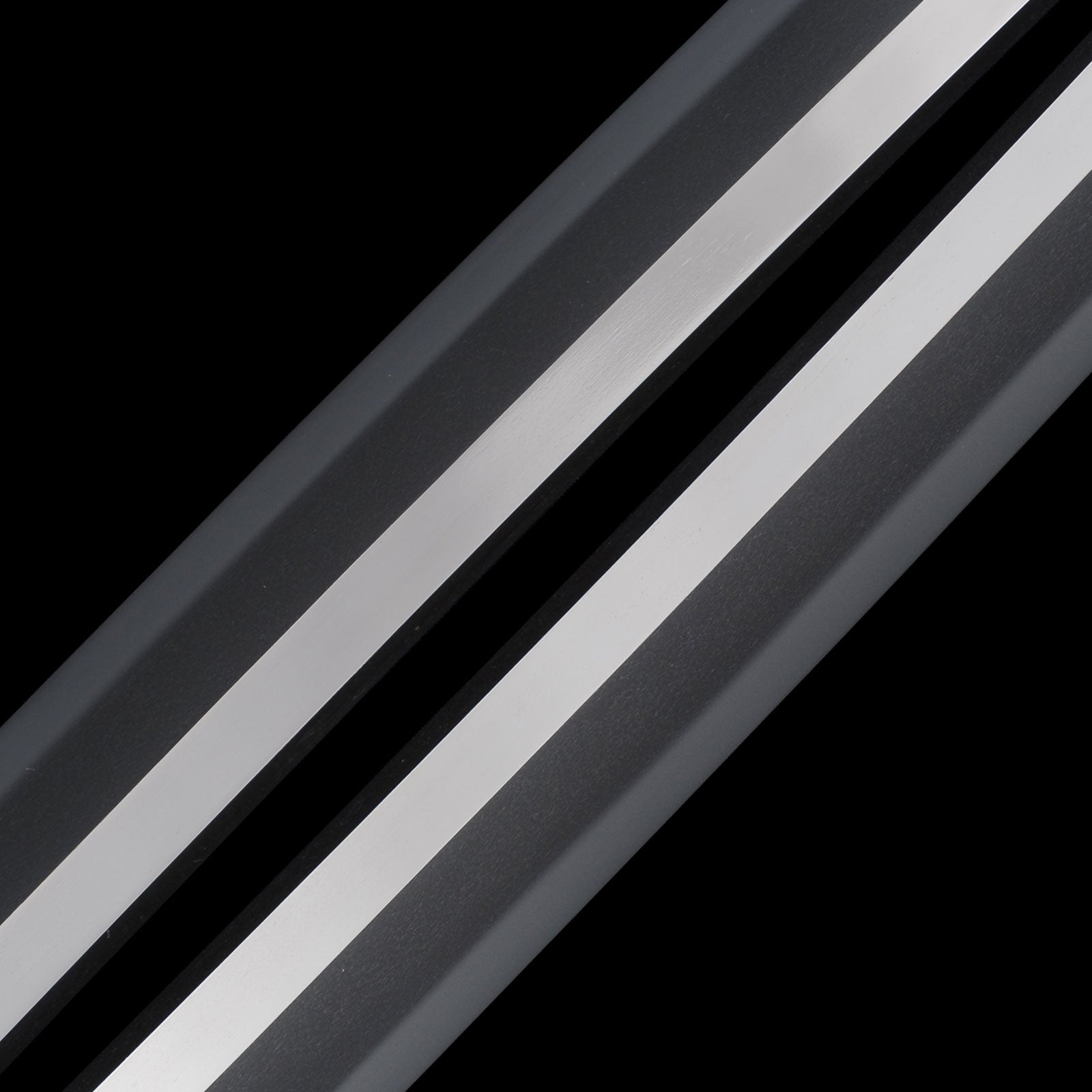
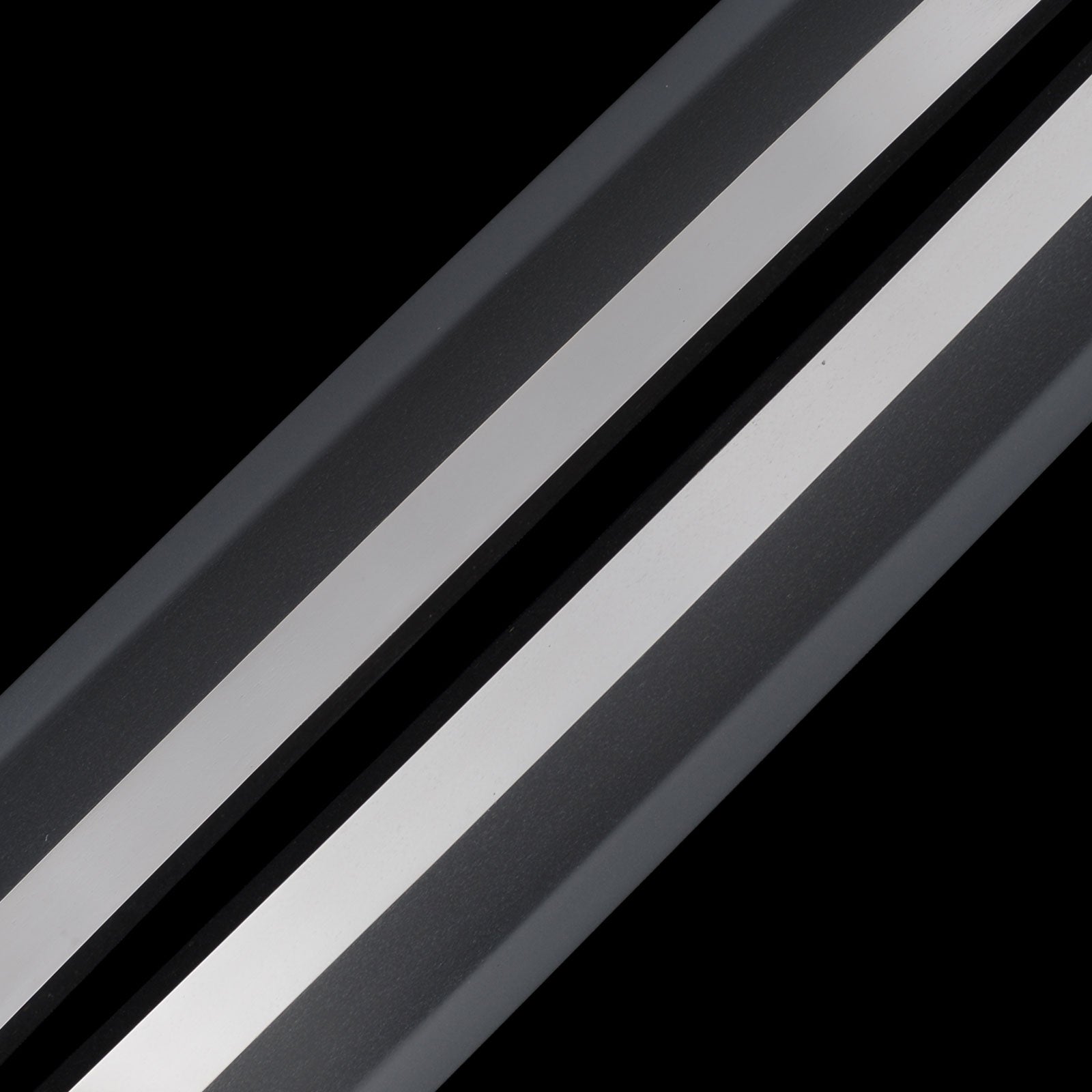
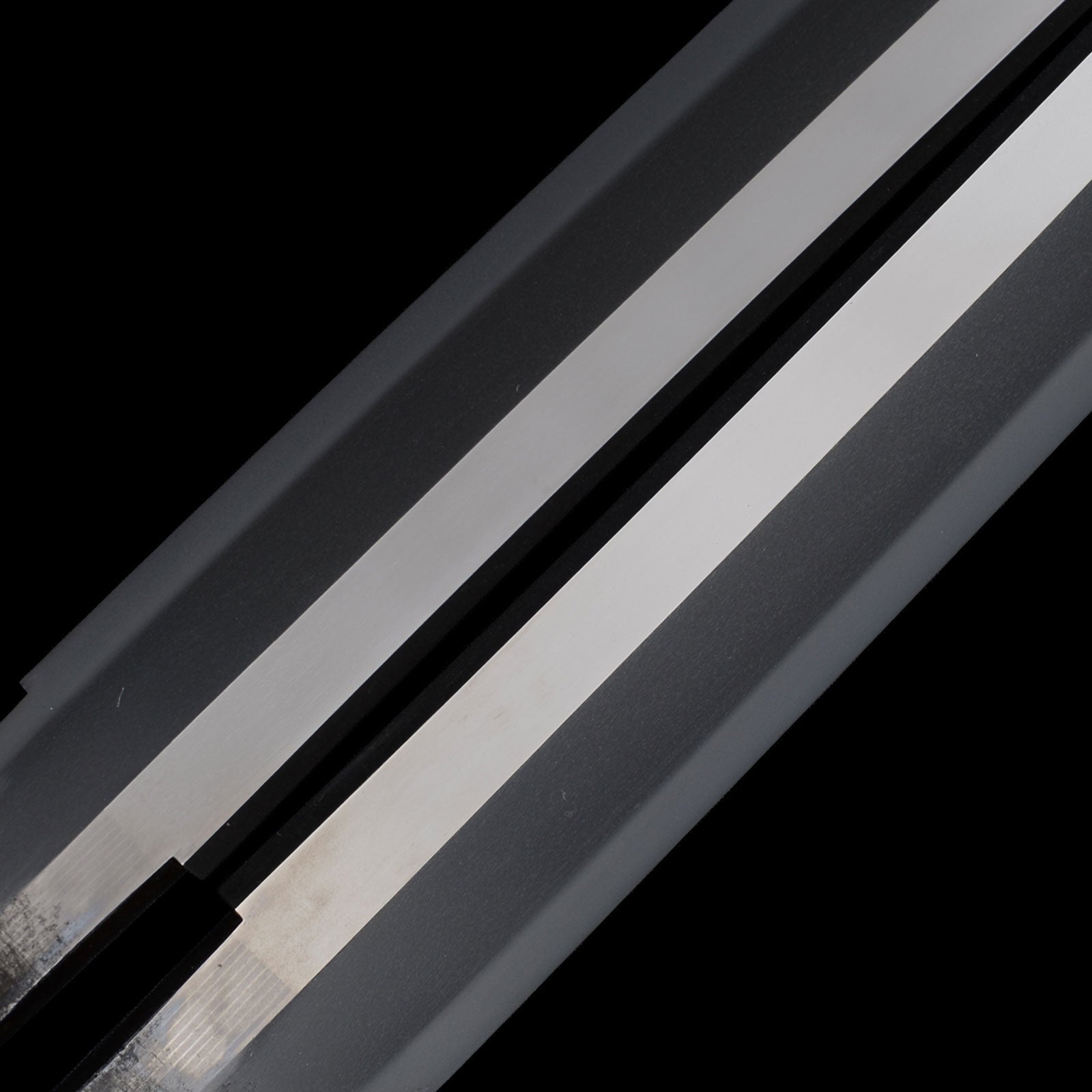
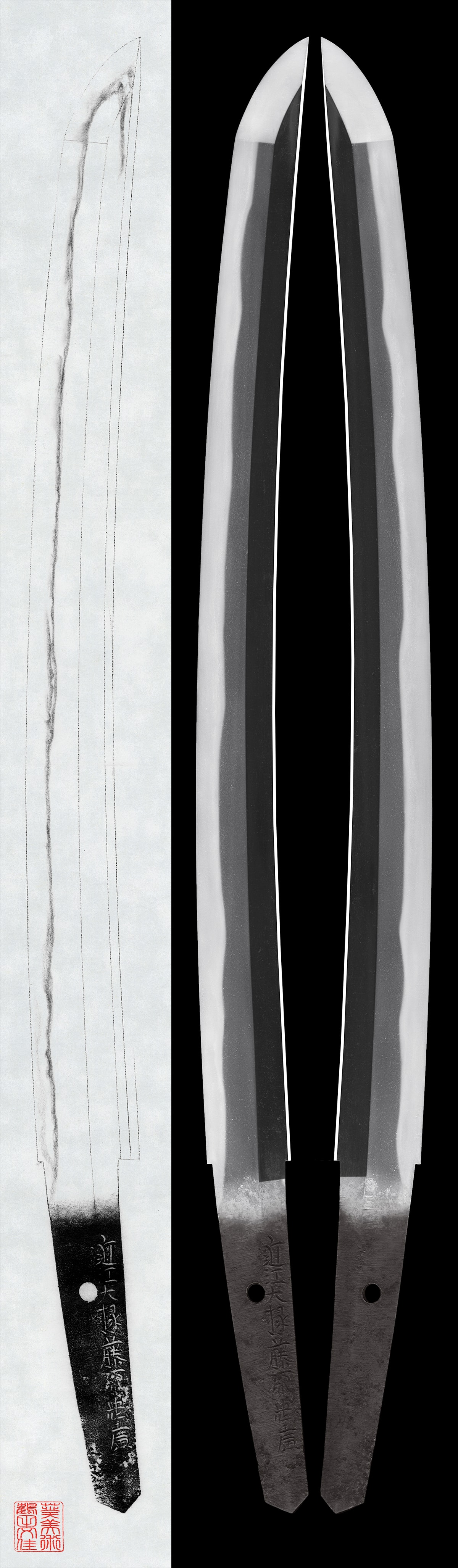
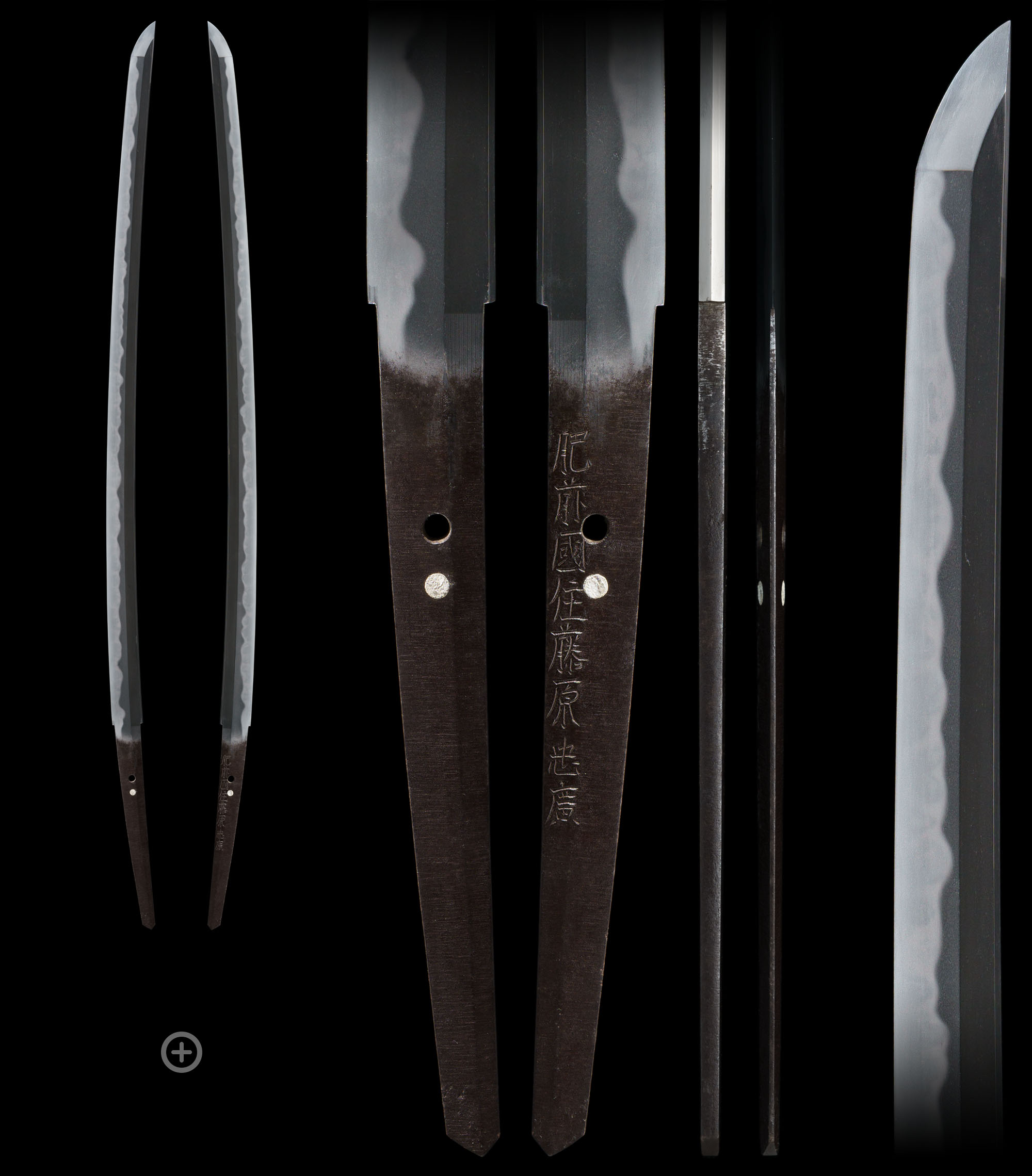
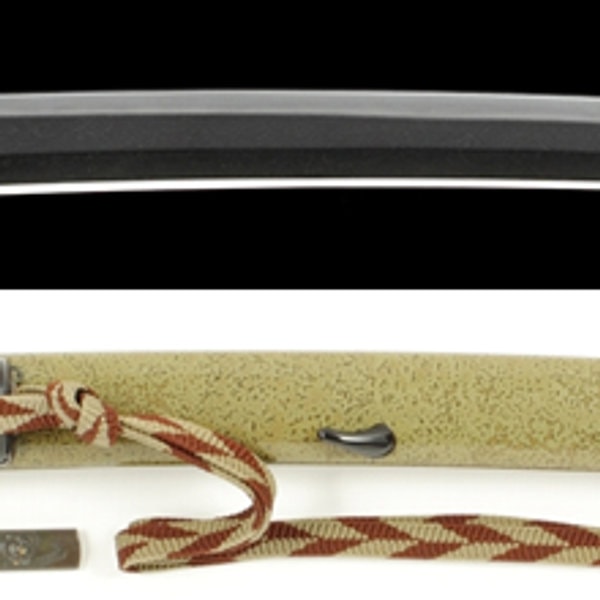
Description Keijō: shinogi-zukuri, iori-mune; shallow sori; chū-kissaki. Kitae: ko-itame-hada tightly forged; ji-nie attaches; clear (saeru). Hamon: a wide suguha-toned temper, with shallow, large undulations tending toward midare; nioi is deep, with small ashi; ko-nie attaches well, and is clear (saeru). Bōshi: straight (sugu) with ko-maru. Horimono: None. Nakago: ubu; tip iriyama-gata; kiri yasurime; one mekugi-ana; a long signature is present on the sashi-ura, toward the mune.
Artisan Hizen Ōmi Daijō Tadahiro, second generation (Hizen Tadayoshi line)
Era Early Edo period (late work)
Explanation This blade is appraised as a late work by the second generation Hizen Ōmi Daijō Tadahiro. He has tempered a suguha, while also displaying hataraki within the ha; it is a well-made example.




![Katana - Tokuho - 作 忠廣 - 刀[肥前国住近江大掾藤原忠広][日本美術刀剣保存協会]特別保存刀剣](/_next/image?url=https%3A%2F%2Fitbhfhyptogxcjbjfzwx.supabase.co%2Fstorage%2Fv1%2Fobject%2Fpublic%2Flisting-images%2Fworld-seiyudo%2FL496244%2F00.jpg&w=2560&q=90)