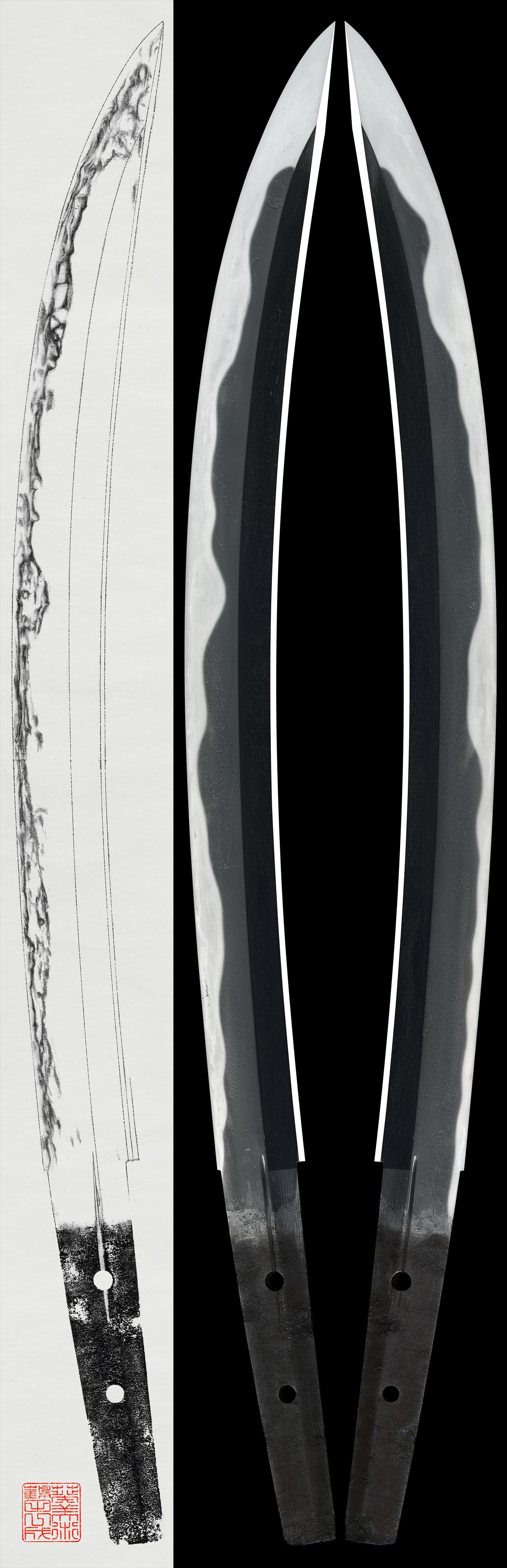
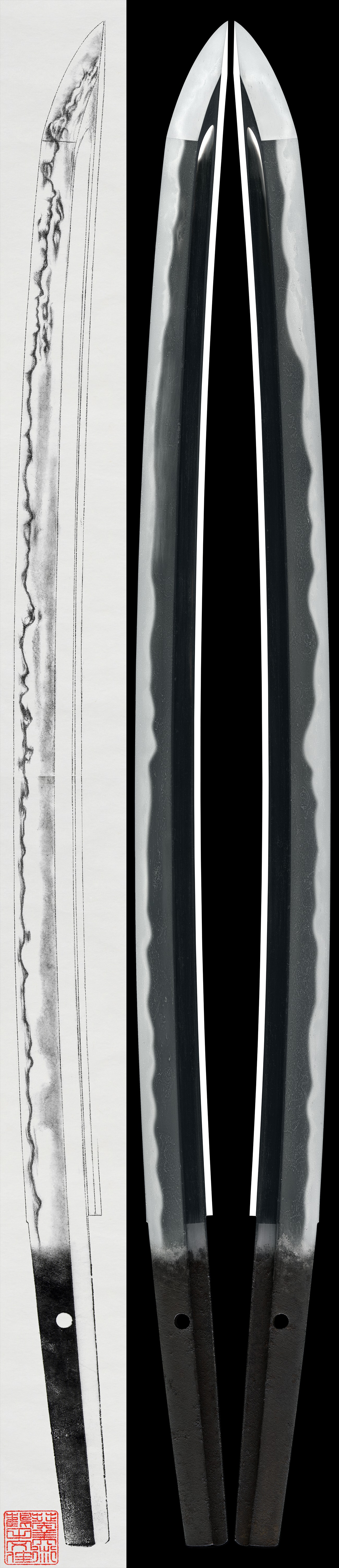
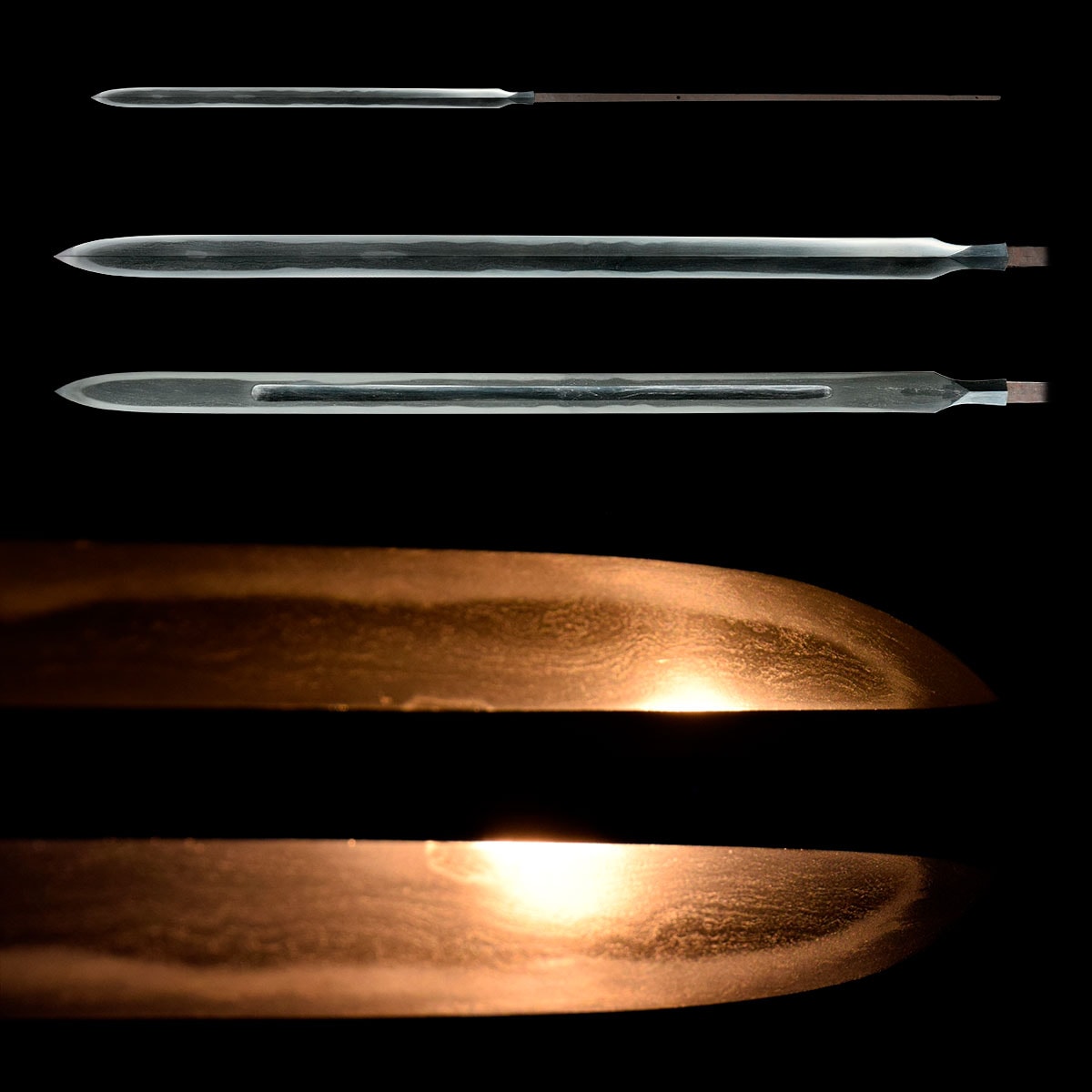
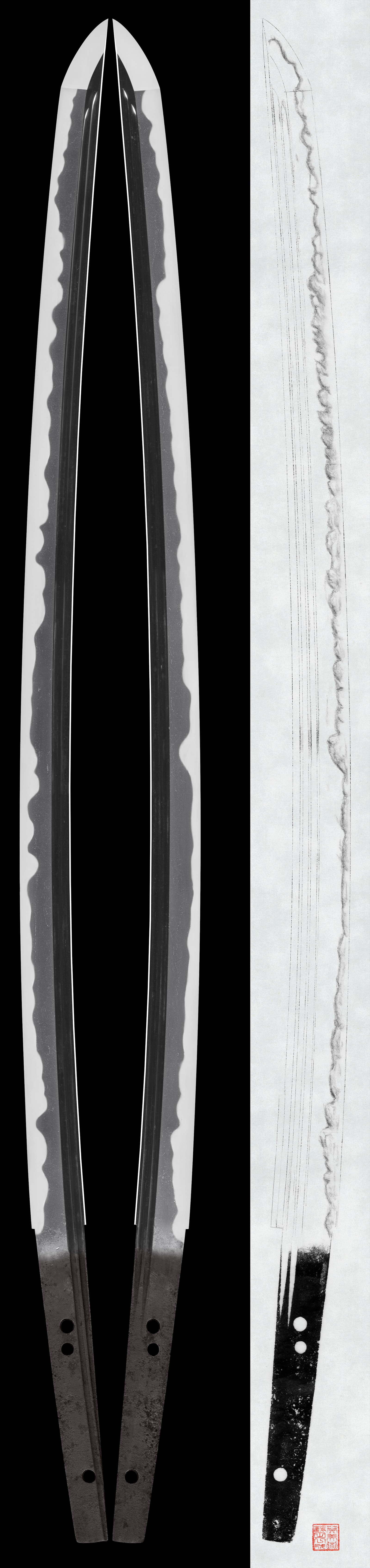
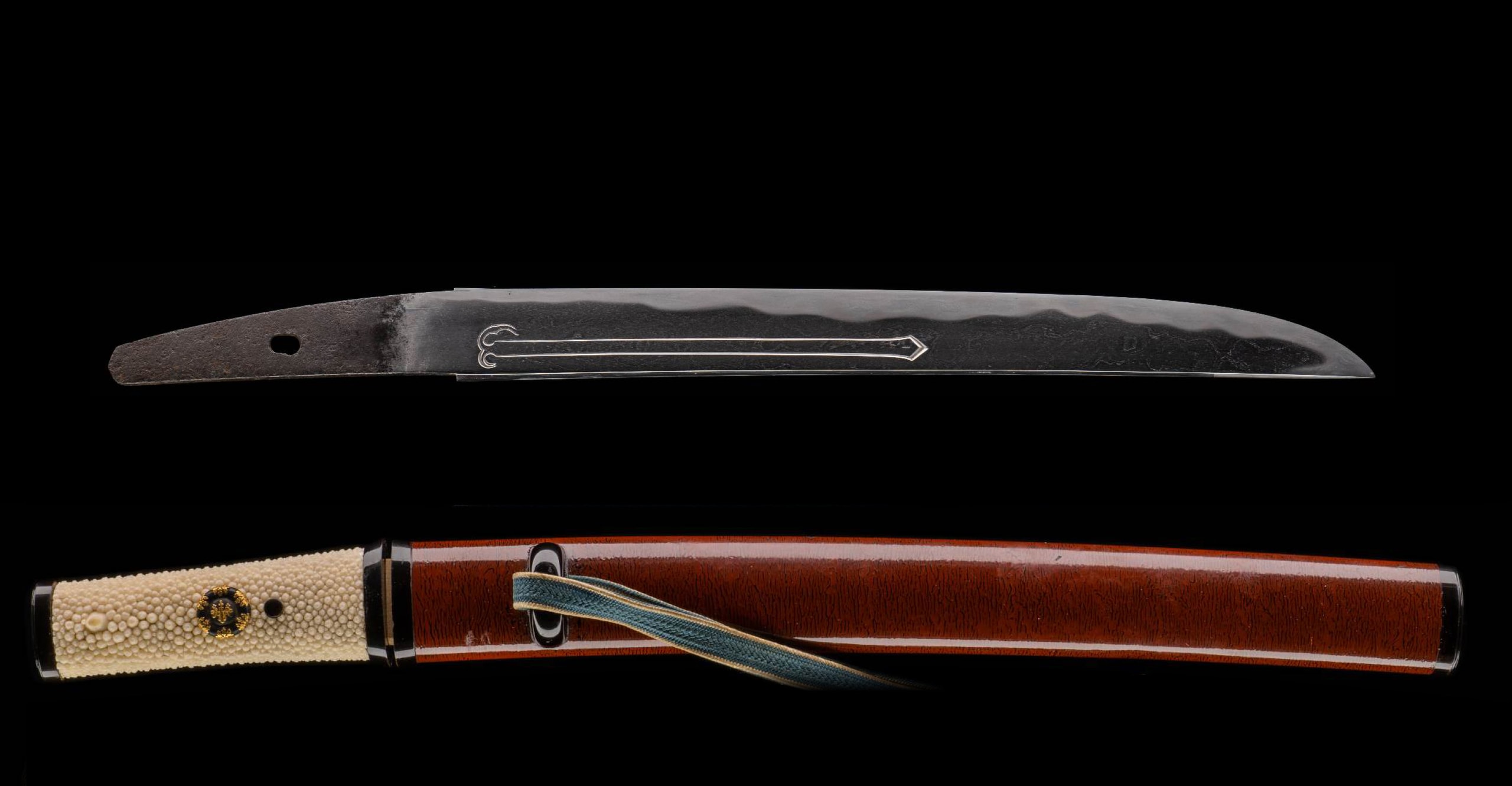
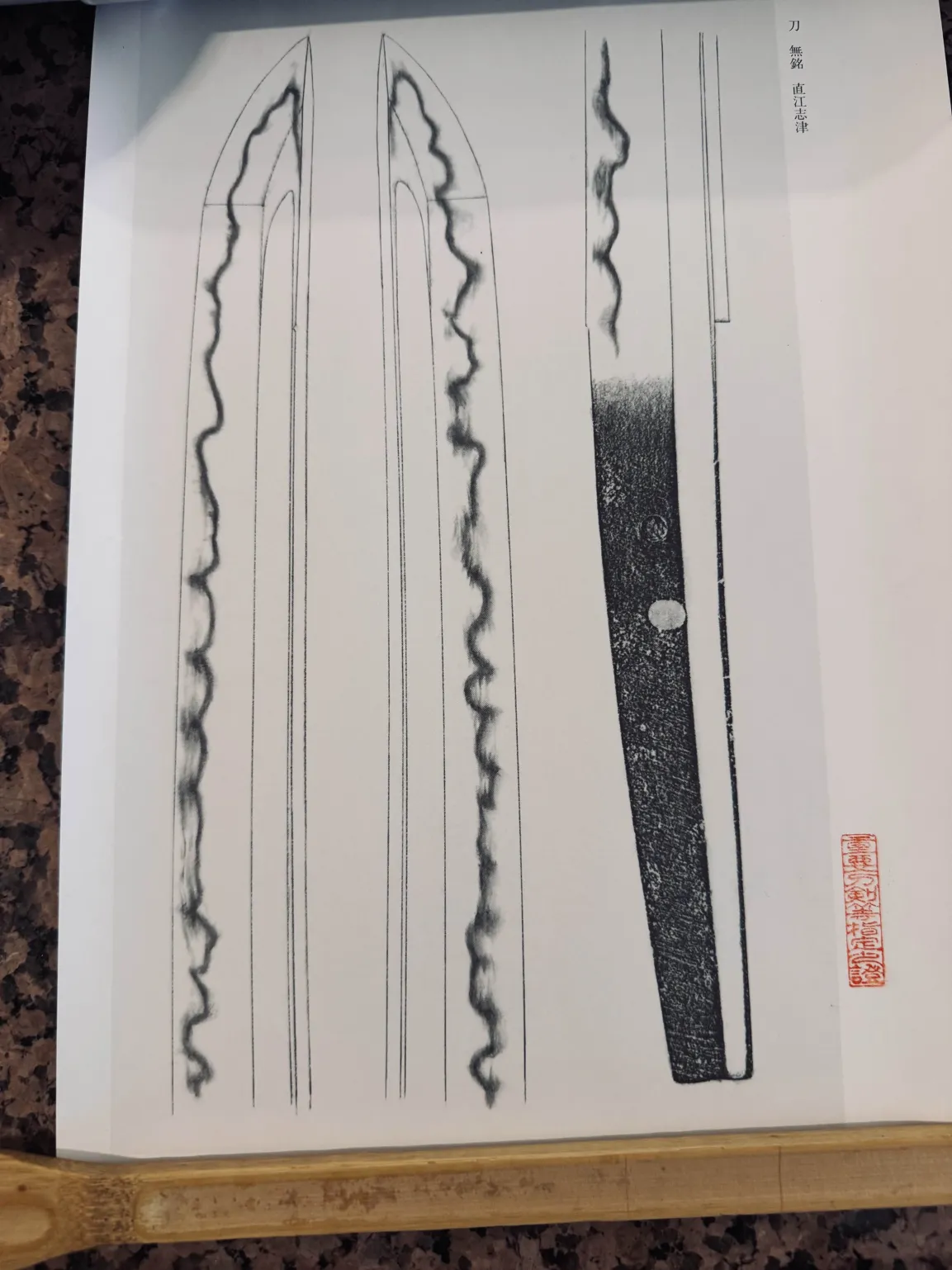
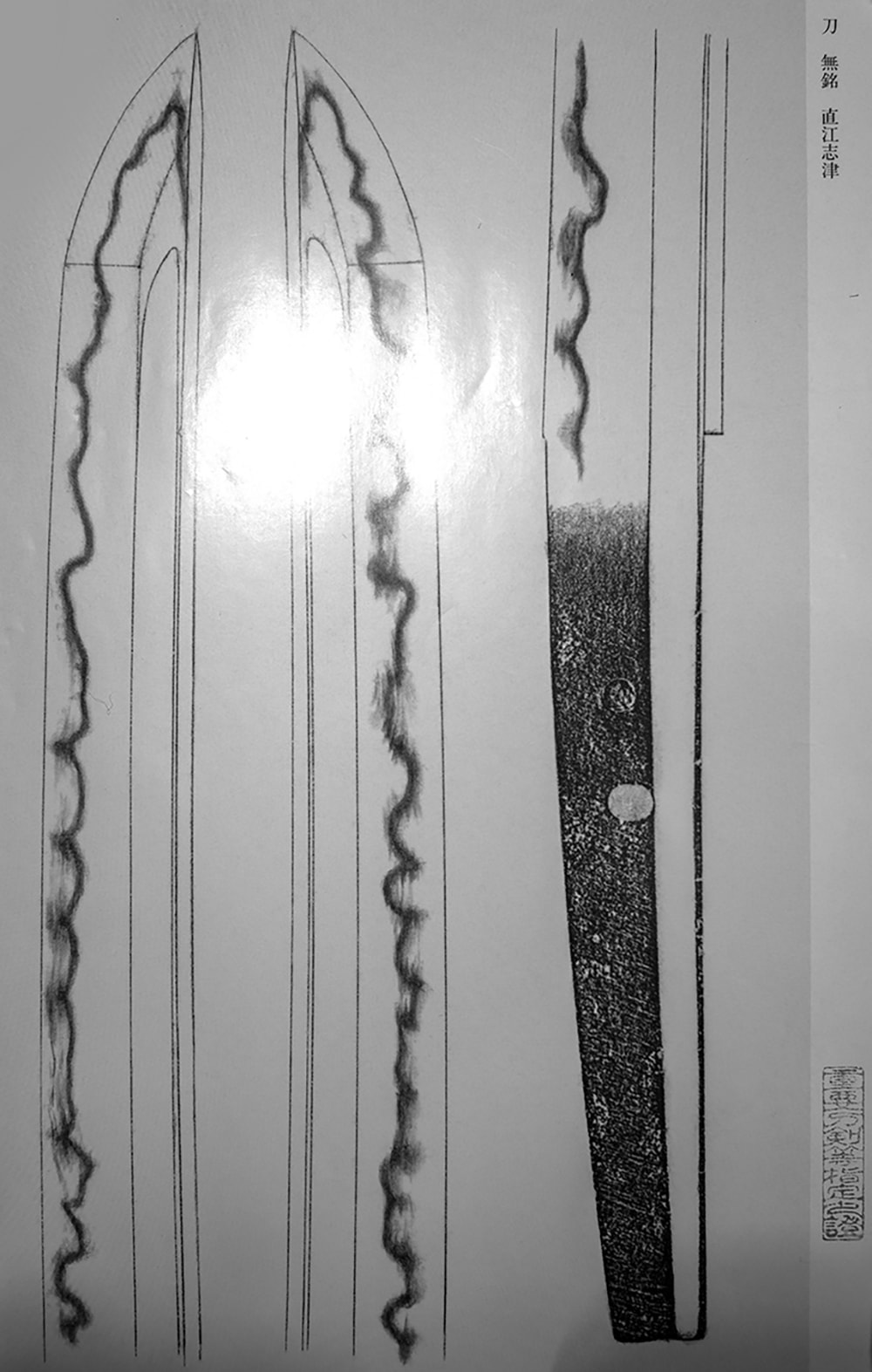
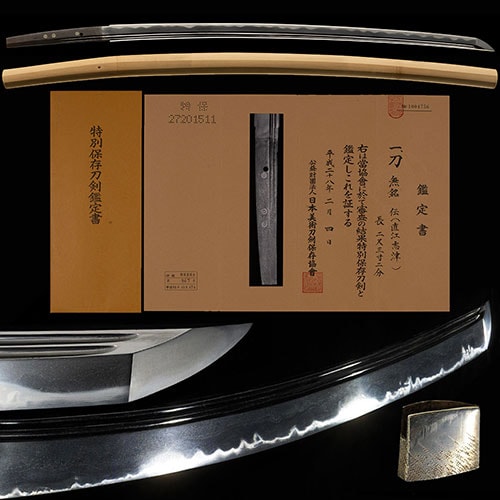
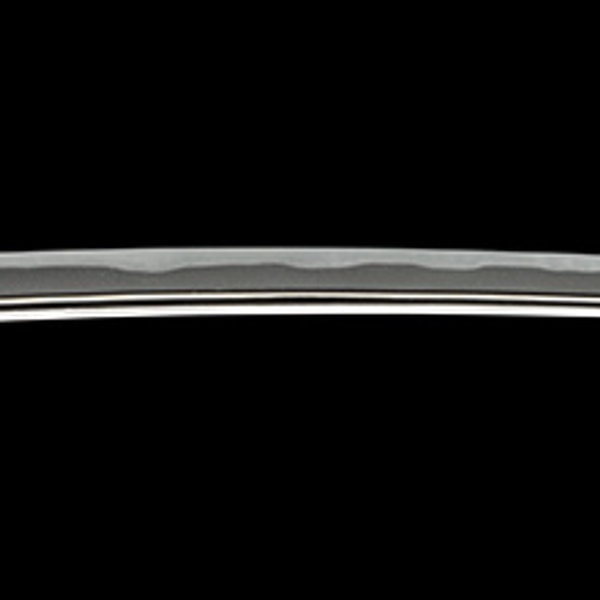
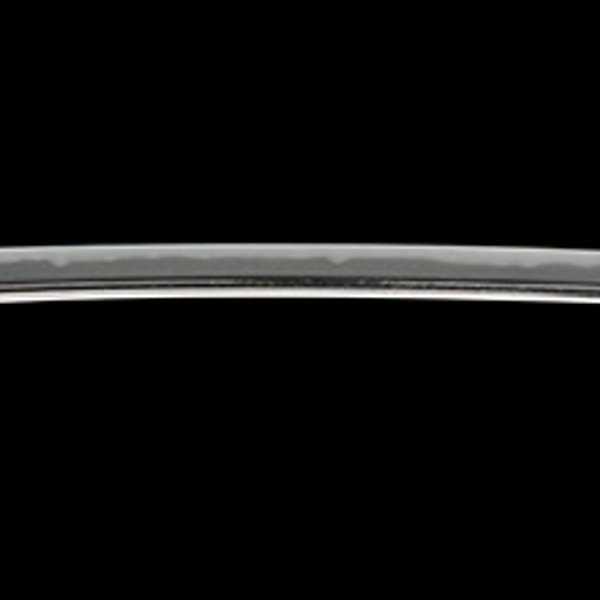
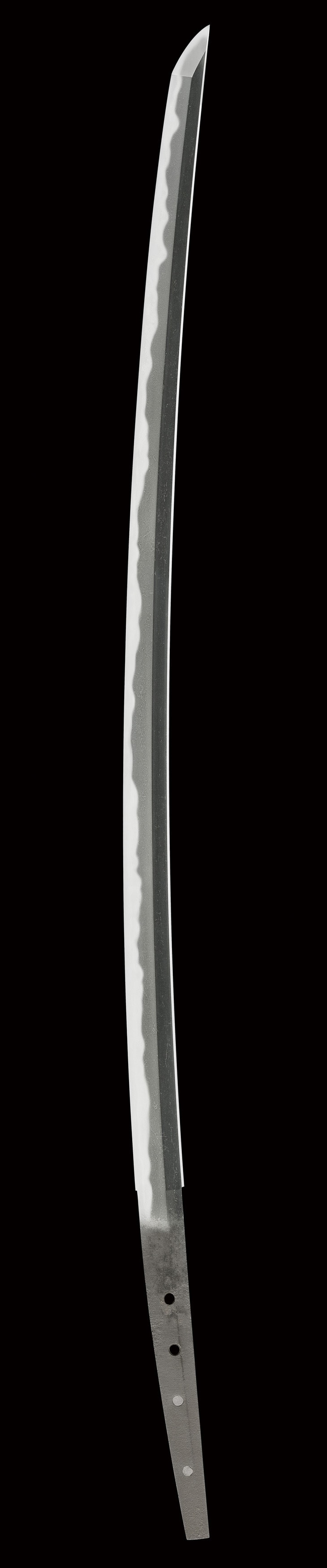
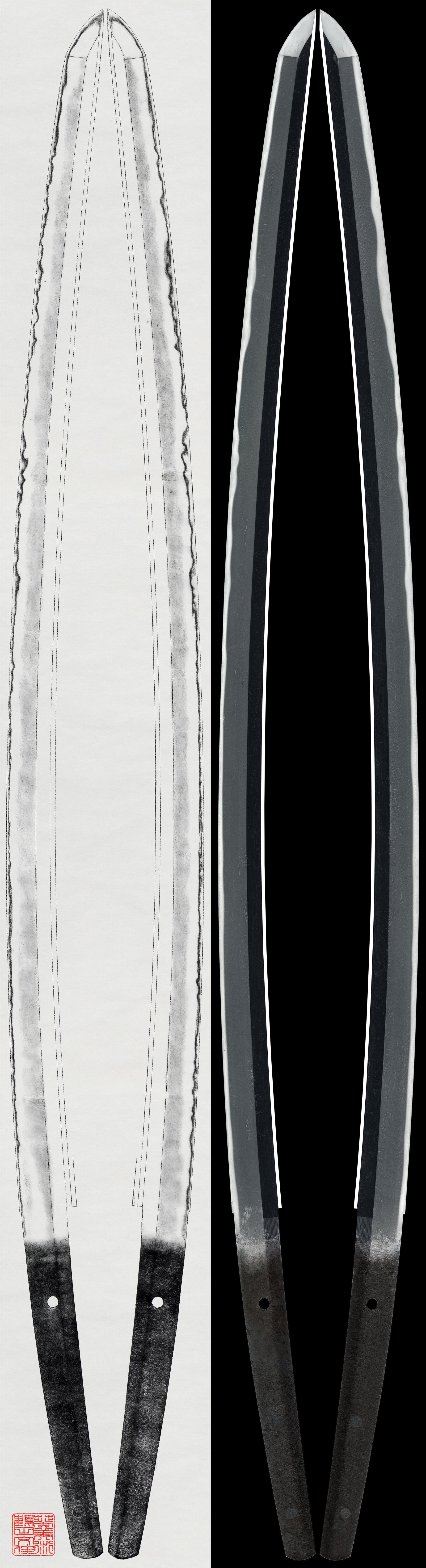
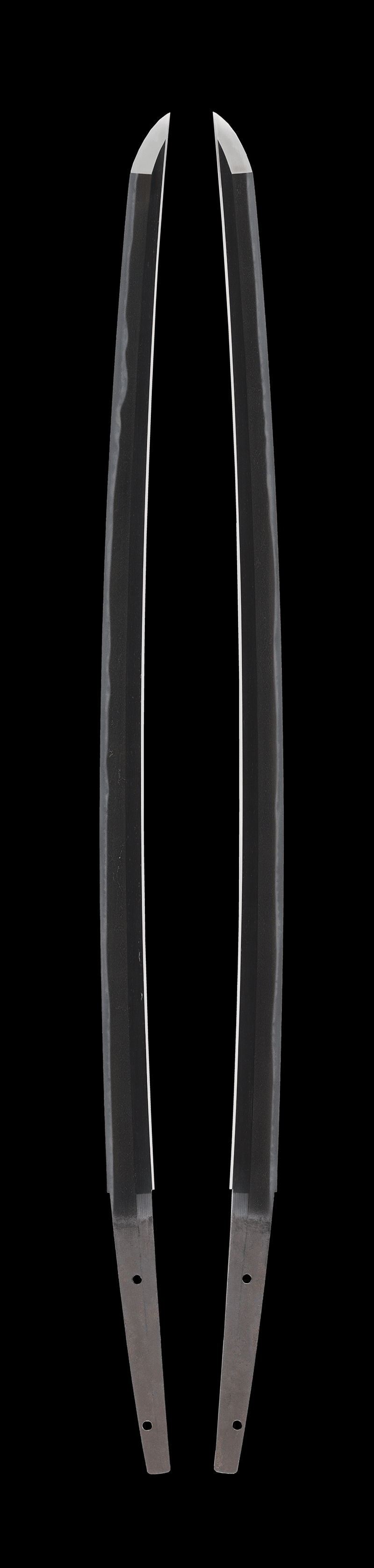
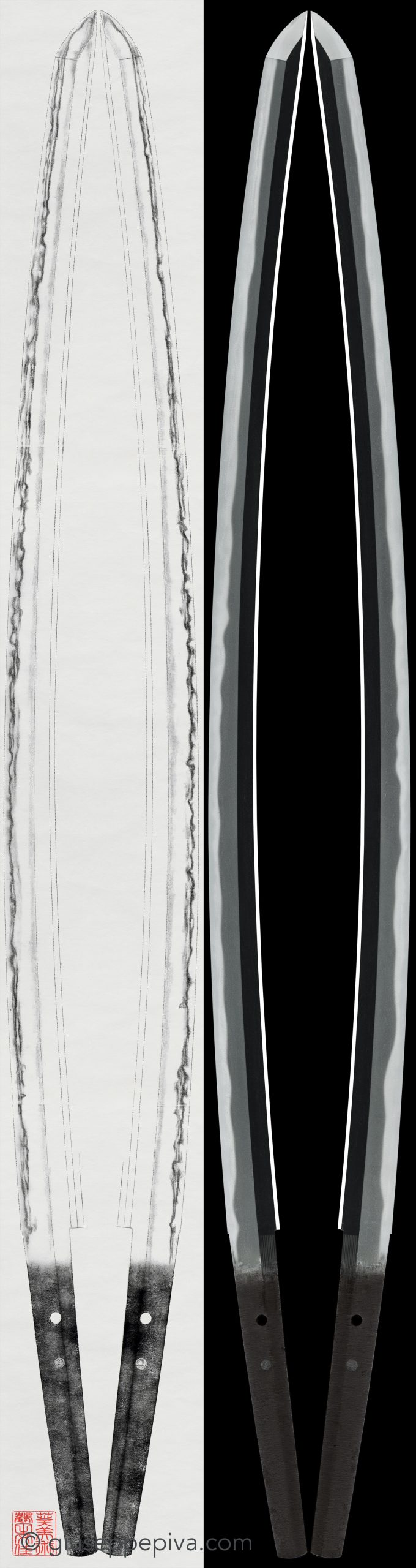
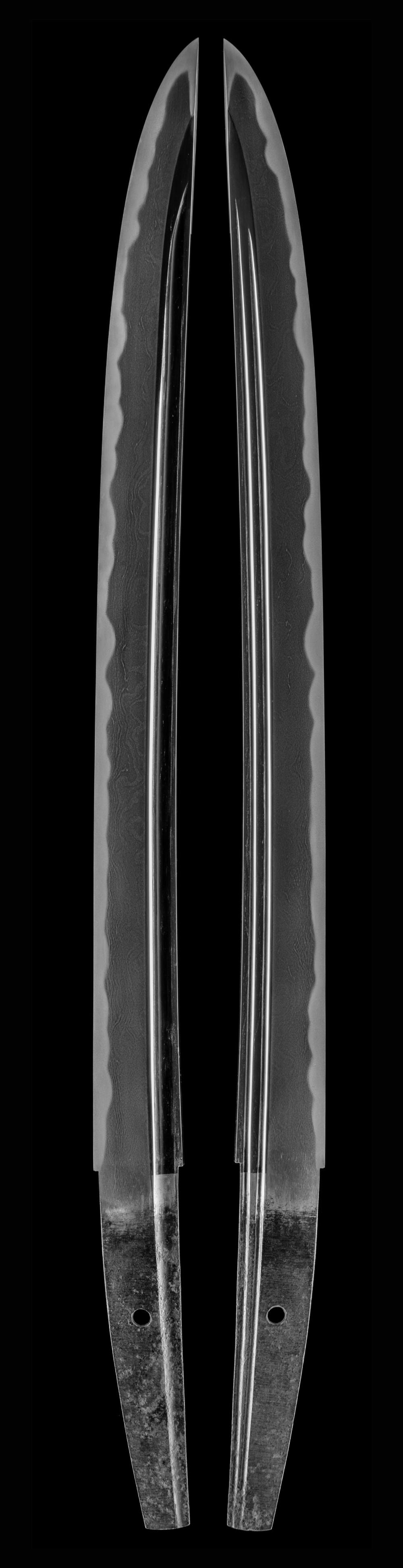
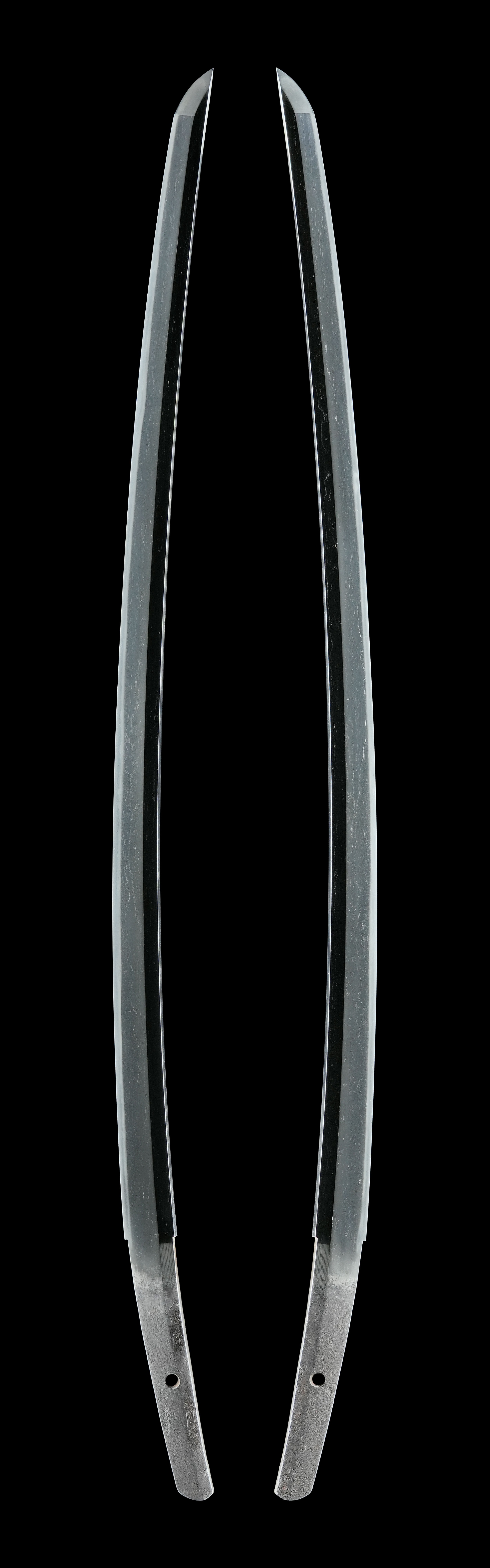
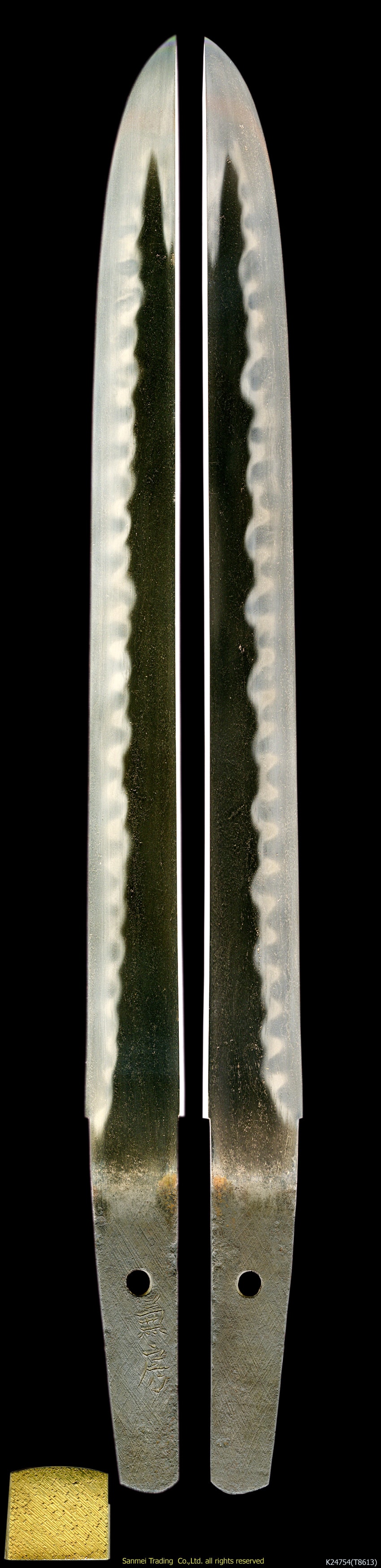
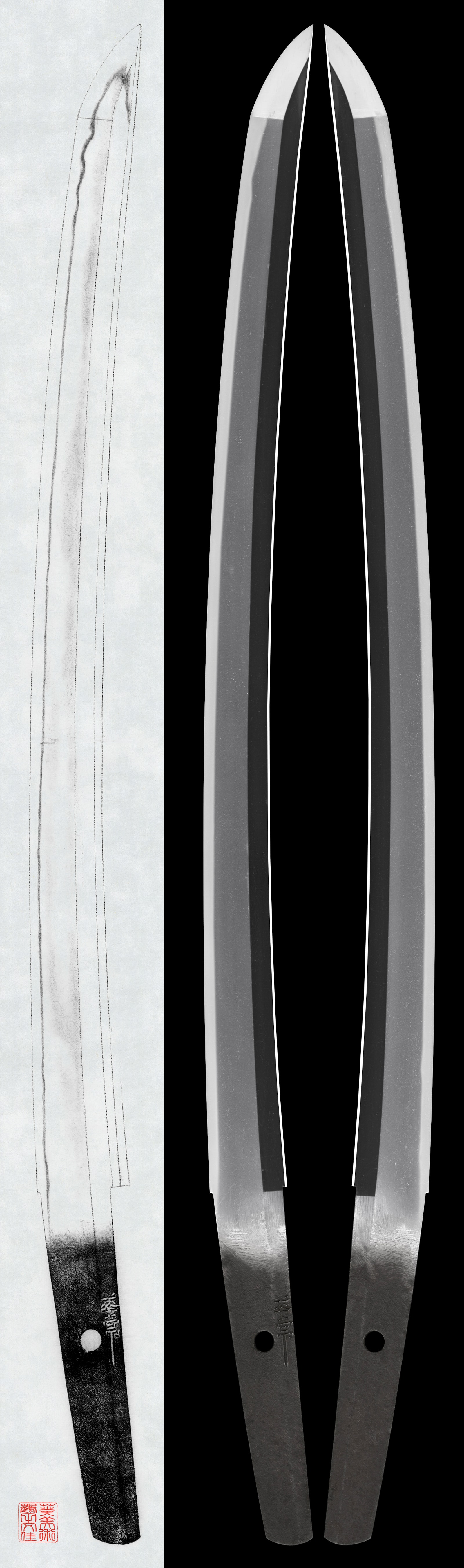
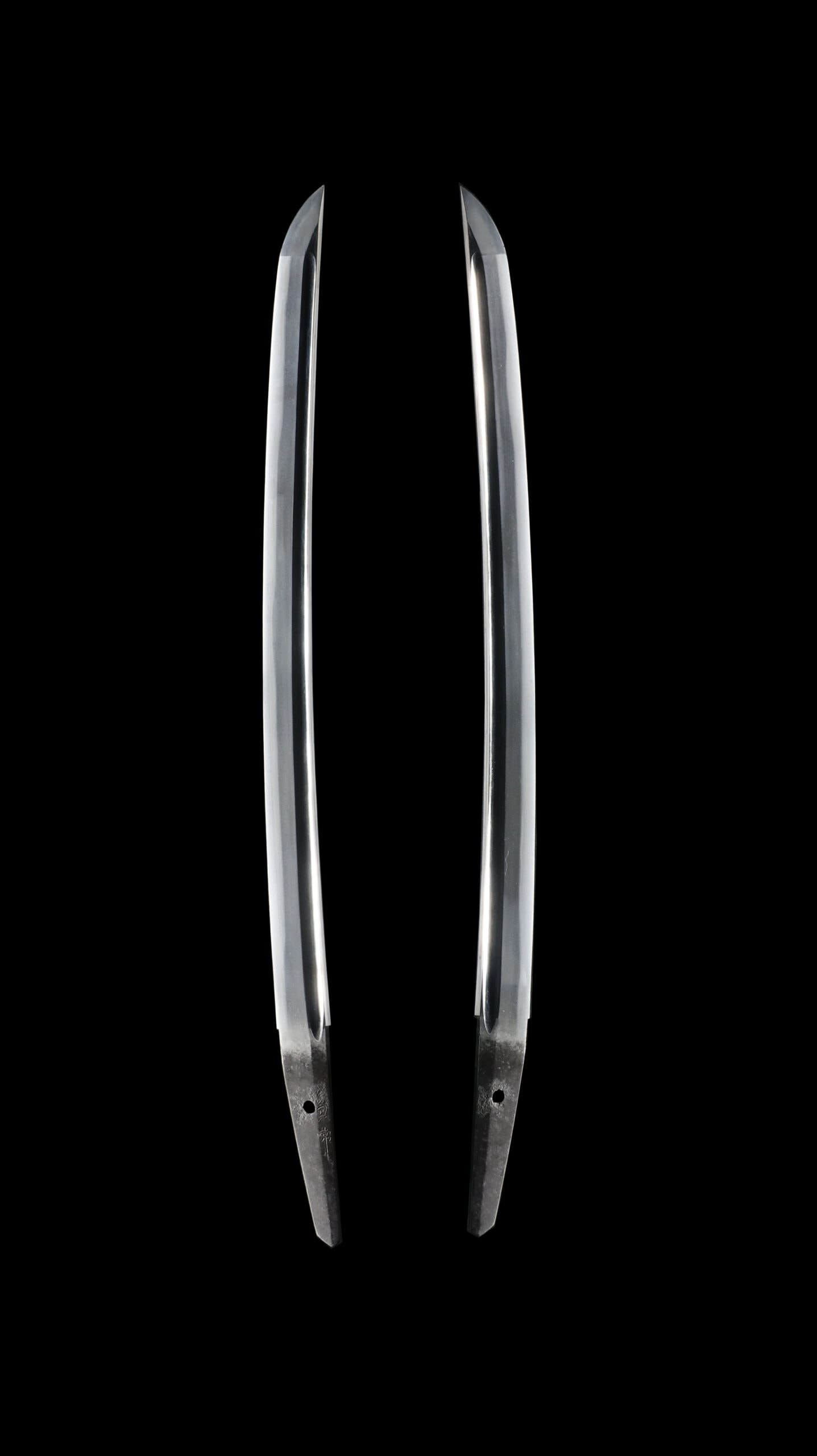
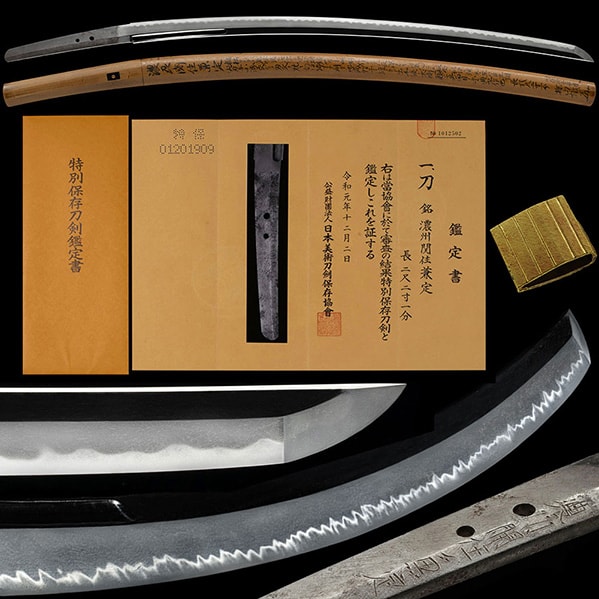
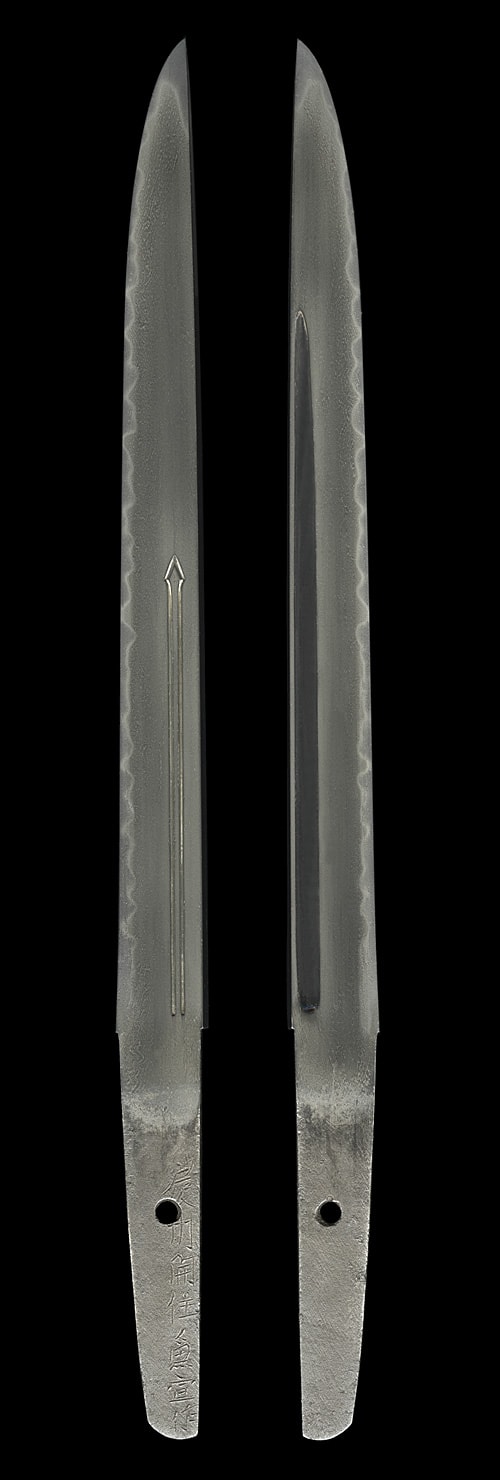
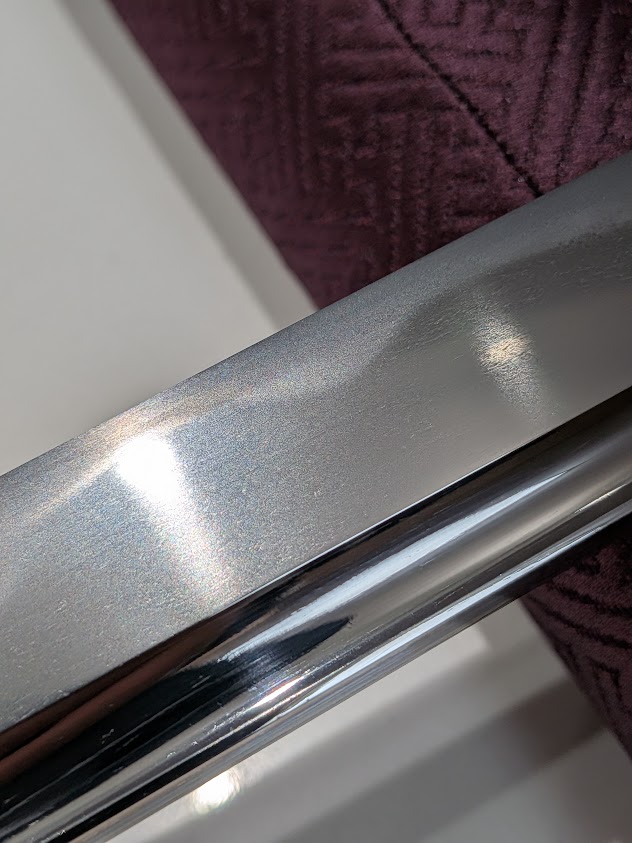
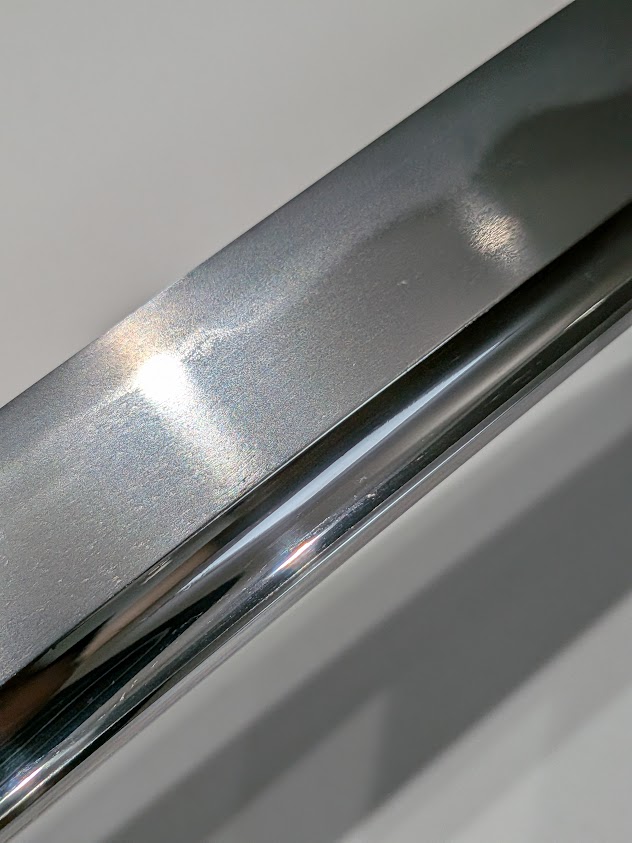
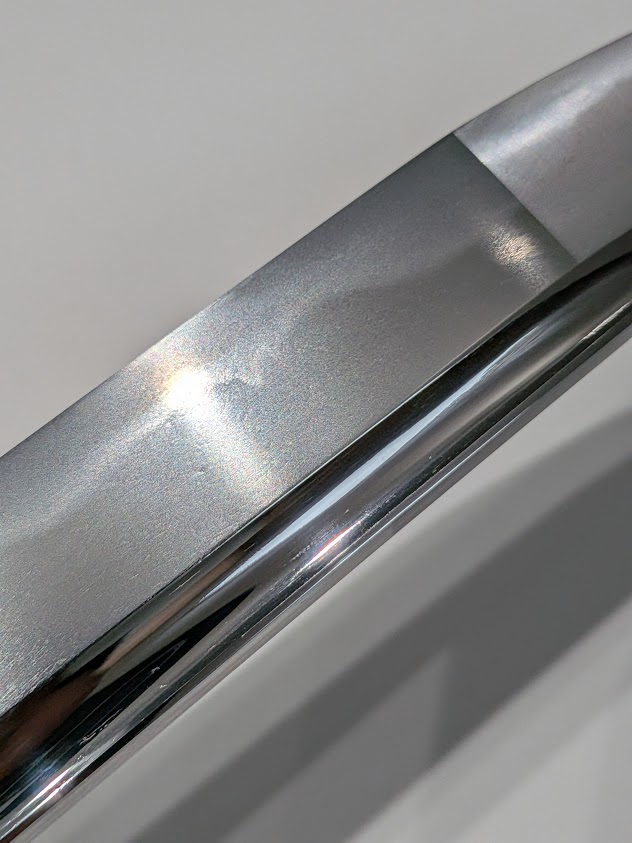
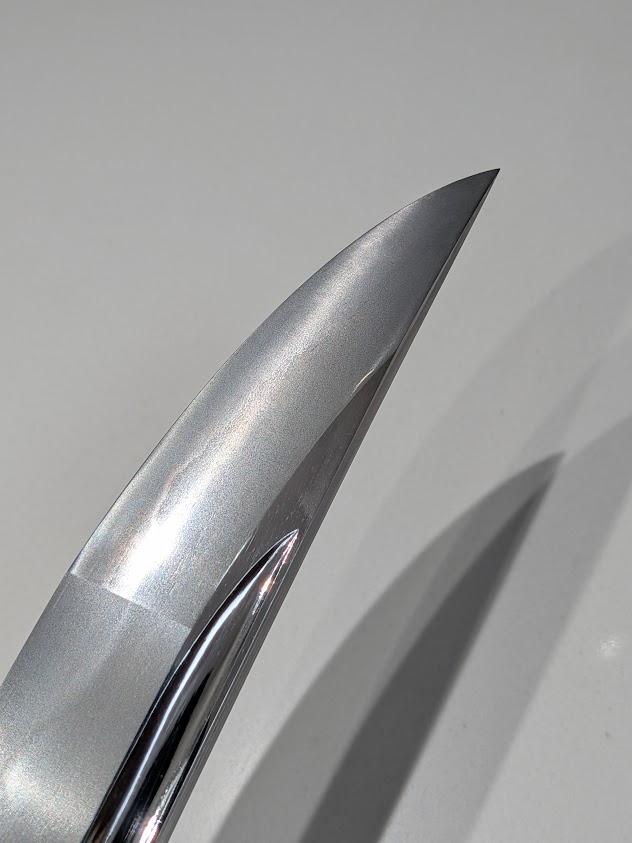
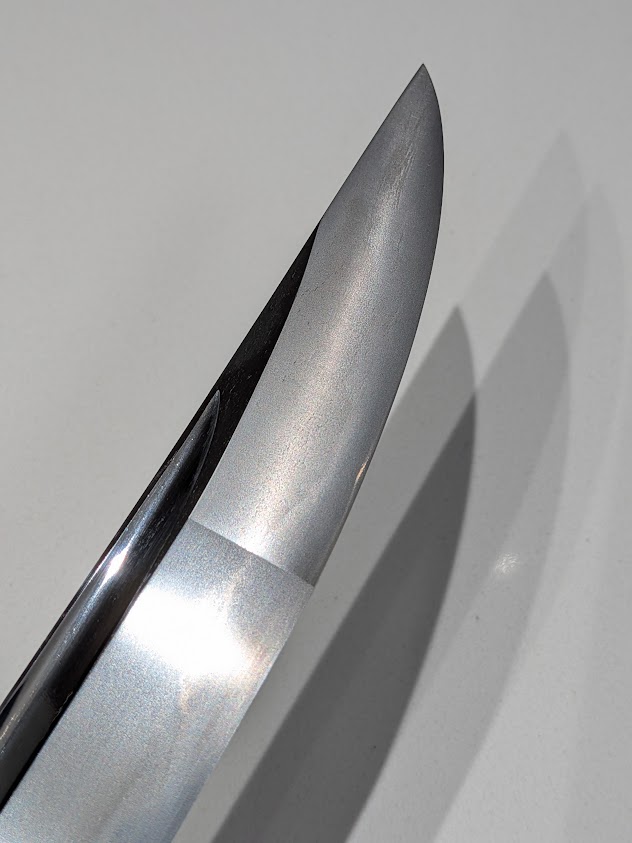
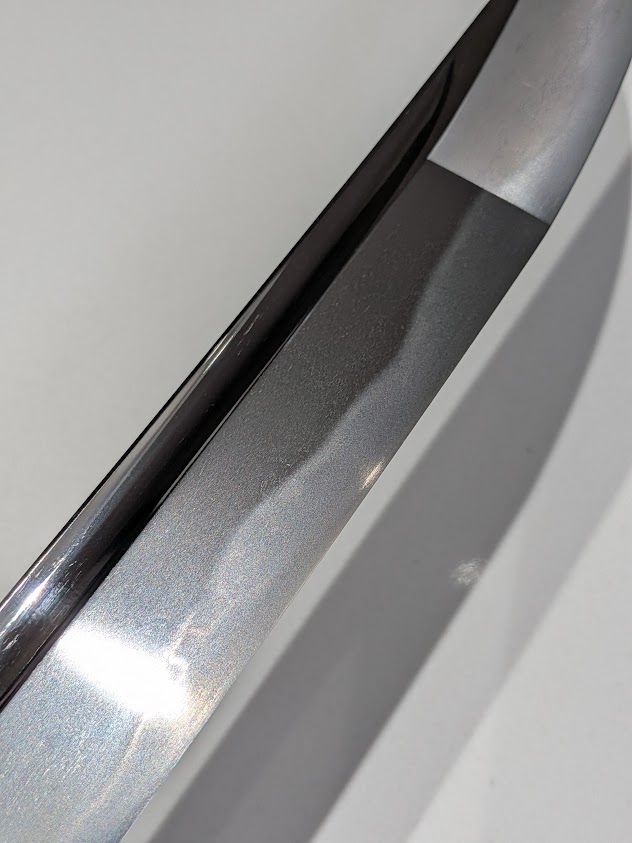
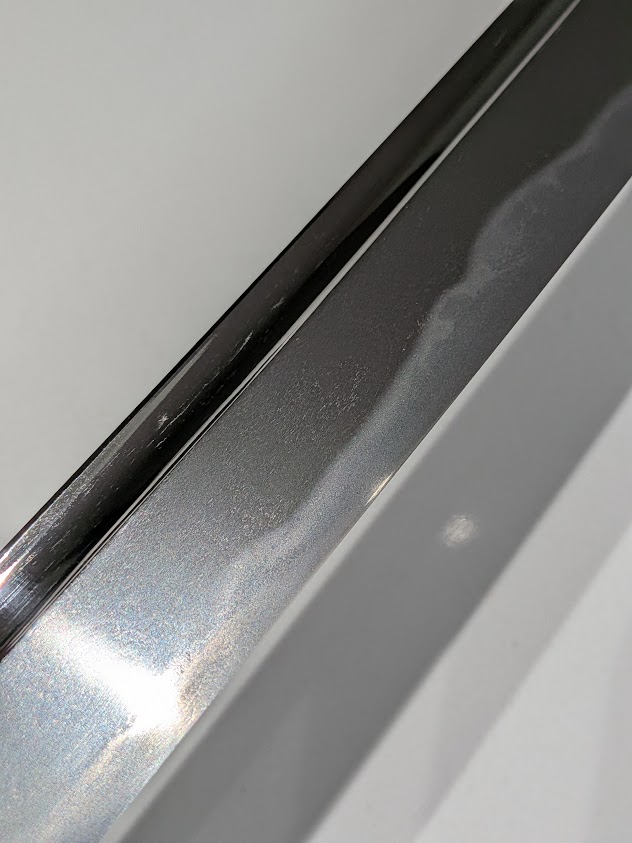
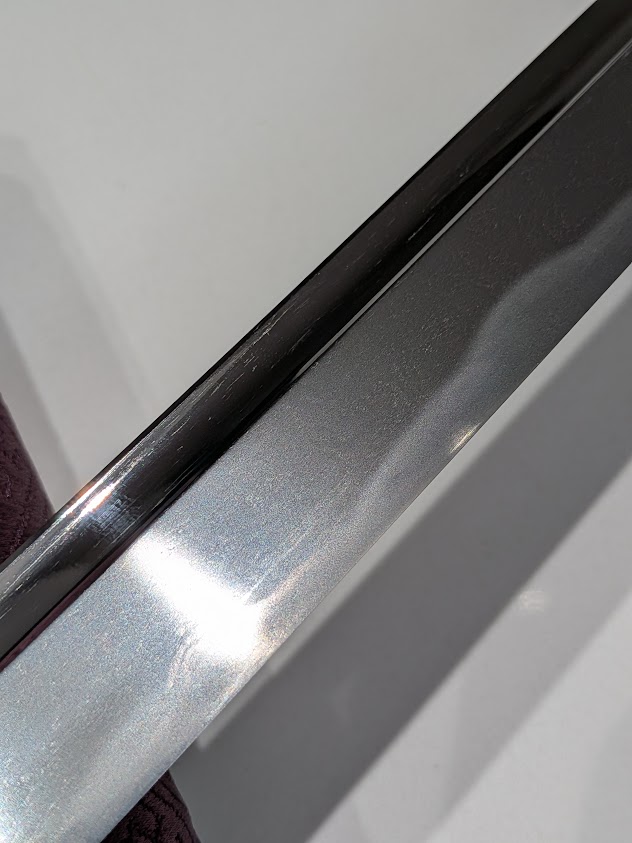
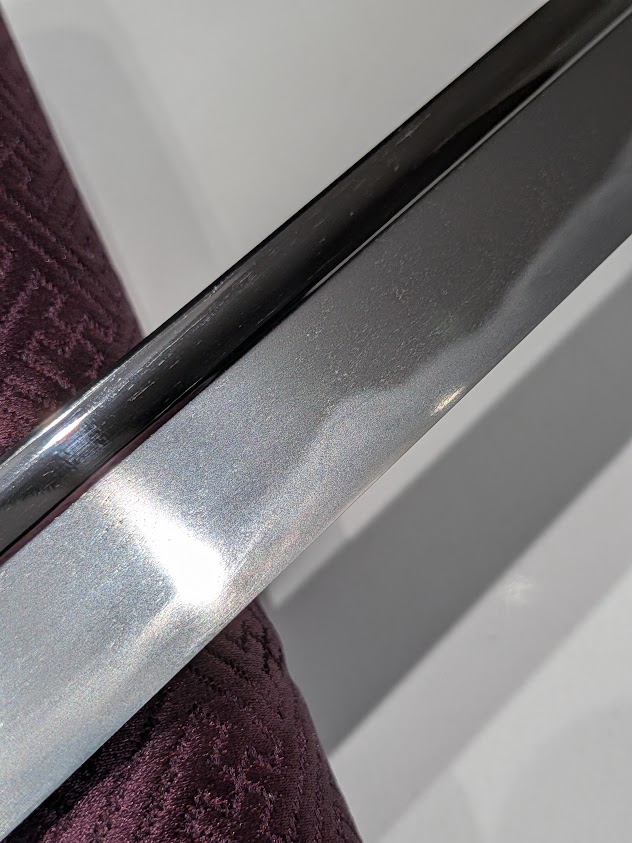
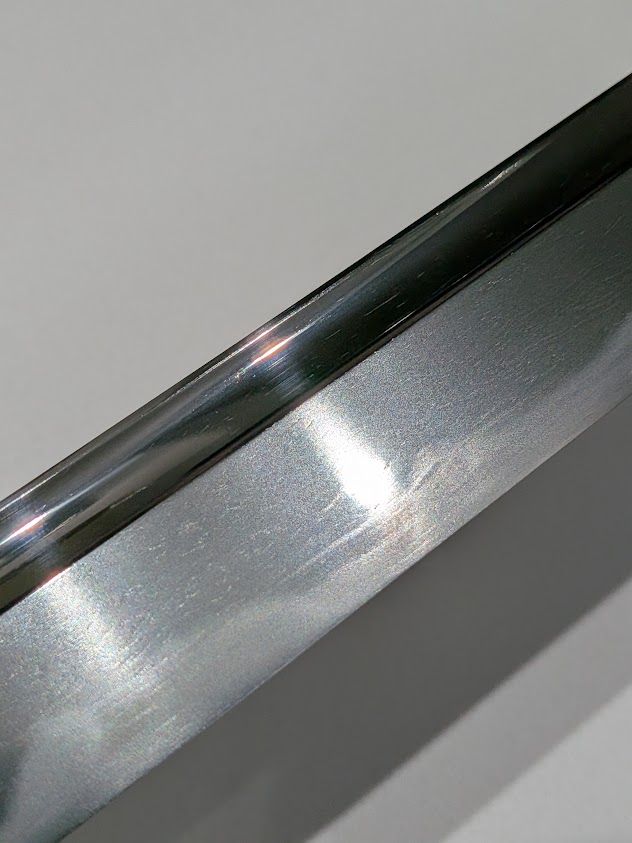
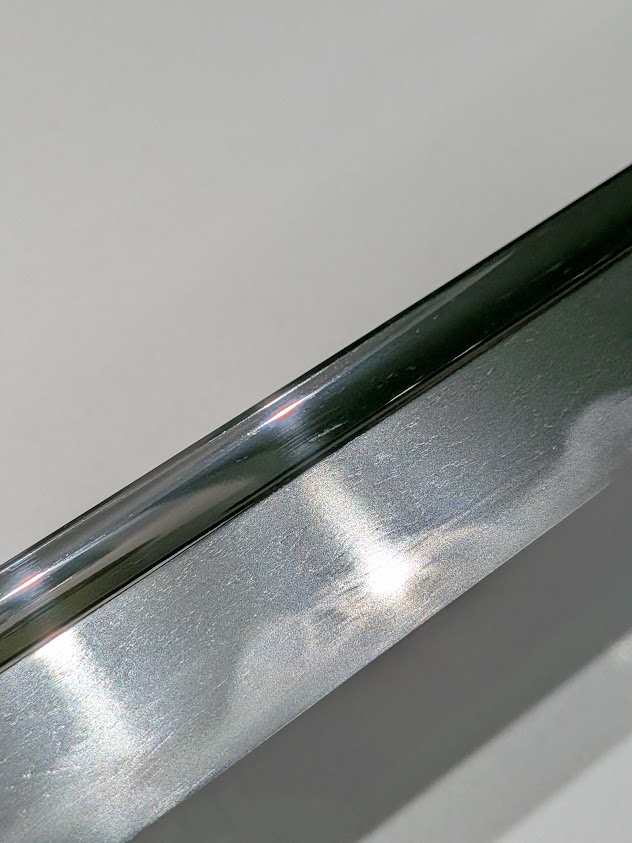
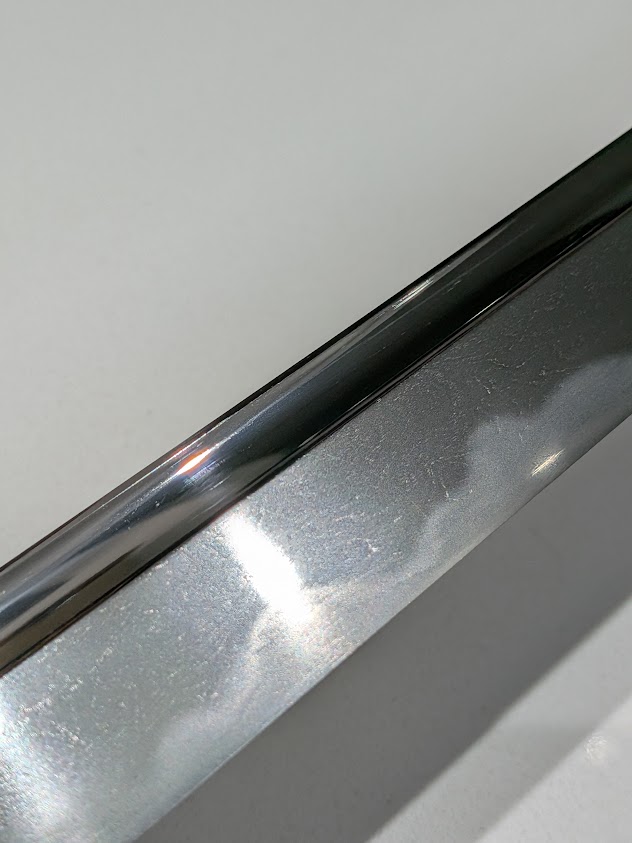
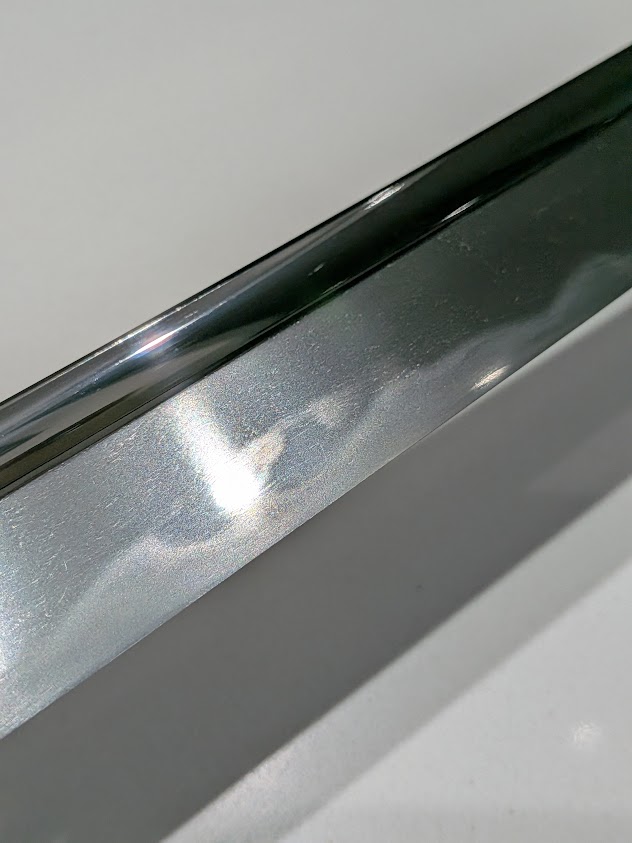
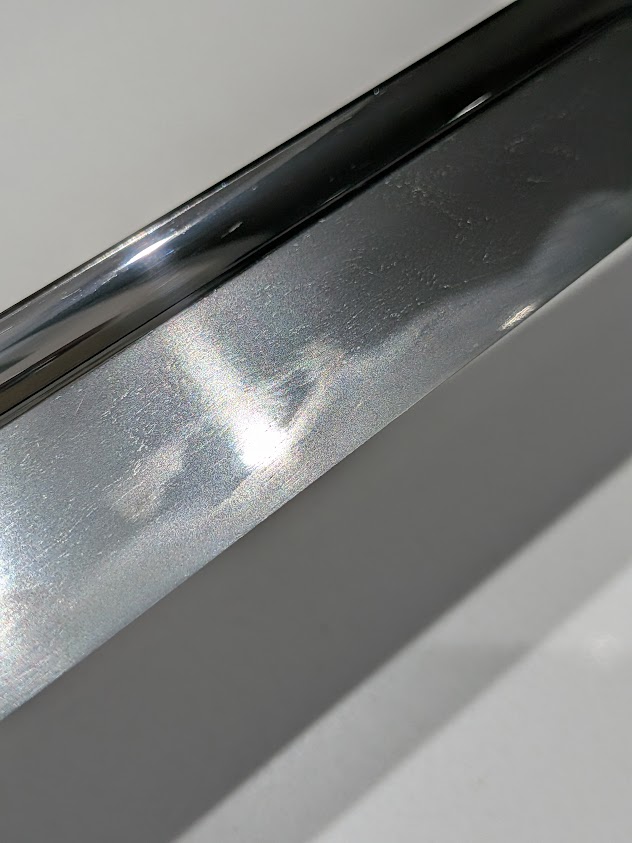
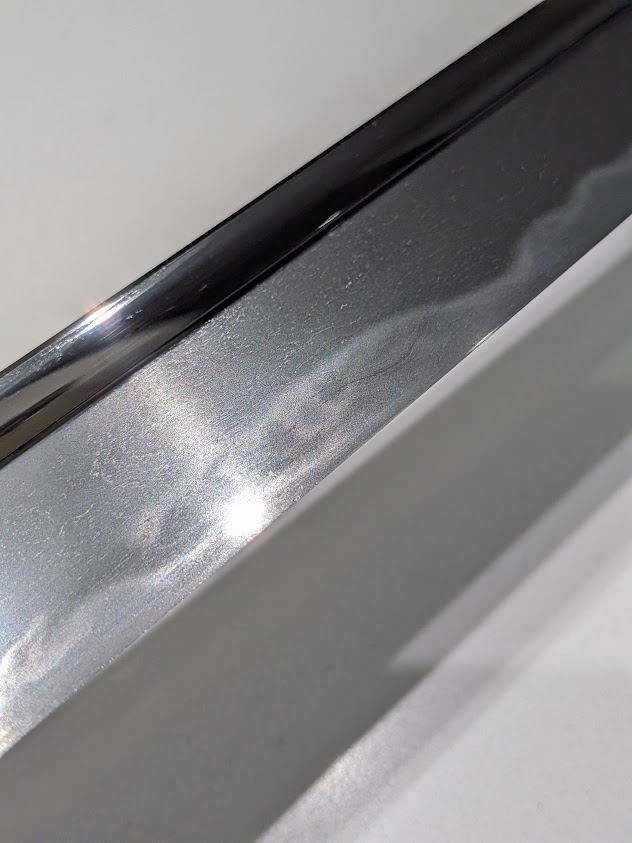
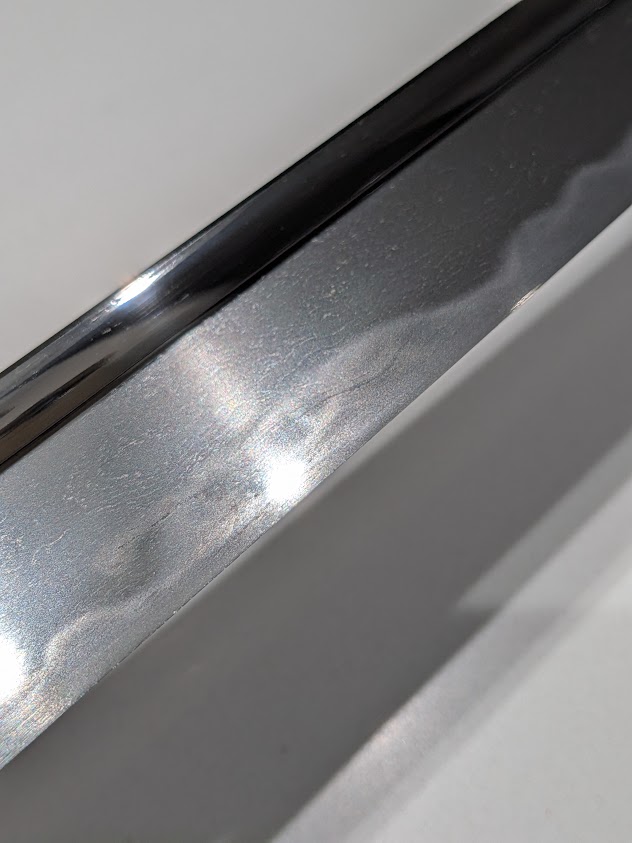
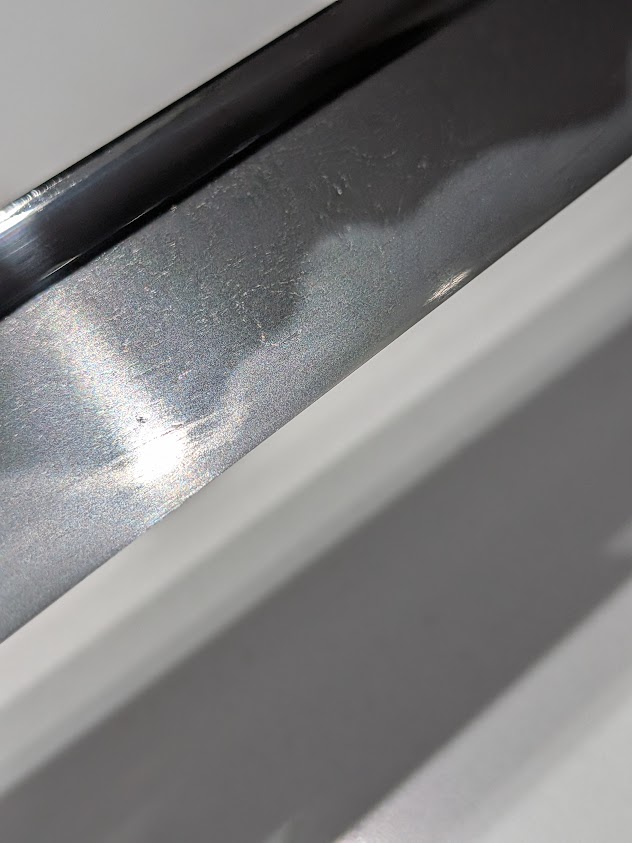
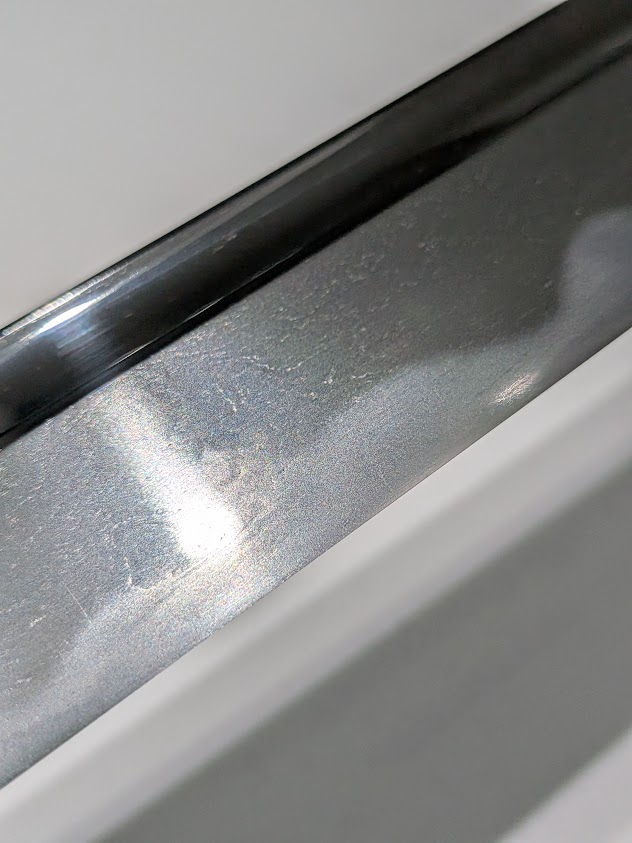
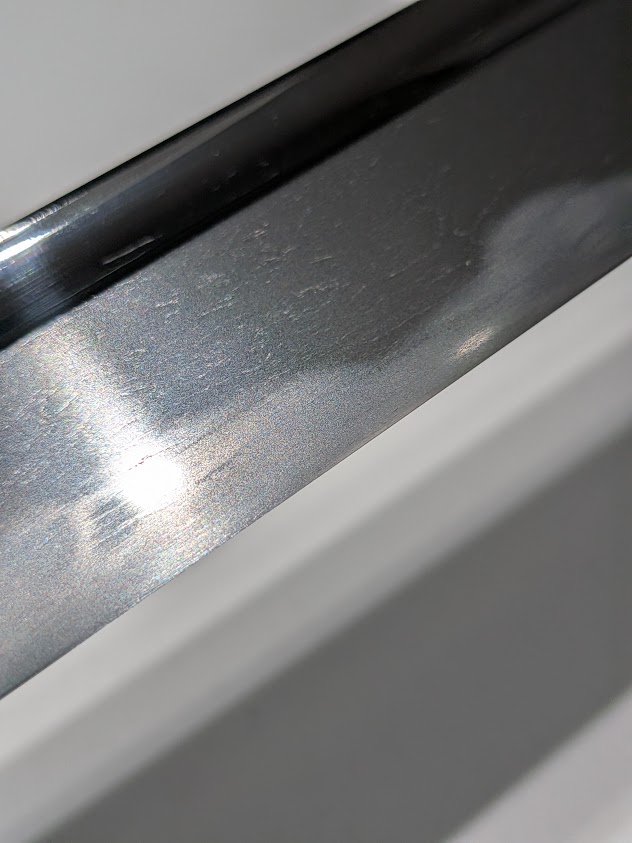
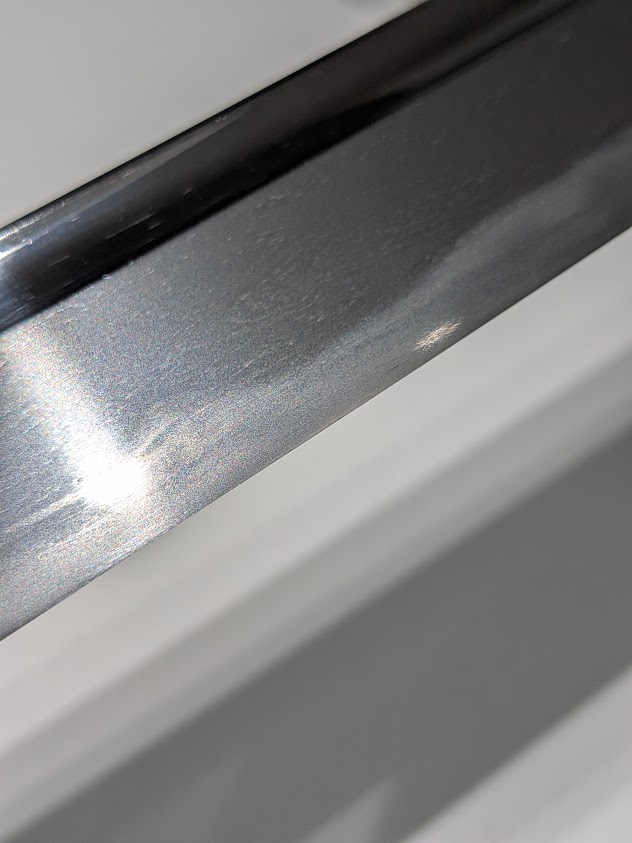
Naoe Shizu katana Status: Sold Kanteisho: Tokubetsu Hozon Aside from Sadamune, I believe Shizu, Samonji, and this Go [Yoshihiro] should form the top three among the ten [of Masamune’s disciples]. — Dr. Honma Junji Shizu Saburo Kaneuji is a grand master swordsmith working from the end of the Kamakura period into the beginning of the Nanbokucho period. He was highly influential, and is the founder of the Mino tradition – one of the five general koto styles of swordsmithing. His path through life lead him from his beginnings in Yamato as a Tegai smith most likely working under Kanenaga, to tutelage under Masamune in Kamakura around 1319. He finally settled in the Shizu area of Mino province at the beginning of the Nanbokucho period. The mastery of the Soshu and Yamato traditions merged in his teachings to become the Mino tradition. Kaneuji started by signing his name with these characters: 包氏. The first character, for Kane, is commonly found in Yamato smiths and was handed down through the students he left behind when he moved to Kamakura. On his arrival to be taught by Masamune, he changed his signature to 兼氏 which was still read as Kaneuji. He has work signed like this that still is in Yamato tradition, showing that he may have come to produce in Kamakura and then learned from Masamune as a secondary effect of being fellow residents. After Kamakura, he moved to Shizu in Mino province, and he is now generally referred to with the nickname Shizu as a result of his final place of work. Swords from his time period in Yamato are referred to as Yamato Shizu because of the nickname we use for him today. His work after his learning with Masamune are simply referred to as Shizu. This however makes for some points of confusion, because the students he left behind in Yamato are also collectively referred to as Yamato Shizu and there was also a nidai Kaneuji who left behind some excellent works in Yamato. Context is then necessary whenever examining a blade attributed to Yamato Shizu to determine if it is a school or individual attribution. The students Shizu Kaneuji left behind in Mino when he died are called Naoe Shizu, as they moved and settled in Naoe which was a village in the northern part of Shizu. These Naoe Shizu smiths are known individually as Kanetsugu, Kanenobu, Kanetomo, and Kanetoshi and may also have been sons of his. Since they typically made Nanbokucho style sugata that have been cut down with signatures lost, they were particularly subject to losing their signatures. Today, there are no signed tachi left by the Naoe Shizu group. This leads to the frequent use of the school classification when attributing to them, but we know the work styles and the smiths by signed tanto and ko-wakizashi. Kaneuji is famous today for being the student of Masamune who’s work was closest in style to the master. We can confirm through dated works that were recorded in the Edo period that his dates align with the historical production of Masamune. Masamune of co
 NihontoWatchBETA
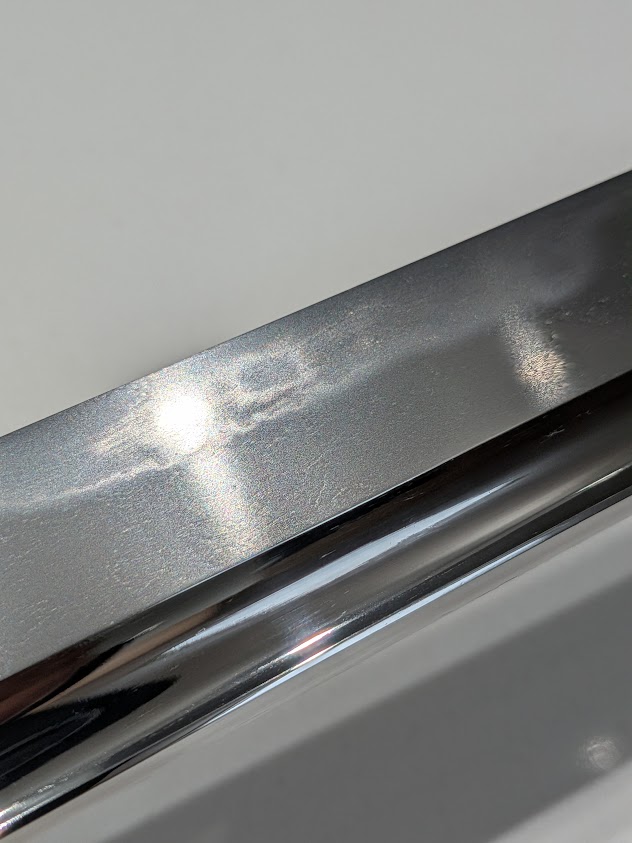
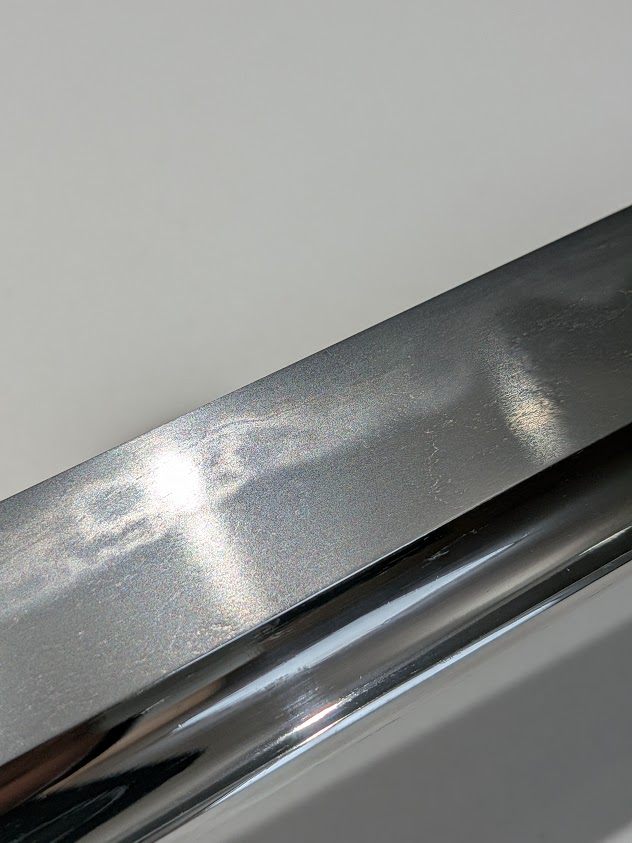
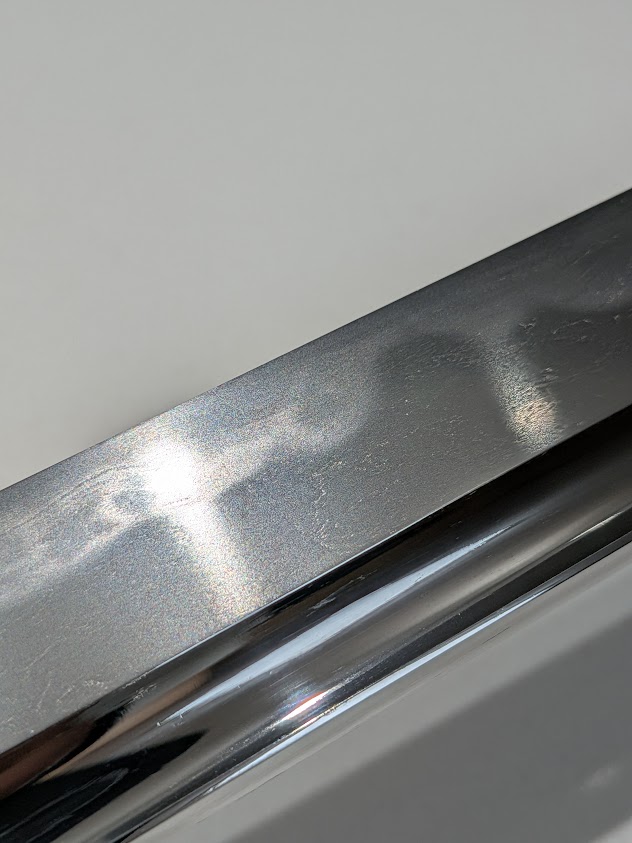
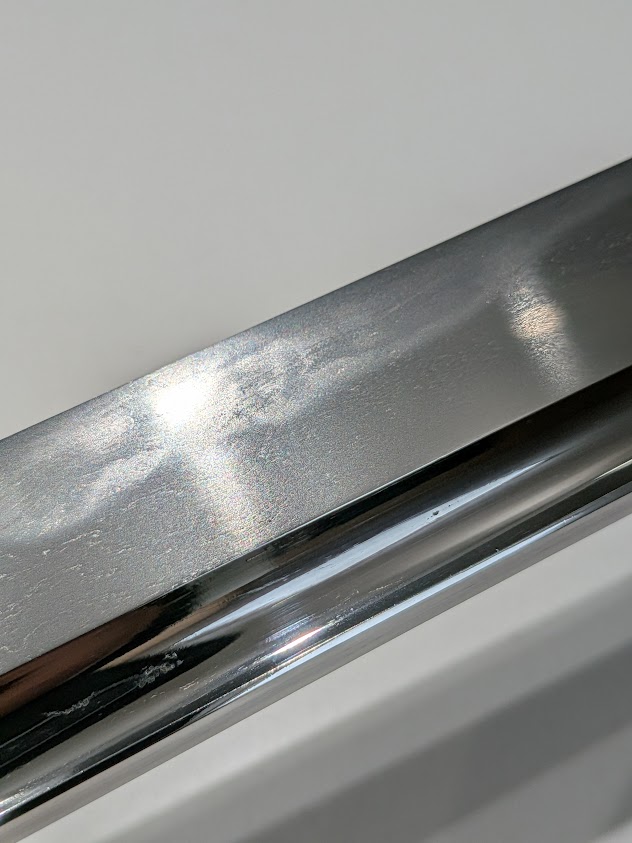
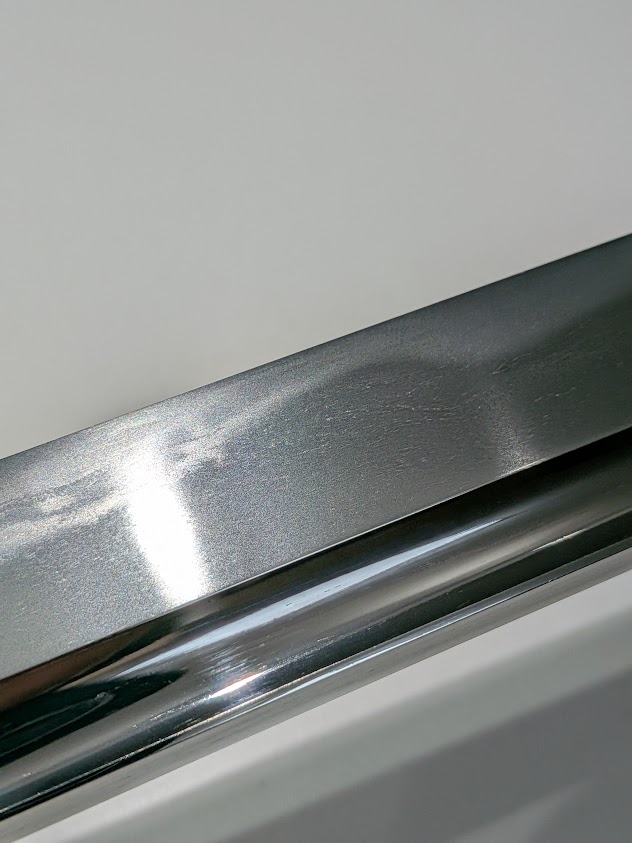
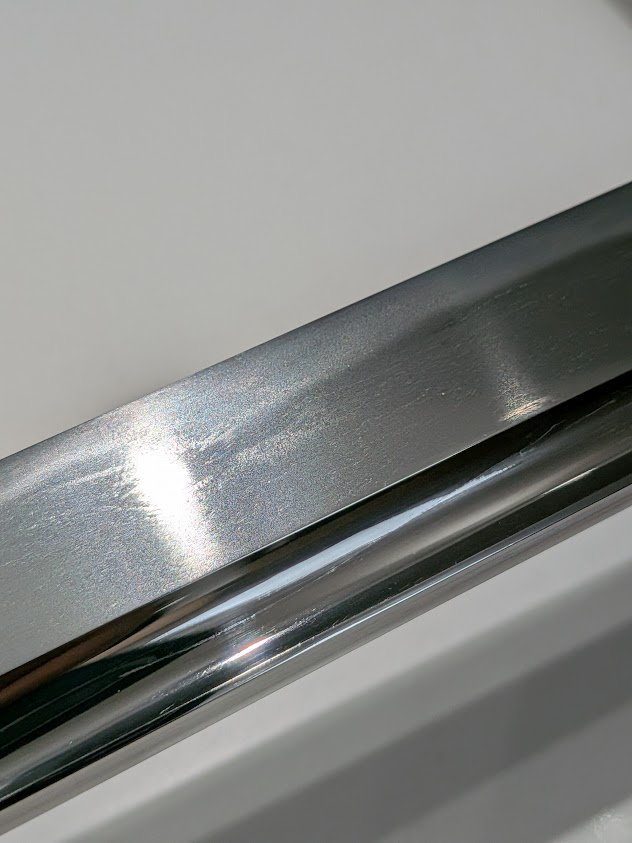
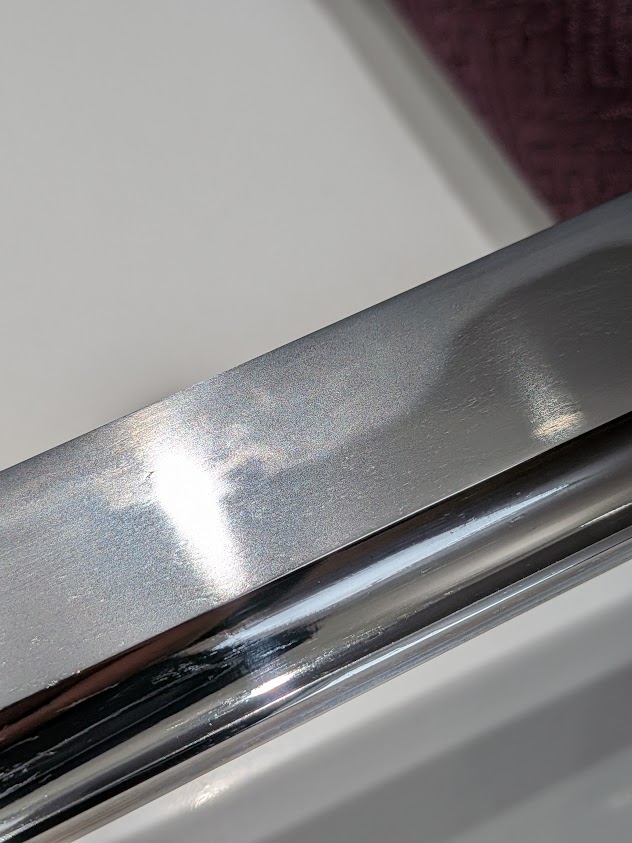
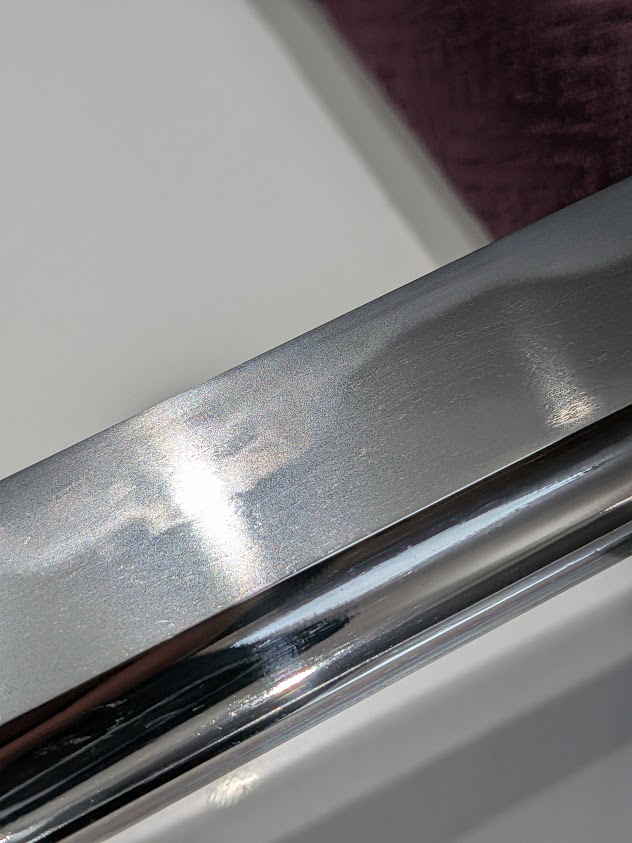
美濃伝 · 美濃
現在16点販売中
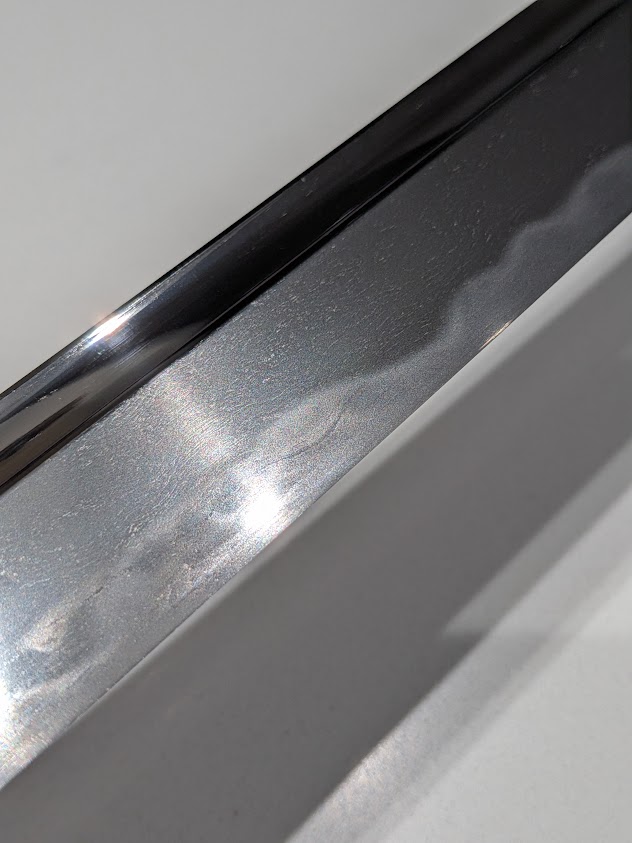
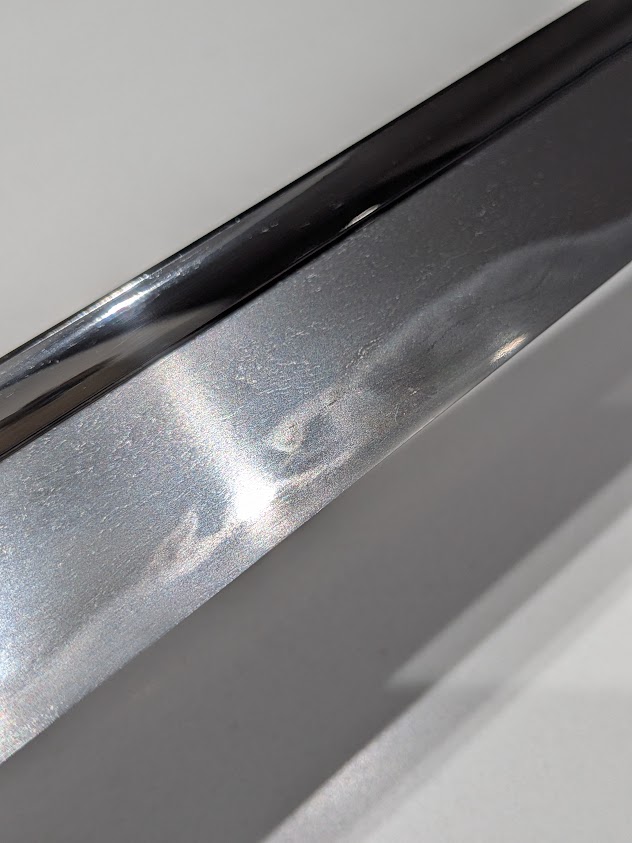
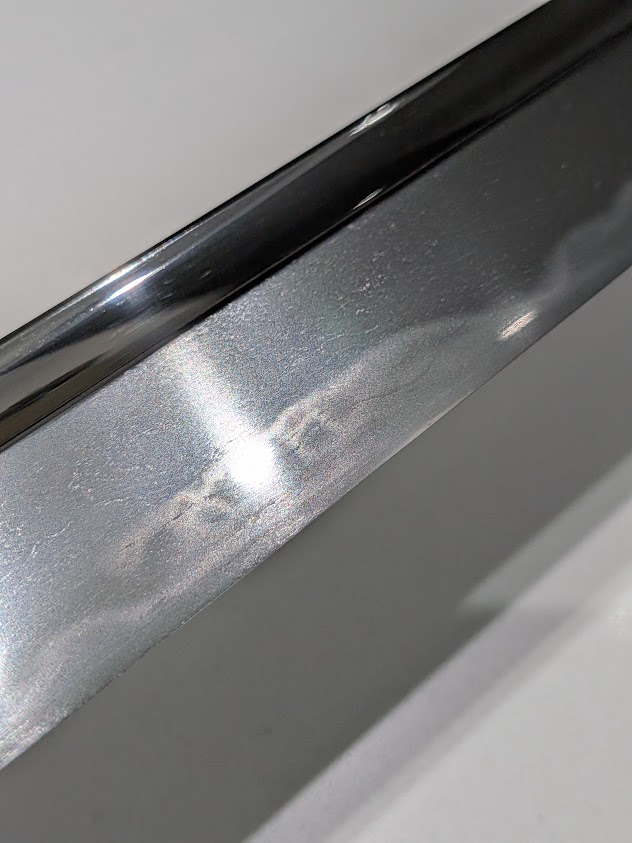
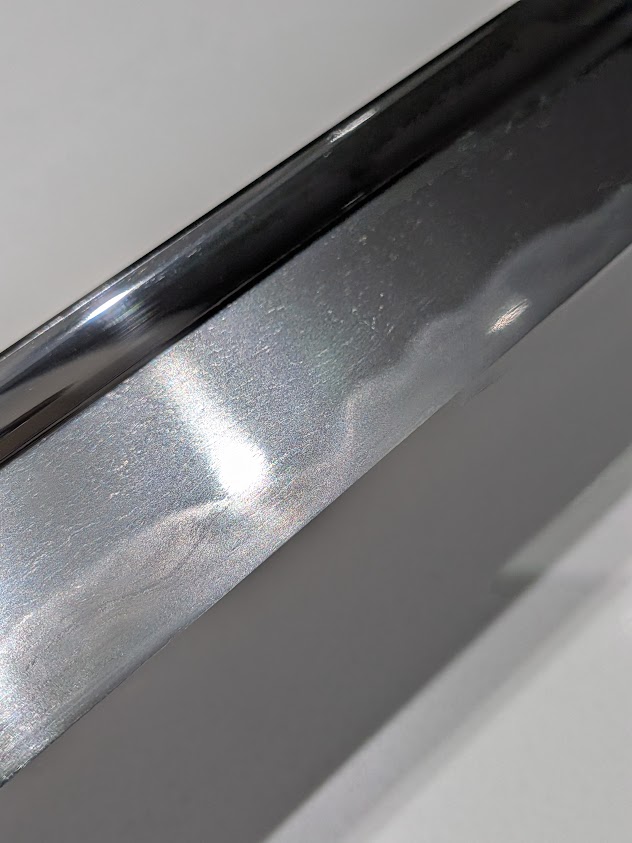
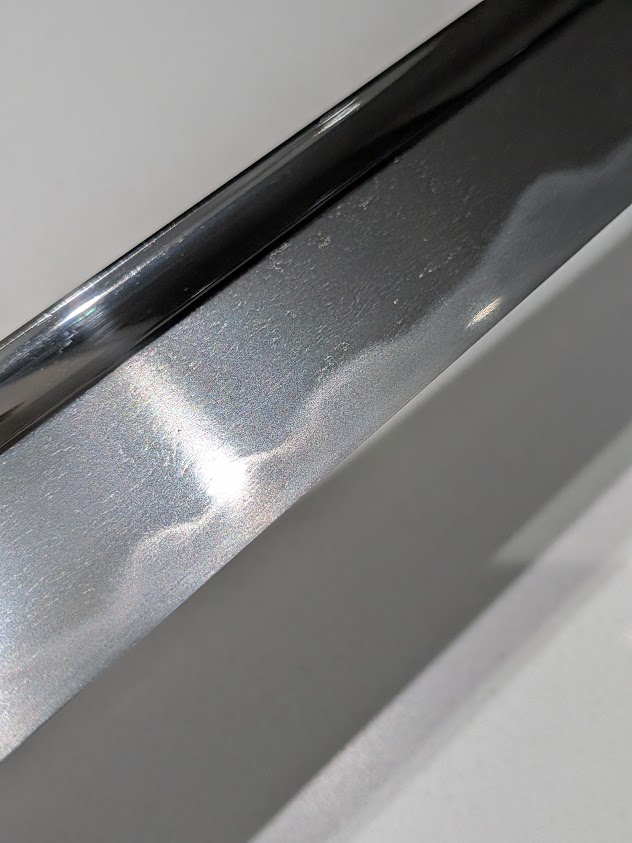
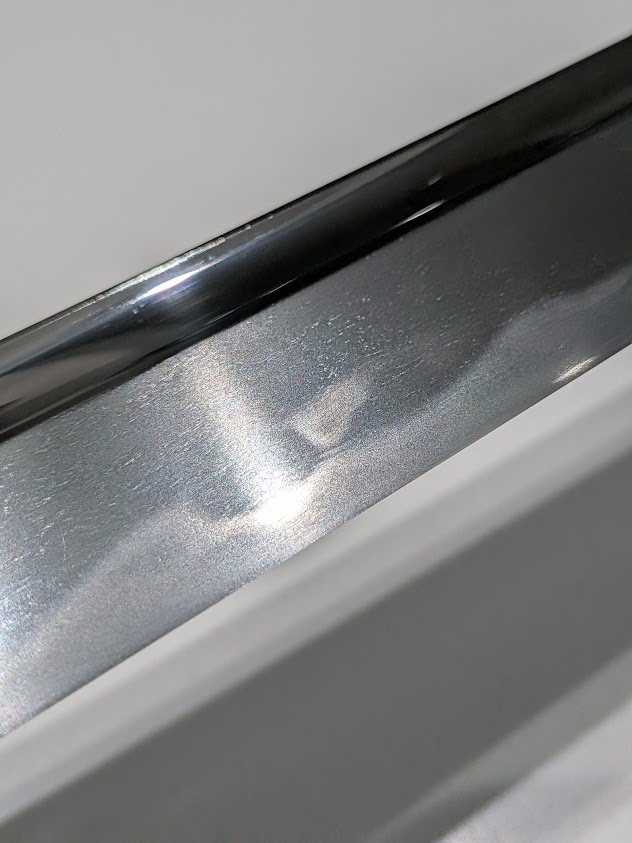
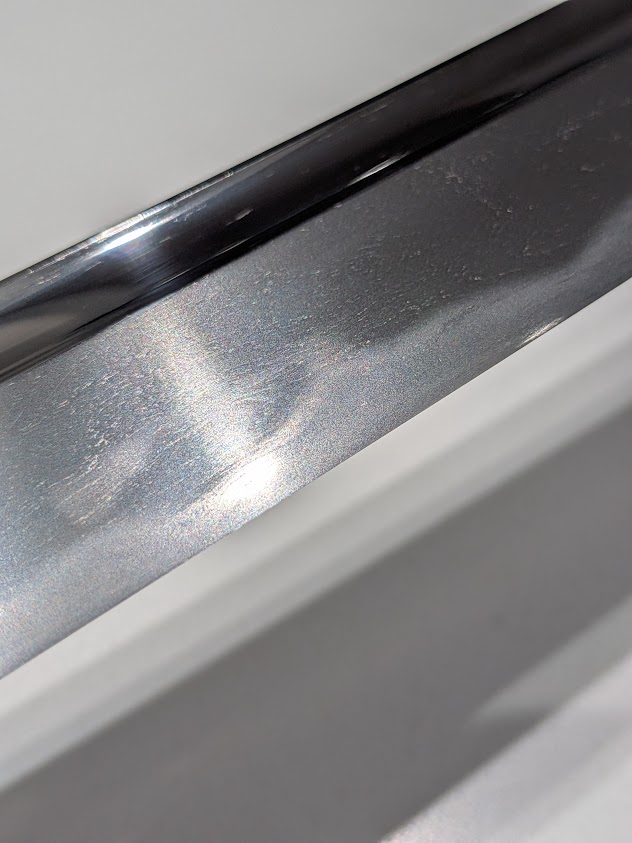
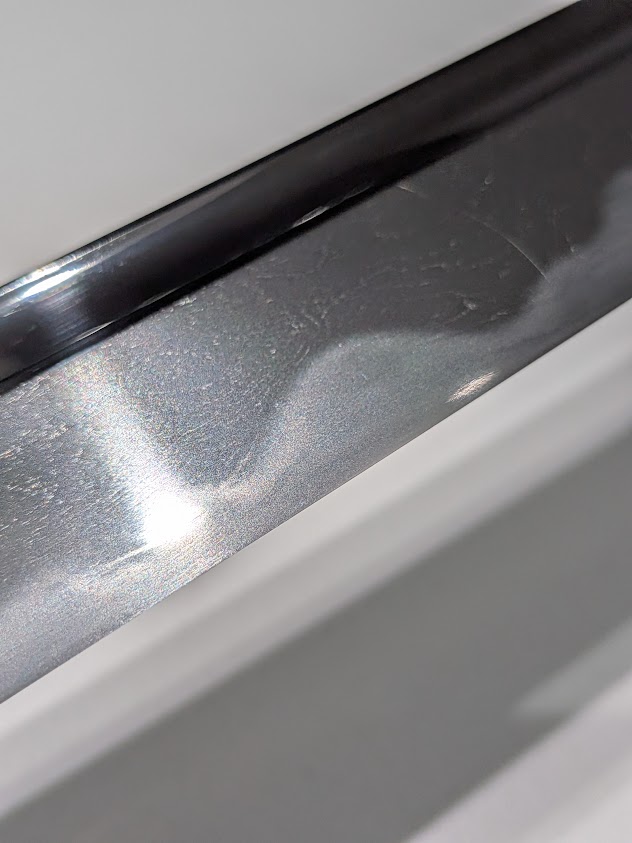
美濃国直江の地に興った一門で、その名は移住に由来する。元来、志津は美濃の地名であり、ここに大和より正宗の門人たる兼氏が来住して鍛えたことから、地名をとって志津三郎兼氏と呼ばれた。正宗十哲の一に数えられる兼氏は、相州伝を基調としつつ大和手掻の血を負い、尖りごころの互の目に走る乱調をもって美濃伝のいま一つの根をなした工である。その門人たち、兼友・兼信・兼次らは、はじめ志津に作り、後に同国直江に移って鍛えたため、この一門を直江志津と総称する。年代は南北朝の延文・貞治より応安頃に及び、本流は兼氏に発する志津の血を一代を隔てて承けた工の群である。同時代に越中呉服郷の江則重の流れを北陸道より美濃に運んだ為継のごとき手も加わって、相州伝が内陸へ運ばれ美濃の地鉄に根を下ろした姿を、この一門は最もよく伝える。 直江志津を貫くのは、工の差を越えて繰り返される共通の語法である。地鉄は板目に杢を交え、処々流れて柾がかり、肌立ちごころとなって地沸厚くつき、地景がよく入って鉄を縫い、北国の趣濃く黒みをおびる。その地に立つ刃文は、相州伝の影響を負った浅いのたれ・小のたれに、美濃の尖り刃を交えた互の目を連ね、沸は強く深く、砂流しが頻りにかかって長く金筋を伴う。匂口は深く、優品では明るく冴え、激しめの作では迫力を、穏やかな作では穏雅な作位を示す。帽子は乱れ込んで掃きかけ、小丸に返るか焼詰め風となる。同じ型のうちに各工の手が読み分けられ、為継は則重風の湿ったのたれに美濃の鋭い尖りを与えて黒く沸豊かな地に焼き、兼友は頭の丸い互の目を連れて小沸出来に穏やかに焼き、兼次は逆がかった小のたれ調の互の目を匂深く焼く。大和・相州・美濃を融合したこの地刃が一門の背骨であり、師たる兼氏その人と比べれば、より穏やかで実直に、また地肌の冴えにおいて控えめに収まる点が、門流の手を分かつ。 鑑定にあっては、まず黒ずむ板目に地沸厚く沸出来で匂口の沈む地刃をもって直江志津と読み、本流に直刃がないことを否定の見どころとする。次に、より大きく揺れるのたれ乱れと頭の丸い互の目の連れる態をもって、これを志津・金重の手から、また下る末関の同名工から分かつ。主要工の格は説明書の評にそのまま現れ、為継は江則重に直結する黒い沸の手として藤代の上工に列し、兼友は鍛えの質によって上々作に位置づけられて、いずれも国宝・重要文化財を持たぬ南北朝の名である。現存の大半は作風から極められた大磨上無銘の刀であり、在銘・年紀作は極めて稀で、説明書はこれを頗る貴重とし、無銘極めにこそよい出来が多いと率直に評する。為継には応安年紀の作、兼友・兼次には在銘の短刀が伝承の拠り所として立つ。所伝は乏しいながら確かで、熱田神宮に伝わる作や、戦前の蒐集を経て今に伝わる短刀が記録される。極められた無銘の一刀が市に現れるのは折にふれ、忍耐をもってのことであって、在銘・年紀の作はそれとは別格の、名を定める証として遇される。
保存刀剣のうち、出来が一層優れ、保存状態も良好と認められたものです。再刃や、室町・江戸期の多くの無銘作は対象外となり、保存刀剣より高い基準が課されます。
日本美術刀剣保存協会(NBTHK)は、1948年に設立され、文化庁の監督を受ける公益財団法人で、東京・刀剣博物館に本部を置きます。専門の審査員が出品作を直接審査し、美術的・歴史的価値に応じた鑑定書を発行します。NBTHKの鑑定書は、日本刀および刀装具の真正性を示す最も広く認知された基準です。
NBTHK公式サイトNaoe Shizu katana Status: Sold Kanteisho: Tokubetsu Hozon Aside from Sadamune, I believe Shizu, Samonji, and this Go [Yoshihiro] should form the top three among the ten [of Masamune’s disciples]. — Dr. Honma Junji Shizu Saburo Kaneuji is a grand master swordsmith working from the end of the Kamakura period into the beginning of the Nanbokucho period. He was highly influential, and is the founder of the Mino tradition – one of the five general koto styles of swordsmithing. His path through life lead him from his beginnings in Yamato as a Tegai smith most likely working under Kanenaga, to tutelage under Masamune in Kamakura around 1319. He finally settled in the Shizu area of Mino province at the beginning of the Nanbokucho period. The mastery of the Soshu and Yamato traditions merged in his teachings to become the Mino tradition. Kaneuji started by signing his name with these characters: 包氏. The first character, for Kane, is commonly found in Yamato smiths and was handed down through the students he left behind when he moved to Kamakura. On his arrival to be taught by Masamune, he changed his signature to 兼氏 which was still read as Kaneuji. He has work signed like this that still is in Yamato tradition, showing that he may have come to produce in Kamakura and then learned from Masamune as a secondary effect of being fellow residents. After Kamakura, he moved to Shizu in Mino province, and he is now generally referred to with the nickname Shizu as a result of his final place of work. Swords from his time period in Yamato are referred to as Yamato Shizu because of the nickname we use for him today. His work after his learning with Masamune are simply referred to as Shizu. This however makes for some points of confusion, because the students he left behind in Yamato are also collectively referred to as Yamato Shizu and there was also a nidai Kaneuji who left behind some excellent works in Yamato. Context is then necessary whenever examining a blade attributed to Yamato Shizu to determine if it is a school or individual attribution. The students Shizu Kaneuji left behind in Mino when he died are called Naoe Shizu, as they moved and settled in Naoe which was a village in the northern part of Shizu. These Naoe Shizu smiths are known individually as Kanetsugu, Kanenobu, Kanetomo, and Kanetoshi and may also have been sons of his. Since they typically made Nanbokucho style sugata that have been cut down with signatures lost, they were particularly subject to losing their signatures. Today, there are no signed tachi left by the Naoe Shizu group. This leads to the frequent use of the school classification when attributing to them, but we know the work styles and the smiths by signed tanto and ko-wakizashi. Kaneuji is famous today for being the student of Masamune who’s work was closest in style to the master. We can confirm through dated works that were recorded in the Edo period that his dates align with the historical production of Masamune. Masamune of co
NihontoWatchBETA美濃伝 · 美濃
現在16点販売中
美濃国直江の地に興った一門で、その名は移住に由来する。元来、志津は美濃の地名であり、ここに大和より正宗の門人たる兼氏が来住して鍛えたことから、地名をとって志津三郎兼氏と呼ばれた。正宗十哲の一に数えられる兼氏は、相州伝を基調としつつ大和手掻の血を負い、尖りごころの互の目に走る乱調をもって美濃伝のいま一つの根をなした工である。その門人たち、兼友・兼信・兼次らは、はじめ志津に作り、後に同国直江に移って鍛えたため、この一門を直江志津と総称する。年代は南北朝の延文・貞治より応安頃に及び、本流は兼氏に発する志津の血を一代を隔てて承けた工の群である。同時代に越中呉服郷の江則重の流れを北陸道より美濃に運んだ為継のごとき手も加わって、相州伝が内陸へ運ばれ美濃の地鉄に根を下ろした姿を、この一門は最もよく伝える。 直江志津を貫くのは、工の差を越えて繰り返される共通の語法である。地鉄は板目に杢を交え、処々流れて柾がかり、肌立ちごころとなって地沸厚くつき、地景がよく入って鉄を縫い、北国の趣濃く黒みをおびる。その地に立つ刃文は、相州伝の影響を負った浅いのたれ・小のたれに、美濃の尖り刃を交えた互の目を連ね、沸は強く深く、砂流しが頻りにかかって長く金筋を伴う。匂口は深く、優品では明るく冴え、激しめの作では迫力を、穏やかな作では穏雅な作位を示す。帽子は乱れ込んで掃きかけ、小丸に返るか焼詰め風となる。同じ型のうちに各工の手が読み分けられ、為継は則重風の湿ったのたれに美濃の鋭い尖りを与えて黒く沸豊かな地に焼き、兼友は頭の丸い互の目を連れて小沸出来に穏やかに焼き、兼次は逆がかった小のたれ調の互の目を匂深く焼く。大和・相州・美濃を融合したこの地刃が一門の背骨であり、師たる兼氏その人と比べれば、より穏やかで実直に、また地肌の冴えにおいて控えめに収まる点が、門流の手を分かつ。 鑑定にあっては、まず黒ずむ板目に地沸厚く沸出来で匂口の沈む地刃をもって直江志津と読み、本流に直刃がないことを否定の見どころとする。次に、より大きく揺れるのたれ乱れと頭の丸い互の目の連れる態をもって、これを志津・金重の手から、また下る末関の同名工から分かつ。主要工の格は説明書の評にそのまま現れ、為継は江則重に直結する黒い沸の手として藤代の上工に列し、兼友は鍛えの質によって上々作に位置づけられて、いずれも国宝・重要文化財を持たぬ南北朝の名である。現存の大半は作風から極められた大磨上無銘の刀であり、在銘・年紀作は極めて稀で、説明書はこれを頗る貴重とし、無銘極めにこそよい出来が多いと率直に評する。為継には応安年紀の作、兼友・兼次には在銘の短刀が伝承の拠り所として立つ。所伝は乏しいながら確かで、熱田神宮に伝わる作や、戦前の蒐集を経て今に伝わる短刀が記録される。極められた無銘の一刀が市に現れるのは折にふれ、忍耐をもってのことであって、在銘・年紀の作はそれとは別格の、名を定める証として遇される。
保存刀剣のうち、出来が一層優れ、保存状態も良好と認められたものです。再刃や、室町・江戸期の多くの無銘作は対象外となり、保存刀剣より高い基準が課されます。
日本美術刀剣保存協会(NBTHK)は、1948年に設立され、文化庁の監督を受ける公益財団法人で、東京・刀剣博物館に本部を置きます。専門の審査員が出品作を直接審査し、美術的・歴史的価値に応じた鑑定書を発行します。NBTHKの鑑定書は、日本刀および刀装具の真正性を示す最も広く認知された基準です。
NBTHK公式サイト