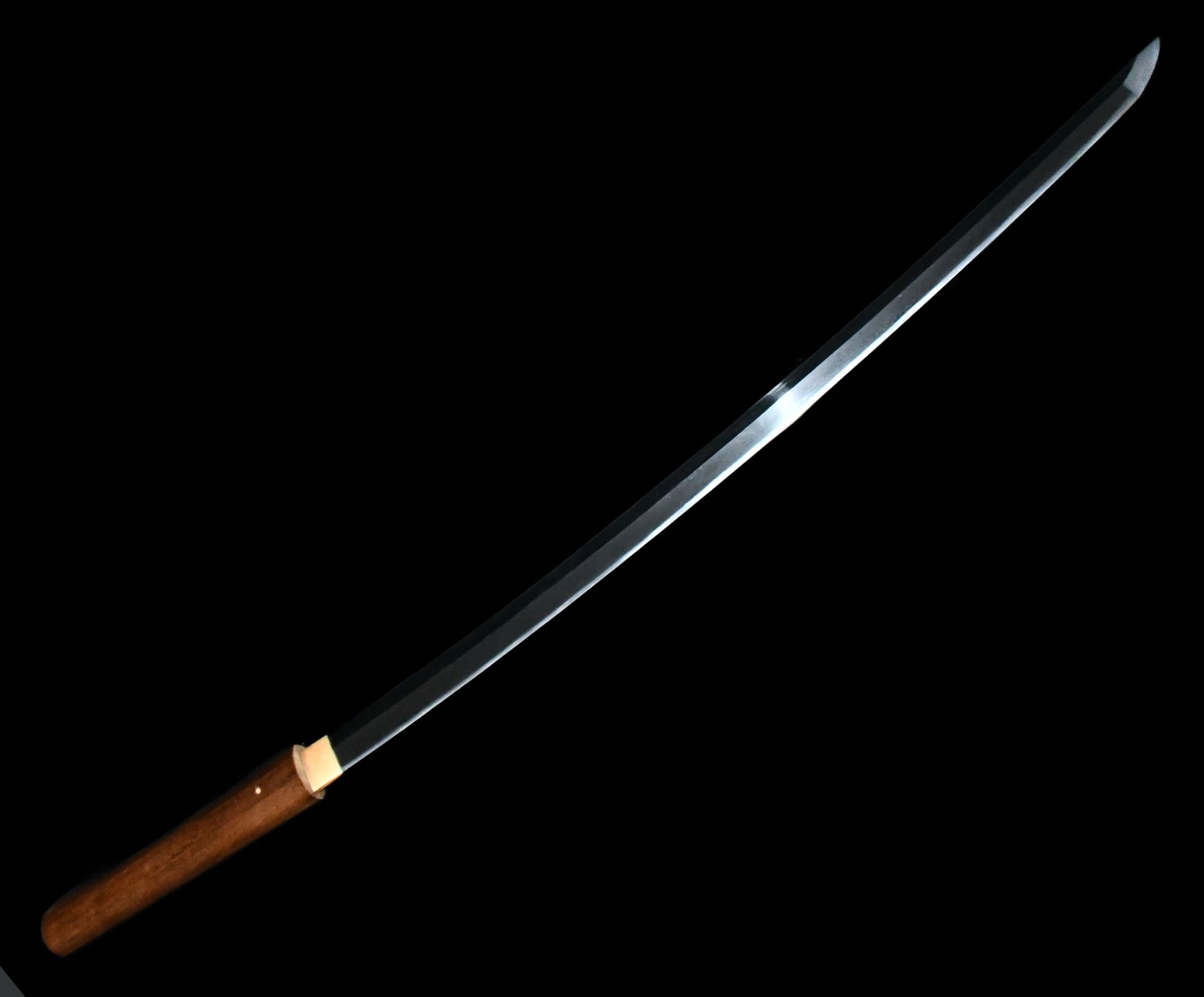
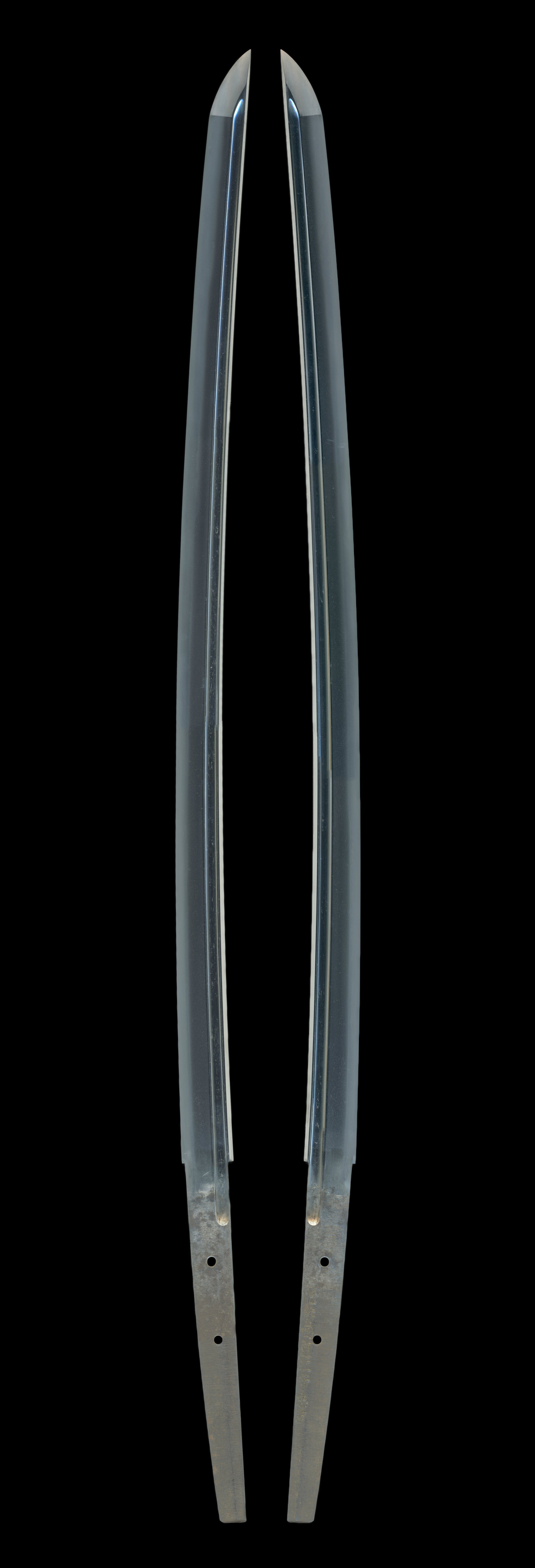
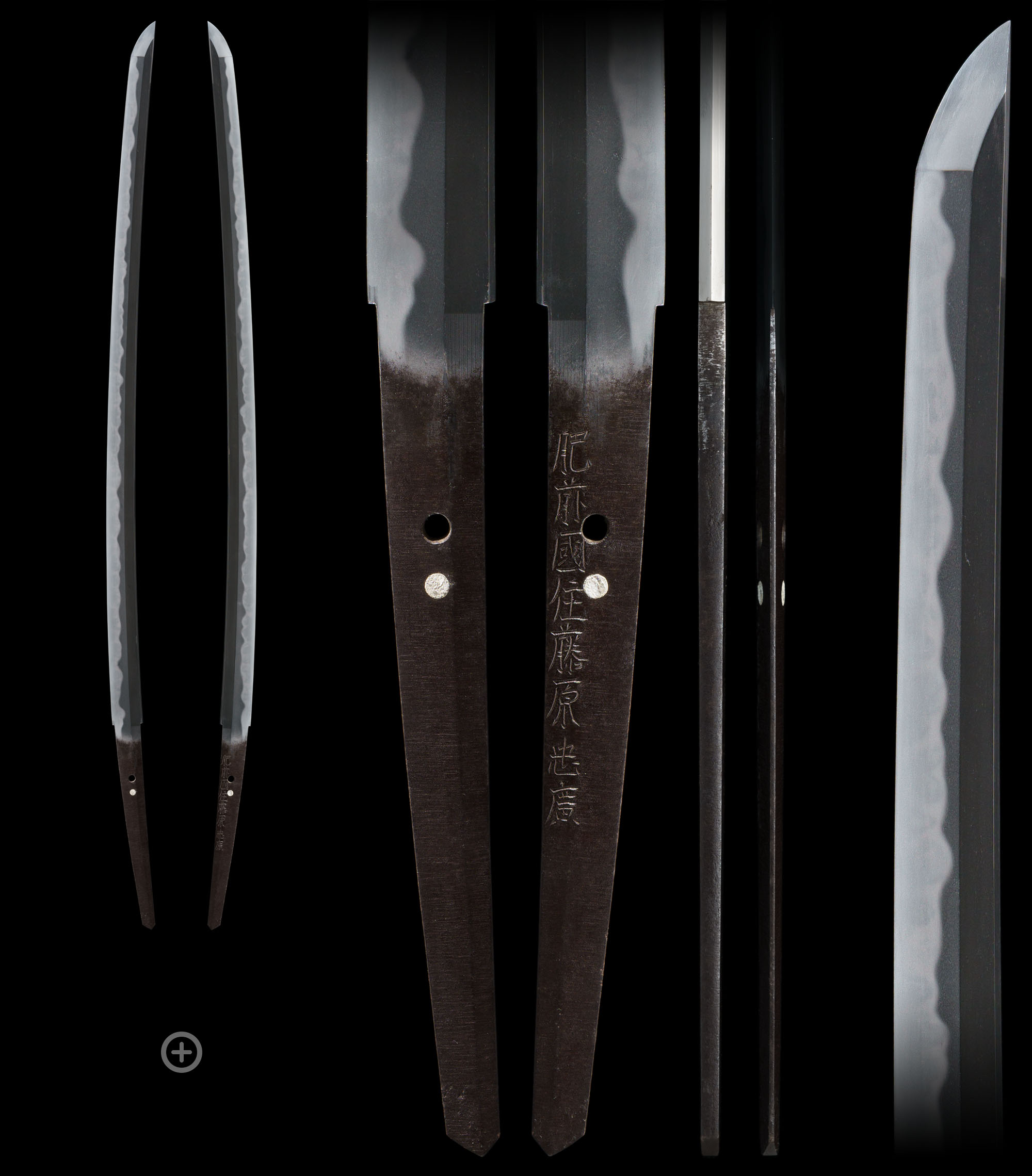
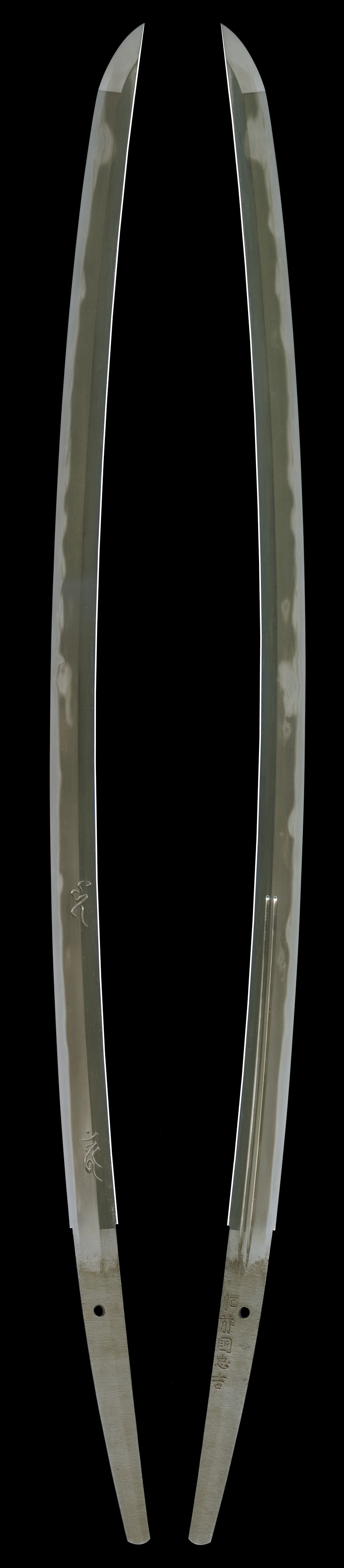
肥前刀は藩営の産業である。鍋島家は1596年頃、忠吉を京の埋忠明寿のもとに学ばせ、帰国したその工を核に公認の一門を築いた。小糠肌で名高いその作は、九代にわたり明治まで続いている。
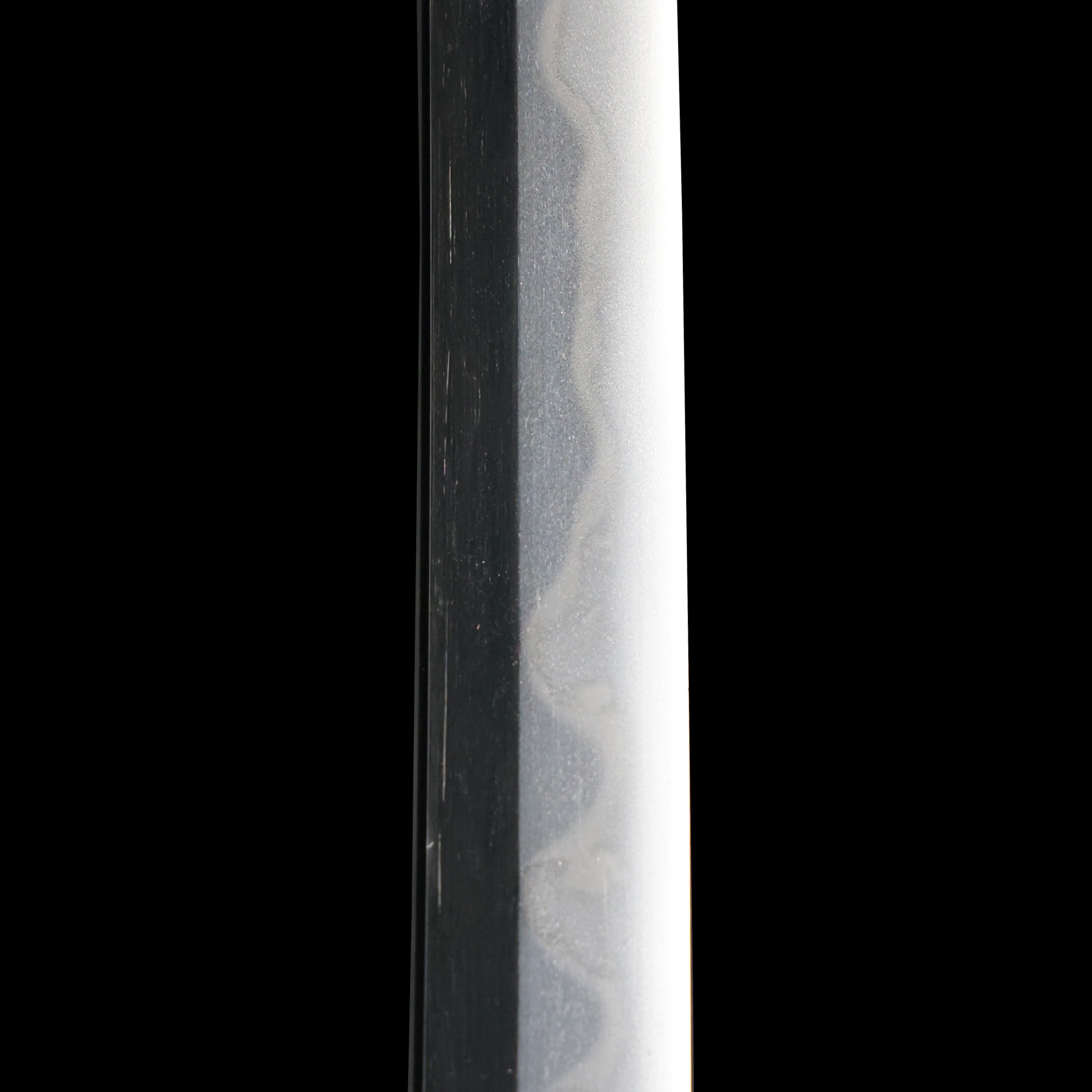
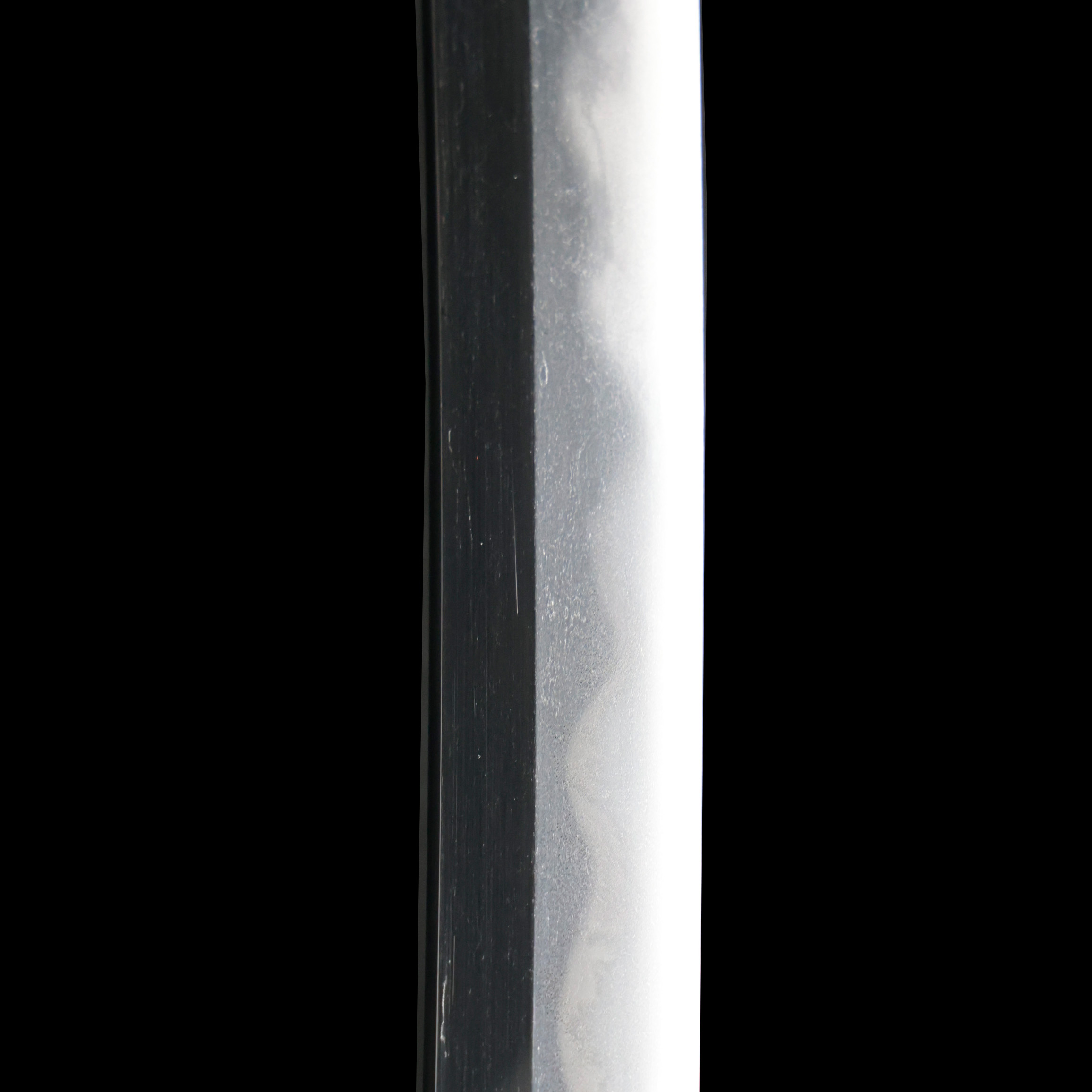
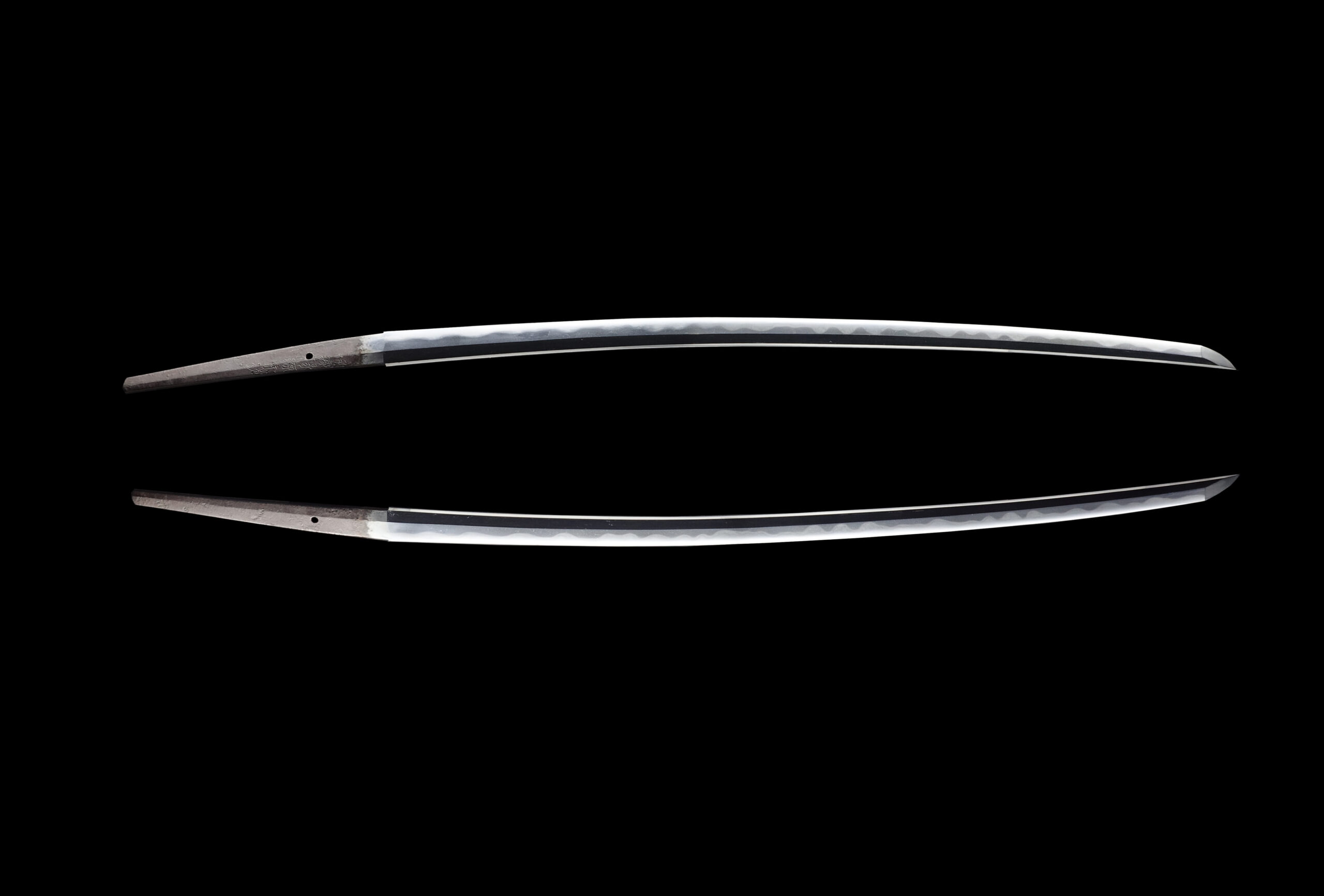
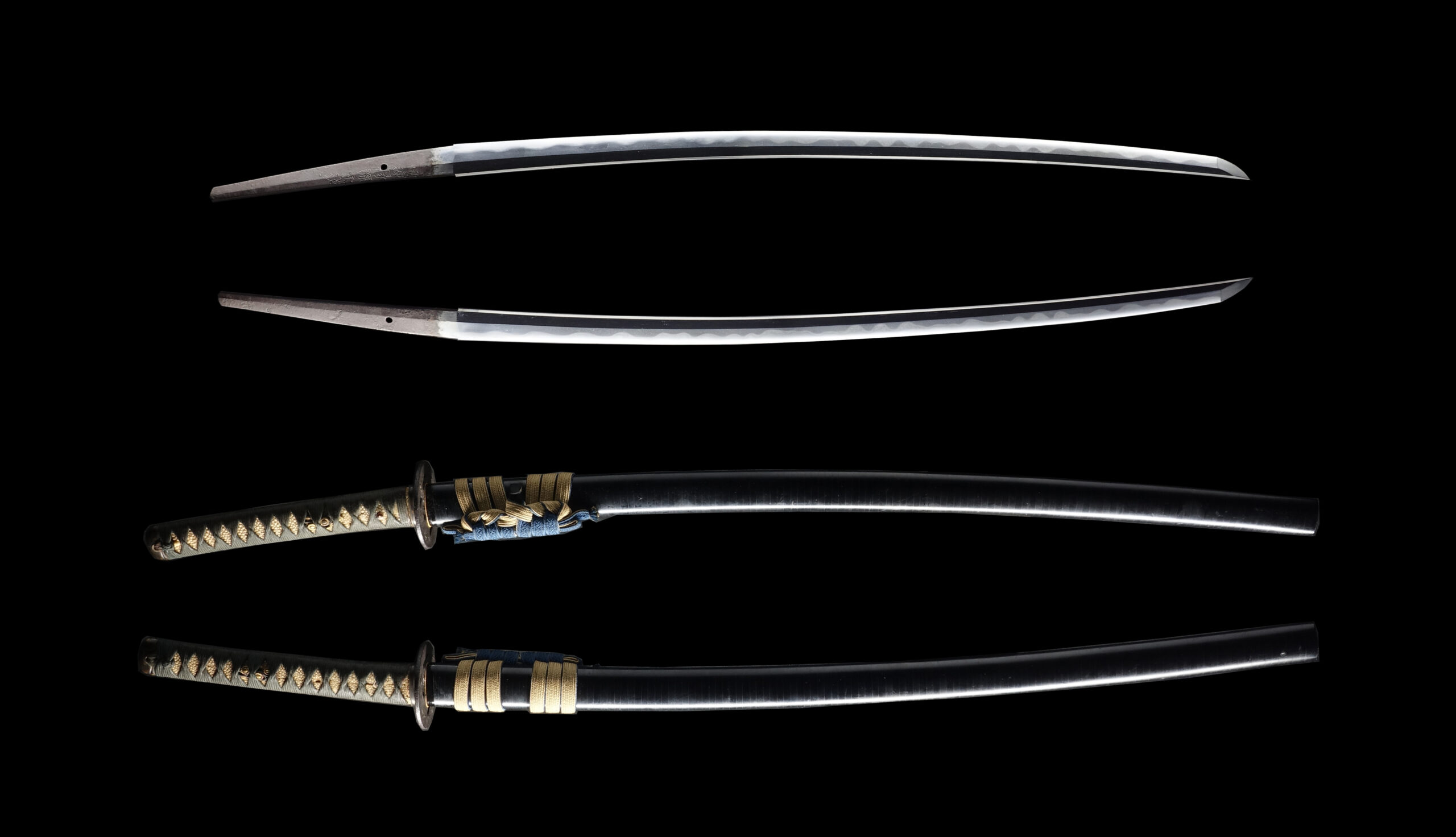
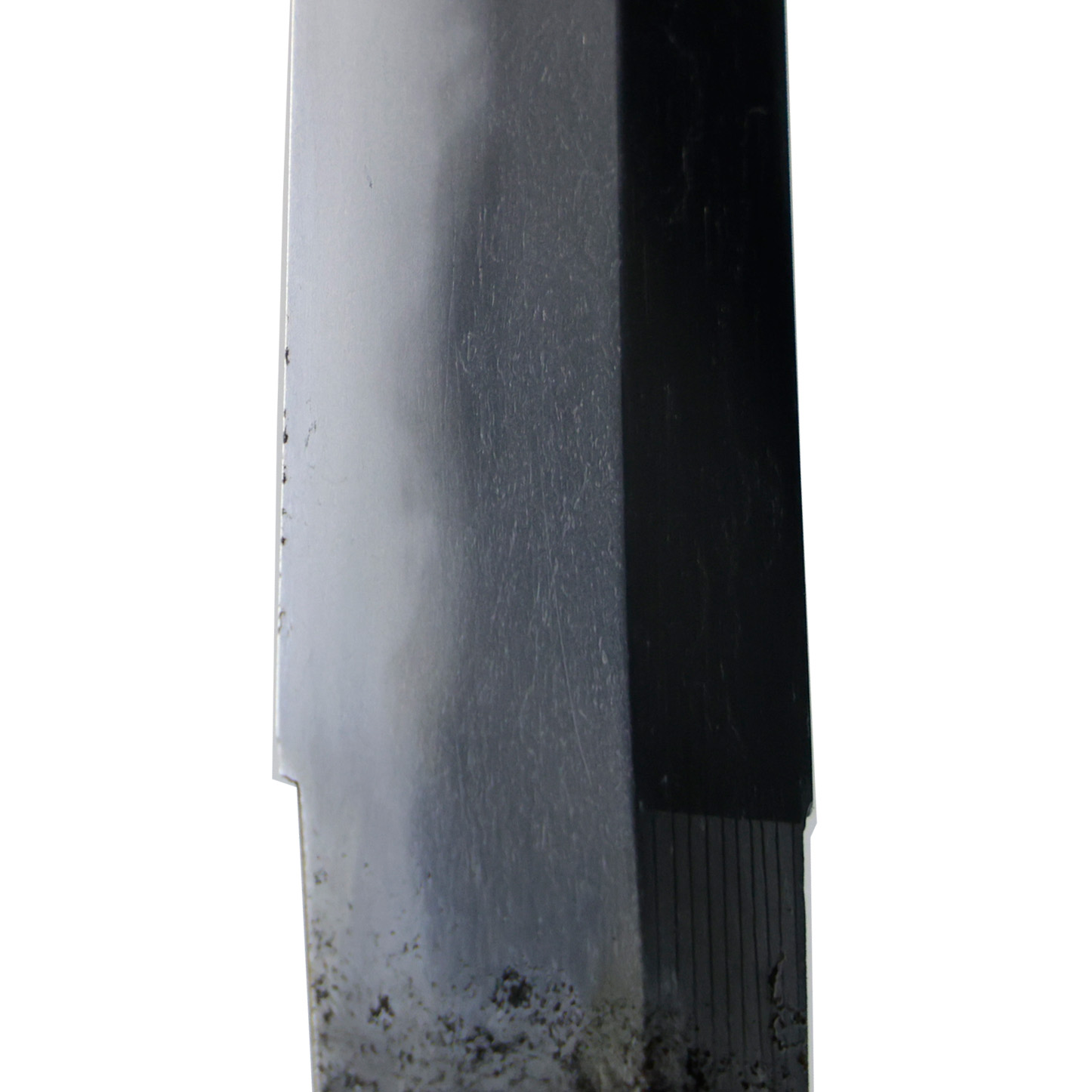
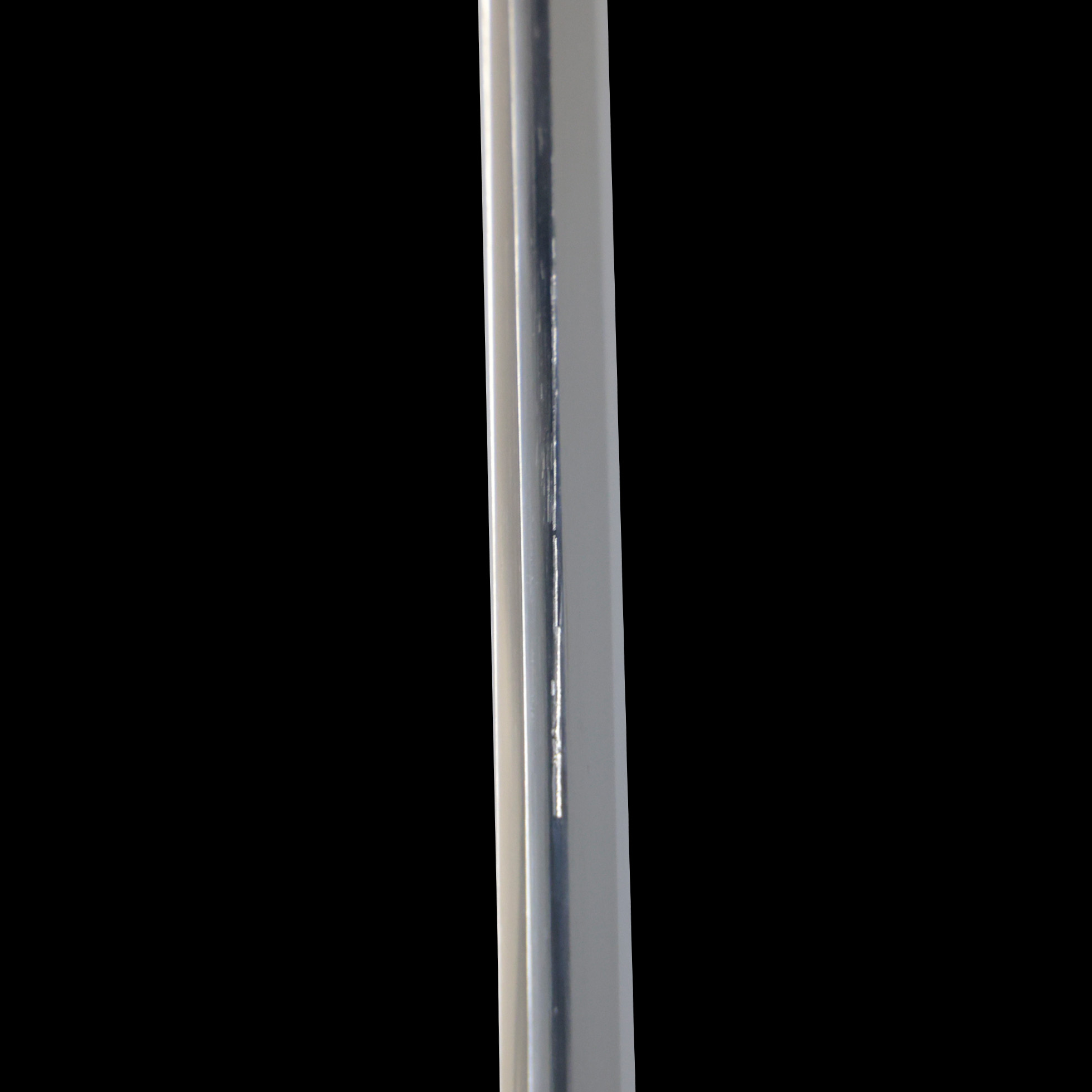
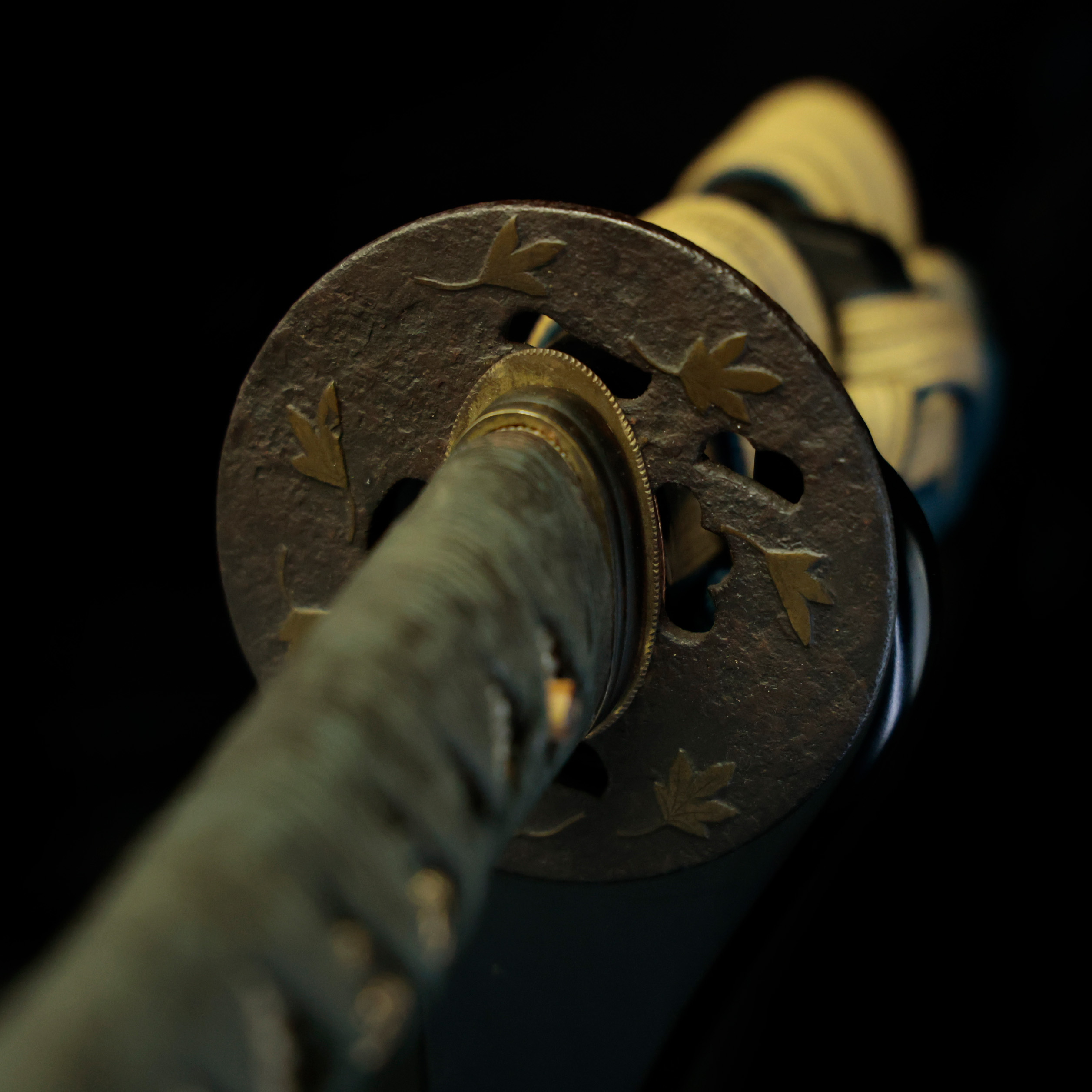
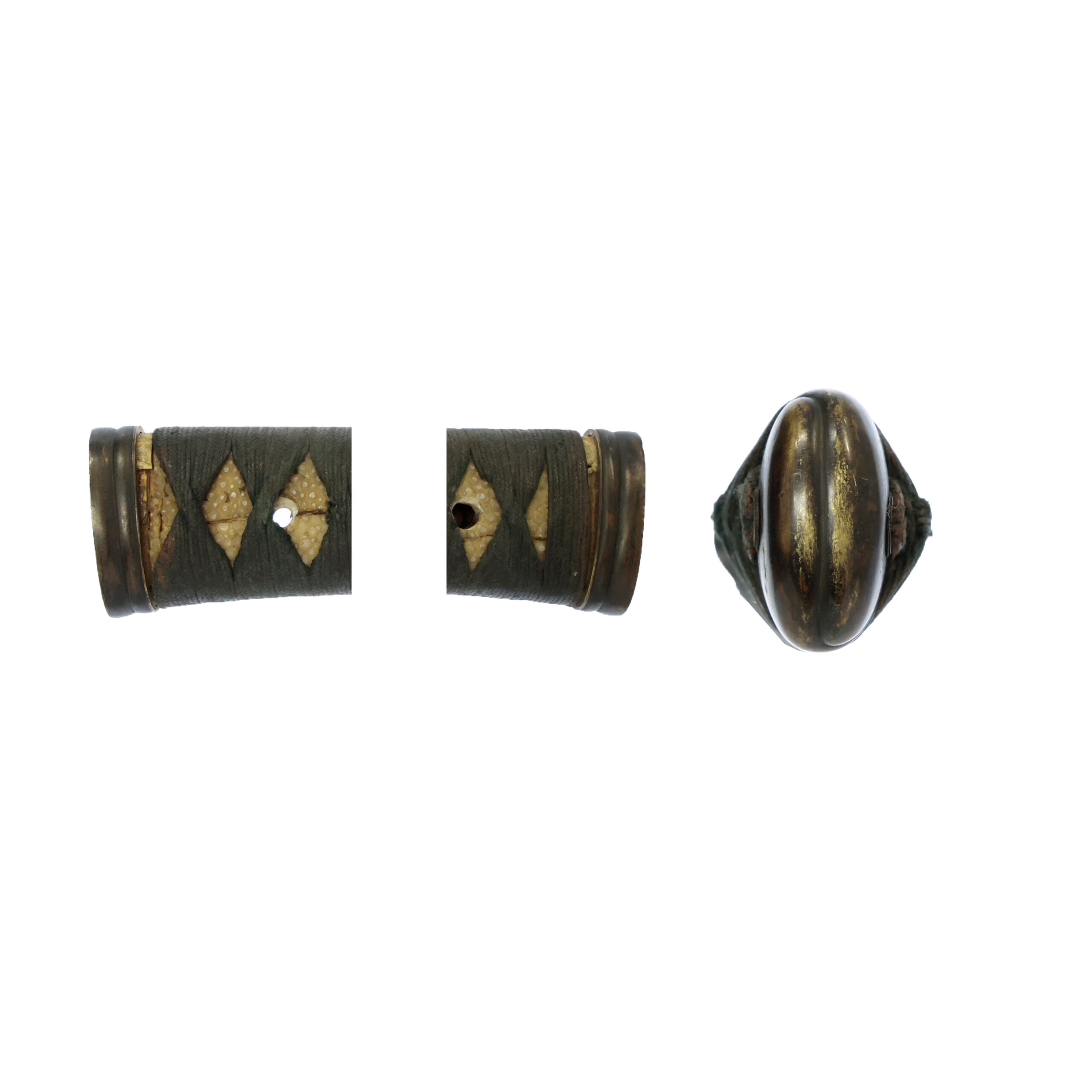
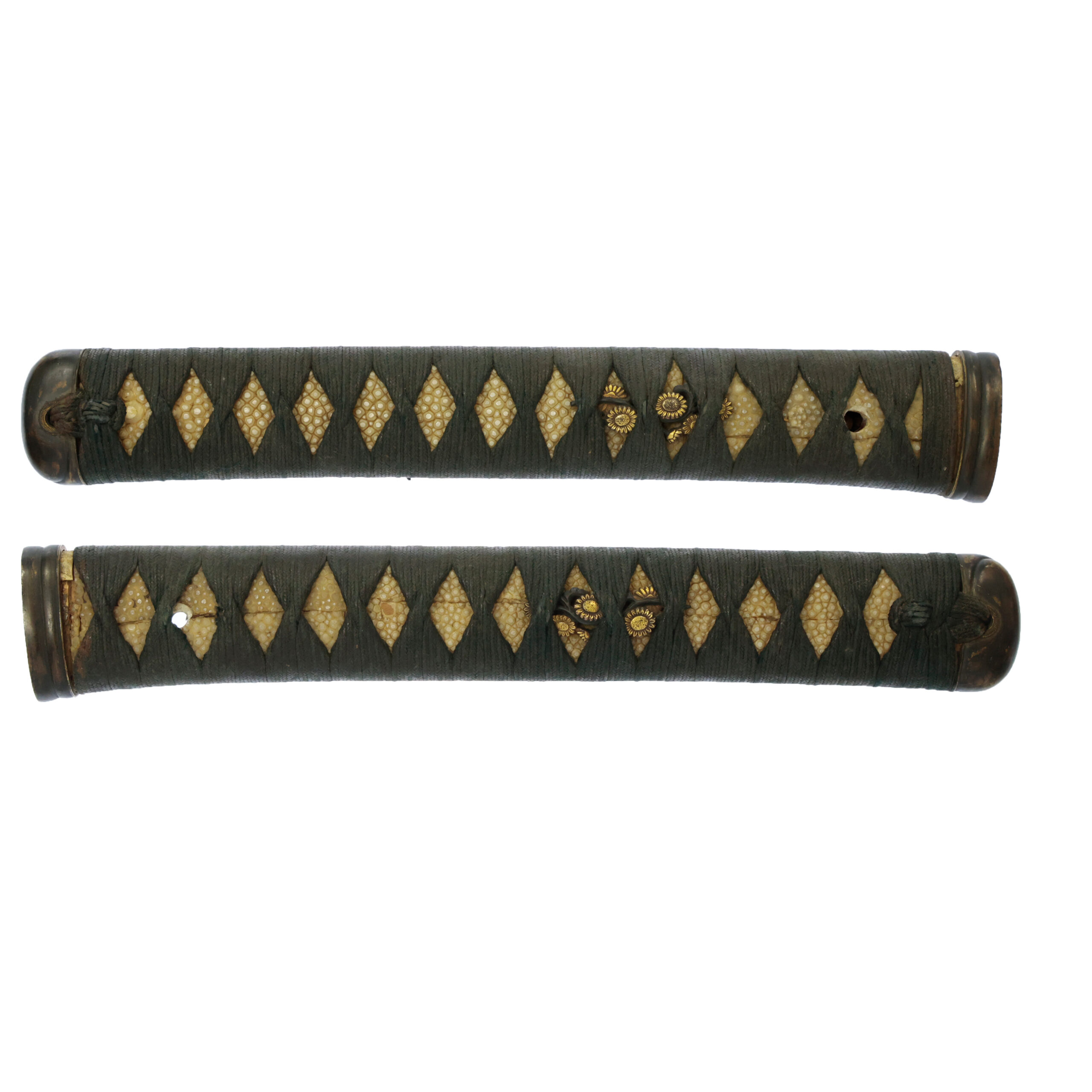
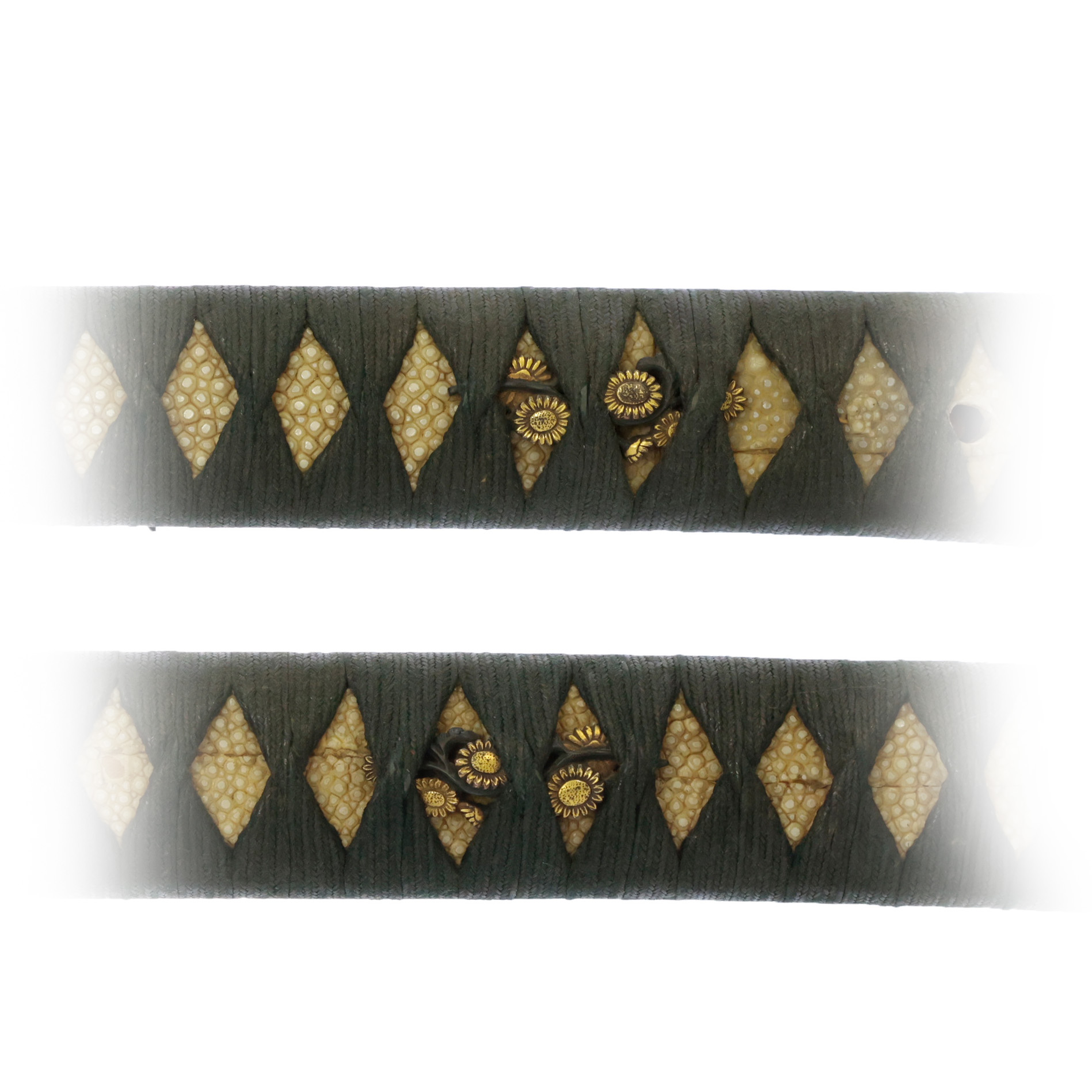
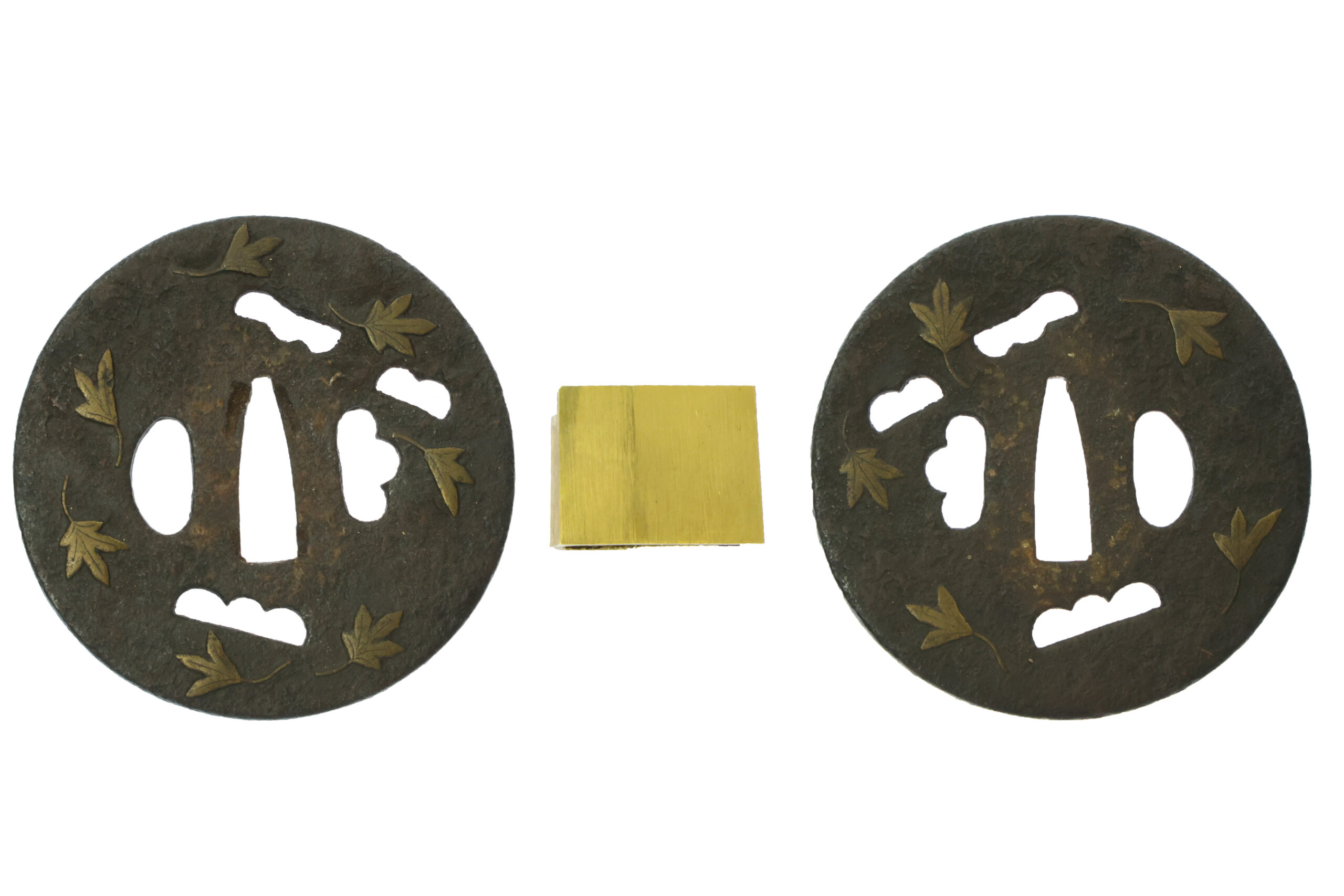
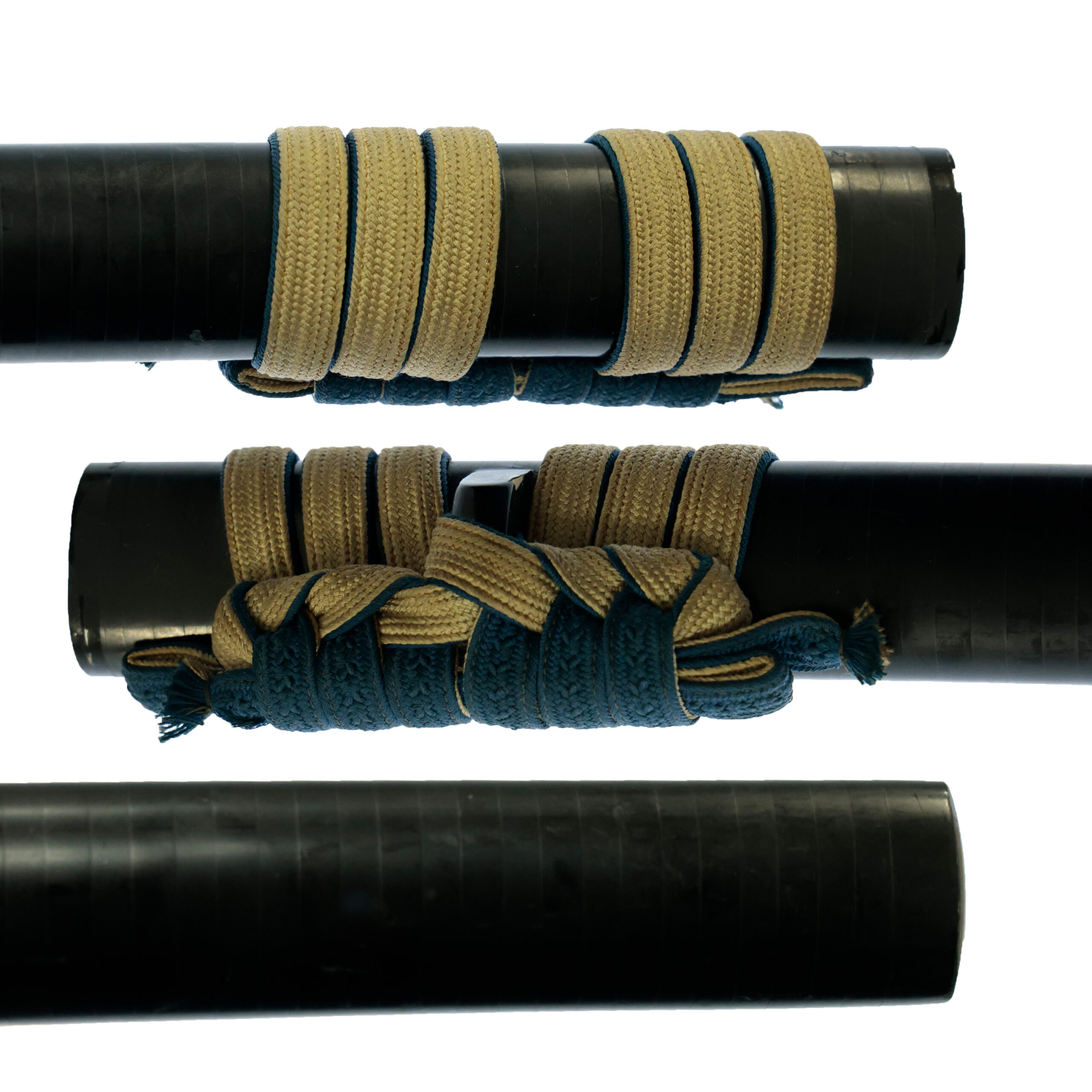
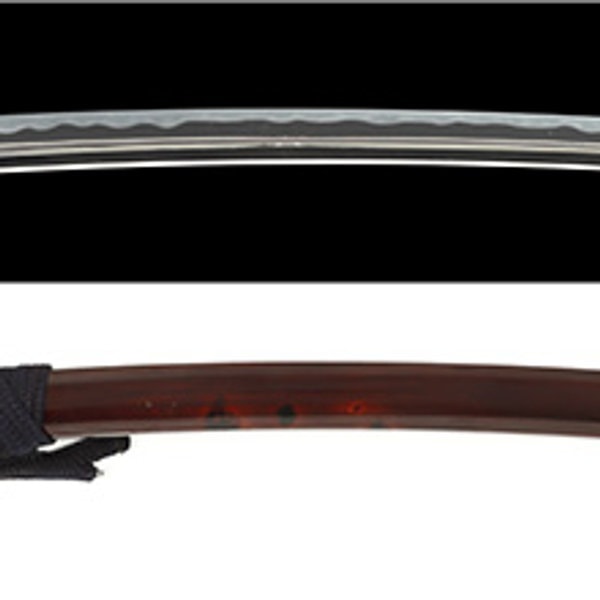
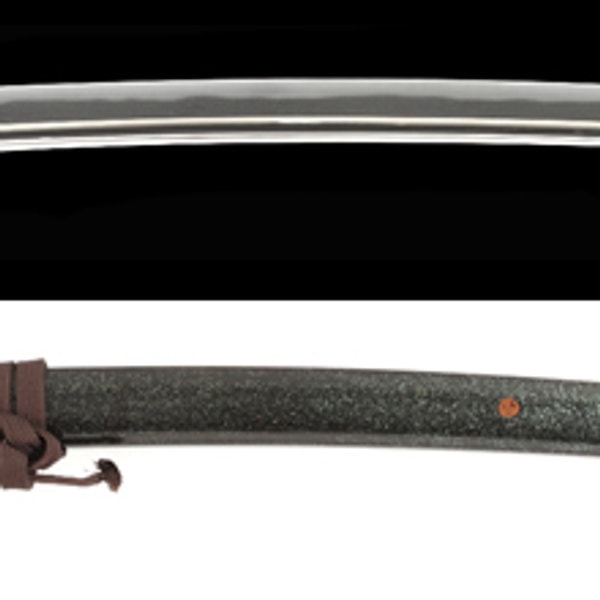
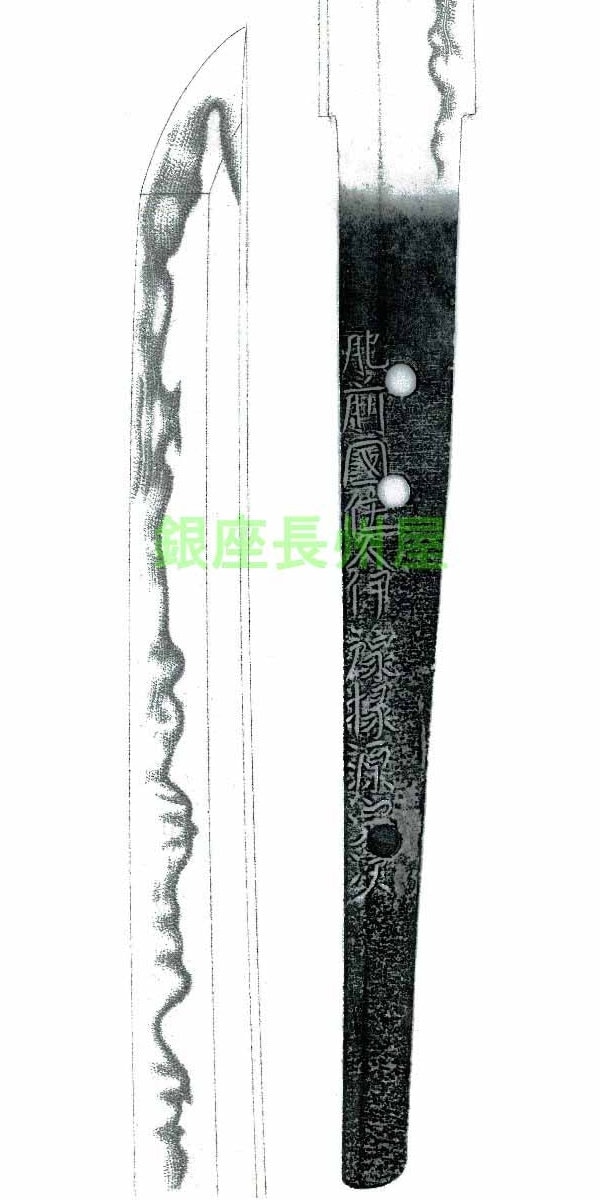
Antique Japanese Sword Katana Signed by Hizen Koku Munetsugu with NBTHK Hozon Certificate 【Description】 This blade was signed by Hizen Koku Jyunin Iyojo Minamoto Munetsugu (肥前国住人伊予掾源宗次). Hizen Koku is the province’s name in today’s Saga prefecture, and Hizenkoku Jyunin means that Munetsugu was a resident of this province when he forged this blade. Iyojo is the name of an honorable title for his excellent craftsmanship. Minamoto is his last name. The maker’s name Munetsugu lasted eight generations, and according to NBTHK that appraised this blade, it was made by the first-gen Munetsugu judging from its characteristics. The first-gen Munetsugu was one of the most famous swordsmiths during the early Edo period in Hizen province. The first-gen Munetsugu was born in a household that served the Tenmangu shrine as priests for generations in Nagase village in Hizen province. His birth name was Sakai Sanuemon. And he first signed Masatsugu. He took over his father’s school in the 12th year of the Tensho era (1584). In the 11th year of the Keicho era (1606), he received Iyo Jyo title for his excellent craftsmanship. Additionally, in the 16th year of the Keicho era (1611), he was hired to forge blades for Nameshima Katsushige, the first head of Nameshima clan, who ruled Hizen province. And he became a Hanko (藩工), a swordsmith exclusively working for a specific clan or domain. He passed his name to the second-gen Munetsugu in the 9th year of the Kan-Ei era (1632). Considering his title is engraved on this blade, we assume it was made after between 1606-1632. One of the most famous episodes related to the first-gen Munetsugu is that he forged a blade to commemorate the visit of the Shogun Tokugawa Iemitsu to Kyoto in July, the 11th year of the Kan-Ei era (1634). This fact indicates that the first-gen Munetsugu was a highly regarded swordsmith nationwide back then. One of the most noticeable differences between Munetsugu’s works and the other swordsmiths in Hizen province is that he mastered Soshu Den tradition. In contrast, others created blades with Yamato Den tradition. Both traditions are among five Japanese sword forging traditions. Others are Yamashiro Den, Bizen Den, and Mino Den. The generations of Munetsugu preserved this Soshu Den technique until the end of the Edo period. Hizen province was especially active in sword-forging during the early-mid Edo period, and the first-gen Munetsu was the head of all swordsmiths living in the region. He was allowed to live in a mansion house located near Saga castle. His fame was close to that of Tadayoshi, the founder of Hizen Tadayoshi school. According to one theory, there was a good rivalry between Munetsugu and Tadayoshi schools to improve their craftsmanship. This blade is appraised as a Hozon Touken (保存刀剣) issued by NBTHK (Nihon Bijutsu Touken Hozon Kyokai: 日本美術刀剣保存協会). This authentication paper was only given to authentic Japanese swords, well preserved and high quality with artistic value. *Please keep in mind that there are a couple of partial black on the blade. If you like to see the detailed condition, please feel free to contact us. 【Blade】 Cutting Edge Length (Nagasa) : 69.6 cm (27.4 inches) Curvature (Sori) : 1.9 cm ( 0.74 inches) Hamon : The crystalline structure which forms along the cutting edge of a blade as a result of the hardening process. Jimon (Jihada) : Visible steel surface pattern created by folding and hammering during forging process. Kissaki : Kissaki is the tip of the Japanese sword. Nakago : Nakago is the tang of the Japanese sword. Japanese swordsmiths left the black rust on the tang because it prevents red rust while the tang is in its handle. And the discoloration of the tang was created over time, and it is a great indicator for a Japanese sword specialist to estimate when the sword was forged. Koshirae : Koshirae is the mounting of the Japanese sword. There are several parts that consist of Koshirae such as Saya (Scabbard), Tsuka (Handle), Tsuba (Handguard
 NihontoWatch
在銘 · 元和 · 長さ 69.6cm · 反り 1.9cm
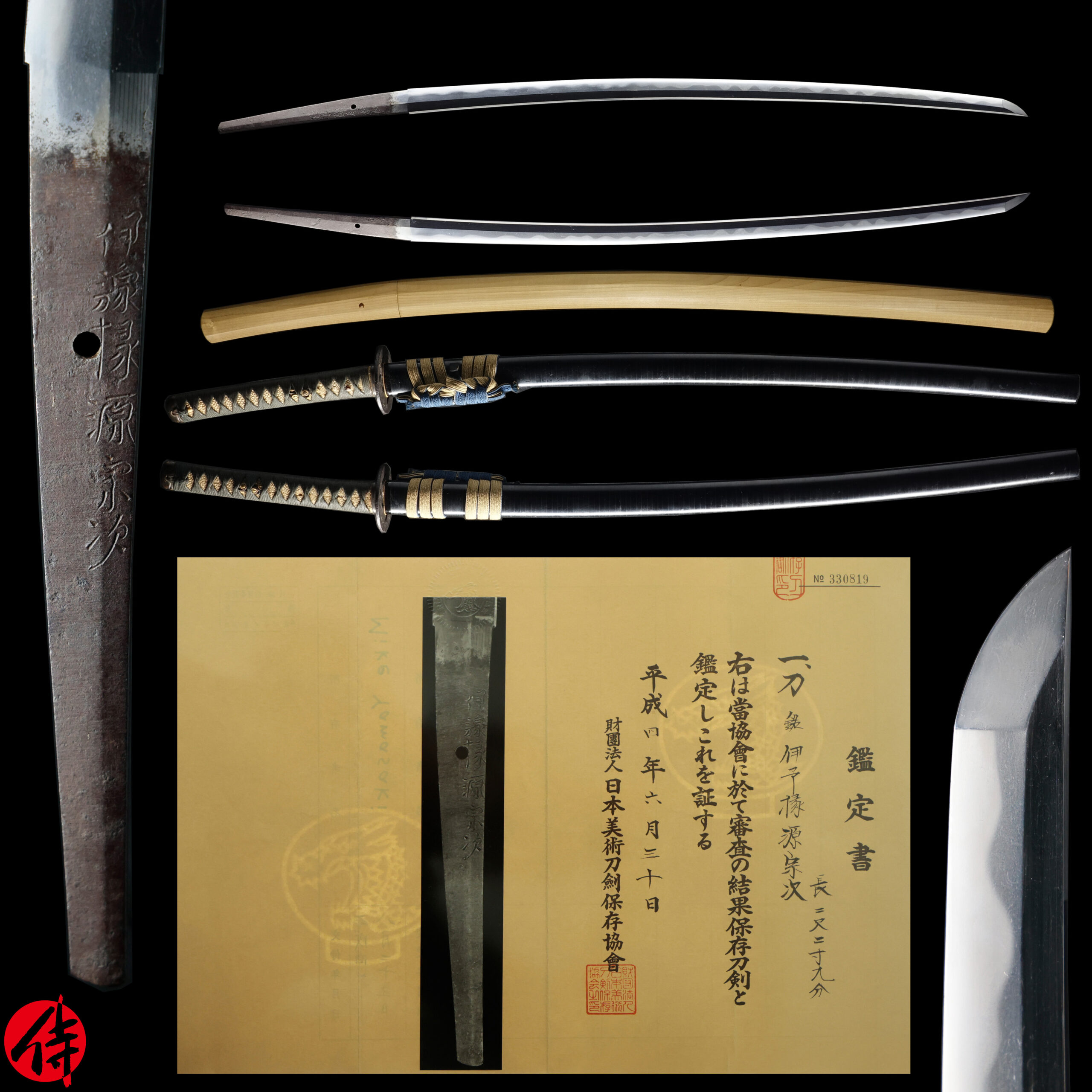
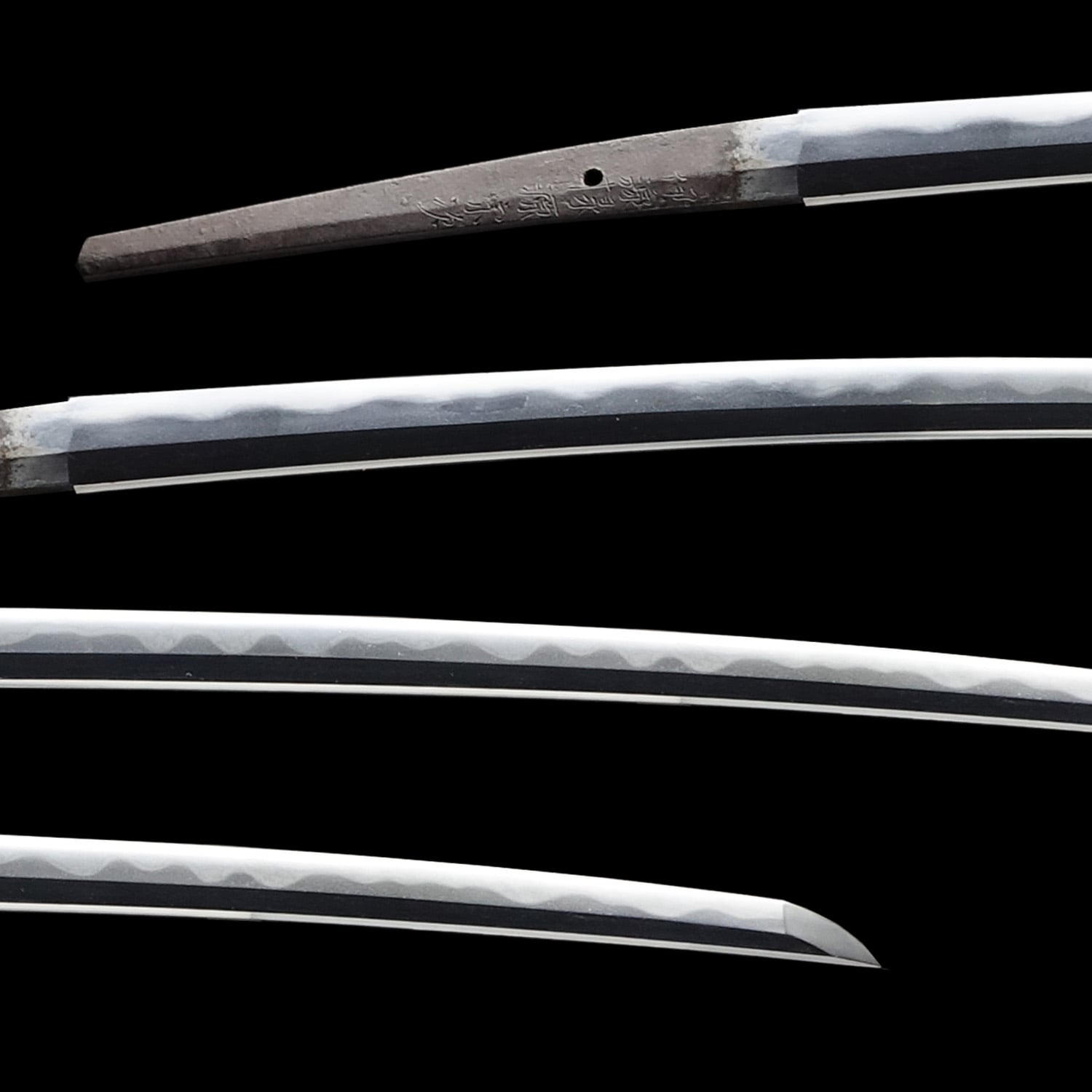
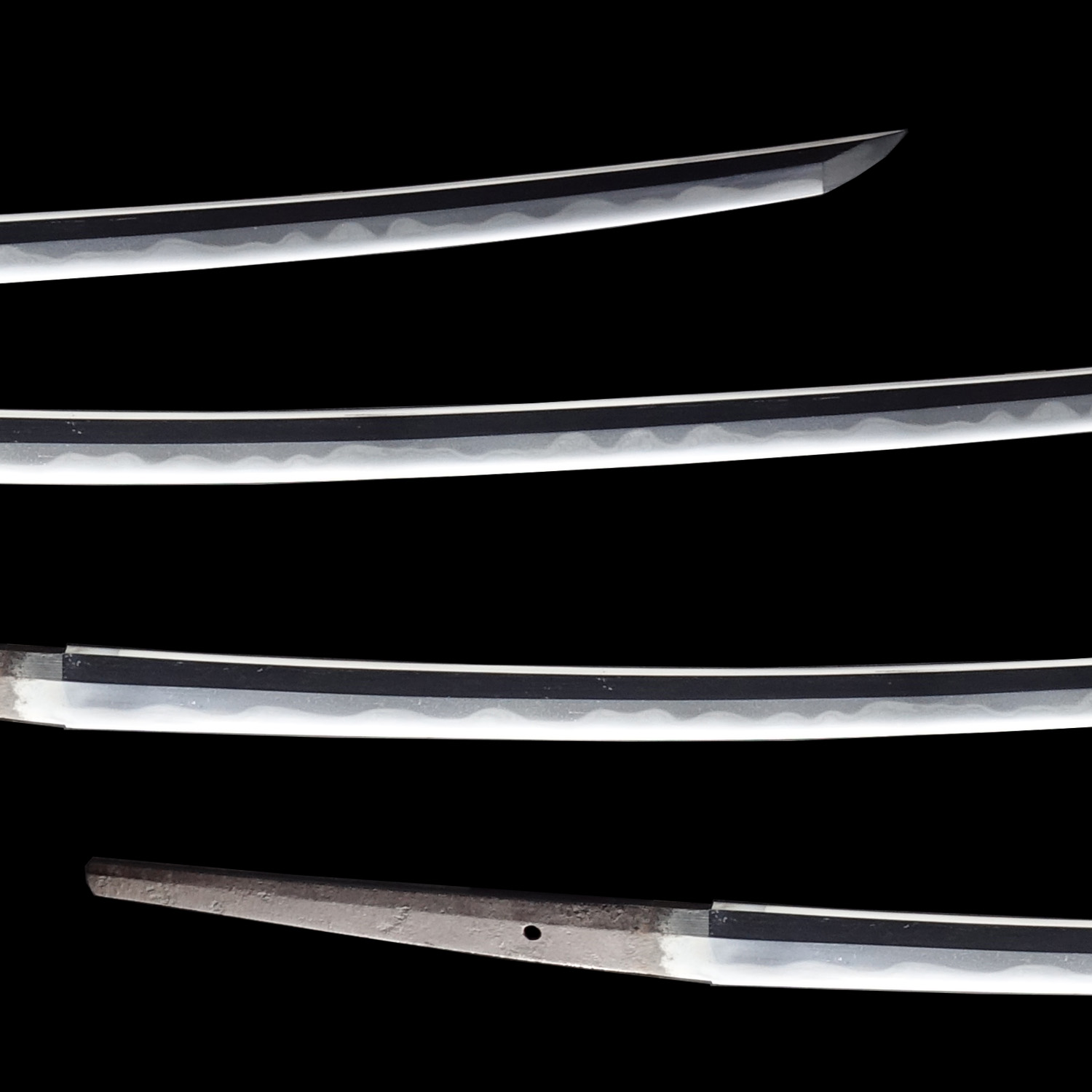
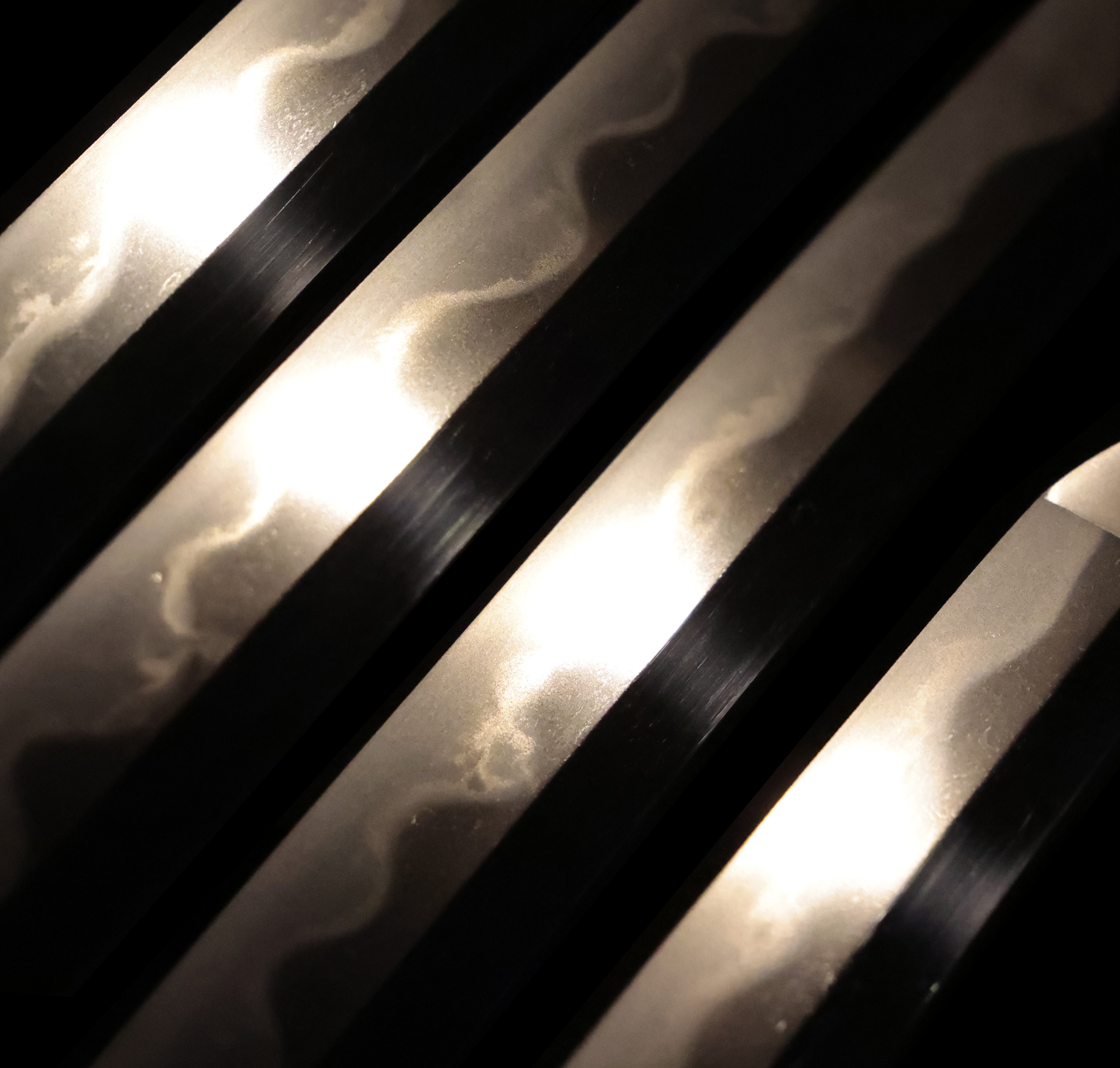
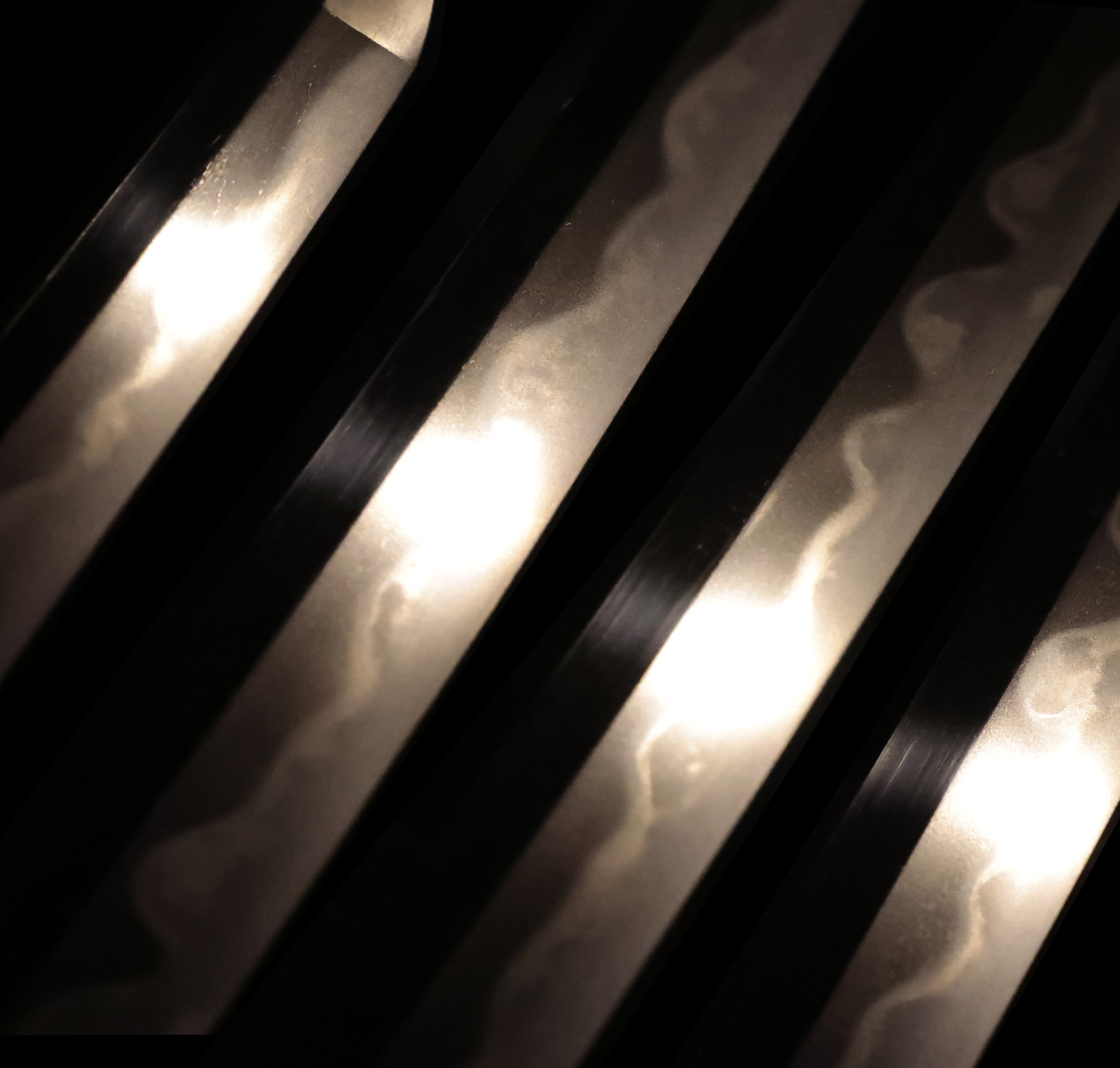
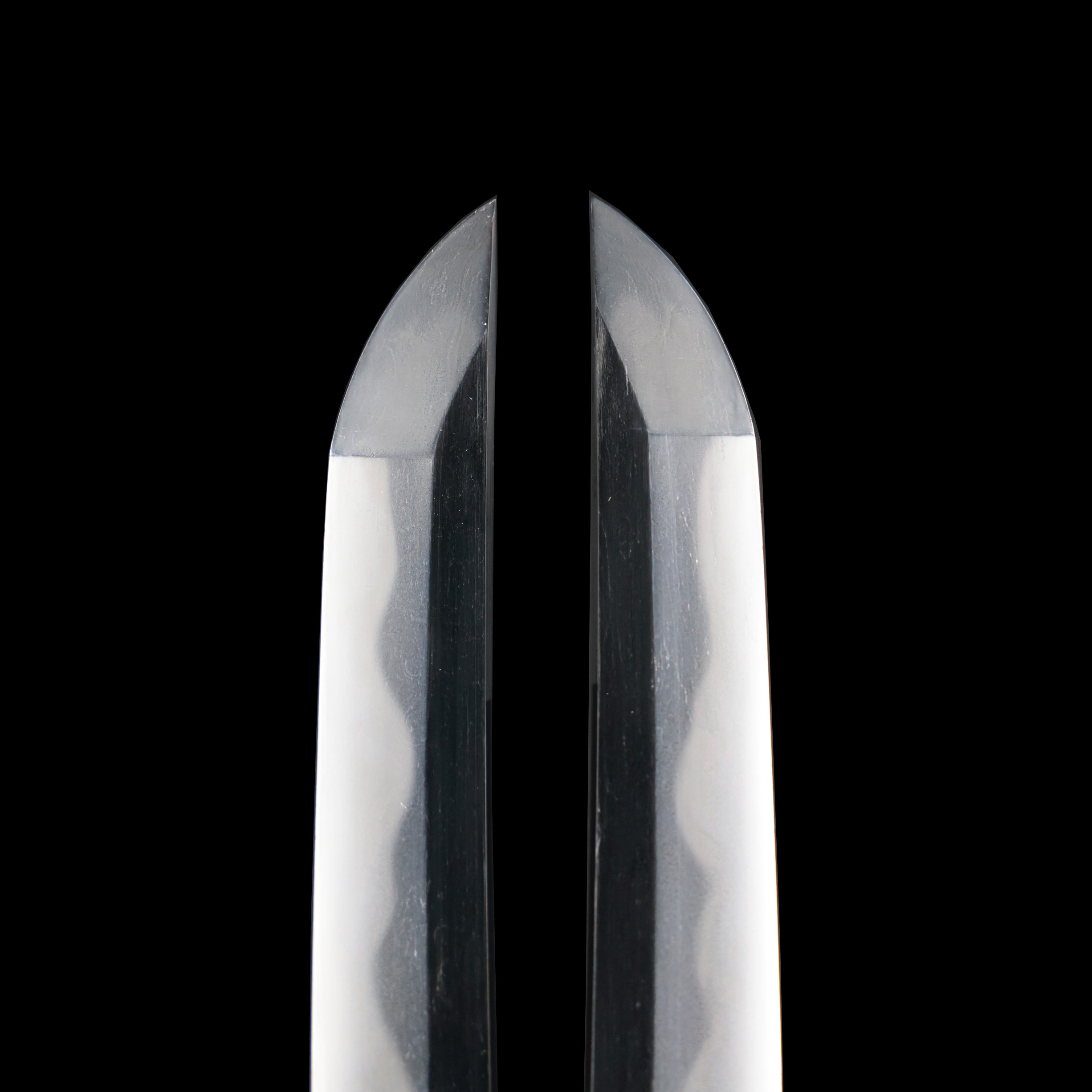
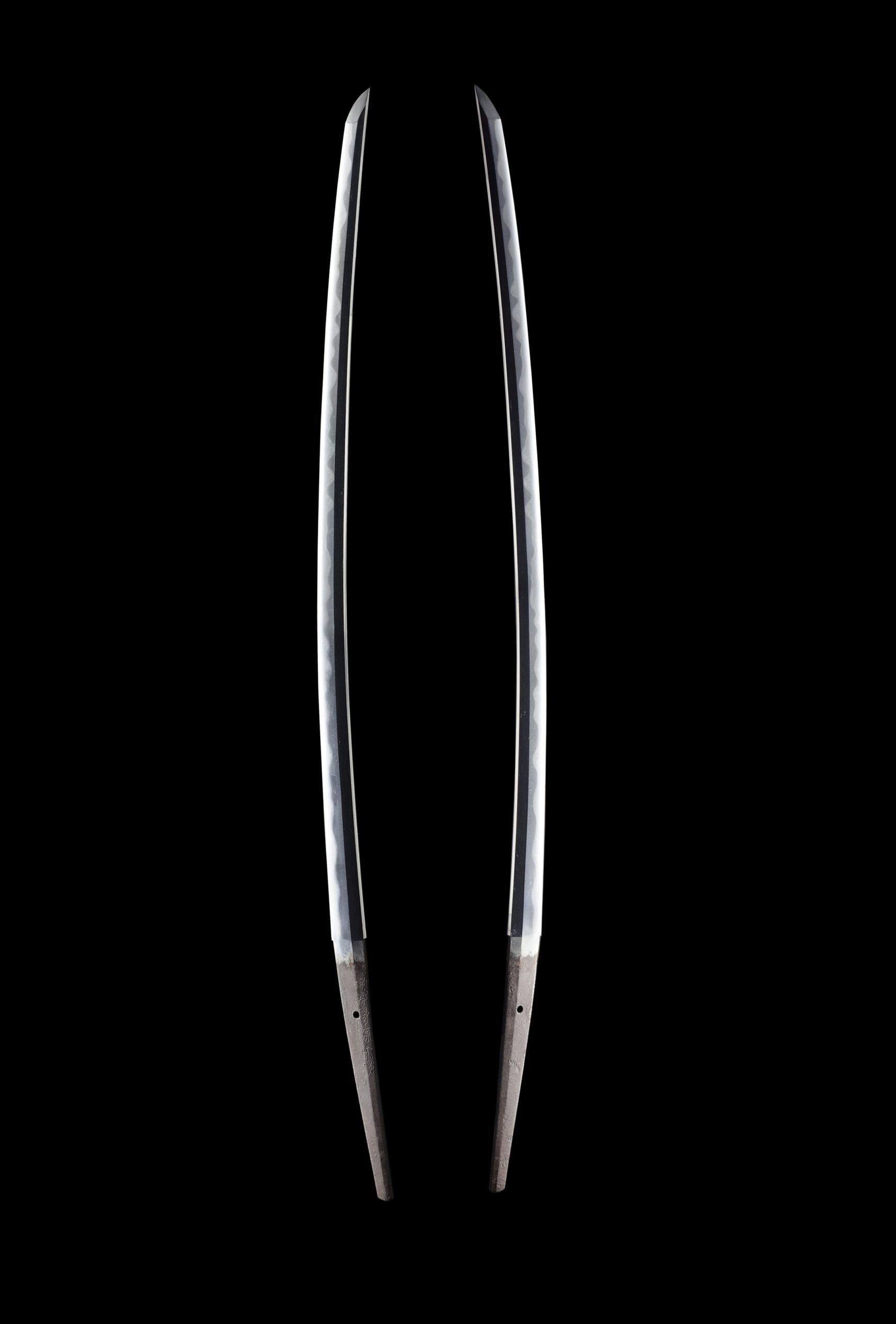
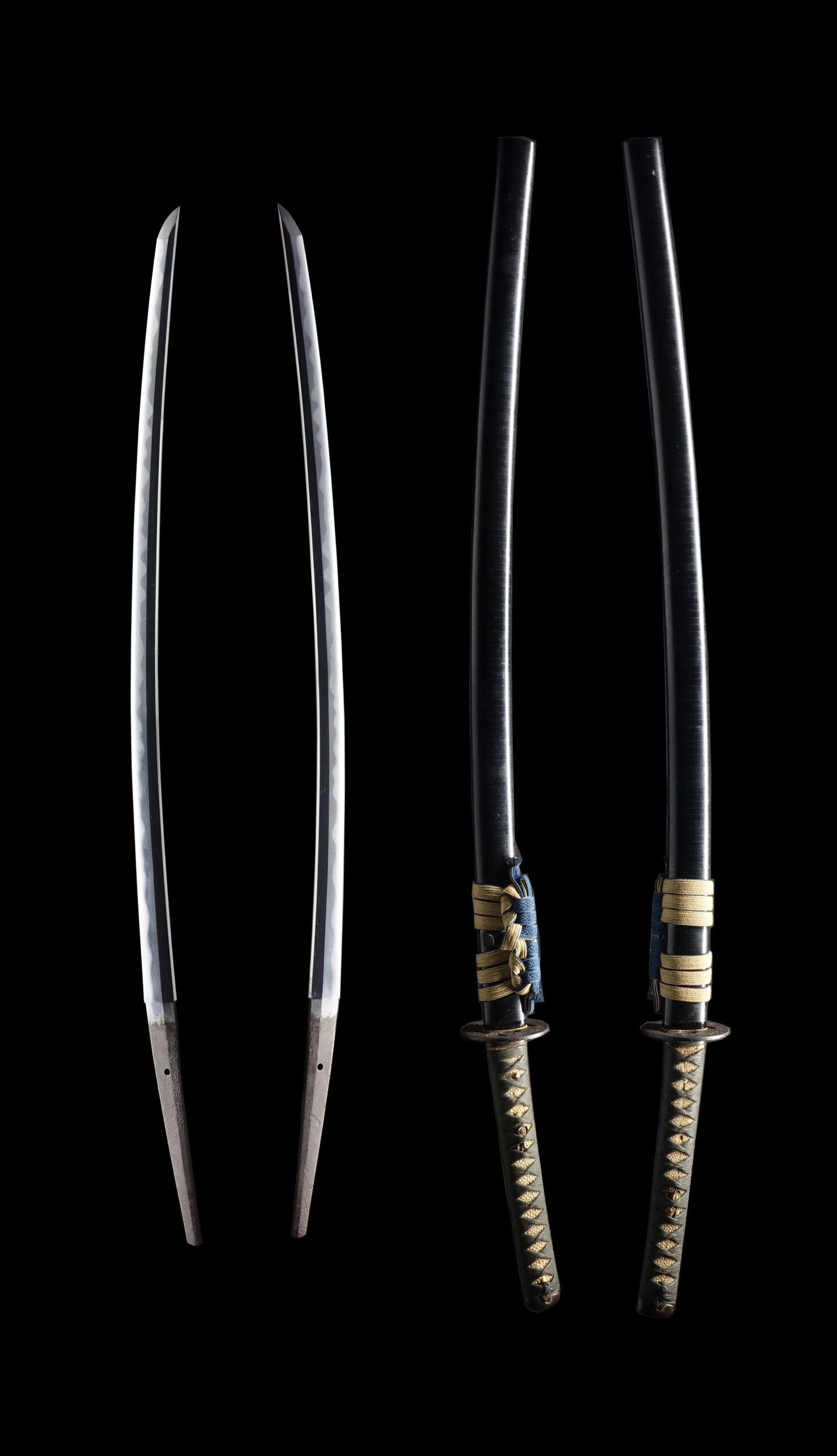

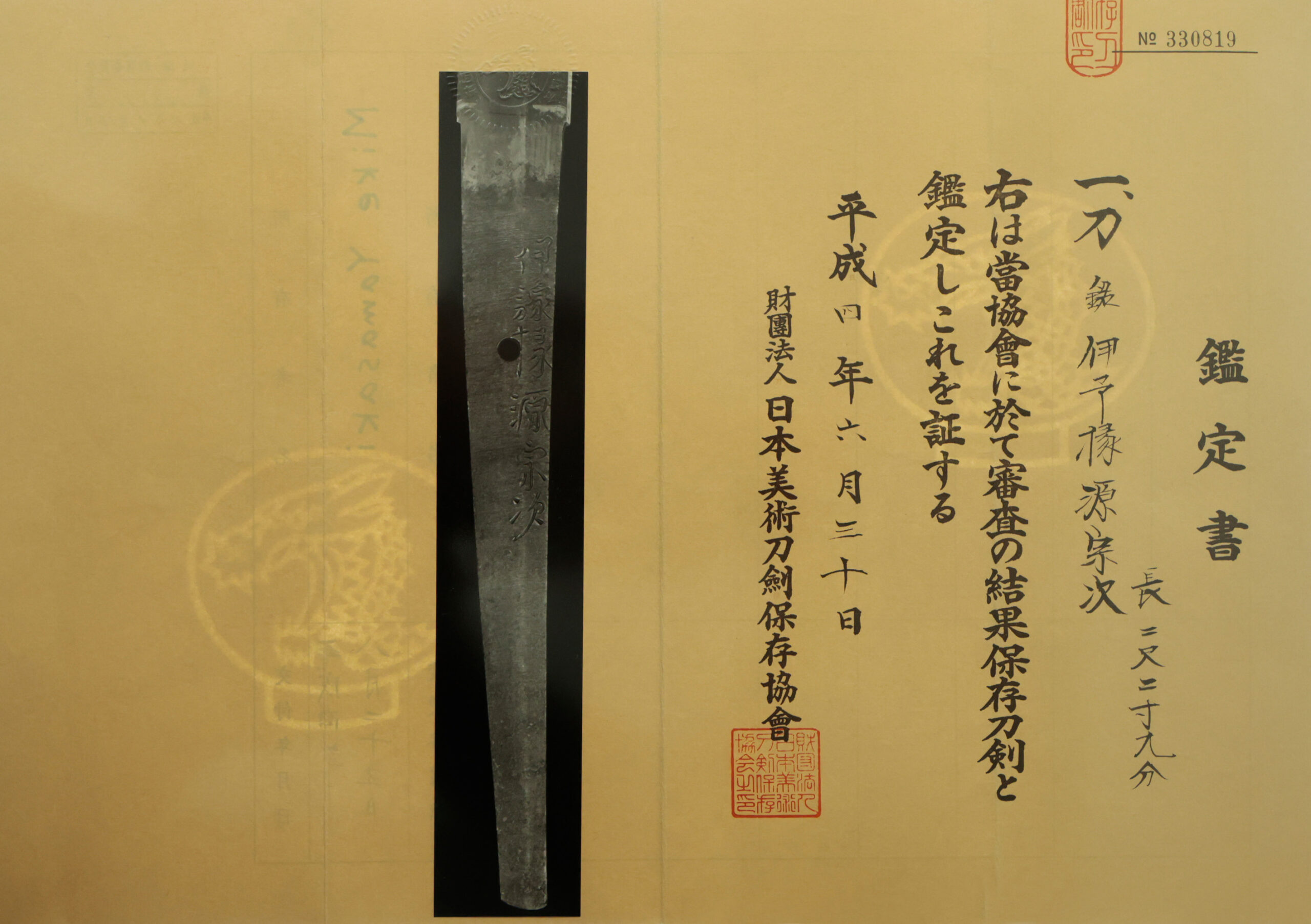
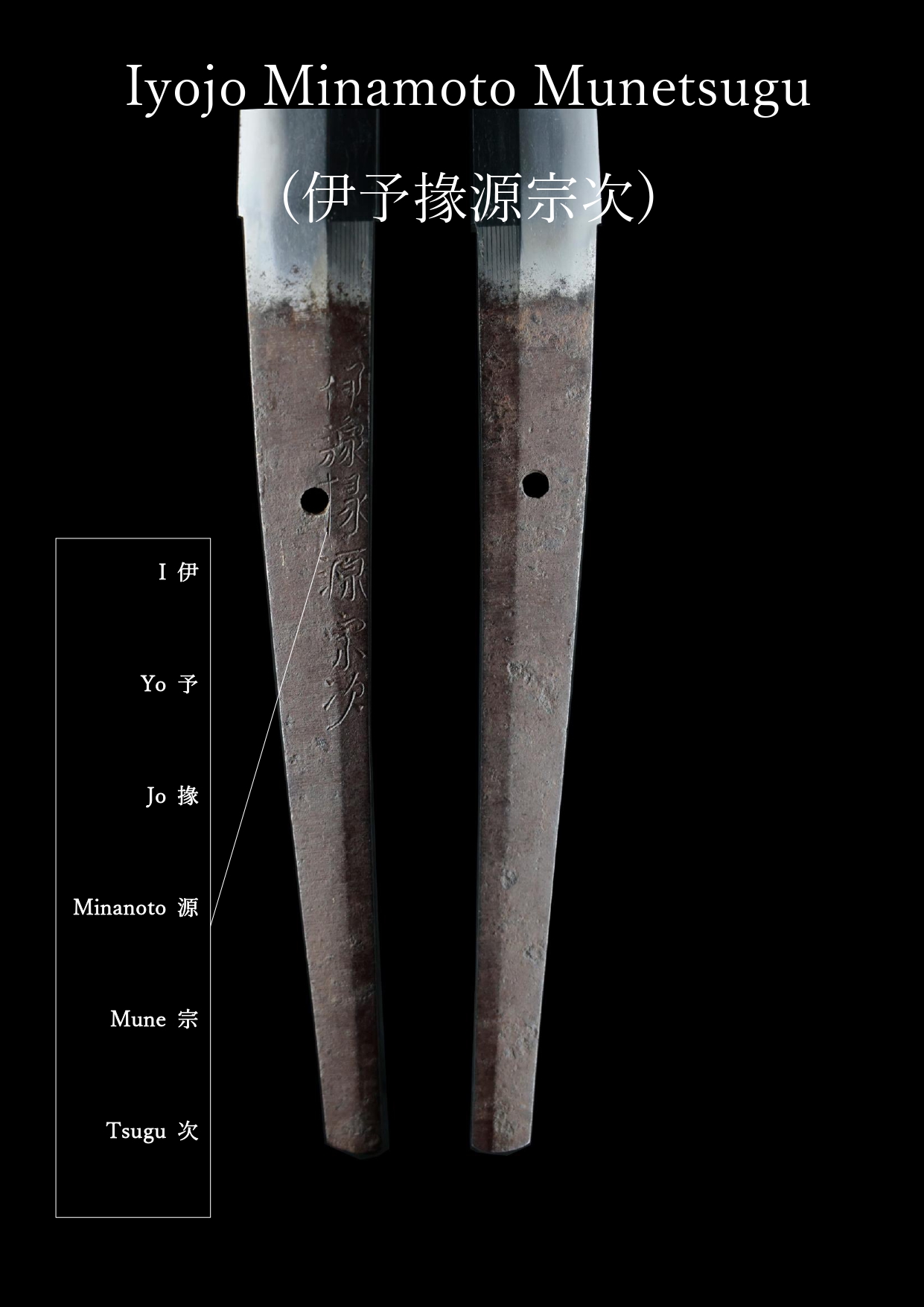
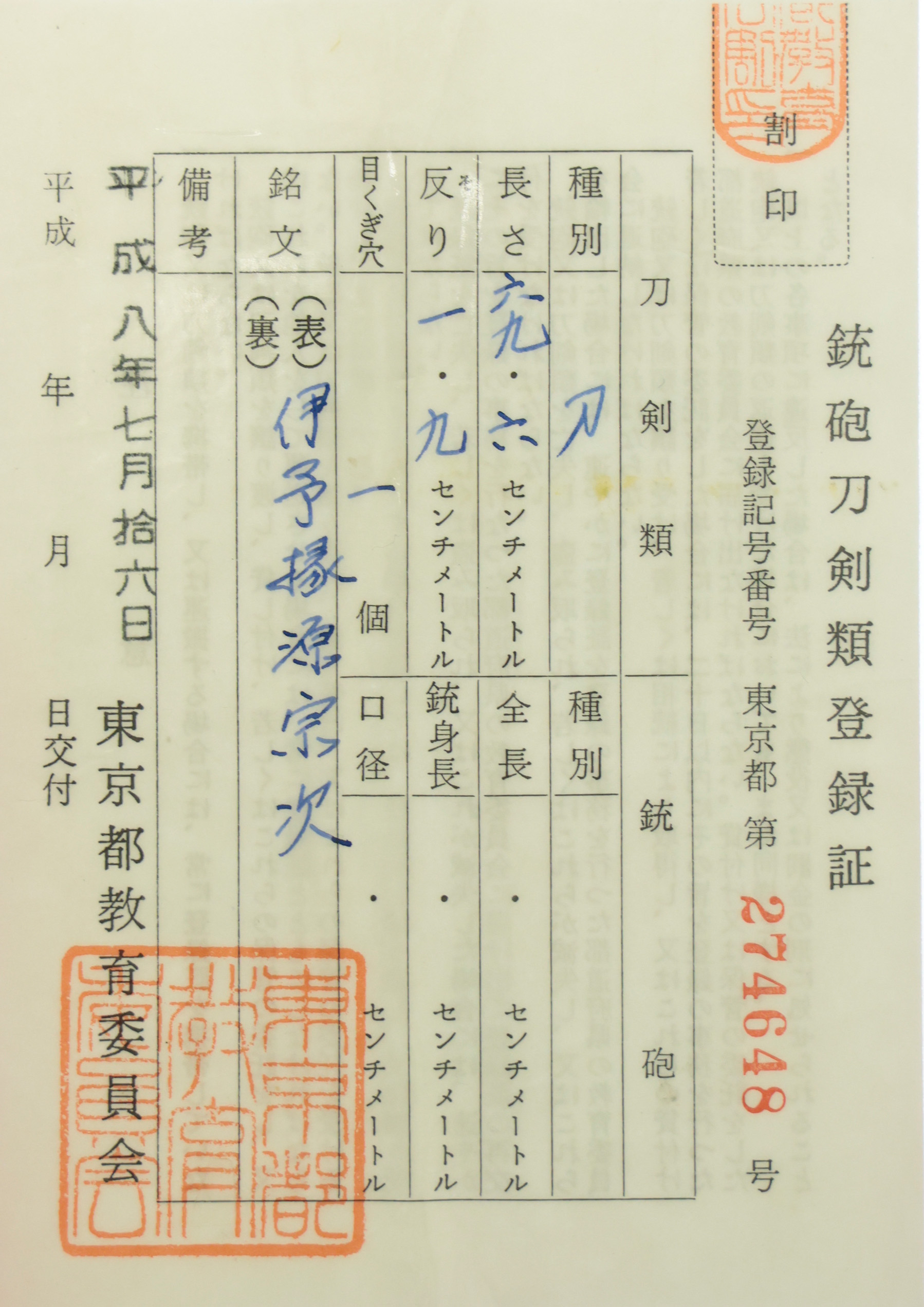
Hizen (Iyo no Jo Munetsugu line, out of the Tadayoshi school) · 肥前 · 1596-1615頃
藤代 Jo saku · 刀剣大鑑 上位26%
現在3点販売中
初代伊予掾源宗次は堺三右衛門と称し、代々長瀬村(忠吉の出身地)の天満宮の神職にあたった家柄と伝えられる。のちに佐賀城下の長瀬町に移って鍛刀し、さらに肥前諫早に転じたという。説明は初代忠吉の門人とし、初代忠吉と並んで「近世肥前鍛冶の嚆矢と言うべき存在である」[[c:5]]とする。伊予掾の受領は、子孫の境家に伝わる『伊予掾宗次系図』により慶長十一年とされ、慶長十二年紀で伊予掾を冠した作刀が遺存することもこれを首肯させる。
肥前刀工群の中で彼は異色の存在である。肥前刀一般が帽子を直ぐに小丸に焼くのに対し、彼の帽子は殆どが乱れ込んで掃きかけ、時に火焰風となり、説明はこれを「他の肥前刀に紛れない」[[c:2]]とする。刃文は互の目乱れに小のたれ・角がかった刃・尖り刃を交え、足・葉よく入り、匂深く沸厚くつき、処々荒めの沸を交える。砂流しはほぼ全ての作にかかり、金筋が長く入るものも多く、焼刃の上には飛焼・湯走り、時に棟焼を見せる。
地鉄は肌立ちごころの板目に杢・流れ肌が交じり、地沸微塵に厚くつき、地景細かによく入り、かねがやや黒みをおびるものもある。姿は身幅広く元先の幅差少なく、中鋒延びるあるいは大鋒の頑健なものが多い。茎仕立も相州伝を意識した為か「刃方の肉を落したタナゴ腹風」[[c:6]]のもので、「常々の肥前刀とは相違して指表に独特の銘字をきることを通例としている」[[c:7]]。
説明はその範を相州伝、とりわけ志津風に求め、「彼が最も得意とした志津風の作域」[[c:3]]と記す。その作域には幅がある。焼刃を小模様に抑えて穏やかに仕上げながら、流石に地刃はよく沸づく作があり、「焼刃の上に小さな飛焼と湯走り風がかった様には、古色の風が感ぜられる」[[c:8]]。一方、第七十回重要刀剣の脇指は大模様の乱れ刃に強く掃きかける火焔風の帽子を見せ、「まるで燃え上がる様な烈しさを見せている」[[c:9]]。皆焼風の焼刃を見せる平造の脇指については、説明は「相州綱広あたりに意を取ったものであろうか」[[c:10]]とする。年紀作は極めて稀で、旧い説明は年紀のあるものがないのを遺憾とし、寛永七年紀の一口について「寛永七年紀も好資料である」[[c:11]]と記す。
一門におけるその位置もここから定まる。正系が精良な直刃に落ち着いたのに対し、彼は肥前刀工の中でも特に「相州伝の再現に情熱を注いだ」[[c:4]]工である。同名は数代に及び、説明は茎から代を読んで「逆筋違の目のものは二代である」[[c:12]]とする。二代は宗安の名で作刀したのち伊予掾宗次を継いだ。
藤代は上作とし、特別重要刀剣二口、重要刀剣十二口、あわせて十四口が両位に列する。その頂点は寛永十一年紀の特別重要刀剣の刀で、紀州徳川頼宣の重臣那波道円の一門の宗旦が、同年上洛した三代将軍家光が洛中に与えた銀の一部を費用にあてて宗次に鍛えせしめた来歴を銘文に記す。説明はこれを「初代宗次の生涯に於ける最高作」[[c:13]]ともいうべきものとし、注文銘・年紀共に珍しく資料的価値も頗る高いとする。この一振のほかに伝来の記録はない。個人の愛刀家にとって、重要刀剣の在銘の宗次は時折世に出る、根気よく求めれば出会い得る初期肥前の個性的な作であり、特別重要刀剣の作が現れることは稀である。
宗次の位置づけを、日本刀全体および伝統・時代・時期ごとに示します。各位(随一・屈指・有数・著名)は、NBTHK および文化庁による指定に加え、三作や名物帳などの歴史的栄誉を加味したものです。
各項目を選ぶと評価方法が表示されます。
在銘年紀作が示す、確実に活動していた年代
新刀 · 肥前
現在132点販売中
肥前派は、肥前佐賀の城下を中心に興った新刀期の一流であり、その祖は橋本新左衛門と称した初代忠吉である。資料によれば、初代は鍋島家の抱え工として、慶長元年に藩命により彫工宗長とともに上洛して京の埋忠明寿の門に入り、忠吉は鍛刀を、宗長は彫技を学んだという。同三年に帰国して佐賀城下に住し、鍋島藩の庇護のもとに一門は大いに栄えた。年紀は慶長五年に始まり、元和十年には再び上洛して武蔵大掾を受領し、名を忠吉から忠広に、氏を源から藤原に改めている。この改名は同一の手の変遷であって別人ではない。初代の嫡子たる二代近江大掾忠広は六十有余年に及ぶ作刀生活を送って肥前最多作の工となり、本家の忠吉銘は土佐守家を経て三代陸奥守忠吉へと返上襲名されて、上三代の本流を成した。これと並んで、初代の門人や身内から、播磨大掾忠国の系、河内大掾正広に発する正広の系、出羽守行広の系といった分家、すなわち傍肥前と汎称される諸工が興り、代を重ねて佐賀の工房は確立された。 一門の共通する作風は、まずその地鉄に表れる。よく約んだ小板目を緻密に鍛え、地沸が微塵に厚く均しくつき、地景が細かに頻りに入って、かね明るく冴える。資料はこれを肥前特有の米糠肌と名指し、他派の出さない細かく明るい肌であるとする。この精良な地の上に、本家の本領たる中直刃を焼く。浅くのたれごころを帯び、処々に小互の目を交え、小足・葉が入り、匂深く小沸が細かについて締まり明るく、帽子は直ぐに小丸へ静かに返る。本来狙った来一門の直刃に対しては、匂口がより締まって明るく、鍛えに覇気がある点で分かれると説く。一方、初代の初期作には直江志津・古作大和物・来一門・鎌倉名工を狙った多様な写し物があり、掃きかけの帽子など本家の通則の例外も見える。代や系統による差異も資料の支持する範囲で明らかである。二代忠広と三代忠吉は本家本領の静かな直刃を継ぎ、なかでも三代は祖父初代を想わせる強く精美な鍛えを身上とする。これに対し傍肥前の諸工は華やかな乱れ刃を好み、正広は丁子を主調とした乱れに互の目を交え、行広は竪長の足長丁子乱れを焼き、忠国は一門の中で最も砂流しが目立つ足長丁子をあらわした。本家が直刃で読まれるのに対し、傍系はその精良な地を覇気ある乱刃へ運んだのである。 肥前刀の鑑定の勘所は、何よりこの米糠肌にある。明るく冴えた小糠肌の上に締まった直刃を焼くという組合せこそ、収集家が肥前刀を求める核心であり、地鉄と刃文が相俟って同派同定の眼目を成す。さらに銘振りもまた鑑定の一部をなし、本家は刀に指裏すなわち太刀銘に切るのを常とし、五字銘・住人銘・受領銘の別が時期を語る。主要刀工の格は資料の伝える通りで、初代忠吉は藤代の極めで最上作、二代忠広・三代忠吉や正広・行広は上々作ないし上作に位置づけられる。代表作には鍋島家伝来の作が多く、来歴には尾張徳川家・佐竹家・皇室などの名が録され、初代の一口には師明寿の添銘が遺り、忠国・正広の作には山野加右衛門ら截断銘を金象嵌に帯びるものがあって、手のみならず刃味の証となる。指定を受けた作の多くは旧蔵家や公の収蔵に永く蔵されて市に現れることは少なく、傍系の作も折にふれて世に出るにとどまる。されば在銘の肥前忠吉は手の届かぬものではないが、祖その人の作や、最も精美な米糠肌に直刃を焼いた一口が現れることは時折のことであり、現れれば肥前刀の一里塚というべきものである。 詳しく見る →
肥前 藩営の刀
肥前刀は藩営の産業である。鍋島家は1596年頃、忠吉を京の埋忠明寿のもとに学ばせ、帰国したその工を核に公認の一門を築いた。小糠肌で名高いその作は、九代にわたり明治まで続いている。
銘が正しい、または無銘でも年代・国・系統を確実に指摘できる、保存に値する真正の作と鑑定されたものです。
日本美術刀剣保存協会(NBTHK)は、1948年に設立され、文化庁の監督を受ける公益財団法人で、東京・刀剣博物館に本部を置きます。専門の審査員が出品作を直接審査し、美術的・歴史的価値に応じた鑑定書を発行します。NBTHKの鑑定書は、日本刀および刀装具の真正性を示す最も広く認知された基準です。
NBTHK公式サイトReturns/exchanges limited to defects caused by shipping (except willful misconduct or gross negligence by the company); customers must contact within 72 hours of receiving the product.








![Katana - Tokuho - 作 行廣 - 刀[肥前国出羽守行広(初代)][日本美術刀剣保存協会]特別保存刀剣](/_next/image?url=https%3A%2F%2Fitbhfhyptogxcjbjfzwx.supabase.co%2Fstorage%2Fv1%2Fobject%2Fpublic%2Flisting-images%2Fworld-seiyudo%2FL1004057%2F01.jpg&w=2560&q=90)