室町期の長船は二層の商いを営んだ。兵卒のための数打ち物と、注文主の俗名を銘に負う注文打ちである。末備前であっても、祐定の最上作は一派のいかなる時代の作にも劣らない。
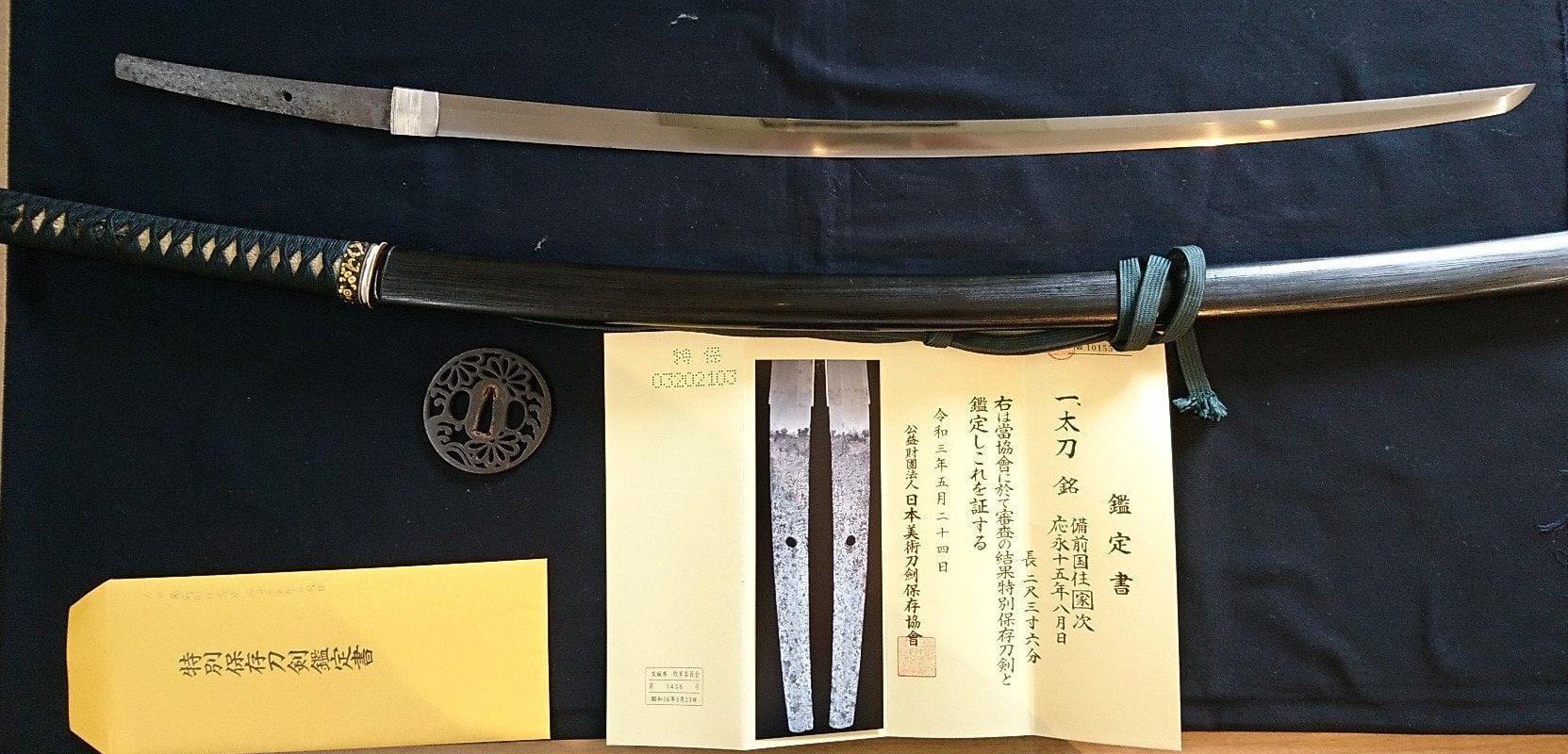
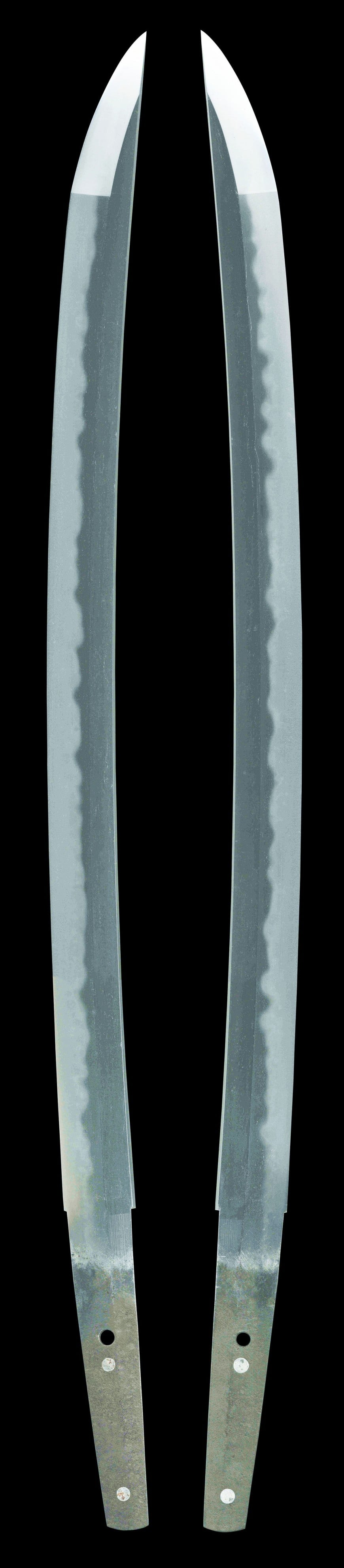
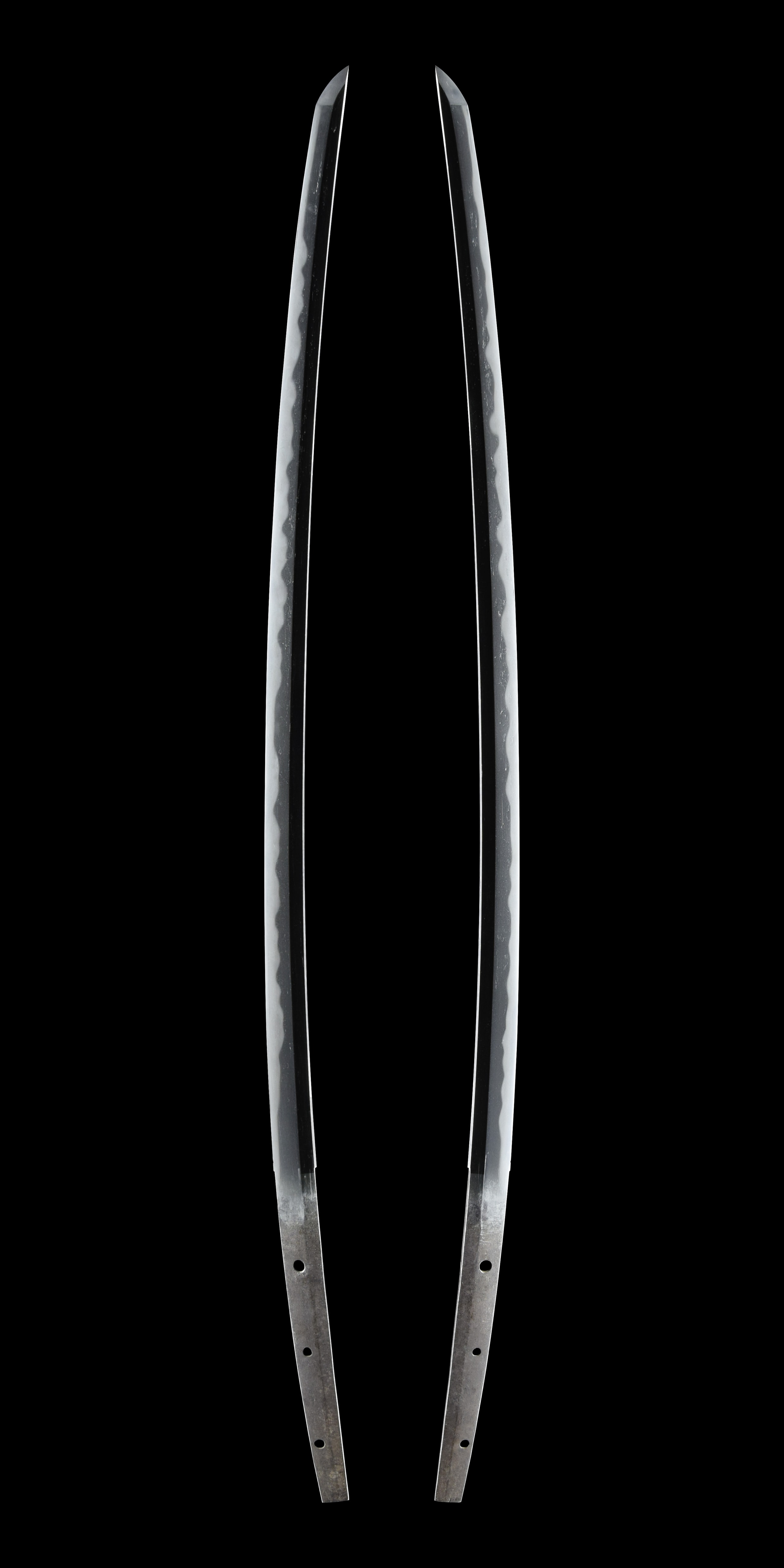
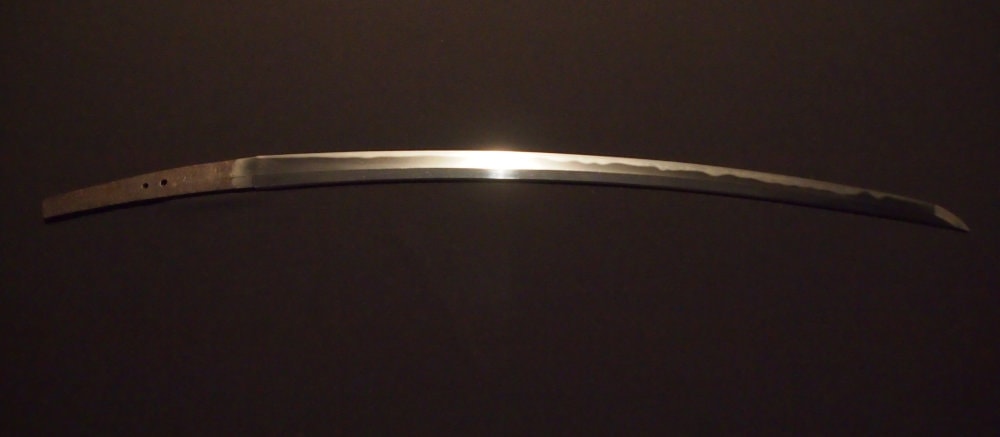
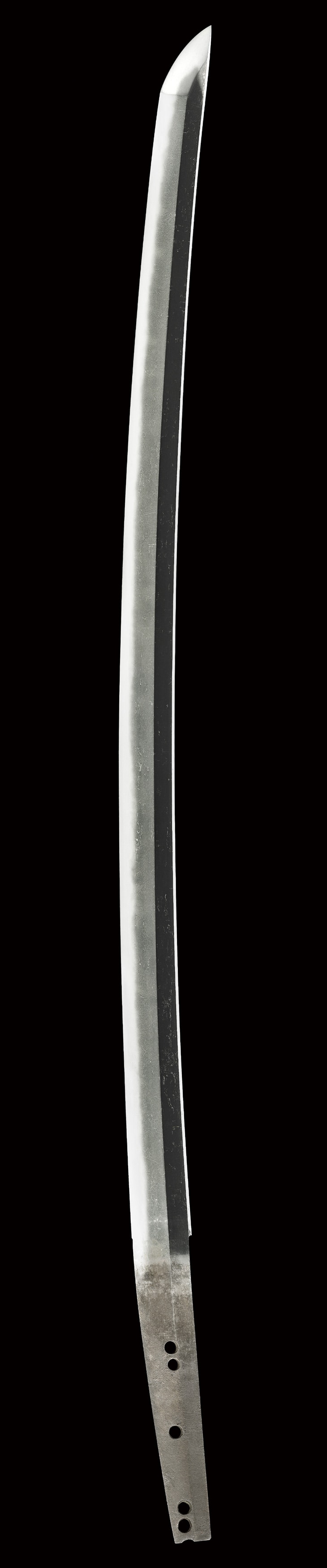
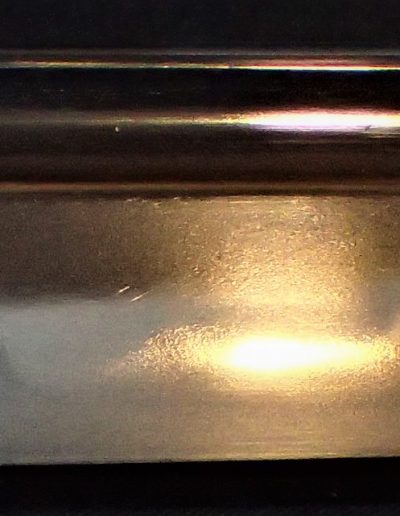
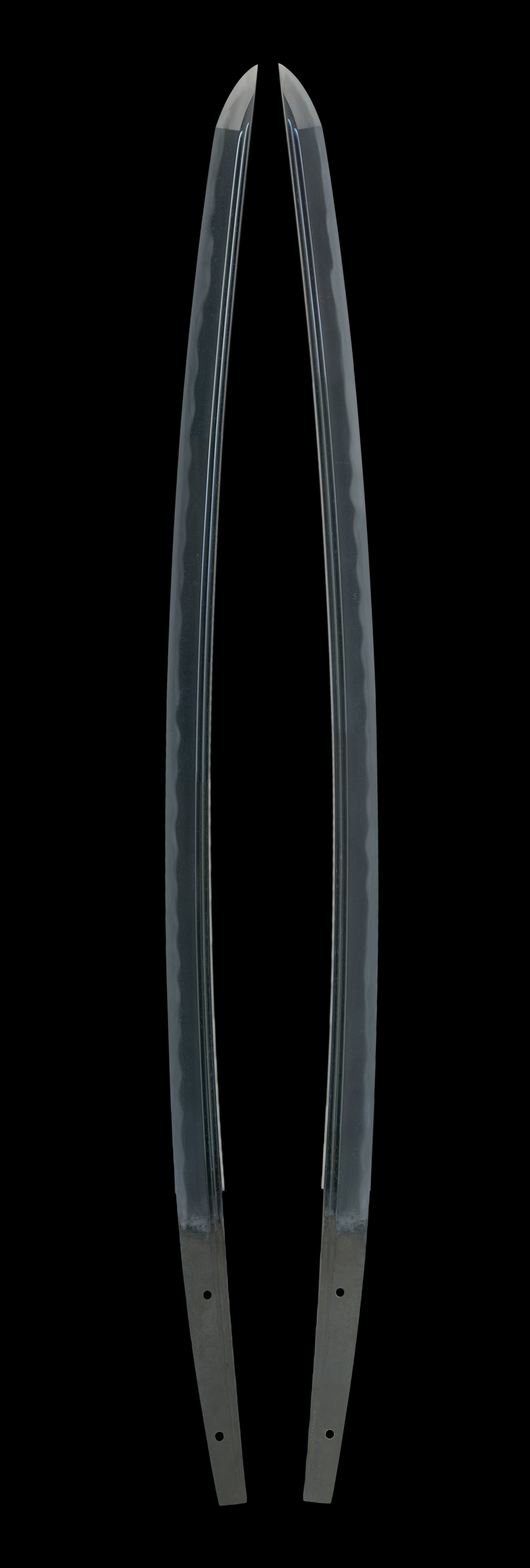
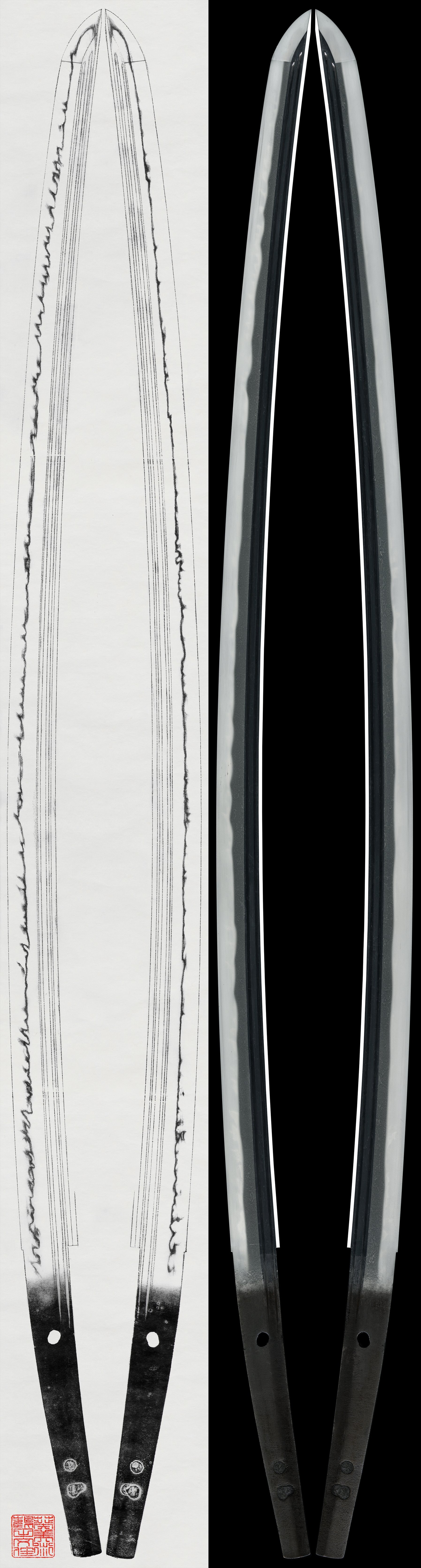
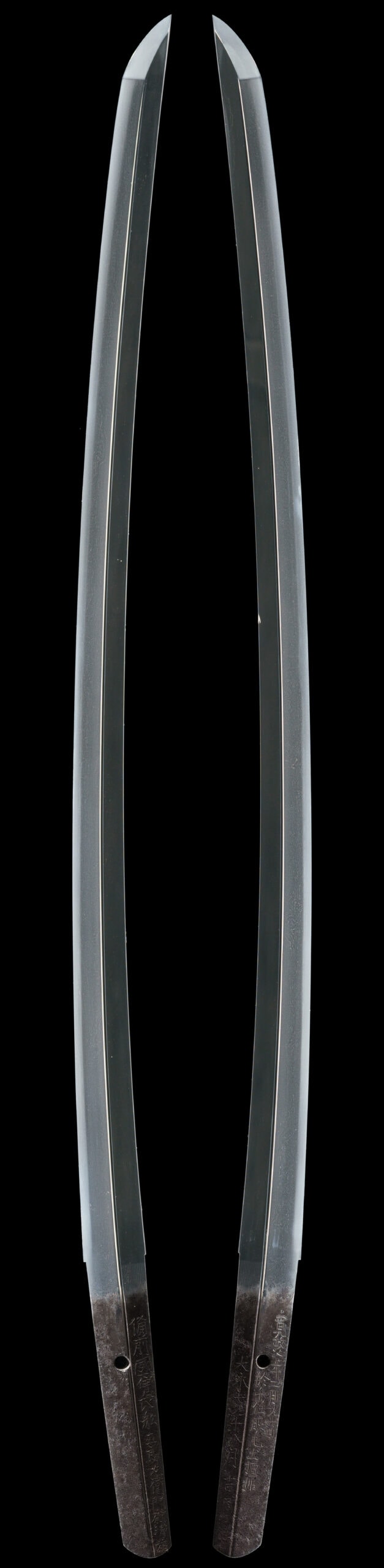
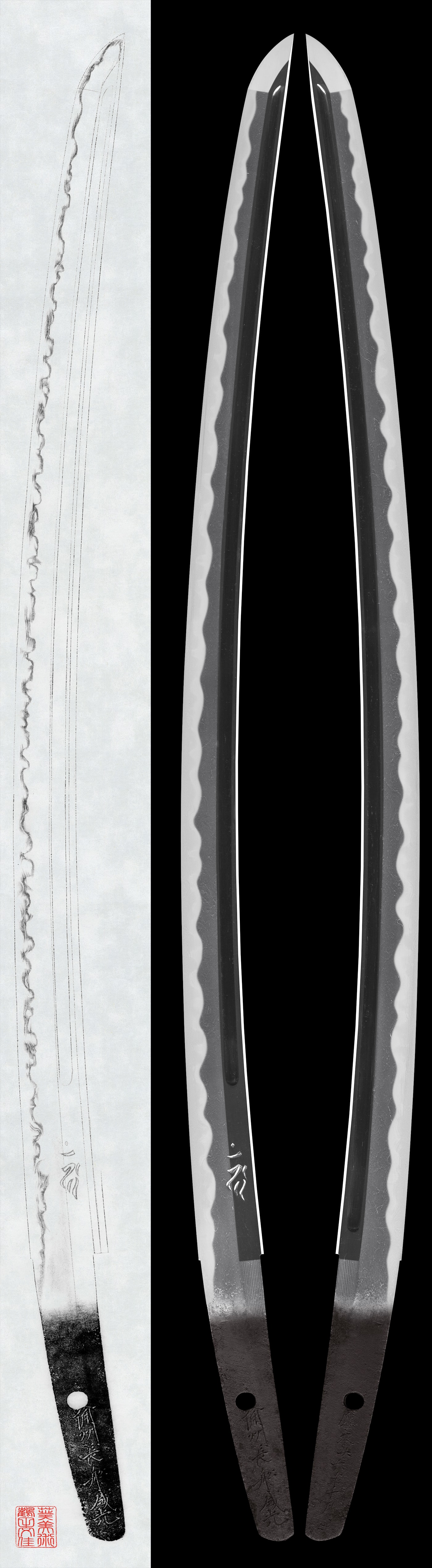
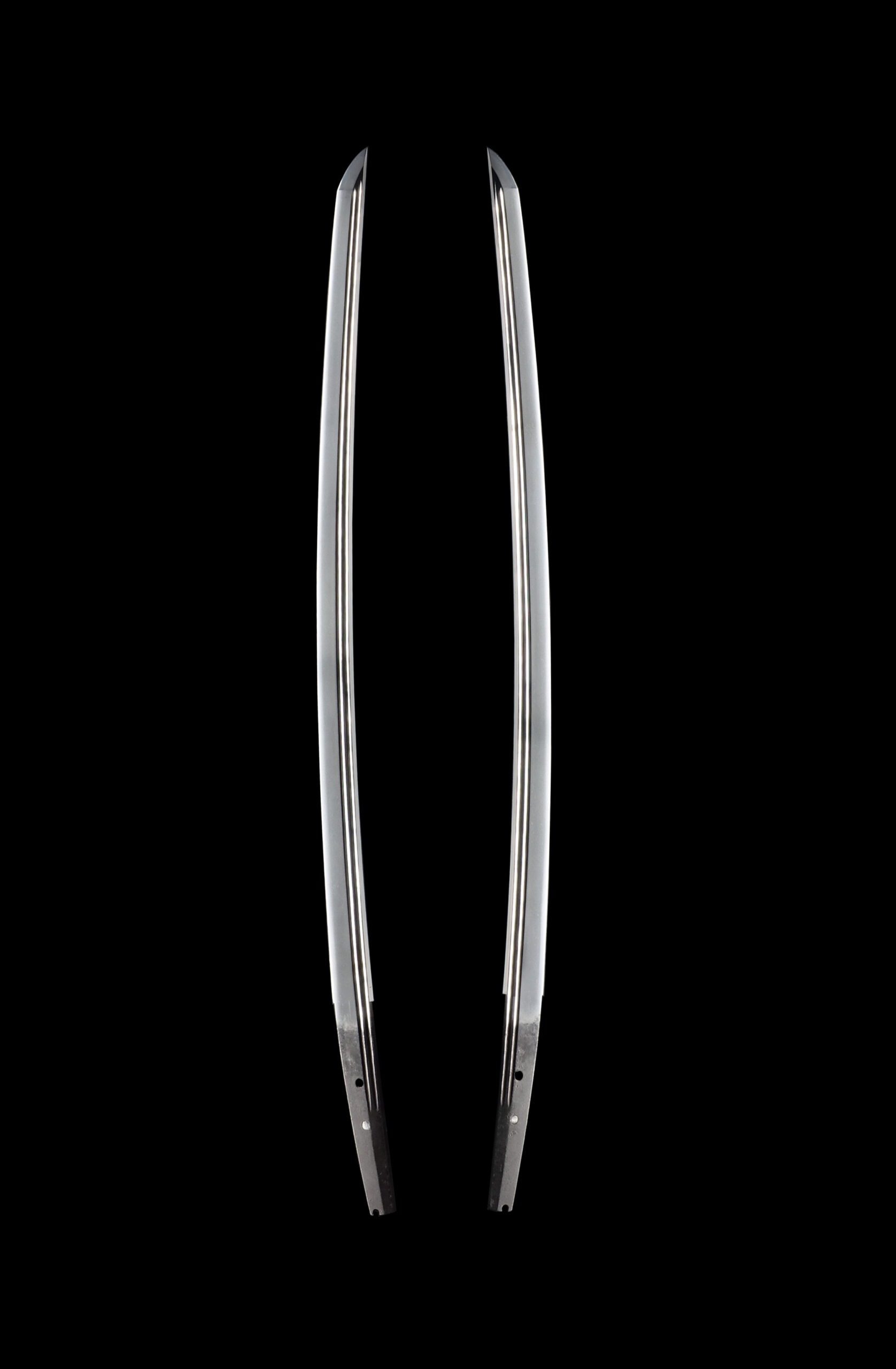
Skip to content ITEM# UJKA409 – Catalogue 38 – Sold An Ietsugu Tachi (備前国住家次) Ietsugu was a swordsmith of the Bizen Osafune school, active in the Ôei era circa 1394-1428. Records identify him as a student of Yukiyoshi , who flourished during the Kôei era from 1342 to 1345. This curvy and slender tachi is dated to August 1408 – signed and dated on its ubu nakago in full: Bizen no Kuni jû Ietsugu, Ôei jûgonen hachigatsu hi . At over 617 years old, it is a genuine survivor of early Muromachi Japan in remarkably collectable condition. The jihada is one of the most compelling aspects of this blade. The steel shows a flowing itame-hada mixed with deep swells of nagare-hada, which borders on ayasugi-hada in appearance – a characteristic more commonly associated with the Naminohira and Gassan schools than with Bizen. Clear bô-utsuri reflects beautifully along the blade body in classic Bizen fashion. The hamon is a composed suguha with fine uchinoke and subtle nezumi-ashi , giving the blade a quietly refined, old-soul character entirely appropriate to its age. The sword is housed in a splendid late Edo period koshirae that celebrates the natural world throughout. The fuchi-kashira – signed by Mogarashi Sôten of Gôshû Hikone and certified to the middle Edo period by NTHK-NPO – features autumn flowers, chrysanthemums, and foliage in richly worked gold on a shakudô ground. Spider and ant menuki continue the garden theme, while the round iron sukashi tsuba , with its kiku and nami motif attributed to the Itô school of Edo province, completes an ensemble of exceptional coherence and quality. Item Number UJKA409 Sword Type Tachi Swordsmith Ietsugu Swordsmith (JP) 家次 Signature Bizen no Kuni jû Ietsugu Date Ôei 15 (August 1408) School Bizen Osafune Province Bizen (Okayama prefecture) Period Kotô – Early Muromachi (Ôei era: 1394-1428) Nagasa 71.6cm Sori 1.8cm Moto-haba 2.73cm Weight 560g Nakago Ubu, 19.3cm, 1 mekugi-ana Jihada Itame-hada mixed with nagare-hada bordering on ayasugi, w
 NihontoWatch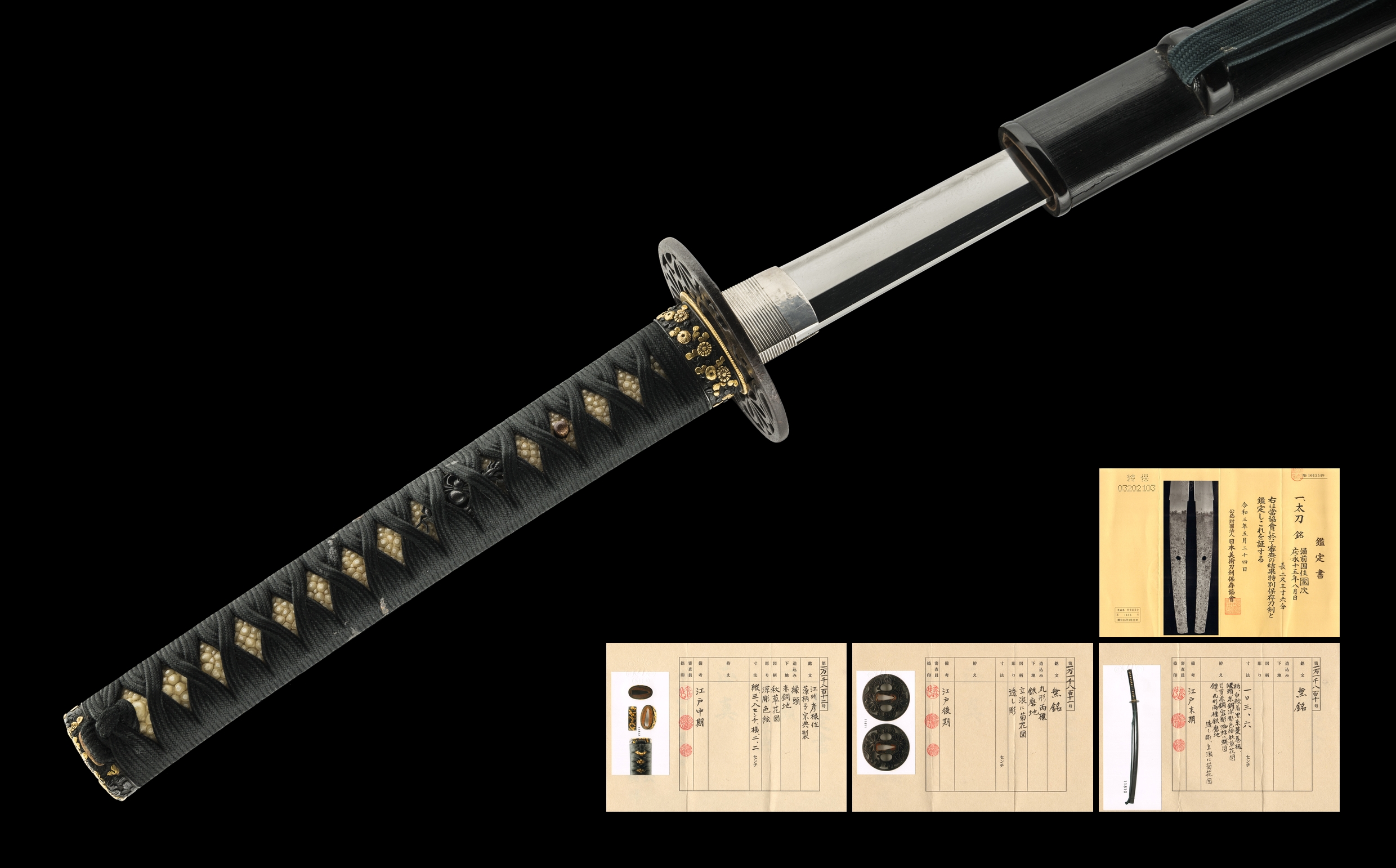
備前伝 · 備前 · 1394-1428頃
刀剣大鑑 上位60%
現在1点販売中
備前伝 · 備前
時期区分: 吉岡一文字· 1288–1394
現在8点販売中
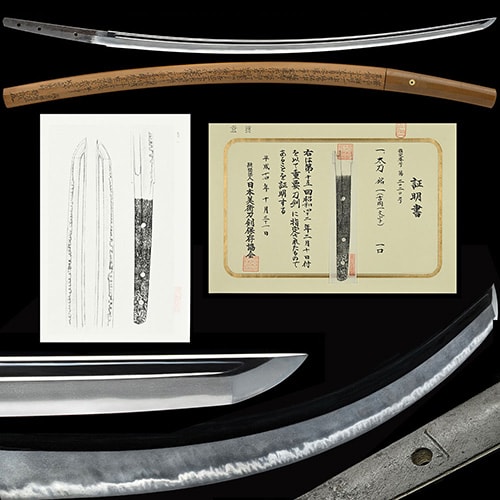
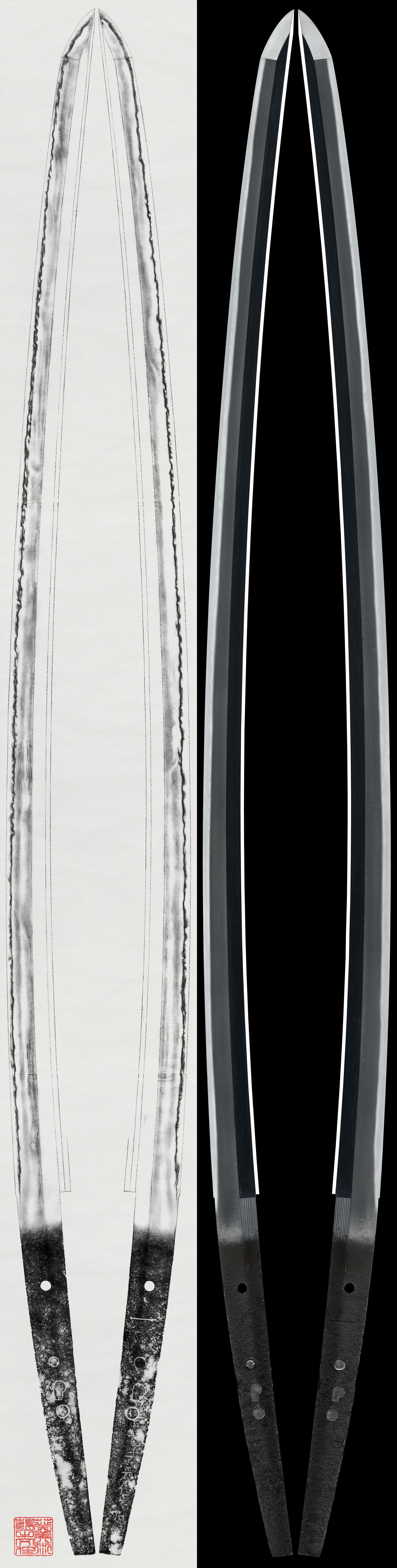
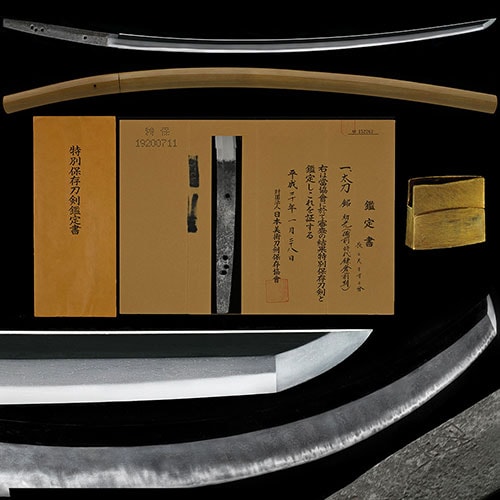
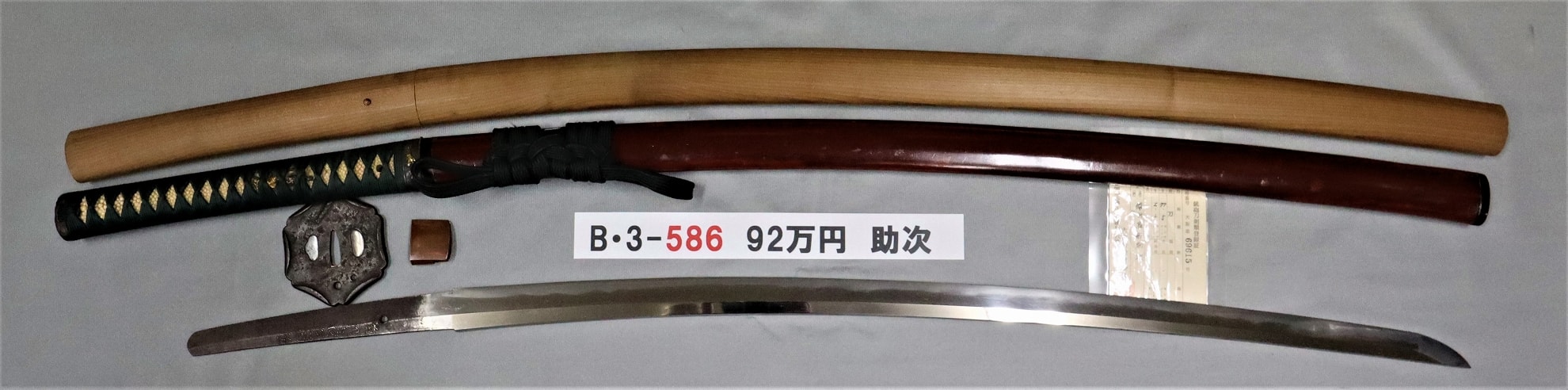
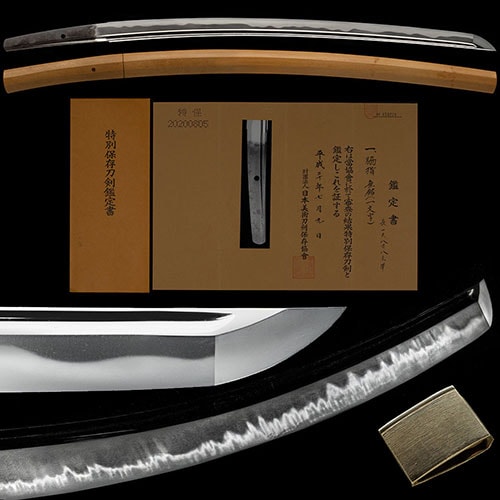
福岡一文字派の隆盛が一段落した鎌倉時代末期、備前国吉岡の地に一文字派の流れを引く刀工群が興り、以後南北朝期にかけて栄えたものを吉岡一文字派と称する。同派には助光・助吉・助茂・助次・助義・助秀などが知られ、「助」の字を通字とする刀工が多い。なかでも助光は吉岡一文字を代表する刀工とされ、現存作には永仁・元応・元亨・嘉暦の年紀が見られる。助茂には延慶二年・貞和二年、助秀には正平十八年の年紀作があり、福岡一文字の後を承けた吉岡一文字が、鎌倉末から南北朝にわたって一派を継承していった歩みを年紀の上から辿ることができる。助次は居住地を吉岡から長船へ移したと伝えられ、吉岡一文字派が長船派へ合流してゆく過程を示す刀工として注目される。 作風は、福岡一文字の名残をとどめた大模様の華やかな乱れも稀には見られるものの、一般には乱れの中に互の目が目立ってやや小出来となるものが通例である。直刃を基調に丁子や小互の目を交えるもの、直刃に足の入るものなどがあり、焼に高低の出入りがさほど目立たず、総じて小模様に揃った穏やかな丁子乱れに落ち着くところに本区分の特色がある。地鉄は板目肌に杢を交えてよくつみ、地沸が微塵につき、地景が細かに入り、乱れ映りが鮮明に立つ。刃中には小足・葉が繁く入り、匂口は締まりごころに小沸がよくつく。しばしば乱れが逆がかる点、また左近将監恒次の諸作に見られるように当代の長船物に近似してゆく傾向は、絢爛として大房丁子・蛙子丁子を奔放に焼いた福岡一文字の最盛期とは明らかに趣を異にしている。 吉岡を福岡と鑑別する要点は、まさにこの乱れの規模と性格にある。大模様に高低を競う福岡丁子に対し、吉岡では乱れがおとなしく揃い、丁子の中に互の目が立って小模様にまとまり、ときに逆ごころを帯びる。助光を筆頭とする代表工はこの作域を高い完成度で示し、助光と伝える無銘の上作には、丁子乱れに互の目・尖り刃を交えて華やかに乱れ、乱れ映りの立った優品が遺る。助茂の延慶・貞和年紀作、助秀の正平十八年紀の脇指、助次の永徳二年紀の太刀など、年紀を備えた作例は同派の編年を支える資料として貴重であり、とりわけ助次作に腰の開いた互の目が交じり応永備前の作風を予兆させる点は、吉岡一文字が次代の備前鍛冶へ橋渡しした流れを物語っている。 詳しく見る →
室町時代の備前
室町期の長船は二層の商いを営んだ。兵卒のための数打ち物と、注文主の俗名を銘に負う注文打ちである。末備前であっても、祐定の最上作は一派のいかなる時代の作にも劣らない。
保存刀剣のうち、出来が一層優れ、保存状態も良好と認められたものです。再刃や、室町・江戸期の多くの無銘作は対象外となり、保存刀剣より高い基準が課されます。
日本美術刀剣保存協会(NBTHK)は、1948年に設立され、文化庁の監督を受ける公益財団法人で、東京・刀剣博物館に本部を置きます。専門の審査員が出品作を直接審査し、美術的・歴史的価値に応じた鑑定書を発行します。NBTHKの鑑定書は、日本刀および刀装具の真正性を示す最も広く認知された基準です。
NBTHK公式サイトAll swords come with a three-day inspection period beginning from the date of delivery. If not satisfied, the sword may be returned within this period for a full refund of the purchase price. Outside of this period, all sales are final. Swords purchased on a layaway payment plan are not eligible for the three-day inspection period.
Skip to content ITEM# UJKA409 – Catalogue 38 – Sold An Ietsugu Tachi (備前国住家次) Ietsugu was a swordsmith of the Bizen Osafune school, active in the Ôei era circa 1394-1428. Records identify him as a student of Yukiyoshi , who flourished during the Kôei era from 1342 to 1345. This curvy and slender tachi is dated to August 1408 – signed and dated on its ubu nakago in full: Bizen no Kuni jû Ietsugu, Ôei jûgonen hachigatsu hi . At over 617 years old, it is a genuine survivor of early Muromachi Japan in remarkably collectable condition. The jihada is one of the most compelling aspects of this blade. The steel shows a flowing itame-hada mixed with deep swells of nagare-hada, which borders on ayasugi-hada in appearance – a characteristic more commonly associated with the Naminohira and Gassan schools than with Bizen. Clear bô-utsuri reflects beautifully along the blade body in classic Bizen fashion. The hamon is a composed suguha with fine uchinoke and subtle nezumi-ashi , giving the blade a quietly refined, old-soul character entirely appropriate to its age. The sword is housed in a splendid late Edo period koshirae that celebrates the natural world throughout. The fuchi-kashira – signed by Mogarashi Sôten of Gôshû Hikone and certified to the middle Edo period by NTHK-NPO – features autumn flowers, chrysanthemums, and foliage in richly worked gold on a shakudô ground. Spider and ant menuki continue the garden theme, while the round iron sukashi tsuba , with its kiku and nami motif attributed to the Itô school of Edo province, completes an ensemble of exceptional coherence and quality. Item Number UJKA409 Sword Type Tachi Swordsmith Ietsugu Swordsmith (JP) 家次 Signature Bizen no Kuni jû Ietsugu Date Ôei 15 (August 1408) School Bizen Osafune Province Bizen (Okayama prefecture) Period Kotô – Early Muromachi (Ôei era: 1394-1428) Nagasa 71.6cm Sori 1.8cm Moto-haba 2.73cm Weight 560g Nakago Ubu, 19.3cm, 1 mekugi-ana Jihada Itame-hada mixed with nagare-hada bordering on ayasugi, w
NihontoWatch備前伝 · 備前 · 1394-1428頃
刀剣大鑑 上位60%
現在1点販売中
備前伝 · 備前
時期区分: 吉岡一文字· 1288–1394
現在8点販売中
福岡一文字派の隆盛が一段落した鎌倉時代末期、備前国吉岡の地に一文字派の流れを引く刀工群が興り、以後南北朝期にかけて栄えたものを吉岡一文字派と称する。同派には助光・助吉・助茂・助次・助義・助秀などが知られ、「助」の字を通字とする刀工が多い。なかでも助光は吉岡一文字を代表する刀工とされ、現存作には永仁・元応・元亨・嘉暦の年紀が見られる。助茂には延慶二年・貞和二年、助秀には正平十八年の年紀作があり、福岡一文字の後を承けた吉岡一文字が、鎌倉末から南北朝にわたって一派を継承していった歩みを年紀の上から辿ることができる。助次は居住地を吉岡から長船へ移したと伝えられ、吉岡一文字派が長船派へ合流してゆく過程を示す刀工として注目される。 作風は、福岡一文字の名残をとどめた大模様の華やかな乱れも稀には見られるものの、一般には乱れの中に互の目が目立ってやや小出来となるものが通例である。直刃を基調に丁子や小互の目を交えるもの、直刃に足の入るものなどがあり、焼に高低の出入りがさほど目立たず、総じて小模様に揃った穏やかな丁子乱れに落ち着くところに本区分の特色がある。地鉄は板目肌に杢を交えてよくつみ、地沸が微塵につき、地景が細かに入り、乱れ映りが鮮明に立つ。刃中には小足・葉が繁く入り、匂口は締まりごころに小沸がよくつく。しばしば乱れが逆がかる点、また左近将監恒次の諸作に見られるように当代の長船物に近似してゆく傾向は、絢爛として大房丁子・蛙子丁子を奔放に焼いた福岡一文字の最盛期とは明らかに趣を異にしている。 吉岡を福岡と鑑別する要点は、まさにこの乱れの規模と性格にある。大模様に高低を競う福岡丁子に対し、吉岡では乱れがおとなしく揃い、丁子の中に互の目が立って小模様にまとまり、ときに逆ごころを帯びる。助光を筆頭とする代表工はこの作域を高い完成度で示し、助光と伝える無銘の上作には、丁子乱れに互の目・尖り刃を交えて華やかに乱れ、乱れ映りの立った優品が遺る。助茂の延慶・貞和年紀作、助秀の正平十八年紀の脇指、助次の永徳二年紀の太刀など、年紀を備えた作例は同派の編年を支える資料として貴重であり、とりわけ助次作に腰の開いた互の目が交じり応永備前の作風を予兆させる点は、吉岡一文字が次代の備前鍛冶へ橋渡しした流れを物語っている。 詳しく見る →
室町時代の備前
室町期の長船は二層の商いを営んだ。兵卒のための数打ち物と、注文主の俗名を銘に負う注文打ちである。末備前であっても、祐定の最上作は一派のいかなる時代の作にも劣らない。
保存刀剣のうち、出来が一層優れ、保存状態も良好と認められたものです。再刃や、室町・江戸期の多くの無銘作は対象外となり、保存刀剣より高い基準が課されます。
日本美術刀剣保存協会(NBTHK)は、1948年に設立され、文化庁の監督を受ける公益財団法人で、東京・刀剣博物館に本部を置きます。専門の審査員が出品作を直接審査し、美術的・歴史的価値に応じた鑑定書を発行します。NBTHKの鑑定書は、日本刀および刀装具の真正性を示す最も広く認知された基準です。
NBTHK公式サイトAll swords come with a three-day inspection period beginning from the date of delivery. If not satisfied, the sword may be returned within this period for a full refund of the purchase price. Outside of this period, all sales are final. Swords purchased on a layaway payment plan are not eligible for the three-day inspection period.