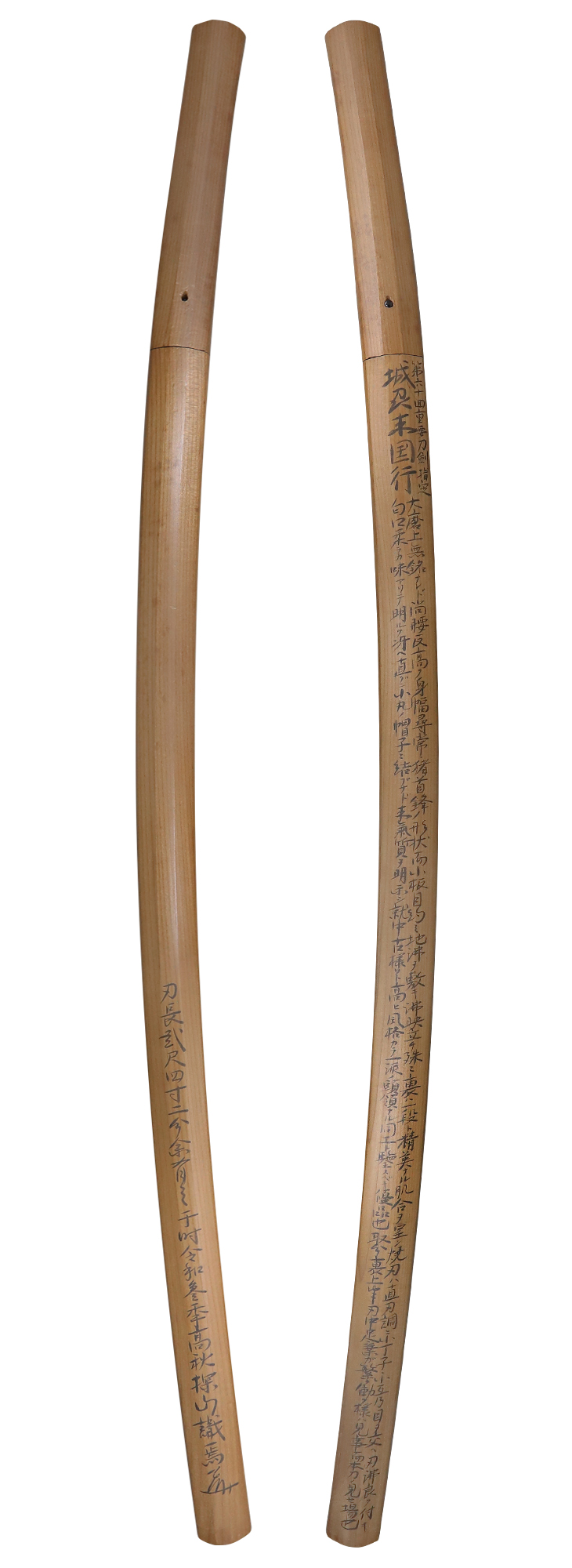
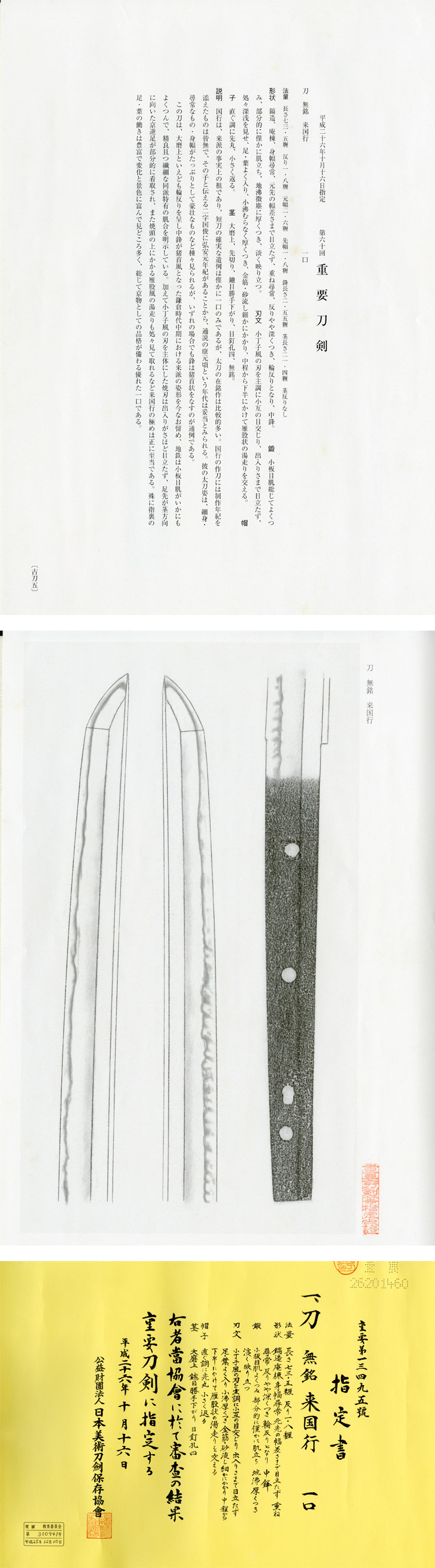
Juyo-Token, 60th Session — Designated October 16, 2014
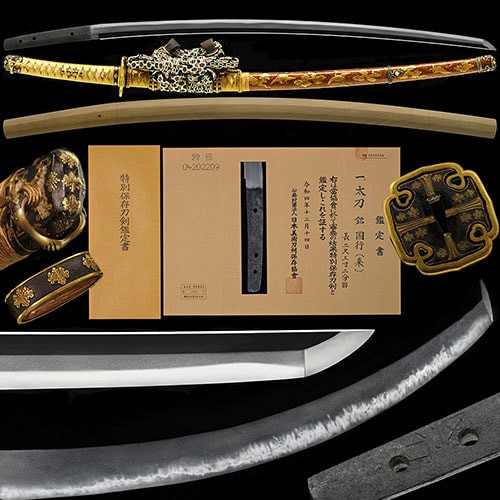
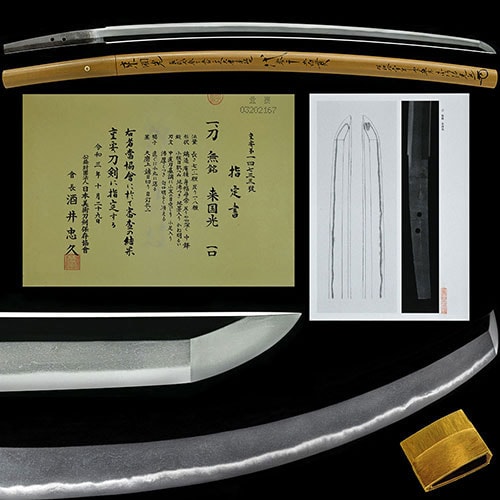
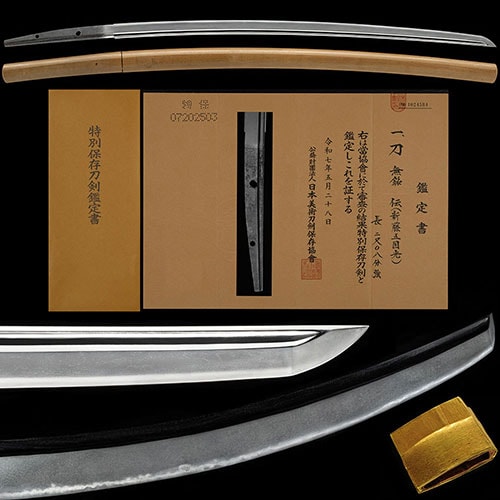
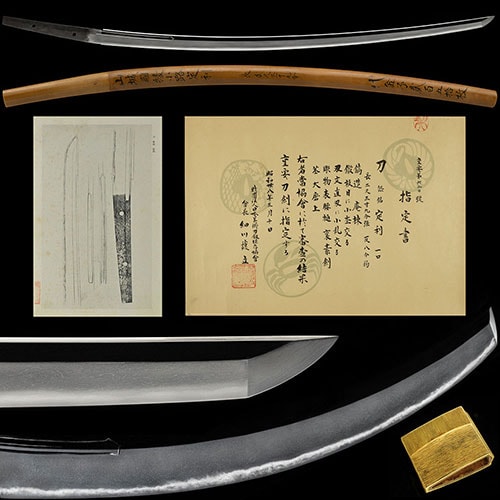
Katana, mumei: Rai Kuniyuki (来国行)
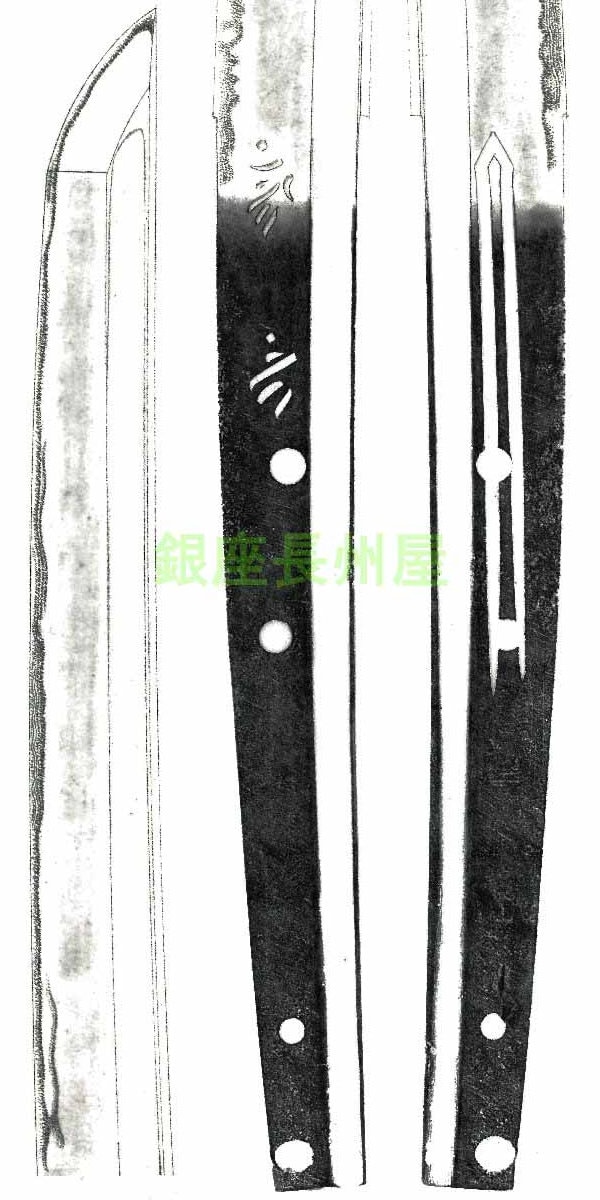
Measurements Nagasa 73.5 cm, sori 1.8 cm, motohaba 2.6 cm, sakihaba 1.8 cm, kissaki-nagasa 2.5 cm, nakago-nagasa 24.0 cm, nakago-sori none
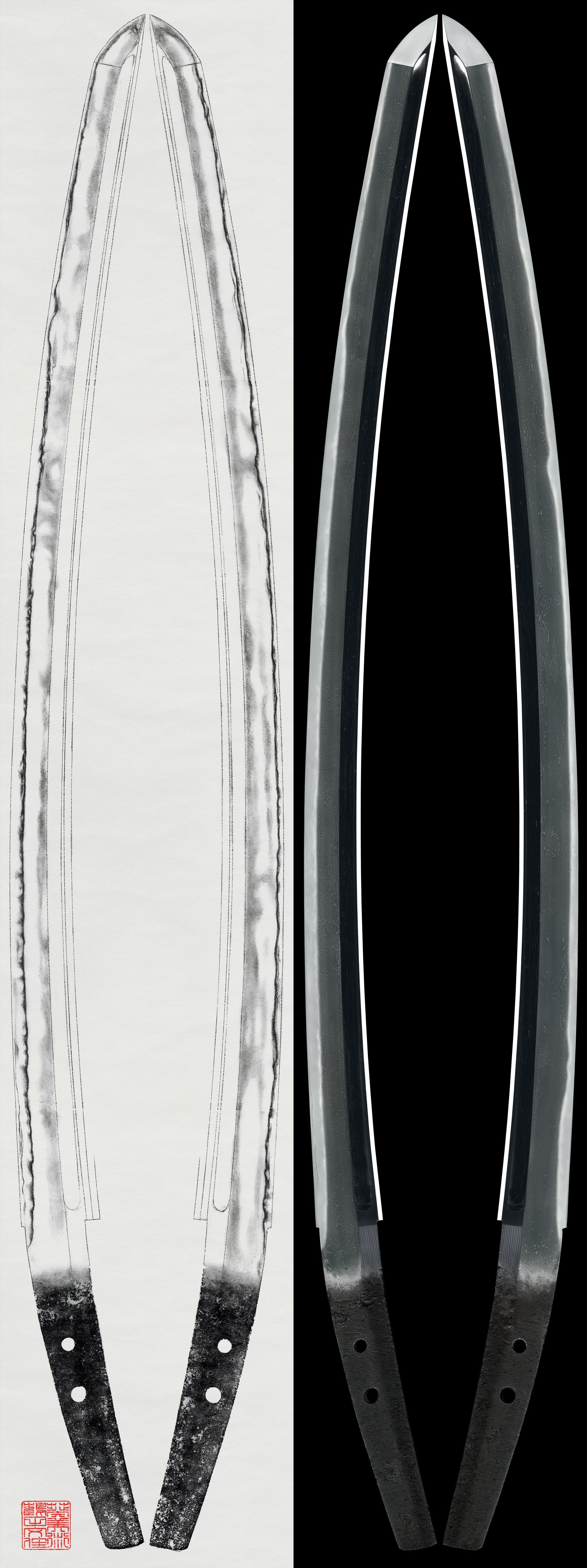
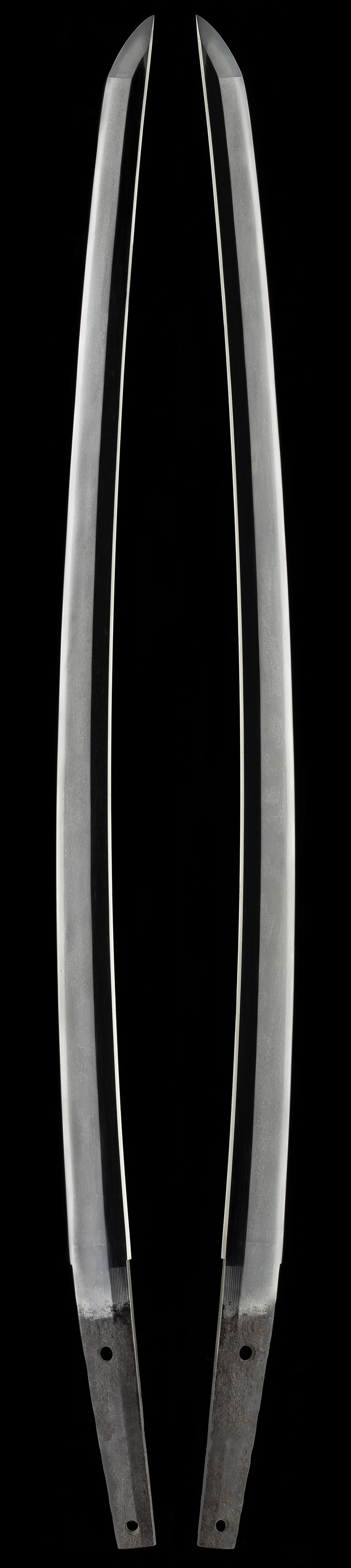
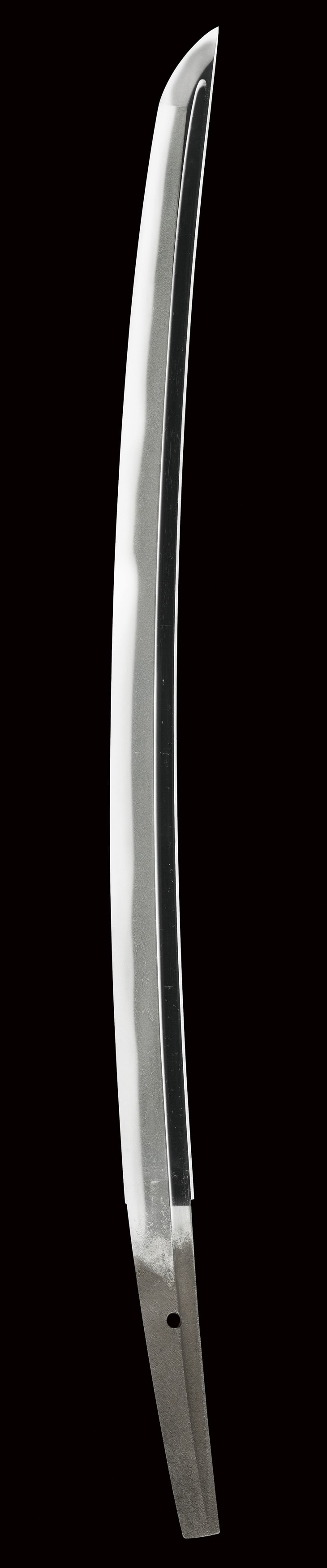
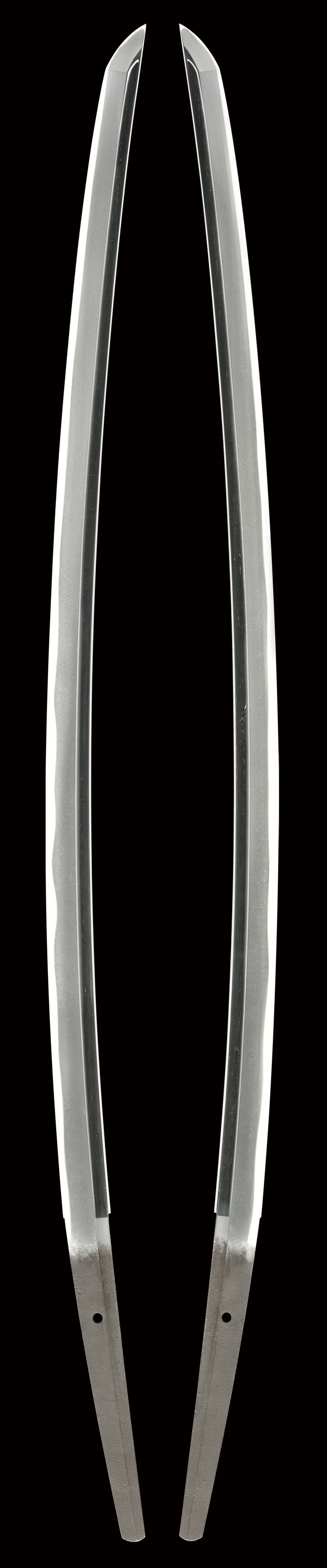
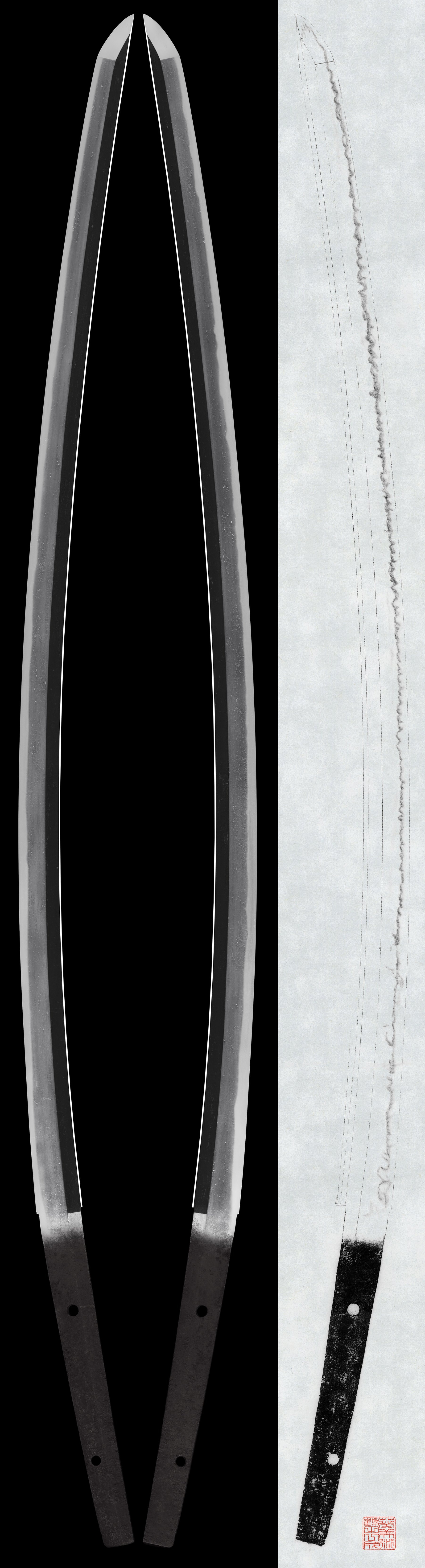
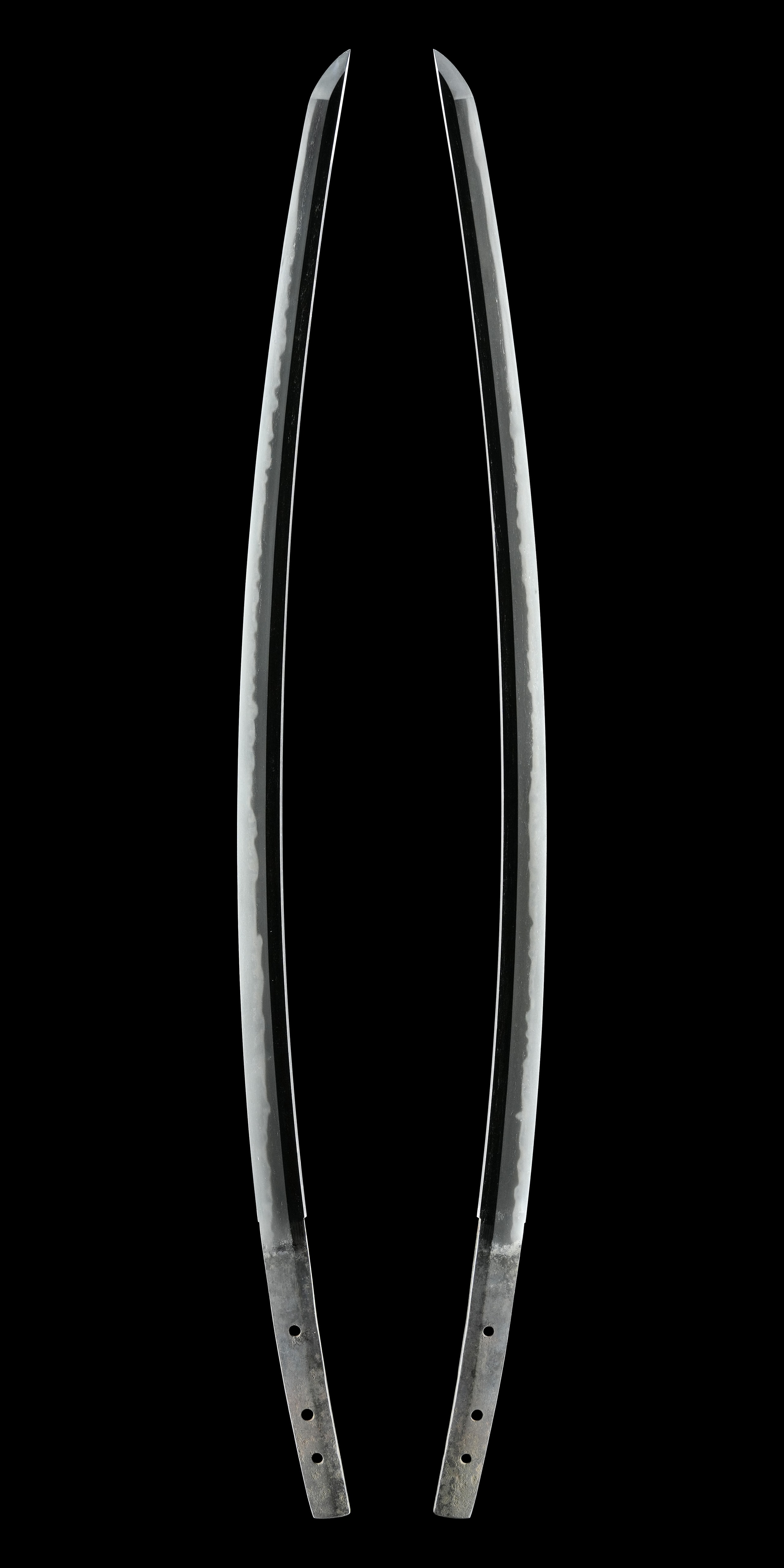
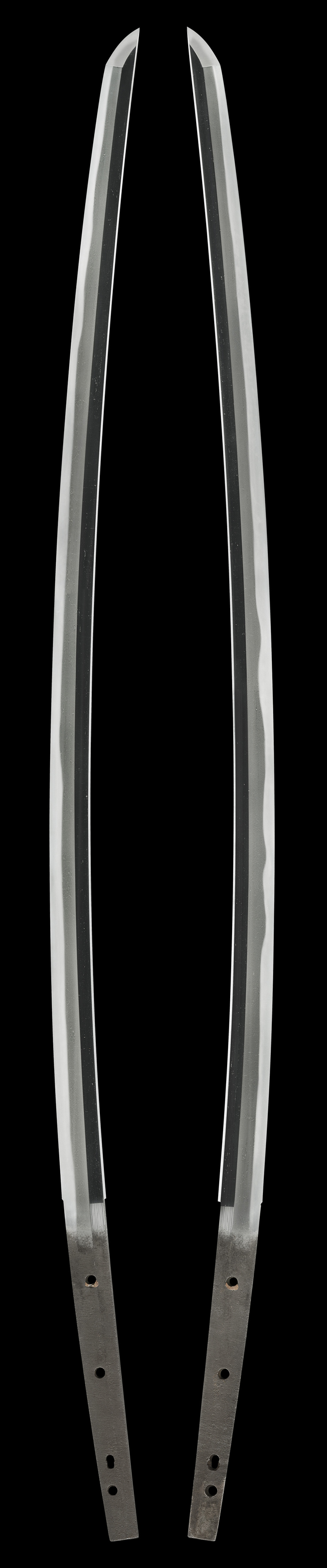
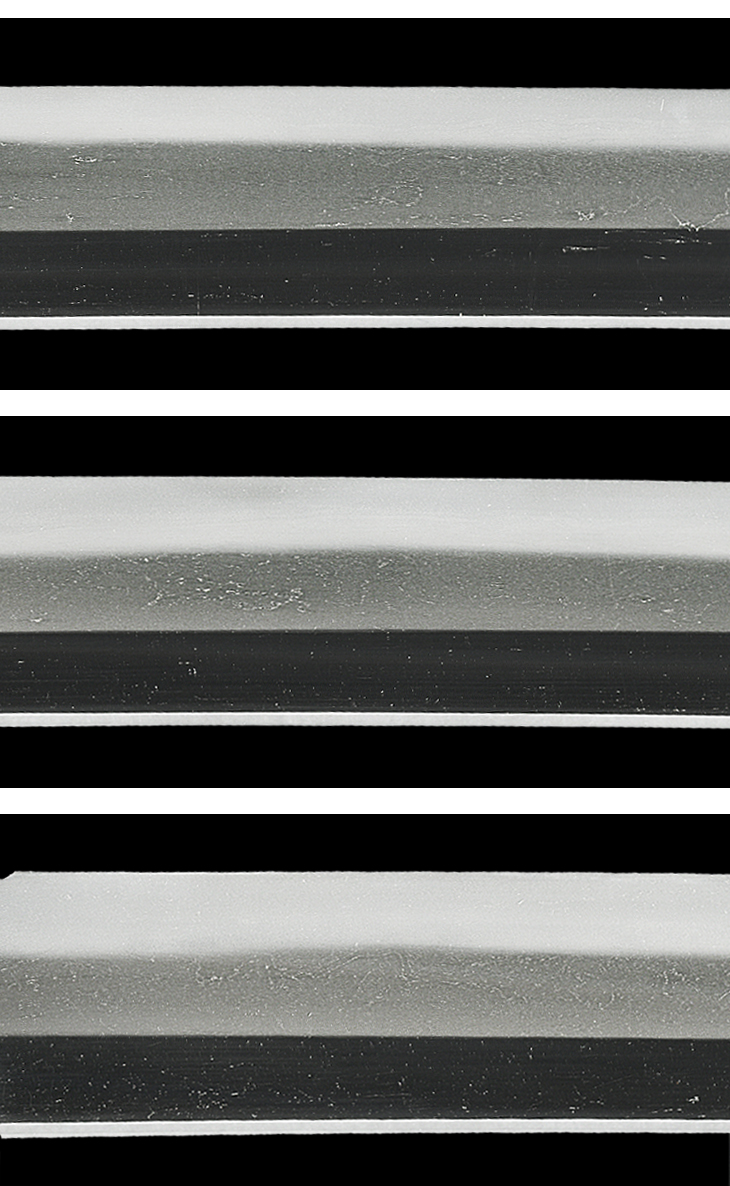
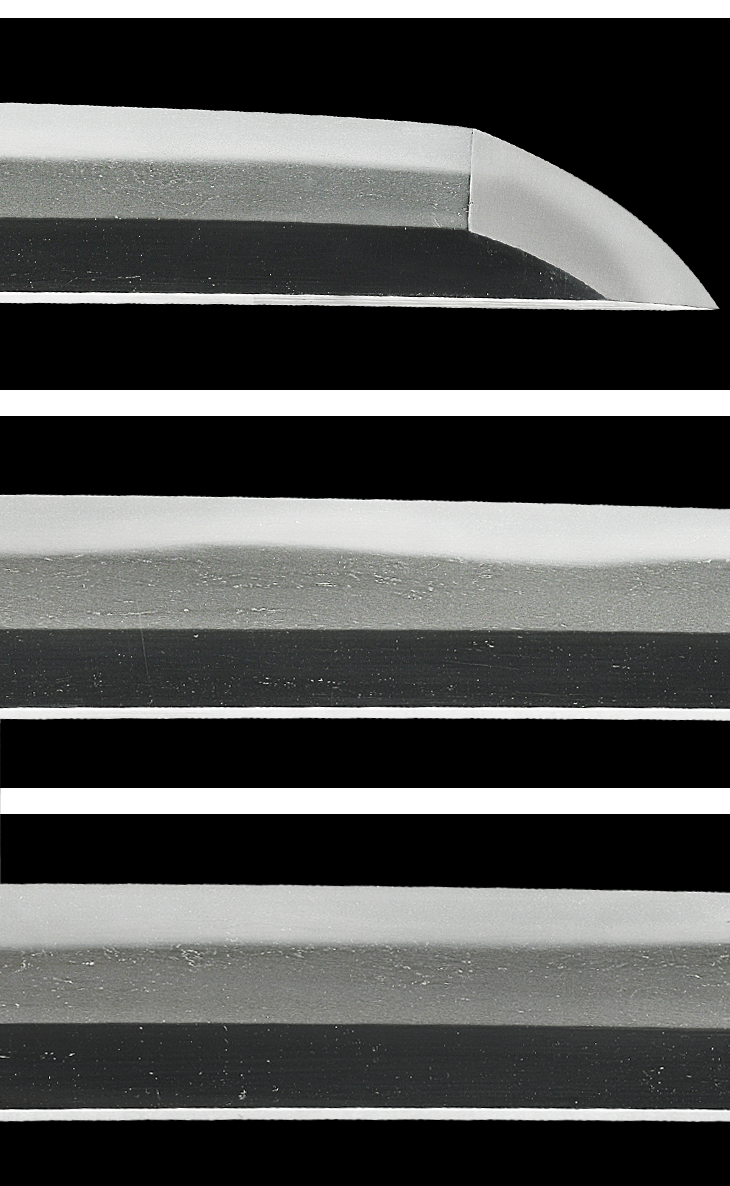
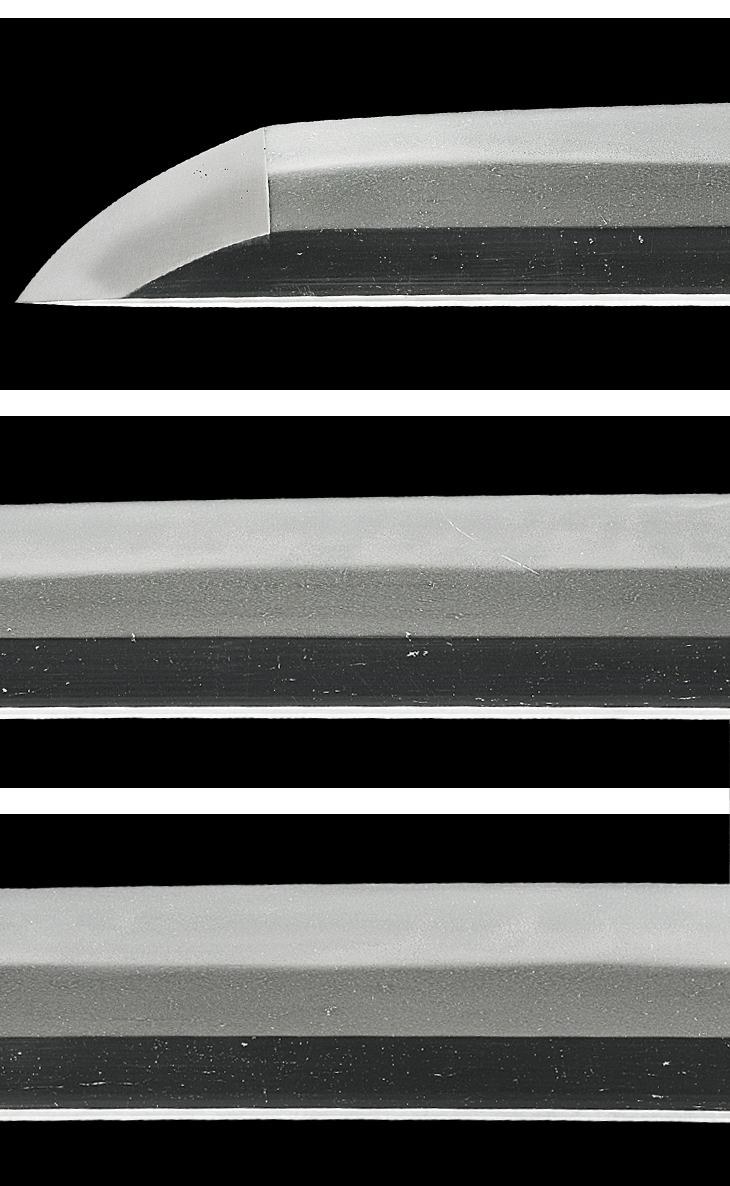
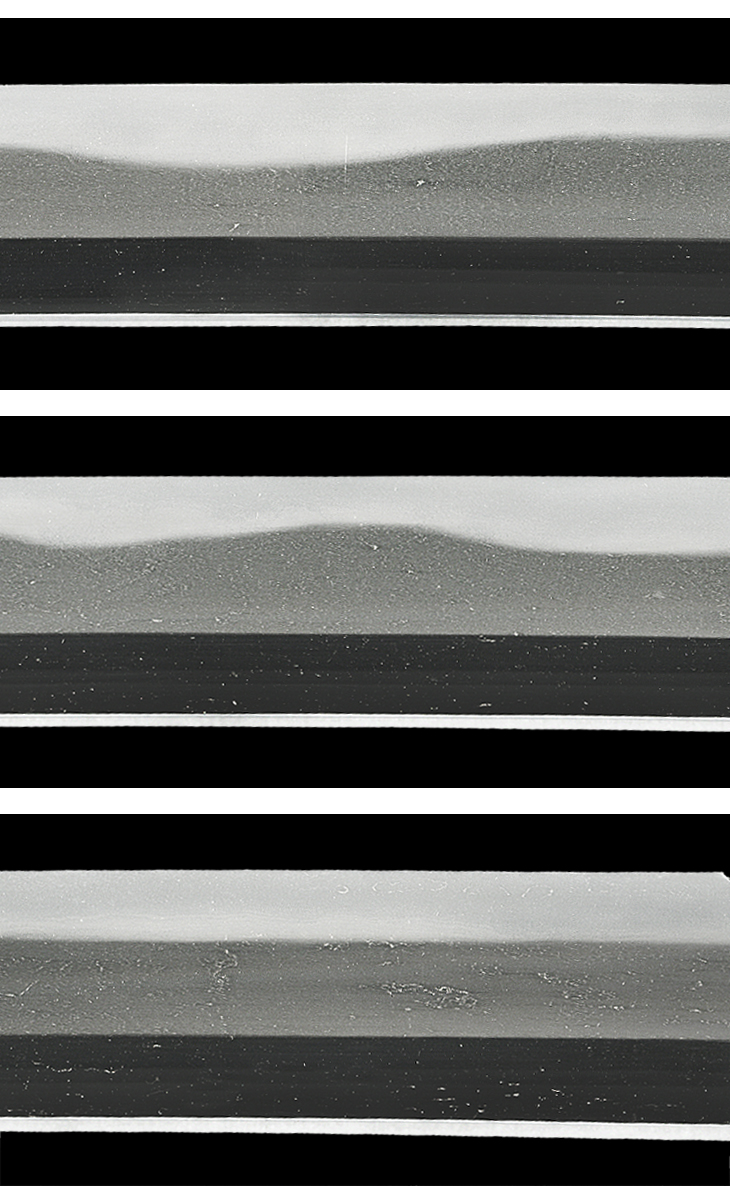
Description Keijo: shinogi-zukuri, iori-mune; standard mihaba with little difference between moto and saki width, standard kasane; the sori is somewhat deep, forming wazori; chu-kissaki. Kitae: Well-forged ko-itame-hada tightly compacted; in places a slight standing grain appears; fine ji-nie thickly and evenly adheres, and a faint utsuri appears. Hamon: Primarily a small chōji-like (ko-chōji-fū) temper, mixed with small gunome; the undulations are not especially conspicuous, though variations of deeper and shallower areas appear here and there; ashi and yō enter well; ko-nie adheres thickly without unevenness; fine kinsuji and sunagashi are seen, and from the middle to the lower half ganmata-shaped yubashiri is intermingled. Boshi: Sugu with a rounded tip, turning back in a small return. Horimono: None. Nakago: Ō-suriage; yasurime katte-sagari; four mekugi-ana; unsigned.
Artisan Rai Kuniyuki (来国行)
Era Mid Kamakura period
Explanation Kuniyuki is, in effect, the founder of the Rai school. While only a single unequivocal example of his tantō is known, signed works in tachi are comparatively numerous. None of Kuniyuki’s blades bears a production date; however, since the two-character “Kunitoshi,” traditionally regarded as his son, includes a date of Kōan 1 (1278), the commonly accepted dating of Kuniyuki to around the Kōgen era (1256–1257) is considered reasonable. Kuniyuki’s tachi are found in various forms—slender ones, standard ones, and also broad and powerfully built examples—but in every case it is customary for the kissaki to assume a “boar’s-neck” (ikubi) character.
Although this sword is ō-suriage, it still preserves the mid-Kamakura Rai-school form, showing wazori and a chu-kissaki tending toward ikubi. The jihada is a tightly compacted ko-itame that clearly manifests the school’s characteristic refined and excellent forging texture. In addition, the yakiba, centered on a small chōji-like temper with comparatively inconspicuous undulations, shows in places “Kyō saka-ashi” (with the tips of the ashi oriented toward the tang). Moreover, ganmata-like yubashiri can also be observed here and there above the yakigashira. For these reasons, the attribution to Rai Kuniyuki is entirely appropriate.
In particular, the ashi and yō activities on the reverse side are abundant, offering rich variation and visual interest. Overall, this is an outstanding blade endowed with the dignity characteristic of Kyōto work.