説明

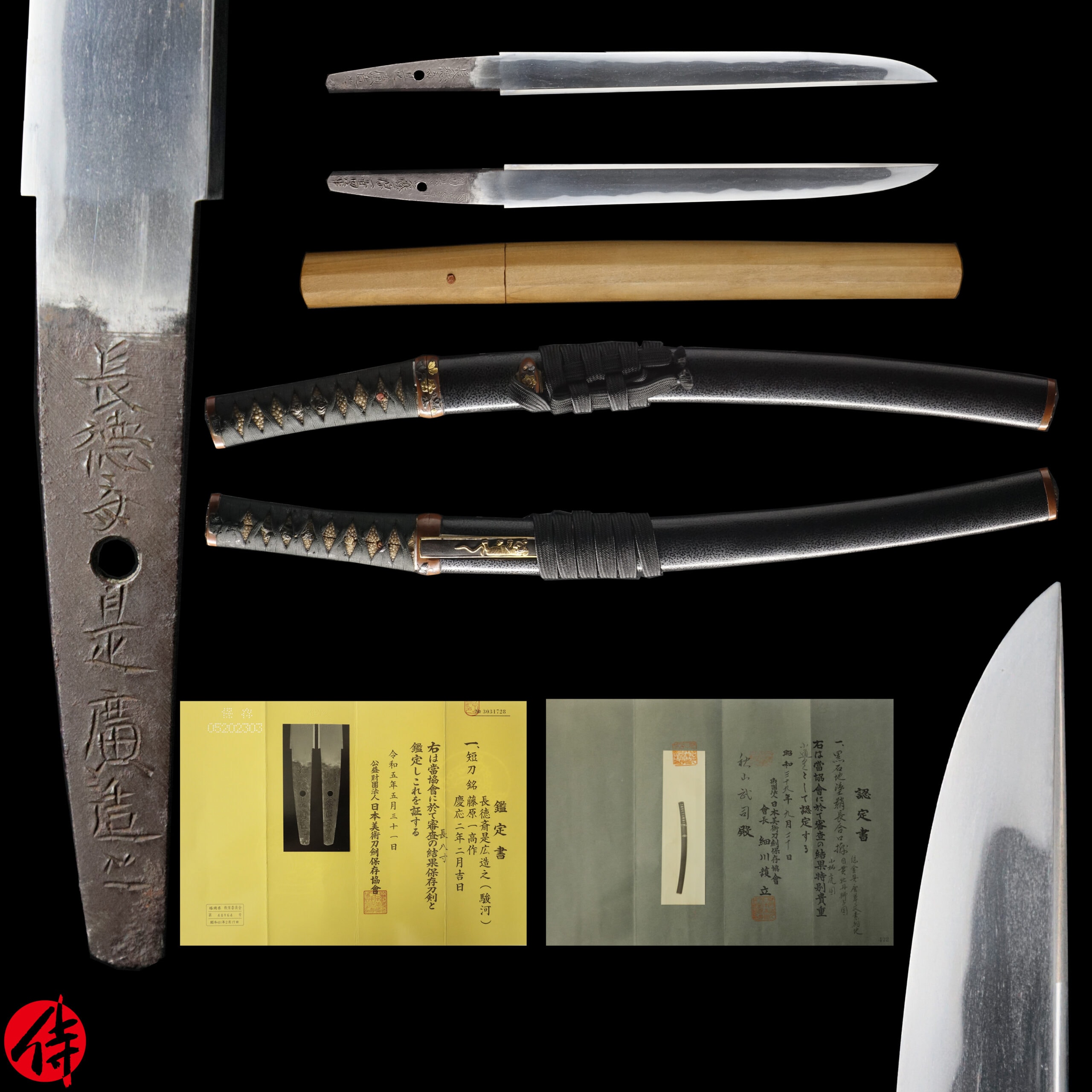
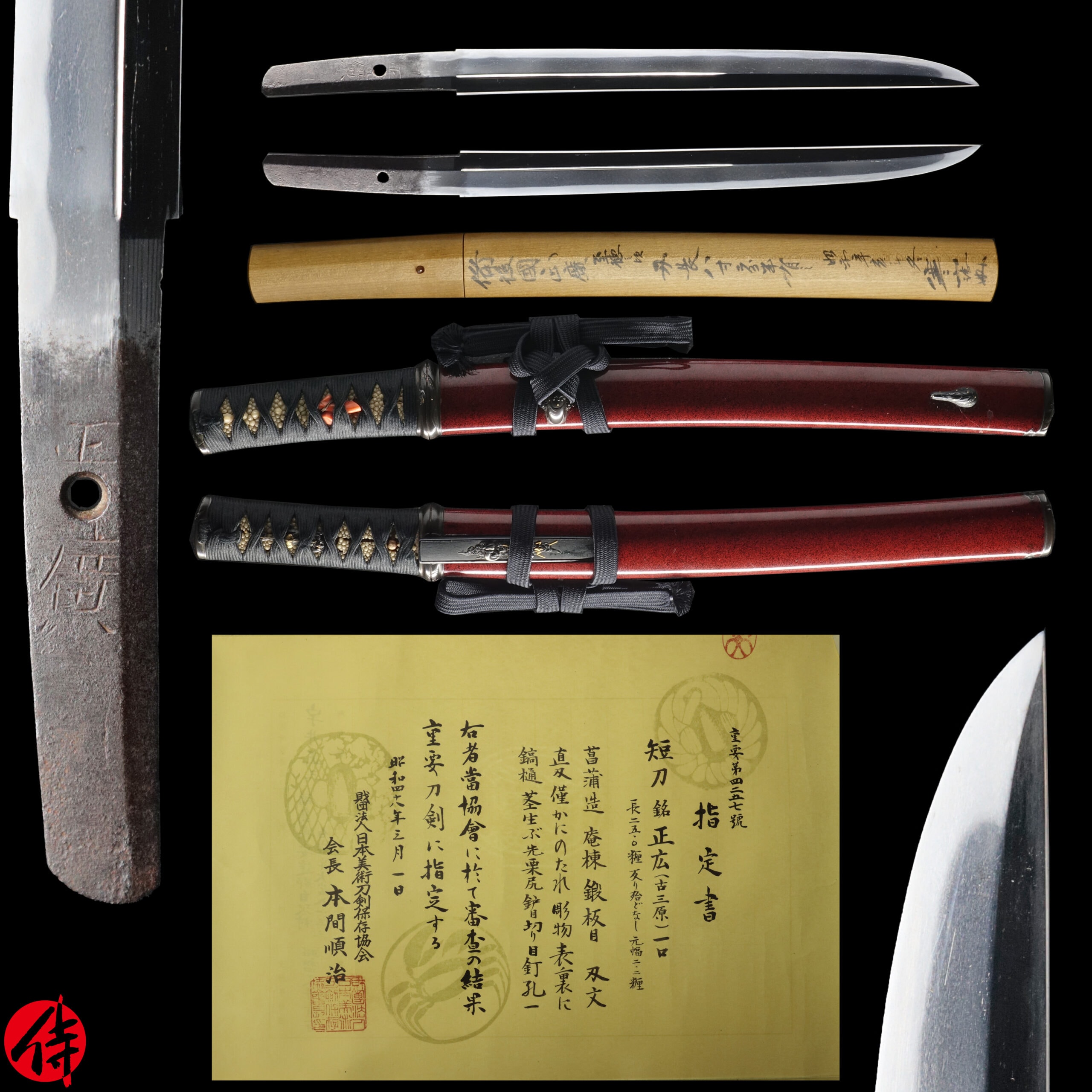
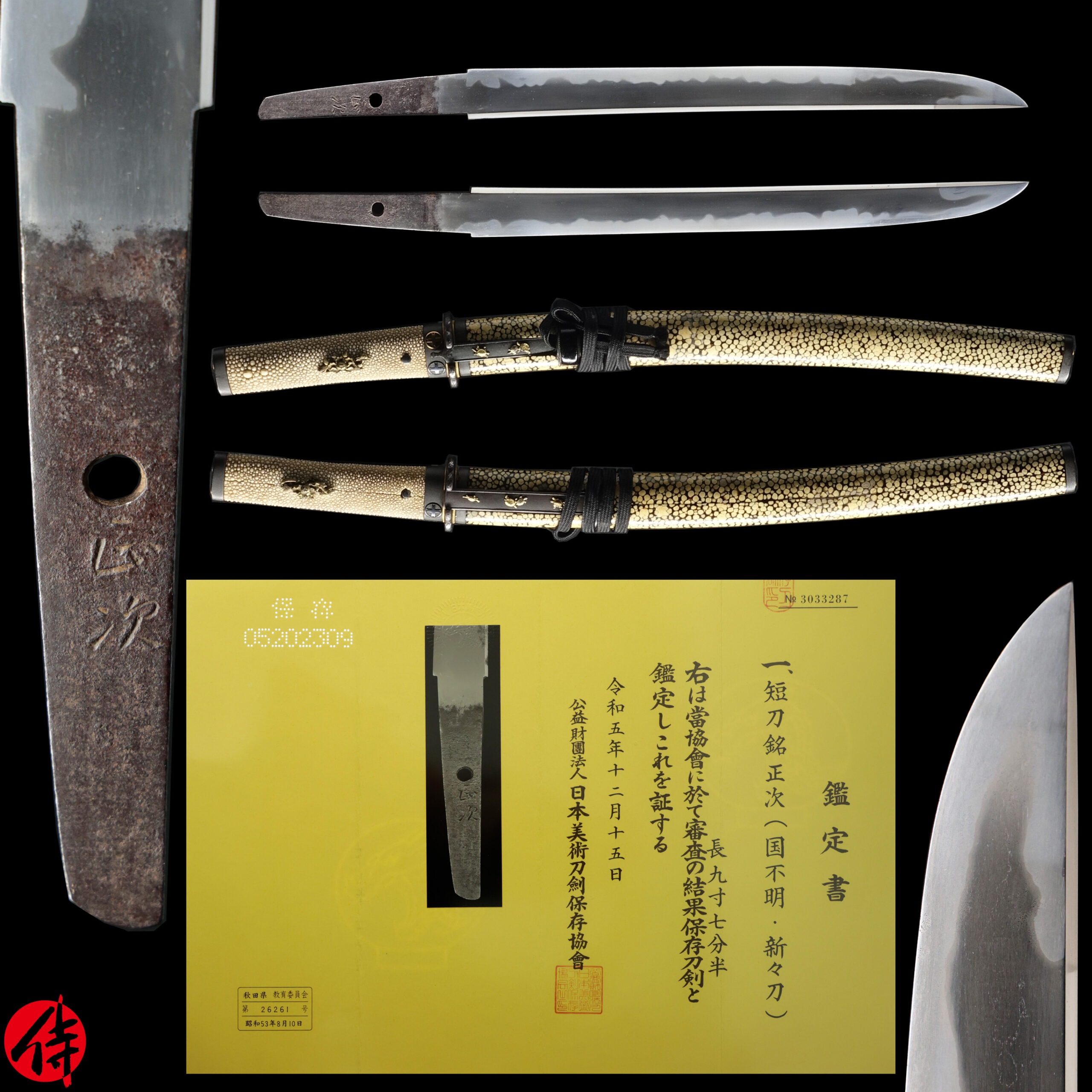
Antique Japanese Sword Tanto Signed by Masatsugu with NBTHK Hozon Certificate 【Description】 This blade was signed by Masatsugu (正次) during SHIN SHIN TO era(1764-1876), according to NBTHK, which appraised it as a Hozon Touken, a Japanese sword especially worth preserving in Japanese society. SHIN SHIN TO era refers to the Japanese blades forged from the early 1760s to the beginning of the Meiji period. Since there were a few swordsmiths named Masatsugu during this time and there is no definitive characteristic to determine which Masatsugu forged this blade, NBTHK simply verified the signature and estimated the age in which it was made. Nevertheless, you can see high level of craftsmanship from this blade. Japan enjoyed a relatively peaceful time from the early Edo period to the mid-Edo period(the 1600s-1760s) because of the stable economy and the powerful government run by Tokugawa Shogunate. Many Samurai didn’t have many opportunities to utilize his Katana sword in public or on battlefields during this time. Thus, they carried their swords more as a symbol of their social status. The demand for swords decreased accordingly compared to the previous Warring state period called Sengoku Jidai. (1467-1600) However, toward the end of the Edo period(1764-1876), the Japanese sword’s role changed dramatically. With the poverty spreading in Japan, there were so many riots initiated by the civilians. Japanese sword started to play an essential role in maintaining public safety. Pressure from foreign countries to open Japanese borders also forced Samurai to order strong-looking swords to survive this tumultuous time. We believe many swordsmiths made great efforts to forged high-quality, practical swords for their masters to prepare for battles. There was a civil war between Tokugawa’s military government and the new Meiji government at the end of the Edo period. That means the original owner of this Katana might have seen the moment when Samurai’s life changed forever. This blade has Choji Midare Hamon (tempering line), which is the characteristic of the Bizen sword-forging style (BIZEN DEN). We believe Masatsugu mastered this excellent sword-forging technique. Choji Midare Hamon is an Irregular wavy tempering line. Most of Masamori’s work reflects on Bizen Den (One of the Five Japanese sword-forging traditions). This blade are appraised as a Hozon Token (保存刀剣) . They were issued by NBTHK (Nihon Bijutsu Touken Hozon Kyokai:日本美術刀剣保存協会). These authentication papers were only given to authentic Japanese swords, especially well preserved and high quality with artistic value. *Please keep in mind that there is small Kitae Kizu on this blade. If you like to know the detailed condition, please feel free to contact us. 【Blade】 Cutting Edge Length(Nagasa) : 29.6 cm (11.65 inches) Curvature(Sori) : 0.1 cm (0.039 inches) Hamon : The crystalline structure which forms along the cutting edge of a blade as a result of the hardening process Jimon(Jihada) : visible steel surface pattern created by folding and hammering during forging process Kissaki : Kissaki is the tip of the Japanese sword. Nakago : Nakago is the tang of the Japanese sword. Japanese swordsmiths left the black rust on the tang because it prevents red rust while the tang is in its handle. And the discoloration of the tang was created over time, and it is a great indicator for a Japanese sword specialist to estimate when the sword was forged. Koshirae: Koshirae is the mounting of the Japanese sword. There are several parts that consist of Koshirae such as Saya (Sabbard), Tsuka (Handle), Tsuba (Handguard). Fuchi-Kashira : A pair of matching sword fittings that cover the upper and bottom parts of its sword hilt. The theme of the Fuchi Kashira and the Kojiri (the decoration of the bottom of the Saya) is the family crest, which looks a cross. This indicates that the owner of this mounting was a Christian, and family crests with a cross motif like this are called “Kurusu-mon (久留子紋),” and in p

Antique Japanese Sword Tanto Signed by Masatsugu NBTHK Hozon Certificate
売切れ
Hozon売切れ

Antique Japanese Sword Tanto Signed by Masatsugu NBTHK Hozon Certificate

短刀

売却済

世界81社の刀剣商を横断追跡 · 価格履歴 · 売却アーカイブ

仕様

長さ

29.6 cm

反り

0.1 cm

作者について

Suishinshi Masatsugu正次

4 重要刀剣

天保十二年仲秋の年紀をもち水心子正次と銘した刀は、その茎の裏に注文者の名を切り、これに附された説明書はこの工について知られるところのすべてを記す。正次は川部北司ともいい、水心子の号を継いで実質的に川部家三代目を継承した江戸の新々刀工である。系は新々刀の父・水心子正秀のものであるが、正次自身の作風はより個別の系譜による。すなわち正秀の高弟大慶直胤に師事し、その女婿となったと伝え、また一説には二代正秀の子ともいう。下谷御徒町に住して作刀生活を送り、万延元年三月十一日に歿したと伝える。その作風について説明書は明確かつ精緻で、銘字に至るまで広義の水心子流ではなく「全く直胤流」であるとし、直胤自身が焼いた二伝、すなわち「相州伝と備前伝が得意」であったとする。 代表的な作風は相州伝で、その重要刀剣四口のうち三口を本会はこの作域の典型と読む。よくつんだ小板目の上に、刃文は小のたれに互の目・小互の目を交え丁子風の刃を交えた乱れとなり、匂深く沸厚く、処々荒めの沸を交える。刃縁はほつれ、砂流し・沸筋さかんに流れ、二重刃風を交え、金筋入り、僅かに飛焼が刃から離れて立つ。これらの働きは偶発のものではなく一貫し、本群の全作を貫くため、丸く返って頻りに掃きかける帽子も、地刃を横切る金筋・砂流しも、彼の作の見せ場というより地である。刃は大振りで豪壮な体配に乗り、身幅広く重ね厚く、反りやや深く、中鋒を延ばし、晩年の一口では大鋒に結ぶ。説明書はその大作の佳品を「破綻がなく、同作中抜群の出来映え」とし、「本領が遺憾なく発揮された」一口と評する。 地鉄はよくつんだ小板目で、よく錬れ、ある一口ではネットリとした肌合となって地景風の変り金が頻りに入り、別の一口では下半に大杢目を交え、最も新しい作では総体にやや大きめの杢目を交える。その上に地沸厚くつき地景細かに入り、冴えた作ではかね冴えて、地刃ともに明るい。天保八年の一作では匂口沈みごころとなるが、ほかでは明るさが基調であり、いま米国にある天保十二年の刀について説明書は、地刃ともに沸豊かに覆われ明るく冴えわたる点を特筆し、これを「師、直胤の作風を髣髴とさせる」一口とする。彼が得意とした相州伝の手は、それゆえまずこの厚く明るい沸の地鉄と沸の働く乱れ刃の組合せに読まれ、働きは刃縁のみならず地中にも集まる。 二伝のいま一つ、備前伝は丁子を主とする。米国にある刀の刃文は丁子に互の目を交え、足長くよく入り、匂深く沸厚く、焼頭に小さな飛焼を交え、匂口明るく冴える。下の鍛えは同じくよくつんだ小板目に地沸・地景を見せる。最も新しい年紀の天保六年の刀は、二伝が彼の手のうちでいかに近く立っていたかを示す。直胤の渦巻肌を思わせる杢目を交えた鍛えの上に、互の目を主体に丁子・尖り刃を交えた湾れ調の乱れ刃を焼き、飛焼頻りにかかり、足長く、沸厚くつく。この刀は指表棟寄りに「八幡太神」の神号を切り、裏の中央に年紀と刀匠銘の花押を切る。本会は両作域がともに直胤に発するとし、両者の別は正次の作期の別というより直胤自身が伝えた二つの手の別であるとする。 その作を分かつものは、それゆえ彼自身の確かな働きと、師の手への近さによって最もよく読まれる。説明書はその作域を、作風においても銘字の鏨に至るまでも直胤から丸ごと受け継いだものと記し、手持ちの重い豪壮な体配の刀が沸厚く明るく覆われる様(手持ちの重い豪壮な体配)を、独自の創意というより師の作の忠実な継承と読む。銘そのものも鑑定の一部をなす。太鏨大振りの五字銘に花押を指表に切り、生ぶ茎は大筋違の化粧鑢で仕上げ、裏に年紀としばしば注文者銘を添え、その鏨は事細かに直胤に倣う。正秀の備前伝復興ののち多方に分かれた広義の水心子一門に対して、正次の特色はまさに、二伝をかくも均しい出来で再現した一師への忠実にある。 正次の在銘の記録は規模こそ慎ましいが、その水準は一貫する。重要刀剣に合格した刀は四口、いずれも在銘で、天保六年から天保十二年に及ぶ年紀作であり、参考書は技倆を上作と評し、刀剣界の評価も新々刀として中位にある。名家の来歴を負う作はなく、指定はより上位の文化財ではなく重要刀剣の位にとどまる。その作は館蔵の文化財というより指定の重要刀剣の群であり、各刀に記される所持者は栃木・東京・米国の私蔵である。これは収集家にとって、鎌倉の大名物にはない近づきやすさを意味する。在銘・年紀をもち、相州伝の大振りで明るく、紛れもなく直胤の門の刀である正次の一口は、一世代に一度というよりは折にふれて真剣な市に現れる種類の新々刀であり、その四口の重要刀剣の一が現れることは、現実的で、しかも手の届かぬものではない機会である。彼は説明書が描くところのまま、すなわち大慶直胤の忠実かつ技倆ある継承者として、新々刀復興期の相州伝を全き力で担う工として、最もよく蔵される。

刀剣商

サムライミュージアム

samuraimuseum.jp

売切れ