二世紀半の泰平のあいだ、刀は武器である以上に武士の身分の標章であった。江戸の実証と大坂の華やぎのように都市ごとの作風が育ち、時代の末には需要も細っていく。
 NihontoWatchNihontoWatch
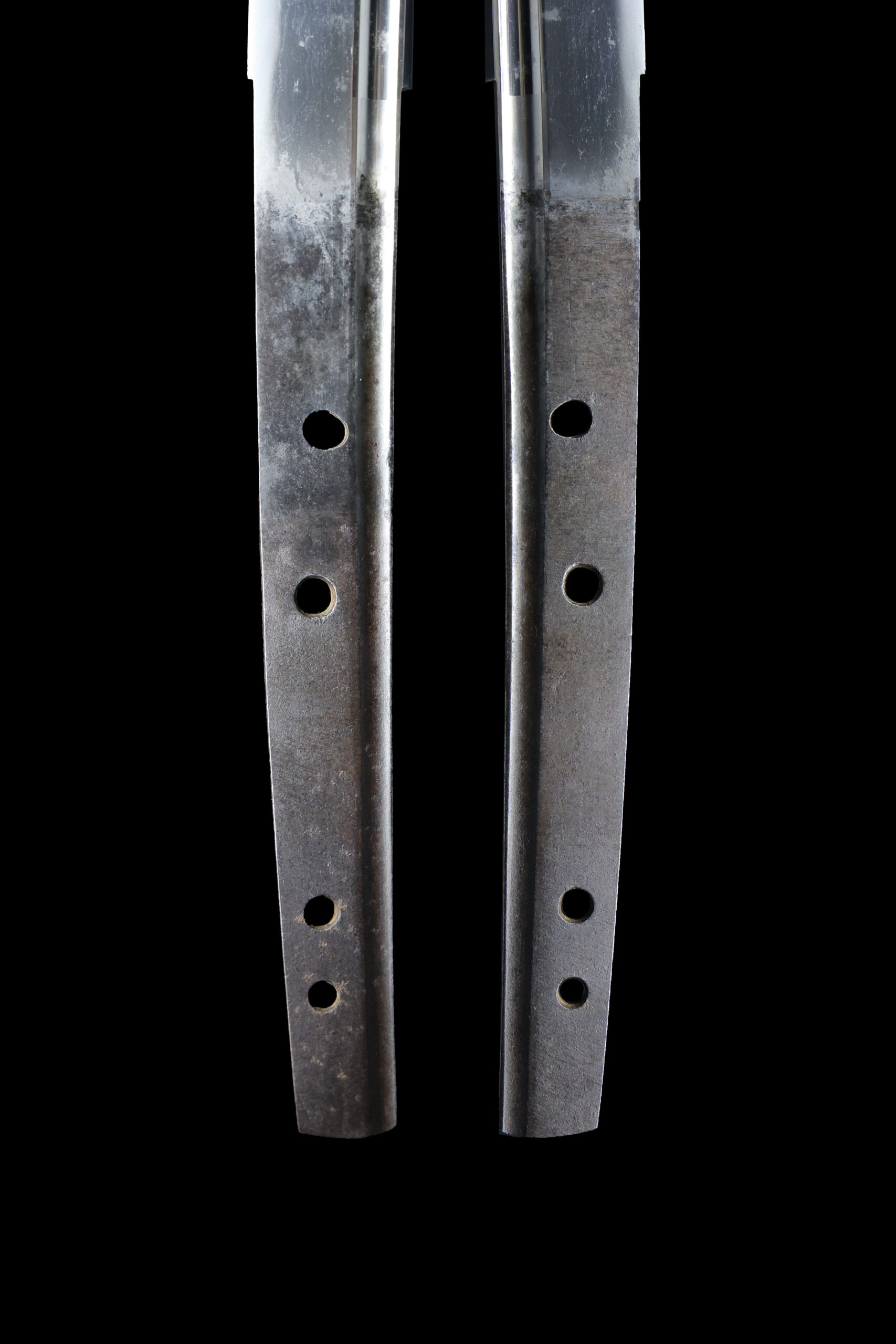
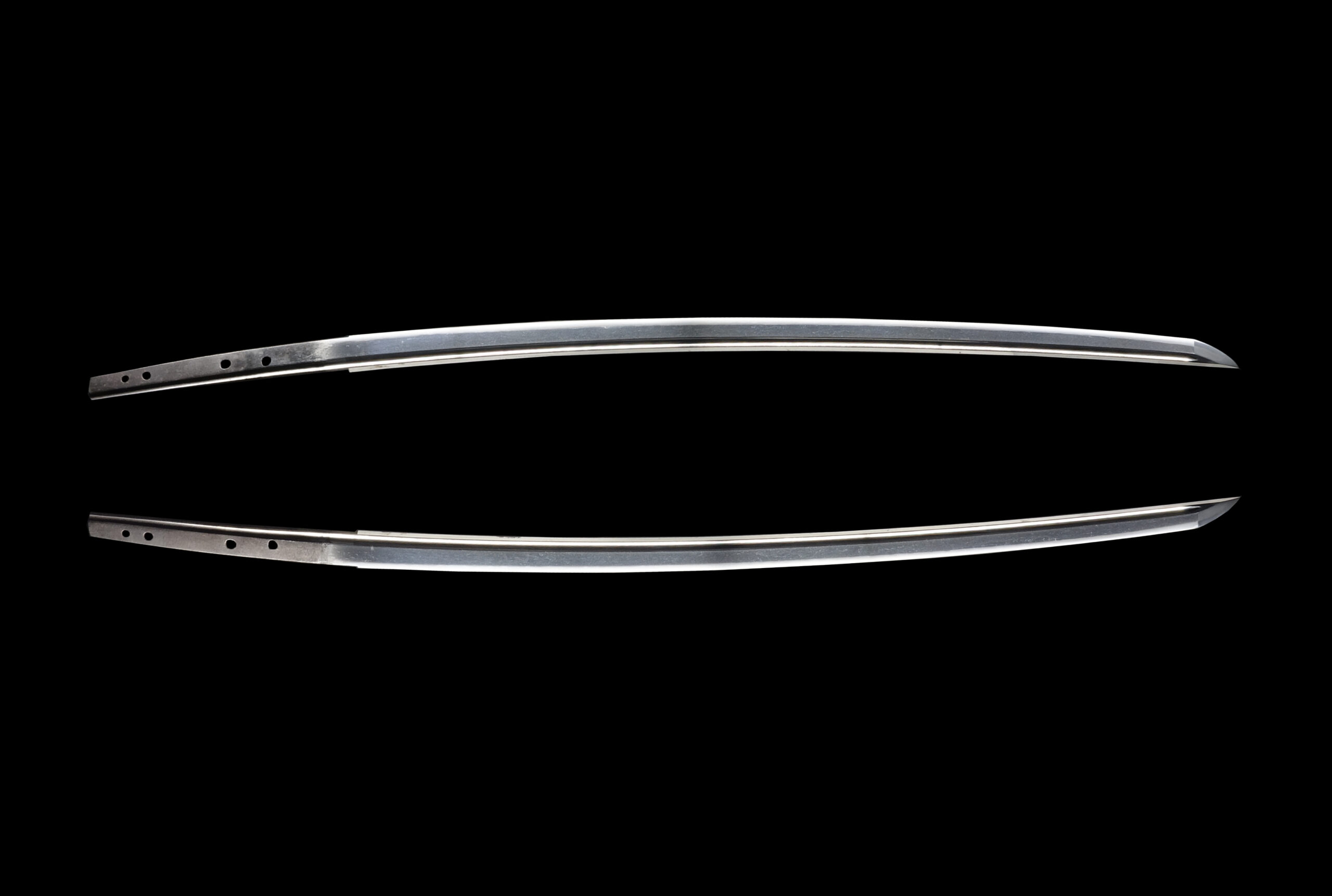
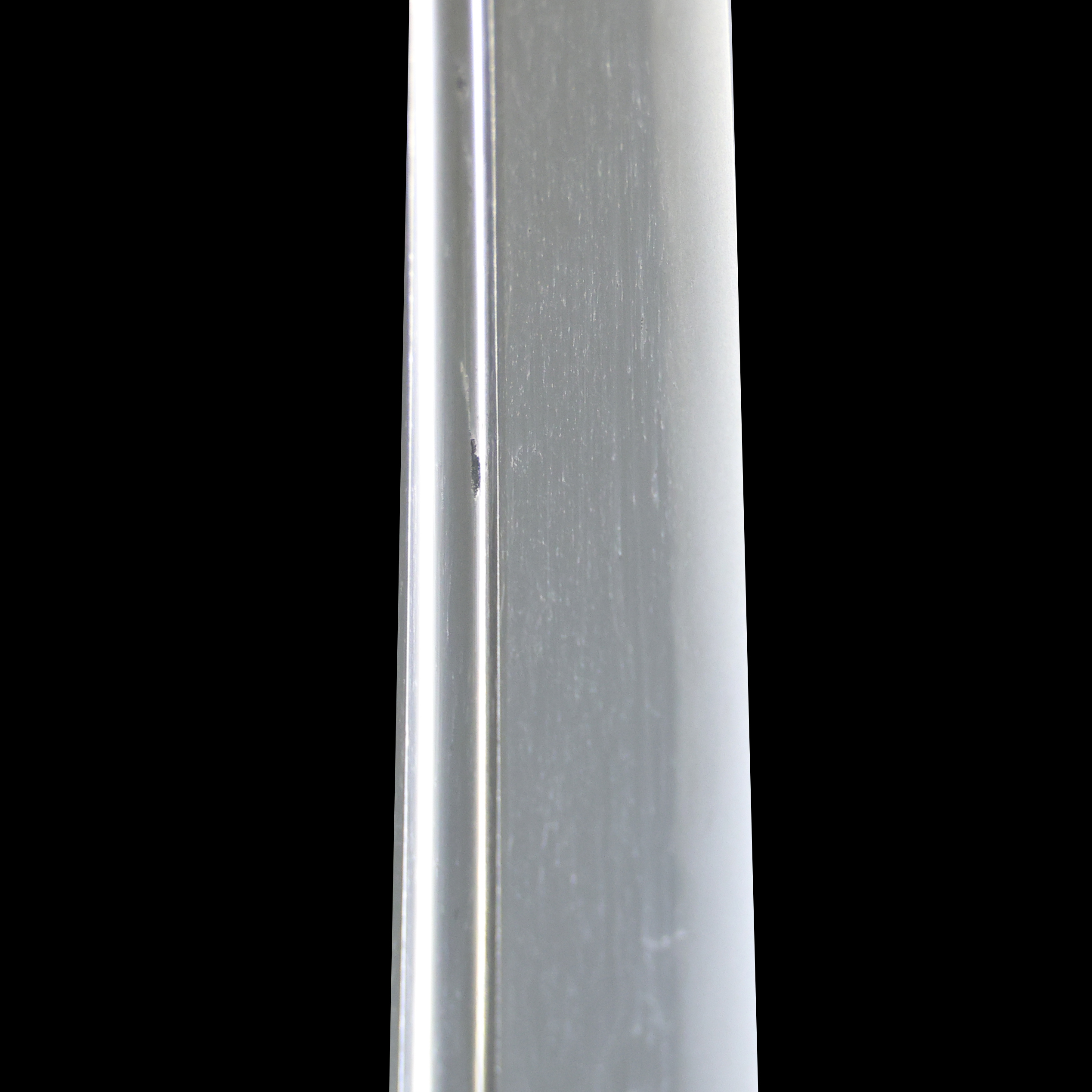
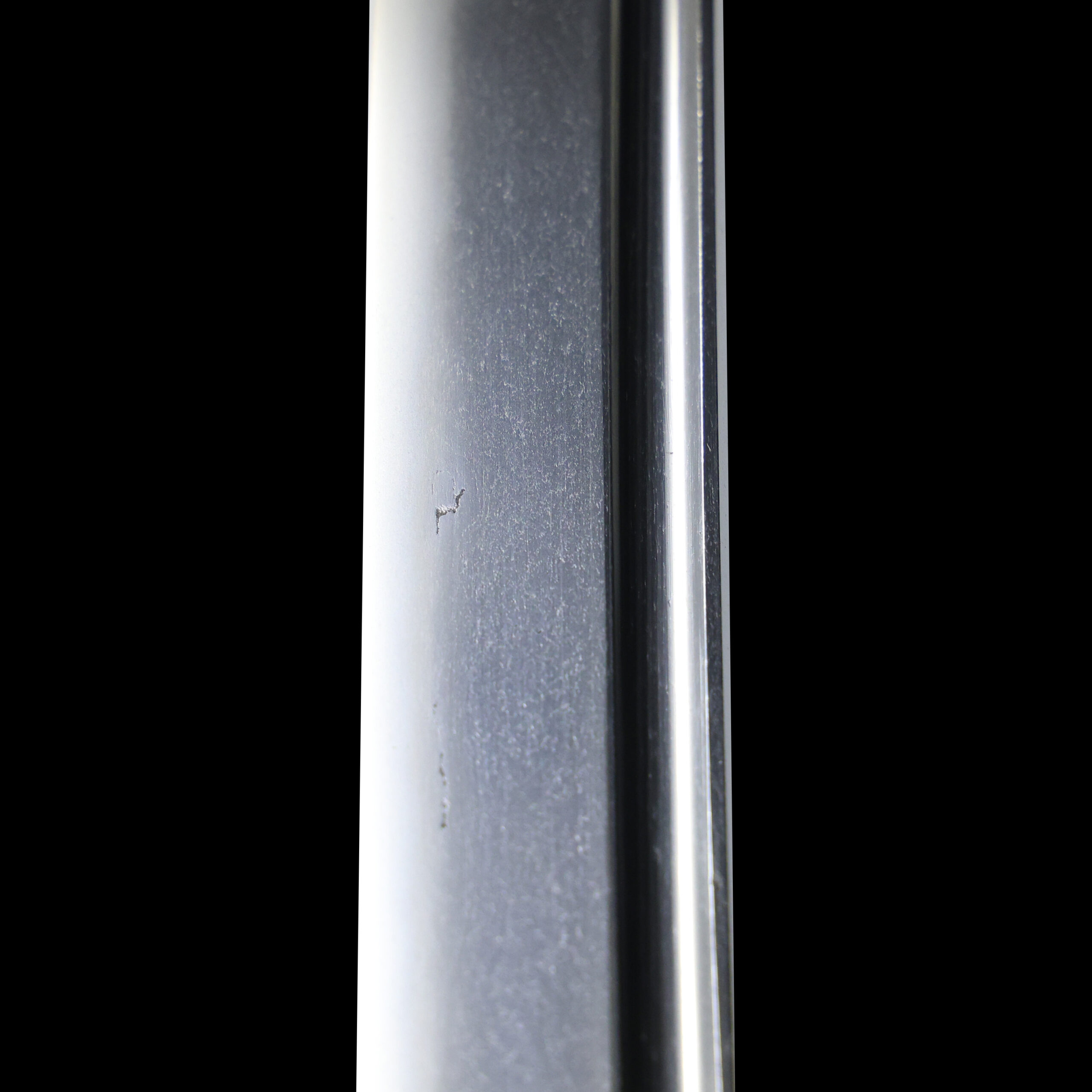
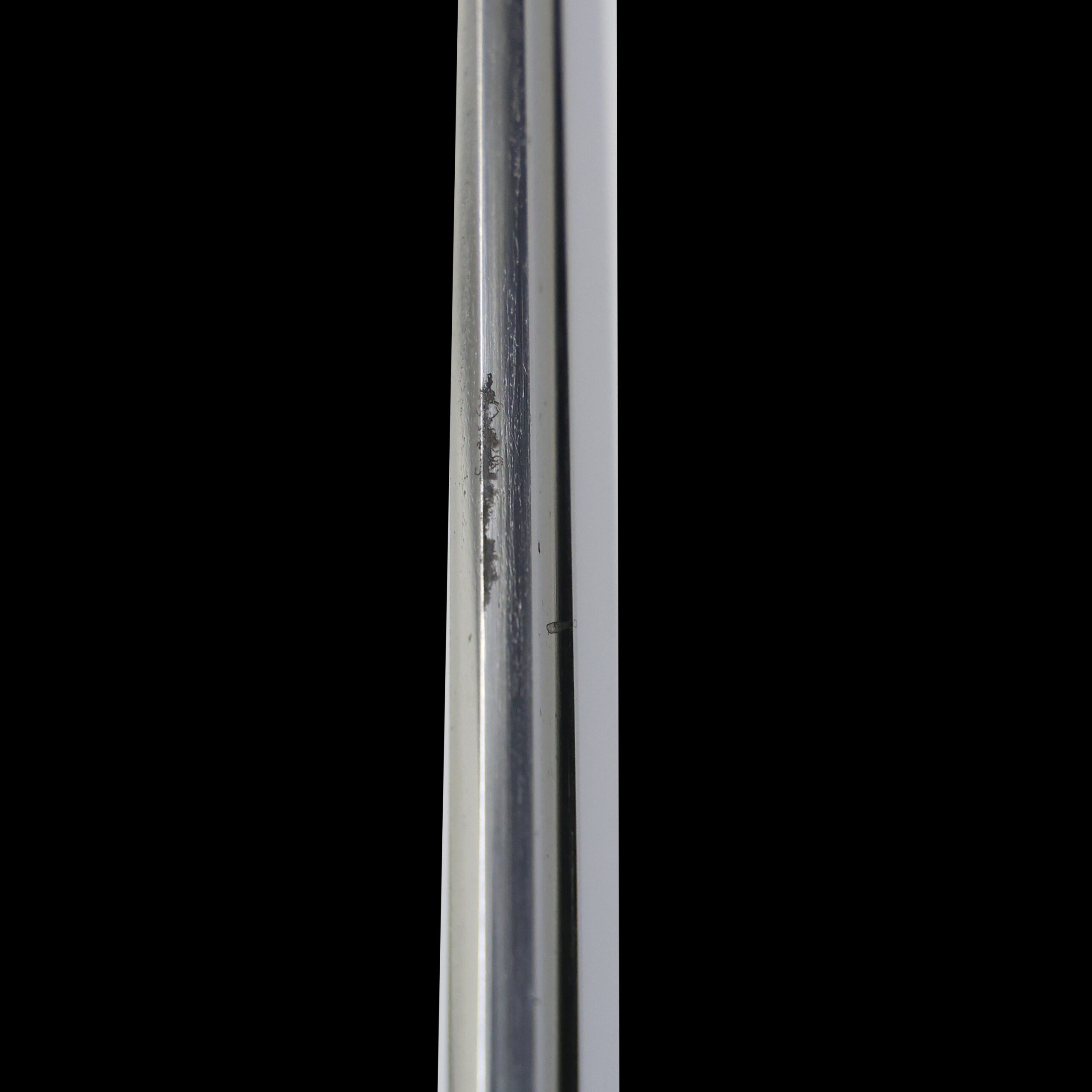
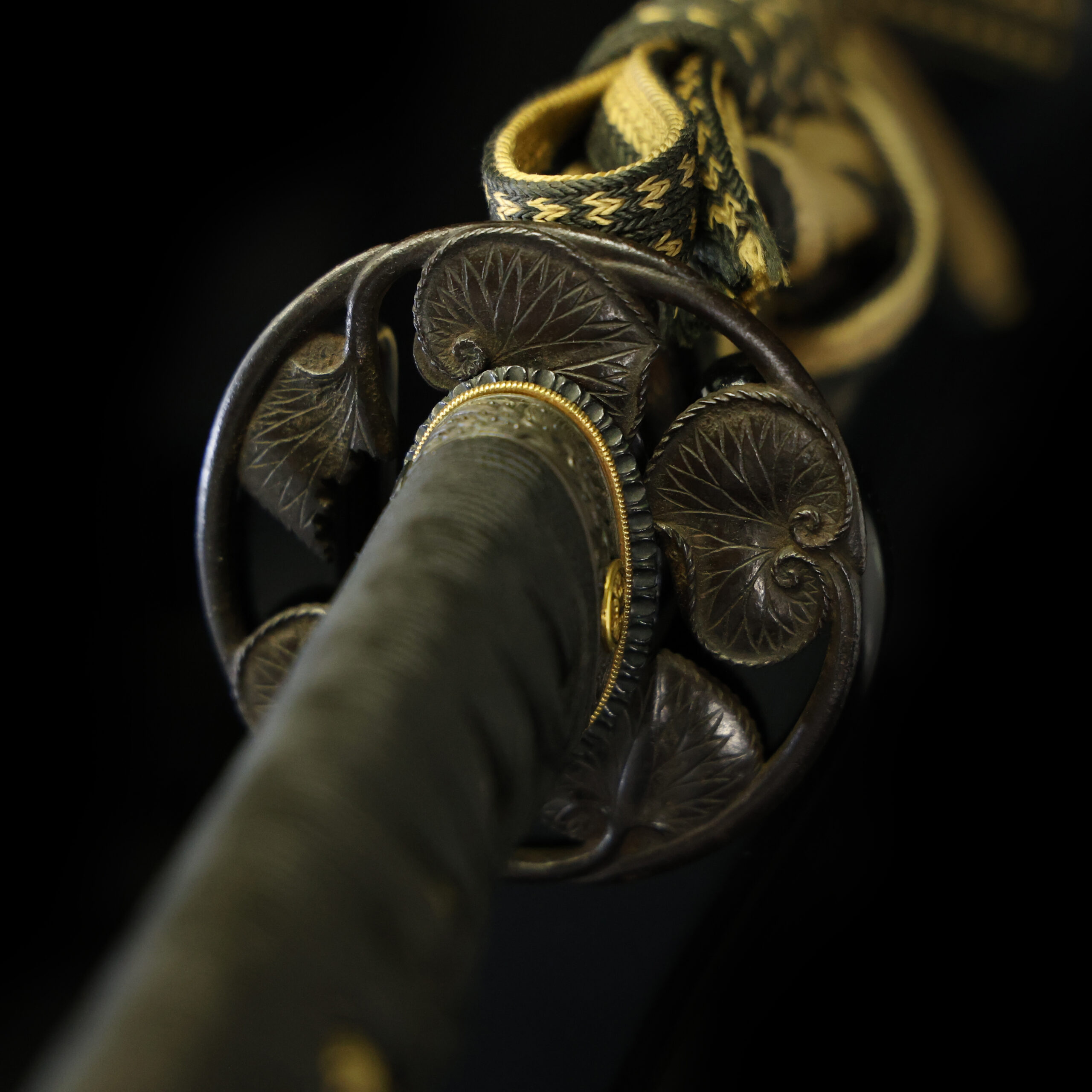
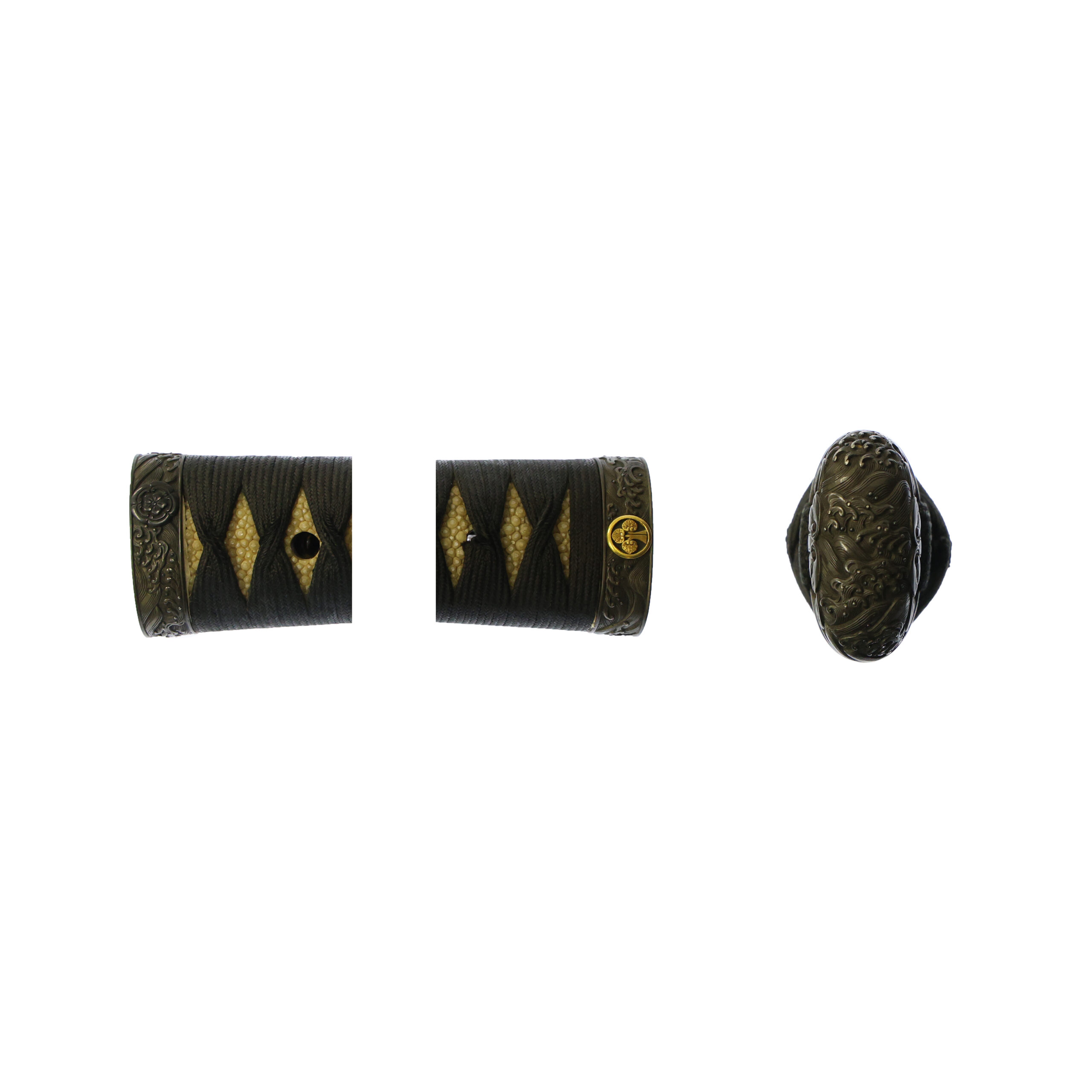
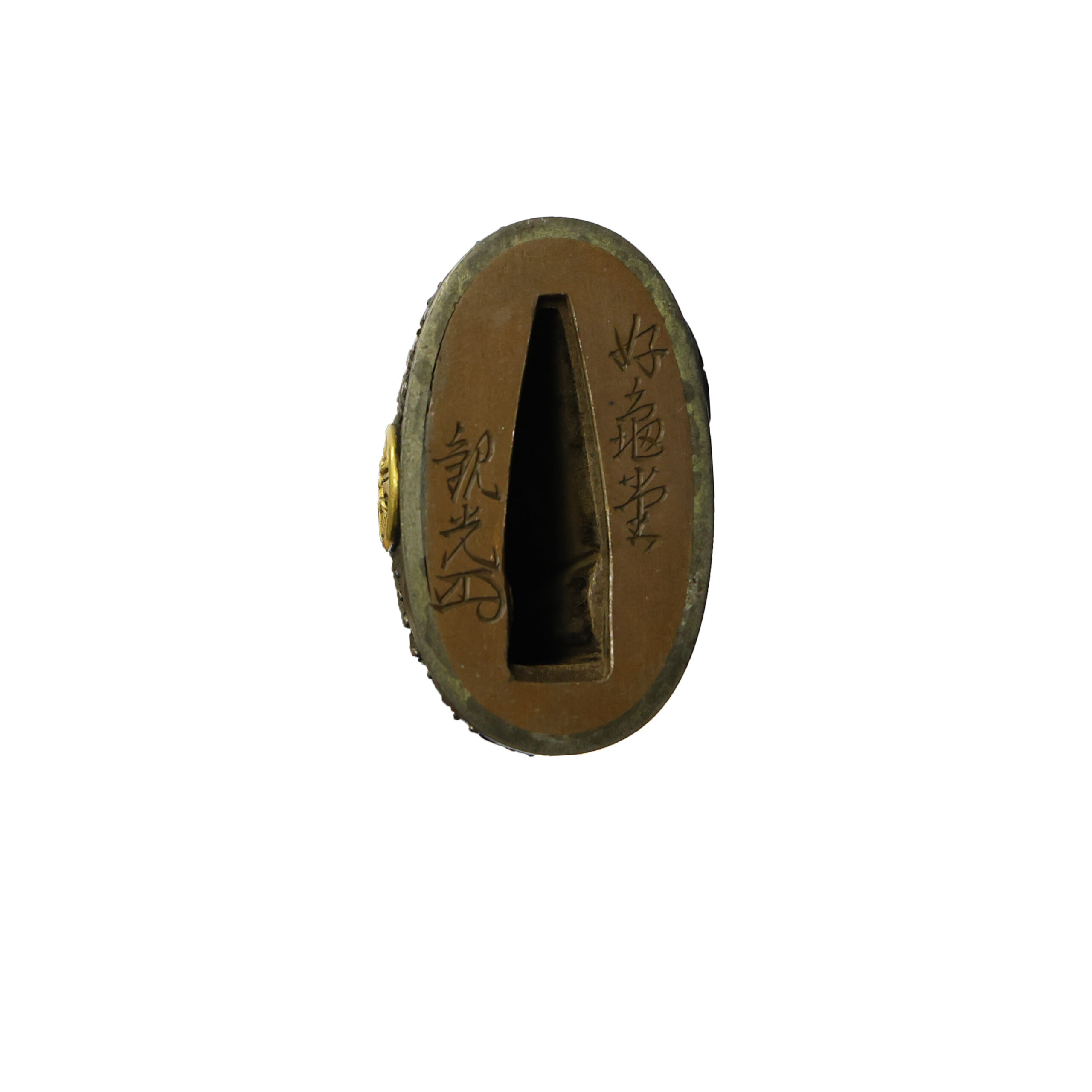
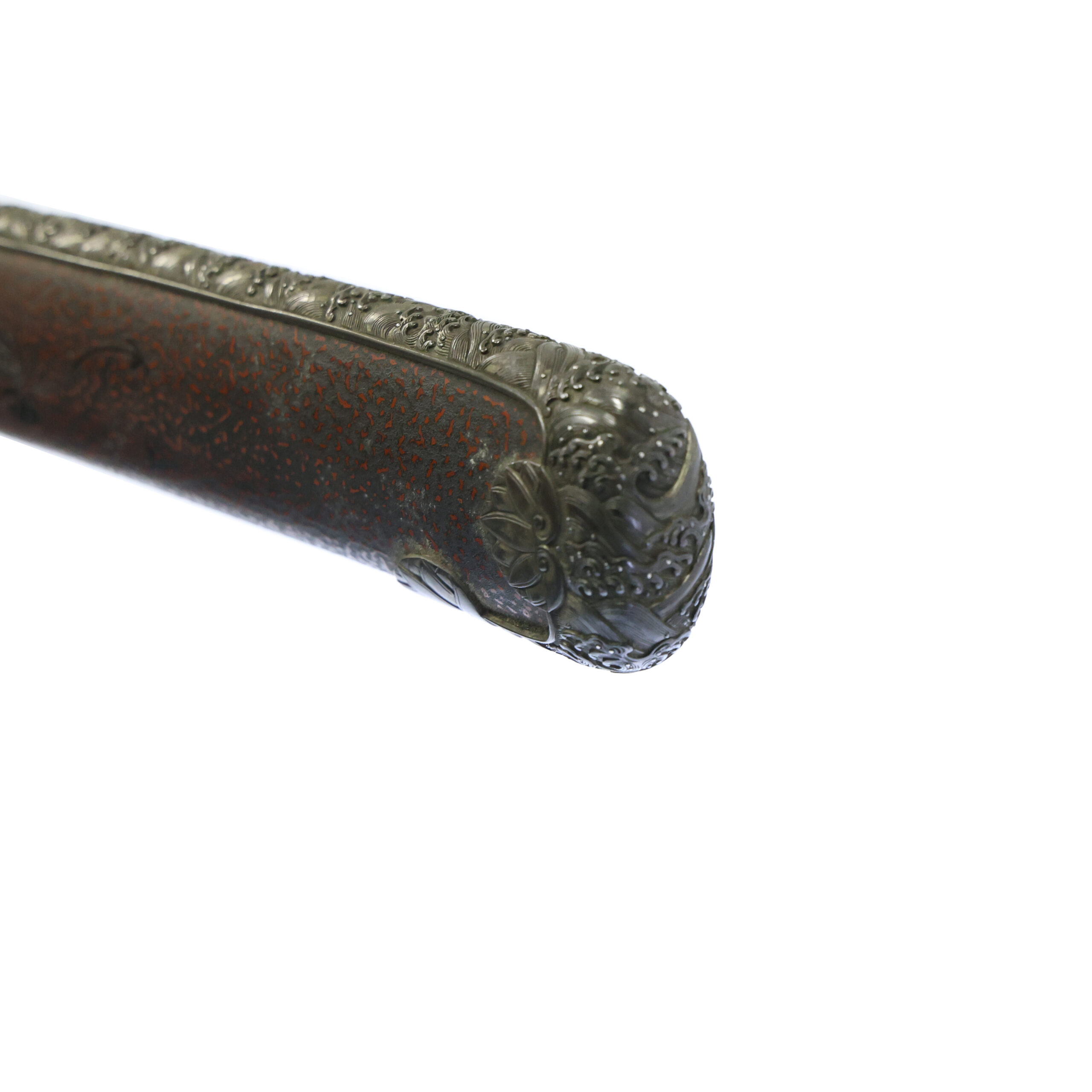
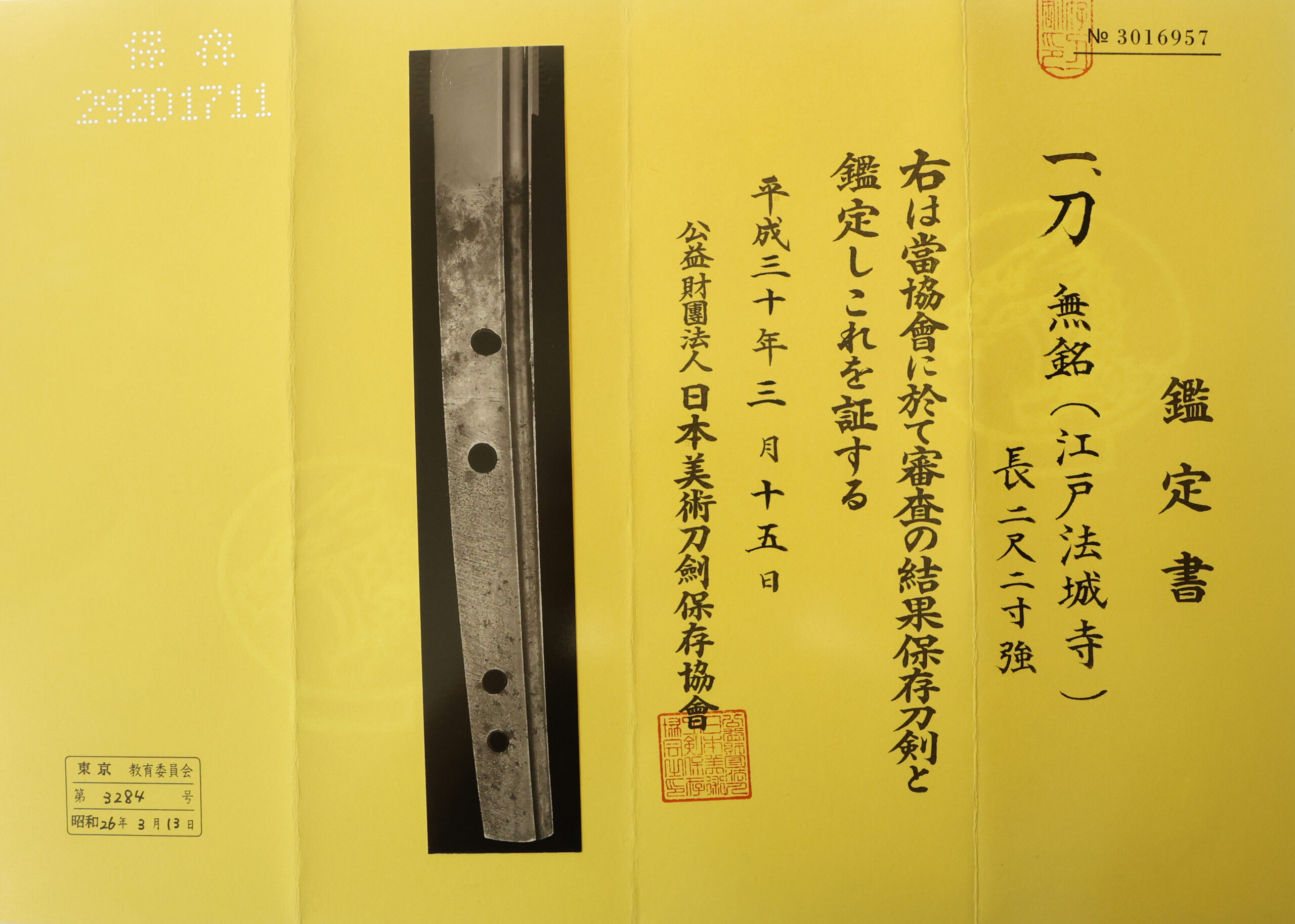
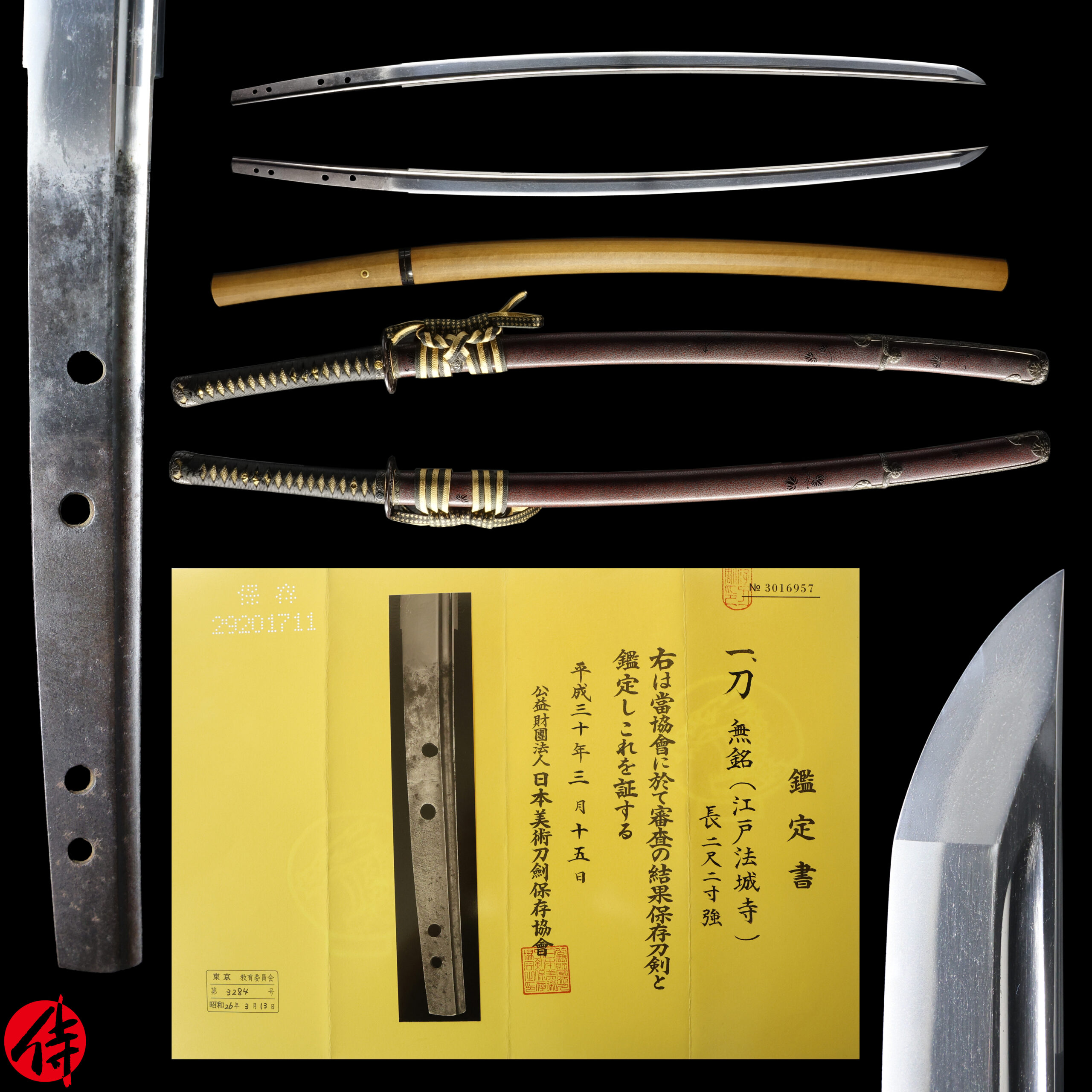
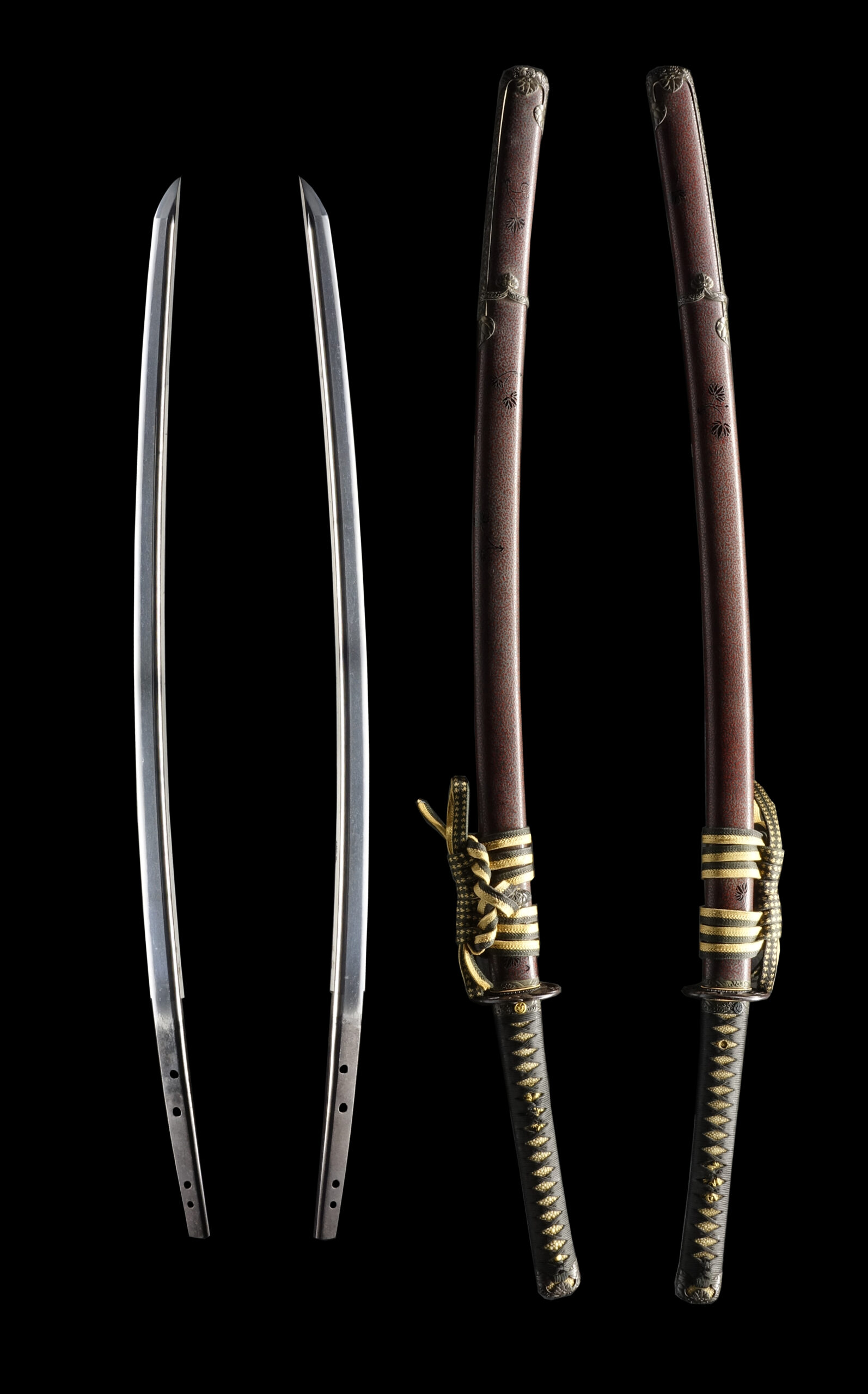
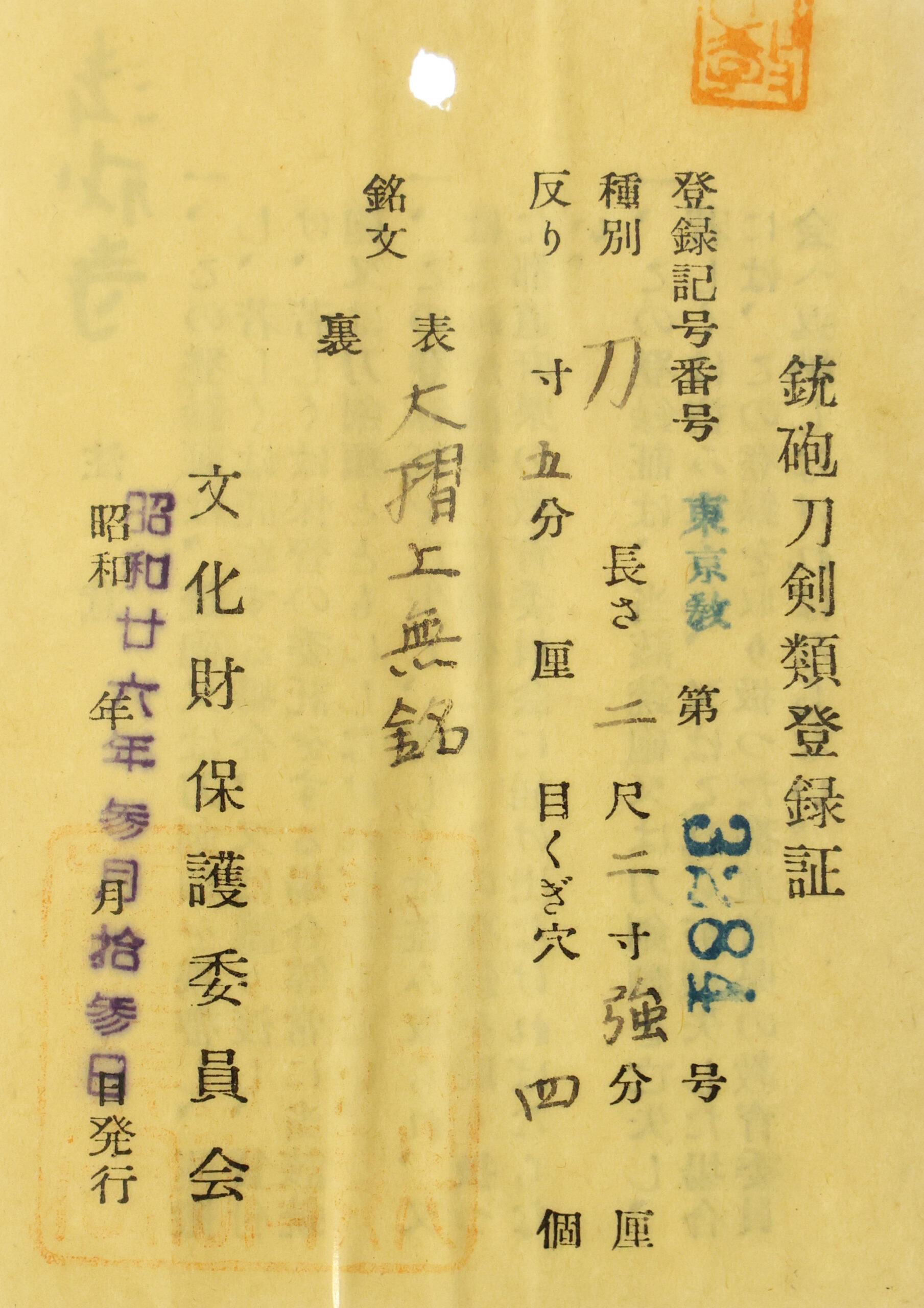
This blade is attributed to the Edo Hōjōji school (江戸法城寺). The term Hōjōji refers to a prestigious lineage of swordsmiths. The school was originally founded by Hōjōji Kunimitsu(法城寺)國光), a distinguished smith active in Tanba no Kuni (present-day Hyōgo Prefecture) during the late Nanbokuchō to Muromachi period. According to tradition, Kunimitsu was one of the three prominent apprentices of Sadamune, one of the most celebrated swordsmiths of the Sōshū school in present-day Kanagawa Prefecture. Later, Hōjōji Masahiro (法城寺正弘), a descendant of Kunimitsu, moved to Edo in the early Edo period and established the Edo Hōjōji school. Historical records indicate that he brought with him several apprentices from Tajima and those who accompanied Masahiro to Edo were granted the surname Tachibana (橘). The works of Edo Hōjōji swordsmiths are noted for their resemblance to those of Kotetsu (虎徹), one of the most famous smiths of the Edo period. Other renowned members of the school include Kaneshige, Sadakuni, and Yoshitsugu. The Hōjōji school flourished under the Edo shogunate, producing many blades for official use. It is also recorded that Masahiro once resided in the Mito domain (today’s Ibaraki Prefecture), where he forged swords for Tokugawa Mitsukuni. It is appraised as a Hozon Token (保存刀剣) issued by NBTHK (Nihon Bijutsu Touken Hozon Kyokai: 日本美術刀剣保存協会). *Please keep in mind that there are a couple of Kitae Kizu on this blade. Fuchi-Kashira This Fuchi-Kashira (縁頭) is decorated with a wave design (波濤図) and features two family crests (家紋). One of them is the “Maru ni Mitsuba Aoi” (丸に三つ葉葵), inlaid in gold. This crest depicts three hollyhock leaves arranged within a circle and is best known as the Tokugawa family crest. The hollyhock (葵,aoi) has long been considered a sacred plant in Japan and was originally used as the divine emblem of Kamo Shrine in Kyoto. When Tokugawa Ieyasu received permission to use this crest from the shrine, it became the official symbol of the Tokugawa shogunate and the entire Tokugawa clan. The other crest, rendered on a black background, depicts a plum blossom (梅) within a circle, another traditional Japanese family emblem often associated with vitality, perseverance, and the coming of spring. Tsuka and Menuki The motif of this Menuki is a dragon (龍, Ryū). The dragon is an imaginary creature originating from ancient Chinese mythology, later introduced to Japan through cultural exchange. In East Asian tradition, dragons are revered as auspicious, divine beings that control water, rain, and fertility, symbolizing strength, wisdom, and good fortune. Its body is likened to nine animals: antlers are deer, the head is a camel, eyes are demons, the neck is a snake, belly is Mizuchi (蛟, mythical animal in Japan which looks like a snake and have a horn and four legs), scales are fish, claws are falcons, palms are tigers, and ears are cows. It was thought that the dragon would reign at the top of all animals because of its odd-looking appearance. In ancient China, the dragon pattern was used for emperors’ clothing so that people strictly defined its shape or even the number of nails. On the other hand, the dragon pattern does not have detailed rules to represent classes in Japan. However, still, it maintains its meaning as the all-purpose auspicious pattern. Also, in Japan, there is a belief that worships dragon as a water god and is called Ryujin Shinkou (竜神信仰). Since rice cultivation flourished in this country, water is always an essential resource. Therefore, the dragon motif has been familiar to Japanese people since a long time ago. Tsuba and Habaki This Tsuba features an openwork (透かし彫り, sukashi-bori) design depicting a heart-shaped leaf with veins drawn curly, called Aoi (葵, asarum caulescens). It is a plant pattern in which each stem branches and has characteristic heart-shaped leaves. Today, the Aoi-Domoe / Mitsuba-Aoi-no Mon (葵巴/三つ葉葵の紋) is known as the family crest of Tokugawa Shogunate family led by Tokugawa Ieyasu, a famous military commander of the Warring States period. This plant pattern has also been used for the crest of the Kamo shrine in Kyoto prefecture. As mentioned above, the famous Shogunate family, the Tokugawa family, had their family crest with three leaves of Aoi due to the relationship with the Kamo shrine. As its leaves have a habit of always facing the sun, and the word “Aoi” is taken as “Aogu (仰ぐ, looking up)” for the sun, people thought the Aoi pattern would bring good fortune. Saya The surface of this saya is finished in Aka Ishime-ji (赤石目地), also known as Ishime-nuri (石目塗), a traditional red lacquer technique. Its base was textured using a tagane (鏨)—a small metalworking chisel—to create a fine, stone-like surface that gives the lacquer a distinctive sense of depth and refinement. Like the other sword fittings in this set, the saya is also decorated with motifs of hollyhock leaves (葵). Here, it features the Futaba Aoi-mon (二葉葵紋), or “two hollyhock leaves crest,” which is regarded as the prototype of the Tokugawa clan’s Mitsuba Aoi-mon (三つ葉葵紋). The hollyhock has long been considered a sacred plant in Japan, symbolizing divine protection and authority. Authentication Paper They authenticated the blade on March 15th in the 30th year of Heisei (2018). They appraised it as Hozon Touken, the blade worth preserving for Japanese society.

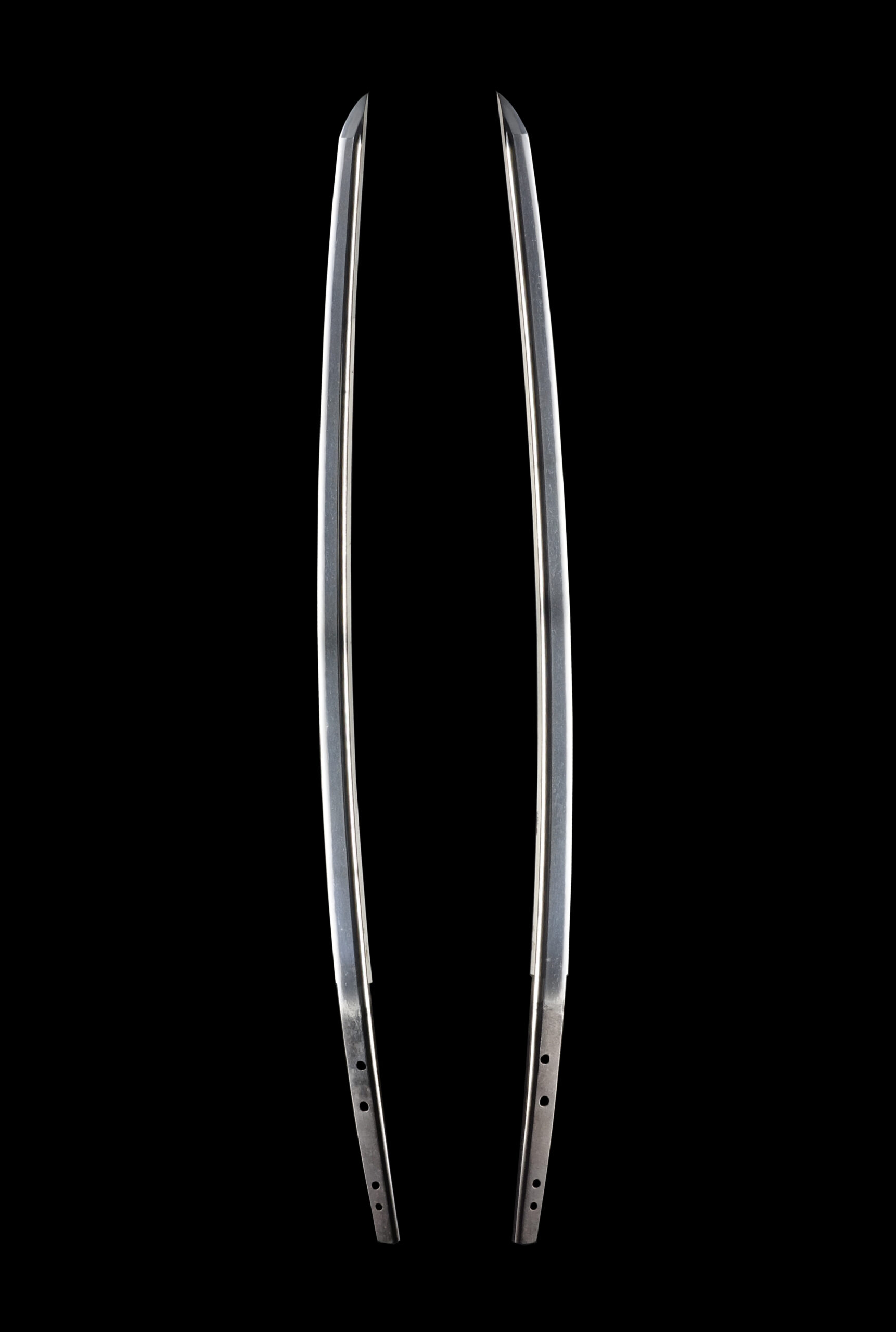
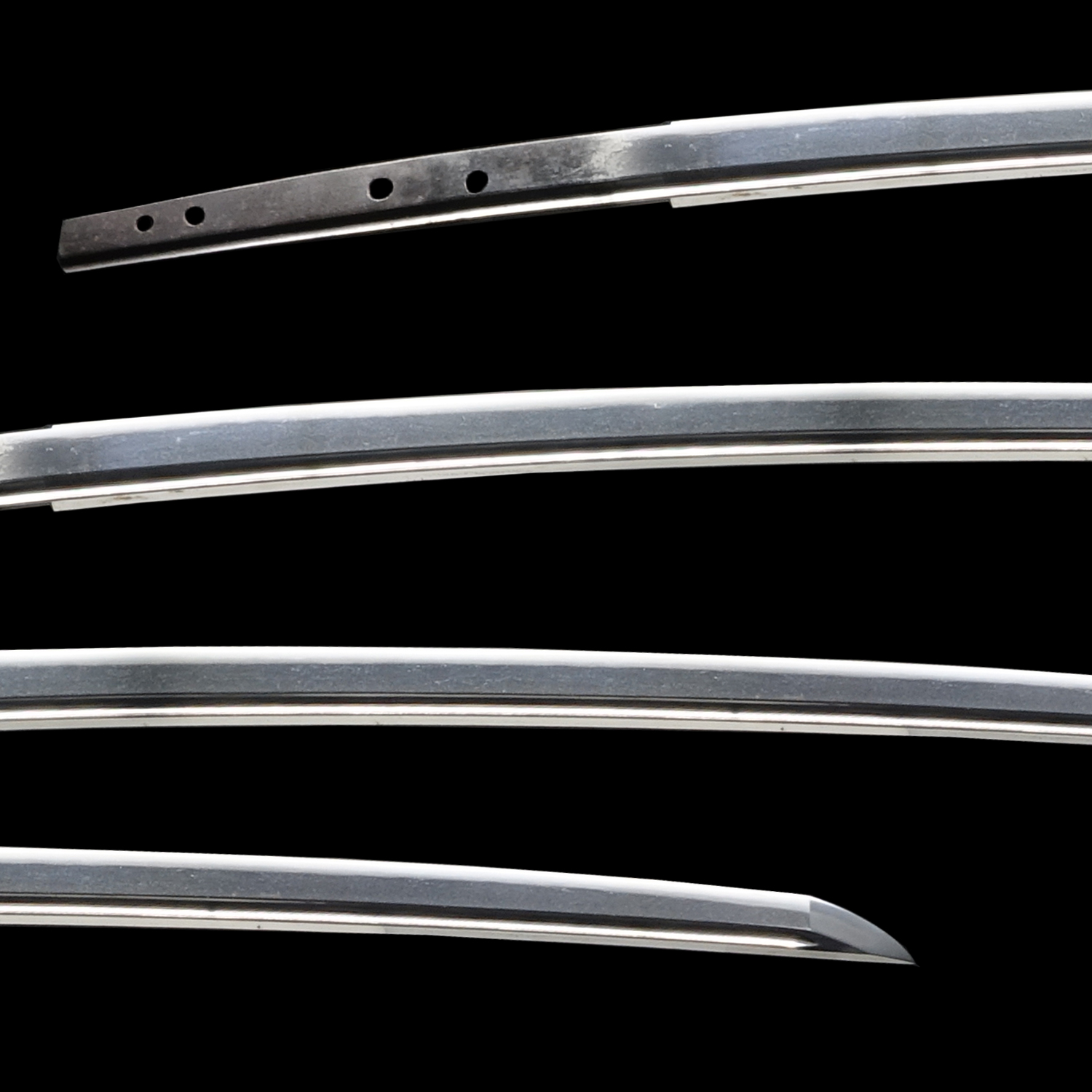
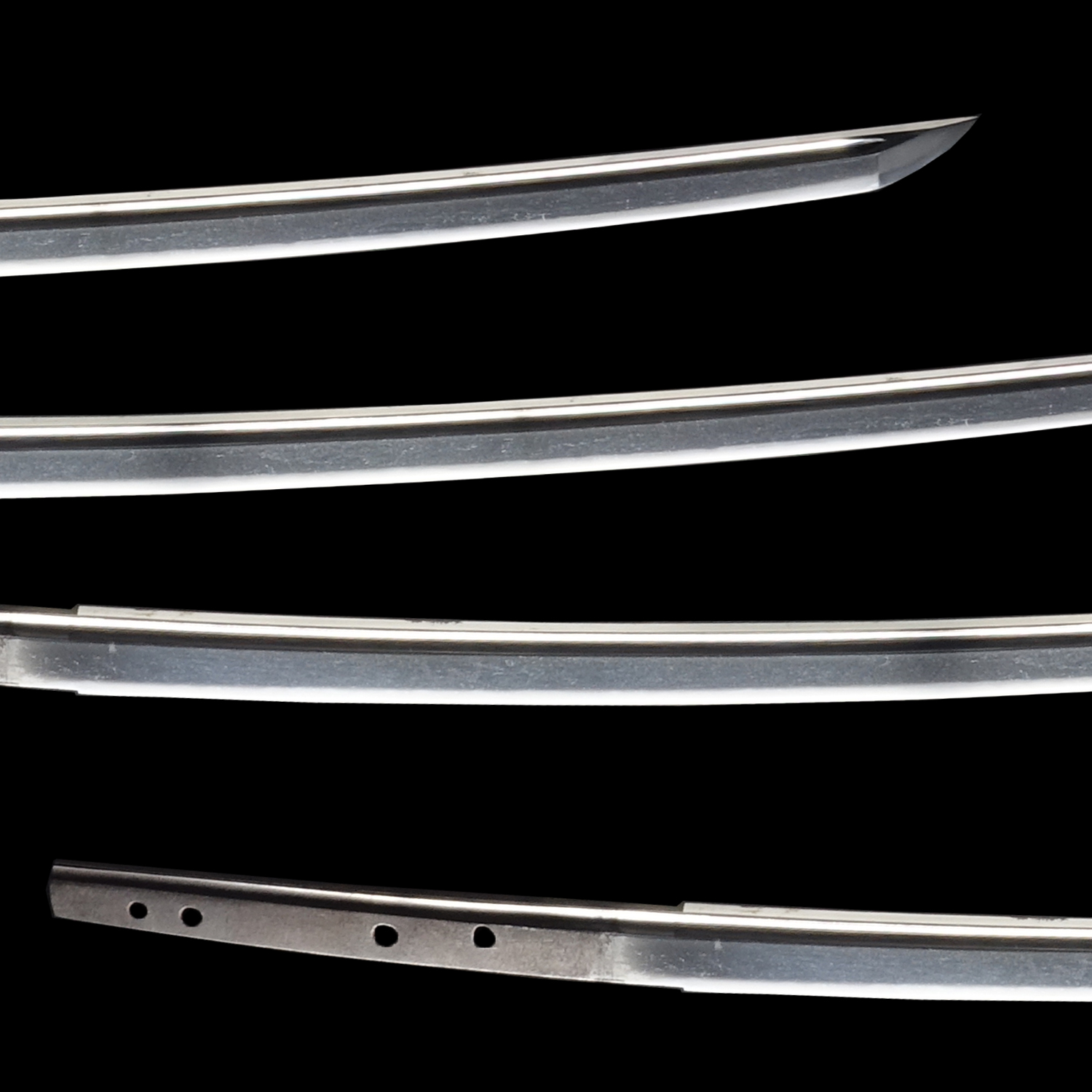
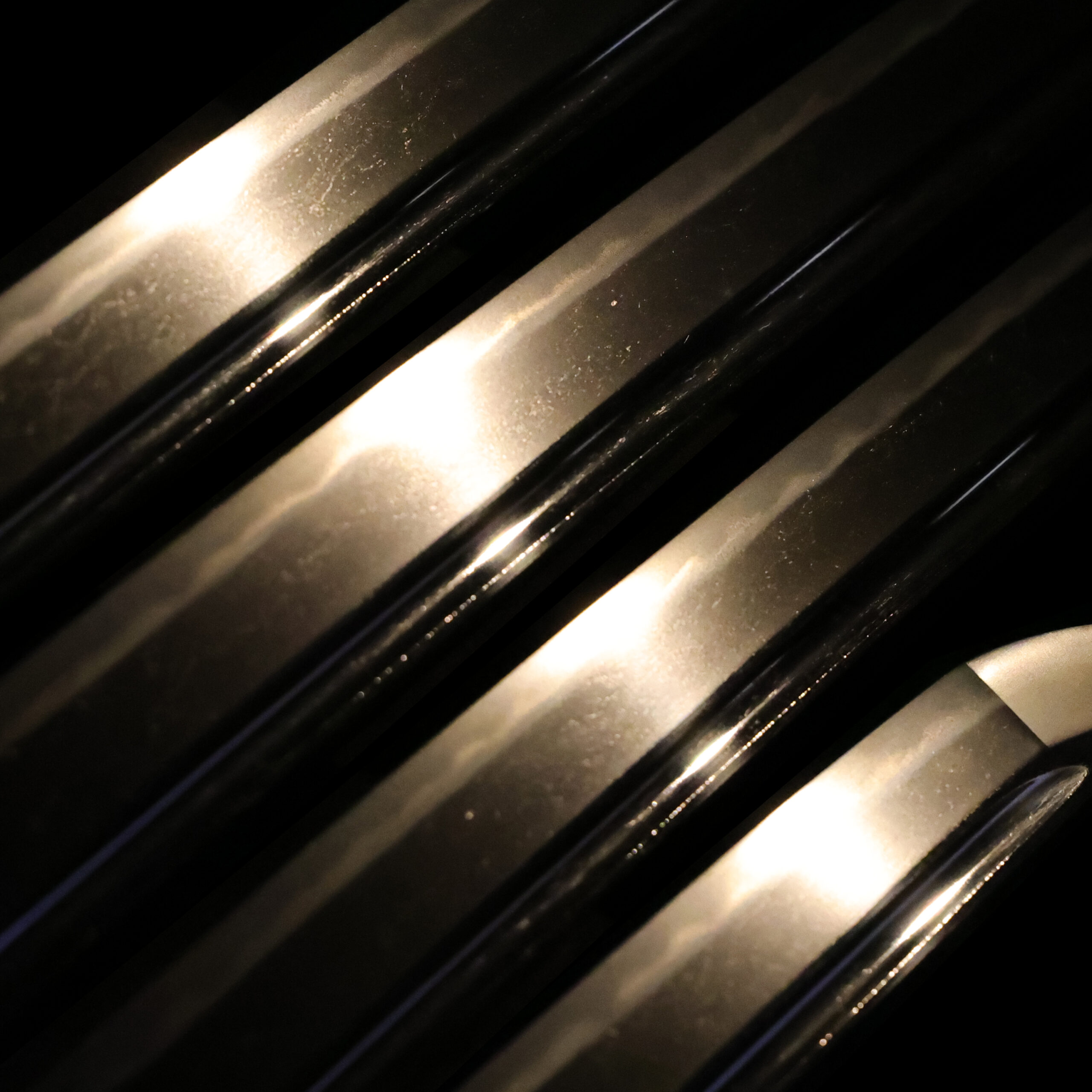
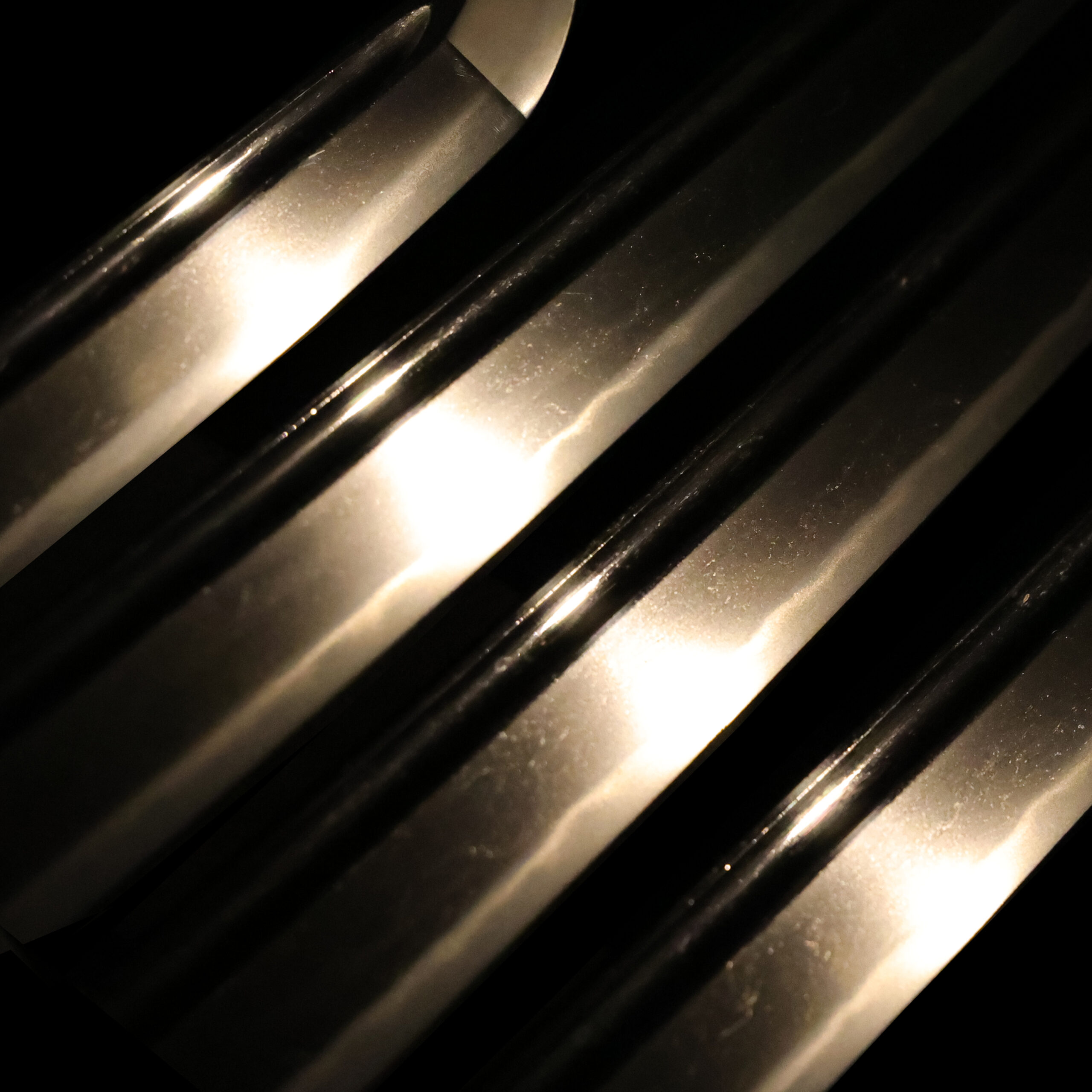
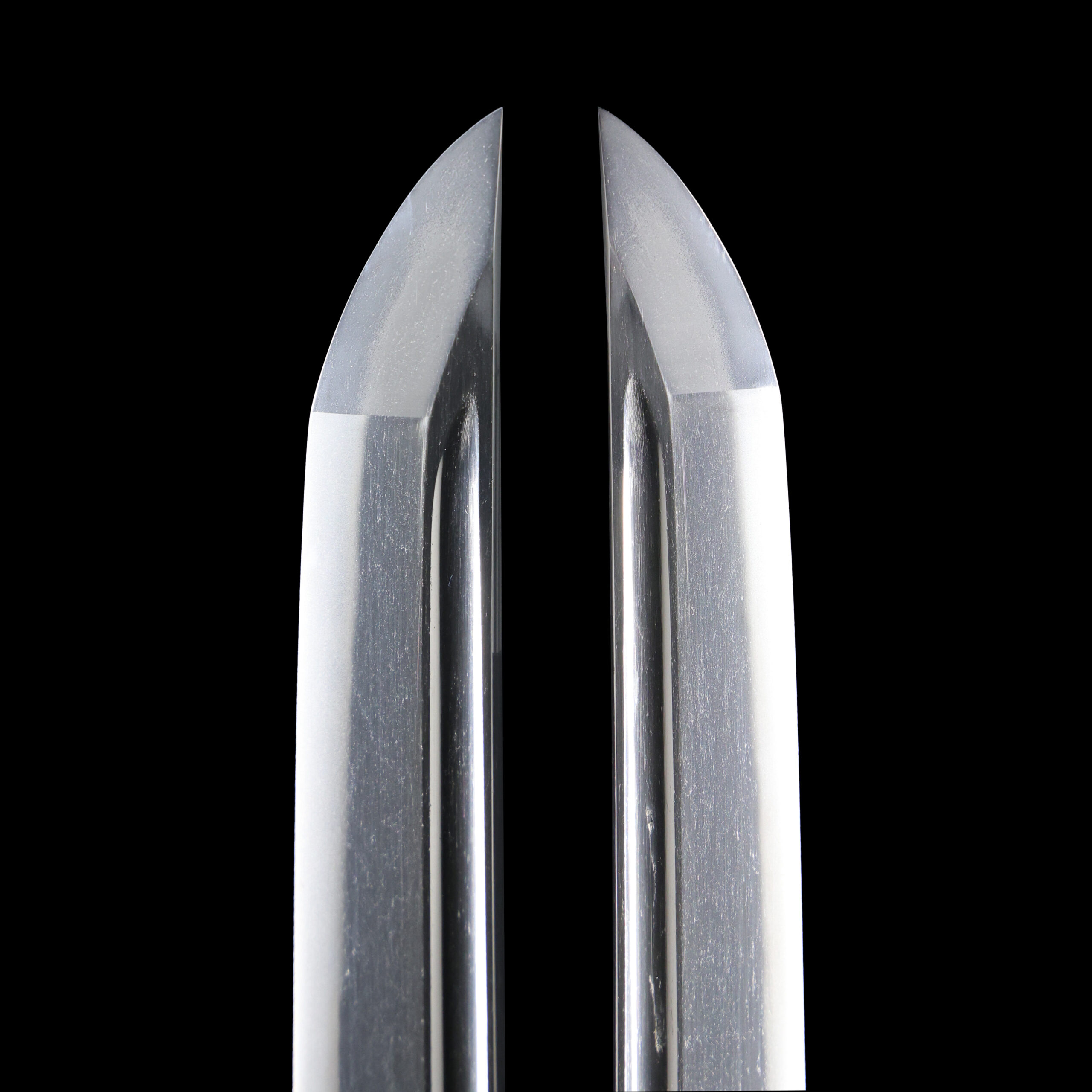
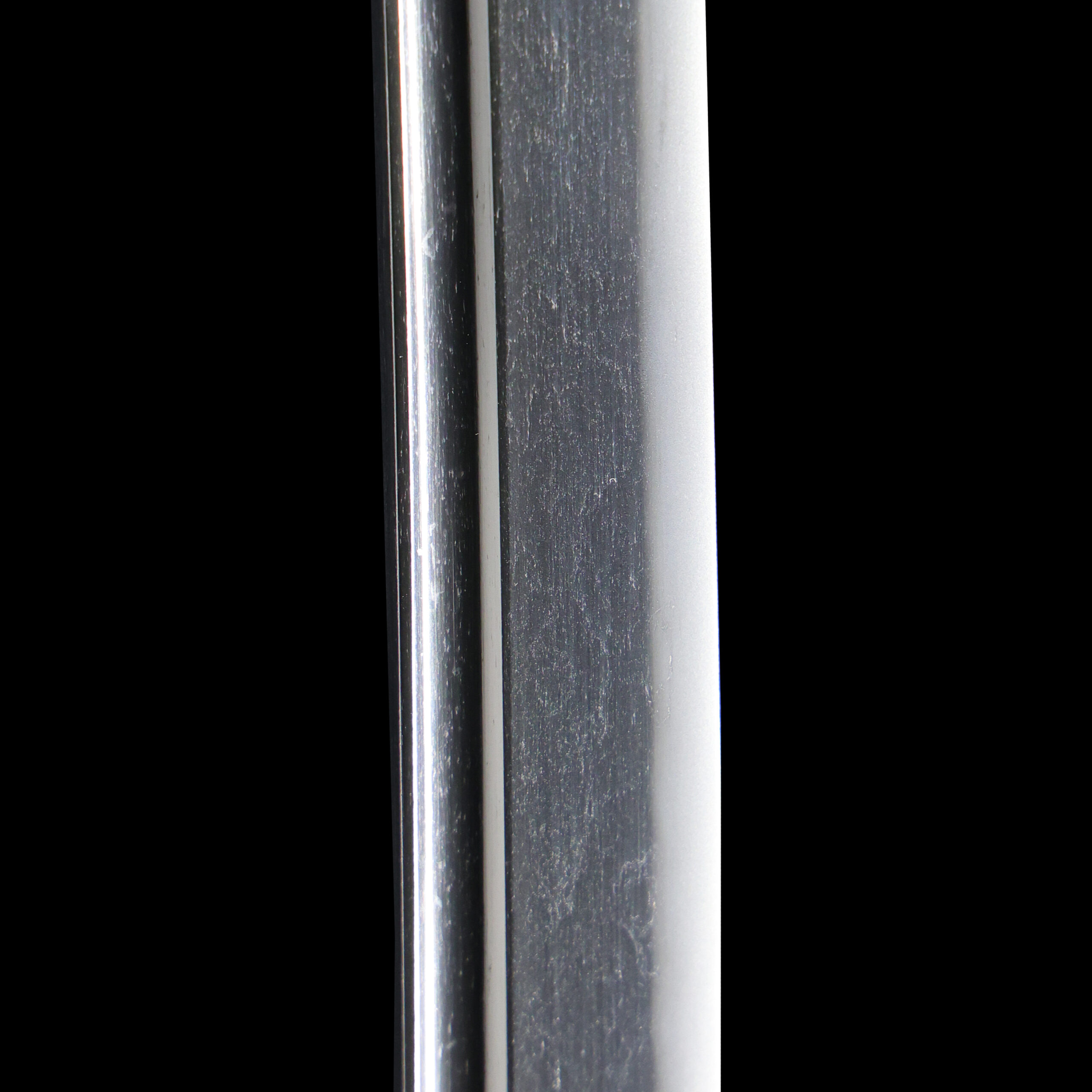
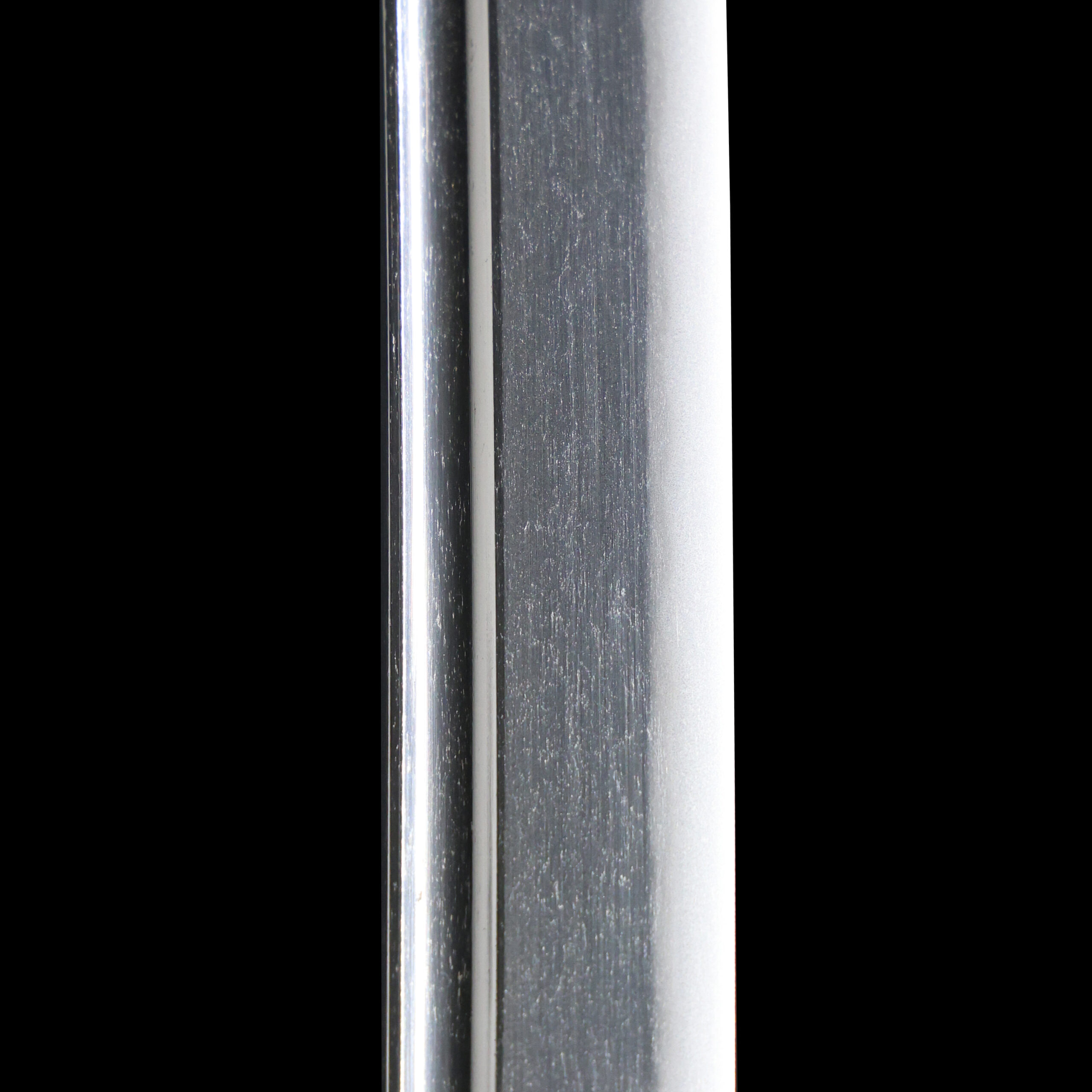
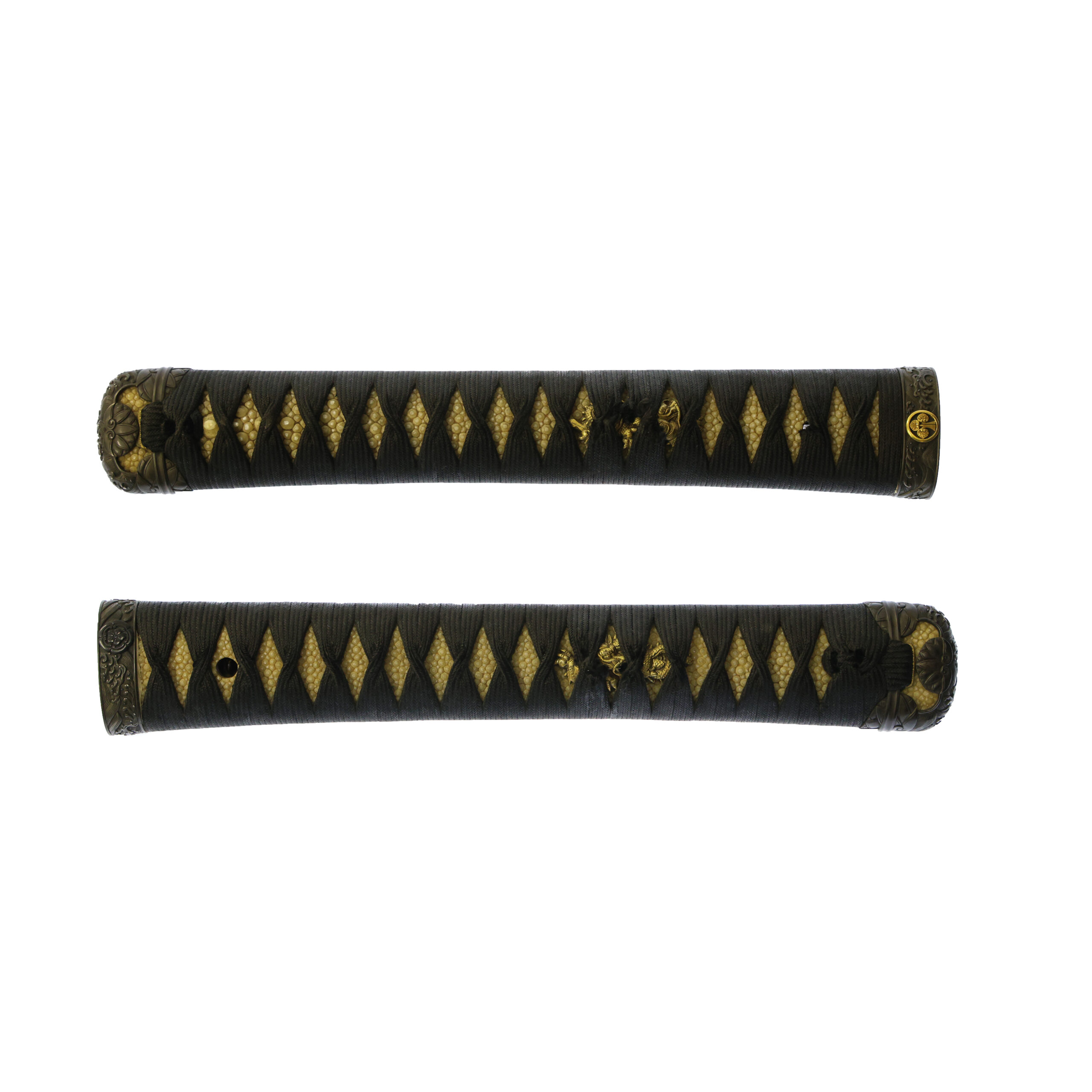
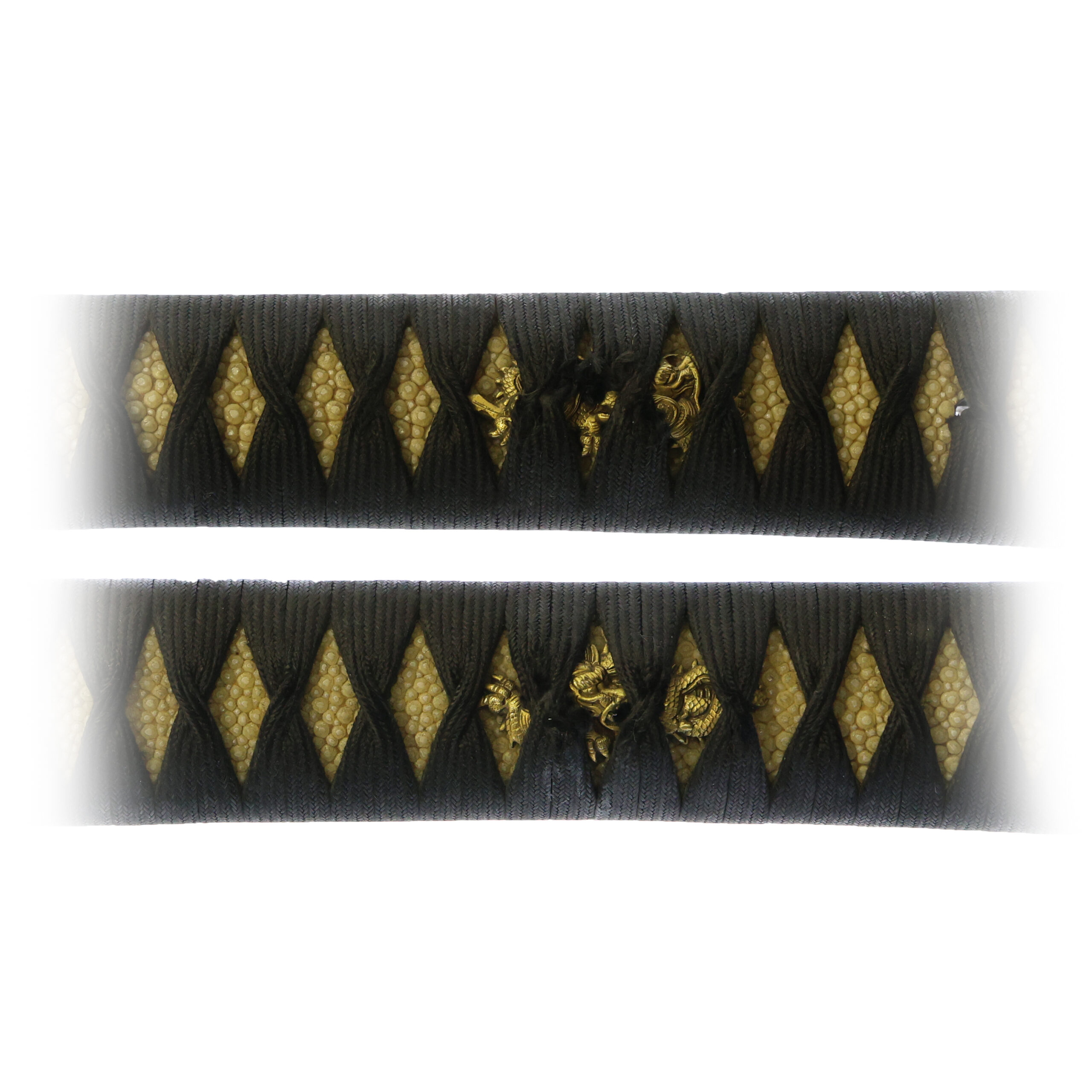
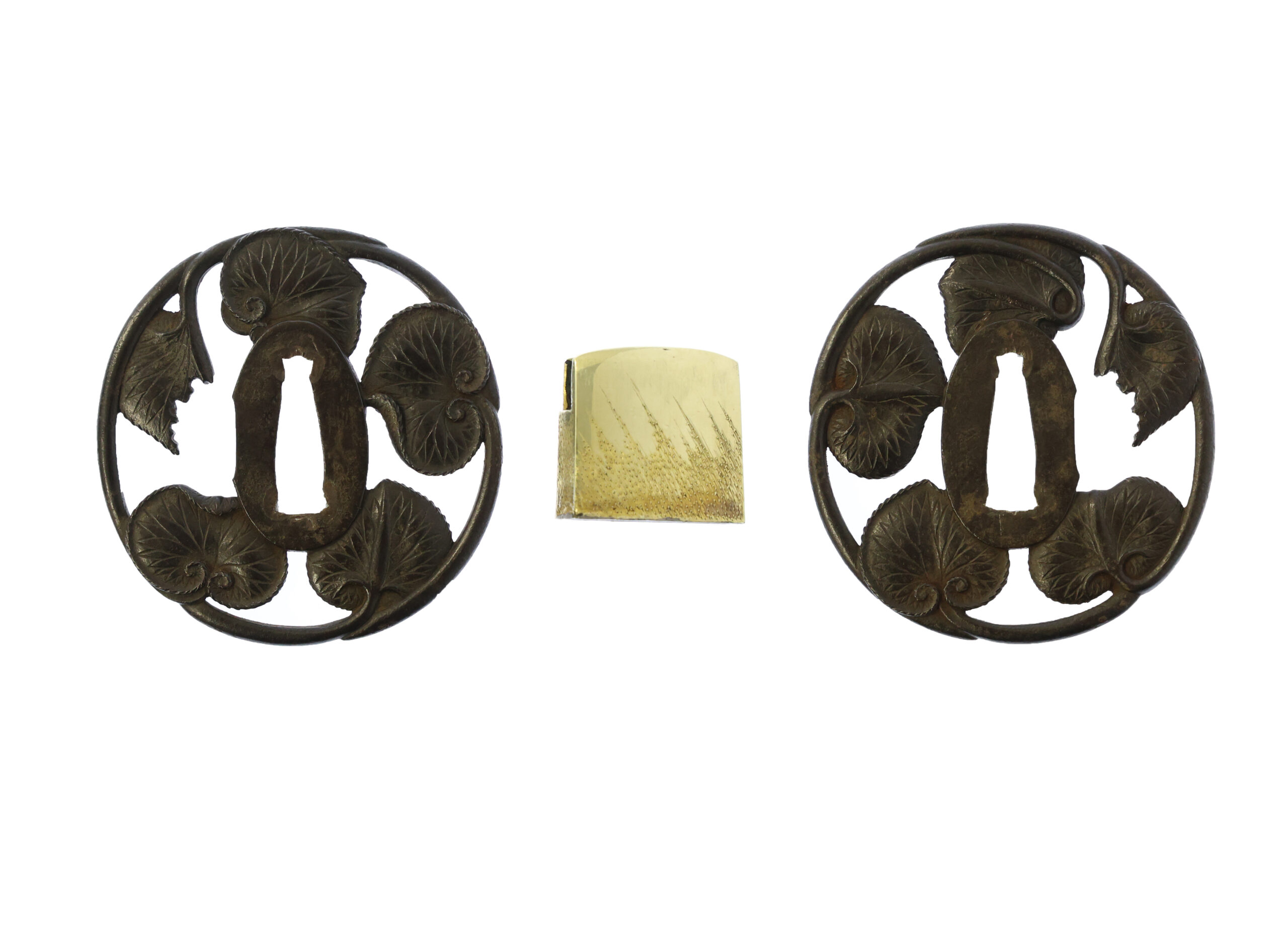
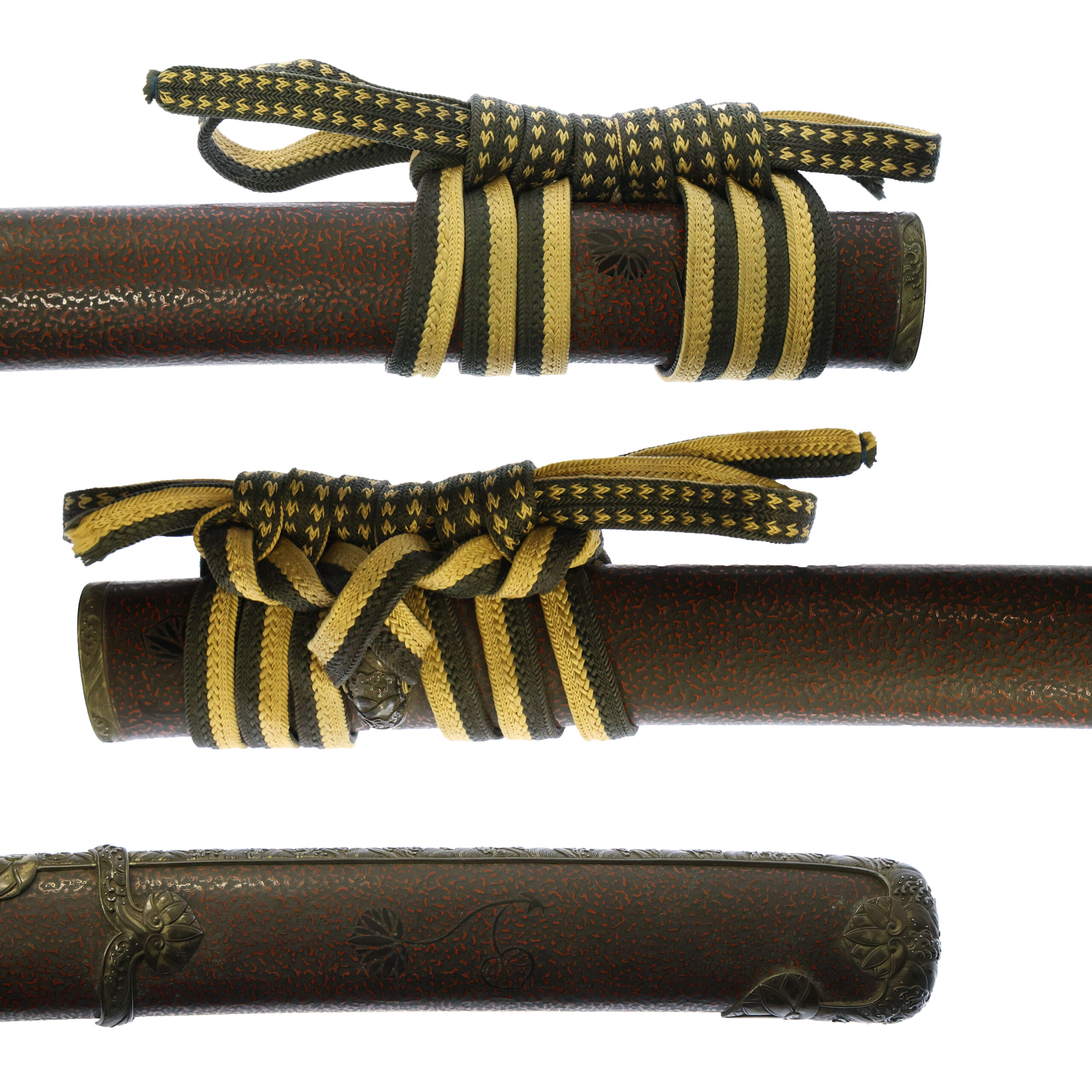
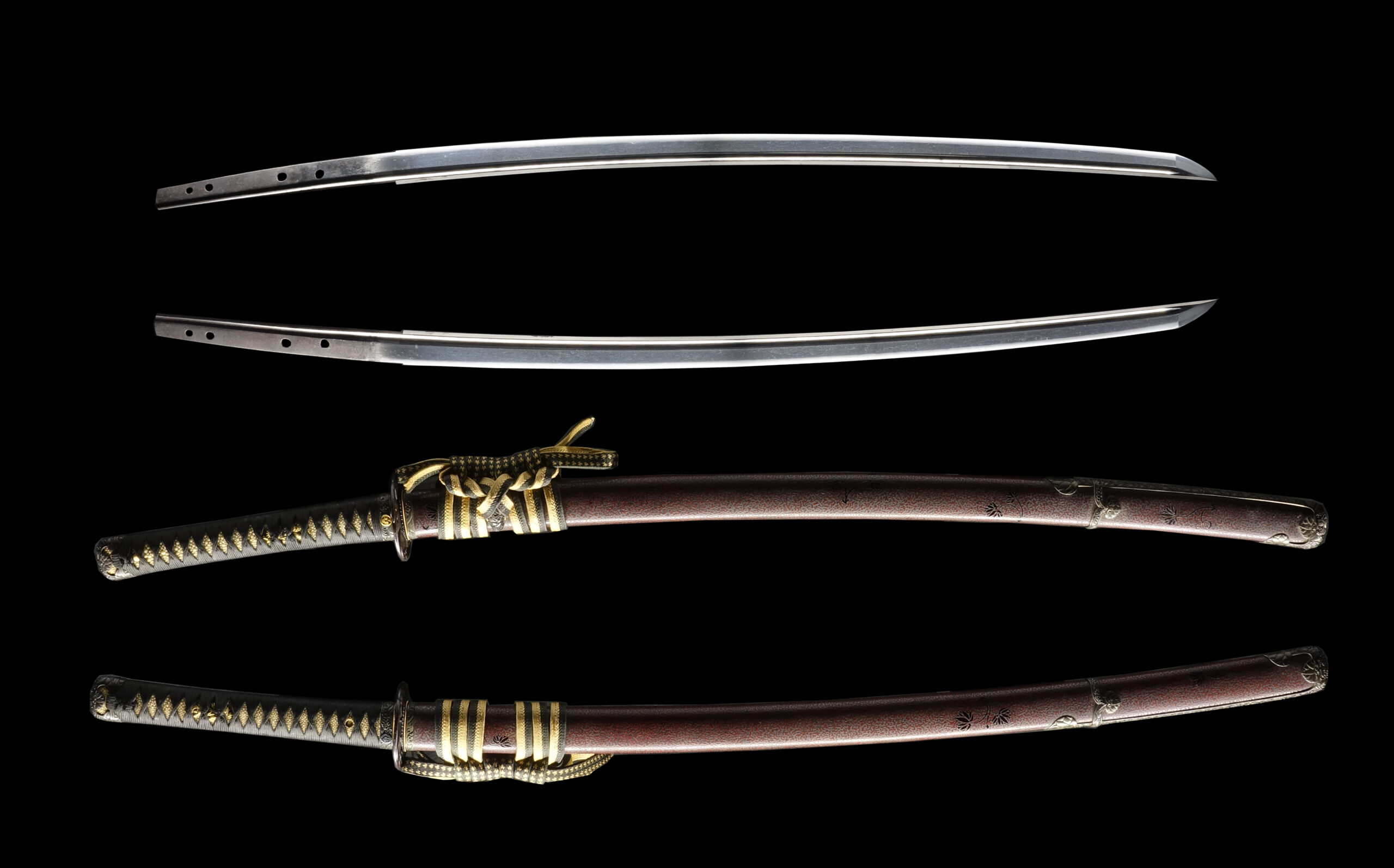
販売店の記載のまま
相州伝 · 但馬
現在21点販売中
法城寺は但馬国の地名であり、この派の名はそこに発する。各工の説明書がまず立ち返るのは、南北朝期この地に住んだ薙刀の名手国光であって、国光のことを地名をもって法城寺と呼び習わしたと繰り返し記される。古刀の法城寺はこの国光を源とし、銘鑑に初・二代を挙げて初代を貞治、二代を応永とするが、有銘の太刀・薙刀は伝わらず、その盛名を担う薙刀および薙刀直しはことごとく無銘極めである。古来「相州貞宗の三哲の一人」[[c:1]]に数える伝を、説明書は引くたびに「多くの疑問があり、俄かに賛成出来ない」[[c:2]]「妥当を欠く」と退け、むしろ備前物の影響が強いと結ぶ。新刀期に至り、この但馬の流れを汲む一門が江戸に移って大いに栄えた。その初代を近江守正弘とし、これに直ぐ次ぐ貞国、吉次・正照・永国らの良工を輩出して、寛文・延宝の頃には江戸で最も多くの人数をもった鍛冶集団と呼ばれた。古刀の但馬法城寺と、江戸に分流した新刀の法城寺と、この二つの活動地・時代を一派の両端として読むべきである。 作風は古刀と新刀とで趣を異にする。古刀の無銘極めは、華やかな丁子乱れを焼いて一見備前一文字に見紛うほどでありながら、地刃の沸が一段と強く、大模様の鍛えに地景が入って肌立ち、刃中に金筋・砂流しを頻りにあしらう点で備前から分かたれる。地鉄は板目に大板目・流れ肌を交えて大模様に肌立ち、乱れ映りは鮮明な口少なく淡い口が多く、その淡さこそ但州法城寺の見どころと記される。在銘の短刀は趣を全く異にし、細直刃・中直刃に二重刃を交える手と、小のたれに互の目を交え砂流しさかんにかかる手とに分かれる。これに対し江戸新刀は、各工が一様に直刃を本領とする。正弘は匂深い直刃を得意とし、広直刃に小互の目を連れ、小沸むらなく厚くつき、二重刃をまま交え、地鉄は小板目をよくつめ地沸を微塵に厚くつけてかね明るい。貞国はこれに酷似して互の目を交え砂流しを走らせ、ただ地刃の冴えと匂口の力強さが正弘に僅かに及ばないとされる。吉次は一門中で互の目が最も目立ち、小のたれに数珠刃風の互の目を連ね、覇気に満ちた作域を示す。正照は中直刃に優れ、永国は直刃の焼出しより連なる互の目を一定の軸とする。帽子はおおむね直ぐに小丸へ返り先掃きかけるのを常とし、姿は鎬低く元先の幅差目立ち反り浅く中鋒つまる寛文新刀の体配を、各工がそれぞれの手で読んでいる。 鑑定の勘所は、この古刀と新刀の二つの面にそれぞれ立つ。古刀では、淡い乱れ映りと大模様に肌立つ鍛え、地刃の顕著な働きをもって備前と分かち、無銘極めの薙刀直しと在銘短刀との間に出来口の通うところを見出して一人の工に繋ぐのが眼目である。本間順治はこの手の薙刀直しを初代但州国光とし、無銘物には本阿弥光温・光忠ら代々の極めが付く。新刀では、各工の説明書がそろって長曽祢虎徹に近いことを記し、就中正弘を諸工のうち最も虎徹に近いとして、山野家の截断金象嵌を多く帯びる縁から法城寺一派と虎徹一門の相当近い関係を推す。判者が引く類比はみな上に向かい、貞国・吉次の優品は兼重ら江戸の名手に迫るとされ、その匂深く匂口明るい刃と微塵の地沸が、この一派を共通して支える。主要工の格は、古刀の国光が藤代上々作で重要文化財をも数えるのに対し、新刀の各工は上作ないし作に位し、その指定はおおむね重要刀剣の級にとどまる。伝来は、古刀国光の短刀が秋元家・前田家・徳松ゆかりの名物として伝わるのに対し、新刀の各工は大名家への古い伝来をほとんど記されず、山野家の截断銘がしばしば伝来の名を補う。市に現れるのは新刀の在銘作が折々のことに過ぎず、截断銘を帯びた出来のよい一口は、探すより俟つに値する。 詳しく見る →
江戸時代
二世紀半の泰平のあいだ、刀は武器である以上に武士の身分の標章であった。江戸の実証と大坂の華やぎのように都市ごとの作風が育ち、時代の末には需要も細っていく。
銘が正しい、または無銘でも年代・国・系統を確実に指摘できる、保存に値する真正の作と鑑定されたものです。
日本美術刀剣保存協会(NBTHK)は、1948年に設立され、文化庁の監督を受ける公益財団法人で、東京・刀剣博物館に本部を置きます。専門の審査員が出品作を直接審査し、美術的・歴史的価値に応じた鑑定書を発行します。NBTHKの鑑定書は、日本刀および刀装具の真正性を示す最も広く認知された基準です。
NBTHK公式サイトReturns/exchanges limited to defects caused by shipping (except willful misconduct or gross negligence by the company); customers must contact within 72 hours of receiving the product.
Certificate reading — 無銘(江戸法城寺)