三人の天下人が戦国の世紀を終わらせ、刀は新しい秩序の道具となった。1588年の刀狩は刀を武士の標章とし、名刀は条約のごとく家々の間を行き交い、鑑定は以後この境で古刀と新刀を分かつ。
 NihontoWatchNihontoWatch
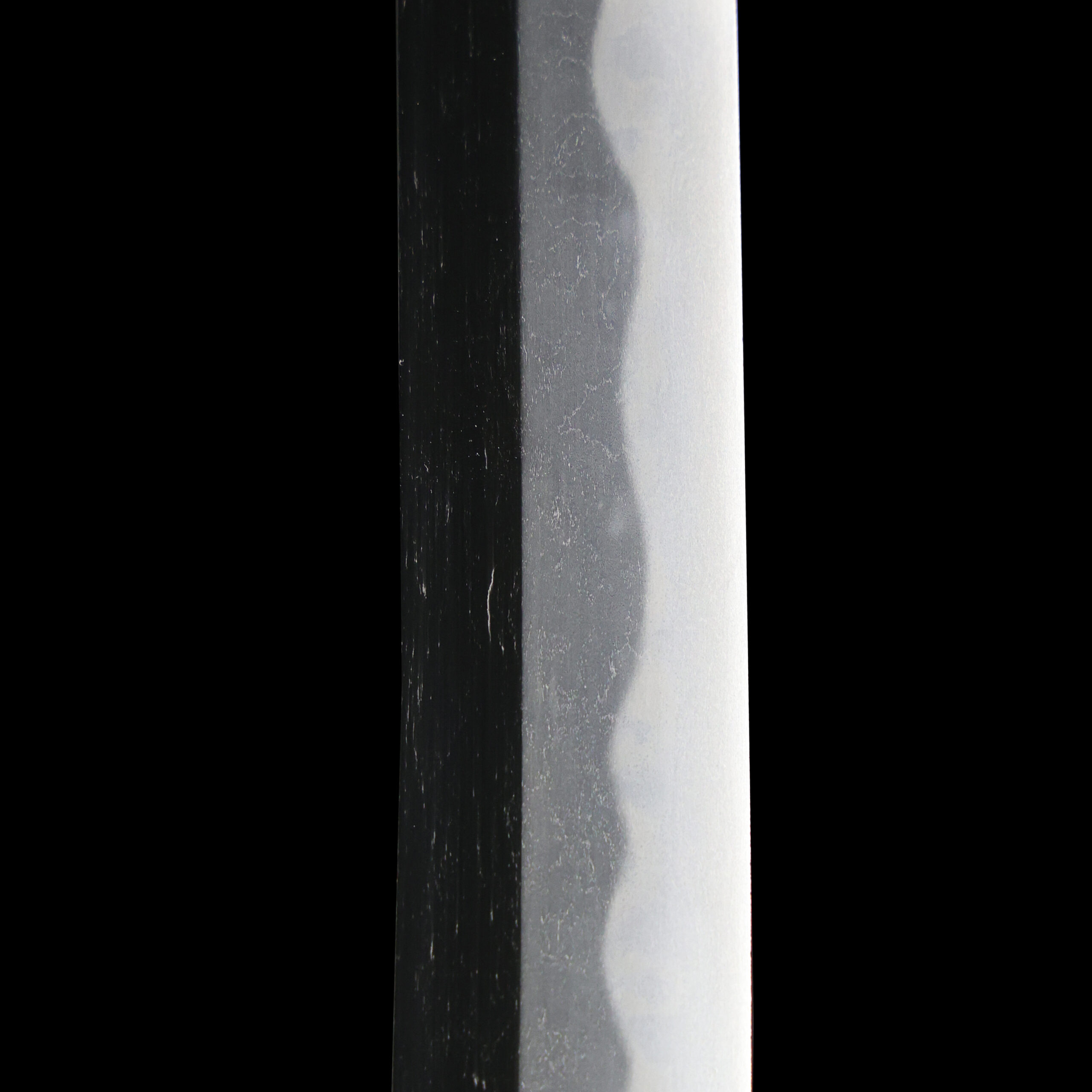
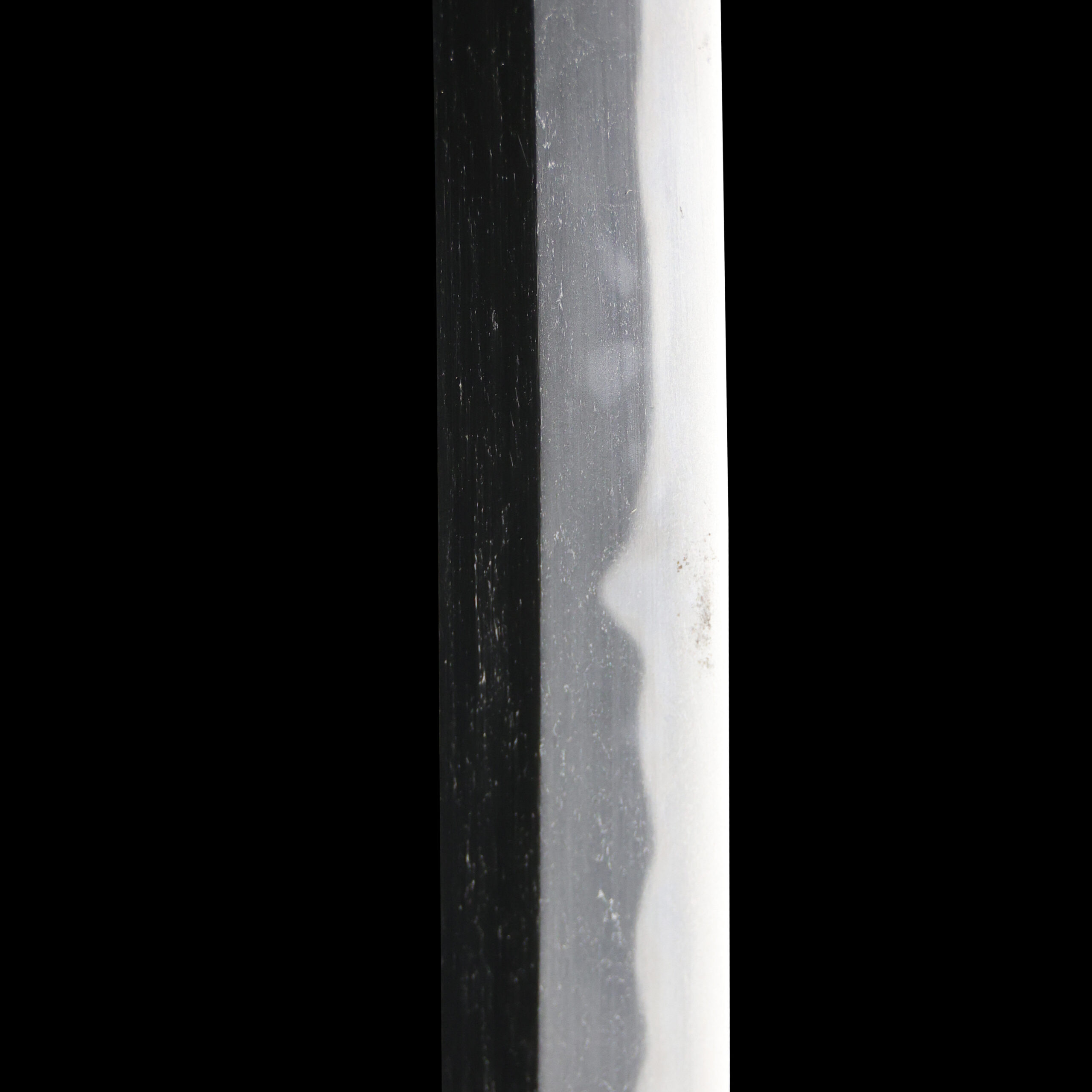
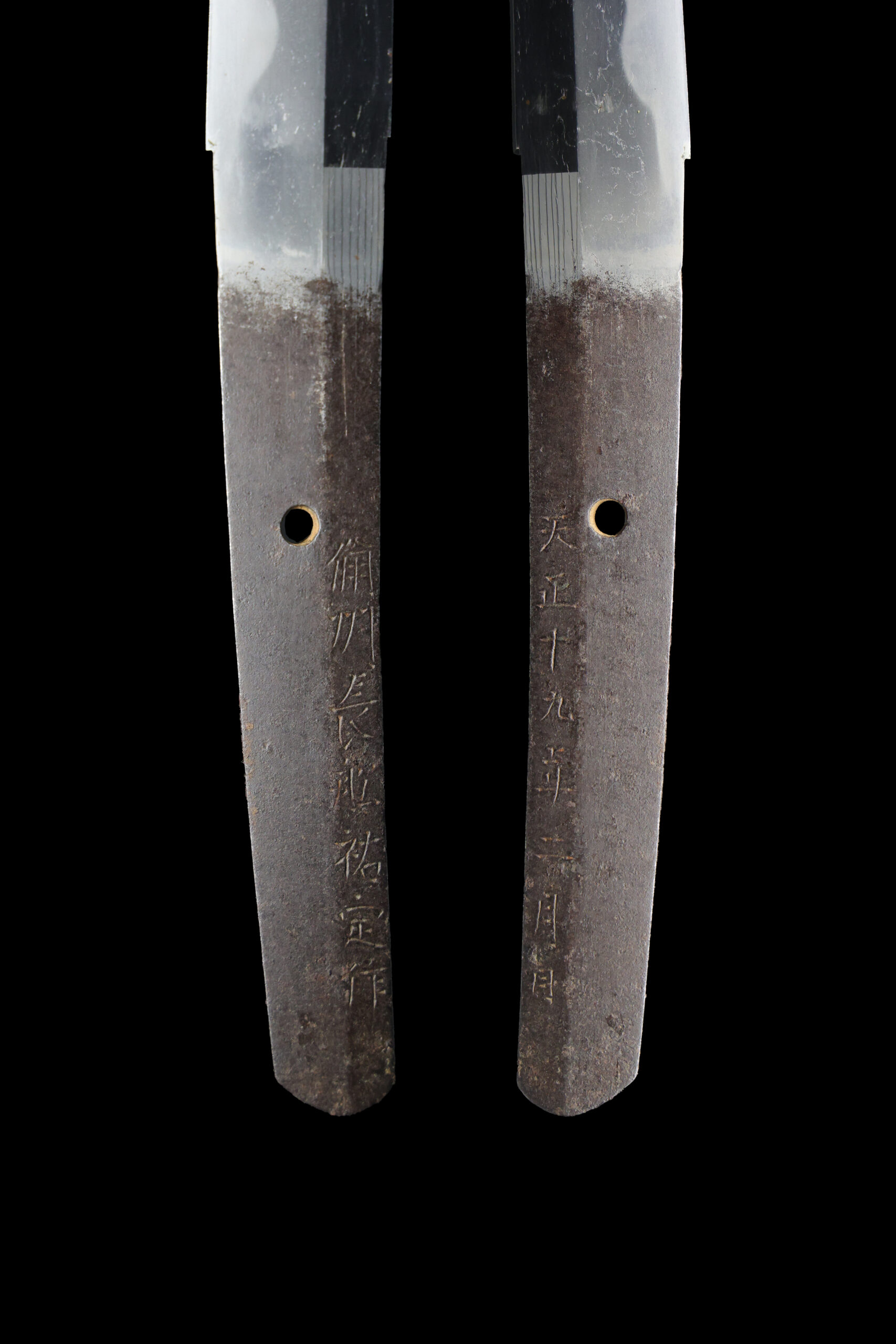
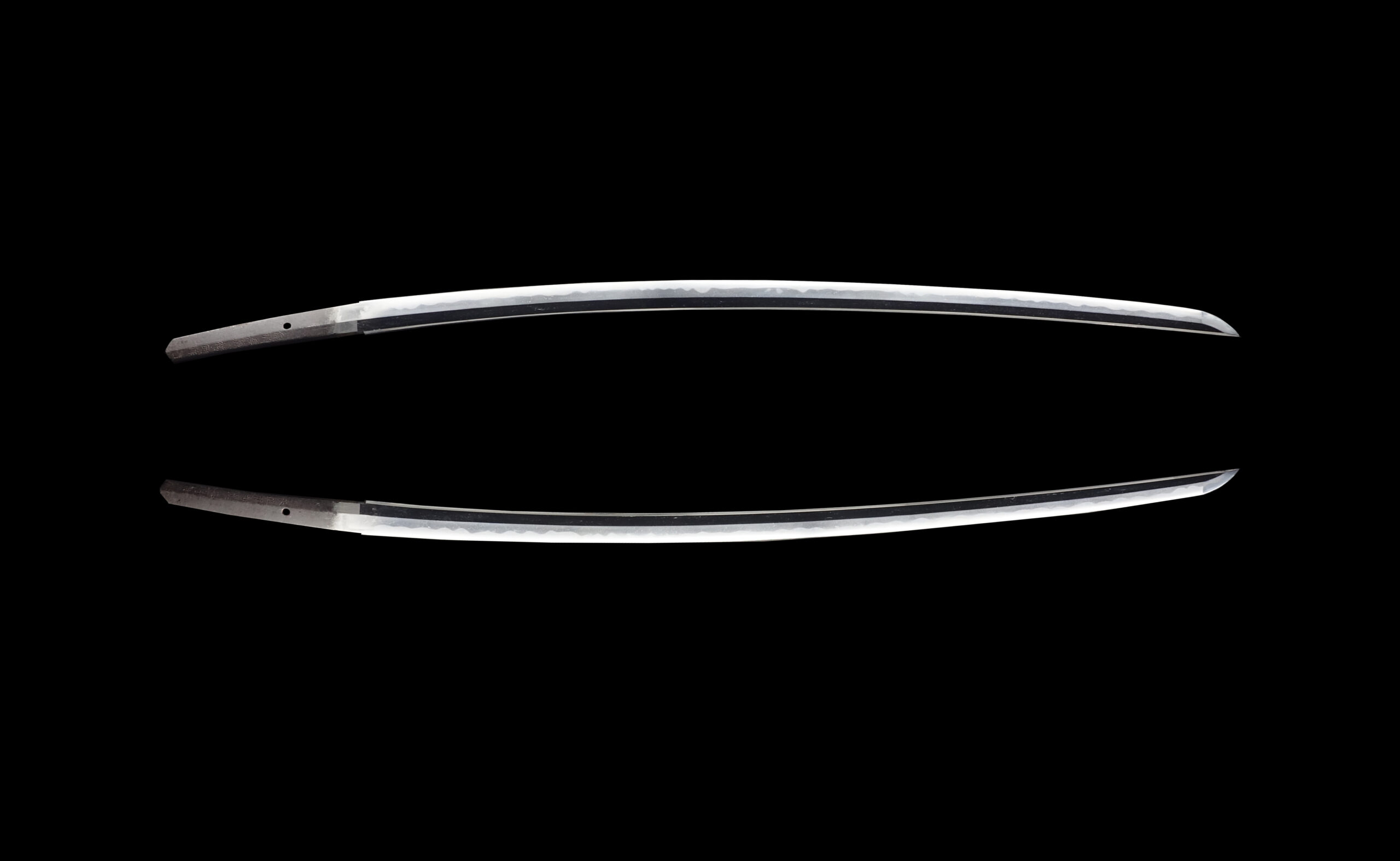
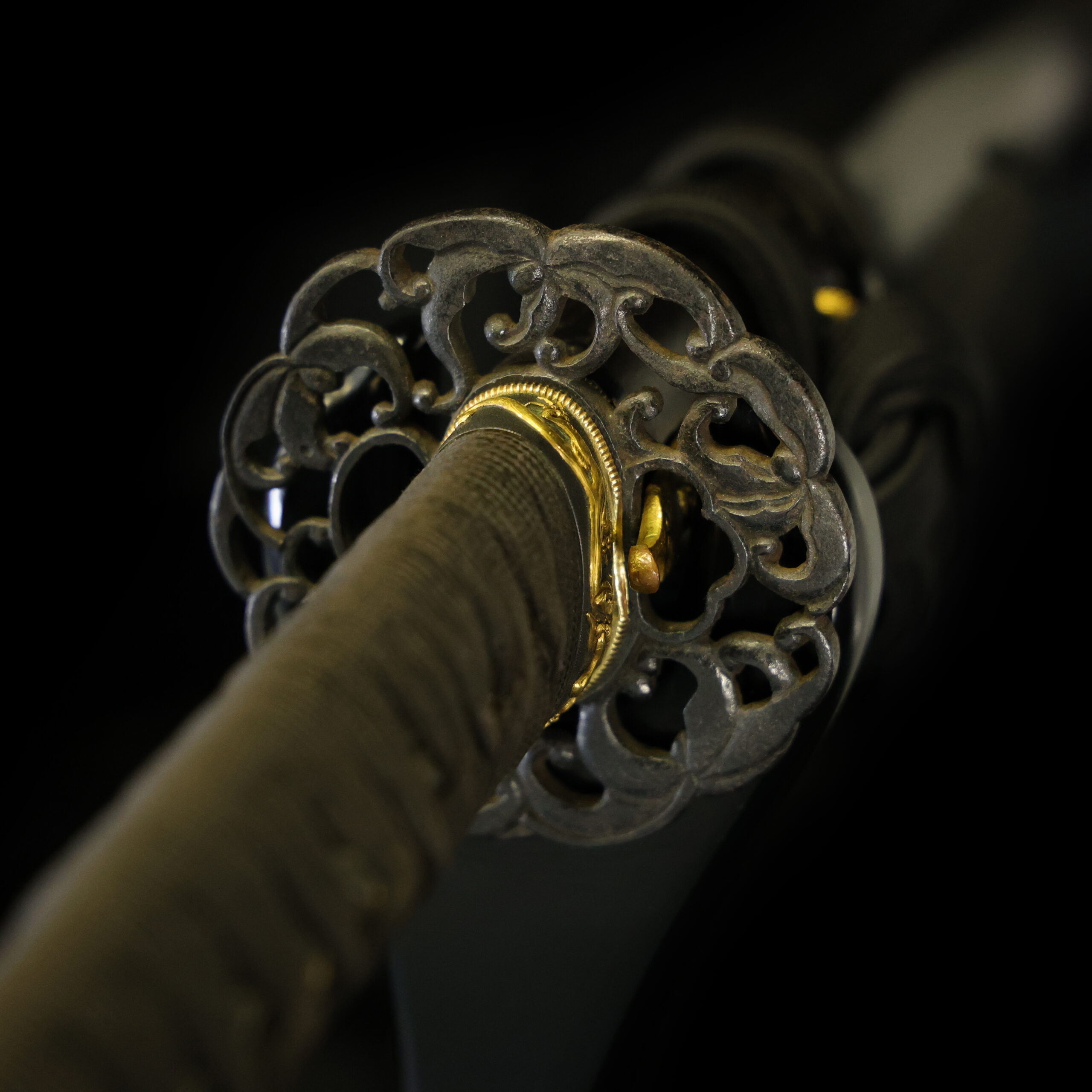
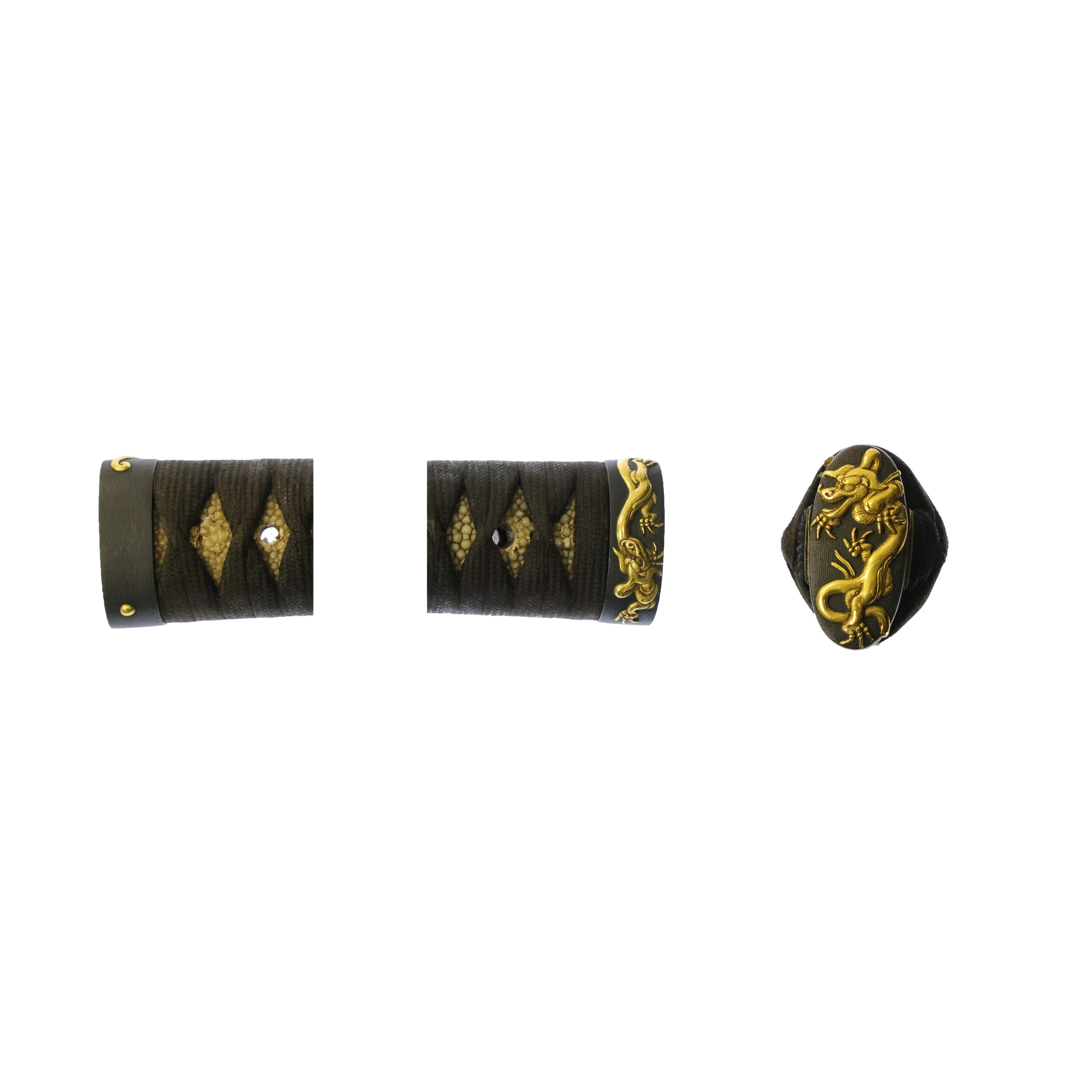
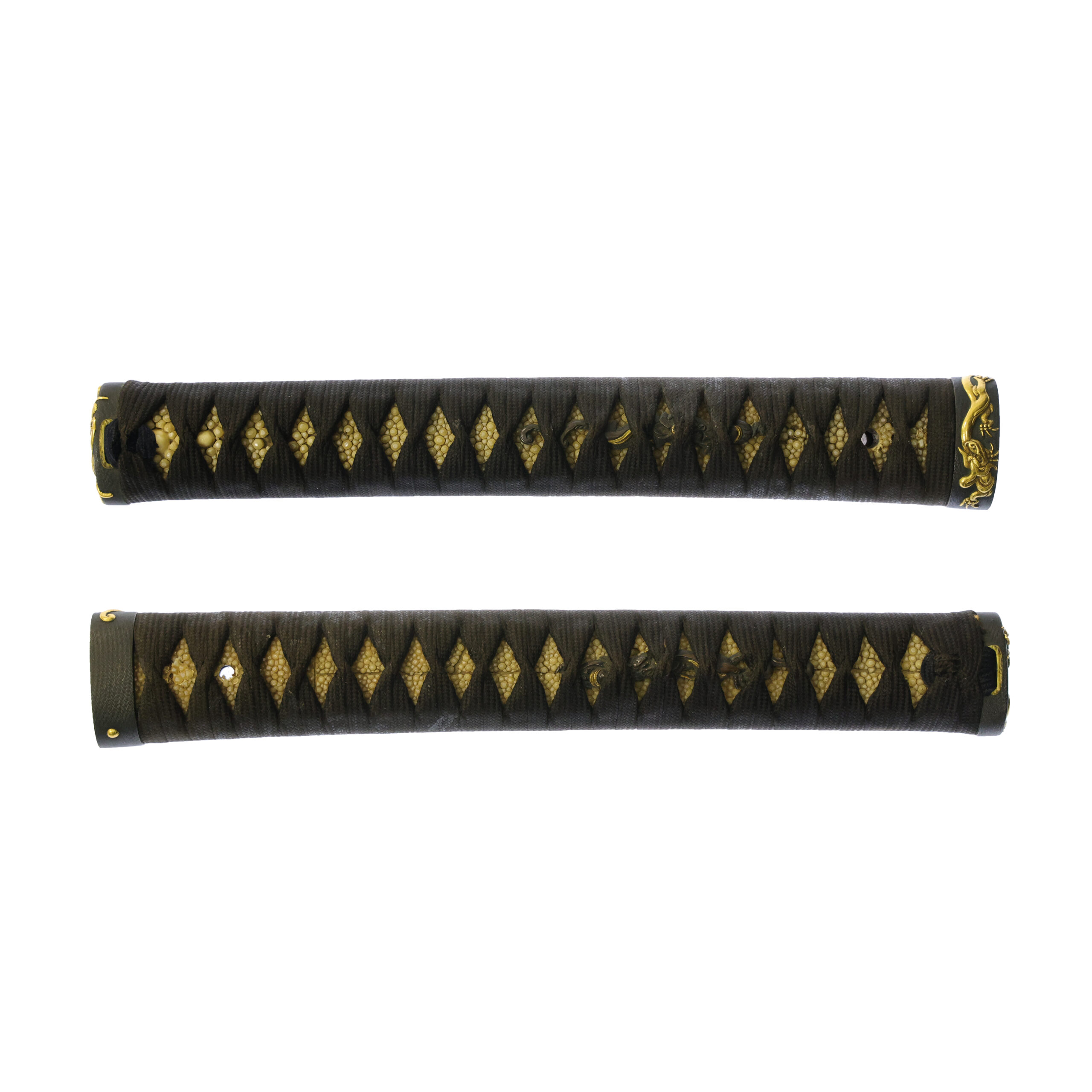
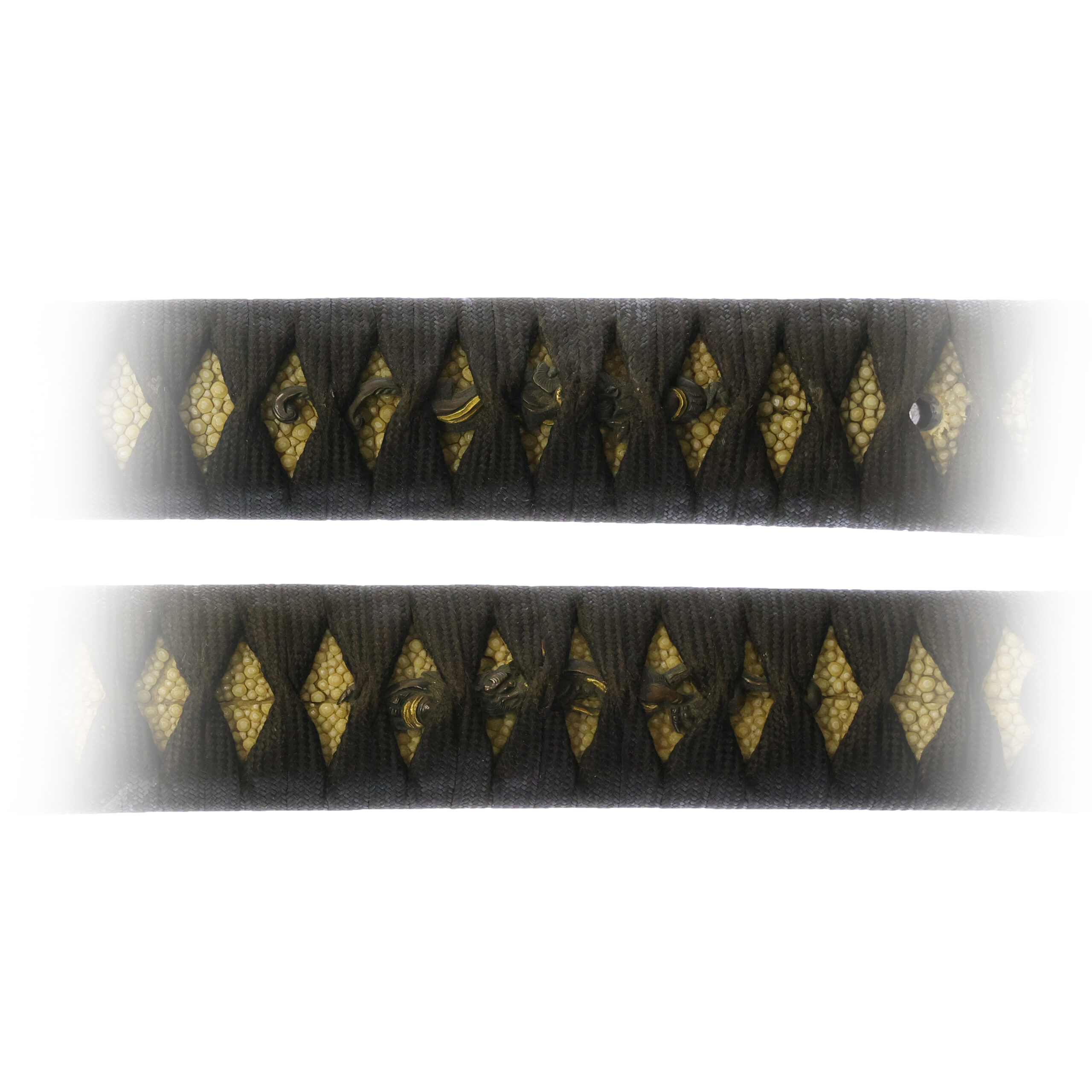
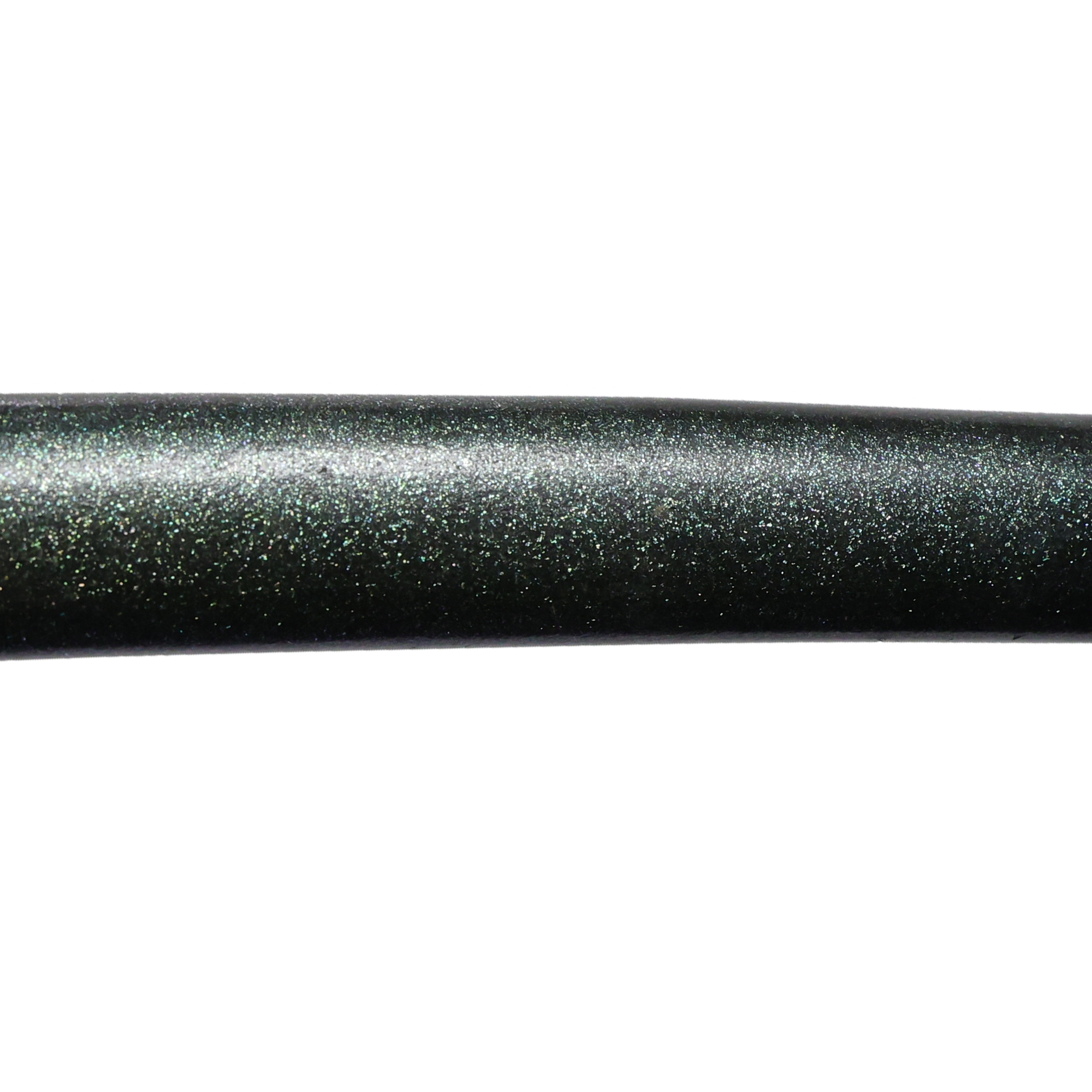
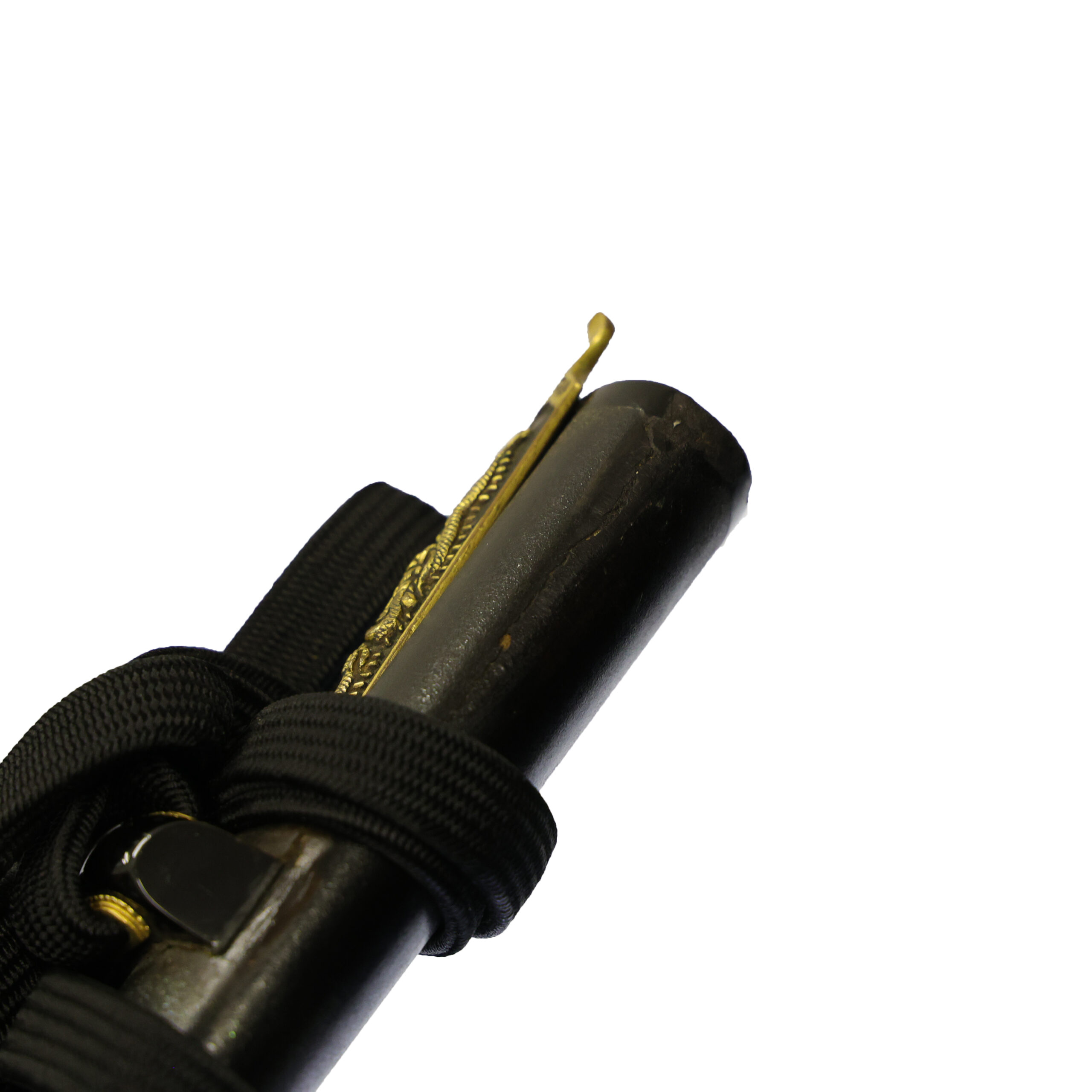
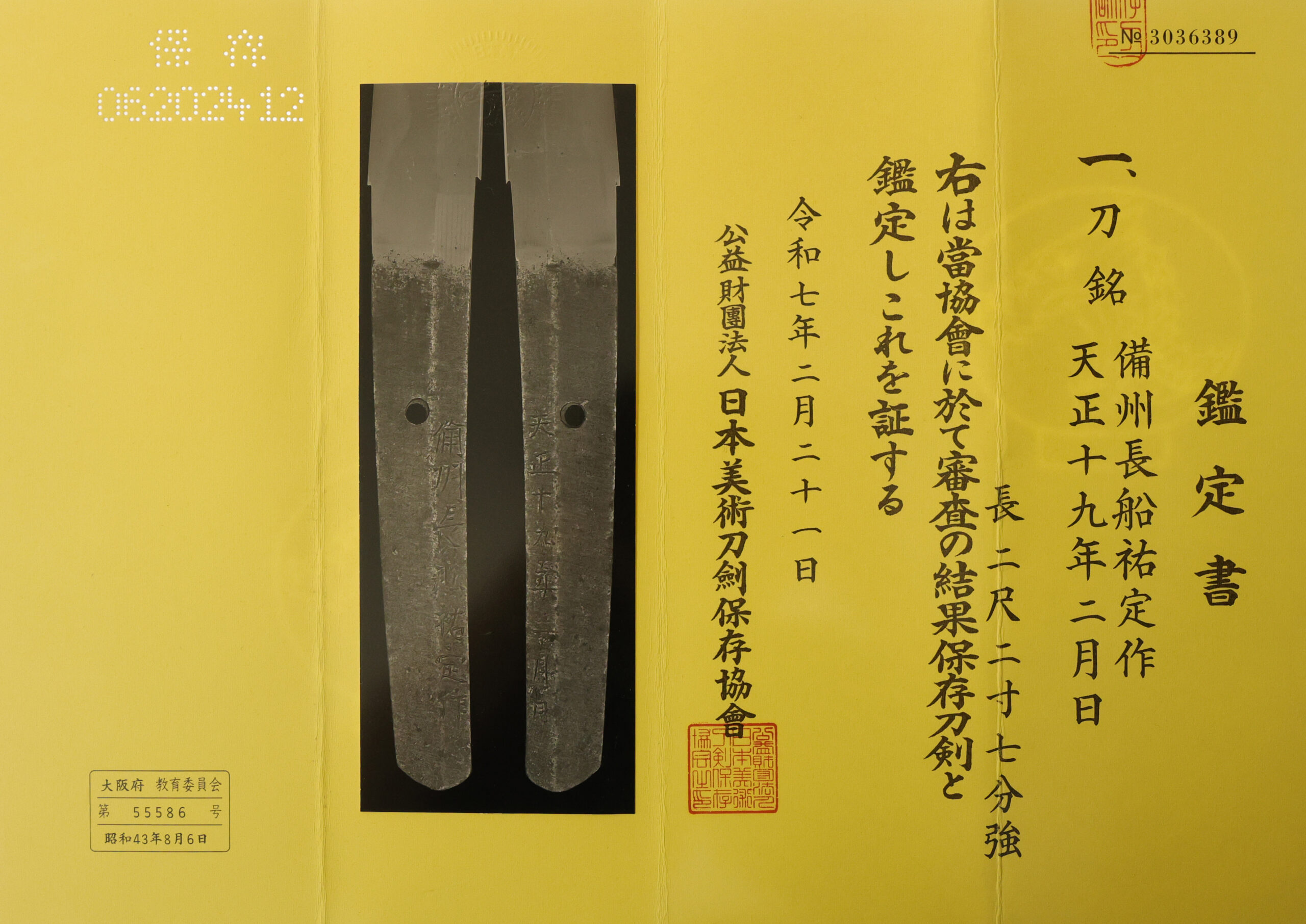
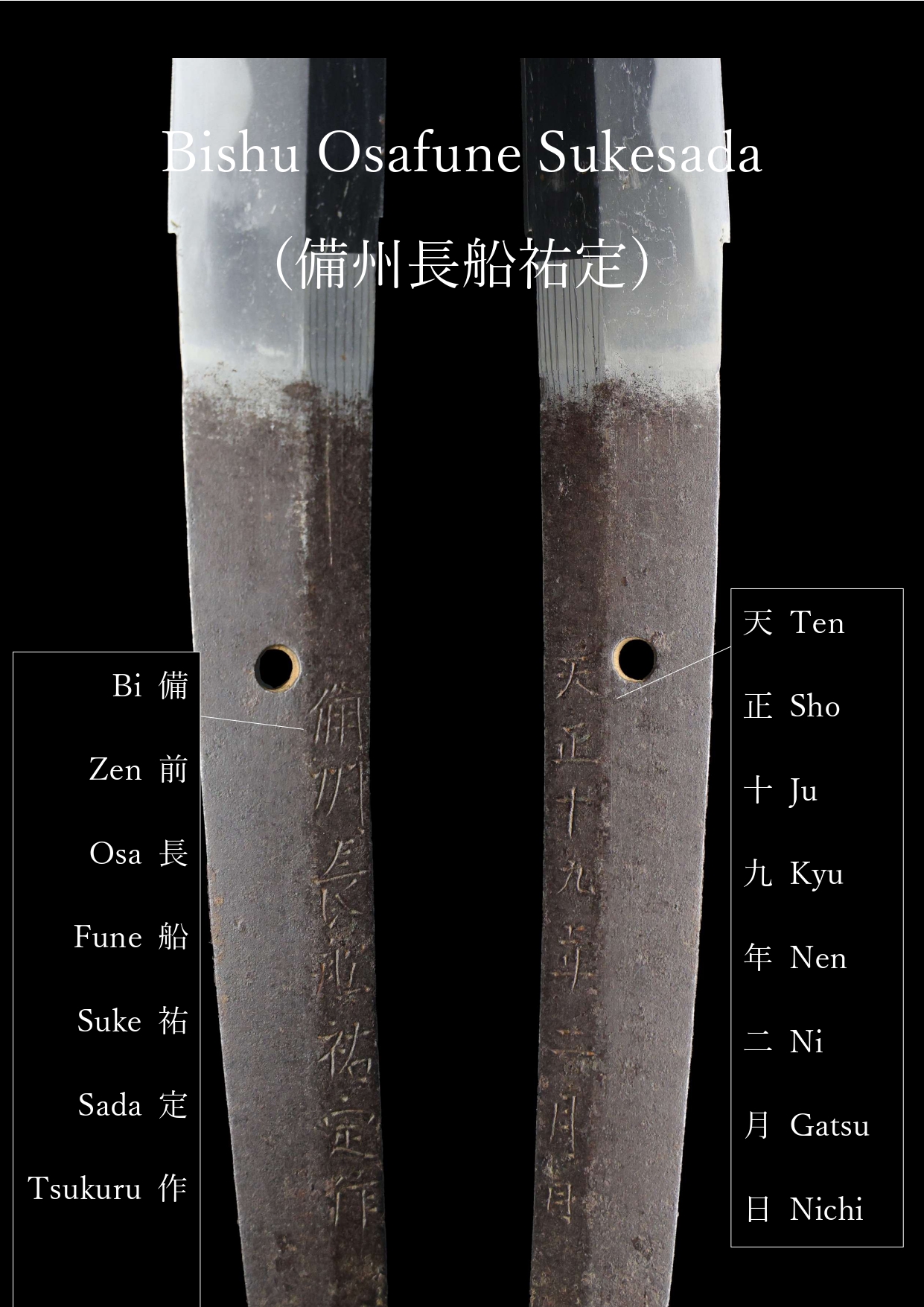
This blade was signed by Bishu Osafune Sukesada (備州長船祐定) in February, the 19th year of the Tensho era (1591: Azuchi Momoyama period). Bishu(備州)is a larger area in today’s Okayama&Hiroshima prefecture. Bishu consists of Bizen(備前), Bitchu(備中) and Bingo (備後). Osafune is the school’s name located in Bizen province. Sukesada is his maker’s name. Those who forged swords in the Bizen province(Okayama prefecture) at the end of the Muromachi Period (1492-1569 A.D) are called Matsu Bizen(Matsu means the end). Sukesada school was one of the most famous schools, and it flourished for generations among Osafune schools (The head branch). There were various styles forged by the generations of Sukesada during this period. Approximately 60 swordsmiths used Sukesada as his maker’s name in the Samurai history. In that sense, the swordsmith’s name “Sukesada” worked as a kind of brand that attracted many Samurai. The swordsmiths in Bizen produced many swords during the Muromachi period as it was in the middle of the Sengoku period(Warring state period). The demand for weapons increased among strong feudal lords. It would be nice to have a piece forged in the warring state period when there was so much rivalry between warlords. It was possible that this blade was ordered by a high-class Samurai and he might have carried it in a battlefield. BIZEN is located near the Chugoku Mountains, where iron sands, one of the essential materials for making Japanese swords, were abundant. Furthermore, BIZEN swordsmiths had close access to Yoshi River, where they could find water and charcoal. This geological location contributed to the swordsmiths to forge high-quality refined blades. We presume BIZEN was quite active in sword-forging from ancient times. It is said that BIZEN DEN was created by groups of swordsmiths there after the late Heian era(Late 12th century ). It is appraised as a Hozon Token (保存刀剣) issued by NBTHK (Nihon Bijutsu Touken Hozon Kyokai: 日本美術刀剣保存協会). *Please keep in mind that there are a couple of Kitae Kizu and black rust of this blade. There is also some rust visible on the edge. Fuchi-Kashira Dragon (龍, Ryu) is the motif of this Fuchi-Kashira. Initially, the dragon is an imaginary creature found in ancient Chinese traditions or myths. Furthermore, it is regarded as a symbolic beast of auspicious signs. Its body is likened to nine animals: antlers are deer, the head is a camel, eyes are demons, the neck is a snake, belly is Mizuchi (蛟, mythical animal in Japan which looks like a snake and have a horn and four legs), scales are fish, claws are falcons, palms are tigers, and ears are cows. It was thought that the dragon would reign at the top of all animals because of its odd-looking appearance. In ancient China, the dragon pattern was used for emperors’ clothing so that people strictly defined its shape or even the number of nails. On the other hand, the dragon pattern does not have detailed rules to represent classes in Japan. However, still, it maintains its meaning as the all-purpose auspicious pattern. Also, in Japan, there is a belief that worships dragon as a water god and is called Ryujin Shinkou (竜神信仰). Since rice cultivation flourished in this country, water is always an essential resource. Therefore, the dragon motif has been familiar to Japanese people since a long time ago. Tsuka and Menuki This Menuki also features a dragon motif, similar to the Fuchi-Kashira, creating a sense of harmony and consistency throughout the entire koshirae design. Tsuba and Habaki The motif of this tsuba appears to be warabite-mon (蕨手文), a decorative design featuring curled, spiral-shaped tips. In Japan, the pattern has been used since the Yayoi period (c. 300 BCE–300 CE) on pottery, tools, and various ornaments, and it was also found in China as early as the Han dynasty. The term “warabi” refers to the bracken fern, a plant native to Japan with young stems that unfurl in a distinctive spiral shape. Bracken appears from spring to summer in sunny fields and forests and has long been eaten as a seasonal mountain vegetable. The starch extracted from its underground rhizomes, called warabi-ko, is traditionally used to make warabi-mochi, a popular Japanese confection. Beyond its culinary uses, the bracken’s unique form has been appreciated since ancient times as an ornamental motif in art and design. Kougai This item is an antique Kougai (笄), which was used to arrange or fix the hairstyle of Samurai. The Kougai is usually stored in the Kougai Hitsu. The Kozuka (小柄) is often stored at the other side of the scabbard. The Kougai is beautifully adorned with a dragon design, just like the other sword fittings. Saya This Saya is decorated with traditional Japanese craft method, the Raden (螺鈿: Raden). The Raden is a decorative technique that is often used for traditional craftwork. It uses the pearl part of seashells and puts it into the engraved surface of lacquer or wood. Thanks to its iridescent luster, it gives a luxurious look to works. *Please keep in mind that there is minor crack on this lacquered Saya due to its aging. Authentication Paper They authenticated the blade on February 21st in the 7th year of Reiwa (2025). They appraised it as Hozon Touken, the blade worth preserving for Japanese society.

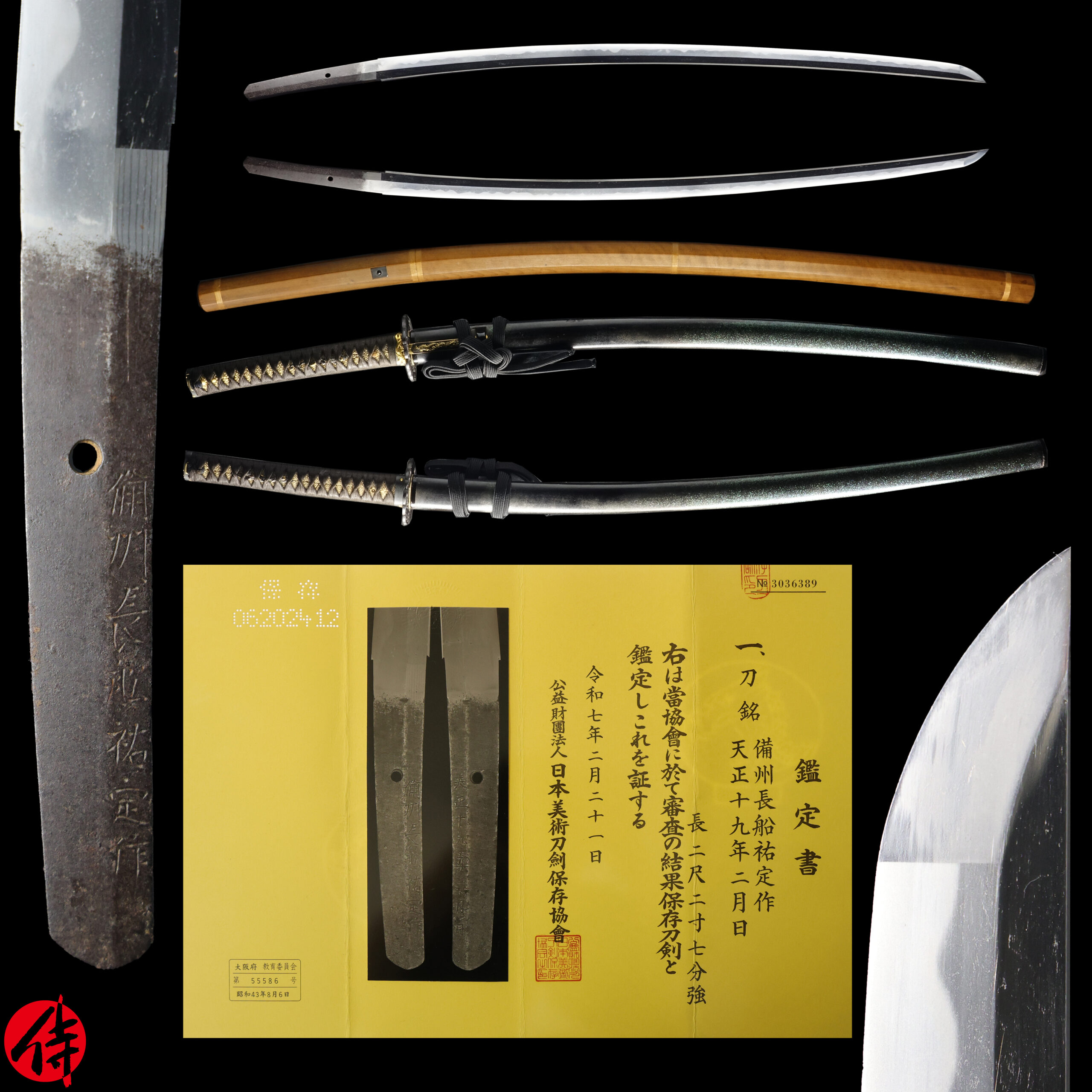
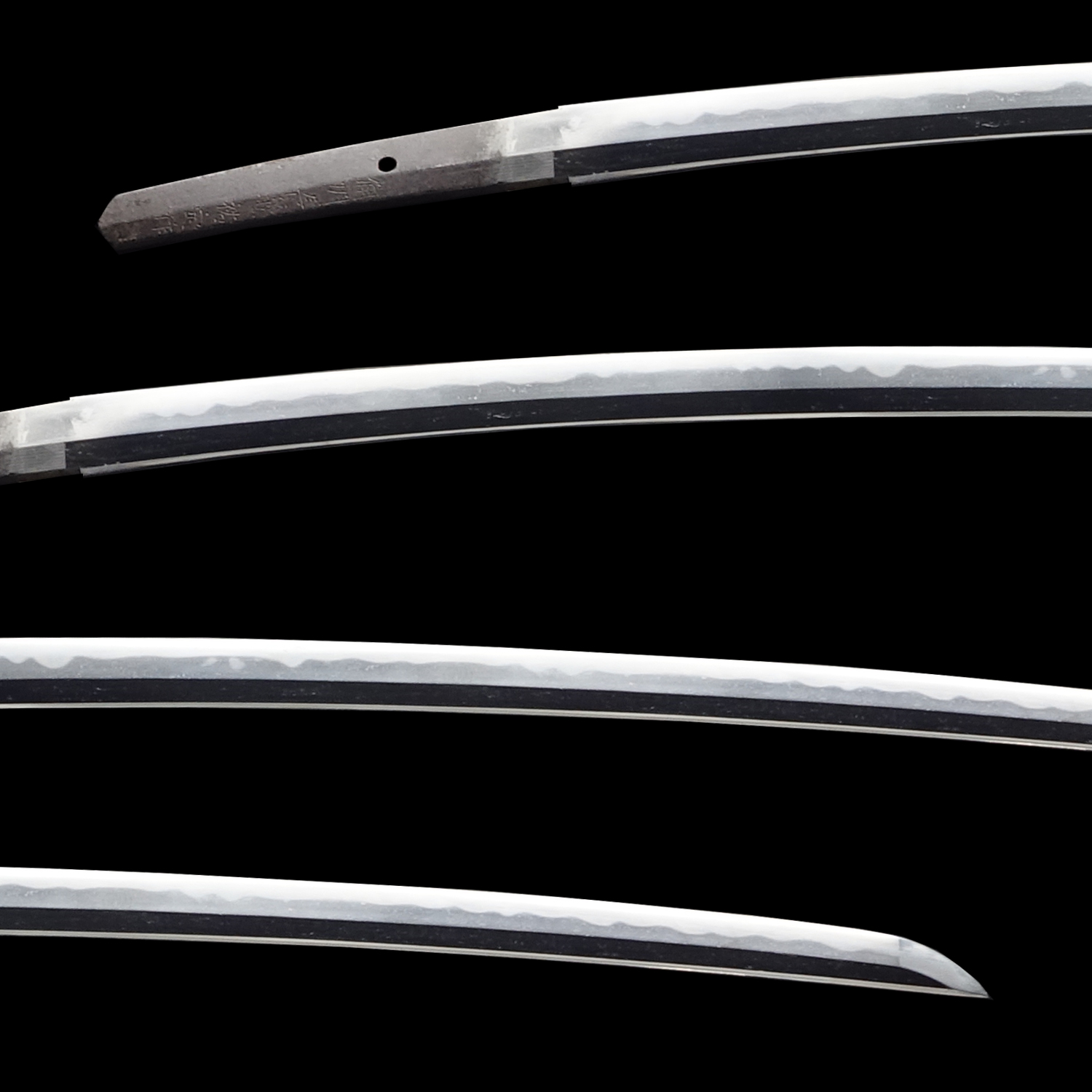
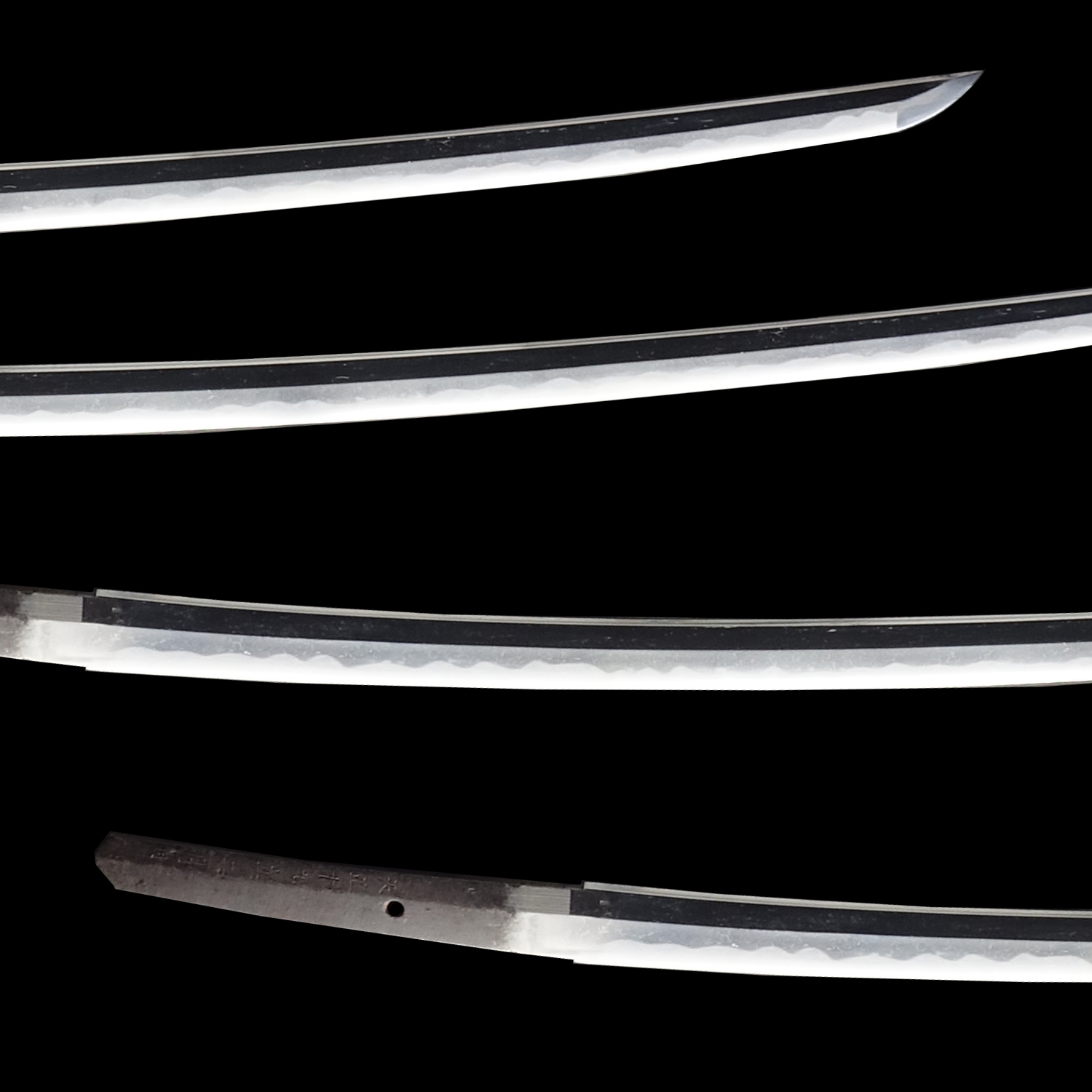
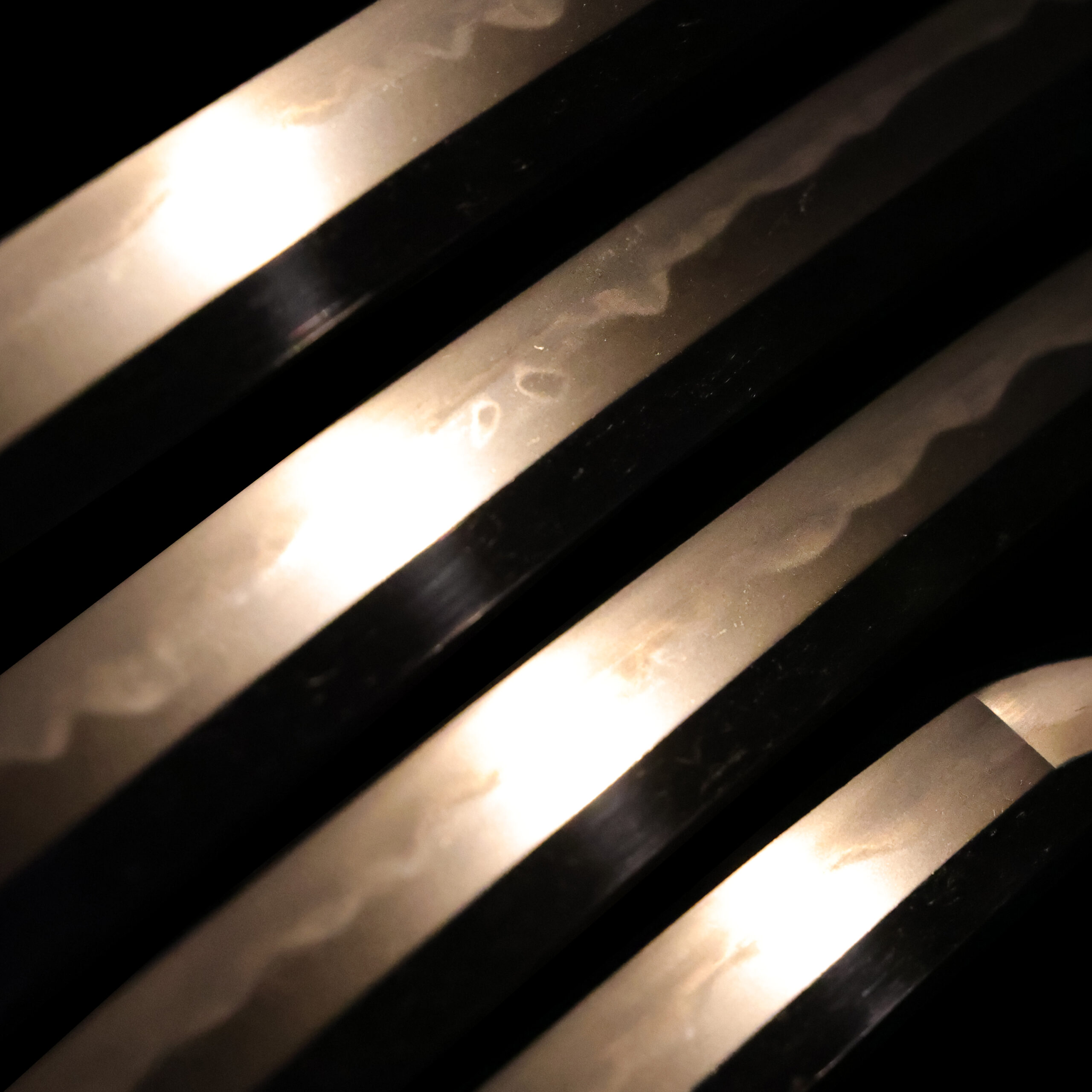
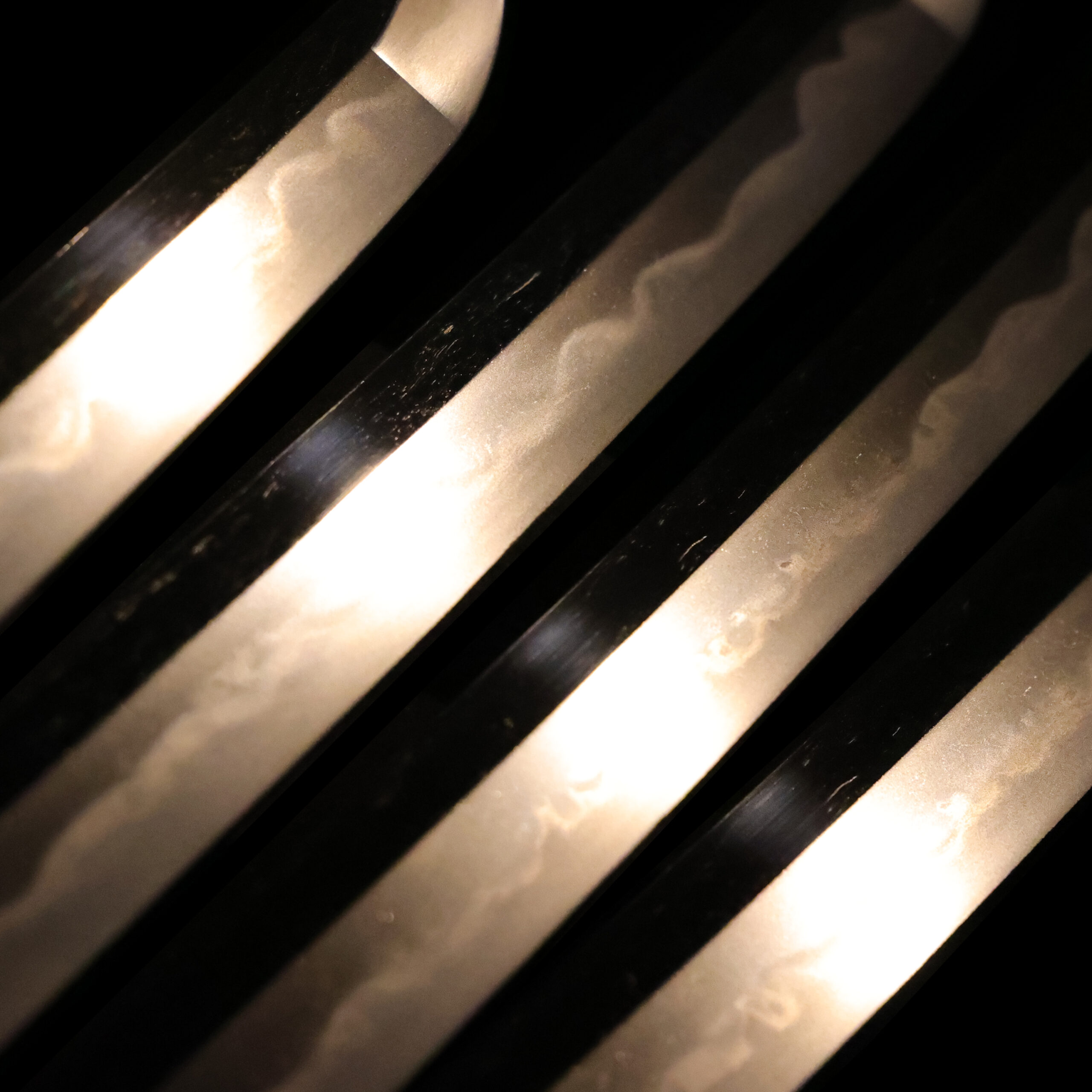
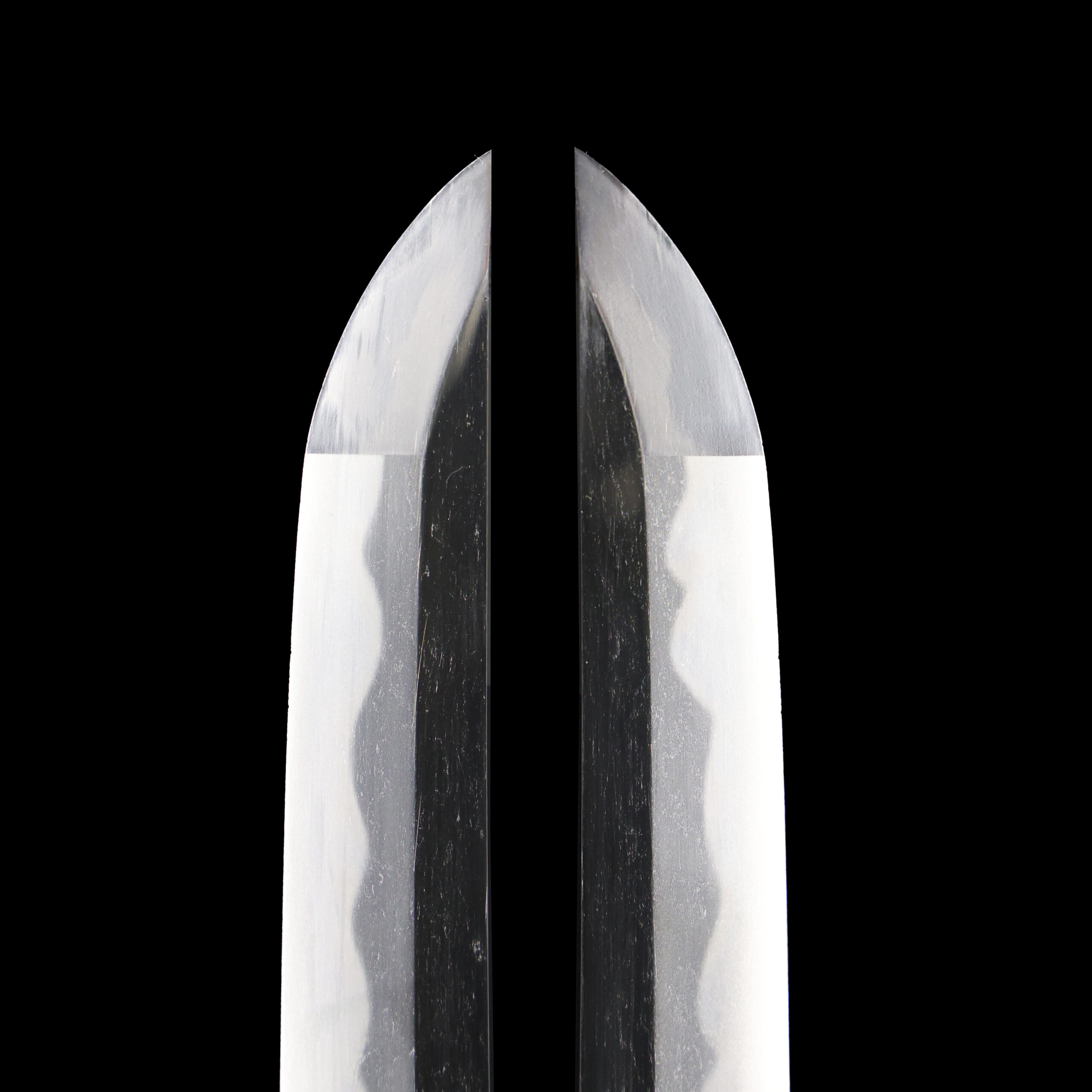
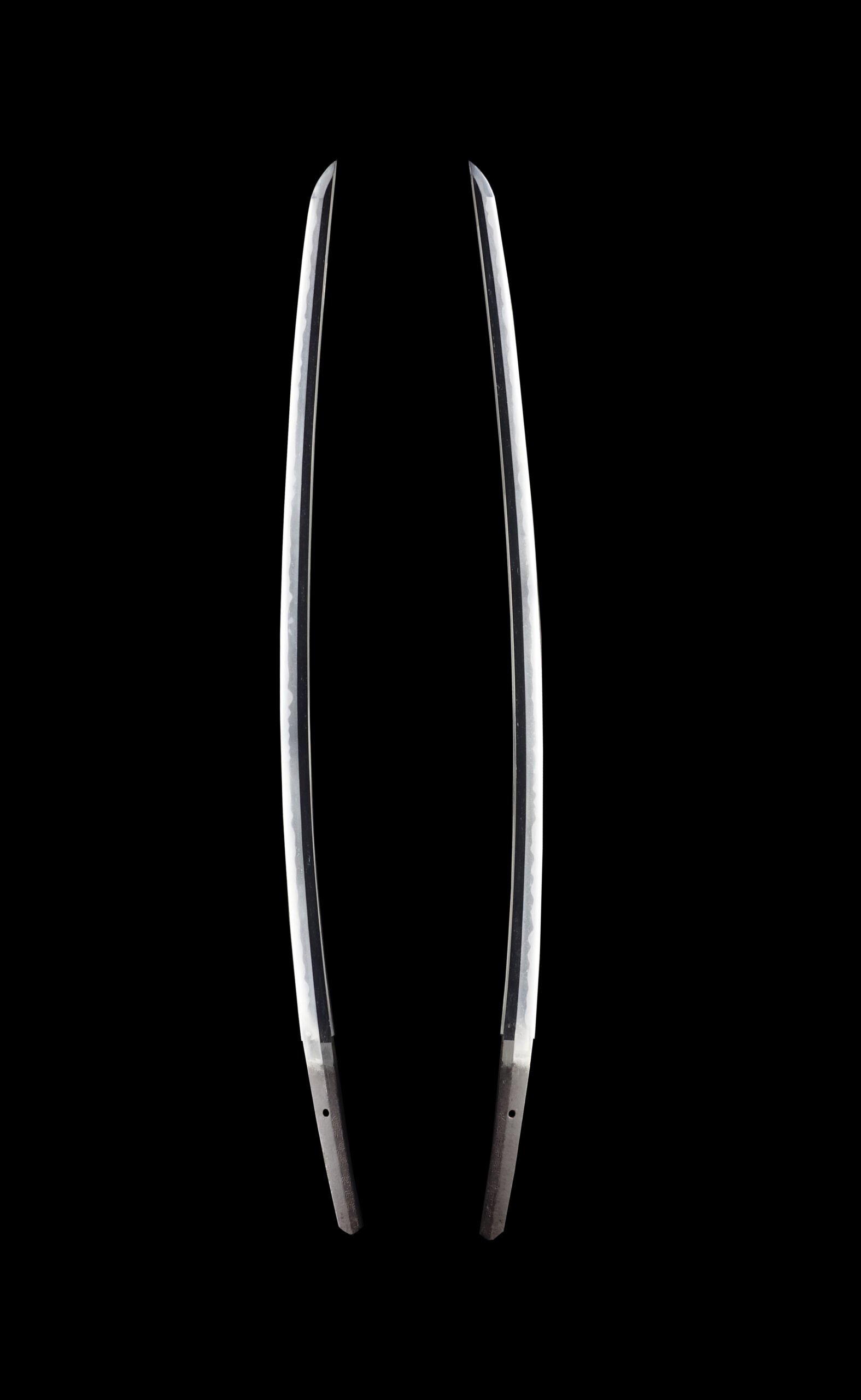
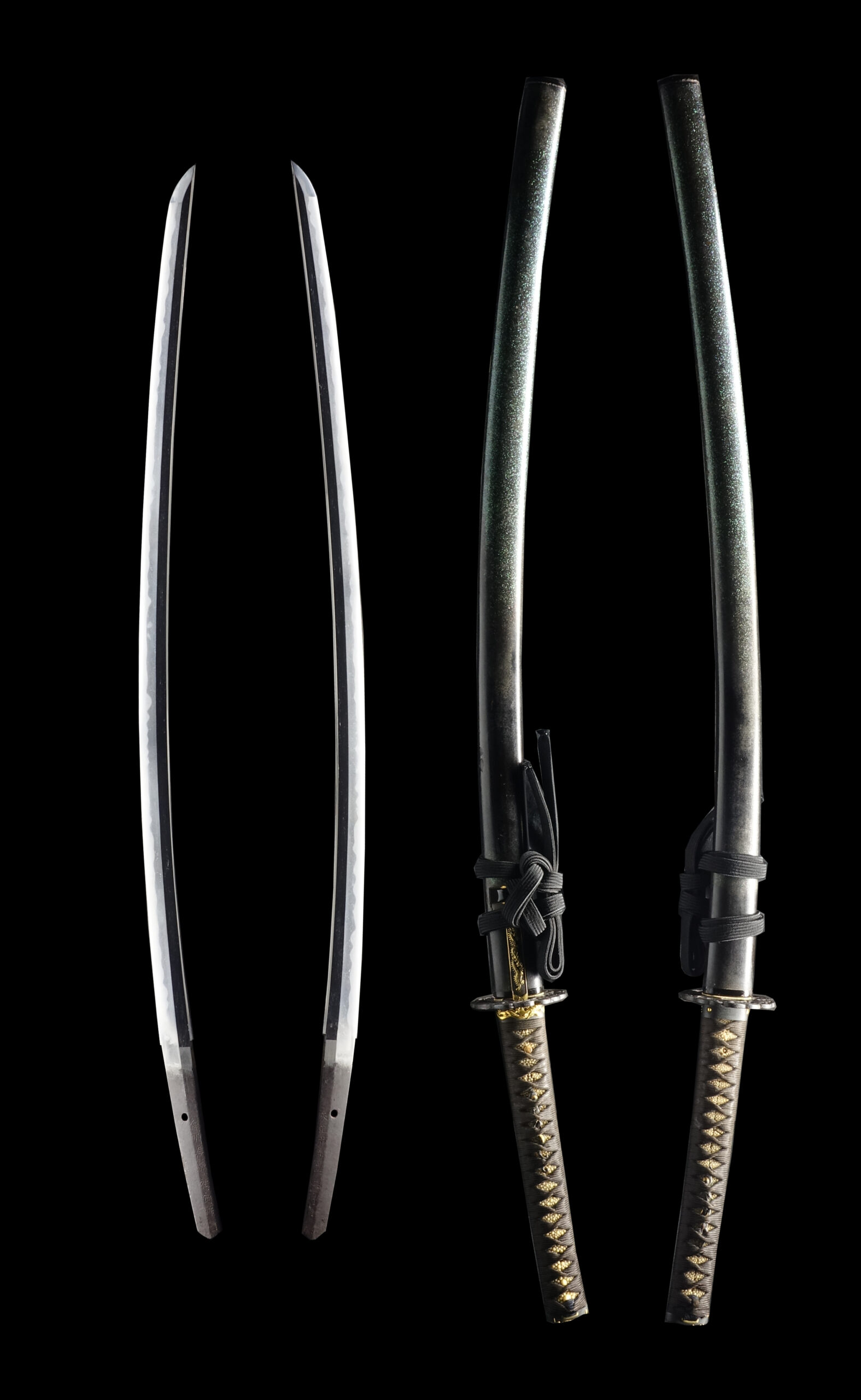
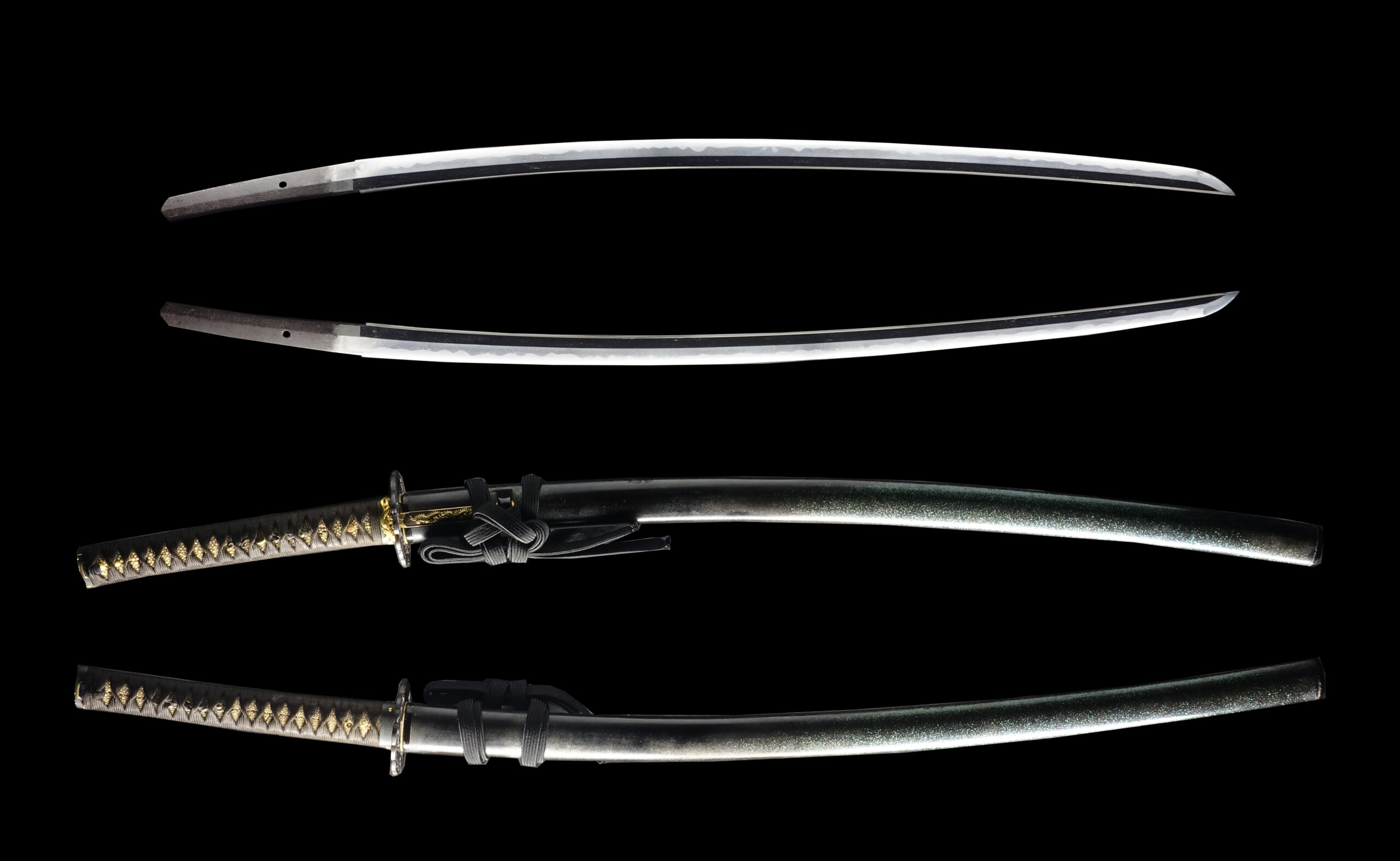
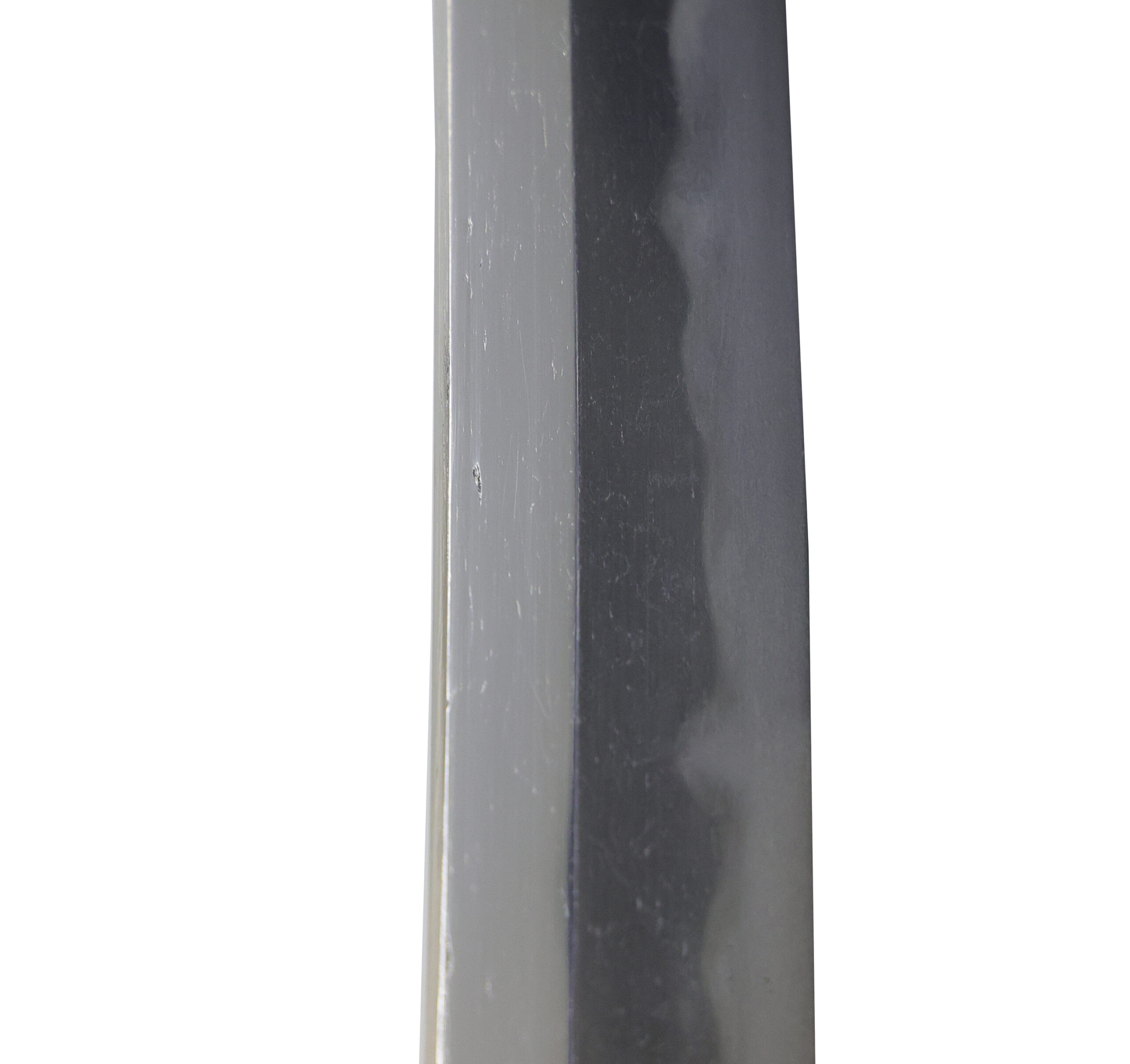
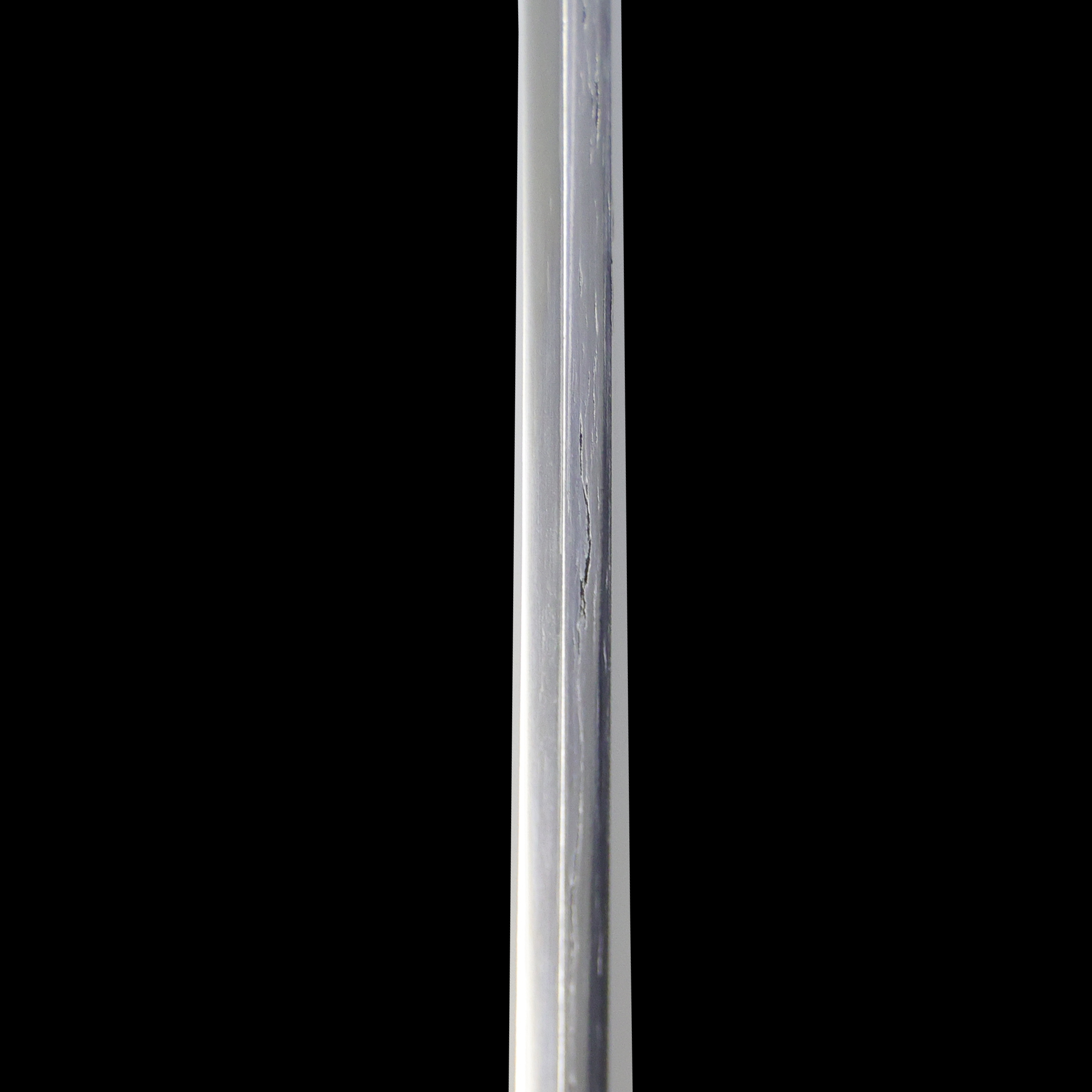
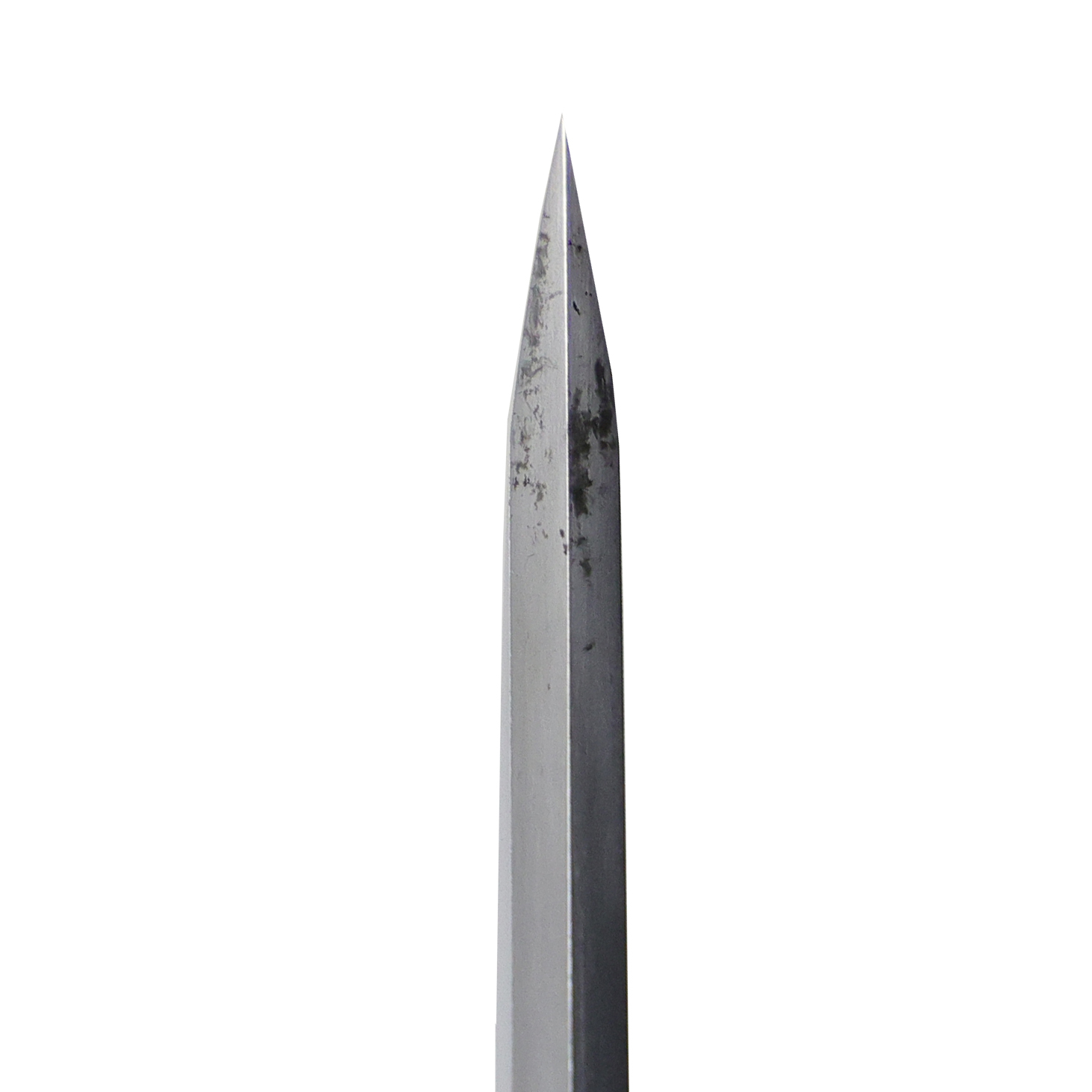
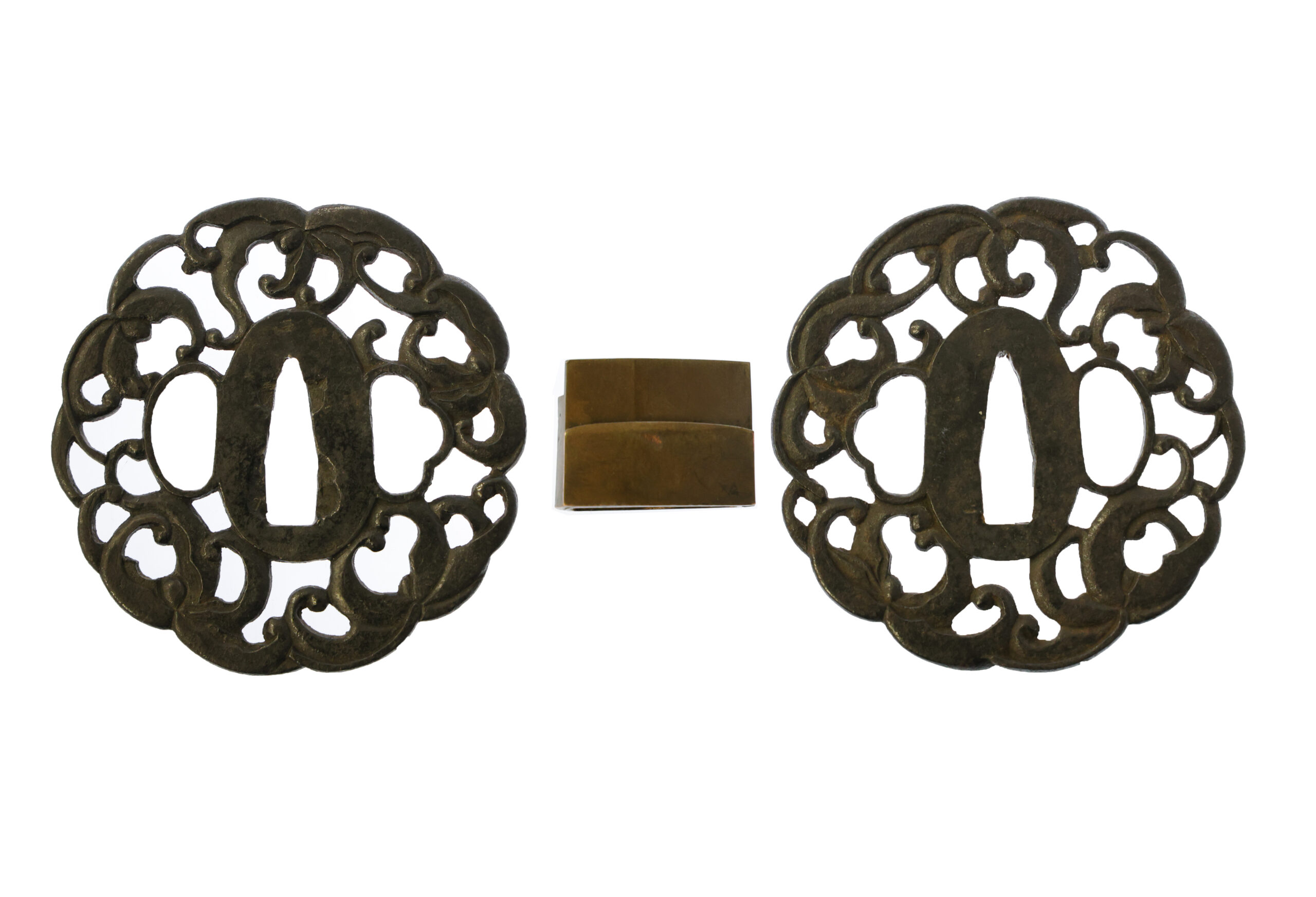
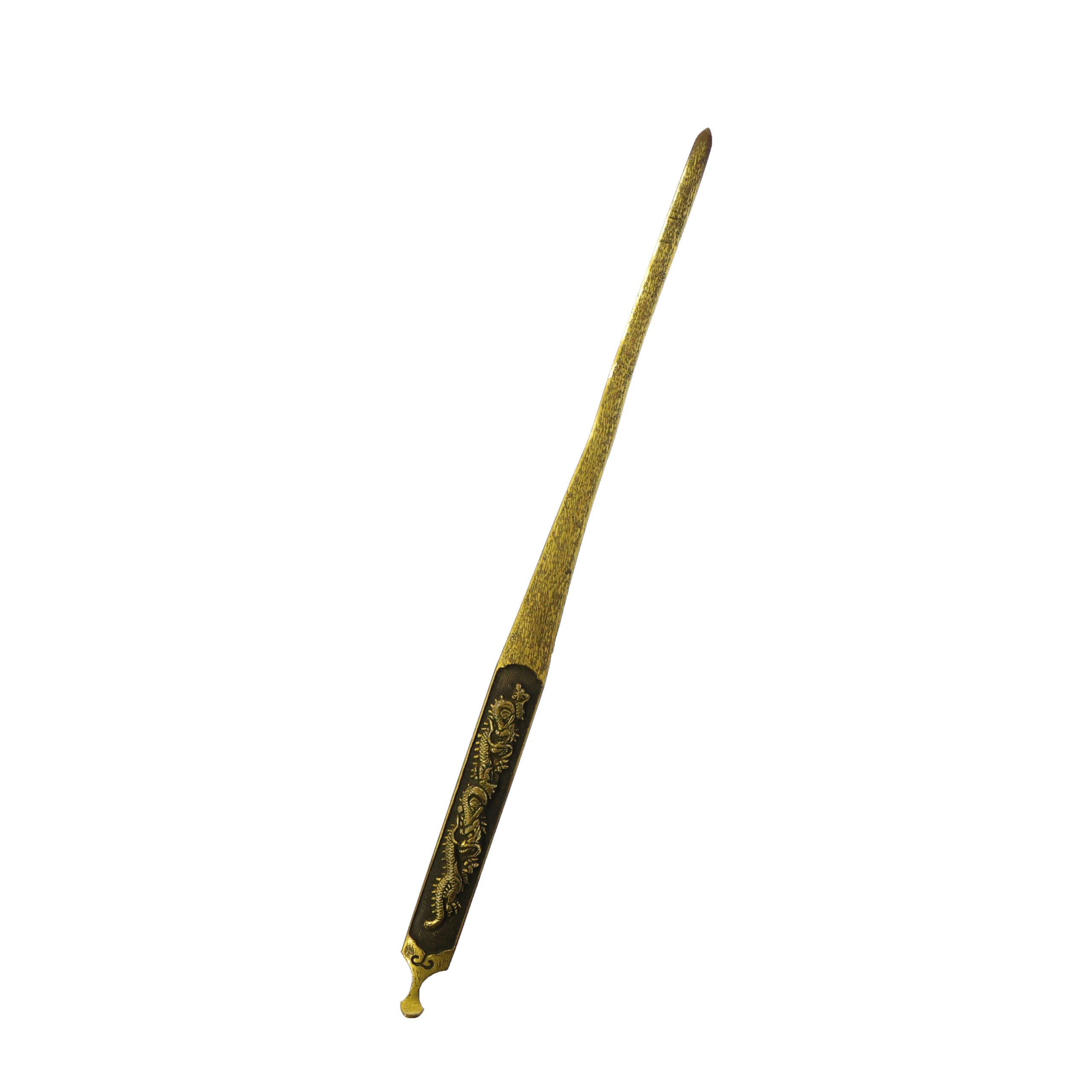
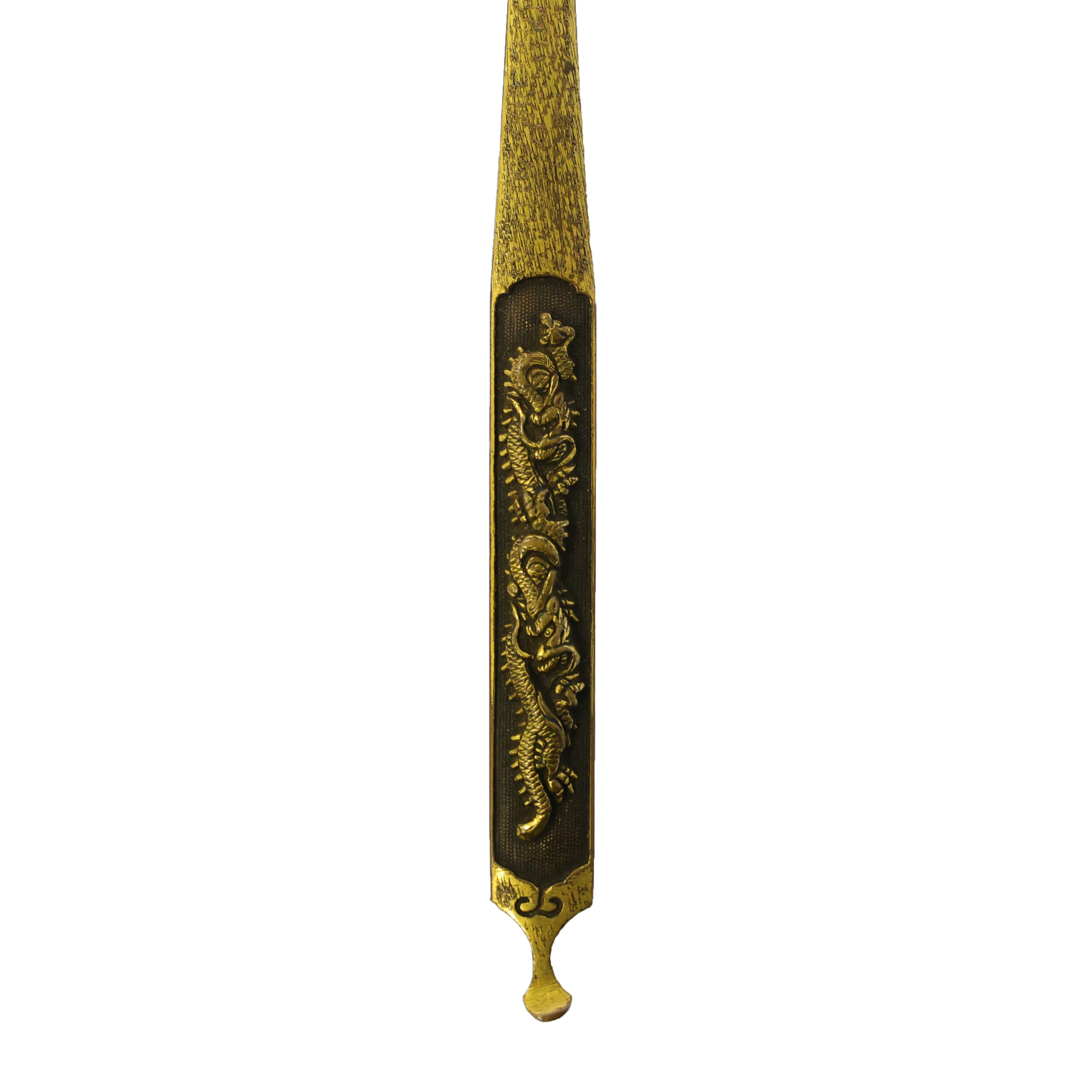
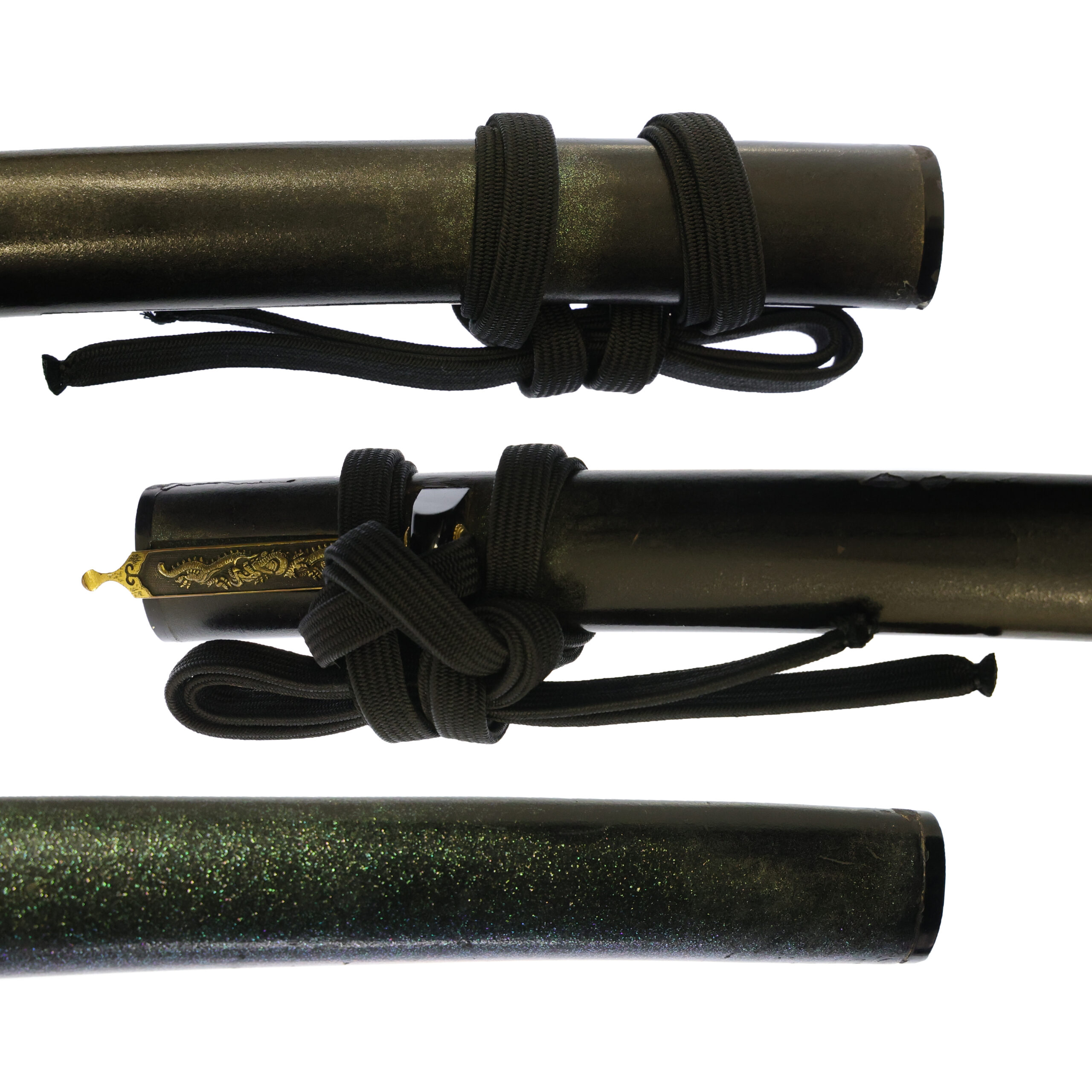
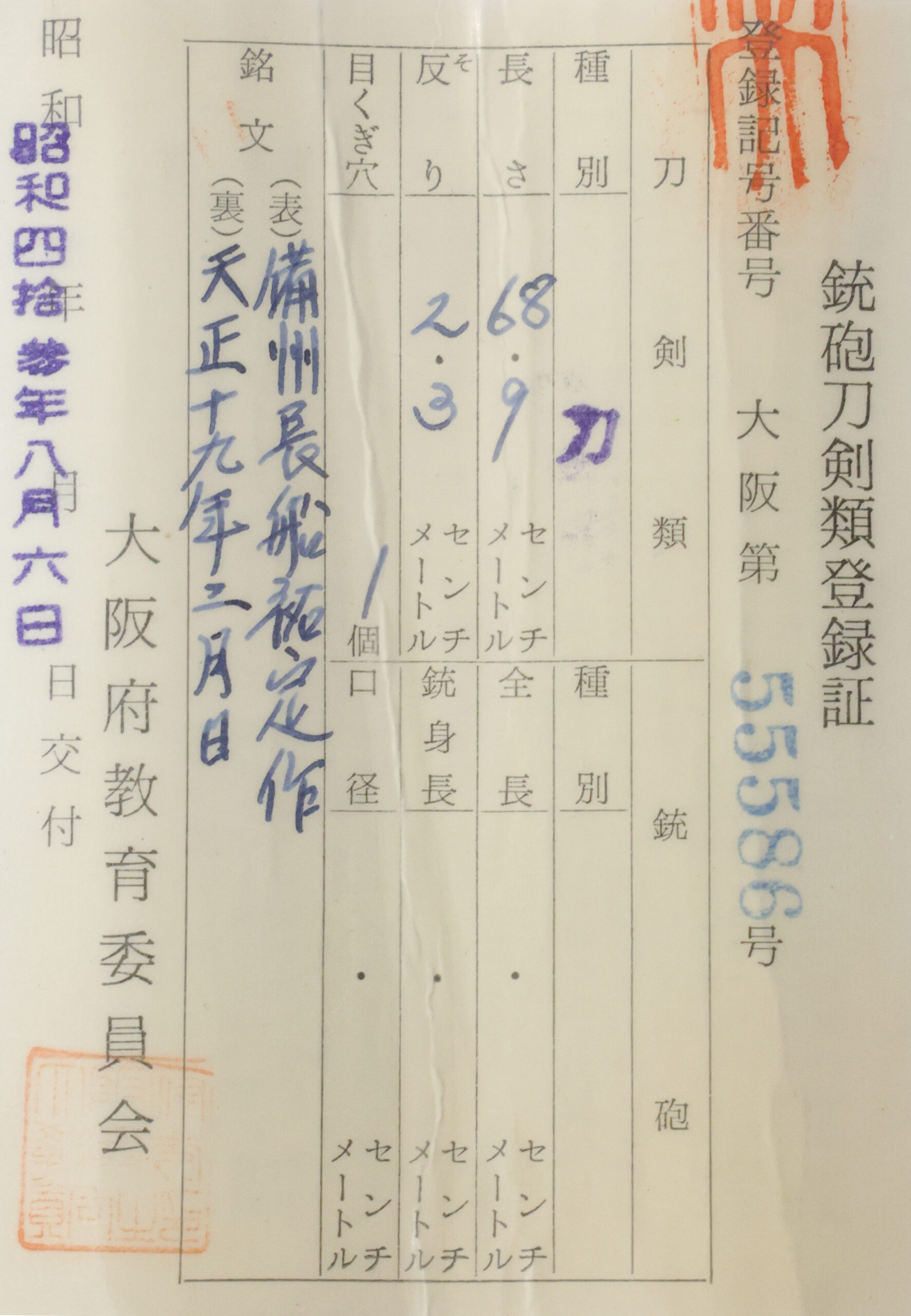
販売店の記載のまま
備前伝 · 備前
現在55点販売中
祐定派は、室町時代後期に備前国長船(現在の岡山県瀬戸内市)の地に栄えた末備前の主流工房である。鎌倉以来の長船鍛冶が太刀の時代を閉じ、太刀に代わって身幅の広い長大な打刀を諸手で用いる時代に入ると、祐定の名はその新しい需要を一手に担う一群の総称となった。説明書がこれを末長船で最も繁栄した一家と記すとおり、祐定を切った工は数十を数え、近世の刀剣書は俗名を冠した者だけでも二十一人を挙げる。その大群のなかで腕においても名においても抜きん出るのが、俗名を負った数工である。最も著名にして上手とされる与三左衛門尉祐定、その父と伝える彦兵衛尉祐定、豪壮の鍛えで知られる源兵衛尉祐定、二様の作風を能くする彦左衛門尉祐定らがそれで、初代与三左衛門尉は天文六年紀の短刀から逆算して応仁元年の生まれと推定され、永正から天文にかけて一派の頂点に立った。これら名工の入念な注文打のかたわら、戦国の旺盛な需要に応える数打物が大量に鍛えられ、一派は名工と量産の二つの層を同時に抱えた。 作風には末備前の工房がわがものとした明らかな共通語法がある。刃文を統べる一つの極は、腰の開いた互の目が複式の乱れに組み上がる腰開きの複式互の目で、これに小互の目丁子・尖り刃を交え、足・葉さかんに入り、匂本位に小沸つき、小さな飛焼を交えて匂口が明るい。いま一つの極は、意図して静かな直刃あるいは広直刃で、これに小互の目を交え、砂流し・金筋がかかる。地鉄はいずれの刃の下でも小板目をよくつめて鍛え、地沸を微塵に敷き、地景を細かに織りなして、鎬寄りに淡く乱れ映りが立つことがあり、鎌倉全盛の明るい映りの名残をわずかに残す。帽子は乱れ込みに小丸となり、あるいは尖りごころに掃きかけて返る。姿は寸延びて身幅広く、重ね厚く先反りつき、両手打に適した茎となるのが時代の徴である。これらの特徴は一派を通じて繰り返されるが、名工と数打を分かつのは作域の広さと地刃の冴えである。与三左衛門尉は複式互の目に加えて沸深い皆焼と穏やかな直刃の双方を能くし、源兵衛尉は鍛錬の定評と広直刃に、彦兵衛尉は直刃を地としつつ備前本来の賑やかな乱れに、彦左衛門尉は華やかな乱れと静かな直刃の二様に、それぞれの手を見せる。これに対し数打物は作風相似て個性に乏しく、地刃の働きも浅い。 鑑定の勘所は、まずこの名工と数打との別を見極めることにある。名工の注文打は地鉄が精良で地刃の沸がよくつき匂口冴え、年紀の傍らに所持者の銘を負うものが多い。源兵衛尉の天文二十三年紀の刀は惟宗忠頼の所持銘を、彦左衛門尉の天正四年の刀は播州の和田出雲守のための「為播州住和田出雲守重代延之也」[[c:1]]の銘を負い、説明書はかかる為打・注文打があればこそ末備前の名声が高いと明言する。三工のうちでも与三左衛門尉の格はとりわけ高く、説明書は与三左衛門尉を冠するものが最も有名にして上手と記し、その典型作を末備前を代表する一口と位置づける。切れ味の評にあっても末備前は実用刀として重んじられ、戦国の武器としての需要がこの隆盛を支えた。伝来もまた一派の評価を裏づけ、与三左衛門尉の五十七歳の作は蜂須賀家に伝わり、ほかに毛利家・井伊家、本間による御物台帳に所載の作、武将山中鹿介の所持と伝える脇指などが数えられる。幅広く明るく、腰の開いた互の目の冴えて読める在銘年紀の祐定は、長船がその最後の偉大な世代にいかに鍛えたかを語る確かな一証である。 詳しく見る →
桃山時代
三人の天下人が戦国の世紀を終わらせ、刀は新しい秩序の道具となった。1588年の刀狩は刀を武士の標章とし、名刀は条約のごとく家々の間を行き交い、鑑定は以後この境で古刀と新刀を分かつ。
銘が正しい、または無銘でも年代・国・系統を確実に指摘できる、保存に値する真正の作と鑑定されたものです。
日本美術刀剣保存協会(日刀保)は、1948年に設立され、文化庁の監督を受ける公益財団法人で、東京・刀剣博物館に本部を置きます。専門の審査員が出品作を直接審査し、美術的・歴史的価値に応じた鑑定書を発行します。日刀保の鑑定書は、日本刀および刀装具の真正性を示す最も広く認知された基準です。
日刀保公式サイトReturns/exchanges limited to defects caused by shipping (except willful misconduct or gross negligence by the company); customers must contact within 72 hours of receiving the product.