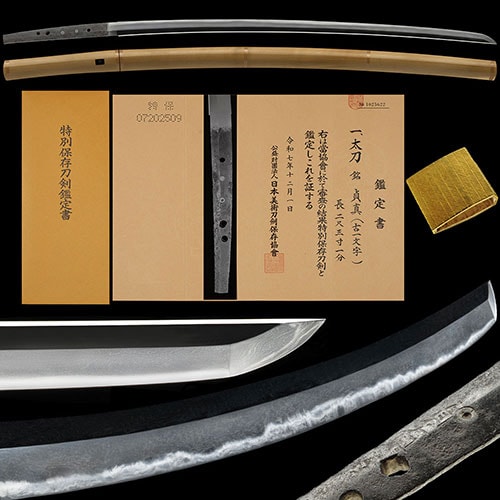
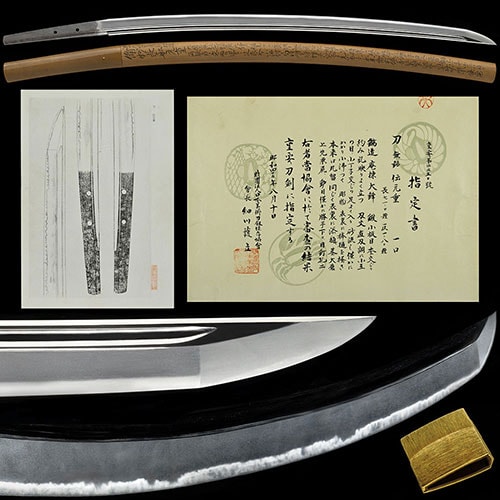
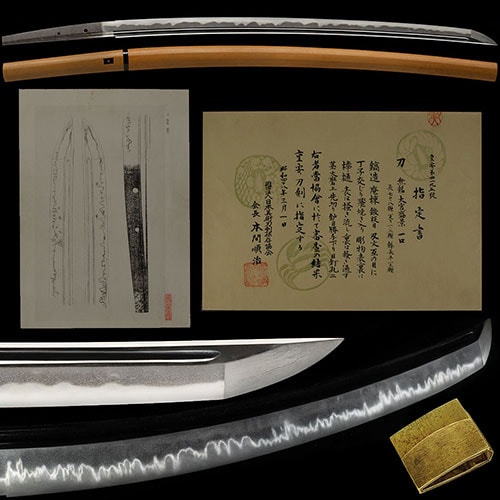
Yukikuni was an early swordsmith of the Fukuoka group in Province, active during the early period around the Jogen era (c. 1207--1211). He is counted among the smiths summoned as -- smiths in appointed service -- to forge for the Retired Emperor Go-Toba. Tradition further relates that he later resided in Ishikawa in Kawachi Province. The Hidansho, written by Utsunomiya Nyudo, describes his workmanship as bold and somewhat rustic, with rounded steel and thick . Additionally, a smith named Yukikuni is recorded among the Senoo smiths of Bicchu Province, a group distinguished from the neighboring school by their signature customs, -like , and filemarks. Extant signed works by Yukikuni are extremely few.
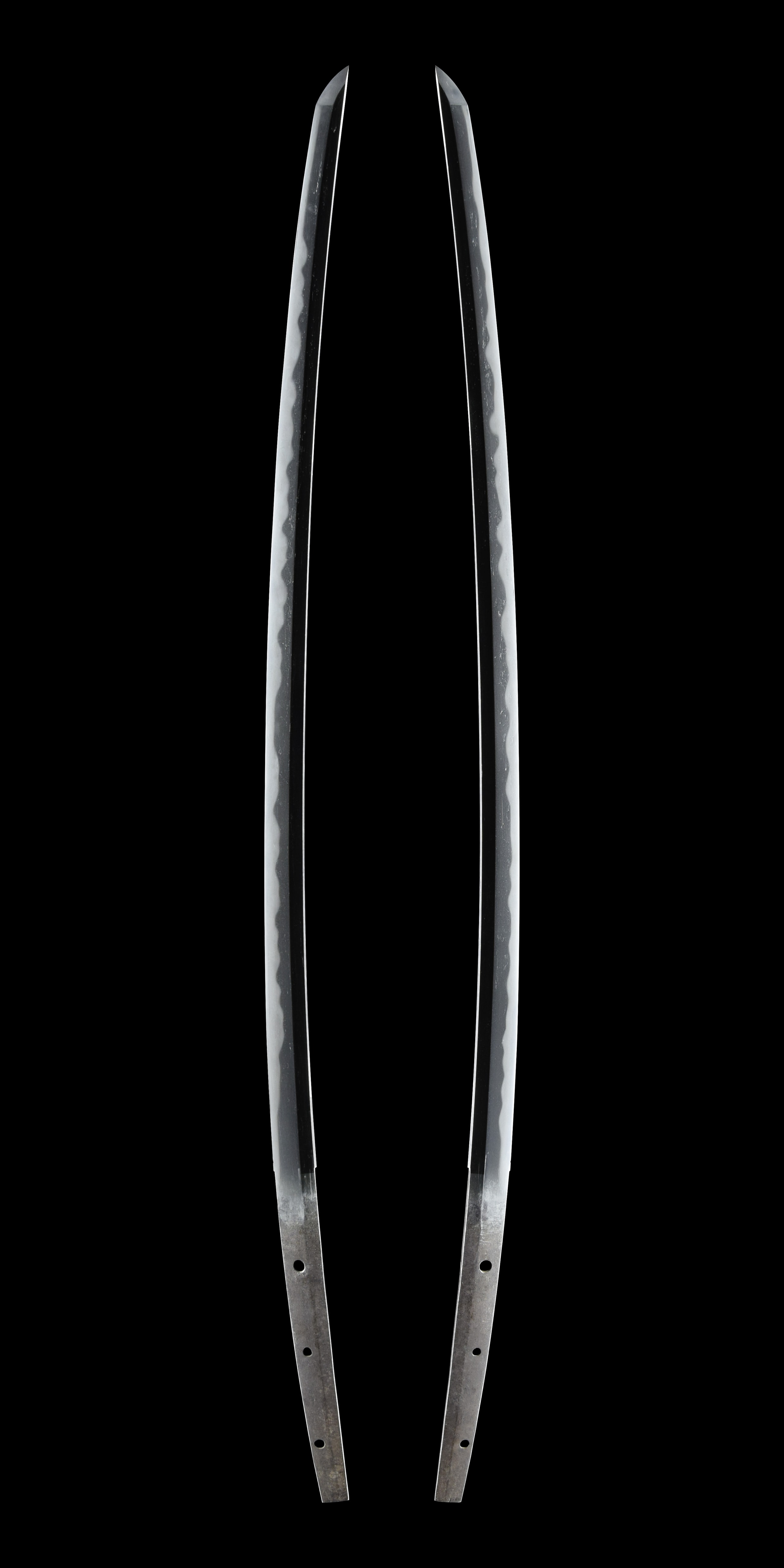
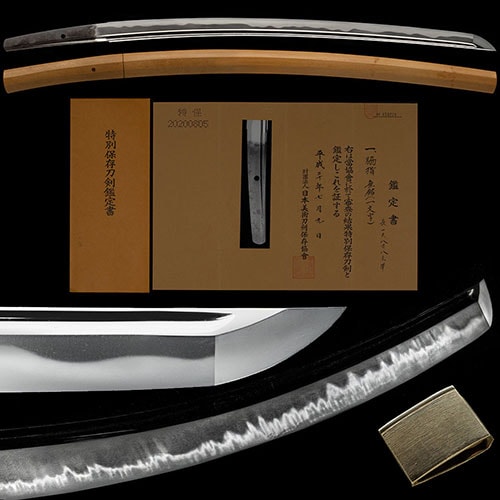
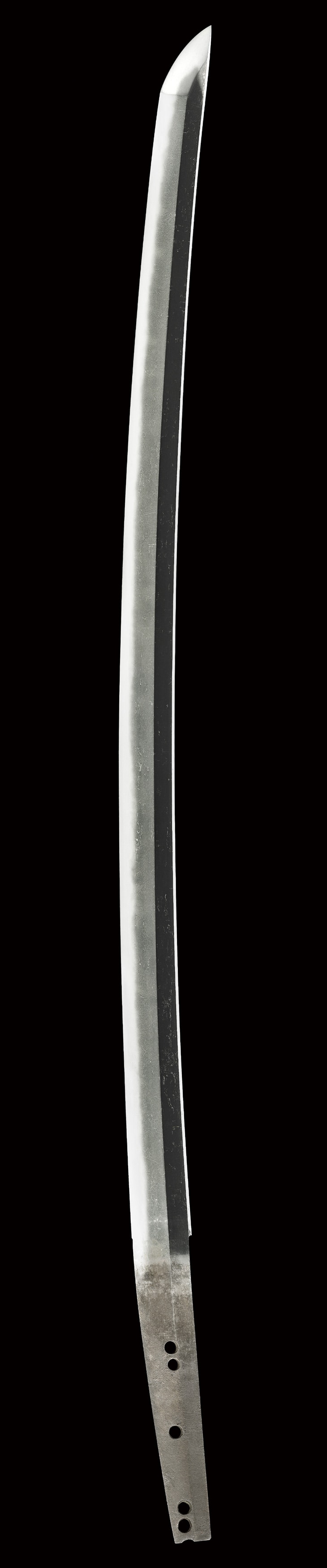
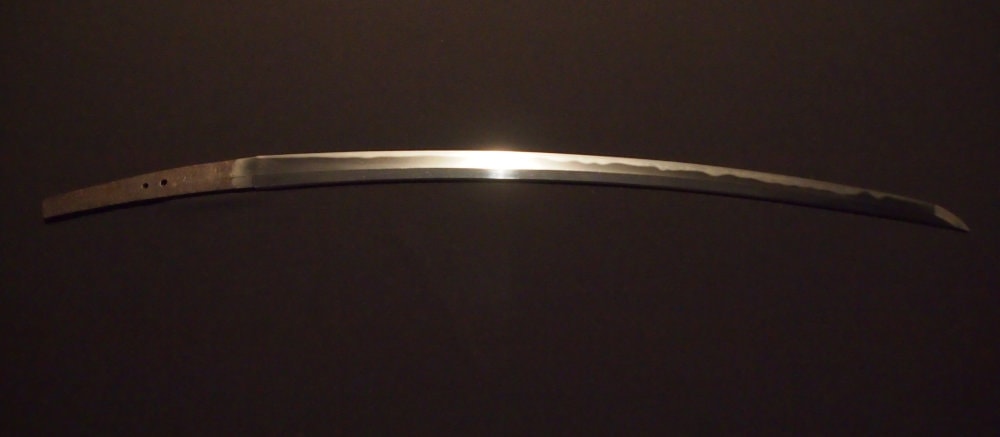
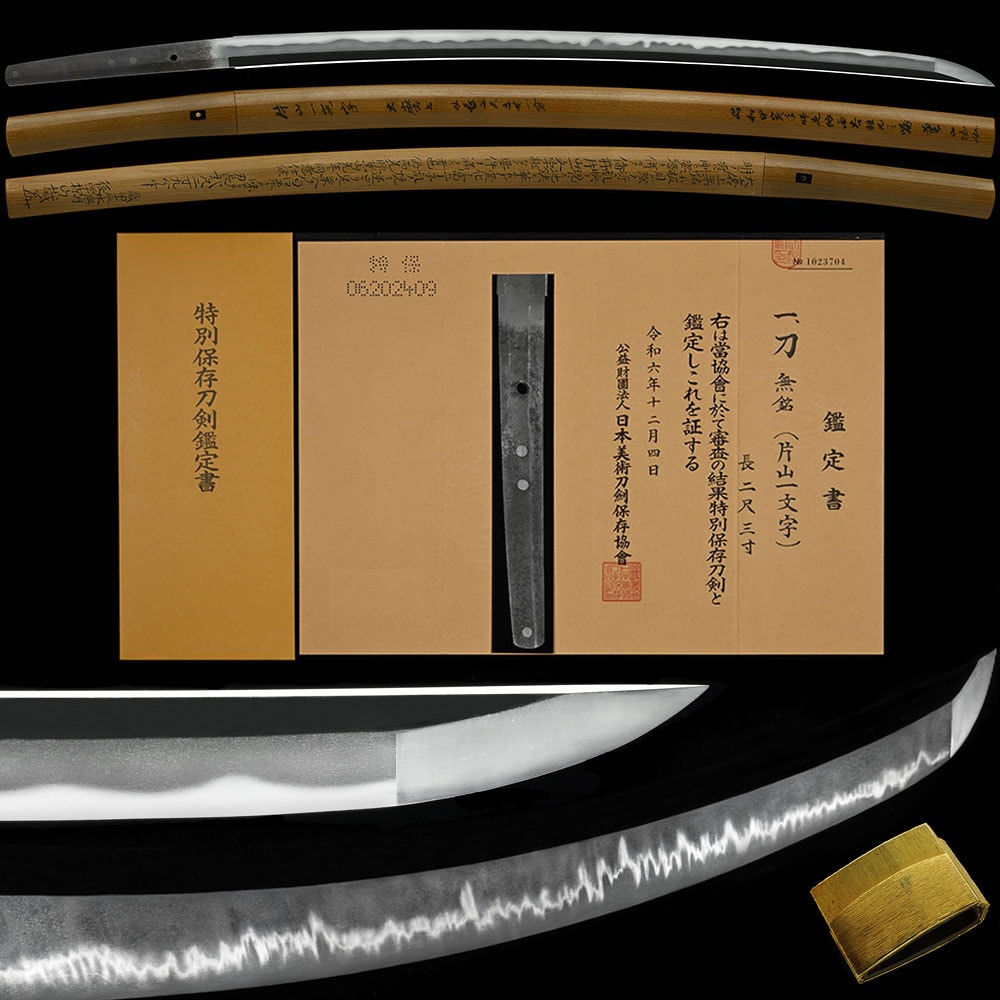
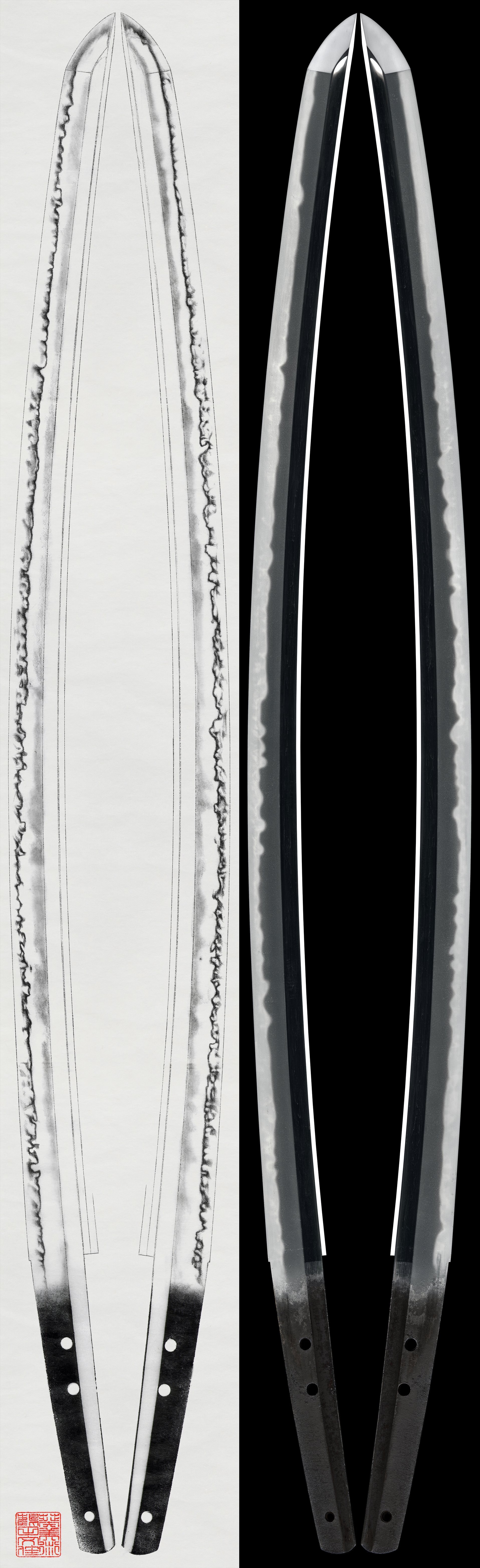
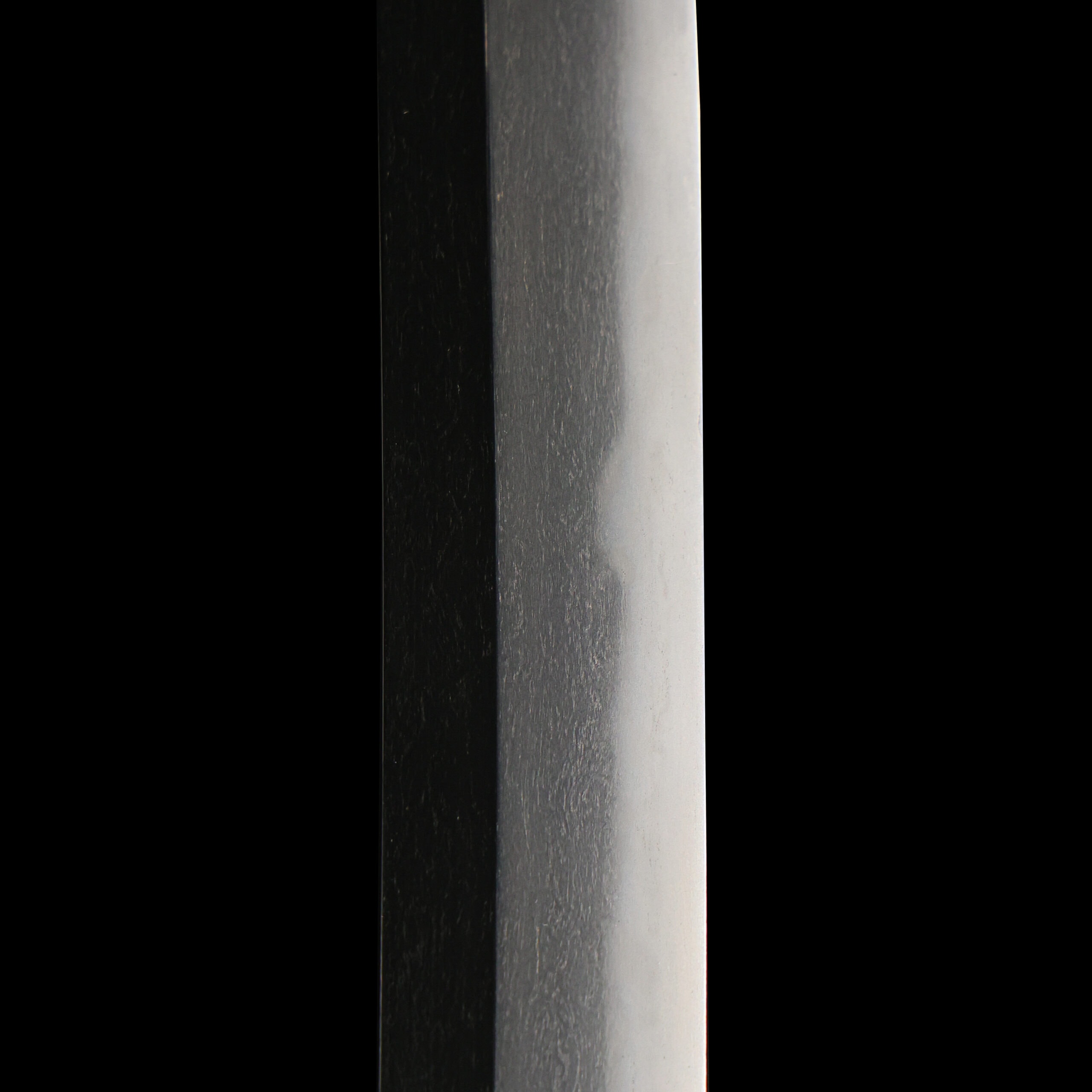
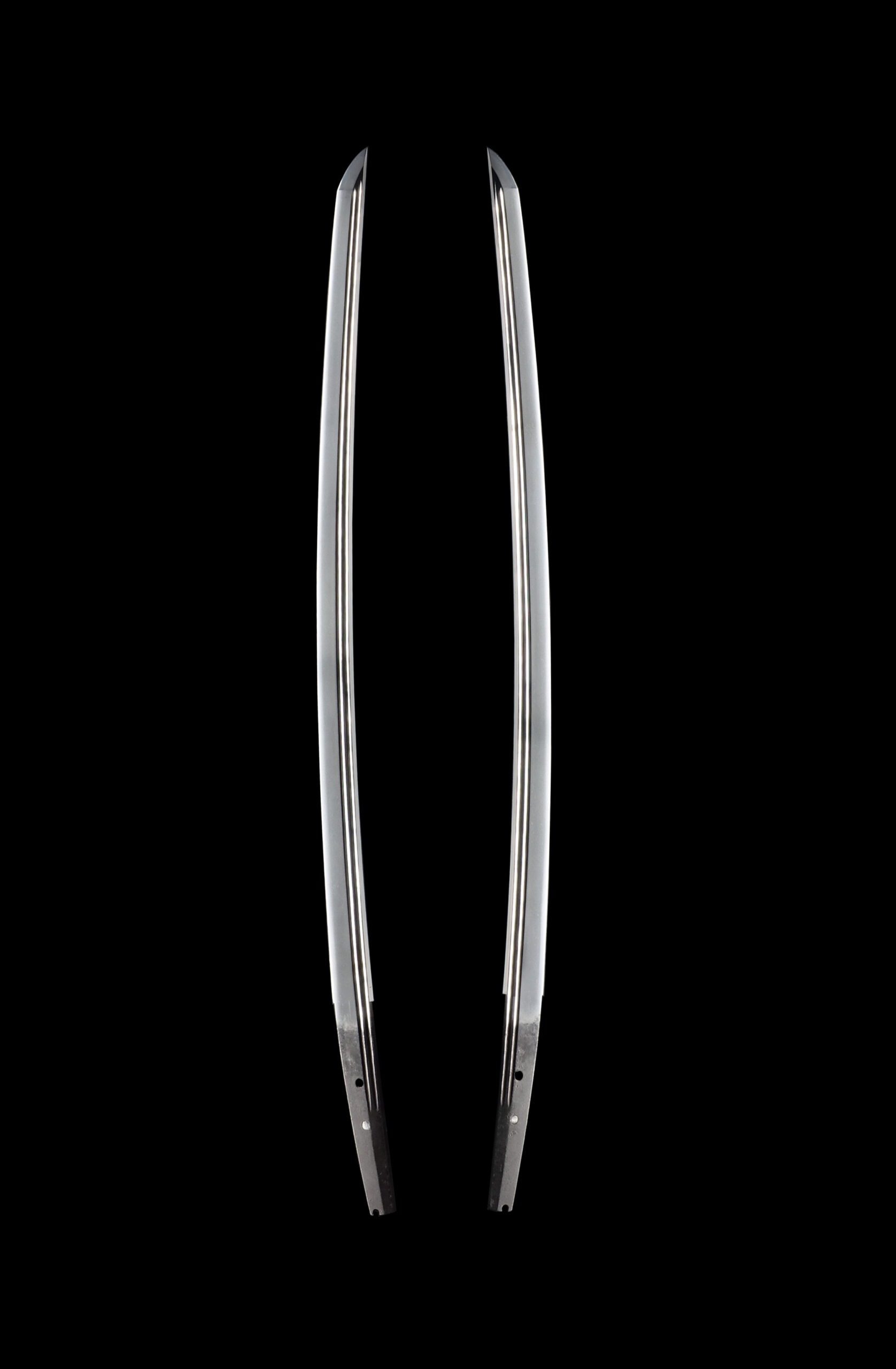
Yukikuni's present an elegant and classical form: slender, with and high in which the curvature advances toward the tip, producing a restrained impression characteristic of the period. The forging is fine mixed with , with adhering thickly and fine entering. Vivid stands out distinctly in the . The is composed of small-pattern elements -- mixed with and -- with small and occasional interspersed in the upper half, while adheres well. Broader -based compositions also appear, with extremely shallow and -dominant character. The is typically , turning back in . Compared with , this work reveals greater technical sophistication and refinement, making the characteristic features of Ko- conspicuously manifest.
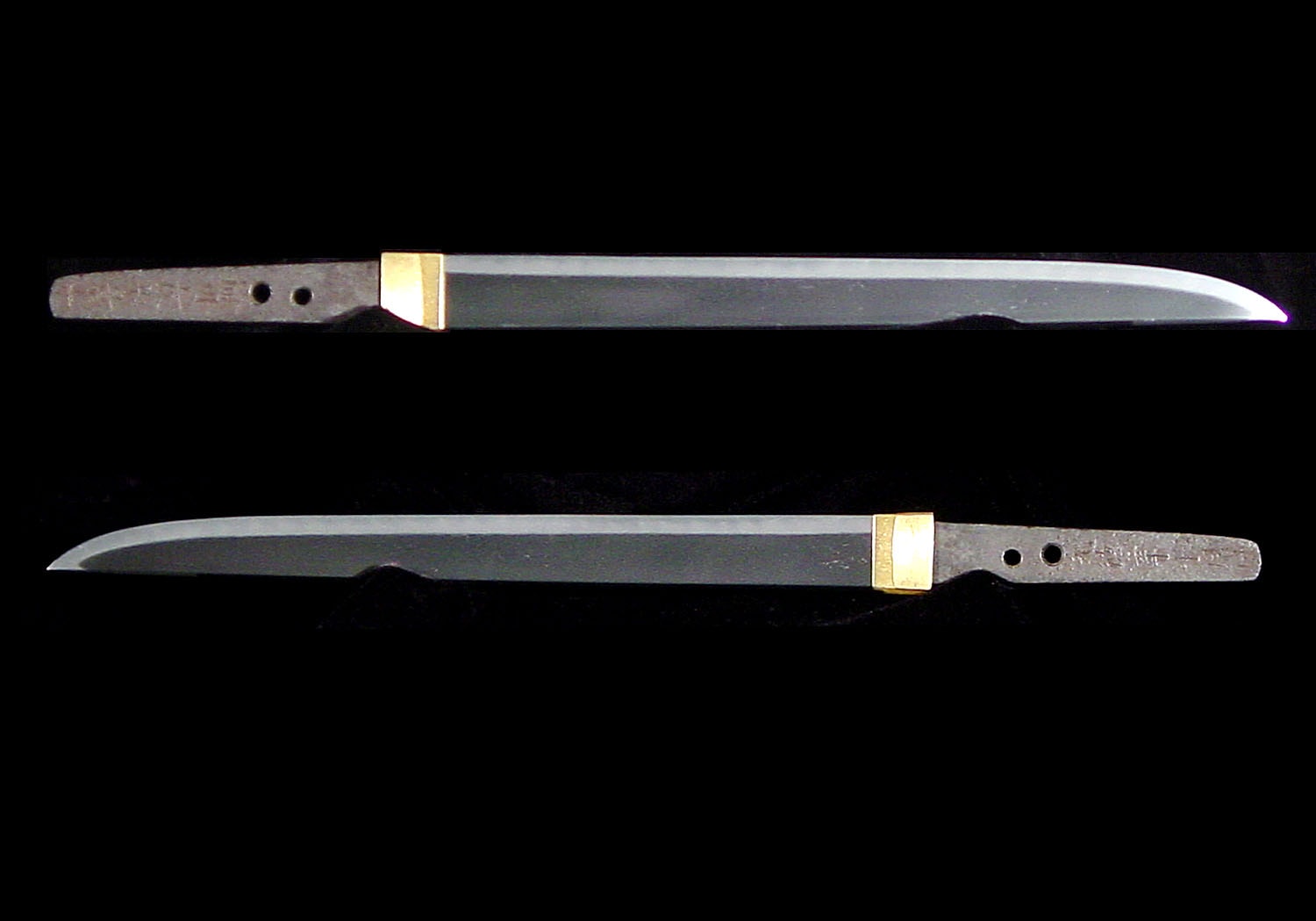
Yukikuni's blades survive in condition with bearing crisp, clearly legible signatures -- a circumstance of the highest desirability given the rarity of his signed work. Each example constitutes precious documentary material for research into Yukikuni, the early Fukuoka school, and the broader traditions of and Bicchu swordsmithing in the early period.