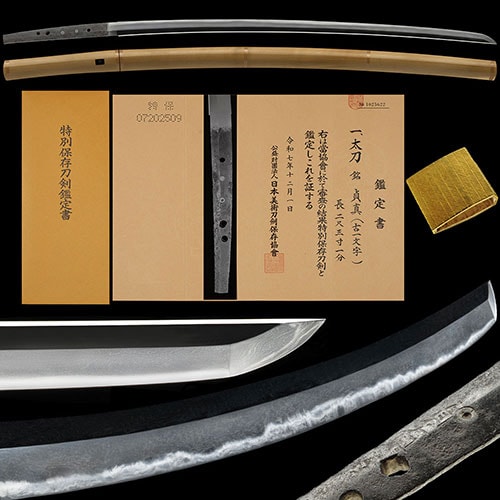
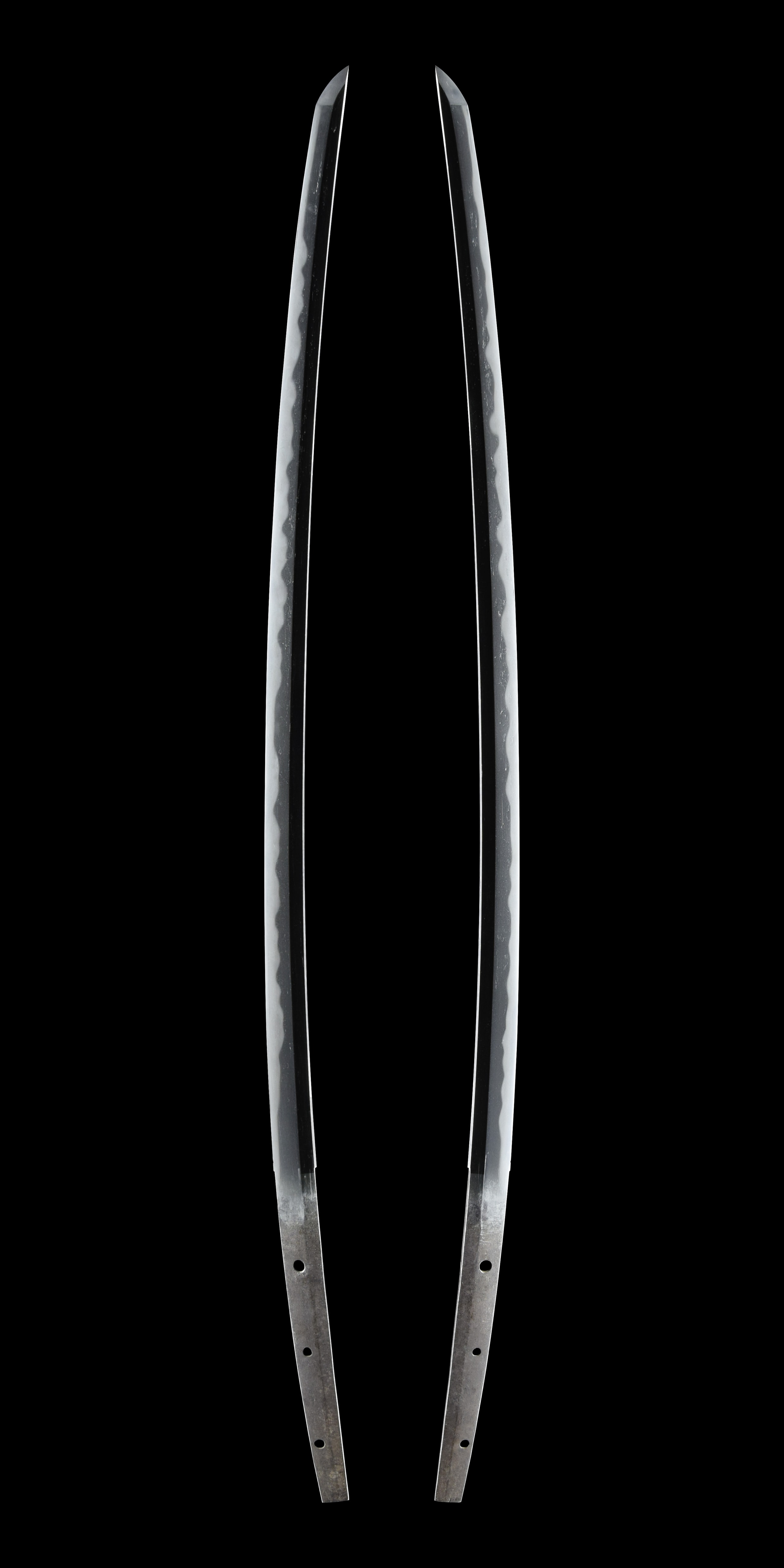
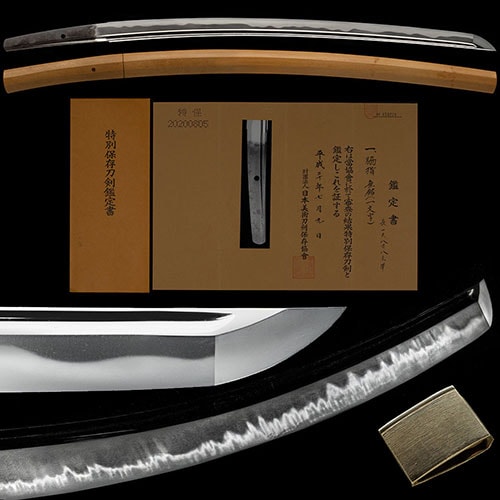
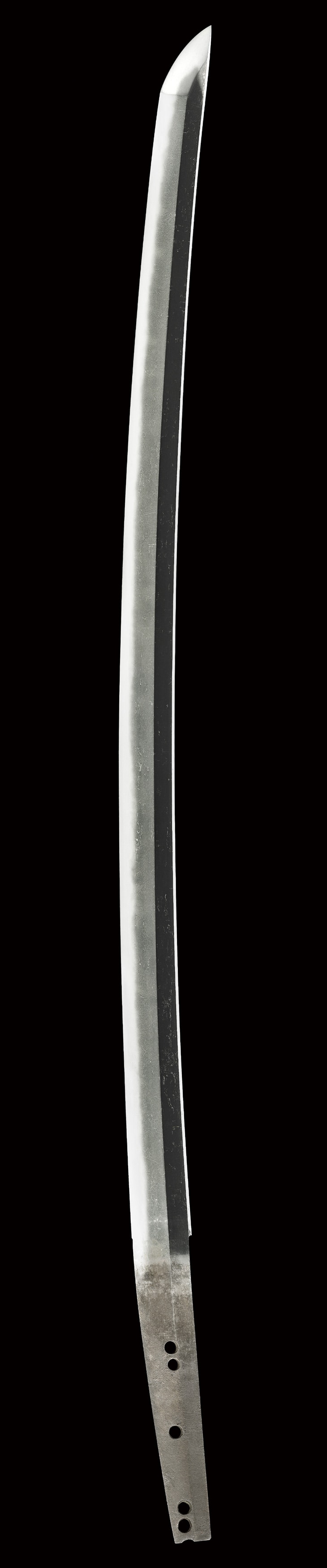
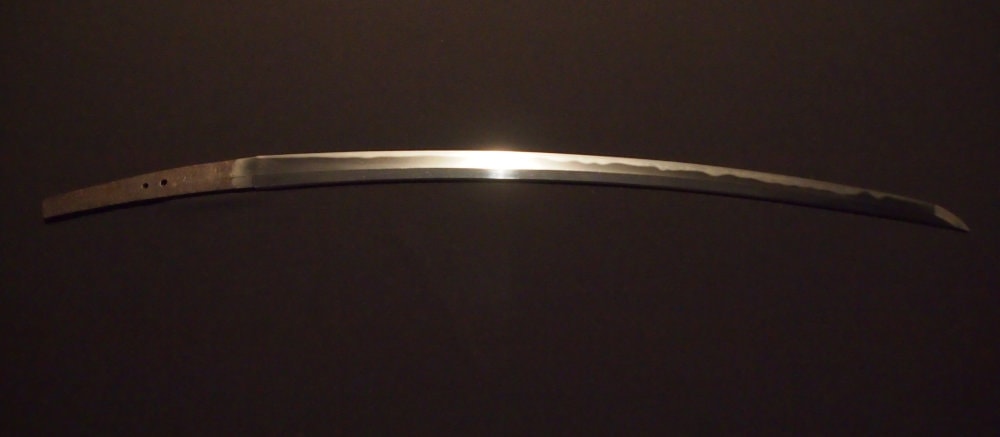
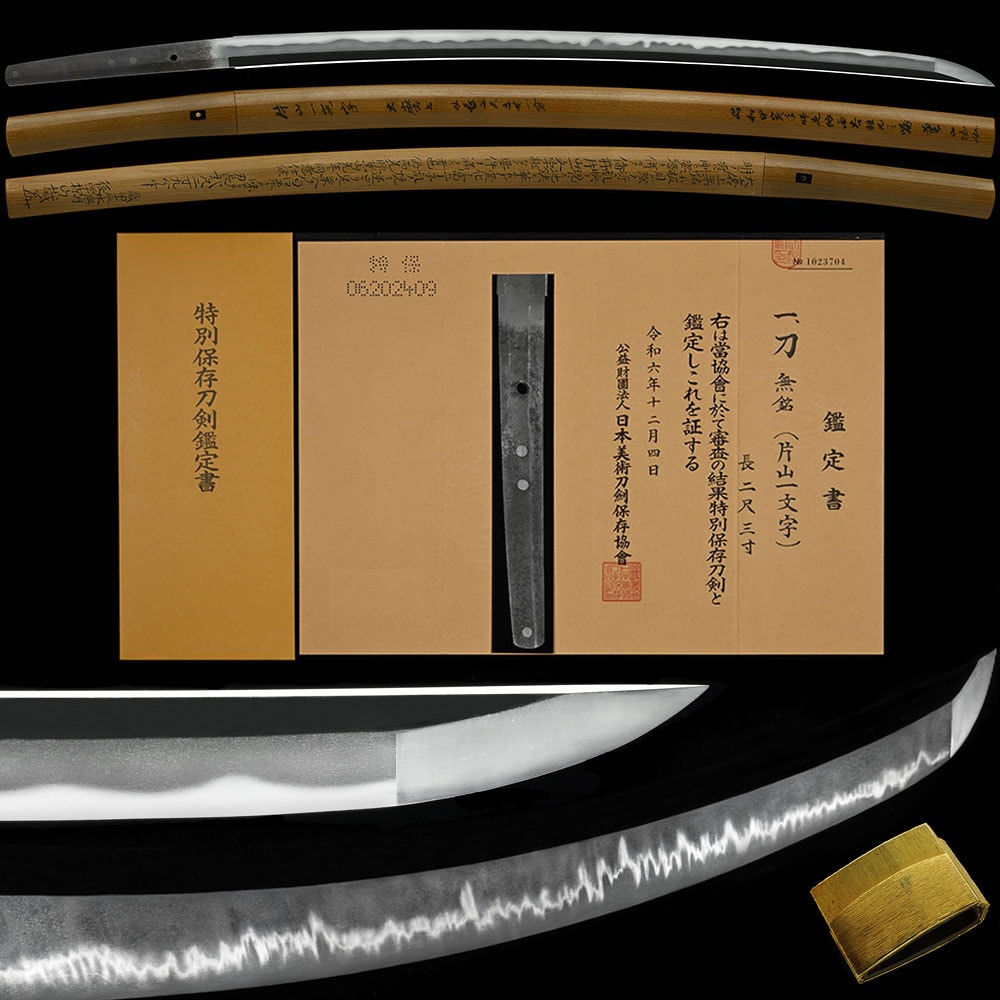
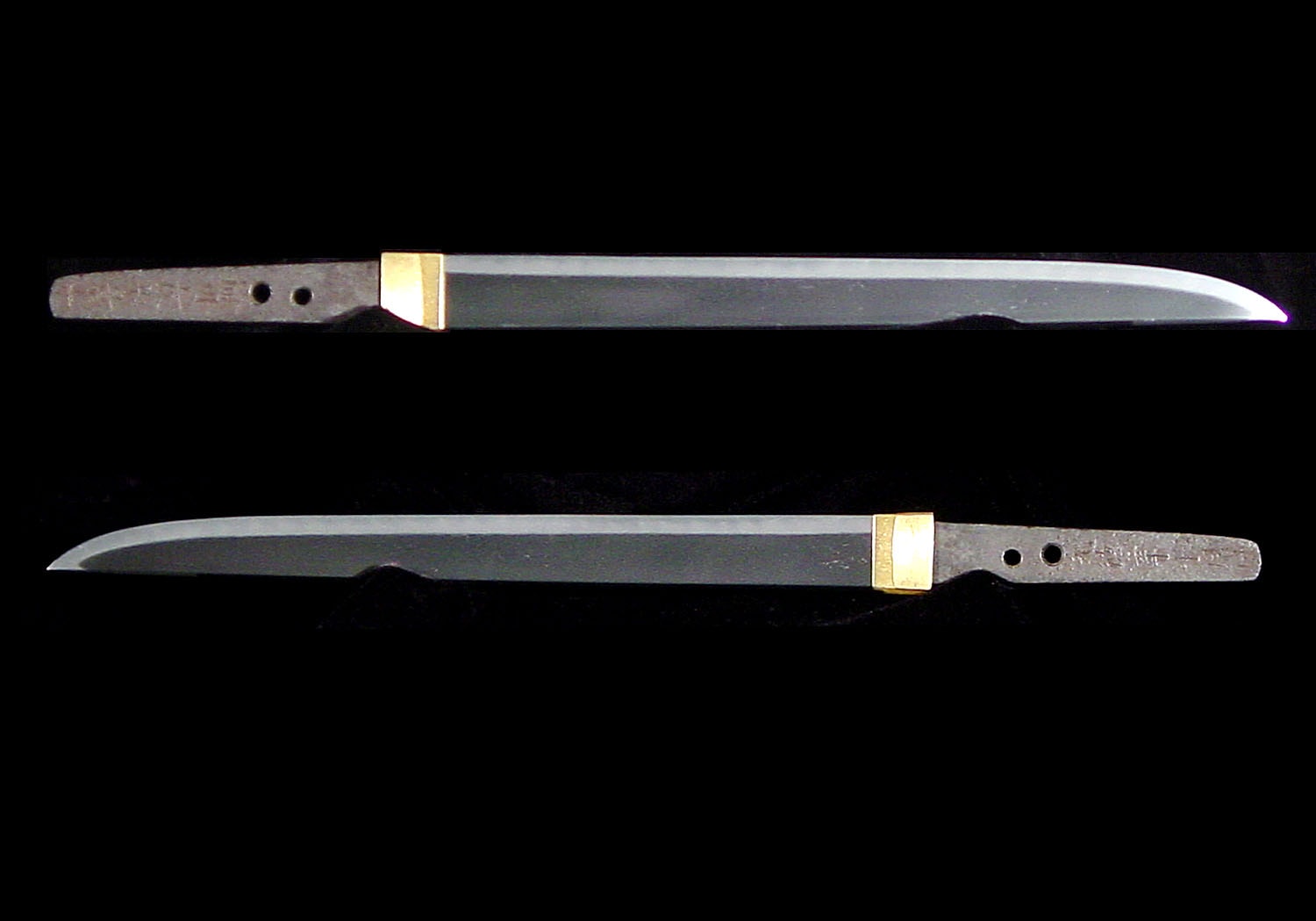
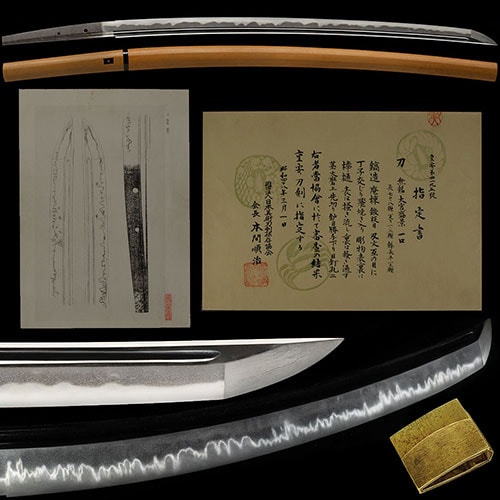
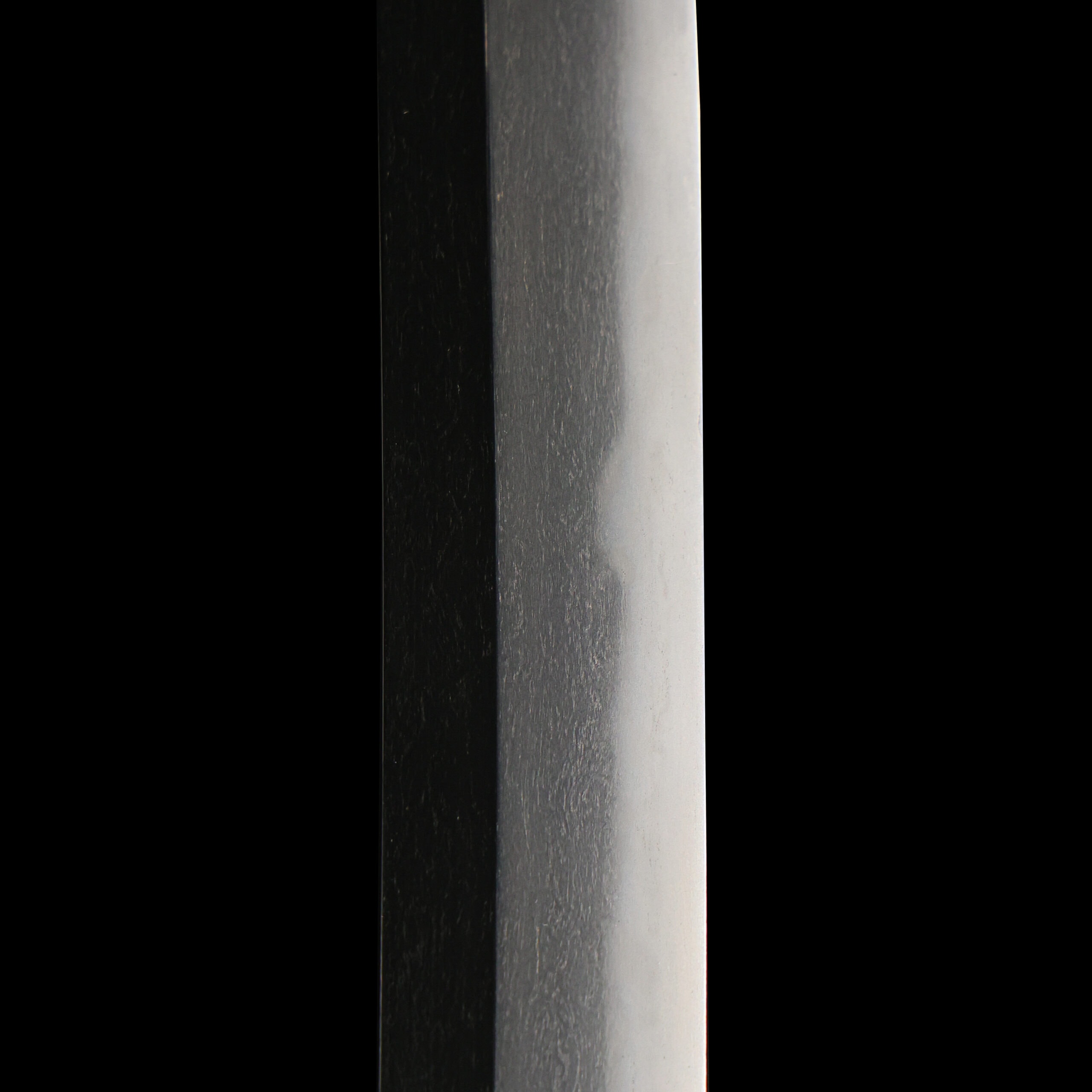
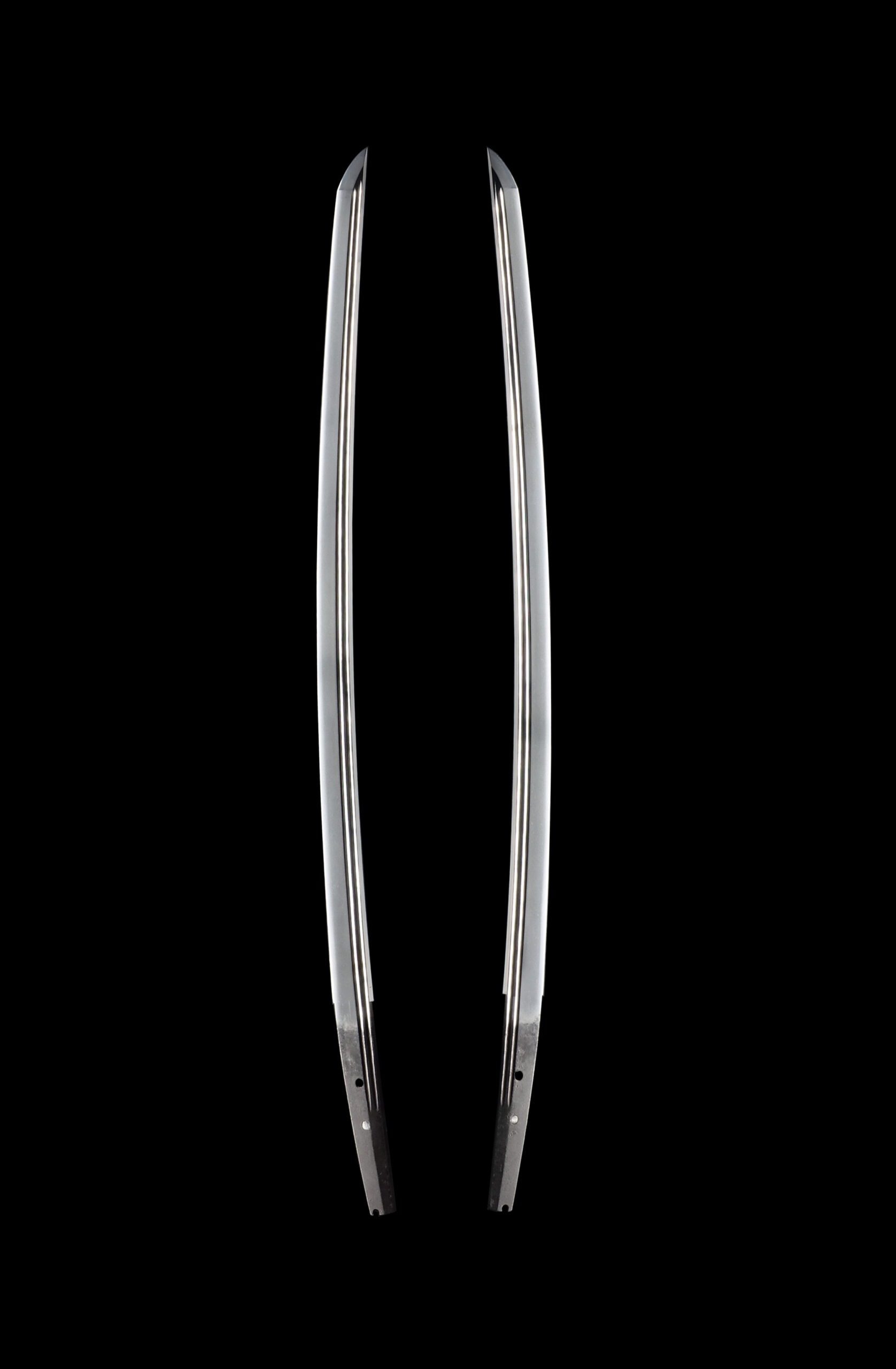
The name Sukemune encompasses at least two distinct identities within the tradition. The earliest, classified under the Ko- designation, is counted among the — the swordsmiths appointed to serve Retired Emperor Gotoba — alongside Norimune and Muneyoshi. A later Sukemune is identified with the Fukuoka school at its mid- zenith. The further notes that one blade bearing this signature has been appraised not as work at all but as an old Kyoto production, its tone described as "notably dignified," with points of commonality to Gojo Kuninaga and Kunitomo — suggesting a Yamashiro hand no later than the early period. Whether this reflects a third smith or an as-yet-unresolved attribution, the leaves to careful future examination. In all cases, signed works by Sukemune survive in very limited numbers, lending each example pronounced documentary significance.
The Ko- Sukemune works present a -based into which small and are mixed, with and entering well and adhering within a -dominant temper — irregularities that remain gentle and restrained, without overt display of technical flamboyance. The mid- Fukuoka works, by contrast, display the school's mature manner: broadly and flamboyantly tempered featuring large and luxuriant , with deep , vigorous and , and a bright and clear . The in both periods exhibits with , though the mid- pieces show vivid standing distinctly, and frequent weaving through the surface. Bold, powerfully robust with wide and deep characterize the later group, while the earlier pieces display a more slender, elegant form.
The consistently emphasizes Sukemune's rarity: extant signed works are few, and each example is valued as reference material that enhances the understanding of the Fukuoka lineage. The Ko- works express what the describes as the characteristic features of that early group — workmanship that, when compared with , tends toward somewhat more conspicuous and orderly with clearer , yet differs markedly in feeling from the splendid, ornate style of the mid- period. The later Fukuoka blades, with their dynamic undulation and varied changes, achieve an effect described as "splendidly ornate," their tangs and ample blade flesh conveying a notably powerful presence. Across both periods, Sukemune's work attests to the broad developmental arc of the school from restrained archaic elegance to the brilliant flamboyance of its mature expression.