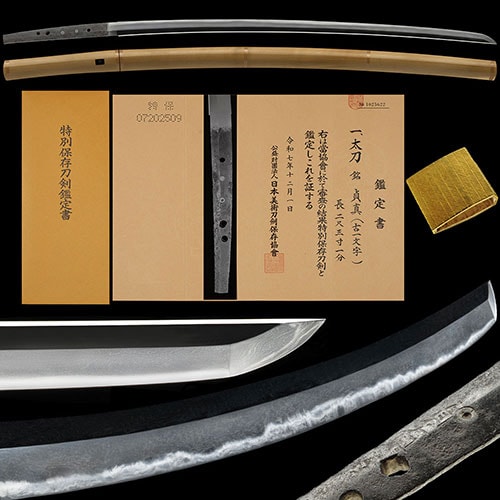
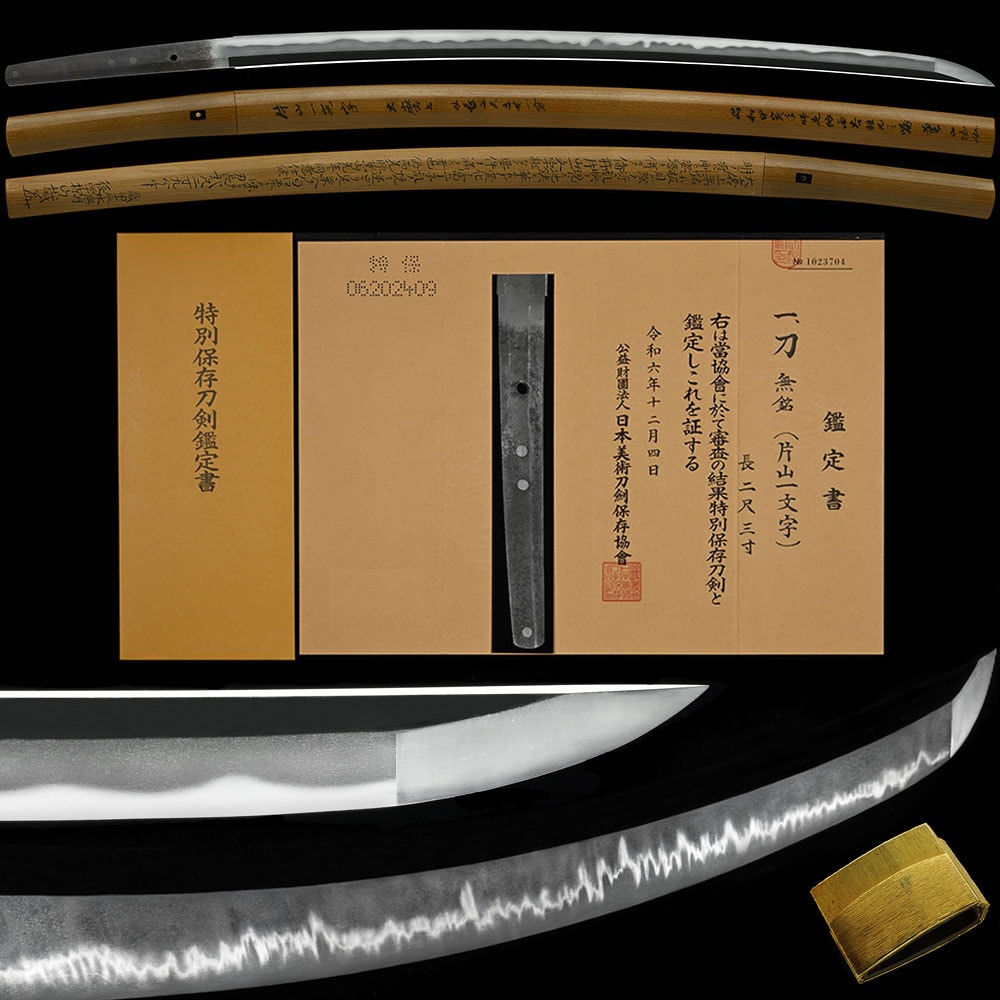
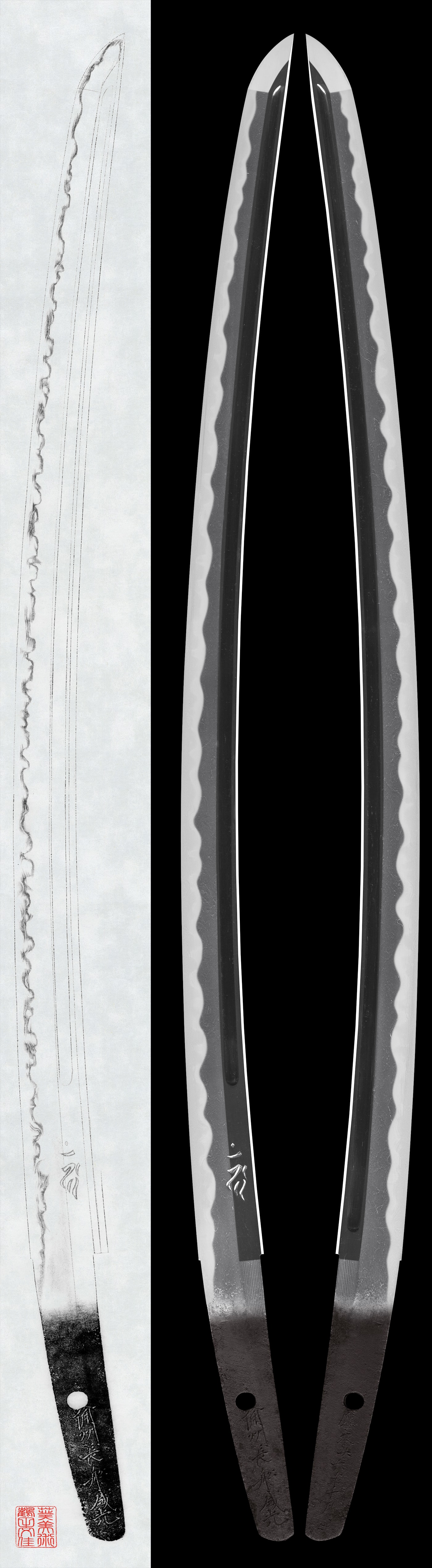
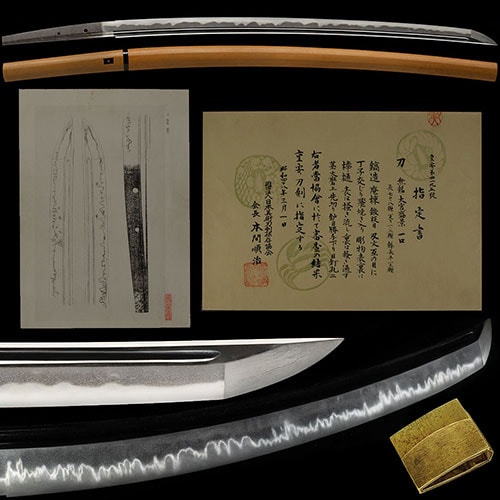
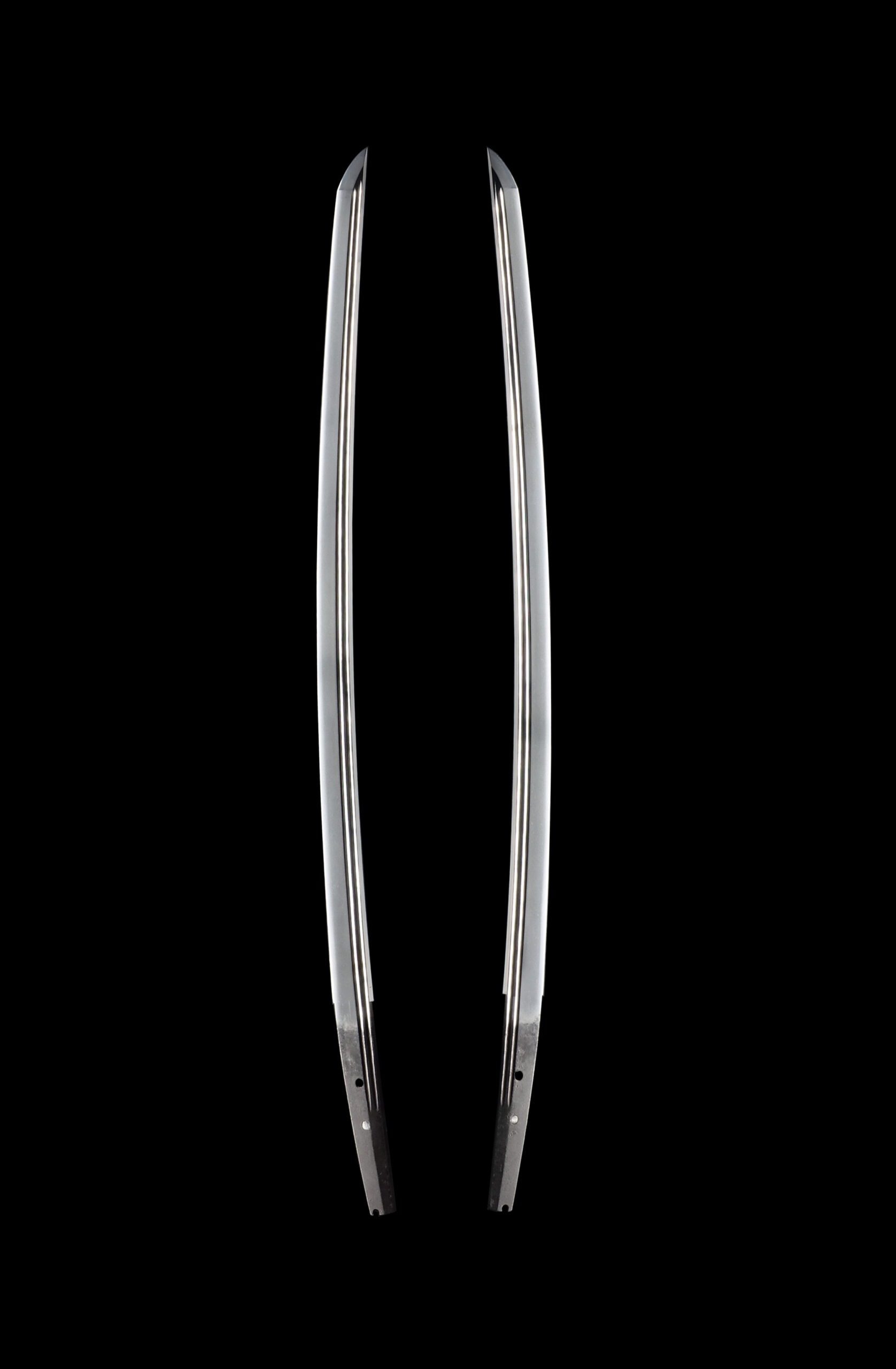
is transmitted as a smith of the school, listed in the as " Genryaku-zen" — that is, active before the Genryaku era (1184–1185) — placing him at the boundary of the late and early periods. His precise lineage within the group remains a matter of scholarly uncertainty; the designation records note that his school affiliation "is not entirely clear." His workmanship and the manner of his signature () are regarded as similar to those of Kageyori, suggesting a close working relationship or shared workshop tradition within the broader milieu. Extant works bearing his signature are extremely few, lending considerable rarity to any authenticated example.
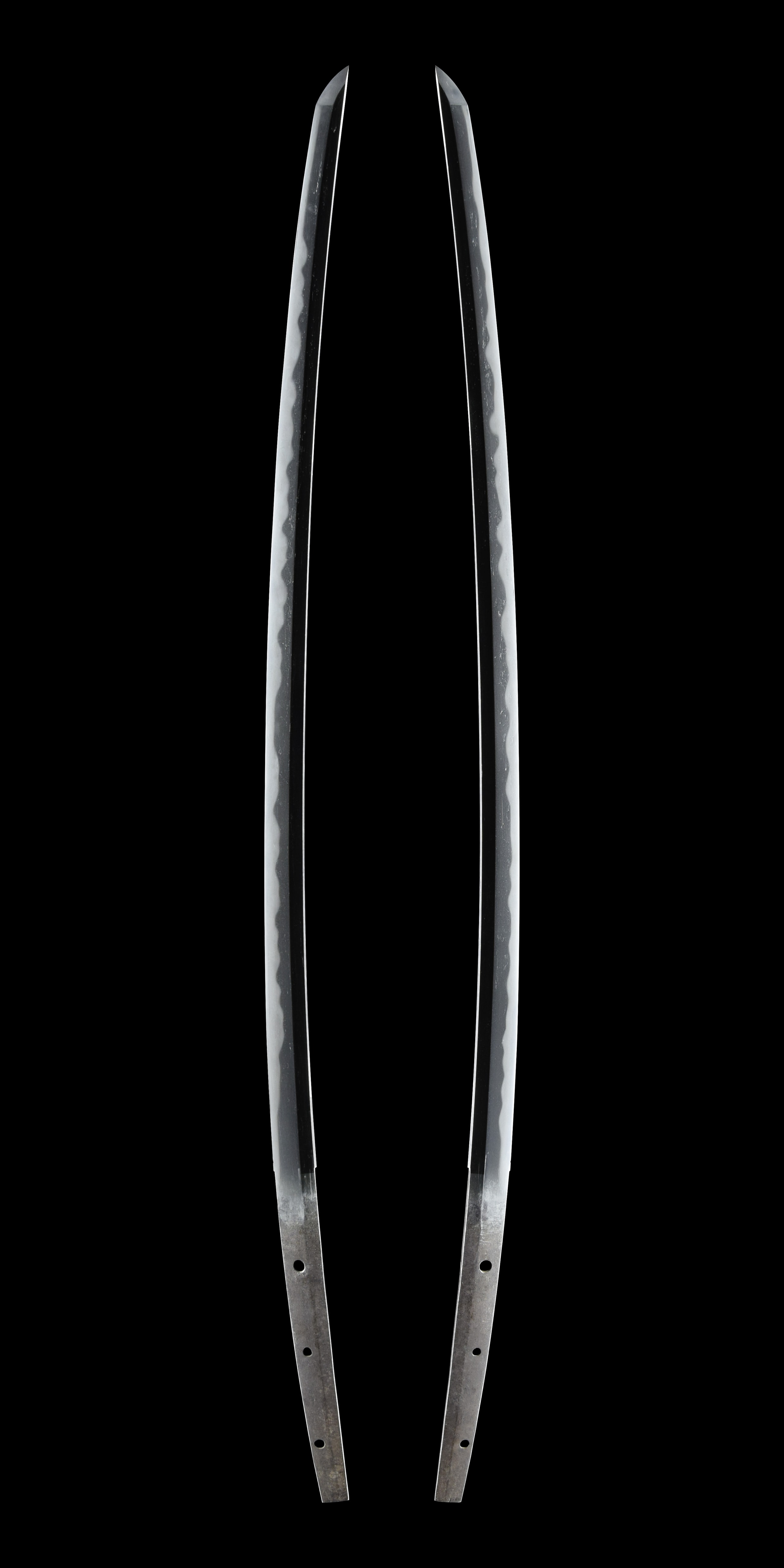
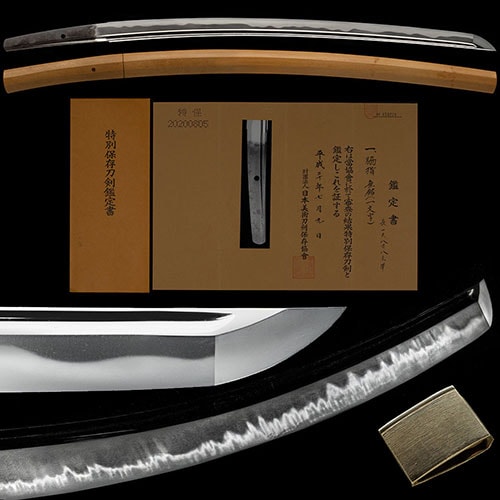
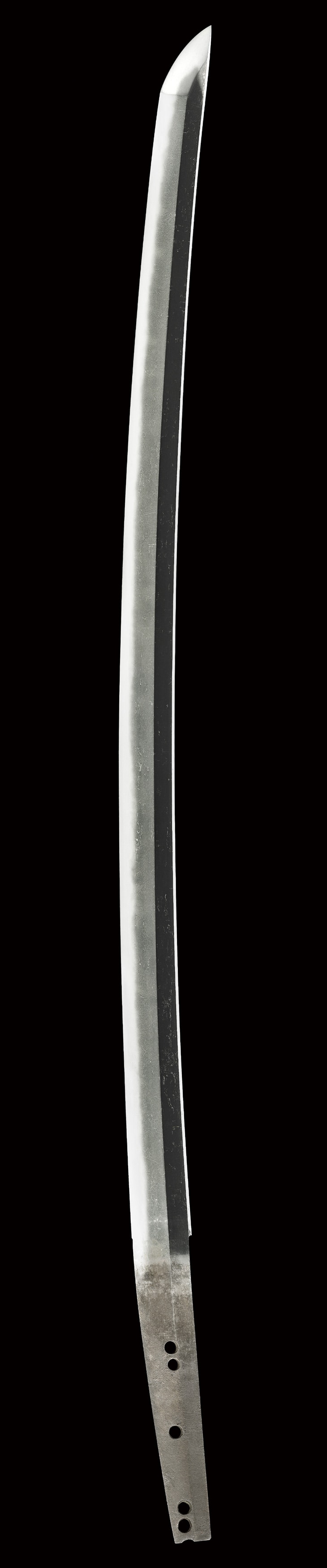
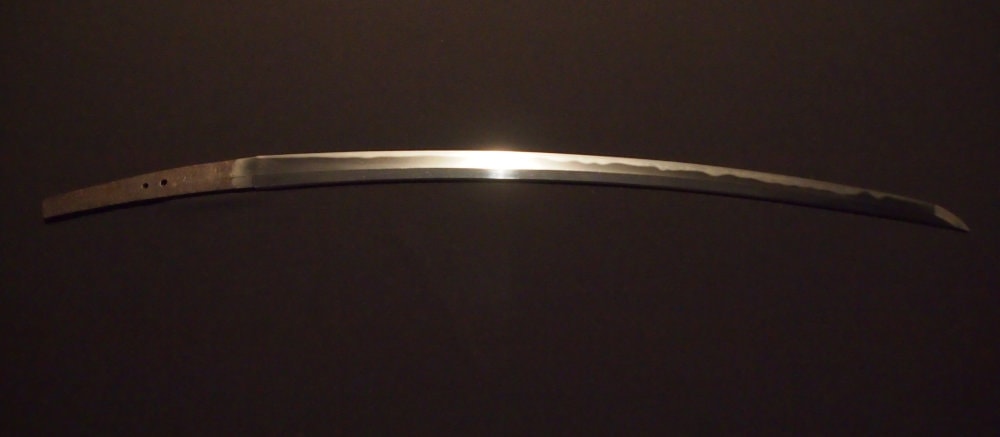
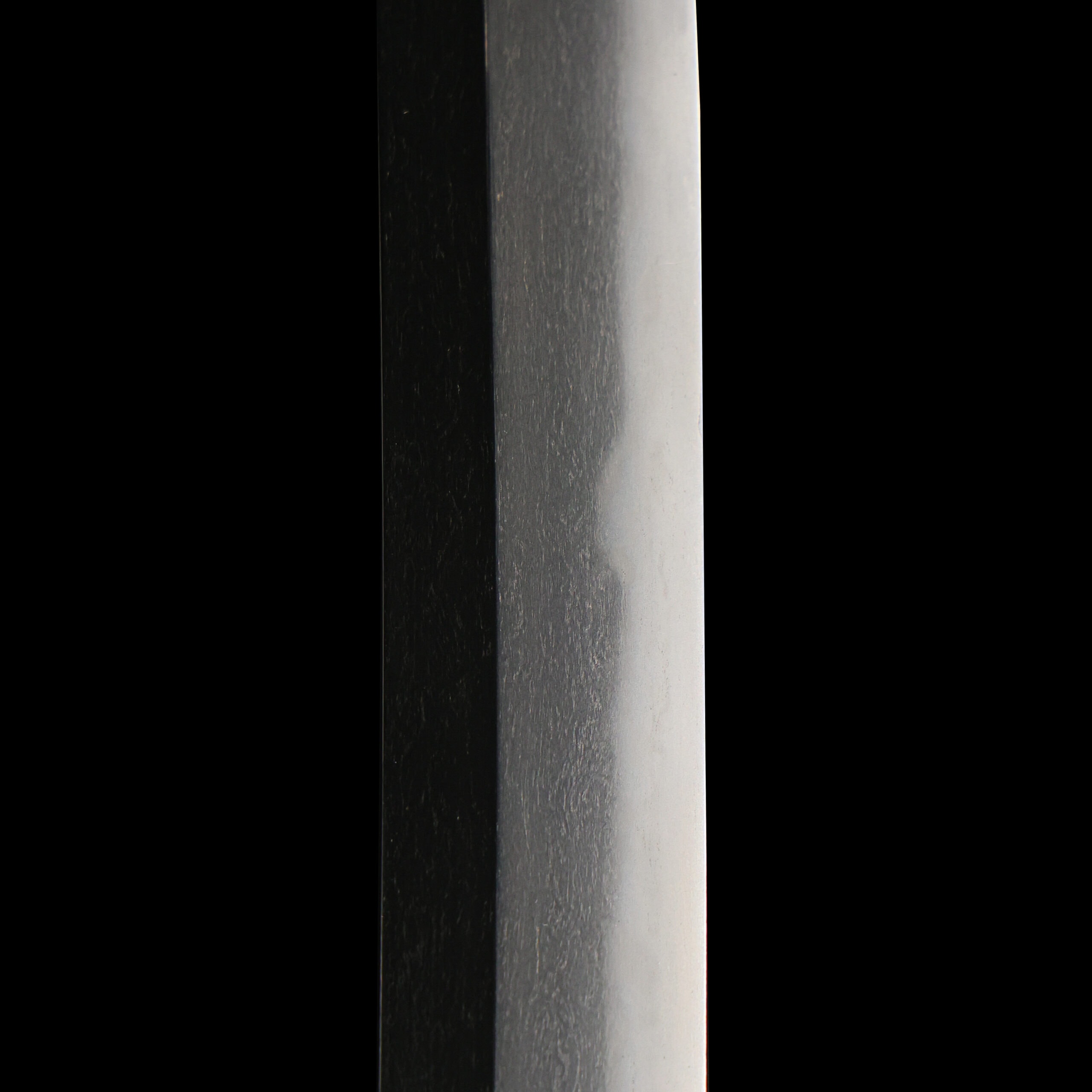
's are rendered in with , exhibiting pronounced -zori with fumibari and — a classical silhouette. The forging is an that stands out with a tendency toward , with adhering and faint appearing in the ground. The is characteristically a base into which and intermingle, tempered with ; and enter, and and are observed within the temper line. The is noted as deep and clear. The tends toward a straight form, either tightening in ( ni tsumeru) or turning in with . The bear bold, large two-character signatures executed in a confident hand.
The characterizes 's work as possessing an antique charm — koko — that is the hallmark of early workmanship. At the time, the records acknowledge a somewhat provincial quality that "lacks refinement," distinguishing his hand from the more polished output of later masters. This combination of archaic dignity and forthright rusticity places among the earliest identifiable personalities of the tradition, a smith whose rare surviving blades preserve the austere character of craftsmanship before the school's celebrated refinement of subsequent generations.