NihontoWatch Mon

NihontoWatch

MarketAuctions
Encyclopedia
NihontoWatch Mon

NihontoWatch

MarketAuctions
Encyclopedia

Description

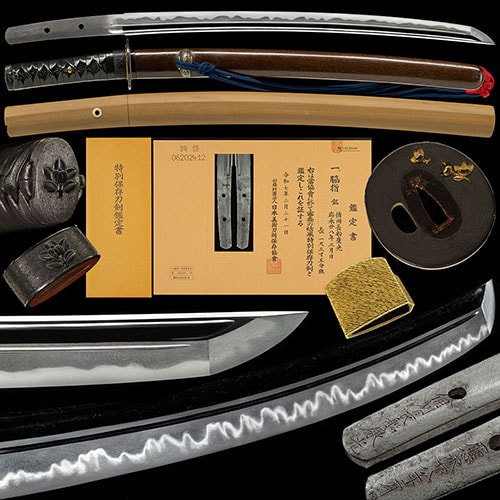
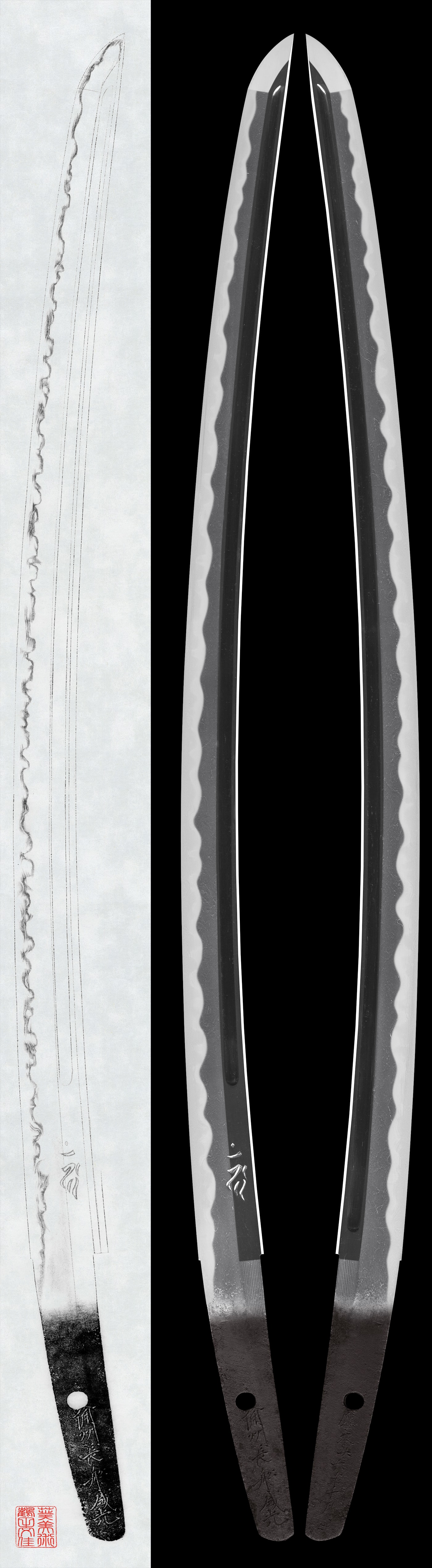
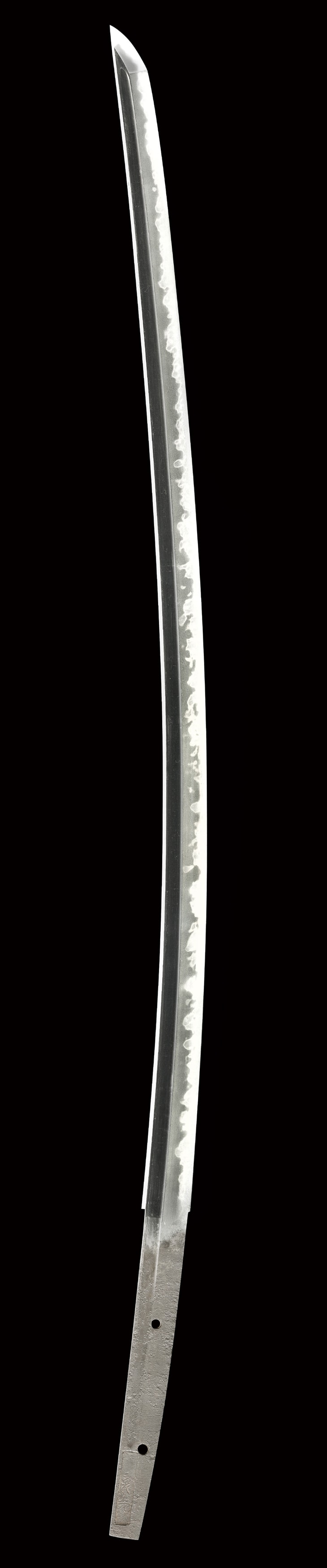
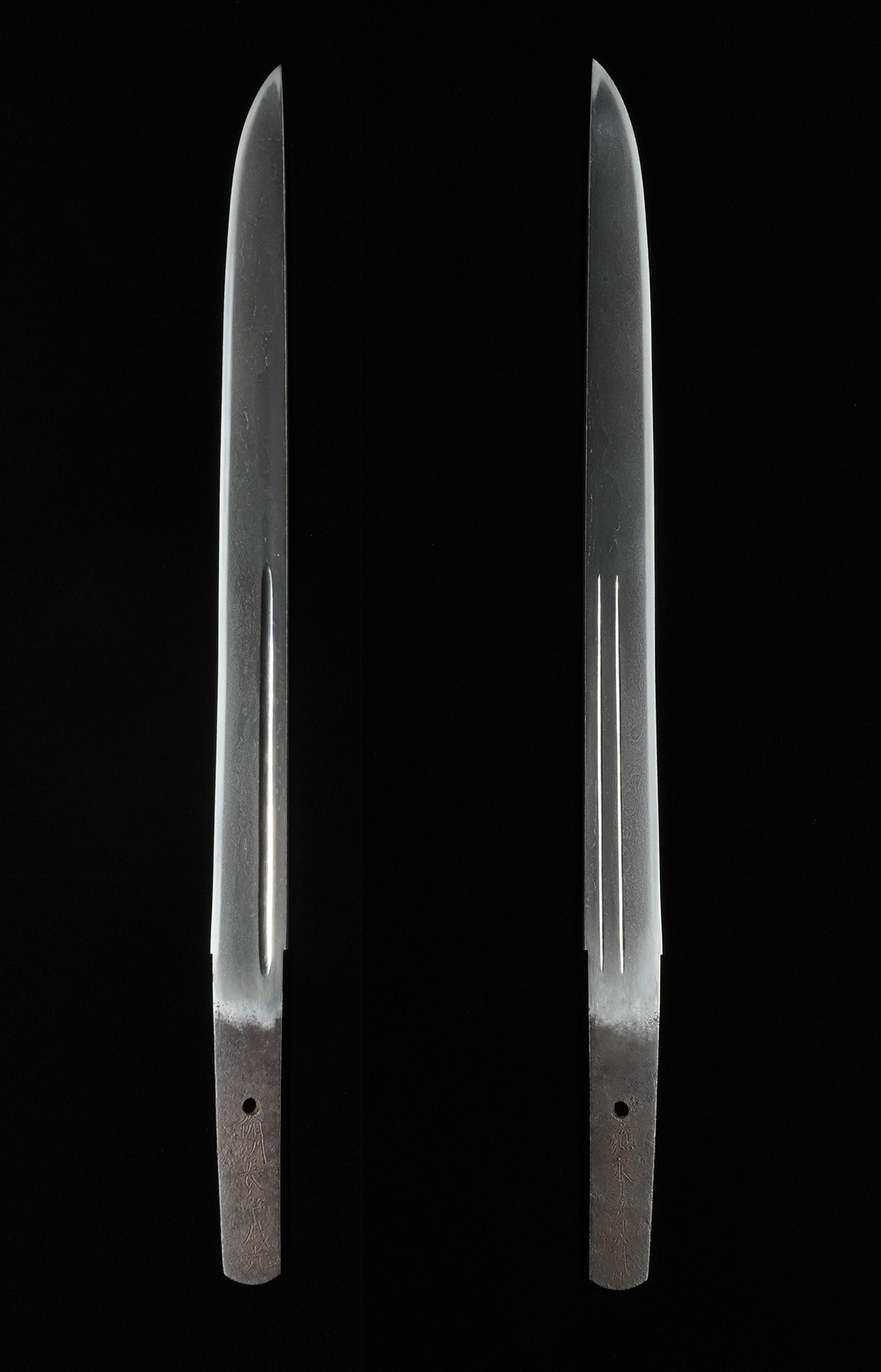
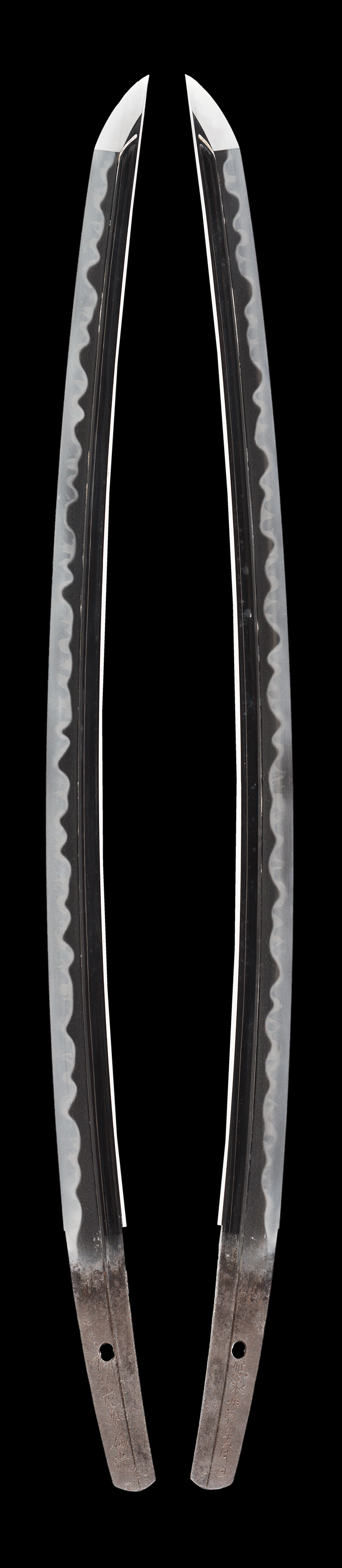
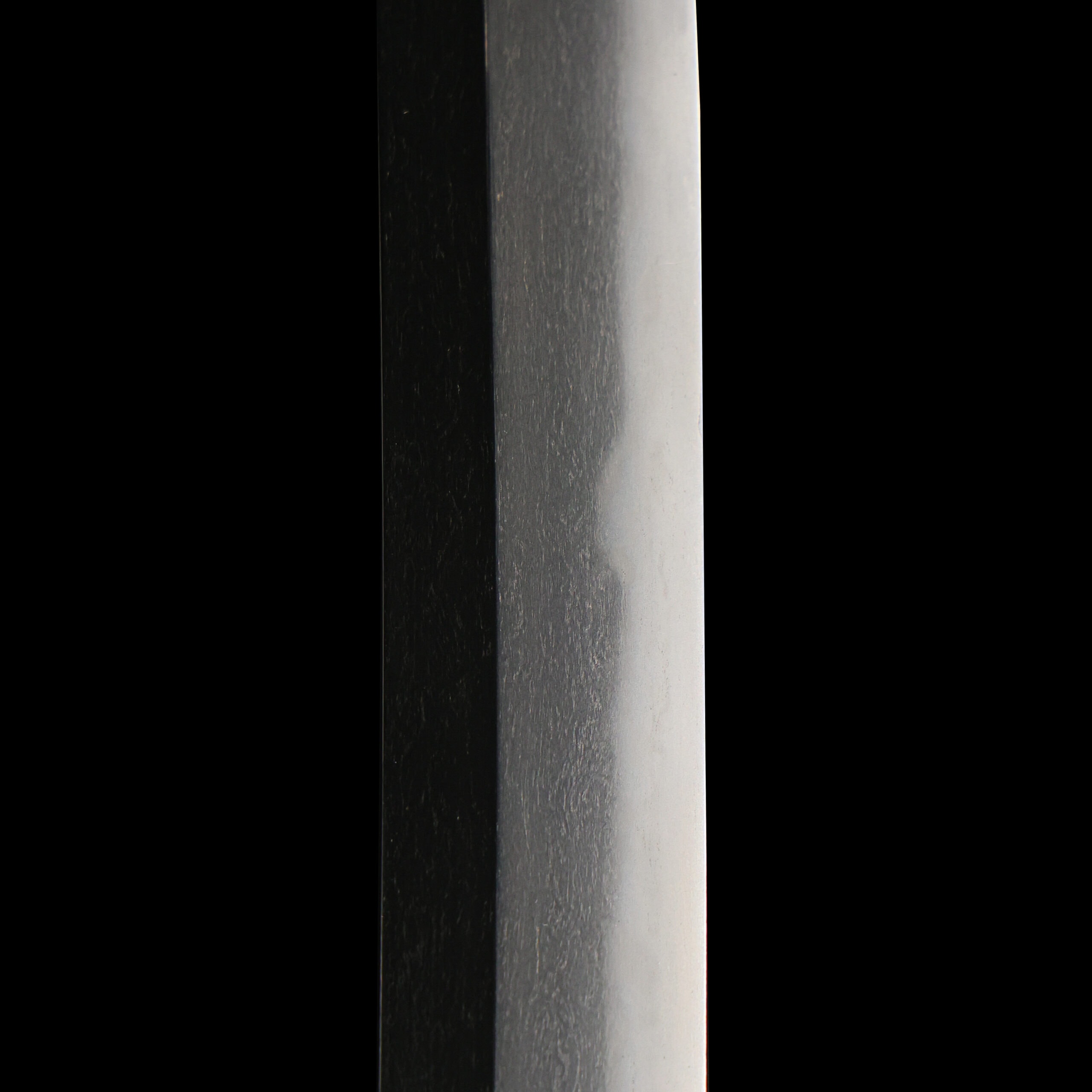
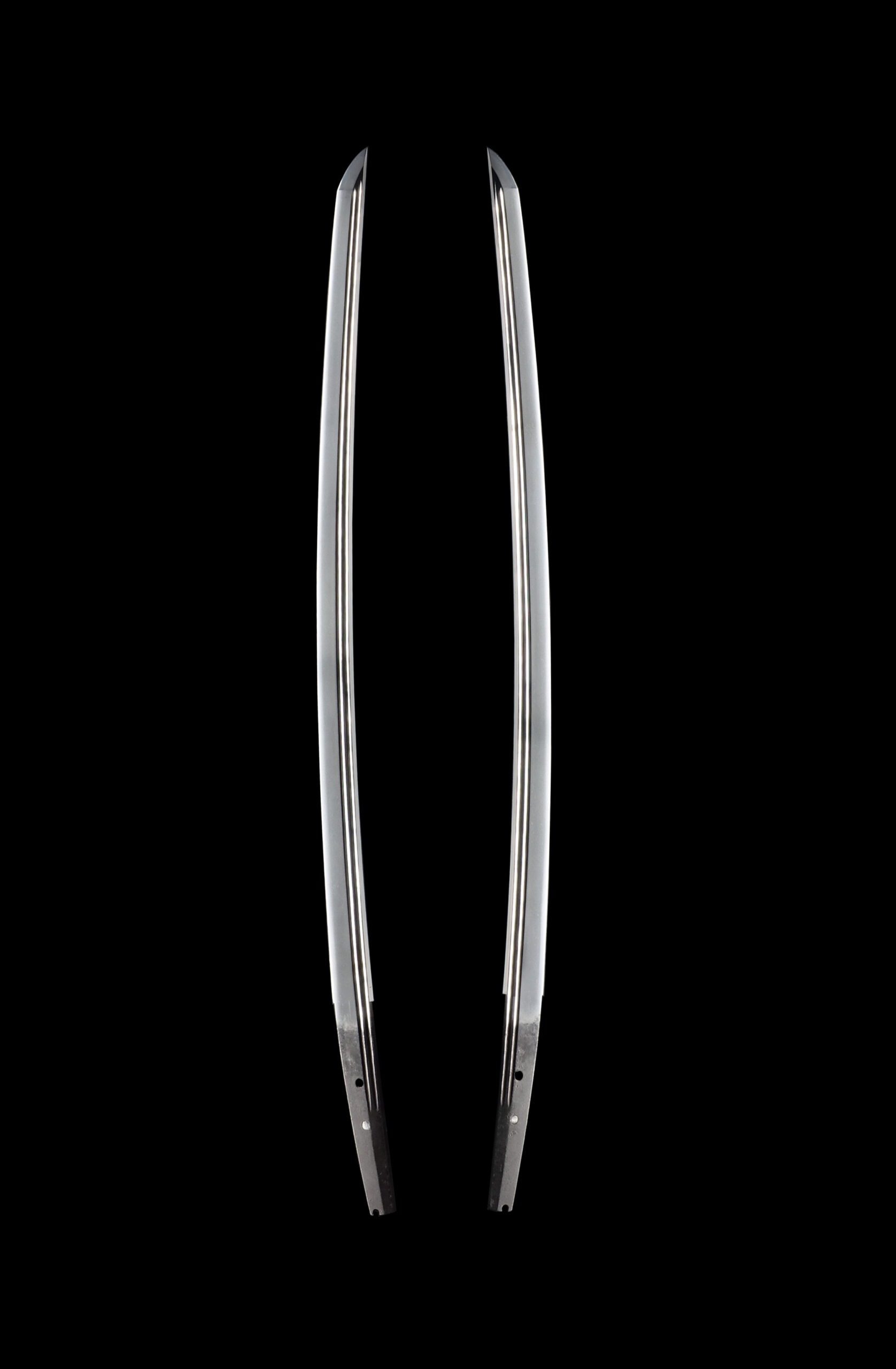
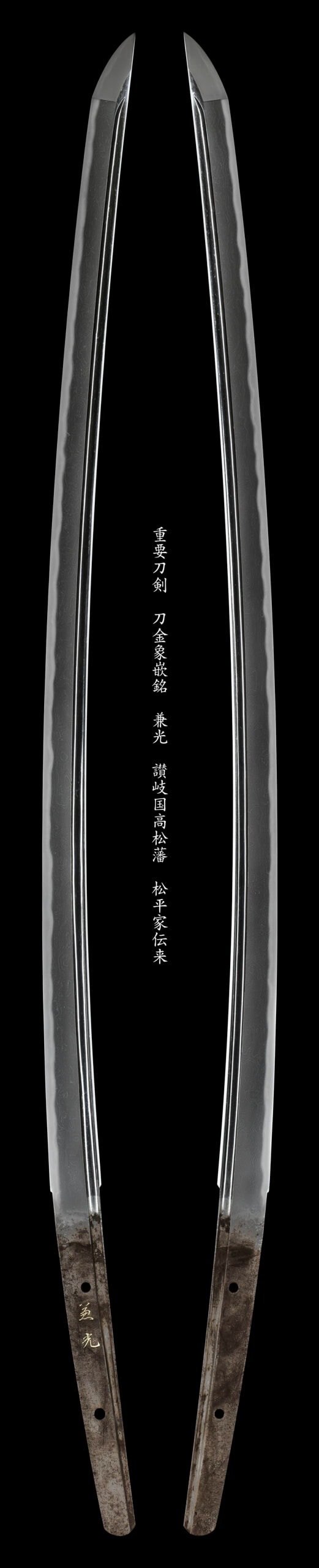
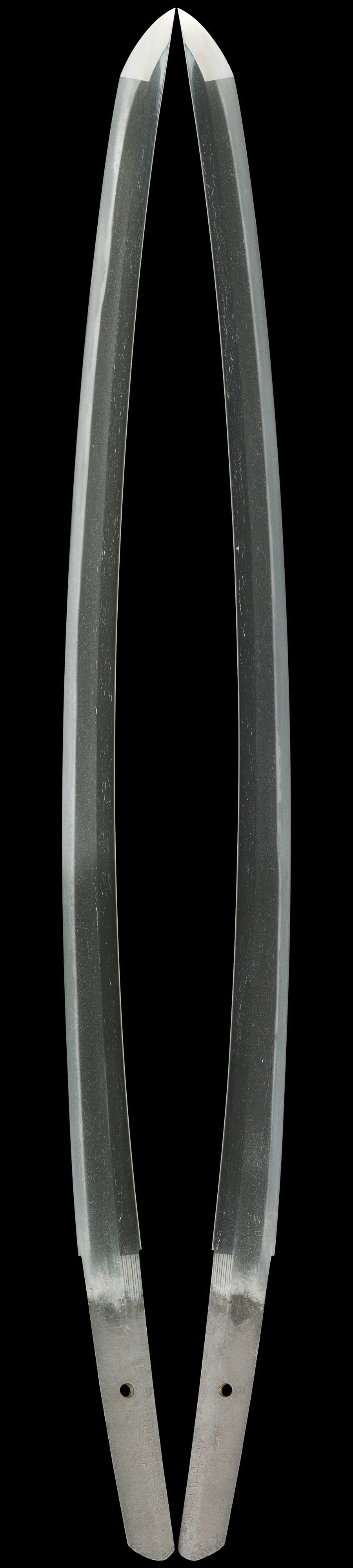
This is a tachi by Yasumitsu of the Osafune school, Bizen province, from the early Muromachi period. It has a Juyo Token certification. The blade features a midare-utsuri and a koshibiraki-gunome hamon with kinsuji.

NBTHK Setsumei

Juyo-Token, 42nd Session — Designated February 14, 1996 Tachi, mei: Bishū Osafune Yasumitsu (備州長船康光) Measurements Nagasa 74.3 cm, sori 2.1 cm, motohaba 2.8 cm, sakihaba 1.9 cm, kissaki-nagasa 3.2 cm, nakago-nagasa 21.3 cm Description Keijō: shinogi-zukuri, iori-mune; standard mihaba with noticeable taper from base to tip; high koshizori with sakizori; chū-kissaki. Kitae: itame-hada mixed with mokume and flowing masame; the jihada shows standing grain; fine ji-nie adheres, and midare-utsuri appears. Hamon: Mainly open-based gunome; mixed with angular small gunome, togariba, and the like; ashi enter; predominantly nioi with small nie; sunagashi is seen; the nioiguchi is bright and clear. Bōshi: midare-komi; turning back with a pointed tendency, and finely hakikake. Horimono: On both sides, bō-hi with maru-dome. Nakago: kurijiri; file marks: old sujikai, new katte-sagari; three mekugi-ana; below the original hole, toward the back (mune side), there is a long signature. Artisan Osafune Yasumitsu (康光), considered the second generation. Era Early Muromachi period (Ōei Bizen tradition). Explanation Yasumitsu stands, together with Morimitsu, as one of the twin pillars of Ōei-era Bizen workmanship, and the same name was thereafter inherited through successive generations. Sword signature compendia identify the smith who styled himself Uemon-no-jō as the first generation, active around the Ōei era, and count the continuation of five generations bearing the same name down to the latter part of the Muromachi period; however, strict division by generation still leaves room for further examination. This tachi is of long dimensions, with a clear difference in width between base and tip, and it shows sakizori. Its hamon is chiefly an open-based gunome, and in such points it well manifests the characteristics of Osafune work of the early Muromachi period. Yet, compared with typical Yasumitsu, chōji does not stand out in the temper; instead, angular small gunome are mixed in, producing an overall small-patterned tempering. In addition, the calligraphic style of the signature differs somewhat. For these reasons, it is appraised as the work of Yasumitsu’s second generation. The forging is well refined; the nioiguchi of the hamon is bright and clear and displays good activity, showing an excellent work.

NihontoWatch MonNihontoWatch
MarketAuctionsEncyclopedia
Swords›Bizen-den›Osafune›Oei-Bizen›Yasumitsu›Tachi: Yasumitsu - Juyo Token
tachiJūyō
Oei-Bizen Yasumitsu

Tachi: Yasumitsu - Juyo Token

mei · Osafune · Muromachi · nagasa 74.5cm · sori 2.2cm

SOLD
Oei-Bizen Yasumitsu — 1 of 2
Oei-Bizen Yasumitsu — 2 of 2
1 / 2
1 / 2
Oei-Bizen Yasumitsu — 1 of 2Oei-Bizen Yasumitsu — 2 of 2
Measurements & details
Smith
Oei-Bizen Yasumitsu
Type
Tachi
School
Oei-Bizen
Period
Around 1394–1428(Oei)
Province
Bizen
Signature
Signed(100% of this smith's designated works are signed)
Measurements
Nagasa 74.5cmSori 2.2cmMotohaba 3cmSakihaba 2cmKasane 0.7cmWeight 777g
Description

This is a tachi by Yasumitsu of the Osafune school, Bizen province, from the early Muromachi period. It has a Juyo Token certification. The blade features a midare-utsuri and a koshibiraki-gunome hamon with kinsuji.

NBTHK Zufu Commentary

Juyo #42

AI translation — may contain errors

-, 42nd Session — Designated February 14, 1996

, : Bishū Yasumitsu (備州長船康光)

Measurements 74.3 cm, 2.1 cm, 2.8 cm, 1.9 cm, 3.2 cm, 21.3 cm

Description Keijō: , ; standard with noticeable taper from base to tip; high with ; . : mixed with and flowing ; the shows standing grain; fine adheres, and appears. : Mainly open-based ; mixed with angular small , , and the like; enter; predominantly with small ; is seen; the is bright and clear. : ; turning back with a pointed tendency, and finely . : On both sides, with . : ; file marks: old , new ; three ; below the original hole, toward the back ( side), there is a long signature.

Artisan Yasumitsu (康光), considered the second generation.

Era Early period (Ōei tradition).

Explanation Yasumitsu stands, together with Morimitsu, as one of the twin pillars of Ōei-era workmanship, and the name was thereafter inherited through successive generations. Sword signature compendia identify the smith who styled himself Uemon-no-jō as the first generation, active around the Ōei era, and count the continuation of five generations bearing the name down to the latter part of the period; however, strict division by generation still leaves room for further examination.

This is of long dimensions, with a clear difference in width between base and tip, and it shows . Its is chiefly an open-based , and in such points it well manifests the characteristics of work of the early period. Yet, compared with typical Yasumitsu, does not stand out in the temper; instead, angular small are mixed in, producing an overall small-patterned tempering. In addition, the calligraphic style of the signature differs somewhat. For these reasons, it is appraised as the work of Yasumitsu’s second generation.

The forging is well refined; the of the is bright and clear and displays good activity, showing an excellent work.

About the maker

Yasumitsu

康光

Oei-Bizen (Osafune) · Bizen · around 1394-1428

Fujishiro Jo-jo saku · Tōken Taikan top 11%

1 piece on the market now

›

Yasumitsu of Osafune worked in Bizen Province in the early Muromachi period, around the Ōei era (1394–1428), the years in which a flourishing group of smiths revived Osafune after the slump of Nanbokuchō. The published sources call that group Ōei-Bizen, and they place Yasumitsu, with Morimitsu, at its head: "Yasumitsu, together with Morimitsu, stands as the twin pillars among the Bizen smiths of the early Muromachi period collectively termed Ōei-Bizen."[[c:1]] Beside the two leading hands they name Iesuke, Tsuneie and Sanemitsu as lesser masters of the same circle. The school's ideal, the sources say, was a return to the Kamakura period, an aim visible in its revival of the tachi shape and of the chōji hamon that had fallen out of use under Nanbokuchō. He carries on the Osafune line of Nagamitsu and Kagemitsu, and his dated work runs densely through the Ōei years, the long signature Bishū Osafune Yasumitsu cut toward the mune with the date on the reverse.

His prime and most characteristic hand is a flamboyant one. Over an itame mixed with mokume, the grain standing, the temper rises into a large-pattern chōji-midare built on gunome whose base opens wide at the waist, the koshibiraki form the published sources treat as the school's own. Ashi and yō enter abundantly; the line is nioi-based with ko-nie, slight sunagashi and fine kinsuji playing through, tobiyaki scattering at times, the nioiguchi bright and clear. The bōshi enters midare-komi and turns back to a pointed, tongue-like tip, with hakikake brushed through it. This turnback is his signature feature and the school's: the sources single out "a bōshi whose tip becomes pointed, the characteristic form generally called the rōsoku-no-shin (candle-wick)." It is the trait by which Ōei-Bizen separates itself from the Kamakura revival its sugata and chōji otherwise evoke.

The jigane is the same throughout his work and is itself a kantei point: a standing itame thickly mixed with mokume, sometimes flowing, fine ji-nie adhering like dust and chikei-like dark lines entering, what the sources render as chikei-fū no kane. Across it stands a reflection, and the sources distinguish two kinds: a straight bō-utsuri or sugu-utsuri, and a midare-utsuri that they read as the more archaic, recalling late-Kamakura Osafune. Of one tachi the published commentary remarks that its utsuri is "not the bō-utsuri often seen in this period, but instead shows midare-utsuri."[[c:2]] It is the standing, mokume-bearing itame, not the smoother Kamakura jigane, that the judges use to fix the attribution. A bō-hi, often with a paired soe-hi, is finished round above the machi, a school tell, and the koshimoto may carry bonji, a sankozuka-ken, or carved deity names.

Alongside the flamboyant midare the sources mark a second, calm hand. It is a chū- or hoso-suguha, the nioiguchi tight, bright and clear, faintly broken with ko-gunome and saka-ashi and frayed along the edge with hotsure and kuichigai-ba, the bōshi running straight to a ko-maru. The judges note this suguha hand is comparatively common in him, and more his than his fellow master's: "the suguha, it would seem, is found rather more in Yasumitsu than in Morimitsu."[[c:3]] His signing follows the registers that scholarship uses to sort the generations. The corpus is overwhelmingly ubu and long-signed with an Ōei date; two-character mei are comparatively rare and tend to carry no date. Dated work survives from Ōei, Shōchō, Eikyō and Kakitsu, and the common reading takes the pieces dated after Shōchō as a second hand. The reference works place the Yasumitsu who styled himself Uemon-no-jō as the first generation, active in the Ōei years, count five generations of the name down to the end of Muromachi, and assign a Sakyō-no-suke working in the Eikyō and Bunan eras, the so-called Eikyō-Bizen, to the next, whose temper is smaller in pattern and judged a touch inferior; the strict division between the generations the sources leave open for further study.

Within the Ōei-Bizen pair the two masters share the school manner, and the working distinction a collector draws between them is a fine one the sources state in their own words. Of a midare whose teeth point at the head the commentary observes that this is "a hamon generally found rather more in Yasumitsu than in Morimitsu,"[[c:4]] and the same is said of the calm suguha. His suguha can deceive: at a glance it recalls late-Kamakura Osafune, and where the nioiguchi sinks and saka-ashi enter it can evoke Aoe, the sources writing of one such blade that "it has tempered a suguha of tight nioiguchi, so as to suggest Aoe, yet this kind of workmanship is seen from time to time in Yasumitsu."[[c:5]] The attribution settles back on him by the standing itame-mokume hada and the Ōei sugata. The religious carving he cuts at the koshimoto, bonji, the sankozuka-ken, names such as Hachiman Daibosatsu, is not his invention but an inheritance: "this is the carving tradition seen in Osafune work since Nagamitsu and Kagemitsu, and it is carried on down to Sue-Bizen."

Fujishiro grades him Jō-jō saku, and his work carries weight in the designation record: four of his blades are Important Cultural Properties and four are Tokubetsu Jūyō, with forty-three Jūyō beneath them, forty-seven in the Tokubetsu Jūyō and Jūyō tiers together. He is Jō-jō saku and almost entirely signed, fifty-five signed pieces against none unsigned in the official record, and he left accomplished work in every form: tachi, katana, wakizashi, tanto, and even a rare ubu-signed great spear, the published sources noting that signed Ōei-Bizen spears are extremely scarce. His blades carry a distinguished provenance, twelve recording a history through the Yamauchi lords of Tosa, the Nabeshima, Maeda, Tōdō, Naitō and Akimoto houses, the Imperial Family, and the rōnin Horibe Yasubei (Taketsune) of the Akō affair. The Important Cultural Properties are held as patrimony and do not trade. Of recorded whereabouts his blades sit largely in shrines and museums, among them Atsuta Jingū, Ise Jingū, Nikkō Tōshōgū, the Yūtoku, Hayashibara and Bizen Osafune sword museums, and the British Museum. A Yasumitsu in the Tokubetsu Jūyō or Jūyō tier is not wholly beyond reach, for the corpus is large for so prized a name, but the finest survive in held collections and one comes to open hands only from time to time, a landmark of early-Muromachi Bizen when it does.

Historical importance

Where Yasumitsu stands among comparable artisans: across all of nihontō, and within tradition, era, and period. The tiers (Foremost · Leading · Major · Notable) weigh official designations from the NBTHK and Japan's Agency for Cultural Affairs, together with historical honors of lasting repute such as the Sansaku and Meibutsu-chō.

随一
Foremost
屈指
Leading
有数
Major
著名
Notable

Select a lens to see how it's measured.

Designation record
49 designated works
Jūyō Bunkazai
4
Jūyō Bijutsuhin
1
Gyobutsu (Imperial)
3
Tokubetsu Jūyō
4
Jūyō
37
1 work by Yasumitsu on the market→
Yasumitsu — full profileOei-Bizen (Osafune) school

Dated Works

Years he was demonstrably active, proven by signed-and-dated blades

Active period
1406–1423Editorial estimate: 1394–1428
12 of 42 designated works carry a date
1400
1410
1420
1430
About the school

Oei-Bizen

応永備前

Bizen-den · Bizen

Phase: Ōei-Bizen応永備前· 1390–1441

17 pieces on the market now

›

The Oei-Bizen and Eikyo-Bizen smiths represent the resurgence of the Osafune school in Bizen Province during the early Muromachi period, an era in which a conscious revival of Kamakura-period aesthetics transformed the character of Bizen swordmaking after the bold, expansive forms of the Nanbokucho period. The school's foremost representatives are Yasumitsu and Morimitsu, described by the NBTHK as the "twin pillars" of Oei-Bizen, both active around the Oei era (1394--1428). Learn more →

Leading smiths
SmithEraDesignated
Yasumitsu康光1394-142849
Morimitsu盛光1394-142860
Yasumitsu康光1424-14436
Sanemitsu實光1394-14284
Koremitsu是光1394-14281
Explore the Oei-Bizen school →
NBTHK Certificate
Jūyō Tōken重要刀剣
Important Sword
›

A blade of top-grade workmanship and condition, formally judged to rank with a nationally recognized Important Art Object (Jūyō Bijutsuhin). Awarded only at the NBTHK’s competitive annual examination.

Of Japan’s roughly 2.5 million registered swords, only 12,307 (about 1 in 203) have ever attained Jūyō.

About the NBTHK›

The NBTHK (Nihon Bijutsu Tōken Hozon Kyōkai, the Society for the Preservation of Japanese Art Swords) is a public-interest incorporated foundation founded in 1948 and supervised by Japan’s Agency for Cultural Affairs (Bunkachō); it is based at the Japanese Sword Museum in Tokyo. Its expert panels physically examine each submitted work (shinsa) and issue a certificate (kanteishō) ranking it by artistic and historical merit. NBTHK papers are the most widely recognized standard of authentication for Japanese swords and fittings.

NBTHK official site→
Seller
E
Eirakudo
🇯🇵Ships from Japan
›
✓Verified dealereirakudo.shop
✓Ships worldwide✓English supportWire transferCredit card
Return policy

Returns/exchanges/cancellations not accepted after shipment except for significant defects; if defective, return/exchange possible within 3 days of arrival (return shipping paid by customer).

View all of Eirakudo’s listings→View this item on the dealer’s site→

More works by Oei-Bizen Yasumitsu

View all →
Choshuya
Tokuho
Wakizashi - Tokuho - by Oei-Bizen Yasumitsu - Yasumitsu (O Wazamono)Wakizashi - Tokuho - by Oei-Bizen Yasumitsu - Yasumitsu (O Wazamono)

Wakizashi

ByOei-Bizen Yasumitsu
Ask

Previously sold by Oei-Bizen Yasumitsu

World Seiyudo
Tokuho
Wakizashi - Tokuho - by Oei-Bizen Yasumitsu - Yasumitsu - Tokubetsu Hozon TokenWakizashi - Tokuho - by Oei-Bizen Yasumitsu - Yasumitsu - Tokubetsu Hozon Token
Sold

Wakizashi

ByOei-Bizen Yasumitsu
SOLD
Choshuya
Wakizashi - by Oei-Bizen Yasumitsu - Japanese Sword for Sale | Ginza Choshuya | Mei: Bishu Osafune Yasumitsu, Oei 20th Year, 9th MonthWakizashi - by Oei-Bizen Yasumitsu - Japanese Sword for Sale | Ginza Choshuya | Mei: Bishu Osafune Yasumitsu, Oei 20th Year, 9th Month
Sold

Wakizashi

ByOei-Bizen Yasumitsu
SOLD
Choshuya
Wakizashi - by Oei-Bizen Yasumitsu - Hirazukuri Wakizashi: Yasumitsu of Bizen Osafune, dated Oei 24th year, 1st month (O-wazamono)Wakizashi - by Oei-Bizen Yasumitsu - Hirazukuri Wakizashi: Yasumitsu of Bizen Osafune, dated Oei 24th year, 1st month (O-wazamono)
Sold

Wakizashi

ByOei-Bizen Yasumitsu
SOLD
Choshuya
Wakizashi - by Oei-Bizen Yasumitsu - Yasumitsu (O-wazamono)Wakizashi - by Oei-Bizen Yasumitsu - Yasumitsu (O-wazamono)
Sold

Wakizashi

ByOei-Bizen Yasumitsu
SOLD
Choshuya
Wakizashi - by Oei-Bizen Yasumitsu - Bishu Osafune Yasumitsu, dated August, Ouei 22 (O-wazamono)Wakizashi - by Oei-Bizen Yasumitsu - Bishu Osafune Yasumitsu, dated August, Ouei 22 (O-wazamono)
Sold

Wakizashi

ByOei-Bizen Yasumitsu
SOLD
Eirakudo
Hozon
Wakizashi - Hozon - by Oei-Bizen Yasumitsu - Yasumitsu - Hozon TokenWakizashi - Hozon - by Oei-Bizen Yasumitsu - Yasumitsu - Hozon Token
Sold

Wakizashi

ByOei-Bizen Yasumitsu
SOLD
Iida Koendo
Hozon
Kodachi - Hozon - by Oei-Bizen Yasumitsu - Koto Yasumitsu KodachiKodachi - Hozon - by Oei-Bizen Yasumitsu - Koto Yasumitsu Kodachi
Sold

Kodachi

ByOei-Bizen Yasumitsu
SOLD
Eirakudo
Tokuho
Wakizashi - Tokuho - by Oei-Bizen Yasumitsu - Yasumitsu - Tokubetsu Hozon TokenWakizashi - Tokuho - by Oei-Bizen Yasumitsu - Yasumitsu - Tokubetsu Hozon Token
Sold

Wakizashi

ByOei-Bizen Yasumitsu
SOLD

More from the Oei-Bizen school

View all →
Goushuya
Tokujū
Tachi - Tokuju - by Oei-Bizen Morimitsu - Morimitsu - Tokubetsu Juyo TokenTachi - Tokuju - by Oei-Bizen Morimitsu - Morimitsu - Tokubetsu Juyo Token

Tachi

ByOei-Bizen Morimitsu
Ask
Samurai Museum
Hozon
Tanto - Hozon - by Oei-Bizen Morimitsu - Antique Japanese Sword Tanto Signed by Osafune Morimitsu NBTHK Hozon CertificateTanto - Hozon - by Oei-Bizen Morimitsu - Antique Japanese Sword Tanto Signed by Osafune Morimitsu NBTHK Hozon Certificate

Tantō

ByOei-Bizen Morimitsu
¥5,083
Iida Koendo
Tokuho
Wakizashi - Tokuho - by Oei-Bizen Morimitsu - Bishu Osafune Morimitsu, dated February, Oei 23rd yearWakizashi - Tokuho - by Oei-Bizen Morimitsu - Bishu Osafune Morimitsu, dated February, Oei 23rd year

Wakizashi

ByOei-Bizen Morimitsu
¥2,200,000
Token-Net
Jūyō
Wakizashi - Jūyō - by Oei-Bizen Morimitsu - Bishu Osafune Morimitsu, Oei 33rd Year, 2nd MonthWakizashi - Jūyō - by Oei-Bizen Morimitsu - Bishu Osafune Morimitsu, Oei 33rd Year, 2nd Month

Wakizashi

ByOei-Bizen Morimitsu
¥5,500,000
Yamasiroya
Tokuho
Tanto - Tokuho - by Oei-Bizen Morimitsu - Bizen Osafune Morimitsu (Shurinosuke) / Oei 15th Year, August (1408) - Tokubetsu Hozon TokenTanto - Tokuho - by Oei-Bizen Morimitsu - Bizen Osafune Morimitsu (Shurinosuke) / Oei 15th Year, August (1408) - Tokubetsu Hozon Token

Tantō

ByOei-Bizen Morimitsu
¥1,800,000
Nipponto
Tokuho
Wakizashi - Tokuho - by Oei-Bizen Morimitsu - Wakizashi by Morimitsu of Bizen, Tokubetsu HozonWakizashi - Tokuho - by Oei-Bizen Morimitsu - Wakizashi by Morimitsu of Bizen, Tokubetsu Hozon

Wakizashi

ByOei-Bizen Morimitsu
¥1,500,000
Katanahanbai
Tokuho
Wakizashi - Tokuho - by Oei-Bizen Norimitsu - Bishu Osafune NorimitsuWakizashi - Tokuho - by Oei-Bizen Norimitsu - Bishu Osafune Norimitsu

Wakizashi

ByOei-Bizen Norimitsu
¥2,200,000
Ayakashi
Hozon
Tanto - Hozon - by Oei-Bizen Norimitsu - Bishu Osafune Norimitsu - Bunmei 10th Year, 8th MonthTanto - Hozon - by Oei-Bizen Norimitsu - Bishu Osafune Norimitsu - Bunmei 10th Year, 8th Month

Tantō

ByOei-Bizen Norimitsu
¥1,100,000

More from the Osafune school

View all →
Katanahanbai
Tokuho
Wakizashi - Tokuho - by Osafune Tomomitsu - Bishu Osafune Tomomitsu - Dated Teiji 5th Year, 8th MonthWakizashi - Tokuho - by Osafune Tomomitsu - Bishu Osafune Tomomitsu - Dated Teiji 5th Year, 8th Month

Wakizashi

ByOsafune Tomomitsu
¥4,800,000
Nihonto.com
Jūyō
Tanto - Jūyō - by Osafune Kagemitsu - Juyo Tanto by Bizen KagemitsuTanto - Jūyō - by Osafune Kagemitsu - Juyo Tanto by Bizen Kagemitsu

Tantō

ByOsafune Kagemitsu
¥89,500
Aoi Art
Tokuho
Katana - Tokuho - by Osafune Motomitsu - Mumei (Attributed to Osafune Motomitsu)Katana - Tokuho - by Osafune Motomitsu - Mumei (Attributed to Osafune Motomitsu)

Katana

ByOsafune Motomitsu
¥1,200,000
Goushuya
Jūyō
Katana - Jūyō - by Osafune Kanemitsu - Kanemitsu with Gold Inlay InscriptionKatana - Jūyō - by Osafune Kanemitsu - Kanemitsu with Gold Inlay Inscription

Katana

ByOsafune Kanemitsu
Ask
Iida Koendo
Jūyō
Tachi - Jūyō - by Osafune Shigezane - Bishu Osafune ju Shigezane, Enbun 3rd year, 12th monthTachi - Jūyō - by Osafune Shigezane - Bishu Osafune ju Shigezane, Enbun 3rd year, 12th month

Tachi

ByOsafune Shigezane
¥33,000,000
Iida Koendo
Jūyō
Tachi - Jūyō - by Osafune Nagamitsu - Bizenkoku Osafune ju Sakonshogen Nagamitsu tsukuru, Einin Gannen Junigatsu Hi (December 1293)Tachi - Jūyō - by Osafune Nagamitsu - Bizenkoku Osafune ju Sakonshogen Nagamitsu tsukuru, Einin Gannen Junigatsu Hi (December 1293)

Tachi

ByOsafune Nagamitsu
¥55,000,000
Eirakudo
Tokuho
Tachi - Tokuho - by Osafune Sanenaga - Sanenaga - Tokubetsu Hozon TokenTachi - Tokuho - by Osafune Sanenaga - Sanenaga - Tokubetsu Hozon Token

Tachi

ByOsafune Sanenaga
¥7,500,000
Samurai Museum
Tokuho
Wakizashi - Tokuho - by Osafune Kagemitsu - Antique Japanese Sword Wakizashi Attributed to Den Osafune Kagemitsu NBTHK Tokubetsu Hozon CertificateWakizashi - Tokuho - by Osafune Kagemitsu - Antique Japanese Sword Wakizashi Attributed to Den Osafune Kagemitsu NBTHK Tokubetsu Hozon Certificate

Wakizashi

ByOsafune Kagemitsu
¥20,966

More from the Bizen tradition

View all →
Eirakudo
Jūyō Bijutsuhin
Katana - Jubi - by Chu-Aoe Sadatsugu - Aoe Sadatsugu - Juyo BijutsuhinKatana - Jubi - by Chu-Aoe Sadatsugu - Aoe Sadatsugu - Juyo Bijutsuhin

Katana

ByChu-Aoe Sadatsugu
Ask
Tsuruginoya
Jūyō
Katana - Jūyō - by Fukuoka Ichimonji School - Mumei Fukuoka IchimonjiKatana - Jūyō - by Fukuoka Ichimonji School - Mumei Fukuoka Ichimonji

Katana

ByFukuoka Ichimonji School
¥10,000,000
Eirakudo
Jūyō
Tachi - Jūyō - by Fukuoka Ichimonji School - Fukuoka Ichimonji - Juyo TokenTachi - Jūyō - by Fukuoka Ichimonji School - Fukuoka Ichimonji - Juyo Token

Tachi

ByFukuoka Ichimonji School
Ask
Aoi Art
Jūyō
Katana - Jūyō - by Yoshioka Ichimonji Sukemitsu - Ichi Bizen-koku Yoshioka Sakon Sho (Sukemitsu)Katana - Jūyō - by Yoshioka Ichimonji Sukemitsu - Ichi Bizen-koku Yoshioka Sakon Sho (Sukemitsu)

Katana

ByYoshioka Ichimonji Sukemitsu
¥9,500,000
Hyozaemon
Tokuho
Wakizashi - Tokuho - by Fukuoka Ichimonji Yoshifusa - Fukuoka Ichimonji YoshifusaWakizashi - Tokuho - by Fukuoka Ichimonji Yoshifusa - Fukuoka Ichimonji Yoshifusa

Wakizashi

ByFukuoka Ichimonji Yoshifusa
Ask
Ginza Seikodo
Jūyō
Katana - Jūyō - by Sukesada - Katana Signed Bizen no Kuni Ju Osafune Hikobeno Jo Sukesada SakuKatana - Jūyō - by Sukesada - Katana Signed Bizen no Kuni Ju Osafune Hikobeno Jo Sukesada Saku

Katana

BySukesada
Ask
Goushuya
Jūyō Bijutsuhin
Tachi - Jubi - by Ukai Unsho - Kumoio - From the collection of the Okouchi family, lord of Otaki Domain, Kazusa ProvinceTachi - Jubi - by Ukai Unsho - Kumoio - From the collection of the Okouchi family, lord of Otaki Domain, Kazusa Province

Tachi

ByUkai Unsho
Ask
Iida Koendo
Jūyō
Tachi - Jūyō - by Osafune Nagamitsu - NagamitsuTachi - Jūyō - by Osafune Nagamitsu - Nagamitsu

Tachi

ByOsafune Nagamitsu
¥33,000,000

Swords

  • Katana
  • Wakizashi
  • Tantō
  • Tachi
  • Naginata
  • Yari

Fittings

  • Tsuba
  • Fuchi-Kashira
  • Kozuka
  • Menuki

By Certification

  • Tokujū
  • Jūyō
  • Tokuho
  • Hozon

Resources

  • Dealer Directory
  • Artist Directory
  • Glossary
  • Browse All
Nihontowatch© 2026
TermsPrivacyCookiesAbout

Description

This is a tachi by Yasumitsu of the Osafune school, Bizen province, from the early Muromachi period. It has a Juyo Token certification. The blade features a midare-utsuri and a koshibiraki-gunome hamon with kinsuji.

NBTHK Setsumei

Juyo-Token, 42nd Session — Designated February 14, 1996 Tachi, mei: Bishū Osafune Yasumitsu (備州長船康光) Measurements Nagasa 74.3 cm, sori 2.1 cm, motohaba 2.8 cm, sakihaba 1.9 cm, kissaki-nagasa 3.2 cm, nakago-nagasa 21.3 cm Description Keijō: shinogi-zukuri, iori-mune; standard mihaba with noticeable taper from base to tip; high koshizori with sakizori; chū-kissaki. Kitae: itame-hada mixed with mokume and flowing masame; the jihada shows standing grain; fine ji-nie adheres, and midare-utsuri appears. Hamon: Mainly open-based gunome; mixed with angular small gunome, togariba, and the like; ashi enter; predominantly nioi with small nie; sunagashi is seen; the nioiguchi is bright and clear. Bōshi: midare-komi; turning back with a pointed tendency, and finely hakikake. Horimono: On both sides, bō-hi with maru-dome. Nakago: kurijiri; file marks: old sujikai, new katte-sagari; three mekugi-ana; below the original hole, toward the back (mune side), there is a long signature. Artisan Osafune Yasumitsu (康光), considered the second generation. Era Early Muromachi period (Ōei Bizen tradition). Explanation Yasumitsu stands, together with Morimitsu, as one of the twin pillars of Ōei-era Bizen workmanship, and the same name was thereafter inherited through successive generations. Sword signature compendia identify the smith who styled himself Uemon-no-jō as the first generation, active around the Ōei era, and count the continuation of five generations bearing the same name down to the latter part of the Muromachi period; however, strict division by generation still leaves room for further examination. This tachi is of long dimensions, with a clear difference in width between base and tip, and it shows sakizori. Its hamon is chiefly an open-based gunome, and in such points it well manifests the characteristics of Osafune work of the early Muromachi period. Yet, compared with typical Yasumitsu, chōji does not stand out in the temper; instead, angular small gunome are mixed in, producing an overall small-patterned tempering. In addition, the calligraphic style of the signature differs somewhat. For these reasons, it is appraised as the work of Yasumitsu’s second generation. The forging is well refined; the nioiguchi of the hamon is bright and clear and displays good activity, showing an excellent work.

NihontoWatch MonNihontoWatch
MarketAuctionsEncyclopedia
Swords›Bizen-den›Osafune›Oei-Bizen›Yasumitsu›Tachi: Yasumitsu - Juyo Token
tachiJūyō
Oei-Bizen Yasumitsu

Tachi: Yasumitsu - Juyo Token

mei · Osafune · Muromachi · nagasa 74.5cm · sori 2.2cm

SOLD
Oei-Bizen Yasumitsu — 1 of 2
Oei-Bizen Yasumitsu — 2 of 2
1 / 2
1 / 2
Oei-Bizen Yasumitsu — 1 of 2Oei-Bizen Yasumitsu — 2 of 2
Measurements & details
Smith
Oei-Bizen Yasumitsu
Type
Tachi
School
Oei-Bizen
Period
Around 1394–1428(Oei)
Province
Bizen
Signature
Signed(100% of this smith's designated works are signed)
Measurements
Nagasa 74.5cmSori 2.2cmMotohaba 3cmSakihaba 2cmKasane 0.7cmWeight 777g
Description

This is a tachi by Yasumitsu of the Osafune school, Bizen province, from the early Muromachi period. It has a Juyo Token certification. The blade features a midare-utsuri and a koshibiraki-gunome hamon with kinsuji.

NBTHK Zufu Commentary

Juyo #42

AI translation — may contain errors

-, 42nd Session — Designated February 14, 1996

, : Bishū Yasumitsu (備州長船康光)

Measurements 74.3 cm, 2.1 cm, 2.8 cm, 1.9 cm, 3.2 cm, 21.3 cm

Description Keijō: , ; standard with noticeable taper from base to tip; high with ; . : mixed with and flowing ; the shows standing grain; fine adheres, and appears. : Mainly open-based ; mixed with angular small , , and the like; enter; predominantly with small ; is seen; the is bright and clear. : ; turning back with a pointed tendency, and finely . : On both sides, with . : ; file marks: old , new ; three ; below the original hole, toward the back ( side), there is a long signature.

Artisan Yasumitsu (康光), considered the second generation.

Era Early period (Ōei tradition).

Explanation Yasumitsu stands, together with Morimitsu, as one of the twin pillars of Ōei-era workmanship, and the name was thereafter inherited through successive generations. Sword signature compendia identify the smith who styled himself Uemon-no-jō as the first generation, active around the Ōei era, and count the continuation of five generations bearing the name down to the latter part of the period; however, strict division by generation still leaves room for further examination.

This is of long dimensions, with a clear difference in width between base and tip, and it shows . Its is chiefly an open-based , and in such points it well manifests the characteristics of work of the early period. Yet, compared with typical Yasumitsu, does not stand out in the temper; instead, angular small are mixed in, producing an overall small-patterned tempering. In addition, the calligraphic style of the signature differs somewhat. For these reasons, it is appraised as the work of Yasumitsu’s second generation.

The forging is well refined; the of the is bright and clear and displays good activity, showing an excellent work.

About the maker

Yasumitsu

康光

Oei-Bizen (Osafune) · Bizen · around 1394-1428

Fujishiro Jo-jo saku · Tōken Taikan top 11%

1 piece on the market now

›

Yasumitsu of Osafune worked in Bizen Province in the early Muromachi period, around the Ōei era (1394–1428), the years in which a flourishing group of smiths revived Osafune after the slump of Nanbokuchō. The published sources call that group Ōei-Bizen, and they place Yasumitsu, with Morimitsu, at its head: "Yasumitsu, together with Morimitsu, stands as the twin pillars among the Bizen smiths of the early Muromachi period collectively termed Ōei-Bizen."[[c:1]] Beside the two leading hands they name Iesuke, Tsuneie and Sanemitsu as lesser masters of the same circle. The school's ideal, the sources say, was a return to the Kamakura period, an aim visible in its revival of the tachi shape and of the chōji hamon that had fallen out of use under Nanbokuchō. He carries on the Osafune line of Nagamitsu and Kagemitsu, and his dated work runs densely through the Ōei years, the long signature Bishū Osafune Yasumitsu cut toward the mune with the date on the reverse.

His prime and most characteristic hand is a flamboyant one. Over an itame mixed with mokume, the grain standing, the temper rises into a large-pattern chōji-midare built on gunome whose base opens wide at the waist, the koshibiraki form the published sources treat as the school's own. Ashi and yō enter abundantly; the line is nioi-based with ko-nie, slight sunagashi and fine kinsuji playing through, tobiyaki scattering at times, the nioiguchi bright and clear. The bōshi enters midare-komi and turns back to a pointed, tongue-like tip, with hakikake brushed through it. This turnback is his signature feature and the school's: the sources single out "a bōshi whose tip becomes pointed, the characteristic form generally called the rōsoku-no-shin (candle-wick)." It is the trait by which Ōei-Bizen separates itself from the Kamakura revival its sugata and chōji otherwise evoke.

The jigane is the same throughout his work and is itself a kantei point: a standing itame thickly mixed with mokume, sometimes flowing, fine ji-nie adhering like dust and chikei-like dark lines entering, what the sources render as chikei-fū no kane. Across it stands a reflection, and the sources distinguish two kinds: a straight bō-utsuri or sugu-utsuri, and a midare-utsuri that they read as the more archaic, recalling late-Kamakura Osafune. Of one tachi the published commentary remarks that its utsuri is "not the bō-utsuri often seen in this period, but instead shows midare-utsuri."[[c:2]] It is the standing, mokume-bearing itame, not the smoother Kamakura jigane, that the judges use to fix the attribution. A bō-hi, often with a paired soe-hi, is finished round above the machi, a school tell, and the koshimoto may carry bonji, a sankozuka-ken, or carved deity names.

Alongside the flamboyant midare the sources mark a second, calm hand. It is a chū- or hoso-suguha, the nioiguchi tight, bright and clear, faintly broken with ko-gunome and saka-ashi and frayed along the edge with hotsure and kuichigai-ba, the bōshi running straight to a ko-maru. The judges note this suguha hand is comparatively common in him, and more his than his fellow master's: "the suguha, it would seem, is found rather more in Yasumitsu than in Morimitsu."[[c:3]] His signing follows the registers that scholarship uses to sort the generations. The corpus is overwhelmingly ubu and long-signed with an Ōei date; two-character mei are comparatively rare and tend to carry no date. Dated work survives from Ōei, Shōchō, Eikyō and Kakitsu, and the common reading takes the pieces dated after Shōchō as a second hand. The reference works place the Yasumitsu who styled himself Uemon-no-jō as the first generation, active in the Ōei years, count five generations of the name down to the end of Muromachi, and assign a Sakyō-no-suke working in the Eikyō and Bunan eras, the so-called Eikyō-Bizen, to the next, whose temper is smaller in pattern and judged a touch inferior; the strict division between the generations the sources leave open for further study.

Within the Ōei-Bizen pair the two masters share the school manner, and the working distinction a collector draws between them is a fine one the sources state in their own words. Of a midare whose teeth point at the head the commentary observes that this is "a hamon generally found rather more in Yasumitsu than in Morimitsu,"[[c:4]] and the same is said of the calm suguha. His suguha can deceive: at a glance it recalls late-Kamakura Osafune, and where the nioiguchi sinks and saka-ashi enter it can evoke Aoe, the sources writing of one such blade that "it has tempered a suguha of tight nioiguchi, so as to suggest Aoe, yet this kind of workmanship is seen from time to time in Yasumitsu."[[c:5]] The attribution settles back on him by the standing itame-mokume hada and the Ōei sugata. The religious carving he cuts at the koshimoto, bonji, the sankozuka-ken, names such as Hachiman Daibosatsu, is not his invention but an inheritance: "this is the carving tradition seen in Osafune work since Nagamitsu and Kagemitsu, and it is carried on down to Sue-Bizen."

Fujishiro grades him Jō-jō saku, and his work carries weight in the designation record: four of his blades are Important Cultural Properties and four are Tokubetsu Jūyō, with forty-three Jūyō beneath them, forty-seven in the Tokubetsu Jūyō and Jūyō tiers together. He is Jō-jō saku and almost entirely signed, fifty-five signed pieces against none unsigned in the official record, and he left accomplished work in every form: tachi, katana, wakizashi, tanto, and even a rare ubu-signed great spear, the published sources noting that signed Ōei-Bizen spears are extremely scarce. His blades carry a distinguished provenance, twelve recording a history through the Yamauchi lords of Tosa, the Nabeshima, Maeda, Tōdō, Naitō and Akimoto houses, the Imperial Family, and the rōnin Horibe Yasubei (Taketsune) of the Akō affair. The Important Cultural Properties are held as patrimony and do not trade. Of recorded whereabouts his blades sit largely in shrines and museums, among them Atsuta Jingū, Ise Jingū, Nikkō Tōshōgū, the Yūtoku, Hayashibara and Bizen Osafune sword museums, and the British Museum. A Yasumitsu in the Tokubetsu Jūyō or Jūyō tier is not wholly beyond reach, for the corpus is large for so prized a name, but the finest survive in held collections and one comes to open hands only from time to time, a landmark of early-Muromachi Bizen when it does.

Historical importance

Where Yasumitsu stands among comparable artisans: across all of nihontō, and within tradition, era, and period. The tiers (Foremost · Leading · Major · Notable) weigh official designations from the NBTHK and Japan's Agency for Cultural Affairs, together with historical honors of lasting repute such as the Sansaku and Meibutsu-chō.

随一
Foremost
屈指
Leading
有数
Major
著名
Notable

Select a lens to see how it's measured.

Designation record
49 designated works
Jūyō Bunkazai
4
Jūyō Bijutsuhin
1
Gyobutsu (Imperial)
3
Tokubetsu Jūyō
4
Jūyō
37
1 work by Yasumitsu on the market→
Yasumitsu — full profileOei-Bizen (Osafune) school

Dated Works

Years he was demonstrably active, proven by signed-and-dated blades

Active period
1406–1423Editorial estimate: 1394–1428
12 of 42 designated works carry a date
1400
1410
1420
1430
About the school

Oei-Bizen

応永備前

Bizen-den · Bizen

Phase: Ōei-Bizen応永備前· 1390–1441

17 pieces on the market now

›

The Oei-Bizen and Eikyo-Bizen smiths represent the resurgence of the Osafune school in Bizen Province during the early Muromachi period, an era in which a conscious revival of Kamakura-period aesthetics transformed the character of Bizen swordmaking after the bold, expansive forms of the Nanbokucho period. The school's foremost representatives are Yasumitsu and Morimitsu, described by the NBTHK as the "twin pillars" of Oei-Bizen, both active around the Oei era (1394--1428). Learn more →

Leading smiths
SmithEraDesignated
Yasumitsu康光1394-142849
Morimitsu盛光1394-142860
Yasumitsu康光1424-14436
Sanemitsu實光1394-14284
Koremitsu是光1394-14281
Explore the Oei-Bizen school →
NBTHK Certificate
Jūyō Tōken重要刀剣
Important Sword
›

A blade of top-grade workmanship and condition, formally judged to rank with a nationally recognized Important Art Object (Jūyō Bijutsuhin). Awarded only at the NBTHK’s competitive annual examination.

Of Japan’s roughly 2.5 million registered swords, only 12,307 (about 1 in 203) have ever attained Jūyō.

About the NBTHK›

The NBTHK (Nihon Bijutsu Tōken Hozon Kyōkai, the Society for the Preservation of Japanese Art Swords) is a public-interest incorporated foundation founded in 1948 and supervised by Japan’s Agency for Cultural Affairs (Bunkachō); it is based at the Japanese Sword Museum in Tokyo. Its expert panels physically examine each submitted work (shinsa) and issue a certificate (kanteishō) ranking it by artistic and historical merit. NBTHK papers are the most widely recognized standard of authentication for Japanese swords and fittings.

NBTHK official site→
Seller
E
Eirakudo
🇯🇵Ships from Japan
›
✓Verified dealereirakudo.shop
✓Ships worldwide✓English supportWire transferCredit card
Return policy

Returns/exchanges/cancellations not accepted after shipment except for significant defects; if defective, return/exchange possible within 3 days of arrival (return shipping paid by customer).

View all of Eirakudo’s listings→View this item on the dealer’s site→

More works by Oei-Bizen Yasumitsu

View all →
Choshuya
Tokuho
Wakizashi - Tokuho - by Oei-Bizen Yasumitsu - Yasumitsu (O Wazamono)Wakizashi - Tokuho - by Oei-Bizen Yasumitsu - Yasumitsu (O Wazamono)

Wakizashi

ByOei-Bizen Yasumitsu
Ask

Previously sold by Oei-Bizen Yasumitsu

World Seiyudo
Tokuho
Wakizashi - Tokuho - by Oei-Bizen Yasumitsu - Yasumitsu - Tokubetsu Hozon TokenWakizashi - Tokuho - by Oei-Bizen Yasumitsu - Yasumitsu - Tokubetsu Hozon Token
Sold

Wakizashi

ByOei-Bizen Yasumitsu
SOLD
Choshuya
Wakizashi - by Oei-Bizen Yasumitsu - Japanese Sword for Sale | Ginza Choshuya | Mei: Bishu Osafune Yasumitsu, Oei 20th Year, 9th MonthWakizashi - by Oei-Bizen Yasumitsu - Japanese Sword for Sale | Ginza Choshuya | Mei: Bishu Osafune Yasumitsu, Oei 20th Year, 9th Month
Sold

Wakizashi

ByOei-Bizen Yasumitsu
SOLD
Choshuya
Wakizashi - by Oei-Bizen Yasumitsu - Hirazukuri Wakizashi: Yasumitsu of Bizen Osafune, dated Oei 24th year, 1st month (O-wazamono)Wakizashi - by Oei-Bizen Yasumitsu - Hirazukuri Wakizashi: Yasumitsu of Bizen Osafune, dated Oei 24th year, 1st month (O-wazamono)
Sold

Wakizashi

ByOei-Bizen Yasumitsu
SOLD
Choshuya
Wakizashi - by Oei-Bizen Yasumitsu - Yasumitsu (O-wazamono)Wakizashi - by Oei-Bizen Yasumitsu - Yasumitsu (O-wazamono)
Sold

Wakizashi

ByOei-Bizen Yasumitsu
SOLD
Choshuya
Wakizashi - by Oei-Bizen Yasumitsu - Bishu Osafune Yasumitsu, dated August, Ouei 22 (O-wazamono)Wakizashi - by Oei-Bizen Yasumitsu - Bishu Osafune Yasumitsu, dated August, Ouei 22 (O-wazamono)
Sold

Wakizashi

ByOei-Bizen Yasumitsu
SOLD
Eirakudo
Hozon
Wakizashi - Hozon - by Oei-Bizen Yasumitsu - Yasumitsu - Hozon TokenWakizashi - Hozon - by Oei-Bizen Yasumitsu - Yasumitsu - Hozon Token
Sold

Wakizashi

ByOei-Bizen Yasumitsu
SOLD
Iida Koendo
Hozon
Kodachi - Hozon - by Oei-Bizen Yasumitsu - Koto Yasumitsu KodachiKodachi - Hozon - by Oei-Bizen Yasumitsu - Koto Yasumitsu Kodachi
Sold

Kodachi

ByOei-Bizen Yasumitsu
SOLD
Eirakudo
Tokuho
Wakizashi - Tokuho - by Oei-Bizen Yasumitsu - Yasumitsu - Tokubetsu Hozon TokenWakizashi - Tokuho - by Oei-Bizen Yasumitsu - Yasumitsu - Tokubetsu Hozon Token
Sold

Wakizashi

ByOei-Bizen Yasumitsu
SOLD

More from the Oei-Bizen school

View all →
Goushuya
Tokujū
Tachi - Tokuju - by Oei-Bizen Morimitsu - Morimitsu - Tokubetsu Juyo TokenTachi - Tokuju - by Oei-Bizen Morimitsu - Morimitsu - Tokubetsu Juyo Token

Tachi

ByOei-Bizen Morimitsu
Ask
Samurai Museum
Hozon
Tanto - Hozon - by Oei-Bizen Morimitsu - Antique Japanese Sword Tanto Signed by Osafune Morimitsu NBTHK Hozon CertificateTanto - Hozon - by Oei-Bizen Morimitsu - Antique Japanese Sword Tanto Signed by Osafune Morimitsu NBTHK Hozon Certificate

Tantō

ByOei-Bizen Morimitsu
¥5,083
Iida Koendo
Tokuho
Wakizashi - Tokuho - by Oei-Bizen Morimitsu - Bishu Osafune Morimitsu, dated February, Oei 23rd yearWakizashi - Tokuho - by Oei-Bizen Morimitsu - Bishu Osafune Morimitsu, dated February, Oei 23rd year

Wakizashi

ByOei-Bizen Morimitsu
¥2,200,000
Token-Net
Jūyō
Wakizashi - Jūyō - by Oei-Bizen Morimitsu - Bishu Osafune Morimitsu, Oei 33rd Year, 2nd MonthWakizashi - Jūyō - by Oei-Bizen Morimitsu - Bishu Osafune Morimitsu, Oei 33rd Year, 2nd Month

Wakizashi

ByOei-Bizen Morimitsu
¥5,500,000
Yamasiroya
Tokuho
Tanto - Tokuho - by Oei-Bizen Morimitsu - Bizen Osafune Morimitsu (Shurinosuke) / Oei 15th Year, August (1408) - Tokubetsu Hozon TokenTanto - Tokuho - by Oei-Bizen Morimitsu - Bizen Osafune Morimitsu (Shurinosuke) / Oei 15th Year, August (1408) - Tokubetsu Hozon Token

Tantō

ByOei-Bizen Morimitsu
¥1,800,000
Nipponto
Tokuho
Wakizashi - Tokuho - by Oei-Bizen Morimitsu - Wakizashi by Morimitsu of Bizen, Tokubetsu HozonWakizashi - Tokuho - by Oei-Bizen Morimitsu - Wakizashi by Morimitsu of Bizen, Tokubetsu Hozon

Wakizashi

ByOei-Bizen Morimitsu
¥1,500,000
Katanahanbai
Tokuho
Wakizashi - Tokuho - by Oei-Bizen Norimitsu - Bishu Osafune NorimitsuWakizashi - Tokuho - by Oei-Bizen Norimitsu - Bishu Osafune Norimitsu

Wakizashi

ByOei-Bizen Norimitsu
¥2,200,000
Ayakashi
Hozon
Tanto - Hozon - by Oei-Bizen Norimitsu - Bishu Osafune Norimitsu - Bunmei 10th Year, 8th MonthTanto - Hozon - by Oei-Bizen Norimitsu - Bishu Osafune Norimitsu - Bunmei 10th Year, 8th Month

Tantō

ByOei-Bizen Norimitsu
¥1,100,000

More from the Osafune school

View all →
Katanahanbai
Tokuho
Wakizashi - Tokuho - by Osafune Tomomitsu - Bishu Osafune Tomomitsu - Dated Teiji 5th Year, 8th MonthWakizashi - Tokuho - by Osafune Tomomitsu - Bishu Osafune Tomomitsu - Dated Teiji 5th Year, 8th Month

Wakizashi

ByOsafune Tomomitsu
¥4,800,000
Nihonto.com
Jūyō
Tanto - Jūyō - by Osafune Kagemitsu - Juyo Tanto by Bizen KagemitsuTanto - Jūyō - by Osafune Kagemitsu - Juyo Tanto by Bizen Kagemitsu

Tantō

ByOsafune Kagemitsu
¥89,500
Aoi Art
Tokuho
Katana - Tokuho - by Osafune Motomitsu - Mumei (Attributed to Osafune Motomitsu)Katana - Tokuho - by Osafune Motomitsu - Mumei (Attributed to Osafune Motomitsu)

Katana

ByOsafune Motomitsu
¥1,200,000
Goushuya
Jūyō
Katana - Jūyō - by Osafune Kanemitsu - Kanemitsu with Gold Inlay InscriptionKatana - Jūyō - by Osafune Kanemitsu - Kanemitsu with Gold Inlay Inscription

Katana

ByOsafune Kanemitsu
Ask
Iida Koendo
Jūyō
Tachi - Jūyō - by Osafune Shigezane - Bishu Osafune ju Shigezane, Enbun 3rd year, 12th monthTachi - Jūyō - by Osafune Shigezane - Bishu Osafune ju Shigezane, Enbun 3rd year, 12th month

Tachi

ByOsafune Shigezane
¥33,000,000
Iida Koendo
Jūyō
Tachi - Jūyō - by Osafune Nagamitsu - Bizenkoku Osafune ju Sakonshogen Nagamitsu tsukuru, Einin Gannen Junigatsu Hi (December 1293)Tachi - Jūyō - by Osafune Nagamitsu - Bizenkoku Osafune ju Sakonshogen Nagamitsu tsukuru, Einin Gannen Junigatsu Hi (December 1293)

Tachi

ByOsafune Nagamitsu
¥55,000,000
Eirakudo
Tokuho
Tachi - Tokuho - by Osafune Sanenaga - Sanenaga - Tokubetsu Hozon TokenTachi - Tokuho - by Osafune Sanenaga - Sanenaga - Tokubetsu Hozon Token

Tachi

ByOsafune Sanenaga
¥7,500,000
Samurai Museum
Tokuho
Wakizashi - Tokuho - by Osafune Kagemitsu - Antique Japanese Sword Wakizashi Attributed to Den Osafune Kagemitsu NBTHK Tokubetsu Hozon CertificateWakizashi - Tokuho - by Osafune Kagemitsu - Antique Japanese Sword Wakizashi Attributed to Den Osafune Kagemitsu NBTHK Tokubetsu Hozon Certificate

Wakizashi

ByOsafune Kagemitsu
¥20,966

More from the Bizen tradition

View all →
Eirakudo
Jūyō Bijutsuhin
Katana - Jubi - by Chu-Aoe Sadatsugu - Aoe Sadatsugu - Juyo BijutsuhinKatana - Jubi - by Chu-Aoe Sadatsugu - Aoe Sadatsugu - Juyo Bijutsuhin

Katana

ByChu-Aoe Sadatsugu
Ask
Tsuruginoya
Jūyō
Katana - Jūyō - by Fukuoka Ichimonji School - Mumei Fukuoka IchimonjiKatana - Jūyō - by Fukuoka Ichimonji School - Mumei Fukuoka Ichimonji

Katana

ByFukuoka Ichimonji School
¥10,000,000
Eirakudo
Jūyō
Tachi - Jūyō - by Fukuoka Ichimonji School - Fukuoka Ichimonji - Juyo TokenTachi - Jūyō - by Fukuoka Ichimonji School - Fukuoka Ichimonji - Juyo Token

Tachi

ByFukuoka Ichimonji School
Ask
Aoi Art
Jūyō
Katana - Jūyō - by Yoshioka Ichimonji Sukemitsu - Ichi Bizen-koku Yoshioka Sakon Sho (Sukemitsu)Katana - Jūyō - by Yoshioka Ichimonji Sukemitsu - Ichi Bizen-koku Yoshioka Sakon Sho (Sukemitsu)

Katana

ByYoshioka Ichimonji Sukemitsu
¥9,500,000
Hyozaemon
Tokuho
Wakizashi - Tokuho - by Fukuoka Ichimonji Yoshifusa - Fukuoka Ichimonji YoshifusaWakizashi - Tokuho - by Fukuoka Ichimonji Yoshifusa - Fukuoka Ichimonji Yoshifusa

Wakizashi

ByFukuoka Ichimonji Yoshifusa
Ask
Ginza Seikodo
Jūyō
Katana - Jūyō - by Sukesada - Katana Signed Bizen no Kuni Ju Osafune Hikobeno Jo Sukesada SakuKatana - Jūyō - by Sukesada - Katana Signed Bizen no Kuni Ju Osafune Hikobeno Jo Sukesada Saku

Katana

BySukesada
Ask
Goushuya
Jūyō Bijutsuhin
Tachi - Jubi - by Ukai Unsho - Kumoio - From the collection of the Okouchi family, lord of Otaki Domain, Kazusa ProvinceTachi - Jubi - by Ukai Unsho - Kumoio - From the collection of the Okouchi family, lord of Otaki Domain, Kazusa Province

Tachi

ByUkai Unsho
Ask
Iida Koendo
Jūyō
Tachi - Jūyō - by Osafune Nagamitsu - NagamitsuTachi - Jūyō - by Osafune Nagamitsu - Nagamitsu

Tachi

ByOsafune Nagamitsu
¥33,000,000

Swords

  • Katana
  • Wakizashi
  • Tantō
  • Tachi
  • Naginata
  • Yari

Fittings

  • Tsuba
  • Fuchi-Kashira
  • Kozuka
  • Menuki

By Certification

  • Tokujū
  • Jūyō
  • Tokuho
  • Hozon

Resources

  • Dealer Directory
  • Artist Directory
  • Glossary
  • Browse All
Nihontowatch© 2026
TermsPrivacyCookiesAbout
NihontoWatch Mon

NihontoWatch

MarketAuctions
Encyclopedia
NihontoWatch Mon

NihontoWatch

MarketAuctions
Encyclopedia