War at home and trade abroad made Muromachi Bizen the busiest forge region in Japan: a century of Sengoku demand after the Ōnin War, and export missions to Ming China carrying blades by the tens of thousands.
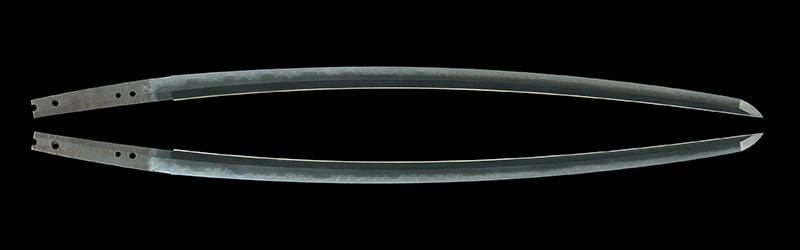
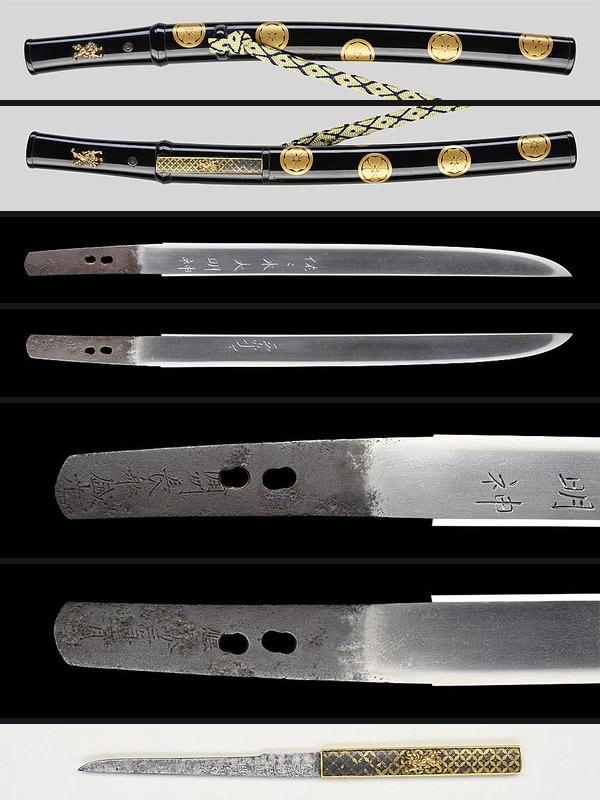
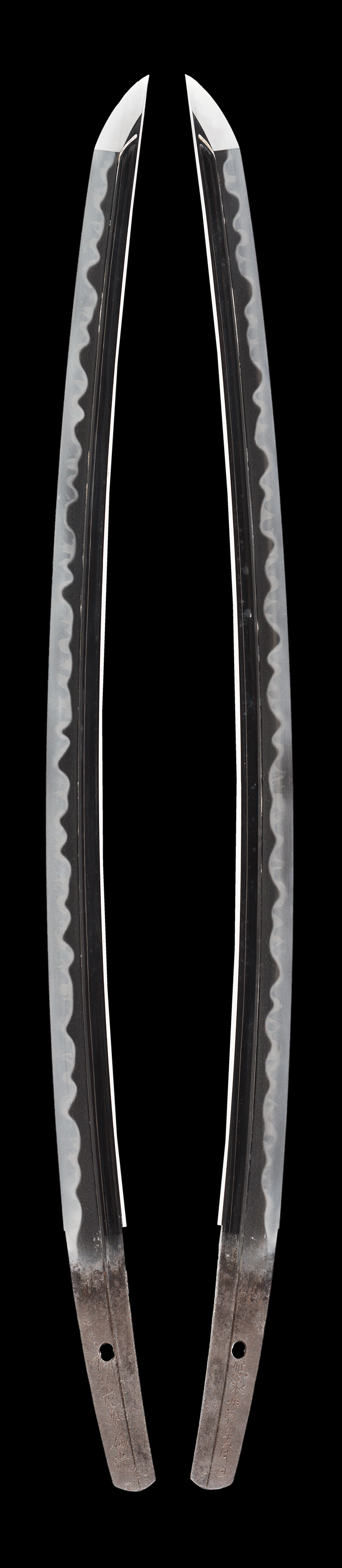
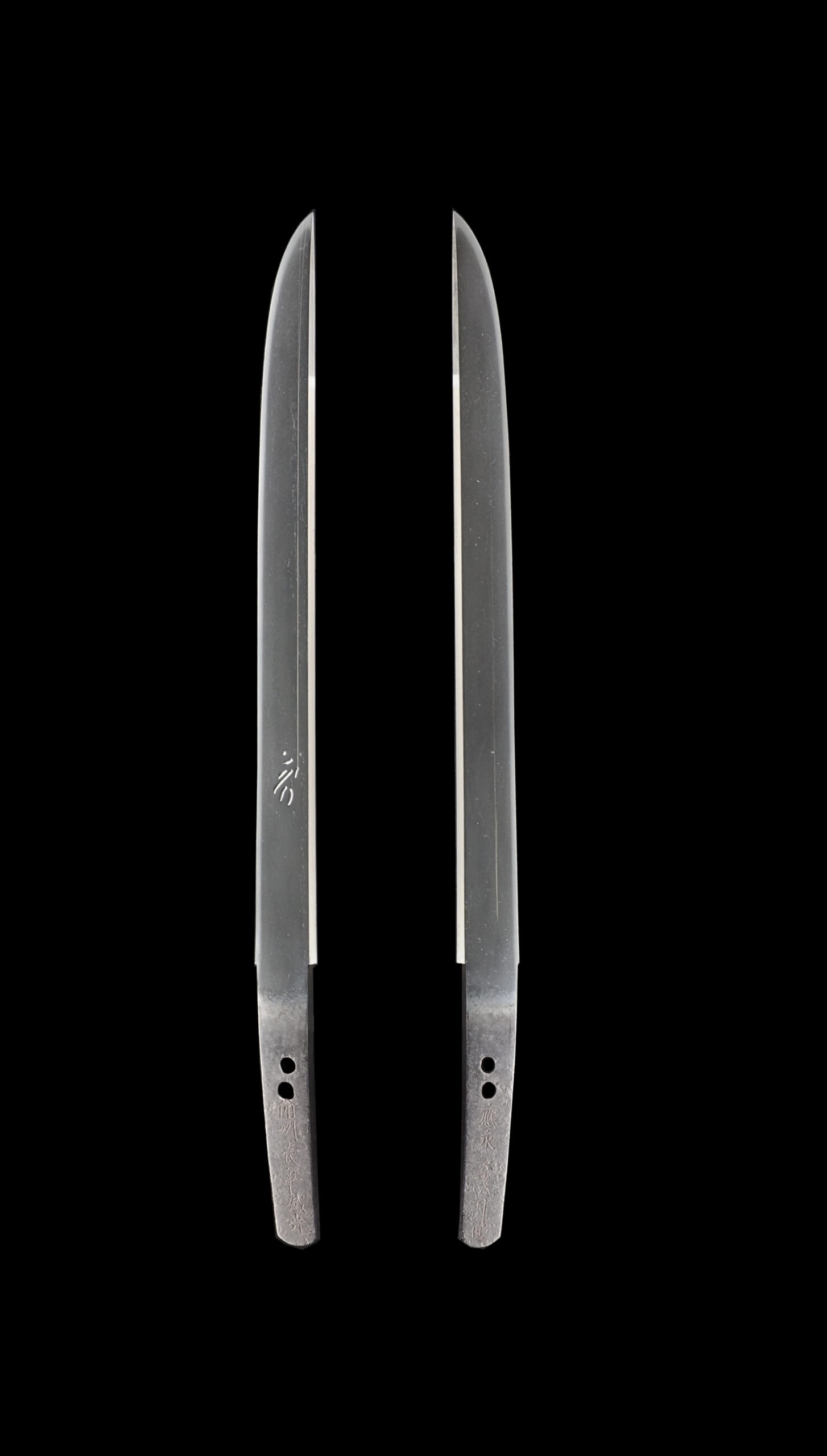
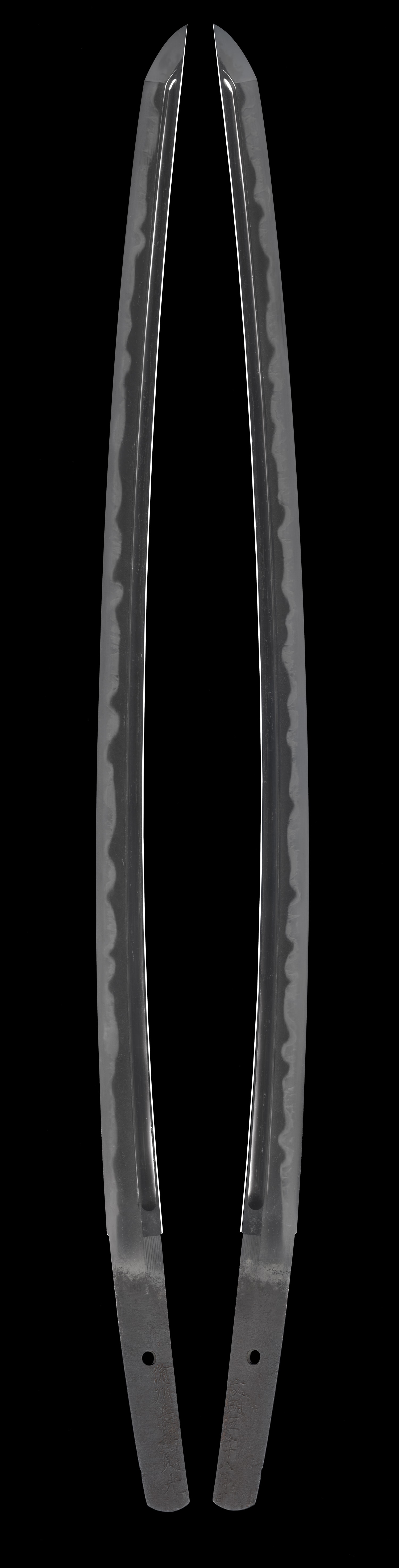
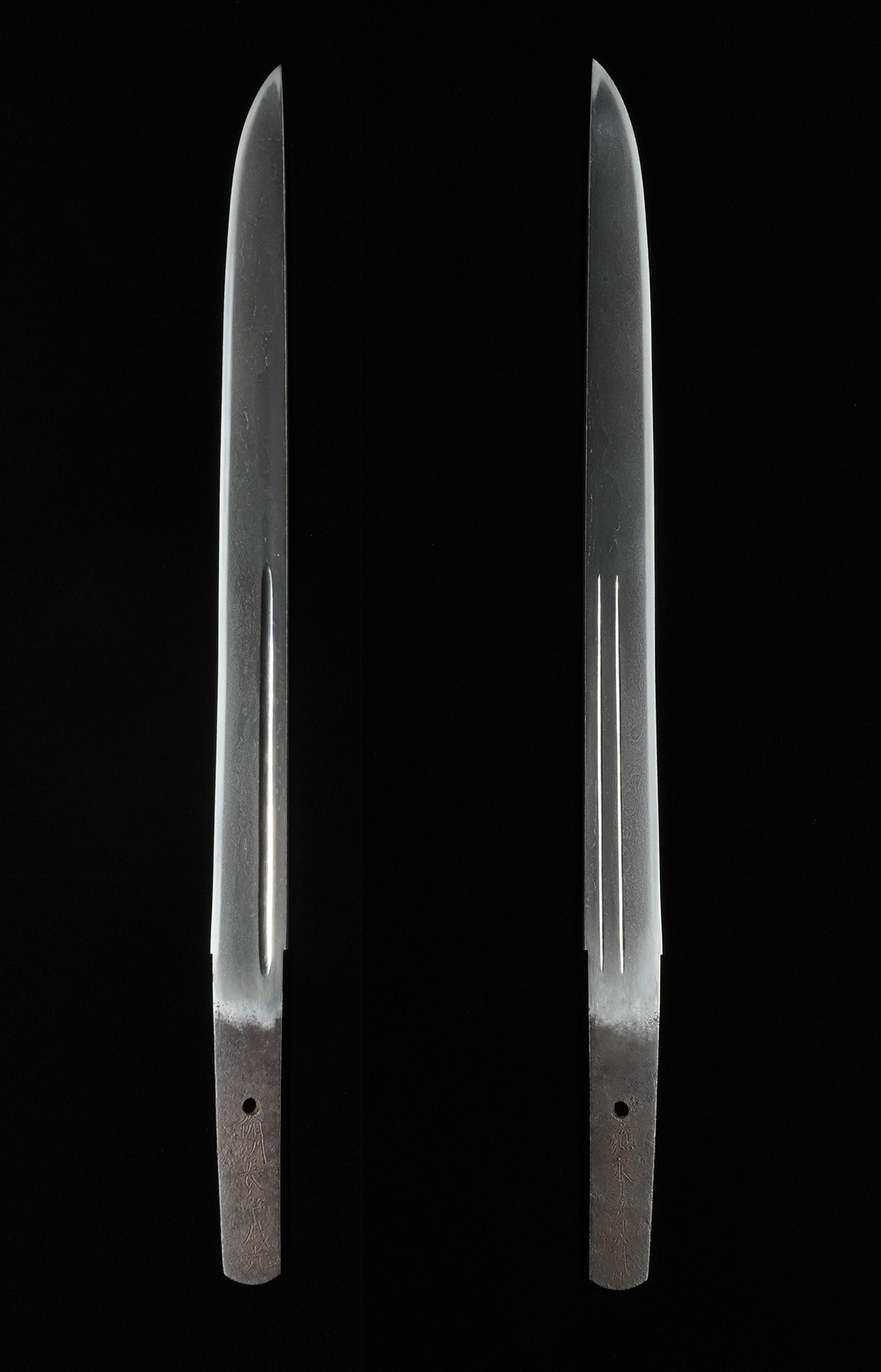
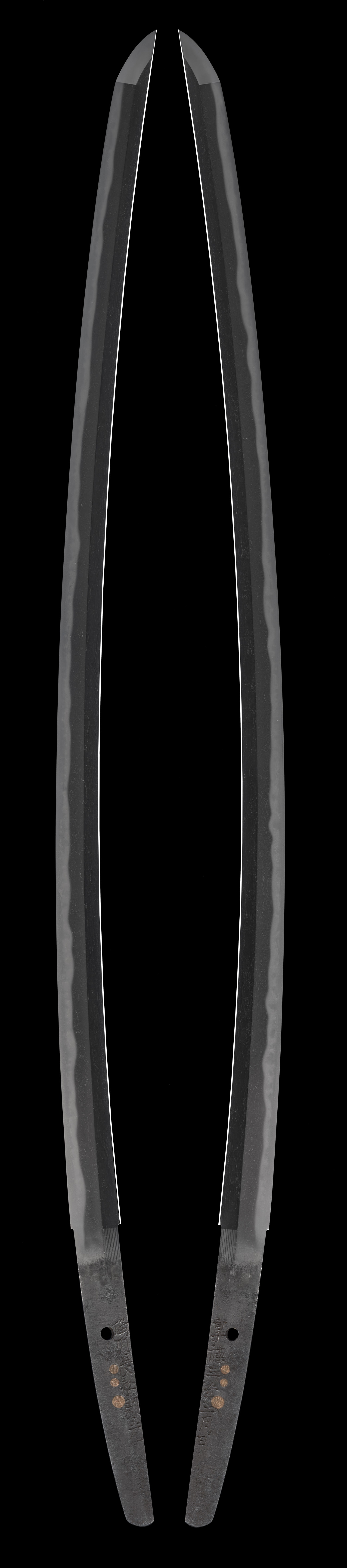
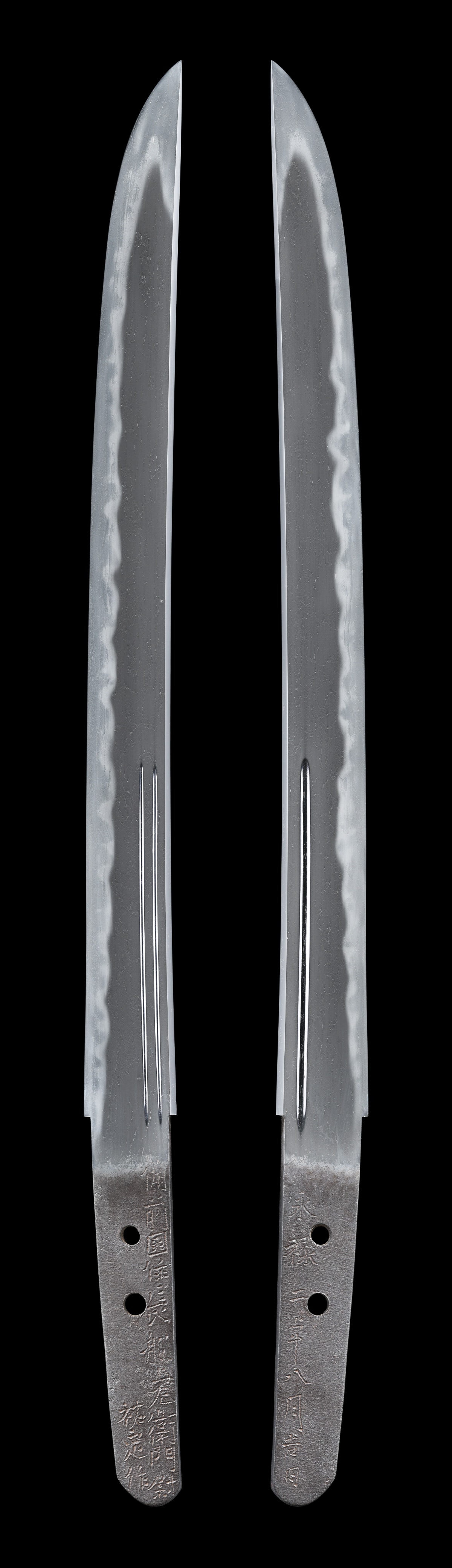
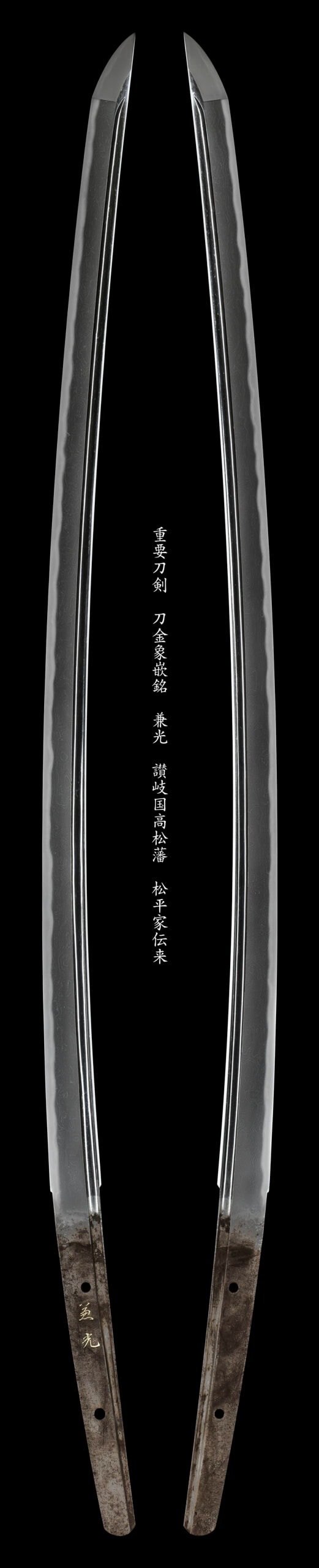
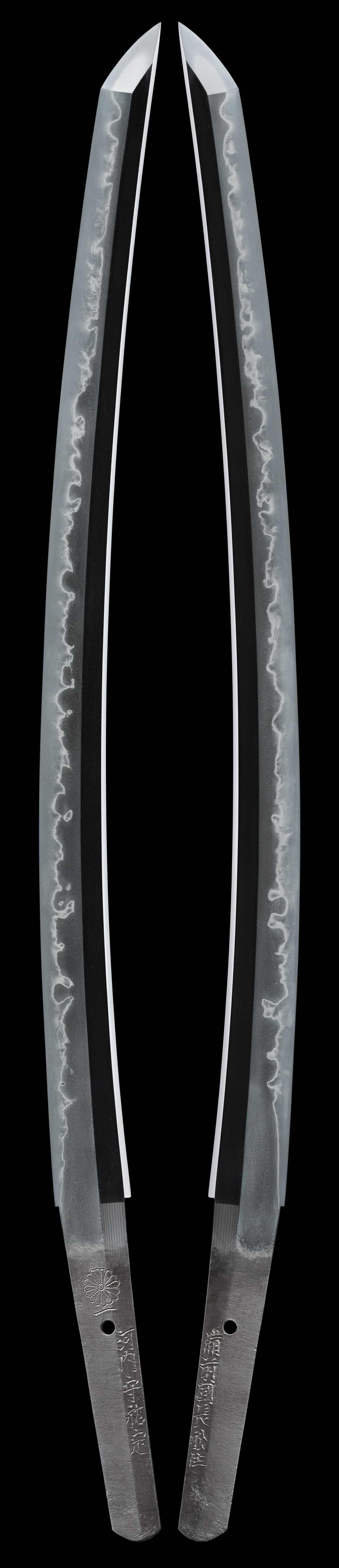
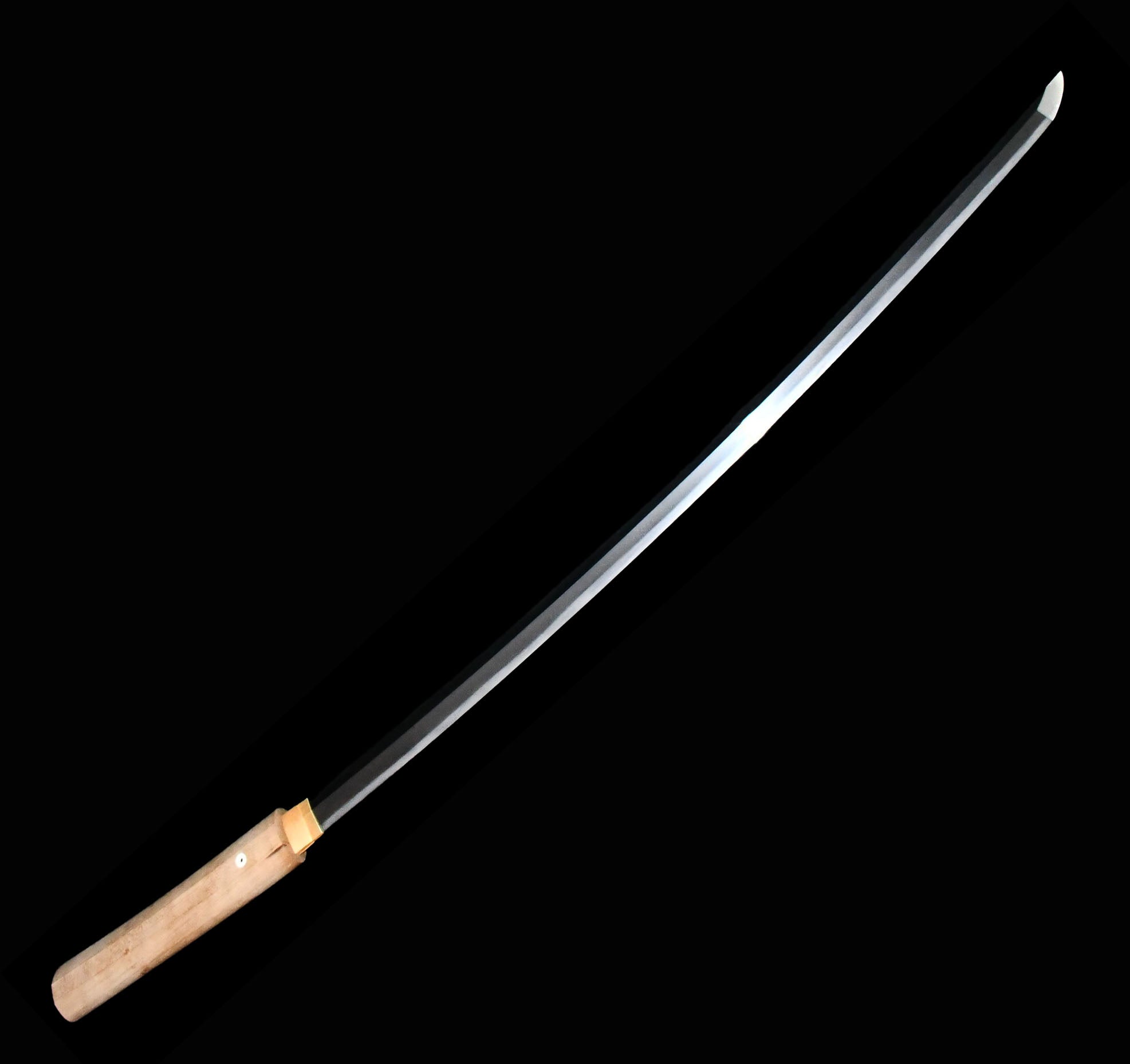
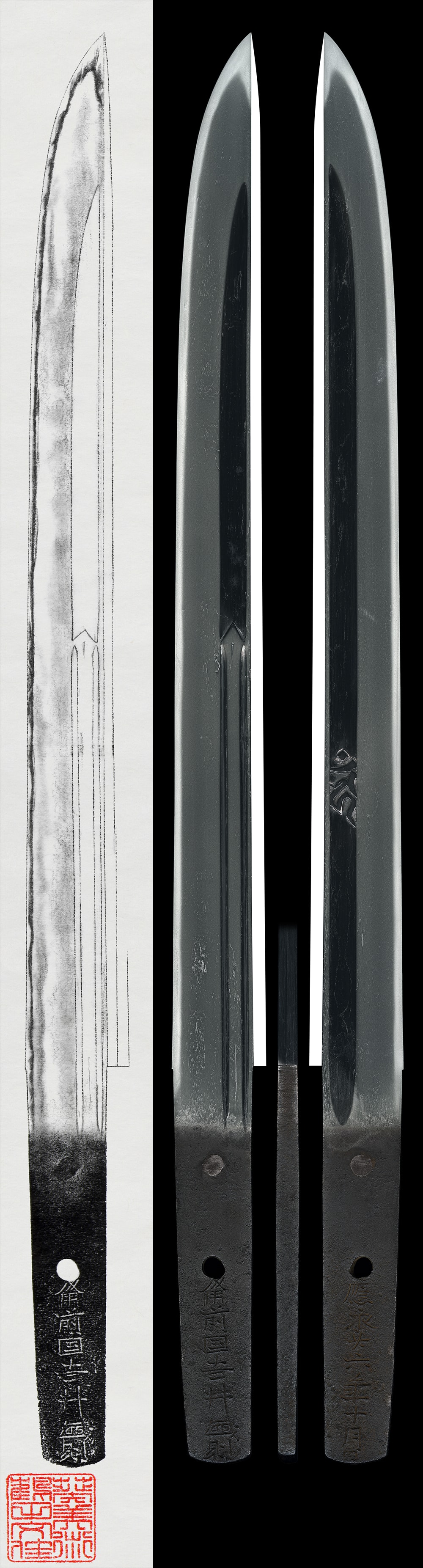
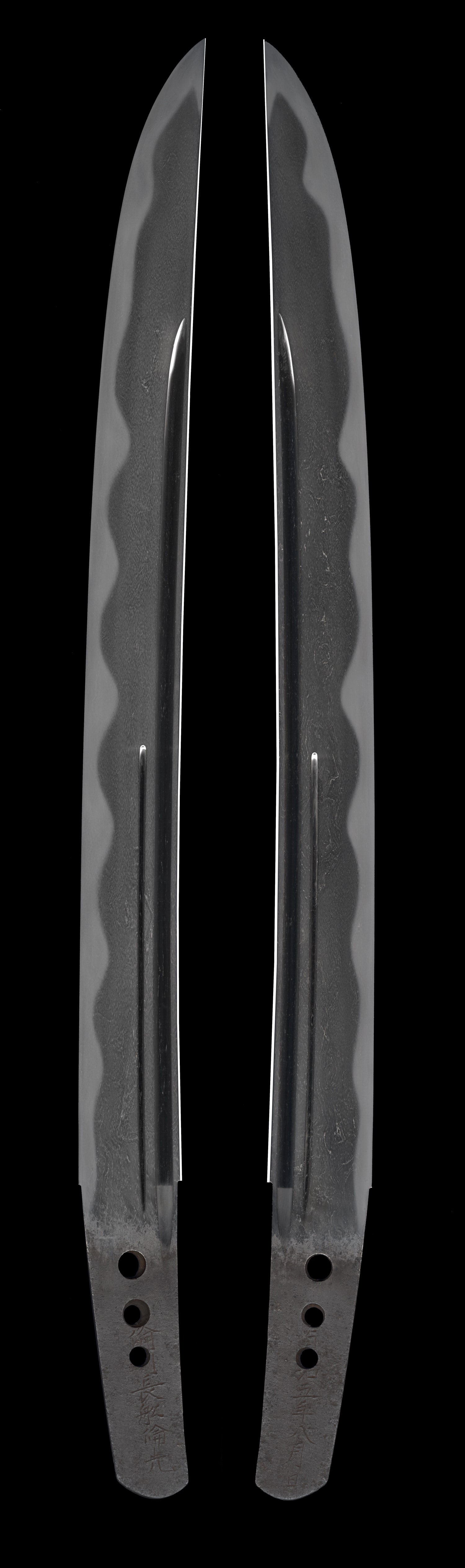
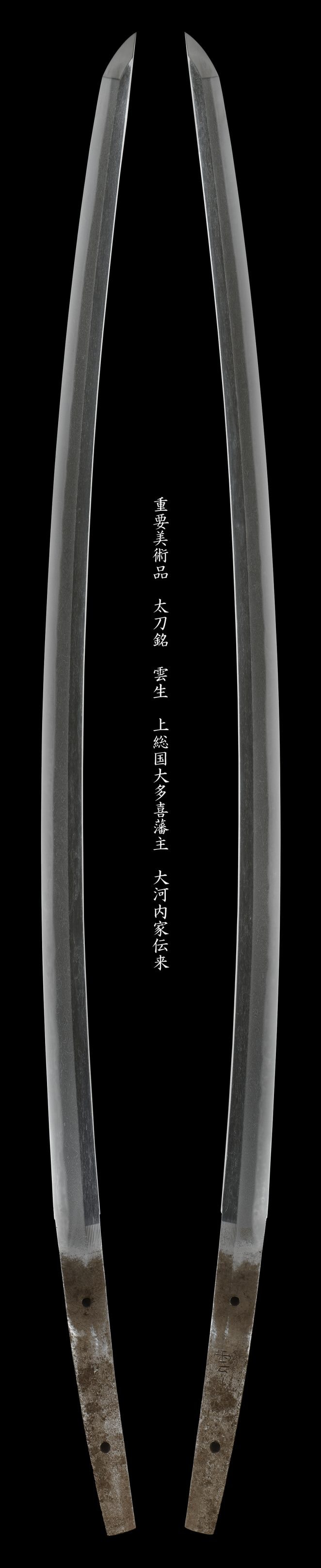
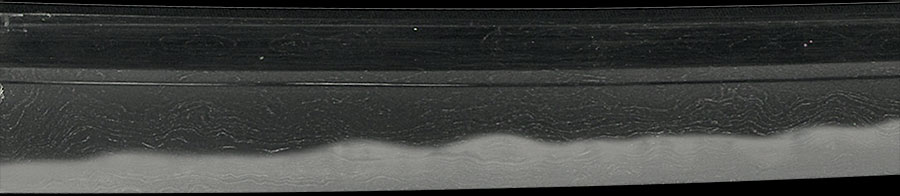
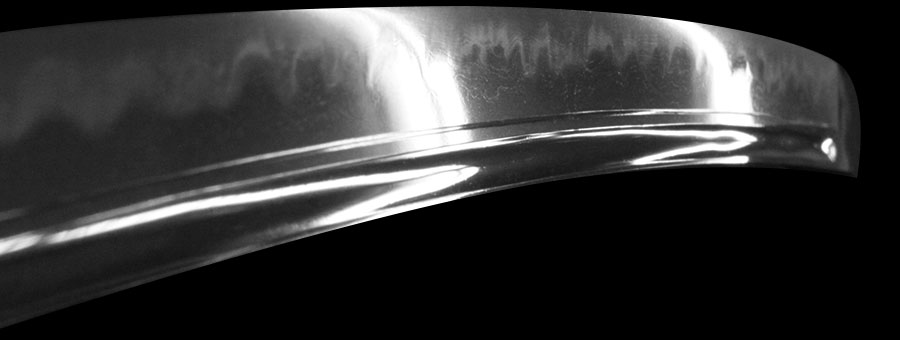
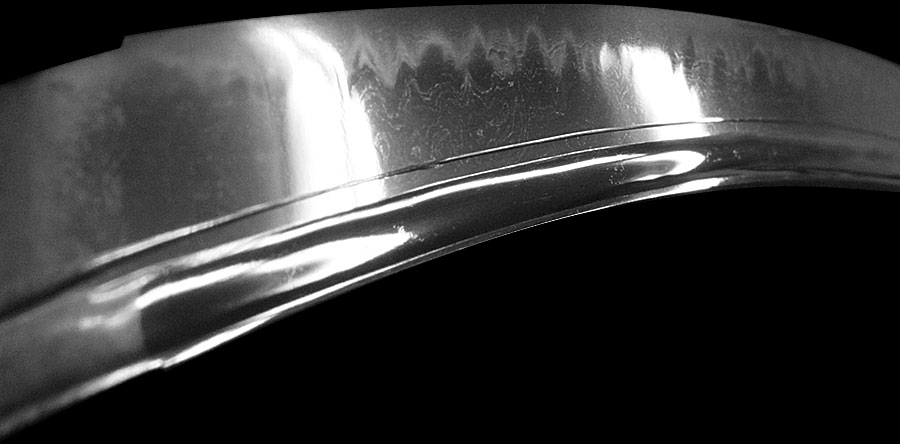
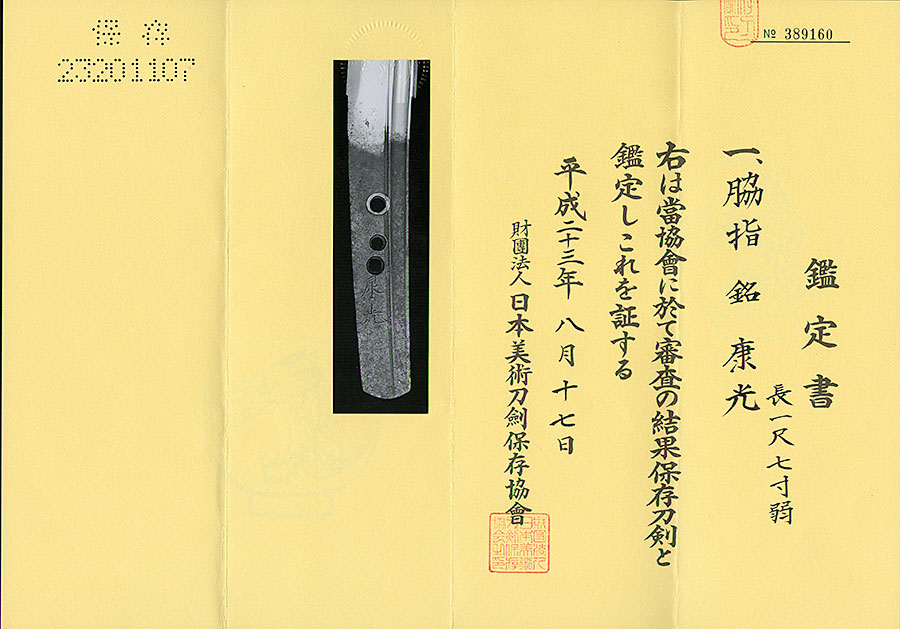
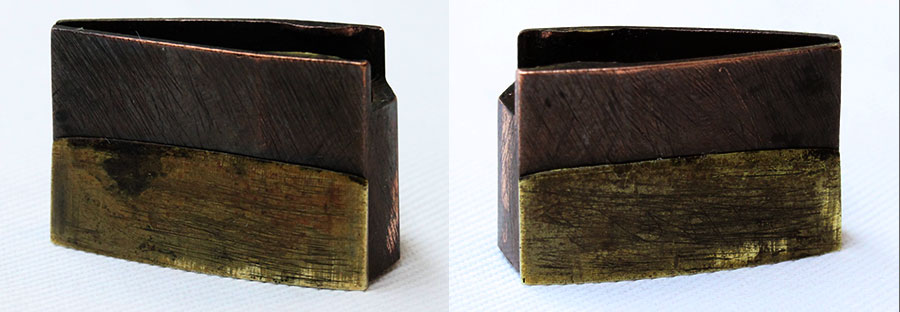
Legend NBTHK: Tokuju (Tokubetsu Juyo Token), Ju (Juyo Token), Toku (Tokubetsu Hozon Token), Ho (Hozon Token), Ko (Koshu Tokubetsu Kicho Token), Maru (Tokubetsu Kicho Token), Ki (Kicho Token) Other Appraisals: Kai (Nihon Token Hozon Kai), Fuji (Fujishiro Matsuo), Shiba (Shibata Mitsuo), Mise (Shop Guarantee) Quality: ☆ (Exceptional), ◎ (Excellent), ○ (Standard), △ (Slightly Substandard), Ki (Desired Mei) Accessories: Shiro (Shirasaya), Koshirae (Koshirae) Type: Wakizashi Period: Early Muromachi Nagasa (cm): 51.5 Sori: 1.4 Sakikasane: 0.41 Motokasane: 0.67 Sakihaba: 1.95 Motohaba: 2.8 Certificate: Ho Quality: ◎ Accessories: Shiro Nagasa: 1 shaku 7 sun A precious wakizashi with a Yasumitsu niji-mei by the master Bizen Osafune Yasumitsu, who has been honored since ancient times as one of the "Oei no Sanko" (Three Lights of Oei: Yasumitsu, Morimitsu, Moromitsu), the master smiths of Bizen Osafune. It is said since antiquity that "there are masterpieces among the Yasumitsu niji-mei," and this wakizashi dates back to an early period for Yasumitsu, being a masterpiece from around Oei 4 (1397) (618 years ago), the time when the Ashikaga Shogun Yoshimitsu built Kinkaku-ji. This wakizashi is in shinogi-zukuri with a graceful sugata, featuring sharply carved bo-hi and soe-hi. The jigane is a superb, tightly forged ko-itame hada exhibiting a faint midare-utsuri. The hamon is a nie-deki gunome-choji with an open valley (koshi no aita), showing kinsuji and beautifully tempered in a style representative of Oei Bizen. Please enjoy this famous wakizashi by Bizen Osafune Yasumitsu, a representative swordsman of the main Bizen Osafune lineage. Registration: Kyoto, March 24, Showa 55 (1980)
 NihontoWatch
Muromachi · nagasa 51.5cm · sori 1.4cm





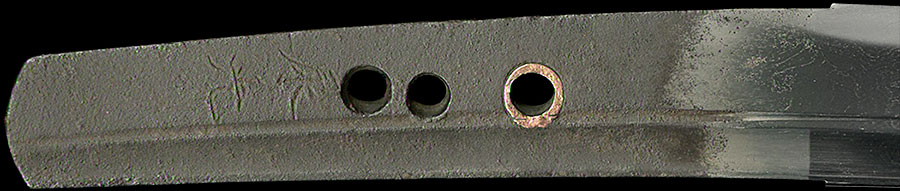



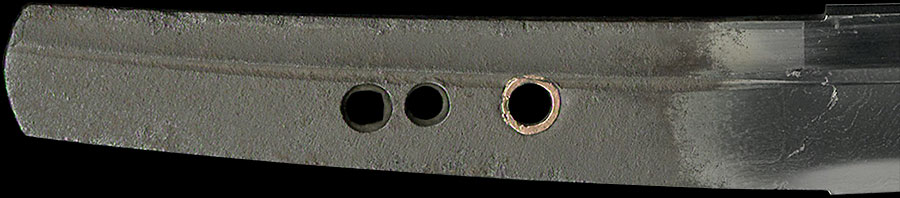
Oei-Bizen (Osafune) · Bizen · around 1394-1428
Fujishiro Jo-jo saku · Tōken Taikan top 11%
1 piece on the market now
Yasumitsu of Osafune worked in Bizen Province in the early Muromachi period, around the Ōei era (1394–1428), the years in which a flourishing group of smiths revived Osafune after the slump of Nanbokuchō. The published sources call that group Ōei-Bizen, and they place Yasumitsu, with Morimitsu, at its head: "Yasumitsu, together with Morimitsu, stands as the twin pillars among the Bizen smiths of the early Muromachi period collectively termed Ōei-Bizen."[[c:1]] Beside the two leading hands they name Iesuke, Tsuneie and Sanemitsu as lesser masters of the same circle. The school's ideal, the sources say, was a return to the Kamakura period, an aim visible in its revival of the tachi shape and of the chōji hamon that had fallen out of use under Nanbokuchō. He carries on the Osafune line of Nagamitsu and Kagemitsu, and his dated work runs densely through the Ōei years, the long signature Bishū Osafune Yasumitsu cut toward the mune with the date on the reverse.
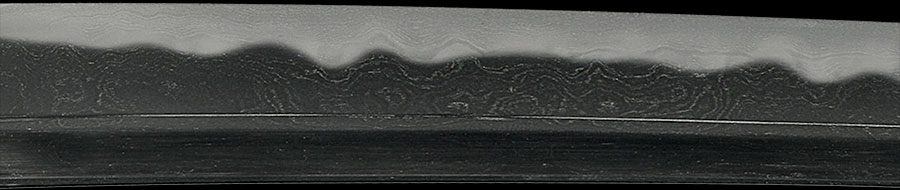
His prime and most characteristic hand is a flamboyant one. Over an itame mixed with mokume, the grain standing, the temper rises into a large-pattern chōji-midare built on gunome whose base opens wide at the waist, the koshibiraki form the published sources treat as the school's own. Ashi and yō enter abundantly; the line is nioi-based with ko-nie, slight sunagashi and fine kinsuji playing through, tobiyaki scattering at times, the nioiguchi bright and clear. The bōshi enters midare-komi and turns back to a pointed, tongue-like tip, with hakikake brushed through it. This turnback is his signature feature and the school's: the sources single out "a bōshi whose tip becomes pointed, the characteristic form generally called the rōsoku-no-shin (candle-wick)." It is the trait by which Ōei-Bizen separates itself from the Kamakura revival its sugata and chōji otherwise evoke.
The jigane is the same throughout his work and is itself a kantei point: a standing itame thickly mixed with mokume, sometimes flowing, fine ji-nie adhering like dust and chikei-like dark lines entering, what the sources render as chikei-fū no kane. Across it stands a reflection, and the sources distinguish two kinds: a straight bō-utsuri or sugu-utsuri, and a midare-utsuri that they read as the more archaic, recalling late-Kamakura Osafune. Of one tachi the published commentary remarks that its utsuri is "not the bō-utsuri often seen in this period, but instead shows midare-utsuri."[[c:2]] It is the standing, mokume-bearing itame, not the smoother Kamakura jigane, that the judges use to fix the attribution. A bō-hi, often with a paired soe-hi, is finished round above the machi, a school tell, and the koshimoto may carry bonji, a sankozuka-ken, or carved deity names.
Alongside the flamboyant midare the sources mark a second, calm hand. It is a chū- or hoso-suguha, the nioiguchi tight, bright and clear, faintly broken with ko-gunome and saka-ashi and frayed along the edge with hotsure and kuichigai-ba, the bōshi running straight to a ko-maru. The judges note this suguha hand is comparatively common in him, and more his than his fellow master's: "the suguha, it would seem, is found rather more in Yasumitsu than in Morimitsu."[[c:3]] His signing follows the registers that scholarship uses to sort the generations. The corpus is overwhelmingly ubu and long-signed with an Ōei date; two-character mei are comparatively rare and tend to carry no date. Dated work survives from Ōei, Shōchō, Eikyō and Kakitsu, and the common reading takes the pieces dated after Shōchō as a second hand. The reference works place the Yasumitsu who styled himself Uemon-no-jō as the first generation, active in the Ōei years, count five generations of the name down to the end of Muromachi, and assign a Sakyō-no-suke working in the Eikyō and Bunan eras, the so-called Eikyō-Bizen, to the next, whose temper is smaller in pattern and judged a touch inferior; the strict division between the generations the sources leave open for further study.
Within the Ōei-Bizen pair the two masters share the school manner, and the working distinction a collector draws between them is a fine one the sources state in their own words. Of a midare whose teeth point at the head the commentary observes that this is "a hamon generally found rather more in Yasumitsu than in Morimitsu,"[[c:4]] and the same is said of the calm suguha. His suguha can deceive: at a glance it recalls late-Kamakura Osafune, and where the nioiguchi sinks and saka-ashi enter it can evoke Aoe, the sources writing of one such blade that "it has tempered a suguha of tight nioiguchi, so as to suggest Aoe, yet this kind of workmanship is seen from time to time in Yasumitsu."[[c:5]] The attribution settles back on him by the standing itame-mokume hada and the Ōei sugata. The religious carving he cuts at the koshimoto, bonji, the sankozuka-ken, names such as Hachiman Daibosatsu, is not his invention but an inheritance: "this is the carving tradition seen in Osafune work since Nagamitsu and Kagemitsu, and it is carried on down to Sue-Bizen."
Fujishiro grades him Jō-jō saku, and his work carries weight in the designation record: four of his blades are Important Cultural Properties and four are Tokubetsu Jūyō, with forty-three Jūyō beneath them, forty-seven in the Tokubetsu Jūyō and Jūyō tiers together. He is Jō-jō saku and almost entirely signed, fifty-five signed pieces against none unsigned in the official record, and he left accomplished work in every form: tachi, katana, wakizashi, tanto, and even a rare ubu-signed great spear, the published sources noting that signed Ōei-Bizen spears are extremely scarce. His blades carry a distinguished provenance, twelve recording a history through the Yamauchi lords of Tosa, the Nabeshima, Maeda, Tōdō, Naitō and Akimoto houses, the Imperial Family, and the rōnin Horibe Yasubei (Taketsune) of the Akō affair. The Important Cultural Properties are held as patrimony and do not trade. Of recorded whereabouts his blades sit largely in shrines and museums, among them Atsuta Jingū, Ise Jingū, Nikkō Tōshōgū, the Yūtoku, Hayashibara and Bizen Osafune sword museums, and the British Museum. A Yasumitsu in the Tokubetsu Jūyō or Jūyō tier is not wholly beyond reach, for the corpus is large for so prized a name, but the finest survive in held collections and one comes to open hands only from time to time, a landmark of early-Muromachi Bizen when it does.
Where Yasumitsu stands among comparable artisans: across all of nihontō, and within tradition, era, and period. The tiers (Foremost · Leading · Major · Notable) weigh official designations from the NBTHK and Japan's Agency for Cultural Affairs, together with historical honors of lasting repute such as the Sansaku and Meibutsu-chō.
Select a lens to see how it's measured.
Years he was demonstrably active, proven by signed-and-dated blades
Bizen-den · Bizen
Phase: Ōei-Bizen応永備前· 1390–1441
17 pieces on the market now
The Oei-Bizen and Eikyo-Bizen smiths represent the resurgence of the Osafune school in Bizen Province during the early Muromachi period, an era in which a conscious revival of Kamakura-period aesthetics transformed the character of Bizen swordmaking after the bold, expansive forms of the Nanbokucho period. The school's foremost representatives are Yasumitsu and Morimitsu, described by the NBTHK as the "twin pillars" of Oei-Bizen, both active around the Oei era (1394--1428). Morimitsu is held by one tradition to have been the son of Moromitsu, a representative smith of the late Nanbokucho ko-zori group, and his earliest dated works bridge the transitional character of his father's generation and the fully developed Oei-Bizen idiom. The name Yasumitsu was successively inherited through as many as five generations, while the succeeding Eikyo-Bizen phase -- centered on the fourth-generation Norimitsu and his contemporary Sukemitsu -- carried the tradition forward into the mid-Muromachi period. Related smiths such as Tsuneie of the Hatakeda branch worked in a manner so closely aligned with Osafune production that the NBTHK observes there are "no grounds -- whether in workmanship, the character of the signature, or any other point" by which their work could be distinguished from the main line. Within the Oei-Bizen manner, two principal modes of tempering are recognized. " In both modes the school's identity is revealed through shared forging characteristics: itame-hada mixed with mokume in which the grain stands out conspicuously, with dark lines resembling chikei entering the jihada and midare-utsuri or bo-utsuri standing prominently in the ground. " The boshi assumes the idiosyncratic form popularly termed the "candlewick" (rosoku no shin), becoming pointed at the tip -- a diagnostic hallmark of the school.
A further point of connoisseurship is the finishing of bo-hi with rounded ends (maru-dome) above the machi. The transition from Oei-Bizen to Eikyo-Bizen is marked by Norimitsu's development of a somewhat intermediary character, retaining the koshi-biraki gunome and bright nioiguchi of the earlier masters while introducing tighter grain and elements that point toward the eventual Sue-Bizen style. Moromitsu's earlier production establishes the bridge from the opposite direction, his ko-zori period works showing "signs foreshadowing the style of Oei-Bizen" in their more flamboyant midare passages. The ideal pursued by the Oei-Bizen and Eikyo-Bizen smiths "appears to have been a revival of the Kamakura period," visible in their elegant tachi proportions and in the deliberate re-creation of choji tempering that had fallen out of favour during the Nanbokucho period. Yet the NBTHK consistently emphasizes that the school's own distinctive character is always discernible beneath this revivalist surface. " Both masters' works are consistently described as kenzen -- sound and well-preserved -- with a jigane of superior quality possessing an urumi richness. The school's influence pervaded early Muromachi sword production, and the Eikyo-Bizen continuation through Norimitsu ensured that the Osafune tradition maintained vitality and refinement well into the fifteenth century. Whether in the commanding vigour of the large-pattern choji-midare or in the quiet classical elegance of the suguha mode, the Oei-Bizen and Eikyo-Bizen smiths collectively represent one of the most accomplished chapters in the long history of Bizen swordsmithing. Learn more →
| Smith | Era | Designated |
|---|---|---|
| Yasumitsu康光 | 1394-1428 | 49 |
| Morimitsu盛光 | 1394-1428 | 60 |
| Yasumitsu康光 | 1424-1443 | 6 |
| Sanemitsu實光 | 1394-1428 | 4 |
| Norimitsu則光 | 1462-1487 | 9 |
War at home and trade abroad made Muromachi Bizen the busiest forge region in Japan: a century of Sengoku demand after the Ōnin War, and export missions to Ming China carrying blades by the tens of thousands.
The NTHK’s principal certificate, issued for a blade of considerable quality. It confirms a genuine signature, or, for an unsigned (mumei) work, records the judges’ attribution to a smith or school. The paper carries a detailed worksheet with a numerical point score.
The NTHK (Nihon Tōken Hozon Kai, the Society for the Preservation of the Japanese Sword) is the oldest of Japan’s sword-appraisal bodies, founded in 1910, decades before the NBTHK. After the death of its long-serving head it divided into two successor societies, the NTHK and the NTHK-NPO, both of which continue to hold shinsa. NTHK certificates are known for a detailed worksheet that records a numerical point score alongside the judges’ written opinion, and the society is especially respected for its attribution of unsigned (mumei) work.
For returns due to customer circumstances, the cost is the customer's responsibility. For returns due to our mis-shipment or a defective item, we bear the cost.
Legend NBTHK: Tokuju (Tokubetsu Juyo Token), Ju (Juyo Token), Toku (Tokubetsu Hozon Token), Ho (Hozon Token), Ko (Koshu Tokubetsu Kicho Token), Maru (Tokubetsu Kicho Token), Ki (Kicho Token) Other Appraisals: Kai (Nihon Token Hozon Kai), Fuji (Fujishiro Matsuo), Shiba (Shibata Mitsuo), Mise (Shop Guarantee) Quality: ☆ (Exceptional), ◎ (Excellent), ○ (Standard), △ (Slightly Substandard), Ki (Desired Mei) Accessories: Shiro (Shirasaya), Koshirae (Koshirae) Type: Wakizashi Period: Early Muromachi Nagasa (cm): 51.5 Sori: 1.4 Sakikasane: 0.41 Motokasane: 0.67 Sakihaba: 1.95 Motohaba: 2.8 Certificate: Ho Quality: ◎ Accessories: Shiro Nagasa: 1 shaku 7 sun A precious wakizashi with a Yasumitsu niji-mei by the master Bizen Osafune Yasumitsu, who has been honored since ancient times as one of the "Oei no Sanko" (Three Lights of Oei: Yasumitsu, Morimitsu, Moromitsu), the master smiths of Bizen Osafune. It is said since antiquity that "there are masterpieces among the Yasumitsu niji-mei," and this wakizashi dates back to an early period for Yasumitsu, being a masterpiece from around Oei 4 (1397) (618 years ago), the time when the Ashikaga Shogun Yoshimitsu built Kinkaku-ji. This wakizashi is in shinogi-zukuri with a graceful sugata, featuring sharply carved bo-hi and soe-hi. The jigane is a superb, tightly forged ko-itame hada exhibiting a faint midare-utsuri. The hamon is a nie-deki gunome-choji with an open valley (koshi no aita), showing kinsuji and beautifully tempered in a style representative of Oei Bizen. Please enjoy this famous wakizashi by Bizen Osafune Yasumitsu, a representative swordsman of the main Bizen Osafune lineage. Registration: Kyoto, March 24, Showa 55 (1980)
NihontoWatchMuromachi · nagasa 51.5cm · sori 1.4cm
Oei-Bizen (Osafune) · Bizen · around 1394-1428
Fujishiro Jo-jo saku · Tōken Taikan top 11%
1 piece on the market now
Yasumitsu of Osafune worked in Bizen Province in the early Muromachi period, around the Ōei era (1394–1428), the years in which a flourishing group of smiths revived Osafune after the slump of Nanbokuchō. The published sources call that group Ōei-Bizen, and they place Yasumitsu, with Morimitsu, at its head: "Yasumitsu, together with Morimitsu, stands as the twin pillars among the Bizen smiths of the early Muromachi period collectively termed Ōei-Bizen."[[c:1]] Beside the two leading hands they name Iesuke, Tsuneie and Sanemitsu as lesser masters of the same circle. The school's ideal, the sources say, was a return to the Kamakura period, an aim visible in its revival of the tachi shape and of the chōji hamon that had fallen out of use under Nanbokuchō. He carries on the Osafune line of Nagamitsu and Kagemitsu, and his dated work runs densely through the Ōei years, the long signature Bishū Osafune Yasumitsu cut toward the mune with the date on the reverse.
His prime and most characteristic hand is a flamboyant one. Over an itame mixed with mokume, the grain standing, the temper rises into a large-pattern chōji-midare built on gunome whose base opens wide at the waist, the koshibiraki form the published sources treat as the school's own. Ashi and yō enter abundantly; the line is nioi-based with ko-nie, slight sunagashi and fine kinsuji playing through, tobiyaki scattering at times, the nioiguchi bright and clear. The bōshi enters midare-komi and turns back to a pointed, tongue-like tip, with hakikake brushed through it. This turnback is his signature feature and the school's: the sources single out "a bōshi whose tip becomes pointed, the characteristic form generally called the rōsoku-no-shin (candle-wick)." It is the trait by which Ōei-Bizen separates itself from the Kamakura revival its sugata and chōji otherwise evoke.
The jigane is the same throughout his work and is itself a kantei point: a standing itame thickly mixed with mokume, sometimes flowing, fine ji-nie adhering like dust and chikei-like dark lines entering, what the sources render as chikei-fū no kane. Across it stands a reflection, and the sources distinguish two kinds: a straight bō-utsuri or sugu-utsuri, and a midare-utsuri that they read as the more archaic, recalling late-Kamakura Osafune. Of one tachi the published commentary remarks that its utsuri is "not the bō-utsuri often seen in this period, but instead shows midare-utsuri."[[c:2]] It is the standing, mokume-bearing itame, not the smoother Kamakura jigane, that the judges use to fix the attribution. A bō-hi, often with a paired soe-hi, is finished round above the machi, a school tell, and the koshimoto may carry bonji, a sankozuka-ken, or carved deity names.
Alongside the flamboyant midare the sources mark a second, calm hand. It is a chū- or hoso-suguha, the nioiguchi tight, bright and clear, faintly broken with ko-gunome and saka-ashi and frayed along the edge with hotsure and kuichigai-ba, the bōshi running straight to a ko-maru. The judges note this suguha hand is comparatively common in him, and more his than his fellow master's: "the suguha, it would seem, is found rather more in Yasumitsu than in Morimitsu."[[c:3]] His signing follows the registers that scholarship uses to sort the generations. The corpus is overwhelmingly ubu and long-signed with an Ōei date; two-character mei are comparatively rare and tend to carry no date. Dated work survives from Ōei, Shōchō, Eikyō and Kakitsu, and the common reading takes the pieces dated after Shōchō as a second hand. The reference works place the Yasumitsu who styled himself Uemon-no-jō as the first generation, active in the Ōei years, count five generations of the name down to the end of Muromachi, and assign a Sakyō-no-suke working in the Eikyō and Bunan eras, the so-called Eikyō-Bizen, to the next, whose temper is smaller in pattern and judged a touch inferior; the strict division between the generations the sources leave open for further study.
Within the Ōei-Bizen pair the two masters share the school manner, and the working distinction a collector draws between them is a fine one the sources state in their own words. Of a midare whose teeth point at the head the commentary observes that this is "a hamon generally found rather more in Yasumitsu than in Morimitsu,"[[c:4]] and the same is said of the calm suguha. His suguha can deceive: at a glance it recalls late-Kamakura Osafune, and where the nioiguchi sinks and saka-ashi enter it can evoke Aoe, the sources writing of one such blade that "it has tempered a suguha of tight nioiguchi, so as to suggest Aoe, yet this kind of workmanship is seen from time to time in Yasumitsu."[[c:5]] The attribution settles back on him by the standing itame-mokume hada and the Ōei sugata. The religious carving he cuts at the koshimoto, bonji, the sankozuka-ken, names such as Hachiman Daibosatsu, is not his invention but an inheritance: "this is the carving tradition seen in Osafune work since Nagamitsu and Kagemitsu, and it is carried on down to Sue-Bizen."
Fujishiro grades him Jō-jō saku, and his work carries weight in the designation record: four of his blades are Important Cultural Properties and four are Tokubetsu Jūyō, with forty-three Jūyō beneath them, forty-seven in the Tokubetsu Jūyō and Jūyō tiers together. He is Jō-jō saku and almost entirely signed, fifty-five signed pieces against none unsigned in the official record, and he left accomplished work in every form: tachi, katana, wakizashi, tanto, and even a rare ubu-signed great spear, the published sources noting that signed Ōei-Bizen spears are extremely scarce. His blades carry a distinguished provenance, twelve recording a history through the Yamauchi lords of Tosa, the Nabeshima, Maeda, Tōdō, Naitō and Akimoto houses, the Imperial Family, and the rōnin Horibe Yasubei (Taketsune) of the Akō affair. The Important Cultural Properties are held as patrimony and do not trade. Of recorded whereabouts his blades sit largely in shrines and museums, among them Atsuta Jingū, Ise Jingū, Nikkō Tōshōgū, the Yūtoku, Hayashibara and Bizen Osafune sword museums, and the British Museum. A Yasumitsu in the Tokubetsu Jūyō or Jūyō tier is not wholly beyond reach, for the corpus is large for so prized a name, but the finest survive in held collections and one comes to open hands only from time to time, a landmark of early-Muromachi Bizen when it does.
Where Yasumitsu stands among comparable artisans: across all of nihontō, and within tradition, era, and period. The tiers (Foremost · Leading · Major · Notable) weigh official designations from the NBTHK and Japan's Agency for Cultural Affairs, together with historical honors of lasting repute such as the Sansaku and Meibutsu-chō.
Select a lens to see how it's measured.
Years he was demonstrably active, proven by signed-and-dated blades
Bizen-den · Bizen
Phase: Ōei-Bizen応永備前· 1390–1441
17 pieces on the market now
The Oei-Bizen and Eikyo-Bizen smiths represent the resurgence of the Osafune school in Bizen Province during the early Muromachi period, an era in which a conscious revival of Kamakura-period aesthetics transformed the character of Bizen swordmaking after the bold, expansive forms of the Nanbokucho period. The school's foremost representatives are Yasumitsu and Morimitsu, described by the NBTHK as the "twin pillars" of Oei-Bizen, both active around the Oei era (1394--1428). Morimitsu is held by one tradition to have been the son of Moromitsu, a representative smith of the late Nanbokucho ko-zori group, and his earliest dated works bridge the transitional character of his father's generation and the fully developed Oei-Bizen idiom. The name Yasumitsu was successively inherited through as many as five generations, while the succeeding Eikyo-Bizen phase -- centered on the fourth-generation Norimitsu and his contemporary Sukemitsu -- carried the tradition forward into the mid-Muromachi period. Related smiths such as Tsuneie of the Hatakeda branch worked in a manner so closely aligned with Osafune production that the NBTHK observes there are "no grounds -- whether in workmanship, the character of the signature, or any other point" by which their work could be distinguished from the main line. Within the Oei-Bizen manner, two principal modes of tempering are recognized. " In both modes the school's identity is revealed through shared forging characteristics: itame-hada mixed with mokume in which the grain stands out conspicuously, with dark lines resembling chikei entering the jihada and midare-utsuri or bo-utsuri standing prominently in the ground. " The boshi assumes the idiosyncratic form popularly termed the "candlewick" (rosoku no shin), becoming pointed at the tip -- a diagnostic hallmark of the school.
A further point of connoisseurship is the finishing of bo-hi with rounded ends (maru-dome) above the machi. The transition from Oei-Bizen to Eikyo-Bizen is marked by Norimitsu's development of a somewhat intermediary character, retaining the koshi-biraki gunome and bright nioiguchi of the earlier masters while introducing tighter grain and elements that point toward the eventual Sue-Bizen style. Moromitsu's earlier production establishes the bridge from the opposite direction, his ko-zori period works showing "signs foreshadowing the style of Oei-Bizen" in their more flamboyant midare passages. The ideal pursued by the Oei-Bizen and Eikyo-Bizen smiths "appears to have been a revival of the Kamakura period," visible in their elegant tachi proportions and in the deliberate re-creation of choji tempering that had fallen out of favour during the Nanbokucho period. Yet the NBTHK consistently emphasizes that the school's own distinctive character is always discernible beneath this revivalist surface. " Both masters' works are consistently described as kenzen -- sound and well-preserved -- with a jigane of superior quality possessing an urumi richness. The school's influence pervaded early Muromachi sword production, and the Eikyo-Bizen continuation through Norimitsu ensured that the Osafune tradition maintained vitality and refinement well into the fifteenth century. Whether in the commanding vigour of the large-pattern choji-midare or in the quiet classical elegance of the suguha mode, the Oei-Bizen and Eikyo-Bizen smiths collectively represent one of the most accomplished chapters in the long history of Bizen swordsmithing. Learn more →
| Smith | Era | Designated |
|---|---|---|
| Yasumitsu康光 | 1394-1428 | 49 |
| Morimitsu盛光 | 1394-1428 | 60 |
| Yasumitsu康光 | 1424-1443 | 6 |
| Sanemitsu實光 | 1394-1428 | 4 |
| Norimitsu則光 | 1462-1487 | 9 |
War at home and trade abroad made Muromachi Bizen the busiest forge region in Japan: a century of Sengoku demand after the Ōnin War, and export missions to Ming China carrying blades by the tens of thousands.
The NTHK’s principal certificate, issued for a blade of considerable quality. It confirms a genuine signature, or, for an unsigned (mumei) work, records the judges’ attribution to a smith or school. The paper carries a detailed worksheet with a numerical point score.
The NTHK (Nihon Tōken Hozon Kai, the Society for the Preservation of the Japanese Sword) is the oldest of Japan’s sword-appraisal bodies, founded in 1910, decades before the NBTHK. After the death of its long-serving head it divided into two successor societies, the NTHK and the NTHK-NPO, both of which continue to hold shinsa. NTHK certificates are known for a detailed worksheet that records a numerical point score alongside the judges’ written opinion, and the society is especially respected for its attribution of unsigned (mumei) work.
For returns due to customer circumstances, the cost is the customer's responsibility. For returns due to our mis-shipment or a defective item, we bear the cost.