NihontoWatch Mon

NihontoWatch

MarketAuctions
Encyclopedia
NihontoWatch Mon

NihontoWatch

MarketAuctions
Encyclopedia

Description

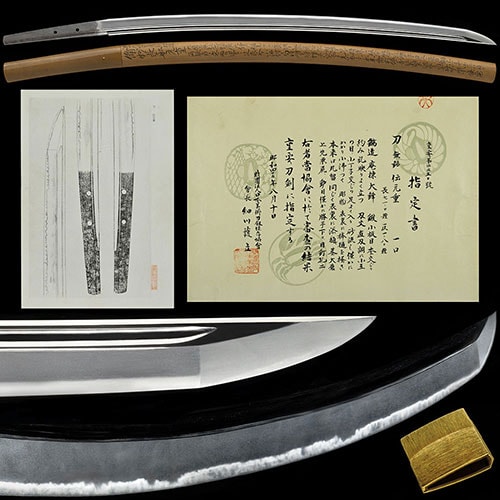
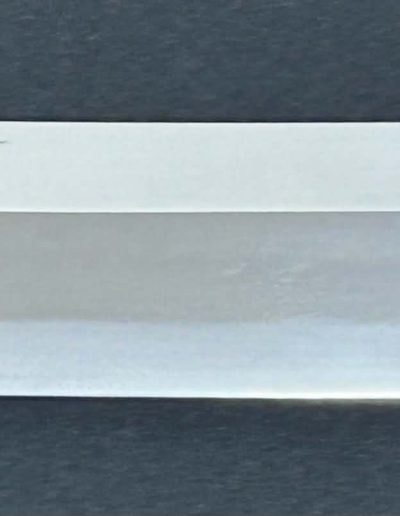
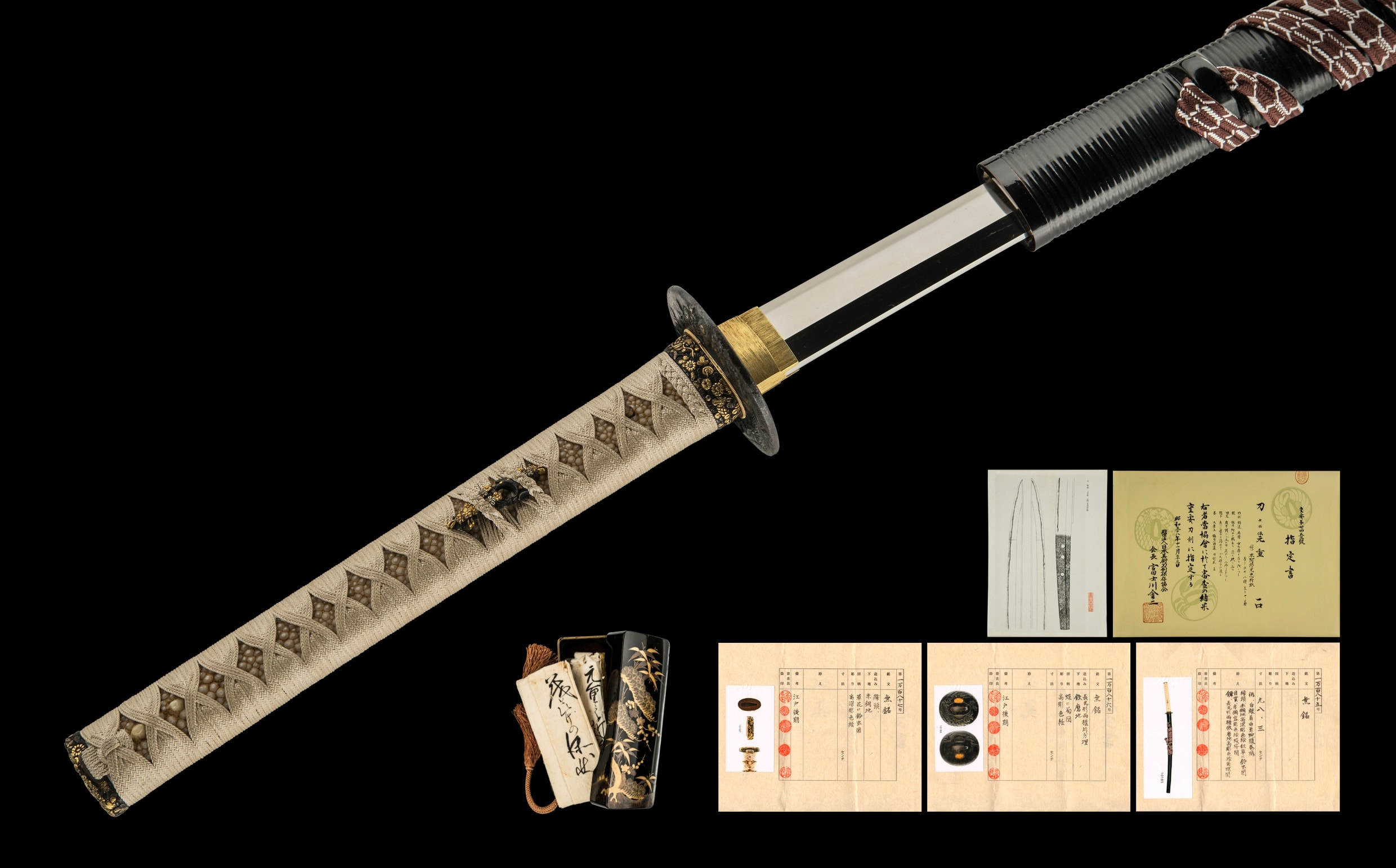
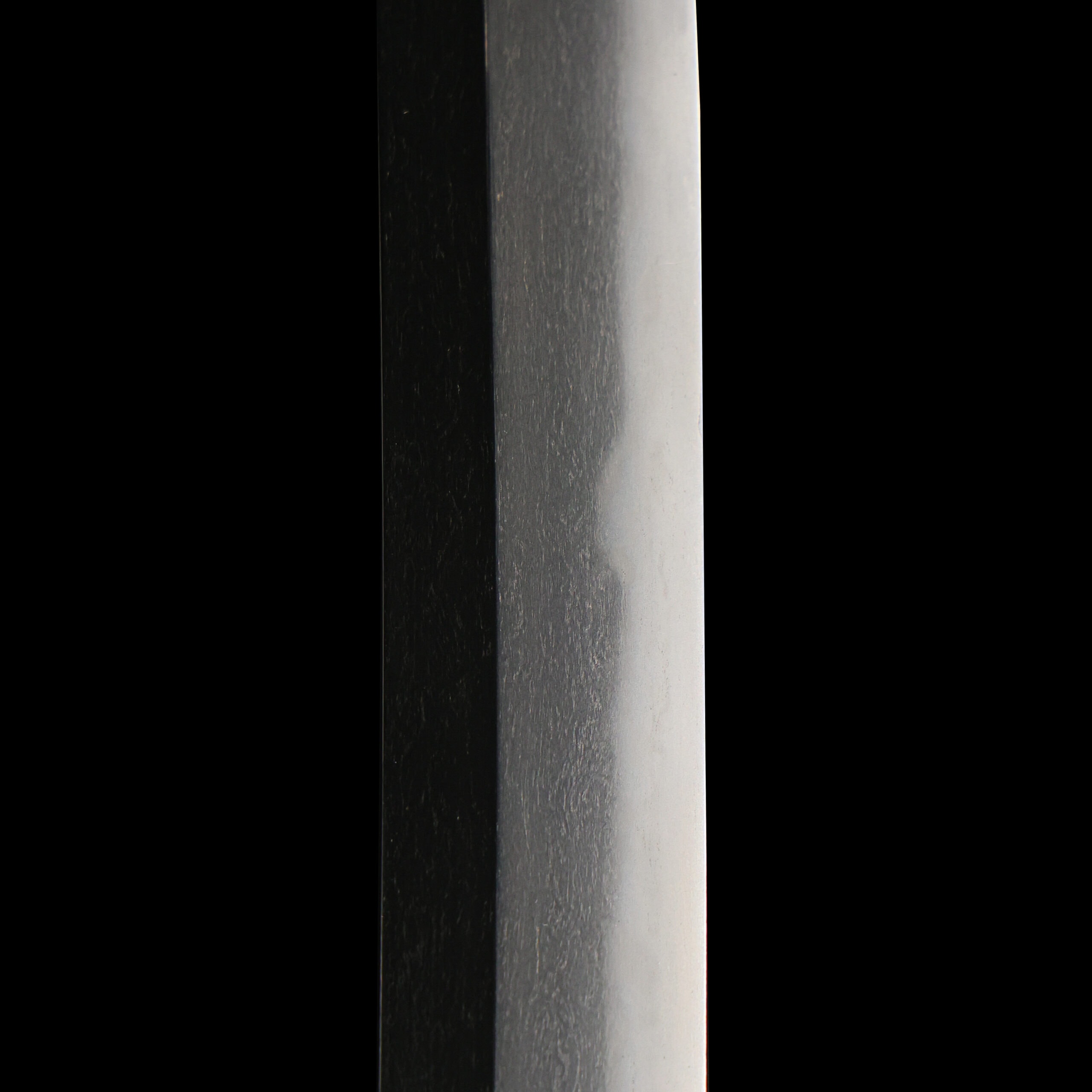
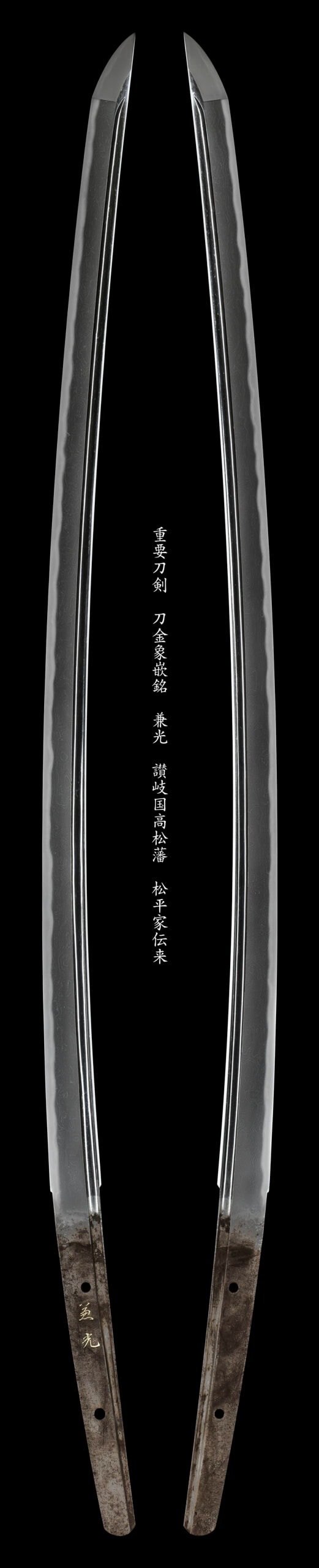
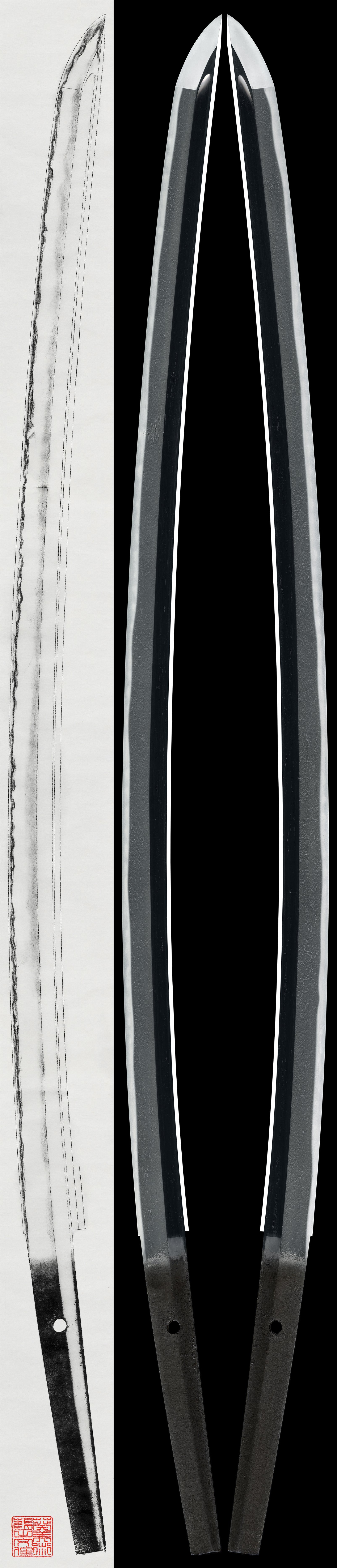
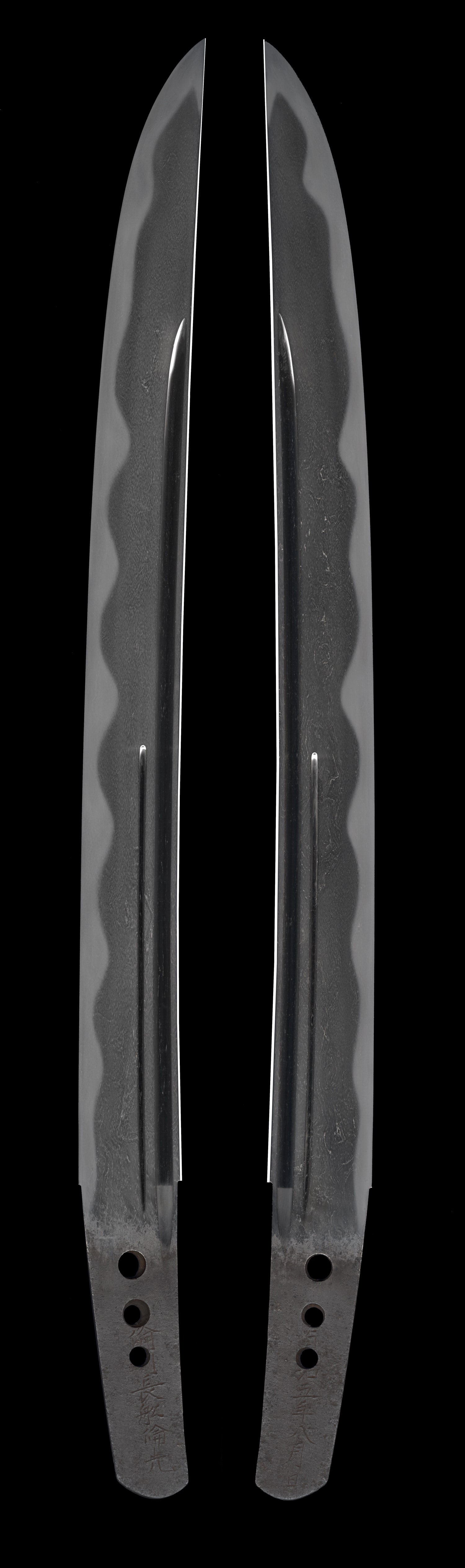
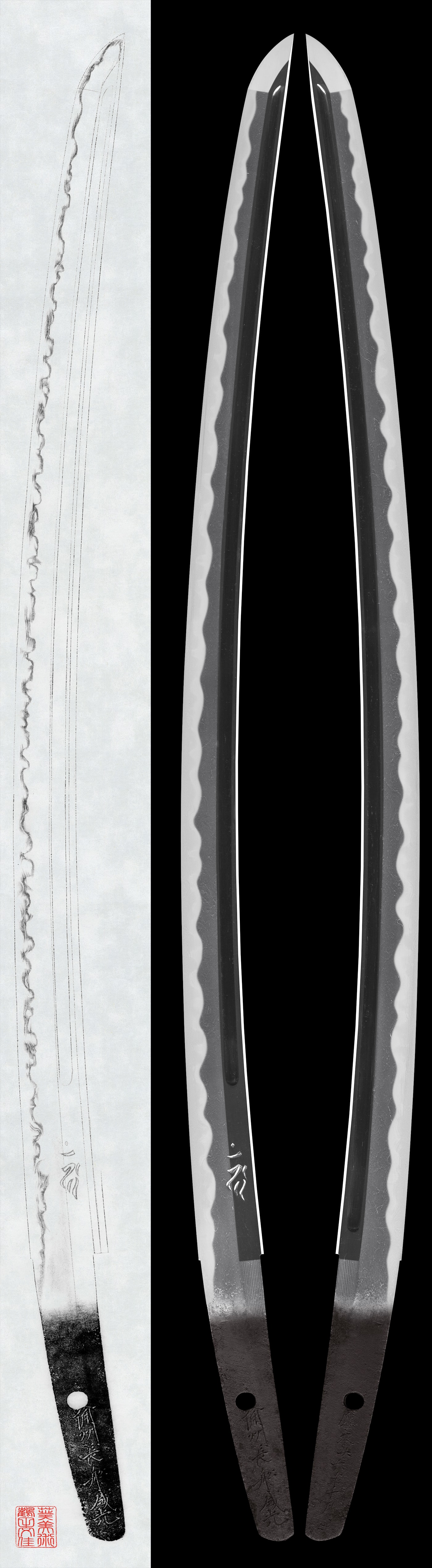
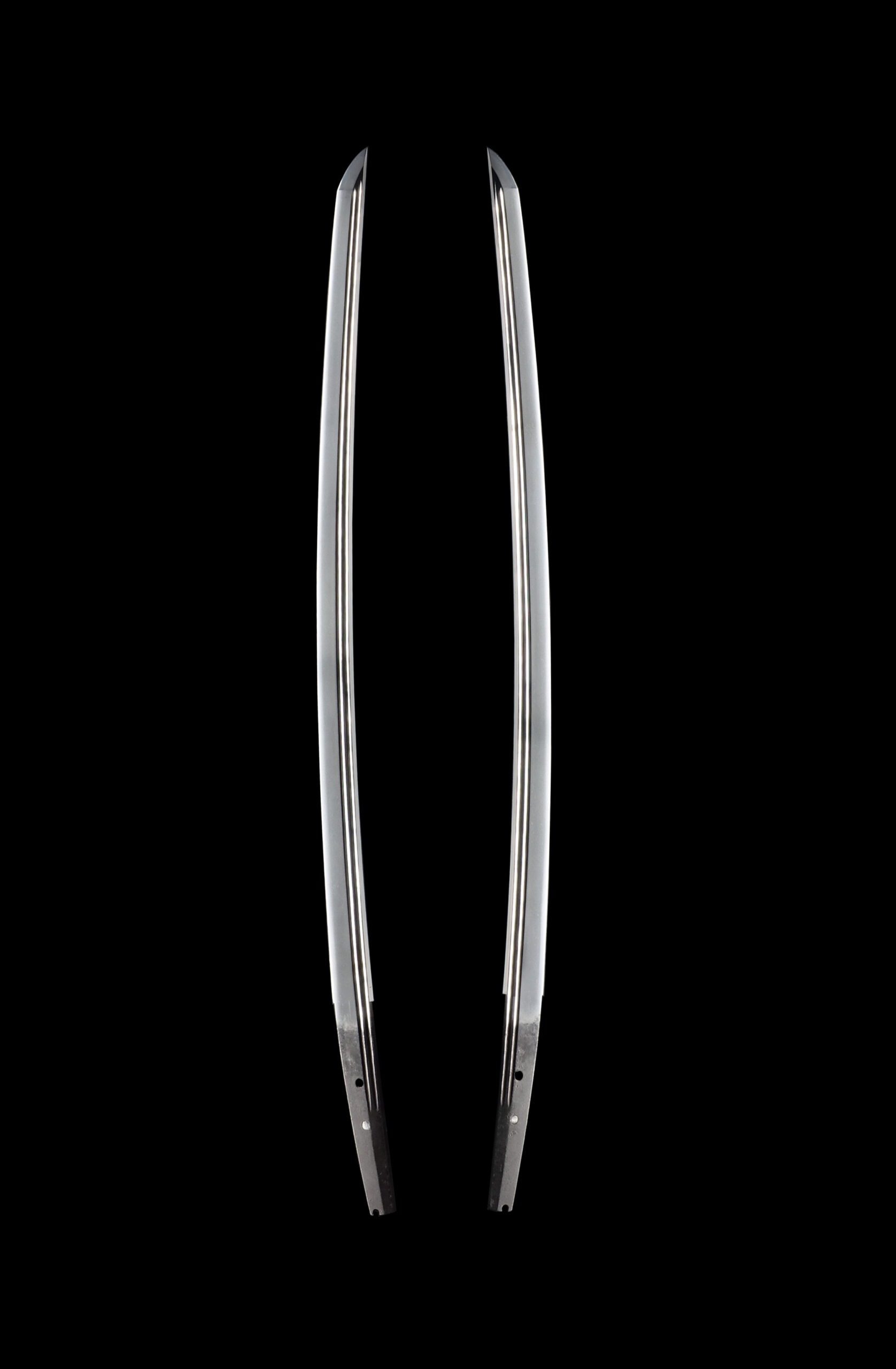
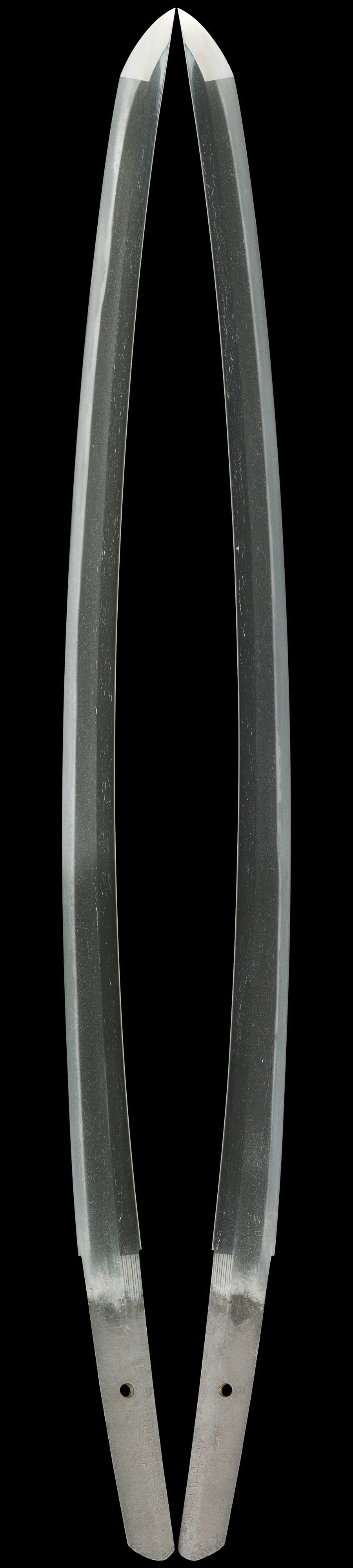
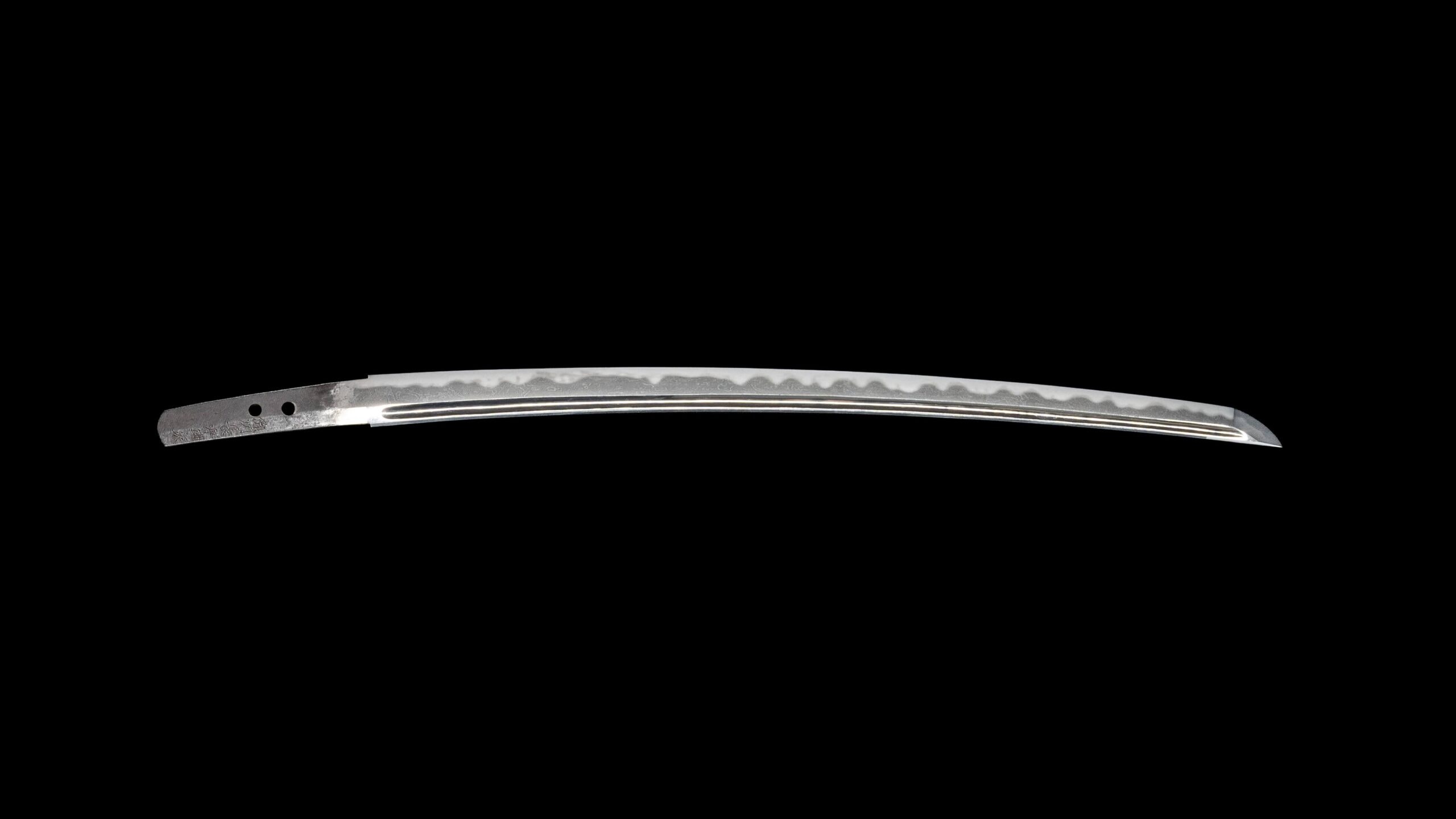
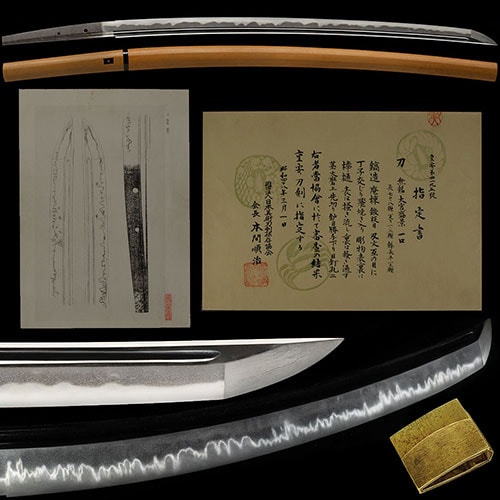
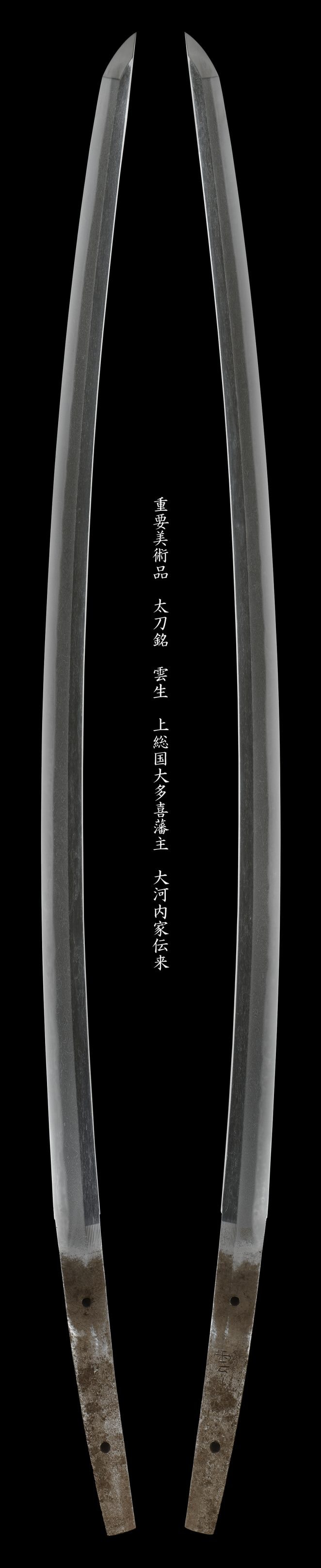
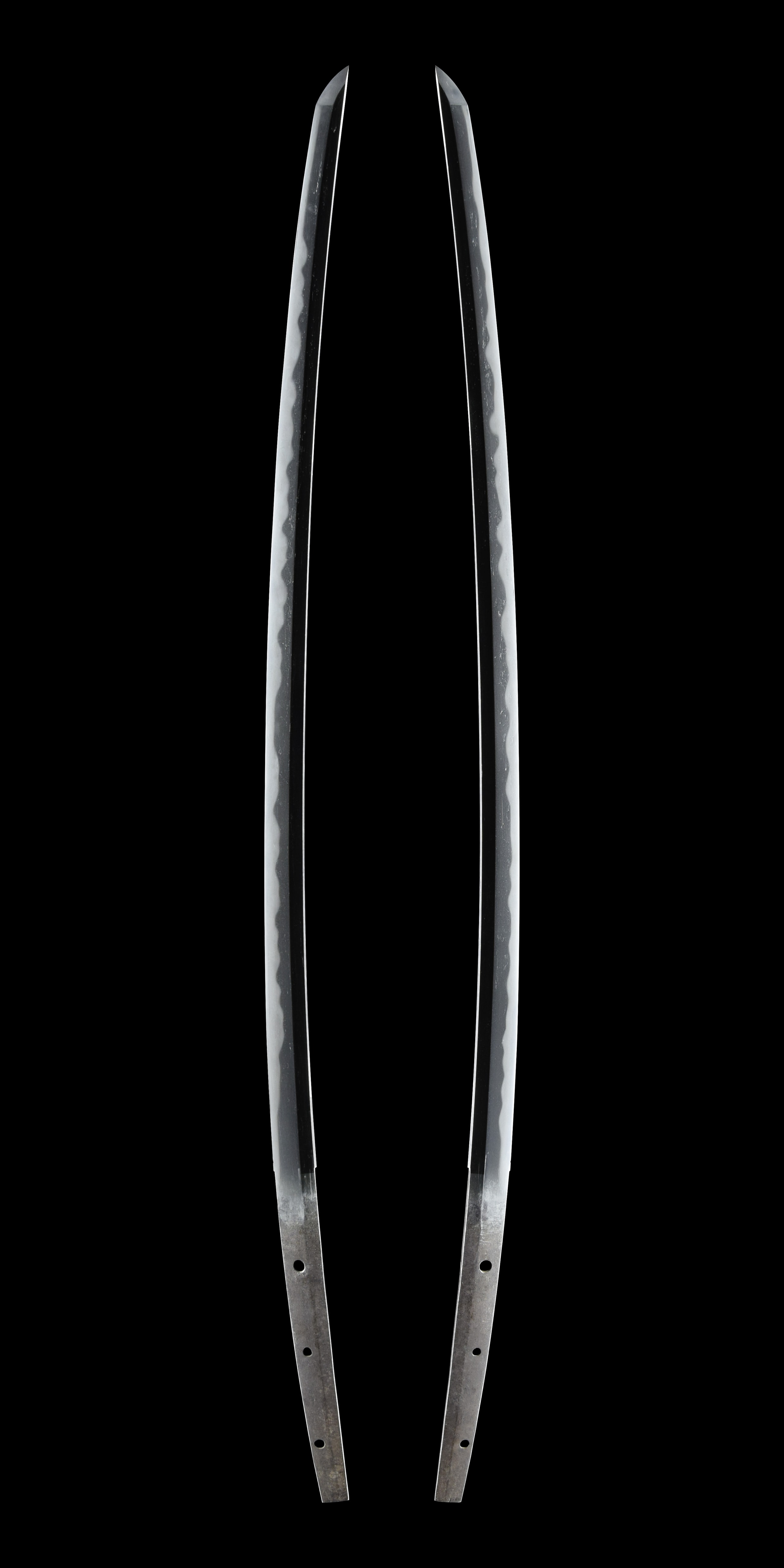
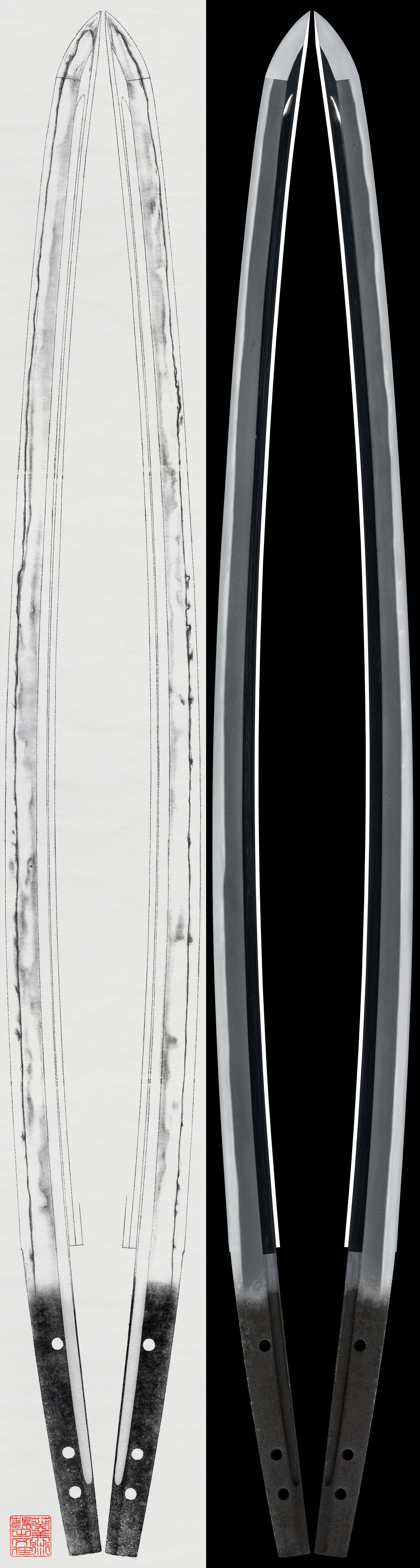
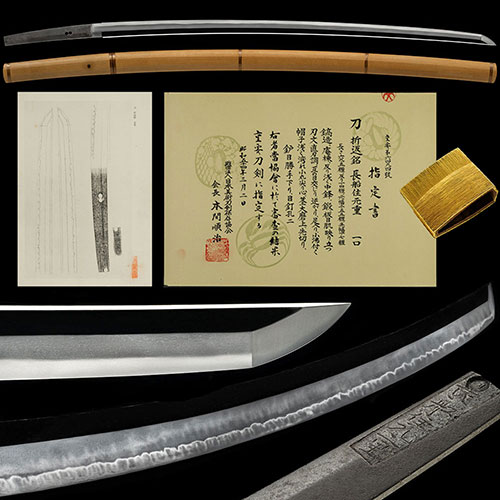
This is a katana by Motoshige, designated as a Juyo Token. The blade features an orikaeshi-mei, dates to the late Kamakura period, and exhibits a striking midare-utsuri. It is described as a masterpiece with kataochi-gunome hamon, frequent ashi and yo, deep small-nie, and kinsuji.

NBTHK Setsumei

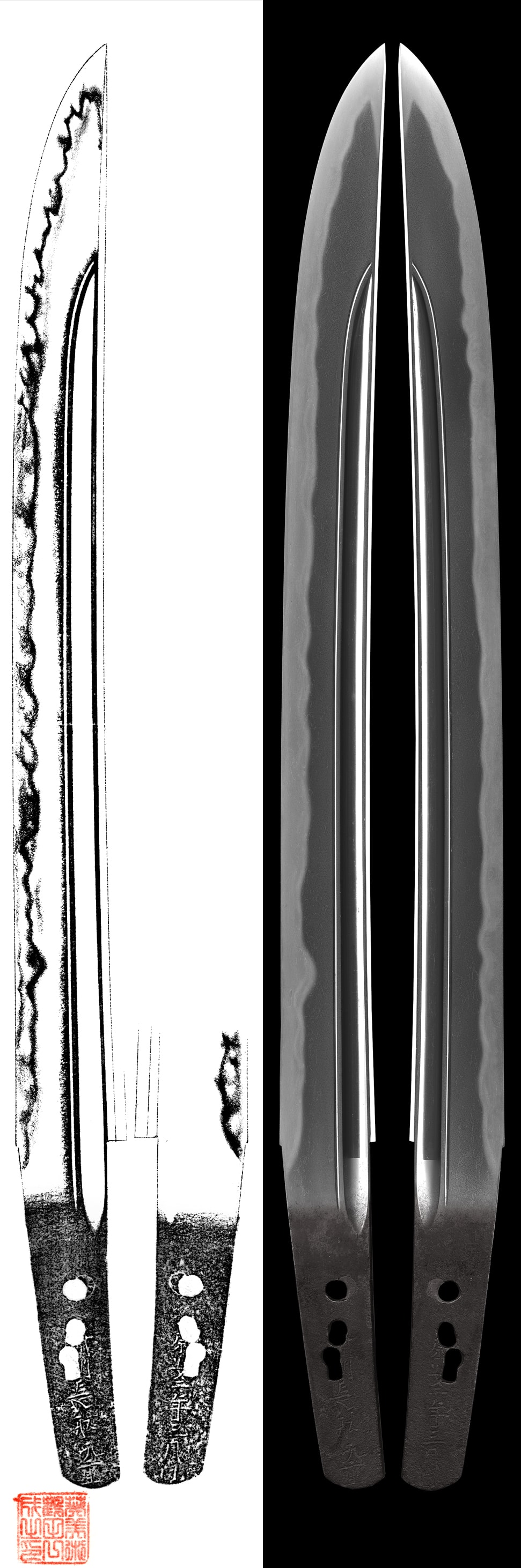
Juyo-Token, 26th Session — Designated March 2, 1979 Katana, orikaeshi-mei: Osafune-jū Motoshige (長船住元重) Measurements Nagasa 69.5 cm, sori 1.4 cm, motohaba 2.55 cm, sakihaba 1.7 cm, kissaki-nagasa 2.8 cm, nakago-nagasa 17.4 cm Description Keijo: shinogi-zukuri, iori-mune, shallow sori, chū-kissaki. Kitae: itame-hada; utsuri appears. Hamon: suguha-based, mixed with gunome; with places showing saka-gakari; ashi enter, with ko-nie adhering. Boshi: shallow notare becoming komaru, with a somewhat pointed tendency. Horimono: None. Nakago: Greatly shortened (ō-suriage), sakikiri; katte-sagari yasurime; two mekugi-ana; an orikaeshi-mei remains at the nakago-jiri. Artisan Osafune-jū Motoshige (長船住元重) Era From the Shōwa era (early 14th century through the Nanbokuchō period, per the smith’s working span) Explanation Motoshige was a swordsmith of a line distinct from Kanemitsu and Chōgi. His earliest dated work is from Shōwa 5 (1316), and thereafter he was active into the Nanbokuchō period. His style is characterized by masame-inclined features appearing within the jigane, by angular gunome, by midare that includes saka-gakari within a suguha basis, and by a tendency for the boshi to become pointed. This katana bears an orikaeshi-mei and displays the smith’s characteristic angular gunome. The jiba is of good workmanship. (Nota bene: The NBTHK later corrected the stated nagasa from 68.6 cm to 69.5 cm on July 22, 2020.)

NihontoWatch MonNihontoWatch
MarketAuctionsEncyclopedia
Swords›Bizen-den›Osafune›Sōden-Bizen›Motoshige›Katana: Motoshige - Juyo Token
katanaJūyō
Motoshige

Katana: Motoshige - Juyo Token

orikaeshi-mei · Osafune · Kamakura · nagasa 69.5cm · sori 1.2cm

SOLD
Motoshige — 1 of 2
Motoshige — 2 of 2
1 / 2
1 / 2
Motoshige — 1 of 2Motoshige — 2 of 2
Measurements & details
Smith
Motoshige
Type
Katana
School
Motoshige
Period
Around 1316–1363(Kagen)
Province
Bizen
Signature
orikaeshi-mei(34% of this smith's designated works are signed)
Measurements
Nagasa 69.5cmSori 1.2cmMotohaba 2.7cmSakihaba 1.7cmKasane 0.58cmWeight 612g
Description

This is a katana by Motoshige, designated as a Juyo Token. The blade features an orikaeshi-mei, dates to the late Kamakura period, and exhibits a striking midare-utsuri. It is described as a masterpiece with kataochi-gunome hamon, frequent ashi and yo, deep small-nie, and kinsuji.

NBTHK Zufu Commentary

Juyo #26

AI translation — may contain errors

-, 26th Session — Designated March 2, 1979

, : -jū Motoshige (長船住元重)

Measurements 69.5 cm, 1.4 cm, 2.55 cm, 1.7 cm, 2.8 cm, 17.4 cm

Description Keijo: , , shallow , . : ; appears. : -based, mixed with ; with places showing ; enter, with adhering. : shallow becoming , with a somewhat pointed tendency. : None. : Greatly shortened (), ; ; two ; an remains at the .

Artisan -jū Motoshige (長船住元重)

Era From the Shōwa era (early 14th century through the period, per the smith’s working span)

Explanation Motoshige was a swordsmith of a line distinct from Kanemitsu and Chōgi. His earliest dated work is from Shōwa 5 (1316), and thereafter he was active into the period. His style is characterized by -inclined features appearing within the , by angular , by that includes within a basis, and by a tendency for the to become pointed.

This bears an and displays the smith’s characteristic angular . The is of good workmanship.

(Nota bene: The later corrected the stated from 68.6 cm to 69.5 cm on July 22, 2020.)

About the maker

Motoshige

元重

Osafune, Motoshige line (Bizen) · Bizen · around 1316-1363

Fujishiro Jo-jo saku · Tōken Taikan top 14%

4 pieces on the market now

›

The dated work of Osafune Motoshige opens with a tantō inscribed Shōwa 5 (1316) and closes in the Jōji era of the mid Nanbokuchō period, a span of some fifty years. Across this interval the published sources allow a first and a second generation, while noting that no settled consensus exists as to where the boundary falls. On one point the record is constant: Motoshige of the Osafune group in Bizen was a smith of a line distinct from Kanemitsu and Chōgi. The old genealogies derive the line instead from Hatakeda Moriie: the son of the second-generation Moriie was Morishige, and Morishige's son was Motoshige. He stands apart both from the Osafune mainline of Mitsutada and Nagamitsu and from the houses beside him, and the individuality of his blades answers to that separate descent.

The manner the published sources assign him returns almost word for word. The forging mixes flowing masame and jifu; in the hamon, angular gunome stand out over a suguha tone, and the whole slants in saka-gakari; within the temper work saka-ashi and yō; the bōshi becomes pointed. The notes conclude that "the viewing points of this smith and his school lie precisely in the point where the Aoe temperament is mixed in"[[c:1]]. The squared teeth are the most personal of these marks: the sources describe "angular gunome with the yakigashira aligned in a straight line, peculiar to this smith"[[c:2]], read most clearly around the monouchi. The nioiguchi tends toward tightness with ko-nie, and fine kinsuji and sunagashi thread the ha.

The jigane is an itame mixed with mokume and flowing grain, standing somewhat across the surface. Very fine ji-nie attaches, fine chikei enter, jifu is interlaced, and a midare-utsuri rises, often vividly. Of one unsigned katana the sources name the slanting hamon and this mokume-laced, standing forging surface, "what is termed the cicada wing"[[c:3]], as the conditions that point an appraisal to Motoshige. His uchi-zori tantō are forged in ko-itame with a slight flowing tendency, and the refined forging of his best tachi appears at a glance almost a pure ko-itame.

The record divides into clear registers. At its head stands the group called Ko-Motoshige: two-character signatures cut with a thick chisel on the haki-ura above ō-sujikai file marks, with a Jūyō Bijutsuhin tachi dated Kagen 2 (1304). Of one such slender tachi with koshi-zori the sources write that the suguha-toned ha with chōji and ko-midare, over an itame carrying jifu, is a workmanship "Aoe-like through and through"[[c:4]]. They hold this hand to be a different and somewhat earlier man than the long-signature Osafune Motoshige, leaving open whether he was the ancestor of the line or a smith connected with Aoe. The dated Kamakura work runs from Shōwa 5 through Karyaku into Kenmu: tantō of standard proportions with uchi-zori, in kataochi-gunome so close to the older manner that one dated blade reads "almost as though one were viewing the work of Kagemitsu"[[c:5]]. From the Nanbokuchō years the build turns grand: wide mihaba with little taper, shallow sori, a large kissaki, the Enbun and Jōji stance. The bulk of what survives answers to it as ō-suriage unsigned katana; among the signed pieces stands an ubu tachi of 94.45 cm preserving the full form of the period. Edo tradition counted Motoshige among the three sages of Sadamune (貞宗三哲) beside Nobukuni and Hōjōji Kunimitsu, a claim the published sources find "hard to credit out of hand"[[c:6]]: most of his surviving work is plainly Bizen, with fewer Sōshū-tinged pieces than Kanemitsu or Chōgi. The exception is real: in the wakizashi transmitted in the Shimazu family, an Important Cultural Property, the nie of ji and ha grows extraordinarily strong and chikei and kinsuji stand out.

A blade of his may show "at a rough glance a manner that could be taken for Aoe"[[c:7]]; yet the angular teeth aligned at the yakigashira and the vividly standing midare-utsuri return the appraisal to Motoshige, a Bizen temperament at base that wears the air of neighboring Bitchū. Against Kagemitsu, to whom the old books liken him, the wider ha, the pointed bōshi and the loosened flowing masame and jifu in the jigane reveal "the individuality of a Motoshige whose line differs from that of Kagemitsu and his kind"[[c:8]]. The same viewing points are shared, the notes add, by his school, Shigezane and the rest, who carried the squared, slanting manner through the Nanbokuchō period.

He is rated Jō-jō saku in Fujishiro's grading, and 159 designated works stand on record: seven Important Cultural Properties, nine Jūyō Bijutsuhin, and 142 blades across the Tokubetsu Jūyō and Jūyō tiers, twenty-one of them Tokubetsu Jūyō. Unsigned blades outnumber signed ones, ninety-nine against fifty-six, so he is met most often as an ō-suriage unsigned katana. The named pieces carry the history: the Kenmu 1 (1334) tachi called "the white eyebrow among his works"[[c:9]]; the Kan'ō 3 (1352) tachi of Kan'in-no-miya transmission; the Satake katana bestowed by Shōgun Tokugawa Ienobu in Hōei 8 (1711), whose Hon'ami Kōon gold-inlay attribution the sources call "entirely just"[[c:10]]; and the Date family katana that may be the very Motoshige the Tokugawa Jikki (徳川実紀) records Iemitsu granting Date Masamune in Kan'ei 1 (1624). Twenty-nine blades carry recorded provenance, through the Date, Satake, Uesugi, Hachisuka, Hosokawa, Shimazu, Owari Tokugawa and Yanagisawa houses and into the Imperial Family. The Important Cultural Properties can never trade, and holdings of the Tokyo National Museum, the Sano Art Museum, the Hayashibara Museum of Art, the Seikadō Bunko Art Museum, Uesugi Jinja and the British Museum stand outside the market. Yet with 142 blades in those tiers he remains among the few major names of Nanbokuchō Bizen a collector can still realistically hold, and the hand declares itself wherever the squared, slanting ha runs beneath a vivid utsuri.

Historical importance

Where Motoshige stands among comparable artisans: across all of nihontō, and within tradition, era, and period. The tiers (Foremost · Leading · Major · Notable) weigh official designations from the NBTHK and Japan's Agency for Cultural Affairs, together with historical honors of lasting repute such as the Sansaku and Meibutsu-chō.

随一
Foremost
屈指
Leading
有数
Major
著名
Notable

Select a lens to see how it's measured.

Designation record
156 designated works
Jūyō Bunkazai
7
Jūyō Bijutsuhin
8
Gyobutsu (Imperial)
1
Tokubetsu Jūyō
21
Jūyō
119
4 works by Motoshige on the market→
Motoshige — full profileOsafune, Motoshige line (Bizen) school

Dated Works

Years he was demonstrably active, proven by signed-and-dated blades

Active period
1316–1363
15 of 51 designated works carry a date
1310
1330
1350
1370
About the school

Motoshige

元重

Bizen-den · Bizen

Phase: Sōden-Bizen相伝備前· 1330–1394

6 pieces on the market now

›

The Soden Bizen school encompasses the group of Nanbokucho-period Osafune smiths in Bizen Province whose work absorbed the technical influence of the Soshu-den, producing a distinctive synthesis that stands apart from both orthodox Bizen and pure Sagami practice. Learn more →

3 recorded smiths159 designated works
Leading smiths
SmithEraDesignated
Motoshige元重1316-1363156
Motoshige元重1288-13332
Motoyuki元行1384-13941
Explore the Motoshige school →
NBTHK Certificate
Jūyō Tōken重要刀剣
Important Sword
›

A blade of top-grade workmanship and condition, formally judged to rank with a nationally recognized Important Art Object (Jūyō Bijutsuhin). Awarded only at the NBTHK’s competitive annual examination.

Of Japan’s roughly 2.5 million registered swords, only 12,307 (about 1 in 203) have ever attained Jūyō.

About the NBTHK›

The NBTHK (Nihon Bijutsu Tōken Hozon Kyōkai, the Society for the Preservation of Japanese Art Swords) is a public-interest incorporated foundation founded in 1948 and supervised by Japan’s Agency for Cultural Affairs (Bunkachō); it is based at the Japanese Sword Museum in Tokyo. Its expert panels physically examine each submitted work (shinsa) and issue a certificate (kanteishō) ranking it by artistic and historical merit. NBTHK papers are the most widely recognized standard of authentication for Japanese swords and fittings.

NBTHK official site→
Seller
E
Eirakudo
🇯🇵Ships from Japan
›
✓Verified dealereirakudo.shop
✓Ships worldwide✓English supportWire transferCredit card
Return policy

Returns/exchanges/cancellations not accepted after shipment except for significant defects; if defective, return/exchange possible within 3 days of arrival (return shipping paid by customer).

View all of Eirakudo’s listings→View this item on the dealer’s site→

More works by Motoshige

View all →
Eirakudo
Jūyō
Katana - Jūyō - by Motoshige - Motoshige - Juyo TokenKatana - Jūyō - by Motoshige - Motoshige - Juyo Token

Katana

ByMotoshige
¥6,000,000
Hyozaemon
Jūyō
Tachi - Jūyō - by Motoshige - Tachi by Osafune MotoshigeTachi - Jūyō - by Motoshige - Tachi by Osafune Motoshige

Tachi

ByMotoshige
Ask
Nihonto Australia
Tokuho
Wakizashi - Tokuho - by Motoshige - MotoshigeWakizashi - Tokuho - by Motoshige - Motoshige

Wakizashi

ByMotoshige
¥6,500
Nipponto
Jūyō
Katana - Jūyō - by Motoshige - Juyo Katana by Motoshige of OsafuneKatana - Jūyō - by Motoshige - Juyo Katana by Motoshige of Osafune

Katana

ByMotoshige
Ask

Previously sold by Motoshige

Aoi Art
Tokuho
Tanto - Tokuho - by Motoshige - Sun-nobi Tanto: Bishu Osafune Motoshige, Dated March, Koan 2 (1362)Tanto - Tokuho - by Motoshige - Sun-nobi Tanto: Bishu Osafune Motoshige, Dated March, Koan 2 (1362)
Sold

Tantō

ByMotoshige
SOLD
Unique Japan
Jūyō
Katana - Jūyō - by Motoshige - Motoshige - Juyo TokenKatana - Jūyō - by Motoshige - Motoshige - Juyo Token
Sold

Katana

ByMotoshige
SOLD
Kusanagi
Hozon
Tanto - Hozon - by Motoshige - Preserved Token & Kurashiki Art Museum Appraisal! Signed Old 'Motoshige' Masterpiece Tanto, Pinnacle of Osafune! Bargain Price, Some Issues.Tanto - Hozon - by Motoshige - Preserved Token & Kurashiki Art Museum Appraisal! Signed Old 'Motoshige' Masterpiece Tanto, Pinnacle of Osafune! Bargain Price, Some Issues.
Sold

Tantō

ByMotoshige
SOLD

More Sōden-Bizen works

View all →
Katanahanbai
Tokuho
Wakizashi - Tokuho - by Osafune Tomomitsu - Bishu Osafune Tomomitsu - Dated Teiji 5th Year, 8th MonthWakizashi - Tokuho - by Osafune Tomomitsu - Bishu Osafune Tomomitsu - Dated Teiji 5th Year, 8th Month

Wakizashi

ByOsafune Tomomitsu
¥4,800,000
Aoi Art
Tokuho
Katana - Tokuho - by Osafune Motomitsu - Mumei (Attributed to Osafune Motomitsu)Katana - Tokuho - by Osafune Motomitsu - Mumei (Attributed to Osafune Motomitsu)

Katana

ByOsafune Motomitsu
¥1,200,000
Goushuya
Jūyō
Katana - Jūyō - by Osafune Kanemitsu - Kanemitsu with Gold Inlay InscriptionKatana - Jūyō - by Osafune Kanemitsu - Kanemitsu with Gold Inlay Inscription

Katana

ByOsafune Kanemitsu
Ask
Iida Koendo
Jūyō
Tachi - Jūyō - by Osafune Shigezane - Bishu Osafune ju Shigezane, Enbun 3rd year, 12th monthTachi - Jūyō - by Osafune Shigezane - Bishu Osafune ju Shigezane, Enbun 3rd year, 12th month

Tachi

ByOsafune Shigezane
¥33,000,000
Choshuya
Jūyō
Tachi - Jūyō - by Osafune Motomitsu - Signed Bishu (ika kire) den Osafune MotomitsuTachi - Jūyō - by Osafune Motomitsu - Signed Bishu (ika kire) den Osafune Motomitsu

Tachi

ByOsafune Motomitsu
¥8,500,000
Samurai Museum
Katana - by Osafune Kanemitsu - Antique Japanese Sword Katana Attributed to Den Osafune Kanemitsu NTHK Yushu Saku Kanteisho CertificateKatana - by Osafune Kanemitsu - Antique Japanese Sword Katana Attributed to Den Osafune Kanemitsu NTHK Yushu Saku Kanteisho Certificate

Katana

ByOsafune Kanemitsu
¥27,569
Eirakudo
Tokuho
Tachi - Tokuho - by Osafune Chikakage - Zaimei Chikakage Tachi - Tokubetsu Hozon TokenTachi - Tokuho - by Osafune Chikakage - Zaimei Chikakage Tachi - Tokubetsu Hozon Token

Tachi

ByOsafune Chikakage
¥5,500,000
Nihonto Antiques
Jūyō
Katana - Jūyō - by Chogi - Den Chōgi (Nagayoshi) - JuyoKatana - Jūyō - by Chogi - Den Chōgi (Nagayoshi) - Juyo

Katana

ByChogi
Ask

More from the Osafune school

View all →
Nihonto.com
Jūyō
Tanto - Jūyō - by Osafune Kagemitsu - Juyo Tanto by Bizen KagemitsuTanto - Jūyō - by Osafune Kagemitsu - Juyo Tanto by Bizen Kagemitsu

Tantō

ByOsafune Kagemitsu
¥89,500
Iida Koendo
Jūyō
Tachi - Jūyō - by Osafune Nagamitsu - Bizenkoku Osafune ju Sakonshogen Nagamitsu tsukuru, Einin Gannen Junigatsu Hi (December 1293)Tachi - Jūyō - by Osafune Nagamitsu - Bizenkoku Osafune ju Sakonshogen Nagamitsu tsukuru, Einin Gannen Junigatsu Hi (December 1293)

Tachi

ByOsafune Nagamitsu
¥55,000,000
Eirakudo
Tokuho
Tachi - Tokuho - by Osafune Sanenaga - Sanenaga - Tokubetsu Hozon TokenTachi - Tokuho - by Osafune Sanenaga - Sanenaga - Tokubetsu Hozon Token

Tachi

ByOsafune Sanenaga
¥7,500,000
Samurai Museum
Tokuho
Wakizashi - Tokuho - by Osafune Kagemitsu - Antique Japanese Sword Wakizashi Attributed to Den Osafune Kagemitsu NBTHK Tokubetsu Hozon CertificateWakizashi - Tokuho - by Osafune Kagemitsu - Antique Japanese Sword Wakizashi Attributed to Den Osafune Kagemitsu NBTHK Tokubetsu Hozon Certificate

Wakizashi

ByOsafune Kagemitsu
¥20,966
Ginza Seikodo
Jūyō
Katana - Jūyō - by Sukesada - Katana Signed Bizen no Kuni Ju Osafune Hikobeno Jo Sukesada SakuKatana - Jūyō - by Sukesada - Katana Signed Bizen no Kuni Ju Osafune Hikobeno Jo Sukesada Saku

Katana

BySukesada
Ask
Iida Koendo
Jūyō
Tachi - Jūyō - by Osafune Nagamitsu - NagamitsuTachi - Jūyō - by Osafune Nagamitsu - Nagamitsu

Tachi

ByOsafune Nagamitsu
¥33,000,000
Tosa Touken Do
Tokujū
Tachi - Tokuju - by Osafune Kagemasa - Ko Osafune KagemasaTachi - Tokuju - by Osafune Kagemasa - Ko Osafune Kagemasa

Tachi

ByOsafune Kagemasa
Ask
Hyozaemon
Jūyō
Tachi - Jūyō - by Osafune Kagemitsu - Osafune KagemitsuTachi - Jūyō - by Osafune Kagemitsu - Osafune Kagemitsu

Tachi

ByOsafune Kagemitsu
Ask

More from the Bizen tradition

View all →
Eirakudo
Jūyō Bijutsuhin
Katana - Jubi - by Chu-Aoe Sadatsugu - Aoe Sadatsugu - Juyo BijutsuhinKatana - Jubi - by Chu-Aoe Sadatsugu - Aoe Sadatsugu - Juyo Bijutsuhin

Katana

ByChu-Aoe Sadatsugu
Ask
Tsuruginoya
Jūyō
Katana - Jūyō - by Fukuoka Ichimonji School - Mumei Fukuoka IchimonjiKatana - Jūyō - by Fukuoka Ichimonji School - Mumei Fukuoka Ichimonji

Katana

ByFukuoka Ichimonji School
¥10,000,000
Eirakudo
Jūyō
Tachi - Jūyō - by Fukuoka Ichimonji School - Fukuoka Ichimonji - Juyo TokenTachi - Jūyō - by Fukuoka Ichimonji School - Fukuoka Ichimonji - Juyo Token

Tachi

ByFukuoka Ichimonji School
Ask
Aoi Art
Jūyō
Katana - Jūyō - by Yoshioka Ichimonji Sukemitsu - Ichi Bizen-koku Yoshioka Sakon Sho (Sukemitsu)Katana - Jūyō - by Yoshioka Ichimonji Sukemitsu - Ichi Bizen-koku Yoshioka Sakon Sho (Sukemitsu)

Katana

ByYoshioka Ichimonji Sukemitsu
¥9,500,000
Hyozaemon
Tokuho
Wakizashi - Tokuho - by Fukuoka Ichimonji Yoshifusa - Fukuoka Ichimonji YoshifusaWakizashi - Tokuho - by Fukuoka Ichimonji Yoshifusa - Fukuoka Ichimonji Yoshifusa

Wakizashi

ByFukuoka Ichimonji Yoshifusa
Ask
Goushuya
Jūyō Bijutsuhin
Tachi - Jubi - by Ukai Unsho - Kumoio - From the collection of the Okouchi family, lord of Otaki Domain, Kazusa ProvinceTachi - Jubi - by Ukai Unsho - Kumoio - From the collection of the Okouchi family, lord of Otaki Domain, Kazusa Province

Tachi

ByUkai Unsho
Ask
Token-Net
Jūyō
Jūyō - by Aoe School - Naginata Naoshi Katana: Mumei (Aoe)Jūyō - by Aoe School - Naginata Naoshi Katana: Mumei (Aoe)

Naginata Naoshi Katana: Mumei (Aoe)

ByAoe School
¥3,200,000
Eirakudo
Tokuho
Tokuho - by Aoe School - Aoe Katana Tokubetsu Hozon TokenTokuho - by Aoe School - Aoe Katana Tokubetsu Hozon Token

Aoe Katana Tokubetsu Hozon Token

ByAoe School
¥2,380,000

Swords

  • Katana
  • Wakizashi
  • Tantō
  • Tachi
  • Naginata
  • Yari

Fittings

  • Tsuba
  • Fuchi-Kashira
  • Kozuka
  • Menuki

By Certification

  • Tokujū
  • Jūyō
  • Tokuho
  • Hozon

Resources

  • Dealer Directory
  • Artist Directory
  • Glossary
  • Browse All
Nihontowatch© 2026
TermsPrivacyCookiesAbout

Description

This is a katana by Motoshige, designated as a Juyo Token. The blade features an orikaeshi-mei, dates to the late Kamakura period, and exhibits a striking midare-utsuri. It is described as a masterpiece with kataochi-gunome hamon, frequent ashi and yo, deep small-nie, and kinsuji.

NBTHK Setsumei

Juyo-Token, 26th Session — Designated March 2, 1979 Katana, orikaeshi-mei: Osafune-jū Motoshige (長船住元重) Measurements Nagasa 69.5 cm, sori 1.4 cm, motohaba 2.55 cm, sakihaba 1.7 cm, kissaki-nagasa 2.8 cm, nakago-nagasa 17.4 cm Description Keijo: shinogi-zukuri, iori-mune, shallow sori, chū-kissaki. Kitae: itame-hada; utsuri appears. Hamon: suguha-based, mixed with gunome; with places showing saka-gakari; ashi enter, with ko-nie adhering. Boshi: shallow notare becoming komaru, with a somewhat pointed tendency. Horimono: None. Nakago: Greatly shortened (ō-suriage), sakikiri; katte-sagari yasurime; two mekugi-ana; an orikaeshi-mei remains at the nakago-jiri. Artisan Osafune-jū Motoshige (長船住元重) Era From the Shōwa era (early 14th century through the Nanbokuchō period, per the smith’s working span) Explanation Motoshige was a swordsmith of a line distinct from Kanemitsu and Chōgi. His earliest dated work is from Shōwa 5 (1316), and thereafter he was active into the Nanbokuchō period. His style is characterized by masame-inclined features appearing within the jigane, by angular gunome, by midare that includes saka-gakari within a suguha basis, and by a tendency for the boshi to become pointed. This katana bears an orikaeshi-mei and displays the smith’s characteristic angular gunome. The jiba is of good workmanship. (Nota bene: The NBTHK later corrected the stated nagasa from 68.6 cm to 69.5 cm on July 22, 2020.)

NihontoWatch MonNihontoWatch
MarketAuctionsEncyclopedia
Swords›Bizen-den›Osafune›Sōden-Bizen›Motoshige›Katana: Motoshige - Juyo Token
katanaJūyō
Motoshige

Katana: Motoshige - Juyo Token

orikaeshi-mei · Osafune · Kamakura · nagasa 69.5cm · sori 1.2cm

SOLD
Motoshige — 1 of 2
Motoshige — 2 of 2
1 / 2
1 / 2
Motoshige — 1 of 2Motoshige — 2 of 2
Measurements & details
Smith
Motoshige
Type
Katana
School
Motoshige
Period
Around 1316–1363(Kagen)
Province
Bizen
Signature
orikaeshi-mei(34% of this smith's designated works are signed)
Measurements
Nagasa 69.5cmSori 1.2cmMotohaba 2.7cmSakihaba 1.7cmKasane 0.58cmWeight 612g
Description

This is a katana by Motoshige, designated as a Juyo Token. The blade features an orikaeshi-mei, dates to the late Kamakura period, and exhibits a striking midare-utsuri. It is described as a masterpiece with kataochi-gunome hamon, frequent ashi and yo, deep small-nie, and kinsuji.

NBTHK Zufu Commentary

Juyo #26

AI translation — may contain errors

-, 26th Session — Designated March 2, 1979

, : -jū Motoshige (長船住元重)

Measurements 69.5 cm, 1.4 cm, 2.55 cm, 1.7 cm, 2.8 cm, 17.4 cm

Description Keijo: , , shallow , . : ; appears. : -based, mixed with ; with places showing ; enter, with adhering. : shallow becoming , with a somewhat pointed tendency. : None. : Greatly shortened (), ; ; two ; an remains at the .

Artisan -jū Motoshige (長船住元重)

Era From the Shōwa era (early 14th century through the period, per the smith’s working span)

Explanation Motoshige was a swordsmith of a line distinct from Kanemitsu and Chōgi. His earliest dated work is from Shōwa 5 (1316), and thereafter he was active into the period. His style is characterized by -inclined features appearing within the , by angular , by that includes within a basis, and by a tendency for the to become pointed.

This bears an and displays the smith’s characteristic angular . The is of good workmanship.

(Nota bene: The later corrected the stated from 68.6 cm to 69.5 cm on July 22, 2020.)

About the maker

Motoshige

元重

Osafune, Motoshige line (Bizen) · Bizen · around 1316-1363

Fujishiro Jo-jo saku · Tōken Taikan top 14%

4 pieces on the market now

›

The dated work of Osafune Motoshige opens with a tantō inscribed Shōwa 5 (1316) and closes in the Jōji era of the mid Nanbokuchō period, a span of some fifty years. Across this interval the published sources allow a first and a second generation, while noting that no settled consensus exists as to where the boundary falls. On one point the record is constant: Motoshige of the Osafune group in Bizen was a smith of a line distinct from Kanemitsu and Chōgi. The old genealogies derive the line instead from Hatakeda Moriie: the son of the second-generation Moriie was Morishige, and Morishige's son was Motoshige. He stands apart both from the Osafune mainline of Mitsutada and Nagamitsu and from the houses beside him, and the individuality of his blades answers to that separate descent.

The manner the published sources assign him returns almost word for word. The forging mixes flowing masame and jifu; in the hamon, angular gunome stand out over a suguha tone, and the whole slants in saka-gakari; within the temper work saka-ashi and yō; the bōshi becomes pointed. The notes conclude that "the viewing points of this smith and his school lie precisely in the point where the Aoe temperament is mixed in"[[c:1]]. The squared teeth are the most personal of these marks: the sources describe "angular gunome with the yakigashira aligned in a straight line, peculiar to this smith"[[c:2]], read most clearly around the monouchi. The nioiguchi tends toward tightness with ko-nie, and fine kinsuji and sunagashi thread the ha.

The jigane is an itame mixed with mokume and flowing grain, standing somewhat across the surface. Very fine ji-nie attaches, fine chikei enter, jifu is interlaced, and a midare-utsuri rises, often vividly. Of one unsigned katana the sources name the slanting hamon and this mokume-laced, standing forging surface, "what is termed the cicada wing"[[c:3]], as the conditions that point an appraisal to Motoshige. His uchi-zori tantō are forged in ko-itame with a slight flowing tendency, and the refined forging of his best tachi appears at a glance almost a pure ko-itame.

The record divides into clear registers. At its head stands the group called Ko-Motoshige: two-character signatures cut with a thick chisel on the haki-ura above ō-sujikai file marks, with a Jūyō Bijutsuhin tachi dated Kagen 2 (1304). Of one such slender tachi with koshi-zori the sources write that the suguha-toned ha with chōji and ko-midare, over an itame carrying jifu, is a workmanship "Aoe-like through and through"[[c:4]]. They hold this hand to be a different and somewhat earlier man than the long-signature Osafune Motoshige, leaving open whether he was the ancestor of the line or a smith connected with Aoe. The dated Kamakura work runs from Shōwa 5 through Karyaku into Kenmu: tantō of standard proportions with uchi-zori, in kataochi-gunome so close to the older manner that one dated blade reads "almost as though one were viewing the work of Kagemitsu"[[c:5]]. From the Nanbokuchō years the build turns grand: wide mihaba with little taper, shallow sori, a large kissaki, the Enbun and Jōji stance. The bulk of what survives answers to it as ō-suriage unsigned katana; among the signed pieces stands an ubu tachi of 94.45 cm preserving the full form of the period. Edo tradition counted Motoshige among the three sages of Sadamune (貞宗三哲) beside Nobukuni and Hōjōji Kunimitsu, a claim the published sources find "hard to credit out of hand"[[c:6]]: most of his surviving work is plainly Bizen, with fewer Sōshū-tinged pieces than Kanemitsu or Chōgi. The exception is real: in the wakizashi transmitted in the Shimazu family, an Important Cultural Property, the nie of ji and ha grows extraordinarily strong and chikei and kinsuji stand out.

A blade of his may show "at a rough glance a manner that could be taken for Aoe"[[c:7]]; yet the angular teeth aligned at the yakigashira and the vividly standing midare-utsuri return the appraisal to Motoshige, a Bizen temperament at base that wears the air of neighboring Bitchū. Against Kagemitsu, to whom the old books liken him, the wider ha, the pointed bōshi and the loosened flowing masame and jifu in the jigane reveal "the individuality of a Motoshige whose line differs from that of Kagemitsu and his kind"[[c:8]]. The same viewing points are shared, the notes add, by his school, Shigezane and the rest, who carried the squared, slanting manner through the Nanbokuchō period.

He is rated Jō-jō saku in Fujishiro's grading, and 159 designated works stand on record: seven Important Cultural Properties, nine Jūyō Bijutsuhin, and 142 blades across the Tokubetsu Jūyō and Jūyō tiers, twenty-one of them Tokubetsu Jūyō. Unsigned blades outnumber signed ones, ninety-nine against fifty-six, so he is met most often as an ō-suriage unsigned katana. The named pieces carry the history: the Kenmu 1 (1334) tachi called "the white eyebrow among his works"[[c:9]]; the Kan'ō 3 (1352) tachi of Kan'in-no-miya transmission; the Satake katana bestowed by Shōgun Tokugawa Ienobu in Hōei 8 (1711), whose Hon'ami Kōon gold-inlay attribution the sources call "entirely just"[[c:10]]; and the Date family katana that may be the very Motoshige the Tokugawa Jikki (徳川実紀) records Iemitsu granting Date Masamune in Kan'ei 1 (1624). Twenty-nine blades carry recorded provenance, through the Date, Satake, Uesugi, Hachisuka, Hosokawa, Shimazu, Owari Tokugawa and Yanagisawa houses and into the Imperial Family. The Important Cultural Properties can never trade, and holdings of the Tokyo National Museum, the Sano Art Museum, the Hayashibara Museum of Art, the Seikadō Bunko Art Museum, Uesugi Jinja and the British Museum stand outside the market. Yet with 142 blades in those tiers he remains among the few major names of Nanbokuchō Bizen a collector can still realistically hold, and the hand declares itself wherever the squared, slanting ha runs beneath a vivid utsuri.

Historical importance

Where Motoshige stands among comparable artisans: across all of nihontō, and within tradition, era, and period. The tiers (Foremost · Leading · Major · Notable) weigh official designations from the NBTHK and Japan's Agency for Cultural Affairs, together with historical honors of lasting repute such as the Sansaku and Meibutsu-chō.

随一
Foremost
屈指
Leading
有数
Major
著名
Notable

Select a lens to see how it's measured.

Designation record
156 designated works
Jūyō Bunkazai
7
Jūyō Bijutsuhin
8
Gyobutsu (Imperial)
1
Tokubetsu Jūyō
21
Jūyō
119
4 works by Motoshige on the market→
Motoshige — full profileOsafune, Motoshige line (Bizen) school

Dated Works

Years he was demonstrably active, proven by signed-and-dated blades

Active period
1316–1363
15 of 51 designated works carry a date
1310
1330
1350
1370
About the school

Motoshige

元重

Bizen-den · Bizen

Phase: Sōden-Bizen相伝備前· 1330–1394

6 pieces on the market now

›

The Soden Bizen school encompasses the group of Nanbokucho-period Osafune smiths in Bizen Province whose work absorbed the technical influence of the Soshu-den, producing a distinctive synthesis that stands apart from both orthodox Bizen and pure Sagami practice. Learn more →

3 recorded smiths159 designated works
Leading smiths
SmithEraDesignated
Motoshige元重1316-1363156
Motoshige元重1288-13332
Motoyuki元行1384-13941
Explore the Motoshige school →
NBTHK Certificate
Jūyō Tōken重要刀剣
Important Sword
›

A blade of top-grade workmanship and condition, formally judged to rank with a nationally recognized Important Art Object (Jūyō Bijutsuhin). Awarded only at the NBTHK’s competitive annual examination.

Of Japan’s roughly 2.5 million registered swords, only 12,307 (about 1 in 203) have ever attained Jūyō.

About the NBTHK›

The NBTHK (Nihon Bijutsu Tōken Hozon Kyōkai, the Society for the Preservation of Japanese Art Swords) is a public-interest incorporated foundation founded in 1948 and supervised by Japan’s Agency for Cultural Affairs (Bunkachō); it is based at the Japanese Sword Museum in Tokyo. Its expert panels physically examine each submitted work (shinsa) and issue a certificate (kanteishō) ranking it by artistic and historical merit. NBTHK papers are the most widely recognized standard of authentication for Japanese swords and fittings.

NBTHK official site→
Seller
E
Eirakudo
🇯🇵Ships from Japan
›
✓Verified dealereirakudo.shop
✓Ships worldwide✓English supportWire transferCredit card
Return policy

Returns/exchanges/cancellations not accepted after shipment except for significant defects; if defective, return/exchange possible within 3 days of arrival (return shipping paid by customer).

View all of Eirakudo’s listings→View this item on the dealer’s site→

More works by Motoshige

View all →
Eirakudo
Jūyō
Katana - Jūyō - by Motoshige - Motoshige - Juyo TokenKatana - Jūyō - by Motoshige - Motoshige - Juyo Token

Katana

ByMotoshige
¥6,000,000
Hyozaemon
Jūyō
Tachi - Jūyō - by Motoshige - Tachi by Osafune MotoshigeTachi - Jūyō - by Motoshige - Tachi by Osafune Motoshige

Tachi

ByMotoshige
Ask
Nihonto Australia
Tokuho
Wakizashi - Tokuho - by Motoshige - MotoshigeWakizashi - Tokuho - by Motoshige - Motoshige

Wakizashi

ByMotoshige
¥6,500
Nipponto
Jūyō
Katana - Jūyō - by Motoshige - Juyo Katana by Motoshige of OsafuneKatana - Jūyō - by Motoshige - Juyo Katana by Motoshige of Osafune

Katana

ByMotoshige
Ask

Previously sold by Motoshige

Aoi Art
Tokuho
Tanto - Tokuho - by Motoshige - Sun-nobi Tanto: Bishu Osafune Motoshige, Dated March, Koan 2 (1362)Tanto - Tokuho - by Motoshige - Sun-nobi Tanto: Bishu Osafune Motoshige, Dated March, Koan 2 (1362)
Sold

Tantō

ByMotoshige
SOLD
Unique Japan
Jūyō
Katana - Jūyō - by Motoshige - Motoshige - Juyo TokenKatana - Jūyō - by Motoshige - Motoshige - Juyo Token
Sold

Katana

ByMotoshige
SOLD
Kusanagi
Hozon
Tanto - Hozon - by Motoshige - Preserved Token & Kurashiki Art Museum Appraisal! Signed Old 'Motoshige' Masterpiece Tanto, Pinnacle of Osafune! Bargain Price, Some Issues.Tanto - Hozon - by Motoshige - Preserved Token & Kurashiki Art Museum Appraisal! Signed Old 'Motoshige' Masterpiece Tanto, Pinnacle of Osafune! Bargain Price, Some Issues.
Sold

Tantō

ByMotoshige
SOLD

More Sōden-Bizen works

View all →
Katanahanbai
Tokuho
Wakizashi - Tokuho - by Osafune Tomomitsu - Bishu Osafune Tomomitsu - Dated Teiji 5th Year, 8th MonthWakizashi - Tokuho - by Osafune Tomomitsu - Bishu Osafune Tomomitsu - Dated Teiji 5th Year, 8th Month

Wakizashi

ByOsafune Tomomitsu
¥4,800,000
Aoi Art
Tokuho
Katana - Tokuho - by Osafune Motomitsu - Mumei (Attributed to Osafune Motomitsu)Katana - Tokuho - by Osafune Motomitsu - Mumei (Attributed to Osafune Motomitsu)

Katana

ByOsafune Motomitsu
¥1,200,000
Goushuya
Jūyō
Katana - Jūyō - by Osafune Kanemitsu - Kanemitsu with Gold Inlay InscriptionKatana - Jūyō - by Osafune Kanemitsu - Kanemitsu with Gold Inlay Inscription

Katana

ByOsafune Kanemitsu
Ask
Iida Koendo
Jūyō
Tachi - Jūyō - by Osafune Shigezane - Bishu Osafune ju Shigezane, Enbun 3rd year, 12th monthTachi - Jūyō - by Osafune Shigezane - Bishu Osafune ju Shigezane, Enbun 3rd year, 12th month

Tachi

ByOsafune Shigezane
¥33,000,000
Choshuya
Jūyō
Tachi - Jūyō - by Osafune Motomitsu - Signed Bishu (ika kire) den Osafune MotomitsuTachi - Jūyō - by Osafune Motomitsu - Signed Bishu (ika kire) den Osafune Motomitsu

Tachi

ByOsafune Motomitsu
¥8,500,000
Samurai Museum
Katana - by Osafune Kanemitsu - Antique Japanese Sword Katana Attributed to Den Osafune Kanemitsu NTHK Yushu Saku Kanteisho CertificateKatana - by Osafune Kanemitsu - Antique Japanese Sword Katana Attributed to Den Osafune Kanemitsu NTHK Yushu Saku Kanteisho Certificate

Katana

ByOsafune Kanemitsu
¥27,569
Eirakudo
Tokuho
Tachi - Tokuho - by Osafune Chikakage - Zaimei Chikakage Tachi - Tokubetsu Hozon TokenTachi - Tokuho - by Osafune Chikakage - Zaimei Chikakage Tachi - Tokubetsu Hozon Token

Tachi

ByOsafune Chikakage
¥5,500,000
Nihonto Antiques
Jūyō
Katana - Jūyō - by Chogi - Den Chōgi (Nagayoshi) - JuyoKatana - Jūyō - by Chogi - Den Chōgi (Nagayoshi) - Juyo

Katana

ByChogi
Ask

More from the Osafune school

View all →
Nihonto.com
Jūyō
Tanto - Jūyō - by Osafune Kagemitsu - Juyo Tanto by Bizen KagemitsuTanto - Jūyō - by Osafune Kagemitsu - Juyo Tanto by Bizen Kagemitsu

Tantō

ByOsafune Kagemitsu
¥89,500
Iida Koendo
Jūyō
Tachi - Jūyō - by Osafune Nagamitsu - Bizenkoku Osafune ju Sakonshogen Nagamitsu tsukuru, Einin Gannen Junigatsu Hi (December 1293)Tachi - Jūyō - by Osafune Nagamitsu - Bizenkoku Osafune ju Sakonshogen Nagamitsu tsukuru, Einin Gannen Junigatsu Hi (December 1293)

Tachi

ByOsafune Nagamitsu
¥55,000,000
Eirakudo
Tokuho
Tachi - Tokuho - by Osafune Sanenaga - Sanenaga - Tokubetsu Hozon TokenTachi - Tokuho - by Osafune Sanenaga - Sanenaga - Tokubetsu Hozon Token

Tachi

ByOsafune Sanenaga
¥7,500,000
Samurai Museum
Tokuho
Wakizashi - Tokuho - by Osafune Kagemitsu - Antique Japanese Sword Wakizashi Attributed to Den Osafune Kagemitsu NBTHK Tokubetsu Hozon CertificateWakizashi - Tokuho - by Osafune Kagemitsu - Antique Japanese Sword Wakizashi Attributed to Den Osafune Kagemitsu NBTHK Tokubetsu Hozon Certificate

Wakizashi

ByOsafune Kagemitsu
¥20,966
Ginza Seikodo
Jūyō
Katana - Jūyō - by Sukesada - Katana Signed Bizen no Kuni Ju Osafune Hikobeno Jo Sukesada SakuKatana - Jūyō - by Sukesada - Katana Signed Bizen no Kuni Ju Osafune Hikobeno Jo Sukesada Saku

Katana

BySukesada
Ask
Iida Koendo
Jūyō
Tachi - Jūyō - by Osafune Nagamitsu - NagamitsuTachi - Jūyō - by Osafune Nagamitsu - Nagamitsu

Tachi

ByOsafune Nagamitsu
¥33,000,000
Tosa Touken Do
Tokujū
Tachi - Tokuju - by Osafune Kagemasa - Ko Osafune KagemasaTachi - Tokuju - by Osafune Kagemasa - Ko Osafune Kagemasa

Tachi

ByOsafune Kagemasa
Ask
Hyozaemon
Jūyō
Tachi - Jūyō - by Osafune Kagemitsu - Osafune KagemitsuTachi - Jūyō - by Osafune Kagemitsu - Osafune Kagemitsu

Tachi

ByOsafune Kagemitsu
Ask

More from the Bizen tradition

View all →
Eirakudo
Jūyō Bijutsuhin
Katana - Jubi - by Chu-Aoe Sadatsugu - Aoe Sadatsugu - Juyo BijutsuhinKatana - Jubi - by Chu-Aoe Sadatsugu - Aoe Sadatsugu - Juyo Bijutsuhin

Katana

ByChu-Aoe Sadatsugu
Ask
Tsuruginoya
Jūyō
Katana - Jūyō - by Fukuoka Ichimonji School - Mumei Fukuoka IchimonjiKatana - Jūyō - by Fukuoka Ichimonji School - Mumei Fukuoka Ichimonji

Katana

ByFukuoka Ichimonji School
¥10,000,000
Eirakudo
Jūyō
Tachi - Jūyō - by Fukuoka Ichimonji School - Fukuoka Ichimonji - Juyo TokenTachi - Jūyō - by Fukuoka Ichimonji School - Fukuoka Ichimonji - Juyo Token

Tachi

ByFukuoka Ichimonji School
Ask
Aoi Art
Jūyō
Katana - Jūyō - by Yoshioka Ichimonji Sukemitsu - Ichi Bizen-koku Yoshioka Sakon Sho (Sukemitsu)Katana - Jūyō - by Yoshioka Ichimonji Sukemitsu - Ichi Bizen-koku Yoshioka Sakon Sho (Sukemitsu)

Katana

ByYoshioka Ichimonji Sukemitsu
¥9,500,000
Hyozaemon
Tokuho
Wakizashi - Tokuho - by Fukuoka Ichimonji Yoshifusa - Fukuoka Ichimonji YoshifusaWakizashi - Tokuho - by Fukuoka Ichimonji Yoshifusa - Fukuoka Ichimonji Yoshifusa

Wakizashi

ByFukuoka Ichimonji Yoshifusa
Ask
Goushuya
Jūyō Bijutsuhin
Tachi - Jubi - by Ukai Unsho - Kumoio - From the collection of the Okouchi family, lord of Otaki Domain, Kazusa ProvinceTachi - Jubi - by Ukai Unsho - Kumoio - From the collection of the Okouchi family, lord of Otaki Domain, Kazusa Province

Tachi

ByUkai Unsho
Ask
Token-Net
Jūyō
Jūyō - by Aoe School - Naginata Naoshi Katana: Mumei (Aoe)Jūyō - by Aoe School - Naginata Naoshi Katana: Mumei (Aoe)

Naginata Naoshi Katana: Mumei (Aoe)

ByAoe School
¥3,200,000
Eirakudo
Tokuho
Tokuho - by Aoe School - Aoe Katana Tokubetsu Hozon TokenTokuho - by Aoe School - Aoe Katana Tokubetsu Hozon Token

Aoe Katana Tokubetsu Hozon Token

ByAoe School
¥2,380,000

Swords

  • Katana
  • Wakizashi
  • Tantō
  • Tachi
  • Naginata
  • Yari

Fittings

  • Tsuba
  • Fuchi-Kashira
  • Kozuka
  • Menuki

By Certification

  • Tokujū
  • Jūyō
  • Tokuho
  • Hozon

Resources

  • Dealer Directory
  • Artist Directory
  • Glossary
  • Browse All
Nihontowatch© 2026
TermsPrivacyCookiesAbout
NihontoWatch Mon

NihontoWatch

MarketAuctions
Encyclopedia
NihontoWatch Mon

NihontoWatch

MarketAuctions
Encyclopedia