NihontoWatch MonNihontoWatchBETA
MarketEncyclopedia
NihontoWatch Mon

NihontoWatchBETA

Market
Encyclopedia
Overview·Kantei·Designations·Provenance·Blade Forms·Signatures·Lineage·School
OverviewKanteiDesignationsProvenanceBlade FormsSignaturesLineageSchool
  1. Schools
  2. Osafune
  3. Sōden-Bizen
  4. Motoshige

Motoshige

元重

Tokujū
Vol. 4, No. 33 · Tachi

Motoshige

元重

159 ranked works

ProvinceBizenErac. 1316–1363PeriodNanbokuchōSchoolOsafune>MotoshigeTraditionBizen-denGeneration1stFujishiroJo-jo sakuToko Taikan800(top 14%)TypeSwordsmithCodeMOT101
7Jūyō Bunkazai
9Jūyō Bijutsuhin
1Gyobutsu
21Tokubetsu Jūyō121Jūyō Tōken

Overview

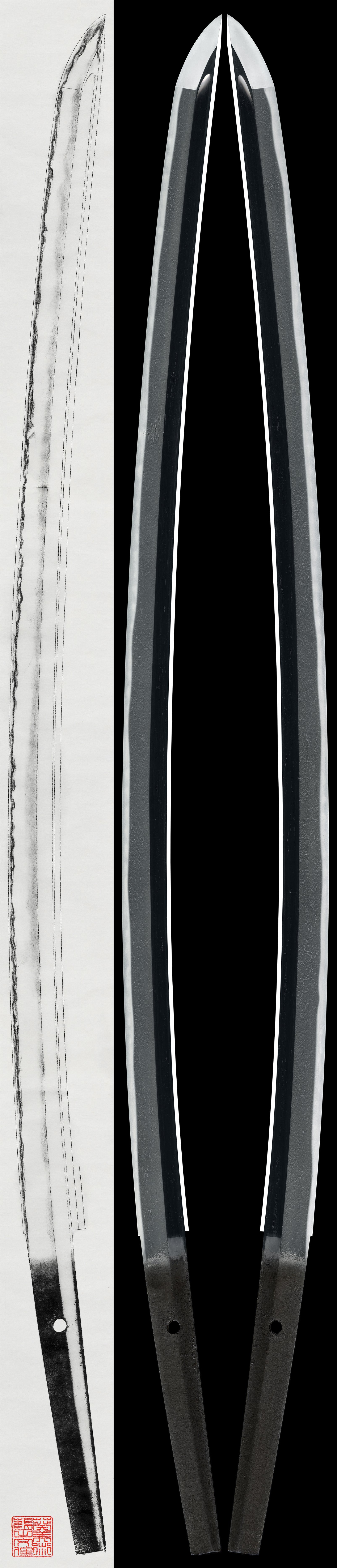
The dated work of Motoshige opens with a inscribed Shōwa 5 (1316) and closes in the Jōji era of the mid period, a span of some fifty years. Across this interval the published sources allow a first and a second generation, while noting that no settled consensus exists as to where the boundary falls. On one point the record is constant: Motoshige of the group in was a smith of a line distinct from Kanemitsu and Chōgi. The old genealogies derive the line instead from Moriie: the son of the second-generation Moriie was Morishige, and Morishige's son was Motoshige. He stands apart both from the mainline of Mitsutada and Nagamitsu and from the houses beside him, and the individuality of his blades answers to that separate descent.

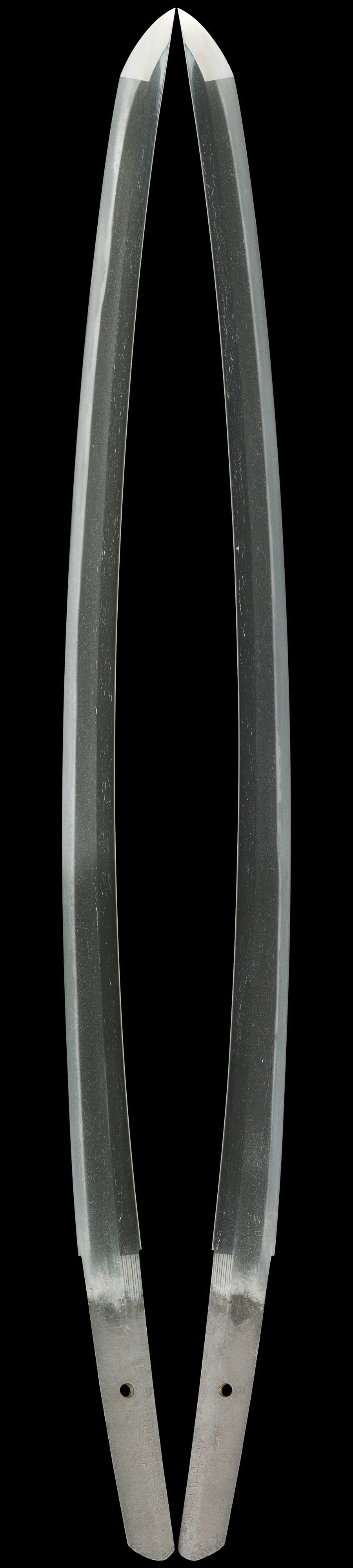
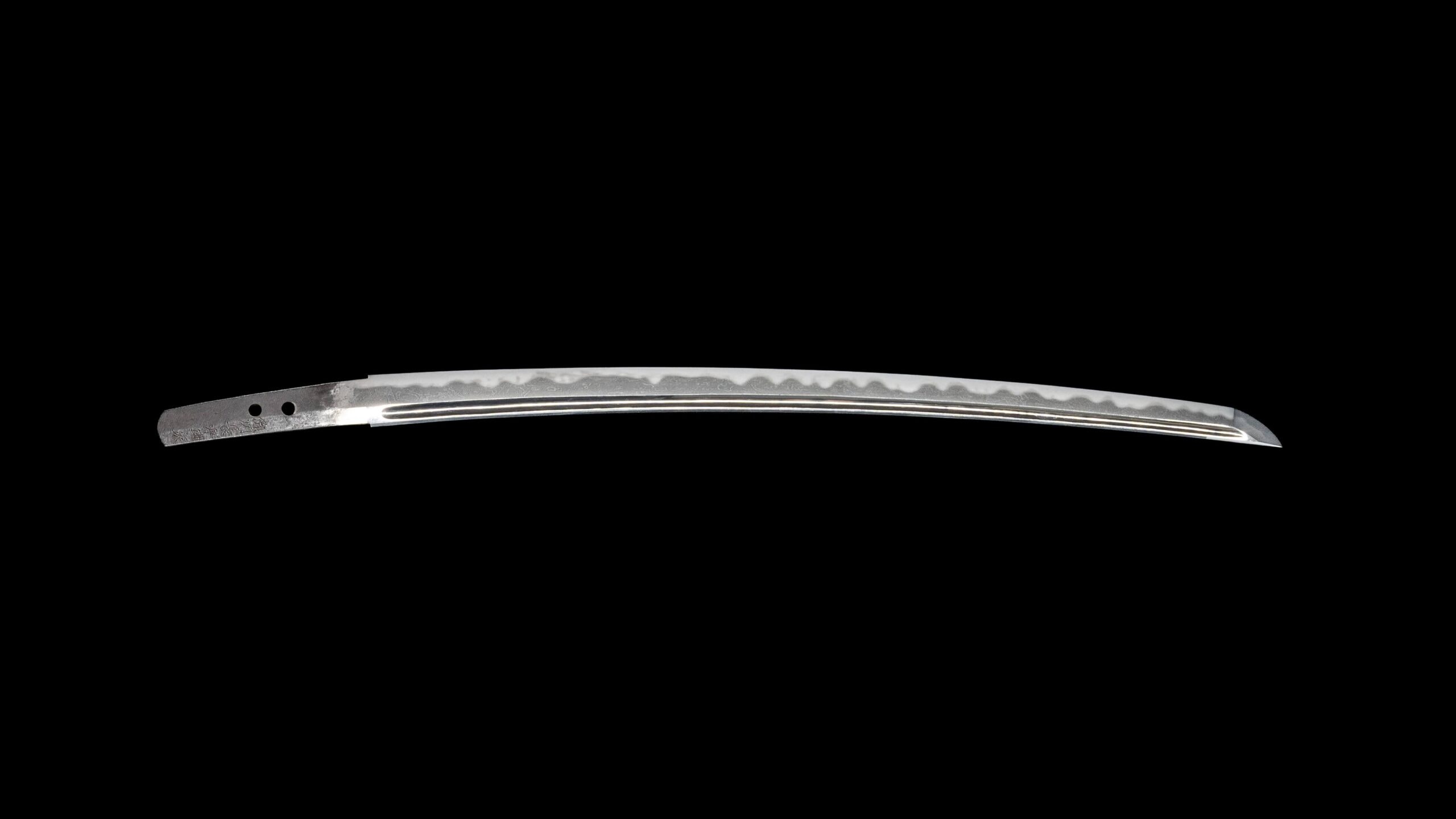
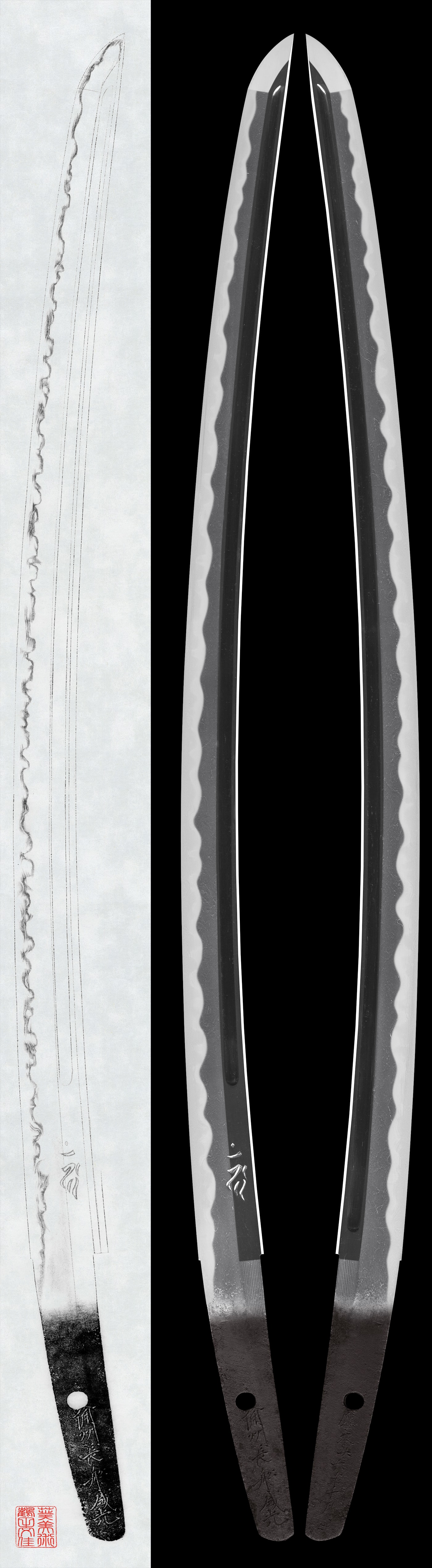
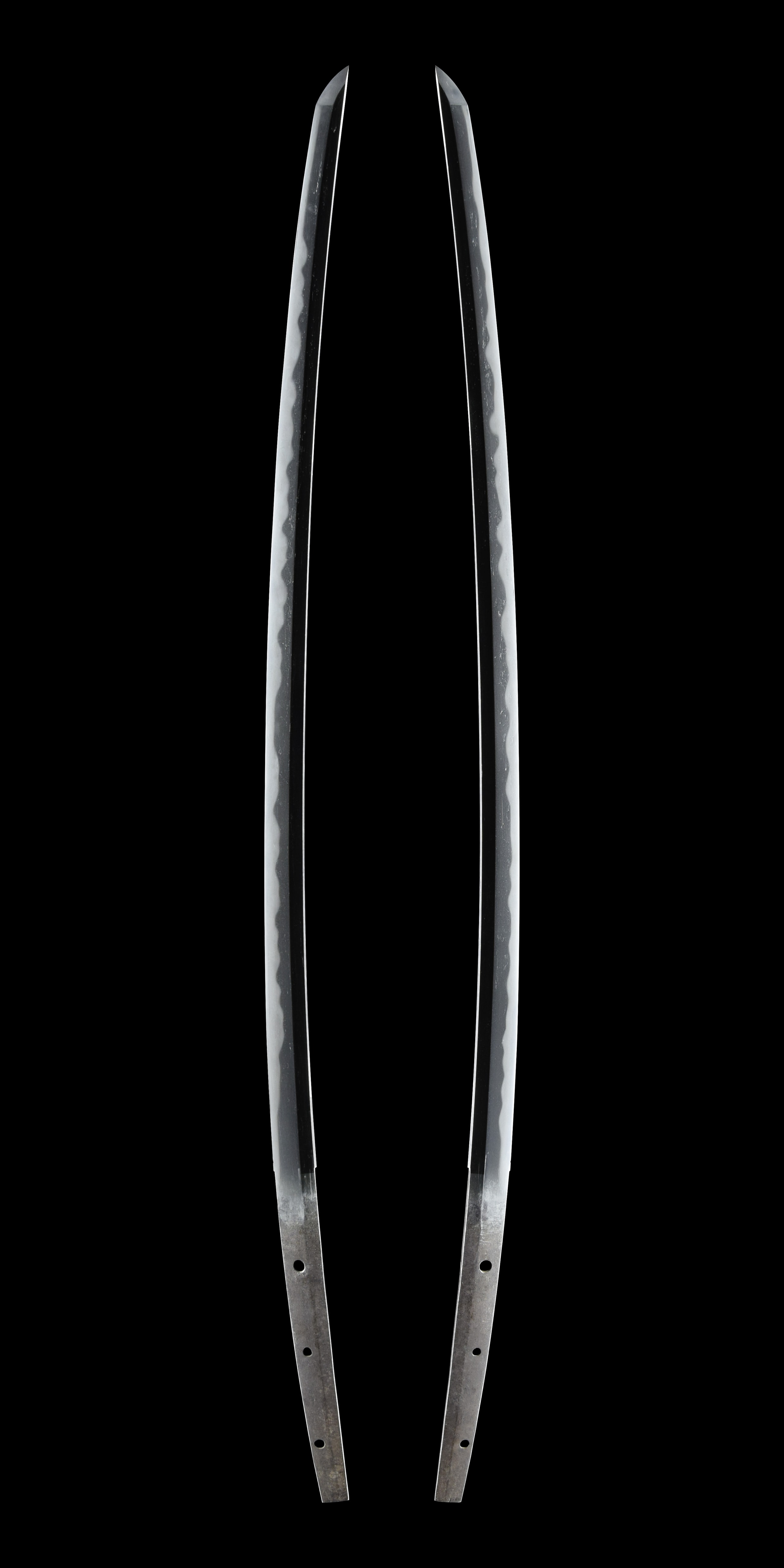
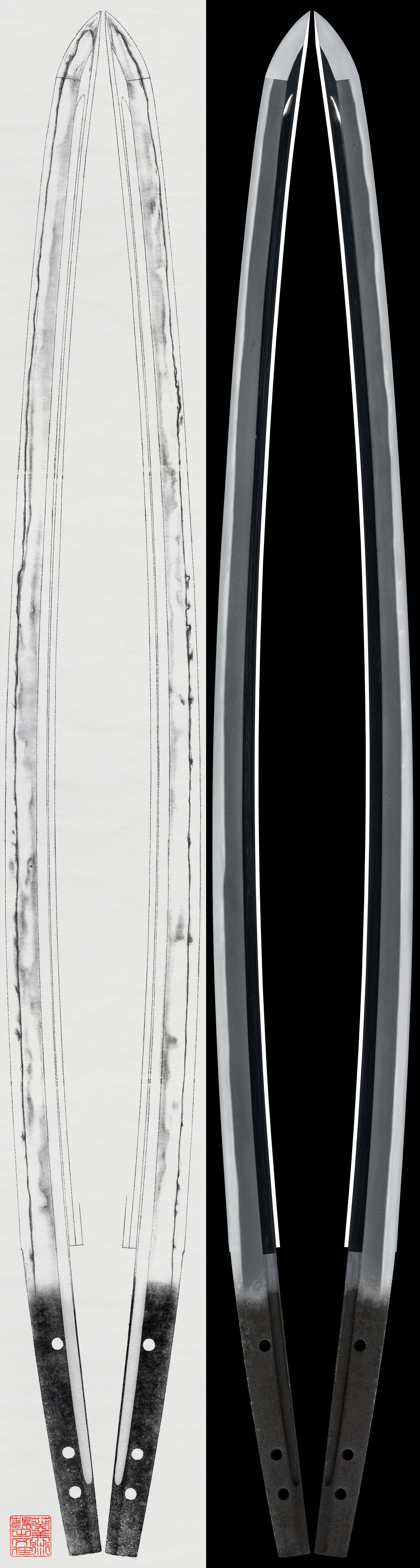
The manner the published sources assign him returns almost word for word. The forging mixes flowing and ; in the , angular stand out over a tone, and the whole slants in ; within the temper work and ; the becomes pointed. The notes conclude that "the viewing points of this smith and his school lie precisely in the point where the temperament is mixed in" (青江気質を混在させる点に同工及び一派の見どころがある). The squared teeth are the most personal of these marks: the sources describe "angular with the aligned in a straight line, peculiar to this smith" (焼頭が一直線上に揃った角ばる刃), read most clearly around the . The tends toward tightness with , and fine and thread the .

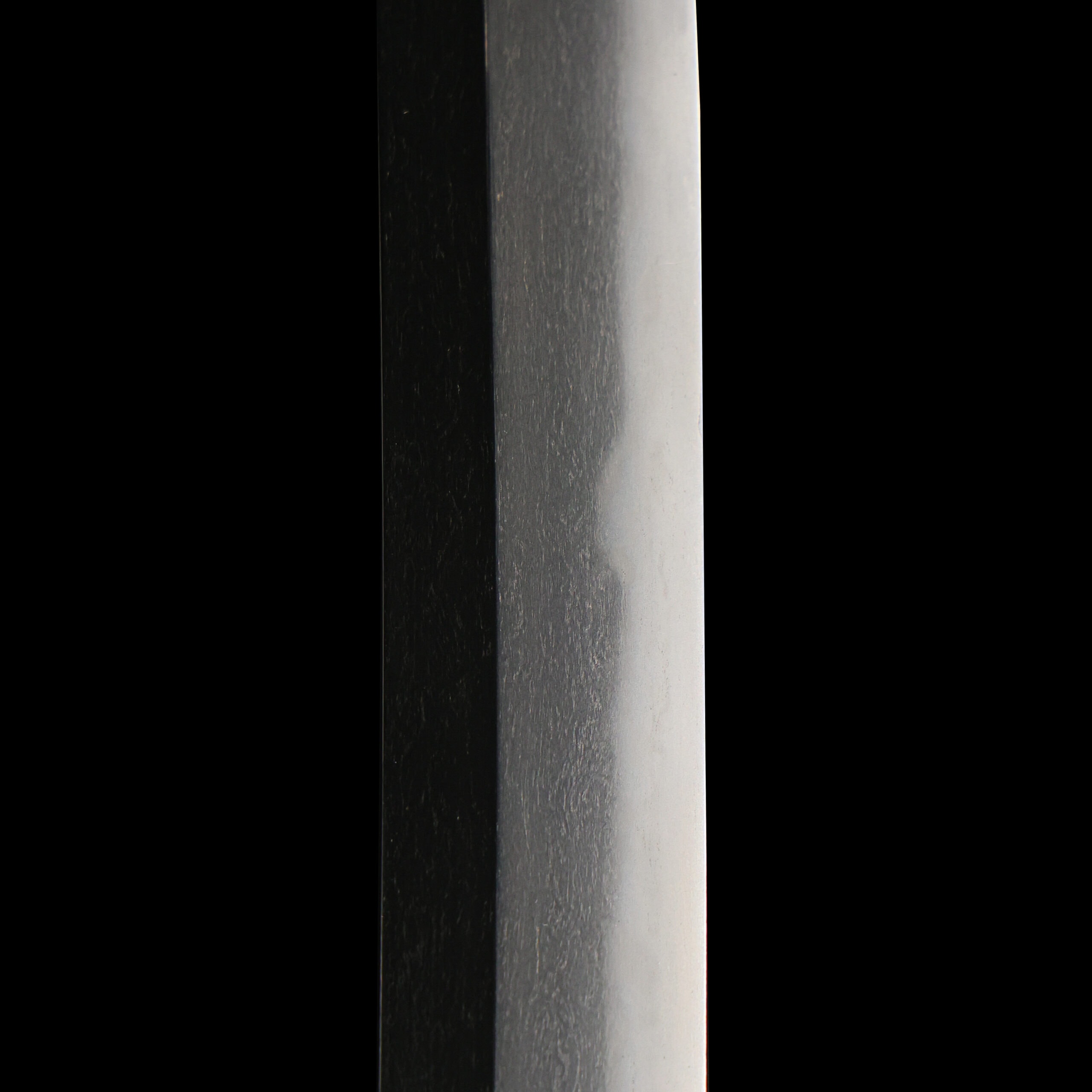
The is an mixed with and flowing grain, standing somewhat across the surface. Very fine attaches, fine enter, is interlaced, and a rises, often vividly. Of one unsigned the sources name the slanting and this -laced, standing forging surface, "what is termed the cicada wing" (蝉の羽根), as the conditions that point an appraisal to Motoshige. His uchi-zori are forged in with a slight flowing tendency, and the refined forging of his best appears at a glance almost a pure .

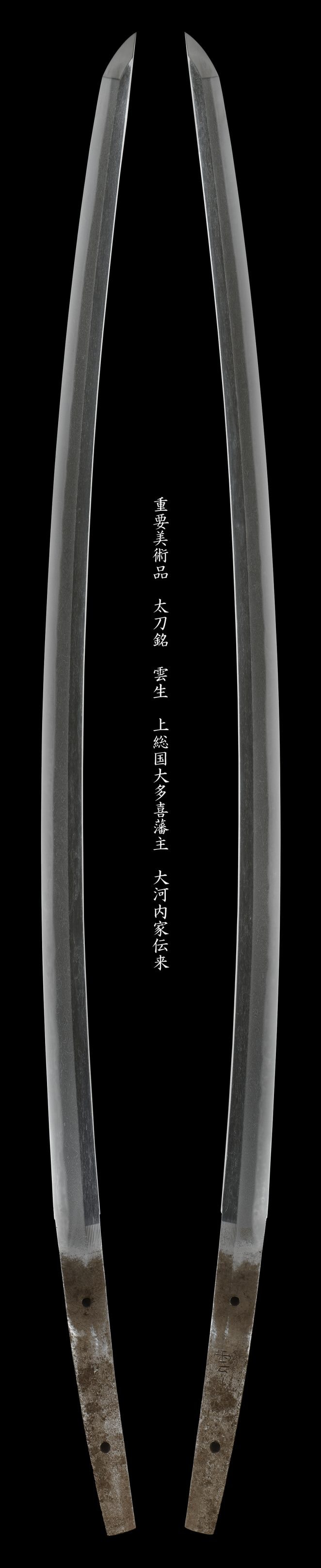
The record divides into clear registers. At its head stands the group called Ko-Motoshige: two-character signatures cut with a thick chisel on the above file marks, with a Jūyō Bijutsuhin dated Kagen 2 (1304). Of one such slender with -zori the sources write that the -toned with and , over an carrying , is a workmanship "-like through and through" (いかにも青江風). They hold this hand to be a different and somewhat earlier man than the long-signature Motoshige, leaving open whether he was the ancestor of the line or a smith connected with . The dated work runs from Shōwa 5 through Karyaku into Kenmu: of standard proportions with uchi-zori, in so close to the older manner that one dated blade reads "almost as though one were viewing the work of Kagemitsu" (殆んど景光を見るよう). From the years the build turns grand: wide with little taper, shallow , a large , the Enbun and Jōji stance. The bulk of what survives answers to it as unsigned ; among the signed pieces stands an of 94.45 cm preserving the full form of the period. tradition counted Motoshige among the three sages of Sadamune (貞宗三哲) beside and Hōjōji Kunimitsu, a claim the published sources find "hard to credit out of hand" (俄かに信じ難い): most of his surviving work is plainly , with fewer -tinged pieces than Kanemitsu or Chōgi. The exception is real: in the transmitted in the Shimazu family, an Important Cultural Property, the of and grows extraordinarily strong and and stand out.

A blade of his may show "at a rough glance a manner that could be taken for " (粗見すれば青江に擬する作風); yet the angular teeth aligned at the and the vividly standing return the appraisal to Motoshige, a temperament at base that wears the air of neighboring . Against Kagemitsu, to whom the old books liken him, the wider , the pointed and the loosened flowing and in the reveal "the individuality of a Motoshige whose line differs from that of Kagemitsu and his kind" (景光らとは系統を異にする元重の個性). The viewing points are shared, the notes add, by his school, Shigezane and the rest, who carried the squared, slanting manner through the period.

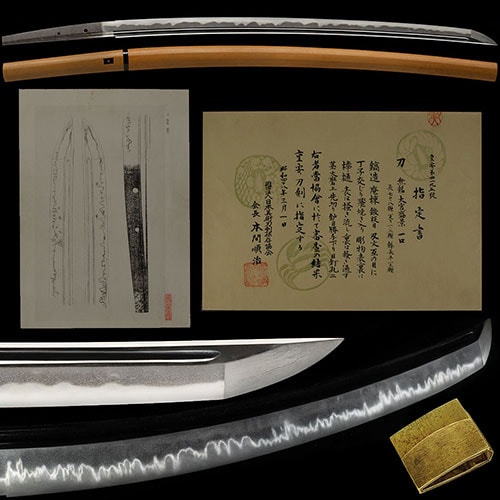
He is rated Jō-jō in Fujishiro's grading, and 159 designated works stand on record: seven Important Cultural Properties, nine Jūyō Bijutsuhin, and 142 blades across the and tiers, twenty-one of them . Unsigned blades outnumber signed ones, ninety-nine against fifty-six, so he is met most often as an unsigned . The named pieces carry the history: the Kenmu 1 (1334) called "the white eyebrow among his works" (同作中の白眉); the 'ō 3 (1352) of 'in-no-miya transmission; the Satake bestowed by Shōgun Tokugawa Ienobu in Hōei 8 (1711), whose Kōon gold-inlay attribution the sources call "entirely just" (至当); and the Date family that may be the very Motoshige the Tokugawa Jikki (徳川実紀) records Iemitsu granting Date Masamune in 'ei 1 (1624). Twenty-nine blades carry recorded provenance, through the Date, Satake, Uesugi, Hachisuka, Hosokawa, Shimazu, Owari Tokugawa and Yanagisawa houses and into the Imperial Family. The Important Cultural Properties can never trade, and holdings of the Tokyo National Museum, the Sano Art Museum, the Hayashibara Museum of Art, the Seikadō Bunko Art Museum, Uesugi Jinja and the British Museum stand outside the market. Yet with 142 blades in those tiers he remains among the few major names of a collector can still realistically hold, and the hand declares itself wherever the squared, slanting runs beneath a vivid .
Kantei

4 manners: the ko-Motoshige two-character-mei group (Kagen, possibly a separate earlier hand) -> dated Kamakura work in the Kagemitsu-like kataochi manner (Showa to Kenmu) -> the Nanbokucho prime, grand build with squared, slanting gunome over a suguha tone (o-suriage katana / sunnobi tanto registers), plus an exceptional nie-strong Soshu-tinged register

Motoshige of Osafune heads his own Bizen line, set apart from Kanemitsu and Chogi; the old genealogies derive him from Hatakeda Moriie (Moriie's son Morishige, his son Motoshige). Dated work runs from Showa 5 (1316) through Karyaku, Kenmu, Kan'o and Enbun into Joji (1360s), a span that sustains a first and second generation theory with no settled dividing point. His manner mixes nagare-masa and jifu into the kitae, sets conspicuous angular gunome over a suguha-toned ha, slants the whole with saka-ashi and yo, and points the boshi: the Aoe temperament inside a Bizen base, which the sources name as the viewing point of the smith and his school. An earlier two-character-mei group called ko-Motoshige (Kagen, 1304) and an exceptional nie-strong register tied to the Edo legend of Sadamune's three sages round out the picture.

Diagnostic discriminators

unique vs Aoe (Tsugunao)

39% of his works · 7.8× vs Kanemitsu

39% of his works · 2.8× vs Kanemitsu

48% of his works · 3.4× vs Kagemitsu

Observation by phase

Ko-Motoshige, the Kagen-era two-character-mei group (possibly a separate, earlier hand)

two-character mei cut with a thick chisel on the haki-ura, o-sujikai yasurime (7 niji-mei pieces in the corpus; Jubi tachi dated Kagen 2, 1304)

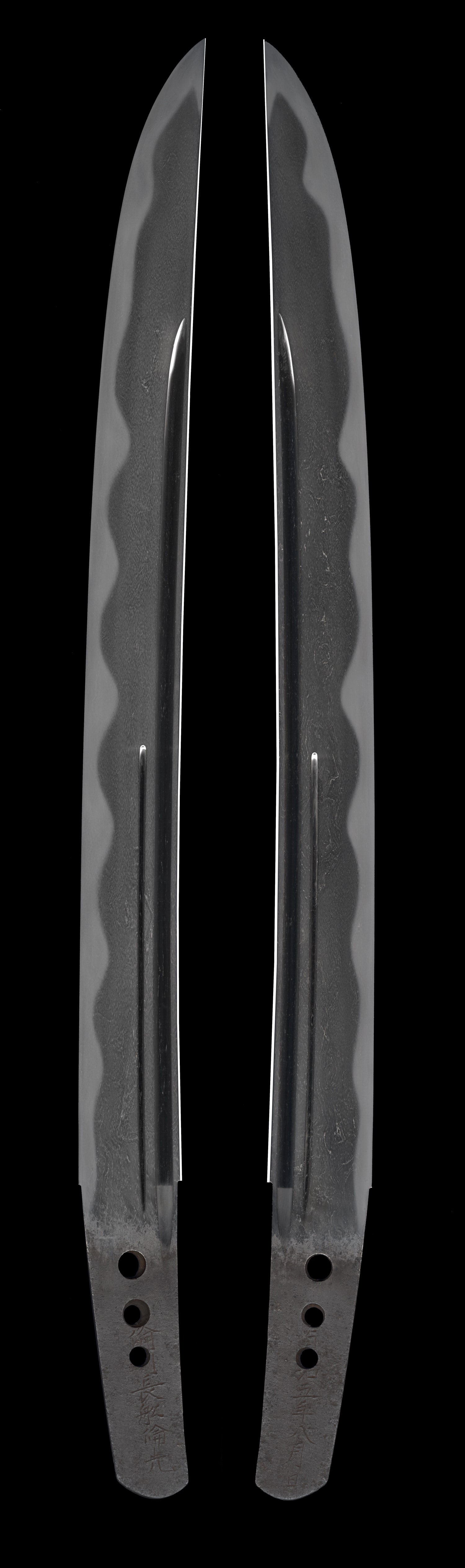
Slender tachi with koshi-zori, the mei cut large on the haki-ura with a thick chisel, the yasurime o-sujikai: customs the sources call Aoe-like. The ha is a suguha tone with choji and ko-midare, ko-ashi and yo, the nioiguchi tightish with ko-nie, the itame ground carrying jifu, 'a workmanship that is Aoe-like through and through'. The sources hold this group to be a different, earlier man than the long-mei Osafune Motoshige, whose dated work begins at Showa 5 (1316); whether he is the ancestor of the line or an Aoe-connected smith remains open to study.

Sugata 姿
Jigane 地鉄
Hamon 刃文

Dated Kamakura work, Showa to Kenmu: the Kagemitsu-like kataochi manner

ubu signed and dated pieces, above all tanto (dated work: Showa 5 / 1316, Bunpo 2 / 1318, Gen'o 2 / 1320, Genko 2-3 / 1322-23, Karyaku 1 / 1326, Kenmu 1 / 1334; 24 ubu nakago in the corpus)

Tanto of standard Kamakura proportions with uchi-zori, forged in ko-itame, the ha a kataochi-gunome that the sources call almost indistinguishable from Kagemitsu, partly slanting; a Jowa 2 (1346) tanto still keeps this Kamakura form and Kagemitsu-style ha. Tachi of the dated years carry a higher sori with chu-gissaki and a wide suguha tone with squared gunome. Against Kagemitsu the wider ha, the pointed boshi and the loosened nagare-masa and jifu in the jigane give the line away.

Sugata 姿
Jigane 地鉄
Hamon 刃文
Bōshi 帽子

Nanbokucho prime: the grand build and the canonical squared, slanting gunome over a suguha tone

o-suriage mumei katana above all (110 of 174 setsumei are mumei, 143 suriage; 94 katana)

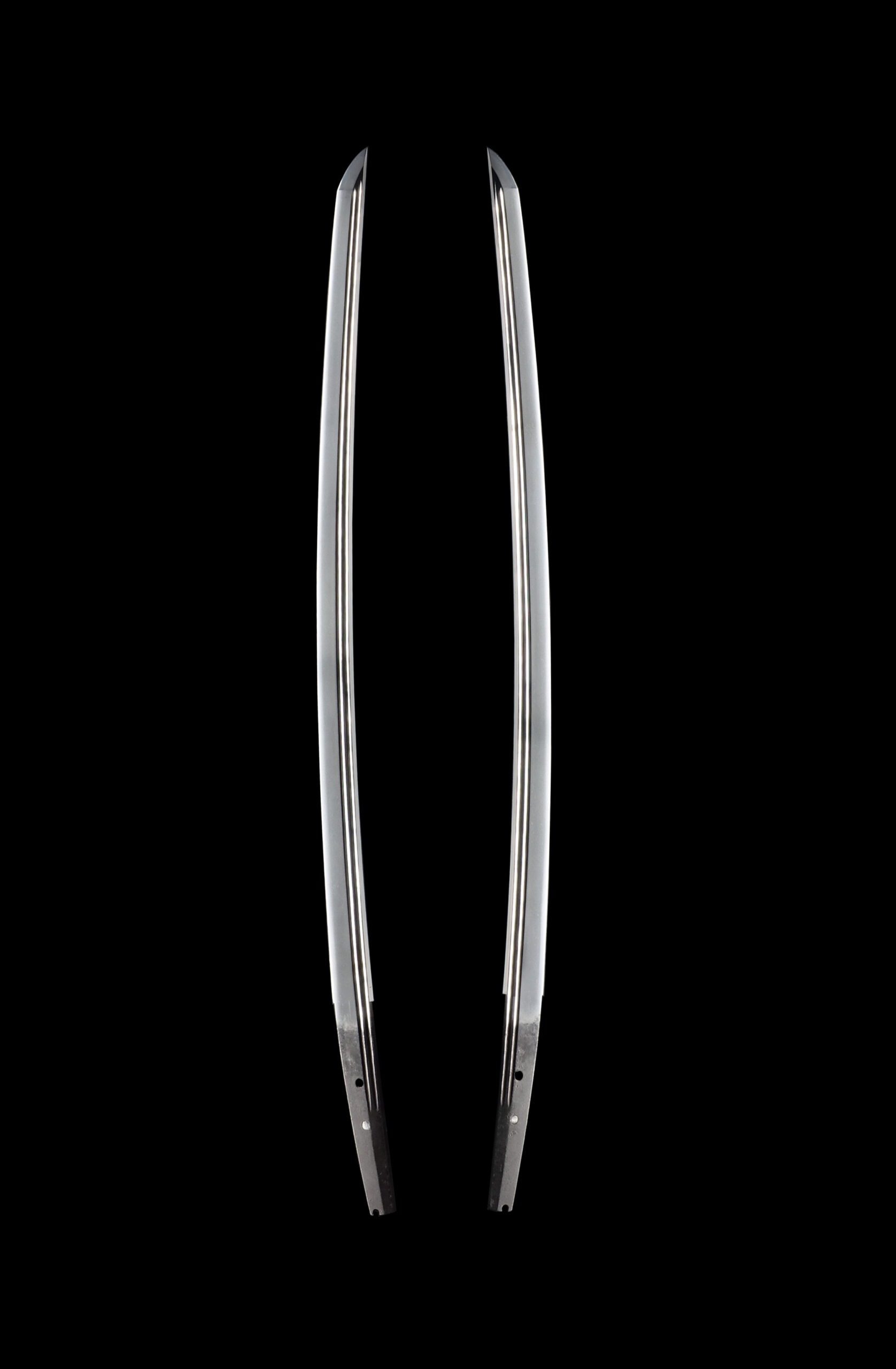
From the Nanbokucho years the build turns grand: wide mihaba with little taper, shallowish sori, o-kissaki, the Enbun-Joji stance. The itame kitae carries nagare-masa and jifu, stands somewhat, and raises midare-utsuri; the ha is a wide suguha tone with gunome, ko-gunome and conspicuous angular teeth, the whole slanting with saka-ashi and yo, the nioiguchi tightish with ko-nie; the boshi runs in midare, often thrusting up, the tip pointed. This is the manner the sources reduce to a formula, the Aoe temperament mixed within a Bizen base, and the bulk of the surviving o-suriage mumei katana answer to it.

Sugata 姿
Jigane 地鉄
Hamon 刃文
Bōshi 帽子
O-suriage mumei katana, the grand Enbun-Joji build
Sunnobi tanto and hira-zukuri ko-wakizashi, broad and thin in the Nanbokucho way

The exceptional nie-strong register (the Sadamune legend)

less firmly establishedrare pieces: the Important Cultural Property wakizashi of Shimazu transmission above all, the Enbun 2 (1357) Tokuju wakizashi next to it, and occasional katana with strong ji-ha nie

Edo tradition counts Motoshige among the three sages of Sadamune, and he is grouped with Kanemitsu and Chogi under Soden-Bizen; the sources find the pupil legend hard to credit and note that few of his works carry the Soshu tinge to their degree. The exceptions are real: in the Shimazu wakizashi and its kin the nie of ji and ha grow notably strong, chikei and kinsuji stand out, and sunagashi sweeps the ha. On such blades the deepened nie sits over his usual flowing, jifu-laced jigane, which keeps the attribution with Motoshige.

Jigane 地鉄
Hamon 刃文
Scholarship

Dated work spans Showa (1316) to Joji (1360s); the sources allow a first and second generation within the interval while noting that no settled dividing point exists.

The two-character-mei group called ko-Motoshige, with a Jubi tachi dated Kagen 2 (1304), differs from the long-mei Osafune Motoshige in workmanship and mei alike; whether it is his ancestor, or an Aoe-related hand betrayed by the o-sujikai yasurime and the haki-ura mei, remains in the sources' words open to study.

Edo tradition counts him among the three sages of Sadamune, with Nobukuni and Hojoji Kunimitsu; the sources find this hard to credit, most surviving work being plainly Bizen and quieter than Kanemitsu or Chogi, the nie-strong pieces the exception.

The later canonical setsumei carry the Hatakeda genealogy: by the old tradition Moriie II's son was Morishige, and his son was Motoshige.

Designations

Kokuhō—
Jūyō Bunkazai7
Jūyō Bijutsuhin9
Gyobutsu1
Tokubetsu Jūyō21
Jūyō Tōken121

Elite Standing

0.65 across 159 designated works

Top 4% among smiths

Provenance

41 documented provenances across certified works by Motoshige

Provenance Standing

20 works held in elite collections across 41 documented provenances

Top 4% among smiths

Raw score: 3.11 / 10

Blade Forms

Distribution across 159 ranked works

Signatures

Signature types across 159 ranked works

Currently Available

Lineage

Motoshige
Students (9)
  1. 1.Chikakage近景4 for sale86designated
  2. 2.Nagashige長重16designated
  3. 3.Yoshikage義景3 for sale67designated
  4. 4.Shigezane重眞1 for sale45designated
  5. 5.Mitsushige光重2designated
  6. 6.Motohisa元久1designated
  7. 7.Motoyuki元行1designated
  8. 8.Shigeyoshi重吉3designated
  9. 9.Yorimitsu頼光1designated

Motoshige School

Other artisans of the Motoshige school

  1. 1.Motoshige元重1designated
  2. 2.Motoyuki元行1designated