Sōshū was born in a boomtown: Kamakura, seat of the warrior government, dense with elite patrons. Tradition holds that master smiths were summoned east to serve it, and from their students came Shintōgo Kunimitsu and then Masamune.
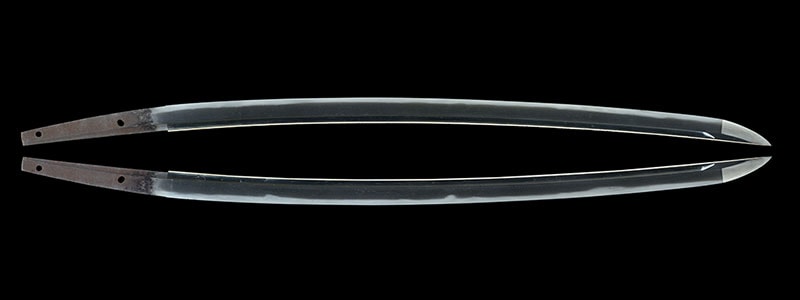
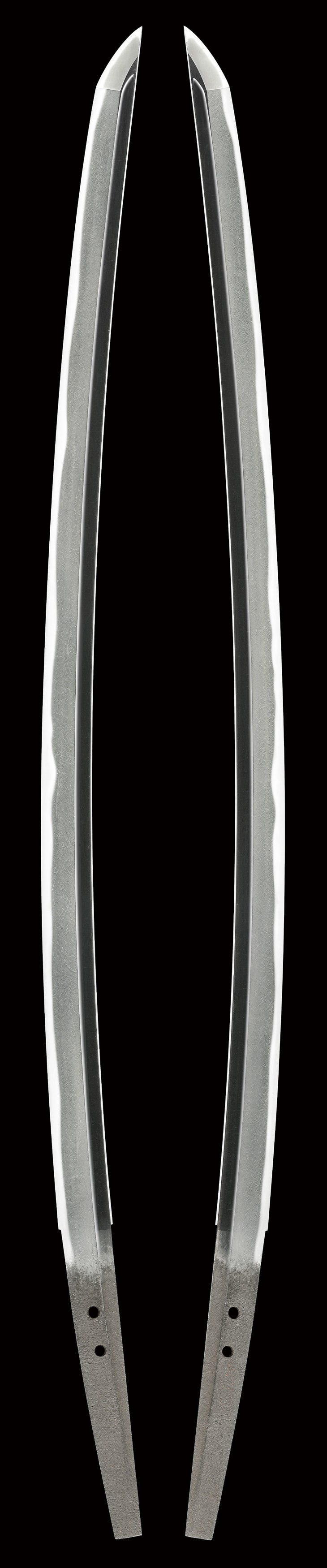
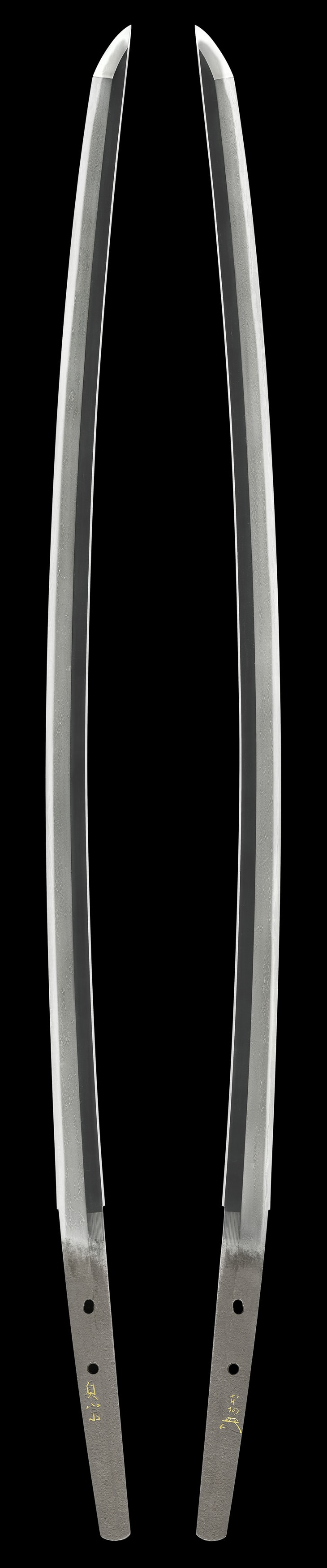
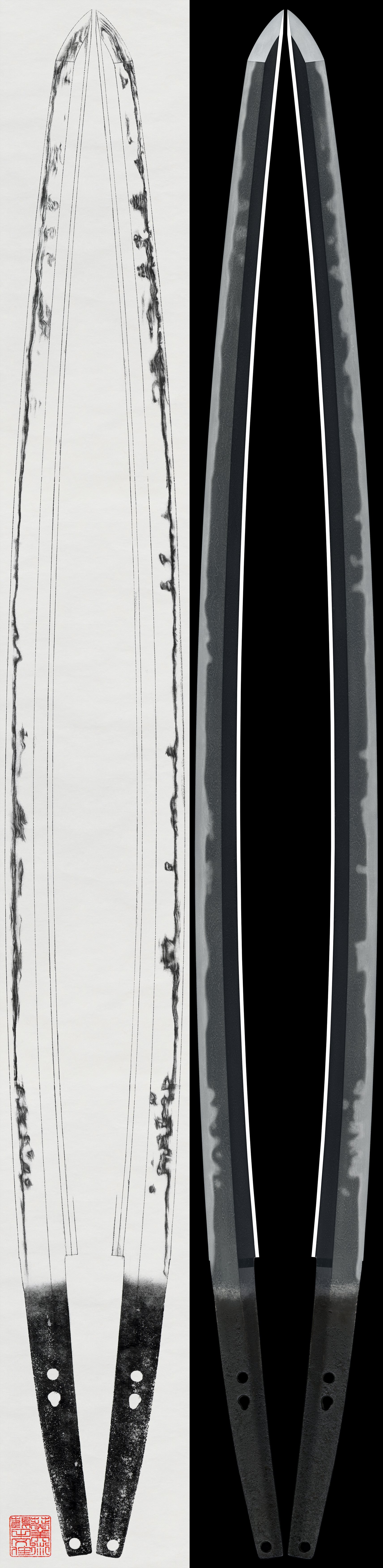
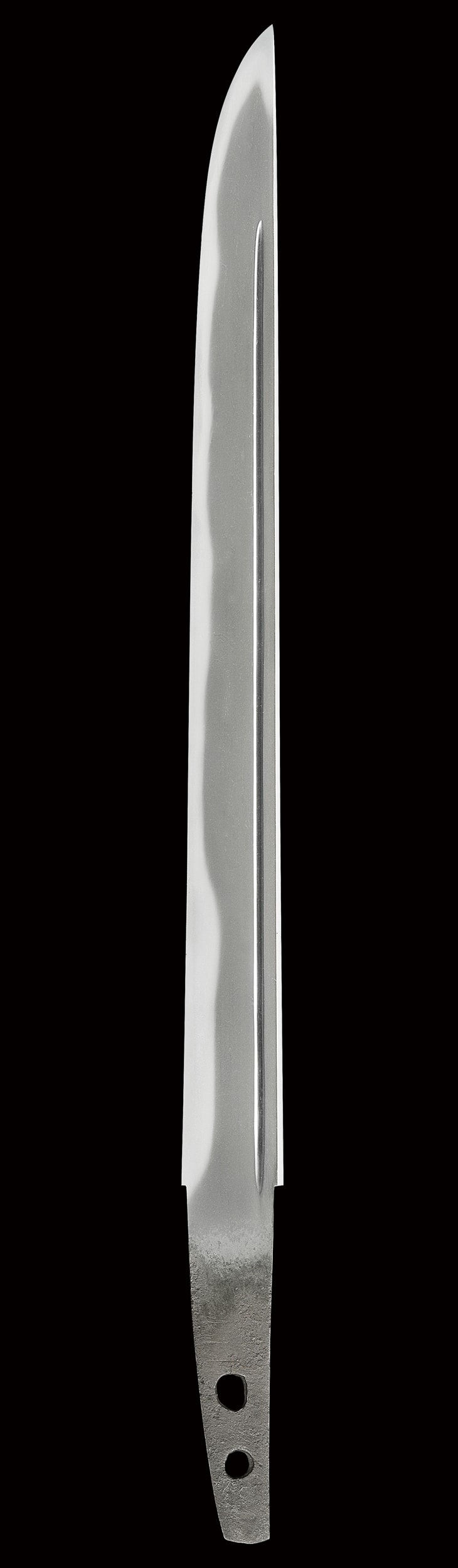
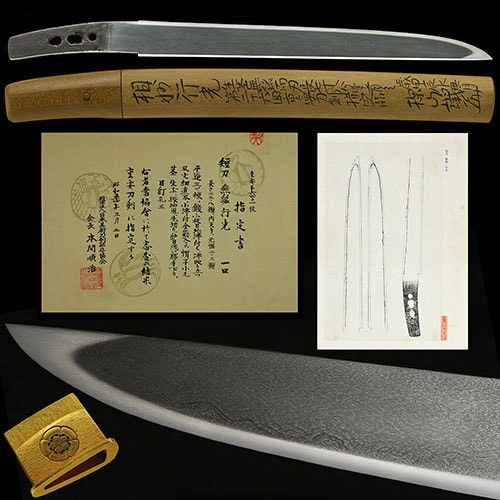
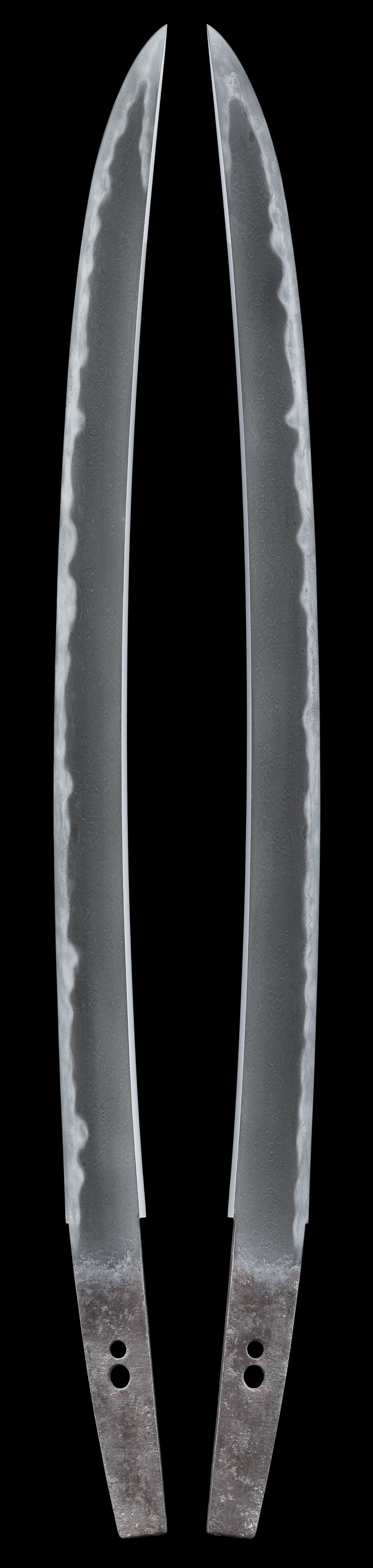
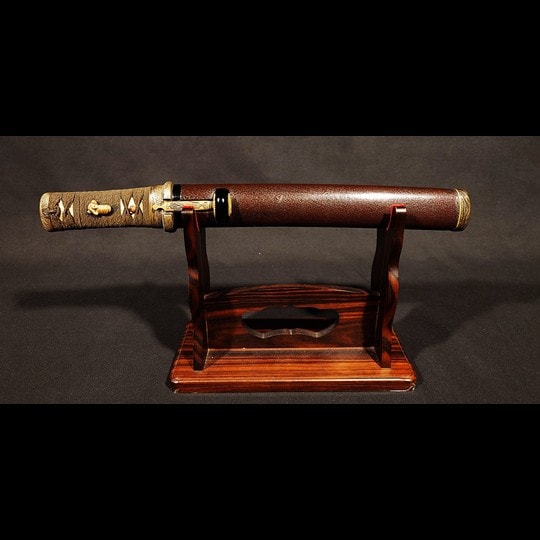
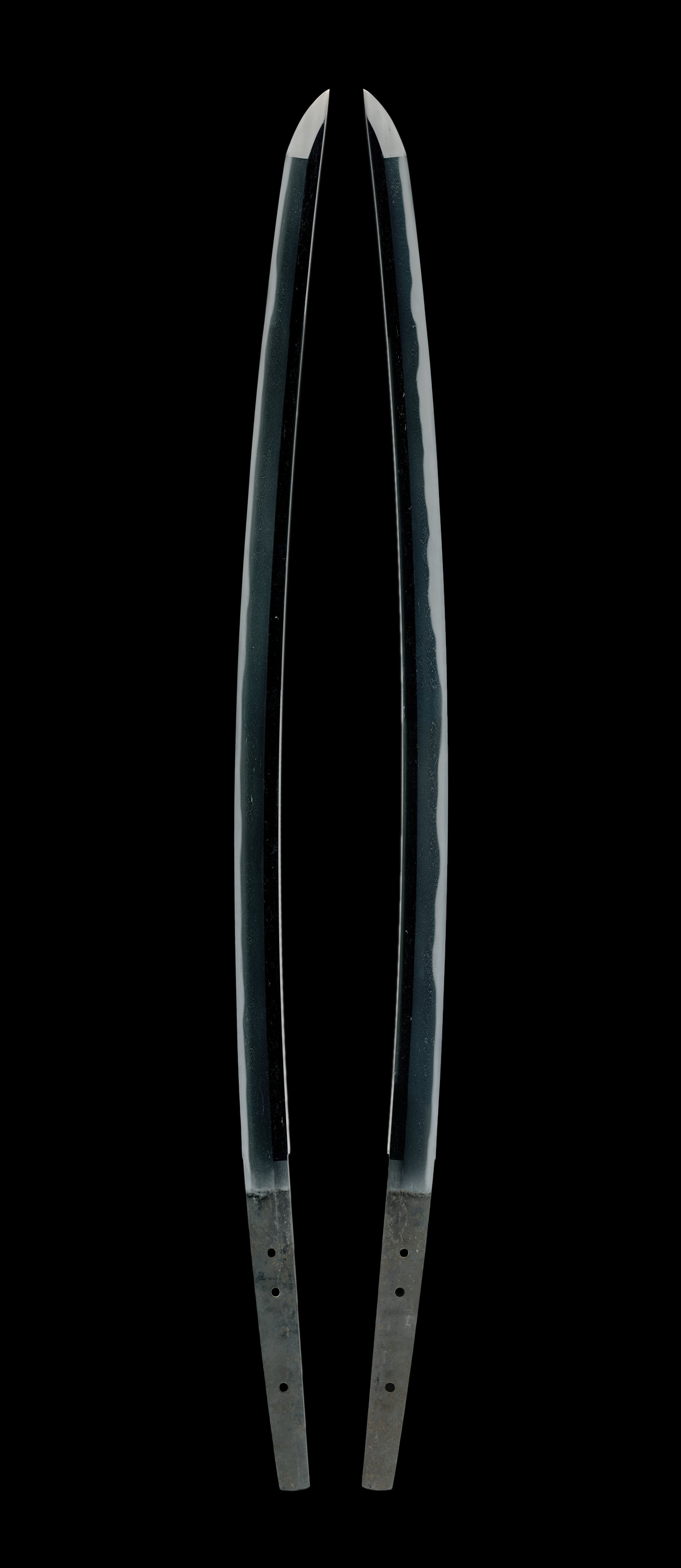
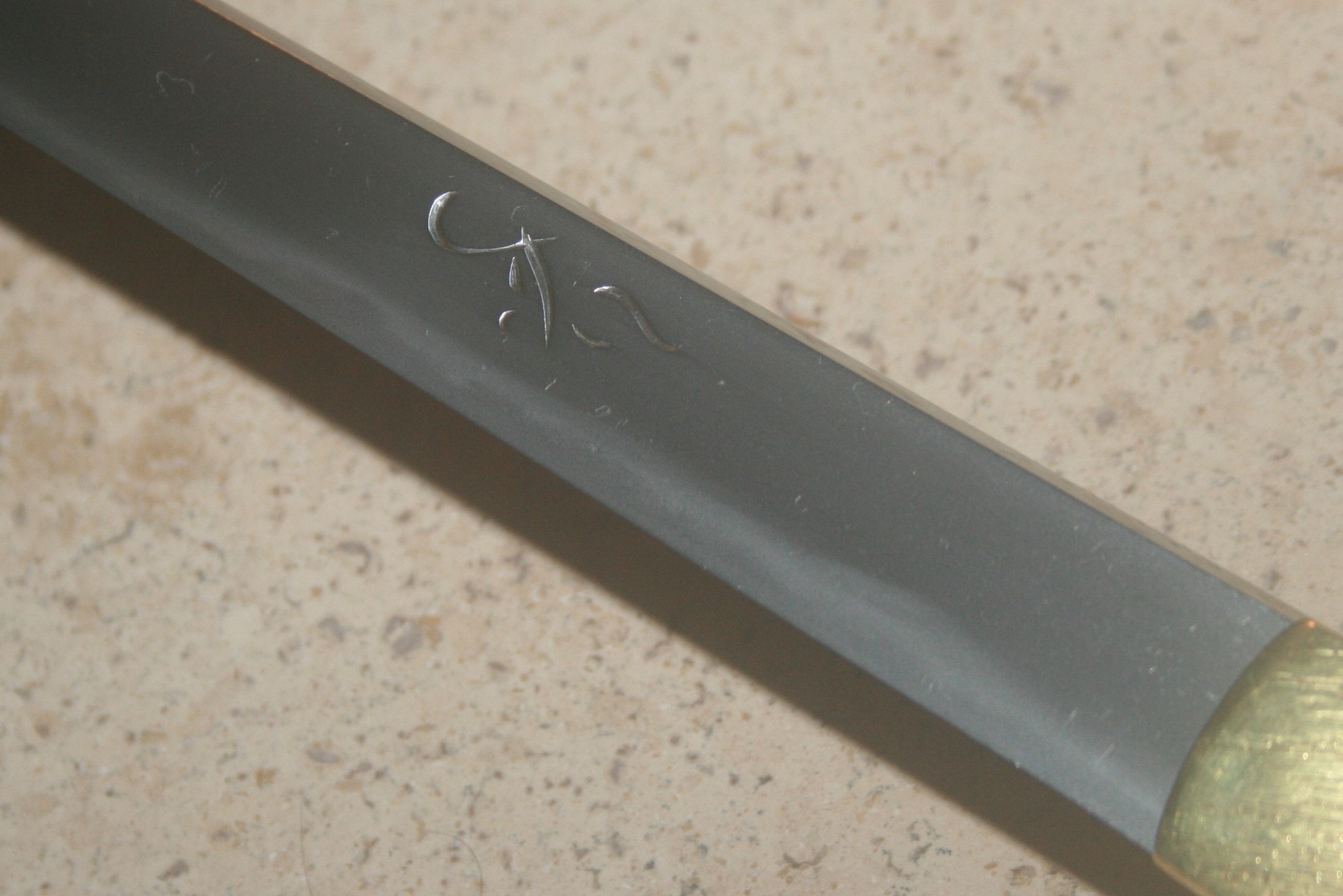
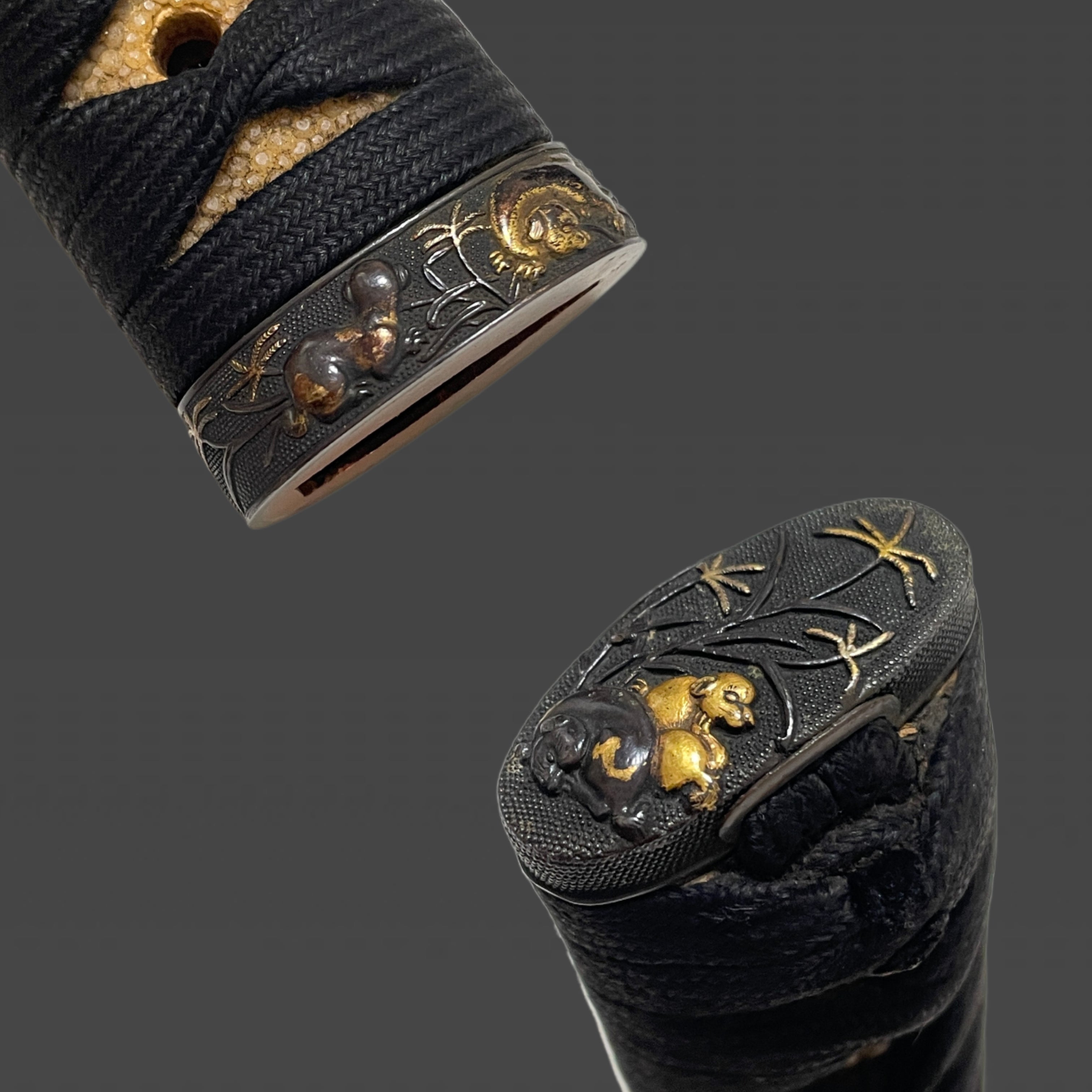
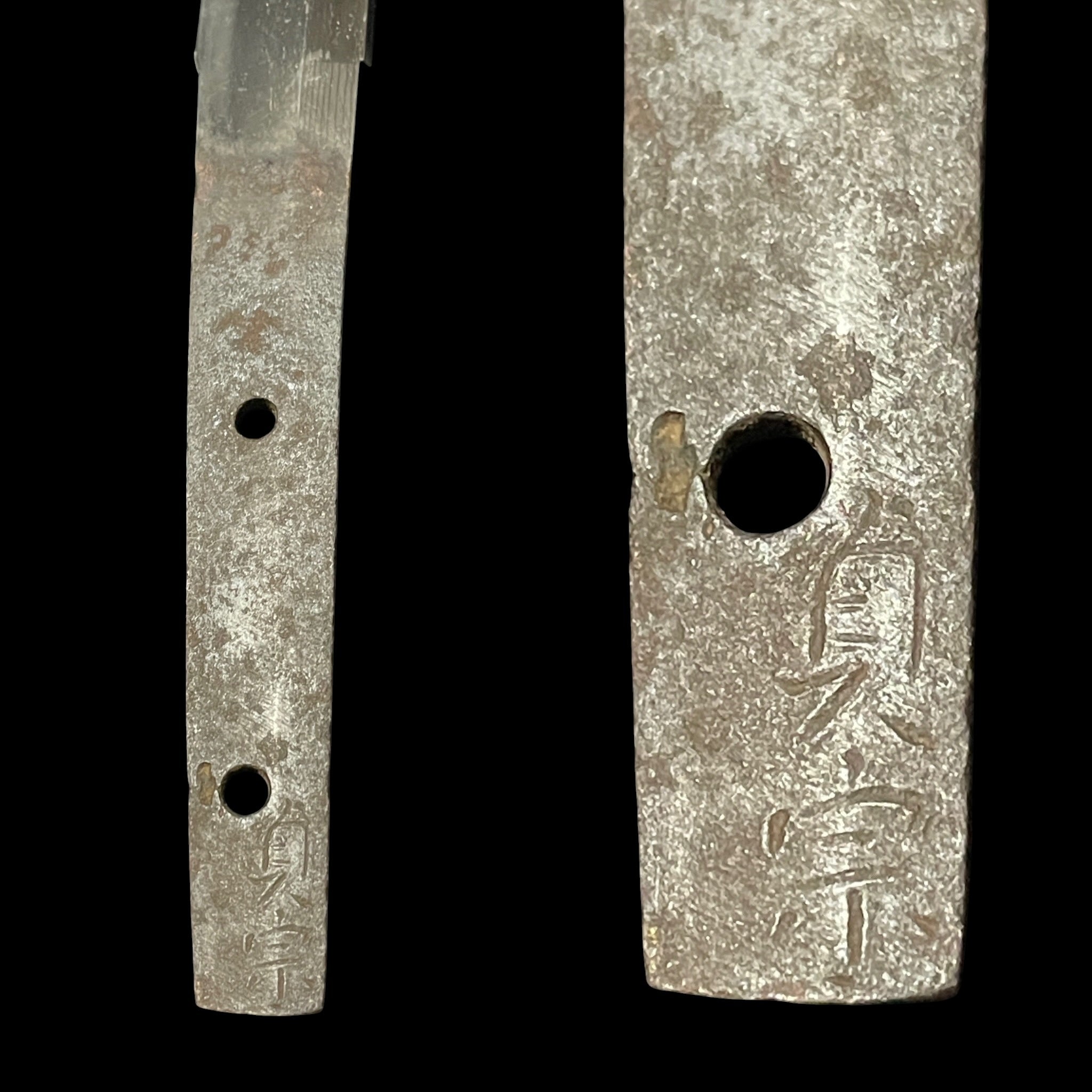
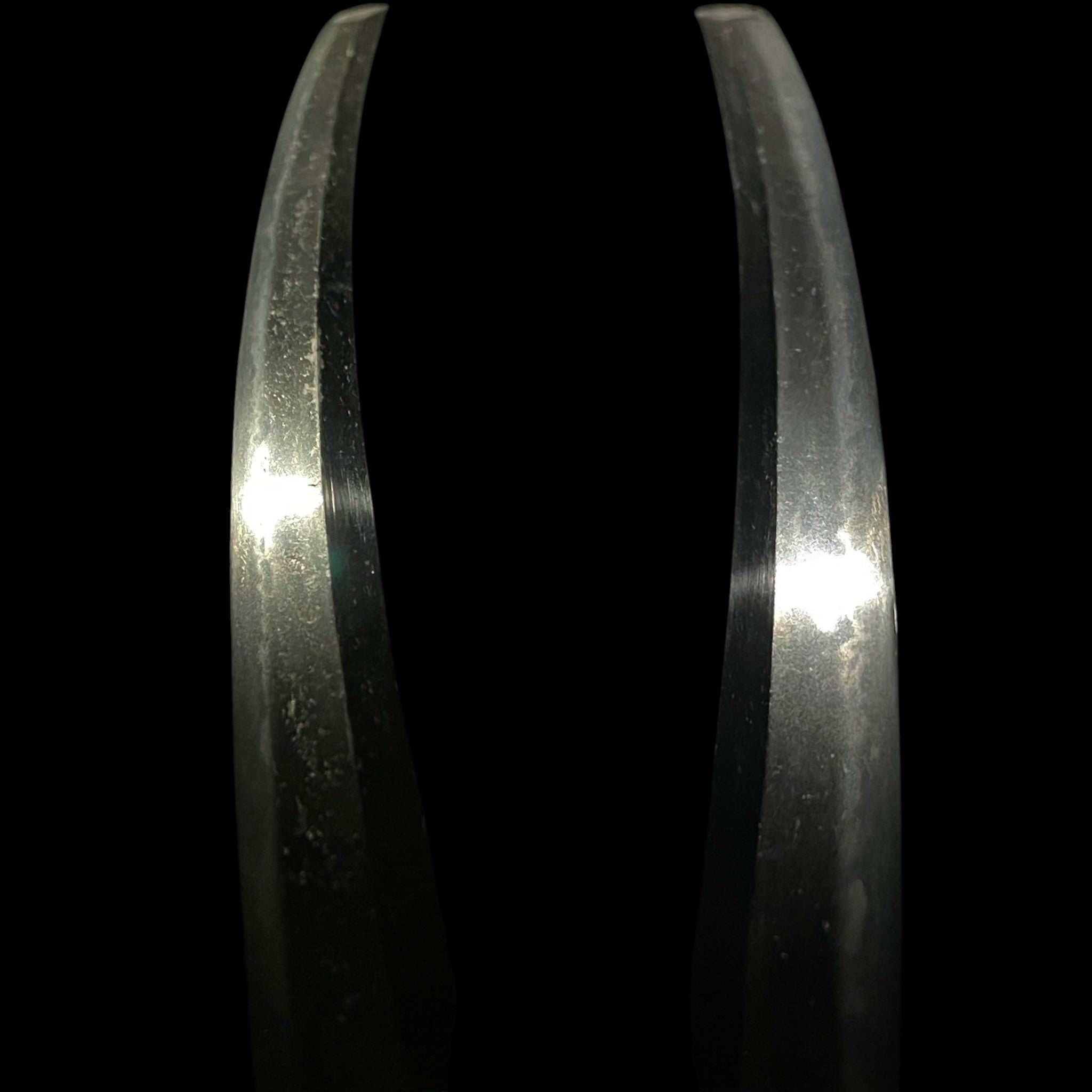
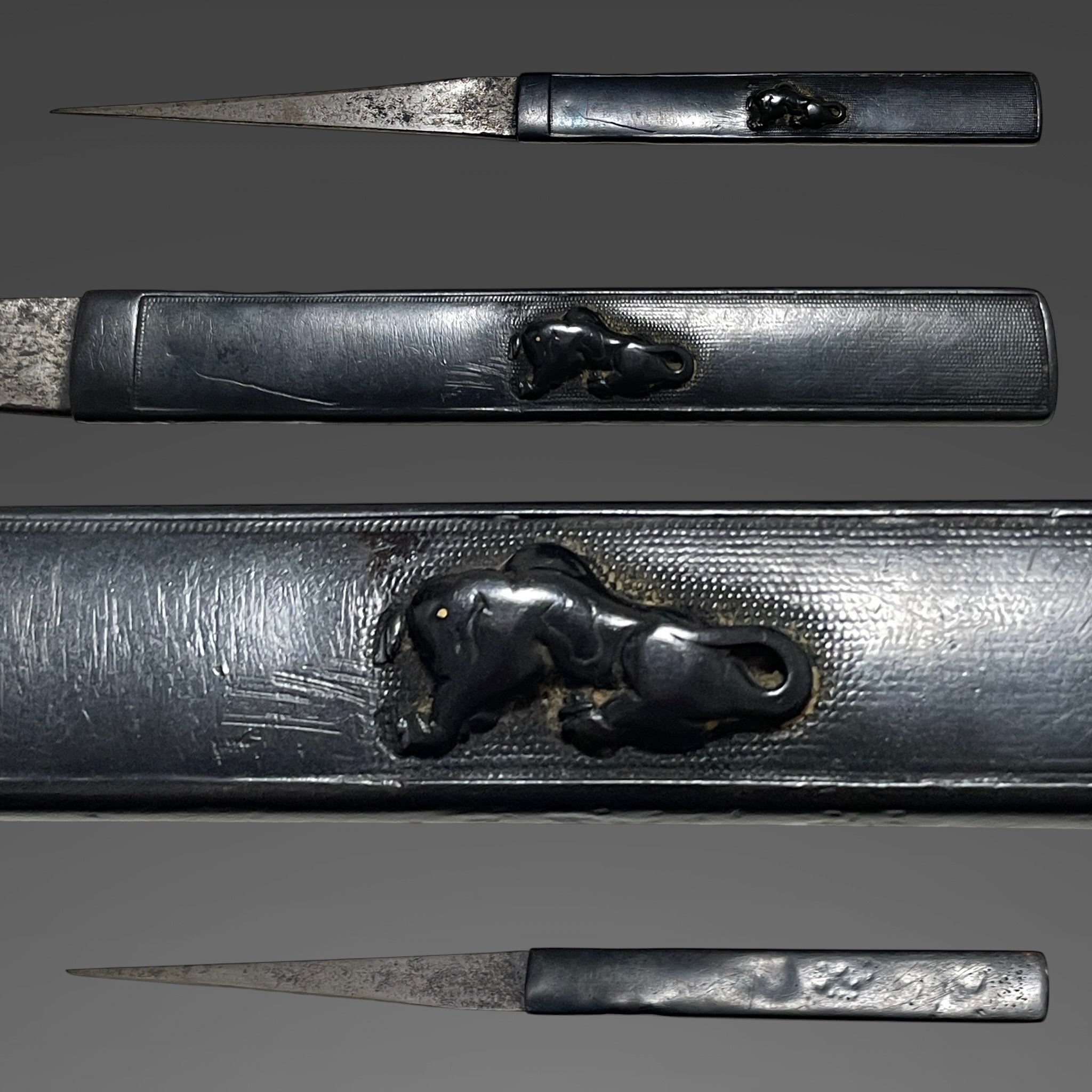
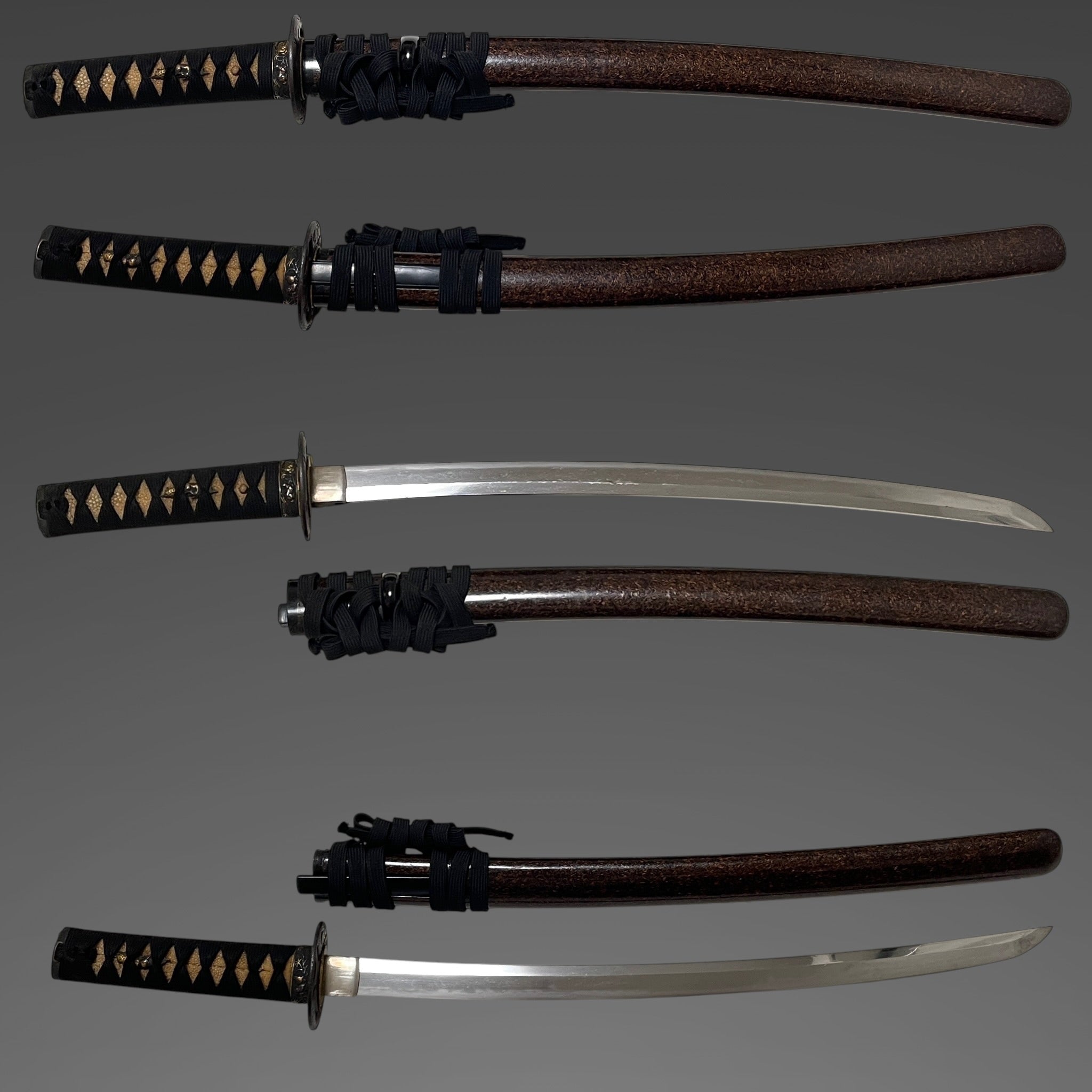
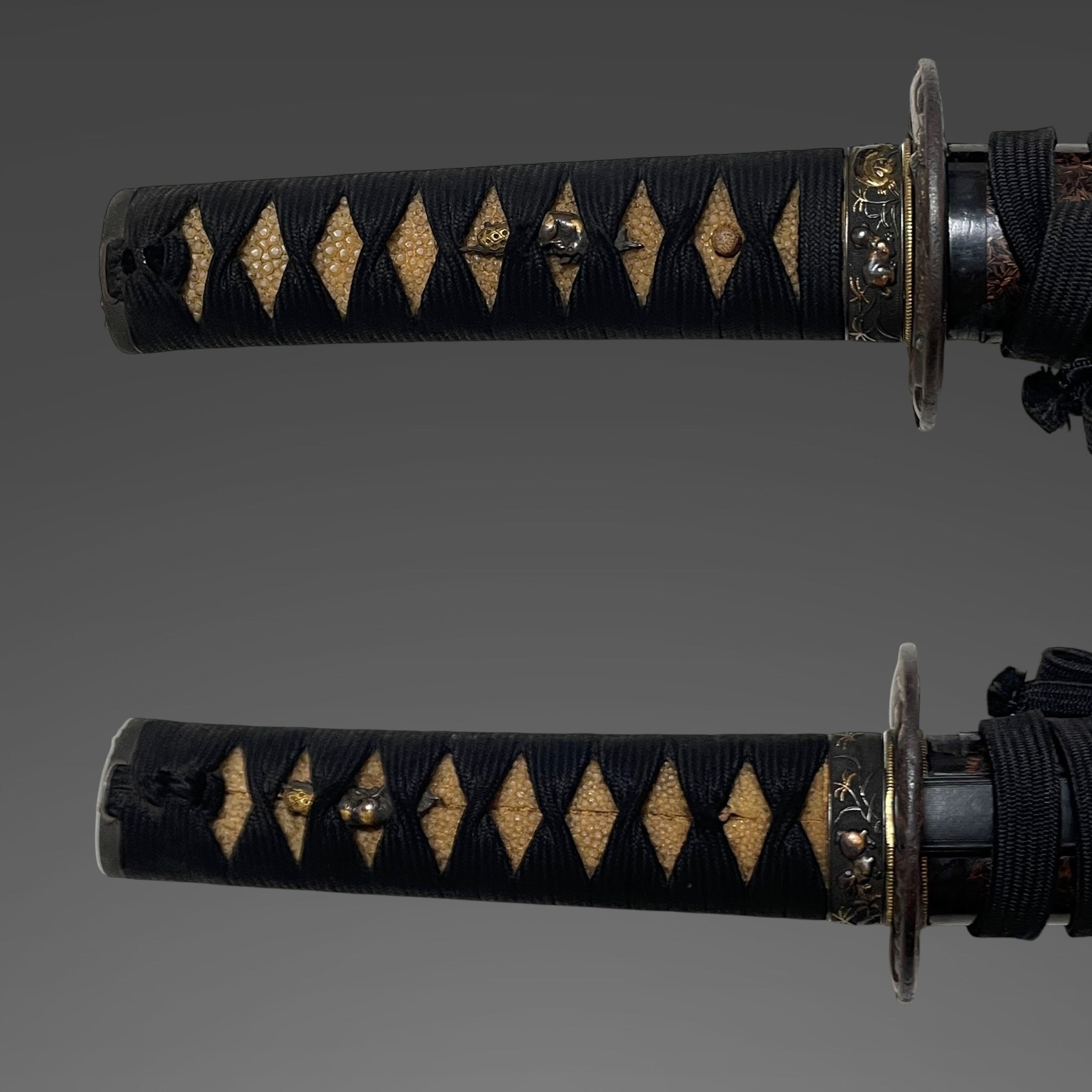
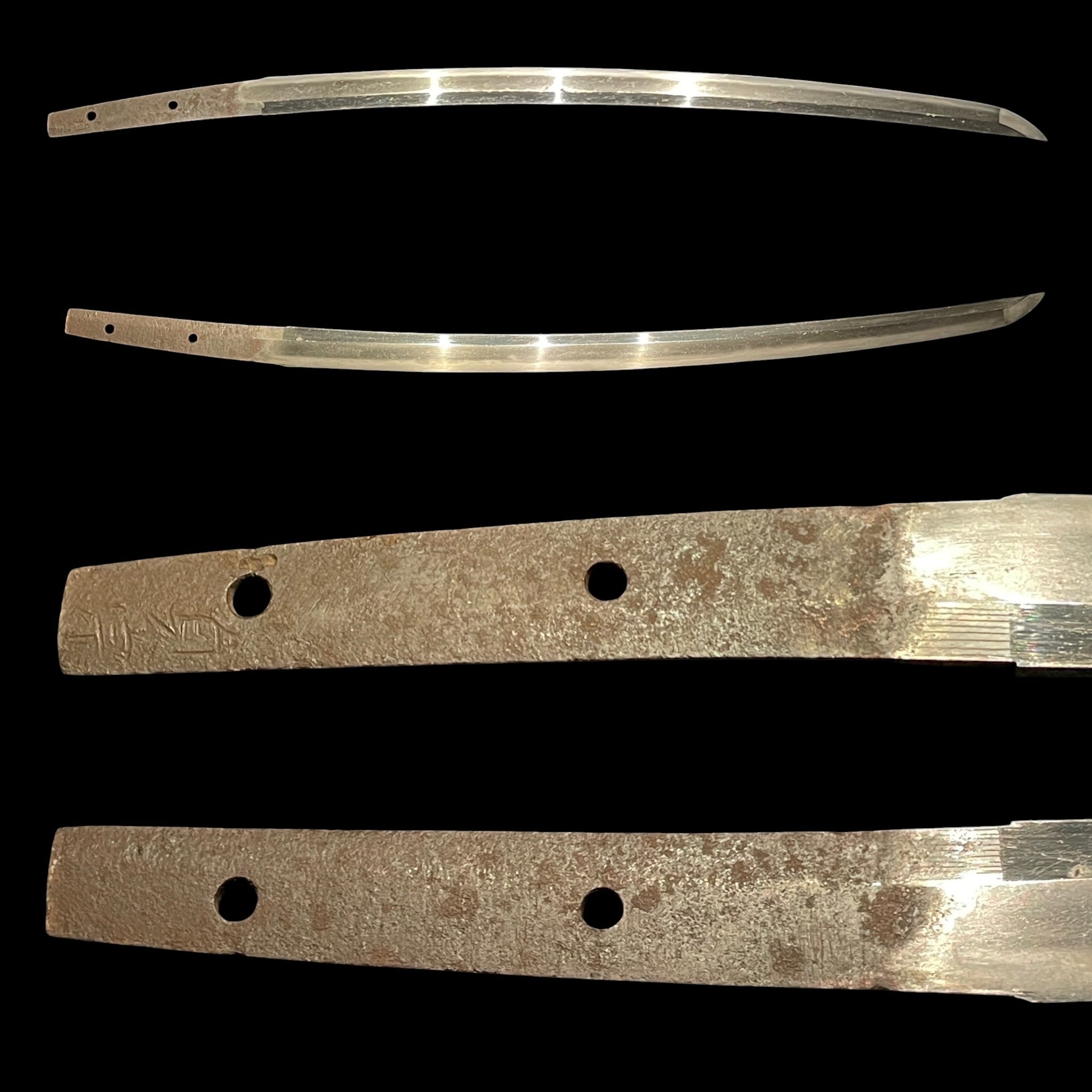
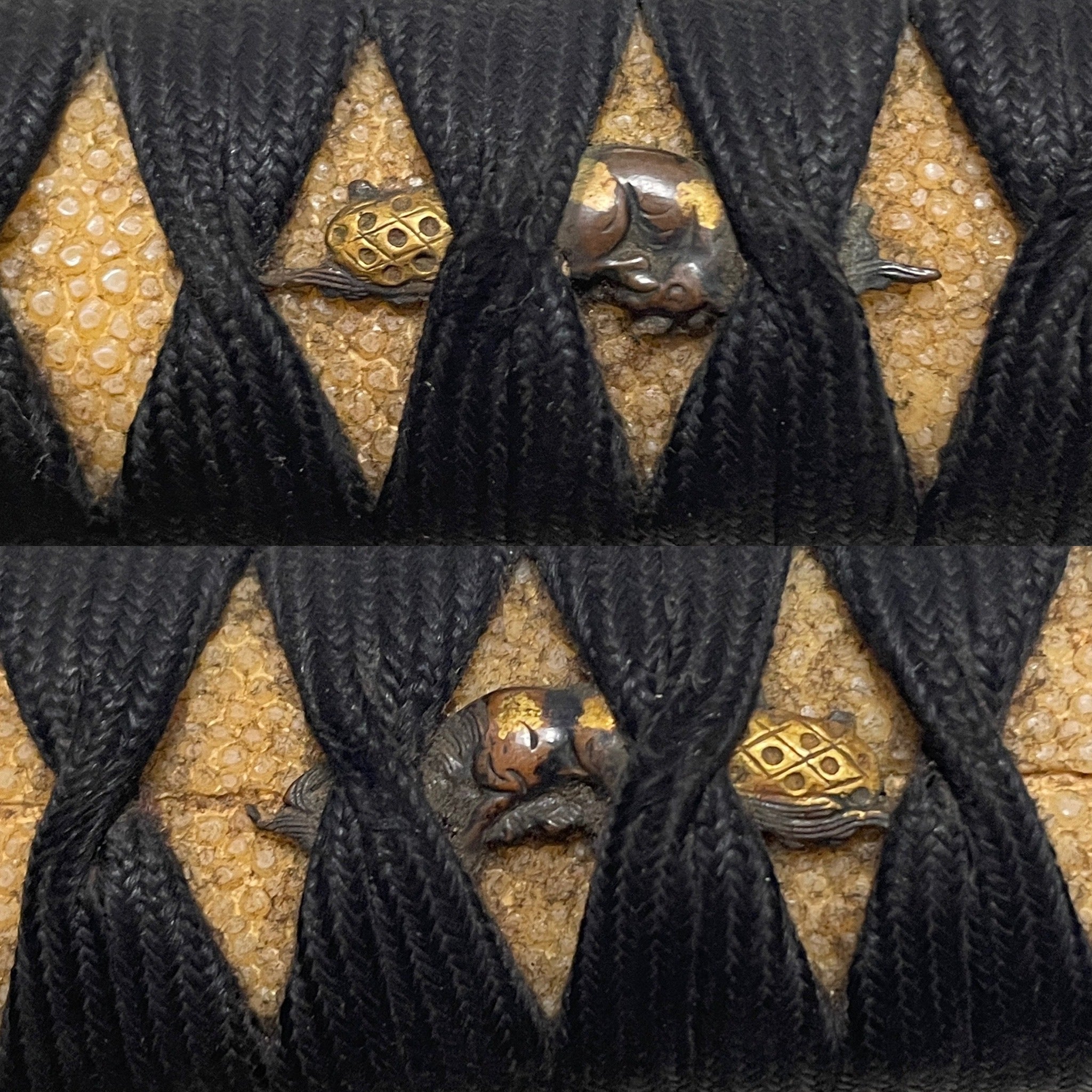
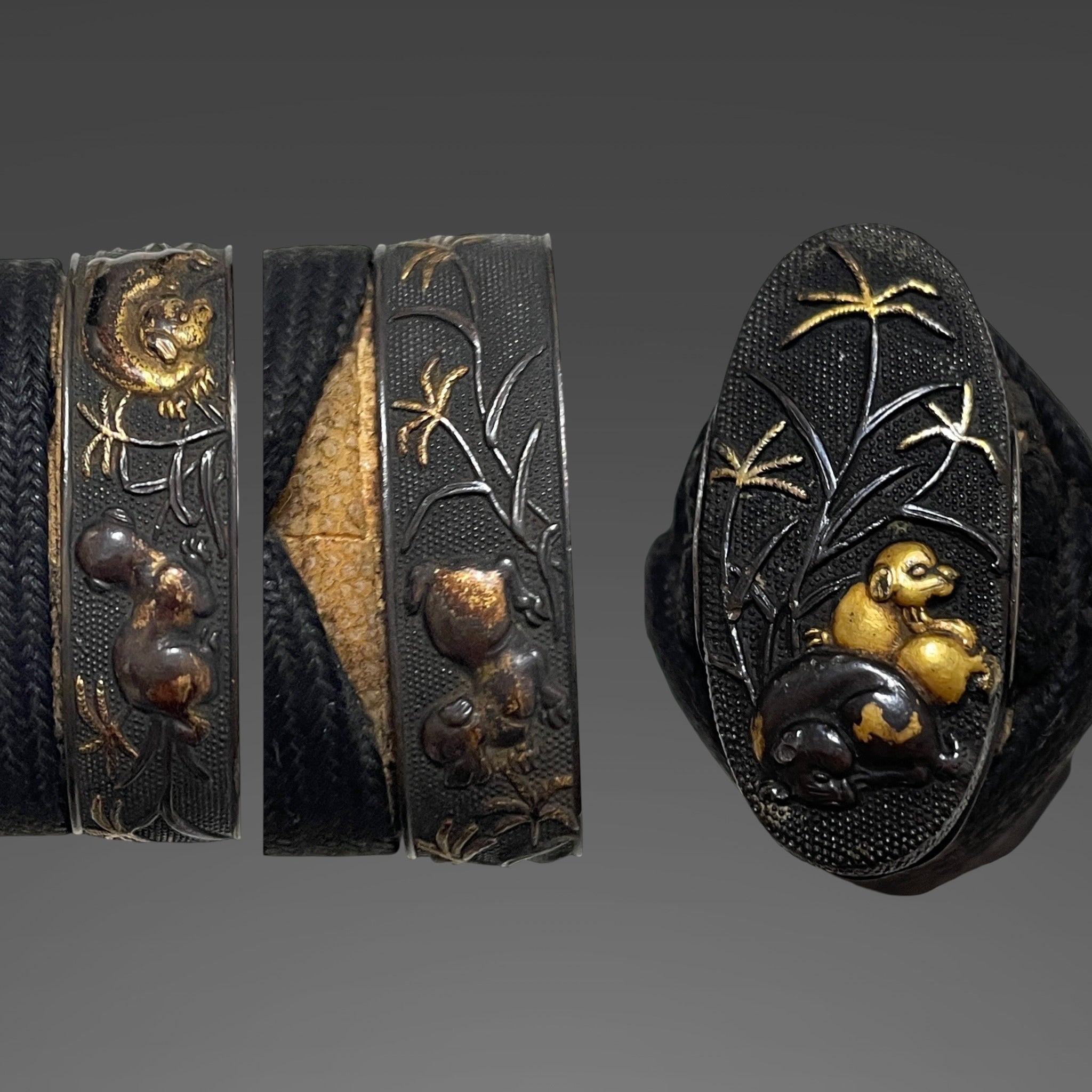
This is a signed wakizashi by Sadamune, featuring a nagasa of 45.2cm and a sori of 1.4cm. The blade comes mounted with a koshirae that includes a dog-themed fuchikashira and a shakudo kozuka. The sword dates to the Edo period.
 NihontoWatch
mei · Koto · nagasa 45.2cm · sori 1.4cm
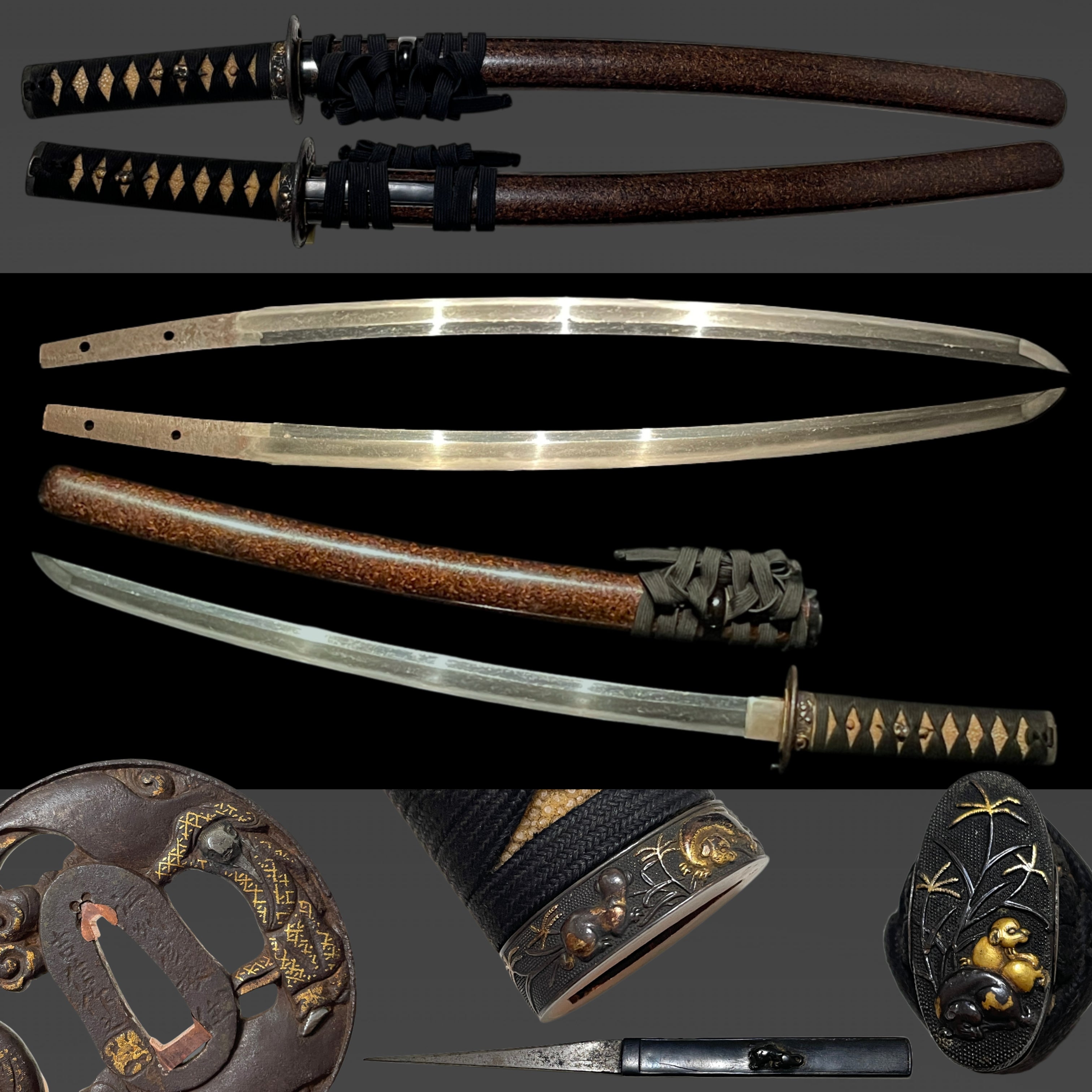
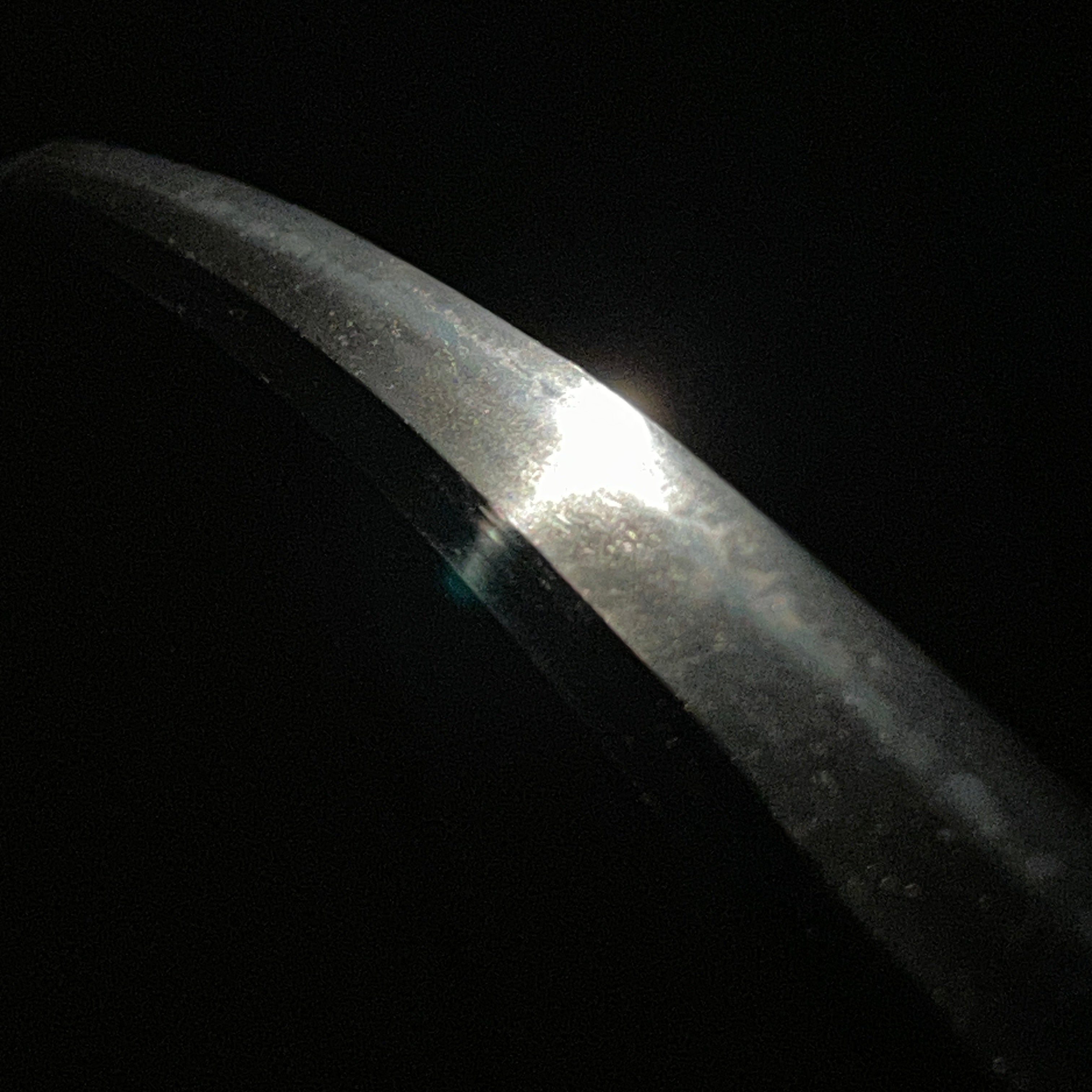
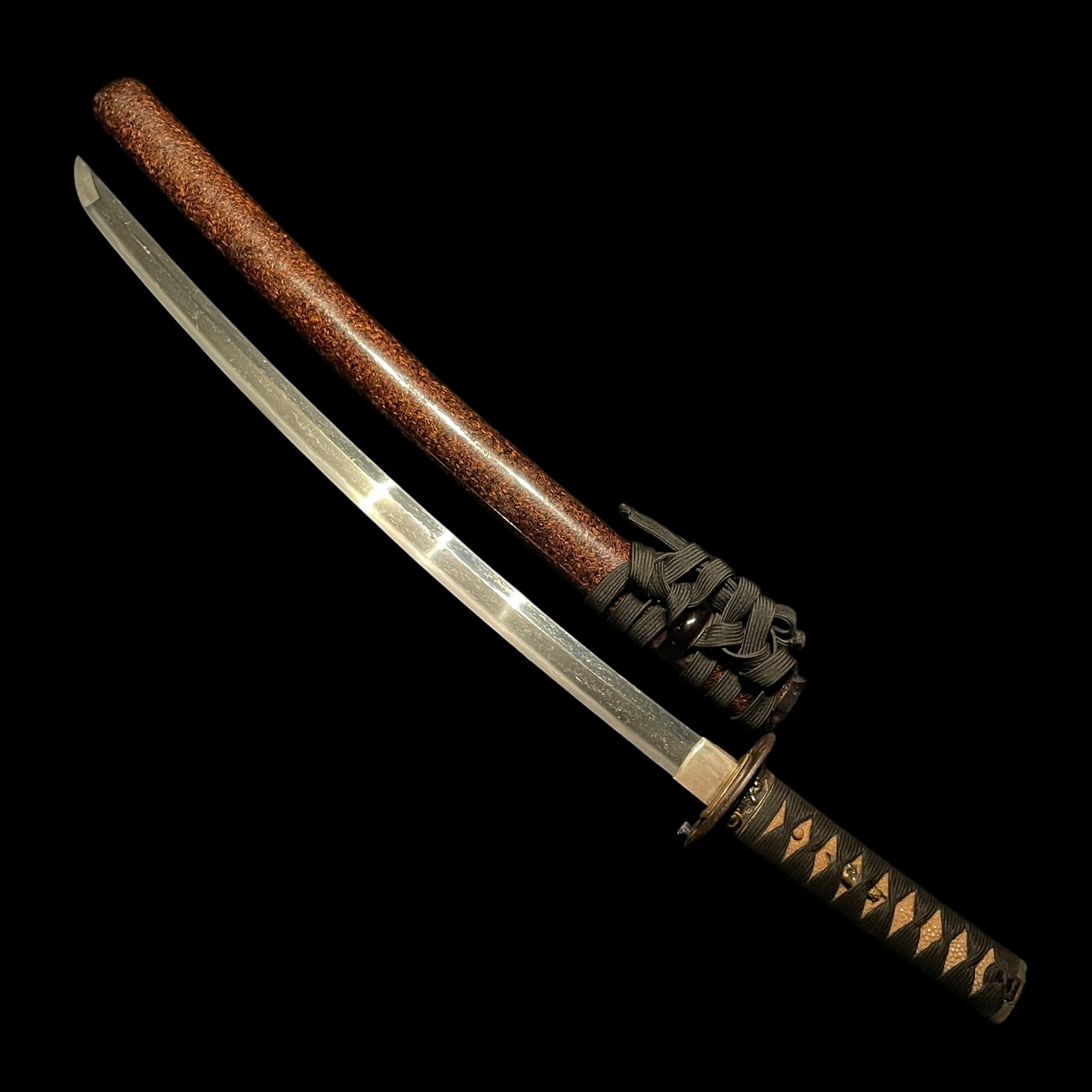
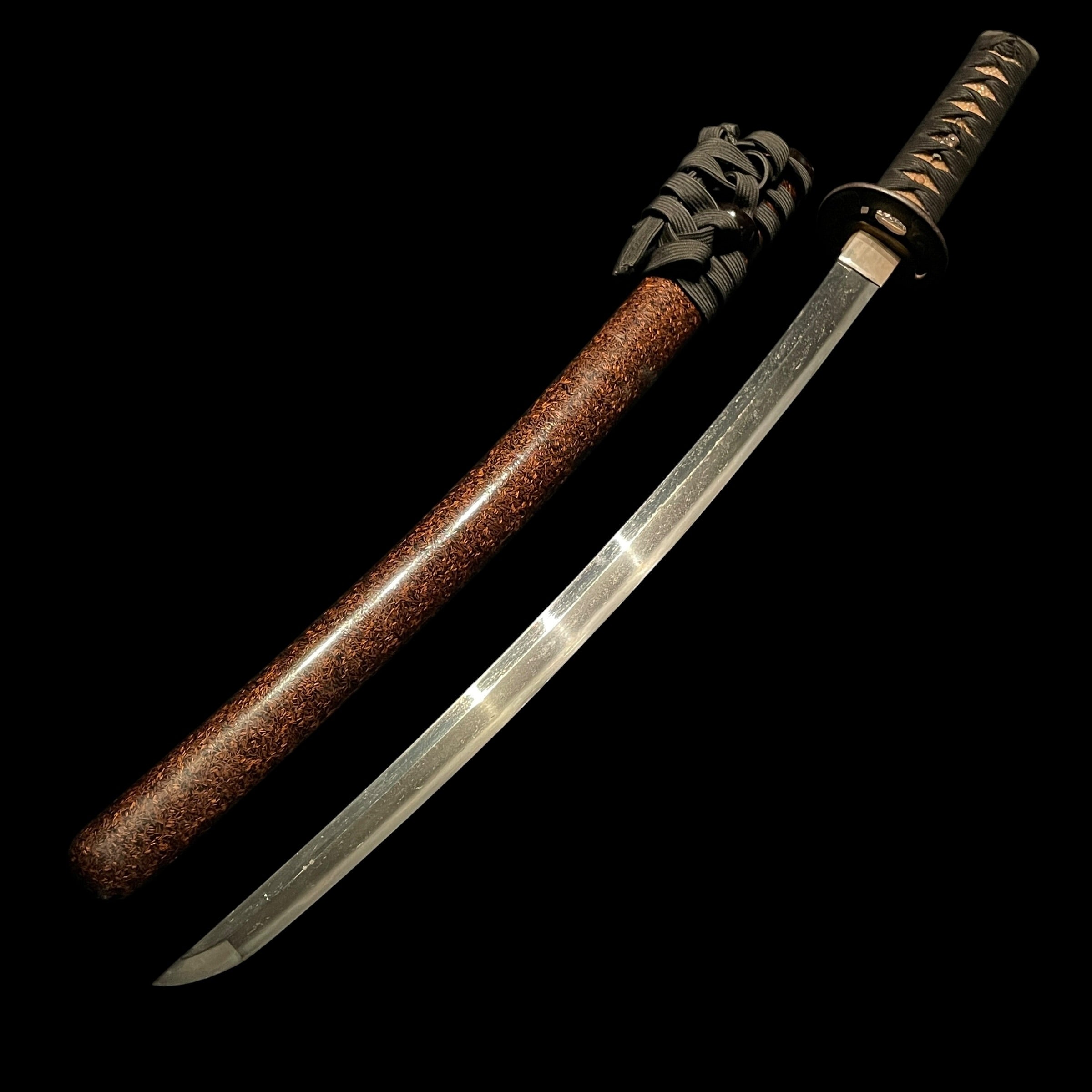
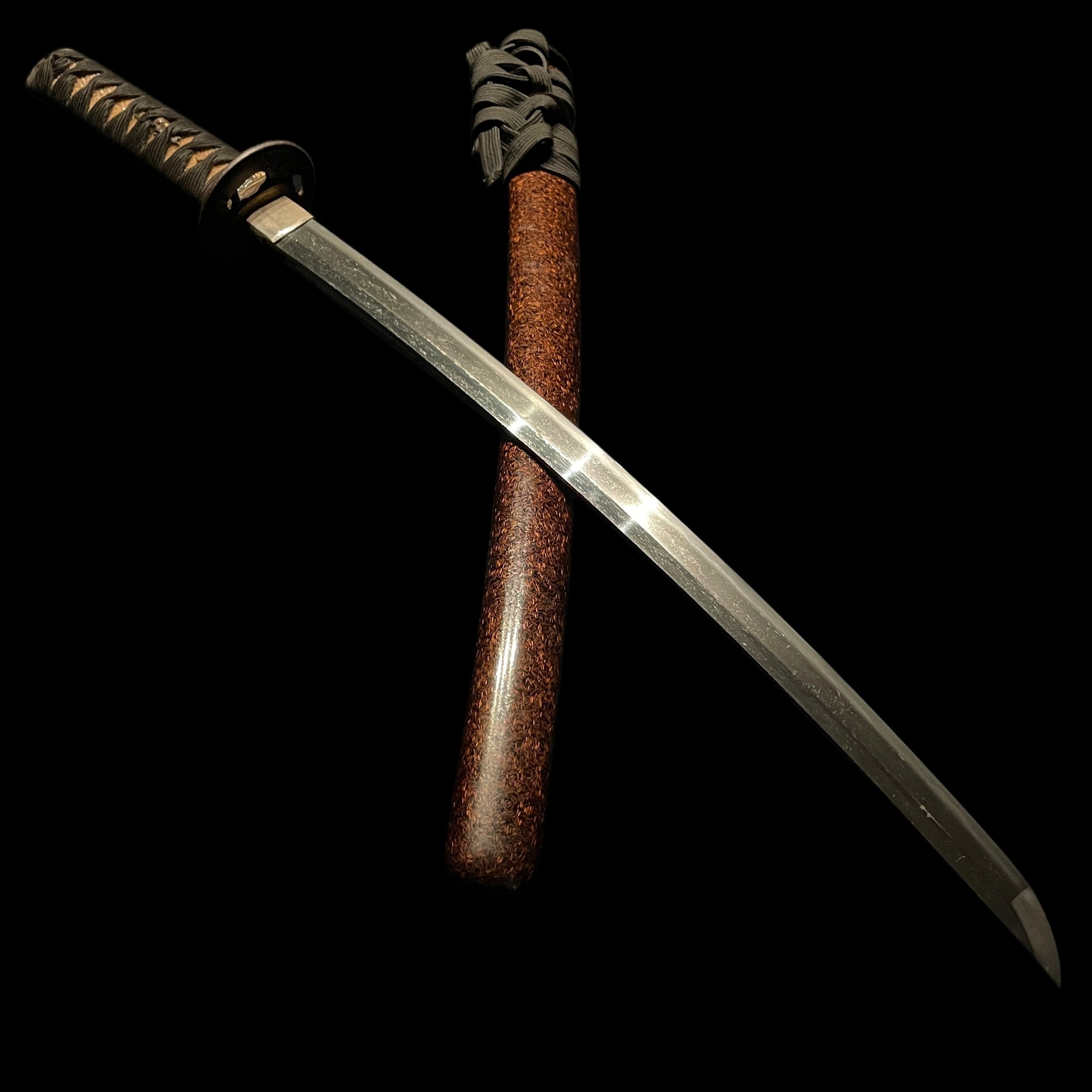
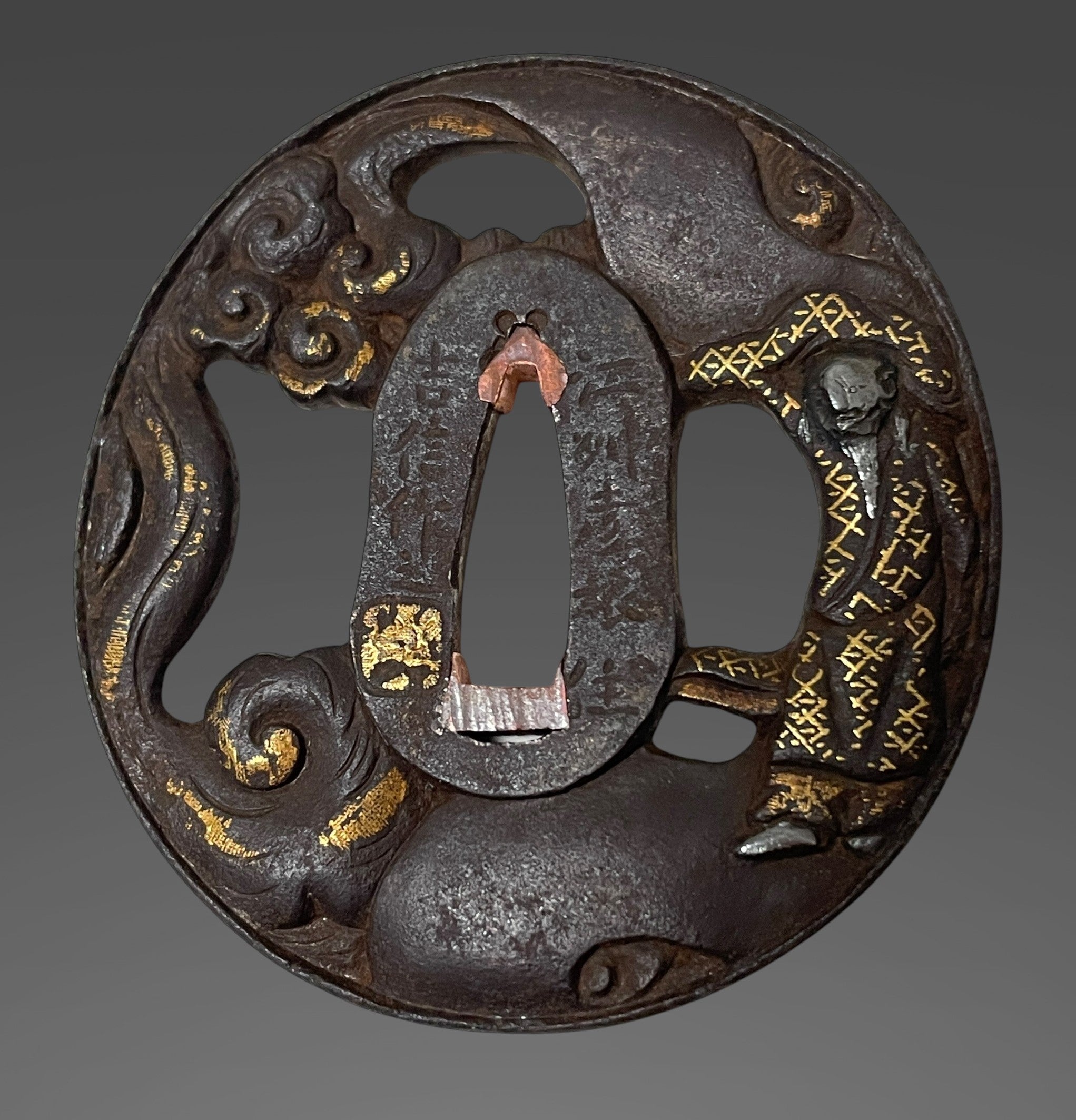
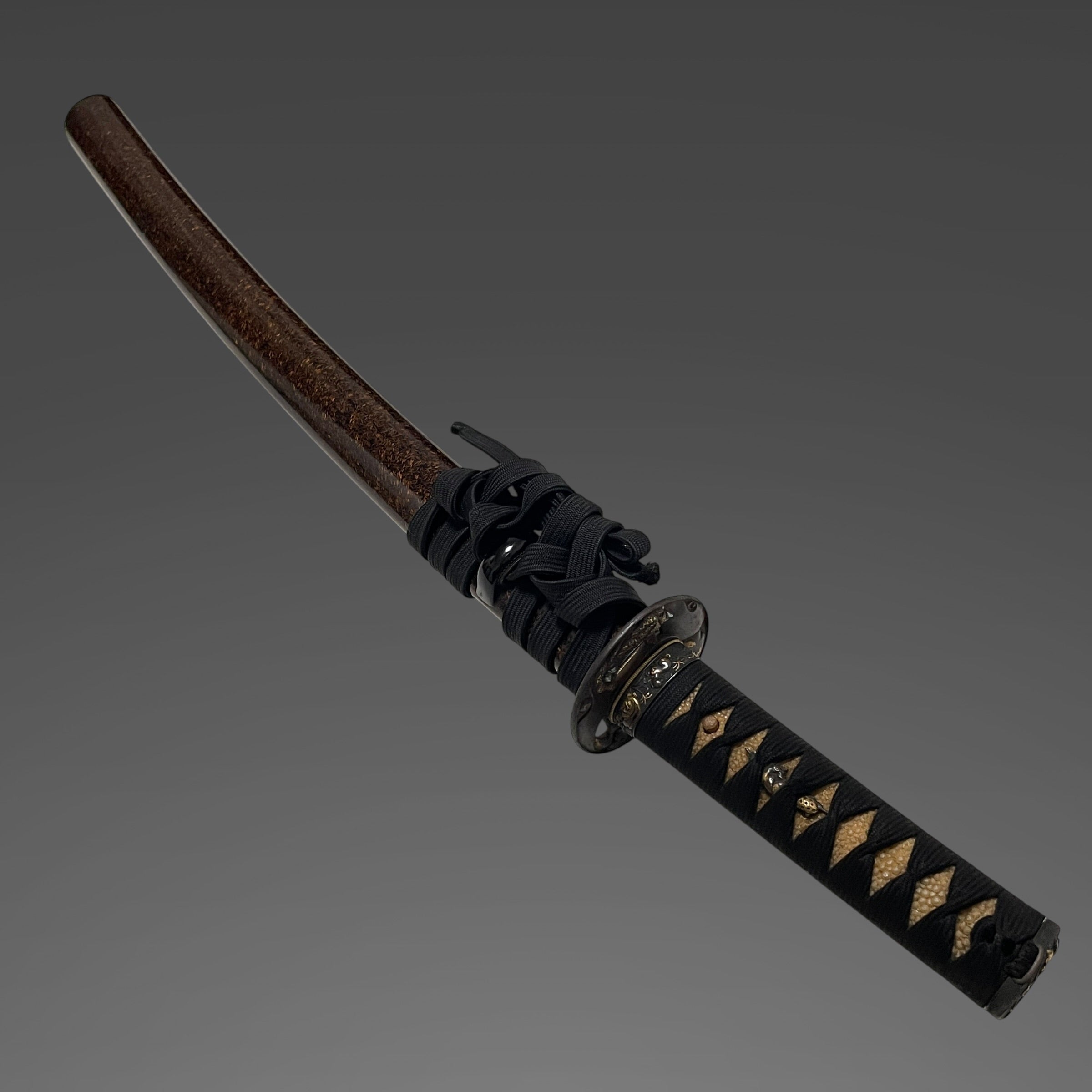
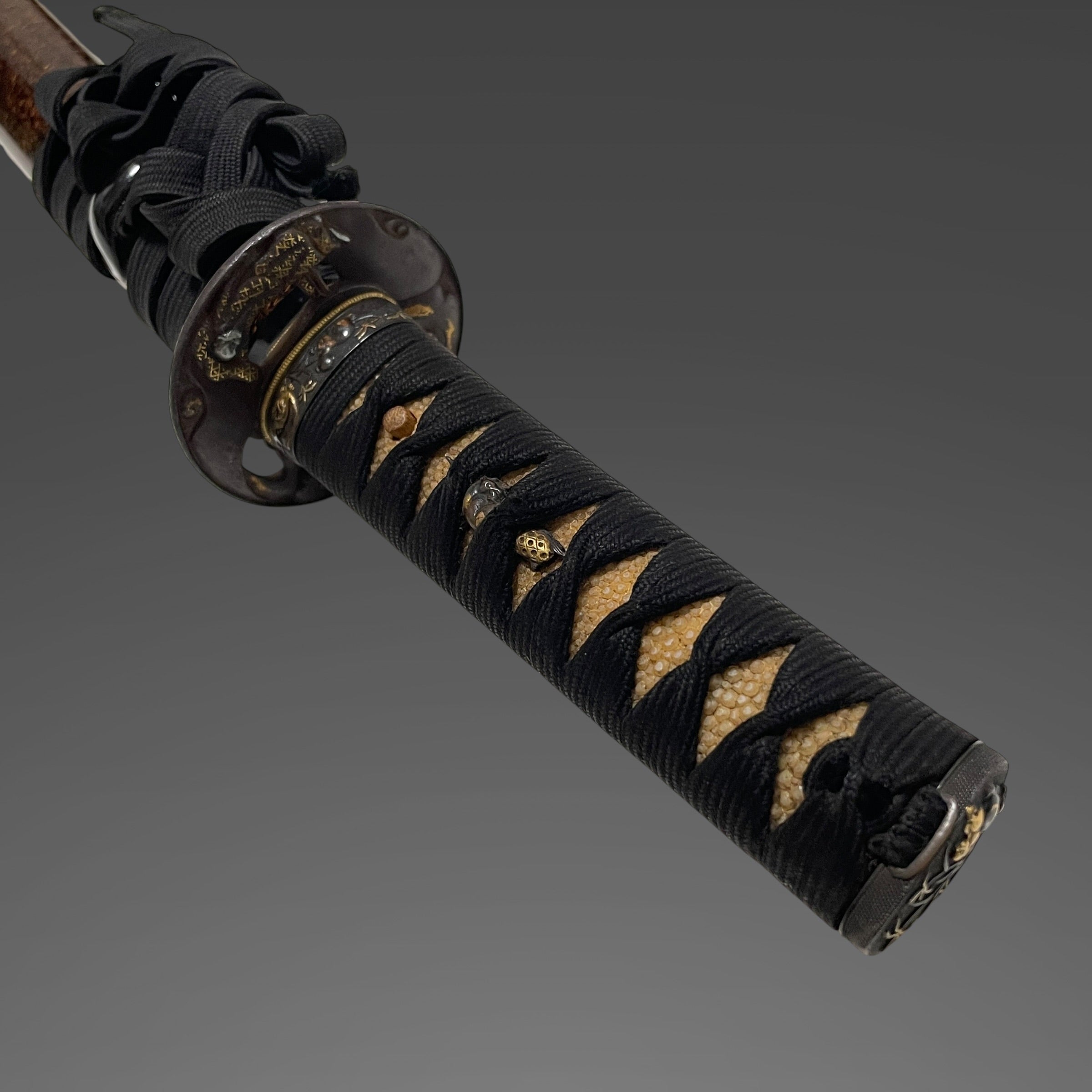
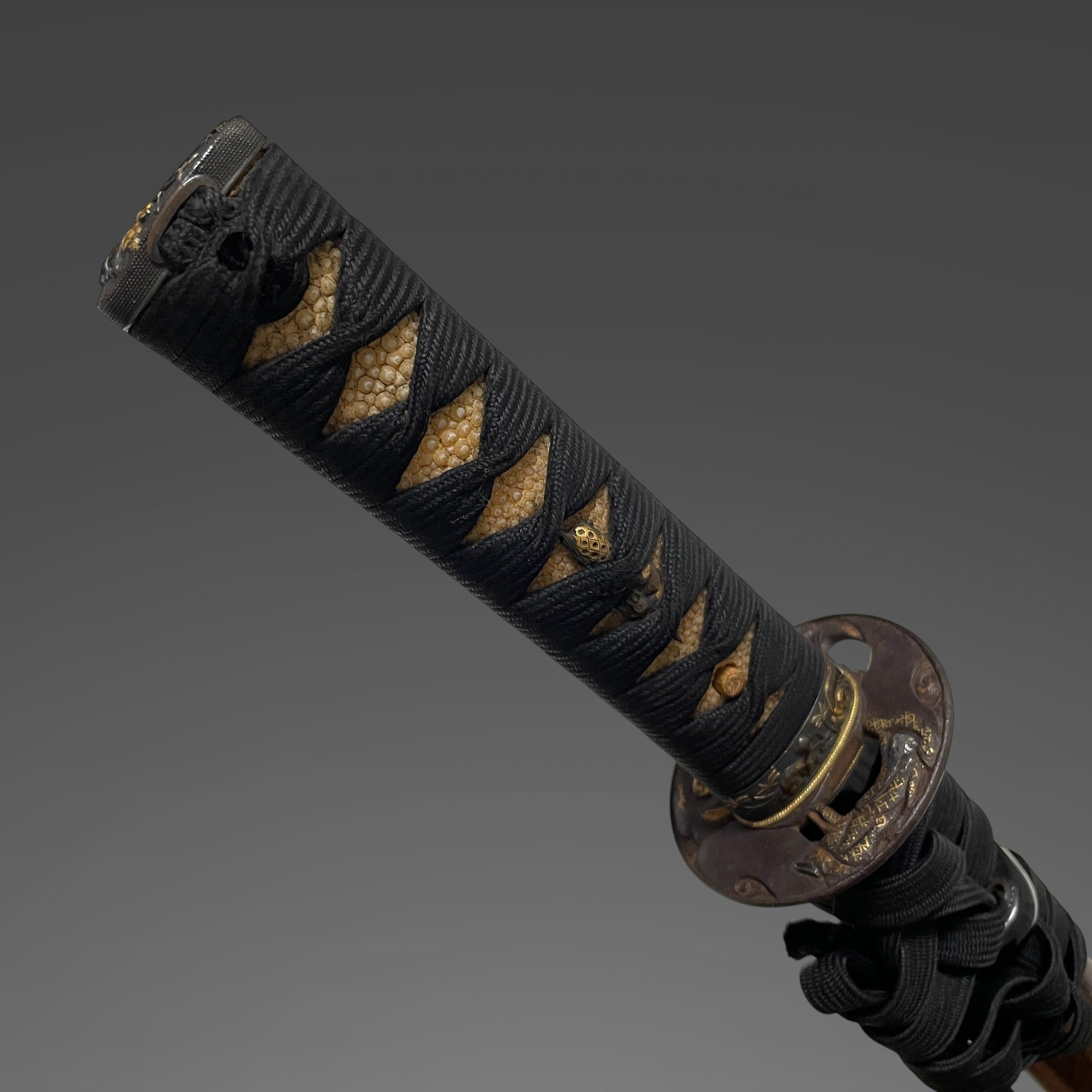
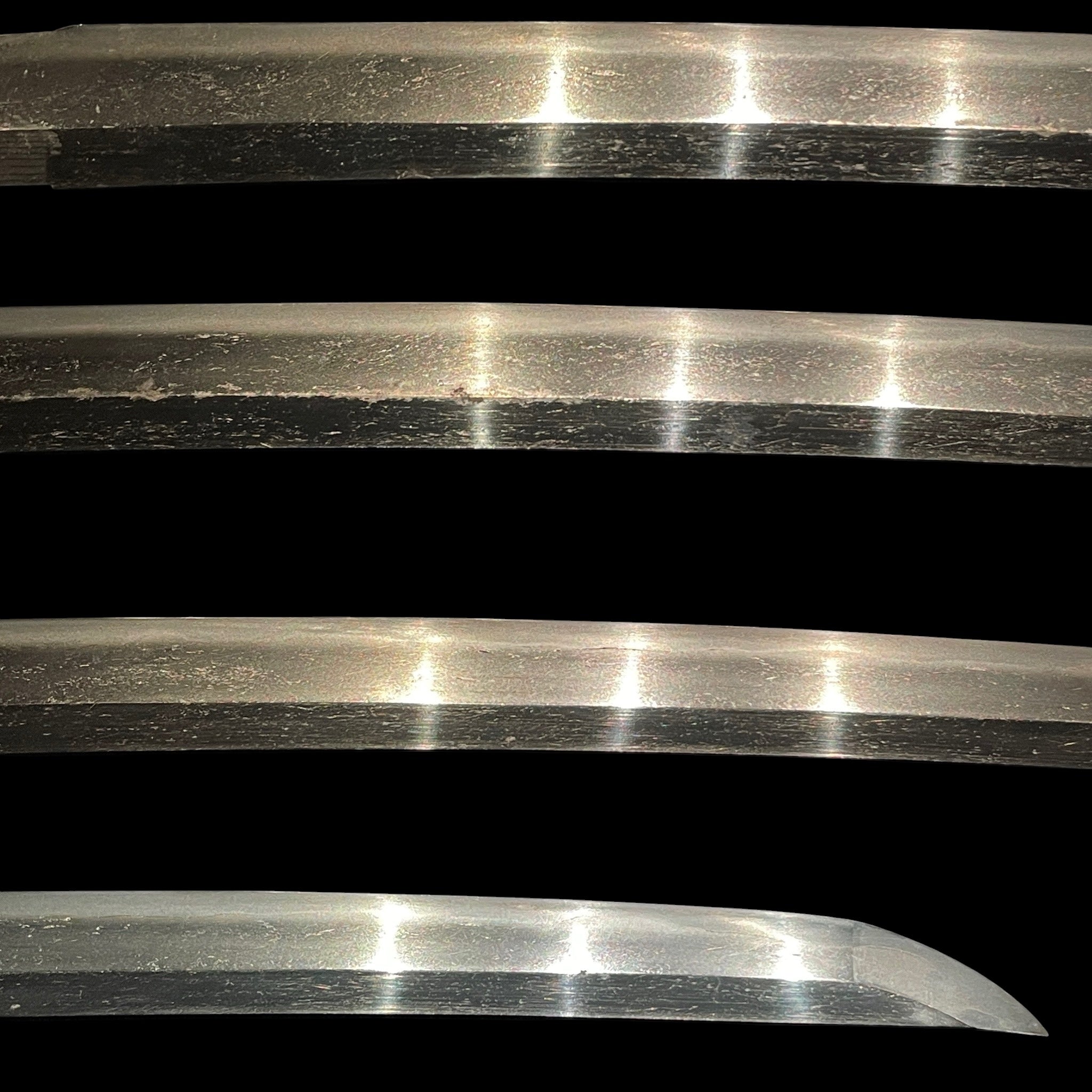
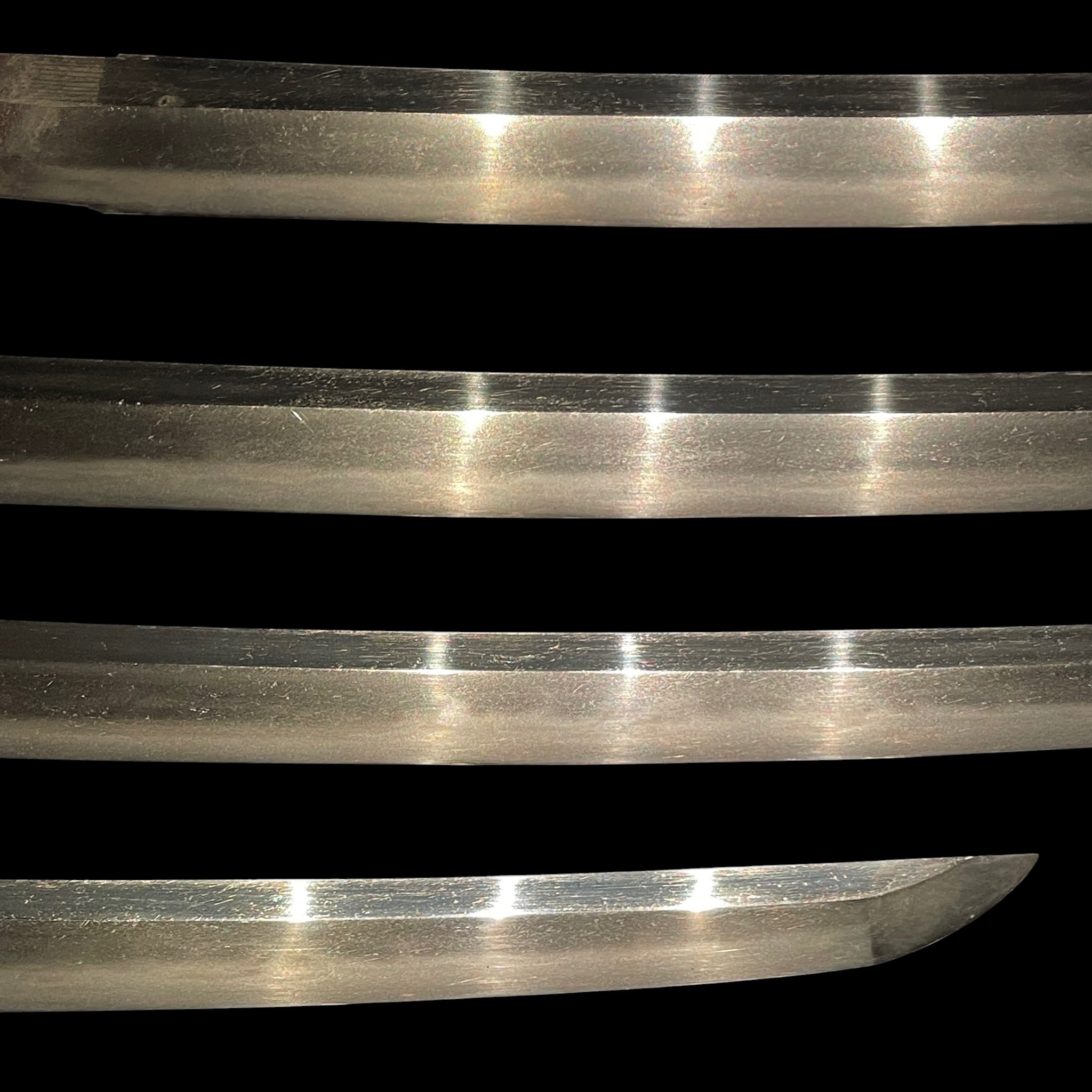
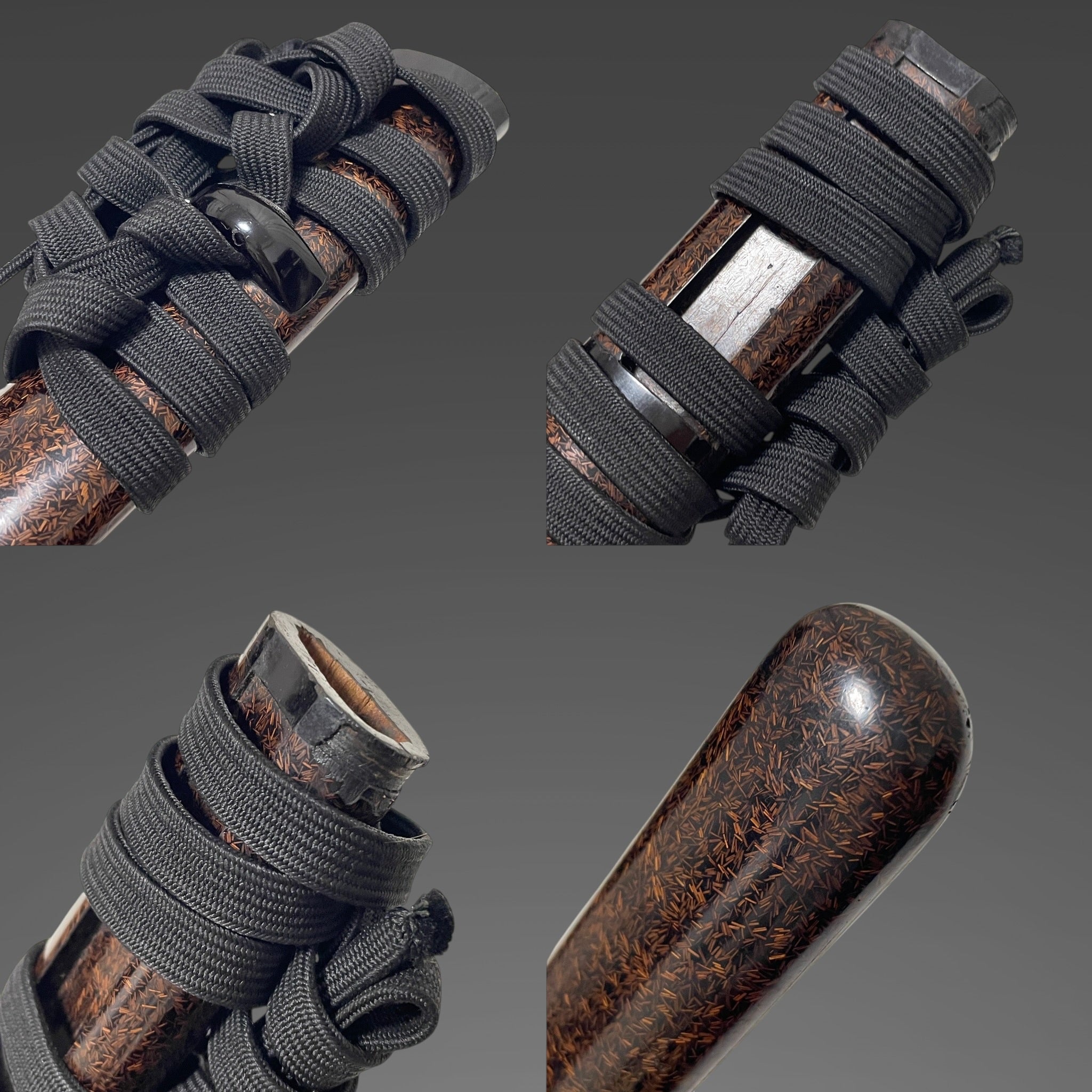
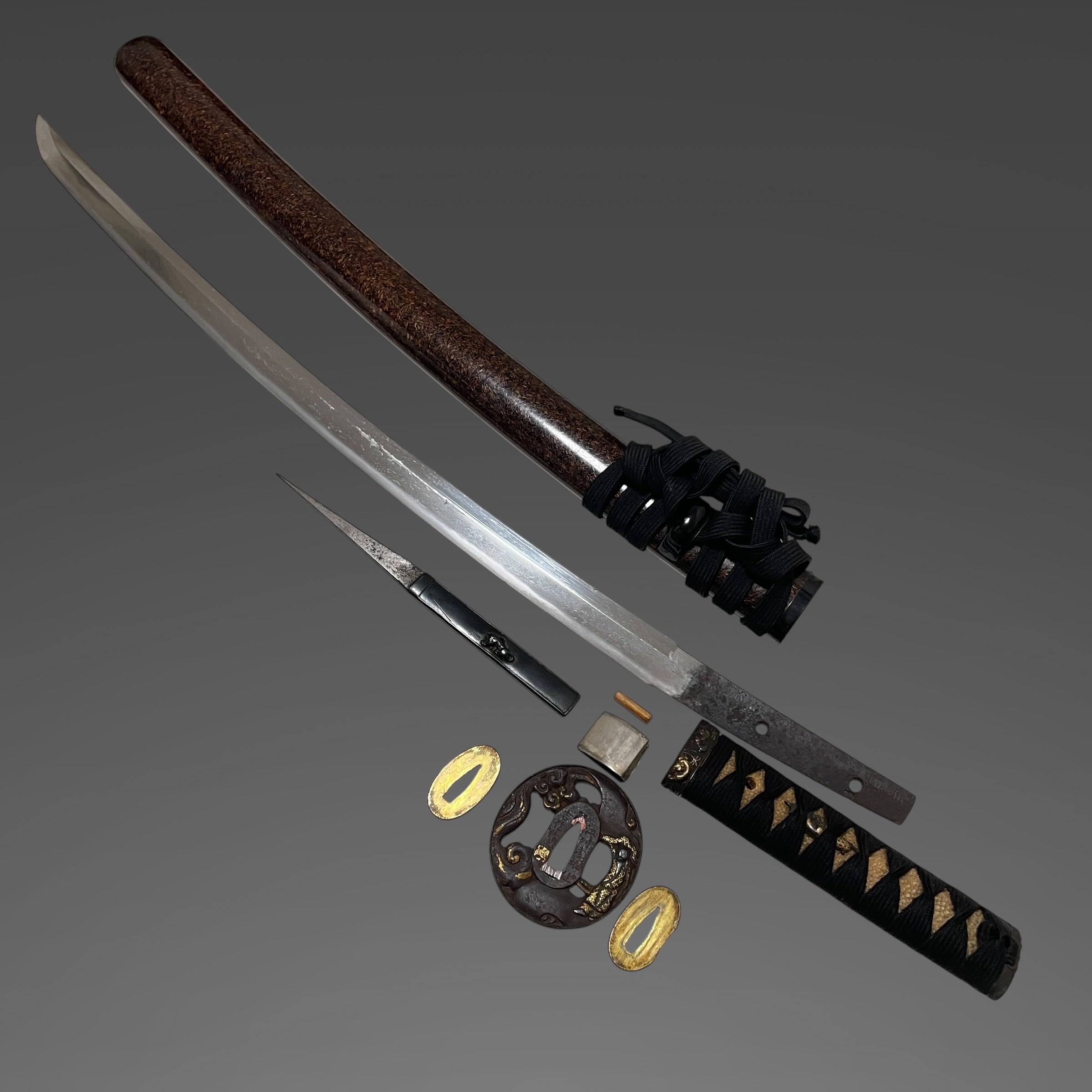
Soshu (Sagami) · Sagami · around 1329-1331
Fujishiro Sai-jo saku · Tōken Taikan top 2%
At its twenty-seventh Tokubetsu Juyo session the NBTHK designated the O-Horidashi Sadamune, a katana of the Kyoho Meibutsu-cho whose name records that Tokugawa Ieyasu discovered it at Fushimi; Ieyasu gave it to Maeda Toshitsune in Genna 2 (1616). Its maker, Sadamune, called Hikoshiro (彦四郎), was the pupil of Masamune and by tradition later his adopted son, by some records his son, and succeeded him as the second generation of the Soshu mainline, working from the very end of Kamakura into early Nanbokucho. The published sources repeat that for him "no certain signed work exists at all"[[c:1]]: the entire oeuvre is mumei, settled by Hon'ami kinzogan and shu-mei attribution inscriptions and by origami, and his manner is known by triangulation, for "what bridges Masamune and Nobukuni is Sadamune"[[c:2]].
The kantei line against the master is qualitative and constant. In nearly half of his designation texts the NBTHK states the standing formula that "compared with Masamune, his appeal lies on the whole in a calm, relaxed notare-based midareba"[[c:3]]. One text details the contrast: the forging somewhat calmer than Masamune's, the hada standing less, the ji-nie sparser, the workings of kinsuji and inazuma somewhat scarcer and quieter. His own positive signature is the chisel. He is the carving master of Soshu: bonji, suken, gomabashi, sanko-ken and kurikara recur far beyond anything on Masamune, Yukimitsu or Norishige, and "the twin grooves were a specialty of Sadamune"[[c:4]], cut on katana and tanto alike, a meibutsu katana being named Futasujihi Sadamune for them. The published sources add that the horimono is precisely what was not seen in Masamune: his carving "follows the line of Daishinbo, excelling in kasane-bori, the layered relief carving, which he passed to his pupil Nobukuni"[[c:5]].
The jigane is an itame mixing mokume, on the finest pieces kneaded close and minutely covered in ji-nie, with chikei entering finely and incessantly, at times with a slightly standing tendency. Over it the hamon runs as a shallow notare mixing gunome, ko-gunome and ko-choji, ashi and yo entering, the nioiguchi deep, the nie thick, bright and clear, kinsuji and sunagashi working through the ha, hotsure and yubashiri at the habuchi; the boshi is midare-komi or sugu with ko-maru and hakikake, often with a pointed tendency. The texts name as the mark of his deki "the beautifully shining nie peculiar to the top rank of Soshu-den work"[[c:6]]. Around this mainstream two poles stand. "Suguha is rare"[[c:7]] in him: the few quiet pieces carry a suguha-cho with shallow notare feeling and ko-gunome spaced wide, and a Tokubetsu Juyo tanto in this manner is said to recall the Kokuho meibutsu Fushimi Sadamune. At the livelier pole the gunome grows prominent, rough nie mixes in places, tobiyaki and yubashiri scatter and the boshi sweeps up in flame-like hakikake; a few works show a hitatsura-like feeling, yet the texts measure the limit exactly, "never going so far as Hiromitsu and Akihiro"[[c:8]].
His sugata divides into two types for tachi and tanto alike, and the NBTHK dates each blade by which build it shows. The earlier keeps the Kamakura-end style the texts call old-fashioned (古調): blades of ordinary width with chu-kissaki, and small tanto with little or no sori, the smallest of them likened to the meibutsu Taikogane Sadamune. The later is the grand Nanbokucho build that carries most of the surviving work: o-suriage mumei katana of wide mihaba with little taper and an extended point, and wide sunnobi hira-zukuri tanto and ko-wakizashi of thin kasane, very often ubu. On the ubu pieces the nakago itself is a tell, funagata with a ken-form tip and katte-sagari yasurime, called "exactly the rule of Sadamune"[[c:9]]. Kata-kiriha-zukuri was a construction he favored, the celebrated example being the Kiriha Sadamune handed down in the Kishu Tokugawa family as the sword of its first lord Yorinobu. Old Edo-period papers are sometimes corrected at designation: blades papered to Takagi Sadamune or to Yukimitsu have been re-judged as Soshu Sadamune.
Among Masamune's students the published sources call him the one who carries the master's manner most faithfully, his skill next to the master's; at the top of his range the boundary runs against Masamune himself. Of a Juyo Bijutsuhin katana formerly of Ikeda Nakahiro, Honma Junji remarked that the hamon shows more variation than the usual work, a flame-like boshi and brilliant nie, and that he "would rather see it as Masamune"[[c:10]]. Downstream the same triangulation holds: his gentler notare and his horimono are exactly what reappear in Nobukuni, and it is through Sadamune that the Soshu carving tradition passes to that pupil and his line.
Fujishiro rates him Sai-jo saku, and eighty-seven designated works stand on record: four National Treasures, twelve Important Cultural Properties, two prewar Juyo Bijutsuhin, twenty-three Tokubetsu Juyo and forty-six Juyo, sixty-nine blades in the two upper NBTHK tiers together. The meibutsu carried by his attributions are many. Beside the O-Horidashi stand the Kiriha, the Zentokuin given by the shogun Hidetada to Maeda Toshinaga, the Ujiie of the Kyoho Meibutsu-cho, the Taikogane, the Futasujihi, and the Shishi Sadamune, a treasured sword of Toyotomi Hideyoshi burned in the fall of Osaka and retempered by the first-generation Yasutsugu. Forty-one blades carry recorded provenance: one katana is recorded as presented by the shogun Ienobu and worn by Ietsugu, another was given by Tsunayoshi to Yanagisawa Yoshisato in Genroku 10 (1697), and transmissions run through the Owari and Kishu Tokugawa, Maeda, Date, Mori, Ikeda, Satake, Hachisuka and Takatsukasa houses. For the collector very little of this can ever trade. The National Treasures and Important Cultural Properties are patrimony outside the market, and recorded examples rest in the Tokyo National Museum, the Tokugawa Art Museum, the Mitsui Memorial Museum and the Sano Art Museum. What can realistically be met is the Tokubetsu Juyo and Juyo tier, sixty-nine blades, nearly all o-suriage mumei katana or sunnobi wakizashi resting on Hon'ami attributions; such a blade comes to market only rarely, and a piece carrying the twin grooves or the layered relief carving, the chisel his master never showed, is an event when it does.
Where Sadamune stands among comparable artisans: across all of nihontō, and within tradition, era, and period. The tiers (Foremost · Leading · Major · Notable) weigh official designations from the NBTHK and Japan's Agency for Cultural Affairs, together with historical honors of lasting repute such as the Sansaku and Meibutsu-chō.
Select a lens to see how it's measured.
Soshu-den · Sagami
Phase: Sōshū相州· 1288–1385
45 pieces on the market now
Steel "bright and clear," with thick ji-nie and chikei entering frequently, is the constant the NBTHK returns to in nearly every blade of this phase, and it marks the moment the Soshu tradition reached its summit in Sagami. " The sampled blades cluster around the masters who carried this manner forward: Go Yoshihiro of Matsukura-go in Etchu, counted among the Masamune Juttetsu and represented here by numerous ō-suriage katana, and the Sagami smiths Hiromitsu and Akihiro, who stand "next after Sadamune" and extend the phase with dated works running from Enbun 2 (1357) to Shitoku 4 (1387). The window spans late Kamakura proportions through the broad Enbun-Joji forms of the fourteenth century. The phase reads as itame-hada mixed with mokume, often tending toward standing or flowing grain, carrying very fine ji-nie laid thickly with chikei threaded densely throughout; over this the hamon is founded on notare mixed with gunome, ko-gunome, and a chōji flavor, with deep nioi, thick nie, and kinsuji and sunagashi running well, the nioiguchi bright and clear. This is precisely the distance the school traveled from its Awataguchi roots: where that foundation held a tight, restrained suguha, the Go katana break into wide yakihaba, nie-kuzure, and yubashiri (one setsumei records nie that "gathers, thickens, and congeals"), with a bōshi tempered so deeply it becomes ichimai and sweeps in hakikake. Go himself sits one step calmer than Masamune and Norishige, his chikei and kinsuji more reserved but his ji and ha a step brighter, the hada often masame-inclined; one wide-suguha example with ko-midare shows how close the quiet end of his range stays to the Kunimitsu manner.
" Here the classic phase divides from the later Sue-Soshu continuation, whose Muromachi smiths inherited the vocabulary without the depth of nie and clarity of steel recorded in these blades. A collector separates this phase because it holds the recognized masters at full strength. Go achieved the highest designation through the unmistakable brightness of his ji-ha alone, despite no surviving signed works, and the sample carries the weight of that reputation: the meibutsu Nakagawa-Go owned by a retainer of Oda Nobunaga and later the Tokugawa house, the "Kabuto-giri" Go inlaid by Hon'ami appraisal, the Okubo-Go transmitted in the Odawara Okubo family, and blades held by the Uwajima Date and Chikuzen Kuroda houses, with names recorded in the Kyoho Meibutsu-cho. The kantei points are concrete and repeated: Go's active nie-ashi, masame tendency, and ichimai bōshi; Akihiro's dated five-character "Soshu Akihiro" signatures, whose shift from full to abbreviated dating after Eiwa lets a viewer place a blade in time; and the near-indistinguishability of Hiromitsu and Akihiro, parsed only by scale and the prominence of dango-chōji. These are the works that define the Soshu apex, against which both the Awataguchi foundation and the Sue-Soshu aftermath are measured. Learn more →
| Smith | Era | Designated |
|---|---|---|
| Masamune正宗 | 1288-1293 | 84 |
| Sadamune貞宗 | 1329-1331 | 86 |
| Go Yoshihiro義弘 | 1299-1302 | 54 |
| Akihiro秋廣 | 1346-1370 | 27 |
| Kunimitsu國光 | 1293-1322 | 69 |
Sōshū in the Kamakura period
Sōshū was born in a boomtown: Kamakura, seat of the warrior government, dense with elite patrons. Tradition holds that master smiths were summoned east to serve it, and from their students came Shintōgo Kunimitsu and then Masamune.
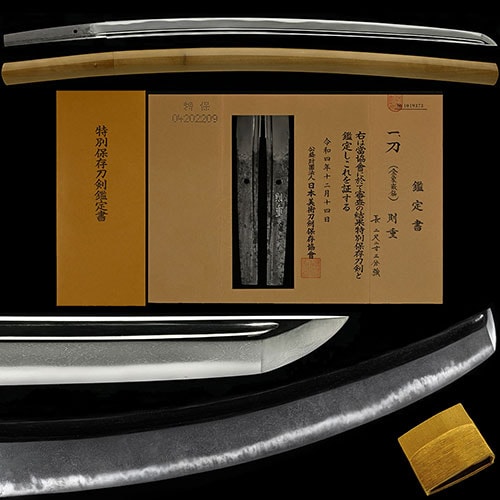
We could not find an authenticity certificate on the seller’s listing. Japanese swords and fittings are normally papered by the NBTHK (or the NTHK). Without one, the attribution is the seller’s own assessment and has not been independently verified — treat it with caution and ask the dealer about certification before buying.
Swords are non-returnable (blades cannot be re-imported to Japan). Insured shipping; damage/loss claims reported within 5 days of receipt. Cancellation fee 10% before shipment; not possible after shipment.
This is a signed wakizashi by Sadamune, featuring a nagasa of 45.2cm and a sori of 1.4cm. The blade comes mounted with a koshirae that includes a dog-themed fuchikashira and a shakudo kozuka. The sword dates to the Edo period.
NihontoWatchmei · Koto · nagasa 45.2cm · sori 1.4cm
Soshu (Sagami) · Sagami · around 1329-1331
Fujishiro Sai-jo saku · Tōken Taikan top 2%
At its twenty-seventh Tokubetsu Juyo session the NBTHK designated the O-Horidashi Sadamune, a katana of the Kyoho Meibutsu-cho whose name records that Tokugawa Ieyasu discovered it at Fushimi; Ieyasu gave it to Maeda Toshitsune in Genna 2 (1616). Its maker, Sadamune, called Hikoshiro (彦四郎), was the pupil of Masamune and by tradition later his adopted son, by some records his son, and succeeded him as the second generation of the Soshu mainline, working from the very end of Kamakura into early Nanbokucho. The published sources repeat that for him "no certain signed work exists at all"[[c:1]]: the entire oeuvre is mumei, settled by Hon'ami kinzogan and shu-mei attribution inscriptions and by origami, and his manner is known by triangulation, for "what bridges Masamune and Nobukuni is Sadamune"[[c:2]].
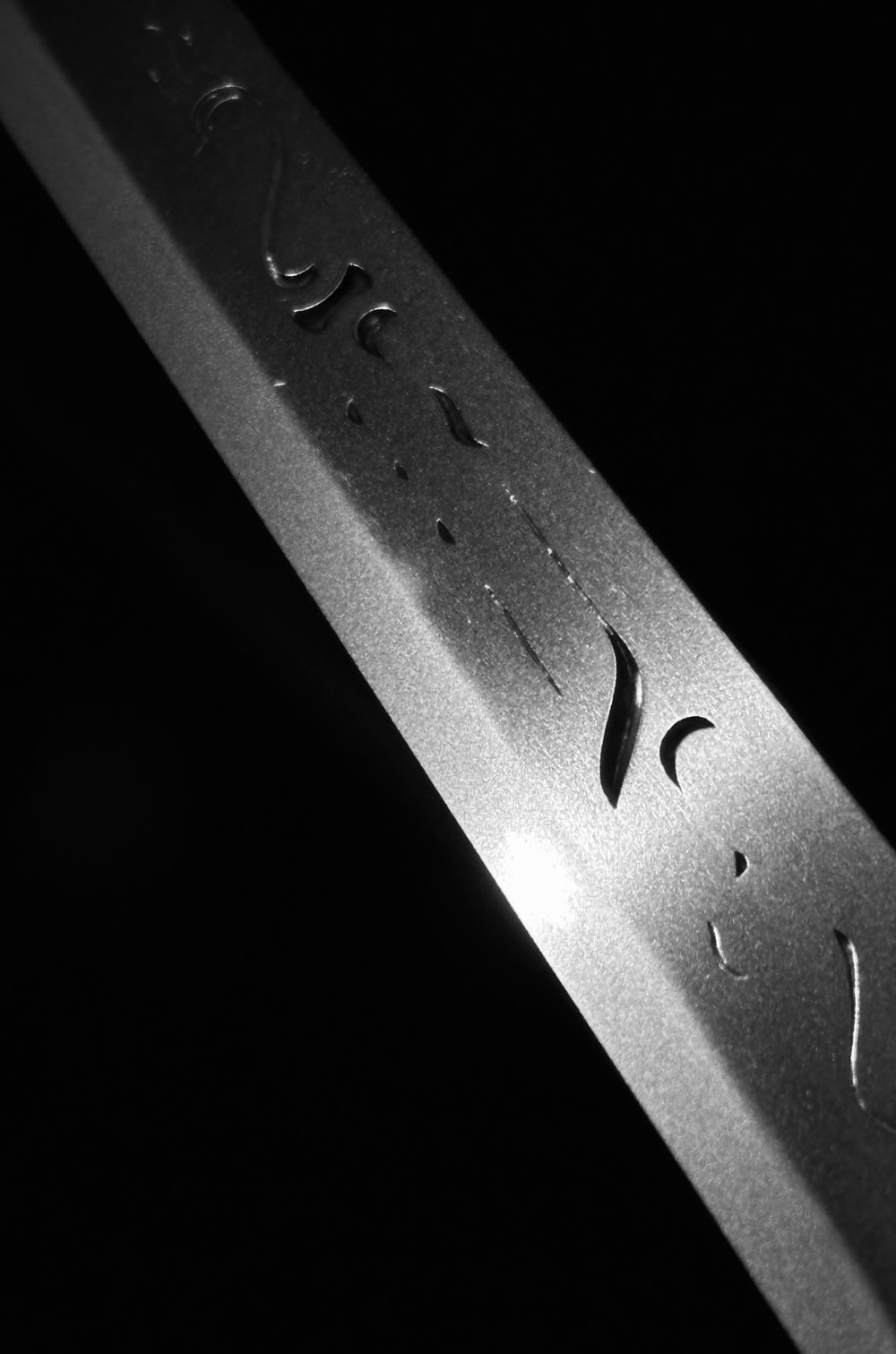
The kantei line against the master is qualitative and constant. In nearly half of his designation texts the NBTHK states the standing formula that "compared with Masamune, his appeal lies on the whole in a calm, relaxed notare-based midareba"[[c:3]]. One text details the contrast: the forging somewhat calmer than Masamune's, the hada standing less, the ji-nie sparser, the workings of kinsuji and inazuma somewhat scarcer and quieter. His own positive signature is the chisel. He is the carving master of Soshu: bonji, suken, gomabashi, sanko-ken and kurikara recur far beyond anything on Masamune, Yukimitsu or Norishige, and "the twin grooves were a specialty of Sadamune"[[c:4]], cut on katana and tanto alike, a meibutsu katana being named Futasujihi Sadamune for them. The published sources add that the horimono is precisely what was not seen in Masamune: his carving "follows the line of Daishinbo, excelling in kasane-bori, the layered relief carving, which he passed to his pupil Nobukuni"[[c:5]].
The jigane is an itame mixing mokume, on the finest pieces kneaded close and minutely covered in ji-nie, with chikei entering finely and incessantly, at times with a slightly standing tendency. Over it the hamon runs as a shallow notare mixing gunome, ko-gunome and ko-choji, ashi and yo entering, the nioiguchi deep, the nie thick, bright and clear, kinsuji and sunagashi working through the ha, hotsure and yubashiri at the habuchi; the boshi is midare-komi or sugu with ko-maru and hakikake, often with a pointed tendency. The texts name as the mark of his deki "the beautifully shining nie peculiar to the top rank of Soshu-den work"[[c:6]]. Around this mainstream two poles stand. "Suguha is rare"[[c:7]] in him: the few quiet pieces carry a suguha-cho with shallow notare feeling and ko-gunome spaced wide, and a Tokubetsu Juyo tanto in this manner is said to recall the Kokuho meibutsu Fushimi Sadamune. At the livelier pole the gunome grows prominent, rough nie mixes in places, tobiyaki and yubashiri scatter and the boshi sweeps up in flame-like hakikake; a few works show a hitatsura-like feeling, yet the texts measure the limit exactly, "never going so far as Hiromitsu and Akihiro"[[c:8]].
His sugata divides into two types for tachi and tanto alike, and the NBTHK dates each blade by which build it shows. The earlier keeps the Kamakura-end style the texts call old-fashioned (古調): blades of ordinary width with chu-kissaki, and small tanto with little or no sori, the smallest of them likened to the meibutsu Taikogane Sadamune. The later is the grand Nanbokucho build that carries most of the surviving work: o-suriage mumei katana of wide mihaba with little taper and an extended point, and wide sunnobi hira-zukuri tanto and ko-wakizashi of thin kasane, very often ubu. On the ubu pieces the nakago itself is a tell, funagata with a ken-form tip and katte-sagari yasurime, called "exactly the rule of Sadamune"[[c:9]]. Kata-kiriha-zukuri was a construction he favored, the celebrated example being the Kiriha Sadamune handed down in the Kishu Tokugawa family as the sword of its first lord Yorinobu. Old Edo-period papers are sometimes corrected at designation: blades papered to Takagi Sadamune or to Yukimitsu have been re-judged as Soshu Sadamune.
Among Masamune's students the published sources call him the one who carries the master's manner most faithfully, his skill next to the master's; at the top of his range the boundary runs against Masamune himself. Of a Juyo Bijutsuhin katana formerly of Ikeda Nakahiro, Honma Junji remarked that the hamon shows more variation than the usual work, a flame-like boshi and brilliant nie, and that he "would rather see it as Masamune"[[c:10]]. Downstream the same triangulation holds: his gentler notare and his horimono are exactly what reappear in Nobukuni, and it is through Sadamune that the Soshu carving tradition passes to that pupil and his line.
Fujishiro rates him Sai-jo saku, and eighty-seven designated works stand on record: four National Treasures, twelve Important Cultural Properties, two prewar Juyo Bijutsuhin, twenty-three Tokubetsu Juyo and forty-six Juyo, sixty-nine blades in the two upper NBTHK tiers together. The meibutsu carried by his attributions are many. Beside the O-Horidashi stand the Kiriha, the Zentokuin given by the shogun Hidetada to Maeda Toshinaga, the Ujiie of the Kyoho Meibutsu-cho, the Taikogane, the Futasujihi, and the Shishi Sadamune, a treasured sword of Toyotomi Hideyoshi burned in the fall of Osaka and retempered by the first-generation Yasutsugu. Forty-one blades carry recorded provenance: one katana is recorded as presented by the shogun Ienobu and worn by Ietsugu, another was given by Tsunayoshi to Yanagisawa Yoshisato in Genroku 10 (1697), and transmissions run through the Owari and Kishu Tokugawa, Maeda, Date, Mori, Ikeda, Satake, Hachisuka and Takatsukasa houses. For the collector very little of this can ever trade. The National Treasures and Important Cultural Properties are patrimony outside the market, and recorded examples rest in the Tokyo National Museum, the Tokugawa Art Museum, the Mitsui Memorial Museum and the Sano Art Museum. What can realistically be met is the Tokubetsu Juyo and Juyo tier, sixty-nine blades, nearly all o-suriage mumei katana or sunnobi wakizashi resting on Hon'ami attributions; such a blade comes to market only rarely, and a piece carrying the twin grooves or the layered relief carving, the chisel his master never showed, is an event when it does.
Where Sadamune stands among comparable artisans: across all of nihontō, and within tradition, era, and period. The tiers (Foremost · Leading · Major · Notable) weigh official designations from the NBTHK and Japan's Agency for Cultural Affairs, together with historical honors of lasting repute such as the Sansaku and Meibutsu-chō.
Select a lens to see how it's measured.
Soshu-den · Sagami
Phase: Sōshū相州· 1288–1385
45 pieces on the market now
Steel "bright and clear," with thick ji-nie and chikei entering frequently, is the constant the NBTHK returns to in nearly every blade of this phase, and it marks the moment the Soshu tradition reached its summit in Sagami. " The sampled blades cluster around the masters who carried this manner forward: Go Yoshihiro of Matsukura-go in Etchu, counted among the Masamune Juttetsu and represented here by numerous ō-suriage katana, and the Sagami smiths Hiromitsu and Akihiro, who stand "next after Sadamune" and extend the phase with dated works running from Enbun 2 (1357) to Shitoku 4 (1387). The window spans late Kamakura proportions through the broad Enbun-Joji forms of the fourteenth century. The phase reads as itame-hada mixed with mokume, often tending toward standing or flowing grain, carrying very fine ji-nie laid thickly with chikei threaded densely throughout; over this the hamon is founded on notare mixed with gunome, ko-gunome, and a chōji flavor, with deep nioi, thick nie, and kinsuji and sunagashi running well, the nioiguchi bright and clear. This is precisely the distance the school traveled from its Awataguchi roots: where that foundation held a tight, restrained suguha, the Go katana break into wide yakihaba, nie-kuzure, and yubashiri (one setsumei records nie that "gathers, thickens, and congeals"), with a bōshi tempered so deeply it becomes ichimai and sweeps in hakikake. Go himself sits one step calmer than Masamune and Norishige, his chikei and kinsuji more reserved but his ji and ha a step brighter, the hada often masame-inclined; one wide-suguha example with ko-midare shows how close the quiet end of his range stays to the Kunimitsu manner.
" Here the classic phase divides from the later Sue-Soshu continuation, whose Muromachi smiths inherited the vocabulary without the depth of nie and clarity of steel recorded in these blades. A collector separates this phase because it holds the recognized masters at full strength. Go achieved the highest designation through the unmistakable brightness of his ji-ha alone, despite no surviving signed works, and the sample carries the weight of that reputation: the meibutsu Nakagawa-Go owned by a retainer of Oda Nobunaga and later the Tokugawa house, the "Kabuto-giri" Go inlaid by Hon'ami appraisal, the Okubo-Go transmitted in the Odawara Okubo family, and blades held by the Uwajima Date and Chikuzen Kuroda houses, with names recorded in the Kyoho Meibutsu-cho. The kantei points are concrete and repeated: Go's active nie-ashi, masame tendency, and ichimai bōshi; Akihiro's dated five-character "Soshu Akihiro" signatures, whose shift from full to abbreviated dating after Eiwa lets a viewer place a blade in time; and the near-indistinguishability of Hiromitsu and Akihiro, parsed only by scale and the prominence of dango-chōji. These are the works that define the Soshu apex, against which both the Awataguchi foundation and the Sue-Soshu aftermath are measured. Learn more →
| Smith | Era | Designated |
|---|---|---|
| Masamune正宗 | 1288-1293 | 84 |
| Sadamune貞宗 | 1329-1331 | 86 |
| Go Yoshihiro義弘 | 1299-1302 | 54 |
| Akihiro秋廣 | 1346-1370 | 27 |
| Kunimitsu國光 | 1293-1322 | 69 |
Sōshū in the Kamakura period
Sōshū was born in a boomtown: Kamakura, seat of the warrior government, dense with elite patrons. Tradition holds that master smiths were summoned east to serve it, and from their students came Shintōgo Kunimitsu and then Masamune.
We could not find an authenticity certificate on the seller’s listing. Japanese swords and fittings are normally papered by the NBTHK (or the NTHK). Without one, the attribution is the seller’s own assessment and has not been independently verified — treat it with caution and ask the dealer about certification before buying.
Swords are non-returnable (blades cannot be re-imported to Japan). Insured shipping; damage/loss claims reported within 5 days of receipt. Cancellation fee 10% before shipment; not possible after shipment.