NihontoWatch MonNihontoWatchBETA
MarketEncyclopedia
NihontoWatch Mon

NihontoWatchBETA

Market
Encyclopedia
Overview·Kantei·Honors·Designations·Provenance·Blade Forms·Signatures·Lineage·School
OverviewKanteiHonorsDesignationsProvenanceBlade FormsSignaturesLineageSchool
  1. Schools
  2. Soshu
  3. Sōshū
  4. Sadamune

Soshu Sadamune

貞宗

Tokujū
Vol. 12, No. 17 · Katana

Soshu Sadamune

貞宗

87 ranked works

享保名物帳
ProvinceSagamiEraGentoku (1329–1331)PeriodKamakuraSchoolSoshuTraditionSoshu-denTeacherMasamuneFujishiroSai-jo saku(Supreme Work)Toko Taikan2,000(top 2%)TypeSwordsmithCodeSAD543
4Kokuhō
12Jūyō Bunkazai
2Jūyō Bijutsuhin
23Tokubetsu Jūyō46Jūyō Tōken

Overview

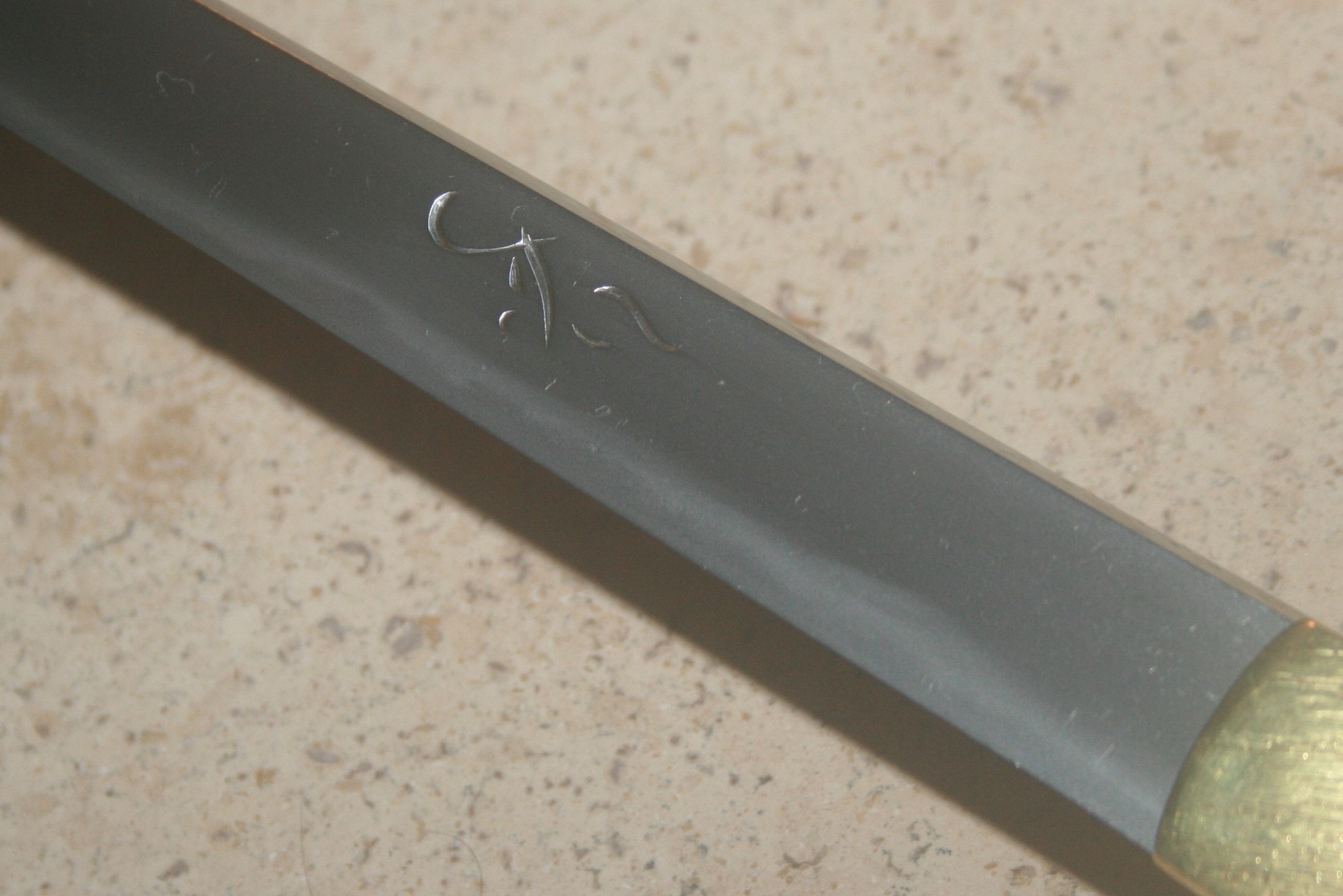
At its twenty-seventh session the designated the O-Horidashi Sadamune, a of the Kyoho -cho whose name records that Tokugawa Ieyasu discovered it at Fushimi; Ieyasu gave it to Maeda Toshitsune in Genna 2 (1616). Its maker, Sadamune, called Hikoshiro (彦四郎), was the pupil of Masamune and by tradition later his adopted son, by some records his son, and succeeded him as the second generation of the mainline, working from the very end of into early . The published sources repeat that for him "no certain signed work exists at all" (確実な在銘の作は皆無): the entire oeuvre is , settled by and attribution inscriptions and by , and his manner is known by triangulation, for "what bridges Masamune and is Sadamune" (正宗と信国の間をつなぐものが貞宗).

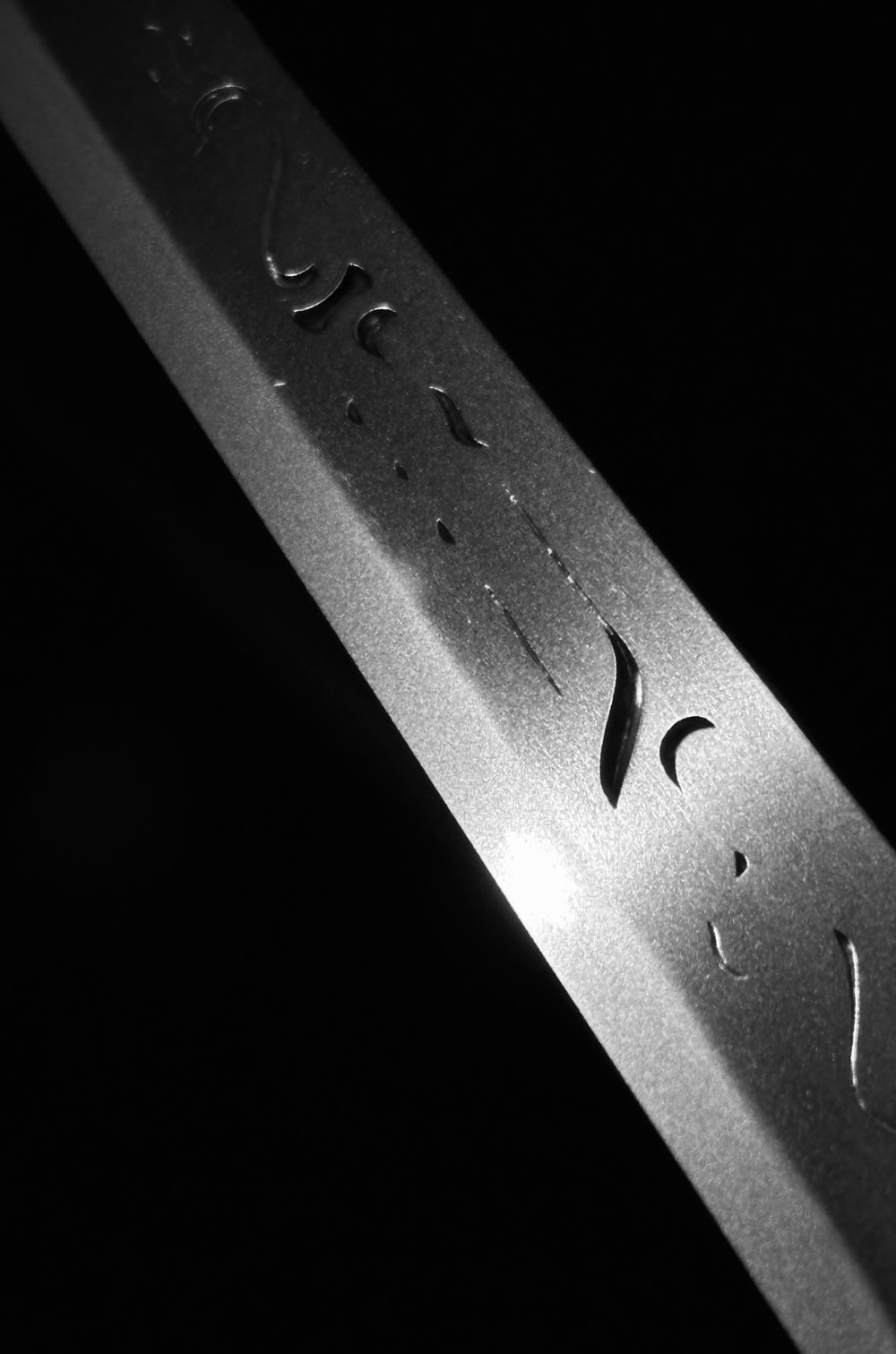
The line against the master is qualitative and constant. In nearly half of his designation texts the states the standing formula that "compared with Masamune, his appeal lies on the whole in a calm, relaxed notare-based " (正宗に比較すると総じて穏やかでおっとりした湾れ調の乱れ刃に持味があり). One text details the contrast: the forging somewhat calmer than Masamune's, the standing less, the sparser, the workings of and somewhat scarcer and quieter. His own positive signature is the chisel. He is the carving master of : , , , and recur far beyond anything on Masamune, Yukimitsu or Norishige, and "the twin grooves were a specialty of Sadamune" (二筋樋は貞宗の得意としたところ), cut on and alike, a being named Sadamune for them. The published sources add that the is precisely what was not seen in Masamune: his carving "follows the line of Daishinbo, excelling in , the layered relief carving, which he passed to his pupil " (大進坊の流れを汲んで、重ね彫を得意とし、これを弟子の信国に伝えて).

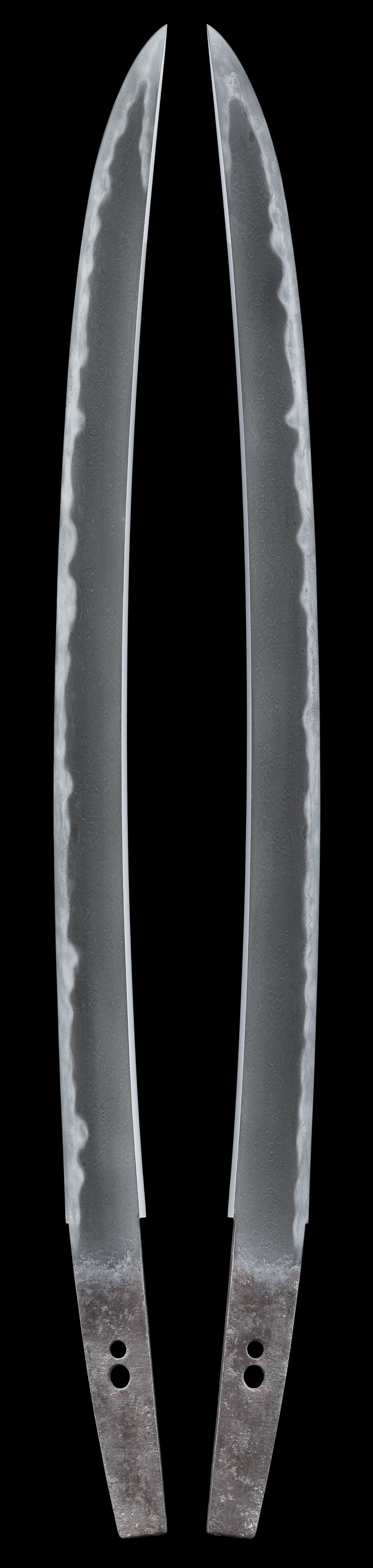
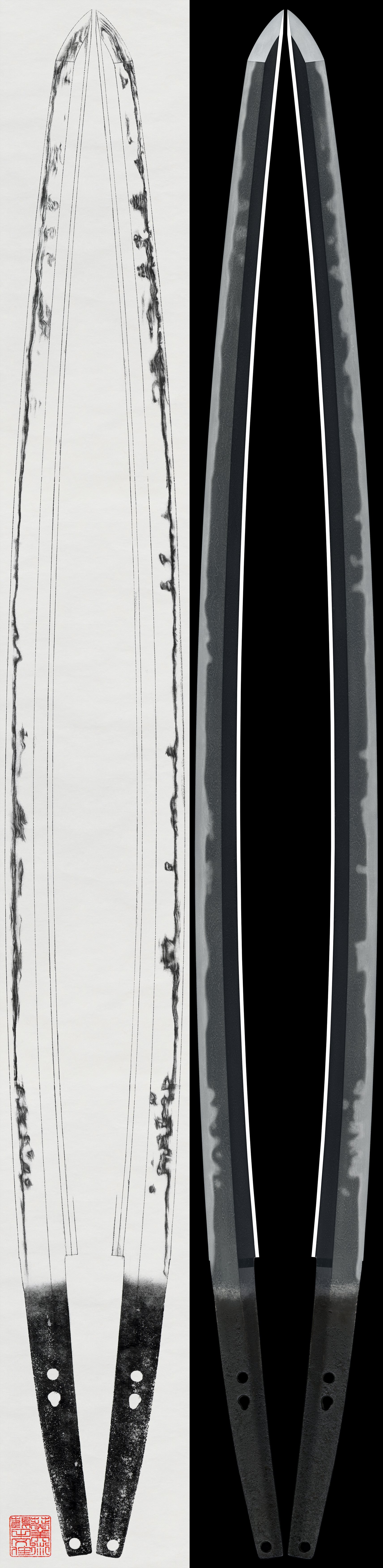
The is an mixing , on the finest pieces kneaded close and minutely covered in , with entering finely and incessantly, at times with a slightly standing tendency. Over it the runs as a shallow mixing , and , and entering, the deep, the thick, bright and clear, and working through the , and at the ; the is or with and , often with a pointed tendency. The texts name as the mark of his "the beautifully shining peculiar to the top rank of - work" (相州伝上位作特有の光美しい沸). Around this mainstream two poles stand. " is rare" (直刃は稀) in him: the few quiet pieces carry a with shallow feeling and spaced wide, and a in this manner is said to recall the Fushimi Sadamune. At the livelier pole the grows prominent, rough mixes in places, and scatter and the sweeps up in flame-like ; a few works show a -like feeling, yet the texts measure the limit exactly, "never going so far as Hiromitsu and Akihiro" (広光・秋広までには至らない).

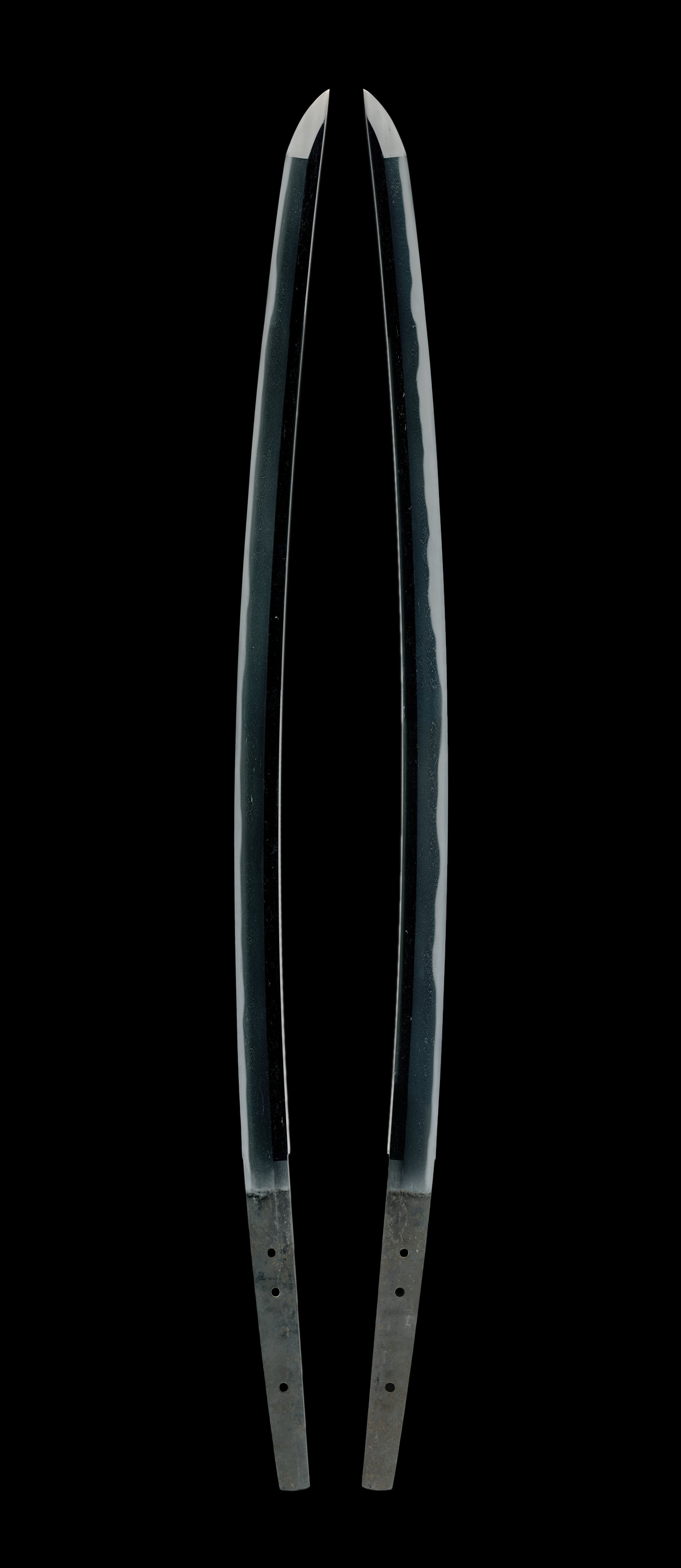
His divides into two types for and alike, and the dates each blade by which build it shows. The earlier keeps the -end style the texts call old-fashioned (古調): blades of ordinary width with , and small with little or no , the smallest of them likened to the Sadamune. The later is the grand build that carries most of the surviving work: of wide with little taper and an extended point, and wide and of thin , very often . On the pieces the itself is a tell, with a -form tip and , called "exactly the rule of Sadamune" (貞宗の掟通り). Kata- was a construction he favored, the celebrated example being the Sadamune handed down in the Kishu Tokugawa family as the sword of its first lord Yorinobu. Old -period papers are sometimes corrected at designation: blades papered to Takagi Sadamune or to Yukimitsu have been re-judged as Sadamune.

Among Masamune's students the published sources call him the one who carries the master's manner most faithfully, his skill next to the master's; at the top of his range the boundary runs against Masamune himself. Of a Bijutsuhin formerly of Ikeda Nakahiro, Honma Junji remarked that the shows more variation than the usual work, a flame-like and brilliant , and that he "would rather see it as Masamune" (むしろ、正宗と見たいものである). Downstream the triangulation holds: his gentler and his are exactly what reappear in , and it is through Sadamune that the carving tradition passes to that pupil and his line.

Fujishiro rates him Sai-jo , and eighty-seven designated works stand on record: four National Treasures, twelve Important Cultural Properties, two prewar Bijutsuhin, twenty-three and forty-six , sixty-nine blades in the two upper tiers together. The carried by his attributions are many. Beside the O-Horidashi stand the , the Zentokuin given by the shogun Hidetada to Maeda Toshinaga, the Ujiie of the Kyoho -cho, the , the , and the Shishi Sadamune, a treasured sword of Toyotomi Hideyoshi burned in the fall of Osaka and retempered by the first-generation Yasutsugu. Forty-one blades carry recorded provenance: one is recorded as presented by the shogun Ienobu and worn by Ietsugu, another was given by Tsunayoshi to Yanagisawa Yoshisato in Genroku 10 (1697), and transmissions run through the Owari and Kishu Tokugawa, Maeda, Date, Mori, Ikeda, Satake, Hachisuka and Takatsukasa houses. For the collector very little of this can ever trade. The National Treasures and Important Cultural Properties are patrimony outside the market, and recorded examples rest in the Tokyo National Museum, the Tokugawa Art Museum, the Mitsui Memorial Museum and the Sano Art Museum. What can realistically be met is the and tier, sixty-nine blades, nearly all or resting on attributions; such a blade comes to market only rarely, and a piece carrying the twin grooves or the layered relief carving, the chisel his master never showed, is an event when it does.

Kantei

one prime gentle notare-gunome manner carried in two period sugata (a Kamakura-end old-fashioned build and the grand wide Nanbokucho build), split across an o-suriage katana register and a sunnobi hira-zukuri tanto/ko-wakizashi register; flanked by a rare suguha-cho pole and a livelier tobiyaki pole that never reaches hitatsura; characteristic horimono throughout; entirely mumei

Sadamune, called Hikoshiro, was Masamune's pupil and by tradition his adopted son (some records say his son), succeeding him as second generation of the mainline from the very end of into early . He inherits the master's manner most faithfully, a refined with thick and incessant under a -laden with , yet the 's standing formula is that his and run calmer and more relaxed than Masamune's. He is the carving master of : , , and his favorite twin grooves recur constantly. No authenticated signed work exists; everything is , settled by , and .

Diagnostic discriminators

32% of his works · 8.1× vs Masamune

24% of his works · 5.4× vs Masamune

48% of his works

mei reality: 82 of 96 records are titled mumei, 15 carry Hon'ami shu-mei and 8 kinzogan attributions; a signed Sadamune is by definition suspect

Observation by phase

Prime manner, the grand Nanbokucho build with gentle notare

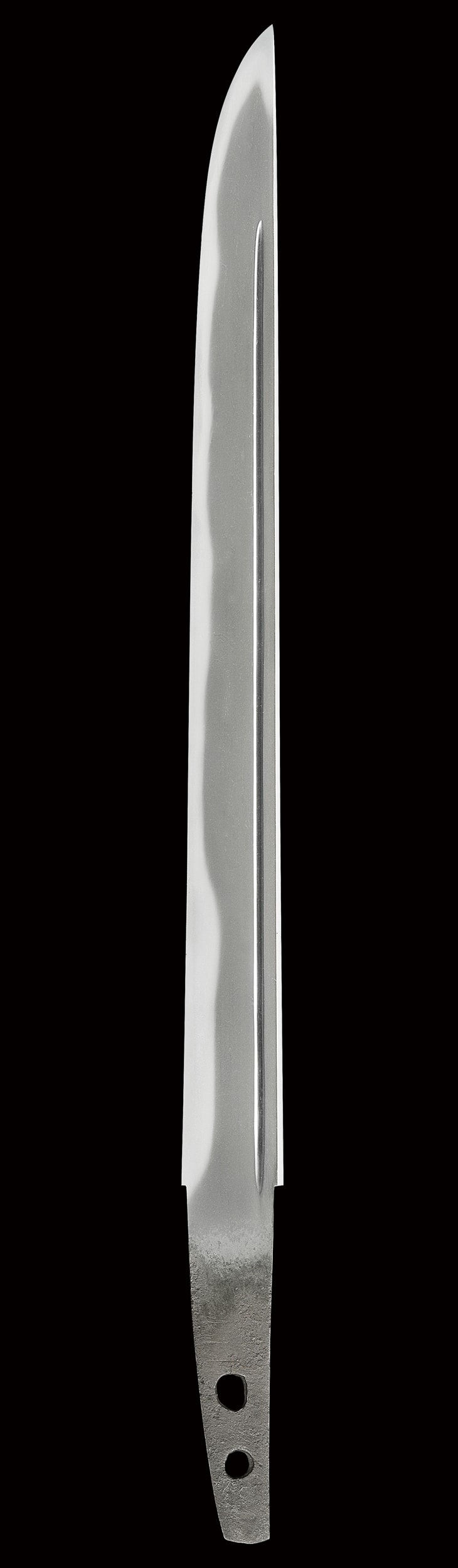
The mainstream of his surviving work. The is an mixing , on the best pieces minutely covered in , with entering finely and incessantly, at times standing slightly; the temper is a shallow mixing , and , and entering, thick and bright, with and working through and and at the ; the runs or into with , often with a pointed tendency. , , , , and the twin grooves, recur on a scale no other master shows.

Sugata 姿
Jigane 地鉄
Hamon 刃文
Bōshi 帽子
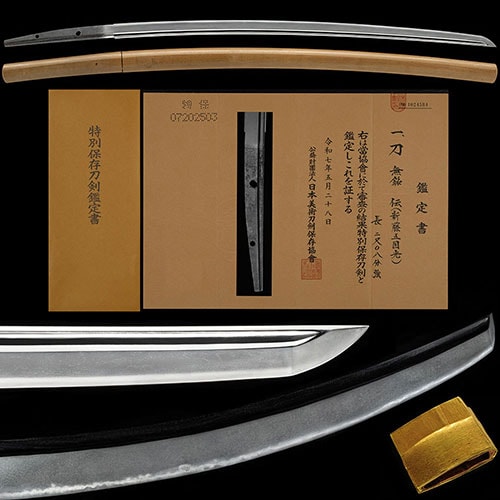
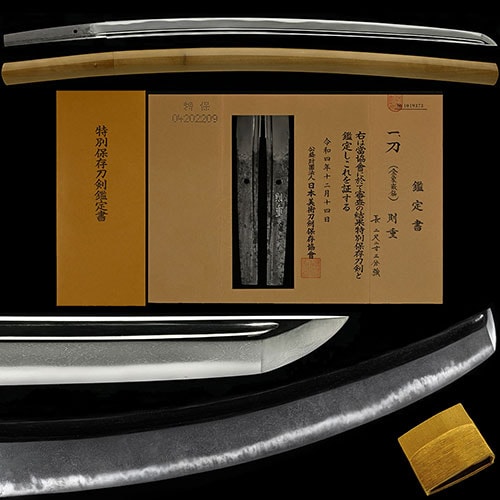
O-suriage katana register— the o-suriage mumei katana (47 of 96): wide mihaba with little taper, shallow or koshi-zori, the kissaki extended or o-kissaki in the so-called dabira build that dates them to Nanbokucho
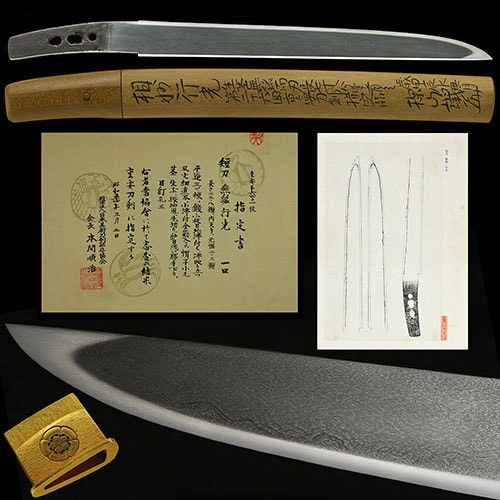
Sunnobi hira-zukuri tanto and ko-wakizashi register— the hira-zukuri mitsu-mune pieces (49 of 96): wide mihaba, sunnobi, thin kasane with shallow sori, very often ubu mumei with a ken-form nakago tip and katte-sagari yasurime, which the NBTHK calls exactly his rule

Kamakura-end register, the old-fashioned build

less firmly establishedthe NBTHK states his sugata divides into two types for tachi and tanto alike; this is the earlier: tachi of ordinary width with chu-kissaki, and small tanto with little or no sori, rarely slender, the class the texts call old-fashioned

Work that keeps the -end style: a shape of ordinary width with , or a small nearly without , the smallest of them likened to the Sadamune. The and the gentle with are the hand, and the reads the date from the build alone.

Sugata 姿
Hamon 刃文

The livelier pole, tobiyaki and yubashiri toward hitatsura

less firmly establishedmostly the Nanbokucho sunnobi wakizashi: gunome stands out, tobiyaki and yubashiri scatter, the boshi sweeps up in flame-like hakikake, and the NBTHK notes a few works approach hitatsura yet never reach Hiromitsu or Akihiro

Beside the calm mainstream stands a livelier class: the grows busy with prominent , rough mixes in places, and long appear at the and over the , and the sweeps into a flame-like form, on some pieces the temper trending toward . The texts measure this pole carefully, livelier than his usual work, but always stopping short of the full of Hiromitsu and Akihiro.

Hamon 刃文
Bōshi 帽子

The rare suguha-cho pole

less firmly establishedthe NBTHK states plainly that suguha is rare in Sadamune; the few suguha-cho works carry a shallow notare tendency with ko-gunome spaced wide, the manner the texts liken to the Kokuho meibutsu Fushimi Sadamune

A small quiet pole: a with shallow feeling, mixing sparsely, the finely , thick and bright over the -rich . One is called a model of his , and a Tokuju in this manner is said to recall the Fushimi Sadamune.

Hamon 刃文
Bōshi 帽子
Scholarship

His sugata divides into two types for tachi and tanto alike, a Kamakura-end build and a Nanbokucho build, and the NBTHK dates each blade by which of the two it shows.

He was called Hikoshiro; the name appears in the records beside the statement that no signed work exists across tachi and katana.

His carving is said to follow the Daishinbo line, excelling in kasane-bori, the layered relief carving, which he passed to his pupil Nobukuni.

Old Edo-period papers on his blades are sometimes corrected at shinsa: works with Hon'ami origami to Takagi Sadamune or to Yukimitsu were re-attributed to Soshu Sadamune on designation.

Kata-kiriha-zukuri was a construction he and the Omi Takagi school favored, the celebrated example being the Kiriha Sadamune of the Kishu Tokugawa; the texts note the Kyoho Meibutsu-cho lists a different katana of the same name.

Honors

享保名物帳Kyōhō Meibutsu Chō (Catalog of Celebrated Blades)

Catalog 19 · burned 3 · addenda 2 (24 total)

The family's catalog of celebrated blades (名物) presented to shogun Tokugawa Yoshimune in Kyōhō 4 (1719). Records ~274 blades of – manufacture (168 extant + ~80 burned + ~26 later additions), grouped by smith with valuations and provenance. This honor tags smiths whose work is recorded in the catalog; the detail field carries per-smith counts where the published tally is exact, or 所載 + named blades where only inclusion is verified.

Designations

Kokuhō4
Jūyō Bunkazai12
Jūyō Bijutsuhin2
Gyobutsu—
Tokubetsu Jūyō23
Jūyō Tōken46

Elite Standing

1.13 across 87 designated works

Top 1% among smiths

Provenance

76 documented provenances across certified works by Sadamune

Provenance Standing

47 works held in elite collections across 76 documented provenances

Top 1% among smiths

Raw score: 4.77 / 10

Blade Forms

Distribution across 87 ranked works

Signatures

Signature types across 87 ranked works

Currently Available

Lineage

TeacherMasamune
Sadamune
Students (6)
  1. 1.Akihiro秋廣28designated
  2. 2.Nobukuni信國1 for sale69designated
  3. 3.Takagi Sadamune高木貞宗1 for sale40designated
  4. 4.Toshinaga俊長1 for sale9designated
  5. 5.Nobukuni信國1 for sale
  6. 6.Takahiro高弘

Soshu School

Other artisans of the Soshu school

  1. 1.Masamune正宗1 for sale87designated
  2. 2.Akihiro秋廣28designated
  3. 3.Go Yoshihiro義弘2 for sale55designated
  4. 4.Kunimitsu國光4 for sale72designated
  5. 5.Hiromitsu廣光1 for sale45designated
  6. 6.Norishige則重8 for sale132designated
  7. 7.Yukimitsu行光4 for sale151designated
  8. 8.Takagi Sadamune高木貞宗1 for sale40designated
  9. 9.Tametsugu爲繼2 for sale76designated
  10. 10.Kunihiro國廣15designated
  11. 11.Daishinbo大進房3designated
  12. 12.Mitsufusa光房1designated