In the Sengoku era the school served a second warrior court: the Later Hōjō at Odawara, whose patronage kept the Tsunahiro line forging hitatsura for the uchigatana age until the castle fell to Hideyoshi in 1590.
 NihontoWatchNihontoWatch
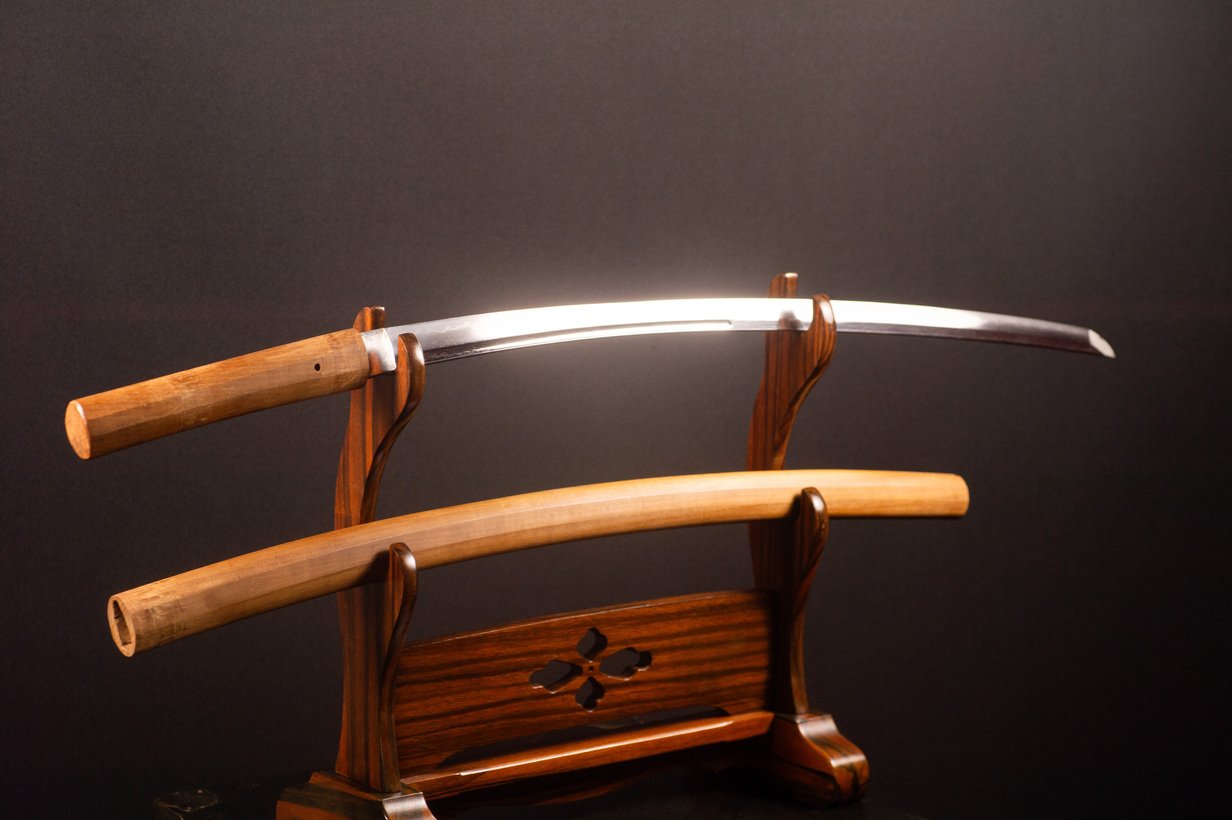
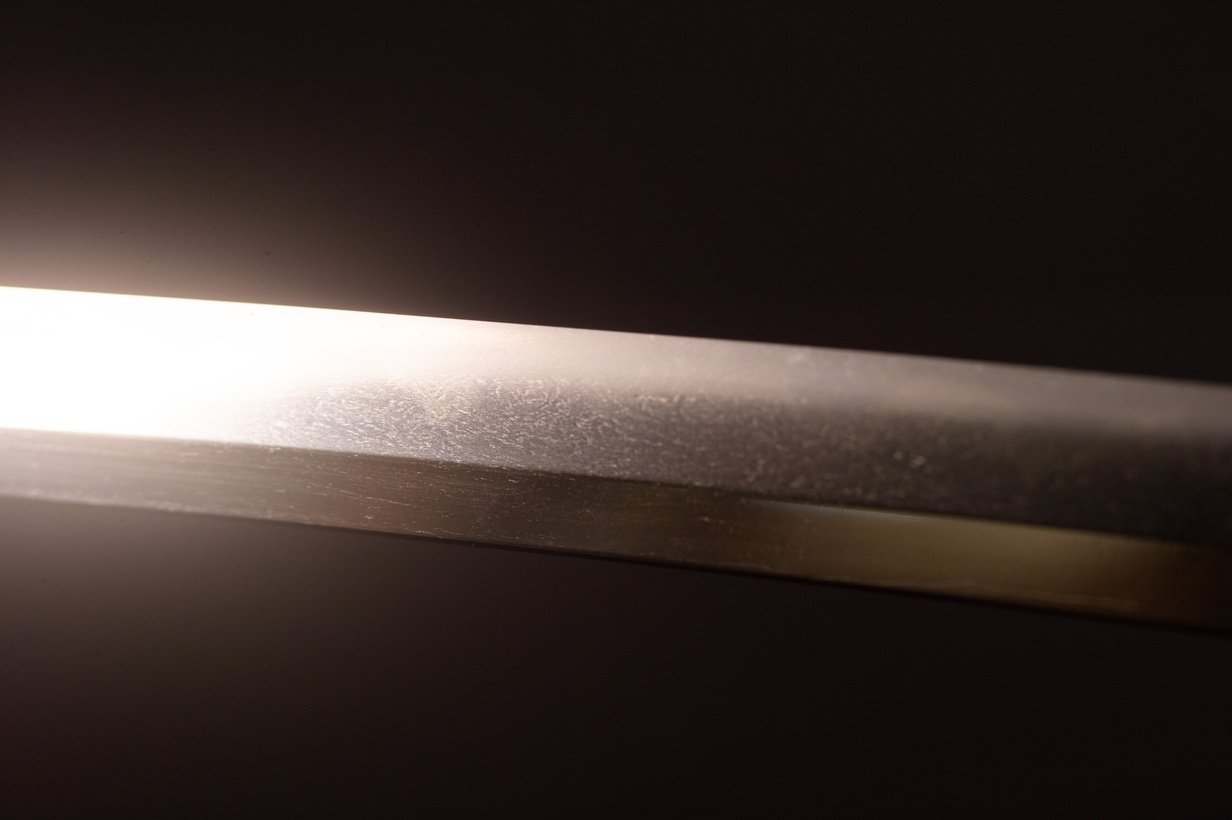
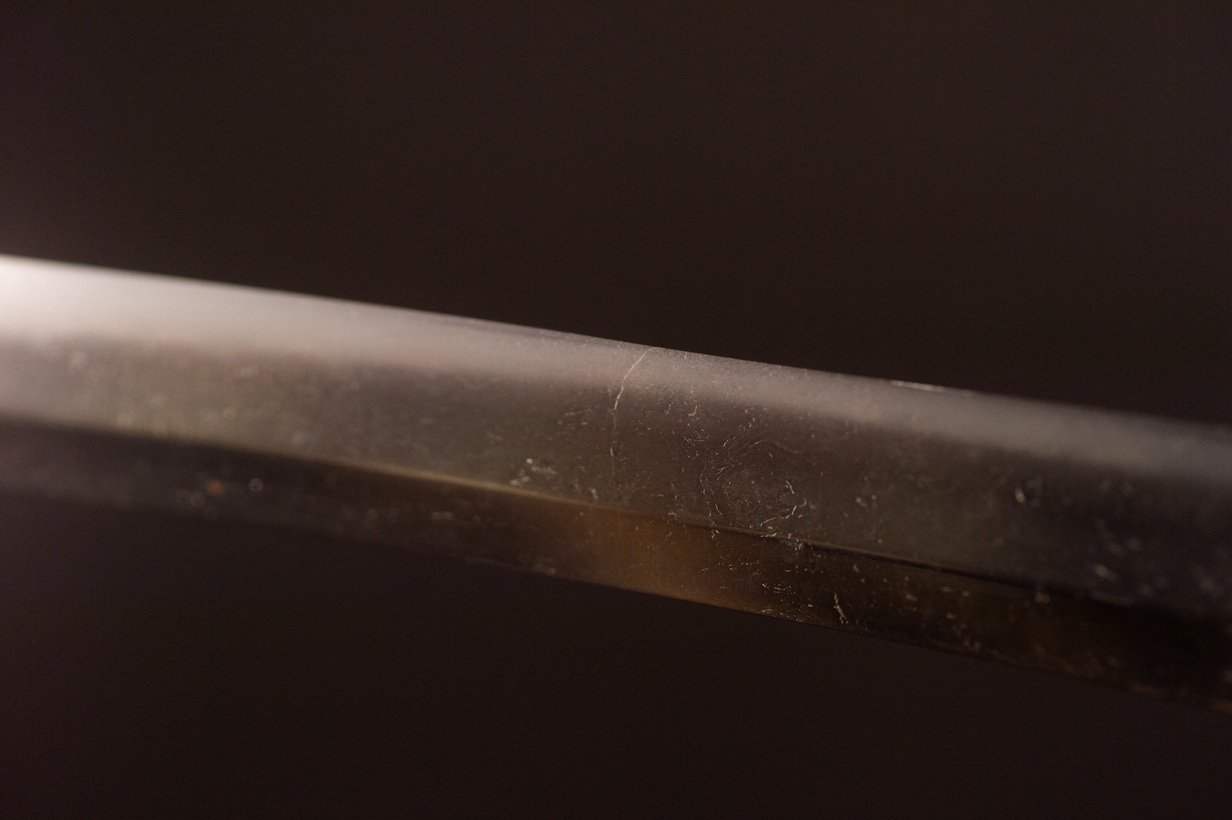
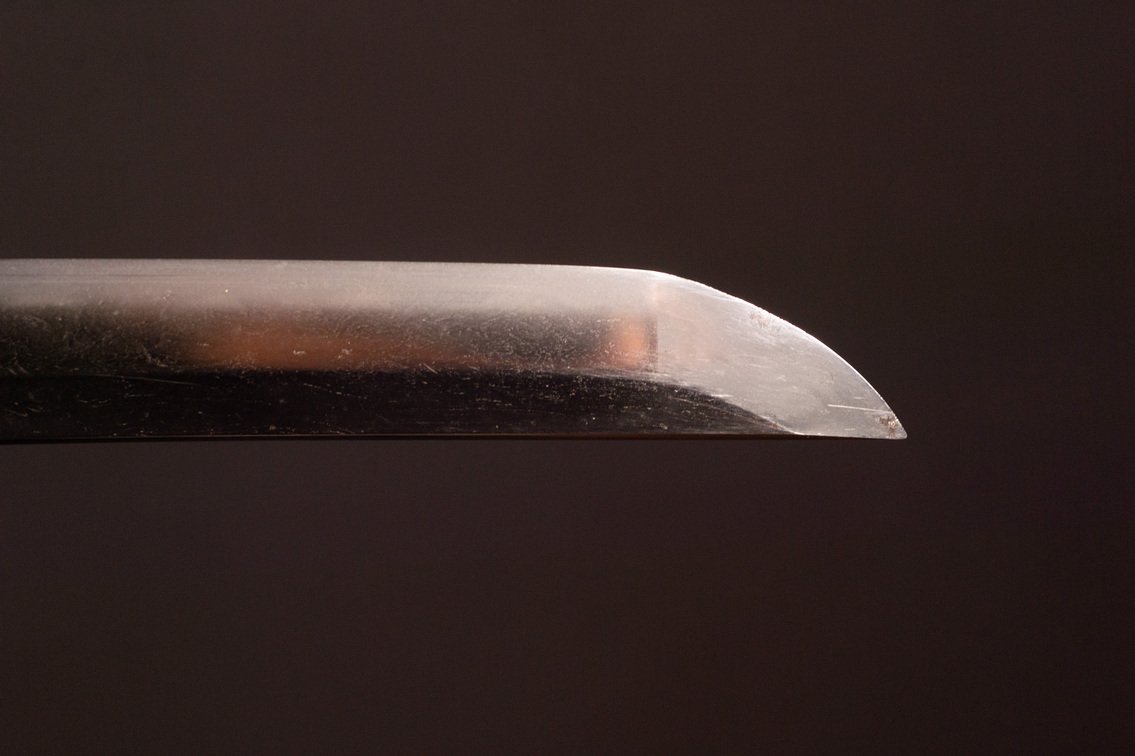
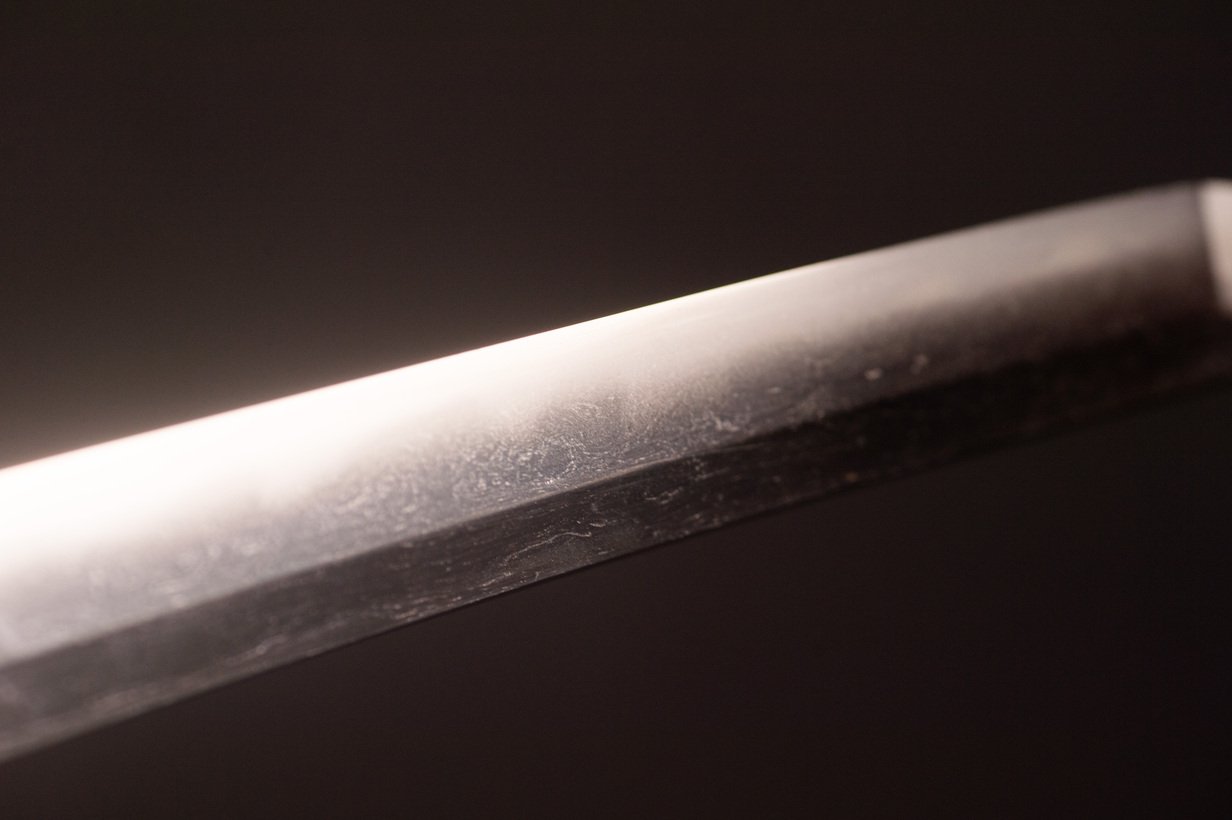
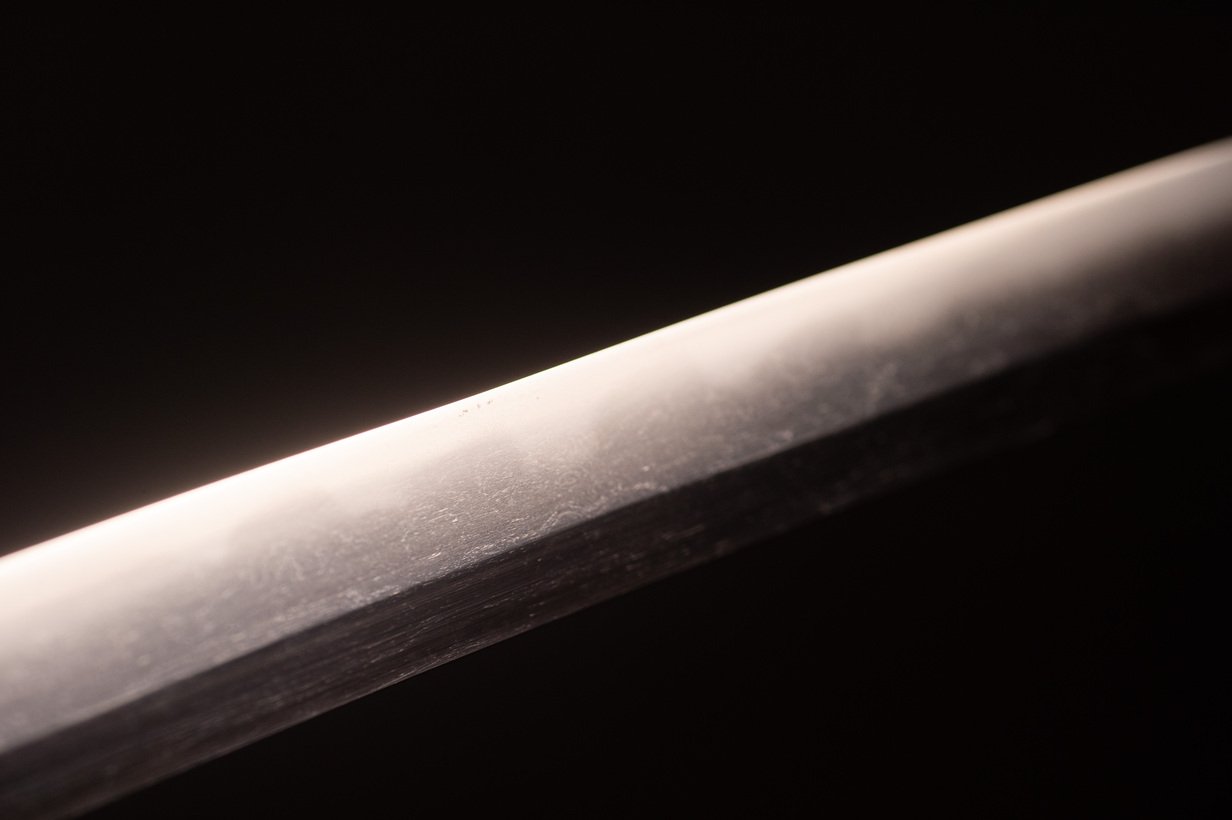
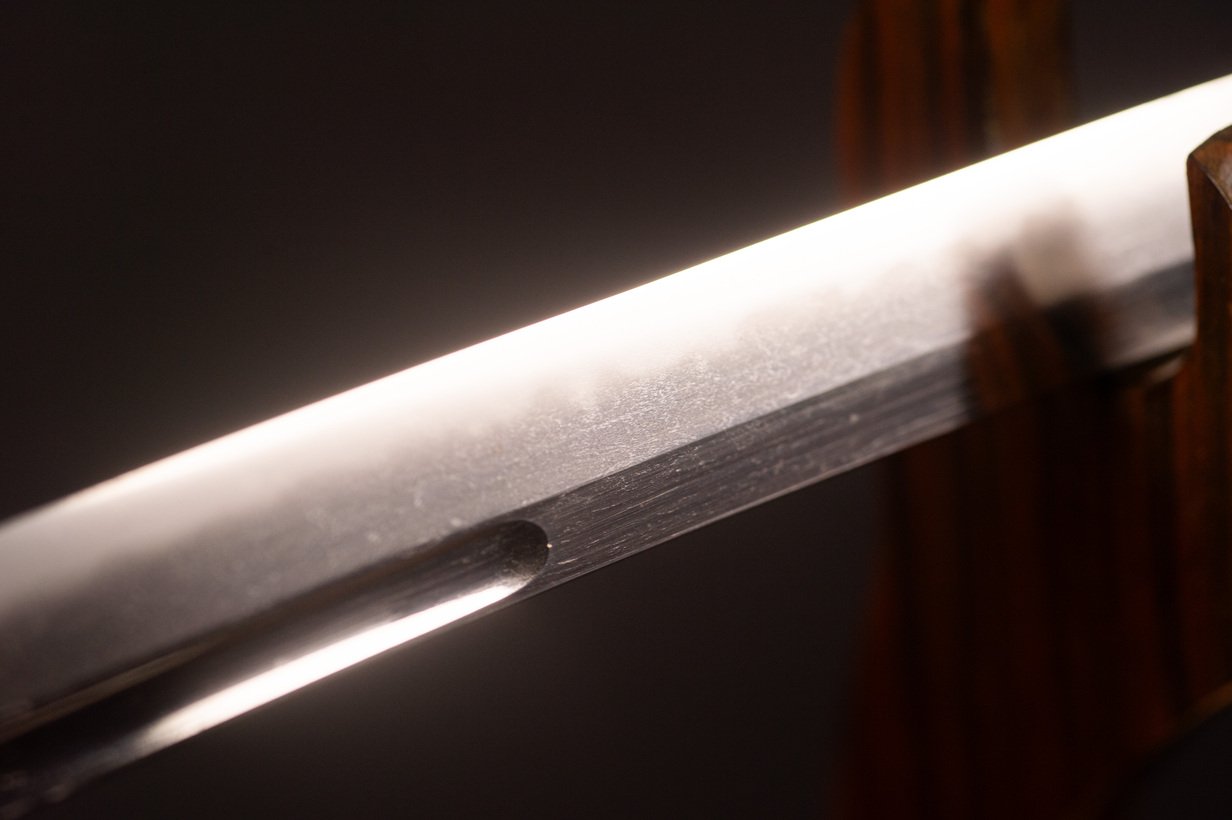
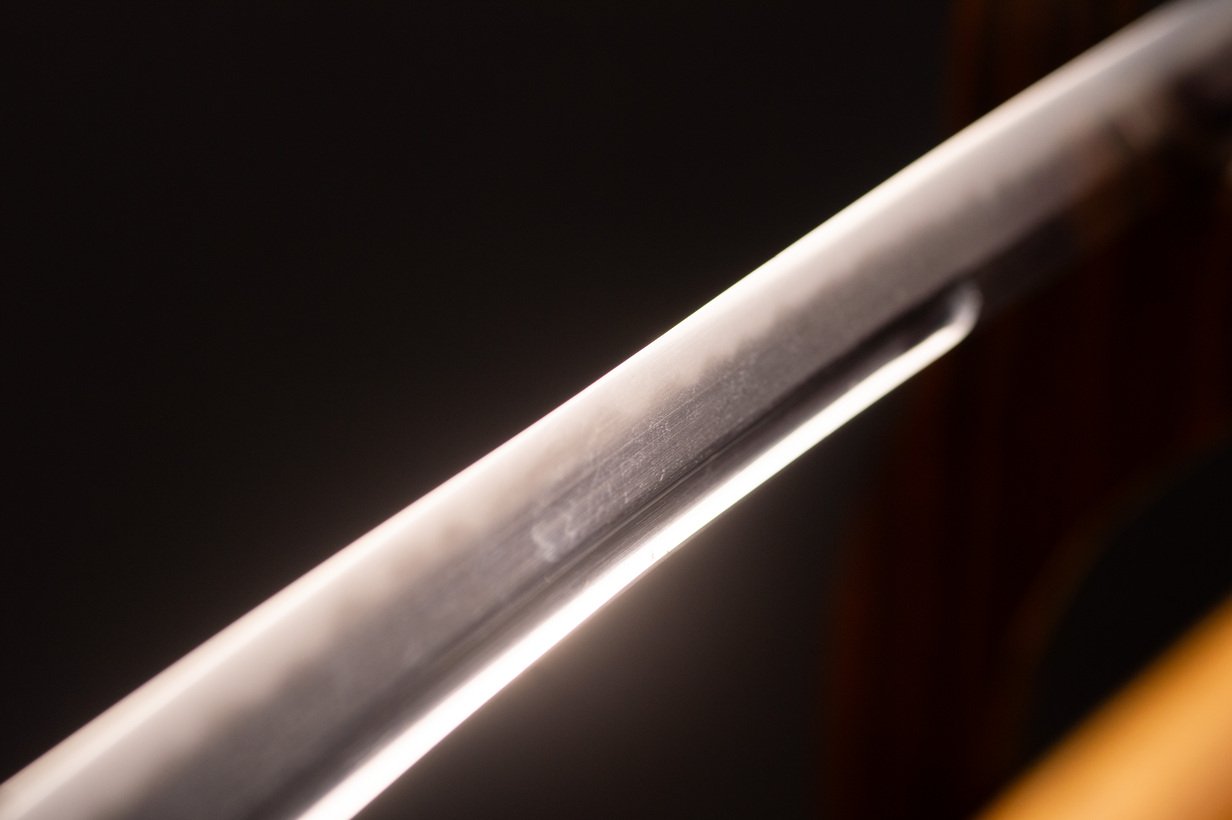
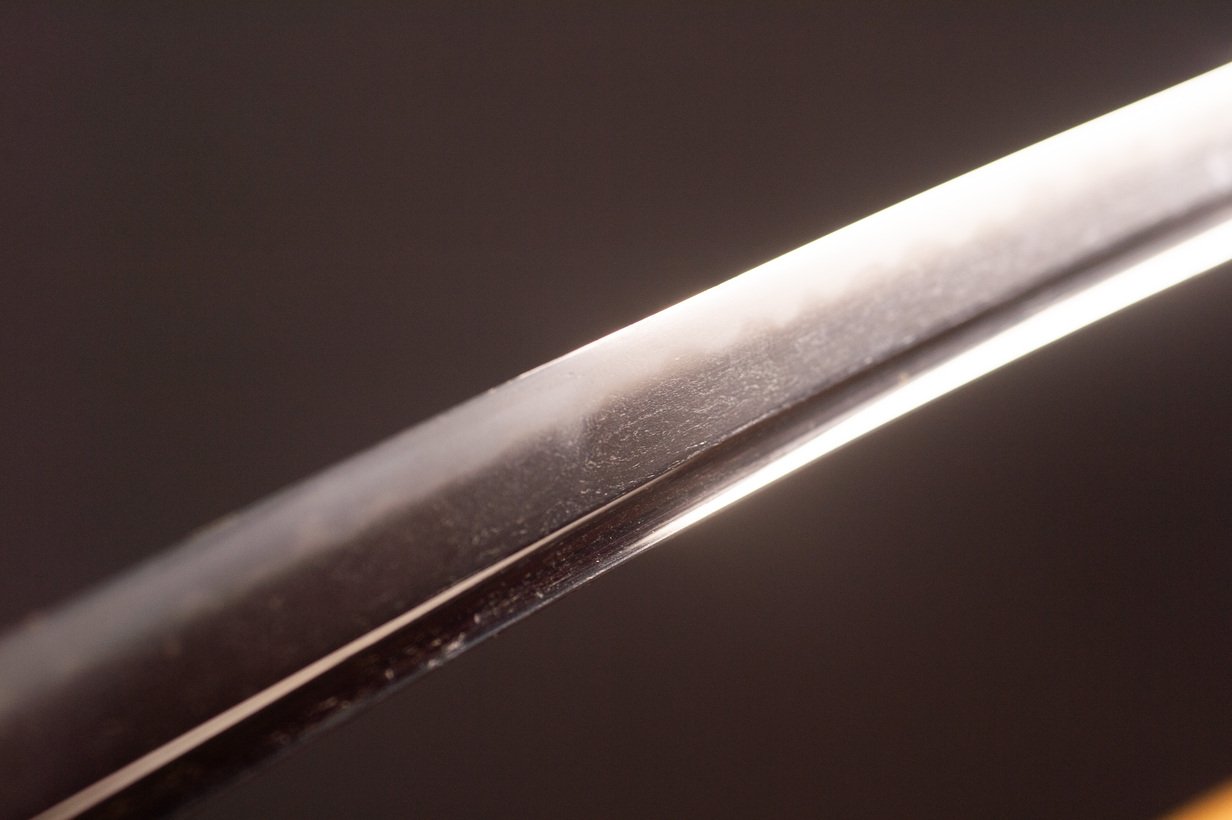
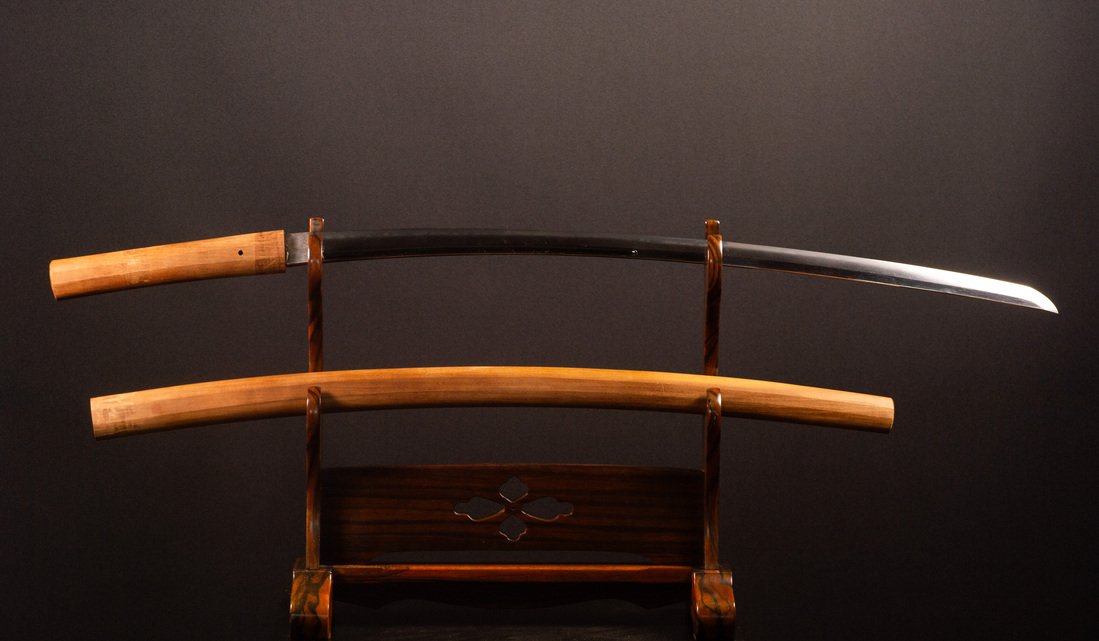
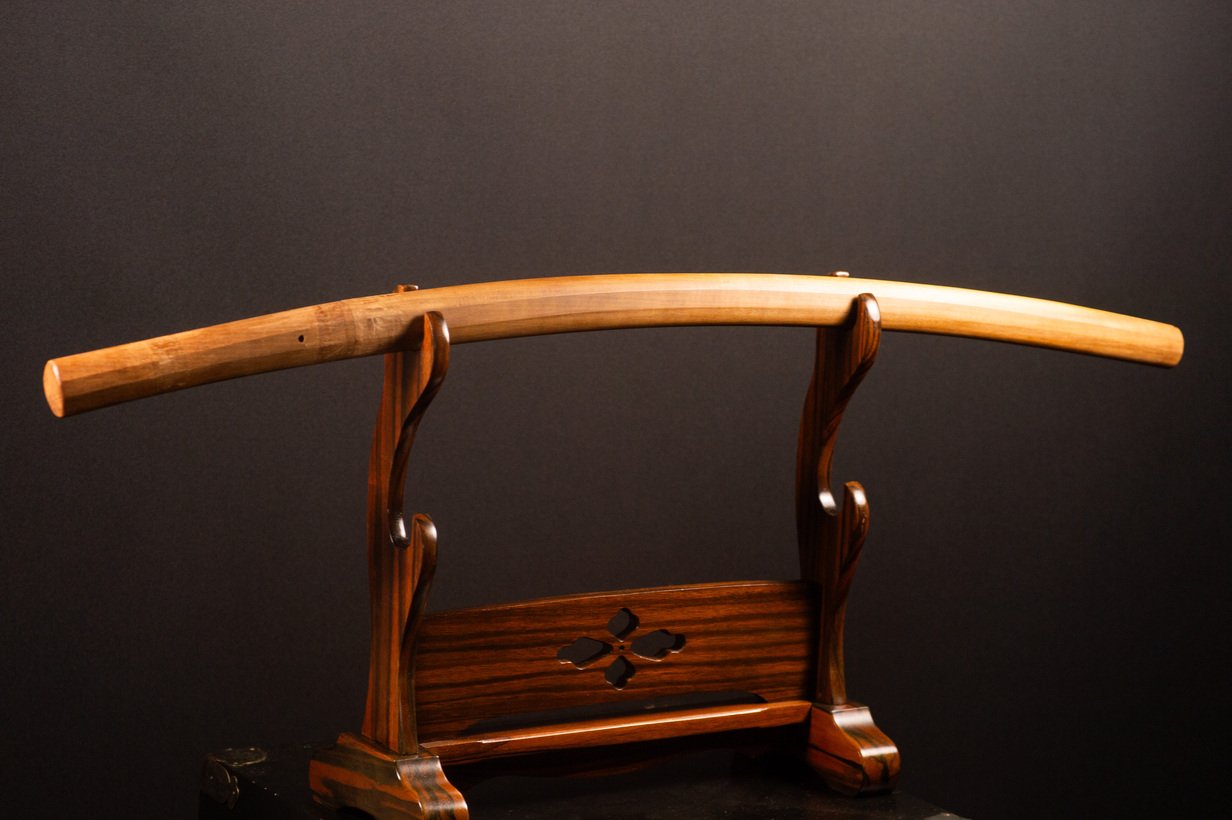
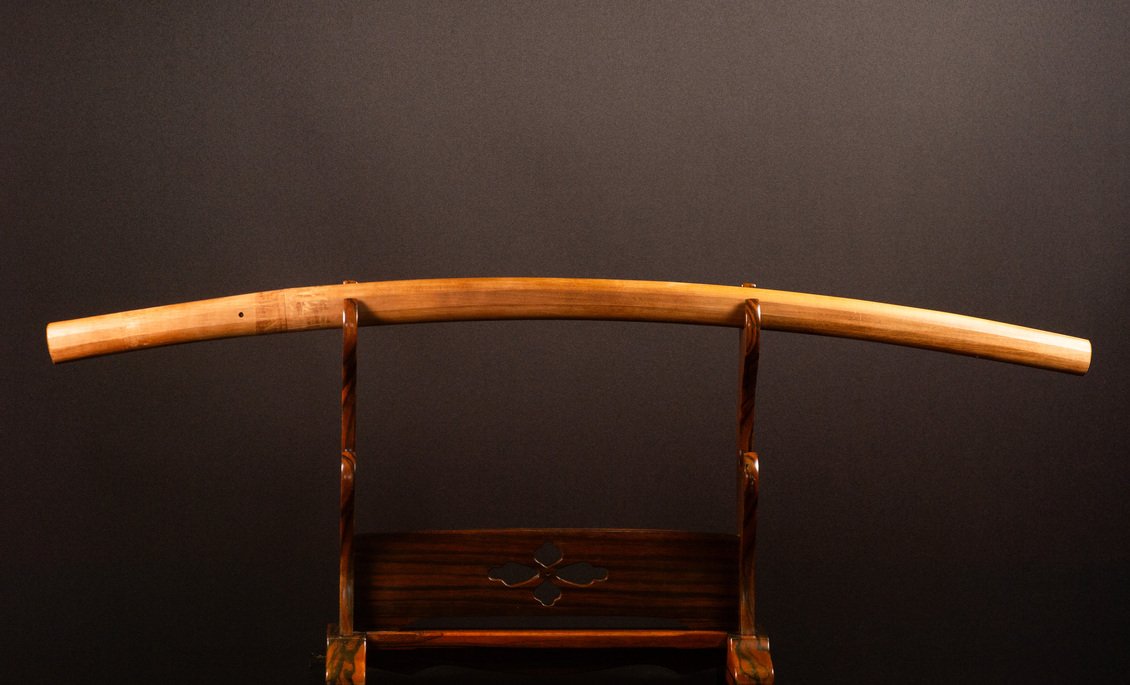
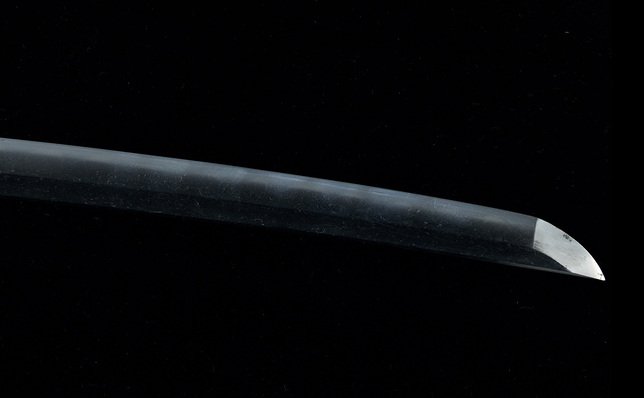
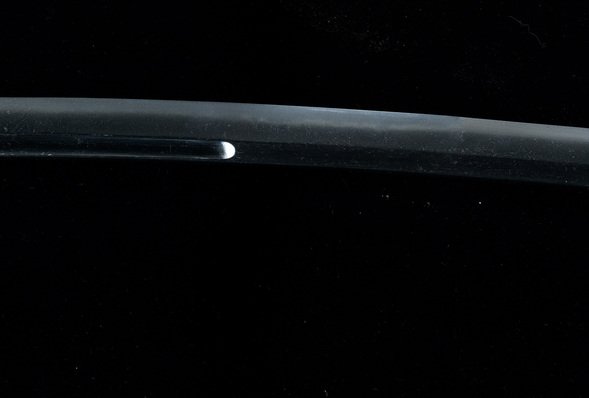
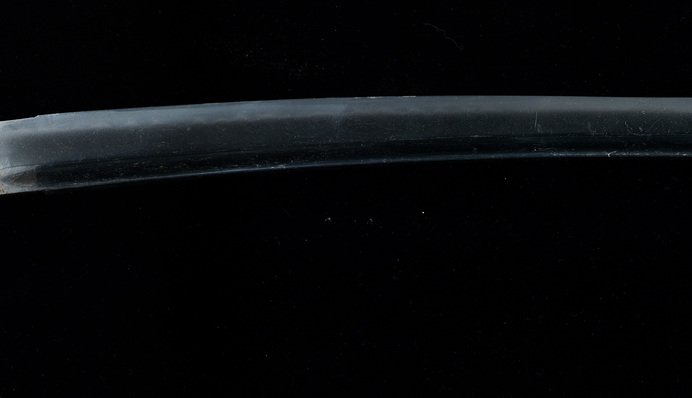
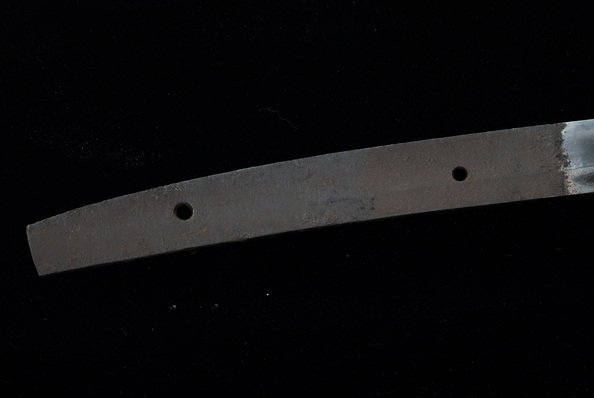
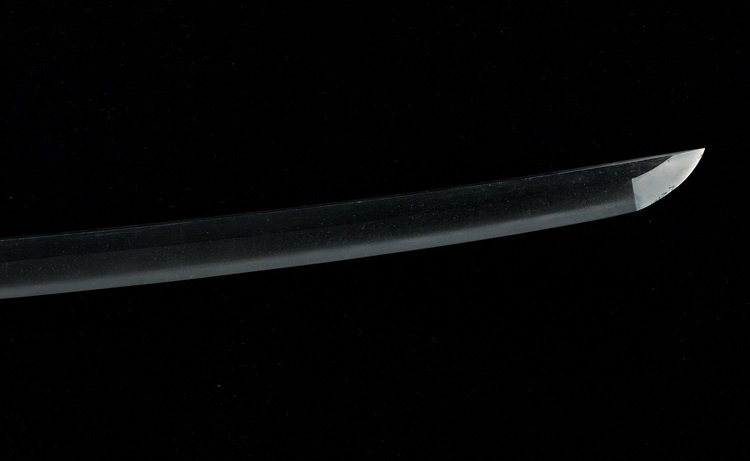
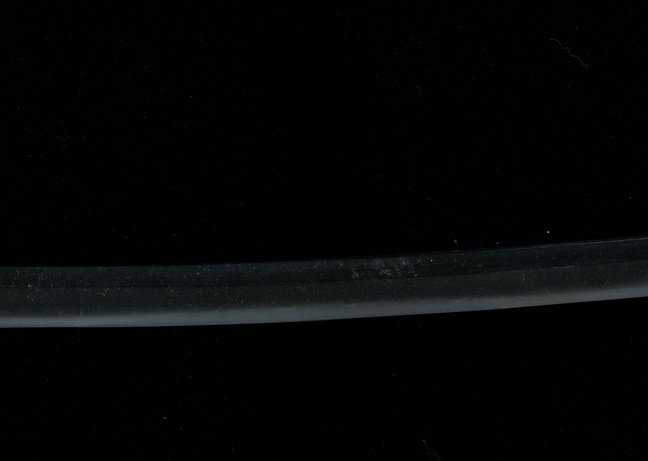
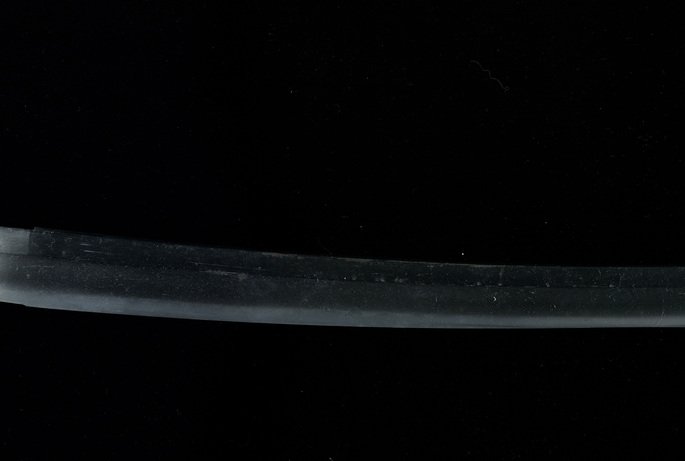
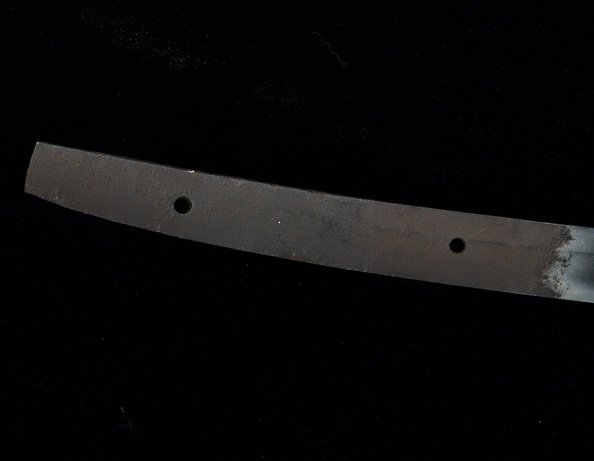
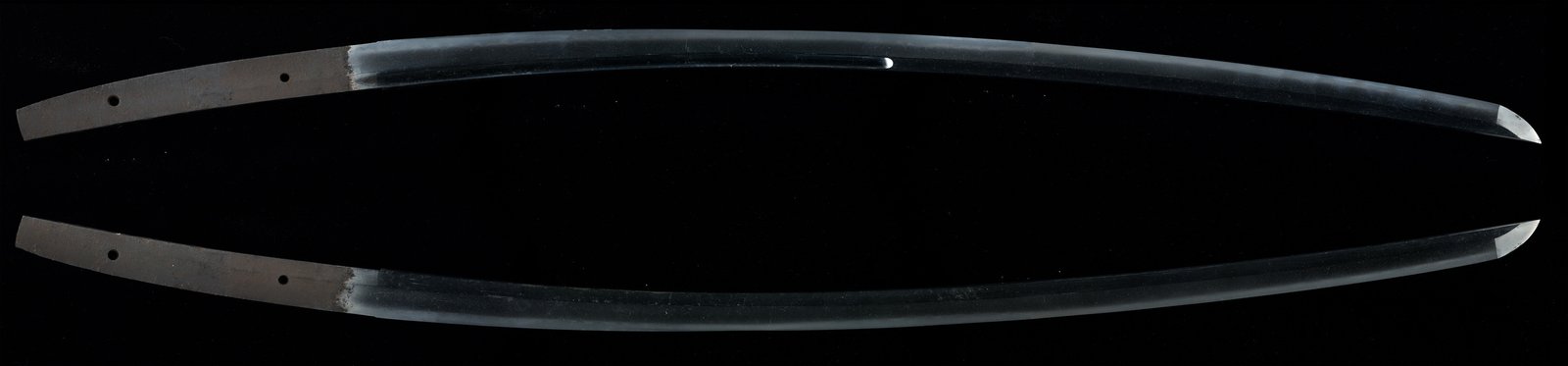
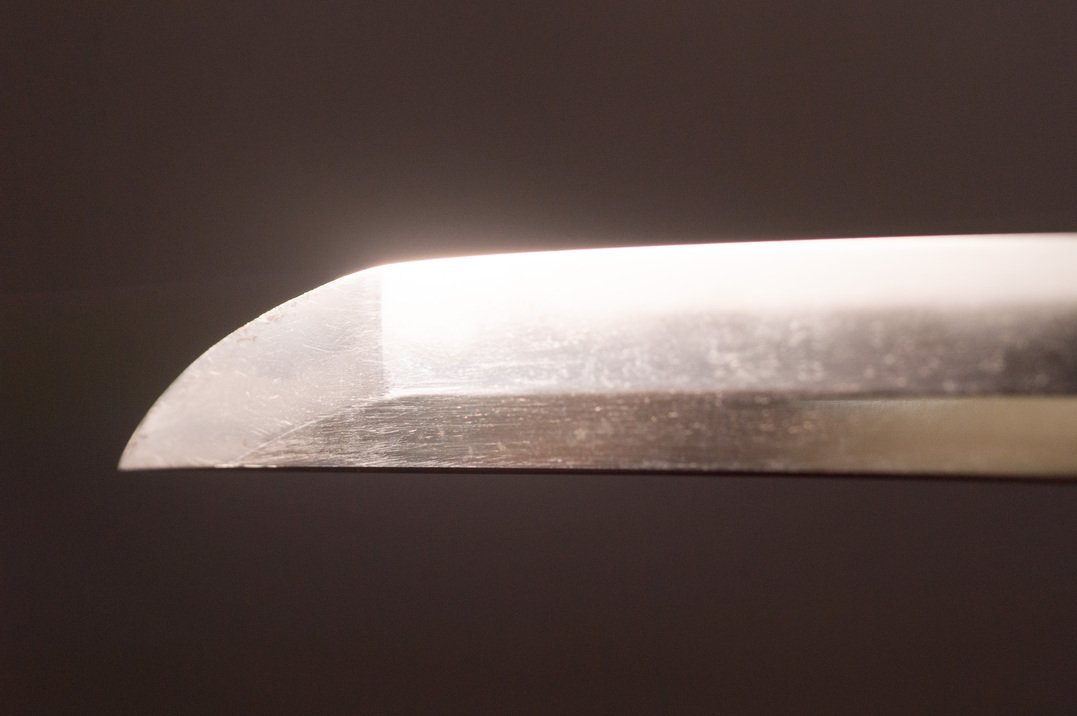
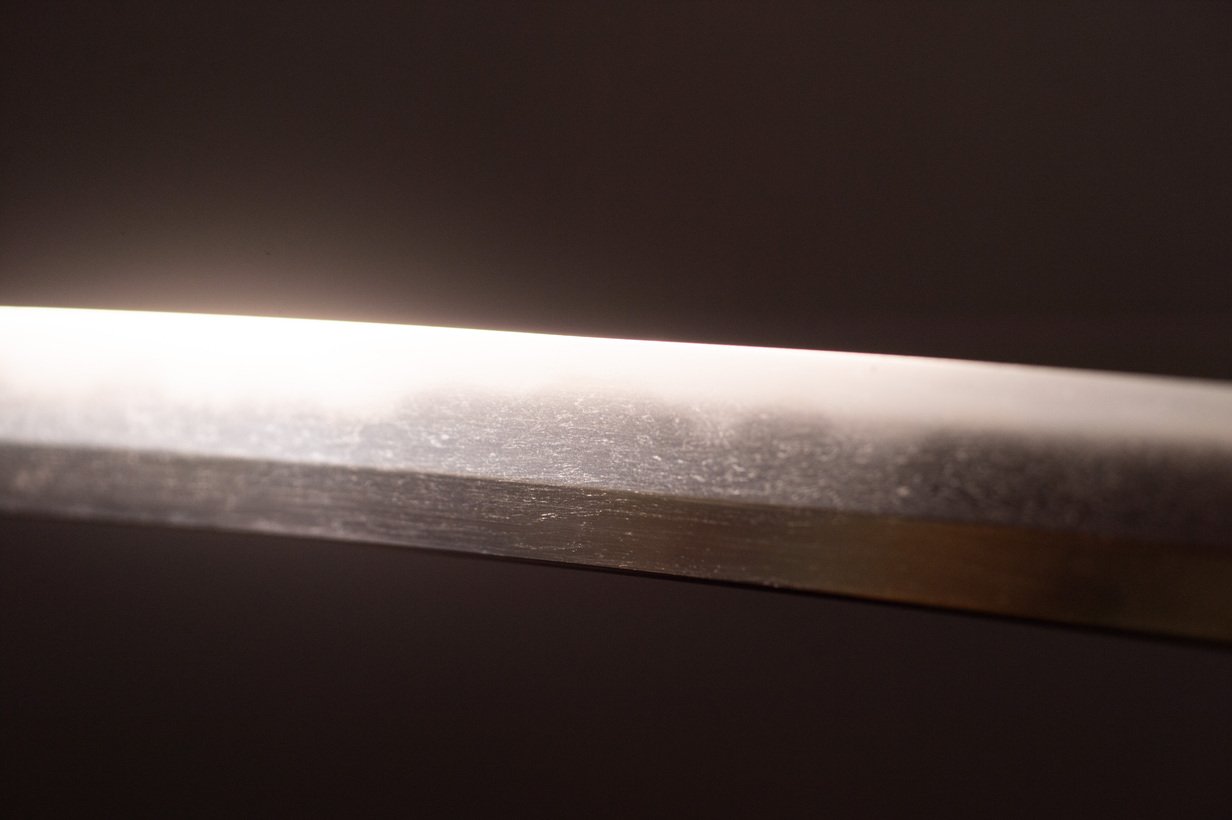
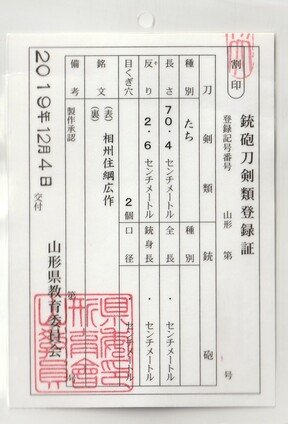
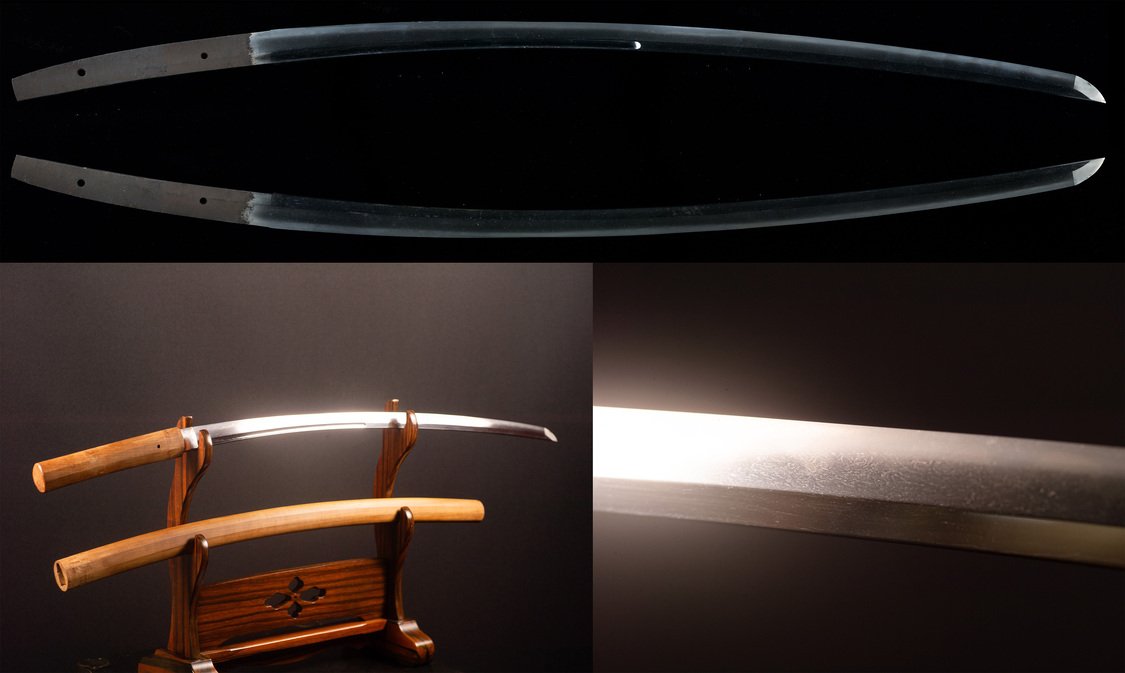
Late Muromachi Period · Sagami Tradition · Odawara-Sōshū School An authentic signed tachi by Sōshū-jū Tsunahiro (相州住綱広作), forged during the late Muromachi period. Distinguished by its elegant proportions and remarkable deep curvature, this blade represents one of the finest names of the Sue-Sōshū tradition. Preserved in its original shirasaya, the sword is accompanied by a copy of its original Japanese torokusho, the Supein Nihonto Certificate of Authenticity, and a protective cotton or kimono sword bag. The graceful silhouette, refined workmanship and historically significant signature make this tachi an outstanding example of the Odawara-Sōshū tradition. Closely associated with the powerful Hōjō clan of Odawara and the legacy of the legendary Masamune, it represents both the martial spirit of the Sengoku period and the refined craftsmanship for which the Sōshū school became world-renowned. The Smith (Sōshū-jū Tsunahiro) This blade bears the signature Sōshū-jū Tsunahiro saku (相州住綱広作), meaning “Made by Tsunahiro, resident of Sagami Province.” The name Tsunahiro occupies a distinguished place within the Sōshū tradition, one of the most celebrated schools of Japanese swordsmithing, founded by the legendary master Masamune during the Kamakura period. The Tsunahiro lineage emerged around the Tenbun era (1532–1555). According to historical tradition, the first master originally signed Masahiro (正広) before receiving the character “Tsuna” (綱) from Hōjō Ujitsuna (1486–1541), lord of Odawara Castle. In recognition of this honour, he adopted the name Tsunahiro. The family, whose surname was Yamamura (山村), proudly claimed descent from Masamune, counting Tsunahiro as the eighth generation after the great master. Working exclusively for the Go-Hōjō clan, the Tsunahiro smiths became the principal representatives of what is now known as the Odawara-Sōshū tradition. Their swords earned an excellent reputation for combining the powerful cutting ability expected by Sengoku warriors with the elegant forging techniques inherited from classical Sōshū workmanship. The prestige of the lineage extended well beyond the Muromachi period. Successive generations continued forging throughout the Shintō and Shinshintō eras, while the Yamamura family tradition survives today through the Masamune Kōgei workshop in Kamakura, making it one of the oldest continuously active swordsmithing lineages in Japan. Among the Sue-Sōshū smiths, Tsunahiro is widely regarded as the leading representative of the Odawara school, preserving the artistic legacy of Masamune while producing robust blades intended for the battlefield. Historical Context This tachi belongs to the closing years of the Muromachi period, one of the most turbulent eras in Japanese history. The country was engulfed in the Sengoku Jidai—the Age of Warring States—when powerful daimyō fought continuously for territorial control and political supremacy. The Hōjō clan ruled much of the Kantō region from the imposing Odawara Castle, one of the strongest fortifications of medieval Japan. Their military success relied heavily upon disciplined samurai forces equipped with practical, durable weapons capable of withstanding prolonged campaigns. The Tsunahiro school was established specifically to serve these military needs. Unlike many provincial smiths, the Odawara-Sōshū craftsmen inherited one of the most prestigious artistic traditions in Japanese sword history while producing blades intended for real combat rather than ceremonial display. Every sword signed Tsunahiro therefore evokes the atmosphere of sixteenth-century Odawara: the headquarters of the Hōjō clan, the constant military campaigns of the Sengoku period, and a direct artistic lineage tracing its origins back to Masamune himself. The Blade (Tōshin) The most striking feature of this sword is its magnificent sugata. Measuring 70.4 cm in nagasa with an impressive sori of 2.6 cm, the blade displays the deep sweeping curvature characteristic of classical tachi. Its elegant profile immediately recalls the cavalry swords carried by mounted samurai during Japan’s medieval period, combining grace with unmistakable authority. The hamon consists of a refined suguha flowing gently into soft notare, executed in bright nie. The temper line remains continuous and well balanced throughout the blade, terminating in a neat ko-maru boshi. Rather than dramatic flamboyance, the overall impression is one of quiet confidence and technical refinement, perfectly in keeping with the more restrained expression of the Sōshū tradition. The forged steel displays an attractive combination of itame and mokume grain enriched with visible ji-nie. The texture possesses the dark, vibrant appearance long associated with quality Sōshū workmanship, revealing careful forging and excellent material selection. The nakago has been suriage, having been shortened during its long history, yet importantly retains its original signature. Two mekugi-ana remain visible, while the deep black patina developed over centuries is entirely consistent with authentic late Muromachi kotō manufacture. The workmanship, proportions, signature and overall character of the sword form a harmonious whole that faithfully represents the traditions of the Odawara-Sōshū school. Shirasaya The sword is preserved in its shirasaya, the traditional plain white-wood mounting used in Japan for the long-term preservation of valuable blades. Unlike decorative mountings intended for wear, the shirasaya provides a stable environment that helps protect the polish and steel from unnecessary wear and humidity. Presented on its display stand, the elegant mounting allows the remarkable curvature of this tachi to be fully appreciated while ensuring appropriate long-term conservation. Documentation This tachi is accompanied by a copy of its original Japanese torokusho registration issued by Yamagata Prefecture, confirming its legal registration in Japan. The sword also includes the Supein Nihonto Certificate of Authenticity, prepared by our specialists, describing the principal characteristics, historical attribution and condition of the blade. A protective cotton or traditional kimono sword bag is included with the purchase. No modern NBTHK or NTHK appraisal paper accompanies this sword. It is offered as a signed (zaimei) work of Sōshū-jū Tsunahiro, supported by the retained signature, the workmanship, the blade’s sugata and the characteristic features of the Odawara-Sōshū tradition. Collector’s Value Signed swords by Tsunahiro have long been appreciated by collectors for their historical association with the prestigious Sōshū tradition and the powerful Hōjō clan of Odawara. As one of the principal representatives of the Sue-Sōshū school, Tsunahiro occupies a distinguished place in Japanese sword history, combining the artistic heritage of Masamune with the practical requirements of the Sengoku battlefield. This example is especially attractive for its graceful tachi proportions, exceptionally deep curvature and retained signature. Although the blade has been shortened during its long history, the preservation of the mei considerably enhances both its historical interest and collectability. Together with its elegant shirasaya, documented Japanese registration and carefully preserved condition, this sword represents an excellent opportunity to acquire an authentic Muromachi-period tachi by one of the most respected names of the Odawara-Sōshū tradition. Elegant, historically significant and unmistakably representative of the Sōshū tradition, this signed Sōshū-jū Tsunahiro tachi embodies the martial spirit of late Muromachi Japan. Combining an impressive sugata, refined workmanship, a retained signature and documented provenance, it is a distinguished collector’s sword that rewards both historical study and refined display.
Offered by Supein Nihonto



As written by the shop
Sue-Soshu (Odawara, Sagami) · Sagami · around 1532-1555
Fujishiro Jo saku · Tōken Taikan top 37%
2 pieces on the market now
Tsunahiro (綱広) is the smith who closes the Sōshū tradition. His earliest dated work falls in the Tenbun era (1532 to 1555), and the published sources take that shodai as the foremost representative of the Sōshū smiths of the Muromachi period, the one who, in their words, "most faithfully preserved the Sōshū-den style and was most active during the Tenbun era"[[c:1]]. He is transmitted as a descendant of Hiromasa who first signed Masahiro and, summoned by Hōjō Ujitsuna to Odawara, received the character tsuna and changed his name accordingly. The name then became a lineage-name carried into the Edo period, the second generation placed in Tenshō, the third in Keichō, so that "Tsunahiro" denotes a workshop sustained for generations under the Later Hōjō at Odawara rather than a single hand. He is signed and ubu almost throughout, the five-character Sōshū-jū Tsunahiro mei cut low on the omote toward the mune, the dated 1548 tachi and the Tenbun 22 (1553) wakizashi anchoring the shodai to whom the later generations are referred.
His characteristic hand is the late-Sōshū midareba built toward full temper. Over the ji he tempers a gunome-midare into which chōji, the yahazu arrow-notch tooth, togariba and ko-notare are mixed, the ha widening as it rises toward the tip; nie attaches well with sunagashi, and tobiyaki and muneyaki are then carried across the ji until the whole becomes hitatsura. The yahazu tooth, set into the gunome and rising with it, is the structural tell the judges keep returning to when they call a blade typical of him. The full-temper hitatsura is the manner the published sources name his forte, descending, they say, from Hiromitsu and Akihiro, "a skilled maker in the line following Hiromitsu and Akihiro, whose work contains much that is noteworthy in the hitatsura style said to have been established by them"[[c:2]]. On one wakizashi the hitatsura shows crescent-shaped tobiyaki, which the judges name a distinctive feature of his hand[[c:3]].
The jigane behind this is read together with the temper, for the full temper depends on it. He forges an itame mixed with mokume and nagare-hada that stands and runs, the grain open rather than tight, with ji-nie well attached and chikei entering, and against this open steel the tobiyaki and muneyaki gather into hitatsura. The standing grain is named on half his work and the flowing grain on more than a third, so the late-Sōshū ji is itself part of the recognition, not merely a backdrop. The bōshi runs in midare-komi to a ko-maru or pointed return, often hakikake, with a long kaeri sometimes tempered down. The carving is a further marked tell, true and grass kurikara, bonji set on a lotus pedestal, and incised invocations such as Hachiman Daibosatsu and Namu Myōhō Renge Kyō, which the judges repeatedly call distinctive of late-Sōshū work.
Against this flamboyant rule stands a documented exception. The dated 1548 tachi leaves the hitatsura range altogether for a chū-suguha-chō broken by ko-gunome with ashi, the nioiguchi tight with ko-nie, and the published sources call it an unusual work for him while noting that examples of the kind are occasionally met among his tantō and wakizashi. The generations are the other axis along which his work is read. The judges set out the accepted scheme, the first in Tenbun, the second in Tenshō, the third in Keichō, the fourth in Kan'ei and the fifth around Manji, and then appraise several undated blades by their overall bearing rather than by a date. A wide, sun-nobi wakizashi with strongly developed sakizori is placed around Genki to Tenshō, and several shinogi-zukuri katana are judged no earlier than the third generation, the judges leaving a closer determination to future study[[c:4]]. The hand is continuous across these generations, the same yahazu gunome-midare over a standing itame-mokume ji, so that the later work is recognised as Tsunahiro by the inherited range rather than by any changed manner.
What sets him apart is read off his own grounded traits rather than by borrowing a comparison. The published sources do compare him to the Nanbokuchō masters whose hitatsura he inherits, and the comparison cuts both ways: he is placed in the line of Hiromitsu and Akihiro, yet of his Important Art Object tantō the judges note that the shape of its hamon "differs from those associated with Hiromitsu and Akihiro"[[c:5]], distinguishing his hand from the very smiths he descends from. His own tell is the yahazu tooth woven into a gunome-midare that widens to the tip and is overrun into hitatsura, over a standing, chikei-laced itame. Standing at the end of the Sōshū line, he is the smith who, as the judges put it, adorns that tradition's final flourishing, his Tenbun shodai the documented origin against which the later workshop is dated. The published sources name him within the Sue-Sōshū group as one who "is well known and highly skilled"[[c:6]], his output large and many works surviving.
Tsunahiro is Jō saku in Fujishiro's grading, with a Tōkō Taikan valuation of four hundred man. The weight of designation behind his name is broad rather than rarefied: his standing rests on ten Jūyō blades together with an Important Art Object tantō and an early postwar Special-Preservation-tier wakizashi, the higher tiers above Jūyō not represented among his work. Among those ten the judges single out his hitatsura pieces as representative, one a work in which "Tsunahiro's forte is fully displayed"[[c:7]], another a representative Sōshū blade of the Muromachi period. The provenance recorded against his blades is distinguished and real: the wakizashi dated Tenbun 22 bears the ownership inscription of Sakurai Daigaku, a senior retainer of the Later Hōjō house, and afterward passed to Ōkubo Ichiō, the Meiji connoisseur who became the first mayor of Tokyo; the 1548 tachi carries a leather-covered iron mounting once cherished by Inukai Bokudō. Three further blades are recorded in Honma's inventory of the Imperial collection: an undated hitatsura katana with a grass kurikara that its commentary gives to the first generation, a thick hira-zukuri wakizashi, and a wakizashi dated Genki 4 (1573) that bears the ownership inscription of Akimoto Saemon Gorō Fujiwara Yoshihide of Kazusa, whose Genki date the commentary calls highly instructive[[c:8]]. Most designated blades, his included, are held rather than traded, but his are not beyond reach in the way a Kamakura masterwork is: a Jūyō Tsunahiro, signed and ubu, comes to the collector of late-Muromachi Sōshū from time to time, with patience, and is among the most rewarding things that close of the tradition offers.
Where Tsunahiro stands among comparable artisans: across all of nihontō, and within tradition, era, and period. The tiers (Foremost · Leading · Major · Notable) weigh official designations from the NBTHK and Japan's Agency for Cultural Affairs, together with historical honors of lasting repute such as the Sansaku and Meibutsu-chō.
Select a lens to see how it's measured.
Years he was demonstrably active, proven by signed-and-dated blades
Soshu-den · Sagami
Phase: Sue-Sōshū末相州· 1356–1868
21 pieces on the market now
When the great Kamakura masters had passed and the country slid into the wars of the late Muromachi, a residual Soshu-den held on in Sagami under a new patron. The Later Hojo, ruling from Odawara castle, kept smiths at hand, and it was from this orbit that the leading name of the window emerged: Tsunahiro, transmitted as a retained smith of the Odawara Hojo who took the character tsuna from Hojo Ujitsuna. The first generation's earliest dated works fall in the Tenbun era, and the line runs forward in the conventional reckoning through Tensho, Keicho, Kan'ei, and Manji, the third generation drawn west to Tsugaru by Tamenobu to forge daisho before returning home. Around him stood a wider Sagami population working the same idiom: Hirotsugu of Kamakura, whose strongest hands cluster near the Meio and Tenbun years; Hiromasa and Soso, names carried across several indistinct generations; Masahiro, reaching back toward Joji; and the Odawara group of Yasuharu, Yasukuni, and Fusamune, the last praised above all for his carving. These smiths inherited the manner of the Nanbokucho apex at a remove of generations rather than by direct descent from the mainline of Masamune and Sadamune. The signature of the phase is the open declaration of the full temper. The forging stays itame mixed with mokume, the grain inclined to stand (hadadachi-gokoro), with ji-nie and chikei; over it the smiths ran a notare-and-gunome ground that climbs the upper half into hitatsura, tobiyaki and muneyaki firing across ji and mune, sunagashi and kinsuji threading the ha. This is the hitatsura and o-midare learned from Hiromitsu and Akihiro, but pushed toward display: the Hirotsugu katana of the 61st Juyo runs its temper so high it reaches the shinogi, mixing choji, togariba, and yahazu-gata into a demonstrative yakidaka pattern.
The contrast with the classic apex is precise and the appraisers mark it. Where Masamune raised nie to its deepest refinement over a bright, clear steel, the Sue-Soshu ji tends to shirake, a whitish cast standing in for that clarity, and the nioiguchi inclines to shizumi, a sunken or subdued quality rather than depth. The 238th Jubi record states the point plainly for the first-generation Tsunahiro: the ji and ha carry abundant nie, yet the very shape of the hamon departs from that of Hiromitsu and Akihiro. The temper is broader and busier across the surface, but it lacks the quiet command and the leaping interior activity of the original. To kantei the window is to separate this demonstrative late temper from the classic Soshu-den it imitates: a standing itame with shirake, a wide hitatsura worked with yahazu and crescent tobiyaki, a nioiguchi that sinks rather than deepens, and signatures reading Soshu-ju with full given names rather than the o-suriage mumei of the great forebears. The named hands carry the distinctions, Fusamune through his dense, precise horimono of kurikara and bonji, Tsunahiro through his crescent tobiyaki and high monouchi fire, Hirotsugu through a hitatsura vigorous enough to recall Hasebe. Provenance keeps these blades close to power: several are recorded in Honma's inventory of the Imperial collection, one bearing the ownership inscription of Akimoto Yoshihide of Kozuke, another the Hachiman Daibosatsu invocation of a Sengoku warrior, the Tsunahiro commission tied by its dated nakago to the Tsugaru house. Learn more →
| Smith | Era | Designated |
|---|---|---|
| Fusamune總宗 | 1504-1521 | 5 |
| Tsunahiro綱廣 | 1532-1555 | 14 |
| Hiromasa廣正 | 1444-1456 | 4 |
| Tsunaie綱家 | 1532-1555 | 3 |
| Hirotsugu廣次 | 1492-1501 | 4 |
Sōshū in the Muromachi period
In the Sengoku era the school served a second warrior court: the Later Hōjō at Odawara, whose patronage kept the Tsunahiro line forging hitatsura for the uchigatana age until the castle fell to Hideyoshi in 1590.
14-day return if items arrive damaged or in unexpected condition; customer bears return shipping + insurance; items returned in original condition with all accessories; antique armour non-returnable; only regular priced items refundable; shipping costs non-refundable.