In the Sengoku era the school served a second warrior court: the Later Hōjō at Odawara, whose patronage kept the Tsunahiro line forging hitatsura for the uchigatana age until the castle fell to Hideyoshi in 1590.
 NihontoWatchNihontoWatch
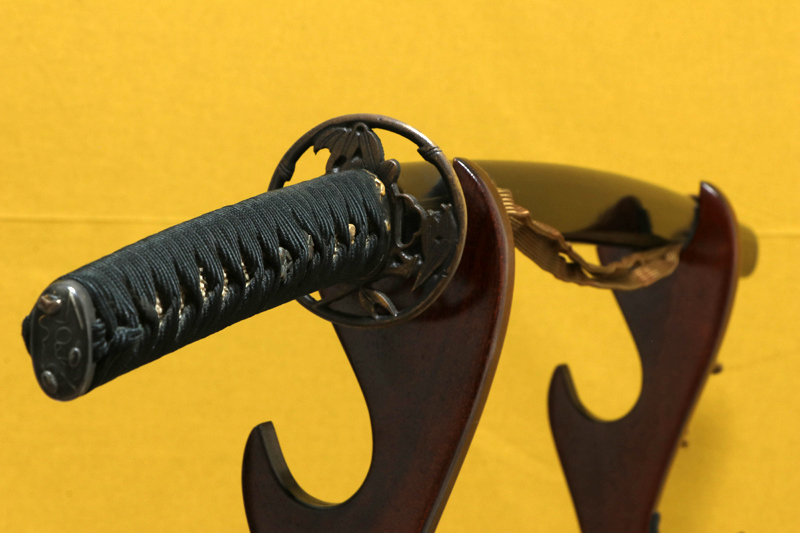
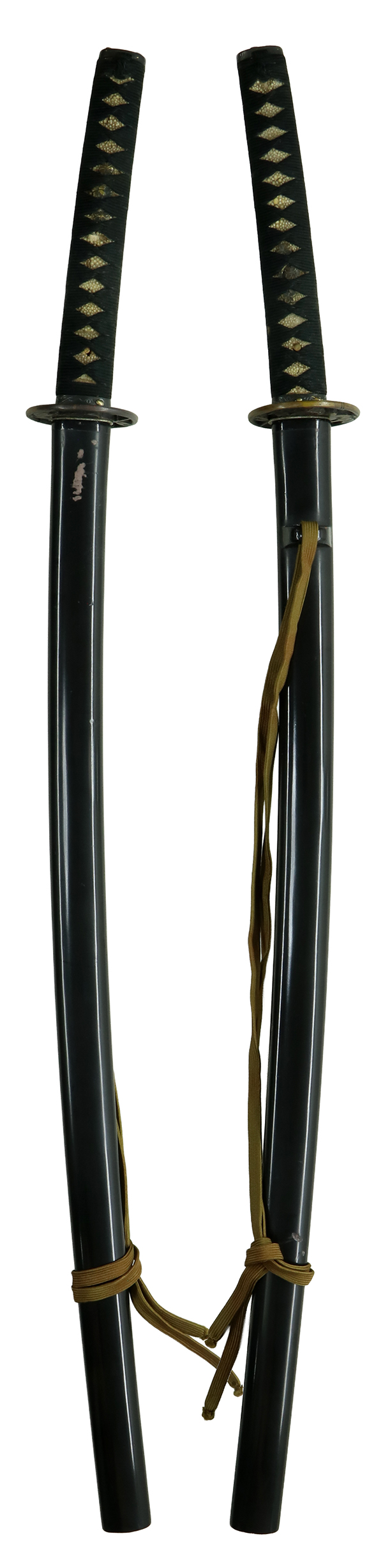
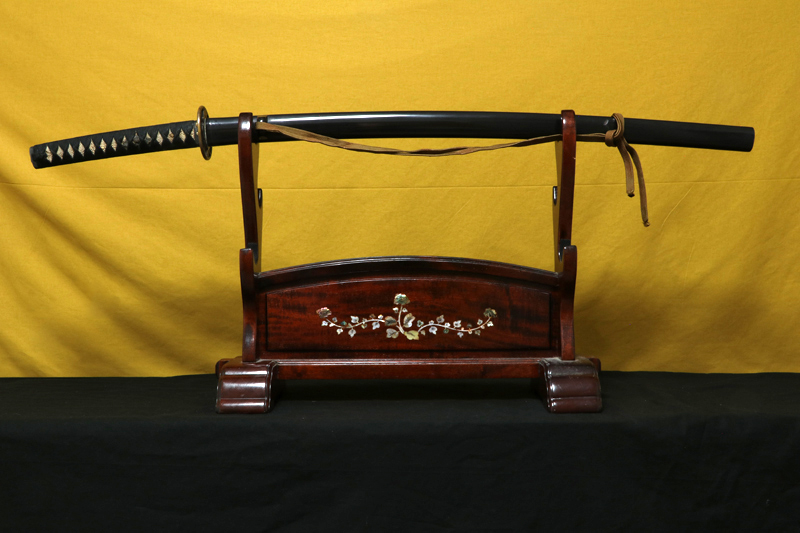
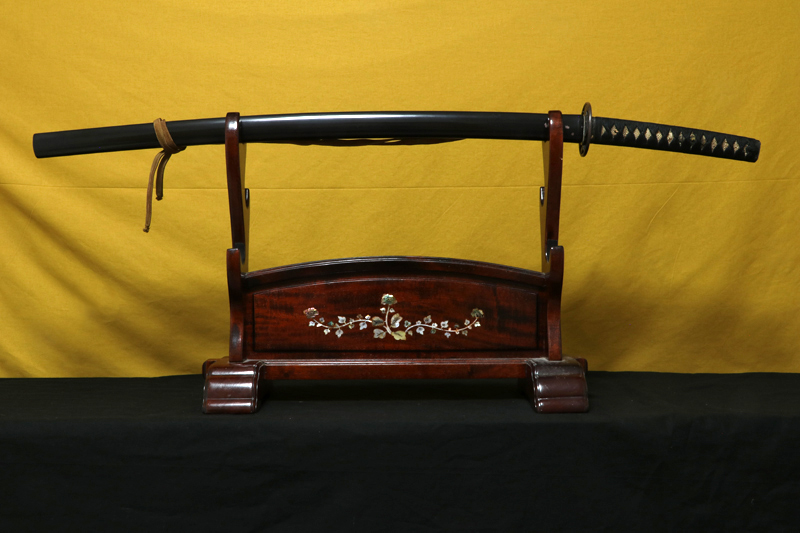
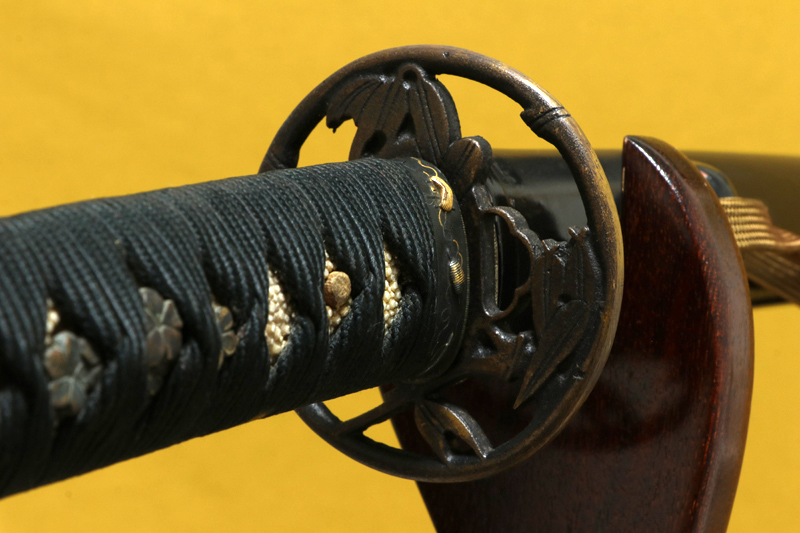
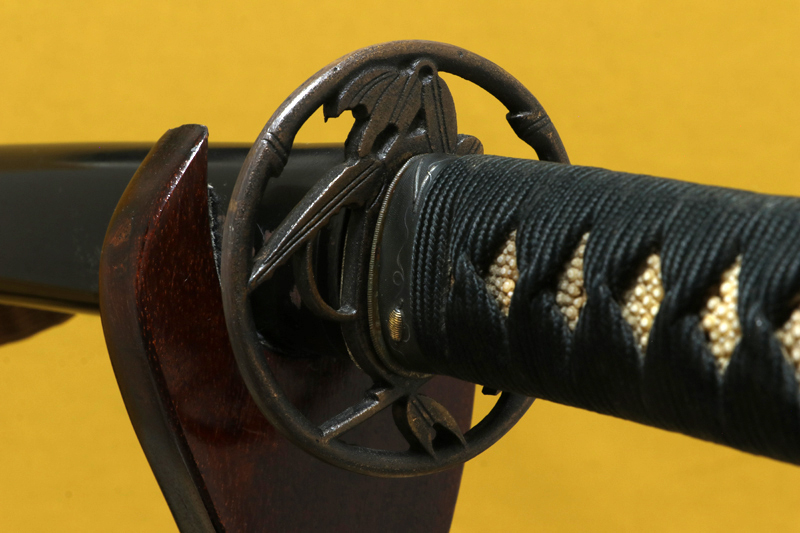
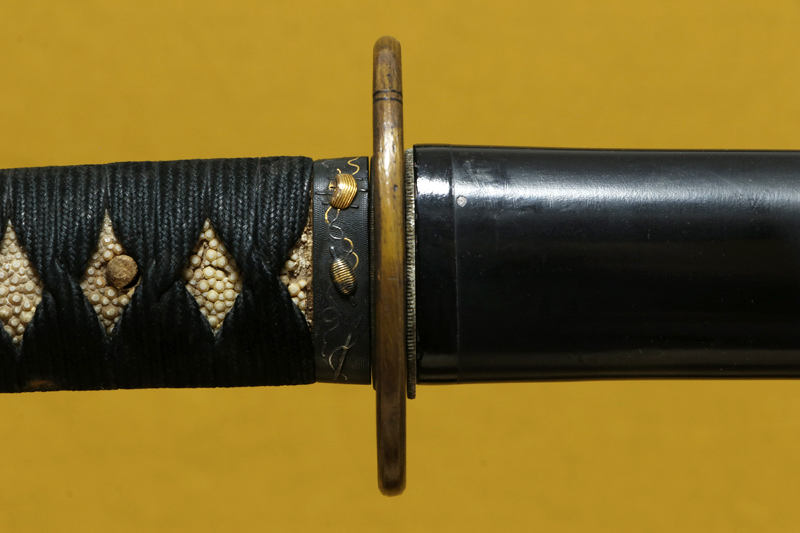
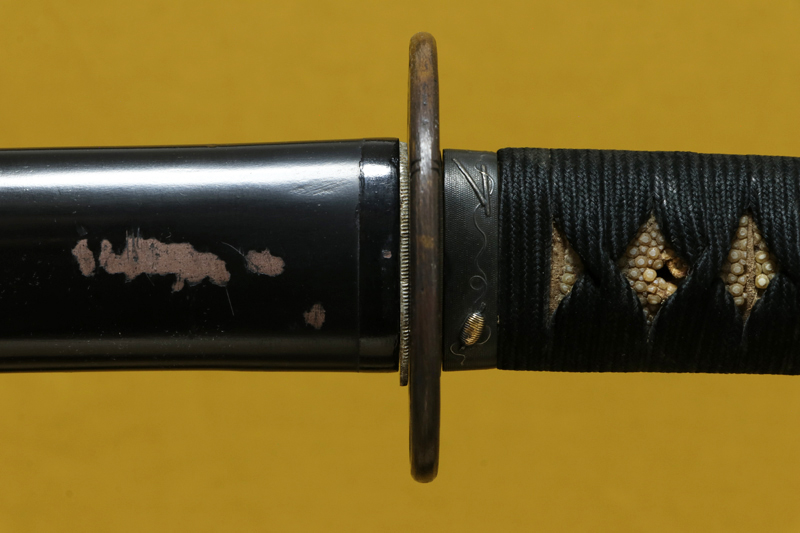
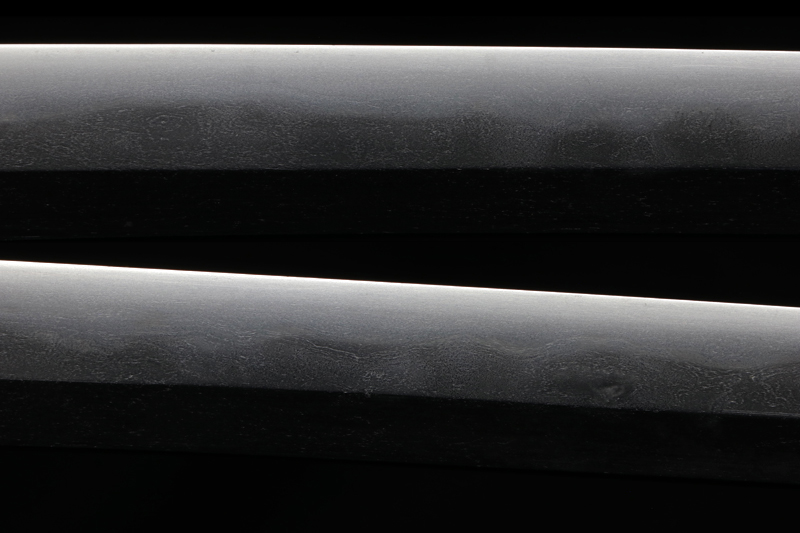
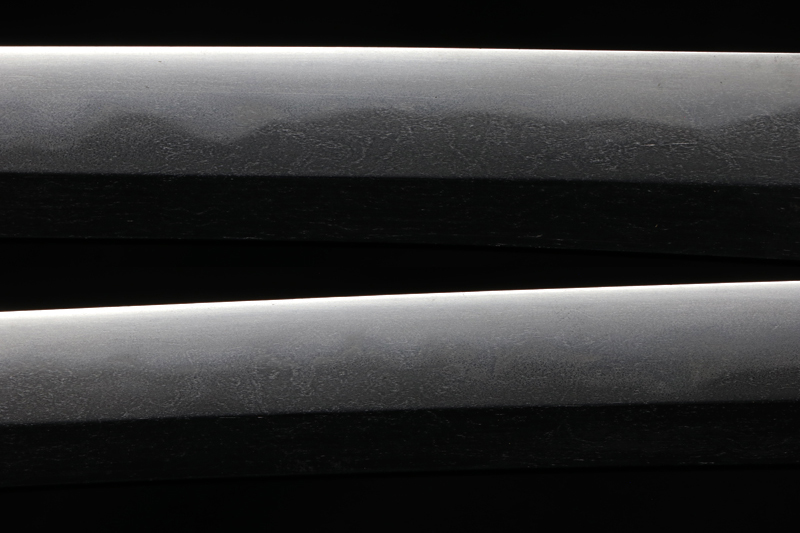
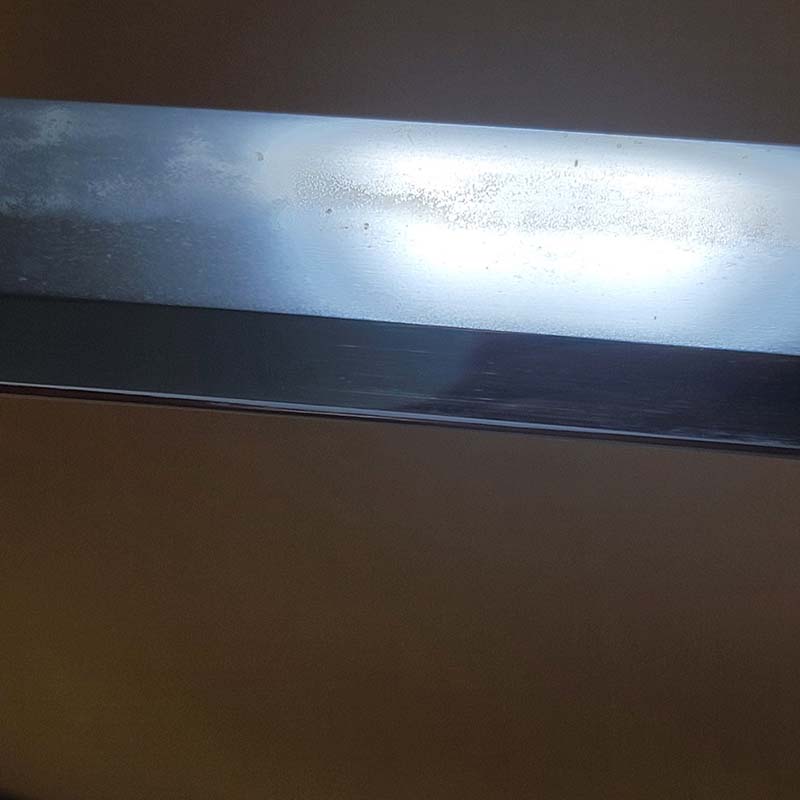
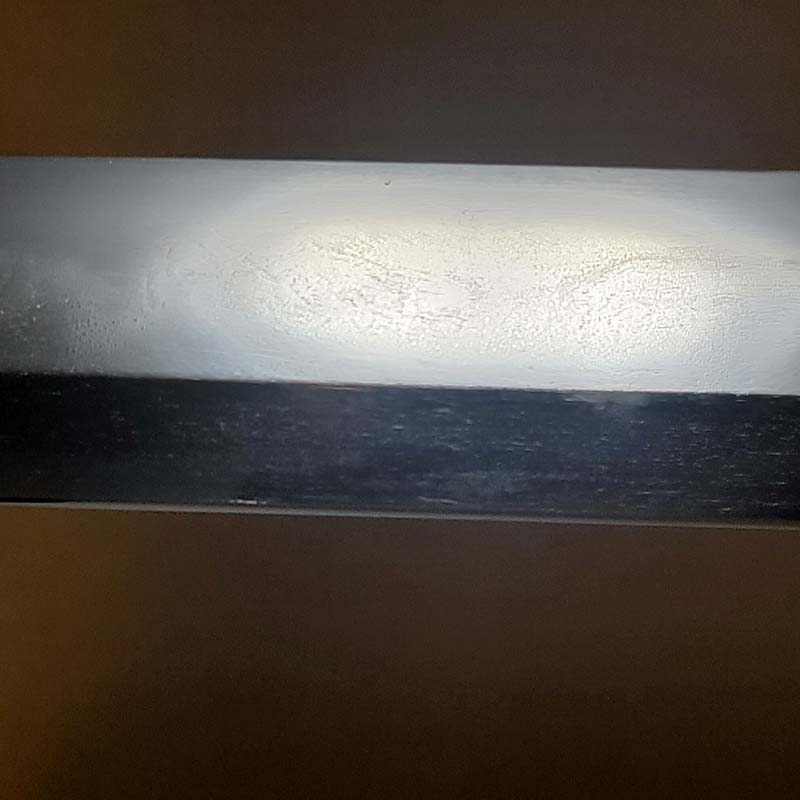
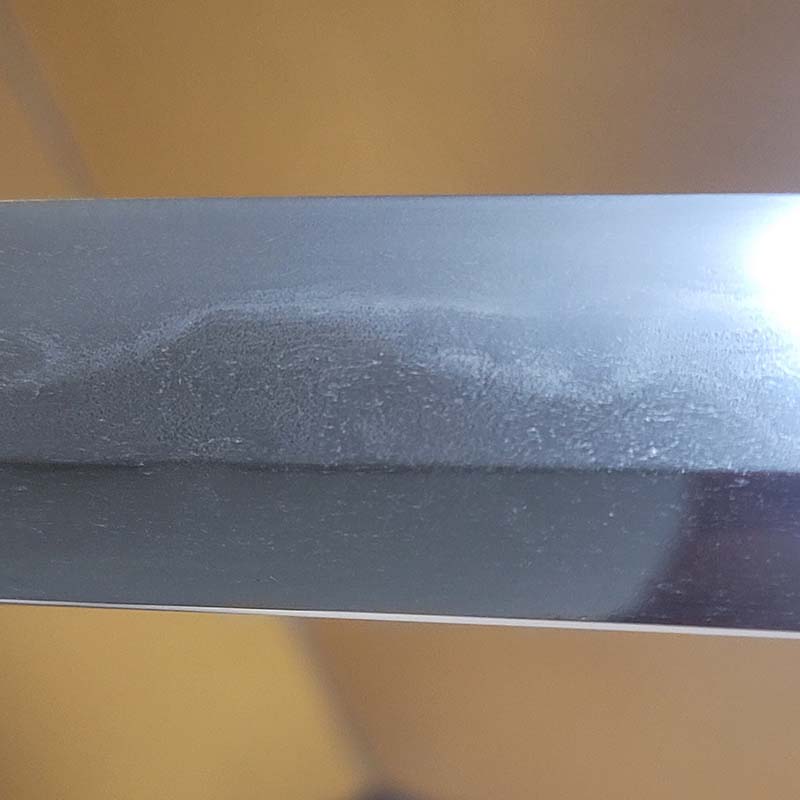
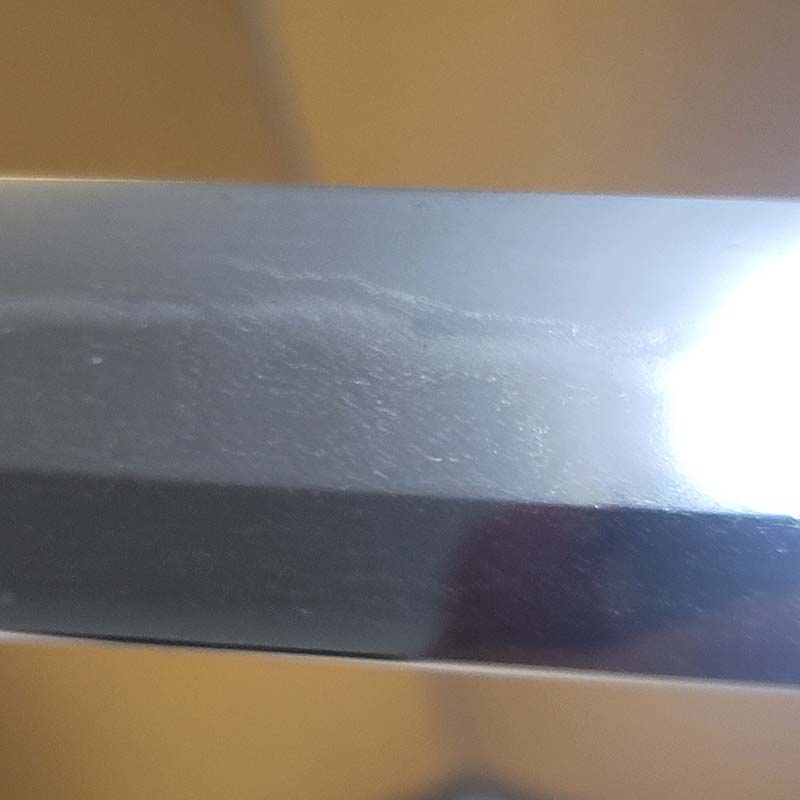
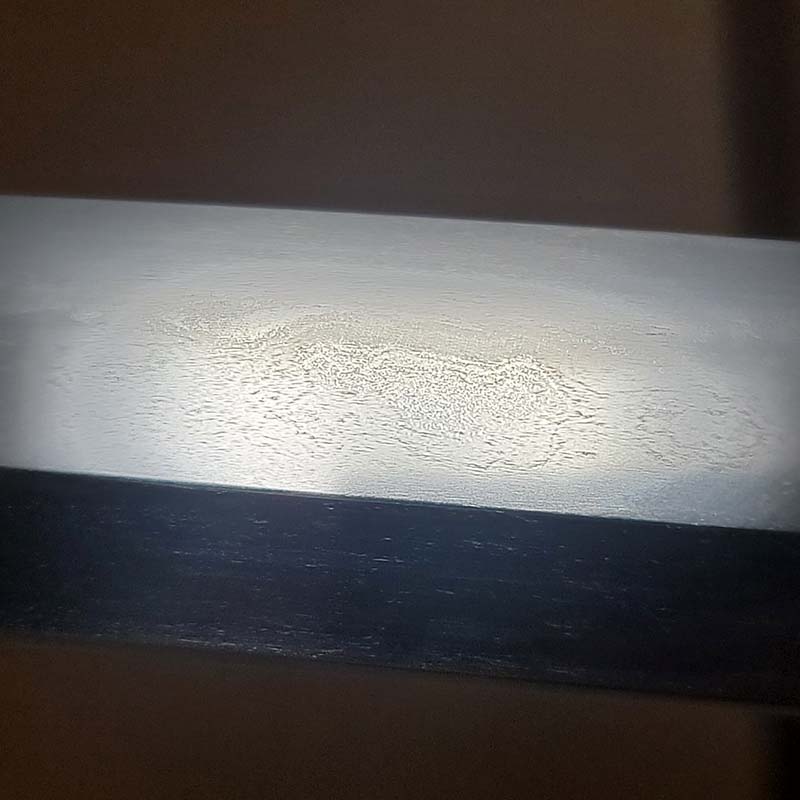
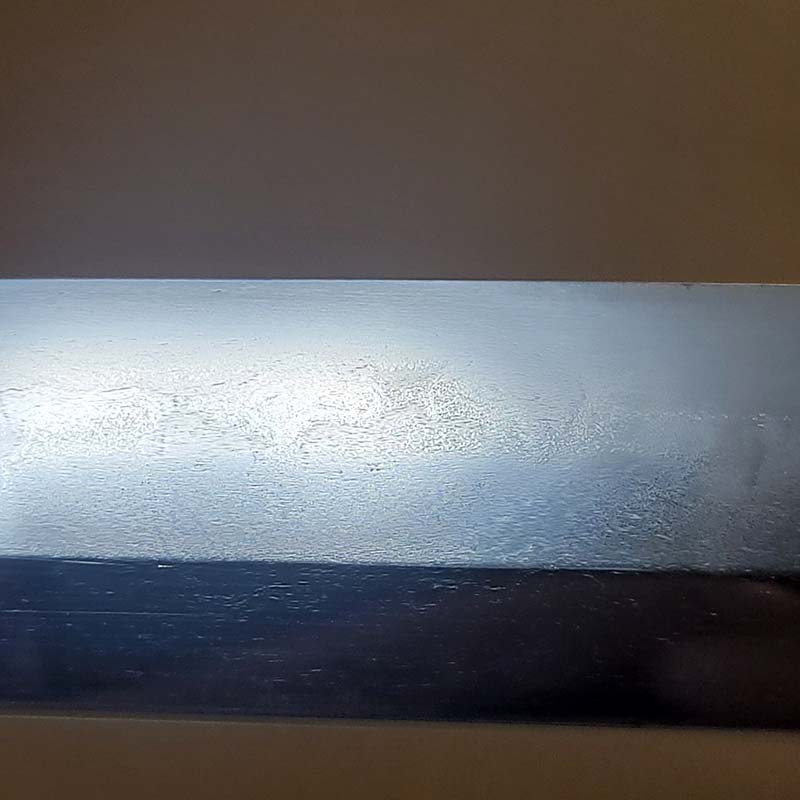
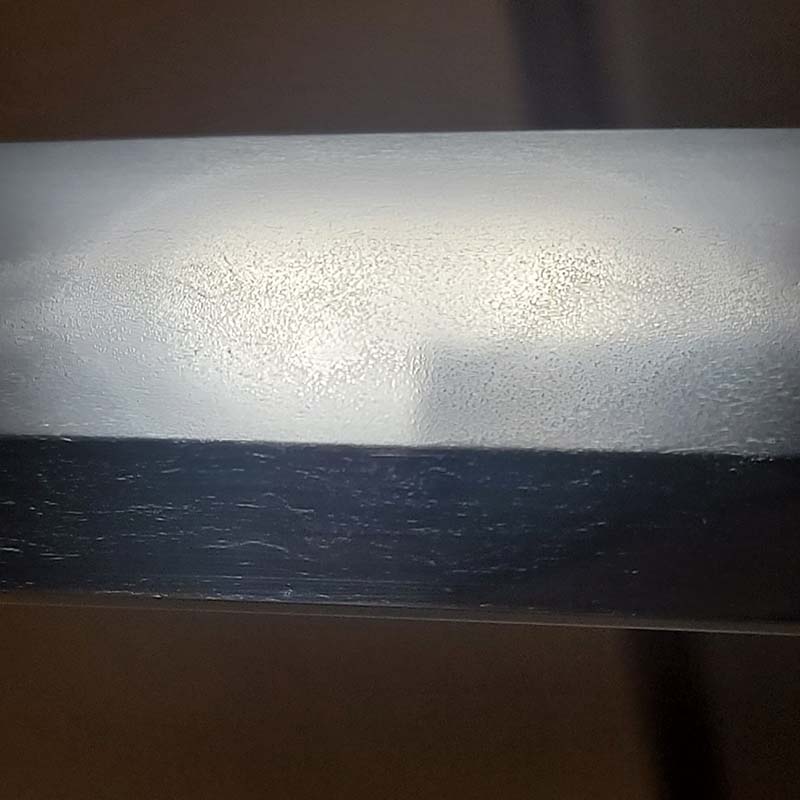
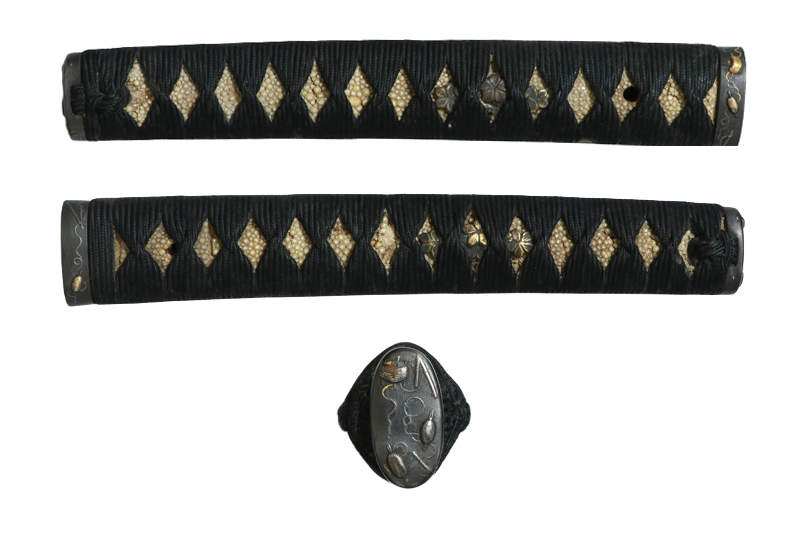
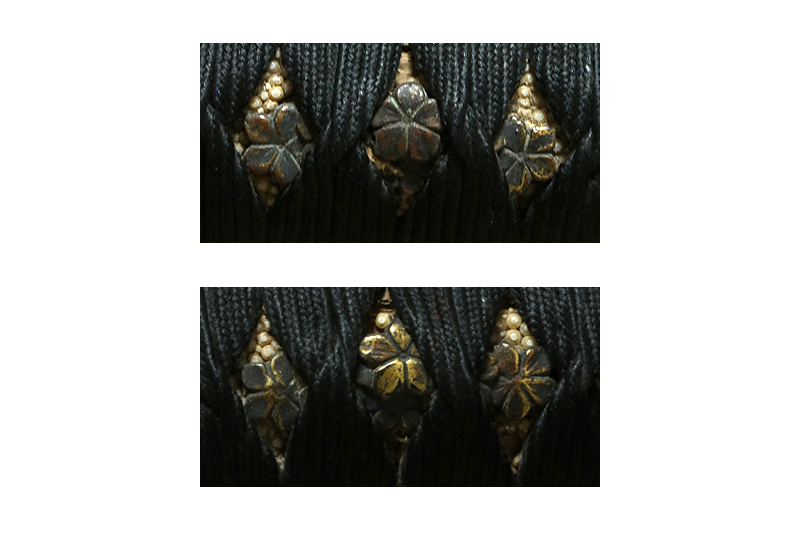
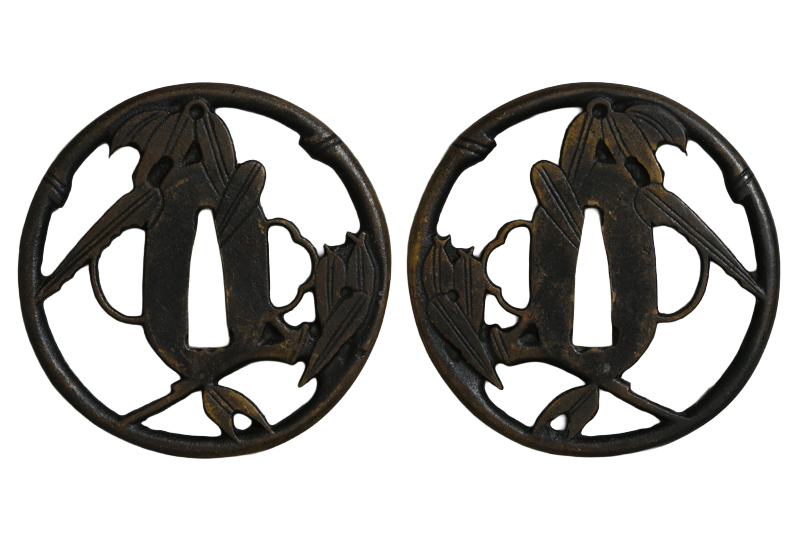
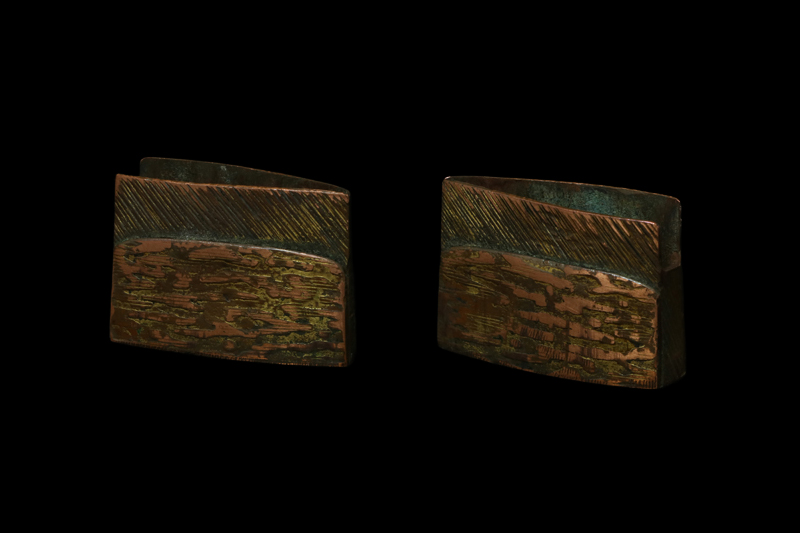
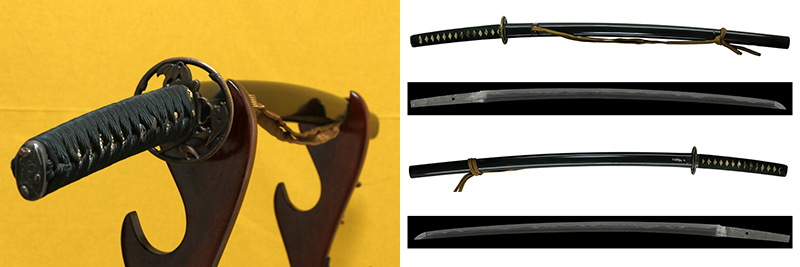
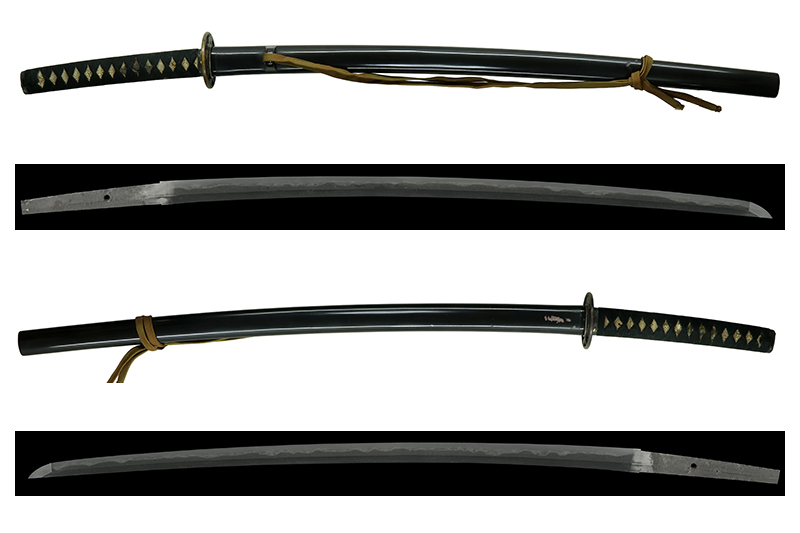
Koto Osuriage Mumei den Sosyu ju Tsunahiro with Koshirae This is an ō-suriage mumei katana of the late Sōshū tradition, and it is thought to be the work of Sōshū-jū Tsunahiro. This piece features a jihada of large itame mixed with mokume, with areas showing a flowing character. The hamon is high-tempered and forms a magnificent hitatsura-style pattern. The condition is generally good. As for the koshirae, the tsuka has some looseness, so adjustment is necessary for use in iai. We can undertake the work, including rewrapping the tsuka and repairing the samegawa, for 20,000 yen. Shinogi-zukuri, iori-mune, slightly narrow mihaba, standard kasane, toriizori, chū-kissaki. The nakago is suriage with sujikai yasurime, and the nakago-jiri is cut in ichimonji. The jigane is large itame-hada mixed with mokume, with flowing grain appearing in places, accompanied by ji-nie and chikei. The hamon is a nie-deki ō-midare. It is varied, mixing ō-gunome with chōji-style elements, yahazu-ba, and angular structures, with a high-tempered and complexly irregular pattern. Ashi and yō enter in places, nie attaches strongly, and in parts coarse ara-nie overflows. Kinsuji and sunagashi appear intensely, and with tobiyaki and muneyaki mixed in, it becomes hitatsura in appearance. This work is an ō-suriage mumei katana, but looking at the jigane and hamon, it is thought to be a shortened tachi of the late Sōshū tradition. Among those, Sōshū-jū Tsunahiro is considered as a swordsmith who tempered such flamboyant hamon. Sōshū-jū Tsunahiro is known as a smith among the Muromachi period Sōshū Kamakura smiths who well-inherited the Sōshū-den style, which features nie, chikei, and kinsuji as highlights. He is said to have left masterpieces that approach the level of the Nanbokuchō period masters Hiromitsu and Akihiro, and his style shows the strength and flamboyance characteristic of Sōshū-den. According to the Yamamura family documents, the first generation Tsunahiro is said to be a descendant of Hiromasa. It is said that at the invitation of Hōjō Ujitsuna, he moved from Kamakura to Odawara, was granted the character "Tsuna," and changed his name to "Tsunahiro." According to common theory, the first generation was a smith around the Eishō era, followed by the second generation around Tenbun, and the third generation around Tenshō, Bunroku, and Keichō. Furthermore, in the Shintō period, the lineage was passed to the fourth generation "Yamamura Kan'emon" around Kan'ei, and to "Ise no Daijō Tsunahiro" around Manji and Kanbun. Also, one theory says that the fifth generation Ise no Daijō Tsunahiro was the teacher of Nagasone Kotetsu. The Tsunahiro lineage continued thereafter, reaching the sixteenth generation in the Taishō era. Regarding the condition of this work, as it is an old polish, there are a few spots where thin rust can be seen, but it is not very bothersome. Also, there is a spot on the ji that looks like a small blister (fukure), but it is not certain. However, this powerful ji and ha can be fully enjoyed. As for the koshirae, the tsuka has looseness, so adjustment is necessary for use in iai. We can undertake the work, including rewrapping the tsuka and repairing the same, for 20,000 yen. Also, there are spots on the saya where the lacquer has peeled, but there are no cracks. The balance of the blade is good, making it an ideal sword for use in iai. Soshu-ju Tsunahiro is known as one of the swordsmiths of the Muromachi-period Soshu Kamakura tradition who faithfully inherited the Soshu-den style, noted for its nie, chikei, and kinsuji. He is said to have produced excellent works approaching those of the great Nanbokucho-period masters Hiromitsu and Akihiro, and his style reveals the strength and brilliance characteristic of the Soshu tradition. According to the Yamamura family documents, the first-generation Tsunahiro is said to have been a descendant of Hiromasa. At the invitation of Hojo Ujitsuna, he moved from Kamakura to Odawara, received the character “Tsuna” from Ujitsuna’s name, and changed his smith name to Tsunahiro. According to the commonly accepted view, the first generation was active around the Eisho era. He was followed by the second generation around the Tenbun era, and then by the third generation during the Tensho, Bunroku, and Keicho eras. In the Shinto period, the lineage continued with the fourth generation, Yamamura Kan'emon, active around the Kan'ei era, and later with Ise Daijo Tsunahiro, active around the Manji and Kanbun eras. According to one theory, the fifth-generation Ise Daijo Tsunahiro is also said to have been the teacher of Nagasone Kotetsu. The Tsunahiro lineage continued thereafter, lasting as far as the sixteenth generation in the Taisho period. Regarding the condition of this sword, as it is in an old polish, there are a few areas where light surface rust can be seen; however, they are not particularly noticeable. There is also an area in the ji that appears to be a small swelling or blister-like flaw, though it is not clearly discernible. Nevertheless, the powerful appearance of the jiha can be fully appreciated. We can undertake the work, including rewrapping the tsuka and repairing the same ray skin, for ¥20,000. In addition, there are areas on the saya where the lacquer has peeled, but there are no cracks. The blade is well balanced, making it an excellent sword for use in iaido. "Koshirae" habaki: Su-akagane-ji kin-gime of niju. tsuba: Su-akagane-ji, design of bamboo and bamboo grass. fuchi-kashira: Shakudo nanako-ji, design of itomaki. menuki: Su-akagane-ji kin-gime, design of cherry blossoms. tsuka: Tsuka-maki is black silk moro-tsunami-maki. saya: Kuro-ro. "Condition of blade" Togi: Because of old polish, there are a few places where light rust can be seen, but it is not something that is very concerning. Kizu: There is a place that looks like a small fukure, but it is not distinct. Other than that, there are no flaws that would become defects.
Offered by Giheiya


Translated from the shop's Japanese ·
Rows still in Japanese are as written by the shop
Machine translation from the shop's Japanese · may contain errors ·
Soshu-den · Sagami · around 1501-1504
Soshu-den · Sagami
Phase: Sue-Sōshū末相州· 1356–1868
21 pieces on the market now
When the great Kamakura masters had passed and the country slid into the wars of the late Muromachi, a residual Soshu-den held on in Sagami under a new patron. The Later Hojo, ruling from Odawara castle, kept smiths at hand, and it was from this orbit that the leading name of the window emerged: Tsunahiro, transmitted as a retained smith of the Odawara Hojo who took the character tsuna from Hojo Ujitsuna. The first generation's earliest dated works fall in the Tenbun era, and the line runs forward in the conventional reckoning through Tensho, Keicho, Kan'ei, and Manji, the third generation drawn west to Tsugaru by Tamenobu to forge daisho before returning home. Around him stood a wider Sagami population working the same idiom: Hirotsugu of Kamakura, whose strongest hands cluster near the Meio and Tenbun years; Hiromasa and Soso, names carried across several indistinct generations; Masahiro, reaching back toward Joji; and the Odawara group of Yasuharu, Yasukuni, and Fusamune, the last praised above all for his carving. These smiths inherited the manner of the Nanbokucho apex at a remove of generations rather than by direct descent from the mainline of Masamune and Sadamune. The signature of the phase is the open declaration of the full temper. The forging stays itame mixed with mokume, the grain inclined to stand (hadadachi-gokoro), with ji-nie and chikei; over it the smiths ran a notare-and-gunome ground that climbs the upper half into hitatsura, tobiyaki and muneyaki firing across ji and mune, sunagashi and kinsuji threading the ha. This is the hitatsura and o-midare learned from Hiromitsu and Akihiro, but pushed toward display: the Hirotsugu katana of the 61st Juyo runs its temper so high it reaches the shinogi, mixing choji, togariba, and yahazu-gata into a demonstrative yakidaka pattern.
The contrast with the classic apex is precise and the appraisers mark it. Where Masamune raised nie to its deepest refinement over a bright, clear steel, the Sue-Soshu ji tends to shirake, a whitish cast standing in for that clarity, and the nioiguchi inclines to shizumi, a sunken or subdued quality rather than depth. The 238th Jubi record states the point plainly for the first-generation Tsunahiro: the ji and ha carry abundant nie, yet the very shape of the hamon departs from that of Hiromitsu and Akihiro. The temper is broader and busier across the surface, but it lacks the quiet command and the leaping interior activity of the original. To kantei the window is to separate this demonstrative late temper from the classic Soshu-den it imitates: a standing itame with shirake, a wide hitatsura worked with yahazu and crescent tobiyaki, a nioiguchi that sinks rather than deepens, and signatures reading Soshu-ju with full given names rather than the o-suriage mumei of the great forebears. The named hands carry the distinctions, Fusamune through his dense, precise horimono of kurikara and bonji, Tsunahiro through his crescent tobiyaki and high monouchi fire, Hirotsugu through a hitatsura vigorous enough to recall Hasebe. Provenance keeps these blades close to power: several are recorded in Honma's inventory of the Imperial collection, one bearing the ownership inscription of Akimoto Yoshihide of Kozuke, another the Hachiman Daibosatsu invocation of a Sengoku warrior, the Tsunahiro commission tied by its dated nakago to the Tsugaru house. Learn more →
| Smith | Era | Designated |
|---|---|---|
| Fusamune總宗 | 1504-1521 | 5 |
| Tsunahiro綱廣 | 1532-1555 | 14 |
| Hiromasa廣正 | 1444-1456 | 4 |
| Tsunaie綱家 | 1532-1555 | 3 |
| Hirotsugu廣次 | 1492-1501 | 4 |
Sōshū in the Muromachi period
In the Sengoku era the school served a second warrior court: the Later Hōjō at Odawara, whose patronage kept the Tsunahiro line forging hitatsura for the uchigatana age until the castle fell to Hideyoshi in 1590.
Within 3 days of the item's arrival, we offer a refund or an exchange. Return shipping and the bank transfer fee for the refund are at the customer's expense.