In the Sengoku era the school served a second warrior court: the Later Hōjō at Odawara, whose patronage kept the Tsunahiro line forging hitatsura for the uchigatana age until the castle fell to Hideyoshi in 1590.
 NihontoWatchNihontoWatch
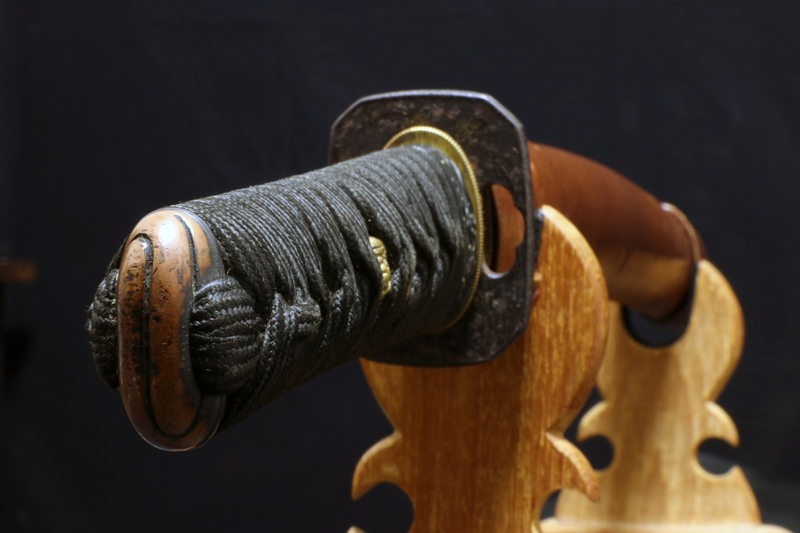
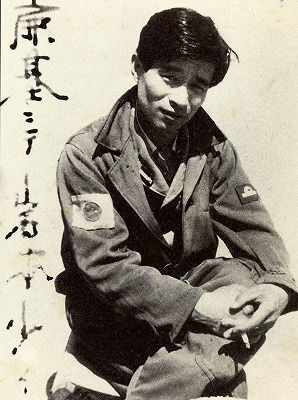
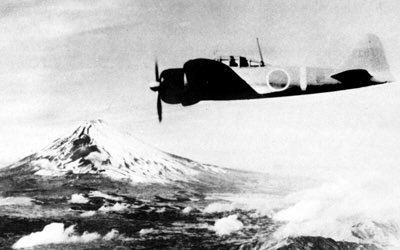
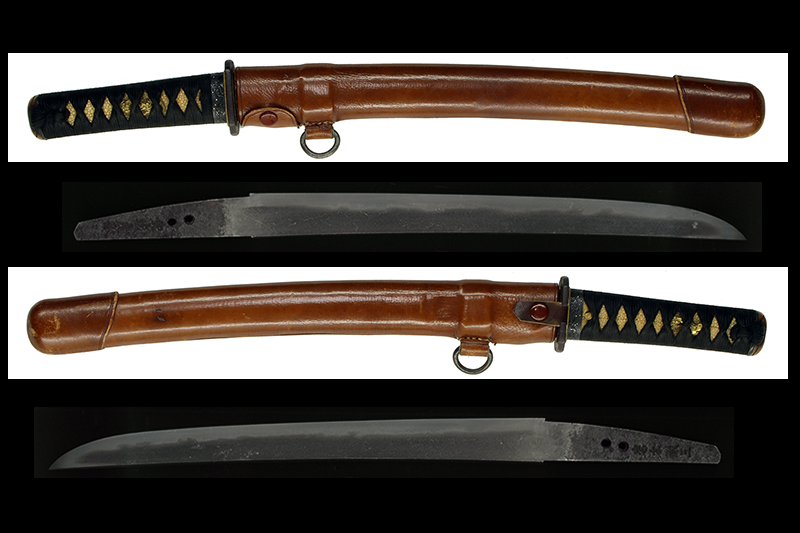
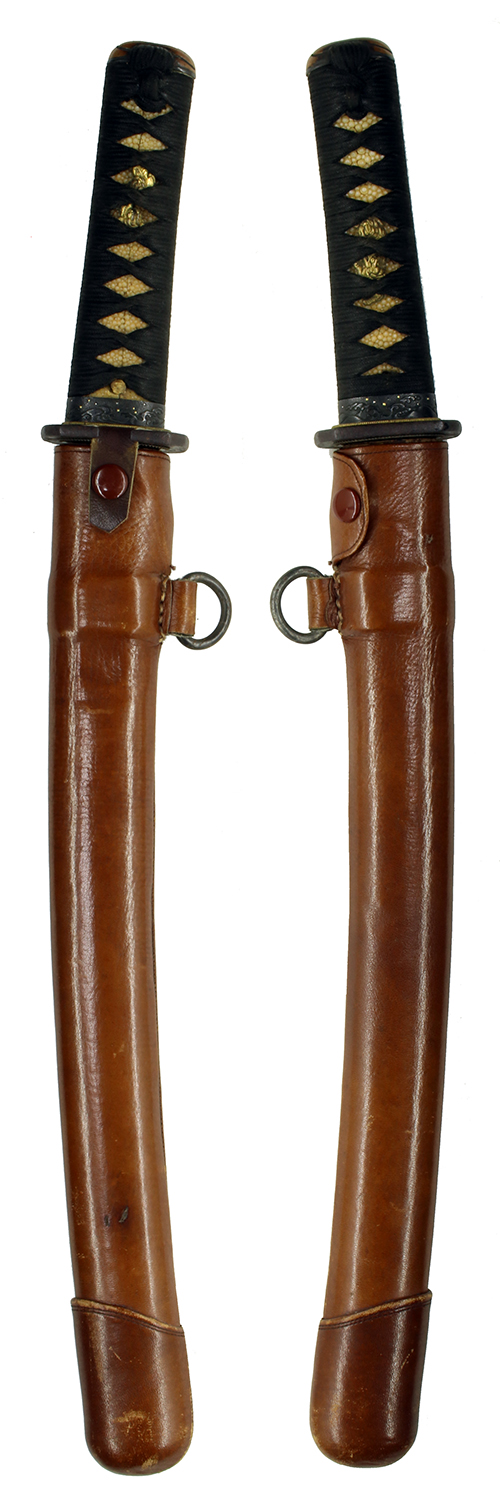
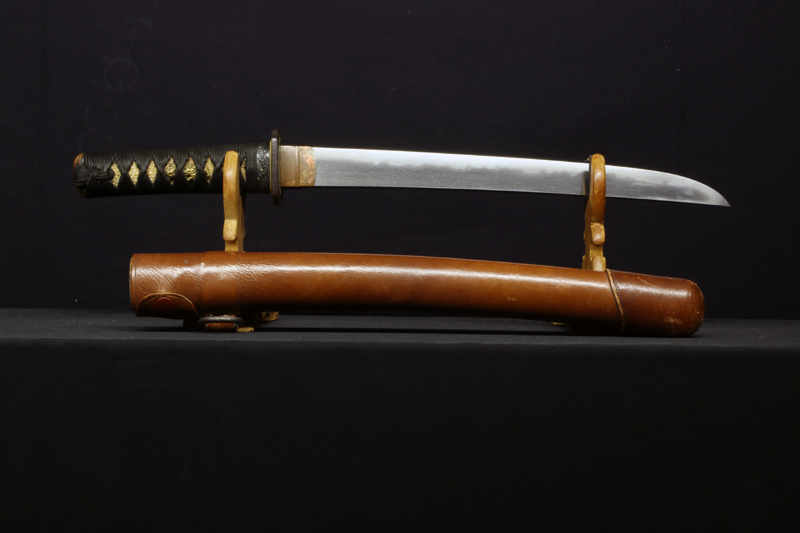
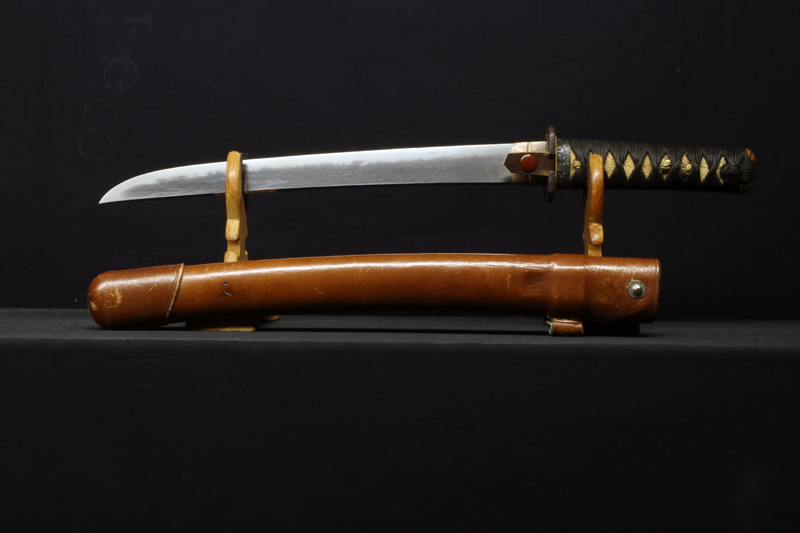
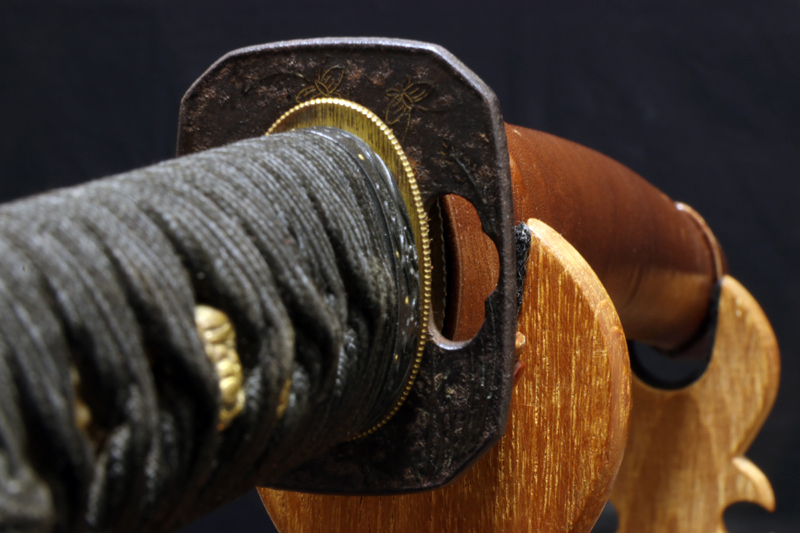
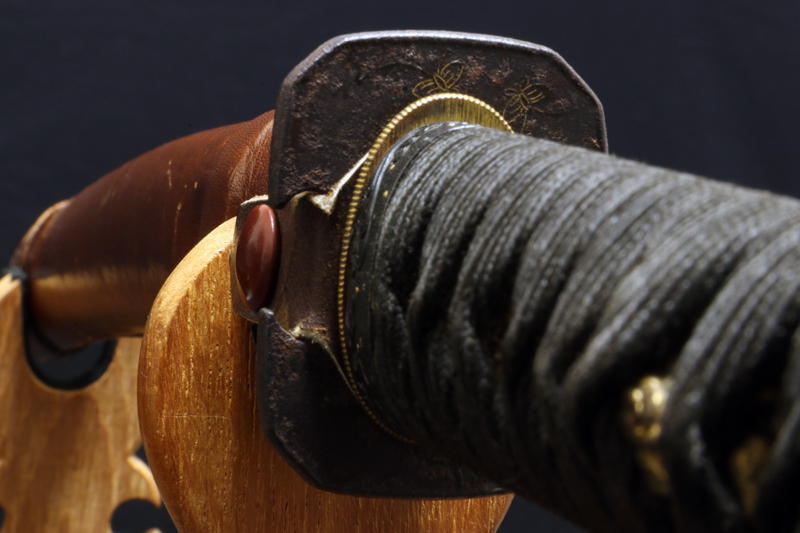
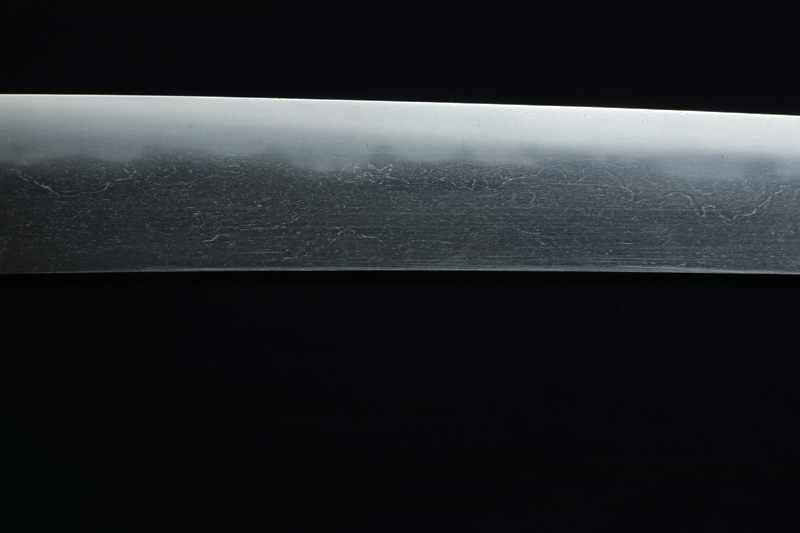
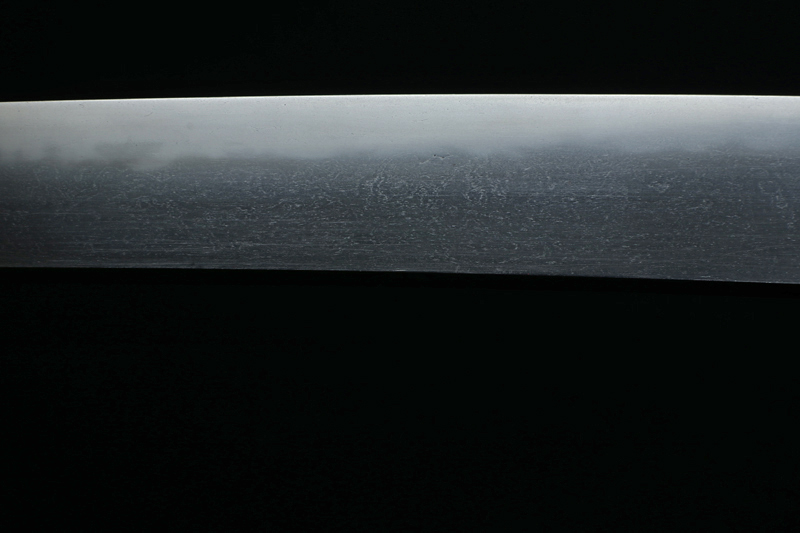
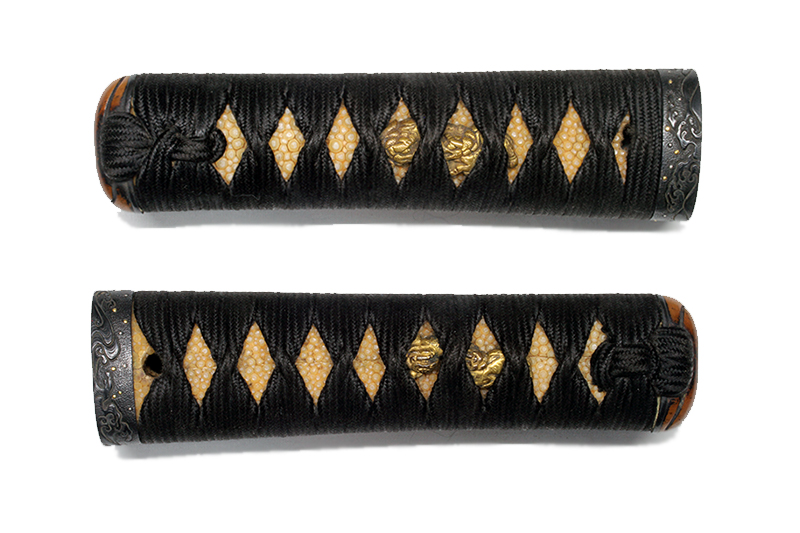
Military sword of a pilot, attributed to the ownership of the Zero fighter ace, Iwamoto Tetsuzo. Comes in a leather-covered scabbard with a small sword Higo koshirae (pilot's military sword). WW2 Japanese Navy ace. Tetsuzo Iwamoto had this military sword. His another name said Reisen(zero fighter) kotetsu. This military sword was always on Zero fighter to together him. But, there’s no evidence. But, this military sword has a dream. Hirazukuri, iorimune, mihaba and kasane are standard, sori is slight. The nakago is ubu and tanago-gata, yasurime is kiri, and the nakago-jiri is iriyamagata. "Jitetsu" Itame hada mixed with mokume, with ji-nie. "Hamon" Gunome midare, with a tight nioiguchi. The boshi follows the hamon, turning back deeply with a tarumigokoro. "Characteristics" Iwamoto Tetsuzo was a Japanese Navy officer born on June 14, 1916, in the former Karafuto-cho. He was an ace pilot during the Second Sino-Japanese War and the Pacific War. His final rank was Navy Lieutenant. He was an ace pilot of the Japanese Navy. Hailed as the "strongest Zero fighter pilot" and "Reisen Kotetsu," he continued to fight on the front lines almost from the Second Sino-Japanese War until the end of the Pacific War. After the war, Iwamoto's memoirs were published under the title "Reisen Gekitsui-o," recording 202 aerial victories. He called himself "Kotetsu" and was a master of aerial combat whose specialty was vertical dive-and-zoom attacks. After graduating from flight training, he served in air groups and was assigned to the 13th Air Group, advancing to the Central China front. In his first air battle during the Nanchang attack on February 25, Showa 12, he shot down 5 enemy planes alone, and by the time he returned to Japan in September, he had shot down a total of 14 planes, becoming the top ace of the Second Sino-Japanese War. In April, Showa 16, he became a crew member of the aircraft carrier Zuikaku and received Zero fighter training. In October, he transferred to the fighter squadron of the new aircraft carrier Zuikaku and participated in the Hawaii Pearl Harbor attack, the Indian Ocean raid, and the Battle of the Coral Sea. In August, Showa 17, he transferred to the Omura Air Group as an instructor and returned to the mainland. After serving in the Yokosuka and Oppama Air Groups, he was ordered to the newly formed 281st Air Group in March, Showa 18. After air defense duties in the Northern Kuril Islands, he joined the Rabaul detachment in November and advanced to the fierce battleground of Rabaul. For the three months until he retreated to Truk Island at the end of February the following year, he transferred to the 201st, 204th, and 253rd Air Groups, fighting valiantly in daily interception battles and shooting down 142 planes. In March, Showa 20, he transferred to the 203rd Air Group, 303rd Fighter Squadron, participated in the Southern Kyushu air defense battle and the Okinawa air battle, and welcomed the end of the war at Iwakami Air Base. Total confirmed kills: 216, shared kills: 26, ground destructions: 2. After the war, he spent two years battling illness, and it is said he wished to fly an airplane once more if he recovered. "Reisen Gekitsui-o" Iwamoto Tetsuzo left behind memoirs of his time from the Second Sino-Japanese War to the end of the war, written densely in three university notebooks, and passed away on May 20, Showa 30. This tanto is a sue-koto, and judging by the hamon and the tanago-bara nakago, it feels like the third generation Soshu Tsunahiro. It might also be a later Muramasa or Senjo school work. The koshirae is an improved military sword type with a leather cover over a chiisagatana scabbard, and it was likely made in Tateyama, the training site of the 281st Air Group where he was assigned at the time he was appointed as a Navy Flight Petty Officer (warrant officer) on April 1, Showa 18. There is no evidence that Iwamoto Tetsuzo actually possessed this military sword. However, thinking that for two and a half years from April, Showa 18, to August 15, Showa 20, it was with him in the cockpit of a Zero fighter, winning numerous air battles and serving as his protective sword, makes one's heart swell. "Koshirae" Habaki: Single-piece suaka shonai. Tsuba: Iron, square mokko-gata with butterfly motif zogan. Fuchi-gashira: The gashira is suaka with a yamamichi motif, the fuchi is shakudo ishimedji with a wave motif. Menuki: Gold with a lion motif. Tsuka: Same, tsukamaki is black pure silk morotsumami-maki. Saya: Leather-covered wood uchigatana scabbard. "Condition of the sword" Polish: Due to an old polish, there is some light rust and scratches, but the ji and ha are clearly visible. Flaws: There are no flaws that would be considered defects.
NihontoWatchOffered by Giheiya


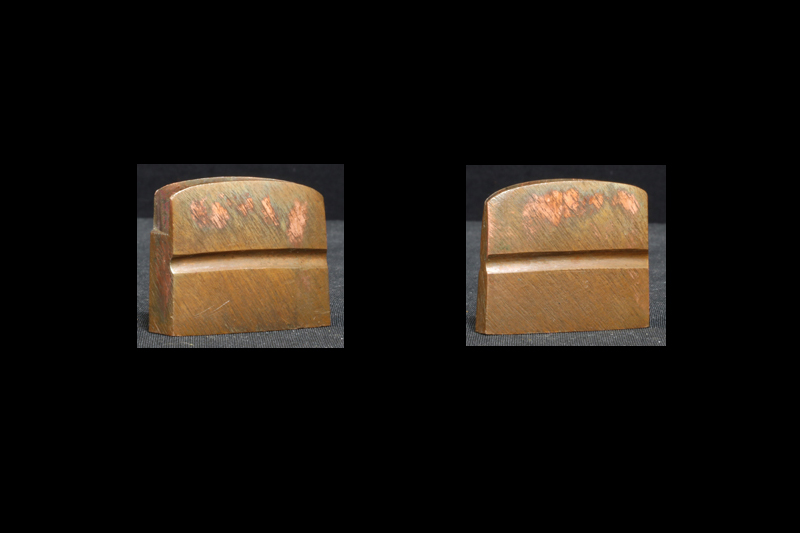
Machine translation from the shop's Japanese · may contain errors ·
Soshu-den · Sagami · around 1501-1504
Soshu-den · Sagami
Phase: Sue-Sōshū末相州· 1356–1868
21 pieces on the market now
When the great Kamakura masters had passed and the country slid into the wars of the late Muromachi, a residual Soshu-den held on in Sagami under a new patron. The Later Hojo, ruling from Odawara castle, kept smiths at hand, and it was from this orbit that the leading name of the window emerged: Tsunahiro, transmitted as a retained smith of the Odawara Hojo who took the character tsuna from Hojo Ujitsuna. The first generation's earliest dated works fall in the Tenbun era, and the line runs forward in the conventional reckoning through Tensho, Keicho, Kan'ei, and Manji, the third generation drawn west to Tsugaru by Tamenobu to forge daisho before returning home. Around him stood a wider Sagami population working the same idiom: Hirotsugu of Kamakura, whose strongest hands cluster near the Meio and Tenbun years; Hiromasa and Soso, names carried across several indistinct generations; Masahiro, reaching back toward Joji; and the Odawara group of Yasuharu, Yasukuni, and Fusamune, the last praised above all for his carving. These smiths inherited the manner of the Nanbokucho apex at a remove of generations rather than by direct descent from the mainline of Masamune and Sadamune. The signature of the phase is the open declaration of the full temper. The forging stays itame mixed with mokume, the grain inclined to stand (hadadachi-gokoro), with ji-nie and chikei; over it the smiths ran a notare-and-gunome ground that climbs the upper half into hitatsura, tobiyaki and muneyaki firing across ji and mune, sunagashi and kinsuji threading the ha. This is the hitatsura and o-midare learned from Hiromitsu and Akihiro, but pushed toward display: the Hirotsugu katana of the 61st Juyo runs its temper so high it reaches the shinogi, mixing choji, togariba, and yahazu-gata into a demonstrative yakidaka pattern.
The contrast with the classic apex is precise and the appraisers mark it. Where Masamune raised nie to its deepest refinement over a bright, clear steel, the Sue-Soshu ji tends to shirake, a whitish cast standing in for that clarity, and the nioiguchi inclines to shizumi, a sunken or subdued quality rather than depth. The 238th Jubi record states the point plainly for the first-generation Tsunahiro: the ji and ha carry abundant nie, yet the very shape of the hamon departs from that of Hiromitsu and Akihiro. The temper is broader and busier across the surface, but it lacks the quiet command and the leaping interior activity of the original. To kantei the window is to separate this demonstrative late temper from the classic Soshu-den it imitates: a standing itame with shirake, a wide hitatsura worked with yahazu and crescent tobiyaki, a nioiguchi that sinks rather than deepens, and signatures reading Soshu-ju with full given names rather than the o-suriage mumei of the great forebears. The named hands carry the distinctions, Fusamune through his dense, precise horimono of kurikara and bonji, Tsunahiro through his crescent tobiyaki and high monouchi fire, Hirotsugu through a hitatsura vigorous enough to recall Hasebe. Provenance keeps these blades close to power: several are recorded in Honma's inventory of the Imperial collection, one bearing the ownership inscription of Akimoto Yoshihide of Kozuke, another the Hachiman Daibosatsu invocation of a Sengoku warrior, the Tsunahiro commission tied by its dated nakago to the Tsugaru house. Learn more →
| Smith | Era | Designated |
|---|---|---|
| Fusamune總宗 | 1504-1521 | 5 |
| Tsunahiro綱廣 | 1532-1555 | 14 |
| Hiromasa廣正 | 1444-1456 | 4 |
| Tsunaie綱家 | 1532-1555 | 3 |
| Hirotsugu廣次 | 1492-1501 | 4 |
Sōshū in the Muromachi period
In the Sengoku era the school served a second warrior court: the Later Hōjō at Odawara, whose patronage kept the Tsunahiro line forging hitatsura for the uchigatana age until the castle fell to Hideyoshi in 1590.
Within 3 days of the item's arrival, we offer a refund or an exchange. Return shipping and the bank transfer fee for the refund are at the customer's expense.