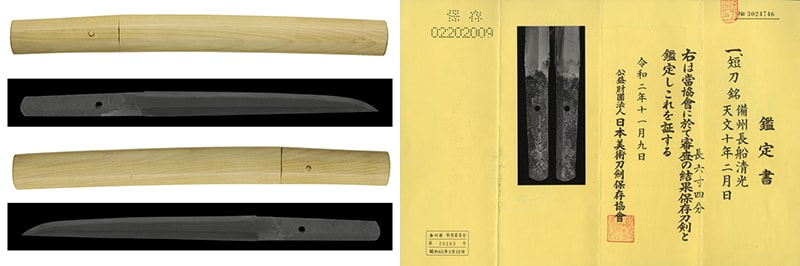
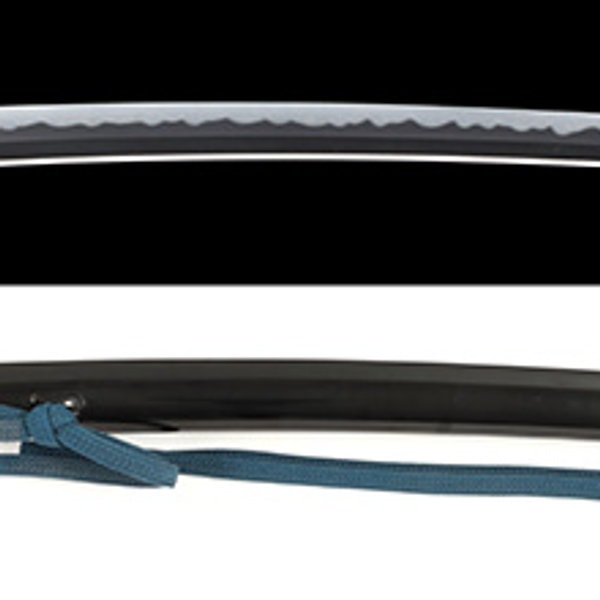
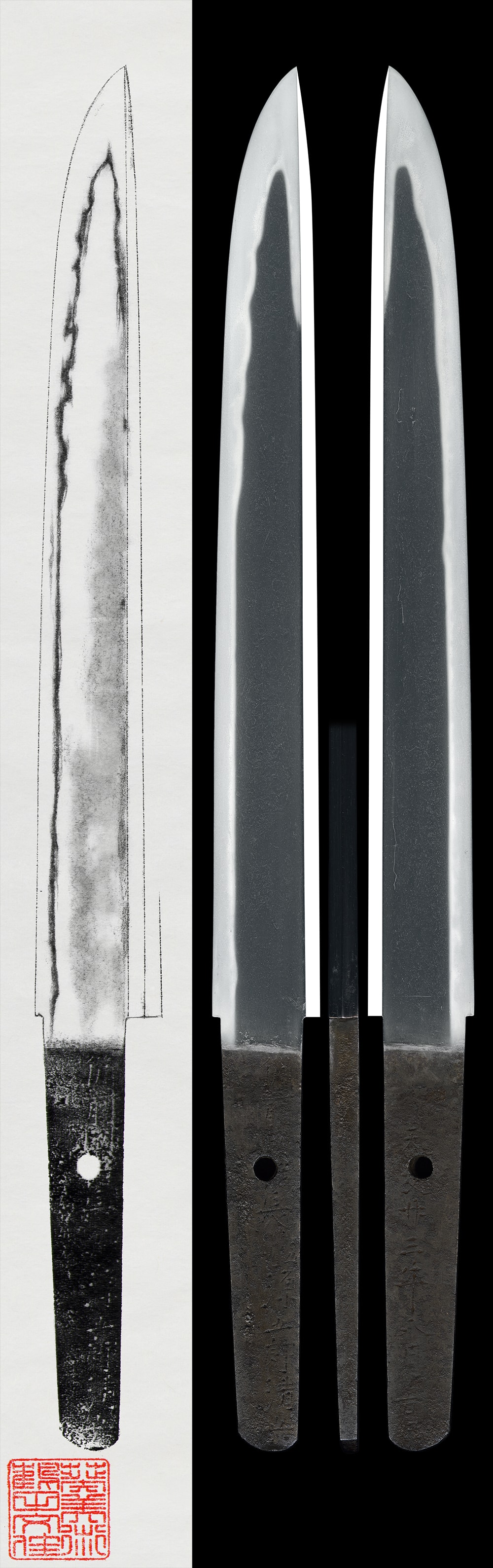
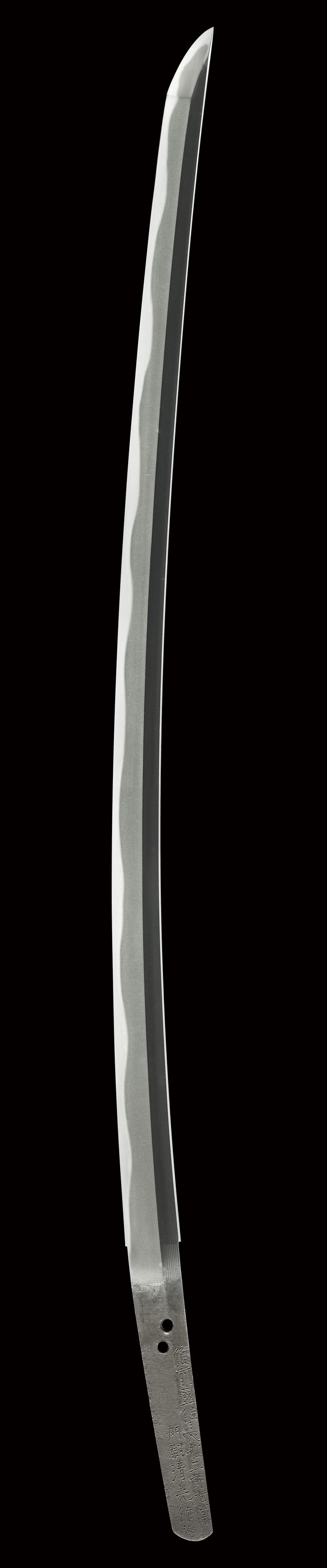
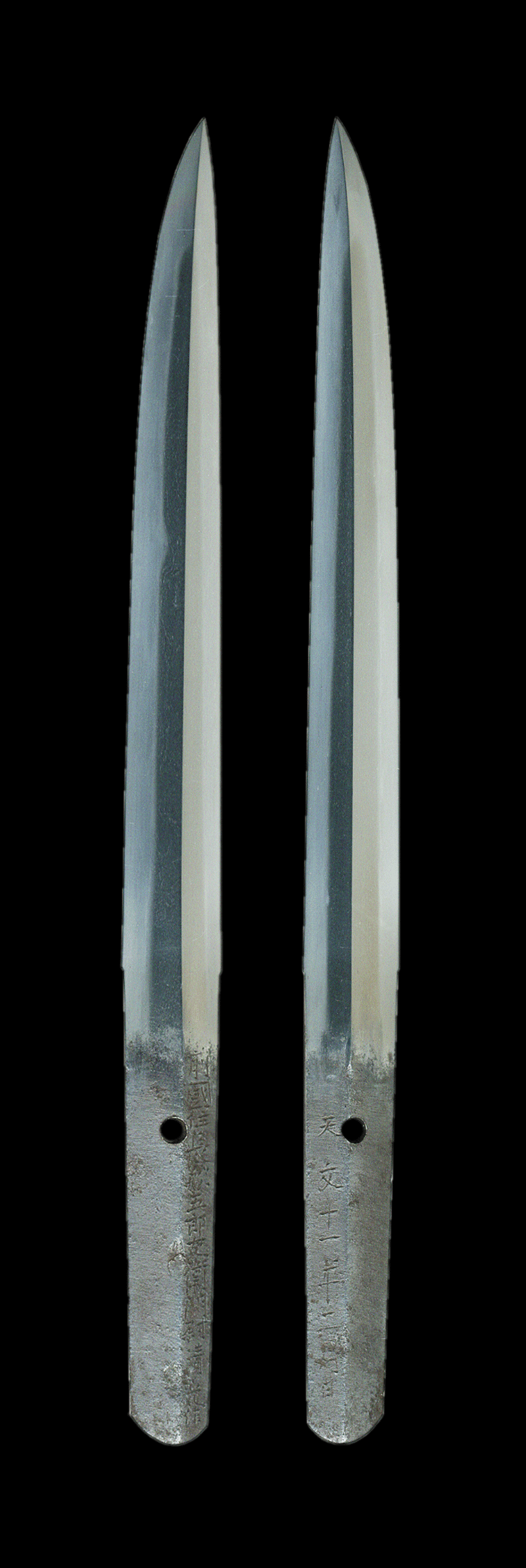
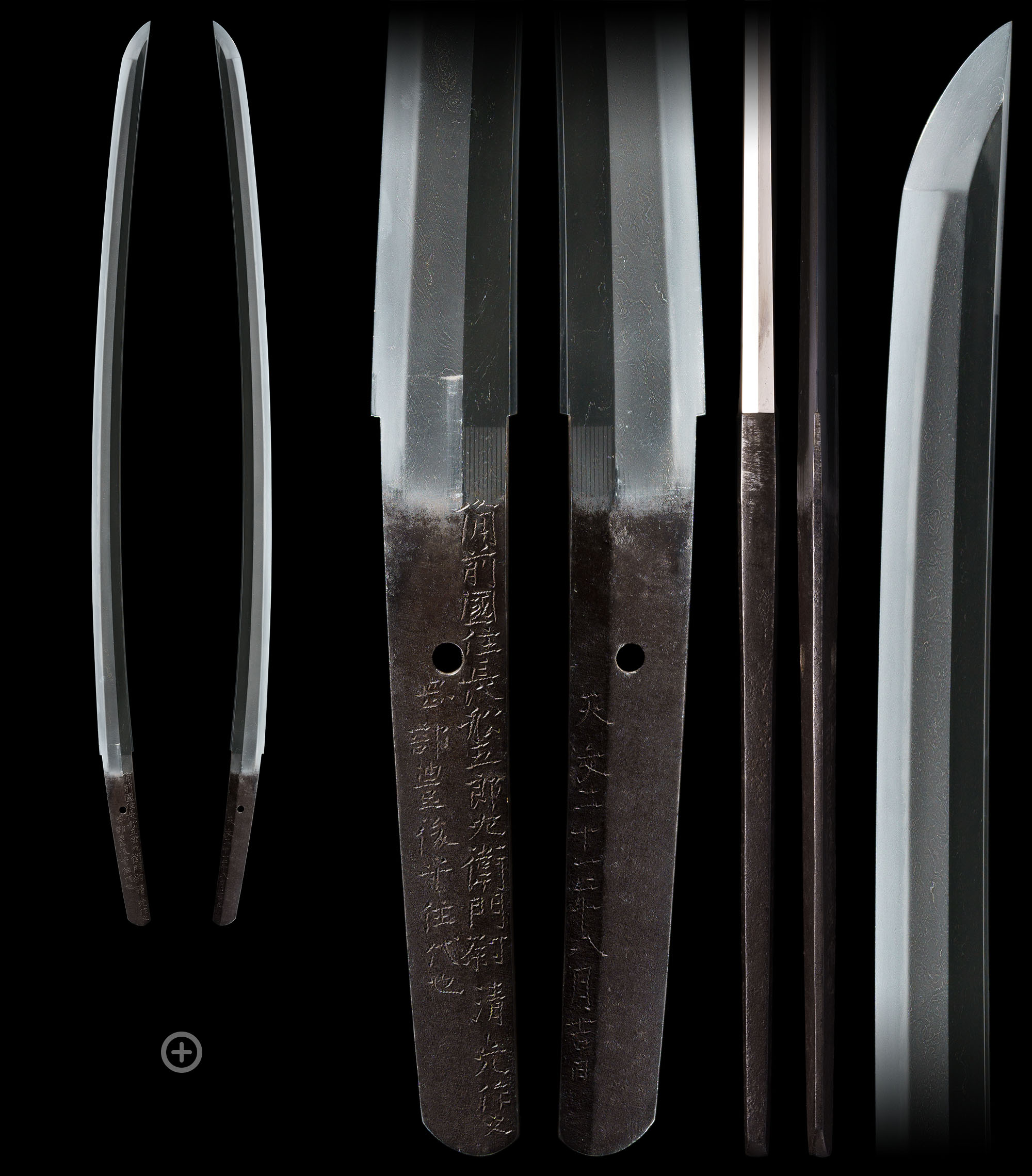
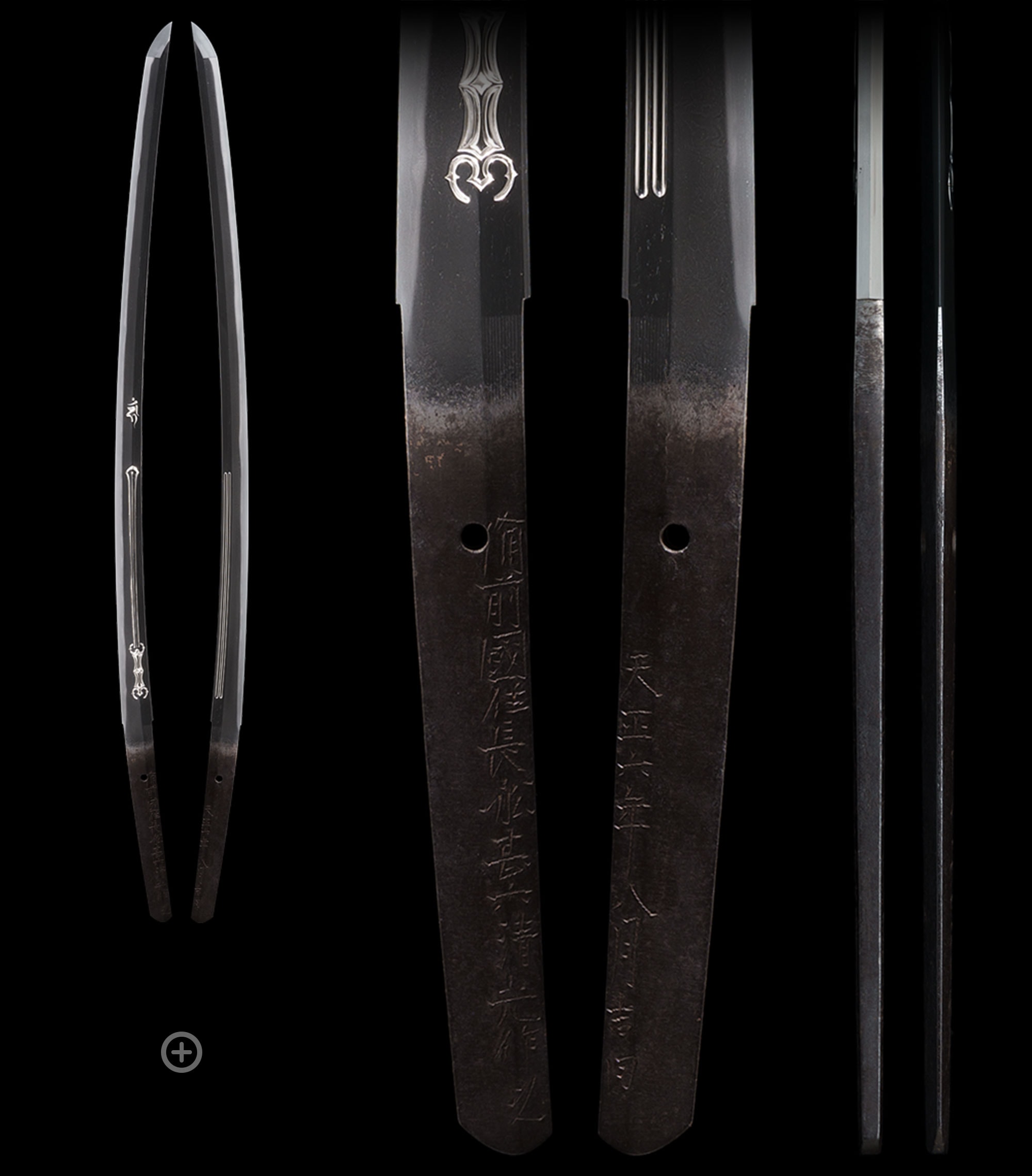
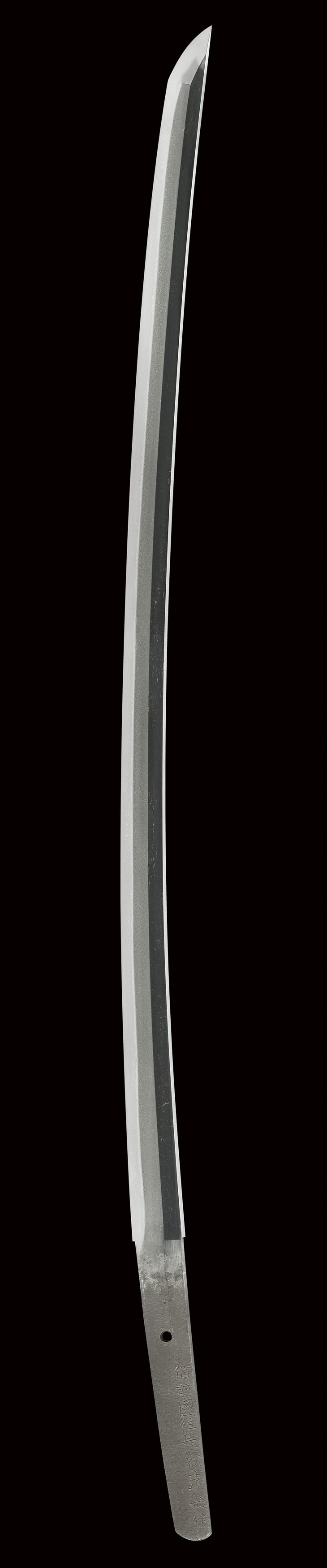
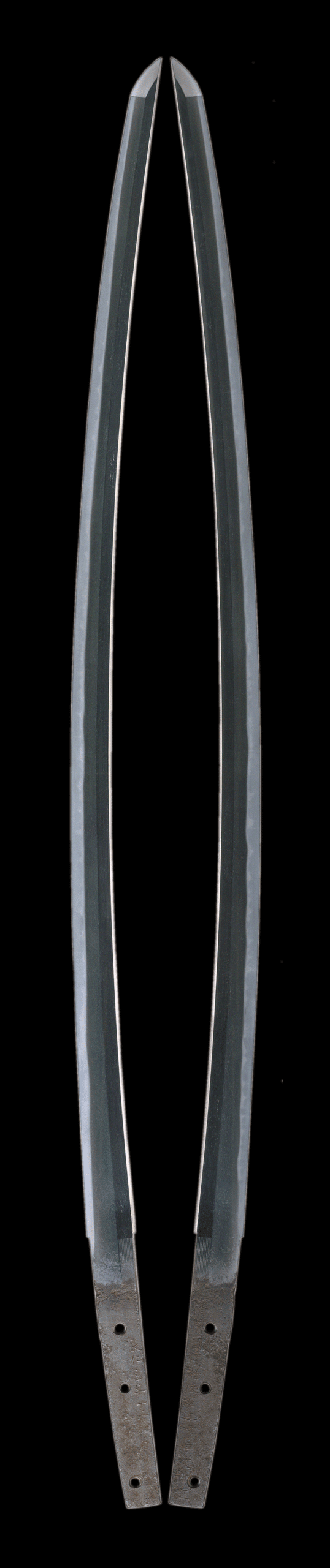
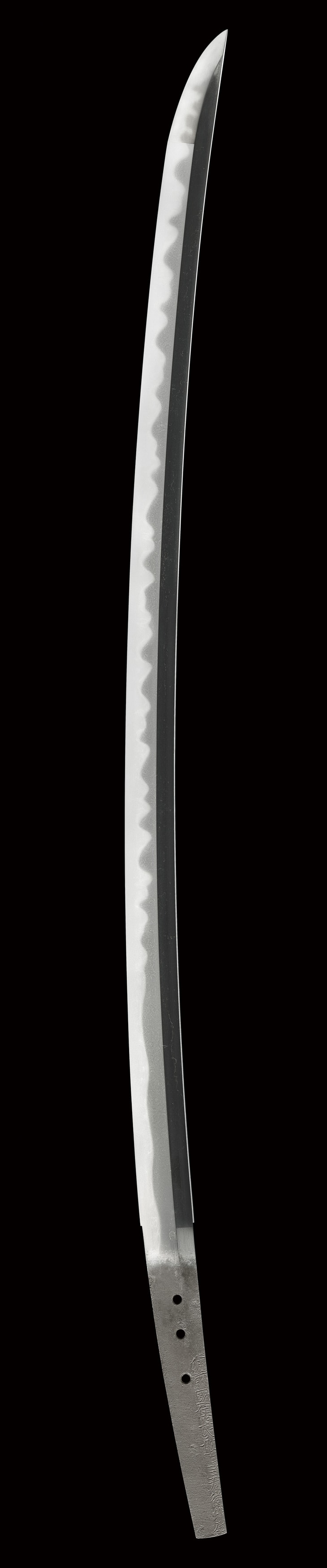
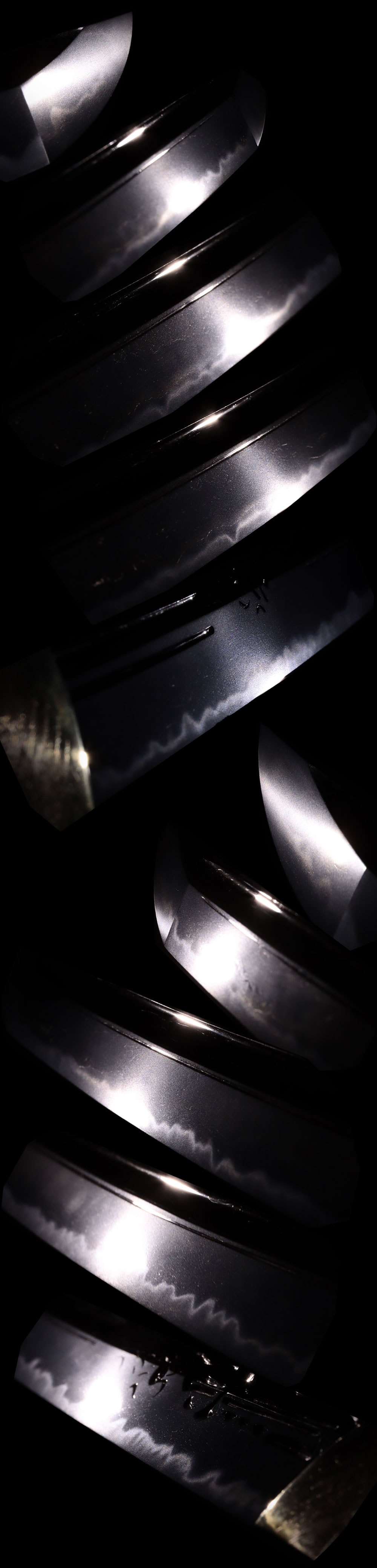
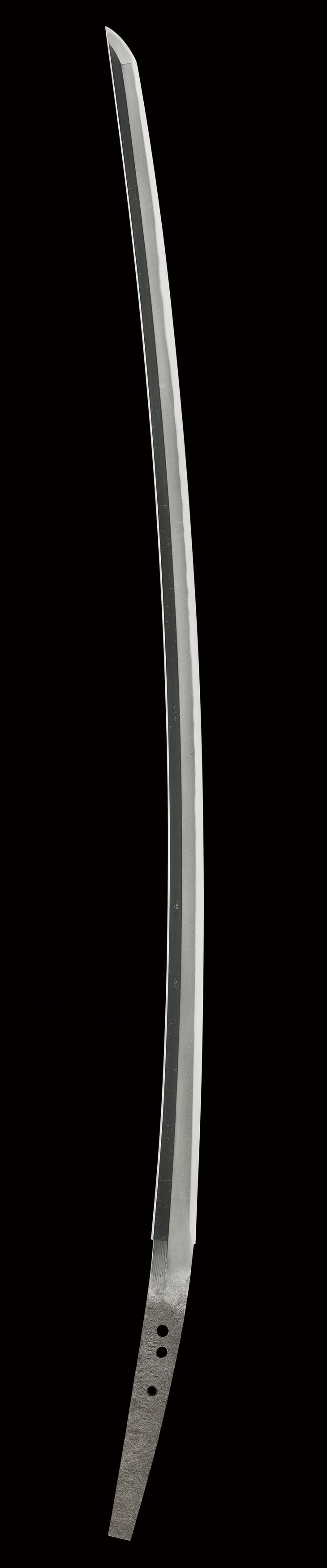
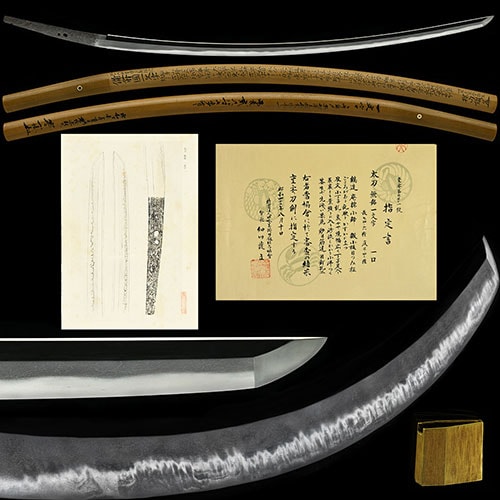
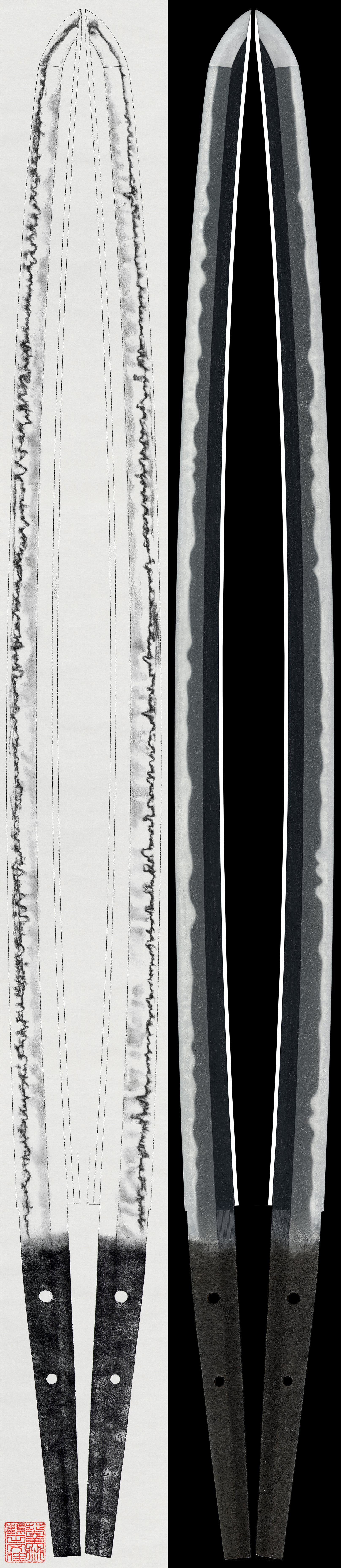
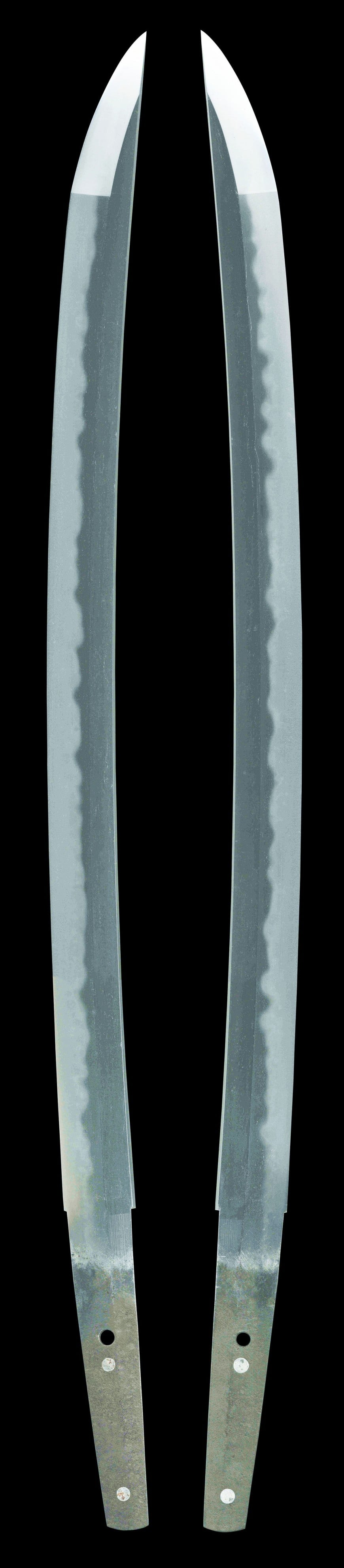
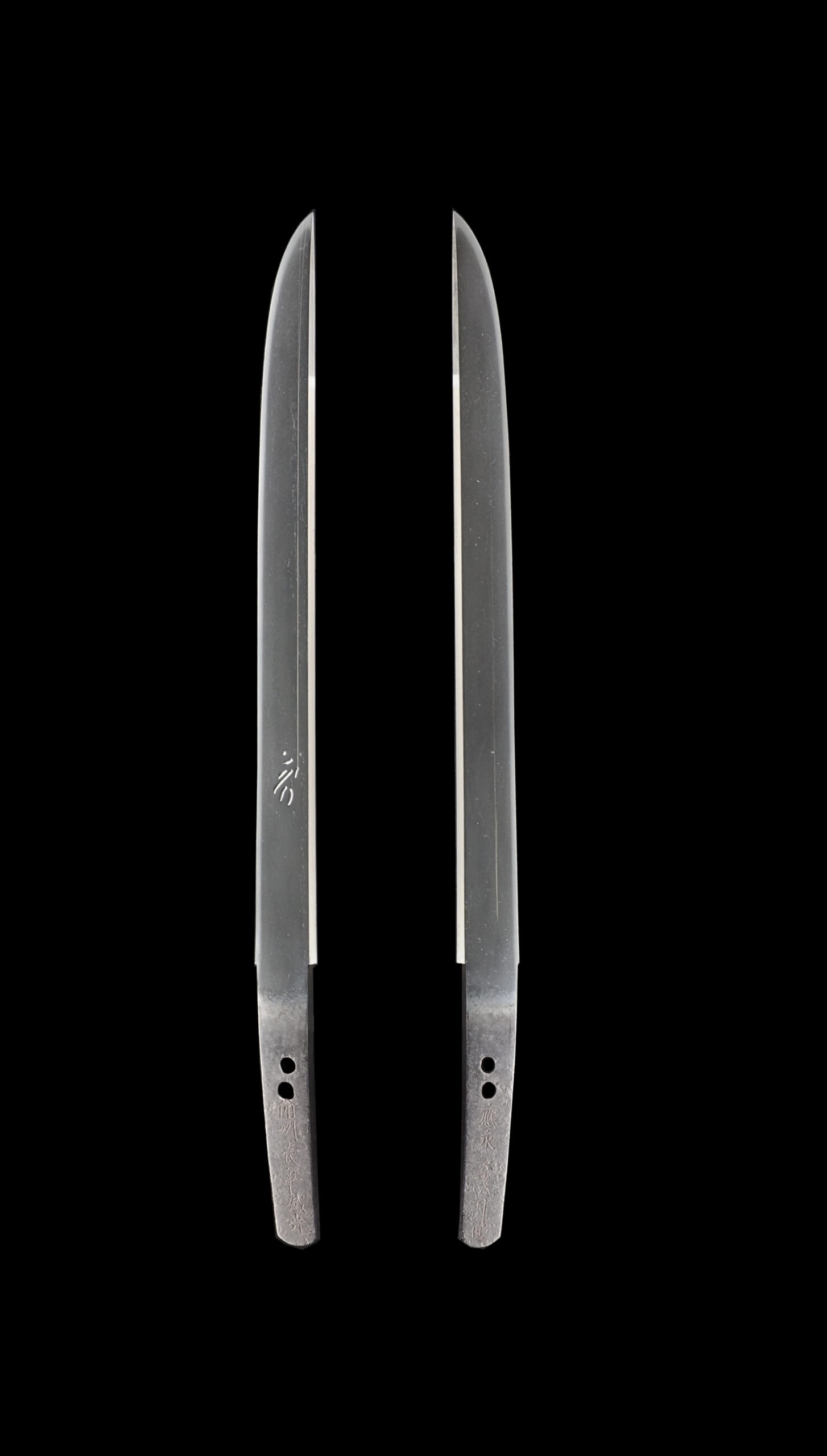
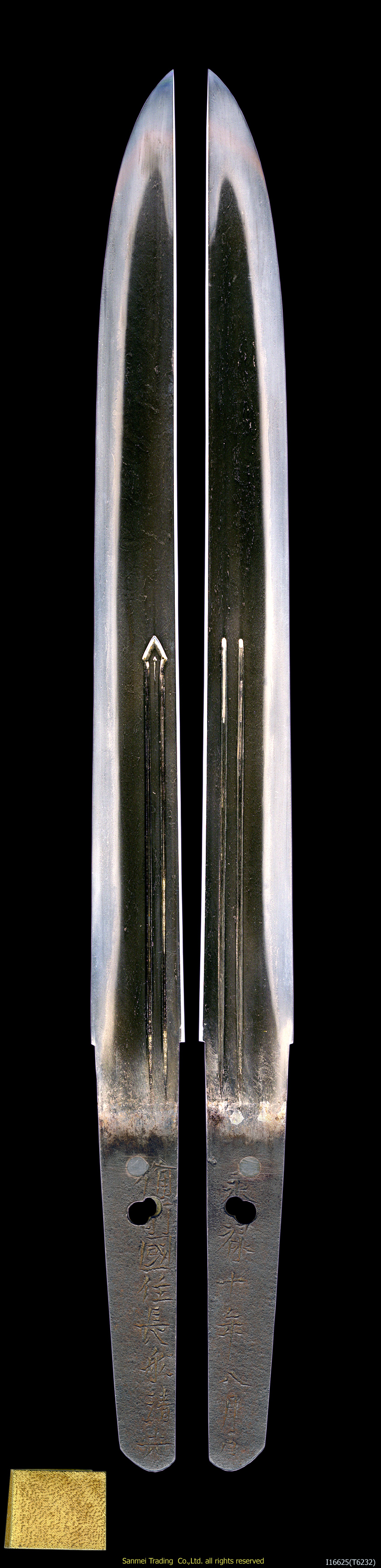
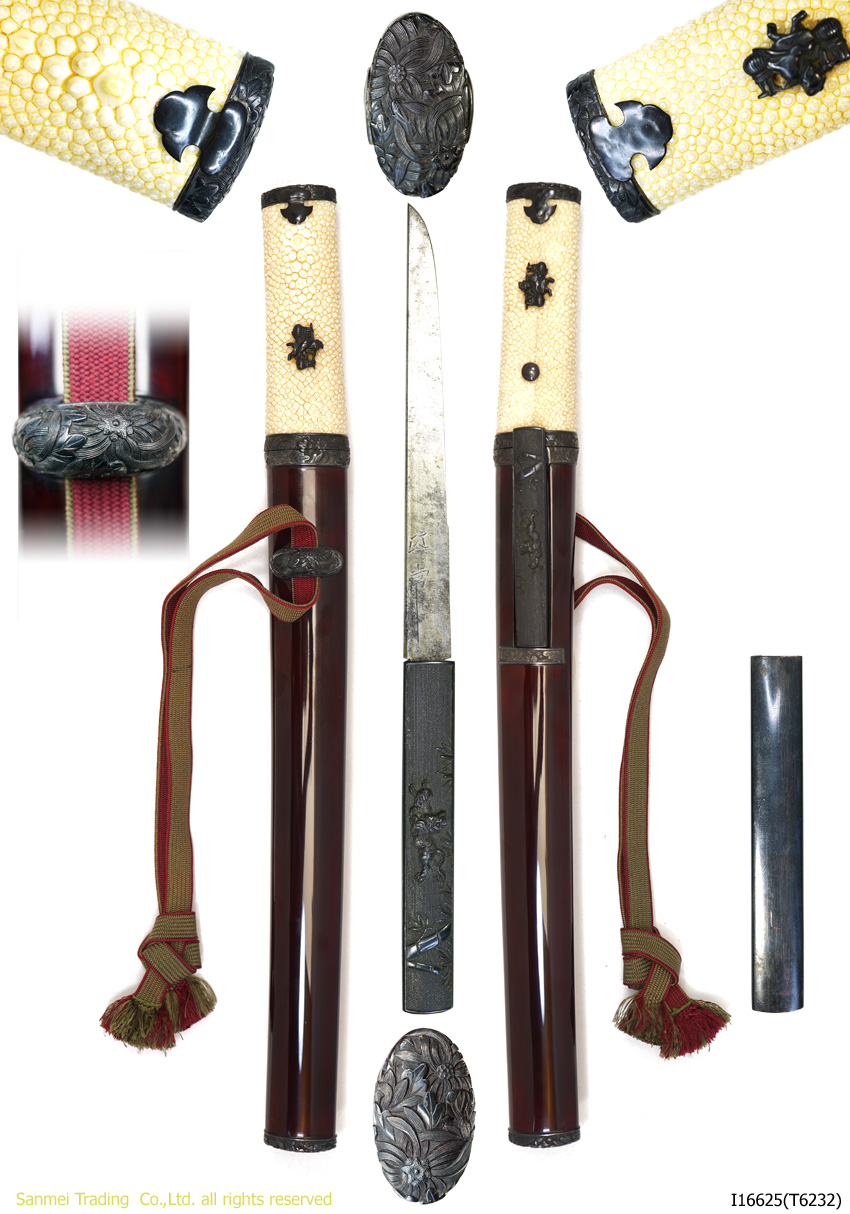
This is a Tanto signed by Magouemon-no-jō Kiyomitsu of Bizen Osafune, dated Eiroku 10 (1567). It features a robust hira-zukuri sugata with a wide suguha hamon and tightly forged itame-hada. The blade comes with a vermillion Tame-nuri aikuchi koshirae adorned with scattered karahana motifs and is accompanied by NBTHK Tokubetsu Hozon certification.
 NihontoWatchBETA
mei · Osafune · Muromachi · nagasa 27cm
Bizen-den · Bizen
26 pieces on the market now
Within the Bizen Osafune workshops of the closing Muromachi period, the body of smiths and their output that scholars group under the heading Sue-Bizen, the name Kiyomitsu (清光) was carried by a large number of hands. The setsumei consistently note that the swords signed in the Tenbun, Kōji, and Eiroku eras issue from Osafune in Bizen Province, and that the Hayami reference work enumerates roughly ten craftsmen who used common names (zokumyō) such as Gorōzaemon-no-jō, Magōemon-no-jō, Yosazaemon-no-jō, Hikobei-no-jō, and Magobei-no-jō. Learn more →
| Smith | Era | Designated |
|---|---|---|
| Kiyomitsu清光 | 1532-1572 | 19 |
| Kiyomitsu清光 | 1558-1571 | 11 |
A Hozon-certified blade judged to show notably superior workmanship and a better state of preservation. The bar is higher: re-tempered blades and most unsigned Muromachi/Edo works are excluded.
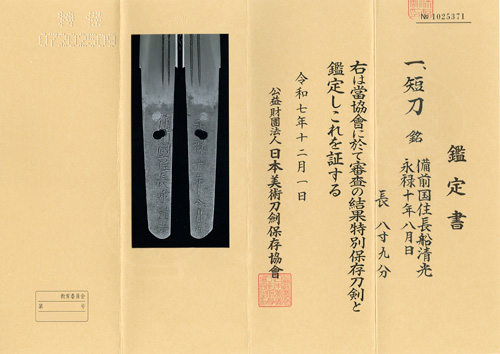
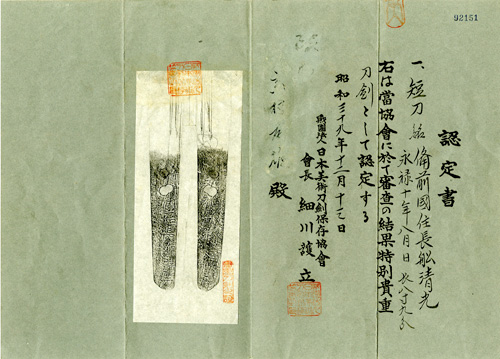
The NBTHK (Nihon Bijutsu Tōken Hozon Kyōkai, the Society for the Preservation of Japanese Art Swords) is a public-interest incorporated foundation founded in 1948 and supervised by Japan’s Agency for Cultural Affairs (Bunkachō); it is based at the Japanese Sword Museum in Tokyo. Its expert panels physically examine each submitted work (shinsa) and issue a certificate (kanteishō) ranking it by artistic and historical merit. NBTHK papers are the most widely recognized standard of authentication for Japanese swords and fittings.
NBTHK official siteFor a return, please contact us within 7 days of the item's arrival. If specification changes such as dimensions were made at the customer's request, a return cannot be accepted. Shipping and transfer fees are the customer's responsibility.
This is a Tanto signed by Magouemon-no-jō Kiyomitsu of Bizen Osafune, dated Eiroku 10 (1567). It features a robust hira-zukuri sugata with a wide suguha hamon and tightly forged itame-hada. The blade comes with a vermillion Tame-nuri aikuchi koshirae adorned with scattered karahana motifs and is accompanied by NBTHK Tokubetsu Hozon certification.
NihontoWatchBETAmei · Osafune · Muromachi · nagasa 27cm
Bizen-den · Bizen
26 pieces on the market now
Within the Bizen Osafune workshops of the closing Muromachi period, the body of smiths and their output that scholars group under the heading Sue-Bizen, the name Kiyomitsu (清光) was carried by a large number of hands. The setsumei consistently note that the swords signed in the Tenbun, Kōji, and Eiroku eras issue from Osafune in Bizen Province, and that the Hayami reference work enumerates roughly ten craftsmen who used common names (zokumyō) such as Gorōzaemon-no-jō, Magōemon-no-jō, Yosazaemon-no-jō, Hikobei-no-jō, and Magobei-no-jō. Learn more →
| Smith | Era | Designated |
|---|---|---|
| Kiyomitsu清光 | 1532-1572 | 19 |
| Kiyomitsu清光 | 1558-1571 | 11 |
A Hozon-certified blade judged to show notably superior workmanship and a better state of preservation. The bar is higher: re-tempered blades and most unsigned Muromachi/Edo works are excluded.
The NBTHK (Nihon Bijutsu Tōken Hozon Kyōkai, the Society for the Preservation of Japanese Art Swords) is a public-interest incorporated foundation founded in 1948 and supervised by Japan’s Agency for Cultural Affairs (Bunkachō); it is based at the Japanese Sword Museum in Tokyo. Its expert panels physically examine each submitted work (shinsa) and issue a certificate (kanteishō) ranking it by artistic and historical merit. NBTHK papers are the most widely recognized standard of authentication for Japanese swords and fittings.
NBTHK official siteFor a return, please contact us within 7 days of the item's arrival. If specification changes such as dimensions were made at the customer's request, a return cannot be accepted. Shipping and transfer fees are the customer's responsibility.