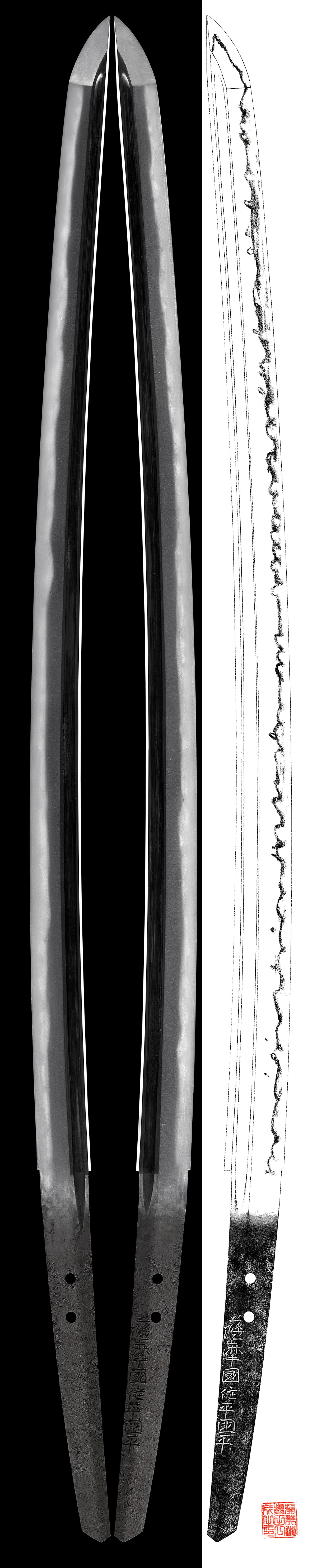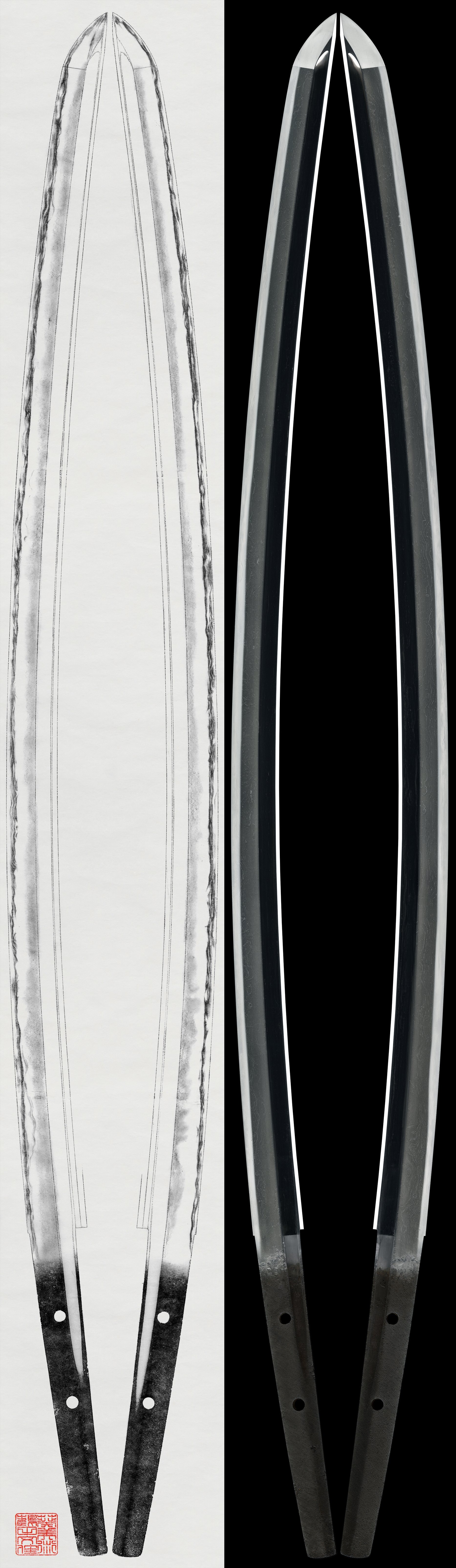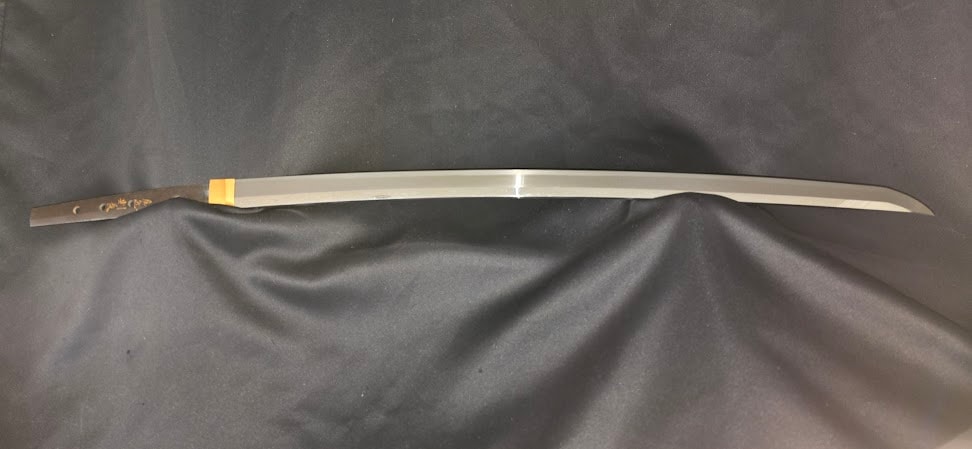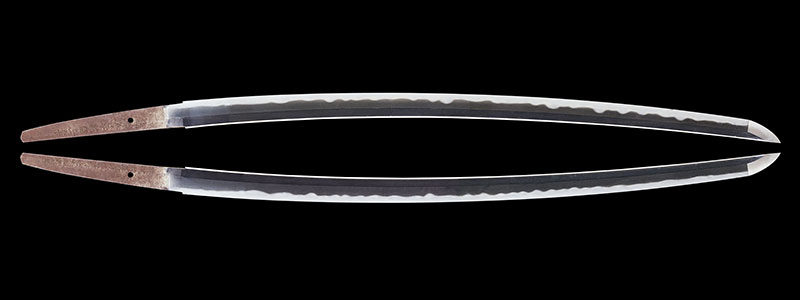
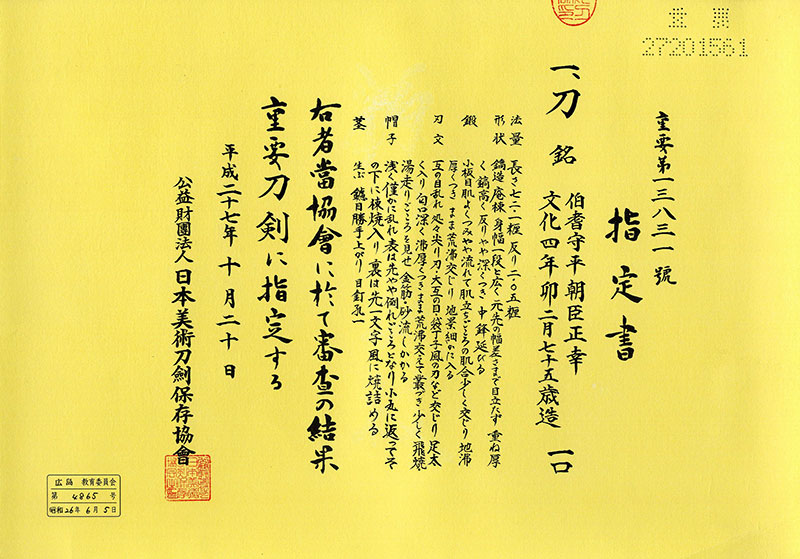
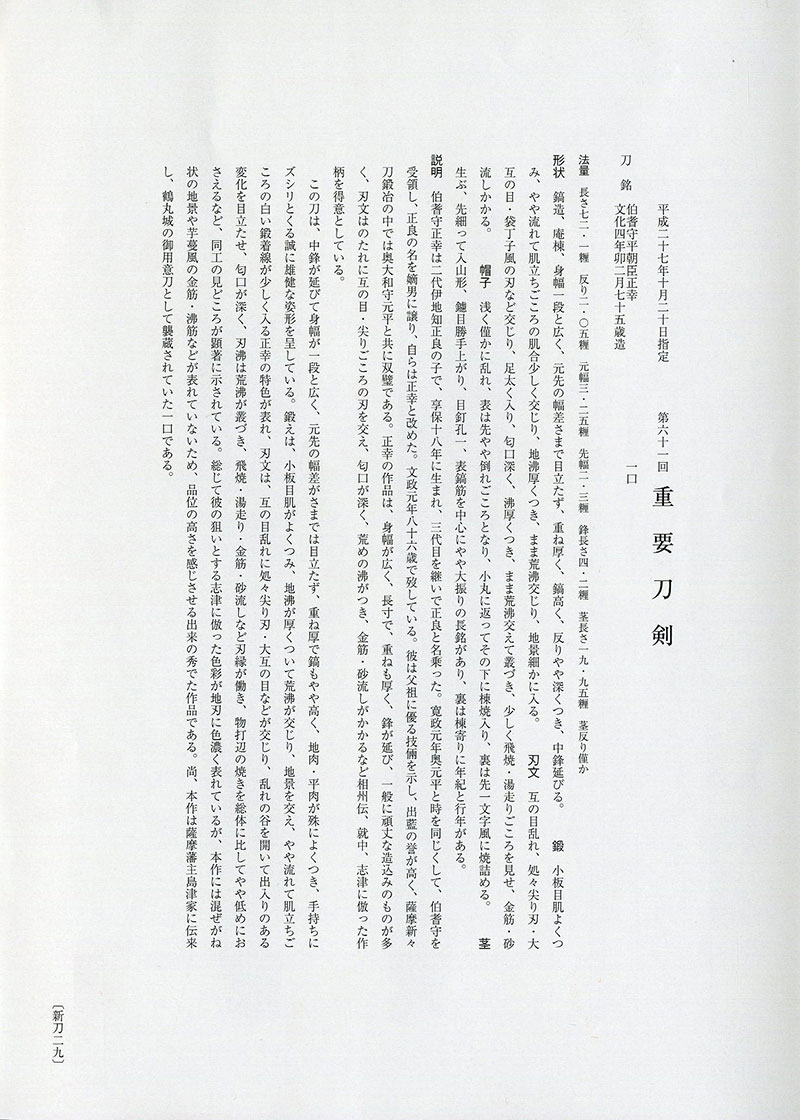
-, 61st Session — Designated October 20, 2015
, : Hōki no Kami Taira Asomi Masayuki (正幸)
Measurements 72.1 cm, 2.05 cm, 3.25 cm, 2.30 cm, 4.20 cm, 19.95 cm
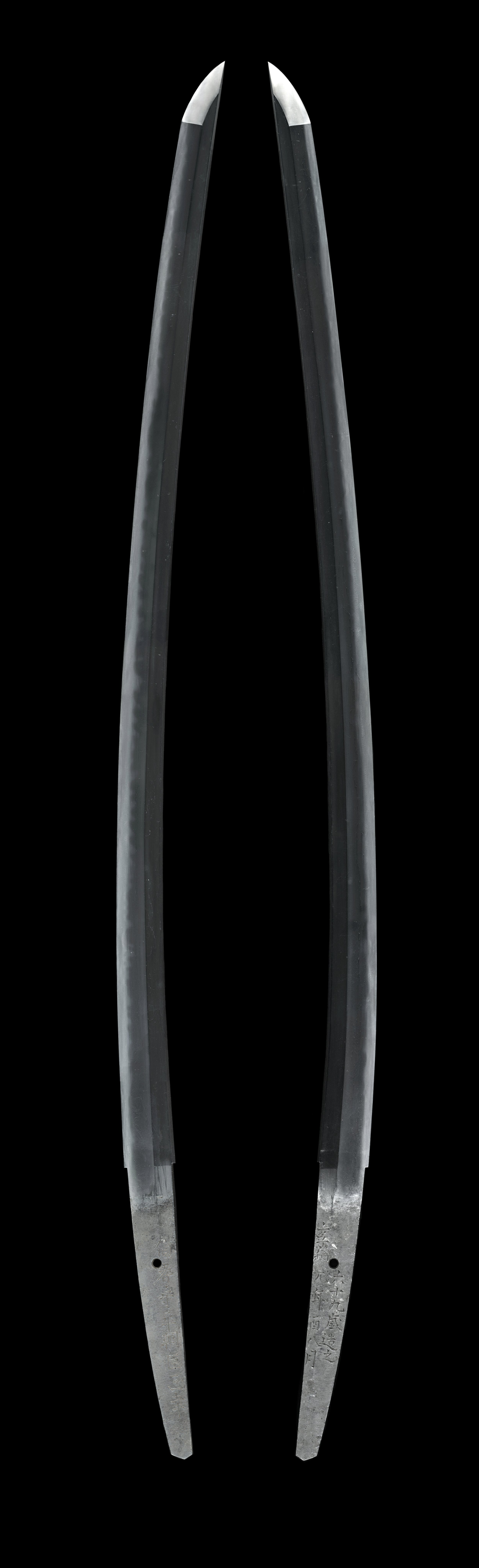
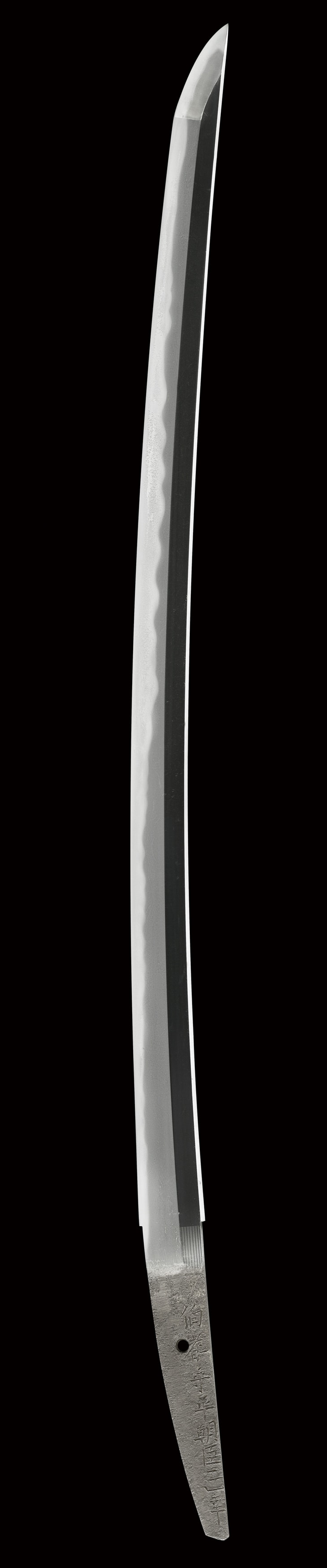
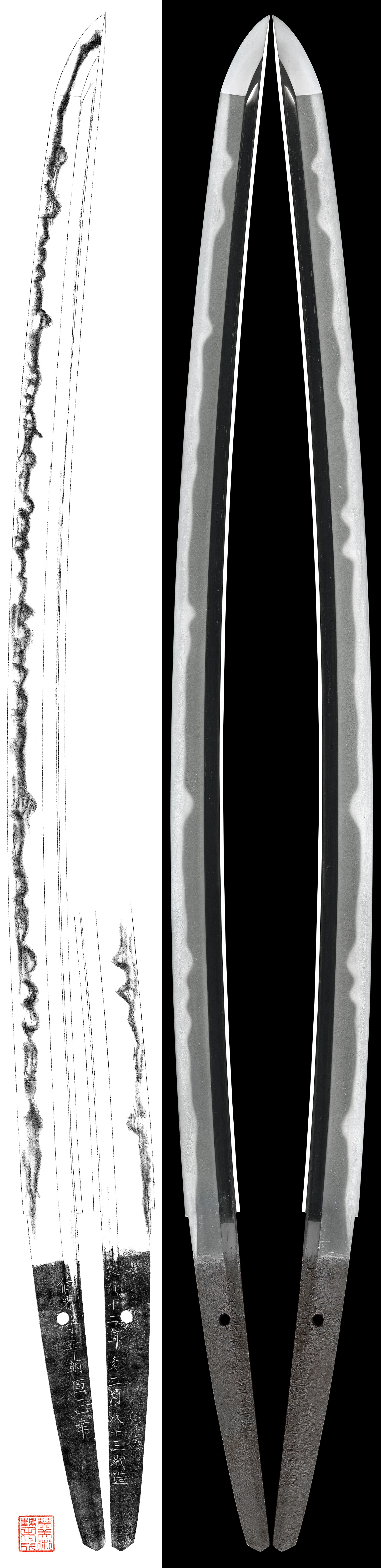
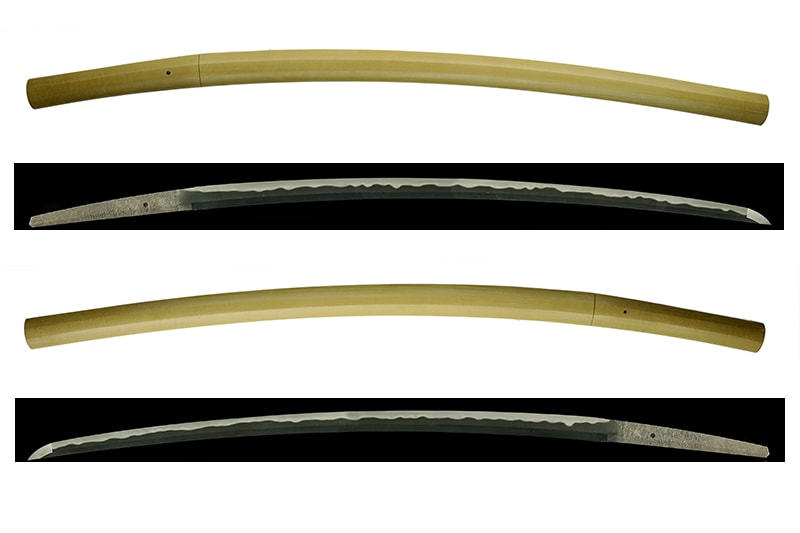
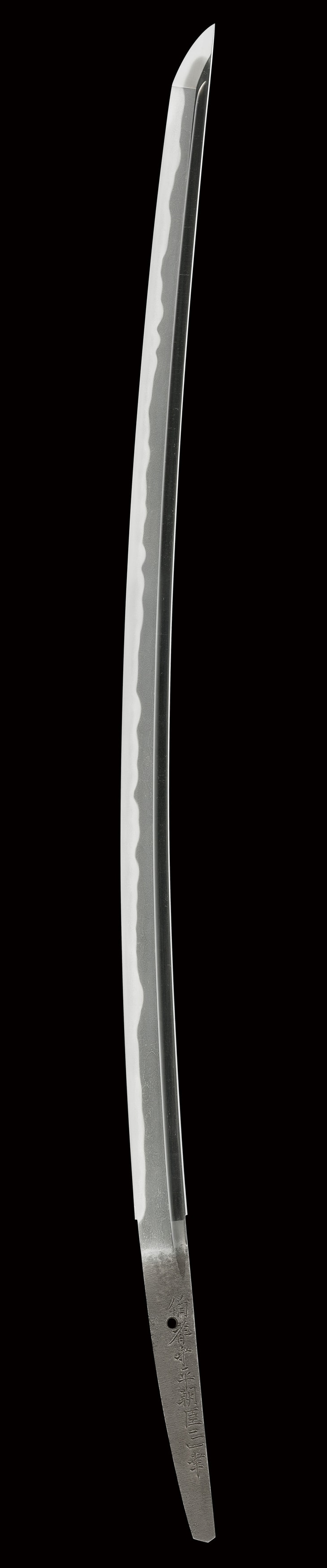
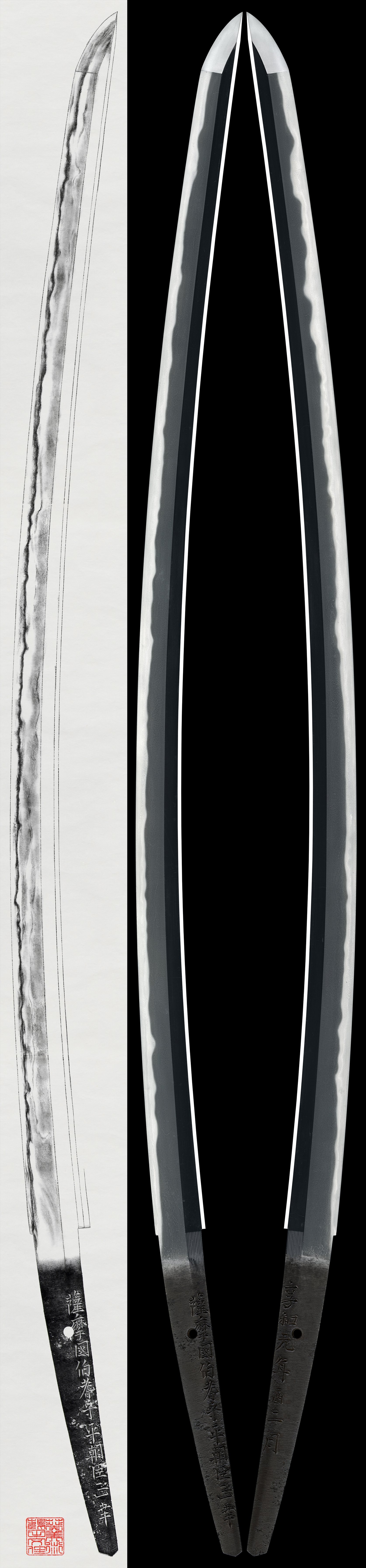
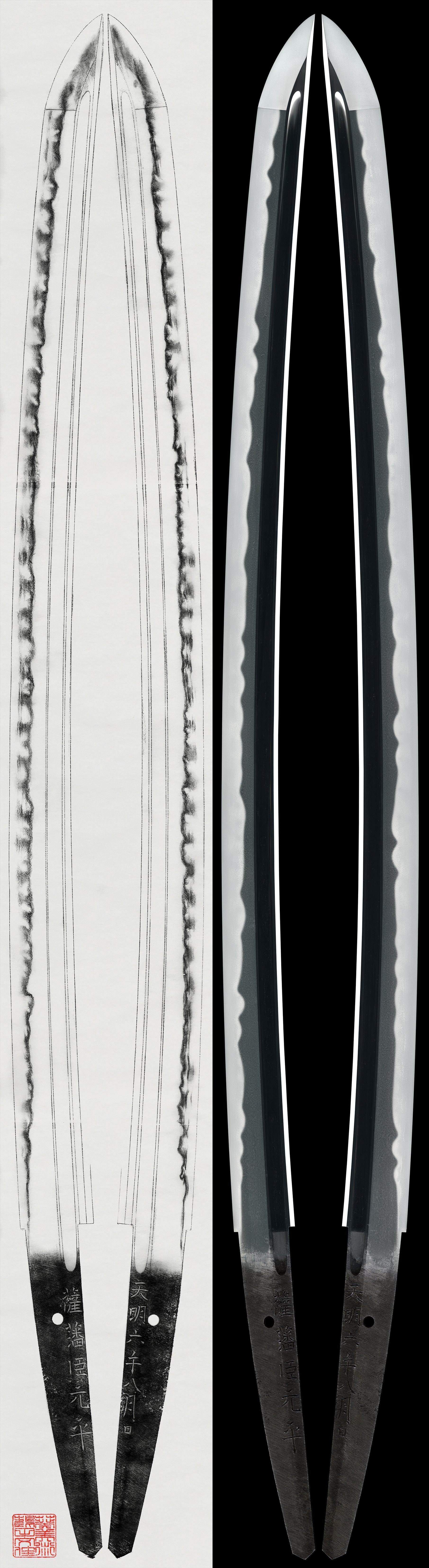
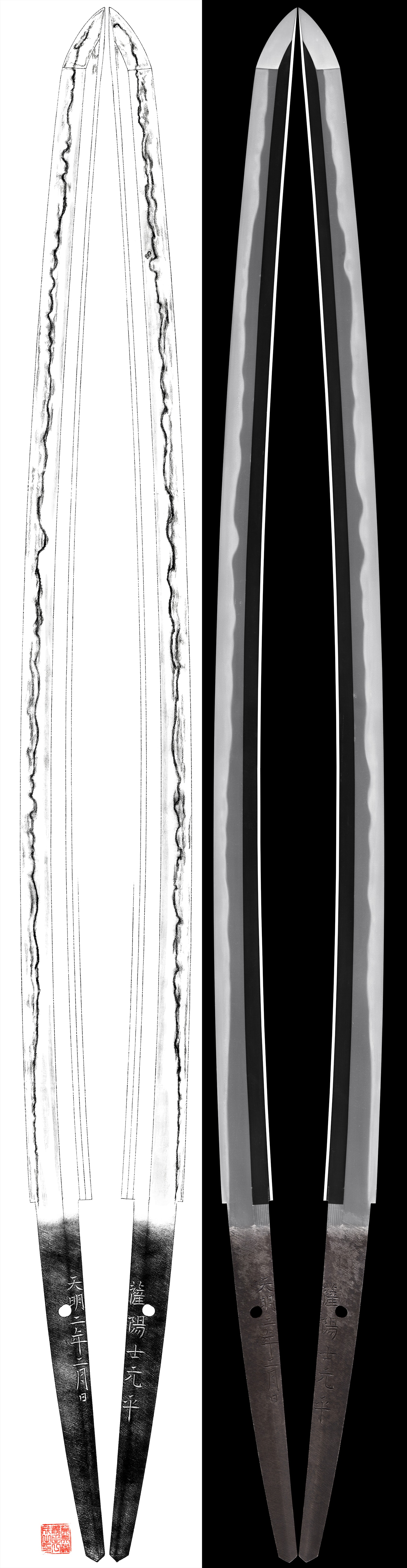
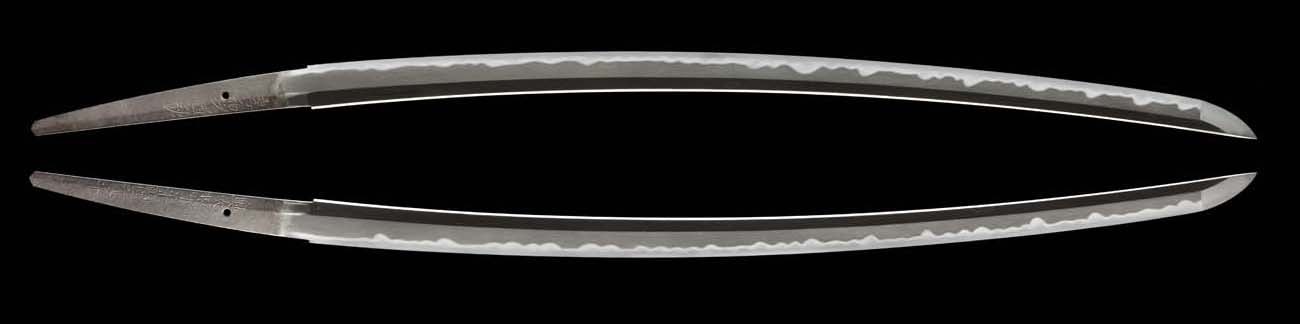
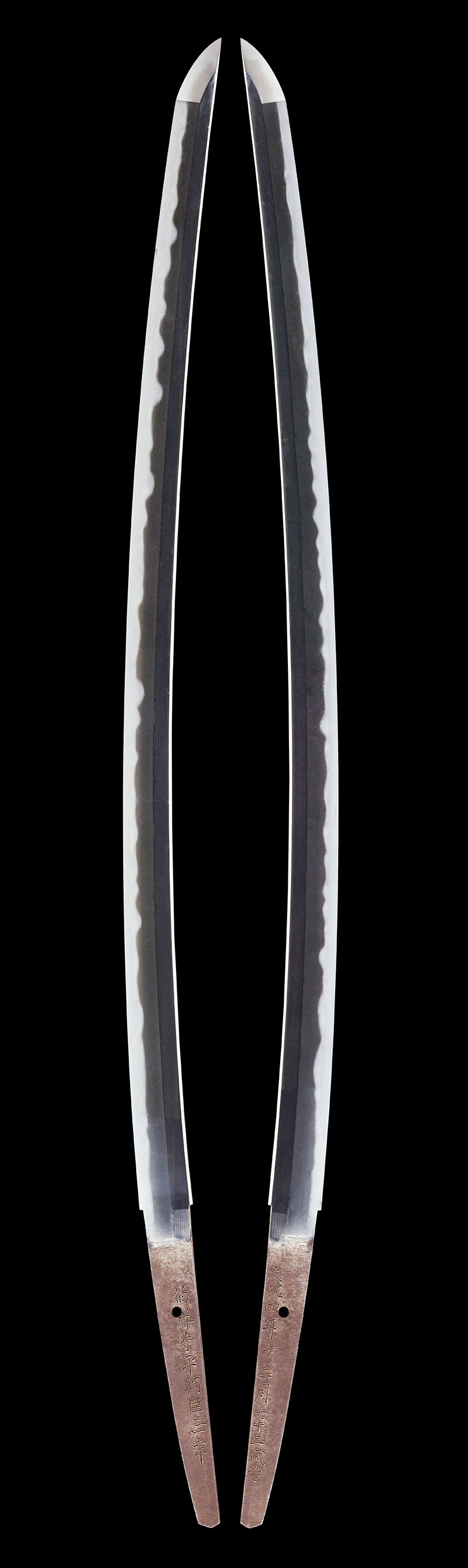
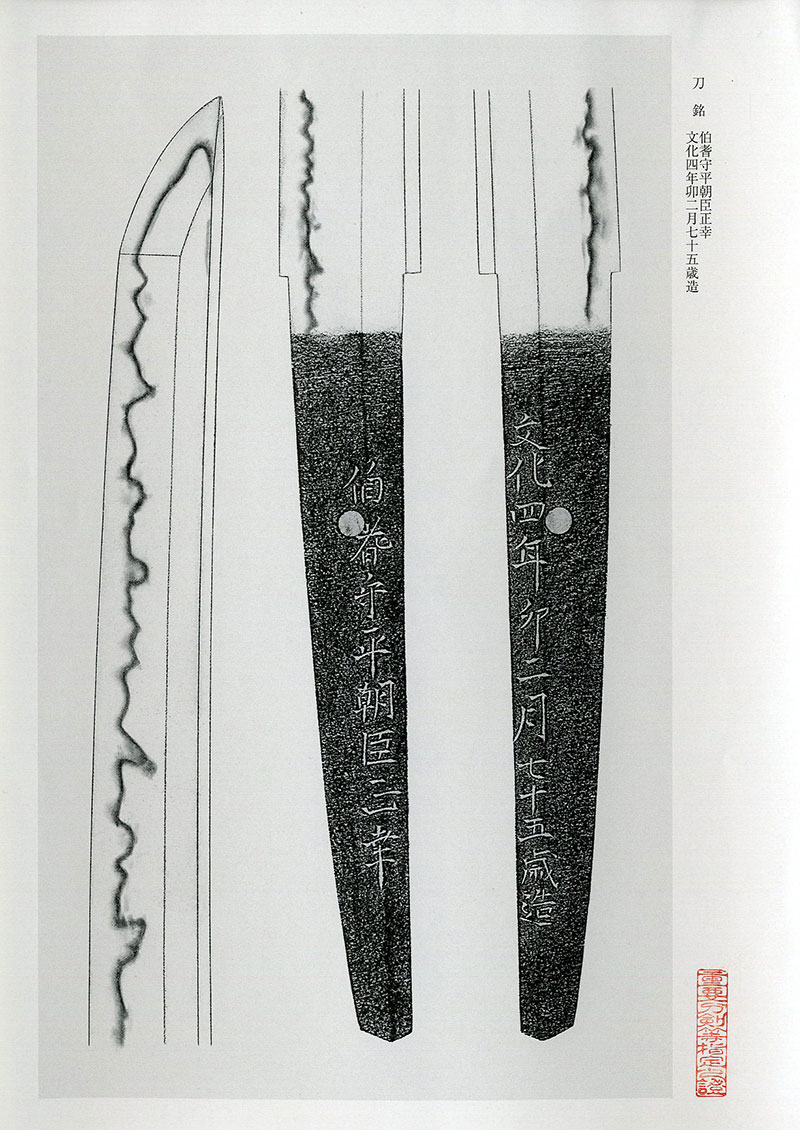
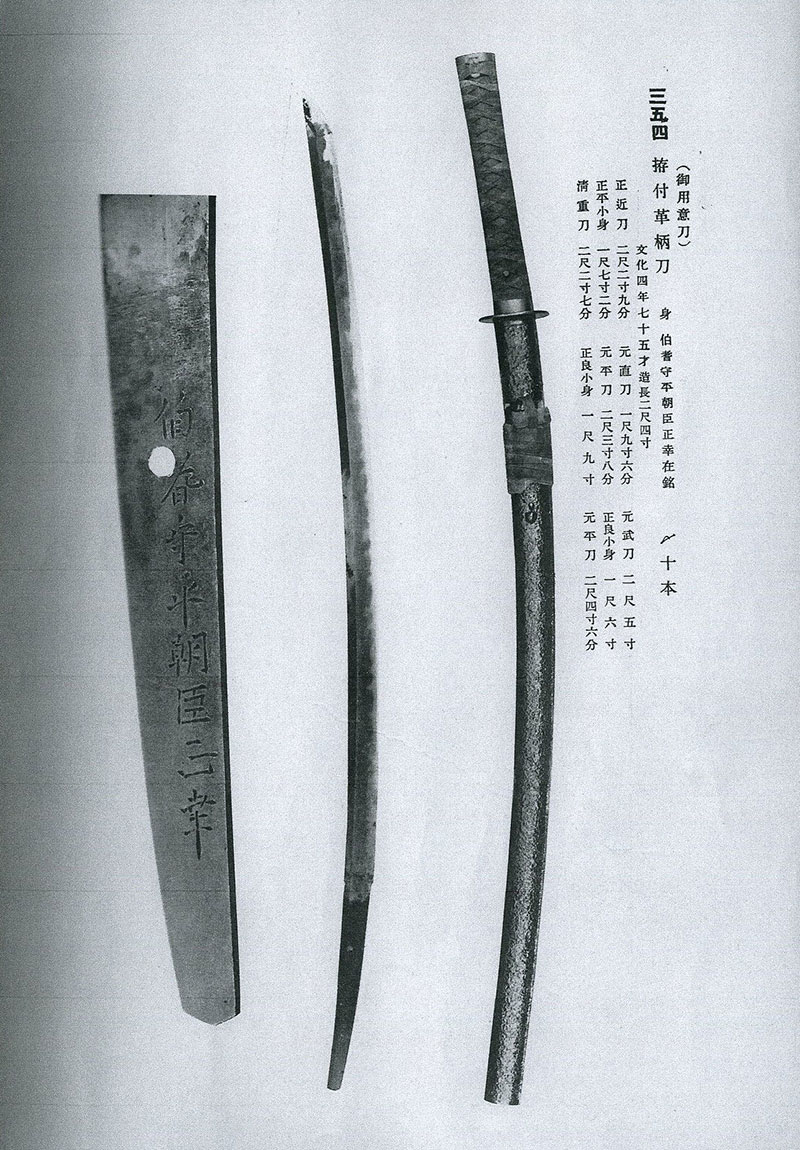
Description Keijō: with ; notably wide with little difference between base and tip width; thick ; rather high ; somewhat deep ; extended . : Dense , slightly flowing, with a slight tendency toward standing grain; thick with occasional mixed in; fine ; some whitish forging lines appear. : , mixed in places with pointed elements, large , and areas suggestive of “bagged ”; thick enter; the is deep; is thick with occasional in clusters; slight and a hint of appear; and run along the temper. : Shallow, with slight undulation; on the the point shows a slight forward-leaning tendency and turns back in , with entering below; on the it is finished in an -like . : None. : ; tapering to an tip; are ; one ; on the , a rather large, long signature is placed centered on the ; on the , near the , there is an inscription giving the date and the maker’s age.
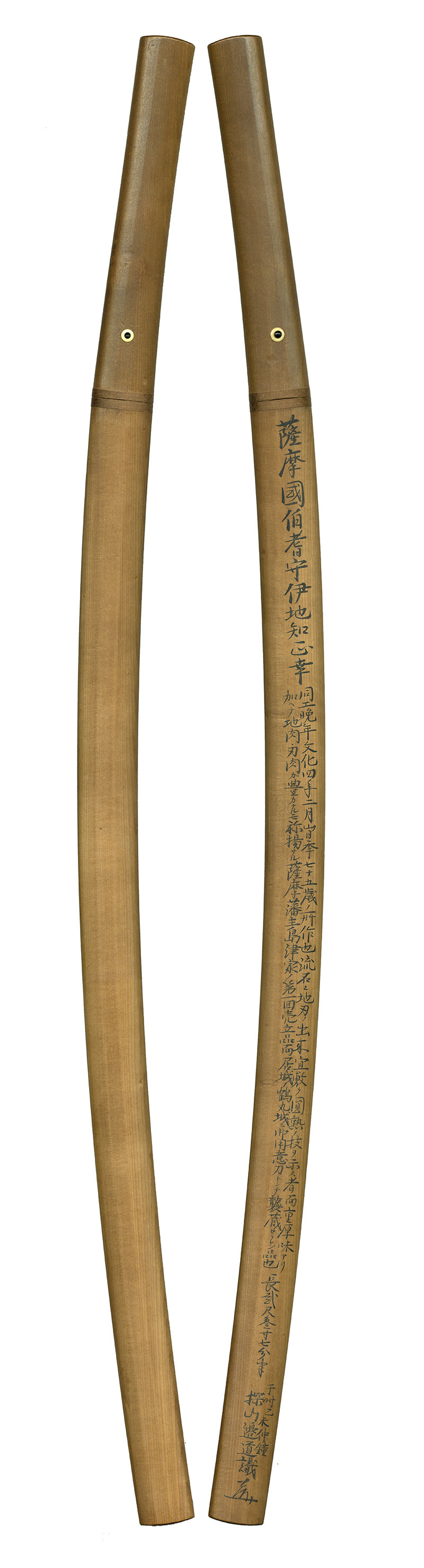
Artisan Hōki no Kami Taira Asomi Masayuki (正幸)
Era Bunka 4 (1807), period
Explanation Hōki no Kami Masayuki was the son of the second-generation Ijichi Masayoshi (正良). He was born in Kyōhō 18 (1733), succeeded as the third generation, and at first bore the name Masayoshi. In Kansei 1 (1789), at the time as Oku Motohira, he received the title Hōki no Kami. Thereafter he ceded the name Masayoshi to his eldest son and changed his own name to Masayuki. He died in Bunsei 1 (1818) at the age of eighty-six.
His workmanship surpassed that of his forebears, and he won high praise for “indigo-outshining-blue” excellence. Among Satsuma smiths, together with Okuyamato no Kami Motohira, he is regarded as one of the two leading masters. Masayuki’s works typically feature a wide blade, long dimensions, thick , an extended , and generally a robust and sturdy construction. In , he favors mixed with and a pointed tendency, with a deep , somewhat rough , and the appearance of and . His forte is Sōshū-den—particularly an approach modeled on .
This presents an exceptionally vigorous and stalwart : the is extended, the is notably wide with little apparent taper from base to tip, the is thick, and the is somewhat high. In particular, the blade shows abundant - and , giving a substantial, weighty feel in hand. The forging displays Masayuki’s characteristic traits: tightly packed with thick , mixed with and , with a slightly flowing tendency and some standing-grain effect, together with a small amount of whitish forging lines.
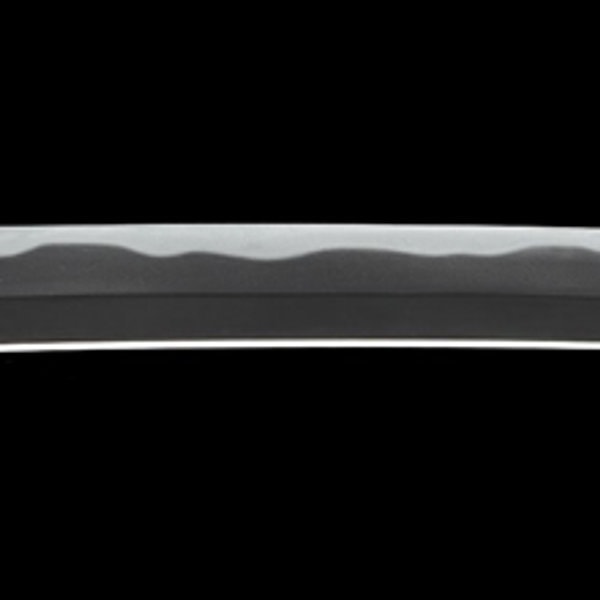
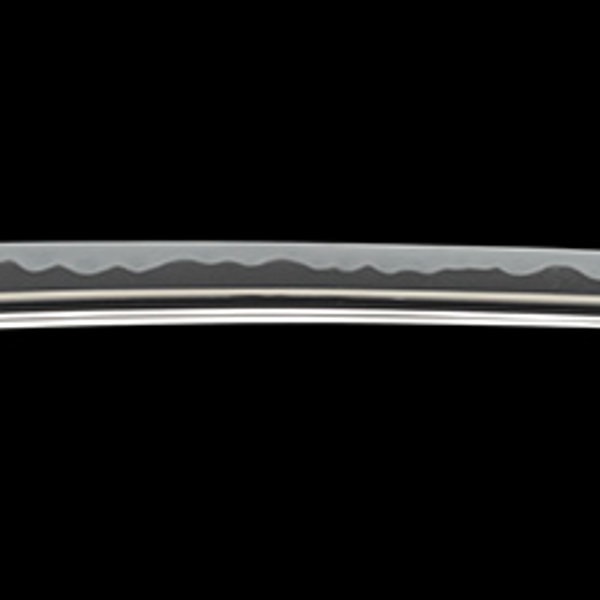
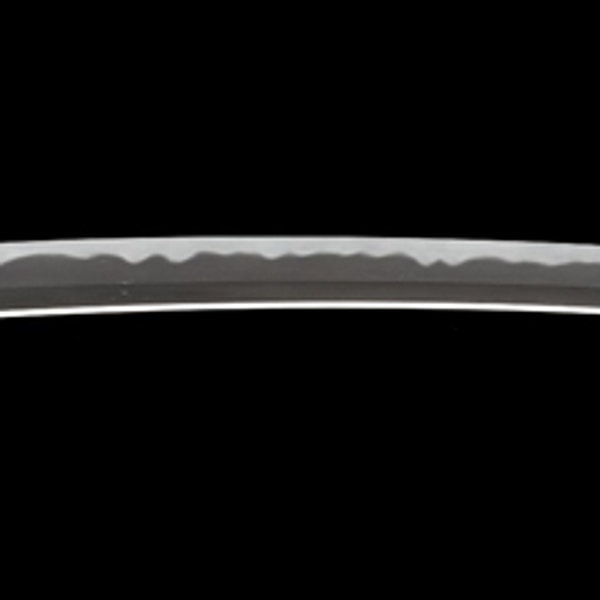
The is a into which pointed elements and large are intermingled; the valleys of the irregularities open, creating conspicuous variation through pronounced rises and falls. The is deep; includes clustered ; and at the appear , , , and , demonstrating active tempering along the edge. Another notable point is that the hardening in the is held slightly lower overall in comparison to the rest. These features clearly set forth the highlights of Masayuki’s work.
Overall, the -modeled coloration that he aims for is strongly expressed in both and . However, because this piece does not show the “mixed-metal-like” or the “vine-like” and sometimes seen, it conveys a higher sense of dignity; it is an excellent work of notably superior quality. Furthermore, this sword was transmitted in the Shimazu family of Satsuma and was preserved in Tsurumaru Castle as a prepared reserve sword (goyōi-gatana).
[ 29]